Author: admin

  • Why Two Different Credit Score Apps Show Two Different Numbers

    Why Two Different Credit Score Apps Show Two Different Numbers

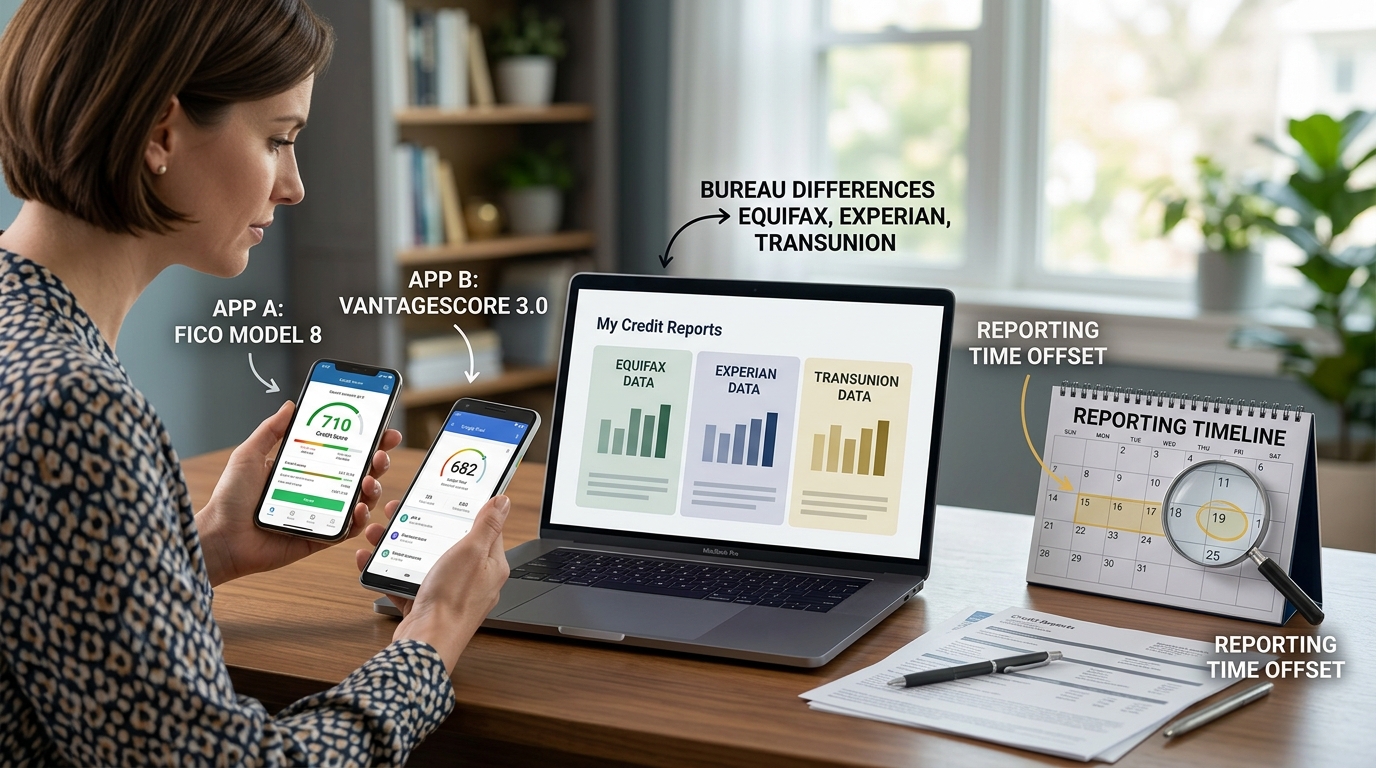
    You check your credit score on your bank’s app and see 710. You check a different free monitoring app the same day and see 682.

    Nothing about your finances changed between the two checks—so why are the numbers different?

    And which one, if either, is “right”?

    This is one of the most common sources of confusion in personal finance. Once you understand how credit scoring actually works, however, the difference becomes much easier to explain.

    The Short Answer

    There isn’t one single universal credit score.

    There are multiple credit-scoring models, information from three major credit bureaus, and different combinations of models and bureau data used by different financial institutions, lenders, banks, and monitoring services.

    As a result, two legitimate apps can show different credit scores on the same day without either one being wrong.

    The difference may come from:

    • The scoring model being used.
    • The credit bureau providing the underlying data.
    • When the underlying credit information was last updated.
    • The specific financial product or lender using the score.

    So seeing different numbers is not necessarily a technical error. It is often a normal feature of the U.S. credit-scoring system.

    For a broader explanation of the factors behind your score, see our guide on how credit scores are calculated.

    Reason One: There Are Multiple Credit-Scoring Models

    One of the biggest reasons your credit score can differ between apps is that there are multiple scoring models.

    The two major scoring systems consumers commonly encounter are FICO and VantageScore.

    Neither company has just one scoring formula.

    FICO has released multiple generations and specialized versions of its scoring models. VantageScore has also developed multiple versions over time.

    These models do not necessarily interpret the exact same credit-report information in exactly the same way.

    Different models can place different emphasis on factors such as:

    • Payment history.
    • Credit utilization.
    • Length of credit history.
    • New credit.
    • Credit mix.
    • Certain types of negative information.

    This means the same credit report can produce different scores depending on which scoring formula is applied.

    FICO vs. VantageScore

    FICO and VantageScore are separate scoring systems developed using different methodologies.

    For example, an app may show a VantageScore while another service provides a FICO score.

    Both can be legitimate scores based on your actual credit information.

    That does not mean one is fake or that one has necessarily made a calculation error.

    Reason Two: There Are Three Separate Credit Bureaus

    The United States has three major nationwide credit reporting companies:

    • Equifax
    • Experian
    • TransUnion

    Each maintains its own credit file on you.

    Those files do not necessarily contain identical information.

    A creditor may report to all three bureaus, two bureaus, or in some circumstances only one bureau.

    For example, imagine a credit card company reports an account to Experian but not to Equifax.

    A score calculated using your Experian information could therefore reflect that account while a score calculated from your Equifax file might not.

    Even if two apps use the same scoring model, they can produce different scores if they use data from different credit bureaus.

    Reason Three: Credit Information Is Not Updated Everywhere at Exactly the Same Time

    Another common explanation is timing.

    Creditors do not all report information to the credit bureaus on the same schedule.

    A credit card issuer may report around a particular point in its billing cycle, while another creditor reports at a different time.

    There can also be processing delays between the time information is sent and the time it becomes visible in a particular credit file.

    That means two apps checked a few days apart may be using different snapshots of your credit information.

    Example: Paying Down a Credit Card

    Imagine you pay down a large credit card balance on the 1st of the month.

    Your card issuer does not report the lower balance until after the statement closes on the 15th.

    If one app checks your credit information on the 5th, it may still reflect the older, higher balance.

    If another app checks or refreshes your data on the 20th, it may reflect the lower balance.

    Your financial behavior did not change between the two score checks. The underlying credit data simply changed at different points in the reporting cycle.

    Reason Four: Different Apps Use Different Credit-Score Products

    Even when two apps appear to offer “a credit score,” you should look at the details.

    The apps may use:

    • Different scoring companies.
    • Different scoring-model versions.
    • Different credit bureaus.
    • Different update schedules.

    For example, one service could show a VantageScore based on TransUnion information while another shows a FICO score based on Equifax information.

    Those numbers are not supposed to be identical because they are answering slightly different questions using different data and formulas.

    Many free consumer-facing monitoring tools use VantageScore, while lenders may use particular FICO versions depending on the type of credit being evaluated.

    This is one reason the score you see in a free app may not be the exact score a lender uses when you apply for a mortgage, auto loan, or credit card.

    A Concrete Example of How This Plays Out

    Imagine you check your credit through three different sources on the same day.

    • Your bank’s free score: VantageScore based on TransUnion data — 705.
    • A separate monitoring service: FICO score based on Equifax data — 692.
    • A mortgage lender: A mortgage-specific scoring model based on bureau information — 678.

    All three numbers can be legitimate.

    They are not necessarily competing claims about one universal score.

    They are different calculations based on different combinations of models and credit information.

    This is why using one free app’s score as an exact prediction of what every lender will see can be misleading.

    Which Credit Score “Counts” for a Specific Purpose?

    This is usually the more important question.

    The answer depends on what you are applying for and which lender you are using.

    Mortgage Applications

    Mortgage lending can involve specific FICO scoring versions and credit information from multiple bureaus.

    The exact scoring process depends on the lender and applicable underwriting requirements.

    If you are preparing to buy a home, ask your mortgage lender or broker which credit scores they expect to use.

    Auto Loans

    Auto lenders may use industry-specific credit scores designed for automobile lending.

    These models can evaluate certain aspects of your credit history differently from a general-purpose score.

    Credit Card Applications

    Credit card issuers can use different scoring models and credit bureaus.

    One issuer may use a particular FICO version while another may use VantageScore or another credit-risk model.

    There is therefore no guarantee that the score you see in a consumer app will be exactly the score used for your next credit-card application.

    Should You Still Bother Checking Your Credit Score?

    Yes.

    The fact that different apps can show different numbers does not make credit monitoring useless.

    You simply need to understand what the number is useful for.

    Use Your Score as a Trend Indicator

    If your score is steadily increasing over several months, that is useful information.

    If it is consistently falling, that is also a reason to investigate what has changed.

    The exact number is less important than understanding the direction of your credit profile over time.

    Use Your Full Credit Report to Understand the Details

    Your full credit report contains the underlying information used by scoring models.

    That includes:

    • Account balances.
    • Payment history.
    • Credit limits.
    • Inquiries.
    • Collection accounts.
    • Other reported account information.

    If something looks wrong, the credit report is where you should investigate it.

    Our guide on how to read a credit report explains what to look for.

    Get More Specific Information Before Major Applications

    If you are preparing for a major loan application and need to understand your credit position as precisely as possible, find out which scoring model and bureau the lender is likely to use.

    Depending on your situation, you may also consider obtaining access to a score product that provides the specific scoring versions relevant to your planned application.

    Why Doesn’t the U.S. Have One Universal Credit Score?

    The multiple-score system can seem unnecessarily complicated.

    But different lending products carry different risks.

    The factors that help predict the likelihood of default on an auto loan may not be identical to the factors that are most predictive for a credit card or mortgage.

    That is one reason industry-specific scoring models exist.

    Competition between scoring companies has also resulted in multiple approaches to evaluating credit risk.

    At the same time, having three major credit bureaus means lenders and scoring companies can work from different underlying databases.

    The result is a system where there is no single government-designated number that represents your one universally “correct” credit score.

    How to Get the Clearest Possible Picture of Your Credit

    1. Review All Three Credit Reports

    Use AnnualCreditReport.com to access your official credit reports.

    Looking at the actual reports allows you to compare the information maintained by Equifax, Experian, and TransUnion rather than relying only on a score shown by an app.

    2. Check More Than One Score Source Occasionally

    It can be useful to see how your score behaves across more than one legitimate source.

    Do not expect the numbers to match exactly.

    Instead, look for the broader pattern.

    3. Investigate Major Differences

    A small difference between scores is not necessarily concerning.

    If you see a substantially larger difference, review the underlying reports and determine whether one bureau has information that another does not.

    4. Ask Your Lender Before a Major Application

    If you are preparing for a mortgage, auto loan, or another major credit application, ask the lender which bureau and scoring model they expect to use.

    This can give you a more realistic understanding of what score information may matter for that particular application.

    5. Don’t Panic Over Normal Differences

    A difference of 10, 20, or even 30 points between legitimate scoring sources can occur for understandable reasons.

    The difference does not automatically mean that one app is wrong.

    Frequently Asked Questions

    Is one credit-scoring model more accurate than the others?

    There is not one universal score that is always the most accurate for every purpose.

    A score’s usefulness depends on the model, the underlying data, and the type of lending decision for which it is designed.

    Why does my bank show a different score from my free credit-monitoring app?

    The two services may be using different scoring models, different credit bureaus, or different reporting snapshots.

    Check the details provided by each service to see which model and bureau are being used.

    If I dispute an error, will every credit score improve by the same number of points?

    Not necessarily.

    If an error appears on only one credit bureau’s report, scores based on that bureau’s information may be affected differently from scores based on another bureau.

    Different scoring models can also react differently to the same corrected information.

    If you find an error, see our guide on how to dispute credit report errors.

    Does checking my score through multiple apps hurt my credit?

    No.

    Checking your own credit score through legitimate monitoring services is generally considered a soft inquiry and does not lower your credit score.

    You can check your score through multiple services without creating multiple hard inquiries simply because you viewed your own score.

    Is it worth paying for a service that shows my FICO score?

    It depends on your situation.

    For ordinary monitoring, free score tools may provide enough information to track your general credit trend.

    If you are preparing for a major application and want access to a specific FICO version that is relevant to the type of loan you are pursuing, paying for more specialized information may provide additional insight.

    A Deeper Look at FICO vs. VantageScore

    FICO and VantageScore are two of the most widely recognized scoring systems, but they approach scoring differently.

    FICO Scores

    FICO has developed multiple scoring models and versions, including models designed for specific industries.

    Some FICO models require a certain amount of credit-history information before generating a score.

    The precise minimum requirements depend on the specific FICO model being used.

    VantageScore

    VantageScore was developed by the three major credit bureaus as a separate scoring system.

    Some VantageScore versions can generate scores with relatively limited credit history, which makes them useful for consumer-facing monitoring services.

    Why the Two Can Differ

    The two systems can differ in how they evaluate certain credit-report information.

    They may also differ in their treatment of:

    • Negative accounts.
    • Collections.
    • Credit-history length.
    • Recent inquiries.
    • Other aspects of the credit profile.

    Therefore, seeing a FICO score and a VantageScore that are not identical is completely normal.

    How to Find Out Which Score a Specific Lender Uses

    Ask the Lender Directly

    For an important loan application, ask the lender which credit bureau and scoring model it typically uses.

    This can be particularly useful for mortgage applications because the scoring process can differ from the score shown in a free consumer app.

    Review Required Disclosures

    Depending on the circumstances, lenders may provide disclosures that identify credit-score information used in an adverse-action decision or other required notice.

    These documents can sometimes help you understand which score was used after the application process.

    Use General Industry Knowledge Carefully

    It can be useful to know that different industries commonly use different types of credit scores.

    However, these are general patterns rather than guarantees.

    The safest approach before a major application is to ask the specific lender what it uses.

    Educational Scores vs. Scores Used by Lenders

    Some consumer credit-monitoring services describe the score they provide as an “educational score.”

    This does not necessarily mean the score is fake.

    It generally means the score is designed to help consumers understand and monitor their credit rather than necessarily matching the exact score a particular lender uses for underwriting.

    An educational score can still be useful for tracking trends.

    Always read the description provided by the app or service so you know exactly what type of score you are viewing.

    Frequently Asked Questions About Credit-Score Differences

    Do all three credit bureaus offer FICO and VantageScore?

    The three major credit bureaus can provide data used by different scoring models.

    It is not accurate to assume that one bureau exclusively uses one scoring company. The score product being requested determines which scoring model is applied to the bureau’s underlying data.

    Should I worry if two scores differ by 50 points?

    A larger difference is worth investigating, but it does not automatically mean that one score is wrong.

    Check whether the two sources are using:

    • The same credit bureau.
    • The same scoring model.
    • The same model version.
    • Similar update dates.

    Then compare the underlying credit reports to see whether the information itself differs.

    Does my income explain why two apps show different credit scores?

    No.

    Income and employment information are not standard components of traditional credit-scoring formulas.

    Differences between credit scores are generally explained by the scoring model, bureau data, and timing rather than your income.

    Is there one official government credit score?

    No.

    There is no single government-designated universal credit score that overrides every other scoring model.

    The score that matters depends on the particular lender, product, scoring model, and credit bureau involved.

    A Timeline Example: How Reporting Delays Create Different Scores

    Consider this example:

    On the 1st of the month, you pay off a large credit card balance.

    Your card issuer’s statement closes on the 15th.

    The issuer then reports the updated balance to the credit bureaus, and the bureaus process the information.

    If you check one monitoring app on the 5th, it may still show the previous higher balance.

    If you check another source on the 20th, the lower balance may already be reflected.

    Your financial behavior did not change between those checks.

    The difference is simply that the two sources were showing information from different points in the reporting cycle.

    This is one of the most common reasons people think their credit apps are contradicting each other.

    Frequently Asked Questions About Credit-Score Updates

    Does refreshing the same app repeatedly change my score?

    No. Refreshing the app does not itself change your credit information.

    If the underlying credit file has not been updated, repeatedly checking the app will generally show the same information.

    Can two lenders using the same model and bureau see different scores?

    If they request exactly the same scoring model using the same bureau’s data at essentially the same time, the score should generally be the same.

    Differences can arise if the requests occur at different times relative to a recent credit-file update.

    Why did my score change immediately after I checked it?

    Checking your own score does not cause a score change.

    If the score changed around the time you checked it, another event—such as a newly reported payment, balance update, or account change—may have occurred at roughly the same time.

    The timing can create the impression that checking caused the change when it did not.

    What Should You Focus on Instead of Matching Every Score?

    If two apps show different numbers, resist the temptation to decide that one must be wrong immediately.

    Instead, focus on four questions:

    1. Which scoring model is being used?
    2. Which credit bureau supplied the data?
    3. When was the underlying data last updated?
    4. Is the overall trend improving, declining, or remaining stable?

    These questions are usually more useful than trying to force every app to display the same number.

    How to Monitor Your Credit More Effectively

    A practical credit-monitoring routine can include several layers.

    Review Your Full Credit Reports

    Do not rely exclusively on credit-score apps.

    Review the actual credit reports from Equifax, Experian, and TransUnion so you can see the underlying information.

    For guidance on how frequently to review your reports, see how often you should check your credit report.

    Use Free Score Monitoring for Trends

    A free score displayed by your bank or another legitimate monitoring service can be useful for tracking whether your credit profile is generally moving in the right direction.

    Investigate Unexpected Changes

    If your score changes substantially, check your reports for:

    • A new account.
    • A new hard inquiry.
    • A changed credit-card balance.
    • A late payment.
    • A collection account.
    • An account closure.
    • Another significant change.

    If you find inaccurate information, investigate the appropriate dispute process.

    Focus on the Underlying Credit Data

    The score is a summary.

    The credit report contains the underlying information that produced that summary.

    Keeping that information accurate is therefore more important than making every score displayed by every app match perfectly.

    The Bottom Line

    Two different credit score apps showing two different numbers is usually not a bug.

    It is a normal consequence of a credit system that uses:

    • Multiple scoring models.
    • Three separate credit bureaus.
    • Different reporting schedules.
    • Different model versions and lender-specific scoring products.

    There is no single universal number that every lender uses.

    Instead of worrying that one app must be wrong, find out what model and bureau each service uses and pay attention to the broader trend.

    When accuracy matters for a major financial decision, such as applying for a mortgage or auto loan, ask the lender which score it expects to use.

    Most importantly, do not rely solely on an app’s score. Review the underlying information in your credit reports and make sure it is accurate.

    If you discover inaccurate information, our guides on disputing credit report errors and credit report errors can help you understand the next steps.

    Need Help Understanding Your Credit Reports?

    If different credit apps are showing confusing numbers or you have found inaccurate information on your credit reports, reviewing the underlying data is the best place to start.

    Contact Credit Repair Services to discuss your credit situation →
  • Can You Have Good Credit With No Credit Card?

    Can You Have Good Credit With No Credit Card?

    There’s a persistent belief that a credit card is mandatory equipment for good credit—that without one, your score is doomed to stay low or nonexistent no matter what else you do.

    It’s an understandable assumption, since credit cards are among the most commonly discussed credit-building tools. But it’s not entirely accurate.

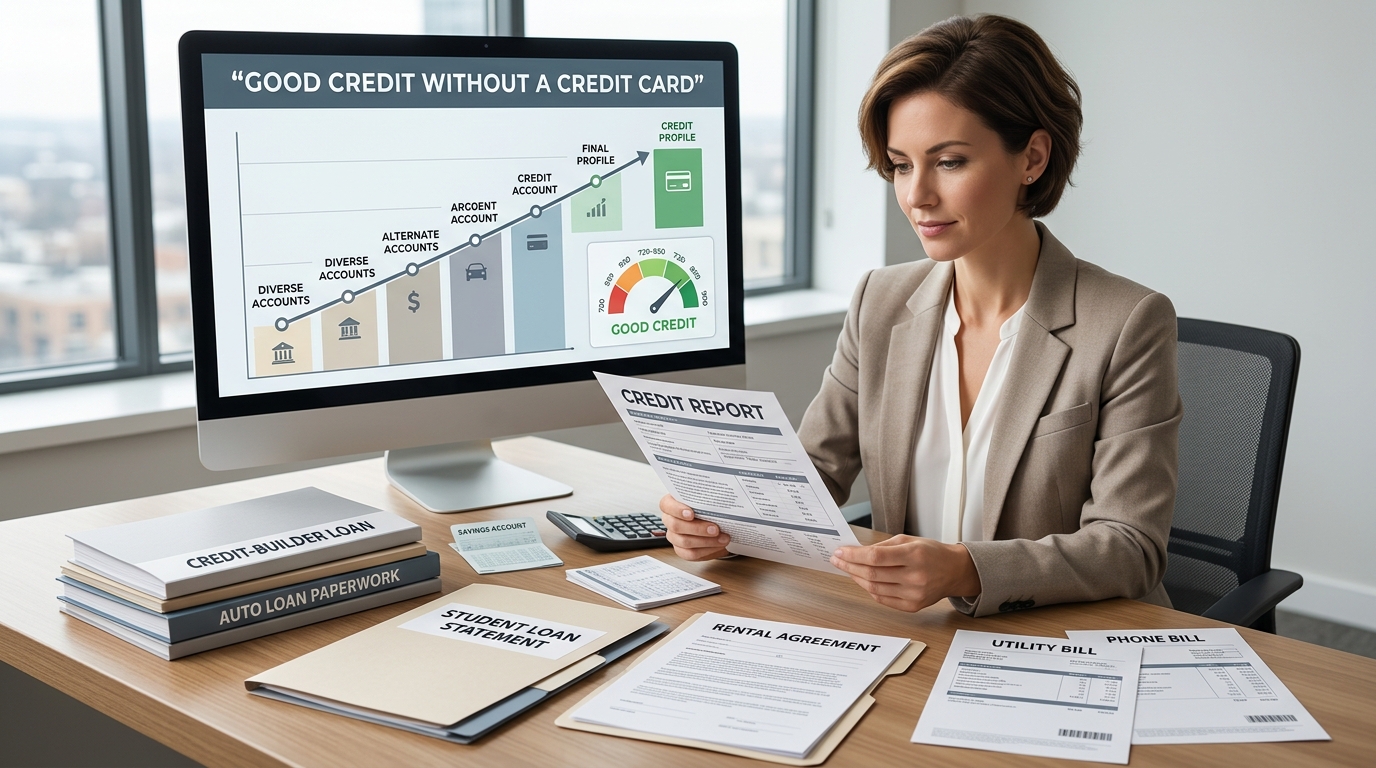
    Good credit without a credit card is genuinely possible. However, it requires a more deliberate approach than the default path many people follow.

    This guide explains how credit scoring can work without a credit card, which alternative tools can help build credit, what the major tradeoffs are, and how you can create a strong credit profile without relying on revolving credit cards.

    Why This Question Even Comes Up

    Some people avoid credit cards for genuinely personal reasons.

    For example, someone may have experienced credit card debt in the past and not want to repeat it. Others may prefer simpler cash-based spending, have personal or religious objections to interest-based debt, or simply want to avoid the temptation of having readily available revolving credit.

    Whatever the reason, the concern is legitimate:

    If credit cards are one of the most common ways people build credit, does avoiding them permanently damage your financial life?

    The answer is nuanced.

    It is absolutely possible to build and maintain good credit without a credit card. However, you generally cannot build a strong traditional credit profile with literally zero credit activity.

    Credit-scoring models need information to evaluate.

    The distinction that matters is therefore “no credit card” versus “no credit at all.”

    If you are starting with little or no credit history, you may also want to read our guide on how to improve your credit score.

    How Credit Scoring Actually Works

    Credit scores are calculated using information contained in your credit reports.

    Those reports track your history with different types of credit accounts. Importantly, “credit accounts” does not mean only credit cards.

    Credit scoring models consider multiple aspects of your credit profile, including factors such as:

    • Payment history.
    • Credit utilization.
    • Length of credit history.
    • Credit mix.
    • New credit and recent applications.

    Payment History

    Payment history is not limited to credit cards.

    If you have a reported installment loan and consistently make your payments on time, those payments can contribute to your credit history.

    Credit Utilization

    Credit utilization is different.

    It primarily concerns revolving credit, such as credit cards and lines of credit, and measures balances relative to available credit limits.

    This is one of the more difficult aspects of a traditional credit profile to develop without a credit card.

    Length of Credit History

    You do not necessarily need a credit card for an account to establish a history over time.

    An installment account that remains open and is managed responsibly can contribute to the age and history of your credit file.

    Credit Mix

    Credit mix considers the different types of credit accounts in your profile.

    Having installment accounts can therefore contribute to the variety of credit types represented in your file.

    New Credit

    New credit considers recent applications, new accounts, and associated inquiries.

    This factor is not exclusively about credit cards.

    Alternative Credit-Building Tools That Don’t Require a Credit Card

    If you intentionally want to avoid credit cards, you still have several potential credit-building options.

    Installment Loans

    Installment loans have a fixed amount, a defined repayment schedule, and a set number of payments.

    Examples include:

    • Auto loans.
    • Personal loans.
    • Student loans.
    • Mortgages.

    When these accounts are reported to the credit bureaus, making payments on time can help establish positive payment history.

    For example, someone with a student loan or auto loan may already be building credit without owning a credit card.

    Credit-Builder Loans

    A credit-builder loan is specifically designed to help consumers establish or strengthen credit history.

    These products are often offered by credit unions and some financial institutions.

    Instead of receiving the loan proceeds immediately, the borrowed amount may be placed into a secured savings account while you make scheduled payments.

    The payments may be reported to the credit bureaus.

    After the loan is completed, the funds are generally released according to the product’s terms.

    Because the structure is specifically designed around building payment history, a credit-builder loan can be an option for someone who does not want a credit card.

    Secured and Share-Secured Loans

    Some credit unions offer secured or share-secured loans backed by money held in a savings account or another form of collateral.

    These loans can be easier to qualify for in some circumstances because the lender has collateral supporting the obligation.

    If the lender reports the account, responsible payments can help establish positive credit history.

    Rent Reporting

    Rent is one of the largest recurring expenses for many consumers, but traditional credit reports have not historically captured every rent payment.

    Some rent-reporting services and participating landlords can report rental payment information to one or more credit bureaus.

    If your rent payments are reliably made on time, rent reporting can potentially turn an existing financial habit into additional credit history.

    The exact bureaus covered, eligibility requirements, and fees vary by service, so review the terms carefully.

    Utility and Phone Bill Reporting

    Some services allow consumers to use eligible utility, phone, or other recurring bill payments to add information to a credit file.

    One example is Experian Boost, which is a service offered by Experian that can consider eligible recurring payments for its credit file.

    However, it is important to understand the limitation: a tool that affects an Experian credit file does not automatically add the same information to Equifax and TransUnion.

    Being an Authorized User

    Another possibility is becoming an authorized user on someone else’s well-managed credit card.

    This does not require you to open a credit card in your own name.

    However, it is technically still an arrangement involving a credit card account, so someone who wants to avoid credit cards entirely may not consider this a true card-free strategy.

    It is also important to understand that authorized-user reporting practices vary by issuer.

    The Utilization Problem: The One Factor That’s Harder Without a Credit Card

    There is one genuine challenge with avoiding credit cards entirely: credit utilization.

    Credit utilization measures revolving balances relative to available revolving credit.

    Credit cards are the most common form of revolving credit available to consumers.

    Installment loans do not work the same way.

    For example, the remaining balance on an auto loan is not treated like a credit card balance compared with a credit limit.

    As a result, someone who has no revolving credit account may have less information in this particular part of their credit profile.

    That does not mean that the person cannot have good credit.

    Someone with strong installment-loan payment history, reported rent payments, and an otherwise clean credit file can still establish a solid credit score without a credit card.

    However, the absence of revolving credit may make it more difficult to maximize certain scoring factors compared with an otherwise identical consumer who responsibly manages a revolving account.

    A Realistic Path to Good Credit Without a Credit Card

    If avoiding credit cards is your goal, you can take a deliberate approach.

    1. Start With an Installment-Type Account

    A credit-builder loan can be one option because it is specifically designed to establish positive payment history.

    Before opening any account, compare the fees, interest rate, reporting practices, and total cost.

    2. Add Rent Reporting If You Rent

    If you already pay rent consistently, rent reporting may allow those payments to contribute to your credit profile.

    Compare providers carefully and confirm which credit bureaus receive the information.

    3. Consider Eligible Bill-Payment Reporting

    Services such as Experian Boost may allow eligible recurring bills to contribute information to an Experian credit file.

    This can be useful for someone who is already paying those bills regularly.

    4. Consider a Secured Installment Loan

    If you have savings and your credit union offers a suitable share-secured loan, this may provide another installment account that can contribute to your payment history and credit mix.

    5. Be Patient

    Building credit without a credit card can require patience.

    A good credit profile is generally built through consistent, responsible management over time rather than a single financial product.

    A solid credit score can be achievable without a credit card, although the exact score and timeline will depend on the individual’s credit history and the scoring model being used.

    Is It Actually a Good Idea to Avoid Credit Cards Entirely?

    This is a separate question from whether it is technically possible.

    There are legitimate reasons someone may choose not to use credit cards.

    Reasons Someone May Avoid Credit Cards

    Someone with a history of credit card debt may prefer not to have access to revolving credit.

    Others may prefer spending only money they already have available.

    Personal, ethical, or religious beliefs may also influence the decision.

    For those individuals, avoiding credit cards can be a deliberate financial choice rather than a credit-building mistake.

    Tradeoffs of Going Card-Free

    Credit cards can provide access to revolving credit, which is relevant to the utilization portion of many scoring models.

    They may also provide rewards, cash-back opportunities, emergency payment flexibility, and certain consumer protections.

    Some consumers who want to minimize risk choose a middle-ground option, such as a secured credit card with a small limit.

    However, a secured credit card is still a credit card and therefore does not meet the strict definition of avoiding credit cards altogether.

    Common Misconceptions About Credit Without a Credit Card

    “You Need a Credit Card to Have Any Credit Score.”

    False.

    Credit scores can be generated using information from different types of reported credit accounts.

    Installment loans can contribute to a credit history even when a consumer has never opened a credit card.

    “Debit Cards Build Credit Like Credit Cards.”

    False.

    Using a debit card generally does not create the same type of credit account or revolving credit history as a credit card.

    Debit card purchases draw from money already held in your bank account rather than extending credit.

    Therefore, simply using a debit card responsibly does not normally establish traditional credit history.

    “You Can Never Get a Mortgage Without a Credit Card.”

    Not necessarily.

    Mortgage lenders evaluate an applicant’s overall financial and credit profile.

    Installment loan history, rental payment history where considered, income, assets, debt obligations, and other factors can all matter.

    However, a consumer with a thin credit file may encounter different underwriting requirements than someone with a longer and more diverse credit history.

    Frequently Asked Questions

    Can I get a good credit score using only a credit-builder loan?

    It is possible to establish credit with a credit-builder loan, but relying on one account can limit the breadth of your credit profile.

    Depending on your situation, combining responsible installment credit with other legitimate reporting sources may create a more developed credit history.

    Does having zero revolving credit actively hurt my score?

    The absence of revolving credit does not automatically mean that your credit score will be poor.

    However, it means scoring models may have less information about your management of revolving credit and utilization.

    This can limit your ability to maximize certain scoring factors.

    If I eventually want a credit card, will building credit without one help?

    An established history of responsible credit management can give a lender more information about your creditworthiness than having no credit history at all.

    Whether that makes approval easier depends on the lender’s underwriting requirements and your overall credit profile.

    Is a secured credit card considered a credit card?

    Yes.

    A secured credit card is still a revolving credit account. The deposit provides security for the issuer, but the account functions as a credit card for credit-reporting purposes.

    How long does it take to build good credit without a credit card?

    There is no universal timeline.

    The time required depends on the accounts you use, whether they are reported to the credit bureaus, the age of your existing history, and how consistently you make payments.

    Building a meaningful credit history generally requires months and often years of responsible management.

    A Closer Look at Experian Boost and Similar Tools

    Experian Boost is one of the better-known tools for potentially adding eligible recurring payment information to an Experian credit file.

    The service can connect to eligible bank accounts or use other supported methods to identify qualifying payments such as certain utility, phone, and streaming bills.

    However, there is an important limitation.

    Experian Boost applies to an Experian credit file.

    It does not automatically add the same information to Equifax and TransUnion.

    That means someone who relies heavily on Experian Boost should understand that a lender reviewing another bureau may not see the same information.

    It is therefore better viewed as a supplement to a broader credit-building strategy rather than a complete replacement for traditional credit accounts.

    How Lenders May Evaluate You Without a Traditional Credit Profile

    Someone can have responsible financial habits and still have a relatively thin credit file.

    A lender may sometimes use alternative underwriting methods when traditional credit information is limited.

    Depending on the lender and product, alternative evaluation may include:

    • Bank-account information.
    • Income consistency.
    • Rental payment history.
    • Utility payment history.
    • Employment information.
    • Alternative credit data.
    • Manual underwriting.

    Not every lender offers these options.

    If you have repeatedly been denied because your credit file is too thin, you can ask the lender whether it offers an alternative underwriting process.

    A Sample 12-Month Plan for Building Credit Without a Credit Card

    Month 1

    Consider opening a credit-builder loan through a reputable credit union or financial institution after comparing costs and reporting practices.

    If you rent, investigate whether a legitimate rent-reporting service is available to you.

    Months 1–3

    Make every payment on time.

    Confirm that the credit-builder loan is being reported correctly and, if applicable, that your rent-reporting service has begun reporting payments.

    Month 3

    Consider whether an eligible service such as Experian Boost fits your situation.

    If you use such a service, understand which credit bureau receives the information.

    Months 3–6

    Continue making all payments on time.

    Review your credit reports to confirm that your accounts are being reported accurately.

    If you find inaccurate information, learn more about how to dispute credit report errors.

    Month 6

    Depending on your financial situation, you could consider whether another appropriate installment account makes sense.

    Do not open unnecessary debt solely for the purpose of increasing your credit score.

    Months 6–12

    Continue responsible payment management and monitor your credit periodically.

    Focus on consistency rather than trying to create rapid score changes.

    Month 12 and Beyond

    After a year of consistent management, review your overall credit profile and determine whether your current strategy is meeting your goals.

    If you eventually decide that a credit card is appropriate, an established credit history may provide a stronger starting point than applying with no credit history at all.

    Frequently Asked Questions About Building Credit Without a Credit Card

    Does paying off a credit-builder loan early hurt my credit?

    Paying off an installment loan early does not erase the positive payment history that has already been reported.

    However, paying it off early ends the future monthly reporting that would have occurred while the loan remained open.

    If your primary purpose for the account is credit building, compare the financial cost of the loan with the potential benefit of keeping it open according to its original schedule.

    Is my credit mix incomplete if I only have installment loans?

    Not in a way that automatically prevents you from having good credit.

    However, scoring models can consider the variety of credit accounts in your profile, so an otherwise identical profile with both installment and revolving accounts may have different scoring results.

    Can I build credit through a mortgage if it is my only credit account?

    Yes. A mortgage is an installment loan, and its reported payment history can contribute to your credit profile.

    Because mortgages can remain on a credit report for many years, responsible mortgage payments can become an important part of a homeowner’s credit history.

    Can Someone Without a Credit Card Have a Higher Score Than Someone With One?

    Absolutely.

    Having a credit card does not automatically produce a good credit score.

    For example, someone with a maxed-out credit card and a history of late payments can have substantially weaker credit than someone who has no credit card but maintains a clean history of reported installment payments.

    The important issue is not simply whether a particular account exists.

    How responsibly the accounts are managed matters enormously.

    Why Some Financial Professionals Still Recommend Having a Credit Card

    Even though good credit without a credit card is possible, there are practical reasons some financial professionals recommend having access to one.

    Emergency Flexibility

    A credit card can provide another payment option during an emergency when cash savings may not immediately cover a large expense.

    However, relying on credit for emergencies can also create debt, so an emergency fund remains an important part of financial planning.

    Fraud Protection

    Credit cards and debit cards have different legal and practical protections for unauthorized transactions.

    Consumers should understand the applicable rules and promptly report unauthorized transactions to their financial institution.

    Building Revolving Credit History

    As discussed earlier, revolving credit is the main area that is difficult to replicate without a credit card.

    A responsibly managed credit card can therefore provide information about revolving-credit management that installment loans cannot provide in the same way.

    Travel and Rental Holds

    Some hotels and rental-car companies may place security holds or have policies that make credit cards more convenient or, in some circumstances, specifically required.

    Someone who chooses to remain entirely credit-card-free should check payment requirements before traveling.

    These practical considerations do not change the central point: you can build good credit without a credit card.

    Frequently Asked Questions About Going Completely Card-Free

    Does closing my only credit card hurt my credit?

    It can affect your credit profile, particularly if the account is old or has a meaningful credit limit.

    Closing a credit card can eliminate its available revolving credit and may affect utilization calculations depending on how your remaining accounts are reported.

    If you already have a card and are considering closing it, evaluate the consequences before making the decision.

    Our guide to how credit scores are calculated can help you understand the relevant factors.

    Are credit-builder loans available everywhere?

    Availability varies by location and financial institution.

    Credit unions and community financial institutions may offer credit-builder products, but terms, fees, interest rates, and credit-bureau reporting practices vary.

    Compare several options before opening an account.

    Will lenders think it is suspicious if I have no credit card?

    Not necessarily.

    A lender generally evaluates the overall credit profile rather than automatically treating the absence of a credit card as suspicious.

    However, a limited or thin credit file may provide less information for traditional underwriting.

    The Bottom Line

    Yes, you can have good credit without a credit card.

    But there is an important distinction: you generally cannot build a strong traditional credit profile without any credit activity.

    Installment loans, credit-builder loans, mortgages, eligible rent reporting, and certain bill-reporting services can all provide alternative paths to establishing credit history.

    The main tradeoff is credit utilization.

    Because utilization specifically concerns revolving credit, it is harder to develop that part of your credit profile without a revolving account.

    That may make reaching the highest scoring tiers more difficult in some circumstances, but it does not prevent you from developing solid credit.

    If avoiding credit cards is an intentional personal or financial choice, it does not have to mean giving up on good credit.

    The key is to be deliberate about the other credit-building tools you use, make every payment on time, avoid unnecessary debt, and periodically review your credit reports for accuracy.

    If you are working to establish or rebuild your credit, explore our credit repair tips and our guide on how to fix your credit.

    Need Help Understanding Your Credit Profile?

    If you are building credit without a credit card or trying to understand why your score is not where you want it to be, reviewing your credit reports is an important first step.

    Contact Credit Repair Services to discuss your credit situation →
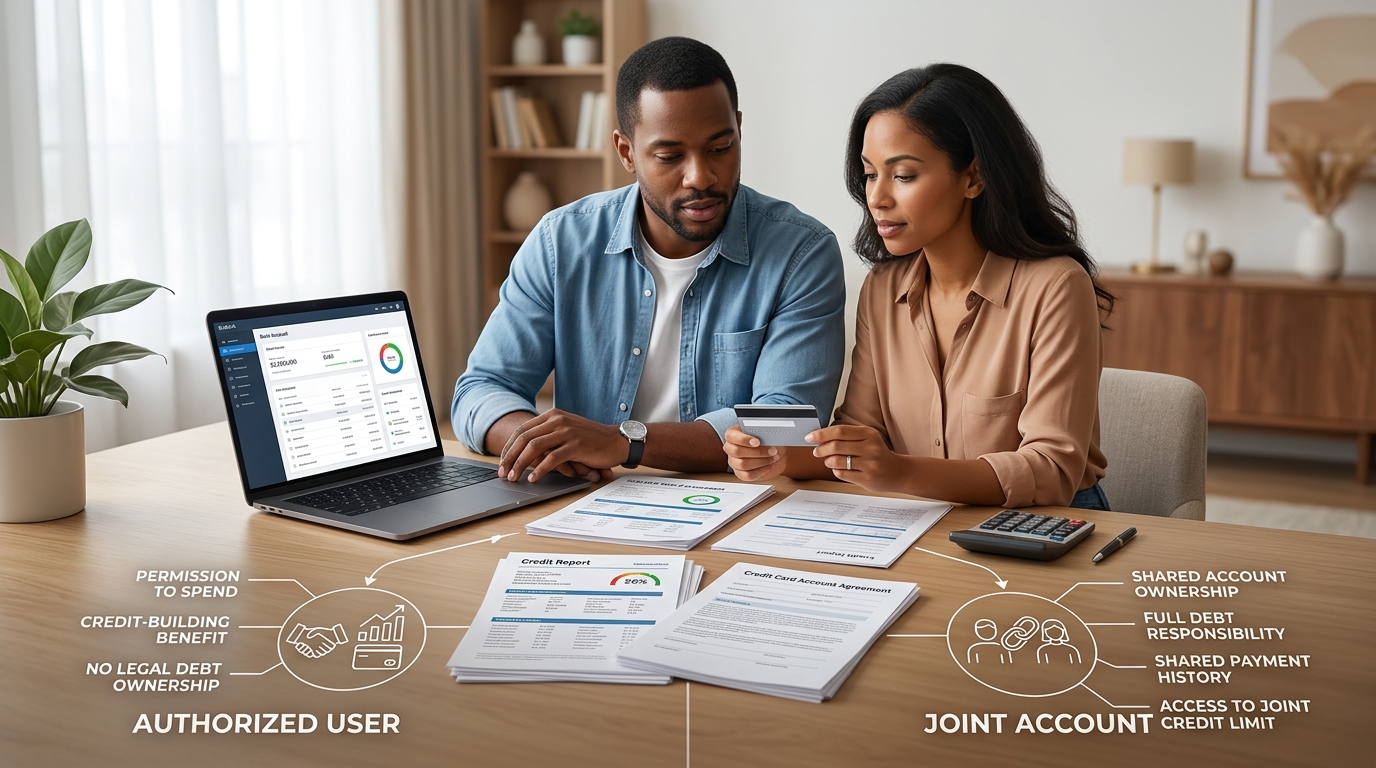
  • Authorized User vs. Joint Account Holder: What’s the Difference?

    Authorized User vs. Joint Account Holder: What’s the Difference?

    If someone has offered to add you to their credit card, or you’re considering adding a family member to one of yours, you’ve probably encountered two terms that are often used interchangeably: authorized user and joint account holder.

    They may sound similar because both involve two people connected to one account. But the financial and legal reality behind each arrangement is very different.

    The distinction can affect your credit report, credit-building opportunities, control over the account, and responsibility for debt.

    This guide explains exactly what separates an authorized user from a joint account holder, when each arrangement may make sense, and the mistakes people make when they assume the two are interchangeable.

    The Short Version

    An authorized user is someone who has been given permission to use a credit card account that legally belongs to someone else. They can generally make purchases using the card, and the account’s history may appear on their credit report if the issuer reports authorized-user activity. However, an authorized user generally has no legal obligation to pay the account balance and does not own the account.

    A joint account holder is a co-owner of the account. Both people are legally responsible for the debt and generally have account-management rights associated with ownership.

    That distinction—legal responsibility for the debt—is the single most important difference between the two arrangements.

    If you are trying to build credit, it is also important to understand how credit scores are calculated, because the effect of an account depends on the information being reported and the scoring model being used.

    Authorized Users Explained

    How an Authorized User Arrangement Works

    The primary cardholder—the person who owns the account—can request that the card issuer add another person as an authorized user.

    The issuer may request information such as the person’s name, date of birth, and, depending on its policies, Social Security number or other identifying information.

    Unlike opening a new credit account, adding an authorized user typically does not require the same type of credit application and approval process for the person being added.

    The authorized user may receive a physical card connected to the same account and credit limit.

    What Authorized Users Can Do

    Depending on the card issuer’s policies, an authorized user may be able to:

    • Make purchases using the authorized card.
    • Use the account’s available credit.
    • View certain account information.
    • Request a replacement card or report a card as lost or stolen.

    The exact permissions can vary by issuer, so the account holder should confirm the specific rules before adding another person.

    What Authorized Users Generally Cannot Do

    An authorized user generally does not have the same legal rights as the account owner.

    Depending on the issuer and account agreement, an authorized user generally cannot:

    • Take legal ownership of the account.
    • Become legally responsible for the account balance simply by being an authorized user.
    • Change the overall credit limit.
    • Add other authorized users.
    • Make major account-level decisions reserved for the account owner.
    • Close the account as an owner.

    The precise rules vary by card issuer, so the account agreement remains important.

    How Being an Authorized User Can Affect Your Credit

    This is one of the main reasons people consider becoming authorized users.

    Many major credit card issuers report authorized-user accounts to the credit bureaus. When they do, information associated with the account can appear on the authorized user’s credit report.

    That may include information such as:

    • Account age.
    • Payment history.
    • Credit limit.
    • Reported balance.
    • Utilization information.

    For example, imagine that a parent has maintained a credit card for many years with a strong payment history and relatively low utilization. If the issuer reports the account for the authorized user, that established account may become part of the authorized user’s credit profile.

    This can be particularly relevant for someone with a thin or relatively new credit file.

    However, authorized-user status is not automatically beneficial.

    If the primary account holder carries high balances, misses payments, or otherwise has negative information reported on the account, those details may also affect the authorized user’s credit file when the issuer reports them.

    The authorized user therefore receives potential benefits from someone else’s account behavior—but may also be exposed to the consequences of that person’s account management.

    For additional credit-building strategies, see our guide on how to improve your credit score.

    Joint Account Holders Explained

    How a Joint Account Works

    A joint account involves two people who are legally responsible for the account.

    Both individuals generally apply for the account together and are evaluated according to the lender or card issuer’s approval requirements.

    Joint credit card arrangements are less common today than authorized-user arrangements with many issuers, so the availability of joint accounts depends heavily on the specific financial institution.

    What Joint Account Holders Can Do

    Because joint holders are co-owners, they generally have substantially greater rights than authorized users.

    Depending on the account agreement, joint holders may be able to:

    • Make purchases.
    • View and manage the account.
    • Request certain account changes.
    • Manage account settings allowed under the agreement.
    • Exercise ownership rights associated with the account.

    The precise authority available to each joint holder depends on the financial institution and the account agreement.

    What Joint Account Holders Are Responsible For

    Here is the critical difference:

    Joint account holders can be legally responsible for the entire balance, regardless of who made the individual purchases.

    Suppose two people share a credit card and one person charges $8,000 but then stops making payments.

    The other joint holder may still be responsible for the full balance under the account agreement. Joint liability does not necessarily mean that each person is responsible for only half of the debt.

    This is why joint accounts require a significantly higher level of financial trust and communication.

    How Joint Accounts Affect Credit

    Because both people are legal account holders, the account can appear on both individuals’ credit reports.

    Positive information can help both credit profiles, while negative information can hurt both.

    If payments are missed or balances become excessively high, both joint holders can potentially experience negative credit consequences.

    This is different from an authorized-user relationship because the joint holder is also legally responsible for the underlying debt.

    Authorized User vs. Joint Account: Side-by-Side Comparison

    Feature Authorized User Joint Account Holder
    Legal ownership Generally no Yes
    Legal responsibility for debt Generally none solely from authorized-user status Generally full responsibility
    Credit check Usually no separate credit application Typically yes when opening the account
    Can use the card Generally yes Yes
    Can manage the account Limited Generally much broader rights
    Can close the account Generally no Ownership rights may allow account management, subject to issuer rules
    Appears on credit report Often, but issuer-dependent Generally yes
    Affected by negative account activity Potentially yes Yes
    Debt liability Generally no legal liability Generally full legal liability
    Removal Often relatively straightforward, depending on issuer Generally more complicated

    When Being an Authorized User May Make Sense

    An authorized-user arrangement may make sense in several situations.

    Helping Someone Build Credit

    A parent or family member may want to help someone with a thin credit file establish positive credit history.

    A well-managed account with a long history and low utilization may provide useful credit-report information if the card issuer reports authorized-user activity.

    However, the account holder should understand that the authorized user may be affected by the account’s reported activity.

    Providing Spending Access Without Shared Legal Ownership

    An authorized-user arrangement can provide another person with card access while keeping ownership and primary responsibility with the account holder.

    For example, a parent may add a teenager or young adult to a credit card for emergencies or controlled spending.

    The primary cardholder retains control of the underlying account.

    Using a More Reversible Arrangement

    Authorized-user status can generally be removed without closing the entire credit account, although the exact process depends on the issuer.

    This can make the arrangement less permanent than establishing a joint account.

    When a Joint Account May Make Sense

    A joint account may make sense when both people genuinely intend to share ownership and responsibility.

    Shared Household Expenses

    Couples or long-term partners who manage household finances together may choose an arrangement in which both people have legal responsibility and account-management rights.

    Equal Financial Responsibility

    If both people want the account to represent a shared financial obligation, joint ownership can reflect that arrangement more directly.

    Shared Financial Planning

    Joint accounts can also be considered when two people are intentionally building a shared financial life and both understand the consequences of the account.

    The important point is that joint ownership comes with genuine financial liability—not simply shared access.

    The Risks You Should Take Seriously

    Risks for an Authorized User

    An authorized user’s primary risk is that their credit profile may be affected by someone else’s account management.

    If the primary cardholder:

    • Misses payments.
    • Uses a very high percentage of the available credit.
    • Allows the account to become delinquent.
    • Accumulates other negative information.

    the authorized user’s credit report may potentially reflect that information if the issuer reports it.

    The authorized user may have little or no control over correcting the underlying account because they are not the legal owner.

    Risks for a Joint Account Holder

    The risk is more direct for a joint holder.

    If the other joint holder spends heavily and does not pay the balance, the other joint holder may remain legally responsible for the entire debt.

    That means a disagreement over spending can become a serious financial and credit problem.

    Relationship Risk in Both Arrangements

    Both arrangements require trust and communication.

    Problems can arise when:

    • One person spends more than expected.
    • Payment responsibilities are unclear.
    • The relationship ends.
    • One person becomes financially irresponsible.
    • Neither person has clearly defined an exit plan.

    Before linking your credit to another person, discuss the rules and expectations in advance.

    How to Remove Yourself From an Authorized User Arrangement

    Removing an authorized user is generally simpler than separating from a joint account.

    An authorized user may be able to request removal directly from the card issuer, or the primary cardholder can generally request that the authorized user be removed.

    The exact procedure varies by issuer.

    After removal, the account’s future reporting may no longer appear as an authorized-user account on the person’s credit file. The treatment of historical information can depend on the credit bureau, issuer, and circumstances.

    If you are using authorized-user status as part of a broader credit-building strategy, it is important to have other accounts or positive credit activity rather than relying entirely on someone else’s account.

    How to Remove Yourself From a Joint Account

    Removing yourself from a joint account can be considerably more complicated.

    Simply agreeing with the other person that you are no longer responsible does not necessarily release you from your legal obligation to the creditor.

    Depending on the account and issuer, separating the financial relationship may require:

    • Paying off the existing balance.
    • Closing the joint account.
    • Opening a new account in one person’s name.
    • Refinancing or transferring the obligation where available.
    • Working directly with the creditor to determine available options.

    This is particularly important after a divorce or separation.

    A private agreement between two former partners does not necessarily change the terms of the creditor’s account agreement.

    What Happens When Someone Dies?

    The two arrangements can also differ when one account holder dies.

    Authorized User

    An authorized user generally is not legally responsible for the deceased primary cardholder’s credit card debt merely because they were an authorized user.

    The account and any outstanding debt may instead be handled according to the primary cardholder’s estate and applicable law.

    Joint Account Holder

    A surviving joint account holder generally remains responsible for the account’s outstanding balance because they are also a legal account holder.

    The exact treatment of an account after death can depend on the account agreement and applicable law, so anyone dealing with a deceased account holder’s debts should confirm the specific circumstances.

    Authorized User vs. Co-Signer: A Third Important Difference

    Authorized users and joint account holders are also different from co-signers.

    A co-signer agrees to be legally responsible for a debt if the primary borrower does not meet their obligation.

    A co-signer may not have the same day-to-day access to the account that an authorized user or joint account holder has.

    In terms of financial liability, however, a co-signer can have significant responsibility for the debt.

    Because the exact structure varies by loan and lender, it is important to read the specific agreement rather than assuming that “co-signer,” “joint holder,” and “authorized user” mean the same thing.

    Frequently Asked Questions

    Will an authorized-user account appear on my credit report?

    It may. Many issuers report authorized-user accounts to the credit bureaus, but reporting practices vary by issuer. If credit building is the reason for adding an authorized user, confirm the issuer’s reporting policy first.

    Can an authorized user be responsible for the credit card debt?

    Simply being an authorized user generally does not make the person legally responsible for the underlying balance. The primary account holder remains responsible for the debt under the account agreement.

    Can a joint account holder be responsible for the entire balance?

    Generally, yes. Joint account holders can be legally responsible for the entire balance rather than only the portion associated with their own purchases.

    Is an authorized user the same as a joint account holder?

    No. An authorized user generally has permission to use someone else’s account without becoming a legal owner. A joint account holder is a co-owner with legal responsibility for the account.

    Can an authorized user close the account?

    Generally, no. An authorized user does not normally have the same account-ownership rights as the primary account holder.

    Can a joint account holder close the account?

    Account-management rights depend on the specific issuer and account agreement. A joint holder generally has substantially greater rights than an authorized user, but the exact process for closing or changing an account should be confirmed with the issuer.

    Can I become an authorized user without providing my Social Security number?

    It depends on the card issuer. Some issuers may require limited information, while others may request additional identifying information so they can accurately report the account.

    Is being an authorized user good for building credit?

    It can be useful when the account is well managed and the issuer reports authorized-user activity to the credit bureaus. However, it should not be treated as a guaranteed score increase, because the impact depends on the account information and the scoring model.

    For a broader look at credit-building strategies, visit our guide to improving your credit score.

    Can I build credit by being an authorized user and also having my own account?

    Yes. These approaches are not mutually exclusive. An authorized-user account can potentially add established credit history, while your own accounts give you credit relationships that you control directly.

    Can a joint account holder be added after an account is opened?

    This depends on the financial institution. Some institutions may allow changes to account ownership, while others do not offer joint credit card accounts or require a new application.

    Can my ex-spouse remove me from a joint account?

    The process depends on the account and issuer. Because joint holders have legal responsibility for the debt, simply asking to be removed does not necessarily release you from the creditor’s claim.

    If you are separating finances, contact the creditor directly and determine what options are available for closing, transferring, or restructuring the account.

    A Real-World Example: Helping a College Student Build Credit

    Imagine a parent wants to help a college-age child establish credit.

    There are two possible approaches:

    1. Add the child as an authorized user on an established credit card.
    2. Open a joint credit account together, if the issuer offers that structure.

    Authorized User Approach

    The parent remains the legal owner of the account.

    The child can potentially benefit from the account’s reported history if the issuer reports authorized-user activity.

    The parent maintains control over the account and can generally remove the authorized user if circumstances change.

    The downside is that the child does not have the same legal ownership or control as a joint holder.

    Joint Account Approach

    The child becomes a legal co-owner of the account.

    This creates a more direct shared financial relationship, but it also means both people can be responsible for the account balance.

    If the child makes large purchases and does not pay, the parent may remain legally responsible for the debt as a joint account holder.

    The choice therefore depends on whether the goal is primarily credit-building with limited shared liability or genuine shared ownership and responsibility.

    How Scoring Models Treat Authorized-User Accounts

    Authorized-user accounts can influence credit scoring, but the exact impact depends on the scoring model and the information reported.

    Credit-scoring models have evolved over time, including changes related to the treatment of authorized-user accounts.

    This matters because simply becoming an authorized user does not guarantee a particular score increase.

    The account’s age, payment history, utilization, and other information can all matter.

    Be Careful With “Tradeline Renting”

    Some companies and individuals have promoted arrangements in which strangers are paid to add consumers as authorized users to established credit accounts.

    This is different from a genuine family or trusted-person relationship.

    Consumers should be cautious about paying for credit-report access through an unrelated person’s account, particularly when a company promises a guaranteed score increase.

    Legitimate credit building should focus on accurate credit information and responsible financial behavior rather than relying on questionable arrangements designed solely to manipulate a credit profile.

    What to Discuss Before Setting Up Either Arrangement

    Before adding someone as an authorized user or opening a joint account, have a clear conversation about expectations.

    How Much Can Be Spent?

    Agree on whether the authorized user or joint holder will have a specific spending limit or informal spending rules.

    Who Will Make the Payments?

    Make the payment responsibility clear before spending begins.

    This is especially important for joint accounts because both people can remain legally responsible for the debt.

    How Will You Monitor the Account?

    Decide whether both people will review balances, purchases, and payment activity regularly.

    What Is the Exit Plan?

    Discuss what happens if the arrangement needs to end.

    For an authorized user, that may mean removing the person from the account.

    For a joint account, the process may involve paying the balance, closing the account, or establishing a new arrangement with the creditor.

    Frequently Asked Questions About Authorized Users and Joint Accounts

    Does adding an authorized user cost money?

    Many card issuers do not charge a fee for adding an authorized user, although some premium cards may charge additional-user fees. Check the specific card’s terms before adding someone.

    Does an authorized user get a separate credit limit?

    Generally, no. An authorized user’s card is typically connected to the same overall credit limit as the primary account.

    What happens if a joint account holder files bankruptcy?

    The bankruptcy of one joint holder does not automatically erase the other person’s legal responsibility for the joint debt. If you are a joint holder, you may remain responsible for the balance even if the other person’s obligation is affected by bankruptcy.

    Because bankruptcy law is highly fact-specific, anyone facing this situation should obtain advice specific to their circumstances.

    Can an authorized user account be converted into a joint account?

    There is generally no universal conversion process. If both people want genuine joint ownership, the issuer may require a new application or another formal account process.

    Do all credit card companies report authorized users?

    No. Reporting practices vary by issuer. If credit building is the primary reason for the arrangement, verify directly with the issuer that authorized-user activity is reported.

    How Divorce Can Complicate Joint Accounts

    Joint accounts can become especially complicated during divorce.

    A divorce agreement may assign responsibility for a particular debt to one spouse, but that agreement does not necessarily change the creditor’s original contract with both joint account holders.

    For example, if a divorce agreement says that one spouse will pay a joint credit card, the creditor may still be able to pursue both joint account holders if the debt remains jointly owed under the account agreement.

    This is why separating joint financial obligations during a divorce requires careful coordination with the creditors involved.

    Simply relying on a private agreement between former spouses may not be enough to remove a person’s liability to the creditor.

    What Happens If an Authorized User Is Removed?

    Removing an authorized user can affect the person’s credit profile if the account was contributing to their reported credit history.

    If the account is no longer reported as an authorized-user account, the person’s credit profile can change depending on how important that account was to their overall history, utilization, and credit mix.

    For someone who relies heavily on one authorized-user account, losing it may have a noticeable effect.

    This is another reason to build independent credit accounts rather than relying entirely on someone else’s account.

    Can Business Credit Cards Have Joint Account Holders?

    Business credit cards can have different structures from personal credit cards.

    Businesses may have an owner or authorized employee users, while the underlying business entity and individual guarantors can have different responsibilities depending on the issuer and agreement.

    Do not assume that business-card terminology works exactly like personal joint-account terminology.

    Can an Authorized User Affect Your Mortgage Application?

    Potentially, depending on the lender’s underwriting policies.

    Some mortgage underwriting processes may consider information associated with an authorized-user account when evaluating a borrower’s credit profile or debt obligations.

    If you are relying heavily on authorized-user accounts before applying for a mortgage, ask the lender how it treats those accounts under its underwriting guidelines.

    The Bottom Line

    The difference between an authorized user and a joint account holder comes down primarily to one question:

    Who is legally responsible for the debt?

    An authorized user generally receives permission to use someone else’s account without becoming the legal owner or assuming responsibility for the underlying debt solely because of that status.

    A joint account holder is a legal co-owner and can be fully responsible for the account balance, regardless of who actually made the purchases.

    Both arrangements can affect credit reports, but they create very different levels of control and legal responsibility.

    Before choosing either arrangement, consider:

    • Who owns the account?
    • Who is legally responsible for the balance?
    • Will the account be reported to the credit bureaus?
    • How will spending be controlled?
    • What happens if payments are missed?
    • What happens if the relationship ends?
    • How easy will it be to exit the arrangement?

    If your goal is to build or rebuild credit, you can also explore our guides on how to fix your credit and credit repair tips.

    Need Help Reviewing Your Credit Profile?

    If you’re trying to determine whether an authorized-user account, joint account, or another credit issue is affecting your credit profile, reviewing your reports carefully is an important first step.

    Contact Credit Repair Services for help with your credit situation →

  • Create a premium photorealistic editorial image for a U.S. personal-finance article titled “How Often You Should Actually Check Your Credit Report.” Show an American consumer at a clean modern desk reviewing a credit report on a laptop, with a calendar displaying a quarterly schedule, smartphone with a subtle credit-monitoring notification, credit report pages, magnifying glass, and checklist. Visually communicate a practical monitoring routine: monthly score monitoring → quarterly full credit report review → increased monitoring before major financial decisions. Include subtle visual references to Equifax, Experian, and TransUnion only through generic three-report symbolism, with no company logos. Professional financial-services editorial photography, calm and trustworthy atmosphere, realistic documents and technology, natural lighting, sophisticated neutral palette, wide horizontal composition for a WordPress featured image, no readable fake personal information. Create an optimized 100 KB version also for fast website loading.

    Create a premium photorealistic editorial image for a U.S. personal-finance article titled “How Often You Should Actually Check Your Credit Report.” Show an American consumer at a clean modern desk reviewing a credit report on a laptop, with a calendar displaying a quarterly schedule, smartphone with a subtle credit-monitoring notification, credit report pages, magnifying glass, and checklist. Visually communicate a practical monitoring routine: monthly score monitoring → quarterly full credit report review → increased monitoring before major financial decisions. Include subtle visual references to Equifax, Experian, and TransUnion only through generic three-report symbolism, with no company logos. Professional financial-services editorial photography, calm and trustworthy atmosphere, realistic documents and technology, natural lighting, sophisticated neutral palette, wide horizontal composition for a WordPress featured image, no readable fake personal information. Create an optimized 100 KB version also for fast website loading.

    There’s a strange gap between what people believe about checking their credit report and what’s actually true. Some people avoid checking altogether because they worry that looking at their credit will somehow hurt their score. Others check obsessively, refreshing a monitoring app every day as if they were watching a stock ticker.

    Neither extreme is necessary.

    Checking your own credit report does not hurt your credit score. The more useful question is how often you should check it so you can catch errors, fraud, and unexpected changes without turning credit monitoring into an unnecessary source of stress.

    This guide explains how often to check your credit report and score, when checking more frequently makes sense, what to look for when reviewing your report, and how to build a practical monitoring routine.

    The Foundational Fact: Checking Your Own Credit Never Hurts It

    Before anything else, this needs to be clear: checking your own credit report or credit score through a legitimate method does not lower your credit score.

    When you check your own credit, the inquiry is generally considered a soft inquiry. Soft inquiries do not affect your credit score.

    This is different from a hard inquiry, which can occur when a lender checks your credit because you have applied for a loan, credit card, or another form of credit.

    The Consumer Financial Protection Bureau explains that checking your own credit report does not hurt your score. ([consumerfinance.gov](https://www.consumerfinance.gov/ask-cfpb/does-checking-my-own-credit-report-hurt-my-credit-score-en-1331/?utm_source=chatgpt.com))

    So if you have been avoiding your credit report because you are afraid that checking it will lower your score, that concern is based on a misunderstanding.

    How Often Should You Check Your Credit Report?

    For many people, reviewing the full credit report every three to four months is a practical routine.

    This provides regular opportunities to identify:

    • Accounts you do not recognize.
    • Incorrect balances.
    • Incorrect payment information.
    • Unauthorized hard inquiries.
    • Duplicate collection accounts.
    • Incorrect personal information.
    • Other reporting errors.

    However, there is no rule requiring every consumer to follow exactly the same schedule. The appropriate frequency depends on your financial situation, how actively you use credit, and whether you are currently dealing with a higher-risk situation such as identity theft or a major loan application.

    Use AnnualCreditReport.com for Your Official Credit Reports

    Consumers can obtain their credit reports through AnnualCreditReport.com, the federally authorized source for credit reports from the three nationwide credit reporting companies.

    Those companies are:

    • Equifax
    • Experian
    • TransUnion

    The reports from the three bureaus may contain different information because not every creditor or data furnisher necessarily reports to all three companies.

    That is one reason reviewing reports from more than one bureau can be useful.

    You can either obtain available reports together or use a staggered approach so you are checking a different bureau periodically throughout the year.

    A Practical Quarterly Monitoring Strategy

    One practical approach is to divide your year into four monitoring periods.

    Quarter 1

    Review one credit bureau’s full report and look for unfamiliar accounts, inquiries, balances, and payment information.

    Quarter 2

    Review another bureau’s report and compare important information with your previous report.

    Quarter 3

    Review the third bureau’s report.

    Quarter 4

    Repeat the cycle or obtain additional reports when appropriate.

    The exact order does not matter nearly as much as having a consistent system that you will actually follow.

    If you prefer to pull all three reports at once, that is also reasonable. Staggering them is simply a strategy for creating more frequent coverage.

    When You Should Check Your Credit Report More Frequently

    Quarterly monitoring can be a useful baseline, but some circumstances justify checking your credit more often.

    Before Applying for a Mortgage

    If you are preparing to buy a home, reviewing your credit reports before submitting mortgage applications can give you time to identify and address potential errors.

    A mortgage application can involve significant financial consequences, so discovering an incorrect account or reporting error shortly before closing can create unnecessary complications.

    Checking your reports several months before the application can give you more time to investigate potential problems.

    Before Applying for an Auto Loan

    The same principle applies to a major auto-financing application.

    Reviewing your reports beforehand can help you understand what information lenders may see and give you an opportunity to identify inaccurate information.

    Before Other Major Financing Decisions

    Major financing decisions may include:

    • Mortgage applications.
    • Auto loans.
    • Large personal loans.
    • Business financing that relies on personal credit.
    • Other significant credit applications.

    Reviewing your credit before these events is generally more useful than waiting until the application has already been submitted.

    After a Data Breach

    If your personal information was exposed in a data breach, increased monitoring can help you identify suspicious activity sooner.

    Depending on the circumstances, you may also consider a credit freeze or fraud alert.

    The FTC explains that a credit freeze can restrict access to your credit report and make it harder for identity thieves to open new accounts in your name. ([consumer.ftc.gov](https://consumer.ftc.gov/articles/what-know-about-credit-freezes-and-fraud-alerts?utm_source=chatgpt.com))

    If You Suspect Identity Theft

    If you notice an unfamiliar account, inquiry, or other suspicious activity, do not wait for your normal quarterly review.

    Investigate the issue promptly and consider appropriate identity-theft protections.

    Our guide to identity theft protection covers additional steps you can take.

    During Active Credit Repair or Rebuilding

    If you are actively disputing inaccurate information or rebuilding your credit, checking more frequently can help you monitor whether changes have been reflected correctly.

    A monthly full-report review may be useful during a particularly active period.

    However, you should focus on meaningful changes rather than checking repeatedly every day.

    During a Divorce or Separation

    Shared financial obligations can make credit monitoring especially important during major changes in a relationship.

    If you have joint accounts, authorized-user relationships, or shared debts, review your credit reports and account activity carefully and understand your continuing obligations.

    When Checking Too Frequently Becomes Counterproductive

    Checking your credit does not directly damage your score, but checking it constantly can become counterproductive in another way.

    Credit scores can move slightly because of ordinary changes in reported balances, account activity, and reporting timing.

    If you check your score multiple times a day, you may see small fluctuations that have little practical significance.

    For example, a credit card balance reported after a statement closes can be different from the balance reported during another month. That does not necessarily indicate a serious change in your financial health.

    If daily monitoring causes you to worry about every small movement, consider using a monthly or quarterly review schedule instead.

    The purpose of credit monitoring is to help you make better financial decisions—not to make you react emotionally to every small score fluctuation.

    Checking Your Credit Score vs. Checking Your Full Credit Report

    This distinction is important.

    Your Credit Score

    Your credit score is a numerical summary generated using information from a credit report and a particular scoring model.

    It is useful for tracking general changes in your credit profile.

    Many banks, credit card issuers, and financial apps provide free access to a credit score or score-related information.

    Your Full Credit Report

    Your credit report contains the underlying information used by scoring models, including accounts, balances, payment history, inquiries, and identifying information.

    The full report is where you can actually investigate why something changed and identify specific errors or unfamiliar accounts.

    For that reason, you can check your score relatively casually while reserving your more detailed credit-report reviews for a deliberate schedule.

    Learn more about how to read a credit report so you know what you are looking at.

    How Often Should You Check Your Credit Score?

    There is no credit-score penalty for checking your own score frequently.

    If your bank or monitoring service provides free score access, you can check it weekly or monthly if that is useful to you.

    However, there is generally little practical benefit to checking several times a day.

    A sensible routine for many people is:

    • Credit score: Check casually when useful, such as weekly or monthly.
    • Full credit report: Review approximately every three to four months.
    • Higher-risk periods: Check more frequently when preparing for major financing or dealing with suspected fraud.

    What You’re Actually Looking For When You Check

    Simply looking at a score number is not enough.

    When reviewing your full credit report, look for the information underneath the score.

    1. Unfamiliar Accounts

    Look for credit cards, loans, collections, or other accounts that you do not recognize.

    An unfamiliar account could be a reporting error, a mixed-file problem, or a sign of identity theft.

    If you find an account that does not belong to you, investigate it promptly.

    2. Unrecognized Credit Inquiries

    Review the inquiry section of your credit report.

    If you see a hard inquiry from a company you do not recognize, determine why it appears and whether you authorized the credit application.

    3. Incorrect Balances

    Compare reported balances with your own account records.

    A reporting error can occur if an account shows an incorrect balance or credit limit.

    4. Incorrect Payment Status

    Check whether accounts are being reported as current, late, delinquent, charged off, or otherwise accurately.

    An incorrectly reported late payment can potentially affect your credit score significantly.

    If you find inaccurate information, see our guide on how to dispute credit report errors.

    5. Duplicate Accounts

    Look for duplicate entries involving the same debt.

    This can sometimes occur when a debt is transferred or sold and information is reported incorrectly.

    If you are dealing with multiple companies reporting the same debt, our guide on how debt gets resold between companies may help explain the issue.

    6. Personal Information

    Review your name, addresses, and other identifying information.

    Incorrect personal information does not automatically mean that your file is mixed with someone else’s, but significant discrepancies should be investigated.

    7. Overall Account Trends

    Look beyond individual accounts.

    Ask:

    • Are your balances moving in the direction you expect?
    • Are your payments being reported correctly?
    • Do the accounts listed match the accounts you actually have?
    • Has anything new appeared?
    • Does the report match your own financial records?

    How Free Credit Monitoring Tools Fit Into Your Routine

    Many banks, credit card issuers, and credit-monitoring services provide free access to scores, alerts, or other credit information.

    These tools can be useful as a passive monitoring layer.

    Instead of manually checking your full credit report every day, you can enable alerts for events such as:

    • A new account being opened.
    • A new hard inquiry.
    • A significant balance change.
    • Changes to an existing account.

    Then you can investigate the full report when an alert indicates something important has changed.

    Remember that a score provided by a monitoring service may not be the exact score a lender uses.

    For more information, see our guide to credit monitoring services.

    Setting Up a Practical, Sustainable Credit Monitoring Routine

    A good monitoring system does not have to be complicated.

    Step 1: Enable Useful Alerts

    Turn on free notifications from your bank, credit card issuer, or legitimate monitoring service when appropriate.

    Step 2: Schedule Your Full Credit Report Reviews

    Choose a recurring date every three to four months.

    You could connect the review to an easy-to-remember event, such as the beginning of a new season, the first week of every quarter, or another recurring date.

    Step 3: Review All Three Bureaus Over Time

    Do not assume that all three credit reports contain exactly the same information.

    Because different creditors may report to different bureaus, reviewing multiple reports can help you identify discrepancies.

    Step 4: Increase Monitoring During Higher-Risk Periods

    Temporarily increase your monitoring when:

    • You are preparing for a mortgage.
    • You are applying for significant financing.
    • You have experienced identity theft.
    • Your personal information was exposed in a major breach.
    • You are actively disputing credit-report errors.
    • You are rebuilding your credit after financial difficulties.

    Step 5: Avoid Unnecessary Obsessive Checking

    Once your alerts and scheduled reviews are in place, there is generally no need to refresh your score repeatedly throughout the day.

    What Happens If You Never Check Your Credit Report?

    Not checking your credit report does not directly lower your score.

    Your score is based on reported credit information—not on whether you personally looked at the report.

    But never checking creates a different type of risk.

    Errors, fraudulent accounts, incorrect payment information, or other problems can remain unnoticed for months or years.

    You may then discover the problem only when you are applying for something important.

    Regular monitoring gives you an opportunity to identify problems earlier, when you may have more time to address them.

    What If You Rarely Use Credit?

    If you rarely use credit and have a very simple financial life, you may not need to review your credit report as frequently as someone actively applying for loans and credit cards.

    However, even people who rarely use credit can become victims of identity theft.

    For that reason, an occasional full credit-report review remains worthwhile.

    At a minimum, consider checking your reports periodically rather than assuming that low credit activity means there is nothing to monitor.

    Should You Check Your Child’s Credit Report?

    Child identity theft can sometimes go undetected because parents may not expect a child to have a credit file.

    If you have reason to believe that a child’s Social Security number may have been misused, investigate promptly.

    The FTC provides guidance on child identity theft and identity-theft recovery through IdentityTheft.gov. ([identitytheft.gov](https://www.identitytheft.gov/?utm_source=chatgpt.com))

    Parents should not assume that simply having a child means there will automatically be a normal adult-style credit report. The appropriate response depends on whether there is evidence that credit information has been created or misused.

    Business Credit Is Different From Personal Credit

    If you own a business, remember that business credit and personal credit are separate systems.

    Business credit can involve business identifiers such as an EIN and business credit reporting agencies.

    Your personal credit-monitoring routine therefore does not necessarily cover your business credit profile.

    If you use personal credit to support a business loan or business credit application, however, your personal credit may still be relevant to the lender’s underwriting.

    Frequently Asked Questions

    Does checking my credit report lower my credit score?

    No. Checking your own credit report is generally a soft inquiry and does not lower your credit score. ([consumerfinance.gov](https://www.consumerfinance.gov/ask-cfpb/does-checking-my-own-credit-report-hurt-my-credit-score-en-1331/?utm_source=chatgpt.com))

    How often should I check my credit report?

    For many consumers, reviewing the full report every three to four months is a practical routine. You may want to check more frequently before a major loan application, after suspected fraud, following a data breach, or during active credit repair.

    How often should I check my credit score?

    You can check your own score whenever you want without lowering it. Weekly or monthly monitoring can be useful, but checking multiple times a day is usually unnecessary.

    Should I check all three credit bureaus at the same time?

    You can. Alternatively, you can stagger the reports throughout the year so that you have periodic coverage of different bureaus. Neither approach creates a credit-score penalty.

    Is AnnualCreditReport.com legitimate?

    Yes. AnnualCreditReport.com is the federally authorized source for free credit reports from Equifax, Experian, and TransUnion.

    Can I get more than one credit report in a year?

    Access depends on the source and current availability. AnnualCreditReport.com provides federally authorized free report access, while banks, card issuers, and monitoring services may provide additional access or alerts.

    Does my credit score update every time I check it?

    No. Checking your score does not cause your credit file to update. Your credit information changes when creditors and other furnishers report new information.

    Is there a best day of the month to check my credit report?

    There is no universal best day. Different creditors report on different schedules, so choosing a consistent date that you will remember is generally more practical than trying to predict the perfect reporting day.

    Should I pay for a credit monitoring service?

    Not necessarily. Free monitoring tools and free credit reports can provide useful coverage for many people. Paid services may offer additional features that could be useful in specific situations, such as heightened identity-theft concerns or more comprehensive monitoring.

    What should I do if I find an error?

    Document the error, gather supporting records, and dispute inaccurate information with the appropriate credit reporting company and, when applicable, the company that furnished the information.

    See our guide on how to dispute credit report errors.

    How quickly should I act if I find fraud?

    As soon as reasonably possible. Prompt action can help you investigate the problem and take steps to limit further unauthorized activity.

    If you suspect identity theft, review our identity theft protection guide.

    Does my bank’s credit alert replace a full credit report review?

    No. A bank’s account alerts generally focus on accounts or activity associated with that particular institution. A full credit report review can reveal information from other creditors and accounts.

    Does checking my credit report appear to lenders as a hard inquiry?

    No. A consumer checking their own credit is generally recorded as a soft inquiry and does not have the same effect as a lender’s hard inquiry.

    Should I check my credit differently if I have only one or two accounts?

    You may have fewer items to review, but the basic monitoring principle remains the same. Even consumers with very simple financial profiles can experience identity theft or reporting errors.

    A Sample Quarterly Credit Report Checklist

    Use this checklist whenever you conduct your full credit-report review.

    • Personal information: Confirm your name, addresses, and other identifying details are accurate.
    • Accounts: Confirm every open account belongs to you.
    • Balances: Check reported balances against your records.
    • Credit limits: Confirm revolving account limits appear accurate.
    • Payment history: Look for incorrectly reported late payments.
    • Hard inquiries: Investigate inquiries you do not recognize.
    • Collections: Check for unfamiliar or inaccurate collection accounts.
    • Charge-offs: Review negative accounts for accuracy.
    • Duplicate accounts: Check whether the same debt appears more than once.
    • Utilization: Review balances relative to available revolving credit.
    • Missing accounts: Check whether expected accounts are being reported properly.

    How Your Monitoring Routine Should Change Over Your Financial Life

    Your ideal monitoring frequency does not have to remain constant forever.

    When You’re Just Starting to Build Credit

    More frequent monitoring can help you understand how your new accounts are being reported and become familiar with your credit reports.

    When Your Credit Is Stable

    If you have a long-established credit history, few financial changes, and no major applications coming up, a quarterly or less frequent full-report review may be sufficient for your situation.

    Before a Major Financial Event

    Increase monitoring before major events such as:

    • Buying a home.
    • Financing a vehicle.
    • Applying for significant business financing.
    • Going through a divorce.
    • Opening major joint financial accounts.

    Once the event passes and your financial situation becomes stable again, you can return to your normal monitoring routine.

    The Psychological Side of Credit Monitoring

    The right monitoring frequency is not purely a mathematical question.

    For some people, checking regularly reduces uncertainty. Having a predictable schedule can make it easier to identify problems without constantly wondering whether something has changed.

    For others, checking a fluctuating score every day creates unnecessary stress.

    If you find yourself reacting emotionally to tiny score changes, consider reducing your checking frequency.

    A quarterly full-report review combined with passive alerts may give you enough information without encouraging constant monitoring.

    The purpose of credit monitoring is to support better financial decisions—not to make your credit score the focus of your day.

    Does the Specific Day of the Month Matter?

    There is no universal day that guarantees the most complete or accurate credit-report information.

    Different creditors report information on different schedules.

    Instead of trying to identify a perfect day, choose a schedule you can consistently remember.

    For example, you might review your full report during the first week of January, April, July, and October.

    The consistency of the habit is generally more useful than trying to optimize the exact calendar date.

    What If Your Score Has Been Stable for More Than a Year?

    If your financial life is simple and stable, you may decide to check less frequently than every three or four months.

    However, maintaining at least an annual full credit-report review remains useful as a fraud-detection measure.

    Identity theft does not necessarily correlate with how actively you personally use credit.

    Should Couples Coordinate Their Credit-Checking Schedules?

    Married couples generally maintain separate credit files, so each person should monitor their own credit.

    However, couples preparing for a joint financial event—such as a mortgage application—may benefit from reviewing both credit profiles around the same time.

    This can help identify discrepancies before submitting a joint application.

    What Should You Do If You Find a Credit Report Error?

    Do not simply assume that the error will disappear on its own.

    First, document what you believe is inaccurate and gather evidence supporting your position.

    You can then dispute inaccurate information with the appropriate credit reporting company and, where appropriate, the company that supplied the information.

    The CFPB explains that consumers can dispute errors on their credit reports and recommends providing supporting documentation when available. ([consumerfinance.gov](https://www.consumerfinance.gov/ask-cfpb/how-do-i-dispute-an-error-on-my-credit-report-en-314/?utm_source=chatgpt.com))

    If you are dealing with an inaccurate collection, also see our guide on removing collections from your credit report.

    What If You Find an Account That Isn’t Yours?

    An unfamiliar account should be investigated promptly.

    It could be a legitimate account you forgot about, a reporting error, a mixed-file issue, or identity theft.

    If you determine that the account is fraudulent, consider placing appropriate fraud protections on your credit and reporting the identity-theft issue through the appropriate channels.

    The FTC provides identity-theft recovery guidance through IdentityTheft.gov. ([identitytheft.gov](https://www.identitytheft.gov/?utm_source=chatgpt.com))

    The Bottom Line

    Checking your own credit report and score does not hurt your credit score.

    The bigger question is how to monitor your credit in a way that catches meaningful problems without turning the process into an unnecessary daily habit.

    For many consumers, a practical routine is:

    • Check your score: Weekly or monthly if useful, especially through free monitoring.
    • Review your full credit report: Approximately every three to four months.
    • Check more frequently: Before major financing, after a data breach, when identity theft is suspected, or while actively repairing credit.
    • Use alerts: Let monitoring services notify you about significant changes.
    • Review the details: Do not rely on the score alone—look at accounts, balances, payment history, inquiries, and personal information.

    The goal is not to watch your credit score every hour. The goal is to know what is being reported about you and catch meaningful problems early enough to do something about them.

    For more guidance, explore our credit repair tips or learn how to fix your credit.

    Need Help Reviewing Your Credit Report?

    If you find inaccurate, outdated, duplicate, or unfamiliar information while reviewing your credit reports, understanding what can legitimately be disputed is an important first step.

    Contact Credit Repair Services to discuss your credit situation →

  • The Credit Score Myths That Refuse to Die

    The Credit Score Myths That Refuse to Die

    Credit score advice spreads fast—from well-meaning family members, old forum posts that never get updated, financial “gurus” repeating things they heard secondhand, and social-media posts that turn complicated credit rules into simple one-line tips.

    Some of these ideas were once true under specific circumstances and have since become outdated as credit scoring models evolved. Others were never true at all.

    Either way, acting on bad credit advice can cost you money, slow your progress, or lead you to make decisions that do not actually help your credit profile.

    This guide breaks down some of the most persistent credit score myths and explains what is actually true.

    Myth: You Need to Carry a Balance to Build Credit

    This is one of the most damaging and widespread credit myths because following the advice can cost you real money.

    You do not need to carry a balance from month to month to build credit.

    Carrying a balance means you may pay interest on your purchases. It does not create a special credit-building benefit simply because you allowed debt to remain unpaid after the statement due date.

    What matters for your credit profile includes factors such as payment history and the amount of revolving credit you are using relative to your available limits.

    You can therefore use a credit card, have activity reported to the credit bureaus, and then pay your statement balance in full.

    The Consumer Financial Protection Bureau (CFPB) provides consumer guidance on using credit cards and managing balances. ([consumerfinance.gov](https://www.consumerfinance.gov/consumer-tools/credit-cards/?utm_source=chatgpt.com))

    Bottom line: Carrying interest-bearing debt is not a requirement for building credit.

    Myth: Checking Your Own Credit Score Hurts It

    Checking your own credit report or score does not hurt your credit score.

    When you request your own credit information, it is generally treated as a soft inquiry. Soft inquiries do not affect your credit score.

    This is different from a hard inquiry, which can occur when a lender checks your credit in connection with an application for credit.

    The CFPB explains the difference between hard and soft inquiries and notes that checking your own credit report does not hurt your score. ([consumerfinance.gov](https://www.consumerfinance.gov/ask-cfpb/does-checking-my-own-credit-report-hurt-my-credit-score-en-1331/?utm_source=chatgpt.com))

    You can also check your official credit reports through AnnualCreditReport.com.

    Myth: Closing a Credit Card You Don’t Use Helps Your Score

    Closing an unused credit card does not automatically improve your credit score.

    In some circumstances, closing a card can actually make certain scoring factors less favorable.

    For example, closing a revolving account removes its available credit from your total available revolving credit. If your balances stay the same, your overall utilization ratio can increase.

    Account age can also matter. A closed account in good standing may continue appearing on your credit reports for years, but eventually it may no longer contribute to the same extent once it falls off the report.

    That does not mean you should keep every credit card open forever. Annual fees, security concerns, poor terms, or personal financial goals can all be legitimate reasons to close an account.

    Before closing an account, consider how the change could affect your overall credit profile.

    Read our guide on how credit scores are calculated for more context.

    Myth: You Only Have One Credit Score

    There is no single universal credit score attached permanently to your name.

    Credit scores can vary because different scoring models can use different formulas, versions, and credit-report data.

    FICO and VantageScore are two major scoring systems, and each has multiple versions.

    Scores can also differ depending on which credit bureau’s information is being used.

    This is why the score you see through one financial app may not be identical to the score a lender uses for a particular application.

    The CFPB explains that consumers can have multiple credit scores because lenders and scoring companies may use different models and different credit-report information. ([consumerfinance.gov](https://www.consumerfinance.gov/ask-cfpb/why-is-my-credit-score-different-from-the-score-i-see-online-en-1797/?utm_source=chatgpt.com))

    Myth: A Debit Card Builds Credit Just Like a Credit Card

    A debit card does not build traditional credit history in the same way a credit card does.

    When you use a debit card, the transaction generally draws money directly from your bank account.

    Ordinary debit-card purchases are not reported to the credit bureaus as credit-account payment history.

    Credit cards, installment loans, and certain specialized reporting services can contribute information to credit reports when the relevant company reports that information.

    This is one reason why someone can responsibly use a debit card for years and still have little or no traditional credit history.

    Myth: Being Married Automatically Merges Your Credit With Your Spouse’s

    Marriage does not automatically create one shared credit report or one combined credit score.

    Each spouse generally has an individual credit file.

    Simply getting married, sharing a last name, or living at the same address does not merge the two credit reports.

    Credit can become connected when spouses actually share financial obligations—for example, through a joint credit account or when one spouse becomes an authorized user on the other’s account.

    If both spouses apply jointly for credit, the lender may review information from both individuals.

    Myth: Paying Off a Collection Immediately Removes It From Your Credit Report

    Paying a collection does not automatically mean the collection account disappears from your credit report.

    Depending on the account and reporting practices, paying a collection may update the account’s status to show that it has been paid or settled.

    That is different from deleting the collection entirely.

    There are important exceptions and changes in how certain medical debt is treated. The three nationwide credit reporting companies announced that paid medical collections would be removed from consumer credit reports, and unpaid medical collections below $500 were also removed under their announced policy. ([consumerfinance.gov](https://www.consumerfinance.gov/ask-cfpb/how-does-medical-debt-affect-my-credit-report-en-1851/?utm_source=chatgpt.com))

    For other types of collection accounts, payment does not necessarily result in automatic deletion.

    Before paying an account, understand exactly how the payment is expected to affect the account and whether you have any dispute concerning its accuracy.

    Learn more about removing collections from your credit report.

    Myth: You Should Avoid Credit Entirely to Protect Your Score

    Avoiding credit entirely does not create a perfect credit score.

    If you have no credit accounts or very little reported history, lenders may simply have limited information with which to evaluate your creditworthiness.

    Having no credit history is different from having excellent credit history.

    If you eventually need a mortgage, auto loan, apartment, or other service where credit information is considered, having an established record of responsible credit management can be useful.

    The CFPB recommends establishing a credit history and using credit responsibly rather than avoiding credit altogether. ([consumerfinance.gov](https://www.consumerfinance.gov/consumer-tools/credit-reports-and-scores/how-to-rebuild-your-credit/?utm_source=chatgpt.com))

    Myth: A High Income Means a High Credit Score

    Income itself is not one of the standard factors used to calculate a FICO or VantageScore credit score.

    Someone earning a high salary can still have a low score if they have missed payments, high credit utilization, defaults, or other negative information.

    Likewise, someone with a more modest income can have a strong credit profile if they consistently manage their credit accounts responsibly.

    Income does matter in a different part of the lending process. A lender may ask about income when determining whether you can afford a loan or credit line.

    But income and credit score are not the same thing.

    Myth: Credit Repair Companies Can Remove Any Negative Item, Accurate or Not

    No legitimate credit repair process can lawfully erase accurate negative information simply because a consumer wants it removed.

    Credit repair can involve identifying information that is inaccurate, incomplete, outdated, or unverifiable and disputing it through the appropriate process.

    Consumers can generally dispute inaccurate information themselves without paying a credit repair company.

    The CFPB explains that consumers have the right to dispute inaccurate information on their credit reports. ([consumerfinance.gov](https://www.consumerfinance.gov/ask-cfpb/how-do-i-dispute-an-error-on-my-credit-report-en-314/?utm_source=chatgpt.com))

    The FTC’s Credit Repair Organizations Act guidance also addresses prohibited practices, including misleading claims and certain advance-payment arrangements. ([ftc.gov](https://www.ftc.gov/business-guidance/resources/credit-repair-organizations-act-compliance-guide?utm_source=chatgpt.com))

    Be particularly skeptical of companies promising to remove accurate negative information or guaranteeing a specific score increase.

    Read our guide to whether credit repair companies work before hiring a company.

    Myth: Once You Reach 850, You’re “Maxed Out” and Should Stop Worrying

    850 is the top of the standard FICO score range, but reaching the maximum possible score is not necessary for every lending situation.

    Different lenders use different underwriting criteria and scoring models, and the practical difference between very high scores can depend on the specific product and lender.

    Once your credit is already strong, continued responsible management generally matters more than obsessing over every possible point.

    The important objective is not simply to reach a particular number. It is to maintain a healthy credit profile that gives you access to appropriate financial products and terms.

    Myth: Opening Several New Accounts at Once Builds Credit Faster

    Opening several accounts quickly does not necessarily accelerate credit building.

    New credit applications can result in hard inquiries, and newly opened accounts can reduce the average age of your accounts.

    Opening multiple accounts can therefore produce short-term effects that are the opposite of what you intended.

    The CFPB recommends applying for new credit only when needed and notes that multiple applications can affect your credit reports and scores. ([consumerfinance.gov](https://www.consumerfinance.gov/ask-cfpb/how-does-applying-for-a-credit-card-affect-my-credit-score-en-1119/?utm_source=chatgpt.com))

    A smaller number of well-managed accounts can be a more sensible approach than rapidly accumulating new credit.

    Myth: Your Score Resets to Zero If You Don’t Use Credit for a While

    Your credit score does not simply reset to zero because you stop using credit for a period.

    However, extended inactivity can create complications.

    An issuer may eventually close an inactive credit card, which can affect your available credit. Also, some scoring models require recent account activity before a score can be generated.

    The practical lesson is not that you need to constantly borrow money. It is that completely abandoning your credit accounts can sometimes create unintended consequences.

    If you have a credit card with no annual fee, responsible occasional use may help keep the account active, but you should never create debt you cannot comfortably manage simply to generate activity.

    Myth: Renting an Apartment or Paying Utilities Automatically Builds Credit

    Paying rent and utility bills on time is financially responsible, but those payments do not automatically appear on every traditional credit report.

    Some landlords, utility companies, and specialized reporting services may report payment information, but reporting practices vary.

    This is why rent-reporting services exist: they can potentially convert eligible rental payment history into information reported to participating credit reporting companies.

    Before paying for a reporting service, check which bureaus receive the information and what fees or limitations apply.

    Myth: A Cosigner’s Credit Doesn’t Matter Once the Loan Is Approved

    A cosigner’s responsibility does not end when the loan is approved.

    A cosigner can remain legally responsible for the debt according to the terms of the agreement.

    If the primary borrower fails to make payments, those missed payments can affect the cosigner as well.

    This is why cosigning should be treated as a serious financial commitment rather than simply a favor that helps someone get approved.

    Myth: You Should Never Apply for New Credit Right Before a Major Purchase

    This advice contains a grain of truth but is too broad.

    It is generally wise to avoid unnecessary new credit applications immediately before a major application such as a mortgage.

    However, rate shopping for certain types of loans is treated specially by many scoring models. Multiple inquiries for a mortgage, auto loan, or student loan made within a defined shopping period may be treated as a single inquiry for scoring purposes.

    The exact treatment depends on the scoring model and type of credit involved.

    The CFPB recommends shopping around for loans while being aware that applications can result in credit inquiries. ([consumerfinance.gov](https://www.consumerfinance.gov/ask-cfpb/how-will-shopping-for-an-auto-loan-affect-my-credit-en-763/?utm_source=chatgpt.com))

    Myth: All Debt Is Equally Bad for Your Credit

    The existence of debt itself is not automatically damaging to your credit score.

    What matters is how the debt is managed and how the account is reported.

    For example, a credit card that is used responsibly and paid on time can contribute to a positive credit history.

    A mortgage or installment loan with a consistent payment history can also contribute to your overall credit profile.

    Problems arise when debt is mismanaged through missed payments, excessive revolving utilization, defaults, collections, charge-offs, or other negative events.

    See our guide to how credit scores are calculated for more information about the factors involved.

    Myth: Your Score Determines Whether You Get a Job or Apartment on Its Own

    A credit score is not automatically a universal pass-or-fail test for employment or housing.

    However, credit information can sometimes be considered in screening decisions, depending on the situation and applicable law.

    For employment, employers that use consumer reports must comply with the Fair Credit Reporting Act and obtain the required permissions and disclosures. Employment-related credit reports are not simply identical to the score a lender uses.

    For housing, landlords can use tenant screening reports and may consider credit information along with income, rental history, references, and other factors.

    The key point is that credit score alone does not necessarily determine every employment or rental decision.

    Myth: Paying Off Your Mortgage Early Always Improves Your Score

    Paying off a mortgage can be an important financial achievement, but it does not guarantee an immediate increase in your credit score.

    Once an installment loan is paid off, your credit profile can change because that account is no longer an active installment account.

    Depending on the rest of your credit profile and scoring model, your score could move slightly.

    That does not mean paying off a mortgage is financially harmful. Eliminating interest and reducing debt can provide significant financial benefits that have nothing to do with your credit score.

    The broader lesson is that credit score optimization should not automatically override sound financial planning.

    Myth: You Can’t Get Approved for Anything With a Low Score

    A low credit score can make borrowing more difficult and expensive, but it does not necessarily mean that every financial product is unavailable.

    Depending on the lender, consumers with lower scores may still qualify for products such as secured credit cards, credit-builder loans, or other products designed for people with limited or damaged credit.

    The tradeoff may include higher interest rates, lower limits, security deposits, or other less favorable terms.

    Improving your credit over time can expand your options.

    For practical strategies, see our guide on how to improve your credit score.

    Myth: Your Score Only Considers the Last Few Months of Activity

    Recent activity matters, but your credit score is not based exclusively on the last few months.

    Depending on the scoring model, factors can include payment history, amounts owed or utilization, length of credit history, credit mix, and new credit.

    Your older account history can therefore continue to matter.

    A recent late payment may be important, but it does not automatically erase years of positive history from the scoring equation.

    Myth: Every Hard Inquiry Has the Same Impact

    There is no universal rule saying that every hard inquiry lowers every person’s score by exactly the same number of points.

    The effect can depend on the consumer’s overall credit profile and the scoring model being used.

    Hard inquiries can have a greater relative effect on someone with a thin credit file than on someone with a long-established profile, although the actual impact varies.

    That is another reason why generic statements such as “one inquiry always costs exactly X points” should be treated skeptically.

    Myth: You Need Perfect Credit to Ever Get a Mortgage

    You do not necessarily need perfect credit to qualify for a mortgage.

    Different mortgage programs have different eligibility requirements.

    For example, the Federal Housing Administration (FHA) provides mortgage-insurance programs that can accommodate borrowers who do not have perfect credit, subject to applicable requirements.

    The U.S. Department of Housing and Urban Development provides current information about FHA credit requirements and mortgage programs. ([hud.gov](https://www.hud.gov/hud-partners/single-family-fha-loan-origination?utm_source=chatgpt.com))

    However, qualifying for a mortgage and receiving the most favorable possible terms are different questions.

    Myth: Having Too Many Credit Cards Automatically Hurts Your Score

    The number of credit cards you have is not, by itself, a universal scoring penalty.

    What matters more is how the accounts affect factors such as payment history, utilization, account age, and new credit.

    Someone with several well-managed cards can have a strong credit profile, while someone with only one card can have a poor score if that account is consistently maxed out or paid late.

    However, opening many cards in a short period can create hard inquiries and lower average account age, so rapidly accumulating accounts can still have consequences.

    Myth: Credit Unions Give You Better Credit Scores Than Banks

    There is no inherent credit-score bonus simply because a credit card or loan comes from a credit union rather than a bank.

    Credit unions and banks can both furnish information to the major credit reporting companies.

    Your score is primarily determined by the information in your credit reports and the scoring model being used, not by whether the institution happens to be structured as a bank or credit union.

    Myth: Student Loan Debt Is Automatically Treated More Harshly Than Other Debt

    Student loans are not automatically assigned a special “bad debt” penalty simply because they are student loans.

    Credit scoring models consider factors such as payment history, account status, balances, and other characteristics of the credit file.

    A student loan paid consistently according to its terms is very different from a student loan with serious delinquencies or defaults.

    Myth: You Should Max Out a Credit Card Once to Prove You Can Pay It Off

    This is bad credit advice.

    Maxing out a credit card can cause your reported utilization to become very high.

    High revolving utilization can negatively affect credit scores, even if you later pay the balance in full.

    There is no general scoring bonus for temporarily maxing out a card to “prove” that you can repay it.

    If your goal is to build or maintain strong credit, responsible use and manageable balances are generally much more useful than deliberately creating a high utilization ratio.

    Myth: Your Score Drops Permanently After Your First Missed Payment

    A missed payment can have a significant negative effect, particularly when it is reported as a serious delinquency.

    But the effect does not remain exactly the same forever.

    As time passes and you establish a longer record of on-time payments, the impact of the old late payment can diminish.

    Negative payment information can generally remain on a credit report for up to seven years, but that does not mean the score is permanently frozen at the level it reached when the late payment occurred.

    If you have late payments, see our guide to goodwill letters for late payments.

    Myth: Credit Monitoring Apps Eventually Flag You for Checking Too Often

    Checking your own credit information through a legitimate monitoring service does not create a special “suspicious activity” penalty on your credit score.

    Consumer-initiated checks are generally soft inquiries and do not lower the score.

    Monitoring your credit regularly can actually help you identify inaccurate or unfamiliar information sooner.

    You can learn more about monitoring options in our guide to the best credit monitoring services.

    Myth: Employers See Your Actual Credit Score During a Background Check

    When an employer obtains a consumer report for employment purposes, the report is not necessarily the same product or score used by a lender.

    Employment-related credit reports generally do not provide the employer with a standard numerical credit score in the same way a lender receives a credit score for a credit application.

    Employers also must comply with applicable federal requirements when using consumer reports for employment decisions.

    The FTC’s Fair Credit Reporting Act resources provide information about employer use of consumer reports. ([ftc.gov](https://www.ftc.gov/legal-library/browse/rules/fair-credit-reporting-act?utm_source=chatgpt.com))

    Myth: Switching Banks or Credit Unions Resets Your Credit History

    Changing your checking or savings bank does not reset your credit history.

    Your credit history is maintained through credit reporting companies and is associated with your individual identifying information and reported accounts.

    If you close a checking account and open another at a different bank, your credit cards, loans, and other reported accounts do not simply disappear.

    Where These Credit Score Myths Actually Come From

    Credit myths often survive because they contain a small piece of truth wrapped inside an overly broad statement.

    Some advice comes from older scoring models or rules that have changed over time.

    Some comes from individual experiences. Someone may take an action and then see their score rise, incorrectly assuming that the action itself caused the increase.

    Other myths survive because they are repeated so frequently that repetition begins to feel like proof.

    Online credit content can contribute to the problem when articles copy one another without checking primary sources.

    That is why it is useful to compare credit advice against information from sources such as the CFPB, FTC, U.S. government agencies, and official credit reporting or scoring organizations.

    A Practical Test for Evaluating Credit Advice

    When you encounter a new credit tip online, ask a few basic questions.

    Does It Connect to an Actual Credit-Scoring Factor?

    For many widely used scoring models, major factors include payment history, amounts owed or utilization, length of credit history, credit mix, and new credit.

    If a piece of advice claims that something completely unrelated to your reported credit activity will magically increase your score, be skeptical.

    Does It Make Sense Given How Credit Reporting Works?

    Creditors and other furnishers report account information to credit reporting companies. Scoring models then calculate scores using the information available in the relevant credit report.

    There is no secret mechanism where a lender awards points because you followed an arbitrary credit ritual.

    Can You Verify It With Independent Sources?

    Look for information from multiple reputable sources rather than relying on a single social-media post, influencer, or blog.

    The CFPB’s credit-report and score resources are a useful starting point. ([consumerfinance.gov](https://www.consumerfinance.gov/consumer-tools/credit-reports-and-scores/?utm_source=chatgpt.com))

    Does It Promise a Guaranteed or Dramatic Result?

    Be especially skeptical of claims that a single trick will increase your score by a guaranteed number of points.

    Credit improvement generally comes from changes in actual account information and financial behavior.

    Myth: You Can’t Dispute the Same Credit Report Item Twice

    You are not necessarily limited to one dispute forever.

    If you have additional evidence or a legitimate new basis for disputing information, you may be able to submit another dispute.

    However, repeatedly submitting identical disputes without new information is unlikely to produce a different result.

    If you are disputing an error, keep copies of your supporting documents and previous correspondence.

    See our guide on how to dispute credit report errors.

    Myth: A Bankruptcy Permanently Caps Your Credit Score

    A bankruptcy can have a substantial effect on your credit history while it remains on your credit reports.

    But there is no permanent invisible “credit score ceiling” that remains forever after a bankruptcy disappears from your credit reports.

    Once negative information is no longer part of the report used by the scoring model, it generally cannot continue affecting that score merely because it existed in the distant past.

    Bankruptcy reporting periods can differ by type of bankruptcy and applicable reporting rules.

    If you are dealing with bankruptcy-related credit issues, see our guide to Chapter 7 vs. Chapter 13 bankruptcy.

    Myth: All Forms of Credit Repair Are Scams

    This is more nuanced than simply saying “true” or “false.”

    Credit repair itself is a real process. Consumers can review their reports, identify inaccurate information, dispute errors, and exercise rights provided by federal law.

    Consumers can also hire companies to assist with certain credit-repair activities.

    What is misleading is the idea that a company has a secret legal ability to erase accurate negative information or guarantee a particular credit score.

    The FTC warns consumers about credit-repair companies that make deceptive promises or engage in prohibited practices. ([ftc.gov](https://consumer.ftc.gov/articles/credit-repair-how-helpful?utm_source=chatgpt.com))

    Before hiring a company, understand what it can legitimately do and what you can do yourself for free.

    Frequently Asked Questions

    Does carrying a credit card balance improve your credit score?

    No. You do not need to carry interest-bearing debt from month to month to build credit. Responsible use and on-time payments matter, while paying your statement balance in full can help you avoid unnecessary interest.

    Does checking your own credit lower your score?

    No. Checking your own credit report or score is generally a soft inquiry and does not lower your credit score. ([consumerfinance.gov](https://www.consumerfinance.gov/ask-cfpb/does-checking-my-own-credit-report-hurt-my-credit-score-en-1331/?utm_source=chatgpt.com))

    Does closing a credit card hurt your credit?

    It can, depending on your overall credit profile. Closing an account can reduce available revolving credit and potentially increase utilization.

    Does having a high income give you a higher credit score?

    No. Income is not a standard credit-scoring factor. Lenders may consider income separately when deciding whether to approve an application.

    Does paying a collection delete it from your credit report?

    Not automatically. Payment may update the account’s status, but most collection accounts are not automatically deleted simply because they are paid.

    Does marriage combine two credit scores?

    No. Spouses generally maintain separate credit reports and scores. Joint accounts and authorized-user relationships can connect credit activity, but marriage alone does not merge credit files.

    Does a debit card build credit?

    Ordinary debit-card transactions generally do not build traditional credit history because they use money already held in your bank account.

    Can you have more than one credit score?

    Yes. Different scoring models and different credit-report data can produce different legitimate scores.

    Does opening several credit cards build credit faster?

    Not necessarily. Multiple applications can produce hard inquiries and new accounts can lower the average age of your credit accounts.

    Does renting automatically build credit?

    No. Rent generally needs to be reported through a participating landlord or rent-reporting service to appear as credit history.

    Does a cosigner’s credit matter after the loan is approved?

    Yes. A cosigner can remain legally responsible for the debt and can be affected if the borrower fails to make payments.

    Can a low credit score prevent you from getting every type of credit?

    No. Some products are specifically designed for consumers with limited or damaged credit, although the terms may be less favorable.

    Do you need an 850 credit score to get the best financial opportunities?

    Not necessarily. Lenders use different underwriting standards and scoring models, and many financial products do not require a perfect score.

    Do you need perfect credit to qualify for a mortgage?

    No. Mortgage programs have different requirements, and some programs accommodate borrowers with less-than-perfect credit. ([hud.gov](https://www.hud.gov/hud-partners/single-family-fha-loan-origination?utm_source=chatgpt.com))

    Can a bankruptcy permanently damage your score?

    Bankruptcy can significantly affect your credit while it is reported, but there is no permanent invisible score cap that continues indefinitely after the bankruptcy information is no longer part of the credit report.

    Can accurate negative information be removed through credit repair?

    A legitimate credit-repair process cannot lawfully guarantee removal of accurate, verifiable negative information simply because a consumer wants it gone. Credit repair focuses on inaccurate, incomplete, outdated, or unverifiable information and applicable consumer rights.

    The Bottom Line

    Credit score myths persist because they sound plausible, get repeated informally, and are rarely checked against how credit reporting and scoring actually work.

    The common thread behind most of these myths is simple: your credit profile is based on actual reported account information and financial behavior—not credit superstitions.

    Payment history, credit utilization or amounts owed, length of credit history, credit mix, and new credit are much more useful concepts to understand than rules such as “always carry a balance” or “never check your score.”

    When you hear a new piece of credit advice, ask what actual credit-report information it changes and which scoring factor it affects.

    If the advice promises a secret trick, guaranteed score increase, or immediate removal of accurate negative information, be particularly cautious.

    For more practical guidance, explore our credit repair tips or learn how to fix your credit step by step.

    Need Help Reviewing Your Credit Report?

    If you are unsure whether information on your credit report is accurate, reviewing the actual accounts and identifying potential errors is a useful starting point.

    Contact Credit Repair Services to discuss your credit situation →
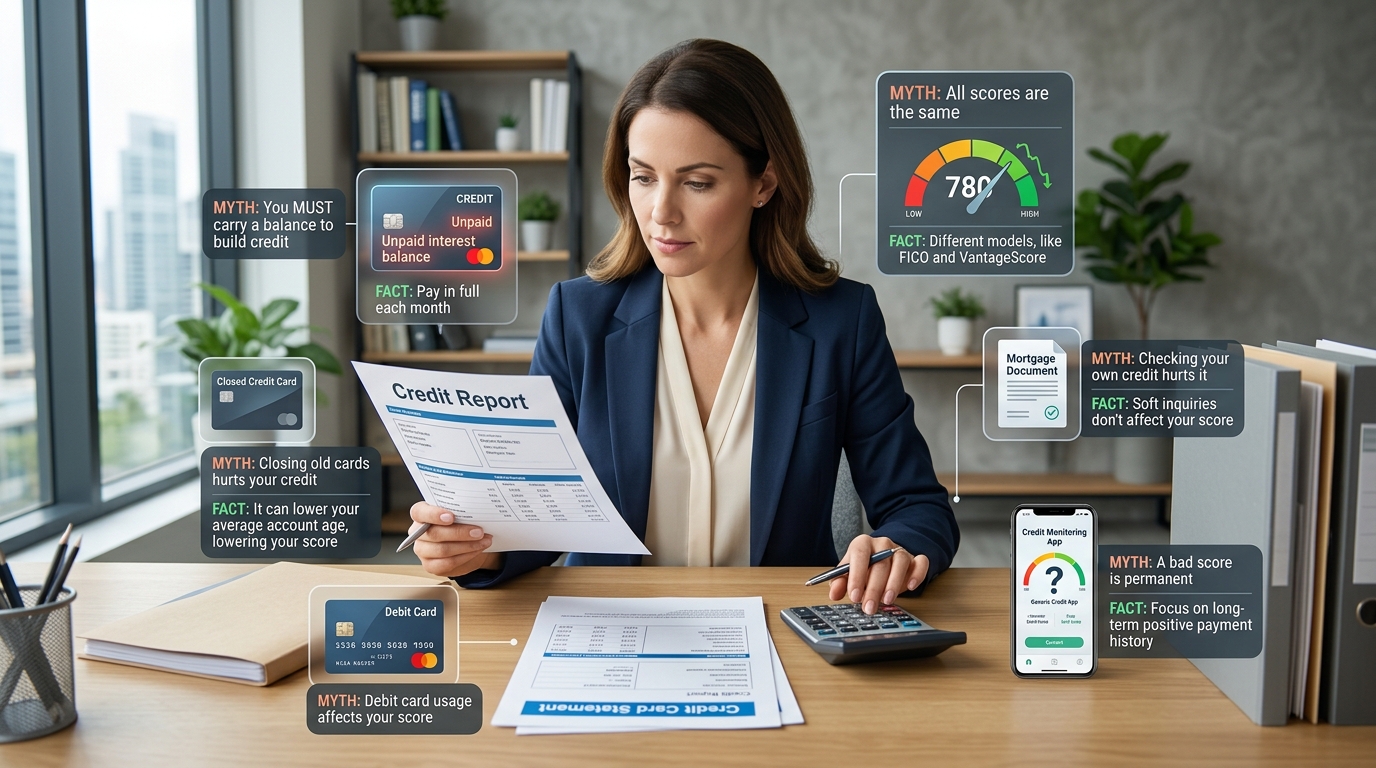
  • Building Credit as an Immigrant With No U.S. Credit History

    Building Credit as an Immigrant With No U.S. Credit History

    Moving to the United States often means starting over financially in a very specific way: even if you had an excellent credit history in your home country, much of that history may not automatically appear in the U.S. credit-reporting system.

    This can feel deeply unfair—years of responsible borrowing and perfect payment history elsewhere may not immediately be visible to American lenders. But understanding how the U.S. credit system works, what information can sometimes be transferred, and what steps you can take to establish a U.S. credit file can make the process considerably less discouraging.

    The good news is that building credit as an immigrant is possible. Once you establish accounts that report to U.S. credit reporting companies and manage them responsibly, the fundamental credit-building process is similar to that faced by anyone starting with little or no U.S. credit history.

    Why Your Foreign Credit History Usually Doesn’t Transfer Automatically

    U.S. credit reporting is based largely on information supplied by creditors and other furnishers to U.S. credit reporting companies. A strong credit history from another country therefore does not automatically become part of your U.S. credit file simply because you move to America.

    That means someone who had years of responsible credit use in India, Mexico, Nigeria, the Philippines, the United Kingdom, or another country may still encounter U.S. lenders that have little or no traditional U.S. credit history available to evaluate.

    There are, however, important exceptions. Cross-border services such as Nova Credit’s Credit Passport can allow participating lenders to access and translate international credit information for eligible consumers. Nova Credit currently describes coverage across multiple countries and says availability depends on the participating lender and market.

    So the better way to think about the situation is not that foreign credit history can never be used in the United States, but that it generally does not transfer automatically across borders and is only useful when a lender participates in an appropriate cross-border program.

    In many cases, you therefore still need to establish a U.S. credit file from the beginning—or build on whatever limited history a participating lender is able to recognize.

    “No Credit” Is Different From “Bad Credit”

    One of the most important distinctions for a newcomer is the difference between having no credit history and having negative credit history.

    If you have never used a U.S. credit account, you may simply have little or no information in your U.S. credit file. That is different from having late payments, defaults, collections, or other negative information.

    A new immigrant may therefore be starting with an unknown or limited credit profile, rather than a damaged one.

    This is why your first U.S. credit account can be particularly important: it begins creating the payment history and account information that future lenders may use when evaluating applications.

    If you want to understand how lenders and scoring systems use credit information, read our guide to how a credit score is calculated.

    What You’ll Need First: Documentation

    Before applying for a credit-building product, you will typically need some combination of identification, address, and tax or Social Security information. Exact requirements vary by institution and product.

    Social Security Number or ITIN

    If you are eligible for a Social Security number, an SSN may be used when applying for financial products.

    If you are not eligible for an SSN but have a federal tax purpose, you may have an Individual Taxpayer Identification Number (ITIN). The IRS explains that an ITIN is issued for federal tax purposes to people who need a taxpayer identification number but are not eligible for an SSN. An ITIN does not authorize employment or change immigration status.

    Some financial institutions accept ITINs for particular financial products, while others require an SSN. Never assume that every bank or card issuer follows the same policy.

    Proof of U.S. Address

    You may also need proof of your U.S. address, such as a lease, utility bill, bank statement, or another document accepted by the financial institution.

    Valid Identification

    Depending on the institution, acceptable identification may include a passport, state-issued identification, driver’s license, or other government-issued documentation.

    Income or Funds

    Some credit-building products require proof of income. A secured credit card also requires a cash deposit that typically determines the card’s credit limit.

    Because requirements vary considerably, check the financial institution’s current eligibility requirements before submitting an application.

    Step One: Open a U.S. Bank Account

    A checking or savings account does not automatically build your credit score. However, establishing a U.S. bank account can be a practical first step in getting your financial life organized.

    A bank account can help you:

    • Receive employment income.
    • Pay rent and other recurring bills.
    • Fund a secured credit card deposit.
    • Build a record of regular financial activity.
    • Manage automatic payments.
    • Maintain the funds needed for credit-building products.

    When opening an account, ask the institution exactly which forms of identification and taxpayer information it accepts for noncitizens and newcomers.

    Requirements can vary significantly between banks, credit unions, and account types.

    Step Two: Check Whether Your Foreign Credit History Can Be Used

    Before assuming that your foreign credit history is completely unusable, check whether any cross-border credit program is available for your country and the product you want.

    Nova Credit’s Credit Passport, for example, is designed to help participating lenders access consumer-permissioned international credit data and translate it into information that can be used in local underwriting. Nova Credit says its current coverage includes multiple countries, but availability depends on the relevant lender and product.

    This can potentially provide a shortcut for someone who already has a strong credit history abroad, but it should not be treated as a universal solution. A lender must participate in the relevant program, and eligibility varies.

    Step Three: Choose Your First Credit-Building Product

    Once you have the necessary documentation, the next step is choosing a product that can establish positive U.S. payment history.

    Secured Credit Cards

    A secured credit card can be one of the more accessible options for someone starting from scratch.

    You generally provide a refundable cash deposit, and that deposit commonly determines or supports your credit limit. You then use the card and make payments according to the card agreement.

    The CFPB lists secured credit cards among the products that can help consumers establish or rebuild credit when payments are reported to the nationwide credit reporting companies.

    Some issuers may accept an ITIN rather than an SSN, but this is not universal. Always verify the current requirements directly with the issuer.

    Credit-Builder Loans

    A credit-builder loan is another option offered by some banks and credit unions.

    Instead of receiving the borrowed money for immediate spending, the funds are generally held in an account while you make scheduled payments. If those payments are reported to the credit reporting companies, they can help establish payment history.

    The CFPB describes credit-builder loans as products that can help build credit and savings simultaneously, with terms commonly ranging from several months to a couple of years.

    International Student and Newcomer-Specific Credit Products

    Some financial institutions offer products designed for international students, recent arrivals, or people with limited U.S. credit history.

    Eligibility may consider factors such as enrollment, employment, income, deposits, or other information instead of relying exclusively on an established U.S. credit score.

    Because product availability changes, compare current offers directly with banks and credit unions rather than relying on an old list published online.

    Becoming an Authorized User

    If a trusted family member or friend already has a well-managed credit card, they may be able to add you as an authorized user.

    Depending on the issuer and how the account is reported, the account’s history may appear on the authorized user’s credit report.

    This can potentially help establish a credit file more quickly, but it depends on the specific issuer and reporting practices. It also requires a high level of trust between the primary cardholder and authorized user.

    Step Four: Use Your First Credit Product Carefully

    Once you have your first credit-building account, the fundamentals are straightforward:

    • Pay every bill on time.
    • Keep revolving balances manageable.
    • Avoid taking on debt simply to build credit.
    • Do not apply for numerous accounts at once.
    • Give your accounts time to age.
    • Monitor your credit reports for errors.

    The CFPB recommends paying bills on time, avoiding getting too close to credit limits, and limiting applications for new credit over short periods.

    For additional strategies, read our guide to how to improve your credit score.

    Special Considerations Based on Immigration Status

    Your immigration situation can affect which financial products are available to you, but it does not mean that you cannot establish U.S. credit.

    Work Visa Holders

    People working in the United States under employment-authorized immigration categories may have an SSN, depending on their circumstances and work authorization.

    Having an SSN can simplify applications for products that use SSN-based identification systems, although lenders may still have their own eligibility requirements.

    International Students

    International students may have different documentation and work-authorization circumstances depending on their visa and employment situation.

    Some universities and financial institutions offer products specifically designed for international students and other newcomers.

    People Without an SSN

    If you are not eligible for an SSN, an ITIN may be available if you have a qualifying federal tax purpose.

    However, an important distinction is that an ITIN is a tax identification number, not a substitute for work authorization. The IRS specifically states that an ITIN does not authorize someone to work in the United States.

    Some financial institutions accept ITINs for certain products, while others do not.

    DACA Recipients

    DACA recipients may have SSNs associated with their employment authorization. Whether a particular credit product is available still depends on the lender’s current underwriting and documentation requirements.

    Current U.S. lending rules can allow creditors to consider immigration or residency status when evaluating repayment rights and remedies. The CFPB’s current Regulation B commentary expressly addresses immigration status in credit evaluation.

    How Long Does Building Credit From Scratch Take?

    There is no single timeline that applies to every newcomer.

    A credit score can become available after enough qualifying information appears in a credit file, but the exact timing depends on the scoring model, account type, reporting history, and other factors.

    Building a genuinely established credit history takes considerably longer than simply generating a first score.

    The CFPB emphasizes that building or rebuilding credit takes time and that there are no legitimate shortcuts or secrets.

    Think in terms of months and years rather than days or weeks. Consistent, responsible management is more important than trying to manufacture a score quickly.

    Common Obstacles Immigrants Face—and How to Work Around Them

    Being Denied Because You Have Little or No U.S. Credit History

    A denial from one institution does not necessarily mean every institution will reject you.

    Underwriting criteria differ between banks, credit unions, fintech companies, and individual products.

    If you are denied, read the adverse action notice carefully. It may identify the specific reasons for the decision, such as insufficient credit history, income, documentation, or another underwriting factor.

    Difficulty Renting an Apartment

    A lack of U.S. credit history can sometimes make apartment applications more complicated.

    Depending on the landlord and local rules, alternatives may include:

    • Providing additional proof of income.
    • Showing evidence of savings.
    • Using a qualified co-signer where permitted.
    • Providing references.
    • Working with landlords who have experience with newcomers.

    Do not assume that every landlord will use the same screening criteria.

    Scams Targeting New Immigrants

    Newcomers can be attractive targets for scams because they may be unfamiliar with the U.S. financial system.

    Be cautious of companies promising to create a high credit score immediately, guaranteeing approval, or charging large upfront fees simply to introduce you to ordinary financial products.

    Before paying a company, research it independently and understand exactly what service you are purchasing.

    You can also learn more about how credit repair companies work and what to consider before hiring one.

    Confusing Personal Credit With Business Credit

    Personal and business credit are separate systems.

    Your personal credit history and business credit profile may use different identifying information and reporting systems. Building one does not automatically create the other.

    A Realistic Six-Month Starting Plan

    Month 1: Establish Your Financial Foundation

    • Open a U.S. checking or savings account if appropriate for your situation.
    • Gather your identification documents.
    • Determine whether you have an SSN or qualifying ITIN.
    • Establish proof of your U.S. address.
    • Research beginner credit products.

    Months 1–2: Start With One Manageable Credit Product

    If you qualify, consider a secured credit card or another product designed for people with limited credit history.

    Use it for a small, predictable purchase and make payments on time.

    If the card issuer allows it, automatic payments can reduce the risk of accidentally missing a due date.

    Month 3: Check Cross-Border Options

    If you have a strong credit history in your home country, investigate whether a participating lender uses a service such as Nova Credit’s Credit Passport.

    Nova Credit currently lists multiple supported countries, but availability depends on the lender and product, so verify current eligibility rather than relying on an old country list.

    Months 3–6: Continue Consistent Management

    Continue making every payment on time.

    If appropriate for your situation and budget, you might also investigate a credit-builder loan through a local credit union or financial institution.

    Do not open additional accounts simply for the sake of having more accounts. Choose products you can manage comfortably.

    Month 6 and Beyond: Monitor Your Progress

    Once you have sufficient history, check your credit reports and score information through legitimate sources.

    You can obtain your official free credit reports through AnnualCreditReport.com, the federally authorized source for free credit reports.

    Review the reports for incorrect personal information, unfamiliar accounts, inaccurate balances, or payment information that does not belong to you.

    Does Good Credit in Your Home Country Help With a U.S. Application?

    Sometimes, but not automatically.

    Most U.S. lenders cannot simply look up your foreign credit history through the ordinary U.S. credit-reporting system.

    However, participating lenders may use cross-border services to obtain international credit information with your permission.

    Nova Credit, for example, says its Credit Passport can translate international credit data into information usable by participating lenders.

    Therefore, if you had strong credit abroad, it is worth asking prospective lenders whether they recognize international credit history.

    Can You Build U.S. Credit Without a Social Security Number?

    Sometimes, yes.

    Some financial institutions offer products to applicants using an ITIN or other identification instead of an SSN.

    However, an ITIN is issued by the IRS for federal tax purposes and does not itself guarantee access to credit products.

    Eligibility is determined by the specific financial institution and product.

    Will a Visa Change or Expiration Automatically Erase Your Credit History?

    Your credit history is not simply erased because your immigration status changes.

    However, changes in employment authorization, identification information, address, income, or eligibility for particular products can affect your ability to open or maintain certain financial accounts.

    If you move, change your legal name, or later receive an SSN after using an ITIN for tax purposes, make sure your financial records are properly updated.

    The IRS states that once someone receives an SSN, they should stop using the ITIN for tax purposes and notify the IRS so the tax records can be combined under the SSN.

    Are Some Banks More Immigrant-Friendly?

    This can vary by location, institution, product, and time.

    Rather than relying on a permanent list of “immigrant-friendly banks,” contact institutions directly and ask:

    • Do you accept ITINs for this product?
    • Do you require an SSN?
    • What identification documents do you accept?
    • Do you offer secured credit cards?
    • Do you offer credit-builder loans?
    • Do you work with international credit histories?
    • Do you have programs for newcomers or international students?

    Local credit unions can also be worth investigating because their underwriting processes and product offerings may differ from those of large national banks.

    How Is Your Credit File Affected If You Leave the U.S.?

    Leaving the United States does not simply erase your credit history.

    However, credit accounts can eventually become inactive or fall off credit reports according to applicable reporting rules.

    If you later return to the United States, the amount of history still visible on your credit reports will depend on which accounts remain open or reportable and how much time has passed.

    Before leaving for an extended period, review your accounts, make sure payments are handled properly, and keep your contact information updated where appropriate.

    Understanding “No File” vs. “Thin File”

    These two terms are useful when discussing newcomer credit.

    No File

    A person with no file has little or no traditional credit information available for a bureau to use.

    This can happen when someone has never had a U.S. credit account.

    Thin File

    A thin file contains some credit history but not much of it.

    For example, you might have one newly opened credit card with only a few months of payment history.

    The goal of your first credit-building account is therefore not simply to obtain a particular card. It is to begin establishing a reliable record that future lenders can evaluate.

    How Rent and Utility Payments Can Help

    Rent and utility payments are important financial obligations, but they do not automatically appear on every traditional credit report.

    Some rent-reporting services can report eligible rental payments to credit reporting companies. Likewise, certain services may allow eligible consumers to connect utility or telecommunications payment information for credit-building purposes.

    Before paying for a rent-reporting or credit-building service, verify:

    • Which credit reporting companies receive the information.
    • Whether positive and negative information are both reported.
    • What fees apply.
    • Whether your specific landlord or provider is eligible.
    • Whether the service actually fits your credit-building goal.

    Remember that not every bill-payment product creates traditional credit history. The CFPB specifically notes that many ordinary debit, cash, prepaid-card, and similar transactions are not reported as credit-building payment history.

    The Role of Community Development Financial Institutions (CDFIs)

    Community Development Financial Institutions (CDFIs) can be another resource for people who have difficulty accessing mainstream financial products.

    The U.S. Department of the Treasury’s CDFI Fund explains that certified CDFIs are mission-driven institutions that provide financial services to underserved communities. They include organizations such as community development banks, credit unions, and other financial institutions.

    The CDFI Fund provides tools that consumers can use to search for certified CDFIs and organizations in their communities.

    A CDFI may be worth investigating if a mainstream bank has been difficult to work with, particularly when documentation, income, or limited credit history creates barriers.

    Building Credit While Establishing a New Life

    Credit-building is often only one of many challenges facing someone who has recently moved to the United States.

    You may simultaneously be dealing with housing, employment, healthcare, transportation, banking, taxes, education, and other practical issues.

    It is reasonable to approach credit-building as a gradual process rather than something that must be solved immediately.

    The important thing is to start when you are financially ready and then manage the accounts you open responsibly.

    Does an Employer Sponsoring Your Visa Affect Credit Approval?

    Visa sponsorship itself is not a substitute for a credit history or an approval guarantee.

    However, lenders can consider information relevant to repayment, including income and certain aspects of immigration or residency status as permitted under applicable law.

    Current Regulation B provisions specifically address the circumstances under which a creditor may consider immigration status and information necessary to determine repayment rights and remedies.

    Stable, verifiable income can therefore be relevant to an application, but each lender uses its own underwriting criteria.

    If You Have an ITIN and Later Receive an SSN, Do You Start Over?

    Not necessarily.

    Your tax records are handled by the IRS separately from your consumer credit reports. When someone receives an SSN after having an ITIN, the IRS instructs the individual to stop using the ITIN for tax purposes and notify the IRS so tax records can be combined under the SSN.

    For credit reporting, make sure your financial institutions and credit reporting companies have accurate identifying information. If your credit history is not correctly associated with your new identifying information, you may need to contact the relevant institutions and credit reporting companies to correct the records.

    Are “No SSN Required” Credit Cards Legitimate?

    Some legitimate financial institutions offer products that accept an ITIN or other identification instead of an SSN.

    However, the phrase “no SSN required” does not automatically mean that an offer is legitimate or suitable.

    Before applying, verify the issuer, fees, interest rate, deposit requirements, reporting practices, and eligibility requirements directly with the financial institution.

    Be especially cautious if a company promises a guaranteed high credit score or demands a large upfront payment simply to access an ordinary financial product.

    Can International Money Transfers Build U.S. Credit?

    Sending or receiving money through an international remittance service does not automatically create traditional U.S. credit history.

    Credit reporting generally depends on information furnished to the credit reporting companies by participating creditors and other data furnishers.

    Remittance records can still be part of your broader financial records and may be relevant when demonstrating financial activity to a lender during a manual review, but they should not be confused with traditional credit-reporting history.

    Comparing Your First-Product Options as a Newcomer

    Product or Strategy SSN Required? Deposit Required? Potential Credit-Building Role
    Secured credit card Varies; some issuers accept ITINs Usually yes Can establish revolving credit history when payments are reported
    Credit-builder loan Varies by institution No traditional card deposit Can establish installment payment history when reported
    International credit-history program Varies by participating lender Varies May allow eligible foreign credit history to be considered
    Authorized user Varies No May allow account history to appear on the user’s credit file, depending on issuer reporting
    Rent reporting Varies No May report eligible rental payment history

    There is no single best product for every newcomer. The right starting point depends on your documentation, income, budget, immigration circumstances, and access to financial institutions.

    What to Do If You Are Repeatedly Denied

    If you have applied for multiple products and keep getting rejected, do not simply submit more applications without understanding why.

    First, review the adverse action notices you receive. Look for the specific reason given for each denial.

    Potential issues may include:

    • Insufficient credit history.
    • Insufficient income documentation.
    • Address verification problems.
    • Identification issues.
    • Product-specific eligibility requirements.
    • Information on your credit report that is inaccurate.

    If you find inaccurate information on your credit reports, review our guide on how to dispute credit report errors.

    You can also consider asking a local credit union or CDFI whether it offers products or underwriting options for people with limited credit histories. The Treasury’s CDFI Fund provides tools for finding certified CDFIs.

    Should You Consult a Financial Counselor or Immigrant-Focused Nonprofit?

    You do not have to figure everything out alone.

    Nonprofit financial counseling organizations, immigrant-support organizations, community organizations, and CDFIs may offer education or assistance with navigating the U.S. financial system.

    Before paying for financial guidance, determine whether free or low-cost nonprofit assistance is available in your area.

    Does the Length of Time You Have Lived in the U.S. Affect Credit Approval?

    There is no universal credit-scoring rule that simply awards points for the number of months you have lived in the United States.

    However, lenders may consider information relevant to repayment and may have their own underwriting criteria concerning income, residence, documentation, and immigration status where permitted by law.

    For a basic starter product, the most important practical issue may simply be establishing a credit file and demonstrating responsible payment behavior.

    Is It Worth Building Credit If You’re Only in the U.S. Temporarily?

    It can still be useful.

    Even a relatively short period in the United States may involve applying for an apartment, financing a vehicle, obtaining certain financial services, or using other products where credit history can matter.

    A U.S. credit history can therefore remain useful even if you expect to stay in the country for only several years.

    Frequently Asked Questions

    Does my foreign credit score transfer to the United States?

    Usually not automatically. U.S. lenders generally need access to U.S. credit-reporting information, although some participating lenders use cross-border services such as Nova Credit to access eligible international credit data.

    Can I build credit without an SSN?

    Yes, potentially. Some financial institutions accept ITINs or other documentation for particular credit products. An ITIN is issued by the IRS for federal tax purposes and does not itself guarantee credit eligibility.

    Can an immigrant get a secured credit card?

    Potentially. Secured cards are specifically designed to reduce the lender’s risk by requiring a cash deposit. Some issuers accept ITINs, while others require an SSN.

    How quickly can an immigrant build a credit score?

    The timing varies by scoring model and the information reported to the credit bureaus. Establishing a score can happen relatively quickly once sufficient qualifying account information is reported, but building a mature credit history generally takes much longer.

    Does opening a bank account build credit?

    Usually, simply opening a checking or savings account does not create traditional credit history. Its value is primarily that it gives you a U.S. financial foundation from which you can manage credit-building products and payments.

    Can rent payments build credit?

    They can in some circumstances if a rent-reporting service reports eligible payments to credit reporting companies. Ordinary rent payments do not automatically appear on every credit report.

    Can utility bills build credit?

    Ordinary utility payments are not automatically reported as traditional credit history in every case. Certain credit-building services may allow eligible utility or telecommunications payment information to be reported.

    Can I use my home-country credit history to get a U.S. credit card?

    Sometimes. Some U.S. lenders participate in cross-border credit programs that can access international credit information. Availability depends on your country, the lender, and the specific product.

    What is the difference between a thin credit file and no credit file?

    A no-file consumer has little or no traditional credit information available, while a thin-file consumer has some credit history but not enough to provide a substantial record.

    Can a CDFI help me build credit?

    A CDFI may offer financial products, lending, or financial education, depending on the institution. The Treasury’s CDFI Fund provides a searchable database and information about certified CDFIs.

    What should I do if I am denied because I have no credit history?

    Review the lender’s adverse action notice to identify the stated reason. You can then consider products specifically designed for people with limited credit history, local credit unions, CDFIs, or other institutions with different eligibility requirements.

    Will changing from an ITIN to an SSN erase my credit history?

    Receiving an SSN does not mean you should intentionally start over. Make sure your financial institutions and credit reporting records use accurate identifying information. Separately, the IRS requires you to stop using the ITIN for tax purposes and notify the IRS when you receive an SSN.

    Can immigration status affect a credit application?

    Federal credit regulations allow creditors to consider immigration status and certain related information when necessary to determine repayment rights and remedies, subject to applicable law.

    The Bottom Line

    Building credit as an immigrant with no U.S. credit history is absolutely possible, but it usually requires establishing a U.S. credit record deliberately.

    Your previous financial history in another country may not automatically appear in the U.S. system, although participating cross-border programs can provide an important exception for eligible consumers.

    A practical starting path is to:

    1. Establish a U.S. bank account when appropriate.
    2. Gather your identification, address, and SSN or ITIN documentation.
    3. Check whether a lender can use your foreign credit history.
    4. Consider an accessible product such as a secured credit card or credit-builder loan.
    5. Make every payment on time.
    6. Keep revolving balances manageable.
    7. Avoid applying for too many accounts at once.
    8. Monitor your credit reports for errors.
    9. Consider credit unions or CDFIs if mainstream lenders are difficult to work with.

    The process may feel slow at first, but the objective is not to create an artificial score overnight. The objective is to establish a reliable U.S. financial record that lenders can evaluate over time.

    If you want to learn more about repairing or improving an existing U.S. credit profile, explore our credit repair and credit education resources.

    Need Help Reviewing Your Credit?

    If you have recently moved to the United States and already have a U.S. credit report, checking it for inaccurate, outdated, duplicate, or unfamiliar information can be an important part of establishing your financial foundation.

    Contact Credit Repair Services to discuss your credit situation →

  • Create a premium photorealistic editorial image for a U.S. consumer-finance article titled “Can a Debt Collector Sue You? Here’s What Actually Happens.” Show an American consumer sitting at a desk reviewing a debt-collection lawsuit, summons and complaint, credit-card statements, payment records, and a calendar with a court-response deadline highlighted. Include a subtle visual progression in the background: unpaid debt → collection notice → lawsuit → court judgment → possible garnishment or property lien. The mood should be serious but informative and empowering, not frightening. Include realistic legal paperwork, calculator, pen, laptop, and smartphone. No company logos, no readable fake legal text, no judge or courtroom clichés. Premium financial-services editorial photography, natural lighting, sophisticated neutral colors, clean composition, wide horizontal website hero image, professional U.S. personal-finance aesthetic. Create an optimized 100 KB version also for fast website loading.

    Create a premium photorealistic editorial image for a U.S. consumer-finance article titled “Can a Debt Collector Sue You? Here’s What Actually Happens.” Show an American consumer sitting at a desk reviewing a debt-collection lawsuit, summons and complaint, credit-card statements, payment records, and a calendar with a court-response deadline highlighted. Include a subtle visual progression in the background: unpaid debt → collection notice → lawsuit → court judgment → possible garnishment or property lien. The mood should be serious but informative and empowering, not frightening. Include realistic legal paperwork, calculator, pen, laptop, and smartphone. No company logos, no readable fake legal text, no judge or courtroom clichés. Premium financial-services editorial photography, natural lighting, sophisticated neutral colors, clean composition, wide horizontal website hero image, professional U.S. personal-finance aesthetic. Create an optimized 100 KB version also for fast website loading.

    “They’re going to sue you.” Few things are more stressful to hear from a debt collector. But a threat of legal action does not necessarily mean that a lawsuit has already been filed—or that you will automatically lose if one is filed.

    The honest answer is that debt collectors and debt buyers can sue consumers in appropriate circumstances. Whether they can legally pursue a particular debt, whether they actually choose to file a lawsuit, and what happens afterward depends on factors such as the age of the debt, applicable state law, the documentation available, and whether you respond to the lawsuit.

    If you have actually been served with a lawsuit, the most important step is to read the court papers carefully and respond by the deadline stated in them. The Consumer Financial Protection Bureau (CFPB) explains that responding does not mean you are admitting that the debt is valid. It gives you an opportunity to raise defenses and protect your rights.

    Yes, Debt Collectors Can Legally Sue You

    For a debt that is still within the applicable statute of limitations, a debt collector or debt buyer may have the legal ability to file a lawsuit seeking a court judgment. The exact rules depend on the state and type of debt involved.

    A lawsuit is therefore a real collection tool—not simply an empty threat in every situation. However, that does not mean every unpaid account ends up in court.

    Debt collectors may first use letters, phone calls, settlement offers, payment plans, or other collection efforts. The CFPB notes that ignoring collection attempts can eventually lead to a lawsuit, so receiving collection communications should not automatically be treated as harmless.

    If you are dealing with a collection account, it can also help to understand how a debt validation letter works before deciding what to do next.

    Why Not Every Unpaid Debt Results in a Lawsuit

    Lawsuits require time, money, documentation, and court procedures. As a result, collectors generally have to decide whether pursuing litigation makes economic and practical sense.

    The Size of the Debt

    A larger balance may make litigation more economically attractive because the potential recovery may justify the cost of filing and pursuing the case.

    Smaller balances may not always justify the same level of legal expense. However, there is no universal dollar amount below which you should assume a lawsuit cannot happen.

    How Strong the Documentation Is

    A collector or debt buyer pursuing a lawsuit generally needs to establish that the debt is valid, that you are the person responsible for it, that the amount claimed is accurate, and that the plaintiff has the legal right to pursue the debt.

    This can become especially important when a debt has been sold multiple times. If you want to understand this issue, see our guide to debt buyers vs. collection agencies.

    Whether the Debt Is Still Within the Statute of Limitations

    State law generally limits how long a creditor or debt collector has to sue over an unpaid debt. This period is called the statute of limitations.

    The length of the period and the rules for calculating it vary by state and debt type. The Federal Trade Commission (FTC) explains that some states may also have rules under which making a payment or acknowledging an old debt can affect the limitations period.

    Because of these differences, do not assume that an old debt is automatically too old to sue over. You can learn more in our guide to the statute of limitations on debt.

    Whether You Appear Able to Pay a Judgment

    A collector may also consider whether a judgment would realistically produce a recovery. If someone has limited income and few non-exempt assets, obtaining a judgment may be less immediately useful to the collector.

    However, financial circumstances can change, and a judgment may remain enforceable for a significant period depending on state law. Being unable to pay today does not necessarily make a lawsuit irrelevant.

    What the Actual Debt Lawsuit Process Looks Like

    If a collector decides to sue, the process generally moves from collection activity into the court system.

    1. Filing and Service

    The collector or a law firm representing the collector files a complaint with the appropriate court. You are then formally served with legal papers.

    The documents commonly include a summons, which tells you that a case has been filed and provides information about how and when you must respond, and a complaint, which explains the claims being made against you.

    2. Your Response Deadline

    The deadline is one of the most important details in the entire lawsuit.

    The exact deadline varies according to the court and applicable law. Do not rely on a generic number of days found online. Instead, look directly at your summons and other court documents to determine the deadline that applies to your case.

    The CFPB specifically advises consumers who are sued by a debt collector to respond by the date specified in the court papers.

    3. Filing an Answer

    If you respond by filing an Answer, you can address the allegations made against you and raise applicable defenses.

    The case may then proceed through additional stages, potentially including discovery, motions, settlement discussions, hearings, and—in some cases—a trial.

    Responding does not necessarily mean admitting that you owe the money. The CFPB explains that when you respond, the collector still has to establish its claim in court.

    4. Default Judgment If You Do Not Respond

    If you fail to respond by the applicable deadline, the court may enter a default judgment against you.

    This is one of the biggest risks of ignoring a lawsuit. A default can prevent you from presenting defenses you might otherwise have been able to raise.

    The CFPB warns that ignoring a properly served debt collection lawsuit can result in a judgment and stronger collection tools.

    What Happens If the Collector Wins—or You Default?

    A court judgment can give a creditor or debt collector additional legal tools to collect, although the specific procedures and exemptions vary by state.

    Wage Garnishment

    A judgment may allow the creditor to seek an order directing an employer to withhold part of your wages to satisfy the judgment.

    Federal and state laws can limit how much can be garnished, and certain income or benefits may receive legal protections. The CFPB’s wage-garnishment guidance explains that state and federal exemptions can apply.

    For more information, read our detailed guide to wage garnishment.

    Bank Account Levies

    Depending on state law and the circumstances, a judgment creditor may be able to obtain an order allowing funds in a bank account to be seized.

    However, exemptions can protect certain funds or amounts. Federal benefits such as Social Security and VA benefits can have specific protections when they are directly deposited, subject to applicable rules.

    Property Liens

    A judgment may also result in a lien against property in circumstances permitted by state law.

    A lien can complicate a future sale or refinancing of property. The CFPB identifies property liens as one of the stronger collection tools that may become available after a judgment.

    A judgment is not necessarily an instant transfer of money. Additional legal steps may be required before particular collection remedies can be used.

    Your Realistic Defenses If You Are Sued

    Being sued does not automatically mean the collector will win. The appropriate defenses depend on the facts of the case and the law governing it.

    The Statute of Limitations Has Expired

    If the debt is genuinely time-barred under the applicable state law, that may provide an important defense.

    However, do not assume that the court will automatically recognize an expired statute of limitations without you raising it. The FTC advises consumers who are sued over time-barred debt not to ignore the lawsuit and to tell the court that the statute of limitations has expired.

    Before making a payment or acknowledging an old debt, review our guide on why making a payment on old debt can sometimes backfire.

    The Plaintiff Cannot Adequately Prove Ownership or the Amount Owed

    This can be particularly relevant when the plaintiff is a debt buyer.

    The collector may need to establish that the debt belongs to you, that the amount is accurate, and that the plaintiff has the legal right to collect it. The FTC similarly explains that in a lawsuit the collector must establish that you are the person who owes the debt, that the amount is accurate, and that you owe the debt to that party.

    The Debt Has Already Been Paid or Settled

    If you previously paid or settled the account, keep documentation showing what happened.

    Bank statements, settlement agreements, payment confirmations, letters, and other records can be important when challenging a claim that you still owe the balance.

    The Debt Isn’t Yours

    A lawsuit involving a debt that does not belong to you should be taken seriously.

    The problem could involve identity theft, mistaken identity, incorrect account information, or another data error. If this applies to you, review our guide on what to do if you’re contacted about a debt that isn’t yours.

    Procedural Problems

    There can also be technical issues involving service, jurisdiction, documentation, or how the lawsuit was filed.

    These issues can be highly dependent on state and court rules, so legal assistance can be especially useful when you believe something about the lawsuit itself was improper.

    Should You Get an Attorney?

    If you have actually been sued, consider speaking with a consumer-law attorney or legal-aid organization if one is available to you.

    The potential consequences of a judgment can include additional collection tools, so understanding your legal position before the response deadline can be valuable.

    The CFPB recommends contacting a lawyer if you are sued or if a judgment has already been entered against you. It also notes that consumers may be able to negotiate a compromise or settlement before a court enters judgment.

    If you cannot afford private legal representation, check whether your court provides self-help resources or whether a nonprofit legal-aid organization in your state can assist.

    Can You Negotiate a Settlement Even After Being Sued?

    Yes. A lawsuit does not necessarily eliminate the possibility of negotiating a settlement.

    Settlement discussions may occur before or after litigation begins. If you decide to negotiate, make sure you understand exactly what the agreement says before sending money.

    Get the settlement terms in writing and pay particular attention to what happens to the lawsuit itself.

    If a settlement is supposed to resolve the lawsuit, the written agreement should clearly address the status of the case and the remaining balance. Depending on the circumstances and the agreement, you may want legal advice about whether a dismissal should be with prejudice.

    You can also read our guide on how to negotiate with a debt collector without getting taken advantage of.

    What If You Genuinely Can’t Afford to Pay, Even If You Lose?

    If a judgment is entered and you have very limited income or assets that can legally be reached, your practical ability to pay may be limited.

    However, this should not be treated as a reason to ignore a lawsuit.

    Financial circumstances can change, and judgments may remain enforceable for years depending on state law. Interest and other lawful amounts may also apply.

    If your debts are broader than a single collection account, consider discussing your situation with a consumer-law attorney, nonprofit credit counselor, or qualified bankruptcy professional to understand your available options.

    How Long After a Debt Becomes Delinquent Can a Collector Still Sue You?

    The answer depends primarily on the applicable statute of limitations.

    The limitation period varies by state and by the type of debt. The FTC explains that the period can also depend on the law applicable to the debt agreement, and in some states certain actions involving an old debt may affect the limitations period.

    Because the rules differ, do not rely on a universal “three years,” “six years,” or “seven years” rule.

    Read our complete guide to the statute of limitations on debt for more information.

    Can You Be Sued for a Debt That Has Fallen Off Your Credit Report?

    Potentially, yes.

    The credit-reporting period and the statute of limitations for filing a lawsuit are separate legal concepts.

    Negative information generally has a limited reporting period under federal credit-reporting law, but the expiration of the credit-reporting period does not automatically answer whether a lawsuit is legally permitted under state law.

    That means you should not assume that a debt is legally unenforceable simply because it no longer appears on your credit report.

    You can learn more about checking your credit history in our guide on how to read a credit report.

    Does Getting Sued Automatically Mean Your Wages Will Be Garnished?

    No.

    A lawsuit by itself does not automatically mean your employer will begin withholding money from your paycheck.

    Generally, a creditor seeking ordinary debt-collection garnishment first needs a judgment and then must follow the applicable procedures for obtaining and enforcing a garnishment order. Federal and state laws can also limit garnishment amounts and provide exemptions.

    This is one reason why receiving a lawsuit is serious—but it is not the same thing as immediately having your wages taken.

    Can a Debt Collector Sue You in a State Where You Don’t Currently Live?

    Jurisdiction and venue rules determine where a lawsuit can properly be filed. The answer can depend on where you live, where the underlying agreement was made, the terms of the agreement, and applicable state law.

    If you receive court papers from a jurisdiction that seems unrelated to you or the debt, do not simply ignore them. Consider getting legal advice about whether the court has proper jurisdiction and whether the filing location is appropriate.

    What If You Ignore the Lawsuit Because You Can’t Afford an Attorney?

    Not being able to afford a lawyer does not eliminate the importance of responding.

    Ignoring a properly served lawsuit can result in a default judgment even when you may have had a legitimate defense.

    The FTC advises consumers not to ignore debt collection lawsuits and to follow the instructions and deadlines contained in the legal papers.

    Depending on your location, the court may provide self-help materials, Answer forms, legal-aid referrals, or other resources for people representing themselves.

    You can also review our guide on what happens if you ignore a debt collection lawsuit.

    A Realistic Timeline From Missed Payment to Lawsuit

    A debt lawsuit usually does not appear out of nowhere.

    A typical sequence may look something like this:

    1. Missed payment: The account becomes delinquent.
    2. Continued delinquency: The creditor attempts to collect.
    3. Charge-off: For many credit-card accounts, charge-off may occur after an extended period of nonpayment.
    4. Collection: The account may be placed with or sold to a collection company or debt buyer.
    5. Collection attempts: Calls, letters, settlement offers, and payment discussions may continue.
    6. Potential lawsuit: If the collector decides litigation is appropriate and the legal requirements are satisfied, a lawsuit may be filed.
    7. Service: You receive a summons and complaint.
    8. Response deadline: You must respond according to the court’s instructions.
    9. Further proceedings: The case may involve motions, discovery, settlement discussions, or trial.
    10. Judgment or resolution: The case may end through settlement, dismissal, a judgment, or another court resolution.

    This is only a general sequence. Individual cases can move much faster or slower, and the exact process depends on state and court rules.

    What Does a Summons and Complaint Actually Look Like?

    If you are served with a lawsuit, the legal terminology can initially be confusing.

    The Summons

    The summons is the document that formally notifies you that a lawsuit has been filed and tells you how to respond and, generally, when your response is due.

    The Complaint

    The complaint describes the plaintiff’s allegations. In a debt collection lawsuit, it may identify the original creditor, the alleged account, the amount claimed, and the legal basis for the lawsuit.

    Read both documents carefully. Write down every deadline and follow the instructions provided by the court.

    How Court Self-Help Resources Can Help If You Can’t Afford an Attorney

    Many courts provide information for people who represent themselves.

    Depending on your state and county, resources may include self-help centers, simplified forms, legal clinics, court navigators, or referrals to legal-aid organizations.

    Start with the official website of the court listed on your summons. You can also contact the clerk’s office to ask what self-help resources are available.

    Do not assume that you must hire a private attorney simply to find out how to submit your response. At the same time, if you have a complicated defense or substantial financial exposure, professional legal advice may be appropriate.

    Does the Amount of Debt Affect Whether You Should Take a Lawsuit Seriously?

    Even a relatively small lawsuit deserves attention.

    There is no universal dollar threshold below which ignoring a lawsuit becomes safe. A default judgment can still create legal and financial consequences even when the original balance is relatively small.

    The appropriate response is therefore to follow the court’s instructions and deadline regardless of the amount claimed.

    Can a Collector Sue You While You Are Disputing the Debt With the Credit Bureaus?

    Yes, a credit-report dispute and a debt collection lawsuit are separate processes.

    Disputing information with Equifax, Experian, or TransUnion does not automatically prevent a collector from pursuing a lawsuit over the underlying debt.

    However, documentation from your dispute may potentially be relevant to your case if it concerns the accuracy, ownership, or amount of the debt.

    If you need to challenge inaccurate information, see our guide on how to dispute credit report errors.

    If a Debt Buyer Sues You, Is It Harder for Them to Win?

    Not automatically.

    However, a debt buyer may need to establish both the validity of the underlying debt and its legal ownership of the particular account.

    This can make documentation particularly important when a debt has been sold or transferred multiple times.

    Read more about how debt gets resold to multiple companies and how ownership can become an important issue in collection disputes.

    Is Small Claims Court Different From a Standard Debt Collection Lawsuit?

    Some debt collection cases, particularly those involving smaller balances, may be filed in small claims court.

    Small claims procedures are often designed to be simpler and less expensive than ordinary civil litigation, but the exact rules vary significantly by state and court.

    Even in small claims court, the same basic principles remain important: read the paperwork, understand the deadline, appear or respond as required, and raise any legitimate defenses.

    Respond vs. Ignore: What Changes?

    Issue If You Respond If You Ignore the Lawsuit
    Ability to raise defenses You generally preserve the opportunity to raise applicable defenses. You risk losing the opportunity to present defenses through a default judgment.
    Collector must prove its case The collector must establish its claim in court. A default judgment may be entered without the same opportunity for you to contest the claim.
    Settlement leverage You may still have an opportunity to negotiate. Your position may become weaker after a judgment.
    Weak documentation You may be able to challenge insufficient proof. A default can prevent you from presenting those arguments.
    Potential cost You may have filing costs, legal expenses, or other case-related costs. A judgment may add lawful interest, fees, costs, or collection consequences.

    The central point is simple: responding preserves options. Ignoring a lawsuit can result in a default judgment and make the situation more difficult to address later. The CFPB and FTC both advise consumers not to ignore debt collection lawsuits.

    What Debt Collectors Say About Litigation as a Collection Tool

    Litigation is one of several tools available to creditors and debt collectors. It requires a formal court process and creates costs and risks for both sides.

    That means a threat of litigation should not automatically be interpreted as proof that a lawsuit has already been filed. At the same time, it should not automatically be dismissed as a bluff.

    If you receive an actual summons and complaint, the situation has moved beyond an ordinary collection call. Treat the court documents as a legal matter and follow the response instructions.

    If a Lawsuit Is Dismissed, Is the Debt Gone Forever?

    Not necessarily.

    The effect of a dismissal depends on the reason for the dismissal and whether it is with prejudice or without prejudice.

    A dismissal without prejudice may allow a plaintiff to pursue the matter again in circumstances permitted by law. A dismissal with prejudice generally prevents the same claim from being refiled.

    Because the consequences depend on the specific order and applicable law, review any dismissal carefully and consider legal advice if the debt remains disputed.

    Can More Than One Company Sue You for the Same Debt?

    A debt should have a legitimate current owner or party entitled to enforce it, but debt transfers and recordkeeping problems can sometimes create confusion.

    If you receive collection demands or legal papers from more than one company concerning the same debt, preserve all documentation.

    If you have already paid, settled, or defended a lawsuit involving the account, those records may be particularly important.

    You can also read our article on how the same debt can be resold between different companies.

    Does Settling After Being Sued Affect Your Credit?

    Settling a debt does not automatically erase its history from your credit report.

    The credit-reporting treatment of a collection account or judgment can depend on the account’s reporting status, applicable federal law, and the information furnished by the creditor or collector.

    Before making a payment or settlement, get the agreement in writing and understand exactly what the payment resolves.

    If your primary concern is an inaccurate account appearing on your credit reports, learn how to dispute credit report errors rather than assuming payment alone will correct inaccurate information.

    What Should You Do If a Debt Collector Is Threatening to Sue You?

    If a collector is threatening legal action but you have not received court papers, start by determining exactly what stage you are in.

    • Ask for information identifying the debt.
    • Review your records and credit reports.
    • Determine whether the debt is yours.
    • Check whether the amount claimed appears accurate.
    • Review the age of the debt and the applicable statute of limitations.
    • Be careful about making payments or acknowledging very old debts before understanding the applicable state law.
    • Keep copies of letters, emails, statements, and other communications.
    • If you receive actual court papers, follow the court’s deadline rather than treating the threat as an ordinary collection call.

    If you are dealing with collection harassment, you can also read our guide to debt collector harassment and the FDCPA.

    What Should You Do If You Have Already Been Served?

    If you already have a summons and complaint, prioritize the court deadline.

    1. Read every page. Identify the court, plaintiff, case number, response deadline, and instructions.
    2. Do not ignore the papers. A default judgment can result if you fail to respond.
    3. Gather your records. Look for statements, payments, settlement agreements, correspondence, and evidence concerning ownership or identity.
    4. Review the allegations. Compare what the plaintiff claims with your records.
    5. Consider legal help. A consumer-law attorney or legal-aid organization may be able to help.
    6. Consider settlement carefully. If settlement is appropriate, obtain the terms in writing and understand what happens to the lawsuit.
    7. Follow the court’s instructions. Do not rely solely on general online advice because procedural rules vary by jurisdiction.

    The CFPB’s guidance emphasizes that responding to the lawsuit gives you an opportunity to defend yourself and does not by itself mean you admit that the debt is valid.

    The Bottom Line

    Yes, debt collectors can genuinely sue you. A debt collection lawsuit is a real legal process with potentially significant consequences, particularly if you ignore the court papers.

    But being sued is not the same as automatically losing, and receiving a lawsuit is not the same as having your wages immediately garnished or your bank account immediately seized.

    The most important thing to remember is the response deadline. If you receive a summons and complaint, read it carefully and respond according to the court’s instructions. The CFPB and FTC both emphasize the importance of responding rather than ignoring a debt collection lawsuit.

    Depending on your situation, you may have defenses involving the validity of the debt, ownership, the amount claimed, prior payment or settlement, the statute of limitations, identity, or procedural issues.

    If you are unsure what to do, consider obtaining advice from a qualified consumer-law attorney or legal-aid organization in your state.

    Need Help Reviewing Your Credit Report?

    If a debt collector is contacting you or a collection account is appearing on your credit report, understanding exactly what is being reported is an important first step. Review your credit reports for inaccurate, outdated, duplicate, or unfamiliar information.

    Contact Credit Repair Services to discuss your credit situation →

    Frequently Asked Questions

    Can a debt collector really sue me?

    Yes. A debt collector or debt buyer may sue when legally permitted, including when the debt is within the applicable statute of limitations. Whether a collector actually files a lawsuit depends on the circumstances.

    Can a debt collector sue me for an old debt?

    It depends on the applicable statute of limitations and state law. An old debt may be time-barred from litigation, but the rules vary. Do not assume that simply being old makes a debt legally unenforceable.

    Can I be sued after a debt falls off my credit report?

    Potentially. Credit reporting periods and lawsuit limitation periods are separate concepts.

    What happens if I don’t respond to a debt lawsuit?

    The court may enter a default judgment against you. That judgment can give the creditor or collector stronger legal collection tools, depending on state law.

    Can a debt collector garnish my wages without suing me?

    For ordinary consumer debts, creditors generally need a court judgment before using wage garnishment, although exceptions exist for certain government debts and other obligations.

    Can I settle a debt after being sued?

    Yes. Settlement may still be possible after litigation begins. If you settle, get the terms in writing and make sure you understand what happens to the lawsuit and remaining balance.

    What if the debt isn’t mine?

    Do not ignore the lawsuit. Gather documentation showing that the debt is not yours and raise the issue through the appropriate legal process. You can also review our guide on debt that isn’t yours.

    What if the debt collector is threatening to sue but hasn’t filed anything?

    A threat to sue is different from an actual lawsuit. However, it should not automatically be dismissed as a bluff. Review the debt, understand your rights, and take actual court papers seriously if they arrive.

    Does a credit-bureau dispute stop a debt lawsuit?

    Not automatically. A credit-report dispute and a court lawsuit are separate processes.

    Should I hire an attorney if a debt collector sues me?

    Consider consulting a consumer-law attorney, especially if the debt is disputed, the amount is significant, the statute of limitations may have expired, or you are concerned about defenses or collection consequences. Legal-aid resources may also be available if you cannot afford private counsel.

    Where can I learn more about debt collection rights?

    The Consumer Financial Protection Bureau’s debt-collection resource provides information about judgments, validation notices, garnishment, harassment, and other debt-collection issues.

  • What to Do the First Time a Debt Collector Calls You

    What to Do the First Time a Debt Collector Calls You

    The first call from a debt collector can catch you completely off guard, even if you have some idea that you might owe money.

    Hearing from an unfamiliar person on an unfamiliar number can trigger anxiety and uncertainty about what you are supposed to say or do.

    The good news is that you do not have to solve everything during the first phone call.

    The first conversation is primarily an opportunity to identify the caller, understand what debt they are referring to, request the required information, and avoid making decisions under pressure.

    This guide explains what to expect during your first debt-collection call, what you can say, what you should avoid doing, how debt validation works, how to recognize potential scams, and what steps to take after the call.

    Know Your Rights Before the Call Happens

    Many third-party debt collectors are subject to the Fair Debt Collection Practices Act (FDCPA) and the federal Debt Collection Rule.

    These rules establish limits on how covered debt collectors can communicate with consumers.

    For example, debt collectors generally cannot:

    • Contact you before 8 a.m. or after 9 p.m. local time, unless an applicable exception applies.
    • Use repeated calls as a means of harassing or abusing you.
    • Use obscene or profane language.
    • Make false or misleading statements.
    • Threaten violence or falsely threaten arrest.
    • Misrepresent the amount or legal status of a debt.
    • Misrepresent who they are or the company they represent.

    The CFPB explains that debt collectors generally cannot contact consumers at unusual or inconvenient times and provides specific rules concerning repeated telephone calls.

    Knowing these boundaries before you receive a call can make it easier to remain calm if a collector contacts you unexpectedly.

    What to Do the Moment You Realize It Is a Debt Collector

    The first thing to remember is simple:

    You do not have to make a payment or agree to a settlement during the first call.

    Instead, focus on gathering information.

    Stay Calm

    Do not allow the unexpected nature of the call to push you into making an immediate financial decision.

    You can tell the caller that you want to review the information before discussing payment.

    Write Down the Details

    If possible, record:

    • The collector’s name
    • The collection company’s name
    • The telephone number
    • The date and time of the call
    • The amount the caller says you owe
    • The name of the creditor
    • The account or reference number, if provided
    • A general summary of what the caller said

    Keeping records can become valuable if you later dispute the debt or need to document a collection problem.

    The CFPB specifically recommends keeping letters, messages, and records of communications with debt collectors.

    Ask the Caller to Identify the Company

    Ask for the company’s:

    • Full name
    • Mailing address
    • Telephone number
    • Collector’s name
    • Name of the creditor associated with the debt

    If the caller refuses to provide basic identifying information, becomes unusually aggressive, or pressures you to pay immediately, treat that as a warning sign.

    What Should You Say on the First Debt Collector Call?

    You do not need to provide a detailed explanation of your finances or argue about whether you owe the debt.

    A simple response can keep the conversation controlled:

    “I understand you are calling about a debt. Before I discuss payment or make any commitment, I would like to receive the required validation information in writing, including the creditor’s name, the amount claimed, and information about how I can dispute or verify the debt.”

    This keeps the first conversation focused on verification rather than payment.

    The CFPB recommends obtaining validation information before agreeing to pay or negotiate, particularly when you are unsure whether the debt is legitimate.

    What Not to Say or Do During the First Call

    Do Not Immediately Confirm Sensitive Personal Information

    A legitimate collector may need to verify that they are speaking with the correct person, but you should be cautious about providing sensitive financial information before independently confirming who is contacting you and why.

    Avoid unnecessarily providing information such as:

    • Full Social Security number
    • Bank account numbers
    • Routing numbers
    • Debit-card information
    • Online banking credentials

    The CFPB advises consumers not to provide sensitive or financial information until they have verified the debt collector and determined that the contact is legitimate.

    Do Not Make an Immediate Payment

    Be particularly cautious if the caller says you must pay immediately or that a special offer will disappear within a few hours.

    First determine whether the debt is actually yours, how much is owed, who currently owns the debt, and whether the collection company is legitimate.

    Artificial urgency can be a warning sign, particularly when combined with unusual payment demands.

    Do Not Get Into a Long Argument

    If you believe the debt is inaccurate, already paid, or not yours, you do not need to spend 30 minutes arguing with the collector over the telephone.

    Instead, document your position and use the applicable written dispute process.

    Our guide on what to do if a debt isn’t yours explains the process in greater detail.

    Do Not Agree to a Payment Plan Without Written Terms

    If the collector offers a payment arrangement, ask for the terms in writing before making the first payment.

    The written agreement should clearly identify:

    • The total amount to be paid
    • The payment schedule
    • Any fees or interest
    • What happens when the agreed amount is paid
    • How the account will be reported, where applicable

    What Is a Debt Validation Notice?

    Federal debt-collection rules require covered debt collectors to provide specific validation information when they first communicate with a consumer or within five days afterward, subject to the applicable rules.

    The validation information generally includes:

    • The name of the creditor
    • The amount of the debt
    • The debt collector’s identifying information
    • The account number, if any
    • An itemization of the current amount of the debt
    • Information explaining how to dispute the debt
    • The deadline for disputing the debt

    The CFPB explains that this information is designed to help consumers determine whether the debt is theirs and whether the amount is accurate.

    When Does the 30-Day Debt Dispute Period Begin?

    This is an important distinction.

    The federal 30-day validation period is generally tied to receipt of the validation information, rather than simply the date of the first telephone call.

    The validation notice should identify the applicable end date for the 30-day validation period.

    If you dispute the debt in writing within that validation period, the debt collector generally must stop collection activity on the disputed debt or disputed portion until it provides the required verification or other information specified by the rule.

    That distinction matters because a phone call alone does not necessarily start the same 30-day period described in the validation rules.

    What Happens After You Send a Written Dispute?

    If you receive the validation notice and dispute the debt in writing within the applicable 30-day validation period, the collector generally must pause collection activity on the disputed debt until it provides verification responsive to your dispute.

    The CFPB states that collection activity can resume after the collector provides the required verification.

    Keep copies of:

    • Your dispute letter
    • The validation notice
    • Any supporting documents
    • Proof of mailing or electronic submission
    • The collector’s response
    • Any subsequent communications

    Our guide on debt validation letters can help you understand the process.

    How to Review the Validation Information

    When the collector responds, compare the information with your own records.

    Check the Original Creditor

    Does the creditor name match an account you recognize?

    If the collector is contacting you about a debt originally owed to another company, make sure the creditor information makes sense.

    Check the Amount

    Compare the claimed balance with your records.

    The validation information should generally provide an itemization that helps explain the current amount, including relevant interest, fees, payments, and credits.

    Check Whether the Debt Is Actually Yours

    If you have never opened the account or believe someone else is responsible, treat that as a potential dispute rather than assuming the collector is correct.

    Check the Age of the Debt

    If the debt is old, determine whether the applicable statute of limitations may affect the creditor’s ability to sue.

    Our guide on the statute of limitations on debt explains why the age of an account can matter.

    What If You Confirm the Debt Is Accurate?

    Once you have verified that the debt is legitimate, you can evaluate your options rather than reacting to the first call.

    Depending on your circumstances, those options may include:

    • Paying the balance in full
    • Negotiating a settlement
    • Setting up a payment plan
    • Disputing information that remains inaccurate
    • Seeking professional legal or financial guidance

    If the debt is old, check the applicable statute of limitations before making a payment or acknowledging the debt in a way that could have legal consequences under state law.

    Should You Negotiate With a Debt Collector?

    Negotiation may be an option if the debt is legitimate and you want to resolve it.

    Before negotiating:

    1. Verify the debt.
    2. Confirm who currently owns the account.
    3. Determine the total amount claimed.
    4. Review your financial ability to pay.
    5. Check the applicable statute of limitations if the debt is old.
    6. Get any settlement terms in writing.

    Our guide on how to negotiate with a debt collector without getting taken advantage of covers the negotiation process in more detail.

    What If You Do Not Recognize the Debt?

    Not recognizing the debt does not automatically mean that it is fraudulent, but it is a reason to investigate before paying.

    Possible explanations include:

    • A legitimate old debt you forgot about
    • A debt that was sold to a new company
    • A data-matching error
    • Someone with a similar name
    • Identity theft
    • An account that was previously paid or resolved

    Request the validation information and compare it with your records.

    If the debt still appears inaccurate, dispute it in writing.

    If you suspect identity theft, the FTC recommends using IdentityTheft.gov to create an identity-theft report and take recovery steps.

    You can also learn more about identity theft protection and credit freezes and fraud alerts.

    How to Tell if the Debt Collector Is a Scam

    Not every person who calls claiming to collect a debt is a legitimate debt collector.

    The FTC warns consumers about fake debt collectors who use threats and pressure to obtain money.

    Warning Sign 1: Immediate Payment Demands

    Be cautious if the caller insists that you must pay immediately or threatens consequences if you do not make an instant payment.

    Warning Sign 2: Gift Cards or Cryptocurrency

    Requests for payment through gift cards, cryptocurrency, or unusual wire-transfer methods are major scam warning signs.

    The FTC specifically warns consumers about scammers who demand these difficult-to-recover payment methods.

    Warning Sign 3: Threats of Arrest

    Unpaid consumer debt generally does not mean that you will be arrested simply because you cannot pay.

    The FTC specifically identifies threats of arrest as a warning sign associated with fake or abusive debt collectors.

    Warning Sign 4: Refusal to Identify the Company

    If the caller refuses to provide a company name, mailing address, telephone number, or information about the debt, be cautious.

    Warning Sign 5: Pressure to Provide Sensitive Information

    Do not provide bank-account or other sensitive financial information simply because someone calls and claims that you owe a debt.

    Verify the company independently before sharing sensitive information.

    How to Independently Verify a Suspicious Caller

    If something about the call feels suspicious, do not rely solely on the phone number or website provided by the caller.

    Instead:

    1. Write down the company name.
    2. End the call if necessary.
    3. Search for the company’s official contact information independently.
    4. Contact the company through independently obtained information.
    5. Check your credit reports for the alleged account.
    6. Request the required validation information.

    Caller ID is not proof that a caller is legitimate because phone numbers can be spoofed.

    Should You Answer a Debt Collector’s Call?

    You are not generally required to answer every telephone call from a debt collector.

    If you are unsure who is calling, allowing the call to go to voicemail can give you time to identify the company and prepare before responding.

    However, completely ignoring a legitimate debt does not make the debt disappear.

    A creditor or collector may have other lawful collection options, including potentially filing a lawsuit where permitted.

    The CFPB advises consumers to address debt collection rather than simply assuming that ignoring communications will resolve the problem.

    Can You Ask a Debt Collector to Stop Calling?

    Yes. You can request that a debt collector stop contacting you, and a written request provides a clear record of your instruction.

    The CFPB explains that if you ask a debt collector in writing to stop contacting you, the collector generally must stop communications, although there are limited exceptions for certain required or legally permitted notices. The request does not erase the underlying debt.

    If repeated calls are the problem, you can also review our guide on debt collector harassment and the FDCPA.

    What If You Already Made a Payment?

    If you already made a payment before learning about validation procedures, do not assume that you have lost every option.

    You can still review the remaining balance, request appropriate information, and dispute inaccurate information.

    However, if the debt is old, investigate the applicable state statute-of-limitations rules before making additional payments or acknowledgments.

    Our article on why paying old debt can sometimes backfire explains this issue in more detail.

    Should You Tell the Collector About Your Financial Hardship?

    You can decide how much information you want to disclose about your financial situation.

    Some consumers may choose to explain a genuine hardship because the collector may have payment-plan or hardship options.

    Others may prefer to keep the first conversation focused on verification and handle financial negotiations later, after they have reviewed the debt.

    There is no requirement that you explain your entire financial history during the first call.

    What About Debt Collection Apps and Online Portals?

    Some collectors may direct consumers to online portals or apps for account management and payment.

    The same verification principles apply.

    Before entering sensitive information or making a payment through an unfamiliar portal:

    • Verify the company’s identity independently.
    • Confirm that the debt is legitimate.
    • Review the validation information.
    • Check the website address carefully.
    • Avoid clicking suspicious links received through unexpected text messages.

    A legitimate-looking website does not automatically prove that the person who sent you the link is legitimate.

    Can a Debt Collector Call Your Cell Phone?

    Debt collection rules apply to communications through different types of telephone numbers, including cell phones.

    The CFPB’s rules also address electronic communications such as text messages and other digital communications.

    If you receive collection communications at a time or through a method that is inconvenient for you, you can communicate your preferences to the collector.

    Can You Record a Debt Collector’s Call?

    Call-recording laws vary by state.

    Some states generally permit recording when one party consents, while others may require consent from all parties to the conversation.

    Before recording a debt collector’s call, check the law applicable to the participants and locations involved.

    Regardless of whether you record a call, keeping written notes of the date, time, caller, company, and substance of the conversation can provide useful documentation.

    What If the Collector Keeps Calling After You Dispute the Debt?

    If you submitted a written dispute within the applicable validation period and the collector continues attempting to collect the disputed debt before providing the required verification, document each communication.

    Keep:

    • Dates and times of calls
    • Phone numbers
    • Voicemails
    • Letters
    • Emails or text messages
    • Copies of your dispute
    • Proof of delivery

    You can consider submitting a complaint to the Consumer Financial Protection Bureau or contacting your state attorney general’s consumer-protection office.

    Depending on the circumstances, you may also want to consult a consumer-law attorney.

    A Simple Post-Call Checklist

    1. Record the call. Write down who called, the company, number, date, time, and what was discussed.
    2. Do not make an immediate payment. First verify the company and debt.
    3. Look for the validation notice. Identify the validation-period deadline.
    4. Dispute the debt in writing if appropriate. If you do not owe the debt or believe the information is incorrect, use the written dispute process within the applicable validation period.
    5. Keep documentation. Save every letter, message, and proof of mailing or submission.
    6. Review the response. Compare the validation information with your own records.
    7. Check the age of the debt. If the account is old, research the applicable statute of limitations.
    8. Choose your next step. Depending on what you discover, you may pay, negotiate, dispute, or seek professional assistance.
    9. Get agreements in writing. Do not rely solely on verbal promises concerning settlements or payment plans.

    A Sample First-Call Response

    If you are caught off guard, you can keep your response short:

    “I understand you are contacting me about a debt. I am not going to make a payment or agree to a payment arrangement during this call. Please provide the required validation information in writing, including the creditor’s name, the amount claimed, and information about how I can dispute the debt. Please also provide your company’s mailing address.”

    You can then end the call and review the information without making an immediate commitment.

    Sample Written Debt Dispute and Validation Request

    If you receive the validation notice and believe you do not owe the debt or that the amount is incorrect, you can use a written dispute tailored to your circumstances.

    For example:

    [Your Name]
    [Your Address]
    [Date]

    [Debt Collector Name]
    [Debt Collector Address]

    Re: Account [Reference Number]

    To Whom It May Concern:

    I am writing regarding the debt identified in your validation notice. I dispute this debt [or the amount of this debt] and request verification of the debt.

    Please provide information sufficient to verify the debt and the amount claimed, including the name of the creditor and the information required under applicable federal law.

    Please send your response to the address listed above.

    Sincerely,
    [Your Name]

    Keep a copy of the letter and your proof of delivery.

    The CFPB provides sample letters and additional information about responding to debt collectors.

    Why the First Call Can Set the Tone for What Happens Next

    The first collection call can create pressure to make a quick decision.

    But slowing the process down can help you move from reacting to the caller to evaluating the actual debt.

    Instead of immediately deciding whether to pay, your first steps can be:

    • Identify the collector.
    • Understand the debt.
    • Review the validation information.
    • Check your records.
    • Determine whether the debt is yours.
    • Check the applicable statute of limitations if relevant.
    • Decide what to do based on verified information.

    This approach does not mean that every debt collector is acting improperly. It simply means that you do not have to make a significant financial decision before understanding what you are being asked to pay.

    How to Handle the Emotional Side of the First Call

    A debt collection call can trigger embarrassment, anxiety, or defensiveness, particularly when the debt is connected to a difficult period such as job loss, medical problems, divorce, or another financial setback.

    Try to separate the emotional circumstances surrounding the debt from the practical task of handling the collection call.

    You do not need to explain your entire financial history to the collector.

    You can treat the call as a transaction:

    1. Identify who is calling.
    2. Identify the debt.
    3. Request the necessary information.
    4. Document the conversation.
    5. Review the information.
    6. Decide what to do next.

    Taking these steps can make the situation feel more structured and manageable.

    Frequently Asked Questions

    Do I have to answer a debt collector’s phone call?

    No. You are generally not legally required to answer every debt-collection call. You can allow the call to go to voicemail while you identify the company and prepare your response.

    However, ignoring legitimate collection activity indefinitely does not eliminate the underlying debt or necessarily prevent other lawful collection efforts.

    What should I say when a debt collector calls for the first time?

    Keep the conversation short. Ask for the collector’s name, company, mailing address, creditor information, amount claimed, and the required validation information. Avoid making an immediate payment or agreeing to a payment arrangement before reviewing the information.

    Should I give a debt collector my Social Security number?

    Do not provide sensitive financial or identifying information until you have verified that the caller is legitimate and understand why the information is necessary. The CFPB specifically recommends caution with sensitive personal and financial information.

    Does the 30-day validation period start when the collector first calls?

    Not necessarily. The federal validation period is generally tied to receipt of the validation information or notice. The notice should identify the applicable deadline for disputing the debt.

    What happens if I dispute the debt within 30 days?

    If your written dispute is submitted within the applicable validation period, the collector generally must stop collection activity on the disputed debt until it provides the required verification.

    Can I ask the debt collector to stop calling me?

    Yes. You can request in writing that the collector stop contacting you. The request generally requires the collector to stop communications, subject to limited exceptions, but it does not erase the debt.

    What if the collector says I will be arrested?

    Threats of arrest for ordinary unpaid consumer debt are a major warning sign. The FTC specifically identifies threats of arrest as a common feature of fake or abusive debt collection.

    What if the collector demands payment with a gift card?

    Be extremely cautious. The FTC warns that demands for gift cards, cryptocurrency, or similar difficult-to-recover payment methods are common scam indicators.

    What if I already paid the debt?

    Tell the collector that you believe the debt was paid and dispute it in writing. Gather payment confirmations, bank records, settlement agreements, or other documentation supporting your position.

    You can also review our guide on disputing credit-report errors.

    What if the debt is not mine?

    Request validation and dispute the debt in writing. If you suspect identity theft, consider using IdentityTheft.gov and reviewing your credit reports for other fraudulent accounts.

    Can I negotiate immediately during the first call?

    You can choose to negotiate, but there is generally no need to make an immediate payment decision during the first call. Verify the debt and review the applicable information first.

    Can I record a debt collector’s call?

    Call-recording laws vary by state. Check the applicable law before recording a conversation without notifying the other participant.

    What if the debt collector keeps calling after I dispute the debt?

    Document the calls and compare the timing with your written dispute and the collector’s verification response. If the collector is attempting to collect a disputed debt during a period when federal law requires collection to pause, consider submitting a complaint to the CFPB or consulting a consumer-law attorney.

    The Bottom Line

    The first call from a debt collector does not require you to have all the answers immediately.

    Your first priority should be to identify the caller, understand what debt they are referring to, and obtain the information necessary to determine whether the debt is legitimate and accurate.

    Remember these basic steps:

    • Stay calm.
    • Identify the collector and company.
    • Ask for the creditor and amount of the alleged debt.
    • Do not immediately provide sensitive financial information.
    • Do not let artificial urgency pressure you into paying.
    • Review the validation notice and its 30-day dispute deadline.
    • Dispute inaccurate or unrecognized debt in writing.
    • Keep detailed records of communications.
    • Check the statute of limitations when dealing with older debt.
    • Get settlement or payment-plan terms in writing.

    The goal of the first call is not necessarily to resolve the entire debt. It is to make sure that you understand what you are being asked to pay before you decide what to do next.

    If the collection account is appearing inaccurately on your credit report, you can also learn how to dispute credit-report errors and how to read your credit report.

    Need Help Reviewing a Collection Account?

    If a debt collector has contacted you and you are unsure whether the account is accurate, legitimate, or being reported correctly, reviewing your credit situation can be an important next step.

    Contact Credit Repair Services to discuss your credit situation and learn about available credit-repair options.

  • Debt Buyer vs. Collection Agency: Key Differences

    Debt Buyer vs. Collection Agency: Key Differences

    When an unfamiliar company contacts you about an unpaid debt, one of the most useful things you can determine is whether the company is a debt buyer or a collection agency.

    Both may contact you about the same type of debt, and both may be described generally as debt collectors, but their business models are different.

    The key distinction is who owns the debt. That difference can affect who you negotiate with, what documentation may be relevant, and how the debt may move through the collection process.

    This guide explains the difference between debt buyers and collection agencies, how to determine which one you are dealing with, how debt can move from one to the other, and what you should understand before negotiating or disputing an account.

    The Core Difference Between a Debt Buyer and a Collection Agency

    A collection agency generally works for the original creditor. The original creditor retains ownership of the debt while the collection agency attempts to recover the money on the creditor’s behalf.

    A debt buyer, by contrast, purchases the debt from the original creditor or, in some cases, from another debt buyer. Once the sale is completed, the debt buyer becomes the current owner of the account.

    Collection Agency Debt Buyer
    Usually collects on behalf of the original creditor Purchases the debt and becomes the current owner
    Usually receives a fee or contingency-based compensation Keeps amounts it collects after purchasing the account
    Original creditor generally retains ownership Original creditor generally no longer owns the sold account
    Settlement authority may depend on creditor authorization May have different settlement authority because it owns the account
    May return an unsuccessful account to the creditor May continue collection or resell the account

    This ownership distinction is the foundation for many of the practical differences between the two.

    How Collection Agencies Work

    A collection agency is generally hired by a creditor to collect an account that the creditor still owns.

    The Agency Does Not Usually Own the Debt

    The collection agency is acting as an agent or service provider for the original creditor.

    For example, suppose you have an unpaid credit-card account with a bank. The bank may send the account to a collection agency rather than immediately selling it.

    The collection agency then contacts you and attempts to recover the balance, but the bank remains the owner of the underlying debt.

    How Collection Agencies Are Compensated

    Collection agencies commonly operate under arrangements in which they receive compensation based on the amounts they successfully collect.

    This creates an incentive to recover as much of the outstanding balance as possible.

    However, the agency may not have unlimited authority to accept a substantial reduction in the balance because it is collecting on behalf of another company.

    How Much Negotiating Flexibility Does a Collection Agency Have?

    A collection agency may offer payment plans or settlement options, but the extent of its authority can depend on the agreement it has with the original creditor.

    If the agency cannot resolve the account, the original creditor may decide to:

    • Continue collection internally
    • Send the account to another collection agency
    • Take legal action where permitted
    • Sell the debt to a debt buyer

    If you are dealing with an agency, it can be useful to ask what settlement or payment options the agency is authorized to offer.

    How Debt Buyers Work

    A debt buyer operates under a different model.

    Instead of simply collecting for the original creditor, the debt buyer purchases the debt.

    The Debt Buyer Owns the Account

    Once a debt has been sold, the buyer generally becomes the current owner of that debt.

    The buyer may have purchased the account directly from the original creditor or from another debt buyer.

    This means a debt can sometimes move through a chain such as:

    Original Creditor → Debt Buyer A → Debt Buyer B → Debt Buyer C

    Our article on how debt can be resold to multiple companies explains why the same account may eventually generate collection attempts from several different companies.

    Why Do Debt Buyers Purchase Debt?

    Debt buyers often purchase portfolios of charged-off accounts for substantially less than the total face value of the debt.

    The buyer is effectively making a calculated investment: it pays a discounted price for a portfolio and attempts to recover more than it paid.

    The exact price paid for an individual account may not be separately determined because debt is often purchased in large portfolios containing hundreds or thousands of accounts.

    Debt Buyers Keep What They Collect

    Because a debt buyer purchased the account, the buyer generally keeps the money it collects rather than sharing the recovery with the original creditor under a traditional collection-agency contingency arrangement.

    This difference can affect the company’s approach to settlement negotiations.

    Debt Buyer vs. Collection Agency: Why the Difference Matters

    Knowing who owns the debt can help you understand who actually has authority over the account.

    Negotiating With a Collection Agency

    If a collection agency is working on behalf of the original creditor, you can ask what settlement or payment options the agency is authorized to provide.

    Depending on the circumstances, you may also want to determine whether the original creditor remains involved in the account.

    A useful question is:

    “Are you collecting this debt on behalf of the original creditor, or does your company own the debt?”

    Negotiating With a Debt Buyer

    A debt buyer has purchased the account and therefore may have different authority over settlement terms.

    Because the account was purchased rather than simply assigned for collection, the buyer may have more flexibility to evaluate a settlement based on what it believes can realistically be recovered.

    However, there is no universal settlement percentage that every debt buyer will accept. Your financial circumstances, the age and type of debt, the company’s policies, and the specific account can all affect negotiations.

    Our guide on how to negotiate with a debt collector without getting taken advantage of provides additional guidance on preparing for these conversations.

    How to Find Out Which One You Are Dealing With

    You do not have to guess whether the company contacting you is a debt buyer or a collection agency.

    Ask the Company Directly

    Ask:

    “Does your company own this debt, or are you collecting it on behalf of the original creditor?”

    The answer can help establish the company’s role.

    Request Debt Validation

    If you receive a debt validation notice, review the information carefully.

    Depending on the circumstances and applicable law, the information provided can help you determine the creditor or current owner of the debt and understand the basis of the collection claim.

    Our debt validation letter guide explains how consumers can approach the validation process.

    Check Your Credit Report

    Your credit report may provide clues about who is reporting the account.

    You may see:

    • The original creditor
    • A collection account
    • A debt buyer’s company name
    • Multiple entries associated with the same underlying account

    However, the credit report alone should not be treated as definitive proof of ownership. When ownership matters, review the documentation provided by the company and the account history.

    You can also learn how to read a credit report so you can better understand collection accounts and account histories.

    Research the Company’s Business Model

    Some companies primarily operate as collection agencies, while others primarily operate as debt buyers.

    Some companies may operate in more than one capacity.

    For that reason, researching the company can provide useful background, but confirming the role of the company with respect to your specific account is more important than relying solely on the company’s general business model.

    Why a Debt Can Involve Both a Collection Agency and a Debt Buyer

    A single debt can move through both models during its lifetime.

    For example:

    1. A consumer stops making payments on a credit-card account.
    2. The original creditor attempts to collect the balance.
    3. The creditor places the account with a collection agency.
    4. The collection agency attempts to recover the money on the creditor’s behalf.
    5. The agency is unsuccessful.
    6. The original creditor eventually sells the account to a debt buyer.
    7. The debt buyer becomes the current owner.
    8. The buyer attempts to collect from the consumer.

    This progression explains why a person may hear from multiple companies about what appears to be the same debt.

    It does not necessarily mean that the consumer owes multiple separate debts.

    Do Debt Buyers and Collection Agencies Have the Same Legal Protections?

    The legal protections that apply depend on the company’s role, the type of debt, and the applicable federal and state laws.

    The Fair Debt Collection Practices Act (FDCPA) generally applies to covered debt collectors collecting debts owed or allegedly owed to another. The law establishes protections involving issues such as harassment, false or misleading representations, and certain collection practices.

    Not every entity involved in debt collection is covered in exactly the same way. For example, an original creditor collecting its own debt generally is not treated the same as a third-party debt collector under the FDCPA.

    The Consumer Financial Protection Bureau provides an overview of the federal debt collection rules and consumer protections. Review the CFPB’s debt collection resources.

    You can also learn more about FDCPA protections against collection harassment.

    Which Is Easier to Dispute: a Debt Buyer or Collection Agency?

    The answer depends on the facts of the account, but ownership documentation can become particularly important when dealing with a debt buyer.

    A debt buyer may need to establish not only the underlying account information but also its legal ownership of the debt.

    If the account has been sold multiple times, documentation connecting the original account to the current owner can become an important issue.

    A collection agency that is collecting on behalf of the original creditor may instead rely primarily on the original creditor’s account records and its authority to collect.

    This does not mean that every dispute against a debt buyer will succeed or that every collection agency has perfect records. The specific documentation and facts matter.

    Debt Buyer vs. Collection Agency Comparison

    Issue Collection Agency Debt Buyer
    Who owns the debt? Usually the original creditor The debt buyer
    How are they compensated? Typically through a fee or contingency arrangement Generally keeps what it collects after purchasing the debt
    Settlement flexibility May be limited by the original creditor’s authorization May have greater flexibility because it owns the account
    Documentation Original account and collection authority Original account information plus documentation of ownership transfer may become relevant
    Can you contact the original creditor? Potentially, because the creditor may still own the account Usually the debt buyer is the party you need to deal with after the sale
    Credit report May appear through collection reporting and/or information associated with the original account The buyer’s name may appear as a collector or current creditor depending on the reporting arrangement

    What Happens if a Debt Buyer Cannot Prove Ownership?

    If you formally dispute a debt and the collector cannot adequately establish the basis for its collection claim, the dispute can become significant.

    Ownership documentation may be particularly relevant where a debt has been sold multiple times.

    However, inability to immediately produce a particular document does not automatically mean that the underlying debt never existed or that the consumer can simply disregard every future collection attempt.

    If a dispute escalates into litigation, the parties may have different evidentiary requirements under the applicable law and court procedures.

    For credit-reporting issues, inaccurate information can also be disputed with the applicable credit reporting company and furnisher.

    See our guide on how to dispute credit report errors.

    Do Debt Buyers Have to Tell You When They Purchase Your Debt?

    There is not one universal federal rule requiring every debt buyer to proactively contact a consumer immediately when a debt is purchased.

    However, when a covered debt collector begins collection activity, federal debt collection rules can require specific information to be provided through the validation notice and related procedures.

    If you receive a collection notice from an unfamiliar company, review it carefully and determine who the current creditor is and why the company claims authority to collect.

    Can a Collection Agency Later Become a Debt Buyer?

    Some companies operate multiple parts of the debt-collection business.

    A company might act as a collection agency for one creditor while a separate division or related entity purchases debt portfolios.

    For a specific account, what matters is the company’s actual role at the time it is contacting you.

    Ask whether the company is collecting on behalf of someone else or owns the account itself.

    What Happens When a Debt Buyer Resells the Debt?

    A debt buyer may eventually sell an account to another debt buyer.

    When this happens, the new buyer becomes the current owner and may need to establish its ownership of the account.

    The new buyer may also have a different approach to negotiation than the previous owner.

    If you receive a new collection notice from a different company concerning the same debt, do not assume that your previous communications with the former owner automatically resolve the new owner’s claim.

    Review the new notice and verify the new company’s authority to collect.

    Our article on zombie debt and old debts that come back to life covers this issue in more detail.

    How Debt Portfolios Are Sold

    Debt is often sold in portfolios rather than as isolated individual accounts.

    A bank or credit-card issuer may bundle hundreds or thousands of charged-off accounts based on factors such as debt type, age, and balance.

    The entire portfolio is then sold to a debt buyer for a negotiated price.

    The buyer does not necessarily know exactly how much it will recover from each individual account. Instead, the buyer evaluates the portfolio using expected recovery rates and other historical data.

    This helps explain why settlement decisions can vary from one account to another even when the accounts are owned by the same debt buyer.

    What Happens to the Original Creditor After Selling the Debt?

    When a creditor sells an account outright, the buyer becomes the new owner of that debt.

    The original creditor generally no longer has the same ownership interest in the account.

    This differs from a collection-agency arrangement, where the original creditor retains ownership while another company attempts collection on its behalf.

    As a result, once a debt has been sold, resolving the account generally requires dealing with the current owner or its authorized collection representative rather than returning to the original creditor as though the account had never been sold.

    Why Companies Choose Different Collection Models

    The collection-agency and debt-buyer models involve different financial risks and rewards.

    Collection Agency Model

    A collection agency generally does not have to spend its own capital purchasing the debt. Instead, it receives compensation for successfully collecting on behalf of its client.

    This can provide a more predictable business model while limiting the agency’s ownership-related risk.

    Debt Buyer Model

    A debt buyer spends money to acquire a portfolio before knowing exactly how much it will recover.

    If recoveries are higher than expected, the buyer can potentially earn a significant return. If recoveries are lower than expected, the buyer bears the financial loss.

    These different risk structures help explain why the two business models can approach settlement and collection differently.

    What Happens to the Credit Report When You Pay a Collection Agency?

    If a collection agency is working on behalf of the original creditor, payment information should generally be reflected appropriately in the account’s reporting.

    However, reporting errors and delays can occur.

    After resolving an account, review your credit reports to confirm that the information has been updated accurately.

    If you identify inaccurate information, learn how to dispute the error.

    Can Debt Buyers Have Incomplete Records?

    Documentation can become more complicated when an account has been sold multiple times.

    Older portfolios may contain records that were transferred between companies, and information may not always be perfectly preserved.

    This is one reason debt validation can be particularly important when an unfamiliar debt buyer contacts you.

    If you do not recognize the debt, you can also review our guide on what to do when a debt isn’t yours.

    Can You Ask a Debt Buyer How Much It Paid for Your Debt?

    You can ask, but a debt buyer generally is not required to disclose the specific purchase price it paid for your individual account simply because you request it.

    Debt is often purchased in large portfolios, making the exact purchase price attributable to one account difficult to determine.

    Understanding that debt buyers may purchase portfolios at a discount can nevertheless provide useful context when evaluating settlement negotiations.

    Negotiation Scripts for Each Type of Company

    If You Are Dealing With a Debt Buyer

    You might say:

    “I understand your company purchased this account. I would like to discuss a settlement for the account. Please let me know what settlement options you are authorized to offer, and I would like any agreement to be provided to me in writing before I make a payment.”

    This approach focuses on confirming ownership and obtaining clear written settlement terms rather than assuming that the buyer must accept a particular percentage.

    If You Are Dealing With a Collection Agency

    You might say:

    “Since you are collecting on behalf of the original creditor, I would like to understand what settlement or payment-plan options you are authorized to offer. Please also confirm who currently owns the account.”

    Neither approach guarantees a particular outcome. The goal is to match the conversation to the company’s actual role.

    Frequently Asked Questions

    Is a debt buyer the same thing as a collection agency?

    No. A collection agency generally collects on behalf of the creditor that owns the debt. A debt buyer purchases the debt and becomes the current owner.

    Does it matter whether a debt buyer or collection agency contacts me?

    It can matter for practical reasons, particularly when determining who owns the account, who has settlement authority, and what documentation may be relevant. Your legal rights depend on the applicable federal and state laws and the company’s role.

    Can a debt buyer negotiate a lower settlement?

    A debt buyer may have authority to negotiate settlement terms, but there is no guaranteed settlement percentage. The amount offered and accepted depends on the company, account, debt age, financial circumstances, and other factors.

    If a debt buyer cannot prove ownership, do I automatically not have to pay?

    Not necessarily. A documentation problem may affect the buyer’s ability to establish its claim, but it does not automatically prove that the underlying debt never existed.

    If you dispute the account, follow the applicable validation and dispute procedures and keep records of your communications.

    Do debt buyers have to notify me when they purchase a debt?

    There is no single universal federal rule requiring every debt buyer to immediately notify every consumer simply because a purchase occurred. However, applicable debt-collection rules can require information when collection activity begins.

    Are debt buyers more aggressive than collection agencies?

    There is no reliable basis for assuming that one category is inherently more aggressive. Collection practices vary substantially from company to company.

    Can a collection agency eventually become the owner of a debt?

    Some companies operate multiple business lines, so it is possible for a company or related entity to operate as a collector in one situation and a debt buyer in another. What matters is the company’s role with respect to your specific account.

    Can a debt buyer sell my debt again?

    Yes. A debt buyer may resell an account to another debt buyer. If a new company contacts you, verify the new company’s identity and authority to collect.

    Can nonprofit credit counselors work with both debt buyers and collection agencies?

    Nonprofit credit counseling organizations may work with debts involving original creditors, collection agencies, or debt buyers depending on the circumstances and the type of debt-management program involved.

    How can I check whether a debt collector is legitimate?

    You can request validation information, check the company’s identity and contact information, review your credit reports, and check applicable state licensing or registration records where available.

    Debt Buyer vs. Collection Agency: What Should You Do First?

    If an unfamiliar company contacts you about a debt, start with the basics.

    1. Identify the company. Find out its legal name and contact information.
    2. Ask who owns the debt. Determine whether the company owns the account or is collecting for someone else.
    3. Request validation information. Review the information provided about the account and current creditor.
    4. Check your records. Compare the claim with your statements, payment records, and previous collection correspondence.
    5. Review your credit report. Look for the account and compare the reported information with the collection company’s claim.
    6. Check the account’s age. If the debt is old, research the applicable statute of limitations before making a payment or acknowledgment.
    7. Decide how to proceed. Depending on the circumstances, you may dispute inaccurate information, negotiate, pay, or seek legal advice.

    If the account is already affecting your credit report, you can also review our guide on disputing credit report errors.

    The Bottom Line

    The fundamental difference between a debt buyer and a collection agency is ownership.

    A collection agency generally works on behalf of the original creditor, while a debt buyer purchases the debt and becomes its current owner.

    That difference can affect:

    • Who you are negotiating with
    • Who has authority over the account
    • What documentation may be relevant
    • How the debt may move through the collection system
    • What you should verify before making a payment

    If you are unsure which type of company is contacting you, ask directly and request validation information. Do not assume that an unfamiliar company automatically owns the debt simply because it is calling you.

    Understanding who owns the account is an important first step before negotiating, disputing, or making a payment.

    Need Help Reviewing a Collection Account?

    If you are dealing with a debt buyer, collection agency, or unfamiliar collection account on your credit report, reviewing the account information carefully can help you understand what is being reported and whether inaccurate information may be present.

    Contact Credit Repair Services to discuss your credit situation and learn about available credit-repair options.

  • Zombie Debt: Why Old Debts Sometimes Come Back to Life

    Zombie Debt: Why Old Debts Sometimes Come Back to Life

    You paid off a credit card years ago, or maybe you are not entirely sure what happened to a debt from a difficult financial period a decade ago—and then, out of nowhere, a call or letter arrives demanding payment on something you thought was long gone.

    This phenomenon is commonly called zombie debt: old debt that resurfaces, sometimes years after the original collection attempts stopped.

    Understanding why this happens, what your rights are, and what risks may exist before you respond can turn an unsettling surprise into a situation you can evaluate carefully.

    What Is Zombie Debt?

    Zombie debt generally refers to old debt that resurfaces through a new collection attempt after being dormant for a significant period.

    The debt may be outside the legal time limit for filing a lawsuit, may have been sold to a new debt buyer, or may be debt you believed was already resolved, forgiven, paid, or otherwise no longer relevant.

    One reason this happens is that old accounts can be sold from one debt buyer to another. A debt that was previously pursued unsuccessfully may eventually be purchased by another company that decides to attempt collection again.

    In other situations, a collector may be trying to collect a debt that is still legally enforceable but simply has not been actively pursued for some time.

    The important point is that an old debt and a time-barred debt are not necessarily the same thing.

    A debt can be old without being legally time-barred, while a debt can also be time-barred under the applicable law even though the underlying obligation has not technically disappeared.

    Why Does Zombie Debt Come Back?

    There are several reasons an old debt may suddenly resurface.

    Debt Can Be Sold to Another Company

    An unpaid account may be sold by the original creditor to a debt buyer.

    The debt buyer may later sell the account again, creating a chain of ownership involving multiple companies.

    This is one reason you may receive a collection letter from a company you have never heard of even though the debt originally came from a credit card issuer, medical provider, lender, or another creditor you recognize.

    Our guide on how debt can be resold to multiple companies explains this process in greater detail.

    Old Debt Can Be Purchased Very Cheaply

    Very old debt portfolios may be purchased for substantially less than the face value of the accounts.

    Because the purchase price can be low, a debt buyer may believe that attempting to collect from a relatively small percentage of accounts can still make the portfolio worthwhile.

    This can help explain why an account that has been dormant for years may suddenly generate a new collection letter or phone call.

    People Often Do Not Remember Old Accounts

    Time can make it difficult to remember exactly what happened to an account.

    You may remember having financial difficulties years ago without remembering which accounts were paid, settled, charged off, sold, or simply left unresolved.

    That uncertainty can make an old collection claim particularly difficult to evaluate without documentation.

    Does Debt Eventually Expire?

    Debt does not generally disappear simply because it becomes old.

    However, several different time limits can affect what a creditor or debt collector can do with an old debt.

    The most important distinction is between:

    • The statute of limitations: the applicable legal period for bringing a lawsuit to collect a debt.
    • The credit-reporting period: the period during which negative information can generally be reported to consumer reporting companies.
    • The underlying debt: the actual obligation, which may continue to exist even after the lawsuit period or credit-reporting period has ended.

    The CFPB explains that debt does not generally expire simply because it is old, although many states impose limits on how long creditors or collectors can use legal action to collect certain debts. The applicable period can vary based on the debt type, state law, and other circumstances.

    What Is Time-Barred Debt?

    A debt is generally considered time-barred when the applicable statute of limitations for bringing a legal action to collect it has expired.

    The exact period varies by state and debt type. The applicable starting date can also vary depending on the relevant state law and circumstances.

    This means you should not assume that an account is time-barred simply because it is several years old.

    Before making a payment or agreeing to a settlement on an old debt, determine which statute of limitations applies to your situation.

    Our guide on the statute of limitations on debt provides additional background on this issue.

    Can a Debt Collector Collect a Time-Barred Debt?

    This is where the distinction between collecting and suing becomes important.

    Federal Regulation F prohibits a debt collector covered by the FDCPA from bringing or threatening to bring a legal action against a consumer to collect a time-barred debt.

    However, whether a collector may contact you about a time-barred debt can depend on federal and state law. The FTC explains that some states allow collection contact regarding time-barred debts while other states restrict such contact.

    Therefore, receiving a letter about an old debt does not automatically mean the collector has the legal right to sue you.

    Likewise, simply receiving a collection request does not automatically establish that the debt is valid, belongs to you, or remains legally enforceable.

    The Biggest Risk: Paying or Acknowledging Old Debt

    One of the most important issues to understand with old debt is the possibility that an action you take could affect the statute of limitations under applicable state law.

    In some states, making a payment or acknowledging the debt in writing can restart or revive the statute of limitations.

    The FTC specifically warns that, in some states, making a payment or even acknowledging in writing that you owe a time-barred debt can reset the statute of limitations and potentially make the debt legally enforceable again.

    That means the instinct to say “I’ll just pay a little to make this go away” can sometimes create a legal problem rather than solve one.

    Do not make a payment on an old debt you are unsure about until you understand the applicable state rules and the status of the debt.

    Our guide on why making a payment on old debt can backfire explains this issue in more detail.

    How to Verify Whether Zombie Debt Is Legitimate

    Before paying an old debt, take time to determine whether the claim is legitimate.

    1. Request Debt Validation

    Ask the collector for information that allows you to identify the debt and determine whether the collector has a legal basis to collect it.

    Depending on the circumstances and applicable law, this can include information about:

    • The original creditor
    • The amount allegedly owed
    • The current creditor or debt owner
    • The account information
    • The collector’s authority to collect
    • Relevant payment or delinquency information

    Our debt validation letter guide explains the validation process in greater detail.

    2. Review Your Own Records

    Search for old:

    • Bank statements
    • Credit-card statements
    • Payment confirmations
    • Settlement agreements
    • Letters from creditors
    • Collection correspondence
    • Bankruptcy records

    Your own records may help determine whether the account was previously paid, settled, discharged, or otherwise resolved.

    3. Determine the Relevant Date

    Find out the date of the last payment, original delinquency, or other date that matters under the applicable state statute.

    Do not assume that the date a new collector purchased the account is the date from which the statute of limitations begins.

    4. Determine Which State’s Law Applies

    This can become complicated if you have moved since the debt originated.

    The applicable law can depend on factors such as the state where you live, the state specified in the credit agreement, the type of debt, and other legal rules.

    The FTC recommends researching the law applicable to your state and, when appropriate, contacting a state attorney general’s office or local legal-aid organization for assistance.

    5. Confirm That the Debt Is Actually Yours

    Old accounts can contain inaccurate information, particularly when an account has been sold multiple times.

    Check whether the debt actually belongs to you and whether the account information matches your records.

    If you discover an account that is not yours, our guide on what to do when a collector contacts you about a debt that isn’t yours can help you understand the next steps.

    What Should You Do After Verifying the Debt?

    Your options depend heavily on what you discover.

    If the Debt Is Legitimate and Still Within the Statute of Limitations

    If the debt is valid and remains legally enforceable, you may consider several options.

    • Pay the debt in full
    • Negotiate a settlement
    • Request a payment arrangement
    • Review whether the reported information is accurate

    Before negotiating, make sure you understand the balance and the identity of the current creditor or collector.

    You can also read our guide on how to negotiate with a debt collector without getting taken advantage of.

    If the Debt Is Legitimate but Time-Barred

    If the debt is time-barred, the situation is different.

    A debt collector covered by the FDCPA generally cannot sue or threaten to sue you to collect a time-barred debt.

    However, state laws differ regarding collection contact and whether actions such as partial payment or written acknowledgment can revive the debt.

    For that reason, do not assume that paying or acknowledging the debt is harmless.

    The FTC notes that consumers may choose whether to pay a time-barred debt, but recommends considering legal advice before making that decision because state law can affect the consequences.

    If the Debt Cannot Be Properly Validated

    If the collector cannot adequately establish the debt or you identify inaccurate information, consider formally disputing the debt.

    If the account is also appearing inaccurately on your credit reports, you may have a separate dispute process available through the applicable credit reporting companies and furnisher.

    See our guide on how to dispute credit report errors.

    Does Zombie Debt Still Appear on Your Credit Report?

    It depends on the age and reporting history of the account.

    Federal law generally limits how long most negative information can be reported. The CFPB states that credit reporting companies can generally report most negative information for seven years.

    The FTC likewise explains that negative information such as past-due debts can generally remain on a credit report for seven years.

    Importantly, the credit-reporting period and the statute of limitations are different time periods.

    A debt can become time-barred before the credit-reporting period ends, or the reporting period can expire while the underlying debt remains legally owed.

    What Is Re-Aging a Debt?

    Re-aging refers to reporting an account with an incorrect or artificially newer delinquency date in a way that improperly extends the period during which negative information can appear on a credit report.

    The date of delinquency is important because it helps determine how long certain negative information can be reported.

    The FTC explains that furnishers must report the relevant date of delinquency for accounts referred to collection, and that this date helps determine the seven-year reporting period.

    A collector’s recent attempt to collect an old debt does not simply create a new seven-year credit-reporting period.

    If an old collection account appears to have an incorrect or artificially recent delinquency date, review the information carefully and consider disputing inaccurate reporting.

    How to Protect Yourself From Zombie Debt

    Keep Records of Resolved Debts

    Keep copies of settlement agreements, payment confirmations, account statements, and important correspondence.

    These documents can become valuable if a debt resurfaces years later.

    Know Your State’s Statute of Limitations

    Do not rely on a generic number of years because the applicable period can differ by state and debt type.

    Our statute of limitations guide can help you understand the basic concepts, but your particular situation may require state-specific research.

    Do Not Make an Immediate Payment

    If a collector suddenly contacts you about a very old debt, resist the pressure to make an immediate payment simply because the letter or phone call sounds urgent.

    First determine:

    • Whether the debt is actually yours
    • Who currently owns the debt
    • How much is allegedly owed
    • When the account became delinquent
    • Whether the debt is time-barred
    • Whether your state has revival rules
    • Whether the account is still being reported accurately

    A Realistic Example of Zombie Debt

    Imagine an unpaid credit-card account from 2016.

    The original creditor charges off the account and sells it to a debt buyer in 2017. The first buyer attempts collection but does not recover the money. The account is then sold to a second buyer in 2019.

    The second buyer also attempts collection and eventually stops.

    In 2026, a third debt buyer purchases a large portfolio of old accounts and sends you a new collection letter.

    At first, the letter may make it feel as though a brand-new debt has suddenly appeared.

    But the underlying account may actually be nearly a decade old.

    Whether the debt can still be legally enforced depends on the applicable statute of limitations and other facts. Whether it can still appear on your credit report depends on the separate credit-reporting rules.

    This example demonstrates why the date of the original delinquency, rather than simply the date of the latest collection attempt, is important.

    Why Debt Buyers Purchase Very Old Debt

    Debt buyers can purchase portfolios of older accounts at prices that reflect the lower likelihood of successful collection.

    The economics can make these portfolios attractive even when only a small percentage of accounts ultimately generate payment.

    This helps explain why a person may receive collection attempts from several different companies over a period of years.

    A debt may move through a chain such as:

    Original Creditor → Debt Buyer A → Debt Buyer B → Debt Buyer C

    Each company may have acquired the account at a different point in the collection process.

    If you are dealing with multiple companies claiming the same debt, read our article on how debt gets resold to multiple companies.

    Should You Ignore a Zombie Debt Letter?

    Complete silence is not necessarily the safest approach.

    If the debt is still within the applicable statute of limitations, the collector may have legal options that you need to understand.

    If you have confirmed that the debt is time-barred, you may have additional protections regarding legal action, but state laws can determine whether and how a collector may continue contacting you.

    If you receive a lawsuit, do not ignore it. The FTC recommends responding to a debt collection lawsuit and raising the applicable defenses, including a statute-of-limitations defense when appropriate.

    Can a Collector Say a Zombie Debt Is About to Expire?

    Be cautious about statements designed to create artificial urgency.

    A collector cannot misrepresent the legal status of a debt or threaten legal action that is prohibited by law.

    Federal Regulation F specifically prohibits covered debt collectors from bringing or threatening to bring legal action to collect a time-barred debt.

    If a collector tells you that you must pay immediately to prevent a lawsuit, first verify whether the debt is actually within the applicable statute of limitations.

    What Is Aged or Tertiary Debt?

    Within the debt-buying industry, older accounts may be described using terms such as aged debt or tertiary debt.

    These terms generally distinguish older accounts from newer debt that is being placed for collection closer to the original creditor’s charge-off.

    Older portfolios can be priced differently because the expected recovery rate is generally lower.

    What If the Zombie Debt Was a Joint Account?

    If the original account was joint, your responsibility may depend on the original account agreement and the circumstances surrounding the debt.

    Being an authorized user, joint account holder, co-borrower, or primary borrower can have very different legal consequences.

    If the account involves a former spouse or partner, documents such as a divorce decree may also be relevant to the parties’ obligations, although a private agreement does not necessarily change the creditor’s rights under the original contract.

    Because these situations can be complicated, carefully review the validation documents before accepting responsibility for the debt.

    Why State Law Matters So Much

    There is no single nationwide statute-of-limitations period that applies to every type of consumer debt.

    The applicable period can differ based on:

    • The state involved
    • The type of debt
    • The contract
    • The applicable statute
    • The date relevant under state law
    • Whether a payment or written acknowledgment affected the limitations period

    The CFPB notes that statutes of limitations can vary by state and debt type, while the FTC specifically warns that some states allow payment or written acknowledgment to restart the limitations period.

    If you have moved between states since the debt originated, do not automatically assume that the law of your current state answers every question.

    Does the Type of Debt Matter?

    Yes.

    Credit-card debt, medical debt, personal loans, utility bills, and other obligations can be treated differently under state law.

    The first step is identifying exactly what kind of debt the collector is claiming you owe.

    You should then determine the statute of limitations and other applicable rules for that specific type of debt.

    Can You Ask for the Last Payment Date?

    Yes. If you are trying to determine whether an old debt is time-barred, information about the account’s payment and delinquency history can be important.

    Ask the collector for the information necessary to understand the account, and compare it with your own records.

    For very old accounts, the exact dates can become particularly important because a difference of months or years can potentially affect whether the statute of limitations has expired.

    Is Zombie Debt More Common With Certain Types of Debt?

    Old credit-card accounts are commonly associated with debt-buying activity because credit-card portfolios are frequently bought and sold.

    However, other types of consumer debt can also resurface after years, including certain medical debts, utility accounts, and personal loans.

    The appropriate response depends on the type of debt and the applicable federal and state laws.

    Frequently Asked Questions About Zombie Debt

    How old does a debt have to be to become zombie debt?

    There is no universal legal age that officially defines zombie debt. The term is generally used for debt that has been dormant for a significant period and later resurfaces through a collection attempt.

    Can zombie debt affect me if I moved to another state?

    Potentially. Which state’s statute of limitations applies can depend on the circumstances, the contract, and applicable law. If you moved states after the debt originated, investigate the specific rules rather than assuming the answer.

    Can I find zombie debt before a collector contacts me?

    Checking your credit reports periodically can help identify accounts that are still being reported. However, very old debt that is no longer appearing on your credit report may not be discoverable through a credit-report review.

    You can obtain your credit reports through AnnualCreditReport.com.

    If a debt is time-barred, does that mean I no longer owe it?

    Not necessarily. The statute of limitations generally concerns the ability to use a lawsuit to enforce the debt. It does not automatically erase the underlying obligation.

    Can a debt collector still contact me about time-barred debt?

    It depends on applicable federal and state law. The FTC explains that some states allow collection contact regarding time-barred debts while others restrict it. A covered debt collector cannot sue or threaten to sue to collect a time-barred debt under federal Regulation F.

    Can paying a time-barred debt restart the statute of limitations?

    In some states, yes. The FTC specifically warns that a payment or written acknowledgment can revive a time-barred debt under some state laws.

    Can a debt collector re-age a debt on my credit report?

    A collector cannot simply create a new credit-reporting period by making a new collection attempt. If the delinquency date being reported is inaccurate, you can dispute the inaccurate information.

    What if the zombie debt was already discharged in bankruptcy?

    A properly discharged debt generally cannot continue to be collected as though the discharge never occurred. If you receive collection activity on a debt that was discharged in bankruptcy, preserve the documentation and consider obtaining legal advice about your rights.

    What if I am sued over an old debt?

    Do not ignore the lawsuit. Respond according to the court’s instructions and deadlines. If you believe the debt is time-barred, raise the applicable statute-of-limitations defense. The FTC recommends responding to debt collection lawsuits rather than ignoring them.

    The Bottom Line

    Zombie debt resurfaces because old accounts can remain in debt portfolios and may be sold repeatedly to new debt buyers.

    An old debt is not automatically the same thing as a time-barred debt. Whether a creditor or collector can legally sue depends heavily on the applicable statute of limitations and the specific circumstances of the account.

    The credit-reporting timeline is also separate. Most negative information can generally be reported for seven years, subject to the specific rules applicable to the information.

    Before responding to a very old debt, take time to:

    • Verify that the debt is actually yours.
    • Request and review debt-validation information.
    • Identify the current creditor or debt owner.
    • Determine the relevant payment and delinquency dates.
    • Research the statute of limitations that applies to your situation.
    • Check whether the debt is still being reported accurately.
    • Understand whether payment or written acknowledgment could affect the limitations period in your state.
    • Keep documentation of everything you send and receive.

    Most importantly, do not let an unexpected collection letter pressure you into making an immediate payment before you understand what you are dealing with.

    If the old debt is connected to inaccurate information on your credit report, you can also learn how to dispute credit report errors and how to read your credit report.

    Need Help Reviewing an Old Collection Account?

    If a collection account has resurfaced after years, reviewing the account history and identifying inaccurate information can be an important first step.

    Contact Credit Repair Services to discuss your credit situation and learn about available credit-repair options.