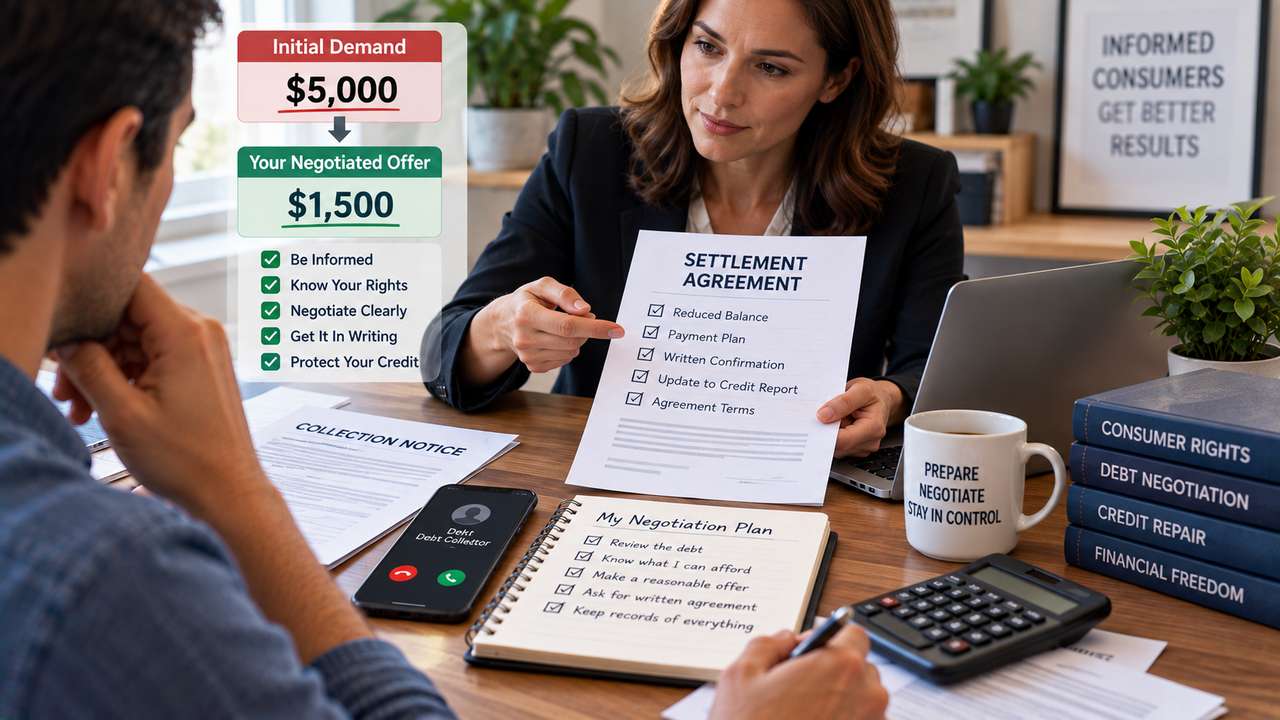
This guide walks through exactly how to negotiate effectively while protecting yourself throughout the process.
Before negotiating, it is also important to understand how debt validation works and make sure you are dealing with an account that is actually yours and accurately documented.
Understand Your Leverage Before You Start
Many people enter a debt negotiation assuming they have no power at all — they owe the money, so what room is there to negotiate? In reality, you have more leverage than this assumption suggests, particularly if you’re dealing with a debt buyer rather than the original creditor.
If it’s a debt buyer, they purchased your debt for a fraction of its face value — often somewhere between a few cents and twenty cents on the dollar. This means even a settlement at 30-40% of the balance likely represents a substantial profit relative to what they paid, giving you real room to negotiate below the full amount.
However, the price a debt buyer paid for an account does not automatically determine the amount you legally owe or guarantee that a particular settlement percentage will be accepted.
If the debt is old, approaching or past your state’s statute of limitations, the collector’s legal options are limited or nonexistent, which changes the power dynamic significantly, even though this requires careful handling given the payment-restarts-the-clock risk covered elsewhere.
Before making a payment on old debt, review our guide to the statute of limitations on debt.
If the debt is poorly documented, particularly after being resold multiple times, the collector may have genuine gaps in their ability to prove the debt is accurately yours and accurately calculated, giving you dispute leverage separate from settlement negotiation.
Your own ability and willingness to pay something (even if not the full amount) is itself leverage, since collectors generally prefer recovering something over nothing, particularly for older or harder-to-collect accounts.
Verify Before You Negotiate Anything
Before entering any negotiation, request formal debt validation. Negotiating a settlement on a debt you haven’t verified is inaccurate, or that isn’t actually yours, means potentially paying for something you didn’t need to resolve at all.
This step costs you nothing but a short delay and protects you from negotiating away money unnecessarily.
The Consumer Financial Protection Bureau recommends confirming that you owe the debt before negotiating and explains that validation information can help you determine whether the debt is yours and how much is claimed. See the CFPB’s guidance on negotiating a settlement with a debt collector.
If the information is inaccurate, you may need to dispute the account rather than immediately negotiate payment. You can also review our guide on how to dispute credit report errors.
Set Your Own Numbers Before the Conversation, Not During It
Determine the maximum you’re genuinely willing and able to pay, as a firm ceiling, before any conversation begins — negotiating under pressure, in real time, without a predetermined limit is exactly how people end up agreeing to more than they intended.
Determine a reasonable opening offer, below your actual ceiling, giving yourself room to negotiate upward if needed.
For debt buyer accounts specifically, an opening offer in the 20-30% range of the claimed balance isn’t unreasonable, given how cheaply these accounts are often acquired. However, this is a negotiation strategy rather than a guaranteed industry rule, and there is no universal settlement percentage that every collector will accept.
Decide whether a lump sum or a payment plan better fits your actual financial situation, and be clear with yourself about which structure you’re aiming for before the conversation, rather than deciding on the spot.
The CFPB similarly recommends calculating a realistic repayment amount and considering your income, expenses, and ability to maintain payments before making a proposal. Review the CFPB’s negotiation guidance.
Tactics Collectors Use That You Should Recognize
Artificial Urgency
“This offer is only available today” is a common pressure tactic. Legitimate debt doesn’t expire within a single phone call, and a collector genuinely interested in resolving the account will typically still be willing to negotiate tomorrow, or after you’ve had time to think.
You should not feel obligated to make a financial commitment simply because a representative creates a sense of urgency.
Anchoring High
Collectors often open with a settlement offer at a relatively high percentage of the balance (sometimes 70-80%), hoping you’ll negotiate down from there rather than up from a lower starting point.
Don’t treat their opening number as the realistic ceiling of what’s negotiable — treat it as their opening position, exactly as your own opening offer is yours.
Implying You Have No Other Option
Some collectors frame settlement as your only path forward, without mentioning alternatives like disputing the debt, exploring your state’s statute of limitations, or simply taking more time to consider your options.
Your options depend on the specific debt and your circumstances, but you generally do not have to make a decision during a single phone call.
Requesting Payment Information Before Terms Are Finalized
Never provide bank account or card information until you’ve actually agreed on final terms and have them in writing — a request for payment details before an agreement is finalized is a red flag regardless of how routine it’s framed as being.
The CFPB specifically recommends getting a repayment or settlement agreement and the collector’s promises in writing before making a payment. See the CFPB’s recommendations for documenting settlement agreements.
How to Actually Structure the Negotiation Conversation
Start by Confirming the Debt
Start by confirming the debt has been validated and you’re negotiating based on accurate information.
State Your Offer Clearly
State your opening offer clearly and calmly, without over-explaining or apologizing extensively for your financial situation — a clear, confident offer tends to be taken more seriously than an anxious, over-justified one.
Expect Some Back-and-Forth
Expect and allow for some back-and-forth. It’s normal for the collector to counter your initial offer, and for the final agreed amount to land somewhere between your opening offer and theirs.
This is a completely standard part of the process, not a sign anything has gone wrong.
Do Not Feel Forced to Agree Immediately
Don’t feel obligated to agree during this call. If you need time to think, or want to run numbers by someone you trust, it’s entirely reasonable to say you’ll call back with a decision, rather than committing to something in the moment because you feel pressured to resolve it immediately.
Getting the Agreement in Writing — The Single Most Important Protection
Regardless of what’s agreed to verbally, never send payment until you have the specific terms in writing.
This should include:
- The exact amount agreed upon.
- Explicit confirmation that this payment constitutes full and final settlement of the debt (not a partial payment toward a larger remaining balance, unless that’s genuinely your intended structure).
- How the account will be reported to the credit bureaus once payment is made (paid, settled, or, if you’ve specifically negotiated it, deleted — though deletion agreements are far from guaranteed and shouldn’t be assumed without explicit written confirmation).
- A specific payment method and timeline.
If a collector is unwilling to put the agreed terms in writing before you send payment, this is a significant warning sign, and reasonable grounds to pause and reconsider before proceeding.
The CFPB explicitly advises consumers to get settlement or repayment plans and the collector’s promises in writing before making a payment. Read the CFPB’s settlement documentation guidance.
Common Mistakes That Put People at a Disadvantage
Confirming Personal or Financial Details Before Validating the Debt
Providing sensitive information early, before you’ve verified anything, gives the collector information they can potentially use, without you having gained any corresponding verification in return.
Agreeing to a Payment Plan Without Understanding the Consequences
Some settlement agreements include provisions where missing even one payment voids the entire settlement, reverting you to owing the full original balance — understanding this specific risk before agreeing to a payment plan (versus a single lump-sum payment) is important.
Read the agreement carefully before committing to a structured payment arrangement.
Not Asking About the Tax Implications of a Large Settlement
If more than $600 of debt is forgiven as part of your settlement, the creditor may be required to issue a Form 1099-C, which can create a tax obligation on the forgiven amount — worth knowing about in advance, not discovering unexpectedly during tax season.
The IRS states that applicable creditors generally must file Form 1099-C when $600 or more of debt is canceled, and canceled debt may generally be taxable income unless an exception or exclusion applies. See the IRS information on Form 1099-C.
The tax treatment depends on your individual circumstances, so consider speaking with a qualified tax professional before finalizing a large settlement.
Making a Payment on Old Debt Without Checking the Statute of Limitations
Making a payment on old debt without checking the statute of limitations first can potentially create legal complications, depending on the state and circumstances.
The CFPB advises consumers to find out the applicable statute of limitations before making a payment or agreeing to a payment plan on an old debt. Review the CFPB’s guidance on old debt.
Negotiating From Shame or Panic
Negotiating from a place of shame or panic rather than calm, methodical decision-making can make the process harder.
It’s completely understandable to feel emotional about debt, but negotiating effectively requires treating the conversation as a business transaction, separate from any feelings of guilt or embarrassment about the underlying circumstances that led to the debt.
What a Fair Settlement Typically Looks Like
While every situation varies, general industry patterns can help calibrate your expectations.
For debt buyer-owned accounts specifically, settlements in the 30-50% range of the claimed balance are commonly reported as achievable, particularly for older accounts or accounts where you can demonstrate genuine financial hardship.
For debt still with the original creditor or an agency working on their behalf, the range may run somewhat higher, since their own flexibility is more constrained.
These are general patterns, not guarantees — your specific outcome depends on the particular company, the debt’s age and documentation, and how the negotiation itself unfolds.
Rather than relying on a particular percentage as a guaranteed target, use your own budget and ability to pay to establish a maximum amount you can responsibly afford.
Frequently Asked Questions
Should I tell the collector I’m negotiating with multiple debts at once, or keep that information private?
This is generally worth keeping to yourself during negotiation — while it might seem like disclosing broader financial hardship could help your case, it can also be used by the collector to argue you need to prioritize this specific debt, and it doesn’t typically strengthen your negotiating position to volunteer this kind of comprehensive financial picture.
Is it better to negotiate over the phone or in writing?
Both have advantages — phone negotiation allows real-time back-and-forth that can move the conversation along efficiently, while written negotiation (letters or email, where the collector’s policies allow it) creates an automatic documented record.
Many people use a hybrid approach: negotiating verbally, then insisting on written confirmation before finalizing anything, combining the efficiency of real-time discussion with the protection of documentation.
Can I negotiate a settlement without disclosing exactly how much I can afford?
Yes — you’re not obligated to reveal your full financial picture or a specific maximum amount during negotiation; stating your offer and negotiating from there, without explaining in detail why that’s your limit, is a reasonable and common approach.
What if the collector refuses to negotiate at all and insists on the full balance?
This does happen, particularly with some original creditors or agencies with limited authorized flexibility.
If this occurs, it’s worth asking directly whether a payment plan (even at the full balance) is available, or considering whether disputing any inaccuracies, or simply taking more time before deciding how to proceed, makes more sense than accepting their full, non-negotiated demand under pressure.
Is it worth hiring a debt settlement company to negotiate on my behalf?
Many people successfully negotiate directly without paying a third party, since the core skills involved (verification, patience, getting things in writing) don’t necessarily require professional intervention.
A debt settlement company or attorney becomes more valuable if you’re managing multiple debts simultaneously, facing active litigation, or simply want professional guidance and don’t feel confident handling the negotiation yourself.
The CFPB cautions that debt settlement companies can carry risks and fees and recommends considering alternatives such as negotiating directly or working with a nonprofit credit counselor. Review the CFPB’s guidance on debt relief programs.
A Complete Sample Negotiation Script
Having language prepared in advance removes much of the anxiety from an unfamiliar negotiation. Here’s a full script you can adapt:
Opening
“I’m calling regarding account [number]. I’ve reviewed the validation information you sent, and I’d like to discuss resolving this account.”
Making Your Offer
“I’m able to pay [X amount] as a lump sum, which would represent full and final settlement of this account. Is that something your company can agree to?”
If They Counter With a Higher Amount
“I understand, but [X amount] is genuinely what I’m able to offer right now. Would you be able to accept [a slightly higher amount, if you have room] as a final resolution?”
Before Agreeing to Anything
“Before I send any payment, I’ll need this agreement in writing — specifically the settlement amount, confirmation this resolves the account in full, and how it will be reported to the credit bureaus.”
If Pressured for Immediate Payment Information
“I’m not able to provide payment details until I’ve received the written confirmation we discussed. Once I have that, I’ll be able to move forward promptly.”
This script keeps the conversation focused, professional, and protected at each key decision point, without requiring you to improvise under pressure.
How to Handle a Collector Who Becomes Aggressive or Pushes Back Hard on Your Written-Confirmation Request
If a collector resists providing written confirmation before payment, insisting it’s unnecessary or that you should “just trust” the verbal agreement, this is worth treating as a significant red flag rather than a minor inconvenience.
A legitimate company negotiating in good faith has no real reason to refuse a request as basic as putting agreed-upon terms in writing — this is standard practice across the debt collection and settlement industry, and a collector’s resistance to it should increase, not decrease, your caution about proceeding with payment.
The CFPB likewise advises consumers to get repayment or settlement terms in writing before making a payment. Review the CFPB’s consumer guidance.
Understanding the Difference Between “Settled” and “Paid in Full” for Your Credit Report
As part of your negotiation, it’s worth understanding this distinction, since it affects how the resolved account will appear on your credit report.
“Paid in full” means you paid the entire original balance, and this designation is generally viewed most favorably.
“Settled” or “paid, less than full balance” means you paid a negotiated, reduced amount, and while this is still considerably better than an unpaid balance, some scoring models and some future lenders manually reviewing your file view a “settled” status very slightly less favorably than “paid in full.”
This is a difference worth knowing about but generally not enough, by itself, to justify paying substantially more than you can responsibly afford simply to secure a “paid in full” label instead of a well-negotiated settlement.
If you are reviewing how collection accounts appear on your credit report, see our guide on how to read a credit report.
Frequently Asked Questions, Continued
Is it ever worth making a counteroffer that’s lower than what I’d actually be willing to pay, to leave room for negotiation?
Yes, this is a standard and reasonable negotiation tactic — opening below your actual ceiling gives you room to make concessions during back-and-forth while still landing at or below what you were genuinely willing to pay, similar to how the collector’s own opening offer is typically higher than their actual floor.
Should I negotiate differently if I’m dealing with a company I know has a history of consumer complaints?
It’s worth being even more diligent about documentation and written confirmation with a company that has a known pattern of complaints, though the core negotiation principles remain the same — verify, know your numbers, and never pay without written terms, regardless of which specific company you’re dealing with.
If you believe a collector is violating your rights, you can learn more in our guide to collection agency harassment and the FDCPA.
Can I ask for a longer period to pay a lump sum, like 30 or 60 days, rather than paying immediately?
Yes, this is a reasonable request, particularly if you need time to gather funds — many collectors are willing to hold a negotiated settlement offer open for a specific period, though it’s worth getting this timeline confirmed in writing along with the rest of the agreement’s terms.
If I negotiate a settlement and later realize I could have gotten a better deal, is there any way to reopen the negotiation?
Once a settlement is finalized and paid, it’s generally considered closed and binding, so this isn’t typically an option after the fact — this is exactly why taking your time, not feeling rushed, and being confident in your offer before finalizing anything matters more than trying to renegotiate after the fact.
A Comparison of Negotiation Approaches by Debt Type
| Debt Type | Typical Negotiating Room | Special Considerations |
|---|---|---|
| Debt buyer-owned credit card debt | High (often 30-50% achievable) | Purchased at steep discount; often most flexible |
| Original creditor still holding the debt | Moderate | Constrained by internal policy; sometimes hardship programs available |
| Medical debt | Often high | Providers frequently prefer resolution over prolonged collection; nonprofit hospitals sometimes have charity care programs |
| Very old, potentially time-barred debt | Variable | Verify statute of limitations before any payment; restart-the-clock risk applies |
| Debt already in litigation | Real, but time-sensitive | Settlement can still occur, but responding to the lawsuit itself remains essential regardless |
This table is a general guide, not a guarantee — actual outcomes depend heavily on the specific company, your documented circumstances, and how the negotiation itself unfolds, but it’s useful for calibrating your expectations and opening offer strategy based on which category your specific debt falls into.

Frequently Asked Questions, Continued Further
Does negotiating a settlement affect my ability to negotiate other unrelated debts in the future?
No — each debt and each negotiation is independent; successfully or unsuccessfully negotiating one account has no bearing on your standing or leverage with a completely separate creditor or collector for a different debt.
Is it reasonable to ask the collector why they’re unwilling to go lower than a certain amount during negotiation?
You can ask, though they’re not obligated to explain their internal reasoning or authorization limits — if they hold firm at a number that doesn’t work for you, it’s reasonable to either continue negotiating, take time to consider, or decide that particular offer doesn’t meet your needs and explore your other options (dispute, payment plan structured differently, or simply not proceeding immediately).
Should my approach differ if I’m negotiating on behalf of a family member rather than my own debt?
The same core principles apply, though you’d generally need proper authorization to negotiate on someone else’s behalf (verified by the collector), and it’s worth being clear about your role and relationship to the account from the outset of the conversation to avoid confusion about who’s actually agreeing to any final terms.
The Bottom Line
Negotiating with a debt collector without getting taken advantage of comes down to a few consistent principles: verify the debt before negotiating anything, know your own numbers before the conversation starts, recognize common pressure tactics for what they are, and never send payment without the final terms in writing.
You have more genuine leverage than the power imbalance might initially suggest, particularly with debt buyers who acquired your debt at a steep discount — approaching the negotiation calmly, methodically, and with your own predetermined boundaries turns what can feel like an intimidating conversation into a manageable, controllable process.
Related Credit & Debt Resources
- Debt Validation Letter Guide
- Statute of Limitations on Debt
- Pay for Delete Explained
- How to Negotiate a Pay-for-Delete
- Collection Agency Harassment and the FDCPA
- How to Dispute Credit Report Errors
- How to Remove Collections From Your Credit Report
Need Help Reviewing Your Credit Situation?
If you are dealing with collection accounts, inaccurate balances, repeated collection activity, or accounts that may have changed ownership, reviewing your credit situation can help you understand what appears on your reports and what issues may need attention.
Important: This article provides general educational information and is not legal or tax advice. Debt-collection laws, statutes of limitations, settlement practices, credit-reporting rules, and tax consequences can vary depending on the debt and your circumstances. If you are facing a lawsuit, a time-barred debt issue, or significant tax consequences from canceled debt, consider consulting a qualified attorney or tax professional.
Leave a Reply