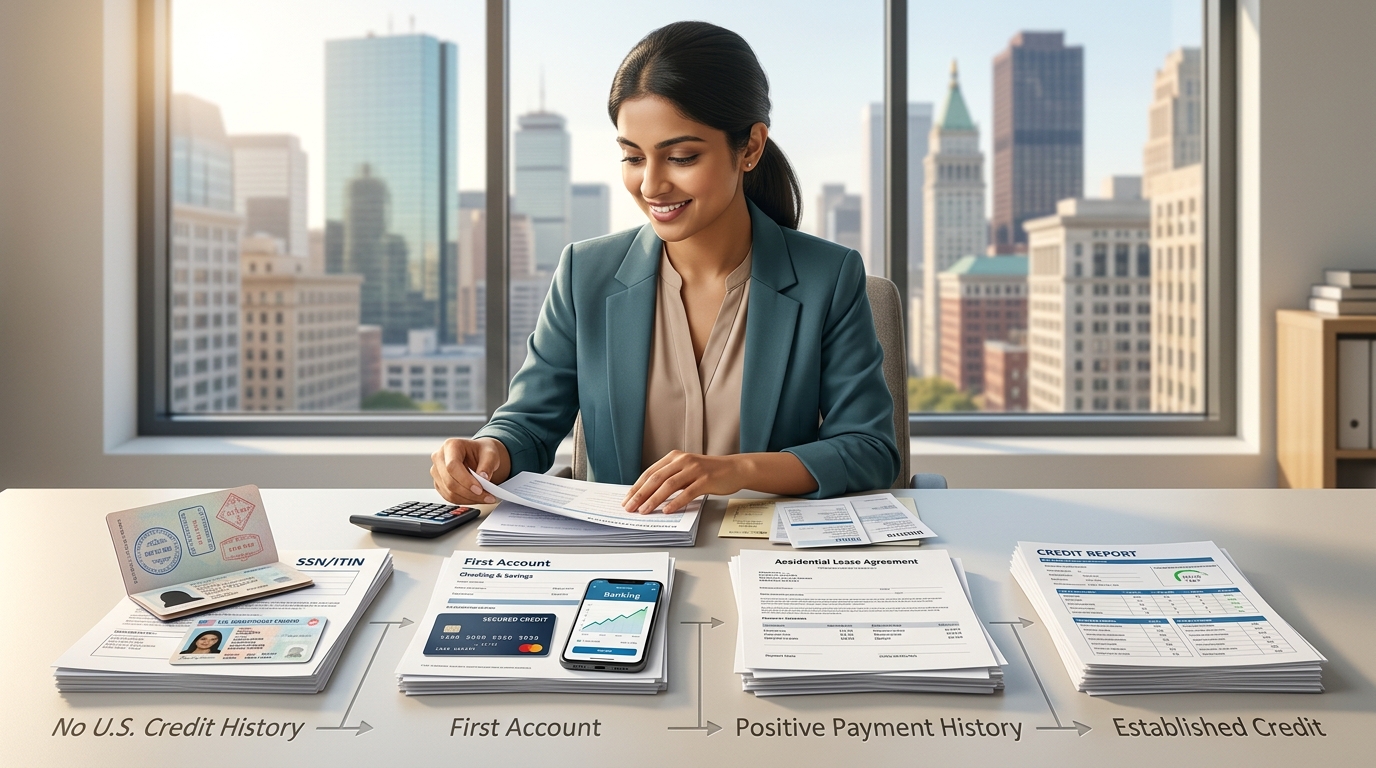
This can feel deeply unfair—years of responsible borrowing and perfect payment history elsewhere may not immediately be visible to American lenders. But understanding how the U.S. credit system works, what information can sometimes be transferred, and what steps you can take to establish a U.S. credit file can make the process considerably less discouraging.
The good news is that building credit as an immigrant is possible. Once you establish accounts that report to U.S. credit reporting companies and manage them responsibly, the fundamental credit-building process is similar to that faced by anyone starting with little or no U.S. credit history.
Why Your Foreign Credit History Usually Doesn’t Transfer Automatically
U.S. credit reporting is based largely on information supplied by creditors and other furnishers to U.S. credit reporting companies. A strong credit history from another country therefore does not automatically become part of your U.S. credit file simply because you move to America.
That means someone who had years of responsible credit use in India, Mexico, Nigeria, the Philippines, the United Kingdom, or another country may still encounter U.S. lenders that have little or no traditional U.S. credit history available to evaluate.
There are, however, important exceptions. Cross-border services such as Nova Credit’s Credit Passport can allow participating lenders to access and translate international credit information for eligible consumers. Nova Credit currently describes coverage across multiple countries and says availability depends on the participating lender and market.
So the better way to think about the situation is not that foreign credit history can never be used in the United States, but that it generally does not transfer automatically across borders and is only useful when a lender participates in an appropriate cross-border program.
In many cases, you therefore still need to establish a U.S. credit file from the beginning—or build on whatever limited history a participating lender is able to recognize.
“No Credit” Is Different From “Bad Credit”
One of the most important distinctions for a newcomer is the difference between having no credit history and having negative credit history.
If you have never used a U.S. credit account, you may simply have little or no information in your U.S. credit file. That is different from having late payments, defaults, collections, or other negative information.
A new immigrant may therefore be starting with an unknown or limited credit profile, rather than a damaged one.
This is why your first U.S. credit account can be particularly important: it begins creating the payment history and account information that future lenders may use when evaluating applications.
If you want to understand how lenders and scoring systems use credit information, read our guide to how a credit score is calculated.
What You’ll Need First: Documentation
Before applying for a credit-building product, you will typically need some combination of identification, address, and tax or Social Security information. Exact requirements vary by institution and product.
Social Security Number or ITIN
If you are eligible for a Social Security number, an SSN may be used when applying for financial products.
If you are not eligible for an SSN but have a federal tax purpose, you may have an Individual Taxpayer Identification Number (ITIN). The IRS explains that an ITIN is issued for federal tax purposes to people who need a taxpayer identification number but are not eligible for an SSN. An ITIN does not authorize employment or change immigration status.
Some financial institutions accept ITINs for particular financial products, while others require an SSN. Never assume that every bank or card issuer follows the same policy.
Proof of U.S. Address
You may also need proof of your U.S. address, such as a lease, utility bill, bank statement, or another document accepted by the financial institution.
Valid Identification
Depending on the institution, acceptable identification may include a passport, state-issued identification, driver’s license, or other government-issued documentation.
Income or Funds
Some credit-building products require proof of income. A secured credit card also requires a cash deposit that typically determines the card’s credit limit.
Because requirements vary considerably, check the financial institution’s current eligibility requirements before submitting an application.
Step One: Open a U.S. Bank Account
A checking or savings account does not automatically build your credit score. However, establishing a U.S. bank account can be a practical first step in getting your financial life organized.
A bank account can help you:
- Receive employment income.
- Pay rent and other recurring bills.
- Fund a secured credit card deposit.
- Build a record of regular financial activity.
- Manage automatic payments.
- Maintain the funds needed for credit-building products.
When opening an account, ask the institution exactly which forms of identification and taxpayer information it accepts for noncitizens and newcomers.
Requirements can vary significantly between banks, credit unions, and account types.
Step Two: Check Whether Your Foreign Credit History Can Be Used
Before assuming that your foreign credit history is completely unusable, check whether any cross-border credit program is available for your country and the product you want.
Nova Credit’s Credit Passport, for example, is designed to help participating lenders access consumer-permissioned international credit data and translate it into information that can be used in local underwriting. Nova Credit says its current coverage includes multiple countries, but availability depends on the relevant lender and product.
This can potentially provide a shortcut for someone who already has a strong credit history abroad, but it should not be treated as a universal solution. A lender must participate in the relevant program, and eligibility varies.
Step Three: Choose Your First Credit-Building Product
Once you have the necessary documentation, the next step is choosing a product that can establish positive U.S. payment history.
Secured Credit Cards
A secured credit card can be one of the more accessible options for someone starting from scratch.
You generally provide a refundable cash deposit, and that deposit commonly determines or supports your credit limit. You then use the card and make payments according to the card agreement.
The CFPB lists secured credit cards among the products that can help consumers establish or rebuild credit when payments are reported to the nationwide credit reporting companies.
Some issuers may accept an ITIN rather than an SSN, but this is not universal. Always verify the current requirements directly with the issuer.
Credit-Builder Loans
A credit-builder loan is another option offered by some banks and credit unions.
Instead of receiving the borrowed money for immediate spending, the funds are generally held in an account while you make scheduled payments. If those payments are reported to the credit reporting companies, they can help establish payment history.
The CFPB describes credit-builder loans as products that can help build credit and savings simultaneously, with terms commonly ranging from several months to a couple of years.
International Student and Newcomer-Specific Credit Products
Some financial institutions offer products designed for international students, recent arrivals, or people with limited U.S. credit history.
Eligibility may consider factors such as enrollment, employment, income, deposits, or other information instead of relying exclusively on an established U.S. credit score.
Because product availability changes, compare current offers directly with banks and credit unions rather than relying on an old list published online.
Becoming an Authorized User
If a trusted family member or friend already has a well-managed credit card, they may be able to add you as an authorized user.
Depending on the issuer and how the account is reported, the account’s history may appear on the authorized user’s credit report.
This can potentially help establish a credit file more quickly, but it depends on the specific issuer and reporting practices. It also requires a high level of trust between the primary cardholder and authorized user.
Step Four: Use Your First Credit Product Carefully
Once you have your first credit-building account, the fundamentals are straightforward:
- Pay every bill on time.
- Keep revolving balances manageable.
- Avoid taking on debt simply to build credit.
- Do not apply for numerous accounts at once.
- Give your accounts time to age.
- Monitor your credit reports for errors.
The CFPB recommends paying bills on time, avoiding getting too close to credit limits, and limiting applications for new credit over short periods.
For additional strategies, read our guide to how to improve your credit score.
Special Considerations Based on Immigration Status
Your immigration situation can affect which financial products are available to you, but it does not mean that you cannot establish U.S. credit.
Work Visa Holders
People working in the United States under employment-authorized immigration categories may have an SSN, depending on their circumstances and work authorization.
Having an SSN can simplify applications for products that use SSN-based identification systems, although lenders may still have their own eligibility requirements.
International Students
International students may have different documentation and work-authorization circumstances depending on their visa and employment situation.
Some universities and financial institutions offer products specifically designed for international students and other newcomers.
People Without an SSN
If you are not eligible for an SSN, an ITIN may be available if you have a qualifying federal tax purpose.
However, an important distinction is that an ITIN is a tax identification number, not a substitute for work authorization. The IRS specifically states that an ITIN does not authorize someone to work in the United States.
Some financial institutions accept ITINs for certain products, while others do not.
DACA Recipients
DACA recipients may have SSNs associated with their employment authorization. Whether a particular credit product is available still depends on the lender’s current underwriting and documentation requirements.
Current U.S. lending rules can allow creditors to consider immigration or residency status when evaluating repayment rights and remedies. The CFPB’s current Regulation B commentary expressly addresses immigration status in credit evaluation.
How Long Does Building Credit From Scratch Take?
There is no single timeline that applies to every newcomer.
A credit score can become available after enough qualifying information appears in a credit file, but the exact timing depends on the scoring model, account type, reporting history, and other factors.
Building a genuinely established credit history takes considerably longer than simply generating a first score.
The CFPB emphasizes that building or rebuilding credit takes time and that there are no legitimate shortcuts or secrets.
Think in terms of months and years rather than days or weeks. Consistent, responsible management is more important than trying to manufacture a score quickly.
Common Obstacles Immigrants Face—and How to Work Around Them
Being Denied Because You Have Little or No U.S. Credit History
A denial from one institution does not necessarily mean every institution will reject you.
Underwriting criteria differ between banks, credit unions, fintech companies, and individual products.
If you are denied, read the adverse action notice carefully. It may identify the specific reasons for the decision, such as insufficient credit history, income, documentation, or another underwriting factor.
Difficulty Renting an Apartment
A lack of U.S. credit history can sometimes make apartment applications more complicated.
Depending on the landlord and local rules, alternatives may include:
- Providing additional proof of income.
- Showing evidence of savings.
- Using a qualified co-signer where permitted.
- Providing references.
- Working with landlords who have experience with newcomers.
Do not assume that every landlord will use the same screening criteria.
Scams Targeting New Immigrants
Newcomers can be attractive targets for scams because they may be unfamiliar with the U.S. financial system.
Be cautious of companies promising to create a high credit score immediately, guaranteeing approval, or charging large upfront fees simply to introduce you to ordinary financial products.
Before paying a company, research it independently and understand exactly what service you are purchasing.
You can also learn more about how credit repair companies work and what to consider before hiring one.
Confusing Personal Credit With Business Credit
Personal and business credit are separate systems.
Your personal credit history and business credit profile may use different identifying information and reporting systems. Building one does not automatically create the other.
A Realistic Six-Month Starting Plan
Month 1: Establish Your Financial Foundation
- Open a U.S. checking or savings account if appropriate for your situation.
- Gather your identification documents.
- Determine whether you have an SSN or qualifying ITIN.
- Establish proof of your U.S. address.
- Research beginner credit products.
Months 1–2: Start With One Manageable Credit Product
If you qualify, consider a secured credit card or another product designed for people with limited credit history.
Use it for a small, predictable purchase and make payments on time.
If the card issuer allows it, automatic payments can reduce the risk of accidentally missing a due date.
Month 3: Check Cross-Border Options
If you have a strong credit history in your home country, investigate whether a participating lender uses a service such as Nova Credit’s Credit Passport.
Nova Credit currently lists multiple supported countries, but availability depends on the lender and product, so verify current eligibility rather than relying on an old country list.
Months 3–6: Continue Consistent Management
Continue making every payment on time.
If appropriate for your situation and budget, you might also investigate a credit-builder loan through a local credit union or financial institution.
Do not open additional accounts simply for the sake of having more accounts. Choose products you can manage comfortably.
Month 6 and Beyond: Monitor Your Progress
Once you have sufficient history, check your credit reports and score information through legitimate sources.
You can obtain your official free credit reports through AnnualCreditReport.com, the federally authorized source for free credit reports.
Review the reports for incorrect personal information, unfamiliar accounts, inaccurate balances, or payment information that does not belong to you.
Does Good Credit in Your Home Country Help With a U.S. Application?
Sometimes, but not automatically.
Most U.S. lenders cannot simply look up your foreign credit history through the ordinary U.S. credit-reporting system.
However, participating lenders may use cross-border services to obtain international credit information with your permission.
Nova Credit, for example, says its Credit Passport can translate international credit data into information usable by participating lenders.
Therefore, if you had strong credit abroad, it is worth asking prospective lenders whether they recognize international credit history.
Can You Build U.S. Credit Without a Social Security Number?
Sometimes, yes.
Some financial institutions offer products to applicants using an ITIN or other identification instead of an SSN.
However, an ITIN is issued by the IRS for federal tax purposes and does not itself guarantee access to credit products.
Eligibility is determined by the specific financial institution and product.
Will a Visa Change or Expiration Automatically Erase Your Credit History?
Your credit history is not simply erased because your immigration status changes.
However, changes in employment authorization, identification information, address, income, or eligibility for particular products can affect your ability to open or maintain certain financial accounts.
If you move, change your legal name, or later receive an SSN after using an ITIN for tax purposes, make sure your financial records are properly updated.
The IRS states that once someone receives an SSN, they should stop using the ITIN for tax purposes and notify the IRS so the tax records can be combined under the SSN.
Are Some Banks More Immigrant-Friendly?
This can vary by location, institution, product, and time.
Rather than relying on a permanent list of “immigrant-friendly banks,” contact institutions directly and ask:
- Do you accept ITINs for this product?
- Do you require an SSN?
- What identification documents do you accept?
- Do you offer secured credit cards?
- Do you offer credit-builder loans?
- Do you work with international credit histories?
- Do you have programs for newcomers or international students?
Local credit unions can also be worth investigating because their underwriting processes and product offerings may differ from those of large national banks.
How Is Your Credit File Affected If You Leave the U.S.?
Leaving the United States does not simply erase your credit history.
However, credit accounts can eventually become inactive or fall off credit reports according to applicable reporting rules.
If you later return to the United States, the amount of history still visible on your credit reports will depend on which accounts remain open or reportable and how much time has passed.
Before leaving for an extended period, review your accounts, make sure payments are handled properly, and keep your contact information updated where appropriate.
Understanding “No File” vs. “Thin File”
These two terms are useful when discussing newcomer credit.
No File
A person with no file has little or no traditional credit information available for a bureau to use.
This can happen when someone has never had a U.S. credit account.
Thin File
A thin file contains some credit history but not much of it.
For example, you might have one newly opened credit card with only a few months of payment history.
The goal of your first credit-building account is therefore not simply to obtain a particular card. It is to begin establishing a reliable record that future lenders can evaluate.
How Rent and Utility Payments Can Help
Rent and utility payments are important financial obligations, but they do not automatically appear on every traditional credit report.
Some rent-reporting services can report eligible rental payments to credit reporting companies. Likewise, certain services may allow eligible consumers to connect utility or telecommunications payment information for credit-building purposes.
Before paying for a rent-reporting or credit-building service, verify:
- Which credit reporting companies receive the information.
- Whether positive and negative information are both reported.
- What fees apply.
- Whether your specific landlord or provider is eligible.
- Whether the service actually fits your credit-building goal.
Remember that not every bill-payment product creates traditional credit history. The CFPB specifically notes that many ordinary debit, cash, prepaid-card, and similar transactions are not reported as credit-building payment history.
The Role of Community Development Financial Institutions (CDFIs)
Community Development Financial Institutions (CDFIs) can be another resource for people who have difficulty accessing mainstream financial products.
The U.S. Department of the Treasury’s CDFI Fund explains that certified CDFIs are mission-driven institutions that provide financial services to underserved communities. They include organizations such as community development banks, credit unions, and other financial institutions.
The CDFI Fund provides tools that consumers can use to search for certified CDFIs and organizations in their communities.
A CDFI may be worth investigating if a mainstream bank has been difficult to work with, particularly when documentation, income, or limited credit history creates barriers.
Building Credit While Establishing a New Life
Credit-building is often only one of many challenges facing someone who has recently moved to the United States.
You may simultaneously be dealing with housing, employment, healthcare, transportation, banking, taxes, education, and other practical issues.
It is reasonable to approach credit-building as a gradual process rather than something that must be solved immediately.
The important thing is to start when you are financially ready and then manage the accounts you open responsibly.
Does an Employer Sponsoring Your Visa Affect Credit Approval?
Visa sponsorship itself is not a substitute for a credit history or an approval guarantee.
However, lenders can consider information relevant to repayment, including income and certain aspects of immigration or residency status as permitted under applicable law.
Current Regulation B provisions specifically address the circumstances under which a creditor may consider immigration status and information necessary to determine repayment rights and remedies.
Stable, verifiable income can therefore be relevant to an application, but each lender uses its own underwriting criteria.
If You Have an ITIN and Later Receive an SSN, Do You Start Over?
Not necessarily.
Your tax records are handled by the IRS separately from your consumer credit reports. When someone receives an SSN after having an ITIN, the IRS instructs the individual to stop using the ITIN for tax purposes and notify the IRS so tax records can be combined under the SSN.
For credit reporting, make sure your financial institutions and credit reporting companies have accurate identifying information. If your credit history is not correctly associated with your new identifying information, you may need to contact the relevant institutions and credit reporting companies to correct the records.
Are “No SSN Required” Credit Cards Legitimate?
Some legitimate financial institutions offer products that accept an ITIN or other identification instead of an SSN.
However, the phrase “no SSN required” does not automatically mean that an offer is legitimate or suitable.
Before applying, verify the issuer, fees, interest rate, deposit requirements, reporting practices, and eligibility requirements directly with the financial institution.
Be especially cautious if a company promises a guaranteed high credit score or demands a large upfront payment simply to access an ordinary financial product.
Can International Money Transfers Build U.S. Credit?
Sending or receiving money through an international remittance service does not automatically create traditional U.S. credit history.
Credit reporting generally depends on information furnished to the credit reporting companies by participating creditors and other data furnishers.
Remittance records can still be part of your broader financial records and may be relevant when demonstrating financial activity to a lender during a manual review, but they should not be confused with traditional credit-reporting history.
Comparing Your First-Product Options as a Newcomer
| Product or Strategy | SSN Required? | Deposit Required? | Potential Credit-Building Role |
|---|---|---|---|
| Secured credit card | Varies; some issuers accept ITINs | Usually yes | Can establish revolving credit history when payments are reported |
| Credit-builder loan | Varies by institution | No traditional card deposit | Can establish installment payment history when reported |
| International credit-history program | Varies by participating lender | Varies | May allow eligible foreign credit history to be considered |
| Authorized user | Varies | No | May allow account history to appear on the user’s credit file, depending on issuer reporting |
| Rent reporting | Varies | No | May report eligible rental payment history |
There is no single best product for every newcomer. The right starting point depends on your documentation, income, budget, immigration circumstances, and access to financial institutions.
What to Do If You Are Repeatedly Denied
If you have applied for multiple products and keep getting rejected, do not simply submit more applications without understanding why.
First, review the adverse action notices you receive. Look for the specific reason given for each denial.
Potential issues may include:
- Insufficient credit history.
- Insufficient income documentation.
- Address verification problems.
- Identification issues.
- Product-specific eligibility requirements.
- Information on your credit report that is inaccurate.
If you find inaccurate information on your credit reports, review our guide on how to dispute credit report errors.
You can also consider asking a local credit union or CDFI whether it offers products or underwriting options for people with limited credit histories. The Treasury’s CDFI Fund provides tools for finding certified CDFIs.
Should You Consult a Financial Counselor or Immigrant-Focused Nonprofit?
You do not have to figure everything out alone.
Nonprofit financial counseling organizations, immigrant-support organizations, community organizations, and CDFIs may offer education or assistance with navigating the U.S. financial system.
Before paying for financial guidance, determine whether free or low-cost nonprofit assistance is available in your area.
Does the Length of Time You Have Lived in the U.S. Affect Credit Approval?
There is no universal credit-scoring rule that simply awards points for the number of months you have lived in the United States.
However, lenders may consider information relevant to repayment and may have their own underwriting criteria concerning income, residence, documentation, and immigration status where permitted by law.
For a basic starter product, the most important practical issue may simply be establishing a credit file and demonstrating responsible payment behavior.
Is It Worth Building Credit If You’re Only in the U.S. Temporarily?
It can still be useful.
Even a relatively short period in the United States may involve applying for an apartment, financing a vehicle, obtaining certain financial services, or using other products where credit history can matter.
A U.S. credit history can therefore remain useful even if you expect to stay in the country for only several years.
Frequently Asked Questions
Does my foreign credit score transfer to the United States?
Usually not automatically. U.S. lenders generally need access to U.S. credit-reporting information, although some participating lenders use cross-border services such as Nova Credit to access eligible international credit data.
Can I build credit without an SSN?
Yes, potentially. Some financial institutions accept ITINs or other documentation for particular credit products. An ITIN is issued by the IRS for federal tax purposes and does not itself guarantee credit eligibility.
Can an immigrant get a secured credit card?
Potentially. Secured cards are specifically designed to reduce the lender’s risk by requiring a cash deposit. Some issuers accept ITINs, while others require an SSN.
How quickly can an immigrant build a credit score?
The timing varies by scoring model and the information reported to the credit bureaus. Establishing a score can happen relatively quickly once sufficient qualifying account information is reported, but building a mature credit history generally takes much longer.
Does opening a bank account build credit?
Usually, simply opening a checking or savings account does not create traditional credit history. Its value is primarily that it gives you a U.S. financial foundation from which you can manage credit-building products and payments.
Can rent payments build credit?
They can in some circumstances if a rent-reporting service reports eligible payments to credit reporting companies. Ordinary rent payments do not automatically appear on every credit report.
Can utility bills build credit?
Ordinary utility payments are not automatically reported as traditional credit history in every case. Certain credit-building services may allow eligible utility or telecommunications payment information to be reported.
Can I use my home-country credit history to get a U.S. credit card?
Sometimes. Some U.S. lenders participate in cross-border credit programs that can access international credit information. Availability depends on your country, the lender, and the specific product.
What is the difference between a thin credit file and no credit file?
A no-file consumer has little or no traditional credit information available, while a thin-file consumer has some credit history but not enough to provide a substantial record.
Can a CDFI help me build credit?
A CDFI may offer financial products, lending, or financial education, depending on the institution. The Treasury’s CDFI Fund provides a searchable database and information about certified CDFIs.
What should I do if I am denied because I have no credit history?
Review the lender’s adverse action notice to identify the stated reason. You can then consider products specifically designed for people with limited credit history, local credit unions, CDFIs, or other institutions with different eligibility requirements.
Will changing from an ITIN to an SSN erase my credit history?
Receiving an SSN does not mean you should intentionally start over. Make sure your financial institutions and credit reporting records use accurate identifying information. Separately, the IRS requires you to stop using the ITIN for tax purposes and notify the IRS when you receive an SSN.
Can immigration status affect a credit application?
Federal credit regulations allow creditors to consider immigration status and certain related information when necessary to determine repayment rights and remedies, subject to applicable law.
The Bottom Line
Building credit as an immigrant with no U.S. credit history is absolutely possible, but it usually requires establishing a U.S. credit record deliberately.
Your previous financial history in another country may not automatically appear in the U.S. system, although participating cross-border programs can provide an important exception for eligible consumers.
A practical starting path is to:
- Establish a U.S. bank account when appropriate.
- Gather your identification, address, and SSN or ITIN documentation.
- Check whether a lender can use your foreign credit history.
- Consider an accessible product such as a secured credit card or credit-builder loan.
- Make every payment on time.
- Keep revolving balances manageable.
- Avoid applying for too many accounts at once.
- Monitor your credit reports for errors.
- Consider credit unions or CDFIs if mainstream lenders are difficult to work with.
The process may feel slow at first, but the objective is not to create an artificial score overnight. The objective is to establish a reliable U.S. financial record that lenders can evaluate over time.
If you want to learn more about repairing or improving an existing U.S. credit profile, explore our credit repair and credit education resources.
Need Help Reviewing Your Credit?
If you have recently moved to the United States and already have a U.S. credit report, checking it for inaccurate, outdated, duplicate, or unfamiliar information can be an important part of establishing your financial foundation.
Contact Credit Repair Services to discuss your credit situation →
Leave a Reply