Blog

  • The Credit Score Myths That Refuse to Die

    The Credit Score Myths That Refuse to Die

    Credit score advice spreads fast—from well-meaning family members, old forum posts that never get updated, financial “gurus” repeating things they heard secondhand, and social-media posts that turn complicated credit rules into simple one-line tips.

    Some of these ideas were once true under specific circumstances and have since become outdated as credit scoring models evolved. Others were never true at all.

    Either way, acting on bad credit advice can cost you money, slow your progress, or lead you to make decisions that do not actually help your credit profile.

    This guide breaks down some of the most persistent credit score myths and explains what is actually true.

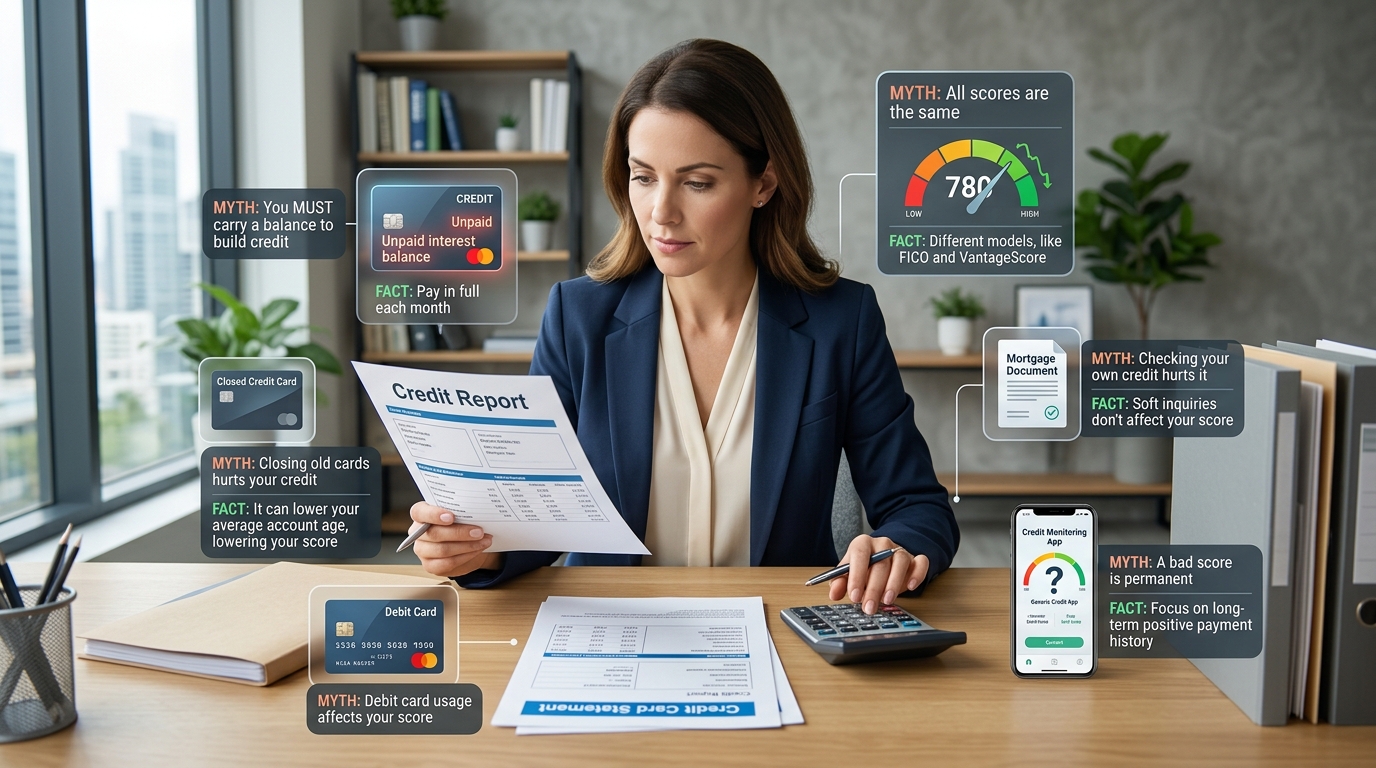
    Myth: You Need to Carry a Balance to Build Credit

    This is one of the most damaging and widespread credit myths because following the advice can cost you real money.

    You do not need to carry a balance from month to month to build credit.

    Carrying a balance means you may pay interest on your purchases. It does not create a special credit-building benefit simply because you allowed debt to remain unpaid after the statement due date.

    What matters for your credit profile includes factors such as payment history and the amount of revolving credit you are using relative to your available limits.

    You can therefore use a credit card, have activity reported to the credit bureaus, and then pay your statement balance in full.

    The Consumer Financial Protection Bureau (CFPB) provides consumer guidance on using credit cards and managing balances. ([consumerfinance.gov](https://www.consumerfinance.gov/consumer-tools/credit-cards/?utm_source=chatgpt.com))

    Bottom line: Carrying interest-bearing debt is not a requirement for building credit.

    Myth: Checking Your Own Credit Score Hurts It

    Checking your own credit report or score does not hurt your credit score.

    When you request your own credit information, it is generally treated as a soft inquiry. Soft inquiries do not affect your credit score.

    This is different from a hard inquiry, which can occur when a lender checks your credit in connection with an application for credit.

    The CFPB explains the difference between hard and soft inquiries and notes that checking your own credit report does not hurt your score. ([consumerfinance.gov](https://www.consumerfinance.gov/ask-cfpb/does-checking-my-own-credit-report-hurt-my-credit-score-en-1331/?utm_source=chatgpt.com))

    You can also check your official credit reports through AnnualCreditReport.com.

    Myth: Closing a Credit Card You Don’t Use Helps Your Score

    Closing an unused credit card does not automatically improve your credit score.

    In some circumstances, closing a card can actually make certain scoring factors less favorable.

    For example, closing a revolving account removes its available credit from your total available revolving credit. If your balances stay the same, your overall utilization ratio can increase.

    Account age can also matter. A closed account in good standing may continue appearing on your credit reports for years, but eventually it may no longer contribute to the same extent once it falls off the report.

    That does not mean you should keep every credit card open forever. Annual fees, security concerns, poor terms, or personal financial goals can all be legitimate reasons to close an account.

    Before closing an account, consider how the change could affect your overall credit profile.

    Read our guide on how credit scores are calculated for more context.

    Myth: You Only Have One Credit Score

    There is no single universal credit score attached permanently to your name.

    Credit scores can vary because different scoring models can use different formulas, versions, and credit-report data.

    FICO and VantageScore are two major scoring systems, and each has multiple versions.

    Scores can also differ depending on which credit bureau’s information is being used.

    This is why the score you see through one financial app may not be identical to the score a lender uses for a particular application.

    The CFPB explains that consumers can have multiple credit scores because lenders and scoring companies may use different models and different credit-report information. ([consumerfinance.gov](https://www.consumerfinance.gov/ask-cfpb/why-is-my-credit-score-different-from-the-score-i-see-online-en-1797/?utm_source=chatgpt.com))

    Myth: A Debit Card Builds Credit Just Like a Credit Card

    A debit card does not build traditional credit history in the same way a credit card does.

    When you use a debit card, the transaction generally draws money directly from your bank account.

    Ordinary debit-card purchases are not reported to the credit bureaus as credit-account payment history.

    Credit cards, installment loans, and certain specialized reporting services can contribute information to credit reports when the relevant company reports that information.

    This is one reason why someone can responsibly use a debit card for years and still have little or no traditional credit history.

    Myth: Being Married Automatically Merges Your Credit With Your Spouse’s

    Marriage does not automatically create one shared credit report or one combined credit score.

    Each spouse generally has an individual credit file.

    Simply getting married, sharing a last name, or living at the same address does not merge the two credit reports.

    Credit can become connected when spouses actually share financial obligations—for example, through a joint credit account or when one spouse becomes an authorized user on the other’s account.

    If both spouses apply jointly for credit, the lender may review information from both individuals.

    Myth: Paying Off a Collection Immediately Removes It From Your Credit Report

    Paying a collection does not automatically mean the collection account disappears from your credit report.

    Depending on the account and reporting practices, paying a collection may update the account’s status to show that it has been paid or settled.

    That is different from deleting the collection entirely.

    There are important exceptions and changes in how certain medical debt is treated. The three nationwide credit reporting companies announced that paid medical collections would be removed from consumer credit reports, and unpaid medical collections below $500 were also removed under their announced policy. ([consumerfinance.gov](https://www.consumerfinance.gov/ask-cfpb/how-does-medical-debt-affect-my-credit-report-en-1851/?utm_source=chatgpt.com))

    For other types of collection accounts, payment does not necessarily result in automatic deletion.

    Before paying an account, understand exactly how the payment is expected to affect the account and whether you have any dispute concerning its accuracy.

    Learn more about removing collections from your credit report.

    Myth: You Should Avoid Credit Entirely to Protect Your Score

    Avoiding credit entirely does not create a perfect credit score.

    If you have no credit accounts or very little reported history, lenders may simply have limited information with which to evaluate your creditworthiness.

    Having no credit history is different from having excellent credit history.

    If you eventually need a mortgage, auto loan, apartment, or other service where credit information is considered, having an established record of responsible credit management can be useful.

    The CFPB recommends establishing a credit history and using credit responsibly rather than avoiding credit altogether. ([consumerfinance.gov](https://www.consumerfinance.gov/consumer-tools/credit-reports-and-scores/how-to-rebuild-your-credit/?utm_source=chatgpt.com))

    Myth: A High Income Means a High Credit Score

    Income itself is not one of the standard factors used to calculate a FICO or VantageScore credit score.

    Someone earning a high salary can still have a low score if they have missed payments, high credit utilization, defaults, or other negative information.

    Likewise, someone with a more modest income can have a strong credit profile if they consistently manage their credit accounts responsibly.

    Income does matter in a different part of the lending process. A lender may ask about income when determining whether you can afford a loan or credit line.

    But income and credit score are not the same thing.

    Myth: Credit Repair Companies Can Remove Any Negative Item, Accurate or Not

    No legitimate credit repair process can lawfully erase accurate negative information simply because a consumer wants it removed.

    Credit repair can involve identifying information that is inaccurate, incomplete, outdated, or unverifiable and disputing it through the appropriate process.

    Consumers can generally dispute inaccurate information themselves without paying a credit repair company.

    The CFPB explains that consumers have the right to dispute inaccurate information on their credit reports. ([consumerfinance.gov](https://www.consumerfinance.gov/ask-cfpb/how-do-i-dispute-an-error-on-my-credit-report-en-314/?utm_source=chatgpt.com))

    The FTC’s Credit Repair Organizations Act guidance also addresses prohibited practices, including misleading claims and certain advance-payment arrangements. ([ftc.gov](https://www.ftc.gov/business-guidance/resources/credit-repair-organizations-act-compliance-guide?utm_source=chatgpt.com))

    Be particularly skeptical of companies promising to remove accurate negative information or guaranteeing a specific score increase.

    Read our guide to whether credit repair companies work before hiring a company.

    Myth: Once You Reach 850, You’re “Maxed Out” and Should Stop Worrying

    850 is the top of the standard FICO score range, but reaching the maximum possible score is not necessary for every lending situation.

    Different lenders use different underwriting criteria and scoring models, and the practical difference between very high scores can depend on the specific product and lender.

    Once your credit is already strong, continued responsible management generally matters more than obsessing over every possible point.

    The important objective is not simply to reach a particular number. It is to maintain a healthy credit profile that gives you access to appropriate financial products and terms.

    Myth: Opening Several New Accounts at Once Builds Credit Faster

    Opening several accounts quickly does not necessarily accelerate credit building.

    New credit applications can result in hard inquiries, and newly opened accounts can reduce the average age of your accounts.

    Opening multiple accounts can therefore produce short-term effects that are the opposite of what you intended.

    The CFPB recommends applying for new credit only when needed and notes that multiple applications can affect your credit reports and scores. ([consumerfinance.gov](https://www.consumerfinance.gov/ask-cfpb/how-does-applying-for-a-credit-card-affect-my-credit-score-en-1119/?utm_source=chatgpt.com))

    A smaller number of well-managed accounts can be a more sensible approach than rapidly accumulating new credit.

    Myth: Your Score Resets to Zero If You Don’t Use Credit for a While

    Your credit score does not simply reset to zero because you stop using credit for a period.

    However, extended inactivity can create complications.

    An issuer may eventually close an inactive credit card, which can affect your available credit. Also, some scoring models require recent account activity before a score can be generated.

    The practical lesson is not that you need to constantly borrow money. It is that completely abandoning your credit accounts can sometimes create unintended consequences.

    If you have a credit card with no annual fee, responsible occasional use may help keep the account active, but you should never create debt you cannot comfortably manage simply to generate activity.

    Myth: Renting an Apartment or Paying Utilities Automatically Builds Credit

    Paying rent and utility bills on time is financially responsible, but those payments do not automatically appear on every traditional credit report.

    Some landlords, utility companies, and specialized reporting services may report payment information, but reporting practices vary.

    This is why rent-reporting services exist: they can potentially convert eligible rental payment history into information reported to participating credit reporting companies.

    Before paying for a reporting service, check which bureaus receive the information and what fees or limitations apply.

    Myth: A Cosigner’s Credit Doesn’t Matter Once the Loan Is Approved

    A cosigner’s responsibility does not end when the loan is approved.

    A cosigner can remain legally responsible for the debt according to the terms of the agreement.

    If the primary borrower fails to make payments, those missed payments can affect the cosigner as well.

    This is why cosigning should be treated as a serious financial commitment rather than simply a favor that helps someone get approved.

    Myth: You Should Never Apply for New Credit Right Before a Major Purchase

    This advice contains a grain of truth but is too broad.

    It is generally wise to avoid unnecessary new credit applications immediately before a major application such as a mortgage.

    However, rate shopping for certain types of loans is treated specially by many scoring models. Multiple inquiries for a mortgage, auto loan, or student loan made within a defined shopping period may be treated as a single inquiry for scoring purposes.

    The exact treatment depends on the scoring model and type of credit involved.

    The CFPB recommends shopping around for loans while being aware that applications can result in credit inquiries. ([consumerfinance.gov](https://www.consumerfinance.gov/ask-cfpb/how-will-shopping-for-an-auto-loan-affect-my-credit-en-763/?utm_source=chatgpt.com))

    Myth: All Debt Is Equally Bad for Your Credit

    The existence of debt itself is not automatically damaging to your credit score.

    What matters is how the debt is managed and how the account is reported.

    For example, a credit card that is used responsibly and paid on time can contribute to a positive credit history.

    A mortgage or installment loan with a consistent payment history can also contribute to your overall credit profile.

    Problems arise when debt is mismanaged through missed payments, excessive revolving utilization, defaults, collections, charge-offs, or other negative events.

    See our guide to how credit scores are calculated for more information about the factors involved.

    Myth: Your Score Determines Whether You Get a Job or Apartment on Its Own

    A credit score is not automatically a universal pass-or-fail test for employment or housing.

    However, credit information can sometimes be considered in screening decisions, depending on the situation and applicable law.

    For employment, employers that use consumer reports must comply with the Fair Credit Reporting Act and obtain the required permissions and disclosures. Employment-related credit reports are not simply identical to the score a lender uses.

    For housing, landlords can use tenant screening reports and may consider credit information along with income, rental history, references, and other factors.

    The key point is that credit score alone does not necessarily determine every employment or rental decision.

    Myth: Paying Off Your Mortgage Early Always Improves Your Score

    Paying off a mortgage can be an important financial achievement, but it does not guarantee an immediate increase in your credit score.

    Once an installment loan is paid off, your credit profile can change because that account is no longer an active installment account.

    Depending on the rest of your credit profile and scoring model, your score could move slightly.

    That does not mean paying off a mortgage is financially harmful. Eliminating interest and reducing debt can provide significant financial benefits that have nothing to do with your credit score.

    The broader lesson is that credit score optimization should not automatically override sound financial planning.

    Myth: You Can’t Get Approved for Anything With a Low Score

    A low credit score can make borrowing more difficult and expensive, but it does not necessarily mean that every financial product is unavailable.

    Depending on the lender, consumers with lower scores may still qualify for products such as secured credit cards, credit-builder loans, or other products designed for people with limited or damaged credit.

    The tradeoff may include higher interest rates, lower limits, security deposits, or other less favorable terms.

    Improving your credit over time can expand your options.

    For practical strategies, see our guide on how to improve your credit score.

    Myth: Your Score Only Considers the Last Few Months of Activity

    Recent activity matters, but your credit score is not based exclusively on the last few months.

    Depending on the scoring model, factors can include payment history, amounts owed or utilization, length of credit history, credit mix, and new credit.

    Your older account history can therefore continue to matter.

    A recent late payment may be important, but it does not automatically erase years of positive history from the scoring equation.

    Myth: Every Hard Inquiry Has the Same Impact

    There is no universal rule saying that every hard inquiry lowers every person’s score by exactly the same number of points.

    The effect can depend on the consumer’s overall credit profile and the scoring model being used.

    Hard inquiries can have a greater relative effect on someone with a thin credit file than on someone with a long-established profile, although the actual impact varies.

    That is another reason why generic statements such as “one inquiry always costs exactly X points” should be treated skeptically.

    Myth: You Need Perfect Credit to Ever Get a Mortgage

    You do not necessarily need perfect credit to qualify for a mortgage.

    Different mortgage programs have different eligibility requirements.

    For example, the Federal Housing Administration (FHA) provides mortgage-insurance programs that can accommodate borrowers who do not have perfect credit, subject to applicable requirements.

    The U.S. Department of Housing and Urban Development provides current information about FHA credit requirements and mortgage programs. ([hud.gov](https://www.hud.gov/hud-partners/single-family-fha-loan-origination?utm_source=chatgpt.com))

    However, qualifying for a mortgage and receiving the most favorable possible terms are different questions.

    Myth: Having Too Many Credit Cards Automatically Hurts Your Score

    The number of credit cards you have is not, by itself, a universal scoring penalty.

    What matters more is how the accounts affect factors such as payment history, utilization, account age, and new credit.

    Someone with several well-managed cards can have a strong credit profile, while someone with only one card can have a poor score if that account is consistently maxed out or paid late.

    However, opening many cards in a short period can create hard inquiries and lower average account age, so rapidly accumulating accounts can still have consequences.

    Myth: Credit Unions Give You Better Credit Scores Than Banks

    There is no inherent credit-score bonus simply because a credit card or loan comes from a credit union rather than a bank.

    Credit unions and banks can both furnish information to the major credit reporting companies.

    Your score is primarily determined by the information in your credit reports and the scoring model being used, not by whether the institution happens to be structured as a bank or credit union.

    Myth: Student Loan Debt Is Automatically Treated More Harshly Than Other Debt

    Student loans are not automatically assigned a special “bad debt” penalty simply because they are student loans.

    Credit scoring models consider factors such as payment history, account status, balances, and other characteristics of the credit file.

    A student loan paid consistently according to its terms is very different from a student loan with serious delinquencies or defaults.

    Myth: You Should Max Out a Credit Card Once to Prove You Can Pay It Off

    This is bad credit advice.

    Maxing out a credit card can cause your reported utilization to become very high.

    High revolving utilization can negatively affect credit scores, even if you later pay the balance in full.

    There is no general scoring bonus for temporarily maxing out a card to “prove” that you can repay it.

    If your goal is to build or maintain strong credit, responsible use and manageable balances are generally much more useful than deliberately creating a high utilization ratio.

    Myth: Your Score Drops Permanently After Your First Missed Payment

    A missed payment can have a significant negative effect, particularly when it is reported as a serious delinquency.

    But the effect does not remain exactly the same forever.

    As time passes and you establish a longer record of on-time payments, the impact of the old late payment can diminish.

    Negative payment information can generally remain on a credit report for up to seven years, but that does not mean the score is permanently frozen at the level it reached when the late payment occurred.

    If you have late payments, see our guide to goodwill letters for late payments.

    Myth: Credit Monitoring Apps Eventually Flag You for Checking Too Often

    Checking your own credit information through a legitimate monitoring service does not create a special “suspicious activity” penalty on your credit score.

    Consumer-initiated checks are generally soft inquiries and do not lower the score.

    Monitoring your credit regularly can actually help you identify inaccurate or unfamiliar information sooner.

    You can learn more about monitoring options in our guide to the best credit monitoring services.

    Myth: Employers See Your Actual Credit Score During a Background Check

    When an employer obtains a consumer report for employment purposes, the report is not necessarily the same product or score used by a lender.

    Employment-related credit reports generally do not provide the employer with a standard numerical credit score in the same way a lender receives a credit score for a credit application.

    Employers also must comply with applicable federal requirements when using consumer reports for employment decisions.

    The FTC’s Fair Credit Reporting Act resources provide information about employer use of consumer reports. ([ftc.gov](https://www.ftc.gov/legal-library/browse/rules/fair-credit-reporting-act?utm_source=chatgpt.com))

    Myth: Switching Banks or Credit Unions Resets Your Credit History

    Changing your checking or savings bank does not reset your credit history.

    Your credit history is maintained through credit reporting companies and is associated with your individual identifying information and reported accounts.

    If you close a checking account and open another at a different bank, your credit cards, loans, and other reported accounts do not simply disappear.

    Where These Credit Score Myths Actually Come From

    Credit myths often survive because they contain a small piece of truth wrapped inside an overly broad statement.

    Some advice comes from older scoring models or rules that have changed over time.

    Some comes from individual experiences. Someone may take an action and then see their score rise, incorrectly assuming that the action itself caused the increase.

    Other myths survive because they are repeated so frequently that repetition begins to feel like proof.

    Online credit content can contribute to the problem when articles copy one another without checking primary sources.

    That is why it is useful to compare credit advice against information from sources such as the CFPB, FTC, U.S. government agencies, and official credit reporting or scoring organizations.

    A Practical Test for Evaluating Credit Advice

    When you encounter a new credit tip online, ask a few basic questions.

    Does It Connect to an Actual Credit-Scoring Factor?

    For many widely used scoring models, major factors include payment history, amounts owed or utilization, length of credit history, credit mix, and new credit.

    If a piece of advice claims that something completely unrelated to your reported credit activity will magically increase your score, be skeptical.

    Does It Make Sense Given How Credit Reporting Works?

    Creditors and other furnishers report account information to credit reporting companies. Scoring models then calculate scores using the information available in the relevant credit report.

    There is no secret mechanism where a lender awards points because you followed an arbitrary credit ritual.

    Can You Verify It With Independent Sources?

    Look for information from multiple reputable sources rather than relying on a single social-media post, influencer, or blog.

    The CFPB’s credit-report and score resources are a useful starting point. ([consumerfinance.gov](https://www.consumerfinance.gov/consumer-tools/credit-reports-and-scores/?utm_source=chatgpt.com))

    Does It Promise a Guaranteed or Dramatic Result?

    Be especially skeptical of claims that a single trick will increase your score by a guaranteed number of points.

    Credit improvement generally comes from changes in actual account information and financial behavior.

    Myth: You Can’t Dispute the Same Credit Report Item Twice

    You are not necessarily limited to one dispute forever.

    If you have additional evidence or a legitimate new basis for disputing information, you may be able to submit another dispute.

    However, repeatedly submitting identical disputes without new information is unlikely to produce a different result.

    If you are disputing an error, keep copies of your supporting documents and previous correspondence.

    See our guide on how to dispute credit report errors.

    Myth: A Bankruptcy Permanently Caps Your Credit Score

    A bankruptcy can have a substantial effect on your credit history while it remains on your credit reports.

    But there is no permanent invisible “credit score ceiling” that remains forever after a bankruptcy disappears from your credit reports.

    Once negative information is no longer part of the report used by the scoring model, it generally cannot continue affecting that score merely because it existed in the distant past.

    Bankruptcy reporting periods can differ by type of bankruptcy and applicable reporting rules.

    If you are dealing with bankruptcy-related credit issues, see our guide to Chapter 7 vs. Chapter 13 bankruptcy.

    Myth: All Forms of Credit Repair Are Scams

    This is more nuanced than simply saying “true” or “false.”

    Credit repair itself is a real process. Consumers can review their reports, identify inaccurate information, dispute errors, and exercise rights provided by federal law.

    Consumers can also hire companies to assist with certain credit-repair activities.

    What is misleading is the idea that a company has a secret legal ability to erase accurate negative information or guarantee a particular credit score.

    The FTC warns consumers about credit-repair companies that make deceptive promises or engage in prohibited practices. ([ftc.gov](https://consumer.ftc.gov/articles/credit-repair-how-helpful?utm_source=chatgpt.com))

    Before hiring a company, understand what it can legitimately do and what you can do yourself for free.

    Frequently Asked Questions

    Does carrying a credit card balance improve your credit score?

    No. You do not need to carry interest-bearing debt from month to month to build credit. Responsible use and on-time payments matter, while paying your statement balance in full can help you avoid unnecessary interest.

    Does checking your own credit lower your score?

    No. Checking your own credit report or score is generally a soft inquiry and does not lower your credit score. ([consumerfinance.gov](https://www.consumerfinance.gov/ask-cfpb/does-checking-my-own-credit-report-hurt-my-credit-score-en-1331/?utm_source=chatgpt.com))

    Does closing a credit card hurt your credit?

    It can, depending on your overall credit profile. Closing an account can reduce available revolving credit and potentially increase utilization.

    Does having a high income give you a higher credit score?

    No. Income is not a standard credit-scoring factor. Lenders may consider income separately when deciding whether to approve an application.

    Does paying a collection delete it from your credit report?

    Not automatically. Payment may update the account’s status, but most collection accounts are not automatically deleted simply because they are paid.

    Does marriage combine two credit scores?

    No. Spouses generally maintain separate credit reports and scores. Joint accounts and authorized-user relationships can connect credit activity, but marriage alone does not merge credit files.

    Does a debit card build credit?

    Ordinary debit-card transactions generally do not build traditional credit history because they use money already held in your bank account.

    Can you have more than one credit score?

    Yes. Different scoring models and different credit-report data can produce different legitimate scores.

    Does opening several credit cards build credit faster?

    Not necessarily. Multiple applications can produce hard inquiries and new accounts can lower the average age of your credit accounts.

    Does renting automatically build credit?

    No. Rent generally needs to be reported through a participating landlord or rent-reporting service to appear as credit history.

    Does a cosigner’s credit matter after the loan is approved?

    Yes. A cosigner can remain legally responsible for the debt and can be affected if the borrower fails to make payments.

    Can a low credit score prevent you from getting every type of credit?

    No. Some products are specifically designed for consumers with limited or damaged credit, although the terms may be less favorable.

    Do you need an 850 credit score to get the best financial opportunities?

    Not necessarily. Lenders use different underwriting standards and scoring models, and many financial products do not require a perfect score.

    Do you need perfect credit to qualify for a mortgage?

    No. Mortgage programs have different requirements, and some programs accommodate borrowers with less-than-perfect credit. ([hud.gov](https://www.hud.gov/hud-partners/single-family-fha-loan-origination?utm_source=chatgpt.com))

    Can a bankruptcy permanently damage your score?

    Bankruptcy can significantly affect your credit while it is reported, but there is no permanent invisible score cap that continues indefinitely after the bankruptcy information is no longer part of the credit report.

    Can accurate negative information be removed through credit repair?

    A legitimate credit-repair process cannot lawfully guarantee removal of accurate, verifiable negative information simply because a consumer wants it gone. Credit repair focuses on inaccurate, incomplete, outdated, or unverifiable information and applicable consumer rights.

    The Bottom Line

    Credit score myths persist because they sound plausible, get repeated informally, and are rarely checked against how credit reporting and scoring actually work.

    The common thread behind most of these myths is simple: your credit profile is based on actual reported account information and financial behavior—not credit superstitions.

    Payment history, credit utilization or amounts owed, length of credit history, credit mix, and new credit are much more useful concepts to understand than rules such as “always carry a balance” or “never check your score.”

    When you hear a new piece of credit advice, ask what actual credit-report information it changes and which scoring factor it affects.

    If the advice promises a secret trick, guaranteed score increase, or immediate removal of accurate negative information, be particularly cautious.

    For more practical guidance, explore our credit repair tips or learn how to fix your credit step by step.

    Need Help Reviewing Your Credit Report?

    If you are unsure whether information on your credit report is accurate, reviewing the actual accounts and identifying potential errors is a useful starting point.

    Contact Credit Repair Services to discuss your credit situation →

  • Building Credit as an Immigrant With No U.S. Credit History

    Building Credit as an Immigrant With No U.S. Credit History

    Moving to the United States often means starting over financially in a very specific way: even if you had an excellent credit history in your home country, much of that history may not automatically appear in the U.S. credit-reporting system.

    This can feel deeply unfair—years of responsible borrowing and perfect payment history elsewhere may not immediately be visible to American lenders. But understanding how the U.S. credit system works, what information can sometimes be transferred, and what steps you can take to establish a U.S. credit file can make the process considerably less discouraging.

    The good news is that building credit as an immigrant is possible. Once you establish accounts that report to U.S. credit reporting companies and manage them responsibly, the fundamental credit-building process is similar to that faced by anyone starting with little or no U.S. credit history.

    Why Your Foreign Credit History Usually Doesn’t Transfer Automatically

    U.S. credit reporting is based largely on information supplied by creditors and other furnishers to U.S. credit reporting companies. A strong credit history from another country therefore does not automatically become part of your U.S. credit file simply because you move to America.

    That means someone who had years of responsible credit use in India, Mexico, Nigeria, the Philippines, the United Kingdom, or another country may still encounter U.S. lenders that have little or no traditional U.S. credit history available to evaluate.

    There are, however, important exceptions. Cross-border services such as Nova Credit’s Credit Passport can allow participating lenders to access and translate international credit information for eligible consumers. Nova Credit currently describes coverage across multiple countries and says availability depends on the participating lender and market.

    So the better way to think about the situation is not that foreign credit history can never be used in the United States, but that it generally does not transfer automatically across borders and is only useful when a lender participates in an appropriate cross-border program.

    In many cases, you therefore still need to establish a U.S. credit file from the beginning—or build on whatever limited history a participating lender is able to recognize.

    “No Credit” Is Different From “Bad Credit”

    One of the most important distinctions for a newcomer is the difference between having no credit history and having negative credit history.

    If you have never used a U.S. credit account, you may simply have little or no information in your U.S. credit file. That is different from having late payments, defaults, collections, or other negative information.

    A new immigrant may therefore be starting with an unknown or limited credit profile, rather than a damaged one.

    This is why your first U.S. credit account can be particularly important: it begins creating the payment history and account information that future lenders may use when evaluating applications.

    If you want to understand how lenders and scoring systems use credit information, read our guide to how a credit score is calculated.

    What You’ll Need First: Documentation

    Before applying for a credit-building product, you will typically need some combination of identification, address, and tax or Social Security information. Exact requirements vary by institution and product.

    Social Security Number or ITIN

    If you are eligible for a Social Security number, an SSN may be used when applying for financial products.

    If you are not eligible for an SSN but have a federal tax purpose, you may have an Individual Taxpayer Identification Number (ITIN). The IRS explains that an ITIN is issued for federal tax purposes to people who need a taxpayer identification number but are not eligible for an SSN. An ITIN does not authorize employment or change immigration status.

    Some financial institutions accept ITINs for particular financial products, while others require an SSN. Never assume that every bank or card issuer follows the same policy.

    Proof of U.S. Address

    You may also need proof of your U.S. address, such as a lease, utility bill, bank statement, or another document accepted by the financial institution.

    Valid Identification

    Depending on the institution, acceptable identification may include a passport, state-issued identification, driver’s license, or other government-issued documentation.

    Income or Funds

    Some credit-building products require proof of income. A secured credit card also requires a cash deposit that typically determines the card’s credit limit.

    Because requirements vary considerably, check the financial institution’s current eligibility requirements before submitting an application.

    Step One: Open a U.S. Bank Account

    A checking or savings account does not automatically build your credit score. However, establishing a U.S. bank account can be a practical first step in getting your financial life organized.

    A bank account can help you:

    • Receive employment income.
    • Pay rent and other recurring bills.
    • Fund a secured credit card deposit.
    • Build a record of regular financial activity.
    • Manage automatic payments.
    • Maintain the funds needed for credit-building products.

    When opening an account, ask the institution exactly which forms of identification and taxpayer information it accepts for noncitizens and newcomers.

    Requirements can vary significantly between banks, credit unions, and account types.

    Step Two: Check Whether Your Foreign Credit History Can Be Used

    Before assuming that your foreign credit history is completely unusable, check whether any cross-border credit program is available for your country and the product you want.

    Nova Credit’s Credit Passport, for example, is designed to help participating lenders access consumer-permissioned international credit data and translate it into information that can be used in local underwriting. Nova Credit says its current coverage includes multiple countries, but availability depends on the relevant lender and product.

    This can potentially provide a shortcut for someone who already has a strong credit history abroad, but it should not be treated as a universal solution. A lender must participate in the relevant program, and eligibility varies.

    Step Three: Choose Your First Credit-Building Product

    Once you have the necessary documentation, the next step is choosing a product that can establish positive U.S. payment history.

    Secured Credit Cards

    A secured credit card can be one of the more accessible options for someone starting from scratch.

    You generally provide a refundable cash deposit, and that deposit commonly determines or supports your credit limit. You then use the card and make payments according to the card agreement.

    The CFPB lists secured credit cards among the products that can help consumers establish or rebuild credit when payments are reported to the nationwide credit reporting companies.

    Some issuers may accept an ITIN rather than an SSN, but this is not universal. Always verify the current requirements directly with the issuer.

    Credit-Builder Loans

    A credit-builder loan is another option offered by some banks and credit unions.

    Instead of receiving the borrowed money for immediate spending, the funds are generally held in an account while you make scheduled payments. If those payments are reported to the credit reporting companies, they can help establish payment history.

    The CFPB describes credit-builder loans as products that can help build credit and savings simultaneously, with terms commonly ranging from several months to a couple of years.

    International Student and Newcomer-Specific Credit Products

    Some financial institutions offer products designed for international students, recent arrivals, or people with limited U.S. credit history.

    Eligibility may consider factors such as enrollment, employment, income, deposits, or other information instead of relying exclusively on an established U.S. credit score.

    Because product availability changes, compare current offers directly with banks and credit unions rather than relying on an old list published online.

    Becoming an Authorized User

    If a trusted family member or friend already has a well-managed credit card, they may be able to add you as an authorized user.

    Depending on the issuer and how the account is reported, the account’s history may appear on the authorized user’s credit report.

    This can potentially help establish a credit file more quickly, but it depends on the specific issuer and reporting practices. It also requires a high level of trust between the primary cardholder and authorized user.

    Step Four: Use Your First Credit Product Carefully

    Once you have your first credit-building account, the fundamentals are straightforward:

    • Pay every bill on time.
    • Keep revolving balances manageable.
    • Avoid taking on debt simply to build credit.
    • Do not apply for numerous accounts at once.
    • Give your accounts time to age.
    • Monitor your credit reports for errors.

    The CFPB recommends paying bills on time, avoiding getting too close to credit limits, and limiting applications for new credit over short periods.

    For additional strategies, read our guide to how to improve your credit score.

    Special Considerations Based on Immigration Status

    Your immigration situation can affect which financial products are available to you, but it does not mean that you cannot establish U.S. credit.

    Work Visa Holders

    People working in the United States under employment-authorized immigration categories may have an SSN, depending on their circumstances and work authorization.

    Having an SSN can simplify applications for products that use SSN-based identification systems, although lenders may still have their own eligibility requirements.

    International Students

    International students may have different documentation and work-authorization circumstances depending on their visa and employment situation.

    Some universities and financial institutions offer products specifically designed for international students and other newcomers.

    People Without an SSN

    If you are not eligible for an SSN, an ITIN may be available if you have a qualifying federal tax purpose.

    However, an important distinction is that an ITIN is a tax identification number, not a substitute for work authorization. The IRS specifically states that an ITIN does not authorize someone to work in the United States.

    Some financial institutions accept ITINs for certain products, while others do not.

    DACA Recipients

    DACA recipients may have SSNs associated with their employment authorization. Whether a particular credit product is available still depends on the lender’s current underwriting and documentation requirements.

    Current U.S. lending rules can allow creditors to consider immigration or residency status when evaluating repayment rights and remedies. The CFPB’s current Regulation B commentary expressly addresses immigration status in credit evaluation.

    How Long Does Building Credit From Scratch Take?

    There is no single timeline that applies to every newcomer.

    A credit score can become available after enough qualifying information appears in a credit file, but the exact timing depends on the scoring model, account type, reporting history, and other factors.

    Building a genuinely established credit history takes considerably longer than simply generating a first score.

    The CFPB emphasizes that building or rebuilding credit takes time and that there are no legitimate shortcuts or secrets.

    Think in terms of months and years rather than days or weeks. Consistent, responsible management is more important than trying to manufacture a score quickly.

    Common Obstacles Immigrants Face—and How to Work Around Them

    Being Denied Because You Have Little or No U.S. Credit History

    A denial from one institution does not necessarily mean every institution will reject you.

    Underwriting criteria differ between banks, credit unions, fintech companies, and individual products.

    If you are denied, read the adverse action notice carefully. It may identify the specific reasons for the decision, such as insufficient credit history, income, documentation, or another underwriting factor.

    Difficulty Renting an Apartment

    A lack of U.S. credit history can sometimes make apartment applications more complicated.

    Depending on the landlord and local rules, alternatives may include:

    • Providing additional proof of income.
    • Showing evidence of savings.
    • Using a qualified co-signer where permitted.
    • Providing references.
    • Working with landlords who have experience with newcomers.

    Do not assume that every landlord will use the same screening criteria.

    Scams Targeting New Immigrants

    Newcomers can be attractive targets for scams because they may be unfamiliar with the U.S. financial system.

    Be cautious of companies promising to create a high credit score immediately, guaranteeing approval, or charging large upfront fees simply to introduce you to ordinary financial products.

    Before paying a company, research it independently and understand exactly what service you are purchasing.

    You can also learn more about how credit repair companies work and what to consider before hiring one.

    Confusing Personal Credit With Business Credit

    Personal and business credit are separate systems.

    Your personal credit history and business credit profile may use different identifying information and reporting systems. Building one does not automatically create the other.

    A Realistic Six-Month Starting Plan

    Month 1: Establish Your Financial Foundation

    • Open a U.S. checking or savings account if appropriate for your situation.
    • Gather your identification documents.
    • Determine whether you have an SSN or qualifying ITIN.
    • Establish proof of your U.S. address.
    • Research beginner credit products.

    Months 1–2: Start With One Manageable Credit Product

    If you qualify, consider a secured credit card or another product designed for people with limited credit history.

    Use it for a small, predictable purchase and make payments on time.

    If the card issuer allows it, automatic payments can reduce the risk of accidentally missing a due date.

    Month 3: Check Cross-Border Options

    If you have a strong credit history in your home country, investigate whether a participating lender uses a service such as Nova Credit’s Credit Passport.

    Nova Credit currently lists multiple supported countries, but availability depends on the lender and product, so verify current eligibility rather than relying on an old country list.

    Months 3–6: Continue Consistent Management

    Continue making every payment on time.

    If appropriate for your situation and budget, you might also investigate a credit-builder loan through a local credit union or financial institution.

    Do not open additional accounts simply for the sake of having more accounts. Choose products you can manage comfortably.

    Month 6 and Beyond: Monitor Your Progress

    Once you have sufficient history, check your credit reports and score information through legitimate sources.

    You can obtain your official free credit reports through AnnualCreditReport.com, the federally authorized source for free credit reports.

    Review the reports for incorrect personal information, unfamiliar accounts, inaccurate balances, or payment information that does not belong to you.

    Does Good Credit in Your Home Country Help With a U.S. Application?

    Sometimes, but not automatically.

    Most U.S. lenders cannot simply look up your foreign credit history through the ordinary U.S. credit-reporting system.

    However, participating lenders may use cross-border services to obtain international credit information with your permission.

    Nova Credit, for example, says its Credit Passport can translate international credit data into information usable by participating lenders.

    Therefore, if you had strong credit abroad, it is worth asking prospective lenders whether they recognize international credit history.

    Can You Build U.S. Credit Without a Social Security Number?

    Sometimes, yes.

    Some financial institutions offer products to applicants using an ITIN or other identification instead of an SSN.

    However, an ITIN is issued by the IRS for federal tax purposes and does not itself guarantee access to credit products.

    Eligibility is determined by the specific financial institution and product.

    Will a Visa Change or Expiration Automatically Erase Your Credit History?

    Your credit history is not simply erased because your immigration status changes.

    However, changes in employment authorization, identification information, address, income, or eligibility for particular products can affect your ability to open or maintain certain financial accounts.

    If you move, change your legal name, or later receive an SSN after using an ITIN for tax purposes, make sure your financial records are properly updated.

    The IRS states that once someone receives an SSN, they should stop using the ITIN for tax purposes and notify the IRS so the tax records can be combined under the SSN.

    Are Some Banks More Immigrant-Friendly?

    This can vary by location, institution, product, and time.

    Rather than relying on a permanent list of “immigrant-friendly banks,” contact institutions directly and ask:

    • Do you accept ITINs for this product?
    • Do you require an SSN?
    • What identification documents do you accept?
    • Do you offer secured credit cards?
    • Do you offer credit-builder loans?
    • Do you work with international credit histories?
    • Do you have programs for newcomers or international students?

    Local credit unions can also be worth investigating because their underwriting processes and product offerings may differ from those of large national banks.

    How Is Your Credit File Affected If You Leave the U.S.?

    Leaving the United States does not simply erase your credit history.

    However, credit accounts can eventually become inactive or fall off credit reports according to applicable reporting rules.

    If you later return to the United States, the amount of history still visible on your credit reports will depend on which accounts remain open or reportable and how much time has passed.

    Before leaving for an extended period, review your accounts, make sure payments are handled properly, and keep your contact information updated where appropriate.

    Understanding “No File” vs. “Thin File”

    These two terms are useful when discussing newcomer credit.

    No File

    A person with no file has little or no traditional credit information available for a bureau to use.

    This can happen when someone has never had a U.S. credit account.

    Thin File

    A thin file contains some credit history but not much of it.

    For example, you might have one newly opened credit card with only a few months of payment history.

    The goal of your first credit-building account is therefore not simply to obtain a particular card. It is to begin establishing a reliable record that future lenders can evaluate.

    How Rent and Utility Payments Can Help

    Rent and utility payments are important financial obligations, but they do not automatically appear on every traditional credit report.

    Some rent-reporting services can report eligible rental payments to credit reporting companies. Likewise, certain services may allow eligible consumers to connect utility or telecommunications payment information for credit-building purposes.

    Before paying for a rent-reporting or credit-building service, verify:

    • Which credit reporting companies receive the information.
    • Whether positive and negative information are both reported.
    • What fees apply.
    • Whether your specific landlord or provider is eligible.
    • Whether the service actually fits your credit-building goal.

    Remember that not every bill-payment product creates traditional credit history. The CFPB specifically notes that many ordinary debit, cash, prepaid-card, and similar transactions are not reported as credit-building payment history.

    The Role of Community Development Financial Institutions (CDFIs)

    Community Development Financial Institutions (CDFIs) can be another resource for people who have difficulty accessing mainstream financial products.

    The U.S. Department of the Treasury’s CDFI Fund explains that certified CDFIs are mission-driven institutions that provide financial services to underserved communities. They include organizations such as community development banks, credit unions, and other financial institutions.

    The CDFI Fund provides tools that consumers can use to search for certified CDFIs and organizations in their communities.

    A CDFI may be worth investigating if a mainstream bank has been difficult to work with, particularly when documentation, income, or limited credit history creates barriers.

    Building Credit While Establishing a New Life

    Credit-building is often only one of many challenges facing someone who has recently moved to the United States.

    You may simultaneously be dealing with housing, employment, healthcare, transportation, banking, taxes, education, and other practical issues.

    It is reasonable to approach credit-building as a gradual process rather than something that must be solved immediately.

    The important thing is to start when you are financially ready and then manage the accounts you open responsibly.

    Does an Employer Sponsoring Your Visa Affect Credit Approval?

    Visa sponsorship itself is not a substitute for a credit history or an approval guarantee.

    However, lenders can consider information relevant to repayment, including income and certain aspects of immigration or residency status as permitted under applicable law.

    Current Regulation B provisions specifically address the circumstances under which a creditor may consider immigration status and information necessary to determine repayment rights and remedies.

    Stable, verifiable income can therefore be relevant to an application, but each lender uses its own underwriting criteria.

    If You Have an ITIN and Later Receive an SSN, Do You Start Over?

    Not necessarily.

    Your tax records are handled by the IRS separately from your consumer credit reports. When someone receives an SSN after having an ITIN, the IRS instructs the individual to stop using the ITIN for tax purposes and notify the IRS so tax records can be combined under the SSN.

    For credit reporting, make sure your financial institutions and credit reporting companies have accurate identifying information. If your credit history is not correctly associated with your new identifying information, you may need to contact the relevant institutions and credit reporting companies to correct the records.

    Are “No SSN Required” Credit Cards Legitimate?

    Some legitimate financial institutions offer products that accept an ITIN or other identification instead of an SSN.

    However, the phrase “no SSN required” does not automatically mean that an offer is legitimate or suitable.

    Before applying, verify the issuer, fees, interest rate, deposit requirements, reporting practices, and eligibility requirements directly with the financial institution.

    Be especially cautious if a company promises a guaranteed high credit score or demands a large upfront payment simply to access an ordinary financial product.

    Can International Money Transfers Build U.S. Credit?

    Sending or receiving money through an international remittance service does not automatically create traditional U.S. credit history.

    Credit reporting generally depends on information furnished to the credit reporting companies by participating creditors and other data furnishers.

    Remittance records can still be part of your broader financial records and may be relevant when demonstrating financial activity to a lender during a manual review, but they should not be confused with traditional credit-reporting history.

    Comparing Your First-Product Options as a Newcomer

    Product or Strategy SSN Required? Deposit Required? Potential Credit-Building Role
    Secured credit card Varies; some issuers accept ITINs Usually yes Can establish revolving credit history when payments are reported
    Credit-builder loan Varies by institution No traditional card deposit Can establish installment payment history when reported
    International credit-history program Varies by participating lender Varies May allow eligible foreign credit history to be considered
    Authorized user Varies No May allow account history to appear on the user’s credit file, depending on issuer reporting
    Rent reporting Varies No May report eligible rental payment history

    There is no single best product for every newcomer. The right starting point depends on your documentation, income, budget, immigration circumstances, and access to financial institutions.

    What to Do If You Are Repeatedly Denied

    If you have applied for multiple products and keep getting rejected, do not simply submit more applications without understanding why.

    First, review the adverse action notices you receive. Look for the specific reason given for each denial.

    Potential issues may include:

    • Insufficient credit history.
    • Insufficient income documentation.
    • Address verification problems.
    • Identification issues.
    • Product-specific eligibility requirements.
    • Information on your credit report that is inaccurate.

    If you find inaccurate information on your credit reports, review our guide on how to dispute credit report errors.

    You can also consider asking a local credit union or CDFI whether it offers products or underwriting options for people with limited credit histories. The Treasury’s CDFI Fund provides tools for finding certified CDFIs.

    Should You Consult a Financial Counselor or Immigrant-Focused Nonprofit?

    You do not have to figure everything out alone.

    Nonprofit financial counseling organizations, immigrant-support organizations, community organizations, and CDFIs may offer education or assistance with navigating the U.S. financial system.

    Before paying for financial guidance, determine whether free or low-cost nonprofit assistance is available in your area.

    Does the Length of Time You Have Lived in the U.S. Affect Credit Approval?

    There is no universal credit-scoring rule that simply awards points for the number of months you have lived in the United States.

    However, lenders may consider information relevant to repayment and may have their own underwriting criteria concerning income, residence, documentation, and immigration status where permitted by law.

    For a basic starter product, the most important practical issue may simply be establishing a credit file and demonstrating responsible payment behavior.

    Is It Worth Building Credit If You’re Only in the U.S. Temporarily?

    It can still be useful.

    Even a relatively short period in the United States may involve applying for an apartment, financing a vehicle, obtaining certain financial services, or using other products where credit history can matter.

    A U.S. credit history can therefore remain useful even if you expect to stay in the country for only several years.

    Frequently Asked Questions

    Does my foreign credit score transfer to the United States?

    Usually not automatically. U.S. lenders generally need access to U.S. credit-reporting information, although some participating lenders use cross-border services such as Nova Credit to access eligible international credit data.

    Can I build credit without an SSN?

    Yes, potentially. Some financial institutions accept ITINs or other documentation for particular credit products. An ITIN is issued by the IRS for federal tax purposes and does not itself guarantee credit eligibility.

    Can an immigrant get a secured credit card?

    Potentially. Secured cards are specifically designed to reduce the lender’s risk by requiring a cash deposit. Some issuers accept ITINs, while others require an SSN.

    How quickly can an immigrant build a credit score?

    The timing varies by scoring model and the information reported to the credit bureaus. Establishing a score can happen relatively quickly once sufficient qualifying account information is reported, but building a mature credit history generally takes much longer.

    Does opening a bank account build credit?

    Usually, simply opening a checking or savings account does not create traditional credit history. Its value is primarily that it gives you a U.S. financial foundation from which you can manage credit-building products and payments.

    Can rent payments build credit?

    They can in some circumstances if a rent-reporting service reports eligible payments to credit reporting companies. Ordinary rent payments do not automatically appear on every credit report.

    Can utility bills build credit?

    Ordinary utility payments are not automatically reported as traditional credit history in every case. Certain credit-building services may allow eligible utility or telecommunications payment information to be reported.

    Can I use my home-country credit history to get a U.S. credit card?

    Sometimes. Some U.S. lenders participate in cross-border credit programs that can access international credit information. Availability depends on your country, the lender, and the specific product.

    What is the difference between a thin credit file and no credit file?

    A no-file consumer has little or no traditional credit information available, while a thin-file consumer has some credit history but not enough to provide a substantial record.

    Can a CDFI help me build credit?

    A CDFI may offer financial products, lending, or financial education, depending on the institution. The Treasury’s CDFI Fund provides a searchable database and information about certified CDFIs.

    What should I do if I am denied because I have no credit history?

    Review the lender’s adverse action notice to identify the stated reason. You can then consider products specifically designed for people with limited credit history, local credit unions, CDFIs, or other institutions with different eligibility requirements.

    Will changing from an ITIN to an SSN erase my credit history?

    Receiving an SSN does not mean you should intentionally start over. Make sure your financial institutions and credit reporting records use accurate identifying information. Separately, the IRS requires you to stop using the ITIN for tax purposes and notify the IRS when you receive an SSN.

    Can immigration status affect a credit application?

    Federal credit regulations allow creditors to consider immigration status and certain related information when necessary to determine repayment rights and remedies, subject to applicable law.

    The Bottom Line

    Building credit as an immigrant with no U.S. credit history is absolutely possible, but it usually requires establishing a U.S. credit record deliberately.

    Your previous financial history in another country may not automatically appear in the U.S. system, although participating cross-border programs can provide an important exception for eligible consumers.

    A practical starting path is to:

    1. Establish a U.S. bank account when appropriate.
    2. Gather your identification, address, and SSN or ITIN documentation.
    3. Check whether a lender can use your foreign credit history.
    4. Consider an accessible product such as a secured credit card or credit-builder loan.
    5. Make every payment on time.
    6. Keep revolving balances manageable.
    7. Avoid applying for too many accounts at once.
    8. Monitor your credit reports for errors.
    9. Consider credit unions or CDFIs if mainstream lenders are difficult to work with.

    The process may feel slow at first, but the objective is not to create an artificial score overnight. The objective is to establish a reliable U.S. financial record that lenders can evaluate over time.

    If you want to learn more about repairing or improving an existing U.S. credit profile, explore our credit repair and credit education resources.

    Need Help Reviewing Your Credit?

    If you have recently moved to the United States and already have a U.S. credit report, checking it for inaccurate, outdated, duplicate, or unfamiliar information can be an important part of establishing your financial foundation.

    Contact Credit Repair Services to discuss your credit situation →

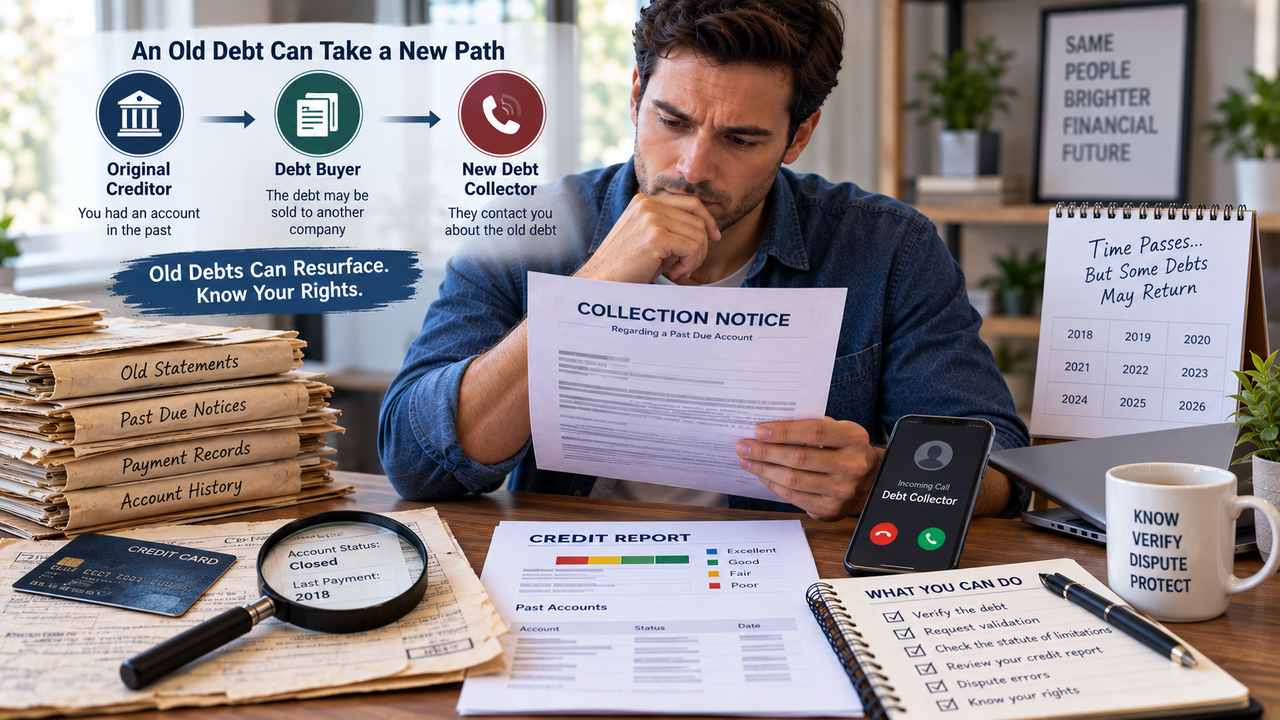
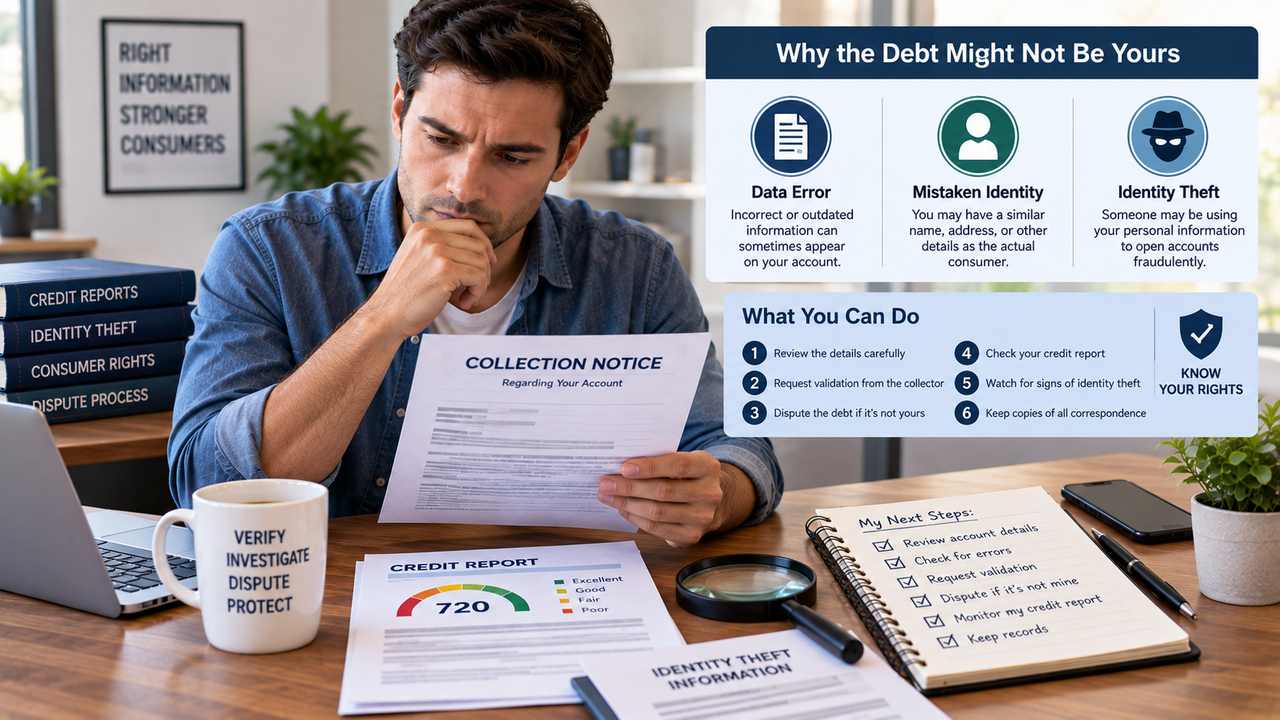
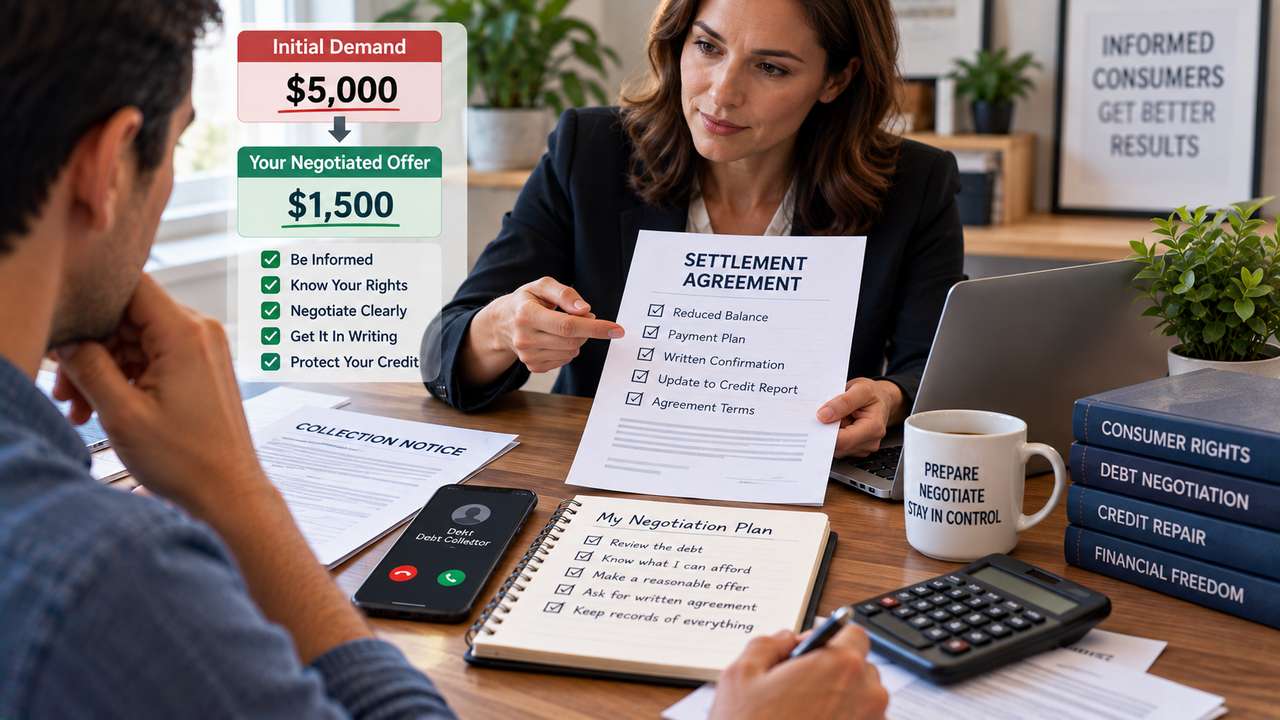
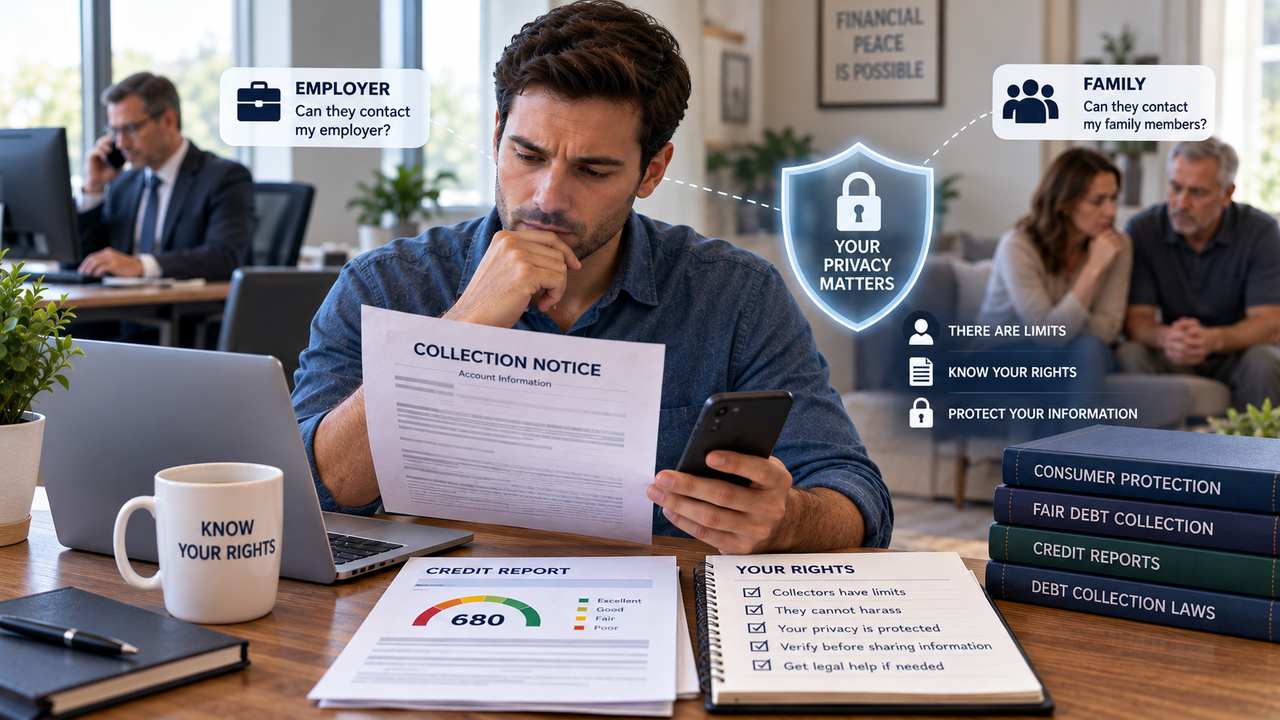
  • Create a premium photorealistic editorial image for a U.S. consumer-finance article titled “Can a Debt Collector Sue You? Here’s What Actually Happens.” Show an American consumer sitting at a desk reviewing a debt-collection lawsuit, summons and complaint, credit-card statements, payment records, and a calendar with a court-response deadline highlighted. Include a subtle visual progression in the background: unpaid debt → collection notice → lawsuit → court judgment → possible garnishment or property lien. The mood should be serious but informative and empowering, not frightening. Include realistic legal paperwork, calculator, pen, laptop, and smartphone. No company logos, no readable fake legal text, no judge or courtroom clichés. Premium financial-services editorial photography, natural lighting, sophisticated neutral colors, clean composition, wide horizontal website hero image, professional U.S. personal-finance aesthetic. Create an optimized 100 KB version also for fast website loading.

    Create a premium photorealistic editorial image for a U.S. consumer-finance article titled “Can a Debt Collector Sue You? Here’s What Actually Happens.” Show an American consumer sitting at a desk reviewing a debt-collection lawsuit, summons and complaint, credit-card statements, payment records, and a calendar with a court-response deadline highlighted. Include a subtle visual progression in the background: unpaid debt → collection notice → lawsuit → court judgment → possible garnishment or property lien. The mood should be serious but informative and empowering, not frightening. Include realistic legal paperwork, calculator, pen, laptop, and smartphone. No company logos, no readable fake legal text, no judge or courtroom clichés. Premium financial-services editorial photography, natural lighting, sophisticated neutral colors, clean composition, wide horizontal website hero image, professional U.S. personal-finance aesthetic. Create an optimized 100 KB version also for fast website loading.

    “They’re going to sue you.” Few things are more stressful to hear from a debt collector. But a threat of legal action does not necessarily mean that a lawsuit has already been filed—or that you will automatically lose if one is filed.

    The honest answer is that debt collectors and debt buyers can sue consumers in appropriate circumstances. Whether they can legally pursue a particular debt, whether they actually choose to file a lawsuit, and what happens afterward depends on factors such as the age of the debt, applicable state law, the documentation available, and whether you respond to the lawsuit.

    If you have actually been served with a lawsuit, the most important step is to read the court papers carefully and respond by the deadline stated in them. The Consumer Financial Protection Bureau (CFPB) explains that responding does not mean you are admitting that the debt is valid. It gives you an opportunity to raise defenses and protect your rights.

    Yes, Debt Collectors Can Legally Sue You

    For a debt that is still within the applicable statute of limitations, a debt collector or debt buyer may have the legal ability to file a lawsuit seeking a court judgment. The exact rules depend on the state and type of debt involved.

    A lawsuit is therefore a real collection tool—not simply an empty threat in every situation. However, that does not mean every unpaid account ends up in court.

    Debt collectors may first use letters, phone calls, settlement offers, payment plans, or other collection efforts. The CFPB notes that ignoring collection attempts can eventually lead to a lawsuit, so receiving collection communications should not automatically be treated as harmless.

    If you are dealing with a collection account, it can also help to understand how a debt validation letter works before deciding what to do next.

    Why Not Every Unpaid Debt Results in a Lawsuit

    Lawsuits require time, money, documentation, and court procedures. As a result, collectors generally have to decide whether pursuing litigation makes economic and practical sense.

    The Size of the Debt

    A larger balance may make litigation more economically attractive because the potential recovery may justify the cost of filing and pursuing the case.

    Smaller balances may not always justify the same level of legal expense. However, there is no universal dollar amount below which you should assume a lawsuit cannot happen.

    How Strong the Documentation Is

    A collector or debt buyer pursuing a lawsuit generally needs to establish that the debt is valid, that you are the person responsible for it, that the amount claimed is accurate, and that the plaintiff has the legal right to pursue the debt.

    This can become especially important when a debt has been sold multiple times. If you want to understand this issue, see our guide to debt buyers vs. collection agencies.

    Whether the Debt Is Still Within the Statute of Limitations

    State law generally limits how long a creditor or debt collector has to sue over an unpaid debt. This period is called the statute of limitations.

    The length of the period and the rules for calculating it vary by state and debt type. The Federal Trade Commission (FTC) explains that some states may also have rules under which making a payment or acknowledging an old debt can affect the limitations period.

    Because of these differences, do not assume that an old debt is automatically too old to sue over. You can learn more in our guide to the statute of limitations on debt.

    Whether You Appear Able to Pay a Judgment

    A collector may also consider whether a judgment would realistically produce a recovery. If someone has limited income and few non-exempt assets, obtaining a judgment may be less immediately useful to the collector.

    However, financial circumstances can change, and a judgment may remain enforceable for a significant period depending on state law. Being unable to pay today does not necessarily make a lawsuit irrelevant.

    What the Actual Debt Lawsuit Process Looks Like

    If a collector decides to sue, the process generally moves from collection activity into the court system.

    1. Filing and Service

    The collector or a law firm representing the collector files a complaint with the appropriate court. You are then formally served with legal papers.

    The documents commonly include a summons, which tells you that a case has been filed and provides information about how and when you must respond, and a complaint, which explains the claims being made against you.

    2. Your Response Deadline

    The deadline is one of the most important details in the entire lawsuit.

    The exact deadline varies according to the court and applicable law. Do not rely on a generic number of days found online. Instead, look directly at your summons and other court documents to determine the deadline that applies to your case.

    The CFPB specifically advises consumers who are sued by a debt collector to respond by the date specified in the court papers.

    3. Filing an Answer

    If you respond by filing an Answer, you can address the allegations made against you and raise applicable defenses.

    The case may then proceed through additional stages, potentially including discovery, motions, settlement discussions, hearings, and—in some cases—a trial.

    Responding does not necessarily mean admitting that you owe the money. The CFPB explains that when you respond, the collector still has to establish its claim in court.

    4. Default Judgment If You Do Not Respond

    If you fail to respond by the applicable deadline, the court may enter a default judgment against you.

    This is one of the biggest risks of ignoring a lawsuit. A default can prevent you from presenting defenses you might otherwise have been able to raise.

    The CFPB warns that ignoring a properly served debt collection lawsuit can result in a judgment and stronger collection tools.

    What Happens If the Collector Wins—or You Default?

    A court judgment can give a creditor or debt collector additional legal tools to collect, although the specific procedures and exemptions vary by state.

    Wage Garnishment

    A judgment may allow the creditor to seek an order directing an employer to withhold part of your wages to satisfy the judgment.

    Federal and state laws can limit how much can be garnished, and certain income or benefits may receive legal protections. The CFPB’s wage-garnishment guidance explains that state and federal exemptions can apply.

    For more information, read our detailed guide to wage garnishment.

    Bank Account Levies

    Depending on state law and the circumstances, a judgment creditor may be able to obtain an order allowing funds in a bank account to be seized.

    However, exemptions can protect certain funds or amounts. Federal benefits such as Social Security and VA benefits can have specific protections when they are directly deposited, subject to applicable rules.

    Property Liens

    A judgment may also result in a lien against property in circumstances permitted by state law.

    A lien can complicate a future sale or refinancing of property. The CFPB identifies property liens as one of the stronger collection tools that may become available after a judgment.

    A judgment is not necessarily an instant transfer of money. Additional legal steps may be required before particular collection remedies can be used.

    Your Realistic Defenses If You Are Sued

    Being sued does not automatically mean the collector will win. The appropriate defenses depend on the facts of the case and the law governing it.

    The Statute of Limitations Has Expired

    If the debt is genuinely time-barred under the applicable state law, that may provide an important defense.

    However, do not assume that the court will automatically recognize an expired statute of limitations without you raising it. The FTC advises consumers who are sued over time-barred debt not to ignore the lawsuit and to tell the court that the statute of limitations has expired.

    Before making a payment or acknowledging an old debt, review our guide on why making a payment on old debt can sometimes backfire.

    The Plaintiff Cannot Adequately Prove Ownership or the Amount Owed

    This can be particularly relevant when the plaintiff is a debt buyer.

    The collector may need to establish that the debt belongs to you, that the amount is accurate, and that the plaintiff has the legal right to collect it. The FTC similarly explains that in a lawsuit the collector must establish that you are the person who owes the debt, that the amount is accurate, and that you owe the debt to that party.

    The Debt Has Already Been Paid or Settled

    If you previously paid or settled the account, keep documentation showing what happened.

    Bank statements, settlement agreements, payment confirmations, letters, and other records can be important when challenging a claim that you still owe the balance.

    The Debt Isn’t Yours

    A lawsuit involving a debt that does not belong to you should be taken seriously.

    The problem could involve identity theft, mistaken identity, incorrect account information, or another data error. If this applies to you, review our guide on what to do if you’re contacted about a debt that isn’t yours.

    Procedural Problems

    There can also be technical issues involving service, jurisdiction, documentation, or how the lawsuit was filed.

    These issues can be highly dependent on state and court rules, so legal assistance can be especially useful when you believe something about the lawsuit itself was improper.

    Should You Get an Attorney?

    If you have actually been sued, consider speaking with a consumer-law attorney or legal-aid organization if one is available to you.

    The potential consequences of a judgment can include additional collection tools, so understanding your legal position before the response deadline can be valuable.

    The CFPB recommends contacting a lawyer if you are sued or if a judgment has already been entered against you. It also notes that consumers may be able to negotiate a compromise or settlement before a court enters judgment.

    If you cannot afford private legal representation, check whether your court provides self-help resources or whether a nonprofit legal-aid organization in your state can assist.

    Can You Negotiate a Settlement Even After Being Sued?

    Yes. A lawsuit does not necessarily eliminate the possibility of negotiating a settlement.

    Settlement discussions may occur before or after litigation begins. If you decide to negotiate, make sure you understand exactly what the agreement says before sending money.

    Get the settlement terms in writing and pay particular attention to what happens to the lawsuit itself.

    If a settlement is supposed to resolve the lawsuit, the written agreement should clearly address the status of the case and the remaining balance. Depending on the circumstances and the agreement, you may want legal advice about whether a dismissal should be with prejudice.

    You can also read our guide on how to negotiate with a debt collector without getting taken advantage of.

    What If You Genuinely Can’t Afford to Pay, Even If You Lose?

    If a judgment is entered and you have very limited income or assets that can legally be reached, your practical ability to pay may be limited.

    However, this should not be treated as a reason to ignore a lawsuit.

    Financial circumstances can change, and judgments may remain enforceable for years depending on state law. Interest and other lawful amounts may also apply.

    If your debts are broader than a single collection account, consider discussing your situation with a consumer-law attorney, nonprofit credit counselor, or qualified bankruptcy professional to understand your available options.

    How Long After a Debt Becomes Delinquent Can a Collector Still Sue You?

    The answer depends primarily on the applicable statute of limitations.

    The limitation period varies by state and by the type of debt. The FTC explains that the period can also depend on the law applicable to the debt agreement, and in some states certain actions involving an old debt may affect the limitations period.

    Because the rules differ, do not rely on a universal “three years,” “six years,” or “seven years” rule.

    Read our complete guide to the statute of limitations on debt for more information.

    Can You Be Sued for a Debt That Has Fallen Off Your Credit Report?

    Potentially, yes.

    The credit-reporting period and the statute of limitations for filing a lawsuit are separate legal concepts.

    Negative information generally has a limited reporting period under federal credit-reporting law, but the expiration of the credit-reporting period does not automatically answer whether a lawsuit is legally permitted under state law.

    That means you should not assume that a debt is legally unenforceable simply because it no longer appears on your credit report.

    You can learn more about checking your credit history in our guide on how to read a credit report.

    Does Getting Sued Automatically Mean Your Wages Will Be Garnished?

    No.

    A lawsuit by itself does not automatically mean your employer will begin withholding money from your paycheck.

    Generally, a creditor seeking ordinary debt-collection garnishment first needs a judgment and then must follow the applicable procedures for obtaining and enforcing a garnishment order. Federal and state laws can also limit garnishment amounts and provide exemptions.

    This is one reason why receiving a lawsuit is serious—but it is not the same thing as immediately having your wages taken.

    Can a Debt Collector Sue You in a State Where You Don’t Currently Live?

    Jurisdiction and venue rules determine where a lawsuit can properly be filed. The answer can depend on where you live, where the underlying agreement was made, the terms of the agreement, and applicable state law.

    If you receive court papers from a jurisdiction that seems unrelated to you or the debt, do not simply ignore them. Consider getting legal advice about whether the court has proper jurisdiction and whether the filing location is appropriate.

    What If You Ignore the Lawsuit Because You Can’t Afford an Attorney?

    Not being able to afford a lawyer does not eliminate the importance of responding.

    Ignoring a properly served lawsuit can result in a default judgment even when you may have had a legitimate defense.

    The FTC advises consumers not to ignore debt collection lawsuits and to follow the instructions and deadlines contained in the legal papers.

    Depending on your location, the court may provide self-help materials, Answer forms, legal-aid referrals, or other resources for people representing themselves.

    You can also review our guide on what happens if you ignore a debt collection lawsuit.

    A Realistic Timeline From Missed Payment to Lawsuit

    A debt lawsuit usually does not appear out of nowhere.

    A typical sequence may look something like this:

    1. Missed payment: The account becomes delinquent.
    2. Continued delinquency: The creditor attempts to collect.
    3. Charge-off: For many credit-card accounts, charge-off may occur after an extended period of nonpayment.
    4. Collection: The account may be placed with or sold to a collection company or debt buyer.
    5. Collection attempts: Calls, letters, settlement offers, and payment discussions may continue.
    6. Potential lawsuit: If the collector decides litigation is appropriate and the legal requirements are satisfied, a lawsuit may be filed.
    7. Service: You receive a summons and complaint.
    8. Response deadline: You must respond according to the court’s instructions.
    9. Further proceedings: The case may involve motions, discovery, settlement discussions, or trial.
    10. Judgment or resolution: The case may end through settlement, dismissal, a judgment, or another court resolution.

    This is only a general sequence. Individual cases can move much faster or slower, and the exact process depends on state and court rules.

    What Does a Summons and Complaint Actually Look Like?

    If you are served with a lawsuit, the legal terminology can initially be confusing.

    The Summons

    The summons is the document that formally notifies you that a lawsuit has been filed and tells you how to respond and, generally, when your response is due.

    The Complaint

    The complaint describes the plaintiff’s allegations. In a debt collection lawsuit, it may identify the original creditor, the alleged account, the amount claimed, and the legal basis for the lawsuit.

    Read both documents carefully. Write down every deadline and follow the instructions provided by the court.

    How Court Self-Help Resources Can Help If You Can’t Afford an Attorney

    Many courts provide information for people who represent themselves.

    Depending on your state and county, resources may include self-help centers, simplified forms, legal clinics, court navigators, or referrals to legal-aid organizations.

    Start with the official website of the court listed on your summons. You can also contact the clerk’s office to ask what self-help resources are available.

    Do not assume that you must hire a private attorney simply to find out how to submit your response. At the same time, if you have a complicated defense or substantial financial exposure, professional legal advice may be appropriate.

    Does the Amount of Debt Affect Whether You Should Take a Lawsuit Seriously?

    Even a relatively small lawsuit deserves attention.

    There is no universal dollar threshold below which ignoring a lawsuit becomes safe. A default judgment can still create legal and financial consequences even when the original balance is relatively small.

    The appropriate response is therefore to follow the court’s instructions and deadline regardless of the amount claimed.

    Can a Collector Sue You While You Are Disputing the Debt With the Credit Bureaus?

    Yes, a credit-report dispute and a debt collection lawsuit are separate processes.

    Disputing information with Equifax, Experian, or TransUnion does not automatically prevent a collector from pursuing a lawsuit over the underlying debt.

    However, documentation from your dispute may potentially be relevant to your case if it concerns the accuracy, ownership, or amount of the debt.

    If you need to challenge inaccurate information, see our guide on how to dispute credit report errors.

    If a Debt Buyer Sues You, Is It Harder for Them to Win?

    Not automatically.

    However, a debt buyer may need to establish both the validity of the underlying debt and its legal ownership of the particular account.

    This can make documentation particularly important when a debt has been sold or transferred multiple times.

    Read more about how debt gets resold to multiple companies and how ownership can become an important issue in collection disputes.

    Is Small Claims Court Different From a Standard Debt Collection Lawsuit?

    Some debt collection cases, particularly those involving smaller balances, may be filed in small claims court.

    Small claims procedures are often designed to be simpler and less expensive than ordinary civil litigation, but the exact rules vary significantly by state and court.

    Even in small claims court, the same basic principles remain important: read the paperwork, understand the deadline, appear or respond as required, and raise any legitimate defenses.

    Respond vs. Ignore: What Changes?

    Issue If You Respond If You Ignore the Lawsuit
    Ability to raise defenses You generally preserve the opportunity to raise applicable defenses. You risk losing the opportunity to present defenses through a default judgment.
    Collector must prove its case The collector must establish its claim in court. A default judgment may be entered without the same opportunity for you to contest the claim.
    Settlement leverage You may still have an opportunity to negotiate. Your position may become weaker after a judgment.
    Weak documentation You may be able to challenge insufficient proof. A default can prevent you from presenting those arguments.
    Potential cost You may have filing costs, legal expenses, or other case-related costs. A judgment may add lawful interest, fees, costs, or collection consequences.

    The central point is simple: responding preserves options. Ignoring a lawsuit can result in a default judgment and make the situation more difficult to address later. The CFPB and FTC both advise consumers not to ignore debt collection lawsuits.

    What Debt Collectors Say About Litigation as a Collection Tool

    Litigation is one of several tools available to creditors and debt collectors. It requires a formal court process and creates costs and risks for both sides.

    That means a threat of litigation should not automatically be interpreted as proof that a lawsuit has already been filed. At the same time, it should not automatically be dismissed as a bluff.

    If you receive an actual summons and complaint, the situation has moved beyond an ordinary collection call. Treat the court documents as a legal matter and follow the response instructions.

    If a Lawsuit Is Dismissed, Is the Debt Gone Forever?

    Not necessarily.

    The effect of a dismissal depends on the reason for the dismissal and whether it is with prejudice or without prejudice.

    A dismissal without prejudice may allow a plaintiff to pursue the matter again in circumstances permitted by law. A dismissal with prejudice generally prevents the same claim from being refiled.

    Because the consequences depend on the specific order and applicable law, review any dismissal carefully and consider legal advice if the debt remains disputed.

    Can More Than One Company Sue You for the Same Debt?

    A debt should have a legitimate current owner or party entitled to enforce it, but debt transfers and recordkeeping problems can sometimes create confusion.

    If you receive collection demands or legal papers from more than one company concerning the same debt, preserve all documentation.

    If you have already paid, settled, or defended a lawsuit involving the account, those records may be particularly important.

    You can also read our article on how the same debt can be resold between different companies.

    Does Settling After Being Sued Affect Your Credit?

    Settling a debt does not automatically erase its history from your credit report.

    The credit-reporting treatment of a collection account or judgment can depend on the account’s reporting status, applicable federal law, and the information furnished by the creditor or collector.

    Before making a payment or settlement, get the agreement in writing and understand exactly what the payment resolves.

    If your primary concern is an inaccurate account appearing on your credit reports, learn how to dispute credit report errors rather than assuming payment alone will correct inaccurate information.

    What Should You Do If a Debt Collector Is Threatening to Sue You?

    If a collector is threatening legal action but you have not received court papers, start by determining exactly what stage you are in.

    • Ask for information identifying the debt.
    • Review your records and credit reports.
    • Determine whether the debt is yours.
    • Check whether the amount claimed appears accurate.
    • Review the age of the debt and the applicable statute of limitations.
    • Be careful about making payments or acknowledging very old debts before understanding the applicable state law.
    • Keep copies of letters, emails, statements, and other communications.
    • If you receive actual court papers, follow the court’s deadline rather than treating the threat as an ordinary collection call.

    If you are dealing with collection harassment, you can also read our guide to debt collector harassment and the FDCPA.

    What Should You Do If You Have Already Been Served?

    If you already have a summons and complaint, prioritize the court deadline.

    1. Read every page. Identify the court, plaintiff, case number, response deadline, and instructions.
    2. Do not ignore the papers. A default judgment can result if you fail to respond.
    3. Gather your records. Look for statements, payments, settlement agreements, correspondence, and evidence concerning ownership or identity.
    4. Review the allegations. Compare what the plaintiff claims with your records.
    5. Consider legal help. A consumer-law attorney or legal-aid organization may be able to help.
    6. Consider settlement carefully. If settlement is appropriate, obtain the terms in writing and understand what happens to the lawsuit.
    7. Follow the court’s instructions. Do not rely solely on general online advice because procedural rules vary by jurisdiction.

    The CFPB’s guidance emphasizes that responding to the lawsuit gives you an opportunity to defend yourself and does not by itself mean you admit that the debt is valid.

    The Bottom Line

    Yes, debt collectors can genuinely sue you. A debt collection lawsuit is a real legal process with potentially significant consequences, particularly if you ignore the court papers.

    But being sued is not the same as automatically losing, and receiving a lawsuit is not the same as having your wages immediately garnished or your bank account immediately seized.

    The most important thing to remember is the response deadline. If you receive a summons and complaint, read it carefully and respond according to the court’s instructions. The CFPB and FTC both emphasize the importance of responding rather than ignoring a debt collection lawsuit.

    Depending on your situation, you may have defenses involving the validity of the debt, ownership, the amount claimed, prior payment or settlement, the statute of limitations, identity, or procedural issues.

    If you are unsure what to do, consider obtaining advice from a qualified consumer-law attorney or legal-aid organization in your state.

    Need Help Reviewing Your Credit Report?

    If a debt collector is contacting you or a collection account is appearing on your credit report, understanding exactly what is being reported is an important first step. Review your credit reports for inaccurate, outdated, duplicate, or unfamiliar information.

    Contact Credit Repair Services to discuss your credit situation →
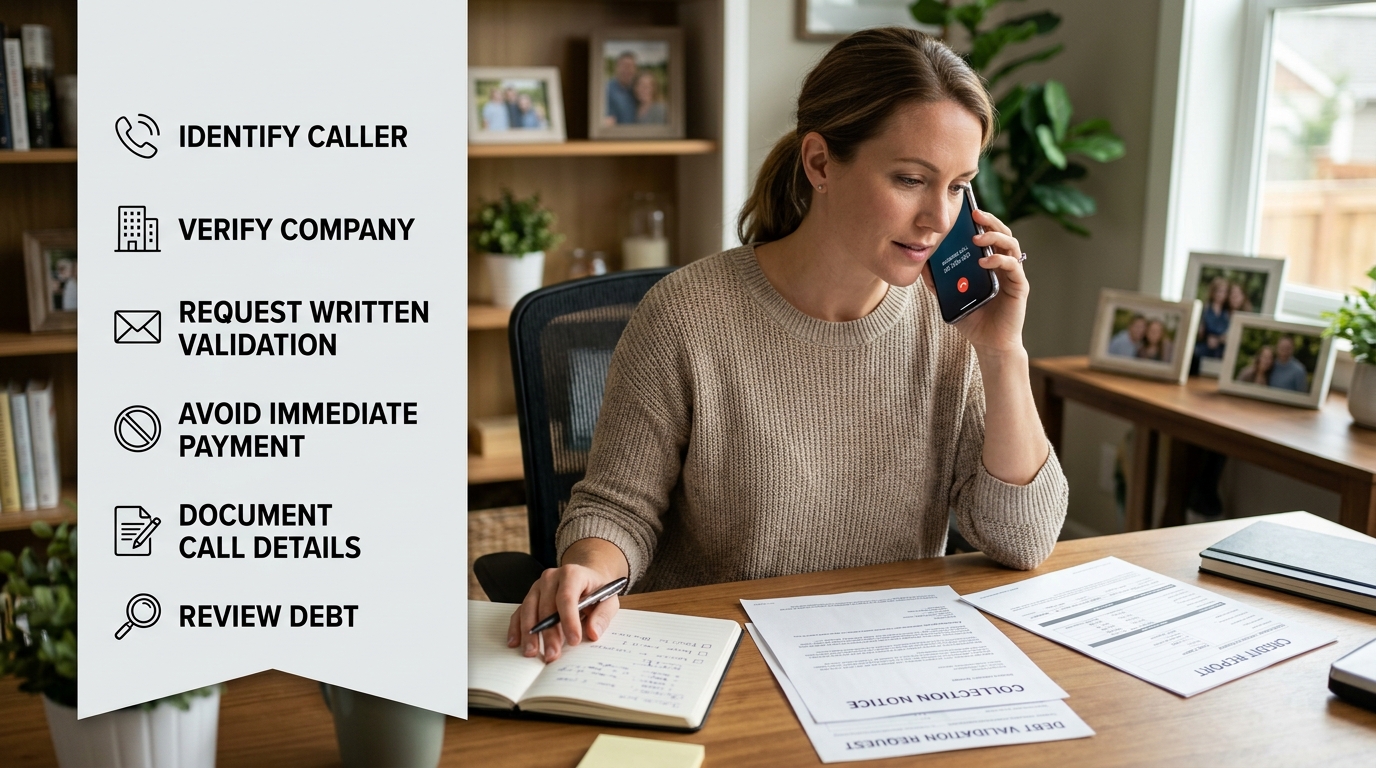
    Frequently Asked Questions

    Can a debt collector really sue me?

    Yes. A debt collector or debt buyer may sue when legally permitted, including when the debt is within the applicable statute of limitations. Whether a collector actually files a lawsuit depends on the circumstances.

    Can a debt collector sue me for an old debt?

    It depends on the applicable statute of limitations and state law. An old debt may be time-barred from litigation, but the rules vary. Do not assume that simply being old makes a debt legally unenforceable.

    Can I be sued after a debt falls off my credit report?

    Potentially. Credit reporting periods and lawsuit limitation periods are separate concepts.

    What happens if I don’t respond to a debt lawsuit?

    The court may enter a default judgment against you. That judgment can give the creditor or collector stronger legal collection tools, depending on state law.

    Can a debt collector garnish my wages without suing me?

    For ordinary consumer debts, creditors generally need a court judgment before using wage garnishment, although exceptions exist for certain government debts and other obligations.

    Can I settle a debt after being sued?

    Yes. Settlement may still be possible after litigation begins. If you settle, get the terms in writing and make sure you understand what happens to the lawsuit and remaining balance.

    What if the debt isn’t mine?

    Do not ignore the lawsuit. Gather documentation showing that the debt is not yours and raise the issue through the appropriate legal process. You can also review our guide on debt that isn’t yours.

    What if the debt collector is threatening to sue but hasn’t filed anything?

    A threat to sue is different from an actual lawsuit. However, it should not automatically be dismissed as a bluff. Review the debt, understand your rights, and take actual court papers seriously if they arrive.

    Does a credit-bureau dispute stop a debt lawsuit?

    Not automatically. A credit-report dispute and a court lawsuit are separate processes.

    Should I hire an attorney if a debt collector sues me?

    Consider consulting a consumer-law attorney, especially if the debt is disputed, the amount is significant, the statute of limitations may have expired, or you are concerned about defenses or collection consequences. Legal-aid resources may also be available if you cannot afford private counsel.

    Where can I learn more about debt collection rights?

    The Consumer Financial Protection Bureau’s debt-collection resource provides information about judgments, validation notices, garnishment, harassment, and other debt-collection issues.

  • What to Do the First Time a Debt Collector Calls You

    What to Do the First Time a Debt Collector Calls You

    The first call from a debt collector can catch you completely off guard, even if you have some idea that you might owe money.

    Hearing from an unfamiliar person on an unfamiliar number can trigger anxiety and uncertainty about what you are supposed to say or do.

    The good news is that you do not have to solve everything during the first phone call.

    The first conversation is primarily an opportunity to identify the caller, understand what debt they are referring to, request the required information, and avoid making decisions under pressure.

    This guide explains what to expect during your first debt-collection call, what you can say, what you should avoid doing, how debt validation works, how to recognize potential scams, and what steps to take after the call.

    Know Your Rights Before the Call Happens

    Many third-party debt collectors are subject to the Fair Debt Collection Practices Act (FDCPA) and the federal Debt Collection Rule.

    These rules establish limits on how covered debt collectors can communicate with consumers.

    For example, debt collectors generally cannot:

    • Contact you before 8 a.m. or after 9 p.m. local time, unless an applicable exception applies.
    • Use repeated calls as a means of harassing or abusing you.
    • Use obscene or profane language.
    • Make false or misleading statements.
    • Threaten violence or falsely threaten arrest.
    • Misrepresent the amount or legal status of a debt.
    • Misrepresent who they are or the company they represent.

    The CFPB explains that debt collectors generally cannot contact consumers at unusual or inconvenient times and provides specific rules concerning repeated telephone calls.

    Knowing these boundaries before you receive a call can make it easier to remain calm if a collector contacts you unexpectedly.

    What to Do the Moment You Realize It Is a Debt Collector

    The first thing to remember is simple:

    You do not have to make a payment or agree to a settlement during the first call.

    Instead, focus on gathering information.

    Stay Calm

    Do not allow the unexpected nature of the call to push you into making an immediate financial decision.

    You can tell the caller that you want to review the information before discussing payment.

    Write Down the Details

    If possible, record:

    • The collector’s name
    • The collection company’s name
    • The telephone number
    • The date and time of the call
    • The amount the caller says you owe
    • The name of the creditor
    • The account or reference number, if provided
    • A general summary of what the caller said

    Keeping records can become valuable if you later dispute the debt or need to document a collection problem.

    The CFPB specifically recommends keeping letters, messages, and records of communications with debt collectors.

    Ask the Caller to Identify the Company

    Ask for the company’s:

    • Full name
    • Mailing address
    • Telephone number
    • Collector’s name
    • Name of the creditor associated with the debt

    If the caller refuses to provide basic identifying information, becomes unusually aggressive, or pressures you to pay immediately, treat that as a warning sign.

    What Should You Say on the First Debt Collector Call?

    You do not need to provide a detailed explanation of your finances or argue about whether you owe the debt.

    A simple response can keep the conversation controlled:

    “I understand you are calling about a debt. Before I discuss payment or make any commitment, I would like to receive the required validation information in writing, including the creditor’s name, the amount claimed, and information about how I can dispute or verify the debt.”

    This keeps the first conversation focused on verification rather than payment.

    The CFPB recommends obtaining validation information before agreeing to pay or negotiate, particularly when you are unsure whether the debt is legitimate.

    What Not to Say or Do During the First Call

    Do Not Immediately Confirm Sensitive Personal Information

    A legitimate collector may need to verify that they are speaking with the correct person, but you should be cautious about providing sensitive financial information before independently confirming who is contacting you and why.

    Avoid unnecessarily providing information such as:

    • Full Social Security number
    • Bank account numbers
    • Routing numbers
    • Debit-card information
    • Online banking credentials

    The CFPB advises consumers not to provide sensitive or financial information until they have verified the debt collector and determined that the contact is legitimate.

    Do Not Make an Immediate Payment

    Be particularly cautious if the caller says you must pay immediately or that a special offer will disappear within a few hours.

    First determine whether the debt is actually yours, how much is owed, who currently owns the debt, and whether the collection company is legitimate.

    Artificial urgency can be a warning sign, particularly when combined with unusual payment demands.

    Do Not Get Into a Long Argument

    If you believe the debt is inaccurate, already paid, or not yours, you do not need to spend 30 minutes arguing with the collector over the telephone.

    Instead, document your position and use the applicable written dispute process.

    Our guide on what to do if a debt isn’t yours explains the process in greater detail.

    Do Not Agree to a Payment Plan Without Written Terms

    If the collector offers a payment arrangement, ask for the terms in writing before making the first payment.

    The written agreement should clearly identify:

    • The total amount to be paid
    • The payment schedule
    • Any fees or interest
    • What happens when the agreed amount is paid
    • How the account will be reported, where applicable

    What Is a Debt Validation Notice?

    Federal debt-collection rules require covered debt collectors to provide specific validation information when they first communicate with a consumer or within five days afterward, subject to the applicable rules.

    The validation information generally includes:

    • The name of the creditor
    • The amount of the debt
    • The debt collector’s identifying information
    • The account number, if any
    • An itemization of the current amount of the debt
    • Information explaining how to dispute the debt
    • The deadline for disputing the debt

    The CFPB explains that this information is designed to help consumers determine whether the debt is theirs and whether the amount is accurate.

    When Does the 30-Day Debt Dispute Period Begin?

    This is an important distinction.

    The federal 30-day validation period is generally tied to receipt of the validation information, rather than simply the date of the first telephone call.

    The validation notice should identify the applicable end date for the 30-day validation period.

    If you dispute the debt in writing within that validation period, the debt collector generally must stop collection activity on the disputed debt or disputed portion until it provides the required verification or other information specified by the rule.

    That distinction matters because a phone call alone does not necessarily start the same 30-day period described in the validation rules.

    What Happens After You Send a Written Dispute?

    If you receive the validation notice and dispute the debt in writing within the applicable 30-day validation period, the collector generally must pause collection activity on the disputed debt until it provides verification responsive to your dispute.

    The CFPB states that collection activity can resume after the collector provides the required verification.

    Keep copies of:

    • Your dispute letter
    • The validation notice
    • Any supporting documents
    • Proof of mailing or electronic submission
    • The collector’s response
    • Any subsequent communications

    Our guide on debt validation letters can help you understand the process.

    How to Review the Validation Information

    When the collector responds, compare the information with your own records.

    Check the Original Creditor

    Does the creditor name match an account you recognize?

    If the collector is contacting you about a debt originally owed to another company, make sure the creditor information makes sense.

    Check the Amount

    Compare the claimed balance with your records.

    The validation information should generally provide an itemization that helps explain the current amount, including relevant interest, fees, payments, and credits.

    Check Whether the Debt Is Actually Yours

    If you have never opened the account or believe someone else is responsible, treat that as a potential dispute rather than assuming the collector is correct.

    Check the Age of the Debt

    If the debt is old, determine whether the applicable statute of limitations may affect the creditor’s ability to sue.

    Our guide on the statute of limitations on debt explains why the age of an account can matter.

    What If You Confirm the Debt Is Accurate?

    Once you have verified that the debt is legitimate, you can evaluate your options rather than reacting to the first call.

    Depending on your circumstances, those options may include:

    • Paying the balance in full
    • Negotiating a settlement
    • Setting up a payment plan
    • Disputing information that remains inaccurate
    • Seeking professional legal or financial guidance

    If the debt is old, check the applicable statute of limitations before making a payment or acknowledging the debt in a way that could have legal consequences under state law.

    Should You Negotiate With a Debt Collector?

    Negotiation may be an option if the debt is legitimate and you want to resolve it.

    Before negotiating:

    1. Verify the debt.
    2. Confirm who currently owns the account.
    3. Determine the total amount claimed.
    4. Review your financial ability to pay.
    5. Check the applicable statute of limitations if the debt is old.
    6. Get any settlement terms in writing.

    Our guide on how to negotiate with a debt collector without getting taken advantage of covers the negotiation process in more detail.

    What If You Do Not Recognize the Debt?

    Not recognizing the debt does not automatically mean that it is fraudulent, but it is a reason to investigate before paying.

    Possible explanations include:

    • A legitimate old debt you forgot about
    • A debt that was sold to a new company
    • A data-matching error
    • Someone with a similar name
    • Identity theft
    • An account that was previously paid or resolved

    Request the validation information and compare it with your records.

    If the debt still appears inaccurate, dispute it in writing.

    If you suspect identity theft, the FTC recommends using IdentityTheft.gov to create an identity-theft report and take recovery steps.

    You can also learn more about identity theft protection and credit freezes and fraud alerts.

    How to Tell if the Debt Collector Is a Scam

    Not every person who calls claiming to collect a debt is a legitimate debt collector.

    The FTC warns consumers about fake debt collectors who use threats and pressure to obtain money.

    Warning Sign 1: Immediate Payment Demands

    Be cautious if the caller insists that you must pay immediately or threatens consequences if you do not make an instant payment.

    Warning Sign 2: Gift Cards or Cryptocurrency

    Requests for payment through gift cards, cryptocurrency, or unusual wire-transfer methods are major scam warning signs.

    The FTC specifically warns consumers about scammers who demand these difficult-to-recover payment methods.

    Warning Sign 3: Threats of Arrest

    Unpaid consumer debt generally does not mean that you will be arrested simply because you cannot pay.

    The FTC specifically identifies threats of arrest as a warning sign associated with fake or abusive debt collectors.

    Warning Sign 4: Refusal to Identify the Company

    If the caller refuses to provide a company name, mailing address, telephone number, or information about the debt, be cautious.

    Warning Sign 5: Pressure to Provide Sensitive Information

    Do not provide bank-account or other sensitive financial information simply because someone calls and claims that you owe a debt.

    Verify the company independently before sharing sensitive information.

    How to Independently Verify a Suspicious Caller

    If something about the call feels suspicious, do not rely solely on the phone number or website provided by the caller.

    Instead:

    1. Write down the company name.
    2. End the call if necessary.
    3. Search for the company’s official contact information independently.
    4. Contact the company through independently obtained information.
    5. Check your credit reports for the alleged account.
    6. Request the required validation information.

    Caller ID is not proof that a caller is legitimate because phone numbers can be spoofed.

    Should You Answer a Debt Collector’s Call?

    You are not generally required to answer every telephone call from a debt collector.

    If you are unsure who is calling, allowing the call to go to voicemail can give you time to identify the company and prepare before responding.

    However, completely ignoring a legitimate debt does not make the debt disappear.

    A creditor or collector may have other lawful collection options, including potentially filing a lawsuit where permitted.

    The CFPB advises consumers to address debt collection rather than simply assuming that ignoring communications will resolve the problem.

    Can You Ask a Debt Collector to Stop Calling?

    Yes. You can request that a debt collector stop contacting you, and a written request provides a clear record of your instruction.

    The CFPB explains that if you ask a debt collector in writing to stop contacting you, the collector generally must stop communications, although there are limited exceptions for certain required or legally permitted notices. The request does not erase the underlying debt.

    If repeated calls are the problem, you can also review our guide on debt collector harassment and the FDCPA.

    What If You Already Made a Payment?

    If you already made a payment before learning about validation procedures, do not assume that you have lost every option.

    You can still review the remaining balance, request appropriate information, and dispute inaccurate information.

    However, if the debt is old, investigate the applicable state statute-of-limitations rules before making additional payments or acknowledgments.

    Our article on why paying old debt can sometimes backfire explains this issue in more detail.

    Should You Tell the Collector About Your Financial Hardship?

    You can decide how much information you want to disclose about your financial situation.

    Some consumers may choose to explain a genuine hardship because the collector may have payment-plan or hardship options.

    Others may prefer to keep the first conversation focused on verification and handle financial negotiations later, after they have reviewed the debt.

    There is no requirement that you explain your entire financial history during the first call.

    What About Debt Collection Apps and Online Portals?

    Some collectors may direct consumers to online portals or apps for account management and payment.

    The same verification principles apply.

    Before entering sensitive information or making a payment through an unfamiliar portal:

    • Verify the company’s identity independently.
    • Confirm that the debt is legitimate.
    • Review the validation information.
    • Check the website address carefully.
    • Avoid clicking suspicious links received through unexpected text messages.

    A legitimate-looking website does not automatically prove that the person who sent you the link is legitimate.

    Can a Debt Collector Call Your Cell Phone?

    Debt collection rules apply to communications through different types of telephone numbers, including cell phones.

    The CFPB’s rules also address electronic communications such as text messages and other digital communications.

    If you receive collection communications at a time or through a method that is inconvenient for you, you can communicate your preferences to the collector.

    Can You Record a Debt Collector’s Call?

    Call-recording laws vary by state.

    Some states generally permit recording when one party consents, while others may require consent from all parties to the conversation.

    Before recording a debt collector’s call, check the law applicable to the participants and locations involved.

    Regardless of whether you record a call, keeping written notes of the date, time, caller, company, and substance of the conversation can provide useful documentation.

    What If the Collector Keeps Calling After You Dispute the Debt?

    If you submitted a written dispute within the applicable validation period and the collector continues attempting to collect the disputed debt before providing the required verification, document each communication.

    Keep:

    • Dates and times of calls
    • Phone numbers
    • Voicemails
    • Letters
    • Emails or text messages
    • Copies of your dispute
    • Proof of delivery

    You can consider submitting a complaint to the Consumer Financial Protection Bureau or contacting your state attorney general’s consumer-protection office.

    Depending on the circumstances, you may also want to consult a consumer-law attorney.

    A Simple Post-Call Checklist

    1. Record the call. Write down who called, the company, number, date, time, and what was discussed.
    2. Do not make an immediate payment. First verify the company and debt.
    3. Look for the validation notice. Identify the validation-period deadline.
    4. Dispute the debt in writing if appropriate. If you do not owe the debt or believe the information is incorrect, use the written dispute process within the applicable validation period.
    5. Keep documentation. Save every letter, message, and proof of mailing or submission.
    6. Review the response. Compare the validation information with your own records.
    7. Check the age of the debt. If the account is old, research the applicable statute of limitations.
    8. Choose your next step. Depending on what you discover, you may pay, negotiate, dispute, or seek professional assistance.
    9. Get agreements in writing. Do not rely solely on verbal promises concerning settlements or payment plans.

    A Sample First-Call Response

    If you are caught off guard, you can keep your response short:

    “I understand you are contacting me about a debt. I am not going to make a payment or agree to a payment arrangement during this call. Please provide the required validation information in writing, including the creditor’s name, the amount claimed, and information about how I can dispute the debt. Please also provide your company’s mailing address.”

    You can then end the call and review the information without making an immediate commitment.

    Sample Written Debt Dispute and Validation Request

    If you receive the validation notice and believe you do not owe the debt or that the amount is incorrect, you can use a written dispute tailored to your circumstances.

    For example:

    [Your Name]
    [Your Address]
    [Date]

    [Debt Collector Name]
    [Debt Collector Address]

    Re: Account [Reference Number]

    To Whom It May Concern:

    I am writing regarding the debt identified in your validation notice. I dispute this debt [or the amount of this debt] and request verification of the debt.

    Please provide information sufficient to verify the debt and the amount claimed, including the name of the creditor and the information required under applicable federal law.

    Please send your response to the address listed above.

    Sincerely,
    [Your Name]

    Keep a copy of the letter and your proof of delivery.

    The CFPB provides sample letters and additional information about responding to debt collectors.

    Why the First Call Can Set the Tone for What Happens Next

    The first collection call can create pressure to make a quick decision.

    But slowing the process down can help you move from reacting to the caller to evaluating the actual debt.

    Instead of immediately deciding whether to pay, your first steps can be:

    • Identify the collector.
    • Understand the debt.
    • Review the validation information.
    • Check your records.
    • Determine whether the debt is yours.
    • Check the applicable statute of limitations if relevant.
    • Decide what to do based on verified information.

    This approach does not mean that every debt collector is acting improperly. It simply means that you do not have to make a significant financial decision before understanding what you are being asked to pay.

    How to Handle the Emotional Side of the First Call

    A debt collection call can trigger embarrassment, anxiety, or defensiveness, particularly when the debt is connected to a difficult period such as job loss, medical problems, divorce, or another financial setback.

    Try to separate the emotional circumstances surrounding the debt from the practical task of handling the collection call.

    You do not need to explain your entire financial history to the collector.

    You can treat the call as a transaction:

    1. Identify who is calling.
    2. Identify the debt.
    3. Request the necessary information.
    4. Document the conversation.
    5. Review the information.
    6. Decide what to do next.

    Taking these steps can make the situation feel more structured and manageable.

    Frequently Asked Questions

    Do I have to answer a debt collector’s phone call?

    No. You are generally not legally required to answer every debt-collection call. You can allow the call to go to voicemail while you identify the company and prepare your response.

    However, ignoring legitimate collection activity indefinitely does not eliminate the underlying debt or necessarily prevent other lawful collection efforts.

    What should I say when a debt collector calls for the first time?

    Keep the conversation short. Ask for the collector’s name, company, mailing address, creditor information, amount claimed, and the required validation information. Avoid making an immediate payment or agreeing to a payment arrangement before reviewing the information.

    Should I give a debt collector my Social Security number?

    Do not provide sensitive financial or identifying information until you have verified that the caller is legitimate and understand why the information is necessary. The CFPB specifically recommends caution with sensitive personal and financial information.

    Does the 30-day validation period start when the collector first calls?

    Not necessarily. The federal validation period is generally tied to receipt of the validation information or notice. The notice should identify the applicable deadline for disputing the debt.

    What happens if I dispute the debt within 30 days?

    If your written dispute is submitted within the applicable validation period, the collector generally must stop collection activity on the disputed debt until it provides the required verification.

    Can I ask the debt collector to stop calling me?

    Yes. You can request in writing that the collector stop contacting you. The request generally requires the collector to stop communications, subject to limited exceptions, but it does not erase the debt.

    What if the collector says I will be arrested?

    Threats of arrest for ordinary unpaid consumer debt are a major warning sign. The FTC specifically identifies threats of arrest as a common feature of fake or abusive debt collection.

    What if the collector demands payment with a gift card?

    Be extremely cautious. The FTC warns that demands for gift cards, cryptocurrency, or similar difficult-to-recover payment methods are common scam indicators.

    What if I already paid the debt?

    Tell the collector that you believe the debt was paid and dispute it in writing. Gather payment confirmations, bank records, settlement agreements, or other documentation supporting your position.

    You can also review our guide on disputing credit-report errors.

    What if the debt is not mine?

    Request validation and dispute the debt in writing. If you suspect identity theft, consider using IdentityTheft.gov and reviewing your credit reports for other fraudulent accounts.

    Can I negotiate immediately during the first call?

    You can choose to negotiate, but there is generally no need to make an immediate payment decision during the first call. Verify the debt and review the applicable information first.

    Can I record a debt collector’s call?

    Call-recording laws vary by state. Check the applicable law before recording a conversation without notifying the other participant.

    What if the debt collector keeps calling after I dispute the debt?

    Document the calls and compare the timing with your written dispute and the collector’s verification response. If the collector is attempting to collect a disputed debt during a period when federal law requires collection to pause, consider submitting a complaint to the CFPB or consulting a consumer-law attorney.

    The Bottom Line

    The first call from a debt collector does not require you to have all the answers immediately.

    Your first priority should be to identify the caller, understand what debt they are referring to, and obtain the information necessary to determine whether the debt is legitimate and accurate.

    Remember these basic steps:

    • Stay calm.
    • Identify the collector and company.
    • Ask for the creditor and amount of the alleged debt.
    • Do not immediately provide sensitive financial information.
    • Do not let artificial urgency pressure you into paying.
    • Review the validation notice and its 30-day dispute deadline.
    • Dispute inaccurate or unrecognized debt in writing.
    • Keep detailed records of communications.
    • Check the statute of limitations when dealing with older debt.
    • Get settlement or payment-plan terms in writing.

    The goal of the first call is not necessarily to resolve the entire debt. It is to make sure that you understand what you are being asked to pay before you decide what to do next.

    If the collection account is appearing inaccurately on your credit report, you can also learn how to dispute credit-report errors and how to read your credit report.

    Need Help Reviewing a Collection Account?

    If a debt collector has contacted you and you are unsure whether the account is accurate, legitimate, or being reported correctly, reviewing your credit situation can be an important next step.

    Contact Credit Repair Services to discuss your credit situation and learn about available credit-repair options.

  • Debt Buyer vs. Collection Agency: Key Differences

    Debt Buyer vs. Collection Agency: Key Differences

    When an unfamiliar company contacts you about an unpaid debt, one of the most useful things you can determine is whether the company is a debt buyer or a collection agency.

    Both may contact you about the same type of debt, and both may be described generally as debt collectors, but their business models are different.

    The key distinction is who owns the debt. That difference can affect who you negotiate with, what documentation may be relevant, and how the debt may move through the collection process.

    This guide explains the difference between debt buyers and collection agencies, how to determine which one you are dealing with, how debt can move from one to the other, and what you should understand before negotiating or disputing an account.

    The Core Difference Between a Debt Buyer and a Collection Agency

    A collection agency generally works for the original creditor. The original creditor retains ownership of the debt while the collection agency attempts to recover the money on the creditor’s behalf.

    A debt buyer, by contrast, purchases the debt from the original creditor or, in some cases, from another debt buyer. Once the sale is completed, the debt buyer becomes the current owner of the account.

    Collection Agency Debt Buyer
    Usually collects on behalf of the original creditor Purchases the debt and becomes the current owner
    Usually receives a fee or contingency-based compensation Keeps amounts it collects after purchasing the account
    Original creditor generally retains ownership Original creditor generally no longer owns the sold account
    Settlement authority may depend on creditor authorization May have different settlement authority because it owns the account
    May return an unsuccessful account to the creditor May continue collection or resell the account

    This ownership distinction is the foundation for many of the practical differences between the two.

    How Collection Agencies Work

    A collection agency is generally hired by a creditor to collect an account that the creditor still owns.

    The Agency Does Not Usually Own the Debt

    The collection agency is acting as an agent or service provider for the original creditor.

    For example, suppose you have an unpaid credit-card account with a bank. The bank may send the account to a collection agency rather than immediately selling it.

    The collection agency then contacts you and attempts to recover the balance, but the bank remains the owner of the underlying debt.

    How Collection Agencies Are Compensated

    Collection agencies commonly operate under arrangements in which they receive compensation based on the amounts they successfully collect.

    This creates an incentive to recover as much of the outstanding balance as possible.

    However, the agency may not have unlimited authority to accept a substantial reduction in the balance because it is collecting on behalf of another company.

    How Much Negotiating Flexibility Does a Collection Agency Have?

    A collection agency may offer payment plans or settlement options, but the extent of its authority can depend on the agreement it has with the original creditor.

    If the agency cannot resolve the account, the original creditor may decide to:

    • Continue collection internally
    • Send the account to another collection agency
    • Take legal action where permitted
    • Sell the debt to a debt buyer

    If you are dealing with an agency, it can be useful to ask what settlement or payment options the agency is authorized to offer.

    How Debt Buyers Work

    A debt buyer operates under a different model.

    Instead of simply collecting for the original creditor, the debt buyer purchases the debt.

    The Debt Buyer Owns the Account

    Once a debt has been sold, the buyer generally becomes the current owner of that debt.

    The buyer may have purchased the account directly from the original creditor or from another debt buyer.

    This means a debt can sometimes move through a chain such as:

    Original Creditor → Debt Buyer A → Debt Buyer B → Debt Buyer C

    Our article on how debt can be resold to multiple companies explains why the same account may eventually generate collection attempts from several different companies.

    Why Do Debt Buyers Purchase Debt?

    Debt buyers often purchase portfolios of charged-off accounts for substantially less than the total face value of the debt.

    The buyer is effectively making a calculated investment: it pays a discounted price for a portfolio and attempts to recover more than it paid.

    The exact price paid for an individual account may not be separately determined because debt is often purchased in large portfolios containing hundreds or thousands of accounts.

    Debt Buyers Keep What They Collect

    Because a debt buyer purchased the account, the buyer generally keeps the money it collects rather than sharing the recovery with the original creditor under a traditional collection-agency contingency arrangement.

    This difference can affect the company’s approach to settlement negotiations.

    Debt Buyer vs. Collection Agency: Why the Difference Matters

    Knowing who owns the debt can help you understand who actually has authority over the account.

    Negotiating With a Collection Agency

    If a collection agency is working on behalf of the original creditor, you can ask what settlement or payment options the agency is authorized to provide.

    Depending on the circumstances, you may also want to determine whether the original creditor remains involved in the account.

    A useful question is:

    “Are you collecting this debt on behalf of the original creditor, or does your company own the debt?”

    Negotiating With a Debt Buyer

    A debt buyer has purchased the account and therefore may have different authority over settlement terms.

    Because the account was purchased rather than simply assigned for collection, the buyer may have more flexibility to evaluate a settlement based on what it believes can realistically be recovered.

    However, there is no universal settlement percentage that every debt buyer will accept. Your financial circumstances, the age and type of debt, the company’s policies, and the specific account can all affect negotiations.

    Our guide on how to negotiate with a debt collector without getting taken advantage of provides additional guidance on preparing for these conversations.

    How to Find Out Which One You Are Dealing With

    You do not have to guess whether the company contacting you is a debt buyer or a collection agency.

    Ask the Company Directly

    Ask:

    “Does your company own this debt, or are you collecting it on behalf of the original creditor?”

    The answer can help establish the company’s role.

    Request Debt Validation

    If you receive a debt validation notice, review the information carefully.

    Depending on the circumstances and applicable law, the information provided can help you determine the creditor or current owner of the debt and understand the basis of the collection claim.

    Our debt validation letter guide explains how consumers can approach the validation process.

    Check Your Credit Report

    Your credit report may provide clues about who is reporting the account.

    You may see:

    • The original creditor
    • A collection account
    • A debt buyer’s company name
    • Multiple entries associated with the same underlying account

    However, the credit report alone should not be treated as definitive proof of ownership. When ownership matters, review the documentation provided by the company and the account history.

    You can also learn how to read a credit report so you can better understand collection accounts and account histories.

    Research the Company’s Business Model

    Some companies primarily operate as collection agencies, while others primarily operate as debt buyers.

    Some companies may operate in more than one capacity.

    For that reason, researching the company can provide useful background, but confirming the role of the company with respect to your specific account is more important than relying solely on the company’s general business model.

    Why a Debt Can Involve Both a Collection Agency and a Debt Buyer

    A single debt can move through both models during its lifetime.

    For example:

    1. A consumer stops making payments on a credit-card account.
    2. The original creditor attempts to collect the balance.
    3. The creditor places the account with a collection agency.
    4. The collection agency attempts to recover the money on the creditor’s behalf.
    5. The agency is unsuccessful.
    6. The original creditor eventually sells the account to a debt buyer.
    7. The debt buyer becomes the current owner.
    8. The buyer attempts to collect from the consumer.

    This progression explains why a person may hear from multiple companies about what appears to be the same debt.

    It does not necessarily mean that the consumer owes multiple separate debts.

    Do Debt Buyers and Collection Agencies Have the Same Legal Protections?

    The legal protections that apply depend on the company’s role, the type of debt, and the applicable federal and state laws.

    The Fair Debt Collection Practices Act (FDCPA) generally applies to covered debt collectors collecting debts owed or allegedly owed to another. The law establishes protections involving issues such as harassment, false or misleading representations, and certain collection practices.

    Not every entity involved in debt collection is covered in exactly the same way. For example, an original creditor collecting its own debt generally is not treated the same as a third-party debt collector under the FDCPA.

    The Consumer Financial Protection Bureau provides an overview of the federal debt collection rules and consumer protections. Review the CFPB’s debt collection resources.

    You can also learn more about FDCPA protections against collection harassment.

    Which Is Easier to Dispute: a Debt Buyer or Collection Agency?

    The answer depends on the facts of the account, but ownership documentation can become particularly important when dealing with a debt buyer.

    A debt buyer may need to establish not only the underlying account information but also its legal ownership of the debt.

    If the account has been sold multiple times, documentation connecting the original account to the current owner can become an important issue.

    A collection agency that is collecting on behalf of the original creditor may instead rely primarily on the original creditor’s account records and its authority to collect.

    This does not mean that every dispute against a debt buyer will succeed or that every collection agency has perfect records. The specific documentation and facts matter.

    Debt Buyer vs. Collection Agency Comparison

    Issue Collection Agency Debt Buyer
    Who owns the debt? Usually the original creditor The debt buyer
    How are they compensated? Typically through a fee or contingency arrangement Generally keeps what it collects after purchasing the debt
    Settlement flexibility May be limited by the original creditor’s authorization May have greater flexibility because it owns the account
    Documentation Original account and collection authority Original account information plus documentation of ownership transfer may become relevant
    Can you contact the original creditor? Potentially, because the creditor may still own the account Usually the debt buyer is the party you need to deal with after the sale
    Credit report May appear through collection reporting and/or information associated with the original account The buyer’s name may appear as a collector or current creditor depending on the reporting arrangement

    What Happens if a Debt Buyer Cannot Prove Ownership?

    If you formally dispute a debt and the collector cannot adequately establish the basis for its collection claim, the dispute can become significant.

    Ownership documentation may be particularly relevant where a debt has been sold multiple times.

    However, inability to immediately produce a particular document does not automatically mean that the underlying debt never existed or that the consumer can simply disregard every future collection attempt.

    If a dispute escalates into litigation, the parties may have different evidentiary requirements under the applicable law and court procedures.

    For credit-reporting issues, inaccurate information can also be disputed with the applicable credit reporting company and furnisher.

    See our guide on how to dispute credit report errors.

    Do Debt Buyers Have to Tell You When They Purchase Your Debt?

    There is not one universal federal rule requiring every debt buyer to proactively contact a consumer immediately when a debt is purchased.

    However, when a covered debt collector begins collection activity, federal debt collection rules can require specific information to be provided through the validation notice and related procedures.

    If you receive a collection notice from an unfamiliar company, review it carefully and determine who the current creditor is and why the company claims authority to collect.

    Can a Collection Agency Later Become a Debt Buyer?

    Some companies operate multiple parts of the debt-collection business.

    A company might act as a collection agency for one creditor while a separate division or related entity purchases debt portfolios.

    For a specific account, what matters is the company’s actual role at the time it is contacting you.

    Ask whether the company is collecting on behalf of someone else or owns the account itself.

    What Happens When a Debt Buyer Resells the Debt?

    A debt buyer may eventually sell an account to another debt buyer.

    When this happens, the new buyer becomes the current owner and may need to establish its ownership of the account.

    The new buyer may also have a different approach to negotiation than the previous owner.

    If you receive a new collection notice from a different company concerning the same debt, do not assume that your previous communications with the former owner automatically resolve the new owner’s claim.

    Review the new notice and verify the new company’s authority to collect.

    Our article on zombie debt and old debts that come back to life covers this issue in more detail.

    How Debt Portfolios Are Sold

    Debt is often sold in portfolios rather than as isolated individual accounts.

    A bank or credit-card issuer may bundle hundreds or thousands of charged-off accounts based on factors such as debt type, age, and balance.

    The entire portfolio is then sold to a debt buyer for a negotiated price.

    The buyer does not necessarily know exactly how much it will recover from each individual account. Instead, the buyer evaluates the portfolio using expected recovery rates and other historical data.

    This helps explain why settlement decisions can vary from one account to another even when the accounts are owned by the same debt buyer.

    What Happens to the Original Creditor After Selling the Debt?

    When a creditor sells an account outright, the buyer becomes the new owner of that debt.

    The original creditor generally no longer has the same ownership interest in the account.

    This differs from a collection-agency arrangement, where the original creditor retains ownership while another company attempts collection on its behalf.

    As a result, once a debt has been sold, resolving the account generally requires dealing with the current owner or its authorized collection representative rather than returning to the original creditor as though the account had never been sold.

    Why Companies Choose Different Collection Models

    The collection-agency and debt-buyer models involve different financial risks and rewards.

    Collection Agency Model

    A collection agency generally does not have to spend its own capital purchasing the debt. Instead, it receives compensation for successfully collecting on behalf of its client.

    This can provide a more predictable business model while limiting the agency’s ownership-related risk.

    Debt Buyer Model

    A debt buyer spends money to acquire a portfolio before knowing exactly how much it will recover.

    If recoveries are higher than expected, the buyer can potentially earn a significant return. If recoveries are lower than expected, the buyer bears the financial loss.

    These different risk structures help explain why the two business models can approach settlement and collection differently.

    What Happens to the Credit Report When You Pay a Collection Agency?

    If a collection agency is working on behalf of the original creditor, payment information should generally be reflected appropriately in the account’s reporting.

    However, reporting errors and delays can occur.

    After resolving an account, review your credit reports to confirm that the information has been updated accurately.

    If you identify inaccurate information, learn how to dispute the error.

    Can Debt Buyers Have Incomplete Records?

    Documentation can become more complicated when an account has been sold multiple times.

    Older portfolios may contain records that were transferred between companies, and information may not always be perfectly preserved.

    This is one reason debt validation can be particularly important when an unfamiliar debt buyer contacts you.

    If you do not recognize the debt, you can also review our guide on what to do when a debt isn’t yours.

    Can You Ask a Debt Buyer How Much It Paid for Your Debt?

    You can ask, but a debt buyer generally is not required to disclose the specific purchase price it paid for your individual account simply because you request it.

    Debt is often purchased in large portfolios, making the exact purchase price attributable to one account difficult to determine.

    Understanding that debt buyers may purchase portfolios at a discount can nevertheless provide useful context when evaluating settlement negotiations.

    Negotiation Scripts for Each Type of Company

    If You Are Dealing With a Debt Buyer

    You might say:

    “I understand your company purchased this account. I would like to discuss a settlement for the account. Please let me know what settlement options you are authorized to offer, and I would like any agreement to be provided to me in writing before I make a payment.”

    This approach focuses on confirming ownership and obtaining clear written settlement terms rather than assuming that the buyer must accept a particular percentage.

    If You Are Dealing With a Collection Agency

    You might say:

    “Since you are collecting on behalf of the original creditor, I would like to understand what settlement or payment-plan options you are authorized to offer. Please also confirm who currently owns the account.”

    Neither approach guarantees a particular outcome. The goal is to match the conversation to the company’s actual role.

    Frequently Asked Questions

    Is a debt buyer the same thing as a collection agency?

    No. A collection agency generally collects on behalf of the creditor that owns the debt. A debt buyer purchases the debt and becomes the current owner.

    Does it matter whether a debt buyer or collection agency contacts me?

    It can matter for practical reasons, particularly when determining who owns the account, who has settlement authority, and what documentation may be relevant. Your legal rights depend on the applicable federal and state laws and the company’s role.

    Can a debt buyer negotiate a lower settlement?

    A debt buyer may have authority to negotiate settlement terms, but there is no guaranteed settlement percentage. The amount offered and accepted depends on the company, account, debt age, financial circumstances, and other factors.

    If a debt buyer cannot prove ownership, do I automatically not have to pay?

    Not necessarily. A documentation problem may affect the buyer’s ability to establish its claim, but it does not automatically prove that the underlying debt never existed.

    If you dispute the account, follow the applicable validation and dispute procedures and keep records of your communications.

    Do debt buyers have to notify me when they purchase a debt?

    There is no single universal federal rule requiring every debt buyer to immediately notify every consumer simply because a purchase occurred. However, applicable debt-collection rules can require information when collection activity begins.

    Are debt buyers more aggressive than collection agencies?

    There is no reliable basis for assuming that one category is inherently more aggressive. Collection practices vary substantially from company to company.

    Can a collection agency eventually become the owner of a debt?

    Some companies operate multiple business lines, so it is possible for a company or related entity to operate as a collector in one situation and a debt buyer in another. What matters is the company’s role with respect to your specific account.

    Can a debt buyer sell my debt again?

    Yes. A debt buyer may resell an account to another debt buyer. If a new company contacts you, verify the new company’s identity and authority to collect.

    Can nonprofit credit counselors work with both debt buyers and collection agencies?

    Nonprofit credit counseling organizations may work with debts involving original creditors, collection agencies, or debt buyers depending on the circumstances and the type of debt-management program involved.

    How can I check whether a debt collector is legitimate?

    You can request validation information, check the company’s identity and contact information, review your credit reports, and check applicable state licensing or registration records where available.

    Debt Buyer vs. Collection Agency: What Should You Do First?

    If an unfamiliar company contacts you about a debt, start with the basics.

    1. Identify the company. Find out its legal name and contact information.
    2. Ask who owns the debt. Determine whether the company owns the account or is collecting for someone else.
    3. Request validation information. Review the information provided about the account and current creditor.
    4. Check your records. Compare the claim with your statements, payment records, and previous collection correspondence.
    5. Review your credit report. Look for the account and compare the reported information with the collection company’s claim.
    6. Check the account’s age. If the debt is old, research the applicable statute of limitations before making a payment or acknowledgment.
    7. Decide how to proceed. Depending on the circumstances, you may dispute inaccurate information, negotiate, pay, or seek legal advice.

    If the account is already affecting your credit report, you can also review our guide on disputing credit report errors.

    The Bottom Line

    The fundamental difference between a debt buyer and a collection agency is ownership.

    A collection agency generally works on behalf of the original creditor, while a debt buyer purchases the debt and becomes its current owner.

    That difference can affect:

    • Who you are negotiating with
    • Who has authority over the account
    • What documentation may be relevant
    • How the debt may move through the collection system
    • What you should verify before making a payment

    If you are unsure which type of company is contacting you, ask directly and request validation information. Do not assume that an unfamiliar company automatically owns the debt simply because it is calling you.

    Understanding who owns the account is an important first step before negotiating, disputing, or making a payment.

    Need Help Reviewing a Collection Account?

    If you are dealing with a debt buyer, collection agency, or unfamiliar collection account on your credit report, reviewing the account information carefully can help you understand what is being reported and whether inaccurate information may be present.

    Contact Credit Repair Services to discuss your credit situation and learn about available credit-repair options.

  • Zombie Debt: Why Old Debts Sometimes Come Back to Life

    Zombie Debt: Why Old Debts Sometimes Come Back to Life

    You paid off a credit card years ago, or maybe you are not entirely sure what happened to a debt from a difficult financial period a decade ago—and then, out of nowhere, a call or letter arrives demanding payment on something you thought was long gone.

    This phenomenon is commonly called zombie debt: old debt that resurfaces, sometimes years after the original collection attempts stopped.

    Understanding why this happens, what your rights are, and what risks may exist before you respond can turn an unsettling surprise into a situation you can evaluate carefully.

    What Is Zombie Debt?

    Zombie debt generally refers to old debt that resurfaces through a new collection attempt after being dormant for a significant period.

    The debt may be outside the legal time limit for filing a lawsuit, may have been sold to a new debt buyer, or may be debt you believed was already resolved, forgiven, paid, or otherwise no longer relevant.

    One reason this happens is that old accounts can be sold from one debt buyer to another. A debt that was previously pursued unsuccessfully may eventually be purchased by another company that decides to attempt collection again.

    In other situations, a collector may be trying to collect a debt that is still legally enforceable but simply has not been actively pursued for some time.

    The important point is that an old debt and a time-barred debt are not necessarily the same thing.

    A debt can be old without being legally time-barred, while a debt can also be time-barred under the applicable law even though the underlying obligation has not technically disappeared.

    Why Does Zombie Debt Come Back?

    There are several reasons an old debt may suddenly resurface.

    Debt Can Be Sold to Another Company

    An unpaid account may be sold by the original creditor to a debt buyer.

    The debt buyer may later sell the account again, creating a chain of ownership involving multiple companies.

    This is one reason you may receive a collection letter from a company you have never heard of even though the debt originally came from a credit card issuer, medical provider, lender, or another creditor you recognize.

    Our guide on how debt can be resold to multiple companies explains this process in greater detail.

    Old Debt Can Be Purchased Very Cheaply

    Very old debt portfolios may be purchased for substantially less than the face value of the accounts.

    Because the purchase price can be low, a debt buyer may believe that attempting to collect from a relatively small percentage of accounts can still make the portfolio worthwhile.

    This can help explain why an account that has been dormant for years may suddenly generate a new collection letter or phone call.

    People Often Do Not Remember Old Accounts

    Time can make it difficult to remember exactly what happened to an account.

    You may remember having financial difficulties years ago without remembering which accounts were paid, settled, charged off, sold, or simply left unresolved.

    That uncertainty can make an old collection claim particularly difficult to evaluate without documentation.

    Does Debt Eventually Expire?

    Debt does not generally disappear simply because it becomes old.

    However, several different time limits can affect what a creditor or debt collector can do with an old debt.

    The most important distinction is between:

    • The statute of limitations: the applicable legal period for bringing a lawsuit to collect a debt.
    • The credit-reporting period: the period during which negative information can generally be reported to consumer reporting companies.
    • The underlying debt: the actual obligation, which may continue to exist even after the lawsuit period or credit-reporting period has ended.

    The CFPB explains that debt does not generally expire simply because it is old, although many states impose limits on how long creditors or collectors can use legal action to collect certain debts. The applicable period can vary based on the debt type, state law, and other circumstances.

    What Is Time-Barred Debt?

    A debt is generally considered time-barred when the applicable statute of limitations for bringing a legal action to collect it has expired.

    The exact period varies by state and debt type. The applicable starting date can also vary depending on the relevant state law and circumstances.

    This means you should not assume that an account is time-barred simply because it is several years old.

    Before making a payment or agreeing to a settlement on an old debt, determine which statute of limitations applies to your situation.

    Our guide on the statute of limitations on debt provides additional background on this issue.

    Can a Debt Collector Collect a Time-Barred Debt?

    This is where the distinction between collecting and suing becomes important.

    Federal Regulation F prohibits a debt collector covered by the FDCPA from bringing or threatening to bring a legal action against a consumer to collect a time-barred debt.

    However, whether a collector may contact you about a time-barred debt can depend on federal and state law. The FTC explains that some states allow collection contact regarding time-barred debts while other states restrict such contact.

    Therefore, receiving a letter about an old debt does not automatically mean the collector has the legal right to sue you.

    Likewise, simply receiving a collection request does not automatically establish that the debt is valid, belongs to you, or remains legally enforceable.

    The Biggest Risk: Paying or Acknowledging Old Debt

    One of the most important issues to understand with old debt is the possibility that an action you take could affect the statute of limitations under applicable state law.

    In some states, making a payment or acknowledging the debt in writing can restart or revive the statute of limitations.

    The FTC specifically warns that, in some states, making a payment or even acknowledging in writing that you owe a time-barred debt can reset the statute of limitations and potentially make the debt legally enforceable again.

    That means the instinct to say “I’ll just pay a little to make this go away” can sometimes create a legal problem rather than solve one.

    Do not make a payment on an old debt you are unsure about until you understand the applicable state rules and the status of the debt.

    Our guide on why making a payment on old debt can backfire explains this issue in more detail.

    How to Verify Whether Zombie Debt Is Legitimate

    Before paying an old debt, take time to determine whether the claim is legitimate.

    1. Request Debt Validation

    Ask the collector for information that allows you to identify the debt and determine whether the collector has a legal basis to collect it.

    Depending on the circumstances and applicable law, this can include information about:

    • The original creditor
    • The amount allegedly owed
    • The current creditor or debt owner
    • The account information
    • The collector’s authority to collect
    • Relevant payment or delinquency information

    Our debt validation letter guide explains the validation process in greater detail.

    2. Review Your Own Records

    Search for old:

    • Bank statements
    • Credit-card statements
    • Payment confirmations
    • Settlement agreements
    • Letters from creditors
    • Collection correspondence
    • Bankruptcy records

    Your own records may help determine whether the account was previously paid, settled, discharged, or otherwise resolved.

    3. Determine the Relevant Date

    Find out the date of the last payment, original delinquency, or other date that matters under the applicable state statute.

    Do not assume that the date a new collector purchased the account is the date from which the statute of limitations begins.

    4. Determine Which State’s Law Applies

    This can become complicated if you have moved since the debt originated.

    The applicable law can depend on factors such as the state where you live, the state specified in the credit agreement, the type of debt, and other legal rules.

    The FTC recommends researching the law applicable to your state and, when appropriate, contacting a state attorney general’s office or local legal-aid organization for assistance.

    5. Confirm That the Debt Is Actually Yours

    Old accounts can contain inaccurate information, particularly when an account has been sold multiple times.

    Check whether the debt actually belongs to you and whether the account information matches your records.

    If you discover an account that is not yours, our guide on what to do when a collector contacts you about a debt that isn’t yours can help you understand the next steps.

    What Should You Do After Verifying the Debt?

    Your options depend heavily on what you discover.

    If the Debt Is Legitimate and Still Within the Statute of Limitations

    If the debt is valid and remains legally enforceable, you may consider several options.

    • Pay the debt in full
    • Negotiate a settlement
    • Request a payment arrangement
    • Review whether the reported information is accurate

    Before negotiating, make sure you understand the balance and the identity of the current creditor or collector.

    You can also read our guide on how to negotiate with a debt collector without getting taken advantage of.

    If the Debt Is Legitimate but Time-Barred

    If the debt is time-barred, the situation is different.

    A debt collector covered by the FDCPA generally cannot sue or threaten to sue you to collect a time-barred debt.

    However, state laws differ regarding collection contact and whether actions such as partial payment or written acknowledgment can revive the debt.

    For that reason, do not assume that paying or acknowledging the debt is harmless.

    The FTC notes that consumers may choose whether to pay a time-barred debt, but recommends considering legal advice before making that decision because state law can affect the consequences.

    If the Debt Cannot Be Properly Validated

    If the collector cannot adequately establish the debt or you identify inaccurate information, consider formally disputing the debt.

    If the account is also appearing inaccurately on your credit reports, you may have a separate dispute process available through the applicable credit reporting companies and furnisher.

    See our guide on how to dispute credit report errors.

    Does Zombie Debt Still Appear on Your Credit Report?

    It depends on the age and reporting history of the account.

    Federal law generally limits how long most negative information can be reported. The CFPB states that credit reporting companies can generally report most negative information for seven years.

    The FTC likewise explains that negative information such as past-due debts can generally remain on a credit report for seven years.

    Importantly, the credit-reporting period and the statute of limitations are different time periods.

    A debt can become time-barred before the credit-reporting period ends, or the reporting period can expire while the underlying debt remains legally owed.

    What Is Re-Aging a Debt?

    Re-aging refers to reporting an account with an incorrect or artificially newer delinquency date in a way that improperly extends the period during which negative information can appear on a credit report.

    The date of delinquency is important because it helps determine how long certain negative information can be reported.

    The FTC explains that furnishers must report the relevant date of delinquency for accounts referred to collection, and that this date helps determine the seven-year reporting period.

    A collector’s recent attempt to collect an old debt does not simply create a new seven-year credit-reporting period.

    If an old collection account appears to have an incorrect or artificially recent delinquency date, review the information carefully and consider disputing inaccurate reporting.

    How to Protect Yourself From Zombie Debt

    Keep Records of Resolved Debts

    Keep copies of settlement agreements, payment confirmations, account statements, and important correspondence.

    These documents can become valuable if a debt resurfaces years later.

    Know Your State’s Statute of Limitations

    Do not rely on a generic number of years because the applicable period can differ by state and debt type.

    Our statute of limitations guide can help you understand the basic concepts, but your particular situation may require state-specific research.

    Do Not Make an Immediate Payment

    If a collector suddenly contacts you about a very old debt, resist the pressure to make an immediate payment simply because the letter or phone call sounds urgent.

    First determine:

    • Whether the debt is actually yours
    • Who currently owns the debt
    • How much is allegedly owed
    • When the account became delinquent
    • Whether the debt is time-barred
    • Whether your state has revival rules
    • Whether the account is still being reported accurately

    A Realistic Example of Zombie Debt

    Imagine an unpaid credit-card account from 2016.

    The original creditor charges off the account and sells it to a debt buyer in 2017. The first buyer attempts collection but does not recover the money. The account is then sold to a second buyer in 2019.

    The second buyer also attempts collection and eventually stops.

    In 2026, a third debt buyer purchases a large portfolio of old accounts and sends you a new collection letter.

    At first, the letter may make it feel as though a brand-new debt has suddenly appeared.

    But the underlying account may actually be nearly a decade old.

    Whether the debt can still be legally enforced depends on the applicable statute of limitations and other facts. Whether it can still appear on your credit report depends on the separate credit-reporting rules.

    This example demonstrates why the date of the original delinquency, rather than simply the date of the latest collection attempt, is important.

    Why Debt Buyers Purchase Very Old Debt

    Debt buyers can purchase portfolios of older accounts at prices that reflect the lower likelihood of successful collection.

    The economics can make these portfolios attractive even when only a small percentage of accounts ultimately generate payment.

    This helps explain why a person may receive collection attempts from several different companies over a period of years.

    A debt may move through a chain such as:

    Original Creditor → Debt Buyer A → Debt Buyer B → Debt Buyer C

    Each company may have acquired the account at a different point in the collection process.

    If you are dealing with multiple companies claiming the same debt, read our article on how debt gets resold to multiple companies.

    Should You Ignore a Zombie Debt Letter?

    Complete silence is not necessarily the safest approach.

    If the debt is still within the applicable statute of limitations, the collector may have legal options that you need to understand.

    If you have confirmed that the debt is time-barred, you may have additional protections regarding legal action, but state laws can determine whether and how a collector may continue contacting you.

    If you receive a lawsuit, do not ignore it. The FTC recommends responding to a debt collection lawsuit and raising the applicable defenses, including a statute-of-limitations defense when appropriate.

    Can a Collector Say a Zombie Debt Is About to Expire?

    Be cautious about statements designed to create artificial urgency.

    A collector cannot misrepresent the legal status of a debt or threaten legal action that is prohibited by law.

    Federal Regulation F specifically prohibits covered debt collectors from bringing or threatening to bring legal action to collect a time-barred debt.

    If a collector tells you that you must pay immediately to prevent a lawsuit, first verify whether the debt is actually within the applicable statute of limitations.

    What Is Aged or Tertiary Debt?

    Within the debt-buying industry, older accounts may be described using terms such as aged debt or tertiary debt.

    These terms generally distinguish older accounts from newer debt that is being placed for collection closer to the original creditor’s charge-off.

    Older portfolios can be priced differently because the expected recovery rate is generally lower.

    What If the Zombie Debt Was a Joint Account?

    If the original account was joint, your responsibility may depend on the original account agreement and the circumstances surrounding the debt.

    Being an authorized user, joint account holder, co-borrower, or primary borrower can have very different legal consequences.

    If the account involves a former spouse or partner, documents such as a divorce decree may also be relevant to the parties’ obligations, although a private agreement does not necessarily change the creditor’s rights under the original contract.

    Because these situations can be complicated, carefully review the validation documents before accepting responsibility for the debt.

    Why State Law Matters So Much

    There is no single nationwide statute-of-limitations period that applies to every type of consumer debt.

    The applicable period can differ based on:

    • The state involved
    • The type of debt
    • The contract
    • The applicable statute
    • The date relevant under state law
    • Whether a payment or written acknowledgment affected the limitations period

    The CFPB notes that statutes of limitations can vary by state and debt type, while the FTC specifically warns that some states allow payment or written acknowledgment to restart the limitations period.

    If you have moved between states since the debt originated, do not automatically assume that the law of your current state answers every question.

    Does the Type of Debt Matter?

    Yes.

    Credit-card debt, medical debt, personal loans, utility bills, and other obligations can be treated differently under state law.

    The first step is identifying exactly what kind of debt the collector is claiming you owe.

    You should then determine the statute of limitations and other applicable rules for that specific type of debt.

    Can You Ask for the Last Payment Date?

    Yes. If you are trying to determine whether an old debt is time-barred, information about the account’s payment and delinquency history can be important.

    Ask the collector for the information necessary to understand the account, and compare it with your own records.

    For very old accounts, the exact dates can become particularly important because a difference of months or years can potentially affect whether the statute of limitations has expired.

    Is Zombie Debt More Common With Certain Types of Debt?

    Old credit-card accounts are commonly associated with debt-buying activity because credit-card portfolios are frequently bought and sold.

    However, other types of consumer debt can also resurface after years, including certain medical debts, utility accounts, and personal loans.

    The appropriate response depends on the type of debt and the applicable federal and state laws.

    Frequently Asked Questions About Zombie Debt

    How old does a debt have to be to become zombie debt?

    There is no universal legal age that officially defines zombie debt. The term is generally used for debt that has been dormant for a significant period and later resurfaces through a collection attempt.

    Can zombie debt affect me if I moved to another state?

    Potentially. Which state’s statute of limitations applies can depend on the circumstances, the contract, and applicable law. If you moved states after the debt originated, investigate the specific rules rather than assuming the answer.

    Can I find zombie debt before a collector contacts me?

    Checking your credit reports periodically can help identify accounts that are still being reported. However, very old debt that is no longer appearing on your credit report may not be discoverable through a credit-report review.

    You can obtain your credit reports through AnnualCreditReport.com.

    If a debt is time-barred, does that mean I no longer owe it?

    Not necessarily. The statute of limitations generally concerns the ability to use a lawsuit to enforce the debt. It does not automatically erase the underlying obligation.

    Can a debt collector still contact me about time-barred debt?

    It depends on applicable federal and state law. The FTC explains that some states allow collection contact regarding time-barred debts while others restrict it. A covered debt collector cannot sue or threaten to sue to collect a time-barred debt under federal Regulation F.

    Can paying a time-barred debt restart the statute of limitations?

    In some states, yes. The FTC specifically warns that a payment or written acknowledgment can revive a time-barred debt under some state laws.

    Can a debt collector re-age a debt on my credit report?

    A collector cannot simply create a new credit-reporting period by making a new collection attempt. If the delinquency date being reported is inaccurate, you can dispute the inaccurate information.

    What if the zombie debt was already discharged in bankruptcy?

    A properly discharged debt generally cannot continue to be collected as though the discharge never occurred. If you receive collection activity on a debt that was discharged in bankruptcy, preserve the documentation and consider obtaining legal advice about your rights.

    What if I am sued over an old debt?

    Do not ignore the lawsuit. Respond according to the court’s instructions and deadlines. If you believe the debt is time-barred, raise the applicable statute-of-limitations defense. The FTC recommends responding to debt collection lawsuits rather than ignoring them.

    The Bottom Line

    Zombie debt resurfaces because old accounts can remain in debt portfolios and may be sold repeatedly to new debt buyers.

    An old debt is not automatically the same thing as a time-barred debt. Whether a creditor or collector can legally sue depends heavily on the applicable statute of limitations and the specific circumstances of the account.

    The credit-reporting timeline is also separate. Most negative information can generally be reported for seven years, subject to the specific rules applicable to the information.

    Before responding to a very old debt, take time to:

    • Verify that the debt is actually yours.
    • Request and review debt-validation information.
    • Identify the current creditor or debt owner.
    • Determine the relevant payment and delinquency dates.
    • Research the statute of limitations that applies to your situation.
    • Check whether the debt is still being reported accurately.
    • Understand whether payment or written acknowledgment could affect the limitations period in your state.
    • Keep documentation of everything you send and receive.

    Most importantly, do not let an unexpected collection letter pressure you into making an immediate payment before you understand what you are dealing with.

    If the old debt is connected to inaccurate information on your credit report, you can also learn how to dispute credit report errors and how to read your credit report.

    Need Help Reviewing an Old Collection Account?

    If a collection account has resurfaced after years, reviewing the account history and identifying inaccurate information can be an important first step.

    Contact Credit Repair Services to discuss your credit situation and learn about available credit-repair options.

  • Wage Garnishment: What It Is and How to Stop It

    Wage Garnishment: What It Is and How to Stop It

    Wage garnishment is one of the most serious and tangible consequences of unresolved debt. It directly reduces your paycheck, is visible to your employer, and can persist for a long time if it is not addressed.

    Understanding how wage garnishment works, what limits protect you, and the specific options available to stop or reduce it can make an intimidating process easier to navigate.

    This guide explains how wage garnishment typically works, federal limits, protected income, exemptions, hardship claims, negotiation options, bankruptcy, and what you can do if you believe too much is being withheld from your paycheck.

    What Is Wage Garnishment?

    Wage garnishment is a legal process in which a portion of your paycheck is withheld by your employer and sent directly to a creditor to satisfy a debt instead of being paid to you.

    Wage garnishment does not happen automatically simply because you owe money. For most private consumer debts—such as credit cards, medical bills, and personal loans—a creditor generally must first obtain a court judgment before pursuing wage garnishment.

    There are important exceptions. Certain debts, including some federal student loans, unpaid taxes, and child support obligations, are governed by separate federal or state collection procedures and may allow wage withholding without the same type of court judgment required for ordinary consumer debt.

    If you are already dealing with collection activity, it can also help to understand your rights when dealing with debt collectors and how to request debt validation.

    How the Wage Garnishment Process Typically Works

    For ordinary consumer debt, the process commonly follows several stages:

    1. A creditor obtains a judgment. This may happen because you lost a lawsuit or because a default judgment was entered after you failed to respond.
    2. The creditor seeks a garnishment order. Depending on the applicable procedure, the creditor requests an order that allows wages to be withheld and may provide your employer’s information if known.
    3. Your employer receives the order. Once properly served, the employer generally must comply with the applicable garnishment order.
    4. Wages begin to be withheld. A specified portion of future paychecks is withheld and sent toward the debt.
    5. You may have challenge or exemption rights. Depending on state law and the type of debt, you may receive information about claiming an exemption or challenging the garnishment.
    6. The garnishment continues. It generally continues until the debt and applicable interest, fees, and costs are satisfied or the garnishment is otherwise stopped or modified.

    The Consumer Financial Protection Bureau explains that most creditors generally need a court judgment before garnishing wages or certain benefits, although federal and state laws establish exemptions and limitations. Learn more from the CFPB.

    If you have received a lawsuit or court papers, do not assume that ignoring them will make the problem disappear. You can also read our guide on what happens if you ignore a debt collection lawsuit.

    Federal Limits on Wage Garnishment

    Federal law establishes limits on how much of an employee’s earnings may generally be garnished for ordinary consumer debts.

    Under the Consumer Credit Protection Act (CCPA), ordinary garnishments are generally limited to the lesser of:

    • 25% of disposable earnings, or
    • The amount by which disposable earnings exceed 30 times the federal minimum hourly wage.

    The federal minimum wage used in this calculation is currently $7.25 per hour. The U.S. Department of Labor explains that these limits apply to ordinary garnishments and that state law may provide greater protection when it results in a lower amount being garnished.

    See the U.S. Department of Labor’s current wage garnishment guidance.

    What Are Disposable Earnings?

    The federal calculation is based on disposable earnings, rather than simply your gross paycheck.

    Disposable earnings are generally the amount left after legally required deductions. These can include federal, state, and local taxes and required Social Security, Medicare, and certain other legally required deductions.

    Voluntary deductions generally are not treated the same way when calculating disposable earnings under the federal garnishment limits.

    Federal Garnishment Examples

    For a weekly pay period, the federal baseline currently works as follows for ordinary consumer debt:

    Weekly Disposable Earnings General Federal Maximum
    $217.50 or less No garnishment under the general CCPA formula
    More than $217.50 but less than $290 Amount above $217.50
    $290 or more Maximum 25%

    These are federal baseline calculations for ordinary garnishments. Your specific situation may be governed by additional state or federal rules.

    Different Types of Debt Have Different Garnishment Rules

    Not every type of debt is treated the same way.

    Debt Type Typical Federal Treatment Court Judgment First?
    Most consumer debt, such as credit cards, medical bills, and personal loans Generally subject to the CCPA limits, including the 25%/30-times-minimum-wage formula Generally yes
    Federal student loans Administrative wage garnishment can generally reach up to 15% of disposable pay, subject to applicable federal rules Not necessarily
    Unpaid federal taxes Subject to separate IRS levy rules and formulas Not necessarily
    Child support or alimony Higher federal limits can apply, depending on circumstances Separate administrative/family-law procedures may apply

    The Department of Labor notes that ordinary consumer garnishments, federal debts, support obligations, and tax-related garnishments are subject to different rules. Review the Department of Labor’s detailed explanation.

    How Much Can Be Garnished for Child Support?

    Child support and certain alimony obligations are treated differently from ordinary consumer debt.

    Under the federal CCPA, up to 50% of disposable earnings may generally be garnished when the employee is supporting another spouse or child, or up to 60% when the employee is not supporting another spouse or child. An additional 5% may apply when support payments are more than 12 weeks in arrears.

    Because state rules and the specific circumstances of a support order can affect the calculation, anyone facing support-related wage withholding should review the applicable order and state requirements carefully.

    What Income Is Protected From Garnishment?

    Certain types of income and benefits receive protections under federal or state law. The exact protection depends on the type of debt, the source of the money, and the applicable jurisdiction.

    Examples can include:

    • Some Social Security benefits for ordinary private debts, subject to important exceptions.
    • Certain retirement funds and accounts, depending on the account type and applicable law.
    • Certain public benefits and needs-based assistance programs.

    The CFPB notes that federal and state laws establish exemptions and limitations protecting wages, benefits, and money held in bank accounts from certain collection actions.

    If you believe protected income is being targeted, it is important to identify the exact source of the funds and the debt involved before assuming that the garnishment is valid.

    How to Stop or Reduce a Wage Garnishment

    Having wages garnished does not necessarily mean that you have no options. Depending on the circumstances, several potential paths may exist.

    1. Respond to the Original Lawsuit Before Garnishment Begins

    The best opportunity to prevent a judgment-based wage garnishment is often before the judgment is entered.

    If you receive a debt collection lawsuit, responding within the applicable deadline can give you an opportunity to raise defenses, challenge inaccurate information, negotiate a resolution, or otherwise address the claim before enforcement becomes possible.

    Our guide on how to file a credit dispute can help when the underlying account information is inaccurate, while our article on the statute of limitations on debt explains why the age of a debt can matter.

    2. File a Claim of Exemption

    If garnishment has already begun—or is about to begin—your state may provide a process for claiming that some or all of your income is protected.

    An exemption may be available because the income comes from a protected source or because the applicable law provides a hardship or other exemption.

    Exemption procedures are highly dependent on state law, so check the instructions that accompany the garnishment order and consider obtaining legal assistance when necessary.

    3. Claim a Financial Hardship

    Some states provide a process for requesting relief when a garnishment, even if otherwise within the normal legal limits, would prevent you from meeting basic living expenses.

    A hardship process may require documentation showing your:

    • Income
    • Housing expenses
    • Utilities
    • Food costs
    • Transportation expenses
    • Medical expenses
    • Other essential living expenses

    Depending on the jurisdiction, you may need to file a specific claim with the court and attend a hearing.

    4. Negotiate Directly With the Creditor

    A judgment or garnishment does not necessarily eliminate the possibility of negotiating.

    Some creditors may be willing to consider a lump-sum settlement or structured payment arrangement instead of continuing the garnishment process.

    Before making an offer, understand exactly what you owe and who currently owns or collects the debt. Our guides on debt validation and negotiating with a debt collector without getting taken advantage of can help you prepare.

    If you reach an agreement, get the terms in writing before sending money.

    5. Challenge the Underlying Judgment

    If you believe the judgment was improperly obtained—for example, because you were not properly served, the debt was inaccurate, or you had a valid defense that you never had an opportunity to present—you may have grounds to ask the court to set aside or vacate the judgment.

    This is a procedural legal issue and can be complicated. Because the requirements vary by jurisdiction, legal advice may be appropriate before attempting to challenge an existing judgment.

    6. Consider Bankruptcy When Debt Is Overwhelming

    For people dealing with severe, overwhelming debt, bankruptcy may be another legal option to evaluate.

    Filing bankruptcy generally triggers an automatic stay that stops many collection actions, including many wage garnishments, while the bankruptcy case proceeds. Whether the underlying debt can ultimately be discharged depends on the type of debt and the applicable bankruptcy rules.

    You can learn more about the differences between Chapter 7 and Chapter 13 bankruptcy before discussing your situation with a qualified bankruptcy professional.

    Can a Creditor Garnish Your Wages Without Going to Court?

    For most private consumer debt, a creditor generally needs a court judgment before it can garnish wages.

    However, some debts operate under different systems. Federal student loans and certain tax obligations, for example, may be subject to administrative wage garnishment or levy procedures without the same type of court judgment required for an ordinary credit card debt.

    The CFPB confirms that most creditors can generally garnish wages or certain benefits only after a court issues a judgment, while federal and state laws establish exceptions and protections.

    Read the CFPB’s guidance on wage garnishment.

    What Happens if Garnishment Causes Serious Financial Hardship?

    If the amount being withheld makes it impossible for you to cover basic living expenses, investigate whether your state provides a hardship procedure.

    A hardship request commonly requires evidence showing your income and essential expenses. The court may evaluate whether the garnishment should be reduced or whether another payment arrangement is appropriate under the applicable law.

    Do not assume that simply telling the creditor that you are experiencing financial hardship will automatically stop the garnishment. Follow the formal process required by the court or agency handling the garnishment.

    Can Your Employer Fire You Because of Wage Garnishment?

    Federal law provides employment protection in connection with a single garnishment for one debt.

    The Department of Labor explains that the CCPA generally prohibits an employer from discharging an employee because the employee’s earnings have been subject to garnishment for any one debt.

    However, the federal protection does not generally extend in the same way to a second or subsequent debt. State law may provide broader protections.

    See the Department of Labor’s garnishment and employment protections.

    What Happens if You Have Multiple Garnishments?

    Multiple garnishment orders can make the situation more complicated.

    Different garnishments may have different priorities under state or federal law. Support obligations, tax debts, consumer judgments, and other obligations may not be treated equally.

    The federal CCPA establishes limits on the amount that can generally be garnished from disposable earnings, while priority between different garnishments may be determined by other federal or state laws.

    If you are facing multiple garnishments at the same time, consider getting professional legal advice so you can understand which order has priority and how the combined deductions should be calculated.

    Worked Example of the Federal Garnishment Calculation

    The federal limit for ordinary consumer debt uses two calculations. The lower amount generally controls.

    Suppose your disposable weekly earnings are $500, and the federal minimum wage is $7.25 per hour.

    Thirty times the federal minimum wage is:

    30 × $7.25 = $217.50

    Calculation One: 25% Method

    25% of $500 is:

    $500 × 25% = $125

    Calculation Two: Amount Above the Threshold

    Subtract $217.50 from your $500 disposable earnings:

    $500 − $217.50 = $282.50

    The lower of the two calculations is $125.

    Therefore, under the general federal formula for an ordinary consumer debt, the maximum garnishable amount in this example would be $125 for that weekly pay period.

    The Department of Labor provides additional examples showing how the federal formula works across different pay periods and circumstances.

    What to Do if Your Employer Is Garnishing More Than Allowed

    If you believe the amount being deducted from your paycheck exceeds the applicable legal maximum, address the issue promptly.

    Start by requesting a detailed breakdown from your employer’s payroll or HR department showing how the garnishment was calculated.

    Then compare the calculation with:

    • The garnishment order
    • Your disposable earnings
    • The applicable federal limit
    • Your state’s garnishment rules
    • Any other garnishment orders affecting your paycheck

    If a payroll calculation error is confirmed, the employer should correct the withholding going forward. Depending on the circumstances and applicable law, improperly withheld amounts may also require additional corrective action.

    Wage Garnishment vs. Voluntary Wage Assignment

    A formal wage garnishment should not be confused with a voluntary wage assignment.

    A wage garnishment generally involves a legal process requiring an employer to withhold earnings to satisfy a debt.

    A voluntary wage assignment is an agreement in which you authorize deductions from your wages to repay a debt.

    The Department of Labor specifically distinguishes voluntary wage assignments from wage garnishments covered by the CCPA’s garnishment provisions.

    If a creditor or lender asks you to sign a wage assignment agreement, read the terms carefully before agreeing to this payment method.

    Does Bankruptcy Permanently Stop Wage Garnishment?

    Bankruptcy can immediately stop many collection actions through the automatic stay, including many wage garnishments.

    However, the long-term result depends on whether the underlying debt is dischargeable.

    If the debt is ultimately discharged, collection on that discharged debt generally cannot continue. If the debt is not dischargeable, collection activity may potentially resume after the bankruptcy case ends, depending on the circumstances.

    Bankruptcy is a significant financial and legal decision. If you are considering it, review our Chapter 7 vs. Chapter 13 guide and consider consulting a qualified bankruptcy attorney.

    Can a Creditor Garnish a Joint Bank Account?

    A bank account levy is different from wage garnishment.

    Instead of taking money directly from your paycheck, a creditor or government agency may attempt to seize money held in a bank account through the applicable legal process.

    Joint accounts can create additional complications because state law determines how ownership interests and exemptions are treated.

    If you are concerned about a joint account being levied because of one account holder’s debt, review the specific state rules before assuming that all funds are protected or all funds are collectible.

    What Happens When the Debt Is Fully Paid?

    When a judgment debt has been fully satisfied, the garnishment should generally end through the appropriate legal process.

    The creditor is typically responsible for taking the steps necessary to terminate the garnishment order, but you should not simply assume that the payroll deduction will stop automatically.

    Once you believe the debt has been satisfied, follow up with your payroll department and, where appropriate, the creditor or court to confirm that the garnishment has been formally released.

    Can You Negotiate a Lower Garnishment Amount?

    In some circumstances, a creditor may agree to accept an alternative payment arrangement instead of continuing to collect through the maximum available garnishment.

    This could involve a settlement, lump-sum payment, or structured payment plan.

    Whether such an arrangement is available depends on the creditor, debt, judgment, state law, and your financial circumstances.

    If you negotiate, make sure the agreement clearly states the amount you will pay, payment dates, what happens to the remaining balance, and how the garnishment will be released.

    For more information, see our guide on how to negotiate with a debt collector without getting taken advantage of.

    Does Wage Garnishment Appear on Your Credit Report?

    The garnishment itself is generally an enforcement action rather than a separate credit-report entry.

    The underlying debt, collection account, or judgment may have separate credit-reporting implications depending on what information is being reported and the applicable reporting rules.

    If you believe your credit report contains inaccurate information related to the debt, you can learn how to dispute credit report errors.

    You can also review your reports through AnnualCreditReport.com, the federally authorized source for free credit reports.

    What If You Change Jobs?

    Changing jobs does not permanently eliminate a valid garnishment.

    The garnishment does not necessarily transfer to a new employer automatically. However, a creditor may take steps to identify the new employer and serve the appropriate order or notice once the new employment is discovered.

    For that reason, changing jobs should not be viewed as a permanent solution to a wage garnishment.

    Can Self-Employed People Have Their Wages Garnished?

    Self-employed individuals can face different collection mechanics because there may not be a traditional employer available to receive a wage-garnishment order.

    Depending on the circumstances, creditors may instead pursue other collection methods, including a bank account levy or other lawful enforcement mechanisms.

    If you are self-employed and facing a judgment, consider reviewing the applicable collection procedures in your state.

    What If You Get a Raise While Being Garnished?

    Because ordinary garnishment limits are generally based on disposable earnings, an increase in income can affect the amount withheld from your paycheck.

    The exact result depends on the applicable garnishment formula, pay period, and type of debt.

    A higher paycheck does not automatically mean that the creditor can take any amount it wants. The applicable federal and state limits still apply.

    Can You Keep Your Garnishment Private From Coworkers?

    Wage garnishment necessarily involves your employer or payroll department because the employer must process the withholding.

    However, coworkers generally do not need to know the details of your personal debt or garnishment.

    If you have concerns about workplace privacy, you can speak directly with your HR or payroll department about how sensitive payroll information is handled.

    Frequently Asked Questions About Wage Garnishment

    Can a debt collector garnish my wages without ever going to court?

    For most private consumer debt, a court judgment is generally required before wage garnishment can occur. Federal student loans, certain tax debts, and child support are examples of obligations governed by different collection procedures.

    Can I negotiate a settlement after wage garnishment has already started?

    Yes. A garnishment does not necessarily prevent you from negotiating. Depending on the creditor and circumstances, you may be able to negotiate a settlement or alternative payment arrangement.

    Can I challenge a wage garnishment?

    Potentially. Depending on state law and the circumstances, you may be able to claim an exemption, request hardship relief, challenge the underlying judgment, or raise another legal objection.

    Can I check whether a judgment exists before my wages are garnished?

    Many states provide online court-record systems that allow you to search for civil cases and judgments. Checking court records can sometimes help you identify a judgment before additional enforcement action occurs.

    Does bankruptcy stop wage garnishment?

    Filing bankruptcy generally triggers an automatic stay that stops many collection actions, including many wage garnishments. However, exceptions exist and the underlying debt may or may not be dischargeable.

    Can a creditor garnish a joint bank account?

    A bank account levy is different from wage garnishment. Whether and how much of a joint account can be levied depends heavily on state law and the ownership of the funds.

    What if my employer is withholding too much?

    Ask payroll or HR for the calculation and compare it with the applicable garnishment order and federal and state limits. If the amount appears incorrect, address the issue promptly with the employer and, when appropriate, the court or agency that issued the order.

    The Bottom Line

    Wage garnishment is a serious consequence of unresolved debt, but it does not necessarily mean that you have no options.

    For most private consumer debt, a creditor generally needs a court judgment before wages can be garnished. Federal law also establishes limits on ordinary consumer-debt garnishments, while state law may provide additional protections.

    If you are facing garnishment, potential options may include:

    • Responding to the underlying lawsuit
    • Claiming an applicable exemption
    • Requesting hardship relief
    • Negotiating directly with the creditor
    • Challenging an improperly obtained judgment
    • Considering bankruptcy when appropriate

    The rules can differ substantially depending on your state and the type of debt involved. Before taking action, identify the type of debt, determine whether a judgment exists, review the garnishment order, and understand the exemptions and limits that apply to you.

    If inaccurate debt or credit-report information is part of the problem, you can also review our guides on disputing credit report errors, removing collection accounts, and how to read your credit report.

    Need Help Reviewing Your Credit Situation?

    If wage garnishment is connected to collection accounts, inaccurate information, or other credit problems, understanding exactly what is being reported can be an important first step.

    Contact Credit Repair Services to discuss your credit situation and learn about the available credit-repair options.

  • What to Do If You’re Contacted About a Debt That Isn’t Yours

    What to Do If You’re Contacted About a Debt That Isn’t Yours

    Being contacted about a debt you genuinely don’t recognize is disorienting in a specific way — it forces you to simultaneously defend yourself against a claim while also trying to figure out how this even happened in the first place.

    Whether it’s a simple data error, a case of mistaken identity, or actual identity theft, there’s a clear, methodical process for handling this situation, protecting yourself, and getting an inaccurate debt removed from your record.

    The most important thing is not to panic and not to automatically pay simply because a collector is contacting you.

    Step One: Don’t Panic, But Don’t Ignore It Either

    A debt collection contact for something you don’t recognize can feel alarming, but reacting with either panic (agreeing to pay just to make it stop) or complete avoidance (ignoring it and hoping it resolves itself) are both mistakes.

    This is a situation that calls for a methodical, documented response, not an emotional reaction in either direction.

    The CFPB recommends using the information provided by the collector to determine whether the debt is legitimate and whether you actually owe it. It also advises consumers to keep records of communications with collectors. See the CFPB’s guidance on what to do when a debt collector contacts you.

    If the debt appears on your credit report, you should also review our guide on how to read a credit report.

    Step Two: Request Formal Debt Validation Immediately

    This is your essential first step, regardless of how confident you are that the debt isn’t yours.

    Under the Fair Debt Collection Practices Act, you have the right to request written validation, including information about the debt and the original creditor. The validation notice should also explain how and by when you can dispute the debt.

    If you dispute the debt in writing within the applicable 30-day validation period, the debt collector generally must pause collection activity on the disputed debt until it provides verification.

    Request this in writing and keep a copy of everything you send. Certified mail with return receipt requested can provide useful documentation of delivery.

    The CFPB’s current Regulation F defines the federal validation period and requires the validation notice to identify the end date of that period. Review the CFPB’s current debt-validation rule.

    You can also use our debt validation letter guide as a starting point.

    Step Three: Carefully Review What Comes Back

    Once you receive their validation response, look specifically for:

    The Original Creditor’s Name

    Do you recognize this company at all?

    If you’ve genuinely never had any relationship with this creditor, this is a strong signal something is wrong.

    The Account Opening Date and Details

    Does the timeline align with anything in your own financial history, even loosely?

    An account opening date that predates your relationship with the creditor or falls during a period when you could not have opened the account may be an important clue.

    The Address Associated With the Account

    If it’s an address you’ve never lived at, this can be a meaningful clue pointing toward identity theft or a data-matching error involving someone else at that address.

    Your Name as It Appears on the Account

    Sometimes a data-matching error occurs specifically because of a similar or identical name — a “John A. Smith” being confused with a different “John A. Smith,” for example, which happens more often than people expect, particularly with common names.

    Also compare other identifying information carefully. A mismatch in identifying information can help establish that the account belongs to someone else.

    The Three Most Common Explanations

    A Data-Matching Error

    Credit bureaus and collectors process enormous volumes of data, and errors matching accounts to the wrong person — particularly for common names, or cases involving similar Social Security Numbers due to a transposed digit — do happen.

    This is often the most straightforward scenario to resolve, since it typically doesn’t involve any malicious activity, just an administrative mistake that needs correcting.

    A Family Member’s Debt You Weren’t Aware Of

    Sometimes what feels like “not my debt” turns out to be an account you were actually connected to in a way you’d forgotten or didn’t fully understand — an old authorized user arrangement, a joint account from years ago, or a debt a family member incurred using your information without full malicious intent.

    If someone used your personal information without authorization, however, the situation may still involve identity theft regardless of your relationship with that person.

    Genuine Identity Theft

    Someone used your personal information — your name, Social Security Number, or other identifying details — to open an account or incur debt without your knowledge or consent.

    This is the most serious scenario and requires a more comprehensive response beyond simply disputing this one specific debt.

    The CFPB recommends checking your credit reports for unfamiliar accounts, inquiries, amounts, names, addresses, and other signs of identity theft.

    How to Determine Which Scenario You’re Facing

    Check Your Full Credit Reports

    Check your full credit report from all three bureaus.

    If this is an isolated single account you don’t recognize, it’s more likely a data-matching error. If you find multiple unfamiliar accounts, unfamiliar addresses, or other signs of broader unauthorized activity, this points more strongly toward genuine identity theft.

    If you find multiple questionable accounts, you can also review our guide to identity theft protection.

    Think About How Your Information May Have Been Exposed

    Consider whether you’ve shared your personal information in any risky context recently — a data breach you were notified about, a lost wallet, a scam you may have fallen for, or a family member with access to your personal information who might have misused it.

    Review the Account Details Carefully

    Review the specific account details for anything that jogs a memory you’d genuinely forgotten, versus something that remains completely unfamiliar no matter how you think about it.

    Do not assume that every unfamiliar company name automatically means identity theft. A creditor or service provider may report under a name that differs from the brand name you remember.

    If It’s a Data-Matching Error

    Formally dispute the debt in writing with both the collector and the credit bureau(s) reporting it, clearly explaining that the account doesn’t belong to you and providing any documentation that supports this (proof of your actual address history, for example, if the account is tied to an unfamiliar address).

    Provide as much specific, verifiable information as possible to help them identify and correct the error — the more specific your documentation, the better the dispute can be evaluated.

    Follow up to confirm the correction was made, since even legitimate errors sometimes require more than one round of dispute to fully resolve, particularly if the debt has already been resold or reported by multiple parties.

    The CFPB recommends disputing inaccurate information with both the credit reporting company and the company that furnished the information. Furnishers generally must investigate and respond within 30 days, subject to applicable exceptions.

    For a step-by-step explanation, see how to dispute credit report errors.

    If It’s Genuine Identity Theft

    File a Report at IdentityTheft.gov

    File a report at IdentityTheft.gov, the FTC’s dedicated resource for this situation.

    This generates an official identity theft report and can provide a personalized recovery plan based on your specific situation.

    Place a Fraud Alert or Credit Freeze

    Place a fraud alert or credit freeze with the credit bureaus.

    A fraud alert requires businesses to take extra steps to verify your identity before extending new credit in your name. A credit freeze is a stronger protection that prevents potential creditors from accessing your credit file for new-account purposes until you lift the freeze.

    The FTC confirms that credit freezes are free and do not affect your credit score. A freeze can be placed or lifted when you choose.

    For a detailed comparison, see our guide to credit freezes versus fraud alerts.

    File a Police Report When Appropriate

    File a police report, particularly if the identity theft involves a specific known perpetrator (such as a family member) or if you need this documentation for further legal or financial recovery steps.

    Dispute Every Fraudulent Account You Identify

    Dispute every fraudulent account you identify, not just the one that initially prompted your investigation, using your identity theft report as supporting documentation for each dispute.

    Contact Each Creditor Involved Directly

    Contact each creditor involved directly, in addition to disputing with the credit bureaus, since some issues (like closing a fraudulently opened account entirely) may require direct communication with the creditor beyond the standard credit bureau dispute process.

    The CFPB explains that consumers can request that credit reporting companies block fraudulent information by providing an identity theft report, proof of identity, and identification of the fraudulent information.

    What If a Family Member Is Responsible?

    This is a genuinely difficult scenario that combines a legal issue with a personal, relational one.

    Legally, using someone else’s information without authorization to open credit or incur debt can constitute identity theft, regardless of the relationship between the parties. You retain legal remedies for disputing the debt and addressing fraudulent accounts regardless of who’s responsible.

    How you choose to handle the underlying relationship — whether you pursue formal legal consequences, have a private conversation, or handle it some other way — is a separate, personal decision that doesn’t have a single right answer.

    Protecting your own credit and financial standing doesn’t require you to make any specific decision about pursuing consequences against the family member if you’re not ready to or don’t want to.

    Sending a Formal Dispute Letter

    Whether the issue is a data error or identity theft, a written dispute should include:

    • A clear statement that the debt is not yours, with your specific reasoning (never had an account with this creditor, address doesn’t match your history, and so on).
    • Any supporting documentation you have — proof of your actual address history, an identity theft report if applicable, or other evidence supporting your position.
    • A request for the item to be removed or corrected, sent to both the collector directly and to whichever credit bureau(s) are reporting the item, if it’s affecting your credit report.

    Send via certified mail with return receipt requested, and keep copies of everything.

    The CFPB provides a sample dispute process and recommends explaining what is inaccurate and including copies of supporting documents.

    What Happens After You Dispute

    Under the Fair Credit Reporting Act, a credit reporting company generally must investigate a properly submitted dispute within 30 days. Some circumstances can extend the investigation period to up to 45 days.

    If the investigation shows that the furnisher provided wrong information or that the information cannot be verified, the furnisher must update or remove the information and notify the applicable credit reporting companies.

    If your dispute is denied and you believe it was handled improperly, you have the right to request the specific reasoning and can escalate further, including through a complaint to the CFPB or, for more serious or persistent identity theft situations, consulting a consumer law attorney.

    You can also review our detailed guide on how to file a credit dispute.

    Frequently Asked Questions

    How long does it typically take to resolve a dispute for a debt that isn’t mine?

    A straightforward data-matching error, well-documented, may resolve within the standard investigation window. More complex identity theft situations, particularly those involving multiple accounts or requiring coordination with law enforcement, can take considerably longer to fully resolve.

    The CFPB says credit reporting companies generally have 30 days to investigate a dispute, with certain circumstances allowing up to 45 days.

    Should I pay any portion of a debt I don’t recognize just to make the calls stop, even while disputing it?

    No — making any payment on a debt you’re disputing as not yours is generally not a good response. Instead, formally dispute the debt and request verification.

    If you dispute the debt in writing within the federal validation period, the collector generally must stop collection activity on the disputed amount until it provides verification.

    What if the collector continues contacting me even after I’ve formally disputed the debt?

    Continued collection activity without providing adequate verification after a timely written dispute may raise FDCPA issues. Document the communications and consider reporting the matter to the CFPB or discussing it with a consumer-law attorney.

    The CFPB advises consumers to maintain records of communications with debt collectors.

    You can also learn more about collection agency harassment and the FDCPA.

    Can identity theft affect my ability to get approved for legitimate credit in the future, even after I resolve the fraudulent accounts?

    Once properly disputed and removed, fraudulent accounts shouldn’t continue appearing as legitimate debts on your credit report. However, the resolution process itself can take time, during which a fraud alert or credit freeze may add some extra steps when you apply for legitimate new credit.

    Is there a cost to filing an identity theft report or placing a credit freeze?

    No — filing a report through IdentityTheft.gov is free, and federal law requires nationwide consumer reporting agencies to offer free credit freezes and fraud alerts. The FTC confirms that credit freezes can be placed and lifted for free.

    A Sample Dispute Letter for a Debt You Don’t Recognize

    If you need to dispute a debt that you genuinely believe is not yours, you can adapt the following template:

    [Your Name]
    [Your Address]
    [Date]

    [Collector Name and Address]

    Re: Account [Reference Number, if provided]

    To Whom It May Concern:

    I am writing to dispute the above-referenced debt. I have never had an account with [original creditor named in your validation response], and I do not recognize this debt as my own.

    [Include specific supporting detail here — e.g., “The address associated with this account does not match any address I have lived at” or “I have never resided in [city/state] where this account originated.”]

    I am requesting that you cease collection activity on the disputed debt as required by applicable law and provide verification demonstrating that this debt is legitimately associated with me.

    If you cannot substantiate the account and its connection to me, I am requesting that this account not be reported or that any inaccurate reporting associated with my name be corrected or removed.

    I am also disputing this item directly with the applicable credit reporting agencies.

    Sincerely,
    [Your Name]

    Send via certified mail with return receipt requested, and send a corresponding dispute to each credit bureau reporting the item, including copies of any supporting documentation.

    For additional information, see our guide to credit repair letters.

    How Identity Theft Recovery Unfolds Over a Longer Timeline

    It’s worth setting realistic expectations for a more serious identity theft situation, since full recovery sometimes takes months, particularly if multiple accounts or a sophisticated fraud scheme is involved.

    A general progression:

    • Immediate steps: Consider a fraud alert or credit freeze and file an identity theft report once you discover the issue.
    • Individual account disputes: Dispute each fraudulent account with the relevant credit reporting companies and furnishers.
    • Follow-up: Review the results of each investigation and confirm that corrections appear on your reports.
    • Long-term documentation: Keep your identity theft report and all dispute documentation organized and accessible for future reference.

    Individual credit-report disputes generally have a 30-day investigation period, although certain circumstances can allow a longer period.

    Some residual effects — like needing to explain a resolved identity theft situation to a future lender who notices historical activity even after correction — can persist longer, which is part of why keeping your identity theft report and all dispute documentation organized and accessible for future reference remains valuable.

    What to Do If You Discover the Debt Was Actually Yours After All

    Occasionally, after investigation, someone discovers that a debt they initially didn’t recognize actually was theirs — perhaps from a company that goes by a different name than the original service provider, or an old account genuinely forgotten over time.

    If this happens, it doesn’t mean you made a mistake by requesting validation and investigating — this is exactly the appropriate, careful process to follow regardless of the eventual outcome.

    At this point, you’d shift from a dispute process to the standard debt resolution process:

    • Verify the accuracy of the account.
    • Check your state’s statute of limitations if it’s older debt.
    • Determine whether you can afford payment.
    • Consider whether settlement or a payment plan is appropriate.

    For older accounts, see our guide to the statute of limitations on debt.

    If you decide to negotiate, our guide on negotiating with a debt collector without getting taken advantage of may also help.

    Frequently Asked Questions, Continued

    Can a debt collector re-report a debt I successfully disputed as not being mine?

    Generally, a furnisher cannot simply continue reporting information that has been determined to be inaccurate or unverifiable. If an allegedly fraudulent or inaccurate account reappears, document the new reporting and submit another dispute.

    The CFPB explains that furnishers must correct or remove information when their investigation determines that information is inaccurate or cannot be verified.

    Does placing a credit freeze affect my current, legitimate accounts and credit cards?

    No — a credit freeze is designed to restrict access to your credit file for new-account purposes. It does not close your existing credit cards or otherwise freeze your current legitimate accounts.

    The FTC confirms that a credit freeze does not affect your credit score and remains in place until you lift it.

    Should I contact my bank if I discover identity theft affecting a debt collection matter, even if my bank accounts themselves seem unaffected?

    It’s generally a good precaution to alert your bank, since identity theft affecting one area of your financial life sometimes indicates broader compromise of your personal information that could eventually affect other accounts, even if nothing appears wrong with your bank accounts specifically at this point.

    Is there a cost to obtaining copies of documents, like a fraudulent account application, as part of disputing a debt that isn’t mine?

    The specific documents you can obtain and the process for requesting them can depend on the creditor, collector, dispute process, and applicable law. Request the documentation you need in writing and keep records of the request and response.

    A Comparison of Your Three Scenarios and Response Paths

    Scenario Key Indicator Primary Response
    Data-matching error Isolated account, similar name, otherwise clean file Written dispute with supporting documentation
    Family member’s unauthorized use Recognizable pattern, possible personal connection to details Dispute + personal decision about relationship consequences
    Genuine identity theft Multiple unfamiliar accounts, unfamiliar addresses, no personal connection Full identity theft protocol: freeze, report, dispute every account

    Using this table as a quick diagnostic can help you decide how urgently and comprehensively to respond once you’ve gathered your initial information from your credit report and the collector’s validation response.

    Frequently Asked Questions, Continued Further

    If the debt collector’s records show a different Social Security Number than mine, but everything else matches, what does that suggest?

    This pattern can point toward a data-entry or data-matching error, such as a transposed digit, rather than deliberate identity theft. However, it’s still worth treating the matter through a formal dispute process, since even an innocent data error needs to be properly corrected through documentation.

    Does the FTC’s IdentityTheft.gov report cost anything or require an attorney to file?

    No — it is a free, self-service government tool designed specifically for consumers to use directly, without needing legal representation. It can generate an identity theft report and personalized recovery plan.

    Start an identity theft report at IdentityTheft.gov.

    If I successfully dispute a debt as not mine, will I be notified of the outcome, or do I need to check myself?

    Credit reporting companies generally must provide notice of the results of their dispute investigation. The CFPB says that, after completing an investigation, a credit reporting company generally has five business days to notify you of the results.

    It’s still worth proactively checking your credit report afterward to confirm the correction was actually made as expected.

    The Bottom Line

    Being contacted about a debt that isn’t yours requires a methodical response: request formal validation, carefully review what you receive for signs of a data error versus genuine identity theft, and respond accordingly.

    A straightforward written dispute may be appropriate for a data-matching error, while a more comprehensive identity theft recovery process — including a fraud alert or credit freeze, an official identity theft report, and disputes for every affected account — may be necessary if fraud is involved.

    In either case, never pay simply to make the situation go away, and keep thorough documentation throughout. This protects you both in resolving this specific debt and in demonstrating your diligence if any related issue resurfaces later.

    Related Credit & Identity Theft Resources

    Need Help Reviewing an Account That Isn’t Yours?

    If an unfamiliar collection account is appearing on your credit report or a debt collector is contacting you about an account you don’t recognize, reviewing the account details and your credit reports can help you identify potential errors and determine what steps may be appropriate.

    Request a Credit Audit

    Important: This article provides general educational information and is not legal advice. Debt-collection and credit-reporting rules can depend on the circumstances. Identity theft matters can also involve federal and state laws with specific procedures and deadlines. If you are facing litigation, extensive identity theft, or a complex dispute, consider consulting a qualified consumer-law attorney.

  • How to Negotiate With a Debt Collector Without Getting Taken Advantage Of

    How to Negotiate With a Debt Collector Without Getting Taken Advantage Of

    Negotiating with a debt collector is one of those situations where the other side has done this thousands of times, and you’re probably doing it for the first time. That imbalance in experience is real, but it doesn’t mean you’re powerless — understanding the actual mechanics of how these negotiations work, what leverage you genuinely have, and the specific mistakes that put people at a disadvantage levels the playing field considerably.

    This guide walks through exactly how to negotiate effectively while protecting yourself throughout the process.

    Before negotiating, it is also important to understand how debt validation works and make sure you are dealing with an account that is actually yours and accurately documented.

    Understand Your Leverage Before You Start

    Many people enter a debt negotiation assuming they have no power at all — they owe the money, so what room is there to negotiate? In reality, you have more leverage than this assumption suggests, particularly if you’re dealing with a debt buyer rather than the original creditor.

    If it’s a debt buyer, they purchased your debt for a fraction of its face value — often somewhere between a few cents and twenty cents on the dollar. This means even a settlement at 30-40% of the balance likely represents a substantial profit relative to what they paid, giving you real room to negotiate below the full amount.

    However, the price a debt buyer paid for an account does not automatically determine the amount you legally owe or guarantee that a particular settlement percentage will be accepted.

    If the debt is old, approaching or past your state’s statute of limitations, the collector’s legal options are limited or nonexistent, which changes the power dynamic significantly, even though this requires careful handling given the payment-restarts-the-clock risk covered elsewhere.

    Before making a payment on old debt, review our guide to the statute of limitations on debt.

    If the debt is poorly documented, particularly after being resold multiple times, the collector may have genuine gaps in their ability to prove the debt is accurately yours and accurately calculated, giving you dispute leverage separate from settlement negotiation.

    Your own ability and willingness to pay something (even if not the full amount) is itself leverage, since collectors generally prefer recovering something over nothing, particularly for older or harder-to-collect accounts.

    Verify Before You Negotiate Anything

    Before entering any negotiation, request formal debt validation. Negotiating a settlement on a debt you haven’t verified is inaccurate, or that isn’t actually yours, means potentially paying for something you didn’t need to resolve at all.

    This step costs you nothing but a short delay and protects you from negotiating away money unnecessarily.

    The Consumer Financial Protection Bureau recommends confirming that you owe the debt before negotiating and explains that validation information can help you determine whether the debt is yours and how much is claimed. See the CFPB’s guidance on negotiating a settlement with a debt collector.

    If the information is inaccurate, you may need to dispute the account rather than immediately negotiate payment. You can also review our guide on how to dispute credit report errors.

    Set Your Own Numbers Before the Conversation, Not During It

    Determine the maximum you’re genuinely willing and able to pay, as a firm ceiling, before any conversation begins — negotiating under pressure, in real time, without a predetermined limit is exactly how people end up agreeing to more than they intended.

    Determine a reasonable opening offer, below your actual ceiling, giving yourself room to negotiate upward if needed.

    For debt buyer accounts specifically, an opening offer in the 20-30% range of the claimed balance isn’t unreasonable, given how cheaply these accounts are often acquired. However, this is a negotiation strategy rather than a guaranteed industry rule, and there is no universal settlement percentage that every collector will accept.

    Decide whether a lump sum or a payment plan better fits your actual financial situation, and be clear with yourself about which structure you’re aiming for before the conversation, rather than deciding on the spot.

    The CFPB similarly recommends calculating a realistic repayment amount and considering your income, expenses, and ability to maintain payments before making a proposal. Review the CFPB’s negotiation guidance.

    Tactics Collectors Use That You Should Recognize

    Artificial Urgency

    “This offer is only available today” is a common pressure tactic. Legitimate debt doesn’t expire within a single phone call, and a collector genuinely interested in resolving the account will typically still be willing to negotiate tomorrow, or after you’ve had time to think.

    You should not feel obligated to make a financial commitment simply because a representative creates a sense of urgency.

    Anchoring High

    Collectors often open with a settlement offer at a relatively high percentage of the balance (sometimes 70-80%), hoping you’ll negotiate down from there rather than up from a lower starting point.

    Don’t treat their opening number as the realistic ceiling of what’s negotiable — treat it as their opening position, exactly as your own opening offer is yours.

    Implying You Have No Other Option

    Some collectors frame settlement as your only path forward, without mentioning alternatives like disputing the debt, exploring your state’s statute of limitations, or simply taking more time to consider your options.

    Your options depend on the specific debt and your circumstances, but you generally do not have to make a decision during a single phone call.

    Requesting Payment Information Before Terms Are Finalized

    Never provide bank account or card information until you’ve actually agreed on final terms and have them in writing — a request for payment details before an agreement is finalized is a red flag regardless of how routine it’s framed as being.

    The CFPB specifically recommends getting a repayment or settlement agreement and the collector’s promises in writing before making a payment. See the CFPB’s recommendations for documenting settlement agreements.

    How to Actually Structure the Negotiation Conversation

    Start by Confirming the Debt

    Start by confirming the debt has been validated and you’re negotiating based on accurate information.

    State Your Offer Clearly

    State your opening offer clearly and calmly, without over-explaining or apologizing extensively for your financial situation — a clear, confident offer tends to be taken more seriously than an anxious, over-justified one.

    Expect Some Back-and-Forth

    Expect and allow for some back-and-forth. It’s normal for the collector to counter your initial offer, and for the final agreed amount to land somewhere between your opening offer and theirs.

    This is a completely standard part of the process, not a sign anything has gone wrong.

    Do Not Feel Forced to Agree Immediately

    Don’t feel obligated to agree during this call. If you need time to think, or want to run numbers by someone you trust, it’s entirely reasonable to say you’ll call back with a decision, rather than committing to something in the moment because you feel pressured to resolve it immediately.

    Getting the Agreement in Writing — The Single Most Important Protection

    Regardless of what’s agreed to verbally, never send payment until you have the specific terms in writing.

    This should include:

    • The exact amount agreed upon.
    • Explicit confirmation that this payment constitutes full and final settlement of the debt (not a partial payment toward a larger remaining balance, unless that’s genuinely your intended structure).
    • How the account will be reported to the credit bureaus once payment is made (paid, settled, or, if you’ve specifically negotiated it, deleted — though deletion agreements are far from guaranteed and shouldn’t be assumed without explicit written confirmation).
    • A specific payment method and timeline.

    If a collector is unwilling to put the agreed terms in writing before you send payment, this is a significant warning sign, and reasonable grounds to pause and reconsider before proceeding.

    The CFPB explicitly advises consumers to get settlement or repayment plans and the collector’s promises in writing before making a payment. Read the CFPB’s settlement documentation guidance.

    Common Mistakes That Put People at a Disadvantage

    Confirming Personal or Financial Details Before Validating the Debt

    Providing sensitive information early, before you’ve verified anything, gives the collector information they can potentially use, without you having gained any corresponding verification in return.

    Agreeing to a Payment Plan Without Understanding the Consequences

    Some settlement agreements include provisions where missing even one payment voids the entire settlement, reverting you to owing the full original balance — understanding this specific risk before agreeing to a payment plan (versus a single lump-sum payment) is important.

    Read the agreement carefully before committing to a structured payment arrangement.

    Not Asking About the Tax Implications of a Large Settlement

    If more than $600 of debt is forgiven as part of your settlement, the creditor may be required to issue a Form 1099-C, which can create a tax obligation on the forgiven amount — worth knowing about in advance, not discovering unexpectedly during tax season.

    The IRS states that applicable creditors generally must file Form 1099-C when $600 or more of debt is canceled, and canceled debt may generally be taxable income unless an exception or exclusion applies. See the IRS information on Form 1099-C.

    The tax treatment depends on your individual circumstances, so consider speaking with a qualified tax professional before finalizing a large settlement.

    Making a Payment on Old Debt Without Checking the Statute of Limitations

    Making a payment on old debt without checking the statute of limitations first can potentially create legal complications, depending on the state and circumstances.

    The CFPB advises consumers to find out the applicable statute of limitations before making a payment or agreeing to a payment plan on an old debt. Review the CFPB’s guidance on old debt.

    Negotiating From Shame or Panic

    Negotiating from a place of shame or panic rather than calm, methodical decision-making can make the process harder.

    It’s completely understandable to feel emotional about debt, but negotiating effectively requires treating the conversation as a business transaction, separate from any feelings of guilt or embarrassment about the underlying circumstances that led to the debt.

    What a Fair Settlement Typically Looks Like

    While every situation varies, general industry patterns can help calibrate your expectations.

    For debt buyer-owned accounts specifically, settlements in the 30-50% range of the claimed balance are commonly reported as achievable, particularly for older accounts or accounts where you can demonstrate genuine financial hardship.

    For debt still with the original creditor or an agency working on their behalf, the range may run somewhat higher, since their own flexibility is more constrained.

    These are general patterns, not guarantees — your specific outcome depends on the particular company, the debt’s age and documentation, and how the negotiation itself unfolds.

    Rather than relying on a particular percentage as a guaranteed target, use your own budget and ability to pay to establish a maximum amount you can responsibly afford.

    Frequently Asked Questions

    Should I tell the collector I’m negotiating with multiple debts at once, or keep that information private?

    This is generally worth keeping to yourself during negotiation — while it might seem like disclosing broader financial hardship could help your case, it can also be used by the collector to argue you need to prioritize this specific debt, and it doesn’t typically strengthen your negotiating position to volunteer this kind of comprehensive financial picture.

    Is it better to negotiate over the phone or in writing?

    Both have advantages — phone negotiation allows real-time back-and-forth that can move the conversation along efficiently, while written negotiation (letters or email, where the collector’s policies allow it) creates an automatic documented record.

    Many people use a hybrid approach: negotiating verbally, then insisting on written confirmation before finalizing anything, combining the efficiency of real-time discussion with the protection of documentation.

    Can I negotiate a settlement without disclosing exactly how much I can afford?

    Yes — you’re not obligated to reveal your full financial picture or a specific maximum amount during negotiation; stating your offer and negotiating from there, without explaining in detail why that’s your limit, is a reasonable and common approach.

    What if the collector refuses to negotiate at all and insists on the full balance?

    This does happen, particularly with some original creditors or agencies with limited authorized flexibility.

    If this occurs, it’s worth asking directly whether a payment plan (even at the full balance) is available, or considering whether disputing any inaccuracies, or simply taking more time before deciding how to proceed, makes more sense than accepting their full, non-negotiated demand under pressure.

    Is it worth hiring a debt settlement company to negotiate on my behalf?

    Many people successfully negotiate directly without paying a third party, since the core skills involved (verification, patience, getting things in writing) don’t necessarily require professional intervention.

    A debt settlement company or attorney becomes more valuable if you’re managing multiple debts simultaneously, facing active litigation, or simply want professional guidance and don’t feel confident handling the negotiation yourself.

    The CFPB cautions that debt settlement companies can carry risks and fees and recommends considering alternatives such as negotiating directly or working with a nonprofit credit counselor. Review the CFPB’s guidance on debt relief programs.

    A Complete Sample Negotiation Script

    Having language prepared in advance removes much of the anxiety from an unfamiliar negotiation. Here’s a full script you can adapt:

    Opening

    “I’m calling regarding account [number]. I’ve reviewed the validation information you sent, and I’d like to discuss resolving this account.”

    Making Your Offer

    “I’m able to pay [X amount] as a lump sum, which would represent full and final settlement of this account. Is that something your company can agree to?”

    If They Counter With a Higher Amount

    “I understand, but [X amount] is genuinely what I’m able to offer right now. Would you be able to accept [a slightly higher amount, if you have room] as a final resolution?”

    Before Agreeing to Anything

    “Before I send any payment, I’ll need this agreement in writing — specifically the settlement amount, confirmation this resolves the account in full, and how it will be reported to the credit bureaus.”

    If Pressured for Immediate Payment Information

    “I’m not able to provide payment details until I’ve received the written confirmation we discussed. Once I have that, I’ll be able to move forward promptly.”

    This script keeps the conversation focused, professional, and protected at each key decision point, without requiring you to improvise under pressure.

    How to Handle a Collector Who Becomes Aggressive or Pushes Back Hard on Your Written-Confirmation Request

    If a collector resists providing written confirmation before payment, insisting it’s unnecessary or that you should “just trust” the verbal agreement, this is worth treating as a significant red flag rather than a minor inconvenience.

    A legitimate company negotiating in good faith has no real reason to refuse a request as basic as putting agreed-upon terms in writing — this is standard practice across the debt collection and settlement industry, and a collector’s resistance to it should increase, not decrease, your caution about proceeding with payment.

    The CFPB likewise advises consumers to get repayment or settlement terms in writing before making a payment. Review the CFPB’s consumer guidance.

    Understanding the Difference Between “Settled” and “Paid in Full” for Your Credit Report

    As part of your negotiation, it’s worth understanding this distinction, since it affects how the resolved account will appear on your credit report.

    “Paid in full” means you paid the entire original balance, and this designation is generally viewed most favorably.

    “Settled” or “paid, less than full balance” means you paid a negotiated, reduced amount, and while this is still considerably better than an unpaid balance, some scoring models and some future lenders manually reviewing your file view a “settled” status very slightly less favorably than “paid in full.”

    This is a difference worth knowing about but generally not enough, by itself, to justify paying substantially more than you can responsibly afford simply to secure a “paid in full” label instead of a well-negotiated settlement.

    If you are reviewing how collection accounts appear on your credit report, see our guide on how to read a credit report.

    Frequently Asked Questions, Continued

    Is it ever worth making a counteroffer that’s lower than what I’d actually be willing to pay, to leave room for negotiation?

    Yes, this is a standard and reasonable negotiation tactic — opening below your actual ceiling gives you room to make concessions during back-and-forth while still landing at or below what you were genuinely willing to pay, similar to how the collector’s own opening offer is typically higher than their actual floor.

    Should I negotiate differently if I’m dealing with a company I know has a history of consumer complaints?

    It’s worth being even more diligent about documentation and written confirmation with a company that has a known pattern of complaints, though the core negotiation principles remain the same — verify, know your numbers, and never pay without written terms, regardless of which specific company you’re dealing with.

    If you believe a collector is violating your rights, you can learn more in our guide to collection agency harassment and the FDCPA.

    Can I ask for a longer period to pay a lump sum, like 30 or 60 days, rather than paying immediately?

    Yes, this is a reasonable request, particularly if you need time to gather funds — many collectors are willing to hold a negotiated settlement offer open for a specific period, though it’s worth getting this timeline confirmed in writing along with the rest of the agreement’s terms.

    If I negotiate a settlement and later realize I could have gotten a better deal, is there any way to reopen the negotiation?

    Once a settlement is finalized and paid, it’s generally considered closed and binding, so this isn’t typically an option after the fact — this is exactly why taking your time, not feeling rushed, and being confident in your offer before finalizing anything matters more than trying to renegotiate after the fact.

    A Comparison of Negotiation Approaches by Debt Type

    Debt Type Typical Negotiating Room Special Considerations
    Debt buyer-owned credit card debt High (often 30-50% achievable) Purchased at steep discount; often most flexible
    Original creditor still holding the debt Moderate Constrained by internal policy; sometimes hardship programs available
    Medical debt Often high Providers frequently prefer resolution over prolonged collection; nonprofit hospitals sometimes have charity care programs
    Very old, potentially time-barred debt Variable Verify statute of limitations before any payment; restart-the-clock risk applies
    Debt already in litigation Real, but time-sensitive Settlement can still occur, but responding to the lawsuit itself remains essential regardless

    This table is a general guide, not a guarantee — actual outcomes depend heavily on the specific company, your documented circumstances, and how the negotiation itself unfolds, but it’s useful for calibrating your expectations and opening offer strategy based on which category your specific debt falls into.

    how-to-negotiate-with-a-debt-collector-under-100kb-v2

    Frequently Asked Questions, Continued Further

    Does negotiating a settlement affect my ability to negotiate other unrelated debts in the future?

    No — each debt and each negotiation is independent; successfully or unsuccessfully negotiating one account has no bearing on your standing or leverage with a completely separate creditor or collector for a different debt.

    Is it reasonable to ask the collector why they’re unwilling to go lower than a certain amount during negotiation?

    You can ask, though they’re not obligated to explain their internal reasoning or authorization limits — if they hold firm at a number that doesn’t work for you, it’s reasonable to either continue negotiating, take time to consider, or decide that particular offer doesn’t meet your needs and explore your other options (dispute, payment plan structured differently, or simply not proceeding immediately).

    Should my approach differ if I’m negotiating on behalf of a family member rather than my own debt?

    The same core principles apply, though you’d generally need proper authorization to negotiate on someone else’s behalf (verified by the collector), and it’s worth being clear about your role and relationship to the account from the outset of the conversation to avoid confusion about who’s actually agreeing to any final terms.

    The Bottom Line

    Negotiating with a debt collector without getting taken advantage of comes down to a few consistent principles: verify the debt before negotiating anything, know your own numbers before the conversation starts, recognize common pressure tactics for what they are, and never send payment without the final terms in writing.

    You have more genuine leverage than the power imbalance might initially suggest, particularly with debt buyers who acquired your debt at a steep discount — approaching the negotiation calmly, methodically, and with your own predetermined boundaries turns what can feel like an intimidating conversation into a manageable, controllable process.

    Related Credit & Debt Resources

    Need Help Reviewing Your Credit Situation?

    If you are dealing with collection accounts, inaccurate balances, repeated collection activity, or accounts that may have changed ownership, reviewing your credit situation can help you understand what appears on your reports and what issues may need attention.

    Request a Credit Audit

    Important: This article provides general educational information and is not legal or tax advice. Debt-collection laws, statutes of limitations, settlement practices, credit-reporting rules, and tax consequences can vary depending on the debt and your circumstances. If you are facing a lawsuit, a time-barred debt issue, or significant tax consequences from canceled debt, consider consulting a qualified attorney or tax professional.

  • Can Debt Collectors Contact Your Employer or Family?

    Can Debt Collectors Contact Your Employer or Family?

    One of the more anxiety-inducing fears people have about unpaid debt is the possibility of a collector calling their boss, or telling family members about their financial troubles. This fear is understandable, but it’s also based on a significant misunderstanding of what debt collectors are actually allowed to do. Federal law places firm, specific limits on this kind of contact, and knowing exactly where those limits sit puts you in a much stronger position if it ever comes up.

    If you are dealing with collection activity, it can also help to understand your rights under the FDCPA and how improper collection practices may be challenged.

    The Short Answer: Very Limited Contact Is Allowed, and Almost Never What You’re Afraid Of

    Under the Fair Debt Collection Practices Act, a debt collector is permitted to contact third parties — including your employer, family members, neighbors, or anyone else — for exactly one narrow purpose: to obtain your location information, such as a current address or phone number, if the collector doesn’t already have accurate contact information for you.

    Beyond that single, narrow purpose, they generally cannot discuss the debt itself, disclose that you owe money, or reveal any details about your financial situation to a third party.

    The Consumer Financial Protection Bureau explains that federal debt-collection rules restrict how collectors communicate with people other than the consumer and include specific requirements regarding third-party communications. Review the CFPB’s Regulation F rules on third-party communications.

    What Collectors Can Legally Ask a Third Party

    • Your current address.
    • Your current phone number.
    • Your place of employment, if they don’t already know it and need it solely for the purpose of correctly contacting you (not for the purpose of contacting your employer about the debt itself).

    That’s essentially the full scope of what’s legally permitted when contacting a third party. The FDCPA is specific and restrictive here precisely because Congress recognized how damaging and embarrassing it would be for collectors to be able to freely discuss someone’s debt with employers, family, or acquaintances.

    For more information about federal debt-collection protections, you can also review the CFPB’s debt collection consumer resources.

    What Collectors Cannot Do When Contacting a Third Party

    • They cannot state or imply that you owe a debt. The conversation is legally supposed to be limited to location information, not disclosure of the underlying financial matter.
    • They cannot contact the same third party more than once, unless they have a reasonable belief the earlier information was incorrect or incomplete, or the third party specifically requests a follow-up contact.
    • They cannot use any language or symbol on an envelope indicating they’re a debt collector, if sending written correspondence to a third party for location purposes, and generally cannot identify their employer as a debt collection company unless specifically asked.
    • They cannot discuss the amount owed, the nature of the debt, or any other financial details with anyone other than you (or your spouse, or your attorney, if applicable) without your explicit consent.

    These restrictions are part of the federal rules governing covered debt collectors. The exact application can depend on the circumstances and the relationship of the person being contacted.

    What About Calling Your Workplace Directly to Reach You (Not Your Employer About the Debt)?

    This is a different scenario worth distinguishing clearly: a collector calling your workplace phone number specifically to reach you (not to discuss the debt with your employer or coworkers) is generally permitted, unless you’ve told them not to contact you at work, or unless they know or have reason to know your employer prohibits you from receiving such calls.

    Once you inform a collector — verbally or in writing — that you cannot receive calls at work, they’re legally required to stop contacting you there, and this request is straightforward and something you’re fully entitled to make at any time.

    For additional information about controlling communications from collectors, see our guide to cease-and-desist letters for debt collectors.

    Can They Tell Your Employer You Owe Money, to Pressure You Into Paying?

    No — this would be a clear FDCPA violation. Some particularly aggressive or illegitimate collectors have, historically, attempted this kind of pressure tactic (sometimes explicitly threatening to “call your boss” if you don’t pay), but this crosses a firm legal line.

    If a collector does this, or explicitly threatens to do this, it’s a serious violation worth documenting and reporting.

    The Federal Trade Commission explains that the FDCPA prohibits covered debt collectors from using unfair, deceptive, or abusive collection practices. Review the FTC’s debt collection guidance.

    Can Debt Collectors Garnish Wages Without Involving Your Employer?

    This is a related but distinct question worth addressing, since wage garnishment does necessarily involve your employer, but through an entirely different legal process than informal debt collection contact.

    If a collector obtains a court judgment against you and then legally pursues wage garnishment, your employer will be formally notified through a legal garnishment order, which is a legitimate court process, not the kind of informal “calling your boss to pressure you” scenario this article is otherwise addressing.

    Your employer is legally required to comply with a valid garnishment order once issued, and while this is understandably still uncomfortable, it’s a fundamentally different, legally structured process than a collector simply calling your workplace to disclose your debt informally.

    Federal and state rules governing garnishment can vary. The CFPB provides additional information about how wage and benefit garnishment can work and why consumers should understand applicable protections. See the CFPB’s garnishment guidance.

    If you are already dealing with a lawsuit over a collection account, our guide on what happens if you ignore a debt collection lawsuit may also be helpful.

    What About Family Members — Can They Be Told You Owe Money?

    The same core restriction applies: a collector generally cannot disclose the existence or details of your debt to family members, beyond the narrow location-information exception discussed above.

    There is one specific exception worth knowing: if you’re married, a collector may be permitted to discuss the debt with your spouse specifically, depending on your state’s laws (particularly relevant in community property states, where a spouse may have some legal responsibility for certain debts incurred during the marriage), and in some cases with a parent if you’re a minor.

    Beyond these specific, limited exceptions, siblings, adult children, parents (of an adult), roommates, or other family members generally cannot be told about your debt by a collector.

    The CFPB’s Regulation F includes specific rules governing communications with people other than the consumer. Review the federal third-party communication rules.

    What to Do If a Collector Violates These Rules

    Document Everything

    Document everything. Note the date, time, what was said, and to whom, if you become aware that a collector improperly contacted your employer or a family member and disclosed information about your debt.

    Keep copies of collection letters, emails, text messages, voicemails, and any other communications that may help establish what occurred.

    Send a Written Complaint or Cease-and-Desist Request

    Send a written complaint or cease-and-desist request if the behavior continues, formally noting the violation and your understanding of the law.

    Our guide to credit repair letters can help you understand how written correspondence can be organized when addressing credit and collection issues.

    File a Complaint With the CFPB

    File a complaint with the CFPB. This creates a formal record and requires the company to respond, which can be an effective way to hold them accountable, particularly for clear, documented violations like this.

    You can submit a consumer complaint through the CFPB.

    Consider Consulting a Consumer Law Attorney

    Consider consulting a consumer law attorney. FDCPA violations like improper third-party disclosure can support a legal claim, including statutory damages, and this is exactly the kind of clear violation that attorneys handling these cases are often willing to take on, sometimes on a contingency basis.

    The FDCPA contains specific provisions concerning civil liability and the time period for bringing private actions. Because deadlines and legal remedies can be important, legal advice should come from a qualified attorney familiar with your circumstances and state.

    What If Your Employer Finds Out About Your Debt Some Other Way?

    It’s worth distinguishing a collector improperly disclosing your debt from other, unrelated ways an employer might become aware of a financial matter — for example, if a wage garnishment order is legitimately issued following a court judgment, your employer will necessarily become aware of it as part of complying with that legal order, which is different from a collector informally telling your boss you owe money to pressure you.

    Similarly, some background checks (particularly for certain financial industry jobs or security clearance positions) may include a review of your credit history as part of legitimate employment screening, which is a separate process from debt collection contact and governed by its own specific rules under the Fair Credit Reporting Act, requiring your consent before such a check can be conducted.

    The Federal Trade Commission provides information about employment background checks and consumer rights under the FCRA. Learn more about employer background checks and your rights.

    Frequently Asked Questions

    Can a debt collector call my workplace’s general number if they don’t have my direct extension?

    Yes, this is generally permitted if they’re trying to reach you specifically (not disclose the debt to whoever answers), though once you inform them you can’t receive calls at work, they must stop, regardless of which specific number at your workplace they were previously using.

    Does the “no discussing the debt with third parties” rule apply to roommates who might answer my phone?

    Yes — if a roommate answers a call intended for you, the collector should limit the conversation to leaving a message asking you to call back or confirming they’ve reached the right number, not disclosing debt details to the roommate, similar to the restriction on other third parties.

    Can a collector send a letter to my workplace address if that’s the only address they have for me?

    This can happen if it’s genuinely your only known address, though the letter should not indicate on the envelope that it’s from a debt collector, and if you inform them not to send mail to your workplace, they should honor that request going forward, similar to the phone contact restriction.

    Is there a difference in these rules for a collection agency versus a debt buyer contacting third parties?

    No — these FDCPA restrictions apply to third-party debt collectors broadly, whether they’re a traditional collection agency or a debt buyer, since both are typically classified as “debt collectors” under the law’s definition when collecting debt owed to someone else (including debt they’ve purchased).

    The precise application of the FDCPA’s definition can depend on the collector’s role and circumstances. For background, see the CFPB’s explanation of what constitutes a debt collector.

    What if I actually want a family member to help me deal with a debt collector — can I authorize that?

    Yes — you can specifically authorize a collector to discuss your debt with a particular person (a family member helping you manage the situation, for example), which is different from a collector unilaterally disclosing the debt without your consent; this kind of authorization should ideally be provided in writing to create a clear record of your consent.

    A Sample Cease-and-Desist Letter for Improper Third-Party Contact

    If a collector has improperly contacted your employer or a family member, a written response documenting the violation is a strong first step:

    [Your Name]
    [Your Address]
    [Date]

    [Collector Name and Address]

    Re: Improper Third-Party Contact — Account [Reference Number, if known]

    To Whom It May Concern:

    I am writing to formally notify you that on [date], your company contacted [name/relationship of third party — e.g., “my employer” or “my sister”] and disclosed information regarding an alleged debt. This contact violated my rights under the Fair Debt Collection Practices Act, which permits contact with third parties solely for the purpose of obtaining location information, not for disclosing the existence or details of a debt.

    I am requesting that you cease any further contact with third parties regarding this matter, and that all future communication be directed to me directly, in writing, at the address above.

    Please be advised that I am documenting this violation and reserve the right to pursue further action if it continues.

    Sincerely,
    [Your Name]

    Send via certified mail with return receipt requested, and keep a copy along with your documentation of the original incident.

    For more information about written communication with collectors, see our cease-and-desist letter guide.

    Why This Protection Exists: The History Behind It

    Understanding the reasoning behind this specific rule helps clarify why it’s taken so seriously. Before the FDCPA was enacted in 1977, it was a documented, common practice among some collectors to deliberately embarrass debtors into paying by publicizing their debts to employers, neighbors, and family members — sometimes even posting notices in public places or contacting an employer specifically hoping the debtor would be fired or pressured by workplace embarrassment into paying faster.

    Congress specifically identified this kind of third-party shaming as an abusive practice warranting explicit legal prohibition, which is why the location-information exception is drawn so narrowly, and why violations of this specific provision are treated seriously under the law.

    The FTC provides historical and consumer-oriented information about the FDCPA and prohibited debt-collection practices. Review the text of the Fair Debt Collection Practices Act.

    What Legitimate Reasons Might Explain Workplace Contact That Feel Alarming But Aren’t Violations

    Not every collector contact involving your workplace is necessarily improper. A few scenarios worth distinguishing:

    • A collector calling your work number specifically to reach you (not disclosing anything to whoever answers) is permitted unless you’ve asked them to stop.
    • A formally issued wage garnishment order, following an actual court judgment, necessarily involves your employer as part of a legitimate legal process, different from informal collection pressure.
    • If you yourself provided your workplace as a contact method on an original credit application or account, a collector using that legitimately provided contact information to reach you (again, not to disclose debt details to a third party) isn’t itself a violation, even though it might still feel uncomfortable.

    Frequently Asked Questions, Continued

    If a collector calls my workplace and a coworker answers, is that automatically a violation?

    Not automatically — if the collector simply asks to speak with you or leaves a generic callback message without disclosing any information about a debt, this typically doesn’t violate the third-party disclosure rule; the violation specifically occurs if they disclose the nature or existence of the debt to that coworker.

    Can a debt collector show up at my workplace in person?

    This is less common than phone or written contact but isn’t explicitly prohibited by the FDCPA itself, though the same restrictions on disclosing debt information to third parties would still apply to any in-person contact at your workplace, and repeated or harassing in-person visits could potentially constitute harassment under the broader FDCPA provisions.

    Does this protection apply if the debt collector is actually my employer?

    This is a more complex, less common scenario — if your employer is also your original creditor (such as certain employer-sponsored loan programs), the dynamics are different since there’s no true “third party” disclosure issue in the same sense, though other consumer protections and your specific loan agreement’s terms would still likely apply.

    Is there a specific timeframe within which I should report a third-party contact violation?

    There’s no strict deadline for reporting to the CFPB or filing a complaint, though the FDCPA itself has a one-year statute of limitations for filing a private lawsuit based on a violation, so if you’re considering legal action specifically, acting within that window matters, even though administrative complaints can generally be filed at other times as well.

    Because legal deadlines can be important, consider consulting a consumer-law attorney promptly if you believe a violation occurred.

    How This Interacts With Co-Signers and Joint Account Holders

    It’s worth clarifying a related but distinct scenario: if someone is a co-signer or joint account holder on the specific debt in question, they’re not really a “third party” in the same sense — they’re independently, legally responsible for the debt themselves, meaning a collector can legitimately discuss the debt directly with them, since they’re a party to the obligation, not an outside person being contacted merely for location information.

    This is different from, say, a parent who didn’t co-sign anything but is being told about their adult child’s unrelated credit card debt, which would fall under the more restrictive third-party rules discussed throughout this guide.

    A Broader Perspective on Why Understanding This Matters Beyond the Legal Technicalities

    Beyond the legal protections themselves, understanding exactly what collectors can and cannot do regarding your employer and family tends to meaningfully reduce the anxiety that debt collection situations often produce.

    A significant portion of the fear people feel isn’t really about the debt itself — it’s about the imagined social consequences, the fear of a boss or a parent finding out and judging them.

    Knowing concretely that the law specifically and firmly restricts this kind of disclosure can help separate the legitimate financial matter (which does need to be addressed) from an exaggerated fear of public exposure that, in the vast majority of legitimate collection situations, simply isn’t a realistic risk given these protections.

    Frequently Asked Questions, Continued Further

    If I list a family member as an emergency contact on a credit application, does that give the collector permission to discuss my debt with them later?

    No — providing someone as an emergency contact is typically understood as being for location or contact purposes only, not as blanket authorization for a collector to discuss the substance of your debt with that person; the same restrictions on third-party disclosure would still apply.

    Can a collector contact my landlord instead of my employer for location information?

    Yes, a landlord could similarly be contacted solely for location-verification purposes under the same narrow exception, with the same restriction against disclosing details about the debt itself to the landlord.

    Does reporting a violation to the CFPB actually result in any consequence for the collector, or is it mostly symbolic?

    CFPB complaints require a company response and become part of the public complaint database, which can carry real reputational and, in aggregated patterns, regulatory consequences for repeat offenders — while a single complaint may not immediately halt improper behavior, it’s a legitimate, documented step that contributes to broader enforcement patterns and creates a record that can support further action if needed.

    File a complaint with the CFPB if you believe a covered debt collector has violated your rights.

    The Bottom Line

    Debt collectors are significantly more restricted in contacting your employer or family than most people assume — they can generally only reach out to third parties to obtain your location information, not to discuss the debt itself or pressure you through disclosure to people in your life.

    Calling your workplace to reach you directly is different and generally permitted unless you’ve asked them to stop, but disclosing your debt to your employer or family members without your consent is a clear violation of your rights.

    If this happens to you, documenting it and filing a complaint — with the CFPB, or through a consumer law attorney — is a legitimate and often effective response to a genuine violation of protections specifically designed to prevent exactly this kind of embarrassment and pressure.

    Related Credit & Debt Resources

    Need Help Reviewing Your Credit Situation?

    If you are dealing with collection accounts, inaccurate information, repeated collection contacts, or other credit-report problems, a review of your credit situation can help you understand what appears on your reports and what steps may be available.

    Request a Credit Audit

    Important: This article is for general educational purposes and is not legal advice. Federal and state laws can vary, and the FDCPA does not apply to every type of creditor or collection activity. If you believe a debt collector has violated your rights, consider consulting a qualified consumer-law attorney about your specific circumstances.