Blog

  • How to Rebuild Your Finances After a Job Loss

    How to Rebuild Your Finances After a Job Loss

    Losing a job disrupts more than just your income — it can shake your entire sense of financial stability, sometimes for months after you’ve actually found new work. Rebuilding after this kind of disruption follows a fairly predictable sequence, even though everyone’s specific circumstances differ. This guide walks through that sequence, from the immediate aftermath through longer-term recovery.

    Immediate Steps in the First Few Weeks

    File for unemployment benefits right away. There’s often a processing delay before benefits begin, so filing promptly, even before you’ve fully processed the job loss emotionally, protects your access to this income bridge as early as possible.

    Understand your health insurance situation. If you had employer-sponsored health insurance, you’ll need to decide between COBRA continuation coverage (which maintains your existing plan but is often expensive since you now pay the full premium), a marketplace plan (which may qualify for subsidies given your reduced income), or, if eligible, a spouse’s plan.

    Review your severance package carefully, if you received one, including understanding the payment timeline, whether it affects your unemployment eligibility timing (severance can sometimes delay when unemployment benefits begin, depending on your state), and any terms you’re being asked to sign, such as a release of legal claims.

    Pause non-essential spending immediately, even before you’ve done a full budget review, simply to slow the rate at which savings are being depleted while you assess your full situation.

    Building an Immediate Crisis Budget

    List your absolutely essential expenses — housing, utilities, minimum food costs, essential transportation, health insurance, and any minimum debt payments — separate from anything discretionary.

    Calculate your available resources — unemployment benefits, severance, emergency savings, and any other income sources — against this essential expense list to understand your actual runway before more difficult decisions become necessary.

    Identify which expenses can be temporarily reduced or paused entirely — subscriptions, discretionary spending, and, if genuinely necessary, even some debt payments (prioritized as covered in related guides on handling unaffordable minimum payments).

    Communicating Proactively With Creditors

    Don’t wait until you’ve missed a payment to reach out. Contacting your mortgage servicer, credit card issuers, auto lender, and other creditors proactively to explain your job loss and ask about hardship programs is one of the most effective steps you can take — many creditors have specific accommodations for exactly this situation (temporary payment reduction, deferment, interest rate reduction) that are more readily available when requested before a payment is actually missed.

    If missed payments or other negative information have already appeared on your credit reports, you can learn more about how to dispute credit report errors when the information being reported is inaccurate.

    Deciding How to Use Emergency Savings

    If you have an emergency fund, this is precisely the situation it exists for — using it during a job loss isn’t a failure of financial planning, it’s the fund doing its job. That said, it’s worth being deliberate about the pace of drawdown, since you don’t know with certainty how long your job search will take. A reasonable approach: calculate your essential monthly burn rate, compare it against your available emergency funds and any unemployment benefits, and get a realistic sense of your runway, adjusting your spending further if that runway looks shorter than you’re comfortable with.

    Considering Additional Income Sources While Job Searching

    Freelance or gig work in your existing skill area can sometimes provide bridge income without requiring a full new job search process, and can occasionally lead to a full-time opportunity or ongoing client relationship.

    Temporary or contract work, even outside your primary field, can help bridge the income gap while your search for a more permanent, well-matched role continues.

    Selling unused assets — items you no longer need — can provide some additional short-term cushion, though this is generally a smaller, one-time source rather than an ongoing solution.

    Navigating the Job Search Itself With Financial Pressure in Mind

    Be realistic about your timeline expectations. Job searches, particularly for more senior or specialized roles, often take longer than people initially expect, and building this reality into your financial planning (rather than assuming a quick resolution) helps you make more sustainable decisions throughout the process.

    Consider whether a “bridge job” — something not your ideal long-term role, but sufficient to stabilize your finances — makes sense while continuing to search for a better-matched position, rather than holding out exclusively for the ideal opportunity if your financial runway is genuinely limited.

    Don’t neglect your professional network and industry connections during this period, since these often prove more valuable for finding new opportunities than applying broadly to postings alone.

    What to Do If Your Runway Runs Out Before You Find New Work

    Revisit debt hardship options more aggressively, including formal hardship programs, and if necessary, consider whether nonprofit credit counseling or, for a more severe situation, bankruptcy consultation makes sense given your specific circumstances.

    Consider whether housing costs need to change, which is often the largest expense category and sometimes the area with the most room for significant reduction if the job search extends longer than initially planned (moving to a lower-cost living situation, taking on a roommate, or similar adjustments).

    Explore local assistance programs, including utility assistance, food assistance, and other safety-net programs, which exist precisely for situations like this and shouldn’t be treated as a last resort to avoid out of pride — using available resources during a genuine hardship is exactly what they’re designed for.

    how-to-rebuild-finances-after-job-loss-under-100kb


    Rebuild Once You’ve Found New Work

    Resist the urge to immediately return to your pre-job-loss spending level. It’s tempting to relax once income resumes, but rebuild your emergency fund and any depleted savings first, before fully returning to previous spending habits, puts you in a stronger position if a similar disruption happens again in the future.

    Rebuild your emergency fund as a top priority, ideally aiming to restore it to at least a partial cushion quickly, then continuing to build back toward your full target (commonly three to six months of essential expenses, though this varies based on your personal risk tolerance and job stability).

    Address any debt or credit issues that emerged during the job loss period, whether that’s catching up on payments that fell behind, formally closing out any hardship program arrangement, or addressing any new negative items that appeared on your credit report during this period.

    Reassess your overall financial plan in light of what you learned. A job loss often reveals real vulnerabilities — insufficient emergency savings, an overly tight budget with no flexibility, excessive reliance on a single income source — worth deliberately addressing now that you’re rebuild, rather than simply returning to the exact same financial structure that existed before.

    The Emotional Dimension of Financial Recovery

    It’s worth acknowledging that financial recovery after a job loss often lags behind emotional recovery, or vice versa — you might feel professionally and emotionally settled in a new role while still carrying real financial anxiety from the disruption, or you might feel financially stabilized more quickly than you process the broader disruption to your sense of security. Both patterns are normal, and giving yourself permission to rebuild gradually, without expecting an immediate return to exactly where you were before, tends to lead to more sustainable, less stressful recovery than trying to force an artificially fast return to your prior financial position.

    Frequently Asked Questions

    How long does unemployment typically provide benefits, and does this vary by state?

    Standard unemployment benefit duration varies by state, commonly ranging from 12 to 26 weeks, though this can be extended during specific economic conditions through federal programs — checking your specific state’s current rules is important for accurately planning your financial runway.

    Should I withdraw from my 401(k) if I’m running low on other funds during a job search?

    This should generally be a later-resort option given the tax penalties for early withdrawal (unless you qualify for a specific hardship exception) and the long-term cost of lost retirement growth — exhausting other options first (unemployment benefits, emergency savings, hardship programs, additional income sources) is generally the more financially sound sequence.

    Does a job loss and any resulting missed payments stay on my credit report permanently?

    No — any resulting negative marks (late payments, for example) follow the standard credit reporting rules, generally remaining for up to seven years from the original delinquency, though their impact diminishes over time, particularly once outweighed by a resumed pattern of on-time payments once you’re back on stable footing.

    Is it worth telling potential employers about a financial hardship during salary negotiation for a new role?

    This is generally not advisable to disclose directly during negotiation, since it can undermine your negotiating position — focus negotiation discussions on your market value and the role’s requirements rather than your personal financial urgency, even if that urgency is genuinely part of your motivation to accept an offer relatively quickly.

    How quickly should I expect to feel fully financially recovered after a significant job loss?

    This varies enormously based on how long the job search took, how much emergency savings you had going in, and your new role’s compensation relative to your previous one — a reasonable general expectation for many people is six months to two years for a fuller financial recovery, though this is highly individual and shouldn’t be treated as a rigid benchmark to measure yourself against.

    A Sample Crisis Budget Worksheet Structure

    Having a concrete structure to work through can make the immediate post-job-loss period feel more manageable. Consider organizing your assessment into three columns: essential expenses (housing, utilities, minimum food, essential transportation, health insurance, minimum debt payments), available resources (unemployment benefits, severance, emergency savings, any other income), and runway calculation (available resources divided by monthly essential expenses, giving you a rough number of months you can sustain your current situation without additional income). Recalculating this runway figure periodically — weekly or biweekly during an active job search — helps you make timely adjustments rather than discovering a shortfall only once it’s already become urgent.

    Understanding COBRA vs. Marketplace Insurance More Specifically

    Since health insurance decisions are often one of the more consequential and confusing choices in the immediate aftermath of a job loss, it’s worth a bit more detail. COBRA allows you to continue your exact existing employer plan, which can be valuable if you’re in the middle of ongoing treatment or have specific providers you don’t want to disrupt, but you’re now responsible for the full premium (including the portion your employer previously covered), which is often substantially more expensive than what you were paying as an employee. Marketplace plans, by contrast, may qualify for income-based subsidies given your now-reduced income, potentially making them considerably more affordable than COBRA, though they may involve different provider networks or coverage details than your previous employer plan. Comparing both options specifically against your current health needs and financial situation, rather than defaulting to either option automatically, is worth the relatively small time investment given how significant this cost category can be.

    How to Talk to Family Members About a Job Loss and Financial Adjustment

    If you have a partner or family members who’ll be affected by spending adjustments during this period, having a direct, honest conversation early — rather than making unilateral cuts without explanation — tends to produce better cooperation and less friction. This might include explaining the general financial picture (without necessarily needing to share every specific number), discussing which spending categories will be adjusted and why, and setting some shared expectations about the timeline and what might need to change if the situation extends longer than initially hoped. Children, depending on age, can also benefit from some age-appropriate honesty about a temporary change in family spending, without needing to carry the full weight of adult financial anxiety.

    Frequently Asked Questions, Continued

    Does receiving unemployment benefits affect my ability to negotiate salary for a new position?

    No — unemployment benefits and salary negotiation for a new role are entirely separate matters; receiving benefits doesn’t need to be disclosed to a prospective employer and has no bearing on your negotiating position for a new job offer.

    Should I take the first job offer I receive, even if it’s not ideal, given financial pressure?

    This depends heavily on your specific runway and how significantly the offer falls short of your goals — for some people, taking a reasonable “bridge” position while continuing a lower-intensity search for something better-matched is a sound strategy; for others with more runway, holding out longer for a better fit is more sustainable. There’s no universally correct answer, and it’s worth weighing your specific financial cushion honestly against the offer’s actual terms.

    Is there a specific order in which I should draw down different savings accounts during a job search?

    Generally, drawing from a traditional emergency fund or general savings account first, before touching retirement accounts, is the more financially sound sequence, given the tax penalties and long-term growth loss associated with early retirement account withdrawals — retirement funds are generally a later-stage resort once other, less costly sources have been exhausted.

    How Severance and Final Paycheck Timing Affects Your Immediate Planning

    Understanding exactly when and how you’ll receive your final compensation matters for accurate short-term planning. Many states have specific legal requirements about how quickly a final paycheck must be issued after termination, and severance, if offered, may be paid as a lump sum or spread over time depending on your employer’s specific policy — this timing directly affects your immediate runway calculation, so clarifying it precisely with HR, rather than assuming a specific timeline, helps you plan your first few weeks more accurately.

    Frequently Asked Questions, Continued One More Time

    Does applying for unemployment benefits affect any severance I’m receiving?

    In many states, receiving severance can delay when unemployment benefits begin, or in some cases affect the total amount, depending on how your specific state treats severance relative to unemployment eligibility — checking your state’s specific rule when you file is worth doing to accurately plan your income timeline through this transition.

    Is it worth negotiating my severance package before signing, rather than accepting the initial offer?

    Yes, this is often possible, particularly for a layoff versus a for-cause termination — asking for additional severance, extended benefits continuation, or other terms is a reasonable request, and many employers have at least some flexibility, especially if you’re not in a rush to sign immediately and can take time to consider the offer or consult an employment attorney for a significant package.

    The Bottom Line

    Rebuild your finances after a job loss follows a fairly predictable arc: immediate stabilization (unemployment benefits, health insurance decisions, a crisis budget), proactive communication with creditors, careful management of emergency savings and any additional income sources during the search itself, and then a deliberate rebuild phase once new income resumes — prioritizing your emergency fund and addressing any issues that emerged during the disruption before simply returning to prior spending habits. Job loss is one of the most common and disruptive financial events people face, and having a structured approach to navigating it, rather than reacting purely in the moment, makes the eventual recovery considerably more manageable.

    Need Help Reviewing Your Credit Report?

    Job loss can sometimes lead to missed payments, accounts entering hardship programs, or other changes that affect your credit profile. Once your finances begin to stabilize, reviewing your credit reports can help you understand what has been reported and identify potentially inaccurate information.

    If you’re dealing with inaccurate or questionable information on your credit reports, learn more about how to dispute credit report errors or explore professional credit-repair assistance.


    Request a Credit Audit or Quote Today

  • Student Loan Rehabilitation After Default

    Student Loan Rehabilitation After Default

    Defaulting on a federal student loan feels like hitting a wall — but unlike most other types of defaulted debt, federal student loans come with a specific, structured path back to good standing called loan rehabilitation. Understanding exactly how this process works, what it actually accomplishes, and how it compares to your other options helps you make an informed decision about whether it’s the right path for your situation.

    What Loan Rehabilitation Actually Is

    Loan rehabilitation is a formal program, available specifically for defaulted federal student loans (this doesn’t apply to private student loans, which don’t have an equivalent standardized program), that allows you to bring your loan out of default status by making a series of agreed-upon, reduced monthly payments, after which the loan is returned to good standing.

    For borrowers dealing with private student loan default instead, our guide to private student loan collections explains how that process differs from federal student loan collection.

    The Basic Process

    You agree to a reasonable and affordable monthly payment, calculated based on your income and expenses, with your loan servicer (typically much lower than your original required payment).

    You make nine payments within ten consecutive months. These payments need to be voluntary, reasonable, and made on time, though they don’t need to be consecutive without any gap — you have a ten-month window to complete nine qualifying payments.

    Once complete, your loan is removed from default status and returned to a current, in-repayment status, at which point you select a standard repayment plan going forward.

    What Rehabilitation Actually Fixes

    Removes the default status from your credit report, which is significant since default is one of the more serious negative marks a federal loan can carry, more severe in scoring impact than standard delinquency alone.

    Restores your eligibility for federal financial aid, if you want to return to school in the future, since being in default on federal loans generally disqualifies you from receiving additional federal aid until resolved.

    Stops wage garnishment and tax refund offset, which are administrative collection tools the federal government can use for defaulted federal loans without needing a separate court judgment — rehabilitation halts these once you’re back in good standing.

    Removes collection fees in many cases, or at least prevents them from continuing to accumulate, depending on the specific circumstances of your default.

    If you are rebuilding your credit after a student loan default, you may also benefit from understanding how to improve your credit score after resolving negative accounts.

    What Rehabilitation Does NOT Do

    It doesn’t erase your payment history entirely. While the default status itself is removed once rehabilitation is complete, the late payments that led up to default generally remain on your credit report for the standard reporting period, though the specific default notation itself is what gets updated.

    It doesn’t reduce your overall loan balance. Rehabilitation restores good standing; it doesn’t forgive any portion of what you owe (unlike a settlement, which is generally not typically how federal student loans work in the first place, as they’re not usually settled for less than the full amount the way private debt sometimes is).

    It’s a one-time opportunity per loan, in most cases. Federal regulations generally limit you to rehabilitating a given loan only once, meaning if you default again after rehabilitation, this specific path typically isn’t available a second time for that same loan, making it worth approaching seriously and sustainably rather than as a routine safety net.

    How Rehabilitation Compares to Loan Consolidation

    Consolidation is a different path also available for defaulted federal loans — combining your loans into a new Direct Consolidation Loan, which also gets you out of default status, but works differently than rehabilitation. Consolidation can typically be completed faster than the nine-month rehabilitation process, but it doesn’t remove the default notation from your credit history the way rehabilitation does — the original default remains reported, while a new consolidated loan begins fresh. Additionally, consolidation generally requires you to either enroll in an income-driven repayment plan or make three consecutive, voluntary, on-time payments before consolidating, if you’re consolidating specifically to get out of default.

    Choosing between them often comes down to your priority: if getting your credit report cleared of the default notation specifically matters most to you, and you can manage the nine-month process, rehabilitation is generally the better choice. If speed matters more, or you’ve already used your one-time rehabilitation opportunity on this specific loan, consolidation may be the more practical path.

    How to Determine Your Rehabilitation Payment Amount

    Your loan servicer calculates a “reasonable and affordable” payment based on your income and expenses — this is often calculated using a formula similar to income-driven repayment calculations, and can sometimes be as low as $5 per month for borrowers with very limited income, though this varies based on your specific financial documentation. If you believe the initially calculated amount is genuinely unaffordable, you can typically request a recalculation by providing more complete documentation of your income and essential expenses.

    What Happens During the Nine-Month Process

    Collection activity generally continues during rehabilitation, including the possibility of continued wage garnishment or tax refund offset, until the rehabilitation is actually completed — this is an important detail many borrowers don’t expect, since starting the process doesn’t immediately halt these collection tools; only completing it does.

    Missing a payment can restart or jeopardize your progress. Since the program requires payments within a specific ten-month window, a significant gap or missed payment can mean needing to restart the count, making consistency important throughout the process.

    What Happens After Rehabilitation Is Complete

    Once you’ve successfully completed rehabilitation, your loan servicer will offer you a choice of standard repayment plans going forward, and you’ll transition from your artificially low rehabilitation payment amount to a more standard, sustainable repayment plan — including potentially an income-driven repayment plan if that fits your financial situation, which can help ensure the higher post-rehabilitation payment doesn’t itself become unaffordable and risk a second default.

    Is Rehabilitation Always the Right Choice?

    For most borrowers who’ve defaulted on federal loans and want a genuine fresh start with an improved credit report, rehabilitation is generally the recommended path, given its unique credit report benefit compared to consolidation. That said, if your broader financial situation is severe enough that even a low rehabilitation payment feels unsustainable, or if speed is more critical than the credit report benefit, consolidation or continuing to explore income-driven repayment options going forward (available once you’re out of default through either path) may be more practical.

    Frequently Asked Questions

    Can I rehabilitate a federal student loan more than once if I default a second time on the same loan?

    Generally, no — federal regulations typically limit rehabilitation to one opportunity per loan, meaning a second default on the same specific loan generally can’t be resolved through rehabilitation again, making consolidation or other options more relevant if this situation arises.

    Does rehabilitation affect my credit score immediately once I start the process, or only once completed?

    The default status itself generally remains reported until rehabilitation is fully completed (all nine qualifying payments made within the ten-month window); starting the process alone doesn’t immediately change your credit report, though it does demonstrate a positive trajectory that can be worth explaining to any lender reviewing your file during this period.

    Can I make extra or larger payments during rehabilitation to finish faster than nine months?

    The nine-payment, ten-month structure is generally fixed regardless of payment size — making extra or larger payments doesn’t accelerate completion below the nine-payment minimum, though it could reduce your overall balance somewhat, which isn’t the primary purpose of the program but isn’t prohibited either.

    What happens to wage garnishment specifically during the rehabilitation process?

    Garnishment can generally continue during the rehabilitation process itself, stopping once rehabilitation is successfully completed — this is worth understanding clearly, since some borrowers mistakenly believe simply enrolling in rehabilitation immediately halts garnishment, when it’s actually completion of the full nine-payment process that triggers this specific benefit.

    Is there a deadline for starting rehabilitation after defaulting, or can I do this anytime?

    There’s generally no strict deadline forcing you to start rehabilitation by a specific date after default, though the longer a loan remains in default, the longer collection activity (including garnishment and tax refund offset) can continue, making earlier action generally more beneficial than delaying.

    A Realistic Timeline Walkthrough

    To make the process more concrete, here’s how a typical rehabilitation journey might unfold. In month one, you contact your loan servicer (often the Default Resolution Group for federal loans, depending on your specific servicer) to begin the process, providing income documentation to calculate your reasonable and affordable payment amount. Payments begin, and you need to make nine of these within the following ten months — meaning you have a small buffer (one additional month beyond the nine required) to accommodate an occasional processing delay or minor scheduling hiccup, though this buffer isn’t generous and consistency remains important.

    Once your ninth qualifying payment is made and processed, your servicer formally completes the rehabilitation, which can take a few additional weeks of administrative processing before your credit report and account status fully reflect the change. At this point, you’ll select your ongoing repayment plan, ideally one genuinely sustainable given your actual financial situation, to avoid the risk of a second default down the line.

    Why Some Borrowers Default Again After Rehabilitation, and How to Avoid It

    A meaningful number of borrowers who successfully complete rehabilitation end up defaulting again within a few years, often because they select a standard repayment plan with a monthly payment that isn’t actually sustainable, having grown accustomed to the artificially low rehabilitation payment during the nine-month process. This is exactly why exploring income-driven repayment plans as your post-rehabilitation option — rather than defaulting to the standard 10-year repayment plan, which may have a considerably higher required payment — is worth serious consideration, since these plans calculate your payment based on your actual income, providing a more realistic, sustainable path forward that reduces the risk of falling back into default.

    Frequently Asked Questions, Continued

    Does rehabilitation remove collection fees that were added to my loan balance during default?

    Depending on your specific loan type and circumstances, some collection costs may be reduced or waived upon successful rehabilitation completion, though this isn’t universal across every situation — it’s worth asking your servicer directly what happens to any accumulated collection costs specifically as part of your rehabilitation agreement.

    Can I switch from rehabilitation to consolidation partway through the nine-month process if I change my mind?

    Yes, generally you can choose to consolidate instead, even after starting rehabilitation, if you decide that path better fits your circumstances — though you’d lose the credit-report-clearing benefit of completing rehabilitation for that specific loan and would instead have a new consolidated loan with the original default remaining on your credit history rather than being formally rehabilitated.

    Does defaulting on a federal loan affect my eligibility for future income-driven repayment plans once I’m out of default?

    No — once you’re out of default (through either rehabilitation or consolidation), you become eligible for the standard range of federal repayment plans, including income-driven options, the same as any other borrower in good standing, regardless of your prior default history.

    Is there a fee to enroll in loan rehabilitation?

    No — enrolling in and completing loan rehabilitation itself doesn’t carry a separate fee beyond your actual required payments; this is a program administered by your loan servicer as part of the federal loan system, not a paid service.

    private-student-loan-collections-under-100kb

    What Happens If You Default a Second Time After Consolidating (Rather Than Rehabilitating)

    Since consolidation is available more than once in some circumstances (unlike rehabilitation’s one-time-per-loan limitation), it’s worth understanding what happens if a consolidated loan itself later defaults. At that point, you’d generally need to consider your remaining options carefully — you cannot rehabilitate the original underlying loans again if they were already rehabilitated once, but the new consolidated loan itself may have its own separate rehabilitation eligibility, depending on the specific circumstances and current federal loan program rules at the time, which is exactly the kind of nuanced, situation-specific question worth directing to your loan servicer or a student loan counselor directly rather than assuming a blanket answer applies.

    Frequently Asked Questions, Continued One More Time

    Does loan rehabilitation affect eligibility for Public Service Loan Forgiveness (PSLF) going forward?

    Successfully completing rehabilitation returns your loan to good standing, which is a prerequisite for PSLF eligibility (since PSLF requires qualifying payments made while not in default), so rehabilitation can actually be a necessary step toward eventually pursuing PSLF if you’d previously defaulted, rather than a barrier to it.

    Is there help available for actually completing the rehabilitation paperwork and process?

    Yes — your loan servicer’s default resolution team is specifically there to help walk you through this process, and additionally, the Department of Education’s website and various nonprofit student loan counseling organizations offer free guidance if you want additional support beyond what your servicer provides directly.

    The Bottom Line

    Loan rehabilitation is a federal student loan-specific program (not available for private loans) that allows you to exit default status through nine qualifying payments within a ten-month window, ultimately removing the default notation from your credit report and restoring your federal aid eligibility — benefits that consolidation, the main alternative path, doesn’t fully replicate. While collection activity can continue during the process itself, completing rehabilitation provides a genuine fresh start, making it generally the preferred path for federal loan borrowers able to sustain the required nine payments, particularly given that this specific opportunity is typically available only once per loan.

    Need Help Reviewing Your Credit Report?

    Federal student loan rehabilitation can help address the default status of a loan, but it’s still important to understand what remains on your credit reports after the process. Reviewing your credit profile can help you identify how student loan accounts and other negative information are being reported.

    If you’re dealing with inaccurate or questionable information on your credit reports, learn more about how to dispute credit report errors or explore professional credit-repair assistance.

    Request a Credit Audit or Quote Today

  • Private Student Loan Collections: What to Expect

    Private Student Loan Collections: What to Expect

    Private student loans operate under meaningfully different rules than federal student loans, and this difference becomes especially significant once a loan goes into default and collection begins. Understanding exactly how private student loan collection works — and how it differs from what you might have heard about federal loan collection — helps you navigate the process with realistic expectations and know which specific protections and options actually apply to you.

    Private vs. Federal Student Loans: Why the Distinction Matters So Much Here

    Federal student loans come with a standardized set of borrower protections, hardship programs, and specific collection rules established by the Department of Education. Private student loans, issued by banks, credit unions, or specialized private lenders, are governed instead by the individual loan agreement’s terms and general consumer lending law — meaning the protections and options available depend heavily on your specific lender and the specific terms you originally agreed to, rather than a uniform federal framework.

    This means advice you might have heard about federal student loan forgiveness programs, income-driven repayment plans, or federal loan rehabilitation generally does not apply to private student loans, which is one of the most common and consequential points of confusion for borrowers trying to navigate default and collection.

    What Typically Happens When a Private Student Loan Goes Into Default

    Delinquency begins with a missed payment, and continues through a series of increasingly serious notices from your loan servicer.

    Default is typically declared after a specific period of continued nonpayment, commonly around 90-120 days, though the exact timeline is governed by your specific loan agreement and can vary between lenders.

    The loan is often accelerated, meaning the full remaining balance (not just the missed payments) becomes immediately due, a common provision in private loan agreements once default is declared.

    Collection efforts begin, either through the original lender’s internal collections department, a third-party collection agency working on the lender’s behalf, or, after a sale, a debt buyer who now owns the loan outright.

    Credit reporting reflects the default, appearing as a serious negative item on your credit report, following the standard rules for negative credit information (generally the seven-year reporting window from the original delinquency date).

    If you need help understanding what is currently appearing on your credit reports, you can also review our guide on how to read a credit report.

    Who Actually Collects Private Student Loan Debt

    The original lender’s internal collections team, in the earlier stages of delinquency and default.

    Third-party collection agencies, hired by the lender to pursue collection for a commission, common once internal efforts haven’t succeeded.

    Debt buyers, who purchase defaulted private student loan portfolios outright, similar to how other unsecured consumer debt gets bought and sold — this is a well-established part of the private student loan collection landscape, and it’s worth knowing that companies specializing in this specific category (some tied to entities like National Collegiate Student Loan Trusts, which purchased and pooled large numbers of private student loans as investment assets) have faced regulatory scrutiny in the past for collection practices, including documentation gaps in proving they actually own specific loans they’re pursuing.

    Your Rights During Private Student Loan Collection

    Since private student loans are collected by third parties (agencies or debt buyers) in many cases, the Fair Debt Collection Practices Act generally applies, providing the same core protections as with any other debt collector: restricted calling hours, no harassment or false threats, and your right to request formal debt validation.

    Debt validation is particularly important for private student loans specifically, given the documented history of some loan trusts and their collectors struggling to produce complete documentation proving ownership and accurate loan details, particularly for loans that have been bundled, securitized, and resold multiple times since origination.

    If you are dealing with a collector and want to understand the validation process, our guide to debt validation letters provides additional information.

    Can You Be Sued Over a Defaulted Private Student Loan?

    Yes — private lenders and debt buyers retain the same legal right to sue over unpaid debt as with other consumer debt, subject to your state’s statute of limitations. Given that private student loans are often larger balances than typical consumer debt, and given the accelerated full-balance-due provision common in these loan agreements, litigation is a real possibility for defaulted private student loans, making it especially important to respond promptly and appropriately if you’re ever served with a lawsuit related to one.

    You can also learn more about the statute of limitations on debt and why the applicable state law matters.

    Are There Any Hardship Options for Private Student Loans?

    Unlike federal loans, which have standardized deferment and forbearance programs, private lenders’ hardship options vary considerably and aren’t guaranteed by law — some private lenders do offer temporary payment reduction, deferment, or forbearance programs, particularly proactively, before default occurs, but this is entirely dependent on your specific lender’s policies rather than a uniform right. It’s worth contacting your loan servicer directly, as early as possible if you’re struggling, to ask specifically what hardship options they offer, since this varies enough that you shouldn’t assume either that options exist or that they don’t without checking directly.

    What About Co-Signers?

    Many private student loans require a co-signer, particularly for borrowers with limited credit history at the time of origination — often a parent or other family member. If the loan defaults, the co-signer is generally just as legally responsible for the debt as the primary borrower, and collection efforts (including potential litigation) can target either or both parties. Some private lenders offer a “co-signer release” option after a period of consistent, on-time payments, which removes the co-signer’s obligation going forward — but this needs to be specifically requested and approved before default occurs; once a loan is in default, co-signer release is generally no longer an available option, and the co-signer’s liability remains fully intact alongside the primary borrower’s.

    Refinancing or Consolidating a Defaulted Private Student Loan

    Unlike federal loans, which have a specific “loan rehabilitation” process (covered in more detail in a related guide), private student loans don’t have an equivalent standardized rehabilitation program. Some borrowers explore refinancing a defaulted private loan through a different lender, though qualifying for refinancing typically requires demonstrating improved creditworthiness, which can be genuinely difficult immediately following a default — this option becomes more realistic once you’ve rebuilt your credit somewhat, potentially after resolving the defaulted loan through settlement or payment first.

    Settlement as an Option for Defaulted Private Student Loans

    If your loan has been sold to a debt buyer, similar settlement negotiation principles apply as with other debt buyer-owned consumer debt — since these companies typically purchase defaulted loan portfolios at a discount, there’s often genuine room to negotiate a reduced lump-sum settlement. If the loan is still with the original lender or their agency, flexibility may be more limited but is still worth exploring directly.

    If you’re considering settlement, our guide to pay-for-delete explains an important but separate credit-reporting concept that can arise during negotiations with collectors.

    What Happens to Private Student Loans If the Borrower Dies or Becomes Disabled?

    This varies significantly by lender — some private lenders do offer death or disability discharge provisions similar to federal loans, while others do not, meaning the loan (and any co-signer’s liability) could persist even in these circumstances. This is exactly the kind of detail worth checking in your specific loan’s terms, or asking your servicer directly about, since it’s not a universal protection the way it is for federal loans.

    Frequently Asked Questions

    Does defaulting on a private student loan affect my ability to get federal financial aid for future education?

    Generally, defaulting on a private loan specifically doesn’t directly affect federal aid eligibility the way defaulting on a federal loan would, since these are separate systems, though your overall credit situation and financial circumstances could indirectly complicate other aspects of financing further education.

    Can a private student loan collector garnish my wages without a court judgment, similar to federal loans?

    No — unlike federal student loans, which have specific administrative wage garnishment authority without requiring a separate lawsuit, private student loan lenders generally must obtain a court judgment first before pursuing wage garnishment, following the same process as other private consumer debt.

    Is Private Student Loan Debt Dischargeable in Bankruptcy?

    This has historically been treated as difficult to discharge (similar to federal student loans, requiring a showing of “undue hardship” through a separate legal proceeding within the bankruptcy case), though this area of law has seen some evolution and increased successful discharges in recent years — consulting a bankruptcy attorney specifically experienced with student loan discharge is worthwhile if you’re considering this path.

    How Do I Find Out If My Private Student Loan Has Been Sold to a Debt Buyer?

    Checking your credit report for the name of whichever company is currently reporting the account is one way to identify a potential change in ownership, and formally requesting debt validation from whoever is currently contacting you should clarify their specific relationship to and ownership of the loan.

    Should I Be More Cautious With a Private Student Loan Collector Than Other Types of Debt Collectors?

    Given the well-documented pattern of some private student loan trusts and their collectors struggling to prove clear ownership and accurate loan details, particularly for older, resold loans, it’s reasonable to be especially diligent about requesting and carefully reviewing full validation documentation before agreeing to any payment or settlement for this specific category of debt.

    A Closer Look at the National Collegiate Student Loan Trusts Situation

    Because this specific category of private student loan debt has been the subject of notable regulatory action, it’s worth understanding a bit more detail if your loan traces back to one of these trusts. National Collegiate Student Loan Trusts (NCSLT) is actually a collection of numerous individual trusts that purchased private student loans originally issued by various banks, bundled them together as investment assets, and hired collection companies (including, historically, Transworld Systems Inc.) to pursue collection, sometimes including litigation, on defaulted accounts.

    A well-documented complication in this specific corner of the debt collection industry has been proving the actual chain of ownership: because these loans were often bundled, securitized, and transferred multiple times between the original lender and the specific trust now claiming ownership, courts around the country have, in numerous cases, found that the trusts and their collectors couldn’t produce adequate documentation proving they actually owned the specific loan in question, or that the claimed amount was accurate. If you have a defaulted private student loan connected to one of these trusts, requesting complete documentation of the chain of ownership — not just a claim that you owe money, but actual proof connecting the original loan through whatever transfers occurred to the specific trust and current collector’s authority — is a particularly well-founded strategy given this documented history.

    How Loan Servicers Differ From Loan Owners in the Private Student Loan World

    It’s worth understanding a distinction that can cause confusion: the company sending you monthly statements and handling day-to-day communication (the “servicer”) isn’t always the same entity that actually owns your loan. This is common even for loans in good standing, not just defaulted ones — a bank might originate a loan, sell it to an investor or trust, and then contract with a separate servicing company to handle the actual billing and customer communication. Once a loan defaults, this same structure often persists into the collection phase, meaning the company calling you about a defaulted private loan may be a servicer acting on behalf of the actual owner, rather than the owner itself — a distinction worth clarifying through the validation process, since it affects who actually has ultimate authority to negotiate or forgive any portion of the debt.

    A Practical Checklist for Someone Facing Private Student Loan Default

    1. Contact your servicer as early as possible once you anticipate difficulty paying, before default occurs, to ask about any available hardship options specific to your lender.
    2. If default has already occurred, request formal debt validation from whoever is currently contacting you, specifically including documentation of loan ownership if the loan appears to have been sold.
    3. Check whether a co-signer is involved, and if so, keep them informed given their equal legal exposure to any collection or litigation.
    4. If sued, respond by the deadline regardless of your view on the debt’s validity, and strongly consider at least a consultation with a consumer law or student loan-specific attorney given the documented ownership-proof issues in this specific lending category.
    5. Explore settlement if the loan has been sold to a debt buyer, since meaningful negotiating room often exists given the discounted purchase price these buyers typically pay.

    Frequently Asked Questions, Continued

    Does refinancing federal loans into a private loan create the same collection risks discussed in this guide?

    Yes — once federal loans are refinanced into a private loan (a decision some borrowers make to secure a lower interest rate, though this permanently forfeits federal loan protections and programs), that new private loan is subject to the same private collection rules and lack of standardized hardship programs discussed throughout this guide, which is an important consideration before choosing to refinance federal loans into private ones in the first place.

    Can a private student loan default affect a professional license or federal benefits the way some federal loan defaults historically could?

    Private student loan default doesn’t carry the same specific administrative consequences (like federal benefit offset) that federal loan default can trigger, since those specific consequences are tied to federal loan programs and their unique enforcement authority, though a private loan default’s broader credit and financial impact, and potential litigation, still carries serious real-world consequences of its own.

    Is it worth negotiating a settlement on a private student loan before or after being sued?

    Both timing points offer negotiation opportunities, though settling before litigation begins is generally simpler and less costly (avoiding court fees and the stress of active litigation) if you’re confident you want to resolve the debt rather than potentially contest documentation issues that a lawsuit’s discovery process might reveal in your favor.

    How Private Student Loan Interest Rates and Fees Change After Default

    Beyond the acceleration of the full balance, it’s worth understanding that default often triggers other contractual consequences specific to private loans: a higher default interest rate may apply going forward (some agreements include a specific default rate, distinct from your original rate), and various collection costs and fees can be added to your total balance, sometimes significantly increasing what you ultimately owe beyond the original principal and accrued interest. Reviewing your original loan agreement, if you still have access to it, or requesting a complete accounting from your current servicer or collector, helps you understand exactly how your current claimed balance was calculated and whether all included charges are actually contractually permitted.

    private-student-loan-collections-under-100kb

    Frequently Asked Questions, Continued One More Time

    Can a private student loan lender report my default to my school or affect my ability to obtain transcripts?

    This is generally more relevant to loans taken directly through the school itself (some smaller institutional loan programs, separate from typical private bank loans) rather than standard private bank or private student loan company financing — for most private student loans from banks or specialized lenders, there’s no direct transcript-withholding mechanism, though this is worth confirming with your specific school if you have any institutional loans involved as well.

    Does a private student loan in default ever get discharged for reasons similar to federal loan discharge (school closure, for example)?

    Some private lenders have adopted similar discharge provisions for situations like school closure or certain fraud findings, though this isn’t universal or guaranteed the way certain federal discharge provisions are — checking your specific loan’s terms or asking your servicer directly about any applicable discharge provisions is worth doing if your situation involves circumstances like these.

    The Bottom Line

    Private student loan collection operates under fundamentally different rules than federal student loan collection — no standardized rehabilitation program, no uniform hardship protections, and collection that follows general consumer debt collection law rather than a specific federal framework. If your private student loan is in default, requesting formal validation, understanding your specific lender’s individual hardship and settlement options, and taking any lawsuit seriously and responding promptly are your key strategies, given the meaningful legal exposure (including potential co-signer liability and the accelerated full-balance-due provision common in these agreements) involved in this specific category of debt.

    Need Help Reviewing Your Credit Report?

    A defaulted private student loan can have a significant impact on your credit profile. Reviewing your credit reports can help you identify how the loan, collection account, or related negative information is being reported and whether the information appears accurate.

    If you’re dealing with inaccurate or questionable information related to a private student loan or collection account, learn more about how to dispute credit report errors or explore professional credit-repair assistance.
    Request a Credit Audit or Quote Today

  • What Is a 1099C and Why Did You Get One?

    What Is a 1099C and Why Did You Get One?

    Opening a tax document you weren’t expecting is unsettling, especially one you’ve never seen before with an unfamiliar name like “Form 1099-C.” This specific form relates directly to debt you’ve had forgiven or cancelled, and understanding exactly what it means, why you received it, and what you’re supposed to do with it turns a confusing surprise into a manageable part of your tax filing process.

    What Form 1099-C Actually Is

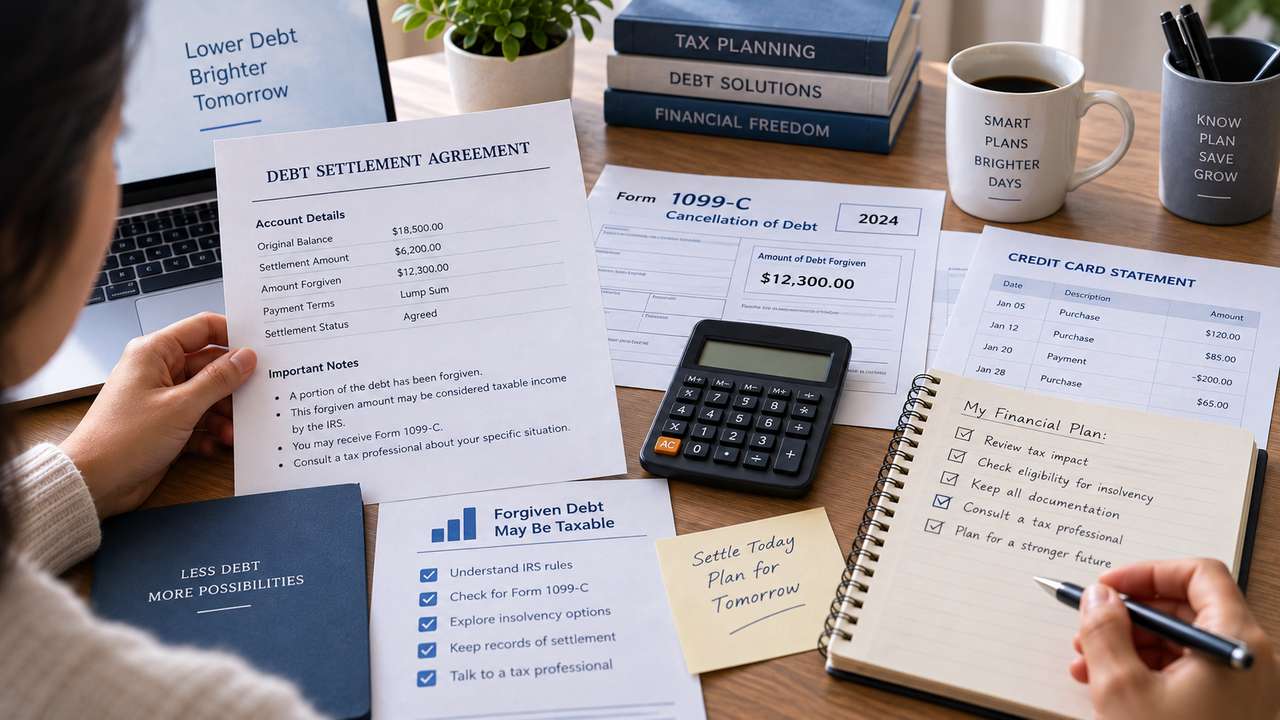
    Form 1099-C, “Cancellation of Debt,” is an informational tax form that a creditor is generally required to file with the IRS — and send a copy to you — when they forgive or cancel $600 or more of debt you owed them. The form reports the amount of debt cancelled, and this amount is generally treated by the IRS as taxable income to you, under the theory that debt forgiveness provides an economic benefit equivalent to receiving that amount in cash.

    For additional information, you can review the IRS information about Form 1099-C.

    Common Reasons You Might Receive One

    • A negotiated debt settlement, where you paid less than the full balance as full and final resolution of a debt — the forgiven difference between what you originally owed and what you actually paid is what gets reported.
    • A charged-off account the creditor has formally determined they won’t pursue further, sometimes occurring even without a specific settlement negotiation, if a creditor decides after an extended period to simply write off and formally cancel the remaining debt.
    • Foreclosure or repossession, where the sale of the property or vehicle didn’t cover your full remaining loan balance, and the lender formally forgives that remaining “deficiency” amount rather than continuing to pursue you for it.
    • Certain student loan forgiveness programs, though many federal student loan forgiveness programs have had specific tax exclusions at various points, meaning not every instance of student loan forgiveness necessarily results in taxable income — this is an area where rules have changed over time and are worth verifying for current applicability.
    • A credit card or personal loan the original creditor decided to fully write off, separate from a specific negotiated settlement, sometimes occurring for very old, small-balance accounts a creditor determines aren’t worth continued collection effort.

    Understanding What the Form Actually Contains

    A Form 1099-C typically includes: the creditor’s information, your information, the date of the cancellation event, the amount of debt cancelled, and sometimes additional details like the fair market value of any property involved (relevant for foreclosure or repossession situations) and the specific reason code for the cancellation, which can sometimes matter for how the income should be treated on your tax return.

    What You’re Supposed to Do When You Receive One

    Review it for accuracy. Confirm the amount listed matches your understanding of the actual forgiven debt — errors do occur, and if the amount seems incorrect, it’s worth contacting the issuing creditor to request a correction before you file your taxes.

    Determine whether an exclusion applies to your situation. The most common exclusion for typical consumer debt is the insolvency exclusion (where your total liabilities exceeded your total assets immediately before the cancellation), which can reduce or eliminate the taxable portion. Debt discharged through bankruptcy is generally fully excluded as well.

    Report the appropriate amount on your tax return. If no exclusion applies, the full amount shown on the 1099-C generally needs to be reported as income. If an exclusion applies, you’ll typically need to complete IRS Form 982 to properly claim it.

    Keep the form and your supporting documentation (any insolvency calculation worksheets, bankruptcy discharge paperwork, or correspondence with the creditor) with your tax records in case of any future question or audit.

    For related information about understanding your overall credit profile, you may also find our guide on how to read a credit report helpful.

    Why This Form Sometimes Arrives Long After You Thought a Debt Was Resolved

    A common source of confusion is receiving a 1099-C well after you believed a matter was fully settled, sometimes even a year or more later. This can happen because creditors don’t always issue the form immediately upon a settlement — some issue it as part of their broader year-end tax reporting process, or after an internal determination process that took longer than the actual settlement negotiation itself. If you receive a 1099-C for a debt you settled in a prior year, it’s worth confirming which tax year the form actually applies to (the “date of cancellation” listed on the form itself), since this determines which year’s tax return it should actually be reported on, which isn’t always the same as the year you received the physical form in the mail.

    What If You Believe the 1099-C Is Incorrect?

    Contact the issuing creditor directly first. Errors in the reported amount, or a 1099-C issued for a debt that was actually still being pursued (not genuinely cancelled), are worth raising directly with the company that issued it, requesting a corrected form if warranted.

    If the creditor won’t correct a genuine error, you can still file your taxes reporting what you believe is the accurate amount, but this may generate an IRS inquiry due to the mismatch with what the creditor reported — in this situation, consulting a tax professional about how to properly document and explain the discrepancy is worthwhile.

    Does Receiving a 1099-C Mean You No Longer Owe the Debt?

    Generally, yes — receiving a 1099-C is meant to reflect that the creditor has formally cancelled the debt, meaning you should no longer be legally obligated to pay it. However, as covered in related guides, sometimes inconsistent internal processes or a subsequent sale of the debt to another company can result in continued collection attempts despite a 1099-C having been issued — if this happens to you, it’s worth addressing directly, since you generally shouldn’t be both taxed on cancelled debt and still pursued for payment on the same obligation.

    If you are dealing with collection activity related to cancelled or disputed debt, you can learn more about debt validation letters and your options for addressing collection accounts.

    How This Affects Your Overall Tax Bill

    The forgiven amount reported on a 1099-C is added to your other income for the year and taxed at your marginal tax rate — it’s not a separate, special tax rate, simply additional income that could potentially push you into a higher tax bracket for that portion of your income, or affect other income-based calculations on your return (certain deductions or credits that phase out at higher income levels, for example). This is exactly why understanding the potential tax impact before finalizing a large settlement, as covered in a related guide on tax implications of debt settlement, is worth factoring into your decision-making process in advance, rather than discovering the full cost only once the 1099-C arrives.

    Frequently Asked Questions

    Is there a minimum amount of forgiven debt that doesn’t require a 1099-C?

    Yes — the general threshold is $600; amounts forgiven below this threshold typically don’t require a 1099-C to be issued, though the underlying tax principle about cancelled debt being potentially taxable technically still applies even without a formal form, in theory, though this is far less commonly enforced or tracked for smaller amounts.

    Can I dispute a 1099-C with the IRS directly, or only with the creditor?

    Your primary avenue is working with the creditor to correct any inaccuracy, since they’re the one who filed the form; if you can’t resolve it with them and believe the reported amount is wrong, you can still file your own return reflecting what you believe is accurate, along with documentation explaining the discrepancy, though this may prompt IRS follow-up given the mismatch with the creditor’s filed form.

    Does receiving multiple 1099-C forms in the same year from different creditors combine for tax purposes?

    Yes — all cancelled debt income reported across multiple 1099-C forms in the same tax year generally gets combined as part of your total taxable income for that year, which is worth keeping in mind if you’ve settled several debts within the same calendar year, since the combined tax impact could be more significant than considering each settlement in isolation.

    If my 1099-C is for a debt that was already discharged in bankruptcy, do I still owe tax on it?

    No — debt discharged through bankruptcy is generally fully excluded from taxable income regardless of the 1099-C being issued; if you receive a 1099-C for bankruptcy-discharged debt, you’d still generally use Form 982 to claim the appropriate exclusion, ensuring the cancelled amount isn’t improperly taxed despite the form being issued.

    Do I need a tax professional to handle a 1099-C, or can I manage it myself with standard tax software?

    Many standard tax software programs can handle a straightforward 1099-C, including the Form 982 insolvency exclusion calculation, through guided prompts — but for a more complex situation (multiple forgiven debts, an uncertain insolvency calculation, or a disputed form amount), consulting a tax professional is a reasonable and often worthwhile additional step.

    Understanding the Specific Reason Codes on the Form

    Form 1099-C includes a specific “identifiable event code” indicating why the creditor determined the debt was cancelled — these codes matter because they can hint at the specific circumstances behind the cancellation, which is sometimes useful context when reviewing the form for accuracy. Common codes include ones for bankruptcy discharge, a specific settlement agreement, expiration of a statute of limitations for collection (in some limited circumstances where a creditor internally determines a debt is no longer collectible), and foreclosure or abandonment of secured property. If the code listed doesn’t seem to match your understanding of what actually happened (for example, a code suggesting bankruptcy discharge when you never filed for bankruptcy), this is worth raising directly with the issuing creditor as a potential error.

    A Side-by-Side Look at Common 1099-C Triggers

    Trigger Typical scenario Exclusion most likely to apply
    Debt settlement Negotiated payment less than full balance Insolvency
    Bankruptcy Debt discharged through Chapter 7 or 13 Bankruptcy (automatic, full exclusion)
    Foreclosure deficiency Home sale doesn’t cover mortgage balance Insolvency, or specific mortgage relief provisions if applicable
    Repossession deficiency Vehicle sale doesn’t cover loan balance Insolvency
    Creditor write-off without settlement Very old, small debt creditor gives up on Insolvency

    This table is a general guide — your specific situation should still be evaluated individually, ideally with a tax professional’s input if the amount involved is significant or your financial situation at the time of cancellation is genuinely uncertain to calculate on your own.

    What to Do If You Receive a 1099-C You Weren’t Expecting At All

    If a 1099-C arrives for a debt you don’t remember settling, or believe was never actually resolved, treat this as worth investigating rather than dismissing. Contact the issuing creditor directly to understand exactly what account and cancellation event the form refers to — occasionally, this can reveal that a debt you thought was still being actively collected was actually internally written off by the creditor without your direct knowledge (which is a legitimate, if sometimes confusing, business practice), or in rarer cases, it can reveal an error or even, potentially, activity related to identity theft affecting an account in your name that you weren’t fully aware of.

    If you suspect identity theft may be involved, our guide to identity theft protection provides additional information about protecting your credit and personal information.

    Frequently Asked Questions, Continued

    Does a 1099-C affect my credit report, separate from any tax implications?

    No — the 1099-C itself is purely a tax document and doesn’t get reported to credit bureaus or affect your credit report; your credit report reflects the account’s payment/settlement status separately, through standard credit reporting channels, which is an entirely different process from this tax reporting requirement.

    If I never received a physical or digital copy of my 1099-C, but I know the IRS has one on file, what should I do?

    Contact the issuing creditor to request a copy, since you’re entitled to receive one, and you’ll need the specific details to properly report the cancelled debt income (or claim an applicable exclusion) on your tax return — filing without this information risks a mismatch with what the IRS already has on record from the creditor’s own filing.

    Can a 1099-C be issued for business debt as well as personal consumer debt?

    Yes — cancelled business debt follows similar general principles, though business tax treatment involves some additional considerations (like whether the cancelled debt relates to a passive or active business activity) that go beyond the personal consumer debt scope of this guide, making this worth discussing with a tax professional familiar with business taxation specifically if it applies to your situation.

    How This Form Relates to Estimated Tax Payments

    If you receive a 1099-C for a substantial amount and know in advance it will meaningfully increase your tax liability, it’s worth considering whether you need to adjust your withholding or make an estimated tax payment before the standard filing deadline, rather than being caught off guard by an unexpectedly large balance due (and potentially an underpayment penalty) when you file. Since debt cancellation often happens mid-year, separate from your regular payroll withholding, this additional income isn’t automatically accounted for through standard paycheck withholding the way regular wages would be, making proactive planning worthwhile once you know a 1099-C is coming.

    Frequently Asked Questions, Continued One Final Time

    Is there a specific IRS publication that covers this topic in more detail than a general overview?

    Yes — IRS Publication 4681, “Canceled Debts, Foreclosures, Repossessions, and Abandonments,” is the dedicated resource covering this topic in comprehensive detail, including worked examples of the insolvency calculation, and is worth reviewing directly or bringing to a tax professional if you want to understand the underlying rules more thoroughly than a general overview can provide.

    You can review IRS Publication 4681 for additional details.

    Does the amount on my 1099-C ever get reduced if I later successfully dispute the underlying debt as inaccurate?

    If you successfully demonstrate that a debt was inaccurate and shouldn’t have been the amount claimed, this could theoretically affect a previously issued 1099-C, though this is a less common, more complex scenario worth discussing directly with both the issuing creditor (to request a corrected form) and a tax professional, since amending a previously filed tax return based on a corrected 1099-C involves its own separate process.

    The Bottom Line

    A Form 1099-C means a creditor has formally cancelled $600 or more of your debt and reported this to the IRS as potentially taxable income to you. Common triggers include debt settlement, foreclosure or repossession deficiencies, and certain loan forgiveness programs. Before assuming you owe tax on the full amount shown, check whether an exclusion applies — insolvency being the most common for typical consumer debt situations, and bankruptcy discharge providing a full exclusion — and report the form appropriately on your tax return, keeping your supporting documentation in case any question arises later.

    Need Help Reviewing Your Credit Report?

    A 1099-C is primarily a tax document, but the underlying debt may also appear on your credit report as a collection, charge-off, or settled account. Reviewing your credit reports can help you understand what is being reported and identify information that may need to be disputed.

    If you’re dealing with inaccurate or questionable information on your credit reports, learn more about how to dispute credit report errors or explore professional credit-repair assistance.

    Request a Credit Audit or Quote Today

  • Tax Implications of Debt Settlement You Should Know About

    Tax Implications of Debt Settlement You Should Know About

    Negotiating the tax implications of Debt Settlement feels like a clear financial win in the moment — you’ve resolved an obligation for less than you originally owed. But there’s a tax consequence to forgiven debt that catches many people off guard months later, often arriving as an unexpected tax form during filing season. Understanding this in advance, before you finalize any settlement, helps you avoid a genuinely unpleasant surprise and lets you factor the true total cost into your negotiation decision.

    The Core Concept: Forgiven Debt Is Generally Taxable Income

    Under U.S. tax law, when a creditor forgives $600 or more of debt you owed, the IRS generally treats that forgiven amount as taxable income to you — the theory being that the debt relief provided you with an economic benefit equivalent to receiving that amount in cash, since you’re no longer obligated to pay it. This applies to most types of settled consumer debt, including credit cards, personal loans, and similar unsecured debt.

    For current IRS information about cancellation-of-debt income, see the IRS guidance on canceled debt and Form 1099-C.

    The Form 1099-C: What It Is and Why You Might Receive One

    When a creditor forgives $600 or more of debt, they’re generally required to file a Form 1099-C, “Cancellation of Debt,” with the IRS, and send you a copy as well. This form reports the amount of debt that was cancelled, which you’re then generally required to include as income on your tax return for that year, unless a specific exception or exclusion applies (covered below).

    A concrete example: if you owed $5,000 on a credit card and settled it for $2,000, the forgiven $3,000 difference is the amount that would typically be reported on a 1099-C and treated as taxable income, potentially increasing your tax bill for that year, depending on your overall tax bracket and situation.

    When This Applies to Debt Settlement Specifically

    If you negotiate a settlement with a creditor or debt buyer — paying less than the full balance as full and final resolution — the forgiven portion is exactly the kind of cancelled debt this rule addresses. This is true whether you negotiated the settlement yourself, worked with a debt settlement company, or went through a formal debt management plan that resulted in a negotiated reduction (though debt management plans through nonprofit credit counseling more commonly focus on reduced interest rather than principal reduction, making this specific tax issue somewhat less common in that particular context compared to debt settlement’s typical structure).

    Important Exceptions and Exclusions

    The good news is that not everyone who has debt forgiven actually owes tax on it — several exceptions exist:

    Insolvency Exception

    If you were insolvent immediately before the debt was cancelled — meaning your total liabilities exceeded your total assets — you can potentially exclude some or all of the cancelled debt from your taxable income, up to the amount by which you were insolvent. This requires calculating your total assets and total liabilities at the specific time of the cancellation, which can be a meaningful calculation for someone in genuine financial distress at the time of a settlement, and often results in partial or complete exclusion of the tax liability that would otherwise apply.

    Bankruptcy Exception

    Debt discharged through bankruptcy is generally fully excluded from taxable income, regardless of your insolvency status — this is one of the more significant tax advantages of bankruptcy compared to an out-of-court settlement, since debt settled outside of bankruptcy doesn’t automatically receive this same blanket exclusion.

    Certain Specific Debt Types

    Some specific categories of forgiven debt have their own separate exclusion rules — certain qualified student loan forgiveness programs, and some mortgage debt forgiveness under specific historical relief programs, have had dedicated exclusions at various points, though these rules change over time and should be verified for current applicability to your specific situation.

    How to Determine If You Qualify for the Insolvency Exception

    This requires completing IRS Form 982, which involves calculating your total liabilities (all debts, not just the one being settled) against your total assets (bank accounts, property, retirement accounts, and other assets) as of immediately before the debt cancellation. If your liabilities exceeded your assets at that specific point, you were insolvent by that difference, and you can potentially exclude up to that amount of cancelled debt from taxation.

    This calculation can be genuinely complex, particularly if you have multiple assets and debts to account for accurately, which is exactly why consulting a tax professional — even just for this specific calculation — is often worthwhile if you’ve received a 1099-C and believe insolvency might apply to your situation.

    You can review the IRS information about Form 982 for additional information about exclusions related to cancellation of debt income.

    What to Do Before Finalizing a Settlement

    Factor the potential tax cost into your negotiation. If you’re settling a $5,000 debt for $2,000, and you don’t qualify for an exclusion, the $3,000 forgiven amount could add several hundred dollars or more to your tax bill (depending on your tax bracket), meaning the settlement’s true total cost is somewhat higher than the $2,000 payment alone.

    Ask the creditor directly whether they intend to issue a 1099-C. While they’re generally required to for amounts of $600 or more, confirming this in advance helps you plan rather than being surprised months later during tax season.

    Consider consulting a tax professional before finalizing a large settlement, particularly if you believe insolvency might apply, since this can meaningfully reduce or eliminate the tax consequence.

    What to Do If You Receive a 1099-C

    Don’t ignore it. The IRS receives a copy of the same form, and failing to report the income (if no exclusion applies) can result in a mismatch that triggers IRS notices or an audit down the line.

    Determine whether an exclusion applies — insolvency being the most common for typical consumer debt settlement — and complete Form 982 if so.

    Report the income on your tax return if no exclusion applies, understanding this may increase your tax liability for that year.

    Consult a tax professional if your situation is complex, particularly involving multiple settled debts in the same year, or an uncertain insolvency calculation.

    For official information about Form 1099-C, you can also review the IRS Form 1099-C information page.

    A Common Point of Confusion: Does This Apply to a Charge-Off Alone, Without a Settlement?

    This is worth clarifying, since it’s a frequent point of confusion: a charge-off by itself (the creditor’s internal accounting decision to write off a delinquent account) doesn’t automatically trigger a 1099-C — the debt has been charged off internally, but the creditor hasn’t necessarily formally cancelled or forgiven your legal obligation to pay it, and may still pursue collection or sell the debt to a buyer. A 1099-C is specifically tied to an actual determination that the debt has been cancelled or forgiven, which is a distinct, sometimes later event from the initial charge-off, most commonly triggered by an actual settlement, a formal debt forgiveness, or, in some cases, a creditor’s internal determination after an extended period that they’ve given up all further collection efforts.

    What If You Receive a 1099-C for Debt You’re Still Being Asked to Pay?

    This does happen, sometimes due to inconsistent internal processes at a creditor or a subsequent sale of the debt to a buyer who’s unaware it was already reported as cancelled. If you receive a 1099-C but are still being pursued for payment on what appears to be the same debt, this is worth addressing directly with both the company issuing the 1099-C and any company still attempting to collect, since you generally shouldn’t be both taxed on cancelled debt and still legally obligated to pay it — a genuine conflict here is worth resolving with documentation from both sides, and potentially with a tax professional’s or attorney’s guidance if it’s not straightforward to sort out.

    Frequently Asked Questions

    Does this tax rule apply to medical debt settlement the same way it applies to credit card debt?

    Generally, yes, the same core principle applies to most forgiven consumer debt regardless of type, though the same exceptions (insolvency, bankruptcy) would apply equally, and medical debt settlements sometimes involve smaller forgiven amounts that may fall under the $600 reporting threshold, avoiding a 1099-C altogether for smaller settlements.

    If multiple debts are settled in the same year, does each one need to exceed $600 separately, or do they combine?

    Generally, the $600 threshold applies per creditor/cancellation event, meaning multiple separate settlements with different creditors, each individually under $600, might not individually trigger a 1099-C, even though your combined forgiven debt across all of them exceeds $600 — though the underlying tax principle about cancelled debt being potentially taxable can still technically apply even without a formal 1099-C being issued, which is worth discussing with a tax professional if this scenario applies to you.

    Does settling debt through a nonprofit credit counseling debt management plan have the same tax implications as direct debt settlement?

    Since debt management plans typically focus on reduced interest and fees rather than forgiving principal balance, this specific tax issue is less commonly triggered through this path compared to traditional debt settlement, though it’s worth confirming the specific structure of your particular plan with your credit counseling agency.

    Is there a way to negotiate with a creditor to not issue a 1099-C as part of a settlement?

    This isn’t generally something a creditor can simply agree to skip, since it’s a legal reporting requirement they’re obligated to follow for qualifying cancelled debt amounts — rather than trying to avoid the form itself, the more productive approach is understanding and applying any exclusions (like insolvency) you may legitimately qualify for.

    Does forgiven debt from a foreclosure or repossession follow the same tax rules?

    Generally yes, forgiven deficiency balances (the remaining amount owed after a foreclosure or repossession sale doesn’t cover the full loan) can similarly trigger a 1099-C and the same general tax treatment, subject to the same potential exclusions, including insolvency and, for certain historical mortgage relief programs, specific dedicated exclusions that have applied at various points.

    A Worked Example of the Insolvency Calculation

    To make the insolvency exception more concrete, imagine you settle a $6,000 credit card debt for $2,500, meaning $3,500 was forgiven. To determine whether the insolvency exception applies, you’d calculate your total assets and total liabilities immediately before the settlement:

    • Assets: $1,200 in checking/savings, a car worth $4,000, and no other significant assets = $5,200 total assets.
    • Liabilities: the $6,000 credit card debt itself (before settlement), plus $2,000 in other unpaid bills, plus a $3,000 remaining balance on the car loan = $11,000 total liabilities.
    • Insolvency amount: $11,000 (liabilities) – $5,200 (assets) = $5,800.

    Since your insolvency amount ($5,800) exceeds the forgiven debt amount ($3,500), you could potentially exclude the entire $3,500 from taxable income, since your insolvency more than covers the full forgiven amount. If your insolvency calculation had instead been smaller than $2,000 of insolvency, you’d be able to exclude that $2,000, but the remaining $1,500 of forgiven debt would still be taxable.

    This example illustrates why the calculation matters so much and why it’s worth doing carefully (or with professional help) rather than assuming either that you automatically owe tax on the full forgiven amount, or that you’re automatically excluded — the actual answer depends entirely on your specific financial position at that specific moment.

    How State Taxes May Differ From Federal Treatment

    It’s worth knowing that state tax treatment of cancelled debt doesn’t always mirror federal rules exactly — some states follow federal exclusions (like insolvency) automatically, while others have their own separate rules or don’t offer the same exclusions at the state level, potentially creating a situation where forgiven debt is excluded from federal taxable income but still counted for state tax purposes, or vice versa. Checking your specific state’s treatment, or having a tax professional familiar with your state’s rules review your situation, is worth doing separately from the federal calculation, particularly for a larger settlement where the state tax difference could be meaningful.

    Why Some People Choose to Proceed With a Settlement Despite the Tax Cost

    Even accounting for a potential tax bill on forgiven debt, settling is often still financially advantageous compared to paying the full original balance or letting the debt continue accruing interest and fees indefinitely. A rough way to think about it: if you’re in a moderate tax bracket, the tax owed on forgiven debt is typically a fraction of the forgiven amount itself (since you’re taxed at your marginal rate, not required to pay back the full forgiven sum), meaning even with the tax cost factored in, a well-negotiated settlement usually still represents meaningful savings compared to the original obligation. Understanding the tax cost in advance simply allows you to make this comparison accurately, rather than being surprised by an unaccounted-for cost after the fact.

    tax-implications-debt-settlement-under-100kb

    Frequently Asked Questions, Continued

    Do I need to wait for the 1099-C to arrive before I can file my taxes, or can I estimate and file without it?

    It’s generally best practice to wait for and use the actual 1099-C when filing, since it contains the official reported amount the IRS will also receive — filing based on your own estimate that doesn’t match the official form can create a mismatch that triggers IRS correspondence, even if your estimate was reasonably close.

    If a creditor fails to send me a 1099-C despite forgiving $600 or more, am I still responsible for reporting the income?

    Generally yes — the underlying tax obligation to report cancelled debt income exists independent of whether the creditor actually issues the form correctly; if you know debt was forgiven in an amount that should have triggered a 1099-C but never received one, it’s worth proactively addressing this with a tax professional rather than assuming the absence of the form means no tax obligation exists.

    Does the insolvency exclusion reduce my tax bill dollar-for-dollar, or does it work differently?

    The exclusion removes the qualifying amount from your taxable income entirely, meaning you don’t pay tax on that specific excluded portion at all — it’s not a tax credit or a partial reduction calculation, but a full exclusion up to your calculated insolvency amount.

    A Second Worked Example Involving Multiple Debts Settled in the Same Year

    Building on the earlier single-debt example, consider a more complex scenario: over the course of one year, you settle three separate debts — $2,000 forgiven on a credit card, $1,500 forgiven on a personal loan, and $800 forgiven on a medical bill. Each creditor individually exceeds the $600 threshold, so each would generally issue its own separate 1099-C, and for tax purposes, these combine into a total of $4,300 in potentially taxable cancelled debt income for that year. If your insolvency calculation at the time (using your total assets and liabilities immediately before each respective cancellation, which technically should be calculated separately for each event, though many people’s overall financial position doesn’t change dramatically within a single year) shows insolvency exceeding this combined amount, you could potentially exclude the full $4,300; if your insolvency is smaller, only that portion would be excluded, with the remainder still taxable. This kind of multi-debt scenario is exactly when consulting a tax professional becomes particularly valuable, given the added complexity of properly calculating and documenting insolvency across multiple cancellation events.

    Frequently Asked Questions, Continued One Final Time

    Does refinancing debt (rather than settling it) ever trigger similar tax consequences?

    No — refinancing simply replaces one loan with another of a different structure or rate; no debt is actually forgiven in a standard refinance, so there’s no cancellation-of-debt income or 1099-C involved, unlike an actual negotiated settlement or forgiveness.

    If I’m genuinely unsure whether I qualify for the insolvency exclusion, is it safer to just report the full amount as income and pay the tax?

    This is a conservative approach some people take to avoid any risk of an IRS inquiry, but it can mean overpaying tax you weren’t actually required to pay if you did in fact qualify for some or all of the exclusion — given this tradeoff, a brief consultation with a tax professional to actually calculate your insolvency accurately is often worth the modest cost, particularly for a larger forgiven amount where the tax difference could be significant.

    The Bottom Line

    Debt settlement often carries a tax consequence that’s easy to overlook in the moment: forgiven debt of $600 or more is generally treated as taxable income, reported to you and the IRS via a Form 1099-C, unless a specific exclusion — most commonly insolvency, or a full bankruptcy discharge — applies to your situation. Before finalizing any significant settlement, it’s worth factoring this potential tax cost into your overall decision, and if you do receive a 1099-C, addressing it properly on your tax return, ideally with a tax professional’s help if your situation involves a meaningful insolvency calculation or any other complexity, rather than either ignoring the form or assuming the entire forgiven amount is automatically tax-free.

    Need Help Reviewing Your Credit Report?

    Debt settlement and tax consequences can be easier to understand when you have a clear picture of the accounts appearing on your credit report. Reviewing your credit profile can help you identify collection accounts, outstanding debts, and potentially inaccurate information that may need attention.

    If you are working toward improving your credit after dealing with debt, a detailed credit report review can help you understand your current position and identify areas that may require further action.

    Request a Credit Audit or Quote Today

  • How ChexSystems Works and Why It Can Block a New Bank Account

    How ChexSystems Works and Why It Can Block a New Bank Account

    Most people have never heard of ChexSystems until they’re unexpectedly denied a checking account — and the confusion that follows is understandable, since it’s an entirely separate system from the credit bureaus most people are at least somewhat familiar with. Understanding what ChexSystems actually is, what lands you in it, and how to get out clarifies a process that otherwise feels opaque and frustrating.

    What ChexSystems Actually Is

    ChexSystems is a specialty consumer reporting agency, similar in concept to Equifax, Experian, or TransUnion, but focused specifically on banking history rather than credit history. Banks and credit unions voluntarily report negative banking activity — primarily unpaid negative balances, suspected fraud, and account mismanagement — to ChexSystems, and other banks then check this database before approving a new account application, much like a landlord checks a tenant screening report.

    If you’re unfamiliar with the information that appears on a traditional credit file, our guide on how to read a credit report explains the difference between credit reporting and other types of consumer reporting.

    What Gets You Reported to ChexSystems

    • An unpaid negative account balance. If you overdraw an account and don’t repay the negative balance before the bank closes it, this is by far the most common reason people end up in ChexSystems.
    • Suspected fraud or check fraud, including writing checks against insufficient funds repeatedly, or other activity a bank’s fraud department flags as suspicious.
    • Excessive overdrafts, even if eventually repaid, depending on the specific bank’s internal policies about how many overdrafts trigger a report.
    • Identity theft affecting an account, in some cases, though this should generally be correctable through the dispute process once documented.

    If identity theft is involved, you may also want to review our information about identity theft protection.

    How Long Negative Information Stays on Your ChexSystems Report

    Most negative information remains on your ChexSystems report for five years, which is shorter than the standard seven-year window for most credit report negative items, though it can still feel like a long time if you’re trying to open a basic checking account in the meantime.

    How to Check Your Own ChexSystems Report

    You’re entitled to a free copy of your ChexSystems report, similar to your right to free credit reports from the major bureaus. You can request this directly through ChexSystems (via their website or by phone), and reviewing it is the essential first step if you’ve been denied an account and suspect ChexSystems is the reason.

    It is also useful to review your traditional credit reports separately. You can obtain your federally authorized free credit reports through AnnualCreditReport.com.

    What to Do If You Find Accurate Negative Information

    Pay off any outstanding negative balance you owe. Many banks that reported you to ChexSystems will update their report once the debt is paid, and some banks specifically offer “second chance” accounts designed for people with a ChexSystems history, sometimes with more limited features initially but a path to a standard account after a period of responsible use.

    Consider requesting removal after payment, similar to a goodwill request with a credit reporting matter — some banks will agree to remove the negative report once the balance is paid, though this isn’t universal or guaranteed.

    If you’re interested in how goodwill requests work in the credit-reporting context, see our guide on goodwill letters and late payments.

    What to Do If You Find Inaccurate Information

    Dispute it directly with ChexSystems, similar to disputing an error on a standard credit report — providing documentation supporting your position, and ChexSystems is required to investigate, typically within 30 days.

    Contact the reporting bank directly as well, since they’re the original source of the information and may be able to correct their own records, which then flows through to ChexSystems.

    The same general principle applies when you find inaccurate information on a traditional credit report. Our guide on how to dispute credit report errors explains the broader dispute process.

    Finding a Bank Account Despite a ChexSystems History

    Second-chance checking accounts are specifically designed for this situation, offered by many banks and credit unions, sometimes with modest fees or feature limitations initially, but providing a legitimate path to basic banking access while you address the underlying ChexSystems issue.

    Some banks don’t use ChexSystems at all, or use a different, less restrictive screening service — researching which specific banks in your area have more lenient screening policies can be worthwhile.

    Credit unions sometimes have more flexibility than larger national banks, particularly smaller, member-focused institutions willing to consider your full situation rather than relying purely on an automated ChexSystems-based denial.

    Prepaid debit cards or online-only banking alternatives that don’t require traditional account screening can serve as a bridge while you resolve your ChexSystems history, though these typically offer more limited features than a standard checking account.

    How ChexSystems Differs From Your Credit Report

    It’s worth being clear about this distinction: ChexSystems tracks your banking account history specifically, while your standard credit report (from Equifax, Experian, or TransUnion) tracks your credit and loan history. A poor ChexSystems history doesn’t directly affect your credit score, and vice versa — these are genuinely separate systems, though financial difficulty severe enough to cause problems in one area sometimes correlates with difficulty in the other, without one directly causing or reflecting the other.

    For more information about how credit scores work, see our guide explaining how your credit score is calculated.

    Frequently Asked Questions

    Does everyone who overdrafts their account end up in ChexSystems?

    No — a single overdraft that’s promptly repaid typically doesn’t result in a ChexSystems report; it’s generally an unpaid negative balance that the bank ultimately writes off and reports, or a pattern of repeated overdrafts, that triggers this kind of reporting.

    Can I be denied an account for a ChexSystems issue even if my credit score is excellent?

    Yes — since these are separate systems, a strong credit history doesn’t offset a negative ChexSystems report; a bank specifically checking ChexSystems for a new deposit account isn’t typically looking at your credit report at all for this particular decision.

    How much does it typically cost to pay off a negative ChexSystems-reported balance?

    This varies based on your specific situation, but it’s generally the actual negative balance amount from your closed account, sometimes with additional fees the bank assessed — contacting the specific bank directly to confirm the exact current amount owed is the appropriate first step.

    Is there a way to get a bank account without any screening at all?

    Fully unscreened traditional bank accounts are uncommon, though second-chance accounts, some credit union options, and certain prepaid or online banking alternatives offer meaningfully reduced screening barriers compared to a standard account application at a major bank.

    Does closing an account in good standing ever result in a ChexSystems report?

    No — a ChexSystems report specifically relates to negative account history (unpaid balances, fraud, mismanagement); simply closing an account you’ve managed responsibly, with no outstanding negative balance, doesn’t result in any negative report.

    A Closer Look at How Banks Decide What to Report

    Not every bank reports every negative account event to ChexSystems — reporting practices vary by institution, and banks generally have some internal discretion about which situations rise to the level of a formal report versus simply being handled internally (a fee charged, an account closed without further action). Generally, the deciding factors include the size of the unpaid negative balance, whether the bank suspects deliberate fraud versus an honest mistake or temporary hardship, and the bank’s own specific internal risk policies. This variability is part of why two people with seemingly similar overdraft situations at different banks can end up with different ChexSystems outcomes — one bank’s threshold for reporting may be more lenient than another’s.

    The Role of Early Warning Services (EWS) as a Related System

    It’s worth knowing that ChexSystems isn’t the only specialty consumer reporting agency banks might check — Early Warning Services (EWS) is another major player in this space, and some banks check one, the other, or both when evaluating a new account application. If you’ve been denied at one bank and are confused about why, since your ChexSystems report looked clean, it’s worth checking whether EWS might be the relevant database in your specific case, since it operates similarly but as a genuinely separate reporting system with its own dispute process.

    A Realistic Timeline for Resolving a ChexSystems Issue

    1. Immediately: Request your free ChexSystems report to understand exactly what’s being reported and confirm its accuracy.
    2. Within a few weeks: If accurate, contact the reporting bank to arrange payment of any outstanding balance; if inaccurate, file a formal dispute with ChexSystems.
    3. Within 30 days: ChexSystems should complete its investigation if you’ve filed a dispute, correcting or removing unverifiable information.
    4. Once resolved: Consider applying for a second-chance account in the meantime if you need banking access before the underlying issue is fully resolved, then transition to a standard account once your ChexSystems history improves or the negative item ages off after the standard five-year period.

    Frequently Asked Questions, Continued

    Do all banks use ChexSystems, or only some?

    Most major banks and many credit unions do use ChexSystems or a similar service like EWS as part of their new account screening, though the specific weight given to a negative report, and whether a bank has any flexibility to approve an account despite one, varies considerably by institution.

    Can a joint account holder’s negative history affect my own ChexSystems report?

    If you were a joint owner on an account that resulted in a negative report, this can appear on your own ChexSystems file as well, since joint account holders are generally each individually associated with the account’s history, similar to how joint credit accounts affect both holders’ credit reports.

    Is there a fee to dispute inaccurate ChexSystems information?

    No — similar to disputing an error on a standard credit report, filing a dispute with ChexSystems is free, and they’re required to investigate without charging you for this process.

    Does a ChexSystems report affect my ability to get a credit card, separate from a checking account?

    Not directly — ChexSystems specifically relates to deposit account history (checking and savings), while credit card approval is governed by your standard credit report and score; these remain separate evaluation processes even though both are sometimes colloquially lumped together as “banking history.”

    how-chexsystems-works-under-100kb

    How ChexSystems Scores Work, and Why They’re Different From a Credit Score

    In addition to the underlying report, ChexSystems also generates its own numeric score (sometimes called a ChexSystems score), used by some banks as an additional screening tool alongside or instead of a simple pass/fail report review. This score operates on its own scale, entirely separate from FICO or VantageScore, and reflects your banking risk specifically — a low ChexSystems score doesn’t correspond to any equivalent credit score number, and the two shouldn’t be compared directly, since they’re measuring fundamentally different things using different underlying data and methodologies.

    For a deeper explanation of the difference between the major credit scoring systems, see our guide to FICO vs. VantageScore.

    What Banks That Don’t Use ChexSystems Typically Use Instead

    If a specific bank doesn’t rely on ChexSystems, they may use a competing service (Early Warning Services, as mentioned, being the most common alternative), or in some cases rely more heavily on manual underwriting — reviewing your recent bank statements directly, verifying income, and making a more individualized decision rather than relying primarily on an automated screening database. Smaller community banks and credit unions are more likely to take this more manual, individualized approach, which is part of why they’re often cited as more accessible options for someone with a ChexSystems history.

    Frequently Asked Questions, Continued Further Still

    If I’ve been denied at several banks in a row, is there a risk that repeated applications themselves start counting against me?

    Unlike credit inquiries, which can have a cumulative effect on your credit score, ChexSystems inquiries generally don’t compound the same way — the underlying negative report is what matters, not how many times you’ve applied and been screened against it, though it’s still practically more efficient to research a bank’s likely flexibility before applying rather than applying repeatedly at random.

    Does opening a joint account with someone who has good ChexSystems history help me get approved despite my own negative report?

    This varies by bank — some banks will still deny a joint application if either applicant has a disqualifying ChexSystems report, while others may weigh the application more favorably given one strong co-applicant; this is worth asking about directly with a specific bank if you’re considering this approach.

    A Broader List of Less Obvious Situations That Can Trigger a ChexSystems Report

    Beyond the common overdraft scenario, a few less obvious situations are worth knowing about: a returned/bounced check you wrote (even if eventually made good) can sometimes trigger a report, particularly if it happened repeatedly; closing an account with a small negative balance you didn’t realize existed (sometimes from a maintenance fee charged after you thought the account was already empty and inactive) can result in a surprise report months later; and in rarer cases, being a victim of check fraud where someone else’s fraudulent activity on your account led to a negative balance can result in a report that requires active disputing to correct, since the bank’s system may not automatically distinguish victim status from account holder responsibility without you proactively raising it.

    Frequently Asked Questions, Continued One More Time

    Is there a cost to opening a second-chance account, beyond what a standard account would cost?

    Second-chance accounts sometimes carry a modest monthly maintenance fee that a standard checking account might not, reflecting the bank’s additional risk in offering the account — it’s worth comparing a few options, since fee structures vary, and some second-chance products waive fees once you meet certain conditions like direct deposit or a minimum balance.

    Does paying off a ChexSystems debt in full guarantee removal, or is removal always discretionary?

    Removal after payment is discretionary in most cases, similar to credit report goodwill removal — many banks will remove the report once paid, but this isn’t universally guaranteed, so it’s worth specifically asking whether payment will result in removal, ideally getting this confirmed before making the payment.

    The Bottom Line

    ChexSystems is a specialty consumer reporting agency tracking banking history, separate from your credit report, and a negative ChexSystems record — most commonly from an unpaid negative account balance — can block new account approvals at many banks for up to five years. The path forward is straightforward: check your own report, pay off any legitimate outstanding balance (and consider requesting removal once paid), dispute any inaccuracies, and in the meantime, explore second-chance accounts or credit unions with more flexible screening while you work to resolve the underlying issue.

    Need Help Reviewing Your Credit Profile?

    ChexSystems and traditional credit reports are separate systems, but problems with banking history can sometimes exist alongside inaccurate or negative information on your credit reports. Reviewing your credit profile can help you understand what lenders and other businesses may be seeing.

    If you have concerns about inaccurate information, collections, identity theft, or other negative credit-report items, a detailed review can help you identify areas that may need further attention.

    Request a Credit Audit or Quote Today

  • Credit Reports Explained: How to Read, Fix, and Improve Your Credit in 2026

    Your credit report quietly influences some of the biggest decisions in your life. It can determine whether you get approved for an apartment, land a fair rate on a car loan, or qualify for a mortgage without paying thousands extra in interest. Still, most people go months—sometimes years—without ever looking at it.

    That gap is where problems grow. A wrong entry, an old debt that should have dropped off, or a score you don’t understand can cost you real money. The fix starts with knowledge, and this guide gives you all of it in one place.

    Below, you’ll learn what a credit report is, how to read it line by line, how credit scores are calculated, how to dispute credit report errors, and how to improve your credit score in as little as six months. We’ll also cover how long negative items stay on your credit report and the powerful protections you have under the Fair Credit Reporting Act.

    What You’ll Learn in This Guide

    Use this as a table of contents. Jump to what you need, or read straight through for the full picture.

    What Is a Credit Report?

    A credit report is a detailed record of how you’ve borrowed and repaid money over time. Think of it as a financial history file. Lenders, landlords, insurers, and sometimes employers use it to decide how much they can trust you with credit or responsibility.

    Three major credit bureaus build and maintain these reports:

    • Equifax
    • Experian
    • TransUnion

    Each bureau keeps its own version, so the details can differ from one to the next. One lender might report to all three, while another reports to only one. That’s exactly why checking all three reports matters—an error can appear on one and stay hidden on the others.

    One quick clarification that trips people up: your credit report and your credit score are not the same thing. The report holds the raw information. The score is the three-digit summary that scoring models calculate from that information. In short, the report is the story, and the score is the headline.

    Why Your Credit Report Matters More Than You Think

    A single file can shape choices far beyond just loans. Here’s where your credit report shows up in everyday life:

    • Loan approvalsfor cars, homes, and personal financing
    • Interest rates, since stronger credit usually means lower rates
    • Credit card offersand the limits you’re given
    • Rental applicationsfor apartments and homes
    • Insurance premiumsin many states
    • Employment screeningfor certain roles

    Because so much rides on this one document, checking it regularly is one of the smartest and most affordable financial habits you can build. It costs nothing and takes minutes.

    How to Read Your Credit Report

    Opening your credit report for the first time can feel overwhelming. The pages are packed with dates, numbers, and account names. But once you understand what each section means, reading it becomes simple and even a little satisfying.

    Here’s a section-by-section breakdown so you always know what you’re looking at.

    1. Personal Information

    This top section lists your identifying details:

    • Full name and any variations or misspellings
    • Current and past addresses
    • Date of birth
    • Social Security number, usually partly hidden
    • Employment history

    Read this part closely. An unfamiliar address or a name you don’t recognize can point to a mixed file—where someone else’s data lands on your report—or even early signs of identity theft. Catching this early protects both your credit and your privacy.

    2. Credit Accounts (Tradelines)

    This is the heart of your report. Often called “tradelines,” these entries show every credit account tied to you. For each one, you’ll typically see:

    • The lender or creditor’s name
    • Account type, such as credit card, mortgage, or auto loan
    • Date the account opened
    • Credit limit or original loan amount
    • Current balance
    • A month-by-month payment history

    Lenders study this section the hardest. They want to know two things: Do you pay on time, and how much of your available credit are you using?

    3. Credit Inquiries

    Every time your credit gets checked, it lands here. There are two kinds:

    • Hard inquirieshappen when you apply for new credit. They can slightly lower your score and stay on your report for about two years.
    • Soft inquirieshappen when you check your own credit or a company pre-approves you. These never affect your score.

    Spot a hard inquiry you don’t remember authorizing? That’s worth a closer look, since it can signal fraud.

    4. Public Records and Collections

    This section covers serious negative events, such as:

    • Bankruptcies
    • Accounts sent to collections
    • Certain court judgments

    These carry the heaviest weight and can pull your score down for years. If something here looks wrong, it’s a top priority to dispute.

    How to Get Your Free Credit Report

    You’re entitled to a free copy of your credit report from each bureau. The official, federally authorized source is AnnualCreditReport.com. Many services now offer free weekly access, so there’s no reason to go without.

    Pull all three reports and compare them side by side. Reading them together is the most reliable way to catch errors and confirm your information is accurate everywhere it appears.

    How Credit Scores Are Calculated

    Your credit score is a three-digit number, usually ranging from 300 to 850. The higher it climbs, the better you look to lenders. Popular scoring models like FICO and VantageScore rely on similar factors, with slightly different weights.

    Understanding these five factors gives you a clear, practical roadmap. Improve them, and your score follows.

    Payment History (About 35%)

    This is the single biggest factor. It tracks whether you pay your bills on time. Late payments, missed payments, and collections all damage this category.

    Even one payment that’s 30 days late can noticeably ding your score. Paying on time, every single time, is the foundation of strong credit.

    Amounts Owed (About 30%)

    This measures how much debt you carry, with a heavy focus on your credit utilization ratio—the share of available credit you’re actually using.

    Here’s a quick example. If you have a $10,000 limit and a $3,000 balance, your utilization is 30%. A reliable rule of thumb is to keep it under 30%, and lower is even better.

    Length of Credit History (About 15%)

    The longer your track record, the more confident lenders feel. This factor weighs:

    • The age of your oldest account
    • The average age of all your accounts
    • How long specific accounts have stayed active

    This is why closing an old credit card can backfire. It shortens your history and may nudge your score down.

    Credit Mix (About 10%)

    Lenders like to see you handle different types of credit well. A healthy mix might include a credit card, an auto loan, and a mortgage. You don’t need every type—variety just helps.

    New Credit (About 10%)

    Opening several accounts in a short window can signal risk. Each application triggers a hard inquiry, and a cluster of them can temporarily lower your score.

    How to Dispute Credit Report Errors

    Credit report errors are more common than most people expect, and they can quietly cost you through higher interest rates or denied applications. The good news: you have the legal right to dispute anything inaccurate, and it costs nothing.

    Common Credit Report Errors to Watch For

    Keep an eye out for these frequent mistakes:

    • Accounts that don’t belong to you
    • Incorrect payment statuses, like a paid bill marked late
    • Duplicate accounts listed twice
    • Wrong balances or credit limits
    • Outdated negative items that should have aged off
    • Someone else’s information mixed into your file

    Step-by-Step: How to Dispute a Credit Report Error

    Fixing a mistake follows a clear, repeatable process. Here’s how to do it right.

    Step 1: Gather your evidence. Collect proof of the error, such as bank statements, payment confirmations, or letters from creditors.

    Step 2: File your dispute. Submit it to the credit bureau reporting the error. Most bureaus accept disputes online, by mail, or by phone. Mailing with tracking gives you a paper trail, which many people prefer for important disputes.

    Step 3: Explain the problem clearly. State exactly what’s wrong and what the correct information should be. Attach copies of your evidence—never send originals.

    Step 4: Wait for the investigation. The bureau generally has 30 days to investigate. They’ll contact the company that reported the information to verify it.

    Step 5: Review the results. When the investigation ends, the bureau sends you the outcome. If they agree, they’ll correct or remove the item. Then request an updated copy of your report to confirm the fix landed.

    What If Your Credit Dispute Is Denied?

    Sometimes a bureau sides with the creditor. If that happens, you still have solid options:

    • Add a statement of dispute to your file explaining your side
    • Contact the creditor directly to resolve the issue
    • File a complaint with a federal consumer protection agency

    Persistence pays off. If you know an item is wrong, keep pushing with clear documentation.

    How to Improve Your Credit Score in 6 Months

    Rebuilding credit doesn’t happen overnight, but real, visible progress in six months is absolutely realistic. The secret is consistency plus focusing on the factors that move the needle most.

    Here’s a month-by-month plan you can follow with confidence.

    Month 1: Check and Clean Up

    Pull all three credit reports and hunt for errors. Dispute anything inaccurate right away, since removing a wrong negative mark can lift your score fast. Then list every account and its balance—you can’t fix what you can’t see.

    Month 2: Lock In Your Payment Habits

    Set up automatic payments or reminders so you never miss a due date. Payment history carries the most weight, so this one habit protects your score more than anything else. If any accounts are past due, bring them current as soon as possible.

    Month 3: Lower Your Credit Utilization

    Focus on paying down credit card balances to get utilization under 30%, then keep pushing lower. A few smart moves help:

    • Pay more than the minimum
    • Make a second payment mid-month to reduce your reported balance
    • Ask for a credit limit increase without increasing your spending

    Month 4: Be Strategic With New Credit

    Avoid opening several new accounts at once. If you’re building credit from scratch, consider a secured credit card or becoming an authorized user on a trusted family member’s account. Use any new credit lightly and pay it off in full each month.

    Month 5: Keep Old Accounts Open

    Resist closing old credit cards, even ones you rarely touch. Keeping them open preserves your credit history length and total available credit—both help your score. If an old card has no annual fee, make a small purchase now and then to keep it active.

    Month 6: Review and Adjust

    Pull your reports again and measure your progress. Celebrate the wins and pinpoint what still needs work. By now, on-time payments and lower balances should be paying off.

    Building credit is a marathon, not a sprint. These habits compound, so keep them going well past month six.

    Quick Wins That Add Up

    Beyond the monthly plan, a few extra moves can speed things along:

    • Report rent and utility payments.Some services let you add these to your credit file.
    • Keep balances low before statement dates.Your reported balance drives utilization.
    • Avoid unnecessary hard inquiries.Only apply for credit you truly need.

    How Long Do Negative Items Stay on Your Credit Report?

    One of the most searched credit questions is how long a mistake will haunt you. The answer depends on the type of negative item—and the encouraging news is that most fade with time. Today’s setback won’t follow you forever.

    Here’s a quick reference table, followed by the details.

    Negative Item How Long It Stays Notes
    Late payments Up to 7 years Impact fades as it ages
    Collections Up to 7 years Paid looks better than unpaid
    Chapter 13 bankruptcy About 7 years From filing date
    Chapter 7 bankruptcy Up to 10 years Longest-lasting mark
    Hard inquiries About 2 years Usually stop affecting score after 1 year
    Charge-offs Up to 7 years From first missed payment

    Late Payments: Up to 7 Years

    A late payment can stay on your report for about seven years from when it happened. Its impact shrinks over time, so a late payment from five years ago hurts far less than one from last month.

    Collections: Up to 7 Years

    A collection account can remain for roughly seven years from the original delinquency date. Paying it off doesn’t always remove it, but a paid collection generally looks better to lenders than an unpaid one.

    Bankruptcies: 7 to 10 Years

    Bankruptcies linger longest. A Chapter 13 typically stays about seven years, while a Chapter 7 can remain for up to ten.

    Hard Inquiries: 2 Years

    Hard inquiries fall off after about two years and usually stop affecting your score after just one.

    Charge-Offs: Up to 7 Years

    When a creditor writes off a debt as a loss, that charge-off can stay around seven years from the date of the first missed payment.

    The Silver Lining

    Time genuinely heals credit wounds. As negative items age, their weight shrinks. At the same time, every on-time payment and lower balance builds fresh positive history. So even while you wait for old marks to disappear, your good habits actively push your score upward.

    Your Rights Under the Fair Credit Reporting Act

    The Fair Credit Reporting Act (FCRA) is a federal law built to keep your credit information fair, accurate, and private. It governs how credit bureaus and businesses handle your data—and knowing these rights puts real power in your hands.

    Here are the key FCRA protections every consumer should understand.

    The Right to Access Your Information

    You can see what’s in your credit file. That includes free annual access from each of the three major bureaus, plus extra free copies in certain situations, such as after being denied credit.

    The Right to Accurate Reporting

    Credit bureaus must take reasonable steps to keep your information accurate. When you dispute an error, they’re required to investigate, usually within 30 days. If the information can’t be verified, it must be corrected or removed.

    The Right to Know When Your Report Is Used Against You

    If a company denies you credit, insurance, or a job based on your report, they must tell you and name the bureau that supplied the information. That lets you review the specific report for free.

    The Right to Dispute Inaccurate Information

    You can challenge anything you believe is wrong at no cost. Both the credit bureau and the company that reported the information share responsibility for investigating.

    The Right to Limit Access to Your Information

    Not just anyone can pull your credit report. Under the FCRA, only parties with a valid reason—like a lender reviewing a loan application—can access it. This helps protect your privacy.

    The Right to Have Outdated Information Removed

    Most negative items must drop off after the legal time limits covered above. Bureaus can’t report old negative information indefinitely.

    The Right to Seek Damages

    If a bureau or company violates your FCRA rights, you may be able to take legal action. That accountability keeps the whole system honest.

    Knowing these rules turns you from a passive subject into an active participant. When you understand the law, you can protect yourself and hold the system accountable.

    Credit Report FAQs

    How often should I check my credit report?
    Aim for at least a few times a year. Since free weekly access is now widely available, many people check monthly to catch problems early and search their records with confidence.

    Does checking my own credit hurt my score?
    No. Checking your own report is a soft inquiry, which never affects your score. Review it as often as you like.

    How long does it take to improve a credit score?
    It varies. Some people see changes within a month or two after disputing errors or paying down balances. Meaningful progress often shows within three to six months of steady effort.

    Will paying off a collection remove it from my credit report?
    Not always. The account may stay, but its status usually updates to “paid.” A paid collection generally looks better to lenders than an unpaid one.

    Can I improve my credit without a credit card?
    Yes. Secured cards, credit-builder loans, and adding rent or utility payments to your file can all build credit responsibly.

    What’s the difference between a credit report and a credit score?
    Your report is the detailed record of your credit history. Your score is the three-digit number calculated from that data. The report is the story; the score is the summary.

    How do I know if my personal information on my report is accurate?
    Read the personal information section closely and compare it across all three bureaus. Unfamiliar names or addresses can signal a mixed file or identity theft, so flag anything that looks off.

    Take Control of Your Credit Today

    Your credit report isn’t set in stone. It’s a living record that responds to the choices you make. By learning how to read it, disputing errors quickly, and building steady habits, you shape a stronger financial future.

    Start small. Pull your free reports. Set up automatic payments. Pay down one balance. Each step builds momentum, and within six months you’ll likely see real, measurable results.

    Most of all, remember that time is on your side. Negative marks fade, positive habits compound, and your rights under the law protect you at every turn. You hold more control than you might think—so use it with confidence.

  • How to Dispute a Fraudulent Credit Card Charge

    How to Dispute a Fraudulent Credit Card Charge

    Spotting a charge on your credit card statement that you never made triggers an immediate mix of confusion and alarm — but disputing a fraudulent credit card charge is actually one of the more consumer-protected processes in personal finance, with strong legal backing and, in most cases, a fairly straightforward resolution path. This guide walks through exactly what to do, your legal protections, and how to navigate the process efficiently.

    Your Legal Protection: The Fair Credit Billing Act

    Fraudulent credit card charges are governed by the Fair Credit Billing Act (FCBA), which limits your maximum liability for unauthorized charges to $50 — and in practice, most major card issuers voluntarily offer $0 liability for fraud as part of their standard policy, going beyond what federal law technically requires. This is meaningfully more protective than debit card fraud liability, which can be higher depending on how quickly you report it, making credit cards generally the safer payment method when fraud risk is a concern.

    For additional information about your consumer rights, visit the Consumer Financial Protection Bureau (CFPB).

    Step One: Identify the Charge Precisely

    Before disputing anything, make sure the charge is genuinely unfamiliar rather than simply unrecognized due to an unfamiliar merchant name. Many legitimate charges appear on statements under a parent company or processing name different from the actual business you interacted with — a quick search of the exact charge description alongside the amount often reveals it’s actually a subscription you forgot about, a purchase made by a family member with authorized access to your card, or a merchant operating under a different registered business name than their storefront branding.

    Step Two: Report It to Your Card Issuer Immediately

    Once you’ve confirmed a charge is genuinely unauthorized, contact your card issuer as soon as possible — most have a dedicated fraud reporting line, often available 24/7, and reporting promptly both limits your legal liability and starts the formal dispute and investigation process.

    Most issuers allow you to initiate this report by phone, through their mobile app, or online, and will typically issue a temporary credit for the disputed amount while they investigate.

    Step Three: Consider Whether Your Card Needs to Be Replaced

    If the fraud suggests your physical card number has been compromised (rather than, say, a single unauthorized use by someone with brief physical access), your issuer will typically recommend or automatically issue a replacement card with a new number, closing the compromised number to prevent further unauthorized charges. This is a normal and appropriate response even for a single fraudulent charge, since it’s often difficult to know with certainty how a fraudster obtained your information or whether they might attempt further charges.

    Step Four: Monitor for Additional Fraudulent Activity

    Since a single fraudulent charge sometimes indicates a broader compromise (your card information stolen through a data breach, a skimming device, or an online store’s security failure), it’s worth reviewing your recent statements more closely for any other unfamiliar activity, and considering whether the same compromised information might affect other accounts if you’ve used that specific card number in multiple places recently.

    For broader protection strategies, see our guide to identity theft protection.

    What Happens During the Investigation

    Your card issuer is generally required to investigate and resolve billing disputes within specific timeframes under the FCBA — acknowledging your dispute within 30 days and resolving it within two billing cycles (generally no more than 90 days). During this period, the disputed amount is typically not counted against your available credit or considered part of your minimum payment due, and shouldn’t negatively affect your credit report while the investigation is pending.

    What If the Issuer Denies Your Dispute?

    If your issuer determines the charge was actually authorized (or was made by someone with legitimate access to your card, like a family member, which complicates the “fraud” classification even if you personally didn’t make the purchase), they’ll typically explain their reasoning and you have the right to request the specific documentation supporting their conclusion. If you believe this determination is incorrect, you can request further review, provide additional evidence supporting your position, or, if necessary, escalate through a complaint to the CFPB.

    You can submit or learn more about consumer complaints through the CFPB’s complaint process.

    How This Differs From a Simple Billing Error or Merchant Dispute

    It’s worth distinguishing true fraud (someone else used your card without any authorization) from a billing dispute with a legitimate merchant you did transact with — a wrong amount charged, goods never received, or a service not as described. These are also disputable under consumer protection law, but they follow a somewhat different track (often starting with the merchant directly) than pure fraud, though your card issuer’s dispute process typically handles both categories, just potentially with different specific documentation requirements.

    Protecting Yourself Going Forward

    Enable transaction alerts through your card issuer, so you’re notified in real time of any charge, making unauthorized activity far easier to catch quickly.

    Use virtual card numbers for online purchases where your issuer offers this feature, which limits exposure since a compromised virtual number can be easily deactivated without affecting your actual card.

    Be cautious about where you use your physical card, particularly at gas station pumps and ATMs, which are common targets for card-skimming devices — using tap-to-pay or chip insertion rather than swiping where possible reduces skimming risk.

    Review your statements regularly rather than only when something feels obviously wrong, since smaller fraudulent charges are sometimes deliberately kept low to avoid detection.

    Frequently Asked Questions

    Does disputing a fraudulent charge hurt my credit score?

    No — the dispute process itself doesn’t affect your score, and a properly resolved fraudulent charge shouldn’t appear as a negative mark on your credit report at all, since it’s not actually your legitimate debt or payment history.

    What if I don’t notice the fraudulent charge until months later?

    Report it as soon as you notice it, though your protection under the FCBA is strongest when reported promptly — very delayed reporting can complicate the investigation and, in rare cases, affect your liability, though most issuers still work with customers reasonably even on somewhat delayed reports, especially for clearly fraudulent activity.

    Can I dispute a charge if I willingly gave my card information to someone who then misused it?

    This is more complicated — if you voluntarily shared your card details with someone who then made unauthorized purchases beyond what you agreed to, this may be treated differently than a stranger stealing your information, and it’s worth discussing the specific circumstances directly with your issuer’s fraud department.

    Do I need a police report to dispute a fraudulent charge?

    Generally, no — for a standard fraud dispute with your card issuer, a police report typically isn’t required, though for more serious identity theft situations involving multiple accounts, filing a police report and an identity theft report can support your broader recovery efforts.

    Is there a difference in how this works for a debit card versus a credit card?

    Yes, meaningfully — debit card fraud liability under the Electronic Fund Transfer Act scales based on how quickly you report it (potentially higher liability for delayed reporting), and disputed debit funds may not be temporarily credited back as quickly as with a credit card, since the money has already left your actual bank account rather than simply being an unpaid credit balance.

    A Step-by-Step Checklist for the Dispute Process

    1. Confirm the charge is genuinely unfamiliar, checking the exact merchant name and amount against your own records and any family members with card access.
    2. Contact your card issuer immediately through their fraud reporting line, app, or online portal.
    3. Request a temporary credit for the disputed amount while the investigation proceeds.
    4. Ask whether your card needs to be replaced, and follow through on getting a new card number if recommended.
    5. Document the date you reported the fraud, who you spoke with, and any reference or case number provided.
    6. Monitor your account over the following weeks for the investigation’s resolution and any additional suspicious activity.
    7. If denied, request the specific documentation behind the decision and consider escalating through a formal complaint if you believe the determination is wrong.

    Why Reporting Promptly Matters Beyond Just Your Own Liability

    Beyond protecting your own limited liability, prompt reporting helps your card issuer identify and shut down broader fraud patterns faster — if your card number was compromised through a specific merchant’s data breach or a skimming device at a specific location, your report contributes to the issuer’s ability to identify and block the same compromised card numbers before they’re used fraudulently elsewhere, potentially protecting other cardholders as well as yourself from further unauthorized use of the same underlying stolen data.

    What a Card Issuer’s Fraud Investigation Actually Looks At

    Understanding roughly what investigators review can help you provide useful supporting information proactively. This typically includes: the specific transaction’s location and time, compared against your typical spending patterns and recent card usage; whether the transaction matches a pattern consistent with known fraud schemes; any device or IP information available for online transactions; and sometimes a comparison against other reported fraud involving the same merchant or a similar pattern across other cardholders. Providing your own supporting context — confirming you were nowhere near the transaction’s location, for instance, or that you’d already reported your card lost around that time — can help streamline this investigation.

    how-to-dispute-a-fraudulent-credit-card-charge-under-100kb

    Frequently Asked Questions, Continued

    Can a merchant refuse to accept my card issuer’s fraud determination and pursue me directly for the charge?

    Generally, once your issuer resolves a dispute in your favor, the merchant is bound by that outcome through their agreement with the card network and cannot separately pursue you directly for the same disputed amount.

    Does using a credit monitoring service help catch fraudulent Credit Card charges faster than reviewing statements myself?

    Credit monitoring services generally focus on new account openings and credit report changes rather than individual transaction-level charges on existing cards — for catching a specific fraudulent Credit Card charge, your card issuer’s own transaction alerts and regular statement review remain the more directly relevant tools.

    You may also want to review our guide to the best credit monitoring services.

    If my card was used fraudulently at a specific store, should I avoid shopping there in the future?

    Not necessarily — a fraudulent Credit Card charge doesn’t always indicate a security failure specific to that merchant; your information could have been compromised through many other channels entirely unrelated to that specific transaction location, so this alone isn’t a reliable signal about that merchant’s own security practices.

    How Card Issuers’ Zero-Liability Policies Compare to Each Other

    While federal law caps your liability at $50, most major issuers advertise “zero liability” policies that go further, but the fine print varies. Some zero-liability policies exclude certain situations — a PIN-based transaction versus a signature-based one, for instance, or cases involving “gross negligence” on the cardholder’s part, like writing your PIN on the card itself. Reading your specific issuer’s zero-liability terms, or simply asking their fraud department directly when you report an incident, clarifies exactly what protection applies to your specific situation rather than assuming the broadest possible interpretation automatically applies.

    What to Do If Fraud Occurs While You’re Traveling Internationally

    Fraudulent Credit Card charges sometimes surface while you’re traveling, which adds logistical complexity to reporting and resolving them. Most major issuers have international collect-call numbers specifically for cardholders abroad, and many banking apps allow you to freeze or report a card entirely through the app without needing a phone call at all. It’s worth locating this information (saving the international fraud line number somewhere accessible, separate from the card itself) before traveling, precisely because dealing with this while already navigating an unfamiliar location adds unnecessary stress if you haven’t prepared in advance.

    Frequently Asked Questions, Continued Further Still

    Does my card issuer ever proactively catch fraud before I even notice it myself?

    Yes, often — most major issuers use automated fraud detection systems that flag unusual spending patterns (a purchase in an unusual location, an atypical spending category, unusually high-value transactions) and may temporarily hold or decline a suspicious charge, sometimes contacting you directly to verify before you’ve even reviewed your statement.

    If I dispute a charge and win, does the merchant find out it was me who disputed it?

    Generally, yes, in the sense that the merchant is notified a dispute was filed and by which customer, as part of the standard chargeback process between your card issuer and the merchant’s payment processor — this is a normal part of the dispute mechanism and isn’t something to be concerned about from a privacy standpoint.

    The Bottom Line

    Disputing a fraudulent credit card charge is a well-protected, relatively straightforward process: report it to your issuer promptly, let them investigate under the legally mandated timeframes, and monitor for any additional unauthorized activity in the meantime. Your maximum liability is capped at $50 by federal law, and most issuers offer $0 liability in practice, making credit cards one of the more consumer-protected ways to pay specifically because of how thoroughly fraud disputes are legally structured to favor quick, low-cost resolution for the cardholder.

    Concerned About Fraud or Inaccurate Information on Your Credit Report?

    Fraud and identity theft can sometimes affect more than just individual credit card transactions. Unauthorized accounts or inaccurate information may also appear on your credit report.

    A professional credit report review can help you better understand what is being reported and identify potential issues that may need attention.

    Request a Credit Audit or Quote Today

  • What Happens to Your Credit Card When You Die?

    What Happens to Your Credit Card When You Die?

    It’s not a comfortable topic, but understanding what actually happens to credit card debt after death matters — both for your own estate planning and for family members who may need to navigate this exact situation during an already difficult time. The good news is that the reality is more protective of surviving family than many people assume, though there are important exceptions worth understanding clearly.

    The Core Principle: Your Debt Doesn’t Automatically Transfer to Your Family

    In the United States, credit card debt (and most other unsecured debt) does not automatically become the responsibility of your spouse, children, or other family members simply because you’ve passed away. Your debts become the responsibility of your estate — the collection of assets and liabilities you leave behind — not of your surviving relatives personally, with a few specific and important exceptions covered below.

    How the Estate Settlement Process Handles Debt

    When someone dies, their estate typically goes through a legal process called probate (though smaller estates in many states qualify for a simplified process, and some assets bypass probate entirely). As part of this process, the estate’s executor or administrator is responsible for identifying debts, notifying creditors, and paying valid debts using the estate’s available assets, in a specific order of priority determined by state law, before any remaining assets are distributed to heirs.

    If the estate has sufficient assets to cover the debt, credit card companies get paid from those assets. If the estate’s assets are insufficient to cover all debts, creditors generally must accept whatever partial payment the estate can provide (following the priority order), and any remaining unpaid balance is typically simply written off by the creditor — not passed on to surviving family members to pay out of their own personal funds.

    The Key Exceptions Where Family Members CAN Be Held Responsible

    Joint Account Holders

    If someone was a joint account holder on the credit card (not simply an authorized user), they remain fully, personally liable for the debt, exactly as they were before the death — this liability doesn’t change or transfer through the estate process, since a joint account holder was always independently responsible for the full balance, regardless of who passed away.

    Cosigners

    Similarly, if someone cosigned the credit card account, they remain personally responsible for the debt after the primary cardholder’s death, since a cosigner’s liability was never contingent on the primary borrower’s continued survival.

    Community Property States

    In community property states (including states like California, Texas, and several others), debt incurred during a marriage can sometimes be considered a shared marital obligation, potentially making a surviving spouse responsible for debt even on an account that was solely in the deceased spouse’s name, depending on the specific state’s laws and when and how the debt was incurred. This varies meaningfully by state, so if you’re in a community property state, understanding your specific state’s rule is worth doing directly, ideally with an estate attorney’s guidance.

    Authorized Users Are Generally NOT Liable

    It’s worth explicitly noting what does NOT create liability: being an authorized user on the deceased’s credit card does not make you personally responsible for the debt, since an authorized user was never legally obligated for the balance in the first place, even while the primary cardholder was alive.

    What Debt Collectors Can and Cannot Do When Contacting Family After a Death

    Debt collectors are permitted to contact family members specifically to identify the appropriate estate representative to handle the debt, but they cannot mislead family members into believing they’re personally obligated to pay a debt that isn’t legally theirs to pay (unless one of the exceptions above genuinely applies). Some family members, out of grief, a sense of obligation, or simple confusion about the law, end up paying debts they were never actually legally required to pay — understanding your actual legal position protects you from this, whether you’re the one navigating a family member’s estate or being contacted directly by a collector.

    If you believe a collector is using misleading or inappropriate tactics, you can learn more about your rights in our guide to collection agency harassment and your rights under the FDCPA.

    For additional consumer information about debt collection practices, visit the Consumer Financial Protection Bureau’s FDCPA resource.

    What Happens If the Deceased Had Life Insurance?

    Life insurance proceeds generally pass directly to the named beneficiary, outside of the probate process, and are generally not considered part of the estate available to creditors (with some limited exceptions depending on state law and how the policy is structured) — meaning life insurance proceeds paid to a named beneficiary are typically protected from the deceased’s creditors, providing financial support to survivors without being absorbed into estate debt repayment.

    Steps for an Executor or Family Member Handling This Situation

    • Notify credit card companies and other creditors promptly once you’re managing the estate, providing a death certificate as required.
    • Do not pay any debt from your own personal funds unless you’ve confirmed you’re actually personally liable (as a joint holder, cosigner, or under applicable community property rules) — paying out of a sense of obligation when you’re not legally required to is a common, avoidable mistake.
    • Let the estate’s assets, through the proper probate or estate settlement process, handle valid debts in the legally required priority order, rather than making informal payments outside this structured process.
    • Consult an estate attorney if the situation is complex, particularly if you’re unsure whether you personally have any liability, or if debt collectors are pressuring you in ways that don’t align with your understanding of your actual legal position.

    What Happens to the Deceased’s Credit Score and Report?

    The deceased’s credit file is typically updated to reflect their death (sometimes reported by the Social Security Administration to the credit bureaus, or by the estate representative directly), and their credit report generally becomes inactive rather than continuing to be actively monitored or updated in the way a living person’s would be. This is also part of why proactively notifying credit bureaus of a death is an important estate-settlement step — it helps prevent identity theft targeting a deceased person’s identity, an unfortunately real and specific category of fraud.

    For more information about protecting a person’s credit information and identity, see our guide to identity theft protection.

    Frequently Asked Questions

    Can debt collectors contact me about a deceased family member’s debt if I have no legal responsibility for it?

    Yes, but only for the limited purpose of identifying the appropriate estate representative — they cannot pressure you into personally paying a debt you’re not legally responsible for, and if this happens, it’s worth documenting and potentially reporting as an FDCPA violation.

    Does credit card debt ever just “disappear” entirely if the estate has no assets?

    Effectively, yes, in the sense that if the estate genuinely has no assets to pay creditors, unsecured debt like credit card balances is typically written off by the creditor as uncollectible, with no legal mechanism to pursue family members who aren’t otherwise personally liable.

    If I’m an authorized user on my deceased parent’s card, do I need to do anything specific?

    You should stop using the card once you’re aware of the death (continuing to use it could raise legitimate questions, even though you weren’t liable for pre-existing balances), and the account will typically be closed as part of the estate settlement process.

    Does this apply the same way to federal versus private student loans if a family member co-signed?

    Federal student loans have some specific death discharge provisions (federal Direct Loans are generally discharged upon the borrower’s death), while private student loans vary considerably by lender — some do discharge upon death, others may still hold a cosigner responsible, making this worth checking with the specific loan servicer if it’s relevant to your situation.

    Is it worth getting life insurance specifically to cover potential debt for my family’s protection?

    This is a legitimate estate-planning consideration for some people, particularly those in community property states or with joint debts, since it can provide funds to help settle debts (or simply provide general financial support) without depleting other estate assets your heirs might otherwise receive — though this is a personal financial planning decision worth discussing with a financial advisor given your specific situation.

    A Walkthrough of the Estate Debt Priority Order

    Understanding roughly how creditors get paid from an estate’s assets helps explain why some debts get fully covered while others don’t, even from the same estate. While specific priority orders vary by state, a common general pattern looks something like this: funeral and burial expenses, and the costs of administering the estate itself, are typically paid first. Then, secured debts (like a mortgage or car loan, where the debt is tied to specific collateral) are addressed, often through the collateral itself rather than other estate assets. Taxes owed (federal and state) generally take priority over general unsecured debt. Only after these higher-priority categories are addressed does unsecured debt — credit cards, medical bills, personal loans — get paid from whatever assets remain, and if nothing remains at that point, these creditors typically receive nothing and cannot pursue payment from family members who aren’t otherwise personally liable.

    This priority structure is exactly why it’s possible for an estate to have some assets (enough to cover funeral costs and outstanding taxes, for example) while still leaving credit card debt completely unpaid and ultimately written off, without this being any kind of unusual or improper outcome — it’s simply how the legally mandated priority order works.

    what-happens-to-your-credit-card-when-you-die-under-100kb

    What “Insolvent Estate” Means and Why It Matters

    An estate is considered “insolvent” when its debts exceed its available assets. This is actually a fairly common situation, particularly for someone who didn’t accumulate substantial assets during their lifetime, or whose major assets (like a home) pass outside probate through other mechanisms (joint ownership with survivorship rights, for instance) and therefore aren’t available to satisfy the deceased’s individual debts. An insolvent estate doesn’t create any personal liability for family members beyond the specific exceptions already discussed — it simply means creditors, including credit card companies, absorb the loss on whatever portion of the debt the estate’s limited assets can’t cover.

    A Practical Note for Someone Currently Grieving and Facing These Questions

    It’s worth acknowledging directly: figuring out debt and estate obligations while actively grieving a loss is genuinely difficult, and debt collectors reaching out during this period — however legally limited their actual authority might be — can feel like an additional, unwelcome burden at an already overwhelming time. It’s completely reasonable to take time, consult with an estate attorney if the situation feels complex or if you’re facing pressure that doesn’t align with your understanding of the law, and not feel obligated to resolve every detail immediately under pressure from a collector’s timeline rather than your own.

    Frequently Asked Questions, Continued

    Does it matter which state the deceased lived in versus which state their family members live in?

    Generally, the deceased’s state of residence and where their estate is being probated governs the estate settlement process and applicable debt rules, though if a surviving spouse has independent liability under community property rules, their own state of residence at the relevant time the debt was incurred can also be relevant — this cross-state complexity is exactly the kind of detail worth an estate attorney’s specific guidance if it applies to your situation.

    Can a credit card company file a claim against the estate even years after the death, or is there a deadline?

    Most states impose a specific claims period (often several months to a year) during which creditors must formally file claims against an estate, after which they’re generally barred from pursuing payment — this is one of the protective functions of the formal probate process, providing eventual finality for the estate rather than indefinite ongoing creditor claims.

    If I paid off a deceased family member’s credit card debt out of my own funds before realizing I wasn’t legally obligated to, can I get that money back?

    This is a difficult, fact-specific situation worth discussing with an attorney — depending on the circumstances and how the payment was made, there may be limited options for recovery, though this varies considerably and isn’t guaranteed, which is exactly why understanding your actual legal obligations before making any payment is so important.

    What Happens to Ongoing Subscriptions and Recurring Charges Linked to the Card

    A practical detail often overlooked: any subscriptions or recurring charges linked to the deceased’s card will typically continue attempting to bill until the account is formally closed, potentially resulting in declined charge notices or service interruptions. Part of the estate settlement process should include identifying and canceling these recurring charges directly with each service provider, separate from the broader debt settlement process, since simply closing the credit card account doesn’t automatically notify every merchant with a saved payment method.

    How to Handle Multiple Cards Across Multiple Institutions

    If the deceased held several credit cards across different banks, each issuer needs to be separately notified and each account separately addressed through the estate process — there’s no centralized, single notification that automatically closes every account at once. Keeping an organized list of every known account, along with the relevant contact information for each issuer’s estate or deceased-accounts department (most major issuers have a dedicated team for this), helps streamline what can otherwise become a scattered, time-consuming process during an already difficult period.

    Frequently Asked Questions, Continued Further Still

    Does the executor need to personally contact each credit card company, or can this be handled through a single unified process?

    Generally, each creditor needs to be individually notified, though some estate attorneys and services specialize in streamlining this notification process across multiple accounts on the executor’s behalf, which can be worth considering for an estate with numerous accounts.

    If a deceased person’s card was used fraudulently after their death, who is responsible for resolving that?

    The estate representative should report this to the card issuer the same way any fraud would be reported, and standard fraud liability protections generally still apply, protecting the estate from being held responsible for charges made without authorization after the cardholder’s death.

    The Bottom Line

    Credit card debt generally dies with the estate’s ability to pay it, not with surviving family members personally, except in specific situations — joint account holders, cosigners, and in some cases spouses in community property states. Authorized users are never personally liable.

    If you’re navigating a family member’s estate, understanding this distinction protects you from paying debts you’re not legally obligated to cover, and if you’re managing your own estate planning, understanding these rules can inform decisions about joint accounts, cosigning, and life insurance as you think about what you’ll ultimately leave behind for your family to navigate.

    Need Help Understanding Your Credit Report?

    Understanding how credit accounts, debt, collections, and reporting work can help you make more informed financial decisions. If you are concerned about inaccurate information or negative accounts appearing on a credit report, a professional review may help identify potential issues.

    Request a Credit Audit or Quote Today

  • How to Choose Your First Credit Card

    How to Choose Your First Credit Card

    Your first credit card sets the tone for your entire credit history, which makes the decision feel higher-stakes than it actually needs to be. The good news is that choosing well doesn’t require deep financial expertise — it requires understanding a handful of key factors, matching them to your actual situation, and avoiding a few common first-timer mistakes. This guide walks through exactly how to make this choice well.

    Start With an Honest Assessment of Your Current Credit Situation

    Before looking at any specific card, understand where you actually stand, since this determines which cards you’re realistically likely to be approved for. If you have no credit history at all, you’ll generally need to start with a beginner-friendly product regardless of how appealing a rewards card’s benefits might look — most standard cards require at least some existing credit history for approval. Pull your credit report (even a thin or empty one tells you something) to confirm your starting point before applying anywhere.

    If you are completely new to credit, you may also find our guide on how to start building credit at 18 helpful.

    The Main Categories of First Cards

    Secured Credit Cards

    Backed by a cash deposit you provide, which becomes your credit limit, secured cards are the most universally accessible option for someone with no credit history, since approval is based primarily on your ability to provide the deposit rather than an existing credit track record. They function identically to a normal credit card in terms of credit reporting, and many issuers will refund your deposit and convert the card to unsecured status after a period of responsible use, commonly 6-12 months.

    For additional information, see our guide to the best secured credit cards.

    Student Credit Cards

    If you’re currently enrolled in college, many major issuers offer student-specific cards with more lenient approval criteria than standard cards, sometimes including modest rewards (cash back on dining or streaming services, for example) tailored to typical student spending patterns. These don’t require a security deposit but do require some proof of income or ability to repay, which can include reported allowance or part-time job income.

    Retail Store Cards

    Store-branded credit cards, often offered at checkout with an immediate discount incentive, sometimes have more lenient approval criteria than general-purpose cards, making them accessible to some first-time applicants. However, they typically carry higher interest rates and more limited usefulness (often only usable at that specific retailer or a narrow network of affiliated stores), making them a less flexible primary choice, though sometimes useful as a secondary account specifically for adding a small amount of additional credit history.

    Becoming an Authorized User Instead of Applying Yourself

    If a trusted family member has a well-managed credit card with a long, positive history, being added as an authorized user can be an alternative (or supplement) to applying for your own first card, potentially providing a faster credit-building boost than starting completely from scratch, though this depends entirely on someone in your life being willing and appropriately positioned to add you.

    Key Factors to Compare Once You’ve Identified Your Realistic Category

    Annual Fee

    For a first card specifically, prioritize no annual fee, since the point of this card is building history and habits, not maximizing rewards — an annual fee on a beginner card rarely makes sense given the limited rewards value you’re likely to earn while your credit is still developing.

    Interest Rate (APR)

    This matters most if you anticipate ever carrying a balance, though the ideal habit is paying in full every month, which makes the APR largely irrelevant to your actual costs. Still, knowing the rate gives you a sense of the cost if an emergency ever does require carrying a balance temporarily.

    Deposit Requirement, if Secured

    Choose a deposit amount you’re genuinely comfortable committing, understanding it will be tied up for the duration you hold the card in secured status (though it remains fully your money, refundable when the account closes in good standing or converts to unsecured).

    Reporting Practices

    Confirm the issuer reports to all three major credit bureaus — most reputable issuers do, but it’s worth verifying for a lesser-known card, since a card that doesn’t report to any bureau provides no credit-building benefit at all.

    Path to Graduation, for Secured Cards Specifically

    Look for issuers with a clear, stated policy for reviewing and potentially converting secured accounts to unsecured status after a period of good management, since this affects how quickly you might get your deposit back and access an unsecured limit.

    What Not to Prioritize for Your First Card

    Rewards and Cash-Back Rates

    While appealing, rewards value is typically modest on any beginner-accessible card, and optimizing heavily for rewards on your very first card is generally less important than simply establishing a clean, well-managed account. You can chase more lucrative rewards cards once your credit is established.

    A High Credit Limit

    A lower limit on your first card isn’t a problem — in fact, it can help you naturally maintain low utilization, which is beneficial for your score, without needing much discipline around limiting your own spending.

    Learn more about how this works in our guide to the credit utilization ratio.

    Sign-Up Bonuses

    Many attractive sign-up bonuses require an unusually high initial spend to qualify, which isn’t advisable to chase on a first card, since it can push you toward spending beyond what you’d normally comfortably afford, purely to hit a bonus threshold.

    How to Actually Use Your First Card Once Approved

    Set Up Autopay

    Set up autopay for at least the minimum payment immediately, even if you intend to pay in full manually each month — this protects you from an accidentally missed payment due to forgetfulness.

    Use One Small, Predictable Recurring Expense

    Put one small, predictable recurring expense on the card — a streaming subscription, a phone bill — rather than using it broadly for daily spending, at least initially, keeping your utilization low and your spending easy to track and pay off in full.

    Pay the Statement Balance in Full Every Month

    This is the single most important habit for building credit without paying unnecessary interest — carrying a balance provides no additional credit-building benefit over paying in full.

    Don’t Apply for Multiple Cards in a Short Window

    Each application generates a hard inquiry, and multiple inquiries close together can signal risk to lenders and temporarily affect your score — one well-chosen first card is a better starting strategy than several applications hoping one gets approved.

    You can learn more in our guide on how many hard inquiries are too many.

    What to Expect Timeline-Wise

    Most people following this approach see a usable credit score emerge within a few months of opening their first account (VantageScore can generate a score with as little as one month of history; FICO generally requires about six months). A genuinely strong score typically takes twelve to twenty-four months of consistent, on-time management to develop.

    For more context, read our guide on what is considered a good credit score.

    Comparing Your Realistic First-Card Options

    Secured Card Student Card Retail Card Authorized User
    Requires deposit Yes No No No
    Requires income proof Sometimes minimal Yes, often modest Varies Not applicable
    Rewards Rare, minimal Sometimes modest Store-specific discounts Inherits primary card’s benefits
    Best for No credit history at all Enrolled college students Occasional secondary option Those with a willing, trusted family member
    Builds your own independent history Yes Yes Yes Partially, dependent on primary holder

    Frequently Asked Questions

    Should I choose a card based on which bank I already have a checking account with?

    This can be a reasonable, convenient starting point, since your existing banking relationship sometimes eases the application and management process, though it’s still worth comparing the specific card’s terms (fees, deposit requirements, reporting practices) against other realistic options rather than assuming your existing bank is automatically the best choice.

    Is it bad to apply for a card and get denied as a first-timer?

    A single denial isn’t catastrophic — it generates one hard inquiry with a small, temporary effect, and you can address the specific reason for denial (which lenders are required to disclose) before reapplying with a more appropriately matched product.

    How much should I deposit on a secured card?

    Choose an amount you’re comfortable having tied up for several months to a year — a smaller deposit ($200-300) is a completely reasonable starting point, and you’re not required to maximize your deposit to get meaningful credit-building benefit, since the credit-building mechanism works the same regardless of your specific limit size.

    Can I have both a secured card and a student card at the same time?

    Yes, though for a genuine first-timer, starting with one account and managing it well for several months before considering a second is generally the more measured approach, both for simplicity and to avoid the multiple-inquiry issue discussed above.

    When should I consider upgrading from my first card to something with better rewards?

    Once you’ve built roughly six months to a year of positive history and your score has developed to a point qualifying you for better products, it’s reasonable to start considering additional or upgraded cards — though keeping your original first card open (even if you stop actively using it) generally benefits your credit history length going forward.

    A Realistic First-Year Spending Plan

    To make the “put one small recurring expense on it” advice more concrete, imagine you open a secured card with a $300 limit. A sensible approach: put a single subscription (say, $10-15/month) on the card and nothing else, with autopay set for the statement balance in full. Your utilization would sit around 4-5%, comfortably within the range scoring models favor, while generating twelve months of clean, on-time payment history reported to all three bureaus by year’s end. This is a far more effective strategy for a beginner than putting substantial everyday spending on the card and trying to manage paying it down — the goal in year one is a clean, boring, entirely predictable track record, not maximizing what the card can technically handle.

    What Happens If Your First Card Application Gets Denied

    If you’re denied, lenders are required to provide the specific reason in writing (an “adverse action notice”). Common first-timer denial reasons include insufficient income relative to the credit limit requested, too many recent inquiries if you’ve applied elsewhere recently, or, for certain products, not meeting a specific eligibility requirement (like current school enrollment for a student card). Address the specific stated reason — applying for a card genuinely matched to your situation, waiting before reapplying if recent inquiries were a factor, or choosing a secured card specifically if income or credit history was the primary issue — rather than reapplying immediately for the same or a similar product without addressing whatever caused the initial denial.

    how-to-choose-your-first-credit-card-under-100kb

    Understanding the Difference Between a “Soft Pull” Pre-Qualification and a Full Application

    Many issuers now offer a pre-qualification check, which uses a soft inquiry (no score impact) to give you a reasonable indication of your approval odds before you submit a full application (which does generate a hard inquiry). Using pre-qualification tools where available is a smart, no-risk way to narrow down realistic options before committing to a formal application, particularly useful for a first-time applicant uncertain about which specific products they’re likely to qualify for.

    Frequently Asked Questions, Continued

    Does it matter which specific bank or credit union I choose, beyond the card’s stated terms?

    Beyond the card’s specific terms, customer service quality, mobile app usability, and how easy the issuer makes it to monitor your account and eventually graduate from a secured product can meaningfully affect your overall experience — these softer factors are worth some consideration alongside the harder terms like fees and deposit requirements.

    Is it worth getting a card specifically because it has a mobile app with a built-in credit score tracker?

    This is a nice convenience feature many major issuers now offer, and it can make monitoring your progress easier, though it shouldn’t be a primary deciding factor over more fundamental considerations like fees, deposit requirements, and confirmed bureau reporting.

    Should I tell the card issuer this is my first credit card when I apply?

    There’s typically no specific field for this, but your application will naturally reflect your credit history (or lack thereof) through the credit check itself, which the issuer’s underwriting already accounts for when evaluating beginner-friendly products specifically designed for exactly this situation.

    Can I use a secured card for online purchases and other digital transactions the same as any other credit card?

    Yes — a secured card functions identically to a standard credit card for all practical purchasing purposes, including online transactions, subscriptions, and any other use case; the only structural difference is the underlying deposit securing your credit line, which is invisible to merchants and doesn’t affect how the card functions for spending.

    A Note on Building Credit Alongside Other Financial Priorities

    For many first-time cardholders, choosing and managing a first credit card happens alongside other early financial priorities — building an emergency fund, paying down student loans, or simply establishing a budget for the first time. It’s worth keeping this specific tool in proper perspective: a credit card is one piece of a broader financial foundation, not a substitute for the others. The discipline of paying your statement in full every month works best when it’s part of a broader habit of spending within your means generally, rather than treated as an isolated exercise separate from your overall financial picture.

    Frequently Asked Questions, Continued Further

    Is there a specific age requirement for getting my own first credit card?

    Generally, you need to be 18 or older to open a credit card in your own name, and if you’re under 21, federal law (the CARD Act) requires either proof of independent income sufficient to make payments, or a cosigner, before a standard card can be approved — this is worth knowing if you’re a younger applicant navigating this specific additional requirement.

    For more information about credit card protections and consumer financial rules, visit the Consumer Financial Protection Bureau.

    Does choosing a card from a smaller, regional bank versus a large national bank matter for credit-building purposes?

    Not fundamentally — what matters most is confirmed reporting to all three major credit bureaus, which most legitimate banks and credit unions, regardless of size, do provide; the credit-building mechanism itself works identically regardless of institution size.

    If my first card has a low limit and I need more spending power later, what’s the best way to increase it?

    Most issuers allow you to request a credit limit increase after a period of responsible use (often 6+ months), sometimes through a simple online request — this is generally preferable to opening an entirely new card if your existing relationship with the issuer has been positive, since it adds to an existing account’s age rather than starting a new one.

    A Deeper Look at Interest Rate Structures Beyond the Headline APR

    Many first cards advertise a single APR, but it’s worth understanding that most cards actually carry several different rates depending on the type of transaction: a purchase APR, a separate (often higher) cash advance APR, and sometimes a penalty APR that can kick in after a missed payment. For a first card specifically, the purchase APR is what matters most in practice, since you should generally avoid cash advances entirely (they typically start accruing interest immediately, with no grace period, unlike standard purchases) and avoid any missed payment that could trigger a penalty rate. Understanding this structure upfront, even if the numbers feel abstract before you’ve used the card, helps you recognize which specific behaviors to avoid rather than treating “APR” as one single, simple number.

    Why Secured Cards Sometimes Get an Undeserved Reputation

    Some first-time cardholders feel a sense of stigma about starting with a secured card, as though it signals something negative about their financial situation. It’s worth pushing back on this perception directly: a secured card is simply a structurally different product, not a lesser one, and using one has no bearing on how future lenders view you once your credit history develops — a secured card’s activity is reported identically to an unsecured card’s, and nothing on your credit report distinguishes “this account started secured” from a lender’s perspective once it’s been converted or once you’ve moved on to other products. Many financially sophisticated people use secured cards deliberately, not out of necessity but as a genuinely sound, low-risk way to build or rebuild credit.

    What to Do in the First 48 Hours After Approval

    Once approved, a few specific actions in the first couple of days set you up well: activate the card through whatever method your issuer specifies, set up online account access and enable transaction alerts, add the card to your preferred payment method for one specific recurring bill, and set up autopay for at least the minimum payment (ideally the full statement balance) so you’re protected from an accidental missed payment during your first billing cycle before the habit is fully established.

    Frequently Asked Questions, Continued Even Further

    Does my card’s specific rewards category matter at all for a first card, or should I ignore rewards entirely?

    For a genuine first card, rewards should be a minor, secondary consideration at most — if two otherwise-equal options exist and one happens to offer modest rewards on a category you already spend in, that’s a reasonable tiebreaker, but it shouldn’t drive your primary decision over fees, deposit requirements, and confirmed bureau reporting.

    Is it common to feel anxious about using a credit card for the first time, even for small amounts?

    Yes, this is a very normal reaction, particularly for anyone who’s heard cautionary stories about credit card debt — starting with genuinely small, predictable, budgeted spending (as this guide recommends) is specifically designed to let you build comfort and confidence gradually, rather than needing to feel fully confident before you begin.

    The Bottom Line

    Choosing your first credit card comes down to matching a realistic product (secured card, student card, or an authorized user arrangement) to your actual current credit situation, prioritizing no annual fee and confirmed bureau reporting over rewards or a high credit limit. Once approved, the habits that matter most are simple and consistent: pay on time every time, keep utilization low, and let the account age rather than closing it once something more appealing becomes available later. This unglamorous, patient approach is what actually builds strong credit over time — far more than any specific card’s features or rewards program.

    Need Help Understanding Your Credit Before Applying?

    Choosing your first credit card can be easier when you understand your current credit situation and what may already be appearing on your credit report.

    A detailed credit report review can help you better understand your credit profile, identify potential reporting issues, and make more informed decisions about building your credit history.

    Request a Credit Audit or Quote Today