Blog

  • How a Past Eviction or Collection Follows You Into Adulthood — and How to Get Ahead of It

    How a Past Eviction or Collection Follows You Into Adulthood — and How to Get Ahead of It

    There’s a specific kind of financial anxiety that comes from knowing something in your past — an eviction from a rough patch in your early twenties, a collection account from a medical bill you couldn’t pay right after college — might still be quietly shaping decisions other people make about you, years later. It shows up when you’re applying for an apartment you’re genuinely excited about, when a hiring manager mentions a background check, when a loan officer pulls your file for a mortgage you’ve been saving toward for years.

    This guide is about understanding exactly how long these things actually follow you, where they show up, and — more usefully — what you can do now to get ahead of them before they cost you an opportunity you actually want.

    Understanding the Two Separate Systems Tracking You

    Before getting into strategy, it’s worth understanding a distinction that trips up a lot of people: an eviction and a collection account don’t live in the same system, and they don’t follow the same rules.

    Collections and other credit-related history live in your credit report, maintained by the three major credit bureaus (Equifax, Experian, and TransUnion), governed by the federal Fair Credit Reporting Act. Most negative items, including collections, generally fall off after seven years from the original delinquency date.

    Evictions are court records, and they’re tracked differently. An eviction case, since it goes through the legal system, becomes part of the public record and is typically surfaced through specialized tenant-screening companies that search court databases directly — separate from your standard credit report.

    This means an eviction can affect your ability to rent without necessarily showing up when a lender or employer pulls your credit report, and vice versa: an eviction-related debt that gets sent to collections can show up on your credit report through that separate channel, even if the underlying court case itself isn’t part of your credit history.

    Understanding this split matters because it means you can’t assume checking one system tells you the whole story — a clean credit report doesn’t guarantee a clean tenant-screening result, and a clean tenant-screening history doesn’t mean there isn’t a related collection quietly sitting on your credit report.

    For a detailed explanation of what appears on your credit file, see our guide on how to read your credit report.

    How Long These Things Actually Stick Around

    Collections generally stay on your credit report for up to seven years from the date of the original delinquency — not from when you were sent to collections, and not from when the account changed hands to a new company, but from the very first missed payment that eventually led to the collection status.

    Eviction court records don’t follow the same clean federal rule. Court records themselves are often part of the public record indefinitely, though tenant-screening companies typically limit how far back they actually report, commonly around seven years, sometimes less.

    Some states have passed specific laws allowing eviction records to be sealed or expunged under certain conditions — often tied to whether the case was dismissed, whether the tenant ultimately prevailed, or how much time has passed — which is worth researching for your specific state if this applies to you.

    You can also learn more about the credit-report side of collections in our guide on how to remove collections from your credit report.

    Where This Actually Shows Up in Your Adult Life

    Renting a New Apartment

    This is the most direct and obvious impact — a landlord running a tenant-screening report may see the eviction filing directly, sometimes even if the case was dismissed or you ultimately won, since some screening services report the filing itself regardless of outcome.

    If you are currently trying to rent with a past eviction, see our guide on how to rent with an eviction on your record.

    Buying a Home

    A mortgage underwriter typically won’t see the eviction record itself through standard underwriting channels, but any resulting unpaid debt (back rent, damages, a court judgment) that ended up in collections absolutely can appear on your credit report and affect both your score and your debt-to-income calculations during the mortgage approval process.

    For more information, read does an eviction affect buying a house?

    Certain Job Applications

    Some employers, particularly for roles involving financial responsibility or security clearances, review a modified version of your credit report as part of a background check. While this version typically doesn’t include your numerical score, it can reveal significant negative items like an unresolved collection.

    Future Rental Applications, Even Years Later

    If the underlying debt was never resolved, it can continue generating fresh collection attempts if the debt gets resold to a new collector, meaning a resolved-feeling situation from your past can genuinely resurface unexpectedly, sometimes years after you assumed it was behind you.

    Getting Ahead of It: The Proactive Playbook

    Find Out Exactly What’s Actually Out There

    You can’t strategically address something you haven’t confirmed still exists.

    Pull your full credit reports from all three bureaus, free at AnnualCreditReport.com, to check for any collection accounts connected to the original situation.

    Separately, if you’re specifically concerned about an eviction record, you can request your own tenant-screening report from a major screening company, or check directly with the county courthouse where the case was filed for the official court record and its current status.

    If you find inaccurate information, our guide on how to dispute credit report errors can help you understand the process.

    Resolve Any Outstanding Debt, Even If It Feels Old

    If there’s a genuine unpaid balance connected to the original situation — back rent, a medical bill, a personal loan you defaulted on — resolving it does two important things.

    First, it removes the ongoing risk of the debt resurfacing through a resale to a new collector years from now.

    Second, it changes the story attached to that debt from “currently unresolved” to “addressed and resolved,” which is a materially different signal to a landlord, lender, or employer reviewing your history.

    Before making a payment on an older debt, however, understand your state’s rules. See our guide on the statute of limitations on debt for important information about time-barred debts.

    Check Whether Your State Allows Eviction Sealing or Expungement

    A growing number of states have adopted laws allowing certain eviction records — particularly those that were dismissed, resolved in the tenant’s favor, or are old enough — to be sealed from public tenant-screening reports.

    This process varies significantly by state and sometimes by county, so checking with your local courthouse’s self-help center or a local tenant’s rights organization is worth the time if this might apply to your situation.

    Build a Strong, Documented Recent Track Record

    The single most effective long-term counterbalance to an old negative event is a substantial, clean track record afterward.

    A landlord weighing an old eviction against several years of on-time rent payments with your current landlord is looking at a very different picture than one seeing the eviction in isolation. Similarly, a lender looking at an old collection that’s been resolved, sitting alongside years of subsequent on-time payments on other accounts, reads your overall reliability very differently than a thin, mostly-negative file would.

    Building positive credit habits consistently is essential. You may find our guide on how to improve your credit score useful as you rebuild.

    Use Rent Reporting to Actively Build Positive History

    Since standard rent payments generally aren’t reported to credit bureaus by default, using a rent-reporting service (or asking whether your current landlord participates in one) turns your ongoing reliable rent payments into visible, positive credit history — directly and proactively building the kind of track record that counterbalances an old negative event, rather than simply waiting passively for time to pass.

    Learn more about this option in our guide to rent reporting services.

    Prepare a Brief, Honest Explanation for the Situations Where It’s Likely to Come Up

    For a future rental application specifically, having a short, factual explanation ready — proactively offered rather than only provided if asked — consistently performs better than hoping the topic doesn’t come up.

    Landlords who deny applicants with a past eviction outright are often doing so from a lack of context, not because every situation is treated as unforgivable. A brief acknowledgment of what happened, paired with what’s different now (stable income, resolved balance, a positive recent history), goes a long way.

    What This Looks Like for a Career Transition Specifically

    Since career and personal finance intersect directly here, it’s worth addressing this angle specifically.

    If you’re navigating a job search where credit-based background checks are a realistic possibility — common in finance, some government roles, and certain security-sensitive positions — a few extra steps are worth taking.

    Understand your rights under the Fair Credit Reporting Act regarding employment background checks: employers must get your consent before running one, and if a decision is made partly based on what they find, you’re entitled to a copy of the report and the chance to dispute anything inaccurate before a final decision is made.

    You can learn more about consumer rights and credit reporting from the Consumer Financial Protection Bureau.

    If you know a collection is likely to appear and is accurate, resolving it before beginning a serious job search in an industry where this matters removes the issue from the equation entirely, rather than hoping it doesn’t come up or scrambling to explain it after an offer is already at risk.

    The Compounding Value of Getting Ahead of This Early

    There’s a specific, practical reason “getting ahead of it” matters more than simply waiting for these old items to eventually age off on their own: the biggest financial milestones in adulthood — a first solo apartment lease without a cosigner, a mortgage, sometimes a specific job — often arrive on a timeline you don’t fully control, and they don’t wait for a seven-year credit reporting window to conveniently expire first.

    Someone who resolves an old collection and starts building a documented positive track record in their mid-twenties is in a fundamentally stronger position at 28 or 30, when they’re actually ready to buy a home, than someone who simply waited passively for the negative item to age off on its own timeline, which might not align with when they actually need a strong financial profile.

    A Realistic Timeline for Turning This Around

    Resolving an outstanding debt can happen within weeks to months, depending on negotiation and your financial capacity.

    Building a genuinely strong, documented recent track record — the kind that meaningfully counterbalances an old negative event in a landlord’s or lender’s eyes — typically takes twelve to twenty-four months of consistent, positive activity: on-time rent payments (ideally reported), responsible credit management, and no new negative marks.

    This isn’t an overnight fix, but it’s a realistic, achievable timeline that puts you in a genuinely stronger position well before most major life milestones actually arrive.

    Frequently Asked Questions

    Does an old eviction ever completely stop affecting me, or does it follow me forever?

    It doesn’t follow you forever — between the standard reporting limitations tenant-screening companies typically apply and, in many states, formal sealing or expungement options, most old evictions become significantly less impactful or entirely inaccessible to screening companies within the reporting windows discussed in this guide, especially once resolved and paired with a strong subsequent history.

    Should I disclose a past eviction or collection proactively, or wait to see if it comes up?

    Proactive disclosure, kept brief and factual, generally performs better than hoping it goes unnoticed, particularly for situations (like rental applications) where the information is likely to surface through standard screening anyway — being upfront demonstrates honesty and lets you frame the context on your own terms.

    Can I get help understanding my specific state’s eviction sealing laws without hiring an attorney?

    Yes. Many local courthouses have self-help centers, and tenant-rights organizations often provide free or low-cost information about local sealing and expungement procedures.

    Will paying an old collection automatically remove it from my credit report?

    Not automatically — payment typically updates the status to “paid” rather than removing the entry entirely, though it remains visible for the standard reporting period with a considerably more favorable status than an unpaid balance.

    One notable exception: paid medical collections are now generally removed entirely under current credit bureau policy.

    Is it worth working with a credit repair company to address these old items, or can I do this myself?

    Everything described in this guide — requesting your reports, disputing inaccuracies, negotiating settlements, understanding sealing eligibility — is something you can do yourself at no cost.

    A credit repair company or attorney becomes more valuable if your situation involves genuine complexity (an active lawsuit, a disputed debt with inadequate documentation from the collector) that benefits from professional guidance, but it’s not a requirement for the basic proactive steps outlined here.

    A Realistic Story of How This Plays Out — and How Getting Ahead of It Changes the Outcome

    Consider two people who each went through a rough eviction at 23, during a period of unstable early-career income. Both eventually stabilized financially by their mid-twenties.

    The first person, once the immediate crisis passed, simply moved on without revisiting the situation — the underlying debt from the eviction remained technically unresolved, sitting quietly, occasionally getting passed to a new collector who’d make a brief renewed attempt before giving up again.

    At 29, wanting to buy a first home, this person applies for a mortgage and discovers, mid-process, an active collection connected to the old eviction that a new debt buyer had recently picked up and started reporting fresh — not only creating an unexpected credit score hit at the worst possible moment, but also requiring the debt to be hastily resolved under time pressure as part of the mortgage approval process, adding stress and delay to what should have been an exciting milestone.

    The second person, by contrast, addressed the situation directly around age 25 — pulling their credit report, confirming the outstanding balance, negotiating a settlement with the current collector, and getting written confirmation of the resolution.

    By 29, when applying for a mortgage, there was nothing unexpected to discover — the debt had been resolved years earlier, aged into a “paid” status on the credit report, and was increasingly outweighed by four additional years of clean, positive financial history. The mortgage process, at least with respect to this particular issue, was simply uneventful.

    Both people experienced the same original hardship. The difference in outcome came entirely from one person addressing it proactively, years before it actually mattered for a major decision, while the other left it to potentially resurface at an inconvenient moment they couldn’t fully control the timing of.

    How This Intersects With Building an Emergency Fund and Broader Financial Resilience

    It’s worth connecting this discussion to a broader theme relevant to anyone recovering from a difficult early-adulthood financial period: the same underlying instability that often leads to an eviction or a collection in the first place — inconsistent income, no financial cushion, a single unexpected expense derailing everything — is exactly what a genuine emergency fund is designed to protect against going forward.

    Part of “getting ahead of it” isn’t just resolving what already happened; it’s building the kind of financial foundation (even a modest one, growing gradually) that makes a repeat of the original situation considerably less likely, which matters just as much for your future credit and rental history as addressing the specific old item itself.

    What to Do If You Discover the Situation Is More Complicated Than You Remembered

    Sometimes revisiting an old eviction or collection reveals more complexity than expected — perhaps the debt was already sold to a third or fourth collector since you last checked, or the amount claimed has grown due to accumulated interest and fees you weren’t aware were accruing.

    If this happens, don’t let the added complexity discourage you from proceeding — request formal debt validation from whoever is currently attempting to collect, confirm the amount and their legitimate ownership before agreeing to anything.

    Our guide to writing a debt validation letter can help you understand how to request verification.

    If the situation feels genuinely difficult to untangle on your own, a brief consultation with a consumer law attorney or a nonprofit credit counseling agency can help clarify your actual options without requiring you to navigate a confusing multi-year paper trail entirely by yourself.

    Frequently Asked Questions, Continued

    If my eviction happened in a different state than where I currently live, does that complicate resolving it?

    It can add some logistical complexity, since you may need to work with a court system or specific state laws you’re less familiar with, but it doesn’t fundamentally change the process — the same general steps (confirming the current status, resolving any outstanding balance, researching that specific state’s sealing or expungement options) still apply, just potentially requiring some additional research into that state’s specific rules.

    Does having a cosigner or joint account holder from the original situation complicate resolving it now?

    If someone else (a former roommate, an ex-partner) was jointly responsible for the original lease or debt, they may still share responsibility for any remaining balance, which is worth clarifying before assuming you’re solely responsible for resolving the full amount — though this doesn’t prevent you from addressing your own portion or the full balance if you choose to and are able to.

    Is it ever too late to start being proactive about an old situation like this?

    No — even if a negative item is close to its seven-year reporting expiration, resolving any remaining balance and confirming your records are accurate is still worthwhile, both for the immediate peace of mind and because, as this guide discusses, resolved status generally reads more favorably than unresolved status even after the item eventually ages off your report entirely.
    past-eviction-collection-follows-you-into-adulthood-under-100kb

    How Career Advancement Specifically Interacts With This Issue Over Time

    Since this piece is aimed partly at the intersection of career growth and personal finance, it’s worth addressing directly how professional advancement changes the stakes here over time.

    Early in a career, a modest apartment and a starter-level financial profile mean the practical impact of an old negative item is often relatively contained — you’re not yet applying for the kind of high-value mortgage, executive-level background check, or premium rental that would make an old eviction or collection especially costly to encounter unexpectedly.

    But as your career progresses — a promotion into a role requiring a security clearance or financial trust designation, a growing family requiring a larger home purchase, a geographic relocation requiring a new, more competitive rental market — the stakes attached to an unresolved old issue tend to grow precisely at the moments you can least afford a surprise complication.

    This is a strong, practical argument for resolving these issues well before your career trajectory brings you to one of these higher-stakes moments, rather than waiting until the situation is actively blocking something you want.

    A Final Word on Separating Your Past Circumstances From Your Present Capability

    It’s worth closing on something beyond the purely tactical: an eviction or a collection from a difficult period doesn’t reflect a permanent judgment on your financial character, regardless of how the current record might read to an unfamiliar landlord or lender glancing at it in isolation.

    Financial systems are, admittedly, not always well-designed to distinguish between a temporary hardship someone has since fully recovered from and an ongoing pattern of financial instability — which is exactly why the proactive steps in this guide matter so much.

    You’re not just waiting for time to pass; you’re actively building the more complete, accurate picture that shows who you actually are now, rather than leaving an old snapshot of a harder period to speak for you by default.

    Frequently Asked Questions, Continued Further

    Does bankruptcy ever factor into resolving an old eviction-related debt, and would that be a reasonable option to consider?

    If the eviction-related debt is part of a broader pattern of overwhelming debt you’re still managing, discussing your full financial picture with a bankruptcy attorney is worth considering — bankruptcy can potentially discharge this kind of debt alongside other qualifying debt, though it’s a more significant decision generally reserved for broader financial distress rather than addressing a single old, isolated debt in an otherwise stable financial situation.

    If I’ve already been denied an apartment or a job because of one of these old items, is there anything I can do after the fact?

    Yes — you’re generally entitled to a copy of whatever report was used in the decision (through an adverse action notice), which lets you review it for accuracy and dispute anything wrong; even if the specific decision doesn’t change, having accurate information corrected protects you for every future application going forward.

    How Landlords’ Screening Practices Have Evolved and What That Means for You

    It’s worth understanding that tenant screening itself has changed considerably over the past decade, largely due to increased automation.

    Where a smaller landlord might once have called your previous landlord directly and formed a holistic impression, much of today’s screening runs through automated systems that pull a simplified report and apply a scoring threshold with limited human review — meaning an old eviction can trigger an automatic denial without anyone actually reading the context or circumstances behind it.

    This shift toward automation is precisely why proactive documentation and explanation matter more now than they might have a generation ago: you’re often not just making a case to a person who might exercise judgment, but trying to get your application past — or specifically routed around — an automated system that doesn’t naturally accommodate nuance unless you actively provide it in a way the screening process allows for, such as a proactively attached explanation letter or direct communication with a human property manager before an automated system renders its determination.

    A Deeper Look at Why Some States Are Reforming Eviction Reporting

    The trend toward eviction sealing and expungement laws reflects a broader, well-documented policy concern: housing researchers and advocates have pointed out that eviction filings — as distinct from eviction judgments — often get reported by screening companies regardless of outcome.

    This means a tenant who successfully defended against a wrongful eviction attempt, or one whose landlord withdrew the case after a dispute was resolved, can carry the same practical screening consequence as someone who was justly evicted for serious lease violations.

    Several states have specifically responded to this concern by limiting how filings (as opposed to judgments) can be used in screening, or by creating a formal path to have a filing removed from screening reports even without a full expungement of the underlying court record.

    If you’re navigating an old eviction, understanding whether your specific case falls into one of these more favorably treated categories is worth the research, since a case that was dismissed or resolved in your favor may have real, actionable paths to correction that a straightforward judgment against you would not have.

    The Financial Case for Treating This as an Investment, Not Just Risk Mitigation

    It’s worth reframing the proactive steps in this guide not purely as damage control, but as a genuine financial investment with a measurable return.

    Consider the practical cost difference between securing a mortgage or a competitive apartment lease with a clean, well-documented recent history versus navigating the same process with an unresolved old collection actively complicating things: a higher interest rate tier on a mortgage, sustained over a 30-year loan, can cost tens of thousands of dollars in additional interest compared to qualifying for a better rate.

    A rental application requiring a larger security deposit or a paid guarantor service to overcome screening concerns has a real, immediate dollar cost.

    Viewed this way, the relatively modest effort of resolving an old debt and building several years of documented positive history isn’t simply about avoiding a negative outcome — it’s a financial decision with a calculable, often substantial return, similar to how someone might think about paying down high-interest debt or contributing to an employer 401(k) match.

    How to Approach This Conversation With a Partner or Spouse

    If you’re navigating this alongside a partner — perhaps you’re planning a joint home purchase or lease application together, and one of you has an old eviction or collection the other doesn’t — this is worth addressing directly and early in the relationship’s financial planning, rather than discovering it during an actual joint application process.

    Being transparent about an old financial hardship, including what happened and what steps you’ve taken or plan to take to address it, tends to strengthen trust and allows both partners to plan realistically together — whether that means timing a joint application until after the issue is resolved, or simply ensuring both partners understand what to expect and how to present the situation if it comes up during a joint screening process.

    Frequently Asked Questions, Continued One Final Time

    Does having a strong co-applicant on a future lease or mortgage meaningfully offset an old eviction or collection on my own record?

    Yes, often significantly — a co-applicant or co-borrower with strong, unblemished credit and rental history can meaningfully shift a landlord’s or lender’s overall risk assessment, since they’re now evaluating a combined application rather than your individual history in isolation, though this isn’t a guaranteed workaround for every automated screening system, some of which may still flag either individual applicant’s negative history regardless of the other’s strength.

    If I’ve moved to a new city since the original eviction, does that make it easier or harder to get ahead of the situation?

    It can actually make certain steps slightly more complex logistically (working with an unfamiliar court system if you need to research or address the original case) but doesn’t fundamentally change your ability to resolve any outstanding debt remotely, and it can sometimes work in your favor for future rental applications, since a landlord in your new city may have less immediate local awareness of your specific prior situation compared to reapplying within the same local rental market where the original eviction occurred.

    What to Do If a Screening Denial Happens Despite Your Best Preparation

    Even with proactive documentation and a resolved debt in hand, it’s possible to still face a denial from a particular landlord or automated screening system that simply won’t move past an old eviction regardless of context.

    If this happens, it’s worth remembering that a single denial reflects one company’s specific policy, not a universal verdict — different landlords, different screening vendors, and different automated thresholds mean a denial in one place doesn’t predict the outcome everywhere else, particularly with independent landlords who review applications more individually than large corporate property managers relying on rigid automated cutoffs.

    Requesting the specific reason for denial, which you’re entitled to under the FCRA, also helps you understand whether it was genuinely the old item itself or some other factor in your application that could be more easily addressed before your next attempt.

    The Bottom Line

    A past eviction or collection can follow you into adulthood, but neither has to define the rest of your financial life.

    The key is understanding exactly where the information exists and how it can affect future opportunities. An eviction may appear in tenant-screening records, while an unpaid debt connected to that eviction may appear separately on your credit report.

    That means getting ahead of an old problem requires more than simply waiting for time to pass. Pull your credit reports, check the status of any old court case, resolve legitimate outstanding balances, dispute inaccurate information, and research whether your state allows an eligible eviction record to be sealed or expunged.

    Then focus on what you can build going forward: consistent on-time payments, positive rental history, responsible credit management, financial stability, and documentation that demonstrates the difference between your past circumstances and your current situation.

    An old financial hardship is a snapshot of one period of your life. The actions you take afterward determine how much influence that snapshot has over the opportunities ahead of you.

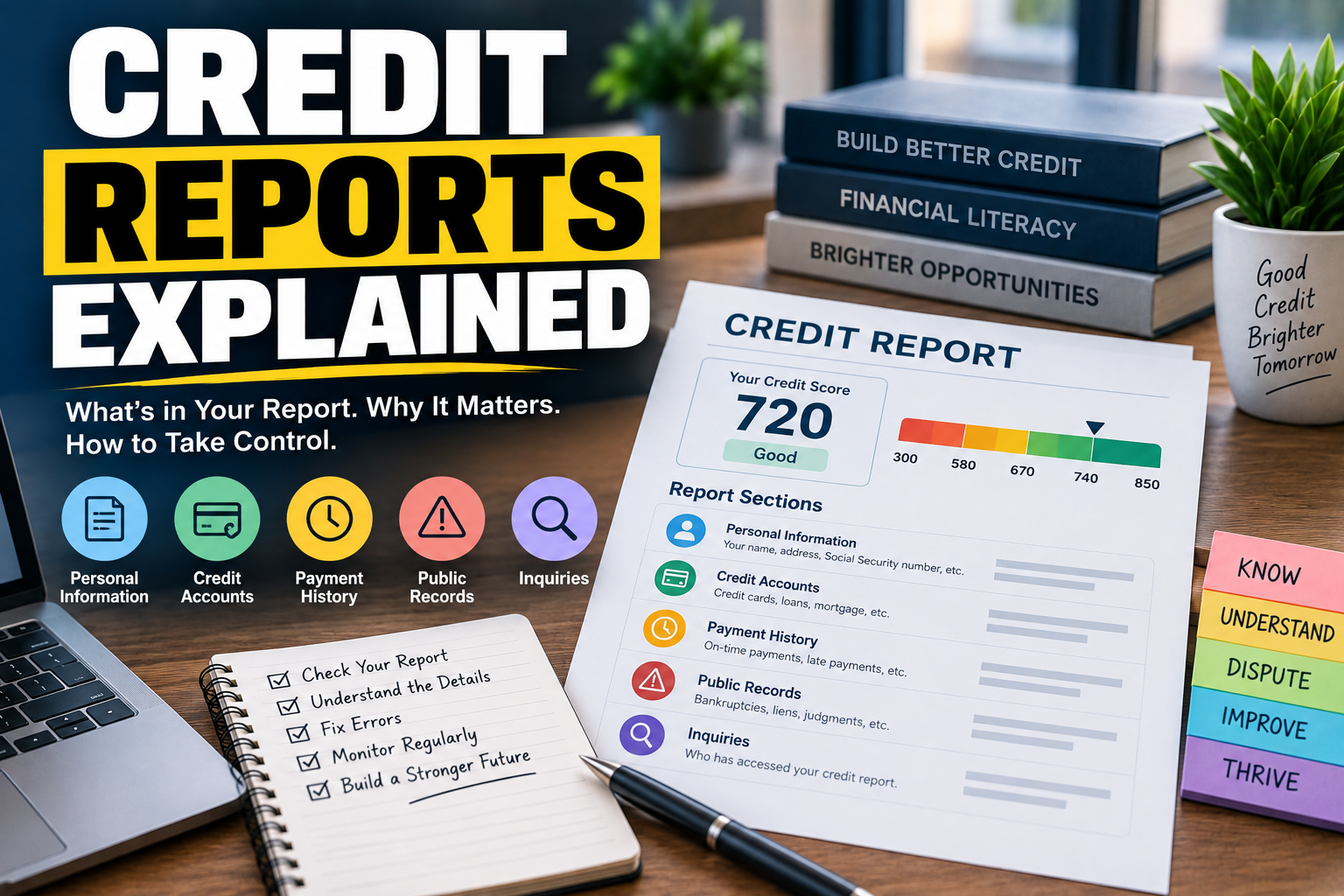
    Need Help Reviewing Your Credit After an Eviction or Collection?

    An eviction-related debt or collection account can be complicated, especially when you are unsure what is still being reported, whether the information is accurate, or how an old account may affect your future financial goals.

    A detailed credit report review can help you identify collection accounts, inaccurate reporting, outdated information, and potential issues that may deserve further investigation.

    Request a Credit Audit or Quote Today

  • Understanding Your Credit Report: A Line-by-Line Guide

    Most people’s first real look at their credit report happens at the worst possible time — after a loan denial, in the middle of a mortgage application, or after noticing a score drop they can’t explain. By then, you’re reading it under pressure, looking for one specific problem instead of actually understanding what you’re looking at, and it’s easy to either miss something real or mistake something completely normal for a crisis.

    Your credit report is not your credit score — it’s the underlying data the score gets calculated from. Learning to read it properly, before you need to, makes it much easier to catch a problem early and know exactly what you’re dealing with when something looks off. This is a walkthrough of exactly what’s in there, section by section, plus how to tell the difference between something that’s simply unfamiliar and something that’s actually wrong.

    The Four Sections of Every Credit Report

    Every credit report from Equifax, Experian, or TransUnion is organized the same basic way, even though the formatting differs between bureaus: personal information, account (tradeline) information, credit inquiries, and public records. Almost everything worth paying attention to lives in one of these four sections.

    Personal Information

    This section lists your name (and any variations or past names on file), current and past addresses, date of birth, and Social Security number. It sometimes includes employer information reported by creditors on past applications.

    This is a common place for small, mostly harmless errors to show up — a misspelled name, an old address you haven’t lived at in years, a former employer. Bureaus often keep years of address history on file rather than just your current one, so seeing several old addresses listed isn’t unusual on its own.

    It’s also where more serious problems surface: an address you never lived at, a name variation you never used, a birth date that’s off, or a Social Security number that doesn’t quite match yours can be early signs of a mixed credit file or identity theft, not just a clerical mistake. The distinction matters because the fix is different — a misspelled name is a quick correction, while an unfamiliar address tied to unfamiliar accounts is worth investigating as a potential mixed file or fraud case before you do anything else.

    Account (Tradeline) Information

    This is the core of your report — every credit account that’s ever been reported to that bureau, active or closed. For each account, you’ll typically see:

    • Creditor nameand account number (usually partially masked)
    • Account type— revolving (credit cards), installment (auto loans, personal loans, mortgages), or open (charge cards paid in full monthly)
    • Date openedand, if applicable, date closed
    • Credit limit or original loan amount
    • Current balanceand high balance (the highest balance ever reported on the account)
    • Payment status— current, or a specific delinquency stage (30, 60, 90, 120+ days past due)
    • Payment history grid— typically a 24-to-84-month, month-by-month record showing whether each payment was on time or how late it was
    • Account status— open, closed, paid, charged off, in collections, included in bankruptcy

    Accounts are further split into two categories worth understanding: accounts you opened yourself, and accounts where you’re an authorized user on someone else’s account. Authorized user accounts show up on your report and can help or hurt your score depending on how the primary account holder manages it, even though you’re not legally responsible for the debt.

    Reading the Payment History Grid

    The payment history grid is often the most confusing part of an account line for people reading their report for the first time, but it’s just a month-by-month record, usually laid out left to right or top to bottom across 24 to 84 months. Each month gets a single symbol or code: typically “OK” or a blank for on-time, and a number — 30, 60, 90, 120 — for how many days past due that month’s payment was when it was reported.

    A grid that’s entirely “OK” across its full length is what you want to see on every account. A single 30 buried years back in an otherwise clean grid is a minor, mostly forgotten blip. A recent 90 or 120, or several late marks clustered together, is a real problem actively affecting your score right now — and it’s worth checking your own records to confirm the date and amount actually match before assuming it’s accurate.

    Account Types, in Plain Terms

    Revolving accounts (credit cards, lines of credit) don’t have a fixed end date or fixed payment — you can carry a balance, pay it off, and use it again. Installment accounts (auto loans, personal loans, mortgages, student loans) have a fixed payment and a defined end date. This distinction matters because utilization — the 30% factor in your score — is calculated primarily from revolving accounts, not installment ones. A large mortgage balance doesn’t hurt your utilization ratio the way a maxed-out credit card does.

    What Each Account Status Actually Means

    Account status codes cause a lot of unnecessary panic, mostly because the terminology isn’t explained anywhere obvious. A quick glossary:

    • Current / Paid as Agreed— the account is in good standing, no issues.
    • 30 / 60 / 90 / 120 days past due— the account is currently late by that many days. These update as the account ages further past due, or reset to current once you catch up.
    • Charge-off— the original creditor has written the debt off as a loss for their own accounting purposes, typically after about 180 days of nonpayment. This does not mean the debt disappears or that you no longer owe it — it often gets sold to a collection agency afterward, and it’s one of the more damaging status codes on a report.
    • Collection— the debt has been transferred or sold to a collection agency, either by the original creditor or after a charge-off. It may now show up as two separate entries: the original account (often marked charged off or closed) and a new collection account.
    • Settled— you and the creditor agreed to resolve the debt for less than the full balance owed. This is better than an unresolved collection but still shows as a negative mark, distinct from paying the full amount.
    • Included in bankruptcy— the debt was discharged or addressed as part of a bankruptcy filing.

    Seeing the same debt as both a “charged off” original account and a separate “collection” entry is normal, not a duplicate error — that’s simply how the handoff from creditor to collector gets recorded. A genuine duplicate is when the same collection agency, for the same amount, appears twice.

    Credit Inquiries: Hard vs. Soft

    Every time someone pulls your credit, it’s logged as either a hard or soft inquiry.

    Hard inquiries happen when you apply for new credit — a card, a loan, a mortgage — and you’ve authorized a lender to check your file as part of a lending decision. These are visible to other lenders and can have a small, temporary effect on your score.

    Soft inquiries happen when you check your own credit, when a company checks your file for a pre-approved offer, or when an existing creditor reviews your account periodically. These never affect your score and aren’t visible to other lenders — they show up on your own report, but no one else pulling your file sees them.

    To make the distinction concrete: applying for a new credit card, a car loan, an apartment lease that requires a credit check, or a mortgage all generate hard inquiries. Checking your own score through a bank app, getting a “pre-qualified” offer in the mail, or a current credit card issuer doing a periodic account review are all soft inquiries, even though some of them still show up somewhere on your file.

    Hard inquiries typically stay visible on your report for two years, though their effect on your score fades well before that.

    Public Records

    This section has changed significantly in recent years. As of the National Consumer Assistance Plan reforms that took full effect by 2018, civil judgments and tax liens no longer appear on credit reports at all — the three bureaus removed them because that data often lacked enough identifying detail to reliably match to the right consumer. Bankruptcy is now essentially the only item that still appears here: Chapter 7 stays on your report for up to ten years from the filing date, and Chapter 13 for up to seven years — the shorter window for Chapter 13 reflects that it involves an actual repayment plan rather than a full liquidation.

    Within a bankruptcy filing, the individual accounts included in it are also separately marked “included in bankruptcy” in the account section, so the same event typically shows up in two places on your report: once as the public record itself, and again on each affected account.

    If you see a tax lien or civil judgment listed on a current report, that’s worth disputing on its own — it generally shouldn’t be there under the current reporting standards, regardless of whether the underlying debt is real.

    Why Your Three Reports Aren’t Identical

    Equifax, Experian, and TransUnion each maintain separate databases, and creditors choose which bureaus they report to — not all of them report to all three. That means your report from one bureau can show an account, a balance, or a payment status that’s slightly different, or entirely absent, from what another bureau shows. This is normal, but it’s also exactly why checking only one report can give you an incomplete picture, especially if you’re specifically trying to track down an error.

    How to Get Your Actual Reports

    All three bureaus provide free credit reports weekly through AnnualCreditReport.com — this became permanent policy in 2023 after starting as a temporary pandemic-era accommodation. This is the only site backed by federal law for this purpose; other “free credit report” sites often come with a subscription attached. Pulling all three regularly, rather than just one, is the only way to reliably catch a discrepancy between bureaus.

    Full Report vs. the Summary in Your Banking App

    Worth knowing: the free score-and-summary view built into most banking apps and credit monitoring services usually isn’t your full report. It typically shows your score, your account list, and maybe your utilization, but skips the full payment history grid, the complete inquiry list, and some of the detail a full report includes. That summary is genuinely useful for a quick monthly glance, but it’s not a substitute for periodically pulling the actual full report from AnnualCreditReport.com, especially when you’re specifically checking for errors rather than just watching your score trend over time.

    How to Read a Single Account Line, Step by Step

    Take one real example. Say you see a credit card account listed like this:

    ABC Bank — Account ending 4471 — Opened 03/2019 — Revolving — Credit limit $5,000 — Current balance $1,200 — High balance $3,800 — Payment status: Current — Payment history: 24 months, all on time

    Here’s what that tells you: you’ve had this card for several years (helping your length-of-history factor), you’re currently using 24% of your limit (a reasonable utilization ratio), you’ve used up to 76% of the limit at some point in the past, and every payment logged in the visible history window was on time. Nothing here is a red flag — this is what a healthy, unremarkable account looks like.

    Now compare it to a problem line: account status: 90 days past due, current balance $2,100, credit limit $500 — a balance far exceeding the limit combined with a serious delinquency status is the kind of entry worth examining closely, both for accuracy and for what it’s doing to your score.

    How Common Are Actual Errors?

    More common than most people assume. A widely cited FTC study found that roughly one in five consumers had a confirmed error on at least one of their three credit reports, and about one in twenty had an error serious enough to potentially affect their loan terms. That’s not a reason for alarm every time you check, but it’s a reasonable argument for actually looking rather than assuming your file is fine because you’ve never had a problem.

    Most errors are mundane — a payment marked late that was actually on time, an account that should have aged off but hasn’t, a balance that wasn’t updated after a payment posted. The identity-theft and mixed-file cases are less common but more serious, which is exactly why it’s worth knowing the difference between “this is wrong” and “this isn’t mine at all” before you dispute anything.

    Red Flags Worth Specifically Looking For

    • An account you don’t recognize at all.Not “I forgot about this,” but genuinely unfamiliar — a sign of identity theft or a mixed credit file.
    • A balance that doesn’t match your own records, especially one showing higher than what you know you owe.
    • A closed or paid account still showing an open balance.
    • The same collection agency and debt amount listed more than once.A charged-off original account followed by one collection entry is normal — see the status glossary above. The same collection entry duplicated is not.
    • A hard inquiry you don’t remember authorizing.A single unfamiliar inquiry is common and often explainable (a retail card application you forgot about); several from companies you’ve never heard of, clustered together, is worth investigating.
    • Personal information that isn’t yours— an address, a name spelling, or partial SSN mismatch.
    • An account marked “charged off” that you’re certain you paid before it ever reached that stage.
    • A collection amount that’s higher than what you remember owing, which sometimes happens when a collector adds interest or fees that weren’t part of the original agreement, not always legitimately.

    How Often Should You Actually Check?

    Given that all three bureaus offer free weekly access, there’s little downside to checking more often than the bare minimum. A reasonable middle ground for most people is monthly — often enough to catch a new error or fraudulent account quickly, without becoming a chore. Checking right before any major application (a mortgage, a big auto loan) is worth doing regardless of your regular schedule, since it gives you time to fix a problem before a lender sees it.

    What to Do If You Find Something Wrong

    Once you’ve actually identified a specific, real error — not just something you don’t love seeing, but something factually inaccurate, outdated, or not yours — the next step is a formal dispute with the bureau reporting it. Our guide to 609 dispute letters and how the dispute process actually works walks through exactly how to write one that gets results, what happens after you send it, and what your options are if the bureau verifies the item anyway.

    Frequently Asked Questions

    Does looking at my own credit report hurt my score?

    No. Checking your own report or score is always a soft inquiry, and soft inquiries never affect your score, regardless of how often you check.

    Why does my report show accounts I already paid off?

    Paid and closed accounts stay on your report for years after they’re settled — generally up to ten years for accounts in good standing, and around seven years for most negative accounts from the date of the original delinquency. This is normal and expected, not an error.

    Is my credit report the same as my credit score?

    No. Your report is the raw data — accounts, payment history, inquiries, public records. Your score is a number calculated from that data using one of several scoring formulas. You can request your report for free; your score sometimes costs money depending on where you get it, though many banks and card issuers now provide one for free.

    Can an employer see my full credit report?

    With your written authorization, employers can see a modified version for employment purposes, but it excludes your actual score and some of the detail a lender would see. Employers cannot pull your report without your consent.

    How long does it take for a new account to show up on my report?

    Usually 30 to 45 days after you open it, since creditors typically report to the bureaus once per billing cycle rather than in real time.

    What if two of my three reports show different information?

    That’s common rather than alarming on its own, given that bureaus maintain separate databases. But if the difference involves a balance, a payment status, or an account you don’t recognize, it’s worth disputing with whichever bureau has the inaccurate version specifically.

    Do rent and utility payments show up on my report?

    Usually not, unless you’ve specifically enrolled in a rent-reporting service or your landlord uses one. A rental debt sent to an actual collection agency, though, can appear on your report the same way any other collection would.

    Why does my report list an account as “closed” when I still use the card?

    This almost always means the account was closed by either you or the issuer at some point — sometimes a card gets reissued under a new account number after a security incident, fraud alert, or product change, which shows on your report as one account closing and a new one opening, even though it feels like the same card to you.

    The Bottom Line

    Your credit report is just data — four sections, a consistent structure, and nothing in it that requires special expertise to read once you know what each part means. The real value in checking it regularly isn’t paranoia about fraud, though that matters too; it’s catching small, fixable problems while they’re still small, instead of discovering them at the worst possible moment.

    If something in your report looks wrong once you know what to look for, reach out for a free consultation and we’ll help you figure out exactly what’s worth disputing and what’s simply normal.

  • Rebuilding Credit After a Financial Setback: Your Complete Recovery Guide

    A financial setback can shake more than your bank account. It can leave your credit score bruised, your confidence rattled, and your future feeling uncertain. Maybe you lost a job, faced a costly divorce, drowned in medical bills, or watched a few missed payments snowball into collections. Whatever happened, rebuilding credit after a financial setback is absolutely possible—and you’re not starting from zero.

    Here’s the truth too few people hear: credit is designed to recover. Negative marks fade. Positive habits build back up. With a clear plan and a little patience, you can rebuild your score and reclaim your financial footing, often faster than you’d expect.

    This guide walks you through every step in plain, honest language. You’ll learn what happens to your credit after a setback, how to check your reports for damage, how to fix errors, and how to prioritize payments when money is tight. We’ll also cover proven tools like secured cards and credit-builder loans, realistic recovery timelines, and how to protect yourself from future stumbles.

    Let’s begin the climb back up.

    What You’ll Learn in This Guide

    • What actually happens to your credit after a financial setback
    • How to check your credit reports for the full picture of the damage
    • How to spot and dispute errors that may be dragging you down
    • How to prioritize payments when your budget is stretched thin
    • How to build a realistic, step-by-step recovery plan
    • How secured cards and credit-builder tools speed up your comeback
    • How long credit recovery really takes for different setbacks
    • How to avoid repeating the same mistakes down the road

    Read straight through, or jump to the section you need most right now.

    What Happens to Your Credit After a Financial Setback?

    Before you can rebuild, it helps to understand what actually broke. A financial setback rarely damages your credit in one clean hit. Instead, it usually creates a chain reaction that shows up across several parts of your credit profile.

    When money gets tight, payments often slip first. Then balances climb as you lean on credit cards to cover essentials. If things worsen, accounts may fall into collections, get charged off, or lead to more serious events like bankruptcy. Each of these lands differently on your credit report.

    How Different Setbacks Affect Your Score

    Not every hardship hits your credit the same way. Here’s how some of the most common setbacks tend to play out.

    Job loss. Losing income doesn’t directly lower your score. What hurts is what often follows—missed payments and rising credit card balances as you stretch to cover bills. The damage depends on how long the gap lasts and how you manage credit during it.

    Divorce. Divorce itself isn’t reported to credit bureaus, but joint accounts can cause real trouble. If an ex stops paying on a shared card or loan, both parties can take the hit. Untangling joint debts quickly is key.

    Medical debt. Medical bills work differently from other debts. Many won’t appear on your credit report right away, and paid medical collections generally don’t count against you anymore. Still, unpaid medical debt that reaches collections can lower your score.

    Missed payments. Payment history is the single biggest factor in your score, so even one payment that’s 30 days late can cause a noticeable drop. The later the payment, the bigger the hit.

    Collections. When you fall far enough behind, a creditor may hand your debt to a collection agency. A collection account can drag on your score for years, though its weight fades over time.

    Charge-offs. If a creditor gives up on collecting a debt, they may “charge it off” as a loss. This is a serious negative mark, but it doesn’t erase what you owe.

    Bankruptcy. Bankruptcy is the heaviest setback of all. It can lower your score significantly and stay on your report for years. Even so, many people rebuild solid credit within a few years of filing.

    The Silver Lining

    Here’s the encouraging part. Every negative mark loses power as it ages. A missed payment from three years ago matters far less than one from last month. Meanwhile, every positive step you take—an on-time payment, a lower balance—starts building fresh, healthy history.

    Your credit report is a living record, not a permanent verdict. That means you hold real power to change it.

    Step 1: Check Your Credit Reports for the Full Picture

    You can’t fix what you can’t see. The first move in any recovery is to pull your credit reports and understand exactly where you stand. Think of it as taking inventory before you start rebuilding.

    You have three credit reports, one from each major bureau:

    • Equifax
    • Experian
    • TransUnion

    Each bureau may hold slightly different information, so it pays to review all three. A missed payment might appear on one report but not another. A collection account could show up in different forms.

    How to Get Your Reports for Free

    You’re legally entitled to free copies of your credit reports. The official, federally authorized source is AnnualCreditReport.com. Many services now offer free weekly access, so there’s no reason to go without.

    Pull all three reports and read them side by side. This gives you the clearest view of the total damage and helps you spot inconsistencies between bureaus.

    What to Look For

    As you review each report, take notes on the following:

    • Late or missed payments, and how far behind each account fell
    • Collection accounts, including the original creditor and current balance
    • Charge-offsand the dates they occurred
    • Credit utilization, meaning how much of your available credit you’re using
    • Public records, such as bankruptcies
    • Hard inquiriesyou may not recognize

    Make a simple list of every negative item and its date. This becomes your roadmap. Once you can see the full picture, the path forward gets a lot clearer.

    An unfamiliar account or an inquiry you don’t remember authorizing can be an early warning sign of identity theft. If something looks off, verify the details through a trusted, secure source so you can act quickly and protect the progress you’re about to make.

    Step 2: Dispute Errors That May Be Dragging You Down

    Credit report errors are more common than most people realize, and after a chaotic financial period, mistakes are especially likely. An account might be reported twice, a paid debt could still show a balance, or a collection might belong to someone else entirely.

    These errors can cost you real points. The good news is that you have the right to dispute anything inaccurate, and it costs nothing to do so.

    Common Errors to Watch For

    Keep an eye out for these frequent mistakes:

    • Accounts that don’t belong to you
    • Payments marked late that you actually paid on time
    • Duplicate accounts listed more than once
    • Debts still showing a balance after you paid them off
    • Collection accounts past the reporting time limit
    • Incorrect balances, credit limits, or account statuses
    • Someone else’s information mixed into your file

    How to Dispute an Error, Step by Step

    Fixing a mistake follows a clear process. Here’s how to do it right.

    Step 1: Gather your evidence. Collect anything that proves the error, such as bank statements, payment confirmations, or letters from creditors.

    Step 2: File your dispute. Submit it to the credit bureau reporting the error. You can dispute online, by phone, or by mail. Mailing with tracking gives you a paper trail, which many people prefer.

    Step 3: Explain the problem clearly. State exactly what’s wrong and what the correct information should be. Attach copies of your evidence—never send originals.

    Step 4: Wait for the investigation. The bureau generally has 30 days to investigate and respond. It will contact the company that reported the information to verify it.

    Step 5: Review the results. If the bureau agrees, it will correct or remove the item. Request an updated copy of your report to confirm the fix landed.

    Removing even one wrongful negative mark can lift your score quickly. It’s often the fastest win available in the whole recovery process, so start here.

    Step 3: Prioritize Your Payments When Money Is Tight

    After a setback, you may not have enough to cover everything at once. That’s a hard reality, but a smart payment strategy can protect your credit while you get back on your feet. The goal is to make every dollar count.

    Cover the Essentials First

    Before anything else, protect your basic needs: housing, utilities, food, and transportation to work. A high credit score means little if you can’t keep a roof over your head. Stabilize your life first, then focus on rebuilding.

    Get Current on Existing Accounts

    Once essentials are covered, aim to bring past-due accounts current. Here’s why this matters so much. An account that’s 30 days late hurts, but one that’s 90 or 120 days late hurts far more. Stopping the slide protects you from deeper damage.

    If you can’t pay everything, prioritize in this order:

    1. Accounts closest to falling further behind.Catching a 60-day-late account before it hits 90 days prevents a bigger hit.
    2. Accounts you use and want to keep, like a primary credit card or car loan.
    3. Older collection accounts, which you can address once current accounts are stable.

    Talk to Your Creditors

    Many people don’t realize how willing creditors can be to work with you. If you’re struggling, call them before you fall behind. You may be able to arrange:

    • A temporary lower payment
    • A hardship program
    • A modified due date that fits your pay schedule
    • A pause on payments for a short period

    Creditors often prefer a partial payment over none at all. A simple phone call can prevent a late mark and buy you breathing room.

    Step 4: Build a Realistic Credit Recovery Plan

    With your reports reviewed, errors disputed, and payments prioritized, it’s time to build a plan you can actually follow. Recovery isn’t about one dramatic move. It’s about steady, repeatable habits that compound over time.

    Here’s a practical framework to guide the months ahead.

    Focus on the Two Biggest Factors First

    Your credit score responds most to two things:

    • Payment history, which makes up roughly 35% of your score
    • Credit utilization, meaning how much of your available credit you use, which makes up about 30%

    Nail these two, and you address nearly two-thirds of what drives your score. Everything else is secondary.

    Automate Your On-Time Payments

    Since payment history carries the most weight, protecting it is your top priority. Set up automatic payments or calendar reminders so nothing slips through the cracks again. Even the minimum payment, made on time, keeps your history clean.

    One clean stretch of on-time payments builds momentum fast. Six months of perfect payments can meaningfully shift your score in the right direction.

    Lower Your Credit Utilization

    If your cards are close to maxed out, your score takes a hit. Aim to get your utilization below 30% of your available credit, then keep pushing lower. A few ways to get there:

    • Pay more than the minimum whenever you can
    • Make a second payment mid-month to reduce your reported balance
    • Ask for a credit limit increase without increasing your spending
    • Avoid adding new charges while you pay down existing balances

    Tackle Debt With a Clear Method

    If you’re carrying balances across several accounts, pick a payoff strategy and stick with it:

    • The avalanche methodtargets your highest-interest debt first, saving you the most money over time.
    • The snowball methodtargets your smallest balance first, giving you quick wins that keep you motivated.

    Both work. Choose the one that fits your personality. The best plan is the one you’ll actually follow.

    Set Milestones You Can Measure

    Recovery feels less overwhelming when you break it into checkpoints. For example:

    • Month 1:Reports pulled, errors disputed, autopay set up
    • Months 2–3:Past-due accounts brought current, utilization dropping
    • Months 4–6:On-time streak building, balances shrinking
    • Months 7–12:Score climbing, new positive history taking root

    Celebrate each milestone. Progress fuels persistence.

    Step 5: Use Secured Cards and Credit-Builder Tools

    Sometimes a setback leaves you with limited access to traditional credit. That’s where rebuilding tools come in. These products are designed specifically to help you establish fresh, positive history, even when your score is low.

    Secured Credit Cards

    A secured credit card works almost exactly like a regular credit card, with one key difference. You put down a refundable deposit, which usually becomes your credit limit. That deposit lowers the lender’s risk, making approval far easier after a setback.

    Here’s how to use one wisely:

    • Make small purchases you can pay off in full
    • Keep your balance low relative to your limit
    • Pay on time, every time
    • Choose a card that reports to all three credit bureaus

    Over time, responsible use builds positive payment history. Many secured cards eventually convert to unsecured cards or return your deposit once you’ve proven yourself.

    Credit-Builder Loans

    A credit-builder loan flips the usual loan process. Instead of getting money upfront, you make fixed payments into an account, and the lender releases the funds to you at the end. Each on-time payment gets reported to the bureaus, building your history.

    These loans are ideal if you want to establish a positive payment record without the temptation of spending. They’re often available through credit unions and community banks.

    Becoming an Authorized User

    If you have a trusted family member with strong credit, ask whether they’ll add you as an authorized user on their credit card. Their positive history can appear on your report, giving your score a helpful boost. You don’t even need to use the card—just being on the account can help.

    Report Rent and Utility Payments

    You already pay rent and utilities. Why not get credit for them? Some services let you add these regular payments to your credit file. Since you’re paying them anyway, this is a low-effort way to build positive history.

    How Long Does Credit Recovery Take?

    This is the question on everyone’s mind: how long until things feel normal again? The honest answer is that it depends on what happened and how consistently you rebuild. But here’s the reassuring part—you’ll likely see progress much sooner than full recovery.

    A General Timeline

    While every situation differs, here’s a realistic sense of how long negative items and recovery tend to take.

    Setback Typical Recovery Path How Long the Mark Lingers
    A single missed payment Score often recovers within a few months to a year of consistent on-time payments Up to 7 years, though impact fades quickly
    Multiple late payments 1 to 2 years of steady habits to rebuild trust Up to 7 years each
    Collections 1 to 2 years to rebuild while the mark ages Up to 7 years
    Charge-offs 1 to 2 years of positive history to offset it Up to 7 years
    Bankruptcy Many people rebuild fair-to-good credit within 2 to 4 years 7 to 10 years


    Why You’ll See Progress Early

    Your credit score weighs recent activity heavily. That’s great news during a rebuild. As you stack up on-time payments and lower your balances, your score responds—often within a few months, well before old negative marks disappear.

    So even while a collection or charge-off waits out its seven-year timeline, your fresh positive habits actively push your score higher. Time and effort work together in your favor.

    Manage Your Expectations

    Recovery is rarely a straight line. Some months your score jumps, others it barely moves. That’s normal. What matters is the overall trend. Stay consistent, keep your eyes on the long game, and trust the process. Small steady steps beat dramatic short-lived efforts every time.

    Mistakes to Avoid While Rebuilding Your Credit

    The road back has a few potholes. Knowing them ahead of time helps you steer clear and keep your momentum going.

    Closing Old Credit Cards

    It feels responsible to close accounts you’re not using, but it can backfire. Closing a card lowers your total available credit, which can spike your utilization ratio. It also shortens your credit history. Keep old accounts open, even ones you rarely touch.

    Applying for Too Much Credit at Once

    Each credit application triggers a hard inquiry, which can ding your score slightly. Several applications in a short window signals risk to lenders. Apply only for credit you genuinely need, and space out your applications.

    Ignoring Small Balances

    A tiny forgotten balance can still trigger a late payment if you miss it. And a late payment does real damage no matter how small the amount. Track every account, even the ones with minimal balances.

    Falling for “Quick Fix” Scams

    Be wary of anyone promising to erase accurate negative information overnight for a hefty fee. Legitimate negative marks can’t simply be deleted before their time. You can dispute genuine errors yourself for free, so protect your money and your personal information from questionable services.

    Draining Your Emergency Fund

    It’s tempting to throw every dollar at your debt. But wiping out your savings leaves you exposed to the next surprise expense, which could push you right back into the cycle. Keep a small cushion while you rebuild.

    Giving Up Too Soon

    Many people quit right before the momentum kicks in. Rebuilding takes patience, and the early weeks can feel slow. Stick with it. The compounding effect of good habits rewards those who stay the course.

    How to Avoid Future Financial Setbacks

    Rebuilding your credit is a huge accomplishment. Protecting that progress is the next goal. A few smart habits can shield you from the shocks that knocked you down before.

    Build an Emergency Fund

    An emergency fund is your first line of defense. Even a modest cushion can keep a surprise expense from becoming a credit disaster. Start small—aim for $1,000, then work toward three to six months of expenses over time. Automating a small transfer each payday makes it painless.

    Monitor Your Credit Regularly

    Keeping an eye on your credit helps you catch problems early, whether it’s an error, a missed payment, or a sign of identity theft. Checking your own credit is a soft inquiry, so it never hurts your score. Make it a monthly habit.

    This is also where a reliable public records and personal information search can add peace of mind. If you ever spot an unfamiliar account or suspect someone is using your identity, being able to verify details quickly and securely helps you act fast and protect what you’ve rebuilt.

    Live Below Your Means

    The simplest protection is spending less than you earn. Build a realistic budget, track where your money goes, and give every dollar a job. A little breathing room in your budget absorbs the small shocks before they grow.

    Keep Credit Utilization Low

    Now that you’ve rebuilt, don’t slide back into maxed-out cards. Keeping your balances low protects both your score and your financial flexibility. Treat your available credit as a safety net, not a spending limit.

    Stay Insured

    The right insurance—health, auto, renters, or homeowners—can stop a single emergency from wrecking your finances. Medical debt and unexpected disasters are among the most common triggers for financial setbacks. Good coverage keeps them from spiraling.

    Keep Learning

    Financial confidence grows with knowledge. The more you understand about how credit, budgeting, and saving work, the better equipped you’ll be to make smart decisions. Small ongoing learning pays off for years.

    A Sample Recovery Journey

    Let’s tie it all together with a realistic example.

    Meet Sam, who lost a job and fell behind on several bills over six months. Two credit cards went 90 days late, and one small debt slipped into collections. Sam’s score dropped sharply, and it felt overwhelming. Here’s how Sam turned it around.

    1. Pulled all three credit reportsand found a duplicate collection account. Sam disputed it, and its removal lifted the score a few points.
    2. Called both credit card companiesand arranged temporary lower payments through a hardship program, stopping the accounts from falling further behind.
    3. Set up autopayon every account so no payment would ever slip again.
    4. Opened a secured credit cardwith a small deposit, using it only for a monthly subscription paid off in full each cycle.
    5. Paid down balancessteadily, dropping utilization from 80% to under 30% over five months.
    6. Built a starter emergency fundof $1,000 to guard against the next surprise.

    Within a year, Sam’s score had climbed meaningfully, the collection was on its way to aging off, and the panic had turned into a sense of control. The setback was real, but so was the comeback.

    Your path may look different, but the principle holds: steady, informed action rebuilds both your credit and your confidence.

    Frequently Asked Questions

    How long does it take to rebuild credit after a financial setback?
    It depends on what happened. A single missed payment may bounce back within a few months to a year of on-time payments. Deeper setbacks like collections or bankruptcy often take one to four years of steady effort. The good news is you’ll usually see progress well before negative marks fully fade.

    Can I rebuild my credit after a job loss?
    Yes. Job loss doesn’t directly lower your score, but the missed payments and rising balances that often follow can. Focus on bringing accounts current, keeping utilization low, and paying on time once your income stabilizes. Consistent habits rebuild trust faster than you’d expect.

    How does divorce affect my credit, and how do I recover?
    Divorce itself isn’t reported to credit bureaus, but shared accounts can cause damage if an ex stops paying. Separate or close joint accounts quickly, then monitor your reports for missed payments. Recovery comes from taking full control of accounts in your name and paying them on time.

    Does medical debt hurt my credit score?
    Sometimes. Many medical bills won’t appear on your report right away, and paid medical collections generally no longer count against you. Unpaid medical debt that reaches collections can lower your score, so address it before it escalates or dispute it if the details look wrong.

    Will paying off a collection or charge-off remove it from my report?
    Not always. The account usually stays but updates to “paid,” which looks better to lenders than an unpaid balance. Some newer scoring models also give less weight to paid collections, so paying it off still helps your recovery.

    Can I rebuild credit while collections are still on my report?
    Yes. You don’t have to wait for negative items to disappear before rebuilding. Adding fresh positive history through on-time payments and low balances can lift your score even as older marks age off in the background.

    How much should I lower my credit utilization to rebuild faster?
    Aim to keep your balances below 30% of your available credit, and lower is even better. Since utilization makes up roughly 30% of your score, paying down balances is one of the quickest ways to see improvement, often within a billing cycle or two.

    Are secured credit cards a good way to rebuild credit?
    Yes, for many people. A secured card lets you build positive payment history even with a low score, using a refundable deposit as your limit. Choose one that reports to all three bureaus, keep your balance low, and pay on time every month.

    Can I rebuild my credit after bankruptcy?
    Absolutely. Bankruptcy is a serious mark, but it’s not permanent. Many people rebuild fair-to-good credit within two to four years by using secured cards, making on-time payments, and keeping balances low. Steady habits matter more than a single setback.

    What’s the fastest way to start rebuilding after a setback?
    Start by pulling all three credit reports and disputing any errors you spot, since removing a wrong negative mark can lift your score quickly. Then set up automatic payments and pay down balances. These two moves address the biggest factors in your score.

    Final Thoughts: Your Comeback Starts Now

    A financial setback can feel like the end of your financial story. It isn’t. It’s a chapter—and the next one is yours to write. Credit is built to recover, and with a clear plan, you can rebuild yours steadily and confidently.

    Here’s your simple action plan:

    • Check all three credit reportsand dispute any errors you find.
    • Prioritize your paymentsto protect the essentials and stop the slide.
    • Set up autopayand lower your credit utilization.
    • Use secured cards and credit-builder toolsto add fresh positive history.
    • Build an emergency fundand monitor your credit to prevent future setbacks.

    Remember, time is on your side. Negative marks fade, positive habits compound, and every small step moves you forward. You have more control than the setback made you feel—so take that first step today. Your comeback is already underway.

  • How Secured Credit Cards Work (and How to Use One to Build Credit)

    If your credit is thin, damaged, or nonexistent, a secured credit card is usually the first thing anyone recommends. What gets skipped over is why it works and how to actually use one so it helps rather than just sits in your wallet, quietly building nothing while you pay an annual fee for it. This is a mechanics-and-strategy guide, not a list of card picks — for specific recommendations, see our best secured credit cards roundup. Here, the focus is on understanding exactly what you’re signing up for and how to get the most out of it, whether you’re starting from zero or rebuilding after damage.

    What a Secured Credit Card Actually Is

    A secured credit card works like a normal credit card in every way that matters for your credit report — you get a card, you make purchases, you get a statement, you pay it off. The difference is what backs it: you put down a cash deposit when you open the account, and that deposit is what makes the issuer comfortable extending you credit despite little or no track record.

    It’s not a prepaid card, even though the two get confused constantly. A prepaid card just spends money you’ve already loaded onto it and generally isn’t reported to the credit bureaus at all, since there’s no credit being extended. A secured card is real, reported credit — you’re borrowing against a line the issuer opens for you, and your deposit exists purely as their collateral if you don’t pay.

    How the Deposit Actually Works

    Your deposit typically becomes your credit limit, most often dollar-for-dollar: put down $300, get a $300 limit. Minimums vary a lot by issuer — some start under $50, well-known cards often sit in the $200–$500 range, and a few allow much larger deposits for a correspondingly higher limit.

    The deposit isn’t a fee. It sits with the issuer, usually earning little or no interest, and you get it back under normal circumstances — when you close the account in good standing, or when the issuer upgrades you to an unsecured card and releases the collateral. The one scenario where you don’t get it back is if you default: the issuer can apply the deposit against what you owe.

    How It Actually Builds Credit

    The deposit is just what gets you approved. What builds your credit is everything that happens after: the issuer reports your account activity to the credit bureaus every month, exactly like any unsecured card would.

    That reporting is what matters for your score:

    • Payment history— the single biggest factor in most credit scoring models. Paying on time, every time, is what actually builds the track record you’re missing.
    • Credit utilization— how much of your limit you’re using. A secured card gives you a limit to manage utilization against, which is a factor entirely absent from a file with no open credit.
    • Account age— over time, the account itself becomes part of your credit history length, which is why it’s often worth keeping the oldest account open even after you no longer need it as your primary card.

    None of this is automatic. A secured card that sits unused, or gets carried with a high balance, builds credit slowly or not at all. The card is a tool for generating positive payment history — it doesn’t do that on its own.

    Secured vs. Unsecured: What’s Actually Different (Besides the Deposit)

    Almost nothing, from the bureaus’ perspective. Your credit report doesn’t display a card as “secured” in a way that penalizes you — a well-managed secured card looks like any other positive tradeline. The differences that actually matter are practical, not reported:

    • Secured cards often carry an annual fee more frequently than comparable unsecured cards.
    • Credit limits tend to be lower, since they’re tied to what you can afford to deposit.
    • Rewards, if offered at all, are typically thinner than unsecured competitors.
    • Approval odds are much higher, since the deposit removes most of the issuer’s risk.

    None of this affects your score directly. It affects your day-to-day experience using the card.

    What to Check Before You Apply

    Not all secured cards are built the same, and a few details matter more than the marketing:

    • Does it report to all three bureaus?Some issuers only report to one or two. If your goal is building credit broadly, this is the single most important thing to confirm before applying — a card that doesn’t report is doing nothing for your file no matter how well you use it.
    • Is there a path to graduate to unsecured?Many issuers will review your account after 6–12 months of on-time payments and offer to convert it, refunding your deposit while you keep the account and its history open. Not every issuer offers this.
    • What’s the annual fee, and is it worth it relative to alternatives?Some secured cards charge $0, others charge $35–$50 or more. Weigh this against how long you expect to need the card.
    • What’s the minimum deposit, and can you afford to have it tied up?The money isn’t gone, but it isn’t liquid either while the account is open.
    • Does it charge a monthly maintenance fee on top of an annual fee?A subset of secured cards do, which meaningfully changes the cost of building credit this way.
    • What’s the interest rate?Secured cards commonly carry higher APRs than unsecured cards aimed at the same starting point, which matters if you ever carry a balance — another reason paying in full each month matters more here than it might on a card with a lower rate.
    • Can your limit increase without an additional deposit?Some issuers will raise your limit after a track record of on-time payments without requiring more collateral; others only increase your limit if you add to your deposit. This affects how useful the card becomes over time.
    • Bank or credit union?Credit unions frequently offer more favorable secured card terms than large national banks — lower APRs, lower or no annual fees, and sometimes more flexible deposit minimums — though membership eligibility requirements vary and aren’t universal.

    Applying for a Secured Card: What to Expect

    The application itself looks like any other credit card application: identifying information, Social Security number, and sometimes income information, even though the deposit is doing most of the work of getting you approved.

    Some issuers use a soft credit pull to pre-qualify you, which doesn’t affect your score, before a hard pull on the actual application, which does. If you’re concerned about inquiries on a thin file, it’s worth checking which type of pull an issuer uses before applying, since a small number offer guaranteed approval with only a soft pull.

    Approval is typically fast — often instant or within a few business days — and once approved, you’ll fund the deposit (commonly by bank transfer) before the physical card is issued. Your deposit sits in an account that’s generally FDIC-insured (or NCUA-insured, for a credit union) the same as any other bank deposit, up to the standard insurance limits, which is a common and reasonable question people have before handing over cash to a card issuer.

    Does Opening One Hurt Your Score at First?

    A hard inquiry from the application typically causes a small, temporary dip — often just a few points — regardless of what type of card you’re applying for. On a completely empty file, this can look more noticeable simply because there’s nothing else in your report to offset it yet.

    That dip is short-lived and minor compared to what the account itself does for you over the following months. A new account can also slightly lower your average account age if it’s your only or oldest account, which is why opening several credit products at once tends to work against you more than opening one secured card on its own. In practice, the modest, temporary cost of one application is a reasonable trade for months of positive payment history afterward.

    How to Actually Use One to Build Credit

    Set up autopay for at least the minimum, ideally the full statement balance. A single missed payment does more damage to a thin file than several months of good payments help. Automating this removes the most common way people undermine the card’s whole purpose.

    Keep utilization low — ideally under 30%, and lower is generally better. On a $300 limit, that means keeping your reported balance under roughly $90 at any given statement date. Since utilization is calculated from whatever balance is reported on your statement closing date, not what you owe today, it’s worth paying down your balance before that date if you’ve been carrying a higher one.

    Use it for small, predictable purchases you’d make anyway. A recurring subscription or a regular gas fill-up works well — enough activity to generate a payment history, not so much that you risk carrying a balance you can’t clear.

    Don’t apply for several credit products at once while building this history. Each hard inquiry has a small, temporary impact, and a thin file is more sensitive to that impact than an established one.

    Check your reports periodically to confirm the account is actually being reported. Errors happen, and catching a reporting gap early is easier to fix than discovering it a year later when you’re applying for something that matters.

    Give it time before judging whether it’s “working.” Credit scoring models need a track record, not a single good month, so resist the urge to check obsessively in the first few weeks.

    Thin File vs. Rebuilding: Does It Matter Which One You Are?

    Secured cards get recommended for two fairly different situations, and it’s worth knowing which one you’re actually in.

    If you have no credit history at all — a thin file, often true for young adults, recent immigrants, or anyone who’s simply never used credit — a secured card’s job is straightforward: generate the first positive history your file needs. There’s usually nothing else to fix, just time and consistent use.

    If you’re rebuilding after damage — collections, missed payments, a bankruptcy, or a period of financial hardship — a secured card is still useful, but it’s typically one piece of a larger picture rather than the whole solution. New positive history helps, but it’s working alongside whatever negative items are still aging off your report. In this situation, it’s worth pairing a secured card with addressing the negative items directly, whether that’s disputing genuine errors or working through collections, rather than treating the card alone as a fix.

    Graduating to an Unsecured Card

    If your issuer offers an upgrade path, it typically works one of two ways: an automatic review after a set number of months of on-time payments, or an application you initiate yourself once you feel ready. Either way, a successful graduation usually means your account converts to unsecured, your deposit is refunded, and — importantly — the account itself stays open, keeping its full history intact rather than starting a new, younger tradeline.

    If your issuer doesn’t offer graduation, the alternative is simply applying for a separate unsecured card once your score has improved enough, and deciding at that point whether to keep the secured card open (for the account age) or close it and get your deposit back.

    It’s worth asking directly, even if graduation isn’t advertised. Some issuers review accounts for upgrade internally without publicizing the criteria, and a phone call after six months to a year of perfect payment history costs you nothing to ask about. If they decline, you haven’t lost anything, and you can revisit the question again later.

    Common Mistakes

    • Letting the card sit unused.No activity means nothing to report, which means no credit-building benefit from a card you’re already paying an annual fee on.
    • Maxing it out.A $300 limit used at $280 reports a utilization ratio that actively hurts your score, even if you pay it off in full every month — utilization is calculated from your statement balance, not your habit of paying it off.
    • Applying for a card that doesn’t report to any bureau.This happens more than people expect, particularly with less mainstream issuers. Confirm this before applying, not after.
    • Assuming the deposit is a fee.Treating it as money you’ve spent, rather than collateral you’ll get back, leads people to either avoid secured cards unnecessarily or pick a much larger deposit than they’re comfortable tying up.
    • Closing the account the moment you’re approved for something better.This can shorten your credit history and shift your utilization math across your remaining cards. It’s not always the wrong move, but it’s worth doing deliberately rather than reflexively.
    • Picking the card with the flashiest rewards instead of the one that actually reports to all three bureaus.A secured card’s entire value, at this stage, is what it does for your credit file — a rewards program you can barely use on a low limit is a secondary consideration at best.

    Secured Cards vs. Other Credit-Building Tools

    A secured card isn’t the only way to build a file from thin or damaged credit, and it’s often used alongside these rather than instead of them:

    • Credit-builder loanswork in the opposite direction — you make payments into a locked account first and receive the funds at the end, with payments reported the whole time. Our Self Credit Builder review covers how one popular version of this actually works.
    • Becoming an authorized useron someone else’s well-managed card can add positive history to your file without a deposit or application of your own, though it depends entirely on the primary cardholder’s habits and whether their issuer reports authorized users to the bureaus.
    • Retail or store cardssometimes approve thinner files than general-purpose cards, though usually with lower limits, higher interest rates, and rewards only useful at one retailer.

    These aren’t mutually exclusive. A secured card plus one of these often builds a file faster than either alone, mainly because you end up with more than one reporting tradeline.

    How Long Until Your Score Is Actually Good?

    There’s a real difference between getting a score at all and getting a good one, and it’s worth setting expectations for both separately.

    Getting your first score typically takes a few months of a reporting account, as covered below. Getting to a conventionally “good” score — roughly 670 and up on the common 300–850 scales — usually takes considerably longer: often somewhere in the range of one to two years of consistent on-time payments, low utilization, and no new negative marks, assuming you’re starting from a thin file rather than recovering from serious damage.

    If you’re rebuilding after collections, a bankruptcy, or another significant setback, the timeline depends heavily on what’s still on your report and how it ages, not just on how well you manage the secured card itself. A secured card used well is one of the more reliable, predictable inputs to that timeline — but it’s rarely the only variable.

    Frequently Asked Questions

    How long does it take to see a credit score from having no file at all?

    Most scoring models need at least one account reporting for a few months before they can generate a score. You’ll often see an initial score within about three to six months of opening and using a reporting account responsibly, though this varies by scoring model and how much other information is in your file.

    Will I get my deposit back?

    Yes, assuming you close the account in good standing or graduate to unsecured. It’s not a fee, and issuers don’t keep it unless you default.

    Can I get a secured card with no credit history at all?

    Generally yes — this is exactly the situation secured cards are designed for, since the deposit substitutes for the track record a typical unsecured application would require.

    Do secured cards hurt your score compared to unsecured ones?

    No. Nothing about a card being secured is visible in a way that penalizes your score. A well-managed secured card helps your score the same way a well-managed unsecured card would.

    Is a higher deposit always better?

    Not necessarily. A higher deposit gets you a higher limit, which can help your utilization ratio if you keep spending proportional, but it also ties up more of your money. Match the deposit to what you can comfortably leave untouched, not to the maximum the issuer allows.

    What happens if I miss a payment?

    The same thing that happens on an unsecured card: it can be reported late, which affects your score, and continued missed payments can result in the account being closed and the deposit applied to what you owe. The deposit is a backstop for the issuer’s risk, not a buffer that protects you from normal late-payment consequences.

    Can I have more than one secured card at a time?

    Yes, though it’s rarely necessary. One well-managed secured card, used consistently, generally builds credit about as effectively as two, while tying up less of your money in deposits and keeping your accounts simpler to track.

    Does closing a secured card hurt my score?

    It can, mainly through two channels: losing that account’s contribution to your average credit age, and losing its available limit, which raises your utilization ratio across your remaining cards if you carry any balances elsewhere. If the card has no annual fee and you’re not actively trying to reduce your number of accounts, there’s often little reason to close it once you no longer need it as your main card.

    Is it worth getting a secured card if I already have some credit history, just a low score?

    Sometimes, particularly if your low score is driven by a thin file or a lack of recent positive activity rather than active negative marks. If your score is low primarily because of collections, high balances, or late payments still being actively reported, addressing those directly usually matters more than adding a secured card on top.

    Do secured cards come with any consumer protections unsecured cards don’t have?

    No — they’re covered by the same federal credit card protections (billing dispute rights, liability limits for unauthorized charges, and so on) as any other credit card. The deposit changes the issuer’s risk, not your rights as a cardholder.

    Can I use a secured card’s available credit as an emergency fund?

    It’s not the right tool for that. Carrying a balance to cover an emergency raises your utilization exactly when you’re also under financial pressure, and it works against the credit-building purpose of the card. A genuine emergency fund belongs in a savings account, separate from any credit product.

    The Bottom Line

    A secured credit card builds credit the same way any card does — through reported payment history and utilization — with a cash deposit standing in for the track record you don’t have yet. The card itself matters less than how consistently you use it: small charges, paid in full, on time, for as long as it takes to build a file that qualifies you for something better. The deposit is temporary. Used well, the history it generates is what actually stays with you.

    If you’re ready to compare specific cards rather than the mechanics, our best secured credit cards roundup breaks down current options by deposit, fees, and graduation policy. And if you’re not sure whether a secured card or a credit-builder loan fits your situation better, reach out for a free consultation and we’ll help you figure out the right starting point.

  • How Long Do Negative Items Stay on Your Credit Report?

    The honest answer is almost always some version of “seven years,” but the details around that number — when the clock actually starts, which items are the exception, and what happens if something doesn’t fall off on schedule — matter more than the headline number itself, and they’re where most of the confusion actually lives. A lot of that confusion isn’t accidental either: understanding exactly how this timeline works is useful information whether you’re trying to figure out when an old collection should disappear on its own, or deciding whether it’s even worth disputing something versus simply waiting it out.

    The General Rule: Seven Years

    Most negative information — late payments, collection accounts, charge-offs, repossessions, and short sales — stays on your credit report for seven years under the Fair Credit Reporting Act. This applies regardless of whether you eventually pay the debt, settle it, or never pay it at all. Paying an old collection doesn’t erase it from your history; it just updates the status to reflect that it was paid.

    There are two exceptions worth knowing up front: bankruptcy follows a different, longer timeline, and a small category of public records — tax liens and civil judgments — no longer appear on credit reports at all, regardless of age.

    Why Seven Years, Specifically?

    The seven-year window isn’t arbitrary — it’s the timeframe Congress settled on when the FCRA was written, balancing two competing interests: giving lenders enough historical information to judge risk accurately, while giving consumers a realistic path back to a clean file rather than an effectively permanent record. Seven years is long enough to show a meaningful pattern of behavior to a future lender, but short enough that a financial setback in your twenties isn’t still actively dragging on your file in your thirties.

    Bankruptcy gets a longer window specifically because it represents a more significant event to a lender’s risk assessment than an individual late payment or collection, which is also why Chapter 7 (full liquidation) gets a longer window than Chapter 13 (a structured repayment plan) — the law treats them as meaningfully different levels of risk signal, not just different names for the same outcome.

    When Does the Seven-Year Clock Actually Start?

    This is the single most misunderstood part of the whole timeline. The seven years counts from the date of first delinquency — the date you first fell behind on the account and never brought it current again — not from any of the following, which people commonly and incorrectly assume:

    • Not from when the account was charged off
    • Not from when it was sold to a collection agency
    • Not from when a new collector started reporting it
    • Not from when you last made a payment, if that payment came after the account was already delinquent
    • Not from today, or from whenever you’re looking at your report

    An account can change hands between multiple collection agencies over several years, and each new collector reporting it does not reset the clock. The original date of first delinquency travels with the debt, no matter how many times it’s resold.

    What Is Re-Aging, and Why It’s Illegal

    “Re-aging” is when a creditor or collector reports a debt with a later delinquency date than the true original one, effectively restarting the clock and keeping the item on your report longer than the law allows. It sometimes happens by mistake during a data transfer between collectors, and sometimes happens because a collector is deliberately trying to extend how long a debt stays reportable.

    Re-aging violates the FCRA regardless of intent. If you can determine the true original delinquency date — through old statements, a prior version of your credit report, or records from the original creditor — and a collector is reporting a later one, that’s a legitimate basis for a dispute, separate from disputing the debt itself. You’re not arguing you don’t owe the money; you’re arguing the reporting date is wrong.

    Bankruptcy: The Exception to the Exception

    Bankruptcy follows its own, longer timeline:

    • Chapter 7 bankruptcystays on your report for up to ten years from the filing date.
    • Chapter 13 bankruptcystays for up to seven years from the filing date, reflecting that it involves an actual repayment plan rather than full liquidation.

    Individual accounts included in the bankruptcy are separately marked “included in bankruptcy” and generally follow the same removal timeline as the bankruptcy filing itself, even if their own original delinquency date would have made them fall off sooner or later on their own.

    What No Longer Appears on Your Report At All

    As of reforms that took full effect by 2018 (the National Consumer Assistance Plan), civil judgments and tax liens were removed from credit reports entirely and generally don’t reappear, regardless of how recent or old they are. This wasn’t a change to how long they stay — it’s a removal of the category altogether, because that data frequently lacked enough identifying detail to reliably match the right consumer. If you see either on a current report, it’s worth disputing on that basis alone.

    Item-by-Item: How Long Each Type Actually Stays

    • Late payment (30/60/90+ days):7 years from the date of first delinquency on that account.
    • Collection account:7 years from the original delinquency date with the original creditor — not from when the collector acquired it.
    • Charge-off:7 years from the original date of delinquency, even though the charge-off itself is typically recorded around 180 days after that.
    • Repossession:7 years from the date of first delinquency that led to the repossession.
    • Foreclosure:7 years from the date of first delinquency on the mortgage.
    • Chapter 7 bankruptcy:10 years from the filing date.
    • Chapter 13 bankruptcy:7 years from the filing date.
    • Hard inquiries:2 years from the inquiry date, though their effect on your score fades well before that.
    • Tax liens and civil judgments:No longer reported at all, under current standards.
    • Closed accounts in good standing:Can remain for up to 10 years, since positive history is allowed to stay longer than negative history — this one works in your favor.

    A Worked Example

    Say you had a credit card that went delinquent in March 2019, charged off in September 2019, and was sold to a collection agency in January 2020, which is still reporting it today. Here’s how the timeline actually works: the relevant date is March 2019 — the original delinquency — not September 2019 and not January 2020. The item should fall off seven years from March 2019, meaning March 2026, regardless of when it was charged off or which collector currently owns it.

    If that same debt gets resold to a third collector in 2024, the removal date doesn’t change or restart — it’s still March 2026, because the original delinquency date travels with the debt no matter how many times it’s resold.

    Does It Matter Which Bureau You Check?

    Not for the timeline itself. Unlike some other aspects of your report, where Equifax, Experian, and TransUnion can show slightly different information because they maintain separate databases, the seven- and ten-year removal rules are federal law and apply identically across all three bureaus. If a bureau is showing an item well past when it should have fallen off, that’s a bureau-specific error worth disputing directly with that bureau, not a sign that the rule itself works differently there.

    What About Medical Debt Specifically?

    Medical collections generally follow the same seven-year rule as any other collection, but medical debt has picked up additional reporting protections in recent years beyond the standard timeline — including rules affecting paid medical collections and a minimum dollar threshold below which some medical debt doesn’t get reported at all. Our breakdown of how medical debt reporting rules changed covers those specifics in more depth than fits here, since they’re genuinely more involved than the general timeline.

    Does Paying Off a Collection Reset the Clock?

    No. This is one of the most common and costly misconceptions in credit repair, because acting on it backward can actually hurt you.

    Paying, settling, or otherwise resolving a collection account does not restart the seven-year period. The clock is fixed to the original delinquency date, permanently, regardless of any payment activity afterward. What paying it off changes is the status shown — from “unpaid collection” to “paid collection” — not the countdown to when it falls off.

    Where this misconception actually causes harm: someone with an old, nearly-expired collection sometimes assumes that making a payment will “look better” without realizing that some debts also carry a separate legal statute of limitations for being sued over the debt, which is a different clock than the credit-reporting one and varies by state. Making a payment, or even acknowledging the debt in writing, can in some states restart that separate legal clock, even though it does nothing to the credit-reporting clock. Before paying an old, close-to-expiring debt, it’s worth understanding both clocks separately rather than assuming they move together.

    What Happens on the Day It’s Supposed to Fall Off?

    In most cases, removal is automatic — the bureaus’ systems are designed to purge items once they age past the legal limit, without you needing to do anything. In practice, it doesn’t always happen exactly on schedule; a small percentage of items linger past their removal date due to a processing delay or an error.

    If you check your report and find something still listed well past its seven- or ten-year mark, that’s a straightforward dispute: the item is obsolete under the FCRA regardless of whether it was ever accurate, and “this item is past the legal reporting period” is its own valid basis for removal, separate from disputing whether the debt itself was ever legitimate.

    Why Items Sometimes Linger Past Their Date

    A handful of specific, common causes explain most cases where something outstays its legal window:

    • The original delinquency date was never accurately established or transferred.When a debt changes hands between collectors, the original date is supposed to travel with it, but data errors during that handoff happen, sometimes resulting in a later date getting recorded by mistake rather than deliberate re-aging.
    • A bureau’s automated purge simply hasn’t run yet for that specific item.Removal is largely automated but not instantaneous, and there can be a lag between the legal removal date and when it’s actually reflected.
    • The item was re-reported by a new party after appearing to fall off.If a debt is resold and the new owner reports it as if it’s a fresh account rather than continuing the original timeline, it can temporarily reappear until corrected.
    • Genuine re-aging, discussed above — sometimes a processing error, sometimes deliberate, but illegal either way once identified.

    Distinguishing between these matters less for what you do (dispute it either way) than for understanding that “still there past seven years” is common enough to not be alarming on its own, while still being worth acting on.

    “Obsolete” vs. “Inaccurate”: Two Different Dispute Grounds

    It’s worth keeping these separate in your own head, because they’re different arguments even though both result in a dispute letter. An item can be completely accurate — you really did miss those payments, the collection really is yours — and still be legally required to come off your report simply because too much time has passed. That’s an obsolescence argument, and it doesn’t require you to claim the underlying information was ever wrong.

    This is a meaningfully easier dispute to win than an accuracy dispute, because there’s no judgment call for the bureau to make about whether the information is correct — it’s a straightforward date calculation. If your own math shows an item is past its window and the bureau’s listed date agrees, there’s very little for a furnisher to verify or contest.

    How to Calculate Your Own Timeline

    To figure out when a specific item should fall off:

    1. Find the original date of delinquency — the date you first missed a payment on that account and never caught back up. This is different from the date it was charged off, sent to collections, or last updated.
    2. Add seven years (or ten, if it’s a Chapter 7 bankruptcy filing date you’re working from).
    3. Compare that date to what your credit report currently shows as the “date reported” or scheduled removal date for that item — bureaus often display this directly on the report itself.

    If your own calculation and the bureau’s listed removal date don’t match, that discrepancy is worth investigating — it may point to re-aging, or simply to an error worth disputing.

    Should You Wait It Out, or Try to Remove It Early?

    Once you know an item is accurate and know its actual removal date, the practical question becomes whether it’s worth doing anything at all before that date arrives.

    Waiting is often the right call when: the item is more than a couple of years from falling off, it’s a single isolated mark rather than part of a bigger pattern, and you’re not facing an immediate major application like a mortgage. Time is doing the work for you regardless of what else you do, and its effect on your score diminishes well before the actual removal date — a five-year-old late payment already carries much less weight than a five-month-old one.

    It’s worth acting sooner when: you’re preparing for a major application in the near term and the item is dragging your score down meaningfully, the item is a collection you could realistically negotiate a pay-for-delete on, or it’s an isolated late payment on an account you’re still in good standing with, where a goodwill request costs you nothing to try.

    It’s worth disputing regardless of timing when: the item is inaccurate, unverifiable, not yours, or already past its legal window despite still showing — none of these depend on how close you are to the natural removal date, since they’re not really about waiting at all.

    The version of this that costs you real ground is assuming nothing can be done until the date arrives, when a cheap, low-effort request might resolve it sooner, or conversely, paying for an expensive service to “remove” something that was going to fall off on its own in a few months anyway.

    Frequently Asked Questions

    Can I dispute an item just because it’s old, even if it’s accurate?

    Not on accuracy grounds — an old, accurate item isn’t a dispute case on its own. But once it passes its legal reporting window, its age itself becomes the basis for removal, separate from whether it was ever accurate.

    Does closing the account early make it fall off sooner?

    No. The seven-year clock is tied to the delinquency date, not to when the account is closed, paid, or settled.

    What if I never had a delinquency, but the account still eventually disappears?

    Closed accounts in good standing follow a different, more generous rule — they can stay for up to ten years, which is a benefit to you, since a longer positive history generally helps your score.

    Can a collector re-list a debt that already fell off my report?

    Legitimately, no — once an item passes its legal window, it shouldn’t reappear, including if the debt is resold to a new collector. If it does reappear, that’s worth disputing directly, citing the original delinquency date and the fact that the reporting period has already passed.

    Is there a way to remove something before its seven years are up?

    Only if it’s actually inaccurate, unverifiable, or belongs to someone else — see our guide on disputing credit report errors for that process. For an accurate item, options are limited to a goodwill request (for an isolated late payment with the original creditor) or negotiating pay-for-delete with a collector, neither of which is guaranteed.

    Does a settled debt fall off sooner than an unpaid one?

    No, they follow the identical timeline based on the original delinquency date. Settling changes the status label, not the countdown.

    If a debt is past its statute of limitations for being sued, does that mean it’s also off my credit report?

    No — these are two separate, unrelated clocks. A debt can be too old to be legally collectible through a lawsuit in your state while still being well within its seven-year credit-reporting window, or vice versa.

    Does the seven-year clock apply the same way to student loans?

    Federal student loan delinquencies generally follow the same seven-year reporting rule as other debt, counted from the date of default. Defaulted federal loans have their own separate rehabilitation and consolidation processes that can affect how the account is reported going forward, which is a different question from how long a past delinquency stays visible.

    I have several late payments on the same account from different months — do they each get their own seven-year countdown?

    Yes. Each individual late payment is its own entry in your payment history with its own date, and each ages off independently, seven years from that specific month, even though they all belong to the same account.

    Can a creditor voluntarily remove something before its seven years are up, just because I asked nicely and it’s accurate?

    That’s exactly what a goodwill request is — not a right, but something a creditor can choose to do early, entirely at their discretion, for an isolated accurate late payment.

    The Bottom Line

    Seven years is the number to remember for almost everything negative, counted from the original date of delinquency and unaffected by payments, settlements, or how many times a debt changes hands between collectors. Bankruptcy is the main exception, tax liens and judgments no longer show up at all, and anything still lingering past its actual date is a straightforward dispute rather than something to just wait out further.

    If you’re trying to work out exactly when something specific on your report should fall off, or whether it already should have, reach out for a free consultation and we’ll help you calculate the real date.

  • What Credit Score Do You Need to Buy a House? A Complete Guide for Homebuyers

    What Credit Score Do You Need to Buy a House? A Complete Guide for Homebuyers

    Buying a home is one of the biggest financial moves you’ll ever make. Long before you tour your first property or picture yourself in a new kitchen, one number quietly shapes the whole journey: your credit score.

    Your credit score tells lenders how you’ve handled borrowed money in the past. It influences whether you get approved for a mortgage, what interest rate you’re offered, and even how large a down payment you’ll need. A strong score can save you tens of thousands of dollars over the life of a loan. A weaker one makes the path harder, though rarely impossible.

    So what credit score do you actually need to buy a house? The honest answer is that it depends on the loan type, the lender, and the rest of your financial picture. Some loans let you qualify with a score in the 500s. Others reward scores above 740 with the best rates available.

    This guide walks you through everything in plain language. You’ll learn the minimum credit score to buy a house for each major loan type, how your score affects mortgage rates, whether you can buy with bad credit, and exactly how to improve your credit before applying. By the end, you’ll know where you stand and what to do next.

    Let’s get into it.

    What You’ll Learn in This Guide

    • What a credit score is and why lenders care so much about it
    • The minimum credit score to buy a house by loan type
    • FHA, conventional, VA, and USDA loan credit score requirements
    • How your credit score affects your mortgage rate
    • Whether you can buy a house with bad credit
    • How debt-to-income ratio and down payment fit into approval
    • Step-by-step ways to improve your credit before buying
    • What first-time homebuyers should know
    • Answers to the most common credit and mortgage questions

    Read straight through, or jump to the section you need most.

    What Is a Credit Score and Why Does It Matter for a Mortgage?

    A credit score is a three-digit number that sums up how reliably you’ve borrowed and repaid money. Most scores range from 300 to 850. The higher the number, the less risky you look to a lender.

    Think of it like a trust rating. When you apply for a mortgage, the lender is deciding whether to hand you a large sum of money for 15 or 30 years. Your credit score gives them a quick, data-backed way to gauge how likely you are to pay it back on time.

    Two scoring models dominate the mortgage world: FICO and VantageScore. Mortgage lenders lean heavily on FICO scores, and they often pull versions from all three major credit bureaus—Equifax, Experian, and TransUnion. When your scores differ across bureaus, lenders typically use the middle number.

    The Credit Score Ranges Lenders Use

    Here’s a simple breakdown of how scores are generally grouped:

    Score Range Rating What It Means for a Mortgage
    800–850 Exceptional Access to the best rates and terms
    740–799 Very Good Strong approval odds, competitive rates
    670–739 Good Solid approval odds, decent rates
    580–669 Fair Approval possible, higher rates likely
    300–579 Poor Approval harder, limited loan options


    Notice that you don’t need a perfect score to buy a home. Plenty of buyers land mortgages with scores in the “good” or even “fair” range. The score simply changes which loans you qualify for and how much you’ll pay in interest.

    Why Even a Few Points Can Matter

    Here’s the part many first-time buyers miss. Lenders often set their pricing in tiers. Crossing from a 739 to a 740, for example, can bump you into a better rate bracket. A jump from 660 to 680 can do the same.

    That means small improvements sometimes deliver outsized savings. Knowing where the thresholds sit helps you decide whether it’s worth waiting a few months to nudge your score higher before you apply.

    The Minimum Credit Score to Buy a House by Loan Type

    There’s no single magic number that unlocks a mortgage. Each loan program sets its own floor. Below is a quick reference, followed by a deeper look at each option.

    Loan Type Typical Minimum Credit Score Best For
    FHA loan 500–580 Buyers with lower credit or smaller down payments
    Conventional loan 620 Buyers with steady credit and finances
    VA loan No official minimum (often 580–620 in practice) Veterans, service members, eligible spouses
    USDA loan No official minimum (often 640) Buyers in eligible rural and suburban areas


    Keep in mind these are baseline figures. Individual lenders can set stricter requirements, known as “overlays.” One lender might approve an FHA loan at 580, while another wants 620 for the same program. Shopping around genuinely pays off.

    FHA Loan Credit Score Requirements

    FHA loans are backed by the Federal Housing Administration and are popular with first-time buyers and people rebuilding their credit. They’re known for flexible requirements.

    Here’s how the credit score rules generally work:

    • Score of 580 or higher:You may qualify with a down payment as low as 3.5%.
    • Score between 500 and 579:You may still qualify, but typically need a 10% down payment.

    That lower threshold makes FHA loans one of the most accessible paths to homeownership. The tradeoff is mortgage insurance. FHA loans require both an upfront mortgage insurance premium and an annual premium, which adds to your monthly cost.

    FHA loans work well if your credit is still recovering or if you don’t have a large down payment saved. Just weigh the insurance costs against the easier approval.

    Conventional Loan Credit Score Requirements

    Conventional loans aren’t backed by the government. Instead, they follow guidelines set by Fannie Mae and Freddie Mac. They’re the most common type of mortgage in the country.

    The typical minimum credit score for a conventional loan is 620. But the score does a lot of heavy lifting here:

    • 620–679:Approval is realistic, though your rate may be higher.
    • 680–739:You’ll usually see better pricing.
    • 740 and above:You unlock the most competitive rates and terms.

    Conventional loans also offer a nice perk. If you put down at least 20%, you can avoid private mortgage insurance (PMI) entirely. Even with less than 20% down, PMI on a conventional loan usually drops off once you build enough equity, unlike FHA insurance that often sticks around for the life of the loan.

    If you have solid credit and reasonably stable finances, a conventional loan is often the most cost-effective choice over time.

    VA Loan Credit Score Expectations

    VA loans are a powerful benefit for veterans, active-duty service members, and certain surviving spouses. Backed by the Department of Veterans Affairs, they come with major advantages: no down payment requirement and no private mortgage insurance.

    The VA itself doesn’t set a minimum credit score. However, the private lenders who issue these loans do. In practice, many look for a score around 580 to 620.

    Because VA loans reduce a lender’s risk through the government guarantee, they’re often more forgiving on credit than conventional loans. If you’re eligible, a VA loan is frequently one of the best deals available. It’s worth exploring first if you’ve served.

    USDA Loan Credit Score Expectations

    USDA loans help buyers purchase homes in eligible rural and suburban areas. Backed by the U.S. Department of Agriculture, they offer another zero-down-payment option for those who qualify based on location and income.

    Like VA loans, the USDA doesn’t publish a strict minimum score. Most lenders, though, look for around 640. A score at or above that level often streamlines approval, since it lets the lender use an automated underwriting system.

    USDA loans can be a hidden gem if you’re open to living outside a major city. Many suburban neighborhoods qualify, so it’s worth checking whether your target area is eligible before you rule it out.

    How Your Credit Score Affects Your Mortgage Rate

    This is where your credit score turns into real dollars. Even a small difference in your interest rate can add up to a huge amount over 30 years.

    Lenders price mortgages based on risk. A higher score signals lower risk, so you get a lower rate. A lower score signals higher risk, so you pay more to offset it.

    A Simple Example

    Imagine two buyers each borrow $300,000 on a 30-year fixed mortgage. One has excellent credit and secures a 6.5% rate. The other has fair credit and gets 7.5%.

    • Buyer A (6.5%):Roughly $1,896 per month
    • Buyer B (7.5%):Roughly $2,098 per month

    That’s about $202 more per month for Buyer B. Over 30 years, that difference adds up to more than $72,000 in extra interest. Same house, same loan amount, dramatically different total cost.

    This is exactly why improving your score before you apply can be one of the highest-return moves you make. A few months of focused effort can translate into savings that stretch across decades.

    The Takeaway

    You don’t just want to qualify for a mortgage. You want to qualify at the best rate you reasonably can. Treat your credit score as a tool that directly controls your monthly payment, not just a gatekeeper for approval.

    Can You Buy a House With Bad Credit?

    Yes, it’s possible to buy a house with bad credit. It’s just harder, and it usually costs more. But “bad credit” isn’t a locked door. It’s a hurdle you can often clear with the right strategy.

    Here’s what buying with a lower score realistically looks like:

    • FHA loans become your friend.With a score as low as 500, you may still qualify with a larger down payment.
    • Expect higher interest rates.Lenders offset the added risk with pricing, so your monthly payment will likely be higher.
    • A bigger down payment helps.Putting more money down reduces the lender’s risk and can strengthen your application.
    • A co-signer or co-borrower may help.Adding someone with stronger credit can improve your odds, though it ties them to the loan.

    When to Buy Now vs. Wait

    Sometimes buying now with imperfect credit makes sense, especially if you plan to refinance later once your score improves. Other times, waiting a few months to raise your score is the smarter play, because it can lower your rate for the entire loan.

    Run the numbers both ways. If a short delay could move you into a better rate tier, the wait often pays for itself many times over. If home prices or your rent are climbing fast in your area, buying sooner might still make sense. There’s no one-size-fits-all answer here.

    It’s Not Just Your Credit Score: Other Factors Lenders Check

    Your credit score is a major piece of the puzzle, but it’s not the whole picture. Lenders evaluate your full financial health before approving a mortgage. Two other factors deserve real attention.

    Debt-to-Income Ratio (DTI)

    Your debt-to-income ratio compares your monthly debt payments to your gross monthly income. It tells lenders how much room you have in your budget for a mortgage payment.

    Here’s a quick way to picture it. If you earn $6,000 a month and your existing debts (car loan, student loans, credit cards, and the new mortgage) total $2,400, your DTI is 40%.

    Most lenders prefer a DTI of 43% or lower, though some programs allow higher. The lower your DTI, the more comfortable a lender feels, and the easier approval becomes. Paying down debt before you apply improves both your DTI and, often, your credit score. It’s a double win.

    Down Payment

    Your down payment affects how much you need to borrow and how a lender views your risk. A larger down payment means:

    • A smaller loan amount and lower monthly payments
    • Better odds of approval
    • Potentially a lower interest rate
    • The chance to skip PMI on a conventional loan (with 20% down)

    Common minimums vary by loan. Conventional loans can go as low as 3% down for qualified buyers. FHA loans start at 3.5% with a 580 score. VA and USDA loans can require nothing down for eligible buyers.

    You don’t always need the classic 20%, but more down usually strengthens your position. Balance a healthy down payment against keeping enough savings for emergencies and closing costs.

    How to Improve Your Credit Before Buying a Home

    If your score isn’t where you want it, don’t worry. Credit is fixable, and you can often make meaningful progress in a matter of months. Here’s a practical, step-by-step plan.

    Step 1: Check Your Credit Reports for Errors

    Start by pulling your credit reports from all three bureaus. You’re entitled to free copies through the official federal source, and many services now offer free weekly access.

    Read each report carefully and look for mistakes, such as:

    • Accounts that aren’t yours
    • Payments marked late that you actually paid on time
    • Duplicate accounts
    • Incorrect balances or credit limits
    • Old negative items that should have aged off

    Errors are more common than most people realize, and a single wrong entry can drag down your score. If you find one, dispute it with the bureau. Correcting a mistake is often the fastest way to boost your number.

    Step 2: Pay Every Bill on Time

    Payment history is the single biggest factor in your credit score, making up roughly 35% of it. One missed payment can cause real damage, especially close to a mortgage application.

    Set up automatic payments or calendar reminders so nothing slips through. If you have any past-due accounts, bring them current as soon as you can. A clean stretch of on-time payments builds momentum quickly.

    Step 3: Lower Your Credit Utilization

    Credit utilization is the share of your available credit you’re using. It accounts for about 30% of your score. If your cards are close to maxed out, your score takes a hit.

    Aim to keep utilization below 30%, and lower is even better. A few ways to get there:

    • Pay down balances aggressively before you apply
    • Make a mid-month payment to reduce your reported balance
    • Ask for a credit limit increase without spending more

    Lowering utilization is one of the quicker ways to see your score move upward.

    Step 4: Avoid Opening or Closing Accounts

    In the months before applying, keep your credit profile stable. Opening a new credit card or financing a car triggers a hard inquiry and shortens your average account age, both of which can ding your score.

    Closing old accounts can backfire too, since it lowers your total available credit and shortens your history. Leave your old cards open, even the ones you rarely use.

    Step 5: Don’t Apply for a Mortgage Too Early

    Give your efforts time to show up. Credit changes often take a full billing cycle or two to appear on your report. If you can wait three to six months while practicing these habits, you’ll likely apply with a stronger score and land a better rate.

    A Realistic Timeline

    Here’s what improvement often looks like:

    • Month 1:Fix report errors and set up on-time payments
    • Months 2–3:Pay down balances and lower utilization
    • Months 4–6:Keep habits steady and watch your score climb

    Consistency wins. Small, steady moves compound into a noticeably higher score, which then translates into real savings on your mortgage.

    What First-Time Homebuyers Should Know

    If this is your first home, the process can feel like learning a new language. A little preparation goes a long way. Here are the essentials worth knowing before you dive in.

    Get Pre-Approved Before You Shop

    A mortgage pre-approval tells you exactly how much a lender is willing to loan you. It’s based on a real review of your credit, income, and finances. Pre-approval helps you shop with confidence and shows sellers you’re a serious buyer.

    Try to get pre-approved before you fall in love with a home. It keeps your search realistic and speeds up the process once you make an offer.

    Explore First-Time Homebuyer Programs

    Many states and local agencies offer programs designed to help first-time buyers. These can include down payment assistance, lower interest rates, or reduced fees. Some have more flexible credit requirements too.

    It’s worth researching what’s available in your area. These programs can meaningfully lower the upfront cost of buying and make homeownership reachable sooner than you expected.

    Budget Beyond the Down Payment

    The purchase price is just the start. First-time buyers are often surprised by the extra costs, such as:

    • Closing costs, typically 2% to 5% of the loan amount
    • Home inspection and appraisal fees
    • Property taxes and homeowners insurance
    • Moving expenses and immediate repairs
    • Ongoing maintenance

    Build these into your plan so you’re not caught off guard. Keeping a cushion of savings after closing protects you from surprises in those first few months of ownership.

    Shop Around for Your Mortgage

    Not all lenders offer the same rates or fees. Getting quotes from several lenders can save you a surprising amount. When you shop within a short window, usually 14 to 45 days, multiple mortgage inquiries typically count as a single hard inquiry, so comparison shopping won’t tank your score.

    Compare the interest rate, the annual percentage rate (APR), and the closing costs. The lowest rate isn’t always the best deal once fees are factored in.

    Verify Details and Protect Your Information

    Applying for a mortgage means sharing a lot of sensitive personal and financial details. It also means depending on accurate records at every step, from your identity verification to the paperwork tied to the property and the people involved in the sale.

    Before handing over your Social Security number or bank information, confirm that any lender or service you work with is legitimate. Stick with reputable, well-reviewed companies, look for secure websites, and keep your own copies of everything you submit. When accuracy and privacy come first, you move through the process with far more confidence.

    Putting It All Together: A Sample Buyer Journey

    Let’s tie the pieces together with a realistic example.

    Meet Jordan, a first-time buyer with a 640 credit score, some credit card debt, and modest savings. Here’s how Jordan might approach the goal of buying a home:

    1. Pull all three credit reportsand spot a wrongly reported late payment. Jordan disputes it, and the correction lifts the score a few points.
    2. Pay down credit cardsfrom 55% utilization to under 30% over three months. The score climbs into the 680s.
    3. Hold off on a new car loanto keep the credit profile stable before applying.
    4. Calculate DTIand pay off a small loan to bring it under 43%.
    5. Get pre-approvedand discover eligibility for a conventional loan at a better rate than expected.
    6. Shop three lenderswithin two weeks and choose the one with the lowest total cost.

    By taking a few months to prepare, Jordan moves from a borderline applicant to a confident buyer with a stronger rate. That’s the power of understanding how credit fits into the homebuying process.

    You can follow a similar path. The exact steps depend on your starting point, but the principle holds: preparation pays.

    Frequently Asked Questions

    What credit score do you need to buy a house?
    It depends on the loan. FHA loans can start as low as 500 with a larger down payment, while conventional loans usually require 620. To secure the best mortgage rates, aim for a score of 740 or higher. Even a fair score in the 580–669 range qualifies for many programs.

    What is the minimum credit score to buy a house?
    Around 500 is the lowest commonly accepted score, available through FHA loans with a 10% down payment. With 3.5% down, FHA typically requires 580. Conventional loans generally start at 620. VA and USDA loans set no official minimum, but lenders often look for 580 to 640.

    What credit score do I need for an FHA loan?
    You need a score of at least 580 to qualify for an FHA loan with the low 3.5% down payment. If your score falls between 500 and 579, you may still qualify, but lenders usually require a 10% down payment to offset the added risk.

    What is the minimum credit score for a conventional loan?
    620 is the typical minimum for a conventional loan. A score between 620 and 679 can get you approved, though at higher rates. Scores of 680 to 739 earn better pricing, and 740 or above unlocks the most competitive rates and terms available.

    Do VA and USDA loans have a minimum credit score?
    No official minimum is set by the VA or USDA. However, the private lenders who issue these loans do set their own thresholds. In practice, many look for a score around 580 to 620 for VA loans and about 640 for USDA loans.

    Can you buy a house with bad credit?
    Yes, but it’s harder and usually costs more. FHA loans allow scores as low as 500 with a bigger down payment. Expect higher interest rates to offset the risk. A larger down payment or a co-borrower with stronger credit can also improve your approval odds.

    How does my credit score affect my mortgage rate?
    Higher scores earn lower rates because they signal less risk to lenders. On a $300,000 loan, a single percentage point difference can add over $70,000 in interest across 30 years. Improving your score before applying can save you a significant amount over time.

    How much of a down payment do I need to buy a house?
    You don’t need 20%. Conventional loans can start at 3% down, and FHA loans at 3.5% with a 580 score. VA and USDA loans may require nothing down for eligible buyers. Putting 20% down does help you skip private mortgage insurance on a conventional loan.

    What debt-to-income ratio do lenders want?
    Most lenders prefer a debt-to-income (DTI) ratio of 43% or lower. Your DTI compares your monthly debt payments to your gross monthly income. Paying down debt before you apply lowers your DTI and often boosts your credit score at the same time.

    How can I improve my credit score before buying a home?
    Start by checking your credit reports for errors and disputing any you find. Then pay every bill on time, lower your credit card balances below 30% utilization, and avoid opening or closing accounts. Many buyers see meaningful progress within three to six months of steady effort.

    Final Thoughts: Know Your Number, Then Take Action

    So, what credit score do you need to buy a house? Enough to qualify for a loan that fits your situation, and ideally high enough to earn a competitive rate. For many buyers, that means a score of at least 580 to 620, with 740 and above unlocking the best deals.

    But your score is only part of the story. Your debt-to-income ratio, your down payment, and your overall financial stability all play a role. The good news is that every one of these factors is something you can improve with a bit of planning.

    Here’s your simple action plan:

    • Check your credit reportsand fix any errors you find.
    • Pay every bill on timeand lower your credit card balances.
    • Reduce your debtto strengthen your debt-to-income ratio.
    • Save for a down paymentand closing costs.
    • Get pre-approvedand shop multiple lenders for the best deal.

    Buying a home is a big step, but it’s far more manageable when you understand the numbers behind it. Take a little time to prepare, and you’ll walk into the process with confidence, clarity, and a real shot at the best possible mortgage. Your future home is worth it.

  • Credit Reports Explained: How to Read, Fix, and Improve Your Credit in 2026

    Credit Reports Explained: How to Read, Fix, and Improve Your Credit in 2026

    Your credit report quietly influences some of the biggest decisions in your life. It can determine whether you get approved for an apartment, land a fair rate on a car loan, or qualify for a mortgage without paying thousands extra in interest. Still, most people go months—sometimes years—without ever looking at it.

    That gap is where problems grow. A wrong entry, an old debt that should have dropped off, or a score you don’t understand can cost you real money. The fix starts with knowledge, and this guide gives you all of it in one place.

    Below, you’ll learn what a credit report is, how to read it line by line, how credit scores are calculated, how to dispute credit report errors, and how to improve your credit score in as little as six months. We’ll also cover how long negative items stay on your credit report and the powerful protections you have under the Fair Credit Reporting Act.

    What You’ll Learn in This Guide

    Use this as a table of contents. Jump to what you need, or read straight through for the full picture.

    What Is a Credit Report? {#what-is-a-credit-report}

    A credit report is a detailed record of how you’ve borrowed and repaid money over time. Think of it as a financial history file. Lenders, landlords, insurers, and sometimes employers use it to decide how much they can trust you with credit or responsibility.

    Three major credit bureaus build and maintain these reports:

    • Equifax
    • Experian
    • TransUnion

    Each bureau keeps its own version, so the details can differ from one to the next. One lender might report to all three, while another reports to only one. That’s exactly why checking all three reports matters—an error can appear on one and stay hidden on the others.

    One quick clarification that trips people up: your credit report and your credit score are not the same thing. The report holds the raw information. The score is the three-digit summary that scoring models calculate from that information. In short, the report is the story, and the score is the headline.

    Why Your Credit Report Matters More Than You Think

    A single file can shape choices far beyond just loans. Here’s where your credit report shows up in everyday life:

    • Loan approvalsfor cars, homes, and personal financing
    • Interest rates, since stronger credit usually means lower rates
    • Credit card offersand the limits you’re given
    • Rental applicationsfor apartments and homes
    • Insurance premiumsin many states
    • Employment screeningfor certain roles

    Because so much rides on this one document, checking it regularly is one of the smartest and most affordable financial habits you can build. It costs nothing and takes minutes.

    How to Read Your Credit Report

    Opening your credit report for the first time can feel overwhelming. The pages are packed with dates, numbers, and account names. But once you understand what each section means, reading it becomes simple and even a little satisfying.

    Here’s a section-by-section breakdown so you always know what you’re looking at.

    1. Personal Information

    This top section lists your identifying details:

    • Full name and any variations or misspellings
    • Current and past addresses
    • Date of birth
    • Social Security number, usually partly hidden
    • Employment history

    Read this part closely. An unfamiliar address or a name you don’t recognize can point to a mixed file—where someone else’s data lands on your report—or even early signs of identity theft. Catching this early protects both your credit and your privacy.

    2. Credit Accounts (Tradelines)

    This is the heart of your report. Often called “tradelines,” these entries show every credit account tied to you. For each one, you’ll typically see:

    • The lender or creditor’s name
    • Account type, such as credit card, mortgage, or auto loan
    • Date the account opened
    • Credit limit or original loan amount
    • Current balance
    • A month-by-month payment history

    Lenders study this section the hardest. They want to know two things: Do you pay on time, and how much of your available credit are you using?

    3. Credit Inquiries

    Every time your credit gets checked, it lands here. There are two kinds:

    • Hard inquirieshappen when you apply for new credit. They can slightly lower your score and stay on your report for about two years.
    • Soft inquirieshappen when you check your own credit or a company pre-approves you. These never affect your score.

    Spot a hard inquiry you don’t remember authorizing? That’s worth a closer look, since it can signal fraud.

    4. Public Records and Collections

    This section covers serious negative events, such as:

    • Bankruptcies
    • Accounts sent to collections
    • Certain court judgments

    These carry the heaviest weight and can pull your score down for years. If something here looks wrong, it’s a top priority to dispute.

    How to Get Your Free Credit Report

    You’re entitled to a free copy of your credit report from each bureau. The official, federally authorized source is AnnualCreditReport.com. Many services now offer free weekly access, so there’s no reason to go without.

    Pull all three reports and compare them side by side. Reading them together is the most reliable way to catch errors and confirm your information is accurate everywhere it appears.

    How Credit Scores Are Calculated

    Your credit score is a three-digit number, usually ranging from 300 to 850. The higher it climbs, the better you look to lenders. Popular scoring models like FICO and VantageScore rely on similar factors, with slightly different weights.

    Understanding these five factors gives you a clear, practical roadmap. Improve them, and your score follows.

    Payment History (About 35%)

    This is the single biggest factor. It tracks whether you pay your bills on time. Late payments, missed payments, and collections all damage this category.

    Even one payment that’s 30 days late can noticeably ding your score. Paying on time, every single time, is the foundation of strong credit.

    Amounts Owed (About 30%)

    This measures how much debt you carry, with a heavy focus on your credit utilization ratio—the share of available credit you’re actually using.

    Here’s a quick example. If you have a $10,000 limit and a $3,000 balance, your utilization is 30%. A reliable rule of thumb is to keep it under 30%, and lower is even better.

    Length of Credit History (About 15%)

    The longer your track record, the more confident lenders feel. This factor weighs:

    • The age of your oldest account
    • The average age of all your accounts
    • How long specific accounts have stayed active

    This is why closing an old credit card can backfire. It shortens your history and may nudge your score down.

    Credit Mix (About 10%)

    Lenders like to see you handle different types of credit well. A healthy mix might include a credit card, an auto loan, and a mortgage. You don’t need every type—variety just helps.

    New Credit (About 10%)

    Opening several accounts in a short window can signal risk. Each application triggers a hard inquiry, and a cluster of them can temporarily lower your score.

    How to Dispute Credit Report Errors

    Credit report errors are more common than most people expect, and they can quietly cost you through higher interest rates or denied applications. The good news: you have the legal right to dispute anything inaccurate, and it costs nothing.

    Common Credit Report Errors to Watch For

    Keep an eye out for these frequent mistakes:

    • Accounts that don’t belong to you
    • Incorrect payment statuses, like a paid bill marked late
    • Duplicate accounts listed twice
    • Wrong balances or credit limits
    • Outdated negative items that should have aged off
    • Someone else’s information mixed into your file

    Step-by-Step: How to Dispute a Credit Report Error

    Fixing a mistake follows a clear, repeatable process. Here’s how to do it right.

    Step 1: Gather your evidence. Collect proof of the error, such as bank statements, payment confirmations, or letters from creditors.

    Step 2: File your dispute. Submit it to the credit bureau reporting the error. Most bureaus accept disputes online, by mail, or by phone. Mailing with tracking gives you a paper trail, which many people prefer for important disputes.

    Step 3: Explain the problem clearly. State exactly what’s wrong and what the correct information should be. Attach copies of your evidence—never send originals.

    Step 4: Wait for the investigation. The bureau generally has 30 days to investigate. They’ll contact the company that reported the information to verify it.

    Step 5: Review the results. When the investigation ends, the bureau sends you the outcome. If they agree, they’ll correct or remove the item. Then request an updated copy of your report to confirm the fix landed.

    What If Your Credit Dispute Is Denied?

    Sometimes a bureau sides with the creditor. If that happens, you still have solid options:

    • Add a statement of dispute to your file explaining your side
    • Contact the creditor directly to resolve the issue
    • File a complaint with a federal consumer protection agency

    Persistence pays off. If you know an item is wrong, keep pushing with clear documentation.

    How to Improve Your Credit Score in 6 Months

    Rebuilding credit doesn’t happen overnight, but real, visible progress in six months is absolutely realistic. The secret is consistency plus focusing on the factors that move the needle most.

    Here’s a month-by-month plan you can follow with confidence.

    Month 1: Check and Clean Up

    Pull all three credit reports and hunt for errors. Dispute anything inaccurate right away, since removing a wrong negative mark can lift your score fast. Then list every account and its balance—you can’t fix what you can’t see.

    Month 2: Lock In Your Payment Habits

    Set up automatic payments or reminders so you never miss a due date. Payment history carries the most weight, so this one habit protects your score more than anything else. If any accounts are past due, bring them current as soon as possible.

    Month 3: Lower Your Credit Utilization

    Focus on paying down credit card balances to get utilization under 30%, then keep pushing lower. A few smart moves help:

    • Pay more than the minimum
    • Make a second payment mid-month to reduce your reported balance
    • Ask for a credit limit increase without increasing your spending

    Month 4: Be Strategic With New Credit

    Avoid opening several new accounts at once. If you’re building credit from scratch, consider a secured credit card or becoming an authorized user on a trusted family member’s account. Use any new credit lightly and pay it off in full each month.

    Month 5: Keep Old Accounts Open

    Resist closing old credit cards, even ones you rarely touch. Keeping them open preserves your credit history length and total available credit—both help your score. If an old card has no annual fee, make a small purchase now and then to keep it active.

    Month 6: Review and Adjust

    Pull your reports again and measure your progress. Celebrate the wins and pinpoint what still needs work. By now, on-time payments and lower balances should be paying off.

    Building credit is a marathon, not a sprint. These habits compound, so keep them going well past month six.

    Quick Wins That Add Up

    Beyond the monthly plan, a few extra moves can speed things along:

    • Report rent and utility payments.Some services let you add these to your credit file.
    • Keep balances low before statement dates.Your reported balance drives utilization.
    • Avoid unnecessary hard inquiries.Only apply for credit you truly need.

    How Long Do Negative Items Stay on Your Credit Report?

    One of the most searched credit questions is how long a mistake will haunt you. The answer depends on the type of negative item—and the encouraging news is that most fade with time. Today’s setback won’t follow you forever.

    Here’s a quick reference table, followed by the details.

    Negative Item How Long It Stays Notes
    Late payments Up to 7 years Impact fades as it ages
    Collections Up to 7 years Paid looks better than unpaid
    Chapter 13 bankruptcy About 7 years From filing date
    Chapter 7 bankruptcy Up to 10 years Longest-lasting mark
    Hard inquiries About 2 years Usually stop affecting score after 1 year
    Charge-offs Up to 7 years From first missed payment


    Late Payments: Up to 7 Years

    A late payment can stay on your report for about seven years from when it happened. Its impact shrinks over time, so a late payment from five years ago hurts far less than one from last month.

    Collections: Up to 7 Years

    A collection account can remain for roughly seven years from the original delinquency date. Paying it off doesn’t always remove it, but a paid collection generally looks better to lenders than an unpaid one.

    Bankruptcies: 7 to 10 Years

    Bankruptcies linger longest. A Chapter 13 typically stays about seven years, while a Chapter 7 can remain for up to ten.

    Hard Inquiries: 2 Years

    Hard inquiries fall off after about two years and usually stop affecting your score after just one.

    Charge-Offs: Up to 7 Years

    When a creditor writes off a debt as a loss, that charge-off can stay around seven years from the date of the first missed payment.

    The Silver Lining

    Time genuinely heals credit wounds. As negative items age, their weight shrinks. At the same time, every on-time payment and lower balance builds fresh positive history. So even while you wait for old marks to disappear, your good habits actively push your score upward.

    Your Rights Under the Fair Credit Reporting Act {#your-rights-under-the-fair-credit-reporting-act}

    The Fair Credit Reporting Act (FCRA) is a federal law built to keep your credit information fair, accurate, and private. It governs how credit bureaus and businesses handle your data—and knowing these rights puts real power in your hands.

    Here are the key FCRA protections every consumer should understand.

    The Right to Access Your Information

    You can see what’s in your credit file. That includes free annual access from each of the three major bureaus, plus extra free copies in certain situations, such as after being denied credit.

    The Right to Accurate Reporting

    Credit bureaus must take reasonable steps to keep your information accurate. When you dispute an error, they’re required to investigate, usually within 30 days. If the information can’t be verified, it must be corrected or removed.

    The Right to Know When Your Report Is Used Against You

    If a company denies you credit, insurance, or a job based on your report, they must tell you and name the bureau that supplied the information. That lets you review the specific report for free.

    The Right to Dispute Inaccurate Information

    You can challenge anything you believe is wrong at no cost. Both the credit bureau and the company that reported the information share responsibility for investigating.

    The Right to Limit Access to Your Information

    Not just anyone can pull your credit report. Under the FCRA, only parties with a valid reason—like a lender reviewing a loan application—can access it. This helps protect your privacy.

    The Right to Have Outdated Information Removed

    Most negative items must drop off after the legal time limits covered above. Bureaus can’t report old negative information indefinitely.

    The Right to Seek Damages

    If a bureau or company violates your FCRA rights, you may be able to take legal action. That accountability keeps the whole system honest.

    Knowing these rules turns you from a passive subject into an active participant. When you understand the law, you can protect yourself and hold the system accountable.

    FAQs

    How often should I check my credit report?
    Aim for at least a few times a year. Since free weekly access is now widely available, many people check monthly to catch problems early and search their records with confidence.

    Does checking my own credit hurt my score?
    No. Checking your own report is a soft inquiry, which never affects your score. Review it as often as you like.

    How long does it take to improve a credit score?
    It varies. Some people see changes within a month or two after disputing errors or paying down balances. Meaningful progress often shows within three to six months of steady effort.

    Will paying off a collection remove it from my credit report?
    Not always. The account may stay, but its status usually updates to “paid.” A paid collection generally looks better to lenders than an unpaid one.

    Can I improve my credit without a credit card?
    Yes. Secured cards, credit-builder loans, and adding rent or utility payments to your file can all build credit responsibly.

    What’s the difference between a credit report and a credit score?
    Your report is the detailed record of your credit history. Your score is the three-digit number calculated from that data. The report is the story; the score is the summary.

    How do I know if my personal information on my report is accurate?
    Read the personal information section closely and compare it across all three bureaus. Unfamiliar names or addresses can signal a mixed file or identity theft, so flag anything that looks off.

    Take Control of Your Credit Today

    Your credit report isn’t set in stone. It’s a living record that responds to the choices you make. By learning how to read it, disputing errors quickly, and building steady habits, you shape a stronger financial future.

    Start small. Pull your free reports. Set up automatic payments. Pay down one balance. Each step builds momentum, and within six months you’ll likely see real, measurable results.

    Most of all, remember that time is on your side. Negative marks fade, positive habits compound, and your rights under the law protect you at every turn. You hold more control than you might think—so use it with confidence.

  • The Fair Credit Reporting Act (FCRA): A Complete Guide

    The Fair Credit Reporting Act (FCRA): A Complete Guide

    Your credit report can determine whether you get approved for a mortgage, land an apartment, or qualify for a competitive interest rate. Few consumers realize that a single federal law — the Fair Credit Reporting Act — gives them the legal power to demand accuracy in that report. Passed in 1970, the FCRA regulates how credit bureaus, lenders, and even employers collect, use, and share your personal financial information. This guide breaks down exactly what the FCRA covers, the rights it grants you, and the concrete steps you can take to dispute errors, report violations, and use the law to your advantage. Whether you’re rebuilding credit after a hardship or simply want to understand what’s happening behind the scenes of your credit file, this guide gives you the accurate, actionable information you need.

    Key Takeaways

    • The FCRA is a federal law that regulates how credit reporting agencies collect, maintain, and share consumer credit information.
    • Consumers have the right to access their credit reports, dispute inaccurate information, and demand timely investigations from credit bureaus.
    • Credit bureaus must investigate most disputes within 30 days and correct or delete information they cannot verify.
    • Violating the FCRA can result in legal liability for credit bureaus, lenders, and data furnishers — and consumers can report violations to the CFPB or FTC.
    • Understanding your FCRA rights is often the first step toward effective credit repair, especially when inaccurate items are dragging down your score.

    What Is the Fair Credit Reporting Act?

    The Fair Credit Reporting Act is a federal law that governs the collection, accuracy, and use of consumer credit information in the United States. Enacted in 1970 and enforced primarily by the Federal Trade Commission (FTC) and the Consumer Financial Protection Bureau (CFPB), the FCRA applies to the three major credit bureaus — Equifax, Experian, and TransUnion — as well as lenders, debt collectors, and any company that furnishes information to your credit file.

    At its core, the FCRA exists to promote accuracy, fairness, and privacy in consumer reporting. It gives you, the consumer, specific legal rights: the right to know what’s in your credit file, the right to dispute information you believe is wrong, and the right to have inaccurate or unverifiable items corrected or removed. Without the FCRA, credit bureaus would have little legal obligation to fix errors — and errors are more common than most people assume. A widely cited FTC study found that one in five consumers had an error on at least one of their three credit reports.

    The FCRA doesn’t just apply to credit cards and loans. It also covers background checks used for employment, tenant screening reports used by landlords, and insurance underwriting reports. Any time a company uses a “consumer report” to make a decision about you, the FCRA likely applies.

    History and Background of the FCRA

    Why Was the FCRA Created?

    Congress passed the FCRA in 1970 in response to growing concerns about the credit reporting industry operating with almost no oversight. Before the law existed, credit bureaus could collect and share information about consumers with little accountability for accuracy, and consumers had no formal right to see their own files or challenge what was in them.

    The FCRA established, for the first time, a legal framework requiring credit bureaus to maintain “reasonable procedures” to ensure accuracy and to give consumers a formal process for disputing errors. Over the following decades, the law has been amended several times to expand consumer protections and adapt to new technology.

    Major Amendments Over Time

    • 1996 Amendments: Strengthened dispute procedures and clarified the responsibilities of companies that furnish information to credit bureaus (called “furnishers”).
    • Fair and Accurate Credit Transactions Act (FACTA) of 2003: Added identity theft protections, created the right to a free annual credit report from each bureau, and introduced fraud alerts and credit freezes.
    • Dodd-Frank Act of 2010: Transferred primary rulemaking authority for the FCRA from the Federal Reserve to the newly created Consumer Financial Protection Bureau.

    These changes reflect a consistent theme: as credit reporting has grown more complex and more central to everyday financial life, lawmakers have continued to expand consumer protections rather than scale them back.

    Key Rights Consumers Have Under the FCRA

    Understanding your rights under the FCRA is the foundation for protecting your credit. Here are the core protections every consumer should know.

    The Right to Access Your Credit Report

    You’re entitled to a free copy of your credit report from each of the three bureaus every 12 months through AnnualCreditReport.com, the only site authorized by federal law to provide these free reports. You’re also entitled to a free report if you’ve been denied credit, employment, or insurance based on your credit report, or if you’re a victim of identity theft.

    The Right to Dispute Inaccurate Information

    If you find an error on your credit report, the FCRA gives you the right to dispute it directly with the credit bureau, the company that furnished the information, or both. Bureaus generally must investigate disputes within 30 days (this can extend to 45 days in some circumstances) and either correct, delete, or verify the disputed item.

    The Right to Limit Who Sees Your Report

    Companies can only access your credit report for a “permissible purpose” under the FCRA — such as extending credit, underwriting insurance, or making an employment decision with your consent. Businesses cannot pull your credit report just out of curiosity or for unrelated marketing purposes.

    The Right to Consent for Employment Checks

    If an employer wants to use your credit report as part of a hiring decision, the FCRA requires them to get your written consent first and notify you if the report leads to an adverse action, such as not hiring you.

    The Right to Time Limits on Negative Information

    Most negative information — including late payments, collections, and charge-offs — can only be reported for seven years. Chapter 7 bankruptcies can remain for up to 10 years. Once that window closes, the item must be removed regardless of accuracy.

    The Right to Seek Damages for Violations

    If a credit bureau, furnisher, or user of your report willfully or negligently violates the FCRA, you have the right to sue for actual damages, and in some cases, statutory and punitive damages plus attorney’s fees.

    How the FCRA Regulates Credit Reporting Agencies

    The FCRA places specific legal obligations on the three major credit bureaus — Equifax, Experian, and TransUnion — as well as on companies that report information to them (referred to as “furnishers,” such as banks, credit card issuers, and collection agencies).

    Accuracy Requirements

    Credit bureaus must follow “reasonable procedures to assure maximum possible accuracy” when compiling consumer reports. This standard doesn’t require perfection, but it does require bureaus to take meaningful steps to verify information before including it in your file.

    Investigation Obligations

    When you dispute an item, the bureau is legally required to forward your dispute to the furnisher, conduct a reasonable investigation, and report the results back to you — typically within 30 days. If the furnisher can’t verify the information, it must be deleted from your report.

    Furnisher Responsibilities

    Companies that report your account activity to the bureaus have their own obligations under the FCRA. They must:

    • Provide accurate information to the bureaus
    • Investigate disputes forwarded by the bureaus
    • Correct or update information found to be inaccurate
    • Notify bureaus when an account is settled, closed, or disputed by the consumer

    Permissible Purpose Restrictions

    Credit bureaus can only release your report to businesses with a legitimate, legally defined reason, such as extending credit, reviewing an existing account, or conducting employment screening with your consent. This restriction is designed to protect your privacy and limit unauthorized access to your financial history.

    How to Dispute Errors on Your Credit Report

    If you spot an error on your credit report, the FCRA gives you a clear, structured path to challenge it. Here’s how the process works, step by step.

    Step 1: Get Copies of Your Credit Reports

    Start by pulling your reports from all three bureaus at AnnualCreditReport.com. Because Equifax, Experian, and TransUnion don’t always receive the same information from lenders, an error on one report may not appear on another — so it’s worth reviewing all three.

    Step 2: Identify the Specific Error

    Common errors include accounts that aren’t yours, incorrect balances, payments marked late when they were paid on time, duplicate accounts, and outdated information that should have fallen off your report. Circle or list each specific inaccuracy.

    Step 3: File a Dispute With the Credit Bureau

    You can dispute online, by mail, or by phone with each bureau reporting the error. Written disputes sent by mail (ideally certified, with return receipt) create a paper trail, which can matter if you need to escalate later. Clearly identify each item you’re disputing and explain why it’s inaccurate, and include any supporting documentation.

    Step 4: Consider Disputing With the Furnisher Directly

    You also have the right to dispute directly with the company that reported the information — your bank, credit card issuer, or collection agency. This can sometimes resolve the issue faster, especially if you have documentation the furnisher didn’t previously have.

    Step 5: Wait for the Investigation

    The bureau generally has 30 days (45 days in certain cases) to investigate and respond. During this window, the bureau is required to notify the furnisher of your dispute and consider any documentation you submitted.

    Step 6: Review the Results

    The bureau will send you the results in writing. If the item is deleted or corrected, you’re entitled to a free updated copy of your report. If the bureau says the information was verified as accurate, you have the right to add a brief statement of dispute to your file, and you can escalate the issue further if you believe the investigation was inadequate.

    Step 7: Escalate If Necessary

    If your dispute isn’t resolved to your satisfaction, you can file a complaint with the CFPB or the FTC, consult an attorney about a potential FCRA violation, or work with a credit repair service that understands how to build a more thorough dispute strategy and escalate unresolved cases.

    Disputing errors on your own is entirely legal and within your rights — but the process can be time-consuming, especially if you’re managing disputes across multiple accounts and all three bureaus simultaneously. That’s part of why many consumers choose to work with a credit repair company rather than manage the process solo.

    FCRA Violations and How to Report Them

    Credit bureaus, furnishers, and businesses that misuse your credit report can all be held accountable under the FCRA. Recognizing a violation is the first step toward reporting it.

    Common Types of FCRA Violations

    • Failure to investigate disputes: Bureaus that ignore or conduct a superficial “investigation” of a legitimate dispute may be violating the FCRA.
    • Reporting information without a permissible purpose: A company pulling your credit report without a valid legal reason or your consent is a violation.
    • Failure to correct verified errors: If a bureau confirms an item is inaccurate but doesn’t update your file, that’s a violation.
    • Reinserting deleted information without notice: If a bureau reinserts previously deleted information, it must notify you within five business days.
    • Improper use of reports for employment decisions: Employers who pull credit reports without proper consent or fail to provide required adverse action notices can be held liable.
    • Mixed files: When your credit file becomes mixed with another consumer’s information (often due to a similar name or Social Security number typo), and the bureau fails to correct it after being notified.

    How to Report a Violation

    1. File a complaint with the CFPB at consumerfinance.gov/complaint. The CFPB forwards complaints to the company and requires a response, typically within 15 days.
    2. Report to the FTC at reportfraud.ftc.gov. While the FTC doesn’t resolve individual disputes, complaints help the agency identify patterns of abuse and take broader enforcement action.
    3. Consult a consumer protection attorney. Many attorneys handle FCRA cases on a contingency basis, since the law allows for recovery of attorney’s fees if you prevail.
    4. Keep detailed records. Save copies of dispute letters, certified mail receipts, and all correspondence with bureaus and furnishers. Documentation is critical if you need to pursue legal action.

    The Role of the FCRA in Credit Repair

    The FCRA is the legal backbone of virtually all legitimate credit repair work. Every dispute letter, every escalation, and every negotiation with a bureau or furnisher relies on rights created by this law.

    Why the FCRA Matters for Rebuilding Credit

    Credit repair isn’t about erasing accurate financial history — it’s about holding the reporting system accountable to the accuracy standards the FCRA already requires. Negative items that are inaccurate, outdated, incomplete, or unverifiable must be corrected or removed under federal law. That means a legitimate credit repair process is really a structured, persistent application of rights you already have.

    Where Professional Help Comes In

    Filing a single dispute is straightforward. Managing an ongoing strategy across three bureaus, multiple furnishers, and several disputed accounts — while tracking deadlines and building follow-up evidence when a bureau denies a dispute — is where many consumers get stuck. This is where working with a credit repair company can make a meaningful difference, particularly for people who’ve already tried disputing independently and hit a wall.

    If you’re dealing with collections accounts, late payments, charge-offs, or even a mixed credit file, understanding your FCRA rights is the first step. Applying them consistently and correctly is often the difference between a stalled dispute and a removed item. You can learn more about how the credit repair process works or get a free consultation to review your specific situation.

    It’s worth noting that the FCRA works alongside two other important consumer protection laws: the Fair Debt Collection Practices Act (FDCPA), which governs how debt collectors can contact and pursue you, and the Credit Repair Organizations Act (CROA), which regulates how credit repair companies themselves must operate — including a ban on collecting upfront fees before services are performed. Together, these three laws form the legal foundation that protects consumers throughout the credit repair process.

    Where to Learn More

    Several government resources offer authoritative, up-to-date information on your FCRA rights:

    Take Control of Your Credit Report

    The Fair Credit Reporting Act exists because accuracy in credit reporting was never optional — it’s a legal requirement. Whether you’ve spotted a clear error on your credit report or you’re dealing with a tangle of negative items you’re not sure how to address, your rights under the FCRA give you a real, enforceable path forward.

    Start by pulling your reports from all three bureaus and reviewing them carefully. If you find inaccuracies, you have every right to dispute them — and the bureaus have a legal obligation to investigate. If the process feels overwhelming, or you’ve disputed on your own without results, credit-repair.com can help you build a targeted strategy and manage the process on your behalf. Get a free credit consultation to find out exactly where you stand and what steps make sense for your situation.

    Frequently Asked Questions

    What is the Fair Credit Reporting Act in simple terms?

    The FCRA is a federal law that requires credit bureaus to maintain accurate consumer credit information and gives consumers the right to access, dispute, and correct errors in their credit reports.

    How long does a credit bureau have to investigate a dispute under the FCRA?

    Credit bureaus generally must complete their investigation within 30 days of receiving a dispute, though this can extend to 45 days if you submit additional information during the review period.

    Can I sue a credit bureau for an FCRA violation?

    Yes. If a bureau or furnisher willfully or negligently violates the FCRA — such as failing to correct verified inaccuracies — you may be entitled to actual damages, and in cases of willful violations, statutory and punitive damages plus attorney’s fees.

    Does disputing an item on my credit report hurt my score?

    No. Filing a dispute does not create a hard inquiry and does not negatively affect your credit score. If the dispute results in the removal of a negative item, your score may actually improve.

    What’s the difference between the FCRA and the FDCPA?

    The FCRA regulates how credit bureaus and furnishers report and maintain consumer credit information. The FDCPA regulates how third-party debt collectors can communicate with and pursue consumers. Both laws often come into play together during the credit repair process.

    How long can negative information legally stay on my credit report?

    Most negative items, including late payments, collections, and charge-offs, must be removed after seven years. Chapter 7 bankruptcies can remain for up to 10 years. Hard inquiries typically fall off after two years.

  • The Complete Guide to Understanding Debt Collector Names on Your Credit Report

    The Complete Guide to Understanding Debt Collector Names on Your Credit Report

    Pulling up your credit report and seeing an unfamiliar company name attached to a debt is one of the more disorienting experiences in personal finance. You don’t recognize the name. It doesn’t match any bank or store you remember dealing with. And now you’re left wondering whether it’s legitimate, whether you actually owe the money, and what you’re supposed to do about it.This guide walks through exactly why unfamiliar debt collector names show up on your report, how the industry behind them actually works, and a complete, methodical process for handling any collector name you encounter — whether or not it’s specifically covered here.

    Why You Don’t Recognize the Name in the First Place

    The single most common reason for this confusion is that the company contacting you almost never had any original relationship with you. Your actual relationship was with a bank, a hospital, a phone company, or a retailer — and at some point, after an account went unpaid, it was either handed off to a third-party collection agency working on that original creditor’s behalf, or sold outright to a debt buyer who now owns it.

    Neither type of company markets itself to consumers the way a retail bank does, so it’s entirely normal to have never heard of them before this moment.

    The Two Fundamentally Different Business Models Behind These Names

    Understanding this distinction is the single most useful piece of context for evaluating any unfamiliar collector name, since it directly shapes what they can do, how much flexibility they have, and how you should approach them.

    Third-Party Collection Agencies

    These companies are hired by your original creditor to attempt collection on that creditor’s behalf, typically earning a commission or contingency fee based on what they successfully recover.

    Critically, the original creditor still owns the debt throughout this arrangement — the agency is simply acting as their collection arm. This means you may have the option to resolve the matter directly with the original creditor instead of the agency, and it means the agency’s negotiating flexibility is generally constrained by what that original creditor authorizes.

    Debt Buyers

    These companies purchase debt outright, typically buying large bundled portfolios of charged-off accounts from original creditors for a small fraction of the total balance — often somewhere between a few cents and twenty cents on the dollar, depending on the debt’s age and type.

    Once purchased, the debt buyer becomes the new legal owner and keeps everything they successfully collect. This generally gives debt buyers considerably more flexibility to negotiate a reduced settlement, since even a substantial discount off the full balance still represents a solid return relative to their purchase cost.

    Some companies do both, depending on the specific client relationship or account, and some collection agencies also operate a separate debt-buying division.

    Formal debt validation — your right under the Fair Debt Collection Practices Act to request written proof of who owns the debt, the amount owed, and the original creditor — is the most reliable way to determine which situation you’re actually in for any specific unfamiliar name.

    Categories of Debt Collector Names You’re Likely to Encounter

    Names Tied to Credit Card and Personal Loan Debt

    The largest, most active debt buyers in the U.S. specialize in purchasing charged-off credit card and personal loan portfolios from major banks. These companies are often subsidiaries of larger, sometimes publicly traded parent corporations, and their names frequently reference words like “credit management,” “capital,” “funding,” or “recovery” — reflecting their core business of acquiring and recovering value from purchased debt portfolios.

    Names Tied to Medical Debt

    Because medical billing is complex and providers often lack internal collection infrastructure, hospitals, clinics, and other healthcare providers frequently outsource unpaid balances to specialized collection agencies.

    These names might reference “healthcare,” “medical,” or simply appear as a general-purpose collection agency with healthcare-focused clients alongside other industries.

    Names Tied to Utility and Telecom Debt

    Phone, internet, and utility companies commonly place unpaid final bills with collection agencies specializing in this category.

    Given how easy it is to overlook a final bill after moving or switching providers, this is one of the more common sources of a genuinely surprising, unfamiliar collector contact.

    Names Tied to Government Debt

    Some collection agencies specialize specifically in government-referred debt — unpaid traffic fines, court fees, and municipal citations that a city or county government has outsourced to a private collector, since many government entities don’t have the internal resources to pursue these collections themselves.

    Names Tied to Student Loan Debt

    Both federal and private student loan servicers and collectors have their own distinct naming patterns, and private student loan debt specifically has been associated with well-documented ownership and documentation challenges, given how frequently these loans were bundled, securitized, and resold as investment assets to specialized trusts.

    A Universal, Step-by-Step Process for Any Unfamiliar Collector Name

    Regardless of which specific company you’re dealing with, this process applies consistently:

    Step One: Request Formal Debt Validation

    Send a written request via certified mail with return receipt requested, invoking your rights under the FDCPA, asking for the name of the original creditor, the amount owed, and confirmation of the company’s legal right to collect this specific debt from you.

    This legally requires them to pause collection activity until they respond, and you generally have 30 days from your first contact with them to make this request.

    Step Two: Cross-Reference the Response Against Your Own Records

    Does the original creditor’s name match an account you actually recognize? Does the timeframe make sense? Does the amount seem reasonable given what you remember owing?

    If everything checks out, you can move forward deciding how to resolve it. If something doesn’t add up, you have grounds to formally dispute it.

    Step Three: Determine Whether You’re Dealing With an Agency or a Buyer

    This shapes your negotiating strategy significantly.

    If it’s an agency still working on behalf of the original creditor, consider whether resolving directly with that original creditor might offer better terms.

    If it’s a debt buyer, there’s often meaningful room to negotiate a settlement well below the full claimed balance.

    Step Four: Check Your State’s Statute of Limitations Before Making Any Payment

    Every state has a legal time limit — commonly ranging from three to ten years depending on the state and debt type — within which a creditor or collector can sue you to collect through the courts.

    If the debt is old, verify whether it’s still within this window before doing anything involving payment, since in many states, making even a partial payment can restart this legal clock, potentially exposing you to renewed lawsuit risk on a debt that was otherwise safely past enforceability.

    Step Five: Negotiate, Settle, or Dispute Based on What You’ve Learned

    If the debt is accurate and still enforceable, decide between paying in full, negotiating a settlement, or setting up a payment plan — always getting any agreement in writing before sending money.

    If it’s inaccurate or unverifiable, formally dispute it with the credit bureaus.

    How to Verify That an Unfamiliar Debt Collector Is Legitimate

    An unfamiliar name alone doesn’t mean you’re dealing with a scam. The debt collection industry is full of companies most consumers have never heard of.

    However, you should independently verify any collector before providing sensitive information or making a payment.

    Look for the following:

    • A legitimate business name and physical mailing address
    • A valid phone number that can be independently verified
    • Information identifying the original creditor
    • A specific amount being claimed
    • A written validation notice explaining your rights

    Call the company directly using contact information you find independently — not from the letter or call itself — to confirm an account genuinely exists under your name before providing any sensitive information.

    What to Do If the Debt Genuinely Isn’t Yours

    Given how many accounts move through this industry, and how much data changes hands during resales, data-matching errors and identity theft are both real possibilities.

    If a debt doesn’t match anything in your history after validation, formally dispute it in writing with both the collector and the credit bureaus.

    If identity theft seems likely — particularly if you find multiple unfamiliar accounts, not just one — file a report at IdentityTheft.gov and consider a credit freeze while the matter is resolved.

    Why the Same Debt Can Appear Under Multiple Different Names Over Time

    It’s worth understanding that a single original debt can pass through several different collector names over its lifetime.

    If a debt buyer’s collection efforts on a specific account aren’t successful, they sometimes resell that account to yet another buyer, at an even steeper discount, who then makes their own fresh attempt — sometimes years after the original delinquency.

    This is why you might hear from what feels like a completely different company about what turns out to be the same underlying debt you dealt with — or ignored — years earlier.

    Throughout this chain, you only actually owe the debt once, to whichever company currently, legitimately owns it. Formal validation from each new name that contacts you is the way to confirm exactly that.

    Building Your Own Reference System for Ongoing Peace of Mind

    Given how confusing this landscape can be, it’s worth keeping your own simple record any time you interact with a debt collector — the company name, the date, what was discussed, and any documentation exchanged.

    If the same underlying debt resurfaces later under a different company name, having this record on hand lets you quickly identify the pattern and respond efficiently, rather than starting your research and verification process completely from scratch each time.

    Frequently Asked Questions

    Is there a master list of every legitimate debt collector name I might encounter?

    No single comprehensive list exists, given how many companies operate in this space and how frequently the industry changes through acquisitions and portfolio sales.

    The validation and verification process described in this guide is designed to work for any name you encounter, rather than relying on recognizing a specific company from a reference list.

    Does it matter if the collector’s address is in a state I’ve never lived in?

    Not necessarily — many collection agencies and debt buyers operate nationally from a centralized headquarters, regardless of where their individual customers happen to reside, so an out-of-state address alone isn’t a red flag.

    Can I request that a collector stop contacting me entirely, even for a legitimate debt?

    Yes — sending a written cease-and-desist request generally requires them to stop further contact, though this doesn’t erase the underlying debt or necessarily prevent a lawsuit if it’s still within your state’s statute of limitations.

    Should I be more cautious with a company I’ve never heard of versus a household-name bank collecting directly?

    The verification process should be the same either way — even household-name banks occasionally make errors, and an unfamiliar company isn’t automatically less trustworthy simply because you haven’t heard of it before, given how much of this industry operates without consumer-facing brand recognition by design.

    How long will an unfamiliar debt collector’s name stay associated with my credit report?

    The reporting itself follows the standard seven-year rule from the original delinquency date, regardless of how many different company names have appeared in connection with the debt during that period.

    A Deeper Look at How Portfolio Sales Actually Determine Which Name You See

    To understand why the specific name attached to your debt can feel almost arbitrary, it helps to understand the mechanics of a portfolio sale.

    When an original creditor decides to offload a batch of charged-off accounts, they typically work with a broker or directly negotiate with interested debt buyers, bundling hundreds or thousands of individual accounts together based on general characteristics — debt type, approximate age, and balance range — rather than marketing each account individually.

    The buyer who wins that specific portfolio auction is, in effect, essentially random from your perspective as an individual account holder. You have no input into who purchases your specific debt, and the winning buyer’s name is simply whichever company happened to have the appetite and capital to acquire that particular batch at that particular time.

    This randomness is part of why the same type of debt, even from the same original bank, can end up with completely different, unrelated collector names for different consumers, even those who defaulted around the same time.

    Understanding the Corporate Family Trees Behind Common Collector Names

    One detail that adds to the confusion is that many prominent debt buyers operate through multiple related entities, sometimes with genuinely different names, that all trace back to the same parent corporation.

    A large publicly traded debt buyer might service accounts through one subsidiary that purchases and legally owns debt, while a separately named subsidiary or division handles the actual customer-facing collection calls and correspondence.

    This means you might see two different company names associated with what is, underneath it all, a single corporate operation — one name representing the legal owner, which might appear as the “furnisher” on your credit report, and a different name representing the day-to-day servicing arm actually calling or writing to you.

    Understanding this structure explains why a formal validation request sometimes surfaces a different name than the one that initially contacted you, without this discrepancy being any kind of red flag — it’s simply how these corporate structures are commonly organized.

    A Detailed Walkthrough of a Realistic Multi-Company Debt Journey

    To make the full picture concrete, consider a realistic composite example spanning several years.

    In year one, a consumer stops paying an outstanding credit card balance of roughly $3,000. After 180 days of nonpayment, the original bank charges off the account and includes it in a larger portfolio sale to a debt buyer, receiving perhaps $250-300 for this and thousands of other similarly situated accounts.

    This first buyer, whose name the consumer has never heard before, attempts collection through calls and letters for a year or so without success. Finding limited returns on this particular account within their broader portfolio, they resell it — along with other underperforming accounts from the same original batch — to a second buyer, this time for an even smaller amount, since the debt is now known to be harder to collect.

    This second buyer, again an unfamiliar name, tries a different approach — perhaps a settlement offer emphasizing a steep discount — and this time succeeds in negotiating a reduced payment.

    Throughout this entire multi-year journey, the consumer encountered two entirely different, unfamiliar company names for what was, from the very beginning, a single $3,000 credit card debt from a bank they actually recognized.

    Neither subsequent company name represents a new or additional debt — simply different stages of the same underlying account’s ownership history.

    Comparing Recognition Rates: Why Some Categories of Collector Names Feel More Familiar Than Others

    Interestingly, not all debt collector names are equally unfamiliar to the average consumer.

    Companies handling government-referred debt, such as traffic fines and court fees, sometimes have more regional name recognition, since they may operate visibly within specific city or county government contracts that receive local news coverage.

    Companies specializing in medical debt collection, by contrast, tend to have the lowest public name recognition of any category, since healthcare providers rarely publicize which specific collection partners they use, and patients typically only encounter the name once a bill has already gone unpaid and been placed for collection.

    This pattern is worth keeping in mind specifically when you encounter a completely unfamiliar name attached to what turns out to be a medical debt — the obscurity of the collector’s name isn’t itself a red flag in this particular category, simply a reflection of how quietly this specific corner of the industry typically operates.

    Frequently Asked Questions, Continued

    Do debt collector names ever change without the underlying ownership changing, just through a company rebrand?

    Yes — companies sometimes rebrand or rename themselves for business reasons entirely unrelated to any change in debt ownership, which can create confusion if you see a name change on correspondence without any corresponding change in your validation documentation.

    If this happens, it’s reasonable to ask directly whether this represents the same company under a new name or an actual change in ownership.

    Is there a way to know in advance which company might end up owning my debt if it’s sold?

    No — as covered above, this process is effectively unpredictable from a consumer’s perspective, determined by portfolio sale dynamics you have no visibility into or control over.

    Does the specific collector’s name affect my legal rights in any way?

    No — your rights under the FDCPA and other consumer protection laws apply consistently regardless of which specific company’s name appears on your correspondence, as long as they’re operating as a third-party debt collector or debt buyer rather than the original creditor collecting their own debt directly, which is governed by a somewhat different, though still substantial, set of consumer protections.

    If a company’s name sounds like a law firm, does that change how I should approach them?

    Some collection efforts genuinely are handled by law firms, particularly once litigation becomes a possibility, and this should be verified the same way as any other company name — checking their actual bar registration and legitimate contact information — rather than assuming the “law firm” framing alone changes your fundamental rights or the validation process.

    How to Read a Validation Response Like an Expert

    Once you receive a validation response, knowing exactly what to look for separates a thorough review from a superficial glance.

    A genuinely complete response should include:

    • The original creditor’s full legal name, not just a general description like “credit card debt”
    • The original account number or a reference connecting it clearly to a specific account
    • An itemized explanation of how the current balance was calculated
    • Documentation establishing the chain of ownership if the company is a debt buyer

    An itemized explanation is particularly important if the balance is higher than what you remember owing, since this could reflect legitimate accrued interest or, in some cases, improperly added fees.

    If the company is a debt buyer rather than the original creditor, documentation establishing the chain of ownership should demonstrate that they actually purchased this specific account, not just provide a general assertion that they did.

    A response missing any of these elements isn’t necessarily proof of an invalid debt, but it does give you specific, legitimate grounds to request the missing information before proceeding with any payment.

    Why Some Companies Use Multiple Trade Names Simultaneously

    Beyond the sequential renaming discussed earlier, it’s also common for a single company to operate under several trade names or “doing business as” (DBA) designations at the same time, sometimes for different lines of business, different states’ regulatory requirements, or historical reasons tied to a past merger or acquisition.

    This can make a company appear unfamiliar even when it is part of a larger organization you might recognize under another name.

    debt-collector-names-credit-report-guide-under-100kb

    Understanding State-Level Differences in Debt Collection

    Federal law provides an important baseline of consumer protections, but individual states can impose additional requirements and restrictions on debt collectors.

    Some states require debt collectors to be specifically licensed to operate within that state, creating a public registry you can check to verify a company’s legitimacy.

    Some states impose additional restrictions on collection practices, shorter statutes of limitations than neighboring states, or specific disclosure requirements when a collector is pursuing a time-barred debt.

    Because these state-level protections genuinely vary, it’s worth researching your specific state’s consumer protection statutes, or asking a local consumer law attorney, if you want the fullest possible picture of your rights beyond the federal baseline covered throughout this guide.

    A Closer Look at How Debt Buyers Determine Which Accounts to Pursue First

    Within a large purchased portfolio, debt buyers don’t pursue every account with equal intensity or urgency.

    They typically use internal scoring models, not unlike the credit scoring models covered elsewhere in personal finance, to predict which accounts within a bulk purchase are most likely to result in successful recovery.

    Factors commonly used in this internal scoring include the debt’s age, the state you live in, since some states have more collector-friendly legal environments than others, any available information about your employment or assets, and how completely documented the specific account is.

    This is worth understanding because it explains why some people are contacted quickly and repeatedly after a debt is sold, while others might not hear from the new owner for a year or more.

    It’s not personal, and it doesn’t necessarily indicate anything about the debt’s validity. It simply reflects where you fell in that buyer’s internal prioritization model.

    The Growing Role of Digital Communication in Modern Debt Collection

    The debt collection industry has evolved considerably since the FDCPA was first written, and updated CFPB rules now explicitly address text messages and emails as legitimate, though regulated, communication channels, alongside traditional phone calls and letters.

    If you receive a text message or email from an unfamiliar debt collector name, the same core verification principles apply — request validation, verify independently, and don’t provide sensitive information or payment through a channel you haven’t confirmed is legitimate.

    These newer rules also specifically require collectors to provide a clear, easy method for you to opt out of a specific communication channel, such as requesting they stop texting you specifically while continuing to accept mail.

    This is worth knowing if you’d prefer to manage this kind of correspondence through a single, more easily documented channel like written mail.

    Frequently Asked Questions, Continued One Final Time

    Does the debt collection industry have its own trade association or self-regulatory body beyond government oversight?

    Yes — organizations like ACA International, formerly the American Collectors Association, represent the collection industry and have developed their own codes of conduct that member companies agree to follow.

    However, membership in such an organization is voluntary and doesn’t replace or supersede the legal requirements under the FDCPA and applicable state law.

    If a collector’s name includes “recovery” or “resolution,” does that indicate anything specific about how they operate?

    Not reliably — these terms are common across the industry regardless of whether a company operates as a third-party agency or a debt buyer, so they shouldn’t be treated as a meaningful signal on their own.

    The validation process remains the only reliable way to determine a specific company’s actual role and relationship to your debt.

    The Bottom Line

    An unfamiliar debt collector name on your credit report is disorienting but almost always explainable through one of two structures: a third-party agency working on behalf of your original creditor, or a debt buyer who’s purchased the account outright.

    Regardless of which specific name you’re facing, the same reliable process applies — request formal validation, verify the details against your own records, understand whether you’re dealing with an agency or a buyer, check your state’s statute of limitations before any payment, and proceed based on verified information rather than pressure.

    Understanding this system, rather than reacting to any single unfamiliar name in isolation, equips you to handle whatever specific company contacts you, now or in the future.

    Need Help Understanding Collection Accounts on Your Credit Report?

    An unfamiliar debt collector name can make it difficult to determine whether an account is accurate, who actually owns the debt, and what options may be available to you.

    A detailed credit report review can help identify collection accounts, reporting errors, and information that may need further investigation.

    Request a Credit Audit or Quote Today

  • 3 Credit Report Mistakes That Aren’t Actually Your Fault

    3 Credit Report Mistakes That Aren’t Actually Your Fault

    If you’ve ever pulled up your credit report and felt a jolt of confusion — a late payment you don’t remember, a collection account for a bill you’re sure you paid, a score that dropped for no reason you can pinpoint — you’re not alone, and more often than you’d think, it’s genuinely not something you did wrong. Credit reporting is a massive, largely automated system involving thousands of creditors, three separate bureaus, and countless data handoffs between them. Errors happen constantly, and they’re not always caught before they affect you.

    This isn’t about excusing genuine financial missteps — those happen too, and this article isn’t a way to dodge accountability for a payment you actually missed. It’s about the specific, well-documented category of credit report problems that occur through no fault of your own, so you can recognize them, understand why they happen, and know exactly what to do about each one.

    Mistake One: A Data-Matching Error Puts Someone Else’s Account on Your File

    Why This Happens

    Credit bureaus process an enormous volume of data every single day, matching incoming account information to the correct consumer file using identifiers like your name, address, date of birth, and Social Security Number. With millions of files and billions of data points, mismatches happen — particularly for people with common names, for family members who share a name (a “John Smith Jr.” confused with “John Smith Sr.,” for instance), or for people whose Social Security Number was transposed by even a single digit somewhere in a creditor’s system.

    This is a documented, well-understood category of credit reporting error, not a rare fluke. Studies examining credit report accuracy over the years have consistently found that a meaningful percentage of consumers have at least one error on at least one of their three credit reports, and mixed files — where information belonging to someone else ends up on your report — are one of the most common and consequential types.

    How to Spot It

    Look for anything that simply doesn’t match your own history: an account you never opened, an address you’ve never lived at, an employer you’ve never worked for, or a name variation you’ve never used. Sometimes the mismatch is obvious (a completely unfamiliar account with a large balance), and sometimes it’s subtler (an otherwise-plausible account that’s just slightly off in a detail like the opening date).

    What to Do About It

    Formally dispute it with whichever credit bureau is reporting the error, providing whatever documentation supports your position — proof of your actual address history, or simply a clear, factual statement that the account isn’t yours. Under the Fair Credit Reporting Act, the bureau is required to investigate, generally within 30 days, and correct or remove information that can’t be verified as accurately belonging to you.

    If the mismatch seems to involve identity theft rather than a simple data error (multiple unfamiliar accounts, for instance, rather than one isolated item), it’s worth filing a report at IdentityTheft.gov as well, since this provides additional documentation and protection as you work through the correction process.

    Mistake Two: A Payment You Made On Time Gets Reported Late

    Why This Happens

    This one is genuinely maddening because it can happen even when you did everything right. A few common, non-your-fault causes: your payment was processed by your bank or the creditor with an internal delay that pushed it past the due date on their end, even though you submitted it on time; a payment was misapplied to the wrong account (particularly common if you have multiple accounts with the same creditor, or a similar account number to another customer); or a system error at the creditor simply reported the wrong status entirely, something that happens more often than most people realize given how much of this process is automated with limited human review.

    How to Spot It

    Compare your own bank or payment records — statements showing exactly when a payment was sent and processed — against what your credit report shows for that specific account and date. If your bank statement shows a payment cleared before the due date, but your credit report shows a late payment for that same billing cycle, this is a genuine, documentable discrepancy worth challenging.

    What to Do About It

    Gather your proof first — bank statements, payment confirmation numbers, or screenshots showing the payment date. Contact the creditor directly, since they’re often able to correct their own reporting faster than going through a formal bureau dispute alone, though you can and should also file a formal dispute with the credit bureau reporting the error if the creditor doesn’t resolve it promptly.

    This is one of the stronger, more straightforward disputes to win, precisely because you likely have concrete, dated proof rather than a more abstract disagreement.

    Mistake Three: An Old, Paid Debt Resurfaces as a “New” Collection

    Why This Happens

    This is where the debt resale industry creates genuine confusion, even for people who did nothing wrong. When you pay off or settle a debt, that resolution needs to be accurately communicated back through the chain — from you, to the creditor or collector you paid, to the credit bureaus. If a debt was later sold to a different company before that resolution was properly recorded, or if a paid account gets confused with a similar unpaid one in a large resold portfolio, you can end up with what looks like a “new” collection account for a debt you already resolved, sometimes years earlier.

    This isn’t a hypothetical edge case — it’s a well-documented pattern in the debt-buying industry, where accounts get bundled, resold, and sometimes resold again, with documentation occasionally failing to travel cleanly through each transfer. A debt you settled with Company A years ago can genuinely resurface through Company C, unaware of (or simply not having received records of) your prior resolution.

    How to Spot It

    If a collection account appears for a debt you’re confident you already paid or settled, check the original creditor’s name and approximate account details against your own records. If they match a debt you resolved, even years ago, this is worth challenging directly rather than assuming you must have missed something.

    What to Do About It

    Locate your proof of the original resolution — a settlement letter, a payment confirmation, or bank records showing the payment. Dispute the new entry directly with both the company currently reporting it and the credit bureau, providing this documentation.

    It’s also worth requesting formal debt validation from whoever is currently attempting to collect, which legally requires them to pause collection activity and prove their claim before continuing — a request they often can’t fully satisfy once faced with your existing proof of resolution.

    The Broader Pattern Behind All Three

    What connects these three scenarios is that credit reporting, for all its importance in your financial life, is fundamentally a data-processing system with real, well-documented failure points — not a flawless record of your actual behavior.

    Recognizing this distinction matters for two reasons. First, it protects you from unnecessarily internalizing shame or self-blame over something that wasn’t actually your doing. Second, and more practically, it points you toward the right response: not quietly accepting whatever your report says, but actively verifying it and disputing what doesn’t hold up.

    Frequently Asked Questions

    How often should I check my credit report specifically to catch these kinds of errors?

    A full report review every three to four months is a reasonable general cadence for most people, striking a balance between catching problems in a timely way and not becoming excessively focused on frequent, minor fluctuations that don’t actually indicate an error.

    Does disputing an error ever hurt my credit score?

    No — filing a dispute itself has no negative effect on your score. If your dispute is successful and an inaccurate negative item is corrected or removed, your score can only improve or stay the same as a result, never worsen.

    Can these kinds of errors happen on more than one of my three credit reports at once?

    Yes, since some creditors report to all three bureaus, an error at the source can appear identically across all three — which is exactly why checking all three reports, not just one, matters for catching the full scope of any given issue.

    Is there a cost to disputing an error?

    No — filing a dispute with a credit bureau is free, and you’re never required to pay for this process, either directly to the bureau or through a third-party service, since it’s a right guaranteed under federal law.

    How These Three Credit Report Mistakes Interact With the Recent Wave of Medical Debt Reforms

    It’s worth briefly connecting this discussion to a genuinely positive, relevant development: medical debt reporting has changed meaningfully in recent years, with all three major bureaus now generally removing paid medical collections from credit reports entirely rather than simply marking them “paid,” and requiring a waiting period before an unpaid medical bill can even be reported in the first place.

    This matters directly to mistake three specifically, since medical billing — with its layers of insurance processing, claim denials, and delayed billing — has historically been one of the most error-prone categories of debt to end up incorrectly in collections. If your resurfaced or disputed collection traces back to a medical bill, these newer, more consumer-favorable rules may work directly in your favor, sometimes making an otherwise complicated dispute considerably more straightforward.

    A Broader Perspective on Why This Matters Beyond Just Your Score

    It’s worth stepping back from the mechanics for a moment to name something important: credit report errors aren’t just an abstract inconvenience. An uncorrected error at the wrong moment — right before a mortgage application, an auto loan, or even certain job or apartment applications — can have real, costly consequences: a higher interest rate, a denied application, or lost time scrambling to correct something under pressure that could have been caught and fixed calmly months earlier.

    This is precisely why proactive, periodic review matters more than reactive review only when something feels obviously wrong — many of the errors described in this article are subtle enough that they don’t announce themselves loudly; they simply sit quietly on your report until a lender happens to notice them at an inconvenient moment.

    Frequently Asked Questions, Continued

    If I successfully dispute one of these errors, will it definitely never come back?

    In most cases, once a bureau removes information because the furnisher couldn’t verify it, they’re not permitted to simply re-report the same unverified information later without new substantiation — if it does reappear without new documentation, that’s grounds for a further dispute and potentially a complaint about the furnisher’s reporting practices.

    Should I be more worried if I find one of these errors on my report, or is it truly common enough not to panic about?

    It’s genuinely common enough that discovering one of these issues shouldn’t trigger panic — treat it as a solvable, well-understood administrative problem with a clear resolution path, rather than a sign that something is fundamentally wrong with your finances or your credit management.

    Building a Personal Documentation Habit That Prevents These Problems From Becoming Bigger Issues

    One of the most effective, low-effort defenses against all three Credit Report mistakes described in this article is simply developing a habit of holding onto financial documentation longer than might feel intuitively necessary.

    Payment confirmations, settlement letters, and account closure notices are easy to discard once a matter feels resolved, but as this article has shown, resolved matters can resurface years later through no fault of your own. A simple digital folder — even just a dedicated email label or a folder of scanned documents — where you keep confirmation of every debt payoff, settlement, or dispute resolution gives you an immediate, ready answer if any of these situations ever arise again down the line, turning what could be a stressful scramble to reconstruct old records into a five-minute task of pulling up documentation you already have on hand.

    What Creditors and Bureaus Are Doing to Reduce These Errors Industry-Wide

    It’s worth noting that the credit reporting industry has faced real regulatory and public pressure over the years to improve accuracy, resulting in some genuine structural improvements: enhanced data-matching standards adopted by the major bureaus, more standardized reporting formats (like the Metro 2 format used industry-wide) intended to reduce inconsistent data submission from creditors, and increased scrutiny following high-profile regulatory settlements addressing credit reporting accuracy specifically.

    These improvements have measurably reduced error rates over time, though they haven’t eliminated the underlying structural vulnerabilities described throughout this article — which is exactly why individual vigilance remains a necessary complement to industry-level improvements, not a redundant extra step.

    Frequently Asked Questions, Continued Further

    Is it worth paying for a credit monitoring service specifically to catch these kinds of errors faster than checking manually?

    Paid monitoring services can provide faster alerts to new account openings or significant changes, which can help catch mistake one (a mixed file resulting in an unfamiliar new account) more quickly than periodic manual review alone — for Credit Report mistakes two and three specifically, which often involve existing accounts rather than new ones, a thorough periodic manual review of your full report remains valuable regardless of whether you also use a monitoring service.

    Does it matter which of the three bureaus I check first if I only have time to check one?

    Not particularly — since these errors can occur at any of the three bureaus depending on which creditors reported the problematic information to which bureau, there’s no single bureau inherently more likely to contain an error; checking all three periodically, even if staggered throughout the year, provides more complete protection than consistently favoring just one.

    How Each of the Three Bureaus Handles Disputes Slightly Differently

    While the Fair Credit Reporting Act sets the same baseline legal requirements for Equifax, Experian, and TransUnion, the practical experience of disputing an error with each bureau can differ in small but meaningful ways. Each bureau maintains its own online dispute portal, its own average processing timelines within the legally required 30-day window, and its own specific documentation upload requirements.

    Because a single error can sometimes appear on only one or two of your three reports (since not every creditor reports to all three bureaus), it’s important to check all three individually rather than assuming a clean result from one bureau means the same is true across all of them. If you find the same error on multiple reports, you’ll generally need to file a separate dispute with each bureau reporting it — resolving it with one doesn’t automatically correct the others, since they maintain independent files.

    The Role of the Original Creditor in Speeding Up Resolution

    While you have the right to dispute directly with the credit bureaus, it’s often faster and more effective to also contact the original creditor or furnisher of the disputed information directly, particularly for Credit Report mistakes two and three described above.

    This is because the bureau, upon receiving your dispute, generally forwards it to the furnisher (the creditor or collector who originally reported the item) for verification — meaning the furnisher is going to be involved in resolving your dispute either way.

    Reaching out to them proactively, with your documentation in hand, sometimes resolves the issue in days rather than waiting the full 30-day bureau investigation window, since a furnisher who immediately recognizes their own error can update their records and notify the bureau directly, short-circuiting the longer formal process.

    What Happens Behind the Scenes During a Bureau Investigation

    Understanding the mechanics of what actually happens once you file a dispute can help set realistic expectations. The bureau doesn’t independently investigate your claim from scratch — instead, they package your dispute and supporting information and send it to the furnisher through a system called e-OSCAR (Electronic Online Solution for Complete and Accurate Reporting), which most major creditors and collectors use to respond to disputes.

    The furnisher then has a limited window to investigate on their end and report back whether the information is accurate, should be updated, or should be deleted entirely.

    While the process is designed to resolve errors efficiently, it also explains why detailed documentation matters so much: the clearer and more specific your evidence is when the dispute reaches the furnisher, the easier it is for them to identify the problem and correct it.

    Why Paid and Resolved Debts Sometimes Get Swept Into Portfolio Sales

    When a creditor sells a batch of accounts, they’re often selling hundreds or thousands of individual debts at once, bundled together based on general characteristics like age and balance range, not individually verified one by one before the sale.

    If your specific account was actually already resolved at the time of a bulk sale — perhaps a payment posted right around the same time the portfolio was being finalized for transfer — it’s entirely possible for your resolved account to get swept into a batch sale anyway, simply because the seller’s records hadn’t yet caught up to reflect your payment before the sale was finalized.

    The buyer, receiving what looks like a straightforward unpaid account, has no way of knowing it was actually already resolved unless and until you point this out with your own documentation.

    The Bottom Line

    Credit reports are important, but they are not infallible. An unfamiliar account may belong to someone else. A payment you made on time may have been reported incorrectly. A debt you resolved years ago may resurface through the complicated chain of debt resale.

    The most important habit is to review your credit reports regularly, compare what you see against your own records, and avoid assuming that every piece of information on your report must automatically be correct.

    If something doesn’t match your financial history, investigate it. Gather documentation. Contact the furnisher when appropriate. Use your rights under the Fair Credit Reporting Act to dispute information that is inaccurate, incomplete, or cannot be properly verified.

    A credit report should reflect your actual financial history — not someone else’s account, a creditor’s processing error, or a debt that was already resolved.

    Need Help Finding Credit Report Errors?

    Reviewing three credit reports and identifying inaccurate accounts, incorrect late payments, or collections that should not be there can be complicated. A detailed review can help you understand what is accurate, what may be outdated, and what information may need to be disputed.

    If you want help reviewing your credit reports and understanding your available options, request a credit audit or quote today.