Author: admin

  • Rent Reporting Services: Does Paying Rent Build Credit?

    Rent Reporting Services: Does Paying Rent Build Credit?

    If you’ve paid rent on time every month for years, you’ve probably wondered why that discipline doesn’t show up on your credit report. You’re not alone. Millions of renters across the country faithfully send in their rent checks, yet the three major credit bureaus historically treated those payments as if they never happened. Meanwhile, one missed credit card payment can haunt your score for seven years.

    That gap is what rent reporting services aim to close. These services collect verification of your on-time rent payments and report them to credit bureaus so your history of responsible payment behavior becomes part of your credit profile. But before you sign up, it’s worth understanding the honest reality: rent reporting can help some people meaningfully, while for others the impact is modest or even invisible depending on which scoring model a lender pulls.

    In this guide, we’ll walk you through everything you need to know about rent reporting, how it works, which bureaus accept the data, whether it actually moves your credit score, how to choose a service, and how it compares to other credit-building strategies. No hype, no promises of overnight fixes. Just a clear, honest breakdown so you can decide whether rent reporting fits your larger credit-building plan.

    The Problem: Why Rent Didn’t Appear on Credit Reports

    For decades, the credit reporting system in the United States operated with a striking blind spot: rent, the single largest monthly expense for tens of millions of households, was effectively invisible.

    Here’s why that happened. The three major credit bureaus — Experian, TransUnion, and Equifax — built their databases around data furnished by lenders. Banks, credit card issuers, auto financiers, mortgage servicers, and student loan providers regularly report your payment activity to the bureaus. Landlords and property management companies, by contrast, were never required to report, and the vast majority had no incentive or infrastructure to do so. Rent payments simply weren’t part of the traditional furnishing ecosystem.

    This created a frustrating asymmetry. A single late credit card payment would be reported to all three bureaus almost immediately and could drag your score down for years. But a flawless five-year rent payment history? Invisible. No recognition, no credit score benefit, no signal to future lenders that you reliably handle a large monthly obligation.

    The consequences fell hardest on people building credit from scratch, recovering from past financial setbacks, or simply choosing to rent rather than own. If you’re a long-time renter with a thin credit file, your credit score may not reflect the financial discipline you’ve actually demonstrated. That can mean higher interest rates, denied applications, larger security deposits, and a harder path to qualifying for a mortgage when you’re ready to buy.

    The credit reporting system wasn’t designed with renters in mind, and it has taken years of advocacy, technology, and policy shifts to begin closing that gap. Rent reporting services are one of the most practical tools to emerge from that effort.

    What Rent Reporting Is and How It Works

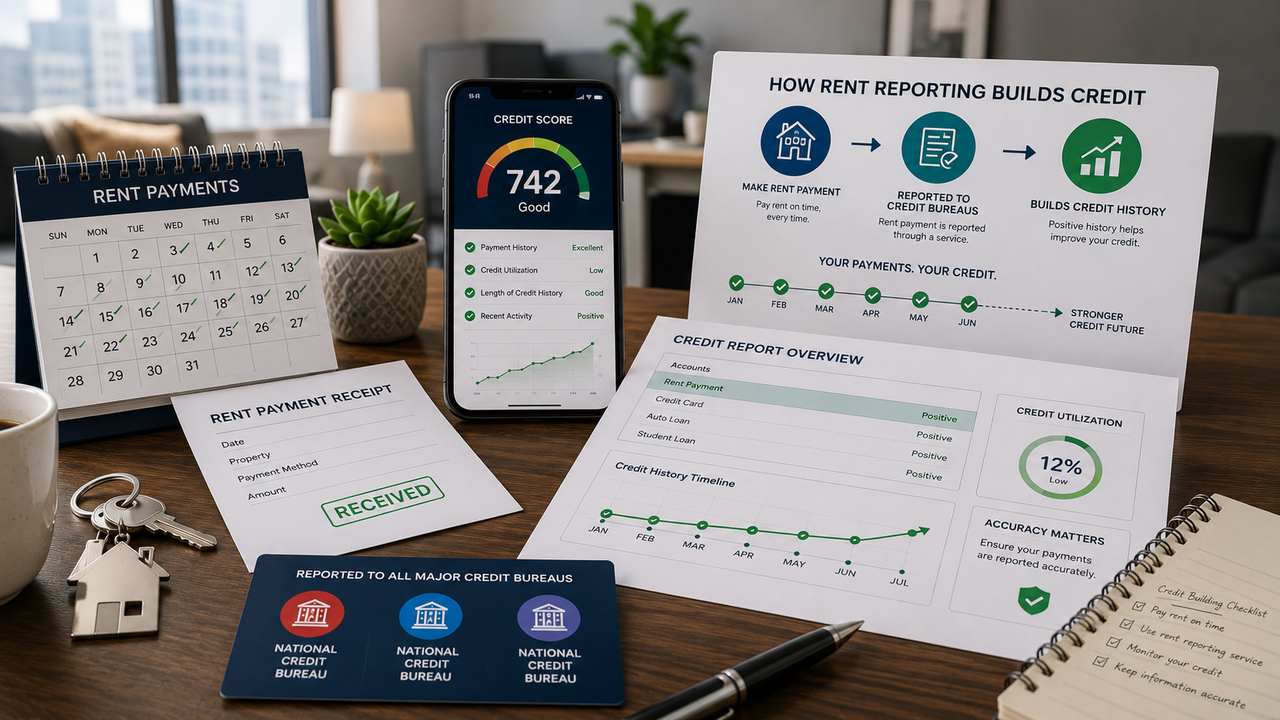
    Rent reporting is the process of having your monthly rent payments verified and submitted to one or more credit bureaus so they appear on your credit report as a trade line — similar to how a credit card or loan account appears.

    The Basic Mechanism

    Here’s how rent reporting works in practice:

    1. You enroll with a rent reporting service. Some services work directly with renters, while others partner with landlords or property management platforms.
    2. Your rent payments are verified. Verification typically happens through bank account connections, payment processors, landlord confirmation, or lease documentation. The service needs to confirm that a payment was actually made, on time, for the amount specified in your lease.
    3. The service furnishes data to credit bureaus. On a recurring basis (usually monthly), the service sends updated payment records to the bureaus it partners with. Each on-time payment becomes a positive entry on that trade line.
    4. The bureau adds the data to your credit file. Depending on the bureau and the type of data, the rent trade line may appear on your credit report and potentially factor into certain credit scores.

    What Gets Reported

    A rent trade line typically includes:

    • The rental address associated with the payments
    • Monthly payment amount
    • Payment dates and status (on-time, late, missed)
    • Lease term information in some cases
    • The reporting entity’s name

    The key thing to understand is that rent reporting services don’t lend you money or extend credit. They’re data furnishers — they pass along verified information about payments you’re already making. That distinction matters because it means rent reporting doesn’t add debt, doesn’t require a credit check to enroll in most cases, and doesn’t carry the risk of borrowing.

    The Verification Layer

    Verification is the backbone of credible rent reporting. Credit bureaus require that furnished data be accurate and substantiated, which is why rent reporting services can’t simply take your word for it. They need evidence. The most common verification methods include:

    • Bank transaction verification — linking your checking account so the service can confirm rent payments cleared on specific dates
    • Landlord or property manager confirmation — the service contacts your landlord or integrates with property management software to verify payments
    • Payment platform integration — if you pay rent through a platform like a property management portal, the service can pull records directly
    • Lease and payment documentation — some services accept lease agreements and bank statements as supporting evidence

    The strength of verification affects how widely the data is accepted. Bureaus are more receptive to rent data that comes through rigorous, auditable verification channels.

    Which Credit Bureaus Accept Rent Data

    Not all three bureaus handle rent data the same way, and understanding the differences is essential before you invest time or money in a rent reporting service.

    Experian

    Experian has been the most proactive of the three bureaus in incorporating rent payment history. Experian accepts rent data through its Experian RentBureau division, which was specifically built to collect and process rental payment data from property managers, rent reporting services, and other furnishers.

    Key points about Experian’s handling of rent data:

    • Rent payment history can appear on your Experian credit report
    • Experian incorporates rent data into its Experian Boost program, which allows consumers to connect bank accounts and get credit for rent, utilities, streaming services, and other recurring payments
    • Experian’s own scoring models and some VantageScore models may reflect rent trade lines
    • Rent data furnished through Experian RentBureau is subject to the same accuracy and dispute standards under the Fair Credit Reporting Act (FCRA) as any other tradeline

    Experian is generally considered the most rent-friendly bureau. If you’re choosing a rent reporting service and want to prioritize one bureau, Experian is typically the strongest candidate.

    TransUnion

    TransUnion also accepts rent data, and several rent reporting services furnish to TransUnion. TransUnion has historically been receptive to alternative data sources, including rent, and may include rent trade lines on your TransUnion credit report.

    However, the degree to which rent data influences TransUnion-based credit scores depends on the scoring model used. TransUnion offers multiple scoring models, and not all of them weight rent data equally. VantageScore models (which TransUnion offers) tend to be more inclusive of alternative data, while some older FICO models pulled from TransUnion may not factor in rent at all.

    Equifax

    Equifax is the most complicated of the three when it comes to rent data. Equifax does accept rent trade lines in some cases, but its handling has historically been more limited and less consistent than Experian or TransUnion. Not all rent reporting services furnish to Equifax, and Equifax’s scoring models may not always reflect rent data in the same way.

    If Equifax coverage matters to you — for example, if you know a lender you’re planning to apply with pulls Equifax reports — check specifically whether a rent reporting service furnishes to Equifax before enrolling.

    What This Means for You

    The practical takeaway is that rent data doesn’t automatically appear on all three of your credit reports. If a service only furnishes to Experian, your TransUnion and Equifax reports won’t show your rent history. If you want maximum bureau coverage, look for a service that reports to multiple bureaus, and confirm which ones.

    It’s also worth remembering that lenders don’t all pull from the same bureau. A mortgage lender might pull all three. A credit card issuer might pull one. An auto lender might pull a different one. The bureau coverage of your rent reporting matters most in the context of which bureaus the lenders you care about actually use.

    Does Paying Rent Actually Build Credit?

    This is the question that matters most, and it deserves an honest, nuanced answer rather than a simple yes or no.

    The short version: rent reporting can help build credit, but the impact varies significantly depending on your existing credit profile and which scoring model a lender uses.

    When Rent Reporting Helps Most

    Rent reporting tends to have the most meaningful impact for people with thin credit files — that is, credit reports with few or no active trade lines. If you’re credit invisible or have only one or two accounts, adding a rent trade line with a history of on-time payments can:

    • Establish a payment history where little or none existed
    • Add depth to your credit file, making you appear less risky to some scoring models
    • Help you qualify for credit products that require a minimum number of trade lines
    • Provide a foundation on which you can build with other credit tools over time

    For renters in this situation, rent reporting can be a genuinely valuable first step. It takes a financial obligation you’re already meeting and converts it into recognized credit history.

    The Scoring Model Problem

    Here’s where the honest reality comes in. The most widely used credit scoring model in lending decisions is FICO Score 8, and FICO 8 has historically not incorporated rent trade lines in most configurations. This means that even if your rent payments appear on your credit report, a lender pulling a FICO 8 score may not see any score improvement from that data.

    VantageScore models — particularly VantageScore 3.0 and 4.0 — have been more receptive to alternative data, including rent. If a lender uses VantageScore, your rent reporting may positively influence the score you’re presented with.

    The problem is that most consumers don’t know which scoring model a lender will use until they apply. And since FICO models dominate mortgage lending and many credit card decisions, rent reporting alone may not move the needle in those specific contexts.

    What This Means in Practice

    Let’s be concrete about what you can realistically expect:

    • If you have a thin file and are building from scratch, rent reporting can meaningfully help by establishing a trade line and payment history that wasn’t there before.
    • If you already have several active credit accounts with good history, rent reporting is unlikely to move your score much because your payment history is already well-established through other trade lines.
    • If a lender uses FICO 8, rent data may appear on your report but may not affect the score itself.
    • If a lender uses VantageScore or a newer FICO model that incorporates alternative data, rent reporting may have a more visible effect.

    The most balanced way to think about rent reporting is as one tool in a broader credit-building strategy, not as a standalone solution. It’s especially valuable for people who are early in their credit journey or rebuilding after setbacks. For someone with a thick, established file, the benefit is smaller.

    Types of Rent Reporting Services

    Rent reporting services come in several varieties, and understanding the categories helps you evaluate which fits your situation.

    Direct-to-Consumer Services

    These services work directly with renters. You enroll on your own, connect your bank account or provide payment verification, and the service reports your rent to bureaus on a monthly basis. This is the most common type and the most accessible for renters whose landlords don’t participate in any reporting program.

    Examples in this category include Esusu and Boom report, among others. Each has its own fee structure, bureau coverage, and feature set.

    Landlord-Partnered Services

    Some services work primarily through landlords and property management companies. The landlord enrolls the property, and rent payments made through the property’s system are automatically reported to bureaus. As a renter, you may be enrolled automatically or have the option to opt in.

    This model can be seamless for the renter because verification happens through the property’s payment system. However, it depends entirely on your landlord participating, and many smaller landlords do not.

    Bureau-Native Tools

    Experian offers Experian Boost, which allows you to connect your bank account and get credit for rent payments, utilities, telecom bills, and streaming services. Boost is free and focuses on giving you credit for positive payment history on recurring bills. The trade-off is that Boost primarily influences your Experian-based scores and the impact varies.

    What to Look For

    Regardless of category, the services worth considering share certain characteristics:

    • Clear fee structure with no hidden charges
    • Transparency about which bureaus they report to
    • Robust verification methods so the data is credible to bureaus
    • Options for retroactive reporting if you want past payments counted
    • FCRA-compliant dispute process if reported information is inaccurate
    • Accessible customer support

    We’ll get into a detailed comparison framework in the next section.
    rent-reporting-services-credit-building-under-100kb

    How to Choose a Rent Reporting Service

    Choosing a rent reporting service comes down to matching a service’s strengths to your specific situation and goals. Here’s a framework for evaluating your options.

    Comparison Table: What to Evaluate

    Factor Why It Matters What to Look For
    Bureau coverage Determines which of your credit reports show rent history Services that report to multiple bureaus, especially Experian and TransUnion
    Monthly fee or one-time cost Affects total cost over time Low or transparent fees; avoid services with unclear pricing or hidden upsells
    Retroactive reporting Allows past on-time payments to count, sometimes up to 24 months Services that offer history backfill if establishing longer track record matters to you
    Verification method Affects data credibility and bureau acceptance Bank linking, landlord confirmation, or payment platform integration
    Landlord involvement required Determines whether you can enroll independently Services that let you enroll without landlord participation if your landlord isn’t involved
    Credit check on enrollment Some services pull credit, which can create a hard inquiry Services that don’t require a hard credit pull to enroll
    Cancellation terms Life changes; you shouldn’t be locked in Clear, simple cancellation without penalties
    FCRA compliance and dispute process Protects your right to correct inaccurate reported data Published dispute process and clear compliance language
    User reviews and reputation Signals reliability and customer experience Consistent positive reviews and a track record of accurate reporting
    Additional features Some services offer credit monitoring, identity tools, or financial coaching Features that align with your broader financial goals

    Questions to Ask Before Enrolling

    Before you commit to a service, get clear answers to these questions:

    1. Which bureaus will receive my rent data? If you care about a specific bureau, confirm it’s covered.
    2. How much will this cost me over a year? Multiply the monthly fee by 12 and add any setup fees.
    3. Can my past rent payments be reported, and how far back? This matters if you want credit for established history.
    4. Will enrolling create a hard inquiry on my credit report? Hard inquiries can temporarily lower your score.
    5. What happens if I move mid-lease? Make sure you understand how the service handles address changes and new leases.
    6. How do I dispute inaccuracies in reported rent data? You should have a clear path under FCRA to correct errors.
    7. What happens if a rent payment is late? Understand whether the service reports late payments and how that could affect you.

    A Note on Fees

    Rent reporting services typically charge either a monthly subscription, a one-time setup fee, or both. Some offer free basic tiers with paid upgrades. Be cautious of services that promise dramatic score increases or charge premium prices without clearly explaining what you’re getting. Credit building is a gradual process, and no legitimate service can guarantee a specific score outcome.

    Can Past Rent Payments Count?

    One of the most common questions about rent reporting is whether past rent payments can be added to your credit report retroactively. The answer is: yes, in some cases, but with important limitations.

    How Retroactive Reporting Works

    Some rent reporting services offer the ability to backfill your rent payment history — meaning they verify and report payments you made in the past, not just going forward. This can be valuable if you have a strong history of on-time rent payments over the past year or two and want that track record reflected on your credit report.

    The typical maximum for retroactive reporting is up to 24 months of past payments, though the exact window depends on the service and what verification they can obtain for older payments.

    What’s Required for Retroactive Reporting

    To report past rent payments, the service needs to verify that those payments actually occurred. This usually requires:

    • Bank statements showing rent payments clearing your account on specific dates
    • Lease agreements documenting the rental terms and dates
    • Landlord confirmation of payment history in some cases
    • Payment platform records if you paid through an online system

    The older the payments, the harder verification becomes. Services that offer retroactive reporting typically cap how far back they’ll go, and some charge an additional fee for backfilling history.

    When Retroactive Reporting Is Worth It

    Retroactive reporting is most valuable when:

    • You have a limited credit history and want to add depth quickly
    • You’re planning to apply for credit in the near future and want your report to reflect your established rent track record
    • You have verifiable documentation of past payments readily available

    It’s less essential if you’re planning to rent at the same place for a long time and can simply let ongoing monthly reporting build your history over time.

    Pros and Cons of Rent Reporting

    Like any credit-building tool, rent reporting has strengths and limitations. Here’s an honest look at both sides.

    Pros

    • Recognizes payment behavior you’re already demonstrating. If you’re paying rent on time, rent reporting converts that existing discipline into credit history without requiring you to take on new debt.
    • No new borrowing required. Unlike a credit card or loan, rent reporting doesn’t extend credit or create new debt. You’re simply getting recognition for payments you’re already making.
    • Can help build a file from scratch. For people with thin or no credit history, adding a rent trade line establishes a payment record where none existed.
    • May help with rental screening. Some landlords and property management companies review credit reports during the application process. A positive rent trade line can reinforce your reliability as a tenant.
    • Low cost relative to other credit-building tools. Many rent reporting services are inexpensive compared to secured credit cards or credit-builder loans, especially if your primary goal is simply to add a positive trade line.
    • May positively influence VantageScore models. If a lender uses VantageScore, your rent data may be reflected in the score.

    Cons

    • FICO Score 8 often ignores rent data. The most widely used scoring model in lending may not factor in rent trade lines, meaning the score many lenders see may not reflect your rent history.
    • Bureau coverage is inconsistent. Not all services report to all three bureaus, so your rent history may appear on some reports but not others.
    • Impact is limited for thick files. If you already have multiple active credit accounts with good payment history, adding rent reporting is unlikely to meaningfully change your score.
    • Late payments can be reported too. If a service reports your rent and you later pay late, that negative information can appear on your credit report just like a late credit card payment.
    • Fees can add up over time. A monthly subscription may seem small, but over years the cumulative cost may exceed the benefit, especially if the score impact is minimal.
    • Verification can be friction-heavy. Connecting accounts, gathering documentation, and coordinating with landlords takes time and effort.

    Rent Reporting vs. Other Credit-Building Methods

    Rent reporting is one of several tools that can help build or rebuild credit. Understanding how it compares to other options helps you build a strategy rather than relying on a single approach.

    Rent Reporting vs. Secured Credit Cards

    A secured credit card requires a refundable deposit that becomes your credit line. You use the card for small purchases, pay it off on time each month, and the issuer reports your activity to the bureaus.

    • Secured cards report to all three bureaus and influence FICO scores, making them more universally impactful than rent reporting for score-building purposes.
    • Rent reporting doesn’t require a deposit or new borrowing, but its score impact may be more limited.
    • Best approach: Many people benefit from using both. A secured card builds FICO-relevant history while rent reporting adds an additional positive trade line.

    Rent Reporting vs. Credit-Builder Loans

    A credit-builder loan holds the loan amount in a savings account while you make monthly payments. Once paid off, you receive the funds. The lender reports your payments to the bureaus.

    • Credit-builder loans create an installment trade line, which diversifies your credit mix — a factor in many scoring models.
    • Rent reporting adds a different type of trade line but doesn’t contribute to credit mix in the same way.
    • Best approach: If you can afford the monthly payment, a credit-builder loan can be a strong complement to rent reporting, especially for people rebuilding after negative marks.

    Rent Reporting vs. Authorized User Status

    Being added as an authorized user on someone else’s credit card allows that account’s history to appear on your credit report.

    • Authorized user status can rapidly add a long, positive payment history to your report if the primary account is in excellent standing.
    • Rent reporting builds history based on your own behavior, which some lenders view more favorably than authorized user status.
    • Best approach: If you have a trusted family member with a strong credit account, authorized user status can be a quick win, while rent reporting builds independent history over time.

    Rent Reporting vs. Experian Boost

    Experian Boost is a free tool that connects to your bank account and identifies eligible on-time payments for rent, utilities, telecom, and streaming services, then adds them to your Experian credit file.

    • Experian Boost is free and immediate but only affects your Experian-based scores.
    • Rent reporting services may offer broader bureau coverage and deeper rent-specific reporting but typically charge fees.
    • Best approach: If your priority is Experian specifically, start with Boost. If you want broader coverage or retroactive reporting, a paid service may be worth considering.

    A Balanced Strategy

    The strongest credit-building strategies typically combine multiple tools rather than relying on a single one. For someone building from scratch, a reasonable approach might include rent reporting for ongoing recognition, a secured credit card for FICO-relevant payment history, and consistent on-time payments across all obligations. Over time, these layers compound into a robust credit profile that reflects your actual financial responsibility.

    Common Mistakes to Avoid

    Rent reporting can be helpful, but certain missteps can undermine the benefit or even create new problems.

    1. Assuming Rent Reporting Will Fix a Damaged Score

    Rent reporting adds positive payment history, but it doesn’t remove negative items like late payments, collections, or charge-offs that are already on your report. If your score is suffering from inaccurate negative marks, disputing those errors under the FCRA is typically more impactful than adding rent data alone. Rent reporting is a complement to credit repair, not a substitute for it.

    2. Choosing a Service Without Checking Bureau Coverage

    If you enroll with a service that only reports to Experian, your TransUnion and Equifax reports won’t reflect your rent history. Before enrolling, confirm which bureaus the service furnishes to and align that with the bureaus your prospective lenders use.

    3. Ignoring the Cost Over Time

    A service charging $8 per month costs nearly $100 per year. If the score impact is minimal because you already have a thick file, that money may be better spent elsewhere in your financial plan. Evaluate the realistic benefit before committing long-term.

    4. Forgetting That Late Payments Get Reported Too

    Once a service is reporting your rent, late or missed payments can appear on your credit report as negative entries. If there’s a chance you’ll struggle with rent payments in the near future, weigh that risk before enrolling in ongoing reporting.

    5. Not Verifying That Payments Are Actually Being Reported

    Enrollment doesn’t guarantee successful reporting. Pull your credit reports from all three bureaus periodically (you’re entitled to free reports at AnnualCreditReport.com) to confirm the rent trade line is appearing as expected. If it’s not, follow up with the service.

    6. Overlooking FCRA Rights

    Under the Fair Credit Reporting Act, you have the right to dispute inaccurate information on your credit report, including inaccurate rent trade lines. If a rent reporting service reports a late payment you actually made on time, you can dispute it with both the service and the bureau. Don’t assume reported data is always accurate — verify it.

    7. Treating Rent Reporting as a Standalone Solution

    As discussed above, rent reporting is most effective as part of a layered strategy. Relying on it alone, especially if you’re rebuilding after financial setbacks, may leave you underprepared when you apply for a mortgage, auto loan, or credit card.

    Frequently Asked Questions

    Does paying rent build credit automatically?

    No. Rent payments do not appear on your credit reports unless they are actively reported by a rent reporting service, your landlord, or a property management platform. Simply paying rent on time, by itself, does not build credit. You need a reporting mechanism in place for that payment history to reach the bureaus.

    Which credit bureau is most receptive to rent data?

    Experian is generally considered the most rent-friendly bureau through its Experian RentBureau division and Experian Boost program. TransUnion also accepts rent data from various services. Equifax’s handling of rent data has historically been more limited. If bureau coverage matters to you, confirm which bureaus a service reports to before enrolling.

    Will rent reporting increase my FICO score?

    It depends. FICO Score 8, the most widely used model in lending, has historically not incorporated rent trade lines in most configurations, so your FICO 8 score may not change. Newer FICO models and VantageScore models may be more receptive to rent data. If a specific lender uses a scoring model that includes alternative data, you may see an effect. The impact is most noticeable for people with thin credit files.

    Can I report rent payments from a previous apartment?

    In some cases, yes. Certain rent reporting services offer retroactive reporting of past rent payments, typically up to 24 months, provided you can verify those payments through bank statements, lease documents, or landlord confirmation. Not all services offer this, and some charge an additional fee for backfilling history.

    Is Experian Boost the same as a rent reporting service?

    Not exactly. Experian Boost is a free tool that scans your connected bank account for eligible on-time payments — including rent, utilities, telecom, and streaming — and adds them to your Experian credit file. It only affects Experian-based scores. A dedicated rent reporting service may offer broader bureau coverage, retroactive reporting, and deeper rent-specific features, but typically charges fees. They serve different needs and can complement each other.

    What happens if I pay rent late while enrolled in a reporting service?

    If a rent reporting service is furnishing your payment data to bureaus, a late payment may be reported as a negative entry on your credit report, similar to a late credit card payment. This can harm your credit score. Before enrolling, understand the service’s policy on late payments and consider whether your financial situation is stable enough to avoid missing rent while enrolled.

    Do I need my landlord’s involvement to use a rent reporting service?

    It depends on the service. Some direct-to-consumer services allow you to enroll independently by connecting your bank account and providing verification. Others work through landlords and property management platforms, requiring your landlord to participate. If your landlord isn’t enrolled in any reporting program, look for a service that supports independent enrollment.

    How much do rent reporting services cost?

    Costs vary. Some services charge a one-time setup fee, others a monthly subscription, and some offer free basic tiers with paid upgrades. Typical monthly fees range from around $5 to $10, though premium features or retroactive reporting may cost more. Always read the fee structure carefully and calculate the annual cost before committing.

    Take the Next Step Toward Stronger Credit

    Rent reporting is one piece of a larger credit-building picture, and whether it’s the right next step for you depends on your current credit profile, your goals, and the lenders you’re planning to work with. If you have a thin file and pay rent consistently, it can be a meaningful addition. If you’re navigating negative marks on your credit report, inaccurate trade lines, or a complex credit history, rent reporting alone won’t solve those issues.

    That’s where a comprehensive approach comes in. At credit-repair.com, we help individuals and families across the country take control of their financial future through honest, results-driven credit solutions. Our process includes in-depth credit audits across all three major bureaus, disputing inaccuracies under the FCRA, negotiating with creditors, removing negative marks where legally warranted, and building fully customized repair plans tailored to each client’s goals.

    Get your free credit audit or request a quote at credit-repair.com.

    This article is for educational purposes only and does not constitute legal or financial advice. Your individual situation may vary. The information provided reflects general principles of federal credit law as of the date of writing and may be subject to change. For advice specific to your circumstances, consult a qualified professional.
  • Does Closing a Credit Card Hurt Your Score? (The Real Answer)

    Does Closing a Credit Card Hurt Your Score? (The Real Answer)

    You’ve probably heard the advice a hundred times: “Never close a credit card it’ll tank your score.”

    It’s one of the most repeated rules in personal finance. It’s also one of the most misunderstood.

    Here’s the truth: closing a credit card can hurt your credit score but not always, not always by much, and not for the reason most people think. In some cases, closing a card is genuinely the right move for your financial health, and the credit-score impact is small and temporary.

    In this guide, we’ll walk through what actually happens to your score when you close a card, when it matters most, when it doesn’t, and how to close a card the right way if you decide it’s time. No scare tactics, no quick-fix promises just a clear, honest breakdown so you can make the call with confidence.

    The Short Answer

    Does closing a credit card hurt your score? It can but the real answer depends on two things: your credit utilization and the age of your other accounts.

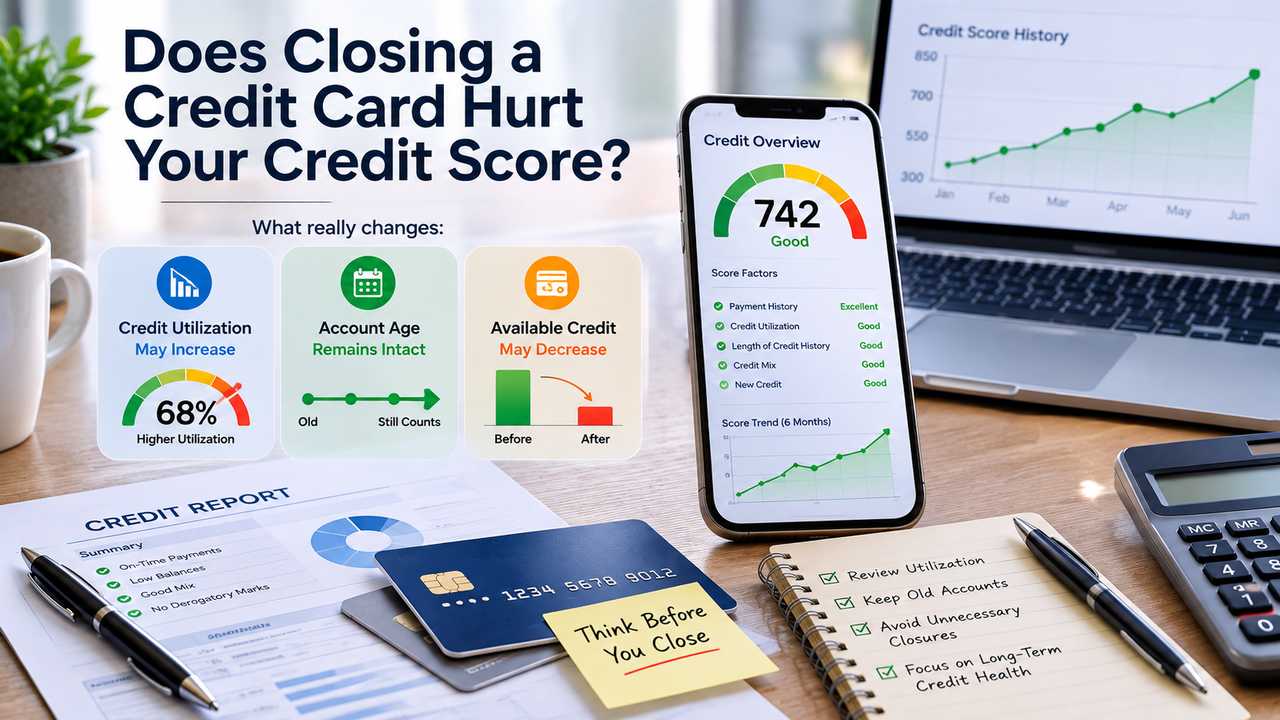
    When you close a credit card, you lose that card’s credit limit. If you carry balances on other cards, your overall utilization ratio (how much of your available credit you’re using) can go up and that’s the change that most commonly drags your score down. Utilization is one of the most heavily weighted factors in your credit score, accounting for about 30% of your FICO Score.

    The second common worry that closing a card shortens your credit history is mostly a myth in the short term. A closed account in good standing stays on your credit report for up to 10 years, and it continues to count toward your average age of accounts during that time. So the length-of-history impact is delayed, not immediate.

    So:

    • If the card has a high credit limit and you carry balances elsewhere, closing it can raise your utilization and lower your score sometimes noticeably.
    • If the card has a small limit, or you pay your balances in full each month, the impact may be minimal or even unmeasurable.
    • If it’s your only or oldest card, closing it carries more risk because you’re shrinking your credit profile and, eventually, your average account age.
    • If you have several other older accounts in good standing, closing one card is unlikely to do meaningful damage.

    The decision isn’t “never close a card.” It’s “close the right card, at the right time, the right way.” Let’s look at the mechanics.

    The Two Main Impacts of Closing a Card

    When you close a credit card, two parts of your credit score can be affected: credit utilization and length of credit history. Let’s take each one apart.

    Impact #1: Credit Utilization (The One That Usually Matters Most)

    Credit utilization is the percentage of your available credit that you’re currently using. It’s calculated both per card and across all your cards combined.

    For example, say you have two cards:

    Card Credit Limit Balance Utilization
    Card A $10,000 $2,000 20%
    Card B $5,000 $0 0%
    Total $15,000 $2,000 13.3%

    Your overall utilization is 13.3% well within the healthy range (most experts recommend keeping it under 30%, and under 10% is even better for top-tier scores).

    Now suppose you close Card B because you never use it. Your available credit drops from $15,000 to $10,000. Your balance stays at $2,000. Your new utilization:

    New utilization = $2,000 ÷ $10,000 = 20%

    That’s a jump from 13.3% to 20% still under 30%, but higher. Your score may dip a little.

    Now consider a more dramatic example. Same two cards, but you carry more debt:

    Card Credit Limit Balance Utilization
    Card A $10,000 $4,500 45%
    Card B $5,000 $0 0%
    Total $15,000 $4,500 30%

    Close Card B, and your available credit falls to $10,000 while your balance stays at $4,500:

    New utilization = $4,500 ÷ $10,000 = 45%

    You’ve gone from 30% to 45% — crossing well above the 30% threshold that FICO treats as a yellow flag. That kind of jump can produce a meaningful score drop, sometimes 20–50 points or more depending on the rest of your profile.

    Why this matters so much: Utilization is evaluated instantaneously. Unlike payment history, which builds over time, your utilization is recalculated every time a card issuer reports your balance to the credit bureaus (usually once a month, on your statement closing date). That means a utilization change from closing a card can show up on your score within a single billing cycle.

    The key takeaway: The utilization impact from closing a card depends entirely on whether you carry balances on other cards and how large the closed card’s limit was relative to your total credit.

    • No balances anywhere? Closing a card typically has little to no utilization impact.
    • Carrying balances? Closing a high-limit card can push your utilization up and your score down.

    Impact #2: Length of Credit History (The One People Get Wrong)

    This is where most of the confusion lives.

    A lot of people believe that the moment you close a credit card, it disappears from your credit report and your “credit age” resets. That’s not how it works.

    Here’s what actually happens:

    • When you close a credit card that’s in good standing (no late payments, not charged off), the account stays on your credit report for up to 10 years from the date of closure.
    • During that entire period, the closed account continues to be factored into your average age of accounts (AAoA) and your oldest-account age two metrics that influence the “length of credit history” portion of your score (about 15% of your FICO Score).
    • Only after the account finally falls off your report roughly a decade later does it stop contributing to your credit history length.

    So if you close a 12-year-old card today, it keeps helping your average account age until you’re 22 years out. By then, your other accounts will have aged considerably, softening the impact.

    This is the nuance most people miss: The length-of-history impact from closing a card isn’t immediate. It’s delayed by years, often a decade. The thing that does hit quickly is utilization.

    There’s one important exception: if the closed card was your only credit account or your oldest by a wide margin, the eventual drop-off matters more because you’ll have less depth to absorb it. We’ll cover that in the next section.

    The key takeaway: Don’t close a card out of fear that your credit history will vanish overnight. It won’t. A closed account in good standing keeps working for you for years. The urgency around “never close a card” is mostly about utilization, not history.

    When Closing a Card Hurts Most

    Not every closure carries the same risk. Closing a card is most likely to hurt your score when one or more of the following is true.

    1. It’s your only credit card (or one of very few)

    Credit scoring models reward a diverse, established credit profile. If you only have one or two credit cards, closing one shrinks your credit picture significantly.

    With fewer open accounts, your utilization becomes more volatile (one balance can swing the ratio dramatically), and your file looks thinner to lenders.

    If you’re going to close your only card, it’s worth opening a replacement first (or exploring alternatives like a product change — more on that below) so you don’t end up with no revolving credit at all.

    2. It’s your oldest credit account

    Your oldest account age is a anchor point for your credit history. Closing your oldest card doesn’t erase it immediately — remember, it stays on your report for up to 10 years — but when it eventually falls off, your credit age could shorten noticeably if you haven’t added other long-standing accounts in the meantime.

    If your oldest card is your only old account, think twice. If you have several other accounts that are also 10+ years old, closing one is much lower risk.

    3. It has a large credit limit and you carry balances elsewhere

    This is the classic utilization trap. If the card you’re closing carries a big chunk of your total available credit and you maintain balances on other cards, closing it will push your overall utilization up — sometimes significantly.

    Before closing a high-limit card, do the math:

    If that number lands above 30%, expect a score dip. If it lands above 50%, expect a more noticeable one.

    4. You’re planning to apply for a major loan soon

    If you’re within 3–6 months of applying for a mortgage, auto loan, or any other major credit product, avoid unnecessary changes to your credit profile. Even small score movements can affect the interest rate you’re offered. A difference of 20 points on a mortgage can translate to thousands of dollars over the life of the loan.

    In this window, keep your credit picture stable: don’t close cards, don’t open new cards, don’t miss payments, and keep utilization low.

    5. The card has a long clean payment history you’d lose

    If the card has years of on-time payments and it’s one of your few accounts with a spotless record, closing it (and eventually losing it from your report) removes a piece of positive payment history. Payment history is the single biggest factor in your score at about 35%, so a long clean track record is worth preserving when you can.

    That said — remember the 10-year rule. The payment history doesn’t vanish the day you close the card. It keeps contributing for years. The concern is mainly about the long-term picture, not the immediate impact.

    When Closing a Card Makes Sense

    For all the talk about keeping cards open, there are absolutely situations where closing a card is the right financial decision — even if it causes a small, temporary score dip. Your credit score is a tool that serves your financial life, not the other way around.

    Here are the scenarios where closing makes good sense.

    1. You’re paying an annual fee you don’t use

    This is the most common and most defensible reason to close a card. If you’re paying $95, $250, or $450 a year for a card whose perks you no longer use, that’s pure cost with no benefit.

    Before closing, check whether the issuer offers a product change to a no-annual-fee version of the card (more on this below). A product change lets you keep the account open — preserving your credit limit and account age — while dropping the fee. If that’s not available or appealing, closing is reasonable.

    Do the math honestly: if the annual fee is $250 and you’re not getting $250 worth of value from the card, closing it saves you real money. A temporary score dip of 10–20 points is usually worth $250 a year.

    2. The card tempts you to overspend

    This one is underrated. If having a particular card in your wallet leads you to spend more than you should — maybe it’s a store card that pulls you toward impulse purchases, or a travel card that encourages trips you can’t really afford — the financial damage of overspending will far outweigh any credit-score impact from closing it.

    Credit scores don’t measure your overall financial health. They measure how you manage borrowed money. If a card is actively working against your financial goals, closing it is a legitimate choice.

    3. You have plenty of other old accounts

    If you have several other credit cards that are older than or comparable in age to the one you’re considering closing, the impact on your average account age (both now and when the closed card eventually falls off) is minimal. In this case, the length-of-history concern is mostly a non-issue, and as long as utilization is managed, closing is low risk.

    4. You’re simplifying your financial life

    Every open credit account is one more thing to monitor for fraud, one more statement to review, one more due date to track, one more potential source of missed-payment damage. If you’re consolidating your finances — maybe after a life change like marriage, divorce, or a move — closing a card or two to reduce complexity is a reasonable choice. Just be thoughtful about which cards you close.

    5. The card has poor terms and a better option exists

    If you’re holding onto a card with a high APR, a low credit limit, poor customer service, or no upgrade path, and you’ve already been approved for a better card, there’s little reason to keep the old one on life support. This is especially true if the old card’s limit is small enough that closing it won’t meaningfully change your overall utilization.

    6. A joint account situation needs resolving

    After a divorce or business partnership dissolution, you may need to close joint credit accounts to protect yourself from the other person’s spending or payment behavior. In these cases, closing is often necessary regardless of the score impact. Work with the issuer to close the account properly, and consider opening a new individual account to replace it.

    How to Close a Credit Card the Right Way

    If you’ve decided closing a card is the right move, do it carefully. A sloppy closure can create problems that are entirely avoidable. Here’s the step-by-step process.

    Step 1: Pay the balance down to zero

    You generally cannot close a card while it carries a balance — and even if the issuer allows it, it’s a bad idea. A closed account with a balance can continue to accrue interest, and you lose the ability to make new purchases to help manage cash flow.

    Pay the balance in full, or transfer it to another card with a balance transfer offer if needed. Confirm the payoff includes any pending interest charges (call the issuer to get a precise payoff amount if you’re unsure).

    Step 2: Redeem or transfer your rewards

    If the card earns cash back, points, or miles, redeem them before closing. Most issuers forfeit any unredeemed rewards the moment the account is closed. Some cards let you transfer points to another card with the same issuer or to a travel partner — check the rules for your specific card.

    Don’t leave money on the table. Even $25 in cash back is worth claiming before you shut the door.

    Step 3: Redirect recurring charges and auto-pays

    This is the step people forget — and it causes the most headaches.

    Go through your last 6–12 months of statements and identify every recurring charge on the card: subscriptions (Netflix, gym, software), utilities, insurance premiums, auto-pays, mobile phone billing, streaming services, and any memberships.

    Move each one to a different card (or to a debit card if you prefer) before closing. Then watch the next billing cycle carefully to confirm nothing slips through. A missed auto-pay on a closed card can result in a late payment or a service interruption — both of which create more headaches than the closure itself.

    Pro tip: some people keep a dedicated “bills card” that they never close and never carry a balance on, specifically to centralize recurring charges and avoid this chore in the future.

    Step 4: Call the issuer and confirm the payoff

    Ask them to confirm the account is eligible for closure and whether there are any pending transactions or fees that might post after closure.

    This phone call is worth the five minutes. It prevents the surprisingly common scenario of a tiny residual interest charge generating a balance on a closed account, which can then trigger late fees and a negative mark on your credit report if it goes unpaid.

    Step 5: Request closure in writing (or via a documented channel)

    Close the account through the issuer’s official channel — usually by phone, secure message, or online chat. Ask for written confirmation of the closure, including the date and the fact that the account was closed at your request (not by the issuer).

    The distinction matters: an account “closed by creditor” can look slightly worse to future lenders than one “closed by consumer.” Make sure your credit report reflects that you initiated the closure. If it doesn’t, you have the right to dispute it with the credit bureaus under the FCRA.

    Step 6: Keep your oldest card open

    If the card you’re closing isn’t your oldest, make sure your oldest credit card stays open and active. This preserves the anchor of your credit history and protects your average account age over the long term.

    If your oldest card has an annual fee you don’t want to pay, ask the issuer about a product change to a no-fee version (see below). Keeping the account open in some form is almost always better than closing your oldest card outright.

    Step 7: Monitor your credit report after closure

    Pull your credit report 30–60 days after closing to confirm the account is showing as “closed” and “paid” or “current” with a $0 balance. You’re entitled to a free report from each of the three bureaus every week at AnnualCreditReport.com — take advantage of it.

    If the account is still showing as open, or if it’s incorrectly reported as “closed by creditor” with a balance, file a dispute with the bureau reporting the error. Under the FCRA, inaccurate information must be corrected or removed, typically within 30 days.

    Step 8: Watch your utilization on remaining cards

    After closure, keep your balances low on your remaining cards for at least one billing cycle so the utilization change doesn’t bite harder than it needs to. If you can pay balances down before the statement closing date (not just the due date), you’ll keep the reported utilization as low as possible.

    does-closing-credit-card-hurt-score-under-100kb

    Alternatives to Closing a Card

    Before you close a card, it’s worth checking whether one of these alternatives gets you what you want without the downsides.

    Product change

    A product change is when you switch your current card to a different card within the same issuer’s portfolio — for example, converting a $95-annual-fee travel card to a no-annual-fee cash-back card from the same bank.

    Why this is often better than closing:

    • The account stays open, so your credit limit and account age are preserved.
    • No hard inquiry — product changes typically don’t require a new credit pull.
    • You keep the payment history and the account’s contribution to your credit profile.
    • You drop the fee (or get a card that better fits your spending).

    Almost every major issuer offers product changes. Call the number on the back of your card and ask: “I’m considering closing this card because of the annual fee. Can I product-change to a no-annual-fee option?” They’ll often have several choices.

    Downgrade to a no-fee card

    This is essentially a product change focused specifically on eliminating the annual fee. Many premium cards have a no-fee sibling in the same family. For example, a premium travel card might downgrade to a basic rewards card with no annual fee and fewer perks but the same credit limit and account history.

    Keep the card open but inactive

    If the card has no annual fee, you don’t actually have to use it regularly for it to help your credit. You can keep it open with a small recurring charge (like a single subscription) set to autopay in full each month. This keeps the account active, prevents the issuer from closing it for inactivity, and preserves your credit limit and account age — all without requiring you to carry the card or think about it.

    A warning on inactivity: issuers can close accounts for inactivity, typically after 12–24 months of no usage. An involuntary closure for inactivity looks the same on your credit report as a closure by the creditor and can still affect your utilization. So if you’re keeping a card open for credit-building purposes, put one small recurring charge on it and set it to autopay. Set it and forget it.

    Request a credit limit increase on another card first

    If your reason for hesitation is the utilization impact, you can ask for a credit limit increase on another card before closing the one you want to drop. If approved, the new limit can offset the limit you’re losing, keeping your overall utilization roughly the same.

    This does sometimes involve a hard inquiry, so check with the issuer about whether they’ll do a soft-pull increase (many will if you ask). A soft pull has no impact on your score.

    Open a new card before closing the old one

    If the card you’re closing has a meaningful credit limit and you want to preserve your total available credit, you can open a new card with a comparable limit first, then close the old one. Your total available credit stays about the same, and your utilization is unchanged.

    The trade-off: the new card will come with a hard inquiry and will lower your average account age slightly. But if the new card has better terms, no annual fee, and a similar limit, this can be a net positive. Just avoid doing this if you’re planning to apply for a mortgage or auto loan in the next 6 months.

    How to Offset the Utilization Hit

    If closing a card will push your utilization up, here are concrete ways to soften or eliminate the impact.

    Pay down balances on your other cards

    This is the most direct and effective method. Since utilization is a ratio — balances divided by available credit — lowering the numerator (your balances) offsets losing credit limit from the denominator.

    For example, if closing a card will move you from $15,000 to $10,000 in available credit, and you currently carry $3,000 in balances, your utilization would jump from 20% to 30%. But if you pay down $1,000 before closing, your new utilization would be:

    $2,000 ÷ $10,000 = 20%

    You’ve neutralized the impact entirely. Paying down debt is also the single best thing you can do for your overall financial health, so this is a win-win.

    Ask for credit limit increases on your remaining cards

    As mentioned above, you can request limit increases on your other cards to replace the limit you’re losing. Many issuers will grant these with a soft credit pull (no score impact) if your account is in good standing and you haven’t had a recent increase.

    Call or use the issuer’s online portal to request an increase. If they ask whether they can do a hard pull, you can decline and try again later or with a different issuer.

    Time the closure strategically

    If you have the flexibility, time your card closure around your billing cycles. Wait until right after your statements close and balances are reported as low (or zero), then close the card. This gives you a window where your reported utilization is already favorable, and any dip from the closure is less likely to be compounded by a high balance reporting at the same time.

    Open a new card (with caution)

    Opening a new card adds available credit, which can offset the loss from closing another. But be aware:

    • The new application triggers a hard inquiry (small, short-term score impact, usually 1–5 points).
    • The new account lowers your average account age temporarily.
    • You’ll need good enough credit to be approved.

    If you were planning to get a new card anyway, doing it around the same time as closing an old one can be a smart move — the new limit replaces the old one, and you end up with a card that better fits your needs.

    Use the “AZEO” method before a major application

    If you’re closing a card and also planning to apply for a major loan soon, consider the AZEO (All Zero Except One) strategy: pay all your cards to $0 except one, and let that one report a small balance (under 10% of its limit). This produces the lowest possible utilization score and can offset the impact of a recent closure. Just be sure to execute this at least 30–60 days before your loan application so the low balances have time to report.

    Common Myths About Closing Credit Cards

    Let’s clear up some of the most persistent misconceptions.

    Myth 1: “Closing a card immediately removes it from your credit report.”

    False. A closed account in good standing stays on your report for up to 10 years and continues to contribute to your average account age and payment history during that time. Only negative-information accounts (like charge-offs or accounts closed by the creditor with a balance) drop off sooner — typically after 7 years.

    Myth 2: “Closing a card always hurts your score.”

    Not always. If you pay your balances in full every month and have several other older accounts, closing a card may have a negligible impact — sometimes zero measurable change. The score effect depends on your utilization, your overall credit profile, and which card you’re closing.

    Myth 3: “You should never close your oldest card.”

    Mostly true, but not absolute. Your oldest card is valuable because it anchors your credit history length. But if it has an annual fee, poor terms, and you have other accounts that are nearly as old, the math may favor closing it — especially if you can product-change it to a no-fee version instead. The blanket rule oversimplifies a decision that should be based on your full profile.

    Myth 4: “Closing a card erases the payment history on it.”

    False. The payment history — including all those years of on-time payments — stays on your report along with the account for up to 10 years after closure. You don’t lose the positive history the day you close the card.

    Myth 5: “Closing a card helps your score because it shows you’re being responsible.”

    False. Credit scoring models don’t interpret closure as a signal of responsibility or irresponsibility. They simply recalculate your score based on the updated data — utilization, account ages, payment history, and so on. Closing a card doesn’t earn you any “good behavior” credit.

    Myth 6: “A closed account stops aging your credit history.”

    False. A closed account in good standing continues to age while it’s on your report. A card you’ve had for 8 years and then close will show as 9, 10, 11 years old in subsequent years, right up until it falls off at the 10-year mark.

    Myth 7: “Store cards don’t matter if you close them.”

    False. Store cards are real credit accounts reported to the bureaus. Closing one affects your utilization and account age just like any other card. The main difference is that store cards often have lower limits, so the utilization impact per card is usually smaller — but they still count.

    Myth 8: “You can close a card online and it’s done instantly with no consequences.”

    Partially true, but risky. You can often initiate closure online, but you still need to handle the pre-closure checklist: pay to zero, redeem rewards, redirect auto-pays, and confirm the $0 balance. Skipping these steps can leave you with residual balances, lost rewards, or missed recurring charges that turn into late payments.

    Frequently Asked Questions

    Q1: How many points will my score drop if I close a credit card?

    There’s no fixed number — it depends on your full credit profile. If you pay your balances in full and have several other old accounts, the drop may be 0–10 points or unmeasurable. If closing the card pushes your utilization from under 30% to over 50%, you could see a drop of 20–50 points or more. The biggest factor is almost always the change in your utilization ratio, not the closure itself.

    Q2: Should I close my oldest credit card?

    Usually no — your oldest card anchors your credit history length, and keeping it open preserves that anchor for as long as the account stays on your report (up to 10 years after closure, but keeping it open keeps it on your report indefinitely). If the card has an annual fee, try a product change to a no-fee version first. If that’s not possible and the fee isn’t worth it, closing may be justified — but explore alternatives before you do.

    Q3: Does closing a credit card with a zero balance hurt your score?

    It can, but usually less than closing one with a balance. The main risk is the utilization impact from losing the credit limit. If you have no balances on any of your cards, closing a zero-balance card has minimal score impact because your utilization is already 0%. If you carry balances elsewhere, losing the limit can still raise your overall utilization even though the closed card itself had a zero balance.

    Q4: How long does a closed credit card stay on my credit report?

    A closed account in good standing stays on your report for up to 10 years from the date of closure. A closed account with negative information (late payments, charge-off) stays for up to 7 years from the date of the first delinquency. During the time it’s on your report, a good-standing closed account continues to contribute positively to your payment history and average account age.

    Q5: Is it better to close a card or just stop using it?

    If the card has no annual fee, it’s usually better to stop using it (or use it for one small recurring charge) rather than close it. This keeps your credit limit, account age, and payment history intact. If the card has an annual fee you don’t use, closing it (or product-changing to a no-fee version) makes more sense. For cards with no fee that you simply don’t want to carry, put a single small subscription on it and set it to autopay — this prevents the issuer from closing it for inactivity while keeping your credit profile strong.

    Q6: Can I close a credit card with a balance?

    Technically you can, but it’s almost always a bad idea. The balance continues to accrue interest, you lose the ability to make new purchases, and some issuers may raise your APR or demand payment in full. You also can’t redirect the credit limit elsewhere. Pay the balance to zero first, or transfer it to a balance transfer card, then close.

    Q7: Will closing a credit card affect my ability to get new credit?

    It can, indirectly. A lower credit score from a utilization increase may affect approval odds or the interest rates you’re offered. Additionally, if closing a card leaves you with very few open accounts, lenders may see your file as thin. However, if you have a strong overall profile with several open accounts and a solid payment history, closing one card is unlikely to meaningfully affect your ability to get new credit.

    Q8: Does closing a card hurt your score more if you have bad credit?

    Generally yes. If your credit profile is already thin or has some negative marks, any change — including a utilization increase from closing a card — tends to have a bigger relative impact. People with long, diverse credit histories and high scores have more “buffer” to absorb small changes. If you’re working to rebuild your credit, it’s usually best to keep accounts open and focus on paying down balances and making on-time payments.

    When to Get Professional Help

    If you’re reading this because you’re trying to improve your credit and you’re not sure which cards to keep, which to close, or what your next move should be — that’s exactly where a professional credit review can help.

    A credit audit looks at your full profile across all three major bureaus — Experian, Equifax, and TransUnion — and identifies:

    • Accounts that are helping or hurting your score
    • Inaccuracies that may be dragging your score down (and that you have the right to dispute under the FCRA)
    • Opportunities to optimize your utilization, account mix, and payment strategy
    • A clear, personalized plan for improving your credit over time

    At credit-repair.com, we’re a San Diego-based, attorney-backed credit repair firm that helps individuals and families nationwide take control of their financial future. We don’t make empty promises or sell quick fixes. We do honest, results-driven work: in-depth credit audits, disputes of inaccurate information, negotiations with creditors, and customized repair plans tailored to your goals — all in full compliance with federal credit laws, including the Fair Credit Reporting Act (FCRA).

    Whether you’re trying to figure out if closing a card is the right move, dealing with inaccurate negative marks on your report, or just want a clear picture of where your credit stands and how to improve it, a free credit audit is the best place to start.

    Get your free credit audit at credit-repair.com →

    You’ll get a clear, no-pressure review of your credit profile and a straightforward plan for what to do next — no hidden fees, no misleading claims, no unnecessary services. Just honest guidance from a team that treats your financial future like their own.

    The Bottom Line

    The old advice — “never close a credit card” — is too simple to be useful. The real question isn’t whether closing a card hurts your score; it’s whether closing this card, in your situation, at this time, makes sense.

    Here’s the framework to use:

    1. Check your utilization. If closing the card will push your overall utilization above 30%, expect a score dip. Pay down balances or increase limits elsewhere to offset it.
    2. Check your account age. If it’s your oldest or only card, think twice. If you have several other old accounts, the length-of-history impact is minimal — and delayed by up to 10 years anyway.
    3. Check the fee. If you’re paying an annual fee for perks you don’t use, closing (or product-changing) is usually worth a temporary score dip.
    4. Check your timeline. If you’re applying for a major loan in the next 3–6 months, hold off on changes. Keep your profile stable.
    5. Close it the right way. Pay to zero, redeem rewards, redirect auto-pays, confirm the $0 balance, get written confirmation, and monitor your report afterward.

    Your credit score is a tool. It exists to serve your financial life — not the other way around. When you understand how closing a card actually works, you can make the decision with confidence instead of fear.

    And if you want a second set of eyes on your full credit picture before you make a move, that’s exactly what we’re here for.

    Start with a free credit audit at credit-repair.com →

    Disclaimer: This article is for educational purposes only and does not constitute legal or financial advice. Your individual credit situation is unique. For personalized guidance, request a free credit audit or consult with a qualified financial advisor.

  • Unsecured vs. Secured Credit Cards: Which Is Right for You?

    Unsecured vs. Secured Credit Cards: Which Is Right for You?

    If you’re working to build or rebuild your credit, one of the first decisions you’ll face is whether to apply for a secured credit card or an unsecured credit card. It’s a choice that affects your upfront costs, your approval odds, your monthly payments, and the speed at which your credit score climbs. And unfortunately, the marketing around both types is often confusing, vague, or designed to push you toward a product that may not serve your long-term goals.

    That’s why we wrote this guide. We’re a San Diego-based, attorney-backed credit repair firm, and every day we help people across the country understand exactly how credit works — not in hype-driven snippets, but in plain, honest language. We believe that the more you understand about the tools in front of you, the better decisions you’ll make for your financial future. No quick fixes. No false promises. Just the facts, the trade-offs, and a clear path forward.

    This article walks you through everything you need to know about secured and unsecured credit cards: what each one is, how they differ, who they’re designed for, how they affect your credit score, and how to move from one to the other when the time is right. By the end, you’ll have a confident answer to the question: which is right for you?

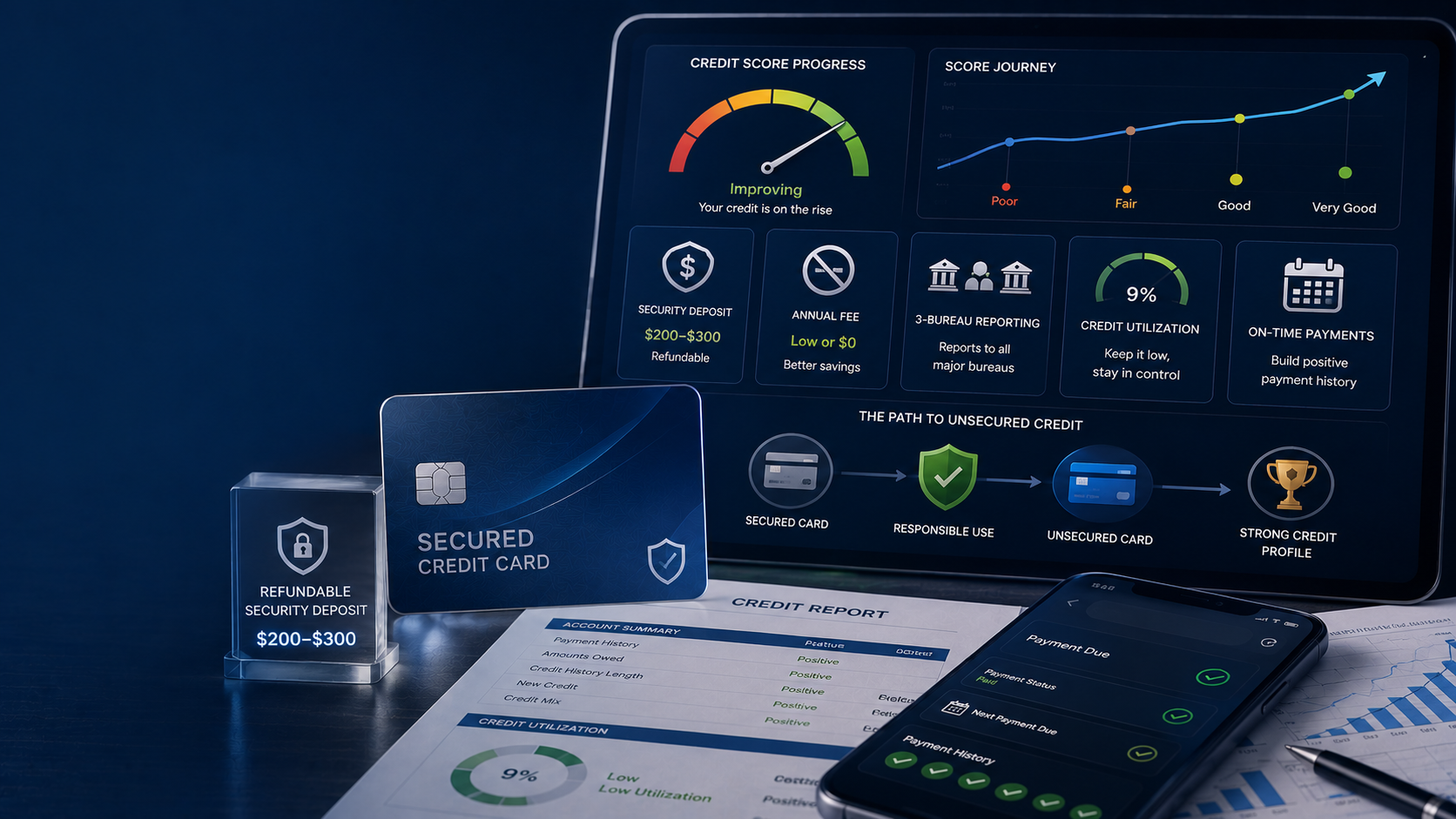
    What Is a Secured Credit Card?

    A secured credit card is a credit card that requires you to put down a refundable cash deposit before you’re approved. That deposit becomes your credit limit in most cases — so if you deposit $300, your card will typically have a $300 spending limit. If you deposit $500, your limit is usually $500.

    The word “secured” refers to the fact that the card issuer is protected by your deposit. If you stop paying your bill, the lender can keep your deposit to cover the outstanding balance. This arrangement lowers the lender’s risk, which is why secured cards are available to people who might not qualify for other types of credit.

    Here’s the most important thing to understand: a secured card is still a real credit card. It functions like any other credit card in day-to-day use:

    • You make purchases with it at stores, online, and anywhere credit cards are accepted.
    • You receive a monthly statement showing your balance, minimum payment, and due date.
    • You’re expected to pay your bill on time each month.
    • Your payment activity is reported to the three major credit bureaus — Equifax, Experian, and TransUnion.

    That last point is the key. The purpose of a secured card isn’t really to give you a line of credit — it’s to give you a credit-building tool. Every on-time payment you make is reported to the bureaus and helps establish a positive payment history, which is the single most important factor in your credit score.

    Your deposit is not a fee. It’s held in a separate account by the card issuer, usually interest-bearing (though the interest is minimal). As long as you manage the card responsibly — paying on time, keeping your balance low, and not defaulting — you’ll get that deposit back when you close the account or upgrade to an unsecured card with the same issuer.

    Most secured cards require a minimum deposit between $200 and $300, and many allow you to deposit more to increase your credit limit. Some issuers let you add to your deposit over time, gradually raising your limit as your financial situation improves. A growing number of secured cards also offer a feature called a credit limit increase without an additional deposit after a period of on-time payments, which can be a helpful stepping stone.

    One common point of confusion: a secured credit card is not the same as a prepaid debit card. With a prepaid card, you load money onto the card and spend it down — there’s no credit being extended, no monthly bill, and no reporting to the credit bureaus. A prepaid card does nothing for your credit score. A secured credit card, by contrast, involves a real line of credit that you borrow against and repay, and your activity is reported to the bureaus just like any other credit card.

    If you’re starting from scratch no credit history at all or if you’re rebuilding after financial setbacks like missed payments, collections, or a bankruptcy, a secured card is often the most accessible and lowest-risk way to begin establishing positive credit.

    What Is an Unsecured Credit Card?

    An unsecured credit card is what most people picture when they hear the phrase “credit card.” It’s a traditional credit card that does not require a cash deposit. The card issuer extends you a line of credit based on your creditworthiness — your credit history, credit score, income, and overall financial profile — and trusts you to repay what you borrow.

    The word “unsecured” means the lender has no collateral backing the loan. If you don’t pay, they can’t seize a specific asset the way a lender could repossess a car or foreclose on a house. Instead, they rely on the strength of your credit profile and their ability to pursue repayment through collections, charge-offs, or, in extreme cases, legal action. Because the lender is taking on more risk, they’re more selective about who qualifies.

    An unsecured credit card works like this:

    • You’re approved for a credit limit based on your credit profile and income — this could be anywhere from $500 to $25,000 or more.
    • You make purchases up to your credit limit.
    • Each month, you receive a statement and can choose to pay the full balance, a portion of it, or the minimum payment.
    • If you carry a balance, you’re charged interest at the card’s APR (annual percentage rate).
    • Your payment activity is reported to all three major credit bureaus.

    Unsecured cards come in a wide range of tiers, from basic “starter” unsecured cards designed for people with fair credit to premium rewards cards aimed at those with excellent credit scores (typically 740 and above). The features, benefits, interest rates, and fees vary dramatically across these tiers:

    • Entry-level unsecured cards may have low credit limits, higher APRs, and few or no rewards. Some carry annual fees.
    • Mid-tier unsecured cards often offer modest cash back or points programs, moderate APRs, and perks like no foreign transaction fees.
    • Premium unsecured cards may offer generous sign-up bonuses, travel benefits, airport lounge access, and premium purchase protections — but they typically require excellent credit and may charge higher annual fees.

    Because an unsecured card doesn’t require a deposit, it’s more accessible from a cash-flow perspective — you don’t need to tie up hundreds of dollars upfront. But the approval bar is higher. Lenders want to see a track record of responsible credit use before they’ll extend an unsecured line.

    The unsecured credit card is the goal for most people who are building or rebuilding credit. It represents a level of trust from the financial system, offers more flexibility and purchasing power, and typically comes with better terms than a secured card. But it’s not where everyone starts — and that’s okay. The journey from a secured card to an unsecured one is a normal, expected part of building strong credit.

    Secured vs. Unsecured Credit Cards: The Key Differences

    Now that you understand what each type of card is, let’s put them side by side. The table below summarizes the most important differences between secured and unsecured credit cards so you can compare them at a glance.

    Feature Secured Credit Card Unsecured Credit Card
    Deposit required? Yes — typically $200–$300 minimum, refundable No deposit required
    Credit limit Usually equals your deposit (some issuers allow increases over time) Set by the issuer based on creditworthiness; can range from $500 to $25,000+
    Approval requirements Low — designed for bad or no credit; income verification may be required Moderate to high — requires fair to excellent credit depending on the card
    Risk to the lender Low — deposit acts as collateral Higher — no collateral backing the line of credit
    Interest rates (APR) Often higher than standard unsecured cards, though varies widely Varies widely — from low-teens for excellent credit to high-20s for subprime unsecured cards
    Annual fees Common, usually $25–$50; some no-fee options exist Varies — many no-annual-fee cards available; premium cards may charge $95–$500+
    Rewards and perks Rare; a few secured cards offer modest cash back Common — cash back, travel points, sign-up bonuses, purchase protections
    Reports to credit bureaus? Yes — all three major bureaus (confirm before applying) Yes — all three major bureaus
    Effect on credit score Same as unsecured — bureaus don’t distinguish between secured and unsecured in scoring Same as secured — payment history and utilization matter most
    Path to upgrade Many issuers allow graduation to unsecured after consistent on-time payments N/A — already unsecured; may qualify for better terms as credit improves
    Best for Building or rebuilding credit from a low starting point People with fair to excellent credit who want flexibility, rewards, and no deposit

    Let’s unpack a few of these differences in more detail, because the nuance matters.

    Deposit and Cash Flow

    The deposit is the most visible difference between the two card types. With a secured card, you need to have cash on hand to fund the deposit — usually $200 to $300 at minimum. That money is tied up for as long as you keep the card open. With an unsecured card, no deposit is required, so your cash stays available for other uses. For people living paycheck to paycheck, this is a meaningful distinction.

    Approval Odds

    Secured cards are designed for people who are building or rebuilding credit. Issuers are generally willing to approve applicants with thin credit files, past delinquencies, or even recent bankruptcies (though some require the bankruptcy to be discharged). Unsecured cards have stricter approval standards. Entry-level unsecured cards may accept applicants with fair credit (typically 580–669), but the best terms go to those with good or excellent credit.

    Fees and APR

    Secured cards often carry annual fees, though several reputable issuers now offer no-annual-fee secured cards. Their APRs tend to be on the higher side — often in the mid-20s — because the issuer is lending to higher-risk borrowers. However, if you pay your balance in full each month, the APR doesn’t matter; you won’t be charged interest.

    Unsecured cards span a wider range. No-annual-fee options are plentiful for people with good credit, and APRs can be quite competitive. Premium cards may charge annual fees but offer benefits that can offset them if you use the card enough. Subprime unsecured cards — those marketed to people with bad credit — can carry exorbitant fees and APRs, which we’ll discuss in detail later.

    Credit Limit and Purchasing Power

    A secured card’s credit limit is constrained by your deposit. If you can only afford a $300 deposit, your limit is $300 — which limits both your purchasing power and your ability to keep your credit utilization low (more on that in the credit score section). An unsecured card’s limit is set by the issuer and can grow over time as you demonstrate responsible use, giving you more flexibility.

    Rewards and Benefits

    Most secured cards don’t offer rewards. A handful provide modest cash back on certain categories, but these are the exception. Unsecured cards, especially mid-tier and premium options, offer rewards programs that can return 1–5% of your spending in cash, points, or miles. For people who use credit cards for everyday spending and pay the balance in full, these rewards add real value.

    The bottom line: a secured card is a stepping stone, not a destination. It’s a tool to help you build the credit profile you need to qualify for an unsecured card with better terms. An unsecured card is the destination — but it’s a destination that’s earned through consistent, responsible credit use over time.

    Who Should Get a Secured Credit Card?

    A secured credit card isn’t for everyone, but for certain situations, it’s the single best tool available for building or rebuilding credit. Here’s how to know if a secured card is the right choice for you.

    You Have No Credit History

    If you’re young, new to the country, or have simply never used credit before, you may have a “thin” credit file — meaning the credit bureaus don’t have enough information about you to generate a score. Lenders see thin files as risky because they have no evidence of how you handle credit. A secured card is one of the most reliable ways to build that history from nothing. Because the deposit reduces the lender’s risk, approval standards are low, and you can start establishing a payment record immediately.

    You Have Bad Credit

    If your credit score is below 580 — often referred to as the “poor” range — you may have difficulty qualifying for most unsecured cards. A secured card gives you a way to rebuild positive credit history while demonstrating to future lenders that you can manage a credit account responsibly. Every on-time payment is a data point that pushes your score in the right direction.

    You’re Recovering From a Major Financial Setback

    Bankruptcy, foreclosure, repossession, significant collections, or a period of missed payments can devastate your credit score. Recovering from these events takes time, and a secured card can be part of a deliberate rebuilding strategy. Many secured card issuers will approve applicants with a discharged bankruptcy, and some don’t even require a credit check — they use alternative data like income and banking history to make approval decisions.

    You Want to Build Credit Without the Temptation of a Large Credit Line

    Because a secured card’s limit equals your deposit, it naturally constrains your spending. For people who are working on financial discipline and don’t want the temptation of a large credit line, this can be a feature, not a bug. You can build a positive payment history with small, manageable purchases — a tank of gas, a recurring subscription, a grocery run — and pay them off each month.

    You Want Guaranteed Approval (Almost)

    While no credit card offers truly guaranteed approval, secured cards come close. The deposit eliminates most of the lender’s risk, so issuers are far more lenient. If you can fund the deposit and verify your identity and income, your odds of approval are very high — even with a rocky credit past.

    What to Look For in a Secured Card

    Not all secured cards are created equal. When choosing one, look for:

    • Reports to all three bureaus. This is non-negotiable. If a card doesn’t report to Equifax, Experian, and TransUnion, it won’t help your credit. Confirm this before applying.
    • Low or no annual fee. There are excellent secured cards with no annual fee. Avoid cards that charge high annual or monthly maintenance fees.
    • A reasonable minimum deposit. $200 is standard. Avoid cards that require unusually high deposits for low limits.
    • A path to graduation. Some issuers will review your account after 6–12 months of on-time payments and offer to upgrade you to an unsecured card, returning your deposit. This is a valuable feature.
    • No application or processing fees. Reputable secured cards don’t charge these. If a card does, it’s a red flag.

    A secured card is a means to an end. Use it consistently, pay on time every month, keep your balance low, and let it do its job: building the credit history you need to move on to better products.

    Who Should Get an Unsecured Credit Card?

    An unsecured credit card is the right choice when your credit profile is strong enough to qualify for one with reasonable terms. Here’s how to know if you’re ready.

    You Have Fair Credit or Better

    If your credit score is 580 or above — and especially if it’s 670 or above (the “good” range) — you’re likely a candidate for an unsecured card. Entry-level unsecured cards may accept scores in the 580–669 range, while better terms and rewards become available as your score climbs into the 700s.

    You Don’t Want to Tie Up Cash in a Deposit

    If you’d rather keep your cash available for emergencies, savings, or everyday expenses, an unsecured card’s no-deposit structure is a clear advantage. You get the credit-building benefits of a credit card without locking up $200–$500 in a refundable deposit.

    You Want Rewards or Better Terms

    If you use a credit card for regular spending and pay the balance in full each month, an unsecured rewards card can put money back in your pocket. Cash back, travel points, and sign-up bonuses have real value when you’re not paying interest. Unsecured cards also tend to offer lower APRs, better purchase protections, and perks like extended warranties and travel insurance.

    You’ve Already Built a Positive Payment History

    If you’ve had a secured card (or another credit account) for 6–12 months with consistent on-time payments, you may have built enough positive history to qualify for an unsecured card. This is the natural next step, and many secured card issuers will proactively offer to graduate you to an unsecured product.

    You Need a Higher Credit Limit

    If your secured card’s limit is too low to be practical — or too low to keep your credit utilization in a healthy range without obsessively micromanaging your balance — an unsecured card can provide a higher limit that gives you more breathing room. Higher limits, used responsibly, can actually help your credit score by lowering your utilization ratio.

    You Have Stable Income and Manageable Debt

    Lenders evaluate unsecured card applications based on both your credit score and your debt-to-income ratio. If you have a stable income and your existing debt obligations are manageable, you’re in a strong position to qualify for an unsecured card with good terms.

    What to Look For in an Unsecured Card

    When shopping for an unsecured card, consider:

    • No annual fee unless the rewards or benefits clearly justify it.
    • A competitive APR — though if you pay in full each month, this matters less.
    • Rewards that match your spending — cash back on groceries and gas, travel points, or flat-rate cash back on everything.
    • A sign-up bonus if you can meet the spending requirement naturally.
    • No hidden fees — watch for late fees, foreign transaction fees, and over-limit fees.
    • A grace period — at least 21 days from the statement closing date to the payment due date, during which you won’t be charged interest if you pay in full.

    An unsecured card is a privilege you earn by building a track record. If you’re not quite there yet, that’s fine — a secured card will get you there faster than you might think.

    Can You Get an Unsecured Card With Bad Credit?

    This is one of the most common questions we hear, and the honest answer is: yes, but you need to be very careful.

    There are unsecured cards marketed specifically to people with bad credit. They’re sometimes called “credit-building” or “credit-rebuilder” cards, and they don’t require a security deposit. On the surface, this sounds appealing — you get an unsecured card without tying up cash in a deposit. But the reality is that many of these cards come with terms that can make your financial situation worse, not better.

    The Warning Signs of Predatory Unsecured Cards

    Here’s what to watch out for when you encounter an unsecured card for bad credit:

    Exorbitant fees

    Some subprime unsecured cards charge an application fee, a processing fee, an annual fee, a monthly maintenance fee, and even a fee for requesting a credit limit increase. When you add it all up, you could pay $100–$200 or more in fees in the first year alone — before you’ve even made a purchase. Some cards charge fees that consume a significant portion of your credit limit before you ever use the card, leaving you with very little actual purchasing power.

    Very high APRs

    Subprime unsecured cards often carry APRs of 29.99% or higher. If you carry a balance, the interest charges can quickly spiral, making it harder to pay down the principal and increasing your overall debt load.

    Low credit limits

    These cards often start with very low limits — $300 to $500 — similar to what you’d get with a secured card, but without the security of a deposit. And because some of the fees are charged to the card immediately upon approval, your available credit can be dramatically less than the stated limit.

    No grace period

    Some predatory cards start charging interest from the day you make a purchase, with no grace period at all. This means even if you pay your balance in full each month, you’re still paying interest.

    No path to better terms

    Many of these cards don’t offer credit limit increases, rewards, or any upgrade path. You’re stuck with the same poor terms for as long as you hold the card.

    The Honest Recommendation

    If you have bad credit and you’re choosing between a predatory unsecured card and a reputable secured card, the secured card is almost always the better choice. Here’s why:

    • A secured card from a reputable issuer typically has lower fees — many have no annual fee at all.
    • Your deposit is refundable. Fees on a predatory unsecured card are gone forever.
    • A secured card often has a path to graduation — after 6–12 months of on-time payments, you may be upgraded to an unsecured card with your deposit returned.
    • The credit-building effect is the same. Both types report to the credit bureaus, and the bureaus don’t treat secured cards differently in scoring.

    There are a small number of legitimate unsecured cards for people with fair credit — cards from reputable issuers with reasonable fees and transparent terms. These can be a good option if you’re on the border between bad and fair credit and you don’t want to put down a deposit. But read the fine print carefully. If a card’s fee structure seems designed to extract money from you rather than help you build credit, walk away.

    A Note on “No Credit Check” Cards

    Some unsecured cards advertise “no credit check” approval. These are often catalog cards or store-specific cards that can only be used at certain retailers and may not report to all three bureaus. They often charge membership fees and carry high interest rates. Read the terms very carefully before applying, and confirm that the card reports to all three major credit bureaus. If it doesn’t, it won’t help you build credit.

    The bottom line: an unsecured card with bad credit is possible, but the terms are often designed to profit from your situation rather than help you improve it. A secured card from a reputable issuer is usually the safer, smarter, and cheaper path to the same destination.

    secured-vs-unsecured-credit-cards-under-100kb

    How to Graduate From a Secured to an Unsecured Card

    One of the most rewarding moments in a credit-building journey is the transition from a secured card to an unsecured one. This is often called “graduating,” and it represents tangible evidence that your credit profile has improved enough for a lender to trust you without a deposit.

    Here’s how to make that transition happen as smoothly and quickly as possible.

    Step 1: Use Your Secured Card Consistently

    Don’t let your secured card sit idle. Make small, regular purchases — a subscription, a gas fill-up, a grocery run — so there’s activity on the account each month. Activity generates statements, and statements generate payment reports to the credit bureaus. A card that’s never used produces no positive payment history.

    Step 2: Pay On Time, Every Time

    This is the single most important thing you can do. Payment history accounts for 35% of your credit score — more than any other factor. A single missed payment can set your progress back significantly. Set up autopay for at least the minimum payment, and consider paying the full balance each month to avoid interest charges and keep your utilization low.

    Step 3: Keep Your Balance Low

    Aim to keep your balance below 10% of your credit limit, and never exceed 30%. If your secured card has a $300 limit, try to keep your statement balance under $30, and certainly under $90. Credit utilization accounts for 30% of your credit score, and lower is always better. If you need to make a larger purchase, consider paying it down before the statement closing date so the reported balance stays low.

    Step 4: Wait 6 to 12 Months

    Most issuers want to see at least 6–12 months of consistent on-time payments before they’ll consider upgrading you. Some issuers review accounts automatically; others require you to request a review. Check your card’s terms or contact customer service to find out the policy.

    Step 5: Monitor Your Credit Score

    Track your credit score over time using a free credit monitoring service. You should see steady improvement as your positive payment history accumulates. If your score has climbed into the fair or good range (620+), you’re likely a candidate for an unsecured card — either through an upgrade with your current issuer or by applying for a new unsecured card from a different issuer.

    Step 6: Request an Upgrade or Apply for an Unsecured Card

    When your score has improved and you have 6–12 months of on-time payments, you have two options:

    Option A: Request an upgrade with your current issuer. Many secured card issuers will review your account and, if you’ve demonstrated responsible use, upgrade you to an unsecured card. This is the smoothest path because it doesn’t require a new credit application (which would result in a hard inquiry on your credit report). Your deposit is returned, your account history stays intact, and you continue building credit on the same account.

    Option B: Apply for a new unsecured card. If your current issuer doesn’t offer an upgrade path, or if you want a card with better terms or rewards, you can apply for an unsecured card from a different issuer. This will result in a hard inquiry on your credit report, which may cause a small, temporary dip in your score, but the long-term benefit of a better card usually outweighs the short-term impact.

    Step 7: Handle Your Secured Card Properly

    If you upgrade with your current issuer, they’ll return your deposit and convert the account to unsecured — no need to close anything. If you apply for a new unsecured card and are approved, you’ll need to decide what to do with your secured card. We cover this decision in detail in the next section.

    Graduating from a secured to an unsecured card is a milestone worth celebrating. It means your credit-building efforts are working, and the financial system is recognizing your progress. Keep the same habits that got you there — on-time payments, low balances, consistent activity — and your credit will continue to strengthen.

    Should You Close a Secured Card After Graduating?

    This is a more important question than most people realize, and the answer isn’t always what you’d expect. The short version: think carefully before closing a secured card, because it can affect your credit score in ways you might not anticipate.

    Let’s break down why.

    The Impact on Credit Utilization

    Credit utilization — the percentage of your available credit that you’re using — accounts for 30% of your credit score. It’s calculated across all your credit card accounts, both individually and in aggregate. When you close a secured card, you lose that card’s credit limit, which reduces your total available credit.

    Here’s an example. Suppose you have a secured card with a $500 limit and a new unsecured card with a $1,000 limit. Your total available credit is $1,500. If you typically carry a balance of $150 across both cards, your utilization is 10% — a healthy range.

    Now suppose you close the secured card. Your total available credit drops to $1,000. That same $150 balance now represents 15% utilization — still okay, but higher than before. If your balance were $300, closing the secured card would push your utilization from 20% to 30% — a significant jump that could negatively affect your score.

    If closing a secured card would push your utilization above 30%, it’s better to keep it open — at least until your new unsecured card’s limit is high enough to absorb the difference.

    The Impact on Average Age of Accounts

    The length of your credit history accounts for 15% of your credit score, and a key component is the average age of your accounts. Older accounts help your score because they demonstrate a longer track record of credit use.

    When you close a credit card, the account remains on your credit report for up to 10 years and continues to contribute to your average age of accounts during that time. However, once it falls off your report, your average account age could decrease, which may cause a dip in your score.

    If your secured card is one of your oldest accounts, closing it could eventually shorten your credit history. If it’s your only other account, the impact could be more noticeable.

    When It Makes Sense to Close a Secured Card

    There are situations where closing a secured card is the right call:

    • The card charges an annual fee and you no longer use it. If you’ve graduated to an unsecured card and the secured card is sitting unused while charging you $35–$50 per year, the cost may not be worth the credit score benefit. Consider whether the fee is worth paying to keep the account open.
    • Your utilization won’t be significantly affected. If your new unsecured card has a high enough limit that closing the secured card won’t push your utilization above 30%, the impact on your score will be minimal.
    • You have other older accounts. If you have multiple credit accounts with long histories, closing one secured card won’t dramatically shorten your average account age.
    • You want your deposit back and don’t qualify for an upgrade. If your issuer doesn’t offer an upgrade path and you need the deposit returned for other financial priorities, closing the card may be the practical choice.

    When It Makes Sense to Keep a Secured Card Open

    • The card has no annual fee. If it costs you nothing to keep open, there’s no financial downside, and the account continues to contribute to your credit history and available credit.
    • Closing it would push your utilization too high. Keep it open until your other credit limits grow enough to absorb the difference.
    • It’s one of your oldest accounts. Preserving long-standing accounts helps your average age of accounts over time.
    • You can use it for a small recurring charge. Put a single small subscription on the card and set up autopay. This keeps the account active with minimal effort and cost.

    A Practical Approach

    If your secured card has no annual fee, the simplest strategy is to keep it open, use it occasionally for a small purchase, and let it continue contributing to your credit profile. If it has an annual fee, weigh the cost against the credit score benefit. In many cases, it’s worth paying a modest annual fee for a year or two until your other accounts have aged and your credit limits have grown — then close it when the impact will be minimal.

    There’s no single right answer for everyone. The decision depends on your specific credit profile, your other accounts, your financial priorities, and the terms of your secured card. If you’re unsure, a credit professional can help you evaluate the trade-offs in the context of your overall credit strategy.

    How Each Card Affects Your Credit Score

    One of the most persistent myths about credit cards is that secured cards are somehow “lesser” or treated differently by the credit scoring system. This is not true. From a credit scoring perspective, secured and unsecured credit cards are identical. The major credit scoring models — FICO and VantageScore — do not distinguish between the two. They evaluate both based on the same factors:

    Payment History (35%)

    This is the most important factor in your credit score, regardless of which type of card you have. Every on-time payment is reported to the credit bureaus and contributes positively to your score. Every missed or late payment is reported and contributes negatively. A secured card and an unsecured card contribute to this factor in exactly the same way.

    If you make on-time payments on a secured card for 12 months, the positive impact on your score is the same as it would be for 12 months of on-time payments on an unsecured card. The bureaus see payment activity — not the type of card behind it.

    Credit Utilization (30%)

    Your credit utilization ratio is the amount of credit you’re using divided by the amount you have available. If you have a $500 limit and a $50 balance, your utilization is 10%. Lower utilization is better for your score, and the scoring models look at both individual card utilization and your overall utilization across all cards.

    Because secured cards typically have lower limits, it can be harder to keep utilization low. A $300 limit means a $90 balance already puts you at 30% — the upper end of the recommended range. With an unsecured card that has a $2,000 limit, the same $90 balance is only 4.5% utilization. This is one practical advantage of unsecured cards: higher limits make it easier to maintain low utilization without constantly micromanaging your balance.

    That said, you can keep utilization low on a secured card by making small purchases and paying them down before the statement closes. The scoring impact is the same.

    Length of Credit History (15%)

    The age of your accounts matters. Older accounts help your score, and a longer average account age is better. Both secured and unsecured cards contribute to this factor equally. An account opened today — whether secured or unsecured — starts contributing to your credit history immediately and continues to age over time.

    Credit Mix (10%)

    The scoring models like to see a mix of different types of credit — revolving accounts (like credit cards) and installment accounts (like auto loans, mortgages, or personal loans). Having both secured and unsecured credit cards contributes to your credit mix in the same way, since both are revolving accounts. The scoring models don’t give extra points for having one type over the other.

    New Credit and Inquiries (10%)

    When you apply for any credit card — secured or unsecured — the lender performs a hard inquiry on your credit report, which can cause a small, temporary dip in your score (usually 1–5 points). Multiple hard inquiries in a short period can have a compounding effect, so it’s wise to space out applications. This applies equally to both types of cards.

    The Bottom Line on Scoring

    The credit scoring system doesn’t care whether your card is secured or unsecured. It cares whether you pay on time, keep your balances low, maintain a long and diverse credit history, and apply for new credit sparingly. Both types of cards give you the opportunity to build positive credit in all of these areas.

    The practical difference is that secured cards typically have lower limits, which makes low utilization harder to maintain, and they may lack the rewards and benefits of unsecured cards. But from a pure credit-building standpoint, a secured card used responsibly is just as effective as an unsecured card used responsibly — and far more accessible if your credit is damaged or nonexistent.

    Pros and Cons of Secured Credit Cards

    Let’s summarize the advantages and disadvantages of secured credit cards so you can weigh them clearly.

    Pros

    • Accessible approval. Designed for people with bad or no credit. If you can fund the deposit, your approval odds are very high.
    • Effective credit building. Reports to all three major bureaus, just like an unsecured card. On-time payments build positive credit history.
    • Refundable deposit. Your money isn’t gone — it’s held in an account and returned when you close the card or upgrade.
    • Controlled spending. The deposit-based limit naturally constrains your spending, which can help if you’re working on financial discipline.
    • Path to graduation. Many issuers offer a clear upgrade path to an unsecured card after a period of responsible use.
    • No risk of overspending beyond your means. You can’t spend more than your deposit (in most cases), which provides a built-in safety valve.
    • Equal scoring treatment. The credit bureaus treat secured cards identically to unsecured cards in scoring.

    Cons

    • Requires upfront cash. You need $200–$300 (or more) to fund the deposit, which may be difficult if money is tight.
    • Low credit limits. Your limit is tied to your deposit, which can make it harder to keep utilization low and limits purchasing power.
    • Higher APRs. Interest rates are often in the mid-20s or higher, though this only matters if you carry a balance.
    • Annual fees are common. While no-fee options exist, many secured cards charge $25–$50 per year.
    • Few or no rewards. Most secured cards don’t offer cash back, points, or other rewards programs.
    • Less flexibility. You can’t increase your limit without adding to your deposit (unless your issuer offers increases based on payment history).

    Pros and Cons of Unsecured Credit Cards

    Pros

    • No deposit required. Your cash stays available for other uses — no need to tie up hundreds of dollars upfront.
    • Higher credit limits. Limits are set by the issuer based on your creditworthiness and can grow over time, giving you more purchasing power and making low utilization easier to maintain.
    • Rewards and benefits. Many unsecured cards offer cash back, travel points, sign-up bonuses, purchase protections, extended warranties, travel insurance, and other perks.
    • Lower APRs (for qualified applicants). If you have good or excellent credit, you can qualify for APRs in the low-to-mid teens, and some cards offer 0% introductory APR periods.
    • No-annual-fee options. Many excellent unsecured cards charge no annual fee, making them free to carry.
    • Greater flexibility. Higher limits and better terms give you more room to manage your finances strategically.

    Cons

    • Harder to qualify. Requires fair to excellent credit. If your score is below 580, most reputable unsecured cards will be out of reach.
    • Risk of overspending. Without the natural constraint of a deposit-based limit, it’s easier to charge more than you can afford to repay.
    • Interest charges can compound. If you carry a balance, high APRs (especially on subprime unsecured cards) can lead to rapidly growing debt.
    • Temptation of rewards. The prospect of earning cash back or points can encourage spending beyond your means if you’re not disciplined about paying the balance in full.
    • Hard inquiry on application. Each application results in a hard inquiry, which can cause a small, temporary score dip.
    • Predatory subprime options. Unsecured cards marketed to people with bad credit often carry exorbitant fees and terms that can worsen your financial situation.

    Common Mistakes to Avoid

    Whether you’re using a secured or an unsecured credit card, certain mistakes can undermine your credit-building efforts and cost you money. Here are the most common ones — and how to avoid them.

    1. Missing Payments

    A single missed payment can stay on your credit report for up to seven years and can cause a significant score drop, especially if your credit history is short. Set up autopay for at least the minimum payment on every credit card you hold. If you prefer to pay manually, set calendar reminders for at least a week before each due date.

    2. Carrying High Balances

    Even if you pay on time, carrying a high balance relative to your credit limit hurts your score. Aim to keep your statement balance below 10% of your limit, and never above 30%. If you need to make a large purchase, consider paying it down before the statement closes so the reported balance stays low.

    3. Applying for Too Many Cards at Once

    Each credit card application results in a hard inquiry on your credit report. Multiple inquiries in a short period can signal to lenders that you’re desperate for credit, which can lower your score and reduce your approval odds. Space out applications by at least 6 months when possible.

    4. Choosing a Card Without Reading the Fine Print

    Before applying for any credit card, read the terms and conditions carefully. Look for annual fees, monthly maintenance fees, application fees, processing fees, APR, grace period, and foreign transaction fees. If the fee structure seems designed to extract money rather than help you build credit, look elsewhere.

    5. Confusing a Secured Card With a Prepaid Card

    A prepaid debit card is not a credit card. It doesn’t report to the credit bureaus and doesn’t help you build credit. If your goal is to build or rebuild credit, make sure the card you’re applying for is specifically a credit card — secured or unsecured — and that it reports to all three major bureaus.

    6. Closing Your Oldest Card Too Soon

    Closing your oldest credit card can shorten your credit history and reduce your available credit, both of which can negatively affect your score. Think carefully before closing any older account, and consider keeping it open with a small recurring charge if it has no annual fee.

    7. Not Using Your Card at All

    A credit card that sits in a drawer doesn’t build credit. Issuers may close inactive accounts after a period of inactivity (typically 12–24 months), which can reduce your available credit and shorten your credit history. Make at least one small purchase each month to keep the account active.

    8. Only Paying the Minimum

    While paying the minimum keeps your account in good standing, it means you’re carrying a balance and paying interest. Over time, interest charges can make your purchases significantly more expensive and make it harder to pay down the principal. Aim to pay your balance in full each month. If you can’t, pay as much above the minimum as you can afford.

    9. Ignoring Your Credit Report

    Your credit report contains the information that determines your score. Errors on your report — accounts you don’t recognize, incorrect payment statuses, outdated information — can drag down your score unfairly. You’re entitled to a free copy of your credit report from each of the three major bureaus every 12 months through AnnualCreditReport.com. Review them regularly and dispute any inaccuracies.

    AnnualCreditReport.com

    10. Falling for “Guaranteed Approval” Schemes

    No legitimate credit card offers guaranteed approval. Cards that make this claim often have hidden fees, don’t report to all three bureaus, or are catalog cards with limited utility. Stick with cards from reputable issuers — major banks and credit unions — and verify their terms before applying.

    Avoiding these mistakes doesn’t require perfection. It requires awareness and consistent good habits. Pay on time, keep your balances low, read the terms, and monitor your credit. Do these things reliably, and your credit score will reflect your effort.

    Frequently Asked Questions

    1. Is a secured credit card better than an unsecured credit card?

    Neither is inherently “better” — they serve different purposes at different stages of your credit journey. A secured card is the right choice when you’re building credit from scratch or rebuilding after financial setbacks, because it’s accessible and effective for establishing positive payment history. An unsecured card is the right choice when your credit is strong enough to qualify for one with good terms, because it offers higher limits, rewards, and no deposit requirement. The best card for you is the one that matches your current credit profile and financial goals.

    2. How long does it take to graduate from a secured to an unsecured card?

    Most issuers review secured card accounts for potential upgrades after 6–12 months of consistent on-time payments. Some may take longer — 12–18 months — depending on your starting credit profile and how quickly your score improves. You can speed up the process by paying on time every month, keeping your utilization low, and avoiding new credit applications during this period.

    3. Do secured credit cards build credit the same as unsecured cards?

    Yes. The credit bureaus and scoring models (FICO and VantageScore) do not distinguish between secured and unsecured cards. Both report payment activity, utilization, account age, and other factors in the same way. A secured card used responsibly builds credit just as effectively as an unsecured card used responsibly. The key is consistent on-time payments and low balances.

    4. Can I get an unsecured card with no deposit and bad credit?

    Yes, but you should proceed with caution. Unsecured cards for bad credit exist, but many come with high fees, high APRs, low limits, and no upgrade path. Some are outright predatory. Before applying, read the terms carefully, compare the total first-year fees to what you’d pay for a secured card, and confirm the card reports to all three major bureaus. In most cases, a secured card from a reputable issuer is the safer and cheaper option for building credit with bad credit.

    5. What happens to my deposit when I upgrade from a secured to an unsecured card?

    If your issuer upgrades your secured card to an unsecured card, your deposit is refunded — usually as a statement credit or a check. The account remains open with the same history, so there’s no impact on your credit age. If you close the secured card instead of upgrading, your deposit is also refunded after the final balance is paid.

    6. Will closing a secured card hurt my credit score?

    It can. Closing any credit card reduces your total available credit, which can increase your utilization ratio — and higher utilization can lower your score. Closing an older account can also eventually shorten your average account age, though the account remains on your credit report for up to 10 years after closing. If your secured card has no annual fee, consider keeping it open with a small recurring charge to preserve the credit limit and account age.

    7. How many credit cards should I have to build credit?

    There’s no magic number, but most credit experts recommend having 2–3 credit cards once your credit is established. This provides enough active accounts to build a strong payment history and gives you enough total credit limit to keep utilization low. However, more cards aren’t always better — each application results in a hard inquiry, and managing multiple cards requires discipline. Start with one card, build a solid payment history, and add cards gradually as your credit improves and your financial situation warrants.

    8. What credit score do I need for an unsecured credit card?

    It depends on the card. Entry-level unsecured cards may accept scores in the 580–669 range (fair credit). Cards with better terms, rewards, and no annual fees typically require scores of 670 or above (good credit). Premium rewards cards with the best perks usually require scores of 740 or above (excellent credit). If your score is below 580, a secured card is generally your best option for building the credit you need to eventually qualify for an unsecured card.

    Take the Next Step Toward Stronger Credit

    Choosing between a secured and an unsecured credit card is just one piece of a larger credit-building strategy. If you’re dealing with negative items on your credit report — late payments, collections, charge-offs, inaccuracies, or errors — having the right card can help you build positive history, but it won’t address the underlying issues holding your score down.

    That’s where we come in. At credit-repair.com, we offer a comprehensive, attorney-backed approach to credit repair that goes beyond surface-level fixes. Our process includes:

    • A thorough credit audit across all three major bureaus to identify errors, inaccuracies, and disputable negative items.
    • Disputing inaccuracies under the Fair Credit Reporting Act (FCRA), with the support of experienced attorneys who ensure every step is ethical, accurate, and legally compliant.
    • Negotiating with creditors to resolve outstanding debts and explore options for removing negative marks.
    • A customized repair plan tailored to your specific credit profile, goals, and timeline.
    • Ongoing education and support so you understand not just what we’re doing, but why — and how to maintain strong credit long after our work is done.

    We operate with full transparency. No hidden fees. No misleading claims. No guarantees of specific outcomes, because no legitimate credit repair firm can honestly guarantee a particular score increase. What we can guarantee is that we’ll work diligently, ethically, and in full compliance with federal law to give your credit the best possible chance to improve.

    Ready to see where you stand? Start with a free credit audit at credit-repair.com. We’ll review your credit reports from all three major bureaus, identify what’s helping and what’s hurting your score, and give you a clear, honest picture of your options — with no obligation.

    Your credit journey doesn’t have to be a guessing game. With the right tools, the right information, and the right team in your corner, you can take control of your financial future — one step at a time.

    This article is for educational purposes only and does not constitute legal or financial advice. Your individual credit situation is unique, and results vary based on your specific circumstances. Credit repair is a process that requires time, consistency, and compliance with applicable federal laws, including the Fair Credit Reporting Act (FCRA).

  • Best Secured Credit Cards to Rebuild Your Score in 2026

    Best Secured Credit Cards to Rebuild Your Score in 2026

    If your credit score has taken a hit — whether from late payments, a collections account, a bankruptcy, or simply a thin credit file you never had the chance to build — you’ve probably been told the same thing over and over: “Get a secured credit card.”That advice is sound. A secured card is one of the most reliable, legally protected tools for rebuilding credit in the United States. But here’s what most guides won’t tell you: the “best” secured card is not a single product. It’s the card that fits your specific situation, your budget, and your long-term plan.That’s why this article does something different. Instead of pushing you toward a handful of branded cards (whose terms can change at any time), we’re going to give you a criteria-based framework — a way to evaluate any secured card you come across and decide whether it deserves a place in your wallet. We’ll walk through the seven factors that actually matter, describe what to look for in each major category, and give you a comparison table you can fill in as you shop around.We’ll also show you how to apply without dinging your score, how to use whichever card you pick so it actually moves the needle, and the red flags and common mistakes that trip people up along the way.No quick fixes. No guarantees. Just a clear, honest path forward — the same approach we take with every client at credit-repair.com.

    What Makes a Secured Card “the Best”?

    A secured credit card is a regular credit card backed by a refundable cash deposit. That deposit becomes your credit line in most cases — put down $300, and you get a $300 spending limit. The deposit protects the issuer if you stop paying, which is why they’re willing to approve people with damaged or limited credit.

    Here’s the key point: a secured card is not a prepaid card, and it is not a debit card. When you make a purchase with a secured card, the issuer lends you the money, you owe them a balance, and — this is the part that matters — they report your payment activity to the credit bureaus. That reporting is what rebuilds your score.

    So what makes a secured card “the best”? It’s not the flashiest marketing or the biggest sign-up bonus. The best secured card for you is the one that:

    • Reports to all three major bureaus (Equifax, Experian, and TransUnion) so your good behavior actually shows up everywhere a lender might look.
    • Costs you as little as possible in fees, because every dollar you spend on fees is a dollar not going toward your deposit, your balances, or your life.
    • Has a realistic path to graduate to an unsecured card — meaning the issuer will eventually review your account and, if you’ve handled it well, return your deposit and upgrade you to a regular card.
    • Fits your deposit budget without forcing you to tie up money you can’t afford to lock away.
    • Is issued by a reputable lender that operates within the Fair Credit Reporting Act (FCRA) and other federal consumer protections.

    A card can be perfect on paper but wrong for you if the deposit is too high, the fees eat you alive, or the issuer doesn’t report to all three bureaus. That’s why we evaluate cards against criteria, not against brand names.

    The 7 Selection Criteria That Actually Matter

    When you’re comparing secured cards, these are the seven factors worth your time. Everything else is marketing.

    1. Annual Fee

    The annual fee is what the issuer charges you simply for having the card, regardless of whether you use it. This is the single most important cost to watch.

    Some secured cards charge $0. Others charge anywhere from $25 to $50 per year. A few charge more, or sneak in monthly “maintenance” fees on top. Because secured cards rarely come with sign-up bonuses or rewards that offset costs, an annual fee is money out of your pocket from day one — before you’ve even made a single purchase.

    What to look for: A card with no annual fee, or an annual fee under $35 if a no-fee option isn’t available to you.

    2. Bureau Reporting

    This is non-negotiable. A secured card that doesn’t report to all three major credit bureaus is not rebuilding your credit — it’s just a spending tool.

    Your FICO and VantageScore scores are calculated from the information in your credit reports at Equifax, Experian, and TransUnion. If a card only reports to one or two bureaus (or worse, none), your on-time payments only show up in some of the places lenders might look. That means your rebuilt credit may not be visible when you apply for an apartment, a car loan, or a mortgage.

    What to look for: Explicit confirmation — in the card’s terms or FAQ — that the issuer reports to all three major bureaus: Equifax, Experian, and TransUnion.

    Don’t assume. Some issuers only report to one or two, and some smaller or newer issuers may not report at all unless you miss a payment.

    Why it matters: Rebuilding credit is hard enough. Don’t do the work and then have it invisible to two-thirds of the system that’s supposed to reward you.

    3. Deposit Required

    The deposit is the money you lock up to secure the card. It’s refundable — you get it back when you close the card in good standing or graduate to an unsecured card — but while it’s locked, you can’t use it for anything else.

    Typical minimum deposits run from $49 to $300, and most cards let you deposit more to get a higher credit line. Some issuers offer flexible deposit options based on your credit profile, where you might qualify for a $200 credit line with a $49, $99, or $200 deposit.

    What to look for: A minimum deposit you can comfortably afford to lock away for 12 to 24 months. For most people starting out, that’s $200 or less. If cash is tight, look for issuers that offer partial security deposits (where a smaller deposit unlocks a larger line) or no-deposit secured options that use your banking history instead of an upfront deposit.

    Why it matters: If the deposit stretches your budget so thin that you can’t pay your other bills, the card is creating a new financial problem while trying to solve an old one. Rebuilding credit should not require choosing between your deposit and your groceries.

    4. APR (Annual Percentage Rate)

    The APR is the interest rate you pay if you carry a balance from month to month. Secured card APRs tend to be high — often 25% to 30% or more — because issuers are taking on riskier borrowers.

    Here’s the honest truth: if you pay your statement balance in full every month, the APR doesn’t matter. You won’t be charged interest. But if there’s any chance you’ll carry a balance — even occasionally — a lower APR will save you real money.

    What to look for: First, commit to paying in full every month. Second, as a safety net, look for a card with an APR at the lower end of the secured-card range. Treat a high APR as a deterrent, not a dealbreaker — but don’t pretend it doesn’t exist.

    5. Graduation Path

    A graduation path means the issuer can eventually upgrade your secured card to an unsecured card after you demonstrate responsible account management.

    Graduation can allow you to receive your security deposit back and potentially receive a higher credit limit without opening a completely new account.

    What to look for: A documented graduation policy, automatic account reviews, and clear information about when your account becomes eligible.

    6. Credit Line Increase

    A secured card that allows you to increase your credit line by adding to your deposit can become more useful as your financial situation improves.

    A higher credit limit can also make it easier to keep your utilization ratio low, assuming your spending does not increase along with the limit.

    What to look for: The ability to add deposits in increments, clear credit-line increase rules, and no unnecessary hard inquiry for an increase that is funded by an additional deposit.

    7. Fees and Perks

    Once the major fundamentals are covered, look at secondary features such as rewards, free credit monitoring, cell phone protection, foreign transaction fees, and other cardholder benefits.

    Treat everything else as a bonus.

    Why it matters: Free credit score monitoring keeps you informed as you rebuild. A small cash-back reward offsets some of your normal spending. Neither of these is the reason to choose a card, but both make a good card better.

    The Secured Card Comparison Framework

    Use this table to evaluate any secured card you’re considering. Print it out, copy it into a spreadsheet, or just fill it in mentally as you read terms and reviews. The goal is to compare cards side by side on the factors that actually determine whether they’ll help you rebuild.

    Criteria Card A Card B Card C What to Aim For
    Annual fee $0, or under $35
    Reports to all 3 bureaus? Yes — Equifax, Experian, TransUnion
    Minimum deposit $200 or less
    Maximum credit line $2,000+ (via added deposit)
    APR Lower is better, but only matters if you carry a balance
    Graduation path? Yes — automatic review after 6–12 months
    Credit line increase by deposit? Yes
    Monthly maintenance fees? None
    Application pull type Soft pull or pre-qualification first
    Rewards / perks Free credit score access; 1–2% cash back is a bonus
    Foreign transaction fee 0% if you travel
    Late payment fee Check terms — know the cap
    Issuer reputation Reputable bank or credit union; FCRA-compliant

    A few notes on how to fill this in:

    • Read the card’s terms and conditions (T&C) and FAQ page directly. Marketing pages emphasize the positives. The T&C is where the fees and limitations live.
    • Cross-reference recent reviews from independent financial publications and real cardholders. Terms change, and a review from two years ago may not reflect current reality.
    • Call the issuer if anything is unclear. A reputable issuer will answer direct questions about bureau reporting, graduation, and fees. If they won’t, that’s a red flag.

    Categories: How to Find the Right Card for Your Situation

    There’s no single “best secured card” — there are best cards for specific situations. Below, we describe what to look for in each category so you can match the card to your needs.

    Best for No Annual Fee

    If you’re rebuilding on a tight budget, every dollar matters. A no-annual-fee secured card lets you keep the card open for as long as you need without paying for the privilege.

    What to look for:

    • A $0 annual fee, clearly stated in the terms.
    • No monthly maintenance fees, program fees, or setup fees hiding in the fine print.
    • Reporting to all three bureaus (some no-fee cards skip a bureau — verify before you apply).
    • A reasonable APR, since no-fee cards sometimes compensate with higher interest rates.

    Who this is best for: Anyone who wants to minimize out-of-pocket costs while rebuilding, especially if you expect to carry the card for 18 to 24 months before graduating. It’s also the right choice if you’re juggling multiple rebuilding tools (like a credit-builder loan) and want to keep fixed costs low.

    Watch out for: Some “no annual fee” cards charge a one-time setup fee or monthly fees after the first year. Read the full fee schedule, not just the headline.

    Best for Low Deposit

    If you don’t have $200 to lock away, a low-deposit secured card can get you started with as little as $49 to $99. Some issuers offer partial security deposits — your credit profile determines whether you qualify for a $200 line with a $49, $99, or $200 deposit.

    What to look for:

    • A minimum deposit of $49 to $100, or a flexible deposit model that adjusts based on your profile.
    • A credit line that’s at least 2x to 4x your deposit if you qualify for a partial deposit (this is common with major issuers).
    • Clear terms on when and how you get the deposit back.
    • No requirement to deposit the full credit line amount if you don’t want to.

    Who this is best for: Anyone whose cash flow is tight — if you’re recovering from a financial setback and can’t afford to tie up $200+, this category gets you in the game without straining your budget.

    Watch out for: Low-deposit cards sometimes come with annual fees. Calculate the total cost over a year (deposit locked + fees paid) and compare it to a higher-deposit no-fee card. Sometimes the no-fee card is cheaper even though it requires more upfront.

    Best for Graduation (Unsecured Upgrade Path)

    A graduating secured card is one where the issuer proactively reviews your account and, if you’ve paid on time and kept your balance manageable, upgrades you to an unsecured card and returns your deposit — without a new application or hard credit pull.

    This is the category most people should care about, because graduation is the moment your rebuilding transitions into long-term credit health.

    What to look for:

    • A documented graduation policy (stated in the terms, FAQ, or confirmed by the issuer directly).
    • Automatic account reviews, typically starting at 6 to 12 months of responsible use.
    • No application or hard pull required to graduate.
    • A track record of actually graduating cardholders — check independent reviews and forum discussions to confirm the issuer follows through.

    Who this is best for: Anyone who wants a clear bridge from secured to unsecured credit without reapplying. If you’re serious about rebuilding and want the deposit back as soon as you’ve proven yourself, prioritize this category.

    Watch out for: Some issuers advertise graduation but rarely upgrade in practice. Reviews and user forums are your best signal for whether an issuer actually delivers. If you can’t find evidence of real graduations, treat the “path” as theoretical.

    Best for High Credit Limit

    If you want to keep your utilization ratio low — which is one of the fastest ways to improve your score — a card that allows a high credit line through additional deposits is valuable. With a $2,000 limit, a $200 balance is just 10% utilization. With a $300 limit, that same balance is 67% — which will drag your score down even if you pay it off every month.

    What to look for:

    • A maximum credit line of $2,000 to $5,000 or more, reachable by adding to your deposit over time.
    • The ability to add deposits in increments (not just one lump sum at opening).
    • No hard credit pull required to increase your limit by deposit.
    • Clear terms on how quickly additional deposits are reflected in your credit line.

    Who this is best for: People who spend moderately on their card each month and want to keep utilization under 10% without micromanaging every purchase. It’s also good for anyone whose score is being held back by high utilization on existing cards — adding a high-limit secured card can dilute your overall utilization.

    Watch out for: Don’t deposit more than you can afford to lock away. A high limit only helps if you can access your cash again when you need it. Remember: the deposit is refundable, but not on demand — you get it back when you close the card or graduate.

    Best for No Credit Check or Soft-Pull Approval

    If you’re worried that a hard credit inquiry will further damage your score (each hard pull can drop your score by a few points, and the inquiry stays on your report for two years), look for a card that offers pre-qualification with a soft pull or no credit check at all.

    What to look for:

    • A pre-qualification tool on the issuer’s website that uses a soft pull (which doesn’t affect your score) to show you which cards you’re likely to be approved for before you formally apply.
    • Cards that use banking history instead of a credit check to determine eligibility.
    • Clear disclosure that the pre-qualification step is a soft pull, not a hard one.

    Who this is best for: Anyone with a score so low that even a single hard inquiry feels risky, or anyone who wants to shop around without accumulating inquiries. It’s also useful if you’ve been denied recently and want to avoid another ding.

    Watch out for: Pre-qualification is not a guarantee of approval. When you formally apply, some issuers will still do a hard pull. Read the fine print to understand when the hard pull happens — ideally only after you’ve been pre-qualified and decide to proceed.

    Best with Rewards and Perks

    A growing number of secured cards offer cash back, free credit score monitoring, cell phone protection, travel benefits, or rent reporting. These perks used to be reserved for unsecured cards, but competition has pushed them into the secured market.

    What to look for:

    • 1% to 2% cash back on all purchases or on specific categories like dining and gas.
    • Free monthly credit score access so you can track your progress.
    • No foreign transaction fees if you travel outside the U.S.
    • Cell phone protection or extended warranty as a cardholder benefit.
    • Rent and utility reporting — a few secured cards (and some credit-builder products) report your rent and utility payments to the bureaus, which adds positive payment history without additional spending.

    Who this is best for: Anyone who has narrowed down their options to a few cards with similar fees and terms and wants a tiebreaker. Rewards should never be the primary factor in choosing a secured card, but they’re a legitimate differentiator when everything else is equal.

    Watch out for: Don’t pay an annual fee just to earn cash back. Do the math: if a card charges $35/year and earns you 1% cash back, you’d need to spend $3,500 per year just to break even on the fee. A no-fee card with no rewards is usually a better deal for a rebuilder.

    How to Apply Without Hurting Your Score

    One of the most common fears we hear from clients is: “Won’t applying for a credit card hurt my score?”

    It’s a fair concern. A hard credit inquiry can lower your score by a few points, and it stays on your report for two years (though the impact fades after about 12 months). But there’s a smart way to apply that minimizes or eliminates that impact.

    Step 1: Use Pre-Qualification Tools First

    Many major issuers offer a pre-qualification or pre-approval tool on their website. You enter some basic information — name, address, income — and the issuer does a soft pull of your credit to show you which cards you’re likely to qualify for.

    A soft pull does not affect your credit score. You can use as many pre-qualification tools as you want without accumulating inquiries.

    Use pre-qualification to:

    • Compare offers from multiple issuers without risk.
    • Identify cards where your approval odds are strongest.
    • Avoid unnecessary hard inquiries.
    • Compare fees, deposits, credit limits, and graduation policies before applying.

    Step 2: Submit Only One Formal Application

    Once you’ve compared your options and identified the card that fits your situation, submit one formal application rather than applying for several cards at once.

    A formal application typically results in a hard inquiry. Multiple applications in a short period can create multiple inquiries and make your credit profile look riskier to lenders.

    Step 3: Fund Your Deposit

    If you’re approved, fund the security deposit according to the issuer’s instructions. Remember that this money is generally held as security and is not available for everyday spending.

    Only deposit an amount you can comfortably afford to have tied up for the foreseeable future.

    Step 4: Set Up Autopay Immediately

    Set up automatic payments as soon as your account is active. At minimum, make sure the minimum payment is automatically paid before the due date.

    If your budget allows it, pay the statement balance in full each month.

    Step 5: Check Your First Statement

    Review your first statement carefully. Confirm the payment due date, credit limit, fees, interest rate, and other terms.

    Also confirm that the account is reporting correctly to the credit bureaus once reporting begins.

    How to Use Whichever Card You Pick the Right Way

    Choosing a good secured card is only half the process. What you do with it afterward determines whether it actually helps you rebuild.

    Rule 1: Never Miss a Payment

    One missed payment can undo months of progress.

    Set up autopay for at least the minimum payment, and set a calendar reminder to review your statement each month. Treat the due date as non-negotiable.

    Rule 2: Pay in Full If You Can

    Paying in full means you never carry a balance and never pay interest. It also keeps your utilization low. If you can’t pay in full, pay as much as you can — always more than the minimum.

    Rule 3: Keep Your Utilization Under 10%

    Utilization is the second biggest factor in your score, after payment history. Aim to keep your statement balance below 10% of your credit limit. On a $300 card, that means a statement balance under $30. On a $1,000 card, under $100.

    If you need to spend more than 10% in a given month, you have two options:

    • Make a mid-month payment to bring the balance down before the statement closes.
    • Add to your deposit to raise your credit line, which lowers your utilization ratio automatically.

    Rule 4: Use the Card Every Month

    A card that sits in a drawer doesn’t generate payment activity. Make at least one small purchase each month — a subscription, a tank of gas, a grocery run — and pay it off. This creates a steady stream of positive payment history.

    Rule 5: Don’t Close the Card Too Early

    Closing a secured card can reduce your available credit and shorten your average account age — both of which can temporarily lower your score. Keep the card open until you’ve either graduated to an unsecured card or opened another unsecured card with a comparable limit. If you must close it to get your deposit back, do so only after you have other positive accounts reporting.

    Rule 6: Track Your Progress

    Use the free credit score monitoring that comes with your card (or a free service) to watch your score trend over time. You should see gradual improvement within 3 to 6 months of consistent on-time payments, with more noticeable gains at the 12-month mark.

    Best secured credit cards to rebuild credit in 2026

    Red Flags to Avoid

    The secured card market includes some products that exist to extract money from people who are desperate to rebuild. Here’s what to watch for.

    1. High Annual or Monthly Fees

    If a card charges an annual fee above $50, or any monthly maintenance fee (some charge $5 to $12 per month — that’s $60 to $144 per year), walk away. There are reputable no-fee or low-fee options.

    2. No Bureau Reporting

    If you can’t confirm in writing that the card reports to all three major bureaus, skip it. A card that doesn’t report is not rebuilding your credit — it’s just a spending tool with your own money locked behind it.

    3. Application Fees

    Legitimate secured cards do not charge an application fee. If a card asks for money before you’re even approved, that’s a warning sign.

    4. “Credit Repair” Cards That Are Actually Catalog Cards

    Some products marketed as “credit repair cards” are actually catalog cards or merchant cards — they only let you buy goods from a specific catalog or store, and they may only report to one bureau (or none). These are almost never worth it. A real secured card is a Visa, Mastercard, American Express, or Discover card accepted anywhere those networks are accepted.

    5. Predatory APRs Above 30%

    While secured card APRs are generally high, anything above 30% is a signal that the issuer is pricing for default and isn’t interested in a long-term relationship. If you ever carry a balance, the interest will eat you alive.

    6. No Clear Path to Get Your Deposit Back

    If the issuer doesn’t clearly explain how and when you get your deposit returned — either through graduation or by closing the account in good standing — treat that as a red flag. Your deposit is your money, and you should know exactly how to reclaim it.

    7. Pressure to Buy Add-On Services

    Some issuers push add-ons like credit insurance, identity protection, or “credit accelerator” programs during the application process. These are rarely worth the cost. Decline them and focus on the fundamentals: on-time payments and low utilization.

    Common Mistakes That Slow Your Progress

    Even with the right card, people make mistakes that delay their recovery. Here are the most common ones we see.

    Mistake 1: Not Using the Card

    If you open a secured card and never use it, the issuer may eventually close it for inactivity — which can reduce your available credit and shorten your account history. Make at least one purchase per month, even if it’s a $5 charge.

    Mistake 2: Maxing Out the Card

    Using your full credit limit — even if you pay it off — can hurt your score if the balance is reported before you pay. The bureaus see your statement balance, not your payment timing. Keep your statement balance under 10% of your limit.

    Mistake 3: Missing a Payment

    One 30-day late payment can drop your score by 60 to 80 points or more, depending on your starting score. On a secured card — where the whole point is to build positive history — a late payment is especially damaging because it contradicts the story you’re trying to tell lenders. Set up autopay for at least the minimum.

    Mistake 4: Applying for Multiple Cards at Once

    Each application is a hard inquiry. Multiple inquiries in a short window signal risk and compound the score impact. Apply for one card, get approved, use it responsibly for 6+ months, then consider adding another if needed.

    Mistake 5: Closing the Card Too Soon

    If you close a secured card after just 3 or 4 months, you’ve cut short the payment history you were building. Keep the card open for at least 12 months, ideally until you graduate or have other positive accounts well-established.

    Mistake 6: Ignoring the Rest of Your Credit

    A secured card is one tool, not a complete strategy. If you have negative items on your report — late payments, collections, charge-offs, inaccurate information — those items are still dragging your score down. Pair your secured card with a proper credit repair plan that addresses errors and negotiates with creditors. This is exactly what we do at credit-repair.com: a comprehensive audit, disputes with all three bureaus, and a customized plan that works alongside tools like secured cards.

    Mistake 7: Expecting Overnight Results

    Credit rebuilding is a marathon, not a sprint. Most people see meaningful improvement in 6 to 12 months with consistent effort, and significant improvement in 18 to 24 months. Anyone promising faster results is either misleading you or using tactics that don’t last.

    Frequently Asked Questions

    1. Can a secured card really rebuild my credit?

    Yes — if the card reports to all three major bureaus and you use it responsibly (on-time payments, low utilization). A secured card generates payment history and contributes to your credit utilization ratio, both of which are major factors in your credit score. However, a secured card alone won’t fix negative items on your report. For the best results, pair it with a credit repair plan that addresses inaccuracies and negative marks.

    2. How much deposit do I need for a secured card?

    Most secured cards require a minimum deposit between $49 and $300. Some issuers offer partial security deposits where a smaller deposit unlocks a larger credit line, based on your credit profile. The deposit is refundable — you get it back when you close the card in good standing or graduate to an unsecured card.

    3. Will applying for a secured card hurt my credit score?

    The formal application typically involves a hard credit inquiry, which can lower your score by a few points. However, many issuers offer pre-qualification with a soft pull that doesn’t affect your score — use that first to check your odds. A single hard inquiry is minor and temporary; the positive history from the new card will outweigh it within a few months.

    4. How long does it take to graduate from a secured to an unsecured card?

    It depends on the issuer and your behavior. Some issuers review accounts automatically at 6 to 12 months; others may take longer or require you to request the upgrade. Graduation typically returns your deposit and may increase your credit limit. Not all issuers offer a graduation path — verify before you apply.

    5. What credit score do I need to get a secured card?

    Most secured cards are designed for people with bad credit or no credit, so the approval threshold is generally low. Some issuers don’t have a minimum score at all — they use your deposit as the qualifying factor. That said, a recent bankruptcy or active collections may affect approval with certain issuers. Pre-qualification tools will tell you where you stand before you formally apply.

    6. Can I have more than one secured card?

    Yes, but it’s usually best to start with one, use it responsibly for 6 to 12 months, then consider adding a second if you want to increase your total available credit. Applying for multiple cards at once generates multiple hard inquiries and signals risk. Two well-managed cards can improve your utilization ratio and diversify your credit profile, but only after you’ve proven you can handle one.

    7. Do secured cards build credit as fast as unsecured cards?

    Yes — the scoring models treat secured and unsecured cards the same way. What matters is your payment history, utilization, account age, and the fact that the card reports to the bureaus. The deposit behind the card is invisible to the scoring algorithm. The speed of your progress depends on your behavior and what else is on your report, not on whether the card is secured.

    8. What happens to my deposit if the issuer goes out of business?

    Your deposit is typically held in a separate, FDIC-insured account and should be returned to you even if the issuer fails. That said, always verify that the issuer is a reputable, regulated bank or credit union before applying. If you’re working with a smaller or newer issuer, ask directly where your deposit is held and how it’s protected.

    Next Steps: Pair Your Card With a Real Credit Plan

    A secured credit card is one of the best tools available for rebuilding your credit — but it works best as part of a broader strategy. If your credit report contains inaccuracies, outdated negative items, or accounts that could be disputed or negotiated, those items are holding your score down no matter how responsibly you use your new card.

    That’s where we come in.

    At credit-repair.com, we help individuals and families across the country take control of their financial future through honest, attorney-backed credit repair. Our process includes:

    • A comprehensive credit audit across all three major bureaus — Equifax, Experian, and TransUnion.
    • Disputing inaccuracies under the Fair Credit Reporting Act (FCRA), with the backing of experienced attorneys.
    • Negotiating with creditors to resolve legitimate negative items where possible.
    • A customized repair plan built around your specific goals and timeline.
    • Ongoing education so you understand how credit works and how to keep it strong for life.

    We don’t make empty promises or offer quick fixes. We believe in transparency, legal compliance, and measurable progress — the same values you should look for in a secured card.

    Ready to see where you stand? Get your free credit audit at credit-repair.com. We’ll review your reports from all three bureaus, identify what’s holding your score back, and build a plan that works alongside tools like your secured card to get you where you want to go.

    Your credit isn’t broken forever. With the right card, the right habits, and the right plan, you can rebuild — and we’re here to help you do it.

    This article is for educational purposes and does not constitute legal or financial advice. Credit outcomes vary based on individual circumstances. Sintra and credit-repair.com do not guarantee specific score improvements.
  • Identity Theft Protection: What to Do If Your Credit Is Compromised

    Identity Theft Protection: What to Do If Your Credit Is Compromised

    You opened a letter from a credit card company you’ve never heard of. Or maybe you checked your credit score and watched it drop 90 points overnight for no reason you can explain. Maybe a debt collector just called about a loan you never took out. If any of that sounds familiar, you’re in the right place.

    Identity theft is one of the most financially and emotionally draining things a person can go through. It doesn’t just cost money — it can quietly demolish the credit you’ve spent years building, lock you out of financing for a home or a car, and leave you untangling paperwork for months. But here’s the part most people don’t hear: you have powerful, legally backed tools to stop the damage and rebuild what was taken. The Fair Credit Reporting Act (FCRA) gives you rights that the credit bureaus and creditors are required by law to honor.

    This guide walks you through every step — from the first moments after you suspect identity theft, through the legal mechanisms that force bureaus to remove fraudulent information from your report, to the long-term habits that keep you protected. Whether you’re in the middle of it right now or you’re reading this to be prepared, you’ll leave with a clear plan.

    What Identity Theft Does to Your Credit

    To understand why identity theft is so destructive to your credit, it helps to understand how your credit score is built in the first place. Your FICO and VantageScore credit scores are calculated from the information reported about you by lenders to the three major credit bureaus — Equifax, Experian, and TransUnion. That information falls into five broad categories: payment history (about 35% of your score), amounts owed (about 30%), length of credit history (about 15%), credit mix (about 10%), and new credit (about 10%).

    Identity theft can damage nearly every one of those categories at once.

    Fraudulent Accounts

    When someone steals your identity and opens a new credit card, personal loan, utility account, or cell phone line in your name, that account gets reported to the bureaus as if you opened it yourself. At first, the damage might be invisible — a new account with a clean payment record can even temporarily help your score by adding to your credit mix and available credit. But the moment the thief stops paying (and they always stop paying), the missed payments, charge-offs, and eventual collections start landing on your report under your name.

    A single fraudulent account that goes unpaid for six months can generate six late-payment marks, a charge-off, and a collection — three serious derogatory items, all attached to your Social Security number and name. That’s enough to drop a 780 credit score into the low 600s in a matter of weeks.

    Hard Inquiries

    Every time someone applies for credit in your name, the lender pulls your credit report. That pull creates a hard inquiry on your file. One hard inquiry typically lowers your score by a few points and falls off after two years. But identity thieves rarely apply for just one account. A common pattern is “application fraud” — the thief submits dozens of credit applications in a short window, hoping a few slip through. Each application generates its own hard inquiry.

    Ten or fifteen hard inquiries in a single month signals to the scoring models that you’re desperate for credit or being turned down repeatedly. That alone can shave 50+ points off your score, even before any fraudulent account is opened. Worse, those inquiries stay on your report for 24 months and factor into your score for 12.

    Ruined Payment History

    Payment history is the single largest factor in your credit score. It measures whether you’ve paid your obligations on time, every time. When a thief runs up balances on a fraudulent account and never pays, the lender reports 30-day, 60-day, and 90-day late payments. Eventually the account charges off and may be sold to a collection agency. Each of those negative marks is a separate ding to your payment history — and they don’t just disappear because you later prove the account was fraudulent. They sit on your report, dragging your score down, until you take specific legal action to have them removed.

    Maxed-Out Utilization

    If a thief gains access to an existing credit card account rather than opening a new one, they can run the balance up to the limit. Credit utilization — the percentage of your available credit that you’re using — is the second biggest factor in your score. Utilization above 30% starts hurting your score; above 80%, the damage is severe.

    Warning Signs You May Be a Victim

    Identity theft often leaves clues before the full extent of the damage becomes obvious. Knowing what to watch for can help you catch it early.

    Unfamiliar Accounts or Inquiries

    One of the clearest signs is an account or hard inquiry on your credit report that you don’t recognize. This could be a credit card, personal loan, retail account, utility account, or another type of credit.

    Notifications About Accounts You Didn’t Open

    An email welcoming you to a service you never signed up for, a text from a bank you don’t use, or a “your application is under review” message for credit you never applied for — these are early warnings that someone is using your identity right now.

    A Notice That Your Information Was Exposed in a Data Breach

    If a company you do business with notifies you that your data was compromised in a breach, don’t shrug it off. Your name, address, Social Security number, or account credentials may now be for sale on the dark web. Freeze your credit the same day.

    The Immediate Steps After Identity Theft

    If you’ve confirmed — or even strongly suspect — that you’re a victim of identity theft, act now. The faster you move, the more damage you prevent. Here are the seven steps, in order, with the legal specifics that make each one work.

    Step 1: Place a Fraud Alert on Your Credit File

    A fraud alert is a notice attached to your credit report that tells lenders to take extra steps to verify your identity before extending credit in your name. You only need to place it with one of the three bureaus — that bureau is required by law to notify the other two.

    There are two types:

    • Initial fraud alert — lasts for one year. Anyone can request one; you don’t need to have already filed a police report. This is the fastest way to slow down new-account fraud while you sort out the rest.
    • Extended fraud alert — lasts for seven years. You’re eligible only if you’ve filed an identity theft report (an FTC Identity Theft Report counts). This is the stronger protection for confirmed victims.

    To place a fraud alert, contact any one of the three bureaus:

    • Equifax: equifax.com or 1-888-298-0045
    • Experian: experian.com or 1-888-397-3742
    • TransUnion: transunion.com or 1-800-680-7289

    A fraud alert doesn’t prevent you from applying for credit yourself — you’ll just go through an extra verification step. It’s free, it’s required to be honored, and it’s your first line of defense.

    Step 2: Freeze Your Credit at All Three Bureaus

    A credit freeze (also called a security freeze) is stronger than a fraud alert. It completely locks your credit file so that no new lender can pull your report — which means no new accounts can be opened in your name, period. Since most lenders won’t extend credit without seeing your report first, a freeze effectively shuts the door on new-account identity theft.

    As of federal law (the Economic Growth, Regulatory Relief, and Consumer Protection Act of 2018), freezing and unfreezing your credit is free at all three bureaus. You must place the freeze with each bureau separately:

    • Equifax: equifax.com or 1-888-298-0045
    • Experian: experian.com or 1-888-397-3742
    • TransUnion: transunion.com or 1-888-909-8872

    When you place a freeze, you’ll get a PIN or password from each bureau. Keep these somewhere secure — you’ll need them to temporarily lift the freeze when you apply for credit, a new apartment, a job that requires a credit check, or insurance.

    A freeze doesn’t affect your existing accounts or your credit score. It only blocks new pulls. You can temporarily lift it for a specific lender or a specific time period, then let it snap back into place.

    Fraud Alert vs. Credit Freeze

    Protection How It Works Best Use
    Fraud Alert Tells lenders to take additional steps to verify your identity. Useful when you want added protection without fully restricting access to your credit file.
    Credit Freeze Restricts access to your credit report so new creditors generally cannot pull it. Strongest protection against new-account identity theft.

    Step 3: File an Identity Theft Report

    Go to IdentityTheft.gov and file an identity theft report with the Federal Trade Commission. This creates an official record of the identity theft and gives you a recovery plan.

    The FTC report is particularly important because it can be used to support disputes and requests for blocking fraudulent information under FCRA Section 605B.

    Step 4: Contact Each Fraudulent Creditor

    Contact every lender or creditor associated with fraudulent accounts. Tell them the account was opened through identity theft and provide your identity theft documentation.

    Ask the creditor to close the fraudulent account, stop collection activity, and stop reporting fraudulent information to the credit bureaus.

    Step 5: Dispute Every Fraudulent Account

    Review all three credit reports and identify every fraudulent account, inquiry, collection, charge-off, and late payment resulting from the identity theft.

    Dispute each fraudulent item with the credit bureaus and provide the documentation required to support your identity theft claim.

    Step 6: File a Police Report

    Although the FTC Identity Theft Report is an important document, filing a police report can create another official record of the identity theft. Take your FTC report and supporting documentation with you when filing.

    Step 7: Keep Everything Documented

    Keep copies of every letter, report, statement, dispute, response, certified mail receipt, and other document connected to the identity theft.

    Organize everything in one physical or digital folder. You may need these records later if a bureau, creditor, regulator, or attorney needs additional documentation.

    How to Dispute Fraudulent Items

    Identity theft disputes are different from ordinary credit-report disputes because federal law provides specific protections for victims. The strongest protection is the identity-theft block under FCRA Section 605B.

    Gather Your Documentation First

    Before submitting disputes, gather:

    • Your credit reports showing the fraudulent accounts or inquiries
    • Your FTC Identity Theft Report
    • Your police report, if available
    • Government-issued identification
    • Proof of your current address
    • Correspondence from fraudulent creditors or collection agencies
    • Any other documentation showing that you did not authorize the accounts or transactions

    Dispute With the Credit Bureaus

    Send your dispute to each bureau that is reporting the fraudulent information. Clearly state that the account or inquiry resulted from identity theft and that you are requesting removal or blocking under the applicable provisions of the FCRA.

    Include copies of your supporting documents and keep proof that each bureau received your dispute.

    Dispute With the Furnisher

    You should also notify the creditor or other company that furnished the fraudulent information to the bureau.

    Tell them that you did not open or authorize the account and request that they investigate, close the fraudulent account, stop collection activity, and notify the credit bureaus that the information resulted from identity theft.

    Blocking Fraudulent Information Under FCRA 605B

    Section 605B of the FCRA is the most powerful tool an identity theft victim has. It provides a specific process for blocking information that resulted from identity theft.

    What Section 605B Does

    When you properly request a block and provide the required documentation, the credit bureau must generally block the reporting of information that resulted from identity theft within four business days of receiving the request.

    That’s not a suggestion. It’s a statutory mandate. The four-business-day clock starts the day the bureau receives your dispute — which is why certified mail with return receipt is so important. Without proof of receipt, you can’t prove the clock started.

    What “Block” Means

    Blocking is different from deleting. When information is blocked:

    • It is removed from your credit report and no longer visible to anyone who pulls your report
    • It cannot be used in any credit scoring model that relies on that bureau’s data
    • The furnisher is notified that the block has been placed
    • The information is, in practical terms, treated as if it doesn’t exist for credit-reporting purposes

    A block can be lifted only if:

    • The furnisher (creditor) investigates and determines the information was correct and resulted from your own actions, not identity theft
    • The bureau determines your identity theft report was fraudulent or inaccurate
    • The block is lifted for other reasons specified in the statute

    If a block is lifted, the bureau must notify you in writing at least five business days before re-reporting the information, giving you time to respond or seek legal help.

    What an “Identity Theft Report” Must Contain

    For 605B to apply, your identity theft report must be a proper, documented report — not just a letter saying “I was robbed.” The FTC Identity Theft Report generated at IdentityTheft.gov qualifies. A police report also qualifies. Many victims submit both for maximum weight.

    The report should include:

    • Your full name and identifying information
    • A description of the identity theft, including dates and accounts involved
    • A statement that you did not authorize the accounts or transactions
    • Your signature, certifying the report is truthful

    Common Reasons Bureaus Push Back — and How to Respond

    Bureaus sometimes attempt to delay or deny 605B blocks. Here are the common pushbacks and how to handle each:

    “Your identity theft report is incomplete.”

    Response: The FTC report is a valid identity theft report under the FCRA. Ask them in writing to specify exactly what additional information they require, and provide it within 30 days. If they can’t specify what’s missing, file a CFPB complaint.

    “We investigated and the furnisher verified the debt is yours.”

    Response: A furnisher’s “verification” does not override a proper 605B block. The statute says the bureau must block unless they determine your identity theft report is fraudulent. Ask for their determination in writing and file a CFPB complaint if they refuse.

    “You need to dispute with the furnisher first.”

    Response: No, you don’t. 605B is a bureau-level remedy. You can (and should) also dispute with the furnisher, but the bureau’s obligation to block is independent.

    “We need a copy of a police report, not just an FTC report.”

    Response: An FTC Identity Theft Report satisfies the FCRA’s definition of an identity theft report. If you have a police report too, include it — but the FTC report alone is legally sufficient.

    The key is to hold the line in writing. Every response should be in writing, sent certified mail, with copies kept in your file. If a bureau refuses to comply with 605B, that’s a violation of federal law — and it’s exactly the kind of situation where a CFPB complaint or a conversation with a consumer protection attorney moves things forward.

    Learn more about your FCRA rights →

    A Realistic Recovery Timeline

    One of the most disorienting parts of identity theft recovery is not knowing how long it will take.

    Your situation may move faster or slower, but this gives you a framework.

    Day 1 — Stop the Bleeding

    • Place a fraud alert (5 minutes)
    • Freeze your credit at all three bureaus (15 minutes)
    • Pull all three credit reports from AnnualCreditReport.com
    • Note every unfamiliar account, inquiry, and address

    Days 1–3 — Build Your Case

    • File your FTC Identity Theft Report at IdentityTheft.gov (30 minutes)
    • File a police report (1–2 hours, including travel)
    • Collect evidence: collection letters, unfamiliar statements, breach notifications
    • Organize everything in a single folder

    Days 3–10 — Send Disputes

    • Send 605B block disputes to all three bureaus by certified mail
    • Send dispute letters to each fraudulent account’s creditor by certified mail
    • Send debt validation requests to any collection agency that contacted you
    • Keep all certified mail receipts and return receipts

    Days 7–14 — Blocks Begin Taking Effect

    • Bureaus receive your disputes (return receipt confirms the date)
    • Four-business-day 605B clock starts
    • Blocks should be in place within 4 business days of receipt
    • Bureaus notify furnishers that blocks have been placed

    Days 14–60 — Creditors Respond

    • Creditors investigate and respond to your disputes
    • Fraudulent accounts should be closed
    • Fraudulent charges should be zeroed out
    • Creditors should stop reporting the accounts to bureaus

    Days 30–90 — Credit Reports Update

    • Pull fresh reports from all three bureaus
    • Verify that blocked items no longer appear
    • Verify that fraudulent inquiries have been removed
    • Dispute any remaining items

    Days 60–180 — Score Recovery

    • As blocked items disappear from your report, your score begins to recover
    • Late payments, collections, and charge-offs from fraudulent accounts stop weighing on your score
    • Hard inquiries from fraudulent applications fall off (or can be disputed)
    • Many victims see significant score recovery within 3–6 months of completing the block process

    Months 6–24 — Long-Term Monitoring

    • Keep your credit frozen unless you’re actively applying for credit
    • Monitor your reports quarterly
    • Keep fraud alerts in place (renew the 1-year alert if needed; the 7-year extended alert is available with your FTC report)
    • Watch for any re-reporting of blocked items

    The bottom line: the legal mechanisms work fast (blocks within 4 business days), but the full cleanup — closing accounts, getting creditors to stop reporting, seeing your score recover — takes months. Patience and persistence are your allies. Keep every receipt, follow up on every stalled dispute, and escalate to the CFPB when needed.

    How to Prevent Future Identity Theft

    Recovering from identity theft once is hard enough. Recovering twice is preventable. Here’s what actually works, based on the methods identity thieves most commonly use.

    Freeze Your Credit — and Keep It Frozen

    This is the single most effective step you can take. A credit freeze prevents new accounts from being opened in your name because lenders can’t pull your report.

    It’s free, it doesn’t affect your score, and you can temporarily lift it whenever you need to apply for credit.

    Keep your freeze in place at all three bureaus unless you’re actively applying for something. When you do apply, lift the freeze for that specific lender or for a specific window (a day or two), then let it snap back.

    Monitor Your Credit Regularly

    You’re entitled to one free report from each bureau every week at AnnualCreditReport.com. At minimum, pull one report from a different bureau every four months so you’re checking each one three times a year. Many banks and credit card companies offer free credit monitoring that alerts you to new accounts, inquiries, or score changes — turn those alerts on.

    Use Strong, Unique Passwords

    Identity thieves buy stolen login credentials on the dark web and try them across multiple sites (a tactic called “credential stuffing”). If you use the same password for your bank, your email, and a shopping site, one breach compromises everything. Use a password manager to generate and store unique passwords for every account. The password manager remembers them; you only need to remember one master password.

    Enable Two-Factor Authentication (2FA)

    Two-factor authentication requires a second form of verification — usually a code sent to your phone or generated by an app — in addition to your password. Turn it on for every account that offers it, especially email, banking, and credit accounts. An app-based authenticator (like Authy or Google Authenticator) is more secure than SMS-based 2FA, which can be intercepted through SIM-swapping.

    Shred Documents with Sensitive Information

    Thieves still go through trash and recycling. Any document with your Social Security number, account numbers, birth date, or financial details should be shredded before disposal — not just torn in half. A cross-cut shredder costs $30–$60 and pays for itself the first time it prevents a problem.

    Be Cautious with Your Social Security Number

    Your SSN is the master key to your identity. Guard it:

    • Don’t carry your Social Security card in your wallet
    • Don’t give your SSN over the phone unless you initiated the call and you’re certain who you’re talking to
    • Ask why it’s needed whenever a business requests it — sometimes an alternative identifier works
    • Don’t email or text your SSN

    Watch for Phishing

    Phishing emails, texts, and calls are the most common way thieves steal credentials. Be suspicious of:

    • Messages claiming there’s a problem with your account that you must “fix” by clicking a link
    • Requests to “verify” your information
    • Urgent threats that your account will be closed if you don’t act immediately
    • Links that look almost right but have slight misspellings in the domain

    When in doubt, don’t click. Go directly to the company’s website or app by typing the address yourself.

    Secure Your Mail

    • Use a locked mailbox if possible
    • Pick up mail promptly
    • Sign up for USPS Informed Delivery so you see images of your incoming mail and know if something is missing
    • Put a mail hold or forwarding in place when you travel

    Review Account Statements Monthly

    Set a recurring calendar reminder to review your bank and credit card statements every month. Look for charges you don’t recognize, even small ones. Report unfamiliar charges immediately — under the Fair Credit Billing Act, your liability for unauthorized credit card charges is capped at $50 if you report within 60 days, and most card issuers waive even that.

    Read our complete credit protection checklist →

    Are Identity Theft Protection Services Worth It?

    You’ve seen the ads: services that promise to “monitor your identity 24/7” and “restore your good name” for a monthly fee. Let’s take an honest look at what these services do, what they don’t do, and whether they’re worth paying for when most of the protections are available to you for free.

    What Identity Theft Protection Services Typically Include

    Most services — LifeLock, IdentityForce, Experian IdentityWorks, and similar — offer some combination of:

    • Credit monitoring across one or all three bureaus, with alerts when new accounts, inquiries, or changes appear
    • Dark web monitoring that scans for your email, SSN, or other information on known dark web marketplaces
    • Identity theft insurance (typically $25,000 to $1 million) to cover certain recovery costs
    • Restoration assistance — a specialist who helps you through the recovery process
    • Bank and credit card alerts for changes to your accounts
    • Court records monitoring to catch if someone commits a crime in your name
    • Change-of-address monitoring to detect fraudulent mail redirects

    What You Can Do Yourself for Free

    Here’s the honest part: the most effective protections are things you can do on your own, at no cost:

    • Credit freeze — free at all three bureaus, more effective than any monitoring service at preventing new-account fraud
    • Fraud alert — free, lasts 1 year (or 7 years with an FTC report)
    • Credit monitoring — free through many banks, credit card issuers, and services like Credit Karma
    • FTC Identity Theft Report — free at IdentityTheft.gov, with a personalized recovery plan and pre-filled dispute letters
    • Annual credit reports — free every week at AnnualCreditReport.com
    • Account alerts — free from your bank and credit card companies (transaction alerts, balance alerts, login alerts)

    What Services Add That’s Hard to DIY

    The two things that are genuinely harder to replicate on your own:

    1. Dark web monitoring — scanning shady marketplaces for your data is not something most individuals can do.
    2. Restoration support — having a specialist who knows the process walk you through it is genuinely valuable if you’re overwhelmed. But the FTC’s recovery plan at IdentityTheft.gov is detailed and free, and an attorney-backed credit repair firm can provide the same guidance with legal authority behind it.

    Our Honest Take

    For most people, the free protections — especially a credit freeze — provide the bulk of the benefit. A freeze stops new-account fraud cold, which is the most damaging form of identity theft. Monitoring tells you after something has happened; a freeze prevents it from happening.

    Where a paid service makes sense:

    • You want the convenience of consolidated monitoring and alerts
    • You value having a restoration specialist to call if something goes wrong
    • You want the insurance coverage for peace of mind
    • You’re already a victim and want additional layers of protection going forward

    Where a paid service doesn’t make sense:

    • You’re willing to freeze your credit and monitor it yourself for free
    • You’re on a tight budget and the monthly fee is a strain
    • You expect the service to prevent identity theft — it can’t. It can only alert you faster and help you respond

    If you do choose a paid service, read the terms carefully. Understand what the insurance actually covers (it often covers recovery costs like lost wages and legal fees, not the stolen money itself, which is usually reimbursed by your bank or credit card issuer). And never pay for a service as a substitute for freezing your credit — they’re complementary, not interchangeable.

    How This Ties to Credit Repair

    Identity theft recovery and credit repair overlap, but they’re not the same thing. Understanding the difference helps you know when you’ve finished one and need the other.

    Identity Theft Recovery vs. Credit Repair

    Identity theft recovery is the process of stopping the fraud, documenting it, and removing fraudulent information from your credit report through legal mechanisms like the 605B block. The goal is to undo damage that was done to you by a criminal.

    Credit repair is the broader process of improving your credit standing by addressing all negative items on your report — including but not limited to those caused by identity theft. That can include disputing inaccuracies, negotiating pay-for-delete arrangements, settling legitimate debts, and building positive credit history.

    Why You May Need Both After Identity Theft

    Even after you’ve successfully blocked all fraudulent information from your report, you may still have work to do:

    • Legitimate negative items that predated the theft may still be dragging down your score
    • Mixed-file errors — where the thief’s information got merged with yours — may require ongoing disputes to fully untangle
    • Score recovery — even after negative items are removed, your score may need time and positive credit-building activity to fully recover
    • Ongoing monitoring — to ensure blocked items don’t reappear and no new fraud occurs

    How an Attorney-Backed Credit Repair Firm Helps

    This is where professional help can make a meaningful difference. An attorney-backed credit repair firm that understands identity theft can:

    • Navigate the 605B block process with you, ensuring disputes are properly structured and bureaus comply
    • Escalate stalled disputes to the CFPB or through legal channels when bureaus refuse to comply with the law
    • Identify and dispute mixed-file errors and other collateral damage
    • Help you build a long-term credit improvement plan that goes beyond just removing the fraud
    • Provide legal authority behind disputes that sometimes gets faster, more serious responses from bureaus and creditors

    At credit-repair.com, we work with clients who have been through identity theft to not only remove the fraudulent damage but to rebuild their credit for the long term. We operate in full compliance with the FCRA and partner with experienced attorneys to ensure every step of the process is ethical, accurate, and effective. We don’t make empty promises about overnight fixes. We make a commitment to walk with you through every step, from the first dispute to the day your score reflects the credit you’ve actually earned.

    Common Mistakes to Avoid

    When you’re in the middle of identity theft recovery, it’s easy to make mistakes that slow you down or leave you vulnerable. Here are the most common ones — and how to avoid them.

    1. Waiting to Act

    The single biggest mistake is assuming it’ll resolve itself or hoping the problem is smaller than it looks. Every day you wait is another day a thief can open more accounts, run up more charges, and do more damage to your credit. The moment you suspect identity theft, place a fraud alert and freeze your credit. You can always remove them later. You can’t undo accounts a thief opens while you wait.

    2. Only Freezing One Bureau

    Some people freeze their credit at Equifax but forget Experian and TransUnion. A freeze at one bureau does not automatically freeze the other two. You need to place a separate freeze with each bureau.

    3. Not Filing an FTC Identity Theft Report

    Some victims skip the FTC report because they assume it’s unnecessary paperwork. That’s a mistake. Without that report, you don’t have the documentation that triggers the strongest legal protections — including the 7-year extended fraud alert and the 605B block. File the report first. It’s free, it takes 30 minutes, and it unlocks your strongest remedies.

    4. Treating Fraudulent Debts Like Legitimate Debts

    Do not make payments on fraudulent accounts simply because a collector is pressuring you. Instead, document the fraud and use the appropriate identity theft and dispute processes.

    5. Acknowledging Debts You Don’t Owe

    When a debt collector calls about a fraudulent account, do not agree to pay any portion of it, do not set up a payment plan, and do not make any partial payment. Even a small payment can be treated as an acknowledgment that the debt is yours, making it harder to dispute later. Ask for a debt validation letter in writing, then dispute the debt as fraudulent with your FTC report attached.

    6. Failing to Keep a Paper Trail

    Every letter you send, every letter you receive, every certified mail receipt, every return receipt, every phone call (with date, time, and name of the person you spoke to) — all of it belongs in a single organized file. If a bureau or creditor later claims they never received your dispute, your paper trail is your proof. If you need to file a CFPB complaint or speak with an attorney, that file is what they’ll work from.

    7. Removing the Freeze Too Early

    Once your credit is frozen, keep it frozen. Some people freeze, resolve the immediate fraud, then remove the freeze “because everything is fixed.” Identity thieves often sell stolen information to multiple buyers — the first fraud may be resolved, but a second wave can come months later. Keep the freeze in place long-term and only lift it when you’re actively applying for credit.

    8. Ignoring the Long Tail

    Identity theft isn’t over when the first dispute is resolved. Blocked items can reappear, new fraudulent accounts can surface, and your score needs time to recover. Set a recurring reminder to check your credit reports every three to six months for at least two years after the incident. Vigilance is what prevents a single incident from becoming a recurring nightmare.

    Frequently Asked Questions

    How long does it take to recover from identity theft?

    The legal mechanisms work fast — a 605B block must be placed within four business days of a bureau receiving your dispute. But the full recovery, including closing fraudulent accounts, getting creditors to stop reporting, and seeing your credit score recover, typically takes 3 to 6 months of active work. Some complex cases take a year or more. The key is to act immediately, follow up on every dispute, and keep thorough records.

    Do I have to pay to freeze my credit?

    No. As of federal law passed in 2018, freezing and unfreezing your credit is free at all three bureaus. If a bureau tries to charge you, that’s a violation of federal law — file a CFPB complaint.

    What’s the difference between a fraud alert and a credit freeze?

    A fraud alert tells lenders to verify your identity before extending credit. It adds friction but doesn’t block access. A credit freeze completely locks your credit file so no new lender can pull your credit report. A freeze is stronger; a fraud alert is more convenient because you don’t need to lift it when you apply for credit. Use both for layered protection.

    Can I remove hard inquiries caused by identity theft?

    Yes. Hard inquiries from fraudulent applications can be disputed under the FCRA. Include them in your 605B block dispute along with the fraudulent accounts. The bureau must block them within four business days of receiving your dispute.

    What if the bureau refuses to block fraudulent information?

    If you’ve submitted a proper 605B dispute with an FTC Identity Theft Report and the bureau refuses to block the information, file a complaint with the CFPB at consumerfinance.gov/complaint. You can also consult a consumer protection attorney — failure to comply with 605B is a violation of federal law, and you may have grounds for a lawsuit.

    Should I close my existing accounts after identity theft?

    Not necessarily. If your existing accounts were not compromised, closing them can actually hurt your credit by reducing your available credit and shortening your average account age. Instead, change your passwords, enable 2FA, and monitor those accounts closely. Only close accounts that were actually accessed or opened by the thief.

    Do identity theft protection services prevent identity theft?

    No service can prevent identity theft entirely. Monitoring services alert you after something happens. A credit freeze is the closest thing to prevention because it blocks new accounts from being opened. If you’re choosing between a paid monitoring service and a free credit freeze, start with the freeze.

    Can I fix identity theft on my own, or do I need professional help?

    Many people successfully recover from identity theft on their own using the tools at IdentityTheft.gov and the FCRA dispute process. However, if your case is complex (multiple fraudulent accounts, mixed files, bureaus that won’t cooperate), or if you want the security of legal authority behind your disputes, an attorney-backed credit repair firm can make the process faster, less stressful, and more likely to fully resolve.

    Get Help Restoring Your Credit

    Identity theft can leave you feeling powerless — but you are not. The law gives you real, enforceable rights. The FCRA’s 605B block is one of the strongest consumer protections in existence, and the FTC’s recovery process gives you a clear roadmap to follow. With a fraud alert, a credit freeze, an FTC report, and properly structured disputes, you can stop the damage and begin rebuilding.

    But you don’t have to do it alone.

    At credit-repair.com, we help identity theft victims restore their credit every day. Our approach is attorney-backed and FCRA-compliant, which means every dispute we file is grounded in the law and backed by legal authority. We don’t promise overnight fixes or guaranteed outcomes — we promise a thorough, honest, and persistent process that gives you the best possible chance of full recovery.

    What You Get With a Free Credit Audit

    • A comprehensive review of your credit reports from all three bureaus
    • Identification of fraudulent accounts, inquiries, and any other negative items
    • A clear explanation of your rights under the FCRA, including the 605B block
    • A personalized recovery plan tailored to your situation
    • An honest assessment of what we can help with and what you can handle on your own

    Request your free credit audit →

    You didn’t choose to be a victim of identity theft. But you can choose how you respond. Let’s take that first step together — and get your credit back to reflecting the financial life you’ve actually built.

    This article is for educational purposes and does not constitute legal advice. Your individual situation may vary. For guidance specific to your case, request a free credit audit or consult a qualified attorney.

  • Medical Bills on Your Credit Report: New Rules That Help You

    Medical Bills on Your Credit Report: New Rules That Help You

    A surprise ER visit. An out-of-network anesthesiologist you never chose. A billing error that took six months to untangle. If any of this sounds familiar, you already know how easily medical bills spiral out of control — and how that spiral can quietly damage something most people never connect to a hospital stay: your credit report.

    For years, medical debt was treated almost identically to credit card debt or unpaid loans on your credit file. A single unpaid bill sent to collections could drag your score down by 100 points or more, follow you for seven years, and block you from a mortgage, a car loan, or even an apartment lease. That system was unfair on its face — medical debt is rarely a sign of financial irresponsibility. People don’t choose to get sick. They don’t comparison-shop while being wheeled into surgery. And bills often arrive months later, riddled with codes no one outside a billing department can decipher.

    The good news is that the landscape has shifted — significantly. Over the past few years, the major credit bureaus and federal regulators have introduced rules that give you more breathing room, remove certain medical collections entirely, and create a grace period before a bill can ever touch your credit. These changes have already helped millions of people, but most consumers still don’t know the rules exist, let alone how to use them.

    This guide walks through everything you need to know about medical bills on your credit report: how they get there, what the current rules are, how long they stay, how to check for them, how to dispute inaccurate ones, how to negotiate the underlying bills, and what to do if a collection is already on your file. Whether you’re staring down a fresh bill or cleaning up past damage, you’ll find a clear, step-by-step path here.

    How Medical Bills End Up on Your Credit Report

    Understanding the journey a medical bill takes — from a provider’s office to your credit file — is the first step to protecting yourself. Most people assume that a missed payment shows up on their credit the way a missed credit card payment does: almost immediately, automatically, and without warning. That’s not how medical debt works at all.

    Here’s the actual path a medical bill travels before it ever touches your credit report.

    Step 1: You Receive Care and Are Billed

    You visit a doctor, urgent care, emergency room, or hospital. You may pay a copay at the time of service, but the bulk of the bill is usually submitted to your insurance first. Once insurance processes the claim — which can take 30 to 90 days — the provider bills you for your share: deductibles, coinsurance, out-of-network charges, or anything insurance denied.

    This is where the timeline starts. Importantly, medical providers do not report directly to the credit bureaus. A hospital, a physician’s practice, or a lab cannot place a bill on your credit report themselves. They report to collections agencies, and those agencies are the ones that report to the bureaus.

    Step 2: The Bill Becomes Past Due

    Once you receive a bill, it’s past due according to the provider’s terms — typically 30 days from the statement date. However, “past due” at this stage still has nothing to do with your credit. The provider will send reminders, call you, and possibly offer payment plans. Most providers wait 90 to 180 days (and sometimes longer) before sending a bill to collections. This window is your opportunity to act, and we’ll cover exactly what to do in the sections ahead.

    Step 3: The Account Is Sent to an External Collection Agency

    If the bill remains unpaid after the provider’s internal collection efforts, they typically do one of two things:

    • Assign the debt to a third-party collection agency (the provider still owns it and takes a percentage of what’s recovered).
    • Sell the debt to a collection agency outright (the agency owns it and keeps everything they collect).

    This is the moment the debt enters the collections ecosystem — but it still isn’t on your credit report yet.

    Step 4: The Collection Agency Reports to the Credit Bureaus

    Once a collection agency has the account, they can report it to Equifax, Experian, and TransUnion. This is when the medical collection appears on your credit report and begins affecting your score.

    The Major Recent Changes That Help You

    Medical debt is no longer treated exactly like other collection accounts. The three major credit bureaus — Equifax, Experian, and TransUnion — have voluntarily changed how medical collections are reported, and federal regulators have pushed further.

    The Current Rules (as of 2026)

    Here’s where things stand:

    • Paid medical collections are removed. As of July 2022, paid medical collection accounts are no longer allowed to appear on your credit report. If you pay a medical collection, it must be removed — not just marked as paid, but deleted entirely. If a paid medical collection is still showing, dispute it with the bureaus and cite the rule; it will be removed.
    • Unpaid medical collections have a 1-year waiting period. As of July 2023, medical collection accounts do not appear on your credit report until one year (365 days) after the original delinquency. This gives you a full year to work with the provider, set up a payment plan, dispute the bill, or resolve insurance issues before it ever touches your credit. Before this change, the waiting period was 6 months.
    • Medical collections under $500 are excluded. As of April 2023, medical collection accounts with an original balance of less than $500 are excluded from credit reports entirely. If a small medical bill was sent to collections, it should not appear on your report at all.
    • The major bureaus have removed most older medical collections. Equifax, Experian, and TransUnion have collectively removed billions in medical debt from consumer reports as part of these reforms. If you had medical collections that are now covered by the new rules, they may already be gone.

    What This Means for You

    If you have medical collections:

    1. Check if it should even be there. If it’s under $500, if it’s paid, or if it’s been less than a year since the delinquency, it should not be on your report. Dispute it.
    2. If it’s unpaid and over $500 and over a year old, consider paying it. Because paid medical collections must be removed, paying a medical collection is the most straightforward path to deletion — more reliable than pay-for-delete negotiations. Contact the provider or the collection agency, set up payment (or a payment plan), and once it’s paid, the entry should come off. If it doesn’t within 30–60 days, dispute it with the bureaus citing the paid-medical-removal rule.
    3. Dispute medical billing errors. Medical bills are notoriously error-prone. If the amount is wrong, if insurance should have covered it, or if the billing is duplicated, dispute it — both with the provider and, if it’s on your credit report, with the bureaus.
    4. Negotiate with the provider. Many hospitals and providers offer financial assistance programs, charity care, or discounts for uninsured patients. If you qualify, the bill may be reduced or eliminated — and if it’s already in collections, a resolved bill can be pulled back.
    5. Don’t ignore medical bills hoping they’ll go away. The 1-year grace period is a window to resolve them — not a reason to do nothing. Once the year passes and the collection appears, it will hurt your score like any other collection until it’s paid or falls off after 7 years.

    A Note on Accuracy

    The rules above are the current federal and industry standards as of 2026. Credit reporting rules do evolve — the CFPB has continued to push for further medical debt reporting restrictions. Always check your current reports to see what’s actually showing, and dispute anything that doesn’t match the rules in effect.

    How Long Medical Collections Stay on Your Credit Report

    The seven-year rule is one of the most misunderstood parts of credit reporting. People hear “seven years” and assume there’s nothing they can do but wait. That’s only partly true — and for medical collections specifically, the waiting period is often much shorter.

    The Seven-Year Baseline

    Under the Fair Credit Reporting Act (FCRA), most negative information — including collections — can remain on your credit report for up to seven years from the date of the original delinquency. For medical collections, the seven-year clock starts from the date the account was first reported as delinquent by the original provider, not the date it was sent to collections.

    This means a medical collection that was sent to collections in, say, June 2024, would be eligible to fall off your report in June 2031 — seven years later.

    But Medical Collections Often Don’t Last Seven Years

    Here’s where the new rules change the math:

    • If you pay the collection, it should be removed entirely — not just marked as “paid,” but removed. You don’t wait seven years.
    • If the original balance was under $500 and it’s unpaid, it shouldn’t be on your report at all.
    • If the collection is less than a year old and unpaid, it shouldn’t be on your report yet (the grace period).
    • If the collection is inaccurate, unverifiable, or outdated, you can dispute it and have it removed.

    In practice, the only medical collections that stay on a report for the full seven years are unpaid collections with an original balance of $500 or more that are more than a year old and are accurately reported. Even then, there are strategies — which we’ll cover in the section on dealing with existing collections — that can shorten that timeline.

    What About Bankruptcies Involving Medical Debt?

    If medical debt was included in a Chapter 7 bankruptcy, the bankruptcy itself remains on your report for up to 10 years from the filing date. The individual medical accounts included in the bankruptcy should show as “discharged in bankruptcy” with a zero balance and should not be reported as separate collections. If a medical account that was discharged in bankruptcy is still showing as an active collection, that’s a dispute candidate.

    How to Tell When a Collection Should Fall Off

    Your credit report should include the “date of first delinquency” or a similar date that tells you when the seven-year clock started. If you’re not sure whether a collection is too old to be on your report, look for that date. If seven years have passed (minus any period the account was in active dispute or litigation, in some cases), the entry should be removed automatically. If it’s still there, dispute it as obsolete.

    How to Check if Medical Bills Are on Your Credit Report

    You can’t fix what you can’t see. Checking your credit report for medical collections is straightforward and free, but you need to know where to look and what to look for.

    Step 1: Get Your Free Reports from All Three Bureaus

    Under federal law (the FCRA), you’re entitled to a free copy of your credit report from each of the three major bureaus — Equifax, Experian, and TransUnion — every 12 months. The official site is AnnualCreditReport.com. This is the only federally authorized source; other sites that offer “free” reports often come with strings attached, like paid subscription enrollment.

    In recent years, the three bureaus have made reports available weekly through the same site at no cost — a temporary policy that has been extended multiple times. Even if weekly access changes, your annual right remains.

    Pull all three reports, not just one. Medical collections may appear on one bureau’s report and not the others, because not all collection agencies report to all three. If you only pull one, you might miss something.

    Step 2: Look in the “Collections” Section

    Each report has a section dedicated to collection accounts. Scan it for:

    • Account names that include words like “recovery,” “resolution,” “collections,” “financial services,” or “associates”
    • The original creditor field — for medical debt, this often lists a hospital, physician group, lab, or imaging center, or it may simply say “medical” or “healthcare”
    • Account types labeled as “medical” or “healthcare collection”

    If the original creditor field is blank or unclear, the collection may still be medical. Some collectors don’t disclose the original creditor, which is itself a potential issue you can raise in a dispute.

    Step 3: Cross-Reference With Your Own Records

    Once you’ve identified potential medical collections, match them against your own records — Explanation of Benefits (EOB) statements from your insurance, bills from providers, and any collection letters you’ve received. Confirm:

    • Is this a bill you actually owe?
    • Was the amount correctly reported?
    • Is the date of first delinquency accurate?
    • Did insurance already pay this, or should it have?
    • Is this a duplicate of another collection on the same report or a different bureau’s report?

    Duplicate medical collections — where the same debt appears twice, often because it was transferred between collection agencies — are common and disputable.

    Step 4: Check Your Credit Score Impact

    After reviewing your reports, check your credit score to understand the impact. Many credit card issuers and banks now offer free FICO or VantageScore access to their customers. You can also use free services like Credit Karma or Experian’s free credit monitoring. Keep in mind that the scores these services show may differ from the scores a lender sees, but they’re useful for tracking movement over time.

    If you find a medical collection on your report that shouldn’t be there — because it’s paid, under $500, within the grace period, or just plain wrong — the next step is to dispute it. That’s where the real cleanup work begins.

    How to Dispute Inaccurate Medical Collections

    Disputing an inaccurate medical collection is one of the most effective ways to improve your credit, and it’s a right guaranteed to you under the FCRA. The process is designed to be something you can do yourself, though many people choose to work with a professional — especially when multiple collections or complex billing errors are involved.

    Grounds for Disputing a Medical Collection

    You can dispute a medical collection on any of these grounds:

    • The debt is not yours — wrong person, mixed file, identity theft, or a billing error attributed to you.
    • The amount is wrong — the balance is higher than what you actually owe, includes unauthorized fees, or doesn’t reflect payments or insurance adjustments.
    • The collection is a duplicate — the same debt appears more than once, on the same report or across bureaus.
    • The collection is already paid — and should have been removed under the paid-removal rule.
    • The original balance was under $500 — and it shouldn’t appear at all.
    • The collection is within the 365-day grace period — and shouldn’t be reported yet.
    • The collection is obsolete — more than seven years have passed since the date of first delinquency.
    • The collection is unverifiable — the furnisher cannot or will not confirm the details when the bureau investigates.
    • The original creditor information is missing or inaccurate.

    How to File a Dispute

    You can dispute with the credit bureau, the collection agency (the furnisher), or both. Disputing with both is often the most thorough approach.

    For the credit bureaus, submit your dispute online or by mail. Include:

    • A copy of your credit report with the disputed item highlighted
    • A clear explanation of exactly what is wrong
    • Copies of supporting documents
    • A specific request for what you want corrected or removed

    What to Include in a Dispute Letter

    A strong dispute letter includes:

    • Your full name, current address, and date of birth
    • Any previous addresses that may be on file (helps the bureau locate your report)
    • The account name and number as it appears on the report
    • The specific reason for the dispute
    • Copies (not originals) of supporting documents
    • A clear request: remove, correct, or verify
    • Your signature and the date

    What If the Dispute Comes Back “Verified”?

    If the bureau responds that the collection was verified and will remain, that’s not the end of the road. You can:

    • Request a description of the reinvestigation procedure — the bureau must tell you how they verified the information.
    • Dispute again with additional evidence if you have new documentation.
    • Dispute directly with the furnisher if you haven’t already.
    • Request a statement of dispute be added to your report — a brief note that appears on your file explaining that you dispute the accuracy of the information.
    • File a complaint with the CFPB or your state attorney general if you believe the bureau or furnisher violated the FCRA.
    • Work with a professional — an attorney-backed credit repair firm can often resolve disputes that have stalled at the consumer level, especially when the issue involves FCRA violations or complex billing errors.

    A Note on “Frivolous” Disputes

    Bureaus can reject disputes they consider “frivolous” — for example, if you dispute the same account repeatedly without new information, or if your dispute is vague. To avoid this, be specific, provide documentation, and only dispute when you have a legitimate reason.

    How to Negotiate Medical Bills Before They Damage Your Credit

    Prevention is always cheaper than cleanup. If you’re facing a medical bill you can’t pay in full, there are more options than most people realize — and many of them can reduce the amount you owe or eliminate it entirely. Here’s how to approach medical bills strategically.

    Step 1: Request an Itemized Bill

    Never pay a medical bill based on a summary statement. Always request a fully itemized bill from the provider. This document lists every service, supply, medication, and charge — and it’s where errors hide.

    Common errors on medical bills include:

    • Duplicate charges for the same procedure or supply
    • Charges for services you didn’t receive (e.g., medications you weren’t given, procedures that weren’t performed)
    • Upcoding — billing for a more expensive service than the one you actually received
    • Separate charges for items that should be bundled (e.g., charging individually for surgical tools when they’re included in the procedure code)
    • Facility fees and observation charges that don’t match the level of care you received

    If you don’t recognize a charge, ask. If the provider can’t explain it, it shouldn’t be on your bill.

    Step 2: Check for Coding and Insurance Errors

    Medical billing uses standardized codes (CPT, HCPCS, ICD-10) for every service. A single wrong code can cause an insurance claim to be denied, leaving you with a bill you shouldn’t owe. Common coding issues include:

    • A procedure coded as out-of-network when the provider was in-network
    • A diagnosis code that doesn’t match the procedure code (which triggers automatic denials)
    • A service coded as “self-pay” when you have insurance
    • Pre-authorization requirements that weren’t communicated

    If you suspect a coding error, ask the provider’s billing office to review the claim. You can also request that the claim be resubmitted to insurance with corrected codes. Many “denied” claims are approved on resubmission.

    Step 3: Apply for Charity Care or Financial Assistance

    This is the most underused tool in the medical billing world. Nonprofit hospitals are required by federal law (Section 501(r) of the Internal Revenue Code) to have financial assistance policies — often called charity care — that provide free or discounted care to patients who meet income thresholds.

    Eligibility varies by hospital, but many policies offer:

    • Full write-offs for patients below a certain income level (often 200% of the federal poverty level or below)
    • Significant discounts (50–80%) for patients in the next income tier
    • Sliding-scale discounts based on income and family size

    For-profit hospitals and physician practices aren’t subject to the same legal requirement, but many still offer financial assistance programs. Always ask. You may be eligible for a substantial reduction or a complete write-off based on your income, even if you’re employed and insured.

    To apply, contact the hospital’s billing or financial counseling department and ask for the financial assistance application. You’ll typically need to provide proof of income (tax returns, pay stubs), household size, and information about your assets and expenses.

    Important: Under the law, nonprofit hospitals must make their financial assistance policies publicly available and must not engage in extraordinary collection actions (including reporting to credit bureaus) before making reasonable efforts to determine whether you qualify for financial assistance. If a nonprofit hospital sent your bill to collections without offering or processing your financial assistance application, that may be a violation worth raising.

    Step 4: Use the No Surprises Act

    The No Surprises Act, which took effect in 2022, protects you from certain types of surprise medical bills — particularly balance billing from out-of-network providers at in-network facilities.

    Under the law:

    • Emergency services cannot be balance-billed. If you receive emergency care from an out-of-network provider or facility, you cannot be charged more than your in-network cost-sharing amount.
    • Non-emergency services at in-network facilities cannot be balance-billed by out-of-network providers (like anesthesiologists, radiologists, or pathologists) without your consent. You must be given a plain-language notice and consent to out-of-network care in advance.
    • Air ambulance services are also protected from balance billing.

    If you receive a balance bill that you believe violates the No Surprises Act, you have the right to dispute it through the federal independent dispute resolution process. You can also file a complaint with the CFPB or your state insurance department.

    Step 5: Negotiate a Settlement or Payment Plan

    If you’ve verified the bill is accurate, insurance has processed correctly, and you don’t qualify for financial assistance, you can still negotiate:

    • Ask for a self-pay discount. Providers often have a lower rate for uninsured or self-pay patients. If you’re insured but facing a high out-of-network bill, ask if the self-pay rate is lower than your coinsurance amount — sometimes it is.
    • Offer a lump-sum settlement. Collection agencies and providers may accept 40–70% of the balance as full payment if you can pay it in a single payment. Get any settlement agreement in writing before paying.
    • Set up an interest-free payment plan. Many providers offer payment plans with no interest. Even small monthly payments ($25–$50) can keep an account out of collections while you work on a longer-term solution. Get the payment plan terms in writing and confirm that the provider will not send the account to collections as long as you’re making the agreed payments.
    • Ask about “prompt pay” discounts. Some providers offer a discount (often 10–20%) if you pay within a certain timeframe.

    A Warning About Medical Credit Cards

    Some providers offer specialized medical credit cards (like CareCredit) to finance bills. These can be useful in narrow circumstances, but they often come with deferred interest promotions — if you don’t pay the full balance within the promotional period, you can be hit with retroactive interest at high rates. Read the terms carefully, and don’t sign up for a medical credit card under pressure in a billing office. Treat it as a last resort, not a first option.

    Medical bills on your credit report and current medical debt reporting rules

    What to Do Before a Bill Goes to Collections

    The period between receiving a bill and it being sent to collections is your best window for protecting your credit. Here’s how to use it.

    Don’t Ignore the Bill

    The single most common mistake people make with medical bills is ignoring them. A bill you don’t understand feels easier to set aside than to confront — but every day you wait, the clock toward collections is ticking. Open every bill and EOB, even if you don’t think you owe anything. Insurance adjustments and corrections often arrive weeks after the original bill.

    Call the Provider’s Billing Office

    As soon as you receive a bill you can’t pay or don’t understand, call the provider’s billing office. Be polite but persistent. Ask for:

    • An itemized bill if you haven’t received one
    • An explanation of any charge you don’t understand
    • A review of how insurance processed the claim
    • A resubmission to insurance if you suspect a coding or processing error
    • Information about financial assistance or charity care
    • A payment plan if you’ll owe the balance

    Document every call: the date, the name of the person you spoke with, and what was agreed. If the representative promises something (an extended due date, a payment plan, a financial assistance application), ask for it in writing.

    Keep the Line Open

    If you can’t pay the full amount, making even small payments can sometimes keep an account out of collections — but only if the provider has agreed to accept those payments. Some providers will still send an account to collections even if partial payments are being made, unless there’s a formal payment plan in place. This is why getting any payment arrangement in writing matters so much.

    Submit Financial Assistance Applications Early

    If you think you might qualify for charity care, apply as soon as you receive the bill — not after the account has gone to collections. Some hospitals will only consider financial assistance for a limited time after billing, and applying early can stop the collections process entirely.

    Watch for the Transition to Collections

    If you receive a letter from a collection agency, that’s your signal that the account has been transferred. At that point:

    • The 365-day credit reporting grace period begins (if it hasn’t already).
    • You should request debt validation from the collector in writing within 30 days (this forces them to prove the debt is yours and the amount is correct).
    • You can still negotiate directly with the collector — often more aggressively than with the original provider, since collectors buy debt for pennies on the dollar.

    Dealing with Medical Collections Already on Your Report

    If you already have medical collections showing on your credit report, don’t panic. The first step is to determine whether each collection is actually allowed to be there under the current rules.

    Start With the Easy Wins

    • Paid collection? Dispute it. Paid medical collections should be removed.
    • Under $500? Dispute it. Unpaid medical collections with an original balance under $500 should not appear.
    • Less than 365 days old? Dispute it. It should not yet be reporting.
    • Inaccurate? Dispute it with documentation.
    • Duplicate? Dispute the duplicate entry.
    • Too old? Check the date of first delinquency and dispute obsolete reporting.

    For Legitimate, Older Medical Collections

    If the collection is accurate, unpaid, $500 or more, and more than a year old, you have fewer options — but you still have choices.

    First, determine whether you can afford to pay it. Because paid medical collections should be removed under the current bureau policies, payment may be the most direct route to deletion.

    If you cannot pay the full amount, negotiate. Ask whether the provider or collector will accept a reduced settlement or payment plan. Get the agreement in writing before making a payment.

    If the account is close to the seven-year reporting limit, waiting may be another option. But remember that the credit-reporting clock and the statute of limitations for a lawsuit are two different clocks. One does not automatically determine the other.

    Can Credit Repair Help?

    Yes — particularly when you have multiple collections, inconsistent reporting across bureaus, complicated insurance issues, or disputes that have already been verified and rejected.

    A legitimate credit repair firm can:

    • Review all three of your credit reports for medical collections
    • Identify accounts that appear to violate current reporting rules
    • Prepare and submit targeted disputes with supporting documentation
    • Follow up when bureaus or furnishers fail to correct inaccurate information
    • Help you understand whether paying, negotiating, or disputing is the best option for each account

    No legitimate credit repair firm can guarantee specific results or promise to remove accurate, verifiable information — but a good one can significantly shorten the timeline and reduce the effort of cleaning up your report.

    Common Mistakes That Make Medical Debt Worse

    In our work with clients across the country, we see the same handful of mistakes over and over. Recognizing them can save you months of credit damage and thousands of dollars.

    Mistake 1: Ignoring Bills You Don’t Understand

    A bill you don’t understand isn’t a bill you don’t owe — but it’s also not a bill you should pay without question. Ignoring it is the worst response. Open it, request an itemized version, and start asking questions. The billing office would rather hear from you than send the account to collections.

    Mistake 2: Paying a Bill Without Reviewing It

    Paying a bill without checking for errors, confirming insurance processed it correctly, and asking about financial assistance is like paying a restaurant check without looking at the itemized receipt — except the amounts are much larger and the errors are much more common. Always review before you pay.

    Mistake 3: Not Asking for Charity Care

    This is the single biggest missed opportunity. Patients routinely assume they don’t qualify for financial assistance because they’re employed or insured. In reality, many hospital assistance programs cover families well into the middle class. Always ask. The worst they can say is no.

    Mistake 4: Assuming a Collection Is Accurate

    Collection agencies make mistakes. Debts are assigned or sold with incomplete information. Balances are inflated with fees that aren’t always lawful. Original creditor information is missing. If a collection shows up on your report, don’t assume it’s correct — verify it.

    Mistake 5: Disputing Without Documentation

    A bare dispute (“this isn’t mine”) with no supporting evidence is easy for a bureau to reject as frivolous. A documented dispute (“this debt was paid on Sat, 05 Sep 2026 17:14:59 +0000; attached is the receipt; under the bureaus’ paid medical collection removal policy it should be deleted”) is much harder to ignore. Always include copies of supporting documents.

    Mistake 6: Giving a Collector Bank Access

    Once a collection agency has your bank account number and authorization to withdraw, you’ve lost control of the payment schedule. Some collectors withdraw more than agreed, withdraw early, or continue withdrawing after the debt is settled. Pay by money order, certified check, or a one-time card transaction. Never sign up for recurring ACH payments with a collector.

    Mistake 7: Waiting Too Long to Act

    The 365-day grace period is generous, but it’s not infinite. The earlier you act — requesting itemized bills, applying for financial assistance, negotiating payment plans, disputing errors — the more options you have. Once a collection is on your report, cleanup is still possible but more work.

    Mistake 8: Believing Quick-Fix Promises

    Any company that promises to “remove all negative items in 30 days” or “legally wipe your credit clean” is not being honest with you. Legitimate credit repair takes time, works within the framework of the FCRA, and cannot guarantee removal of accurate, verifiable information. The credit system rewards patience and persistence, not magic.

    Frequently Asked Questions

    1. Do medical bills show up on your credit report immediately?

    No. Medical bills do not appear on your credit report when you receive them or even when they’re past due. A bill must first be sent to a collection agency, and then the collection agency must report it to the credit bureaus. Under the current rules, unpaid medical collections cannot appear on your report until at least 365 days after the bill is sent to collections. Paid medical collections should not appear at all, and unpaid collections with an original balance under $500 should not appear either.

    2. How much does a medical collection hurt your credit score?

    The impact varies depending on your overall credit profile, but a single medical collection can lower your score by 50 to 100 points or more, especially if your credit was otherwise good. The impact is largest when the collection first appears and diminishes as it ages. Newer credit scoring models (like FICO 9 and VantageScore 4.0) treat medical collections less harshly than older models, and some disregard paid medical collections entirely — but many lenders still use older scoring models where medical collections carry full weight.

    3. If I pay a medical collection, will my credit score go up?

    Under the current rules, paying a medical collection should result in it being removed from your credit report, which can produce a meaningful score increase — sometimes 50 points or more, depending on what else is on your report. If you pay a medical collection and it’s still showing on your report after 30–45 days, dispute it with the bureau citing the paid-removal policy.

    4. Can I dispute a medical collection if I think the bill is wrong?

    Yes. You can dispute a medical collection on the grounds that the underlying bill is inaccurate — for example, if the amount includes charges for services you didn’t receive, if insurance should have paid it, or if it was already settled. Include any supporting documentation you have (EOBs, receipts, correspondence with the provider). The bureau must investigate and remove the collection if the furnisher cannot verify it.

    5. What is the $500 medical collection rule?

    As of July 2023, unpaid medical collections with an original balance under $500 should not appear on your credit report. The threshold is based on the original balance when the debt was sent to collections — not the current balance, which may have grown with fees or interest. If you see an unpaid medical collection under $500 on your report, it may be there in error and is a strong dispute candidate.

    6. Will medical debt ever be completely removed from credit reports?

    The CFPB finalized a rule in 2025 that would ban medical debt from credit reports entirely, but the rule has faced legal challenges and its enforcement status is uncertain as of 2026. The voluntary credit bureau changes — paid removal, the $500 threshold, and the 365-day grace period — remain in effect regardless. The trend is clearly toward reducing or eliminating medical debt’s role in credit reporting, but you should not rely on a full ban being in place today. Take action under the current rules, and a full ban — if it comes — will be a bonus.

    7. Can a medical collection be removed before seven years?

    Yes — and it often is. Paid medical collections should be removed immediately. Collections under $500 should not appear at all. Collections within the grace period should not appear yet. Inaccurate or unverifiable collections can be removed through disputes. Pay-for-delete agreements and goodwill removals can shorten the timeline for legitimate collections. The only medical collections that typically remain for the full seven years are accurate, unpaid collections of $500 or more that are more than a year old.

    8. Should I use a medical credit card to pay my bills?

    Medical credit cards can be a last-resort option, but they carry significant risks — particularly deferred interest promotions that can result in retroactive interest charges if you don’t pay the full balance within the promotional period. Read the terms carefully, don’t sign up under pressure in a billing office, and explore financial assistance, payment plans, and settlement options first. A medical credit card should never be your first move.

    Take the Next Step Toward a Cleaner Credit Report

    Medical debt doesn’t have to follow you for years. The rules have changed in your favor — paid collections come off, small debts shouldn’t appear, and you have a full year to resolve bills before they touch your credit. But knowing the rules and using them effectively are two different things.

    If you’re dealing with medical collections on your credit report, or you want to understand exactly what’s on your file and what can be done about it, we can help. At credit-repair.com, we offer a free credit audit that pulls and reviews all three of your credit reports, identifies medical collections and other negative items, and walks you through exactly what can be disputed, negotiated, or removed — all within the framework of the FCRA and other consumer protection laws.

    Our approach is attorney-backed, transparent, and built on the belief that you deserve a financial partner, not a one-time service. We don’t make empty promises or offer quick fixes. What we do is methodical, legal, and effective: we audit your reports, identify what’s hurting your score, and work with you to build a plan that produces measurable progress.

    Get your free credit audit at credit-repair.com →

    Your credit report shouldn’t be punished for getting sick. Let’s take a look together and see what we can clean up.

    This article is for informational purposes only and does not constitute legal advice. Credit outcomes vary based on individual circumstances. We operate in full compliance with the Fair Credit Reporting Act (FCRA) and all applicable federal and state consumer protection laws.

  • How to Remove Charge-Off From Your Credit Report

    How to Remove Charge-Off From Your Credit Report

    What Is a Charge-Off, Really?

    A charge-off is an accounting action a creditor takes when they decide a debt is unlikely to be collected. Typically, this happens after an account has been delinquent for 180 days (about six months) of missed payments. At that point, the creditor moves the debt off their books as an active receivable and labels it a “charge-off” or “bad debt.”

    Here is the critical misunderstanding that trips up nearly everyone: a charge-off does not mean your debt is forgiven, canceled, or gone. You still owe the money. The creditor has simply written it off for their own accounting and tax purposes. They can still attempt to collect it themselves, hand it off to an internal recovery department, sell it to a third-party debt collector, or place it with a collection agency.

    In other words, the charge-off is the creditor saying, “We do not expect to get paid on this, so we are closing the books on it — but the borrower still owes it.”

    That distinction matters because it shapes every option you have for dealing with the charge-off. Since the debt still exists, someone still owns the right to collect it — and that someone is often your key to getting the negative mark removed.

    Key terms to know

    • Original creditor: The bank, card issuer, or lender you originally borrowed from.
    • Charge-off date: The date the creditor officially wrote the debt off — usually around 180 days past due.
    • Date of first delinquency (DOFD): The date you first missed a payment and never caught back up. This is the date that starts the seven-year reporting clock.
    • Debt buyer: A company that purchases charged-off debts from original creditors, usually for pennies on the dollar, and then attempts to collect the full balance.
    • Collection agency: A company that attempts to collect a debt on behalf of the original creditor or a debt buyer.

    Why creditors charge off accounts

    Creditors do not charge off accounts to punish you. They do it because federal banking regulations and accounting rules require them to. When a loan or credit card balance goes unpaid long enough, regulators require the creditor to classify it as a loss on their financial statements. This keeps bank balance sheets honest — it does not erase your obligation.

    So when you see “charge-off” on your report, you are looking at a regulatory label, not a debt cancellation. The debt is alive, it is still legally enforceable (within the statute of limitations in your state), and someone still has the authority to report it, collect it, or negotiate with you about it.

    That last part — negotiation — is where opportunity lives. We will come back to it.

    Charge-Off vs. Collection: What Is the Difference?

    People use “charge-off” and “collection” almost interchangeably, but they are not the same thing. Understanding the difference is essential because it changes which strategy you should use and who you should be talking to.

    The short version

    A charge-off is an action taken by the original creditor. A collection is an action taken by a third-party collector or debt buyer who is now pursuing the debt.

    How they relate

    After a creditor charges off an account, one of three things usually happens:

    • The original creditor keeps trying to collect. The account shows as a charge-off on your report, but no separate collection account appears. You deal directly with the original creditor.
    • The original creditor places the debt with a collection agency. The agency now pursues you, and a new “collection” account may appear on your report in addition to the original charge-off. The original creditor’s account still shows the charge-off.
    • The original creditor sells the debt to a debt buyer. The debt buyer now owns the debt outright. The original account still shows as a charge-off, and the debt buyer may also report a separate collection account.

    This is why many people end up with both a charge-off and a collection on their report for the same underlying debt. They are two separate tradelines reporting the same obligation from two different entities — and both can hurt your score.

    Why this matters for removal

    Because a charge-off and a collection can both report for the same debt, removing one does not automatically remove the other. If you negotiate a pay-for-delete with the original creditor on the charge-off but ignore the collection agency, you may clear one mark only to find the other still dragging your score down.

    The right approach is to look at your full report from all three bureaus — Equifax, Experian, and TransUnion — and identify every tradeline connected to the charged-off debt. That means the original creditor’s charge-off entry and any collection entries from agencies or debt buyers. You need a complete picture before you start disputing or negotiating, because tackling only half the problem leaves the other half in place.

    Can the same debt be reported twice?

    This is a common source of confusion. The same debt can appear as two separate tradelines — one from the original creditor (the charge-off) and one from a collector (the collection). That is generally considered permissible under the FCRA, because each entity is reporting its own account relationship with you.

    What is not permissible is a collector reporting the same debt under multiple different account numbers or balances, or a debt buyer reporting a “new” account with a later open date than the original delinquency. Those are inaccuracies you can dispute. We will cover exactly how to spot them in the dispute section below.

    How a Charge-Off Affects Your Credit Score

    A charge-off is one of the most severe negative items that can appear on a credit report. Among the common derogatory marks — late payments, collections, judgments, repossessions, bankruptcies — a charge-off sits near the top of the damage scale.

    How much score damage?

    There is no single number, because the impact depends on your starting score, your overall credit profile, and how recent the charge-off is. But in general terms:

    • If you had a strong score (700+): A charge-off can drop your score by 100 to 150 points or more.
    • If you had a fair score (around 600): The drop may be 60 to 100 points.
    • If your score was already low (below 600): The incremental damage may be smaller, but a charge-off makes climbing back significantly harder.

    The reason a charge-off hits so hard is that it signals to lenders you defaulted on a significant obligation — you did not just pay late, you stopped paying entirely and the creditor gave up. From a risk-modeling standpoint, that is about as strong a predictor of future default as exists.

    What makes the damage worse or better

    Several factors influence how much a charge-off weighs on your score:

    • Recency: A charge-off from last month hurts far more than one from four years ago. As it ages, its impact gradually diminishes.
    • Balance owed: A charged-off account with a large unpaid balance hurts more than one with a small balance or one showing $0 owed (because it was paid or settled).
    • Number of charge-offs: Multiple charge-offs compound the damage. One is recoverable; several signal a pattern.
    • Account type: A charged-off credit card is common and understood. A charged-off auto loan or mortgage may carry additional weight because of the asset involved.
    • Your overall profile: If you have other positive accounts in good standing, a single charge-off is easier to absorb. If the charge-off is your only recent account, it dominates your profile.

    The ripple effects beyond your score

    A charge-off does not just lower a three-digit number. It creates friction across your financial life:

    • Loan denials or much higher rates: Many lenders will not approve a mortgage or auto loan with an open, unpaid charge-off on your report. Those that do may charge significantly higher interest.
    • Security deposits and insurance: Utilities, cell phone carriers, and some insurers check credit. A charge-off can trigger larger deposits or higher premiums.
    • Rental applications: Landlords and property management companies increasingly run credit checks. A charge-off can cost you a lease.
    • Employment: Some employers run credit checks for positions involving financial responsibility. A charge-off can be a red flag in those screenings.
    • Stress and mental load: The ongoing weight of a charge-off — collector calls, uncertainty, the sense that your financial life is stuck — takes a real toll. That is worth naming, because the relief of resolving it is not just numeric.

    The good news: every one of these effects softens as the charge-off ages, and most disappear entirely once it is removed or falls off your report. The path back starts with understanding your options, which we will get to next.

    How Long Does a Charge-Off Stay on Your Credit Report?

    Under the FCRA, a charge-off can remain on your credit report for up to seven years. The clock starts from the date of first delinquency (DOFD) — the date you first missed a payment and never brought the account current again.

    Understanding the DOFD

    The DOFD is the single most important date on your report when it comes to a charge-off. It is not the charge-off date, the date the account was closed, the date a collector acquired the debt, or the date of your last payment. It is the date the original delinquency began — the month you first fell behind and did not recover.

    For example: if you stopped paying a credit card in March 2019 and never caught up, the creditor likely charged it off around September 2019 (180 days later). But the seven-year reporting clock started in March 2019. That means the charge-off can report through approximately March 2026 — not September 2026.

    This distinction matters because collectors and debt buyers sometimes report a later “date of last activity” or “account opened” date that makes the charge-off look newer than it legally is. If a collection account shows an open date that is more recent than your original delinquency, that is an inaccuracy you can dispute.

    The seven-year rule is a maximum, not a minimum

    Credit bureaus are not required to keep a charge-off on your report for the full seven years. They are only permitted to. If a creditor fails to verify a disputed charge-off, or agrees to delete it as part of a negotiation, or simply chooses to stop reporting it, the bureau must remove it — even if seven years have not passed.

    This is why disputes and pay-for-delete agreements can work: they create a situation where the charge-off comes off early because the reporter stops vouching for it or actively requests its removal.

    When the clock resets — and when it does not

    One of the most damaging misconceptions in credit repair is the idea that making a payment on an old charge-off “restarts the seven-year clock.” That is not true. The FCRA reporting period is fixed to the original DOFD and cannot be reset by a payment, a settlement, a dispute, or a collector’s re-aging of the account.

    What can happen — and what confuses people — is that making a payment can restart the statute of limitations (SOL) for being sued on the debt. That is a separate legal clock from the reporting clock, and it varies by state. We cover this in the mistakes section because it is a trap that catches well-meaning people.

    So to be clear:

    • Reporting clock (7 years from DOFD): Cannot be reset by anything you do.
    • Statute of limitations (varies by state, typically 3–6 years): CAN be reset by making a payment or, in some states, by acknowledging the debt in writing.

    Keep these two clocks separate in your mind. They govern different things and they behave differently.

    How to find your DOFD

    Your DOFD is not always printed plainly on your credit report, but it is there. Look for:

    • The “date of first delinquency” field, which some bureaus display directly.
    • The “estimated month and year that this item will be removed” — count back seven years from that date to approximate your DOFD.
    • The original creditor’s account history, which shows monthly payment status. The first month marked late that was never followed by a “current” status is your DOFD.

    If you cannot locate it, you can request it directly from the bureaus. Under the FCRA, they must provide it. You can also request it from the original creditor.

    What happens when the seven years are up

    Once the seven-year period expires, the credit bureaus must automatically remove charge-off from your report. In practice, the major bureaus typically remove negative items a few months early — often at the 6-year, 9-month mark — to avoid compliance issues. But do not count on that; if it has been close to seven years and the item is still showing, file a dispute citing the expired reporting period and the bureau must delete it.

    The Five Legitimate Paths to Charge-Off Removal

    There is no single “magic” method for removing a charge-off. There are five legitimate, legally grounded approaches, and the right one depends on your specific situation — whether the charge-off is accurate, who currently holds the debt, whether you can afford to pay, and how old the account is.

    Let us walk through each one.

    Path 1: Dispute Inaccuracies Under the FCRA

    Your first and most fundamental right under the FCRA is the right to dispute any information on your credit report that is inaccurate, incomplete, or unverifiable. If you dispute a charge-off and the creditor cannot verify it, the bureau must delete it.

    This is not about lying or claiming a real charge-off is fake. It is about enforcing your right to have accurate information reported. Charge-offs are frequently reported with errors — wrong dates, wrong balances, wrong account numbers, duplicate entries, or outdated information that no longer matches the creditor’s own records.

    What counts as an inaccuracy worth disputing?

    Here are common errors that can justify a dispute:

    • Wrong DOFD or “date of first delinquency.” If the reported date is later than the real one, the charge-off will stay on your report longer than it should.
    • Re-aging. A collector reports a newer open date or date of last activity than the original delinquency, making an old debt look fresh.
    • Wrong balance. The reported balance does not match what the creditor’s records show, or a paid/settled debt still shows the full original balance.
    • Duplicate reporting. The same debt appears multiple times under different account numbers or from different collectors, inflating the appearance of your debt load.
    • Wrong account number or creditor name. Mismatched identifying details that suggest a reporting error.
    • Mixed file. The charge-off belongs to someone else with a similar name and ended up on your report by mistake.
    • Outdated status. The charge-off should have fallen off after seven years but is still showing.
    • Unverifiable. The creditor no longer has records, has gone out of business, or cannot produce documentation to back up the reported information.

    Step-by-step: How to dispute a charge-off

    Step 1 — Pull all three credit reports. Get your reports from Equifax, Experian, and TransUnion. You are entitled to a free copy from each bureau every 12 months at AnnualCreditReport.com. Review every tradeline related to the charge-off and note any discrepancy.

    Step 2 — Identify specific errors. Do not just write “this is wrong.” Pin down exactly what is incorrect — the date, the balance, the account number, the creditor name. The more specific your dispute, the harder it is for the bureau to dismiss it.

    Step 3 — Gather supporting documentation. If you have records — old statements, a payment history, a settlement letter, a bankruptcy discharge — include copies. Evidence strengthens your case.

    Step 4 — Send a dispute letter to each bureau reporting the inaccuracy. Mail it via certified mail with return receipt so you have proof of delivery. You can also dispute online, but mail creates a stronger paper trail. Use the sample letter in this guide as your template.

    Step 5 — Wait for the investigation. The bureau has 30 days (sometimes up to 45) to investigate and respond. They will contact the creditor to verify the information.

    Step 6 — Review the results. If the creditor verifies the information and it is accurate, the charge-off stays. If they cannot verify it, or if they correct the inaccuracy, the bureau updates or removes the entry.

    Step 7 — If removed, confirm it is gone. Check your reports again after the bureau confirms the deletion. Occasionally an item is deleted from one bureau but still appears on another. Follow up as needed.

    If the dispute comes back verified

    A verified dispute is not the end of the road. You can:

    • Dispute again with new or different information — a different specific error you did not raise the first time.
    • Dispute directly with the creditor under FCRA Section 623, which requires furnishers to investigate direct disputes.
    • Request a method of investigation from the bureau — they must tell you how they verified the item. If their “investigation” was just an electronic verification system (eCOA or e-OSCAR) with no real document review, that can sometimes be challenged.
    • Move to a different path — debt validation, pay-for-delete, or goodwill.

    Disputing is your lowest-cost, highest-first-move option. It works often enough to be worth trying first, especially when you can identify a genuine inaccuracy.

    Path 2: Debt Validation If a Collector Now Holds the Debt

    If your charged-off debt has been sold to or placed with a third-party collector, you have powerful rights under the Fair Debt Collection Practices Act (FDCPA).

    Within five days of first contacting you, a collector must send you a validation notice that tells you how much they say you owe, the name of the original creditor, and your right to dispute the debt within 30 days.

    If you dispute the debt in writing within that 30-day window, the collector must cease collection activity until they provide validation — proof that the debt is yours, the amount is correct, and they have the legal right to collect it.

    Why validation works

    When debts are sold and resold, documentation often does not travel cleanly with them. Debt buyers purchase portfolios of thousands of accounts at a time, and the original creditor’s records may be incomplete, missing, or never transferred. If a debt buyer cannot produce:

    • The original signed agreement or account terms,
    • A statement of the account’s history,
    • Proof of their ownership of the debt, and
    • Evidence the amount claimed is accurate,

    …then they cannot validate the debt. And if they cannot validate it, they cannot legally continue to collect — and critically, they cannot continue to report it.

    Step-by-step: How to request debt validation

    Step 1 — Send a validation request within 30 days of receiving the collector’s first notice. If you are past the 30-day window, you can still request validation, but the collector is not legally required to pause collection while they respond. That said, many will still provide it or simply stop reporting rather than deal with the paperwork.

    Step 2 — Send the request in writing via certified mail. Be specific: ask for the amount owed, the name of the original creditor, proof of their authority to collect, and documentation supporting the debt. Keep a copy of everything.

    Step 3 — Wait for a response. There is no strict statutory deadline for the collector to respond, but they must stop collection activity (including reporting to bureaus) until they do. If they continue reporting without validating, that is an FDCPA violation you can use as leverage.

    Step 4 — Evaluate their response. If they provide complete, accurate validation, the debt is confirmed and you move to another path (pay-for-delete, settle, or wait). If they provide partial or no validation, or if they close the account and remove it from your report, you have effectively achieved removal.

    Step 5 — If they cannot validate and still report, dispute with the bureaus. Tell the bureaus the collector has not validated the debt and is reporting unverified information. Without validation from the collector, the bureau may be unable to verify the item and must delete it.

    When validation is most likely to succeed

    Debt validation works best when:

    • The debt has been sold multiple times (documentation degrades with each transfer).
    • The original creditor was a smaller lender that may not retain detailed records.
    • The debt is several years old and records have been archived or destroyed.
    • The collector is a high-volume debt buyer rather than a law firm.

    It is less likely to work when the original creditor still holds the debt or when the collector is the original creditor’s own collection department — in those cases, records are usually intact.

    Path 3: Pay-for-Delete Negotiation

    Pay-for-delete is a negotiation where you agree to pay all or part of a charged-off debt in exchange for the creditor or collector agreeing to remove the negative tradeline from your credit report. It is one of the most effective tools for charge-off removal — and it is entirely legal, though not every creditor will agree to it.

    How pay-for-delete works

    The basic exchange is straightforward: you pay, they delete. The creditor or collector gets money they may not otherwise recover, and you get the most damaging mark on your report removed. Both sides have a reason to deal.

    Here is how to approach it:

    Step 1 — Identify who currently reports the tradeline. Is it the original creditor, a collection agency, or a debt buyer? You negotiate with whoever is reporting. If both the original creditor and a collector are reporting, you may need two separate negotiations.

    Step 2 — Decide what you can afford to pay. Full balance, a percentage, or a flat settlement amount. If the debt is old and the collector paid pennies on the dollar for it, you may be able to settle for 30–50% of the balance. If you can pay in full, that gives you more leverage.

    Step 3 — Make the offer in writing. Never call and agree to pay over the phone based on a verbal promise to delete. Get it in writing first. Use the sample pay-for-delete letter in this guide. State clearly that your offer to pay is contingent on their written agreement to remove the tradeline from all three bureaus.

    Step 4 — Wait for a written response. If they agree, review the terms carefully before sending payment. If they refuse pay-for-delete but offer to update the status to “paid” or “settled,” consider whether that partial improvement is worth it — it is better than an unpaid charge-off, but it is not the same as deletion.

    Step 5 — Send payment only after you have the agreement in writing. Use a method that gives you proof of payment (cashier’s check, certified funds, or tracked payment). Keep copies of everything.

    Step 6 — Follow up to confirm deletion. After payment clears, wait 30–60 days and check all three reports. If the tradeline is still showing, send a copy of the written agreement to the bureaus and demand removal. If the creditor reneges, you have a documented agreement you can escalate with a complaint to the CFPB.

    Who will agree to pay-for-delete?

    Not everyone. Here is the landscape:

    • Debt buyers and collection agencies: Most likely to agree. They bought the debt cheap and want to recover something. A deletion costs them nothing and gets them paid.
    • Original creditors (banks, card issuers): Less likely. Many large banks have internal policies against pay-for-delete because the credit reporting system depends on accurate historical data. But it is still worth asking — some will agree, especially on older accounts.
    • Credit unions and smaller lenders: Often more flexible and relationship-driven. Worth a direct conversation.

    A note on “paid” vs. “deleted”

    If a creditor will not agree to delete but will accept a settlement or payment in full, paying still has value. The account status changes from “charge-off” to “paid charge-off” or “settled for less than full balance.” While this is still negative, lenders generally view a paid or settled charge-off more favorably than an unpaid one — especially for mortgage and auto loan approvals. We cover this in more depth in the paid vs. unpaid section.

    Path 4: Settle and Send a Goodwill Request

    If a creditor refuses pay-for-delete outright, you still have a softer option: pay or settle the debt, then send a goodwill deletion request asking them to remove charge-off as a courtesy.

    What a goodwill request is

    A goodwill letter is a written request to a creditor asking them to remove a negative mark as an act of goodwill — not because they are legally required to, but because you have since paid the debt, you have a solid history otherwise, and you are asking for a fresh start. There is no law requiring a creditor to grant a goodwill request. It is purely discretionary. But creditors grant them more often than people assume, particularly when:

    • The debt has been paid or settled in full.
    • You have a otherwise-clean history with the creditor.
    • The hardship that caused the charge-off was genuine and documented (job loss, medical issue, divorce, family emergency).
    • The charge-off is old and the account is long closed.
    • You have rebuilt a positive payment history on other accounts since then.

    Step-by-step: Settle then goodwill

    Step 1 — Settle or pay the debt. Negotiate the best settlement you can. Get the settlement terms in writing. Pay it. Get a paid or settled letter confirming the balance is satisfied.

    Step 2 — Wait 30–60 days for the account status to update on your reports. The tradeline should now show “paid charge-off” or “settled charge-off” rather than the unpaid balance.

    Step 3 — Send a goodwill letter to the creditor. Be honest, concise, and respectful. Explain what happened, take responsibility, describe what has changed in your financial life, and ask for the removal of the charge-off as a goodwill gesture. Use the hardship as context, not as an excuse.

    Step 4 — Be patient and persistent. Goodwill requests can take weeks to process. If you get a no, try again in a few months — perhaps to a different address, a different executive contact, or after more time has passed. Some people succeed on the second or third attempt.

    Who to send it to

    Address it to the creditor’s customer service or executive resolution office. If the first response is a form-letter no, look for an executive contact — the office of the CEO or president, or a consumer advocacy contact within the company. A letter that lands on the right desk has a much better chance.

    Goodwill is not a guarantee

    Be honest with yourself about this. A goodwill request is a request, not a demand. Some creditors almost never grant them; some do so regularly. Treat it as a worthwhile attempt with a real but uncertain chance of success — and if it works, it is one of the cleanest forms of removal because the creditor voluntarily requests it.

    Path 5: Wait Out the Seven-Year Clock

    Sometimes the most practical option is to let time do the work. If a charge-off is accurate, the creditor will not negotiate, disputes have failed, and the debt is nearing the end of its reporting life, waiting it out may be the right call — especially if the statute of limitations has expired and you are not at risk of being sued.

    When waiting makes sense

    • The charge-off is accurate and the creditor has verified it.
    • Disputes and validation have been tried and failed.
    • The creditor refuses pay-for-delete and goodwill.
    • The charge-off is more than five years old and approaching the seven-year limit.
    • The statute of limitations in your state has expired, so there is no realistic threat of a lawsuit.
    • The balance is large and you cannot afford to settle.

    How to make the waiting period less painful

    While you wait for the charge-off to age off, you are not powerless. You can actively rebuild your credit so that by the time the charge-off falls off, your score has already recovered significantly:

    • Open a secured credit card if you need a positive tradeline. Use it for small purchases and pay it in full every month.
    • Become an authorized user on a trusted family member’s card with a long, clean history.
    • Keep every other account current. One late payment during the waiting period sets you back.
    • Pay down existing balances to lower your credit utilization — this is one of the fastest score levers.
    • Limit new credit applications to avoid hard inquiries piling up.

    Confirming removal at the seven-year mark

    1. Check your reports 2–3 months before the expected removal date. The bureaus often remove items slightly early.
    2. If it is still there past the date, file a dispute with each bureau citing the expired reporting period under the FCRA. Include the DOFD and the expected removal date.
    3. The bureau must delete it. This is a straightforward, legally required removal — no creditor verification needed, because the reporting period has expired by law.

    Waiting is not glamorous, but it is reliable. The FCRA guarantees that a charge-off cannot follow you forever. If nothing else works, time will.

    One of the most important decisions you will make with a charge-off is whether to pay it, settle it, or leave it unpaid. Each choice has different consequences for your credit score and for how lenders evaluate you.

    The credit score difference

    From a pure scoring standpoint, a paid charge-off is marginally better than an unpaid one, but not dramatically so. The FICO scoring model treats a charge-off as a serious negative regardless of whether it is paid. The biggest score benefit of paying comes not from the status change itself but from the secondary effects:

    • If the charge-off had a balance, paying it reduces your overall debt load, which can improve your score.
    • If a collection account was also reporting on the same debt, paying the charge-off may cause the collector to update or close the collection, which can help under newer scoring models (FICO 9 and VantageScore 3.0 and 4.0, which ignore paid collections).
    • Some lenders use blended or manual review processes that treat paid charge-offs more favorably.

    The lender view: where paying really matters

    The real difference between paid and unpaid shows up when a human underwriter reviews your credit — which happens with most mortgages, many auto loans, and increasingly with rental applications.

    • Mortgage lenders typically require that all charge-offs be paid or settled before or at closing. An unpaid charge-off can be a hard stop on a mortgage approval, regardless of your score.
    • Auto lenders vary, but many will not finance a loan with an open, unpaid charge-off, or they will charge a significantly higher rate.
    • Landlords and property managers often view an unpaid charge-off as evidence of unresolved financial obligation — a risk that you might not pay rent.
    • Employers running credit checks may see an unpaid charge-off as a sign of ongoing financial distress, which matters for positions involving money or fiduciary responsibility.

    In short: paying or settling a charge-off will not fix your score overnight, but it removes a major obstacle to loan approvals, rentals, and employment.

    “Settled for less than full balance”

    When you settle a charge-off for less than the full amount, the account status updates to “settled for less than full balance” or similar. Some lenders view this slightly less favorably than “paid in full,” because it shows the creditor took a loss. But it is still substantially better than unpaid — and for most practical purposes, the difference between “paid in full” and “settled” is small compared to the difference between “settled” and “unpaid.”

    If you can afford full payment, it is marginally better. If you can only afford a settlement, take the settlement — do not let the perfect be the enemy of the good.

    The strategic question

    Should you pay a charge-off even if the creditor will not agree to delete it? In many cases, yes — especially if you are planning to apply for a mortgage or auto loan in the near future. The score impact may be modest, but the approval impact can be significant.

    However, if the charge-off is old, the statute of limitations has expired, and you are not seeking new credit imminently, paying an old charge-off may provide little benefit — and as we cover in the mistakes section, it can inadvertently restart the statute of limitations in some states. Weigh the trade-offs for your specific situation.

    Settling for Less: The 1099-C Tax Implication

    When you settle a charged-off debt for less than the full balance, the amount the creditor “forgives” (the difference between what you owed and what you paid) may be treated as taxable income by the IRS. The creditor may issue you a Form 1099-C, Cancellation of Debt, and you may need to report that forgiven amount as income on your tax return.

    How it works

    If you owed $10,000 and settled the debt for $4,000, the creditor forgave $6,000. They may issue a 1099-C showing $6,000 as canceled debt. The IRS generally treats canceled debt as income, because you received money (or goods or services) that you never repaid — and the forgiveness effectively functions as a financial gain.

    When you might not owe tax on canceled debt

    There are several exceptions and exclusions that can reduce or eliminate the tax owed:

    • Insolvency exclusion: If you were insolvent (your total debts exceeded your total assets) at the time the debt was canceled, you may be able to exclude the canceled amount from income up to the amount of your insolvency. This is the most common and broadly applicable exclusion. Use IRS Form 982 to claim it.
    • Bankruptcy: If the debt was discharged in a bankruptcy proceeding, it is generally not taxable income.
    • Qualified principal residence indebtedness: Historically, canceled mortgage debt on a primary residence has had special exclusions, though these provisions have changed over time. Check current IRS guidance.
    • Certain farm or business indebtedness: Specific exclusions apply for qualified farm debt and certain business real property debt.

    What to do if you receive a 1099-C

    • Do not ignore it. The IRS receives a copy, and they will expect to see it reflected on your return.
    • Review it for accuracy. Make sure the canceled amount, creditor information, and date are correct. Errors happen.
    • Determine if you qualify for an exclusion. The insolvency exclusion applies to many people who have settled charged-off debts, because by definition they were in financial distress. Calculate your assets and liabilities at the time of cancellation to determine insolvency.
    • File Form 982 if you qualify for an exclusion, and attach it to your tax return.
    • Talk to a tax professional. If the amount is significant or your situation is complex, a CPA or tax advisor can help you navigate the exclusion correctly and avoid an unexpected tax bill.

    Why this matters before you settle

    Before you agree to a settlement, factor in the potential tax liability. A $6,000 forgiven balance could create a tax obligation of $1,000 or more depending on your tax bracket. That does not mean settling is a bad deal — you are still paying far less than the full debt — but it means you should go in with eyes open and budget for the tax impact the following April.

    This is one of those details that catches people by surprise. Now you know.

    how-to-remove-charge-off-under-100kb

    Sample Dispute Letter to a Credit Bureau

    Use this letter as a template to dispute an inaccurate charge-off with a credit bureau. Fill in the bracketed information with your specific details. Send it via certified mail with return receipt so you have proof of delivery and keep a copy for your records.

    [Your Full Name]
    [Your Address]
    [Your City, State ZIP]
    [Your Phone Number]
    [Your Date of Birth]
    [Your Social Security Number (last 4 digits only, e.g., XXX-XX-1234)]
    
    [Date]
    
    [Credit Bureau Name — Equifax, Experian, or TransUnion]
    [Bureau Address]
    [Bureau City, State ZIP]
    
    Re: Dispute of Inaccurate Information on My Credit Report
    
    To Whom It May Concern:
    
    I am writing to dispute the following information that appears on my credit report. I believe this information is inaccurate, incomplete, or unverifiable, and I am requesting a reinvestigation under the Fair Credit Reporting Act (FCRA), 15 U.S.C. Section 1681i.
    
    Account Information in Dispute:
    - Creditor Name: [Name of creditor or collector as it appears on your report]
    - Account Number: [Account number as shown on your report]
    - Nature of Error: [Describe the specific inaccuracy — e.g., "The date of first delinquency reported is incorrect. My records show the original delinquency began in [month/year], but the report shows [month/year]." or "The balance reported is incorrect. This debt was settled on Sat, 05 Sep 2026 17:15:01 +0000 for [amount], but the report still shows the full original balance of [amount]."]
    
    I have enclosed the following supporting documentation:
    - [List any documents you are including — e.g., a copy of a settlement letter, a prior credit report showing the correct date, a payment history, a bankruptcy discharge order, etc.]
    
    Under the FCRA, you are required to investigate this dispute within 30 days, forward all relevant information to the furnisher of the data, and report the results to me in writing. If the furnisher cannot verify the information, or if the information is found to be inaccurate, please promptly delete or correct the item on my credit report.
    
    Please send me an updated copy of my credit report reflecting the resolution of this dispute.
    
    Thank you for your prompt attention to this matter.
    
    Sincerely,
    
    [Your Signature]
    [Your Printed Name]
    
    Enclosures: [List each document you are attaching]

    Tips for using this letter:

    • Send a separate letter to each bureau that is reporting the inaccurate item. Do not send one letter to all three — each bureau needs its own dispute.
    • Be specific about the error. Vague disputes (“not mine,” “please remove”) are often dismissed. Exact, documented errors get investigated seriously.
    • Keep copies of everything — the letter, the enclosures, the certified mail receipt, and the return receipt when it comes back.
    • If the bureau requests additional information, respond promptly. Failing to respond within their stated timeframe can result in the dispute being closed as “frivolous.”

    Sample Pay-for-Delete Letter to a Creditor or Collector

    Use this letter to propose a pay-for-delete agreement with a creditor or collection agency. Only send it when you are ready and able to pay the amount you are offering. Send via certified mail with return receipt.

    [Your Full Name]
    [Your Address]
    [Your City, State ZIP]
    [Your Phone Number]
    
    [Date]
    
    [Creditor or Collection Agency Name]
    [Contact Person or Department, if known]
    [Address]
    [City, State ZIP]
    
    Re: Proposed Settlement Regarding Account [Account Number]
    Original Creditor: [Original Creditor Name, if different]
    Current Balance Reported: [$ Amount]
    
    To Whom It May Concern:
    
    I am writing regarding the above-referenced account, which currently appears on my credit report as a charge-off [or collection, as applicable]. I acknowledge the debt and would like to resolve it.
    
    I am prepared to pay [$ Amount — the amount you are offering, whether full balance or a settlement percentage] as full payment and satisfaction of this account. In exchange for this payment, I am requesting that [Creditor/Agency Name] agree in writing to the following:
    
    1. Accept the payment amount specified above as full settlement of the account.
    2. Request that all three major credit reporting agencies — Equifax, Experian, and TransUnion — delete this tradeline from my credit report in its entirety.
    3. Not sell, transfer, or assign any remaining balance on this account to any other party.
    4. Not report or re-report this account to any credit bureau in the future.
    
    If you agree to these terms, please respond in writing on company letterhead within 30 days of the date of this letter. Upon receipt of your written agreement, I will remit payment within 10 business days via [method — e.g., certified funds, cashier's check, money order].
    
    This offer is made in good faith to resolve this matter amicably. It is not an admission of liability, and it is contingent on your written agreement to the terms above. If I do not receive a written response within 30 days, I will consider this offer withdrawn and will explore other options for resolving this account.
    
    Thank you for your time and consideration. I look forward to your response.
    
    Sincerely,
    
    [Your Signature]
    [Your Printed Name]
    
    Enclosures: [None, or list any documents included]

    Tips for using this letter:

    • Never send payment before you have a signed, written agreement. A verbal promise over the phone is not enforceable. If they will not put it in writing, they are not committing to deletion.
    • Start your offer lower than your maximum. If you can afford to pay 50% of the balance, open at 30%. You can negotiate up, but you cannot negotiate down from your opening number.
    • Be prepared for a counteroffer. The creditor may refuse deletion but offer to update the status to “paid” or “settled.” Decide in advance whether you would accept that.
    • Keep the agreement forever. If the creditor later re-reports the account or sells the balance to another collector, your written agreement is your protection.

    What to Do If the Charge-Off Is Verified

    You disputed the charge-off, the bureau investigated, and the creditor verified it. The item stays on your report. Now what?

    A verification is not a dead end. It means one path did not work on the first attempt. Here is how to keep going.

    1. Request the method of investigation

    Under the FCRA, you have the right to request a description of the procedure used to determine the accuracy of the disputed information, including the business name and address of any furnisher contacted. Send a written request to the bureau asking for this. If the bureau’s “investigation” consisted only of an electronic verification through a system like e-OSCAR — without any actual review of documents by the creditor — that can sometimes be grounds to challenge the verification as inadequate, especially if you provided documentation that was not forwarded to the furnisher.

    2. Dispute directly with the furnisher

    Under FCRA Section 623, you can dispute directly with the creditor or collector that reported the information, not just with the bureau. Send a written dispute to the furnisher’s address for direct disputes (which may differ from their general correspondence address). They are required to investigate and respond, and if they cannot verify, they must notify the bureaus to delete the item.

    3. Try a different inaccuracy

    If your first dispute focused on the date and was verified, examine the balance, the account number, the creditor name, or other details. If you find a different inaccuracy, you can file a new dispute based on that specific error. Bureaus can dismiss disputes they consider “frivolous” — but a dispute raising a genuinely new, specific issue is not frivolous.

    4. Move to another removal path

    If the information is accurate and has been verified, disputes alone may not remove it. Pivot to:

    • Debt validation (if a collector holds the debt).
    • Pay-for-delete negotiation.
    • Settle and goodwill.
    • Waiting for the seven-year clock to expire.

    5. File a complaint if there are violations

    If the bureau or furnisher violated the FCRA — for example, by failing to investigate within the required timeframe, failing to forward your dispute information to the furnisher, or continuing to report information they could not verify — you can file a complaint with the Consumer Financial Protection Bureau (CFPB) at consumerfinance.gov. The CFPB forwards complaints to the company and requires a response. This sometimes prompts a more serious review than your dispute received on its own.

    6. Consult a consumer law attorney

    If you believe the FCRA or FDCPA has been violated and the damage is significant, a consumer protection attorney may take your case on contingency. Many offer free consultations. If there are documented violations, you may have legal recourse that produces removal — and potentially damages — without you paying out of pocket for legal fees.

    A verified charge-off is frustrating, but it is not the end of the process. It is one outcome from one method. The other paths are still open.

    How a Charge-Off Ages Over Time

    One of the most reassuring and least understood facts about charge-offs is this: the damage shrinks as the charge-off gets older, even before it falls off your report.

    Credit scoring models weight recent negative items far more heavily than old ones. A charge-off from two months ago is a loud signal of current financial trouble. A charge-off from four years ago is a faded snapshot of a harder time — still visible, but far less influential on your score.

    The general aging curve

    While exact numbers depend on your overall profile, the impact of a charge-off tends to follow a curve something like this:

    • 0–12 months: Maximum damage. This is when the charge-off hits hardest and recovery is slowest.
    • 1–2 years: Significant but declining impact. New positive information starts to compete with it.
    • 2–4 years: Noticeable softening. If you have been rebuilding, your score may have recovered substantially by this point despite the charge-off still being present.
    • 4–6 years: Diminished impact. The charge-off is a factor but not a dominant one. Many lenders focus more on your recent history.
    • 6–7 years: Minimal impact. The item is about to fall off, and most scoring models give it very little weight.
    • 7+ years: Gone. Removed from your report entirely.

    What this means practically

    If your charge-off is recent, the most valuable thing you can do is start rebuilding immediately — because the charge-off’s impact will fade over the next few years while your positive actions compound. Every on-time payment, every kept-low balance, every new positive tradeline pushes your score up while the charge-off’s pull weakens.

    If your charge-off is already 3–4 years old, you are likely past the worst of it. Your score may already be recovering. Decisions about whether to pay, settle, or wait become more nuanced — and may depend more on whether you are seeking a specific loan than on pure score optimization.

    If your charge-off is 5+ years old, waiting it out becomes increasingly attractive relative to paying, especially if the debt is large and the statute of limitations has expired.

    The compounding effect of good behavior

    The aging curve assumes you are not adding new negative items. If you add a new late payment, collection, or charge-off during the aging period, you reset the “recency” damage and your score takes a fresh hit. The single most important rule during the aging period is: do not add new negatives. Keep every open account current. Every month you do that, you are outpacing the charge-off’s declining weight.

    Common Mistakes That Make Charge-Offs Worse

    Over years of working with people in credit repair, the same handful of mistakes come up again and again. Most are made with good intentions — someone is trying to do the right thing, but without understanding the mechanics, they inadvertently make their situation harder. Here are the mistakes to avoid.

    1. Paying an old charge-off without negotiating deletion

    The instinct to pay an old debt is honorable. But if you pay a six-year-old charge-off without first attempting a pay-for-delete or settling for less, you have spent money that may produce little score benefit, and you may have reset the statute of limitations on a debt that was nearly uncollectible.

    Do this instead: Before paying any old charge-off, attempt a pay-for-delete negotiation. If that fails, consider whether the score and approval benefits of paying outweigh the cost, and whether the statute of limitations has expired. Make a deliberate decision, not a reflexive one.

    2. Restarting the statute of limitations

    In many states, making a payment — or in some states, even acknowledging the debt in writing — resets the statute of limitations, giving a collector a fresh window to sue you. If you have a five-year-old charge-off in a state with a four-year statute of limitations, the debt is time-barred and the collector cannot successfully sue. But if you make a partial payment, the clock may reset to zero, and suddenly you are vulnerable again.

    Do this instead: Know your state’s statute of limitations before you take any action on an old debt. If the SOL has expired, weigh carefully whether any payment or written acknowledgment is worth restarting it. If you are negotiating, a knowledgeable professional can help you structure the interaction to avoid inadvertently resetting the clock.

    3. Disputing everything as “not mine”

    Some credit repair approaches tell you to dispute every negative item as “not my account,” hoping the creditor cannot verify and it falls off. This is a bad strategy for several reasons: it is dishonest, bureaus can flag your disputes as frivolous and refuse to investigate future ones, and for a charge-off that is genuinely yours with a creditor who has records, it will almost always be verified.

    Do this instead: Dispute specific, genuine inaccuracies. If the information is accurate, pursue other paths — validation, pay-for-delete, goodwill, or time — rather than blanket disputes.

    4. Settling without getting the agreement in writing

    A collector agrees over the phone to accept $2,000 to settle a $6,000 debt and to delete the tradeline. You send the money. Two months later, the account shows “settled for less than full balance” on your report — no deletion — and no one at the agency remembers the conversation.

    Do this instead: Never pay based on a verbal agreement. Get every term — the settlement amount, the deletion commitment, the agreement not to sell the remaining balance — in writing on company letterhead before you send a dime.

    5. Ignoring the collection that accompanies the charge-off

    You successfully negotiate deletion of the charge-off from the original creditor, but the collection agency that bought the debt is still reporting a separate collection account. Your score barely moves, because the damage simply shifted from one tradeline to another.

    Do this instead: Map every tradeline connected to the debt across all three bureaus before you start. If both a charge-off and a collection are reporting, plan to address both — either in the same negotiation or in sequential ones.

    6. Falling for “credit sweep” scams

    Companies that promise to remove all negative items in 30 days, guarantee a specific score increase, or ask for payment before performing any services are almost always scams. The Credit Repair Organizations Act makes it illegal for credit repair companies to charge you before they have performed services, and no legitimate company can guarantee removal of accurate, verified information.

    Do this instead: Work with a reputable, FCRA-compliant credit repair firm — ideally one that is transparent about its process, attorney-backed for legal compliance, and honest about what is and is not achievable. If a promise sounds too good, it is.

    7. Doing nothing out of overwhelm

    Perhaps the most common mistake of all. The charge-off feels overwhelming, the system feels opaque, and so you do nothing — letting the charge-off sit on your report for the full seven years, taking the full damage, when earlier action could have removed it or softened its impact years sooner.

    Do this instead: Start somewhere. Pull your reports. Identify the tradeline. Pick one path and take the first step. Even a single dispute letter or one phone call to a collector moves you forward. You do not have to solve the whole problem at once. You just have to start.

    Frequently Asked Questions

    Can a charge-off be removed before seven years?

    Yes. A charge-off can be removed before the seven-year reporting period expires if the creditor agrees to delete it (through pay-for-delete or goodwill), if the creditor fails to verify it after you dispute it, if a collector cannot validate the debt, or if the creditor simply stops reporting it. The seven-year limit is the maximum time a charge-off can stay — not a minimum it must stay.

    Will paying a charge-off improve my credit score immediately?

    It depends. Paying a charge-off may produce a modest score improvement, especially under newer scoring models (FICO 9, VantageScore 3.0 and 4.0) that ignore paid collections. But the account will still show as a “paid charge-off,” which is a negative mark. The bigger benefit of paying is usually in loan approval odds — many lenders require charge-offs to be paid or settled before approving new credit — rather than in raw score movement. For a larger score gain, pursue pay-for-delete so the tradeline is removed entirely.

    Can I dispute a charge-off online?

    Yes, all three bureaus offer online dispute portals. However, mailing a dispute via certified mail creates a stronger paper trail — proof of delivery, a date stamp, and a physical record of exactly what you sent. For a serious item like a charge-off, many consumer advocates recommend mailed disputes for this reason. Online disputes are convenient but can be harder to document if you later need to prove what you submitted.

    What is the difference between a charge-off and a write-off?

    In consumer credit, “charge-off” and “write-off” are generally used interchangeably — both refer to a creditor moving a delinquent debt off their books as a loss. The technical accounting distinction is minor from a consumer perspective. What matters is that either label on your credit report represents the same thing: the creditor declared the debt uncollectable for accounting purposes, but you still owe it.

    Can a debt collector re-age a charge-off to keep it on my report longer?

    No — not legally. The FCRA fixes the reporting period to the date of first delinquency with the original creditor, and that date cannot be reset by a collector, a payment, or a transfer of the debt. If a collector reports a newer “date opened” or “date of last activity” that makes the debt look newer than it is, that is re-aging, and it is a violation you can dispute. The seven-year clock runs from the original DOFD, period.

    Should I pay a charge-off that is past the statute of limitations?

    This is a judgment call. If the SOL has expired, you cannot be successfully sued for the debt, so there is no legal pressure to pay. Paying may still help with loan approvals (many lenders want charge-offs resolved) and may produce a modest score benefit, but it will not remove charge-off unless you negotiate deletion as a condition. Weigh the cost against the benefit, and consider whether a pay-for-delete offer makes paying worthwhile. If not, and you are not seeking credit imminently, waiting for the item to age off may be the better choice.

    Can I remove charge-off myself, or do I need a credit repair company?

    You can absolutely remove charge-off yourself. Every action described in this guide — disputes, validation requests, pay-for-delete letters, goodwill requests — is something you can do on your own, at no cost beyond certified mail and your time. A reputable credit repair firm can help if your situation is complex, you have multiple negative items, or you want professional support and attorney-backed negotiation. But you are not required to use one, and you should be wary of any company that tells you otherwise.

    How much does it cost to work with a credit repair firm?

    Costs vary widely. Some firms charge monthly subscription fees ranging from $50 to $150 or more, often with setup fees on top. Others operate on different models. Whatever the structure, a legitimate firm must follow the Credit Repair Organizations Act: they cannot charge you before performing services, they must provide a written contract, and they must give you a three-day right to cancel. Look for transparency in pricing, a clear explanation of what they will and will not do, and — ideally — attorney backing that ensures every action is legally compliant.

    Next Steps: Get a Free Credit Audit

    If you are dealing with a charge-off, the single most valuable thing you can do right now is get a clear, honest picture of where your credit stands and what your realistic options are.

    At credit-repair.com, we offer a free credit audit that pulls and reviews your reports from all three bureaus, identifies every charge-off, collection, and negative item affecting your score, and maps out a personalized plan for addressing each one — using the legitimate, FCRA-compliant methods covered in this guide.

    Here is what sets us apart:

    • Attorney-backed negotiation. Our process is supported by experienced attorneys who ensure every dispute, validation request, and settlement negotiation is legally sound and compliant with federal credit law. We do not use shady tactics or promise outcomes we cannot deliver. We use the law, properly applied, to pursue real results.
    • Full FCRA compliance. Every action we take is grounded in the Fair Credit Reporting Act, the Fair Debt Collection Practices Act, and other federal protections that give you rights most people do not know they have. We enforce those rights on your behalf.
    • Transparent, affordable pricing. No hidden fees, no misleading claims, no unnecessary services. You know what you are paying for and why, every step of the way.
    • Client education. We do not just fix your credit and send you on your way. We equip you with the knowledge and habits to keep your credit strong for life — because the best credit repair is the one that leaves you empowered, not dependent.
    • Nationwide service. We serve clients in cities across the country, so wherever you are, we can help.

    A charge-off is not the end of your financial story. It is one chapter — and with the right approach, it can be a chapter you move past sooner than you think.

    Request your free credit audit today and let us help you take the first real step toward a cleaner credit report and a stronger financial future.

    Disclaimer: This article is for educational purposes only and does not constitute legal or financial advice. Your individual situation may vary. The information provided reflects general principles of federal credit law as of the date of writing and may be subject to change. For advice specific to your circumstances, consult a qualified professional.
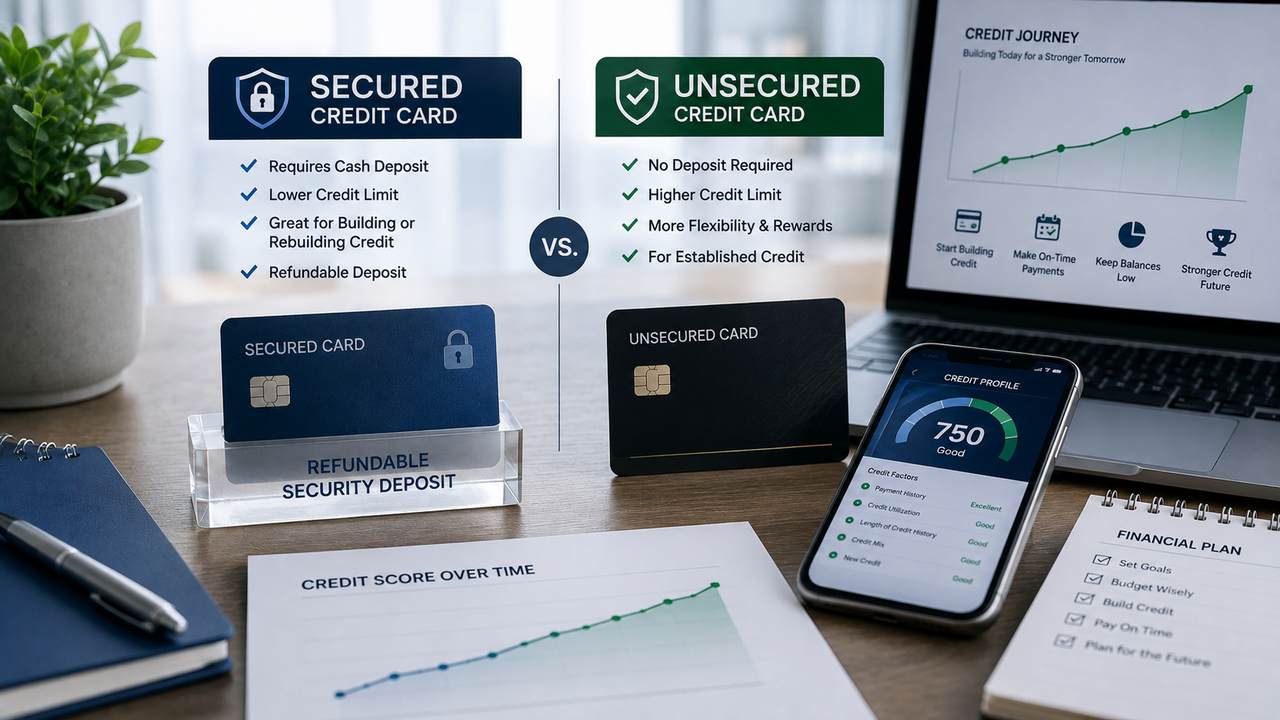
    Internal links: Understanding Your Credit Score | How to Dispute Credit Report Errors | Debt Validation Explained | Rebuilding Credit After Financial Hardship | FCRA: Your Rights Explained

  • Debt Consolidation Loans for Bad Credit: What to Know

    Debt Consolidation Loans for Bad Credit: What to Know

    If you’re juggling five different credit card payments, a store card, a medical bill, and a personal loan — all at different interest rates, all due on different days — you already know the mental cost of debt. It’s not just the money. It’s the weight. The 2 a.m. math. The dread when the phone rings from an unknown number.

    A debt consolidation loan sounds like a clean exit ramp: one loan, one monthly payment, one due date, ideally at a lower interest rate than what you’re paying now. And for some people, it genuinely is. But here’s the part most guides skip — when your credit is already bruised, consolidation can either be your way out or the thing that digs the hole deeper. The difference comes down to the rate you qualify for, the lender you choose, and whether you’ve fixed the spending pattern that got you here in the first place.

    This guide is going to give you the full, unvarnished picture. No “guaranteed approval” nonsense. No pretending a 36% APR personal loan is a good deal because the monthly payment is lower. We’re going to walk through what a debt consolidation loan actually is, whether you can get one with bad credit, what it really costs, the traps to avoid, when it helps your credit, when it hurts, and what to do if you can’t qualify. We’ll also cover alternatives that may serve you better, and how improving your credit first can unlock dramatically better terms.

    We’re credit-repair.com — a San Diego-based, FCRA-compliant, attorney-backed credit repair firm that helps people nationwide. We don’t sell loans and we don’t take kickbacks from lenders. Our job is to help you take control of your credit so you have real options. That’s the lens this guide is written through.

    What a Debt Consolidation Loan Is and How It Works

    Let’s start with the basics, because the term gets thrown around loosely and not everything called “consolidation” is actually a loan.

    A debt consolidation loan is a new personal loan you take out to pay off multiple existing debts. Instead of owing money to four credit cards, a store card, and a medical provider, you owe one lump sum to one lender. You go from six payments on six dates to one payment on one date.

    The goal — the honest goal — is twofold:

    1. Simplify your life. One payment, one due date, one creditor to deal with. This alone reduces missed payments, late fees, and the mental load of tracking everything.
    2. Lower your effective interest rate. If your credit cards are charging 24%, 27%, and 29% APR and you can get a personal loan at 12%, you’ve cut your interest cost meaningfully. More of each payment goes to principal, and you get out of debt faster — even with the same monthly outlay.

    Here’s the mechanics. You apply for a personal loan (typically $1,000–$50,000, though some lenders go higher). The lender approves you for a loan amount, an APR (annual percentage rate), and a repayment term — usually 12 to 84 months. If approved, the lender either deposits the funds into your bank account (and you use them to pay off your creditors yourself) or, in some cases, pays your creditors directly. From that point on, you make one fixed monthly payment to the new lender until the loan is paid off.

    Key terms to understand:

    • APR (Annual Percentage Rate): This is the true cost of the loan per year, including interest and most fees. This is the number you compare — not the monthly payment, not the “interest rate.” We’ll come back to this because it’s where people get burned.
    • Principal: The amount you actually borrowed.
    • Term: How long you have to repay. Longer terms mean lower monthly payments but more total interest paid. Shorter terms mean higher payments but less total interest.
    • Origination fee: A one-time fee some lenders charge to process the loan, usually 1%–8% of the loan amount, deducted from the loan proceeds. Not all lenders charge this.
    • Prepayment penalty: A fee for paying the loan off early. You should never accept a loan with a prepayment penalty. Reputable lenders don’t charge them.

    Consolidation vs. settlement vs. management — know the difference

    These three get confused constantly, and the confusion can cost you:

    • Debt consolidation = you take a new loan to pay off old debts in full. You still owe the same total amount, just to one lender, ideally at a lower rate. Your creditors are paid in full. Your credit is not damaged by the consolidation itself.
    • Debt settlement = you (or a company) stop paying your creditors and try to negotiate a lump-sum payoff for less than you owe. This trashes your credit, can trigger lawsuits, and the “savings” are often eaten by settlement-company fees and tax liability on forgiven debt. We’ll cover this in the alternatives section.
    • Debt management plan (DMP) = a nonprofit credit counseling agency negotiates lower rates and fees with your creditors, and you make one monthly payment to the agency, which distributes it. This is not a loan. We’ll cover this too — it’s often the best option for people with bad credit.

    A debt consolidation loan is only the first one. If someone is offering to “settle” your debts for pennies on the dollar and calling it consolidation, walk away.

    Can You Get a Debt Consolidation Loan With Bad Credit?

    The honest answer: yes, but the terms get worse as your score drops, and below a certain point the options either dry up or become predatory.

    “Bad credit” isn’t a precise term. In the lending world, it usually means a FICO score below 670, with “poor” being below 580. Here’s roughly how lenders see it:

    FICO Score Range Label What It Means for Consolidation
    720+ Excellent / Very Good You’ll qualify for the lowest advertised rates (often 6%–12% APR). Many options.
    680–719 Good Solid options, rates typically 10%–16%. You’re in good shape.
    640–679 Fair Fewer lenders, rates typically 14%–20%. You can still consolidate meaningfully if your existing card rates are 25%+.
    580–639 Near-prime / subprime Limited options, rates often 20%–30%+. Co-signer or secured loan may be needed. Consolidation may or may not save you money — you have to do the math.
    Below 580 Poor Very few legitimate unsecured options. Rates from the few lenders who’ll approve you are often 30%–36% — the legal cap in many states. Predatory offers increase. Alternatives like a DMP are usually the better path.

    So can you get a loan with a 540 score? Possibly, from a subprime lender, at an APR that may not actually save you money. Can you get one with a 620? Yes, from several online lenders, but the rate may be 24% or higher — which means consolidation only makes sense if your current cards are even worse.

    What “bad credit” actually tells a lender

    Lenders don’t see “bad credit” as a moral judgment. They see it as a statistical prediction: borrowers with lower scores are more likely to default, so lenders charge higher rates to cover those expected losses. That’s it. It’s risk pricing.

    This matters because it reframes the conversation. Your credit score isn’t a verdict on your character — it’s a number that reflects past payment behavior and current debt levels, and it can be improved. More on that at the end, because it’s the single biggest lever you have.

    When bad credit plus consolidation makes sense

    Consolidation with bad credit can still be worth it in specific situations:

    • Your existing debts are at extremely high rates (store cards at 29%+, payday loans, etc.) and you can get a personal loan even 5–8 percentage points lower.
    • You have a co-signer with strong credit who can help you qualify for a better rate.
    • You have an asset (like a paid-off vehicle) you’re willing to use as collateral for a secured loan at a lower rate — and you’re confident you won’t lose it.
    • You’re using the consolidation as part of a larger plan: you’ve stopped using the cards, you’ve built a budget, and you’re also working on repairing your credit so you can refinance into a better loan in 12–18 months.

    When it doesn’t

    • The only offers you’re getting are at 30%+ APR and your cards are already at 25%. The math doesn’t work.
    • You haven’t changed the spending that created the debt. Consolidation without behavior change is a balance transfer, not a solution — and you’ll likely end up with the consolidation loan plus new card balances.
    • You’re being offered a “secured” loan against your car or home and you’re already financially stretched. The risk of losing the asset is real.

    What Credit Score Do You Need

    There’s no single magic number because every lender sets its own thresholds, but here’s what the market actually looks like in practice.

    For decent unsecured personal loan terms — APRs in the 10%–18% range — most lenders want to see a FICO score of around 640 or higher. This is the soft threshold where you move from “subprime” to “near-prime,” and the pool of willing lenders expands meaningfully.

    Around 580 is where legitimate unsecured options start to become scarce. A handful of online lenders will approve borrowers in the 580–640 range, but the APRs are typically 20%–30%. Below 580, the legitimate unsecured personal loan market is thin, and this is exactly where predatory offers — payday loans, title loans, “guaranteed approval” scams — rush in to fill the gap.

    For the best rates — single-digit to low-double-digit APR — you generally need 720+. That’s where credit unions and prime online lenders compete for your business with their lowest advertised rates.

    The score isn’t the only thing

    A common misconception is that the score alone determines approval. It doesn’t. Lenders also look at:

    • Debt-to-income ratio (DTI): Your monthly debt payments divided by your gross monthly income. Most lenders want this under 36%–43%. We’ll dig into this in the next section.
    • Income and employment: Steady, verifiable income matters. Some lenders have minimum income thresholds (often $12,000–$24,000/year).
    • Payment history on your existing accounts: Recent late payments or collections signal risk.
    • Credit utilization: How much of your available credit you’re using.

    Types of Debt Consolidation Loans

    Unsecured personal loans

    These are the most common form of consolidation loan. You don’t put up collateral. The lender makes its decision based on your credit, income, DTI, and other underwriting factors. Because there’s no collateral to recover if you default, lenders charge higher rates to riskier borrowers.

    Secured personal loans

    These loans are backed by an asset — typically a vehicle, savings account, or other property. Because the lender has collateral, the rate may be lower than an unsecured loan. But the trade-off is significant: if you default, you can lose the asset.

    A secured loan can make sense if you have strong equity in an asset, stable income, and a clear repayment plan. It is not a good choice if you’re already financially stretched.

    Home equity loans and HELOCs

    If you own a home with substantial equity, a home equity loan or HELOC may offer a lower interest rate than an unsecured personal loan. But you’re converting unsecured debt into debt secured by your home. If you default, you could face foreclosure.

    Balance transfer credit cards

    A balance transfer card can consolidate several credit card balances onto one card, often with a promotional 0% APR for a limited period. This can be powerful if you have enough credit to qualify and can pay the transferred balance before the promotional period expires.

    But balance transfers typically charge a fee, and the standard APR after the promotional period can be high.

    How to Qualify: The Real Requirements

    Your credit score is only one part of the underwriting decision.

    Debt-to-income ratio

    Your DTI is calculated by dividing your monthly debt payments by your gross monthly income.

    For example, if you earn $5,000 per month before taxes and have $1,800 in monthly debt payments, your DTI is 36%.

    Most lenders prefer a DTI below 36%–43%, although some lenders will approve borrowers with higher ratios.

    Income and employment

    Lenders want to know that you have enough reliable income to make the new payment. Steady employment helps, although some lenders will accept other forms of verifiable income.

    Payment history

    Recent late payments, collections, charge-offs, and other negative marks can make approval more difficult and increase the rate you’re offered.

    Credit utilization

    High utilization can signal financial stress. If your cards are near their limits, a lender may view you as a higher-risk borrower even if your score is technically within its approval range.

    The Real Cost Comparison: When Consolidation Costs More

    This is where you need to slow down.

    A lower monthly payment does not automatically mean a better loan.

    Consider a $15,000 debt balance.

    If your existing cards average 25% APR and you are paying aggressively, the interest cost is substantial. Now suppose you receive a consolidation loan at 22% APR over five years. The monthly payment may be lower than what you were paying before, but you could end up paying significantly more interest over the longer repayment period.

    The only comparison that matters is the total cost of the debt.

    What to compare

    • APR
    • Monthly payment
    • Loan term
    • Origination fee
    • Prepayment penalty
    • Total amount of payments

    Never choose a consolidation loan solely because the monthly payment looks easier.

    The break-even question

    Ask yourself: “Will this new loan cost me less overall than keeping my existing debts?”

    If the answer is no, consolidation may still simplify your payments, but it is not saving you money.

    Predatory Traps to Avoid

    3. Upfront-Fee Scams (Advance-Fee Loans)

    A “lender” guarantees you a loan regardless of your credit — you just need to pay an upfront “processing fee,” “insurance premium,” or “collateral deposit” first. This is always a scam. Legitimate lenders deduct fees from the loan proceeds or roll them into the APR. They never ask you to wire money or pay a fee before you receive the loan.

    The Federal Trade Commission has been clear on this: if a lender asks for money upfront before disbursing a loan, it’s a scam. Report them and walk away.

    4. “Guaranteed Approval” Offers

    There is no such thing as guaranteed approval for a legitimate personal loan. Every real lender evaluates risk. If an offer promises guaranteed approval — especially with bad credit — it’s either a scam, a payday loan in disguise, or a lead-generation site that will sell your information to dozens of other lenders (which then all pull your credit, damaging your score).

    5. No-Credit-Check Loans

    Legitimate lenders check credit. If a lender advertises “no credit check,” they’re either a payday/title lender charging predatory rates, or they’re not a lender at all. The absence of a credit check means the lender is pricing for maximum risk — and you’ll pay for it.

    6. Debt Settlement Companies masquerading as consolidators

    Some companies call themselves “debt consolidation” but are actually debt settlement companies. They’ll tell you to stop paying your creditors and deposit money into an account they control, while they “negotiate” with your creditors. This destroys your credit, can lead to lawsuits from your creditors, and the fees are often 20%–25% of your enrolled debt. Forgiven debt may be taxed as income.

    How to tell the difference: A real consolidation loan pays your creditors in full. A debt settlement company tells you to stop paying them. If anyone tells you to stop paying your creditors, that’s settlement, not consolidation — and you should think very carefully before going down that road.

    7. Balloon-Payment Loans

    Some predatory loans have low “teaser” payments for the first several months, then a massive balloon payment at the end. If you can’t make the balloon payment, you’re forced to refinance (paying more fees) or default. Read the full payment schedule before signing.

    How to protect yourself

    • Verify the lender is legitimate. Check if they’re registered in your state (required for legitimate lenders). Search for the lender name + “complaints” or “reviews.” Look them up with the Better Business Bureau.
    • Read the full loan agreement — APR, total of payments, payment schedule, fees, prepayment penalties. If something is unclear, ask. If they won’t explain it, leave.
    • Never pay upfront fees.
    • Never wire money to a lender.
    • Don’t share your Social Security number or bank info until you’ve verified the lender.

    When Consolidation Helps Your Credit

    A debt consolidation loan can help your credit score in several ways — but only if you execute it properly.

    1. Simplified payments reduce missed payments

    Payment history is 35% of your FICO score — the single biggest factor. If consolidation turns six scattered due dates into one predictable payment and you never miss it, your payment history improves steadily. Over 6–12 months of on-time payments on the consolidation loan, you’ll see meaningful score improvement.

    2. Lower credit utilization

    Credit utilization is 30% of your FICO score.

    When a consolidation loan pays off your revolving credit card balances, your utilization can fall substantially. That can help your score, particularly if you keep the old cards open and don’t immediately run them back up.

    3. Better credit mix

    Adding an installment loan to a profile that previously consisted mostly of revolving accounts can diversify your credit mix. This is a smaller scoring factor, but it can contribute positively over time.

    When Consolidation Hurts Your Credit

    1. The hard inquiry

    Applying for a consolidation loan generally creates a hard inquiry. This can cause a small, temporary drop in your score.

    2. The new account

    A new installment loan lowers the average age of your accounts. Again, this is usually a temporary negative factor.

    3. Closing old cards

    If you close the credit cards that were paid off through consolidation, you may lose available credit and potentially increase your utilization ratio. Closing old accounts can also affect the average age of your credit accounts.

    4. Running the cards back up

    This is the biggest danger.

    If you consolidate $15,000 of credit card debt and then immediately start using the cards again, you can end up with $15,000 of consolidation debt plus another $5,000, $10,000, or $15,000 in new card balances.

    That is not consolidation solving the problem. That is consolidation increasing your total obligations.

    debt-consolidation-loans-bad-credit-under-100kb

    Alternatives If You Can’t Qualify

    Debt Management Plan (DMP)

    A debt management plan through a nonprofit credit counseling agency can be one of the strongest alternatives for people with bad credit.

    You don’t borrow new money. Instead, the counseling agency works with your creditors to reduce interest rates and fees, and you make one monthly payment to the agency.

    Your credit score does not need to be high because you aren’t applying for a new loan.

    Balance transfer

    If your credit is strong enough to qualify, a 0% introductory balance-transfer credit card can give you a temporary window to pay down debt without interest.

    The key is having a realistic plan to pay the balance before the promotional period expires.

    Home equity

    A home equity loan or HELOC may provide a lower rate, but it puts your home at risk if you cannot repay. This should be approached cautiously.

    Credit repair first

    If inaccurate, outdated, or unverifiable information is holding your score down, addressing those issues before applying for a consolidation loan may improve your borrowing options.

    A higher score can mean a lower APR, better terms, and potentially thousands of dollars in interest savings.

    How to Choose a Legitimate Lender

    When comparing lenders, don’t focus only on the advertised rate. Look at the entire loan agreement.

    • Compare APR, not just the interest rate.
    • Check the origination fee.
    • Confirm the repayment term.
    • Look for prepayment penalties.
    • Calculate the total amount you will repay.
    • Verify the lender’s licensing and reputation.
    • Never pay an upfront fee to receive a loan.
    • Never provide sensitive financial information to a lender you have not verified.

    If a lender refuses to explain the terms clearly, walk away.

    Common Mistakes to Avoid

    Mistake 1: Focusing only on the monthly payment

    A lower payment can be attractive, but a longer term can dramatically increase the total amount of interest you pay.

    Mistake 2: Ignoring APR

    Always compare APR because it incorporates the interest rate and most loan fees.

    Mistake 3: Applying everywhere

    Multiple hard inquiries can lower your score. Compare lenders carefully before submitting multiple applications.

    Mistake 4: Closing all your cards

    Paying cards down does not necessarily mean you should close them. Keeping older accounts open can help preserve available credit and account age, assuming you can manage them responsibly.

    Mistake 5: Using the cards again

    Consolidation only works if you stop adding new debt.

    Mistake 6: Taking a predatory loan because you feel desperate

    A bad loan can make a difficult situation substantially worse. If the numbers do not work, consider a DMP, credit counseling, or improving your credit before borrowing.

    Frequently Asked Questions

    1. Is debt consolidation worth it with bad credit?

    It can be, but only when the new loan has a meaningfully lower APR than your existing debts, the total cost is reasonable, and you can comfortably afford the new monthly payment.

    It’s a bad idea when the only offers you’re getting are at rates that don’t beat your current debts, when the total cost is higher, or when you haven’t changed the behavior that got you into debt.

    There’s no universal answer — it’s a math question and a behavior question. Run the numbers honestly.

    2. Will a debt consolidation loan hurt my credit?

    It can, temporarily. The hard inquiry drops your score a few points. Opening a new account lowers your average account age. But if you use the loan to pay off cards (lowering your utilization) and make every payment on time, the net effect over 6–12 months is usually positive. The damage happens when you close cards, miss payments, or run balances back up.

    3. What credit score do I need for a debt consolidation loan?

    For decent terms (APR under 18%), most lenders want 640+. You can get approved in the 580–640 range, but rates will be 20%–30%. Below 580, legitimate unsecured options are scarce and a DMP is usually the better path. For the best rates (single digits to low teens), you generally need 720+.

    4. Can I get a debt consolidation loan with a 500 credit score?

    Legitimate unsecured personal loans at 500 are extremely rare and, when available, at rates (30%–36%) that rarely make consolidation worthwhile. Your better options at that score are a DMP through a nonprofit credit counselor, a secured loan (if you have collateral and can afford it), or focusing on credit repair for 6–12 months to raise your score before applying.

    5. What’s the difference between a debt consolidation loan and a debt management plan?

    A consolidation loan is a new loan that pays off your existing debts in full — you owe one lender instead of many. A DMP is not a loan; a nonprofit counseling agency negotiates lower rates and fees with your creditors, and you make one monthly payment to the agency, which distributes it. DMPs don’t require good credit (you’re not borrowing), and the negotiated rates are often lower than what you’d get on a bad-credit consolidation loan.

    6. Should I use my home equity to consolidate credit card debt?

    It can offer the lowest rates, but you’re converting unsecured debt into debt secured by your home. If you default, you could lose your house. It makes sense for disciplined borrowers with stable income who are committed to not running up cards again. It’s risky for anyone else. Think very carefully and consider talking to a financial advisor before taking this step.

    7. Can I consolidate debt without hurting my credit?

    Any new loan will have a short-term impact (hard inquiry, new account). But if you pay off cards, keep them open, and make on-time payments on the new loan, your credit generally improves within 6–12 months. The way to avoid hurting your credit is to execute the consolidation properly — and to fix the underlying behavior.

    8. How long does it take to pay off debt with consolidation?

    It depends on your loan term (typically 12–84 months), your interest rate, and whether you make only the scheduled payment or pay extra. A 36-month loan at 14% will have you debt-free in 3 years. A 60-month loan at 22% will take 5 years and cost far more. Shorter terms cost less — choose the shortest term you can comfortably afford.

    9. Should I use a debt settlement company?

    Debt settlement is fundamentally different from consolidation. Settlement typically involves stopping payments and negotiating reduced payoffs, which can seriously damage your credit and may expose you to collection activity, lawsuits, fees, and potential tax consequences. It can be appropriate in certain hardship situations, but it should not be confused with consolidation.

    A Smarter Path: Fix Your Credit First

    Here’s the truth that gets buried in most debt consolidation articles: the best time to get a consolidation loan is when your credit is good enough to get a rate that actually saves you money.

    If your score is 580 and the only loan you qualify for is 28% APR, consolidating your 25% credit card debt doesn’t solve anything. You’ve just rearranged the chairs. But if you can spend six to twelve months improving your credit — disputing inaccurate information, paying down balances, building a clean payment history — and move your score into the 640–680 range, suddenly you’re looking at 14%–18% offers instead of 28%. That difference can save you thousands of dollars.

    And here’s the part people miss: you don’t have to wait years. Credit scores can move meaningfully in 6–12 months when you address the right factors. Lowering utilization, correcting errors, and establishing on-time payment history can produce substantial improvement.

    That’s where we come in.

    At credit-repair.com, we offer a free credit audit that looks across all three bureaus — Equifax, Experian, and TransUnion — to identify inaccurate, outdated, unverifiable, or potentially disputable information on your credit reports.

    What we do is grounded in the Fair Credit Reporting Act and the legal right every consumer has to an accurate, verifiable credit report. We work alongside experienced attorneys, we operate in full compliance with federal credit laws, and we help you understand not just what’s on your report, but what to do about it.

    Whether you’re consolidating, settling, rebuilding, or just trying to figure out where you stand, a free audit is a good place to start.

    Get your free credit audit at credit-repair.com →

    Disclaimer: This article is for educational purposes and does not constitute legal, tax, or financial advice. Debt settlement and debt consolidation have significant financial and credit implications. Always review loan terms carefully and consider consulting a qualified financial professional before making major financial decisions.

  • Credit Freeze vs. Fraud Alert vs. Credit Lock: Which Protects You Best?

    Credit Freeze vs. Fraud Alert vs. Credit Lock: Which Protects You Best?

    If you’ve ever opened your inbox to find a credit card you never applied for, or seen a hard inquiry from a lender you’ve never heard of, you already know the sickening lurch that identity theft sends through your stomach. You also know the first question that follows: What do I do right now to make this stop?

    The answer almost always comes down to three tools — a credit freeze, a fraud alert, and a credit lock. They sound interchangeable. They are not. One is a federal right backed by law. One is a request that lenders verify your identity. One is a commercial product that behaves a lot like the first but without the legal scaffolding. Choosing the wrong one can leave a gap a thief walks right through, or slow you down the next time you genuinely need credit.

    This guide breaks down each option in plain language, compares them side by side, and walks you through exactly how to place, lift, and combine them across all three bureaus — Equifax, Experian, and TransUnion. No quick-fix promises, no scare tactics. Just the clear, legally grounded information you need to protect your credit with confidence.

    What Is a Credit Freeze?

    A credit freeze — sometimes called a security freeze — is the strongest single tool available to lock down your credit file. When you place a freeze, the three major credit bureaus (Equifax, Experian, and TransUnion) restrict access to your credit report. Because almost every legitimate lender checks your report before approving new credit, a freeze effectively stops new accounts from being opened in your name.

    Here’s the part most people misunderstand: a freeze does not close your existing accounts, and it does not prevent you from using the credit you already have. Your current credit cards, loans, and lines of credit keep working exactly as they did before. Your payment history keeps reporting. Your balances keep updating. The freeze only blocks new third parties from pulling your report for the purpose of opening new accounts.

    It’s a Federal Right, Not a Favor

    This is the single most important distinction between a freeze and the other two options. A credit freeze is guaranteed to you under federal law — specifically, the Fair Credit Reporting Act (FCRA), as strengthened by the Economic Growth, Regulatory Relief, and Consumer Protection Act of 2018. Before that law, bureaus could charge fees to freeze and thaw your file in some states. Today, placing, temporarily lifting, and permanently removing a freeze is free at all three bureaus, nationwide, regardless of where you live or whether you’ve been a victim of identity theft.

    That legal grounding matters. A freeze isn’t a promotional product the bureau can reprice, deprecate, or bury in fine print. It’s a statutory right. If a bureau fails to comply, you have a legal remedy — and regulators who want to hear about it.

    How a Freeze Actually Works

    When you place a freeze, each bureau issues you a PIN (or, in some cases, a password or account-based credential) that you use to thaw — temporarily lift — the freeze later. Without that PIN, no one can lift the freeze on your file. That’s your control mechanism.

    A few things to know about how the freeze behaves day to day:

    • Existing creditors can still access your report. Companies you already do business with — your current bank, your existing card issuer, your mortgage servicer — retain access for account management, collections, and similar purposes permitted under the FCRA.
    • Soft inquiries still go through. Prequalification checks, credit monitoring services you’ve enrolled in, and insurance underwriting inquiries that don’t involve new credit may still be visible. A freeze targets the hard inquiries that accompany new account applications.
    • Government agencies can access your report in limited circumstances. This includes court orders, warrants, and certain benefit investigations.
    • Your credit score keeps moving. A freeze does not pause your score. Payments, balances, new inquiries from existing creditors, and aging all continue to affect your score as normal.

    Who Should Consider a Freeze?

    A credit freeze is the right choice when you don’t expect to apply for new credit in the near future and you want maximum protection against new-account identity theft.

    credit-freeze-vs-fraud-alert-vs-credit-lock-under-100kb

    What Is a Fraud Alert?

    A fraud alert is a lighter-touch form of identity-theft protection. Instead of blocking access to your credit report, it tells lenders to take extra steps to verify your identity before extending new credit.

    A fraud alert does not prevent a lender from pulling your credit report. Instead, it creates an additional verification checkpoint intended to make it harder for an identity thief to successfully open an account in your name.

    Types of Fraud Alerts

    There are three types of fraud alerts, each tied to a specific situation:

    1. Initial Fraud Alert — 1 Year

    An initial fraud alert lasts for one year and is available to anyone who suspects — but may not yet be able to prove — that they are or are about to become a victim of identity theft. You don’t need a police report to place one. You can place it if your wallet was stolen, if you clicked a phishing link, if your information showed up in a breach notification, or simply if something feels off.

    Under federal law, when you place an initial fraud alert with one bureau, that bureau is required to notify the other two. In practice, it’s still wise to confirm with all three that the alert is showing, but you should not need to place it three separate times.

    Key features:

    • Free to place
    • Lasts one year (and can be renewed)
    • Requires lenders to verify your identity before extending credit
    • Does not block access to your credit report — lenders can still pull it; they just have to take extra steps
    • You can still apply for credit; you’ll simply be asked to verify your identity

    2. Extended Fraud Alert — 7 Years

    An extended fraud alert lasts for seven years and is reserved for confirmed victims of identity theft. To place one, you must submit a copy of an identity theft report — typically a police report, a Federal Trade Commission (FTC) Identity Theft Report, or another report filed with a law enforcement agency — to each bureau.

    The extended alert carries the same identity-verification requirement as the initial alert, plus an important additional benefit: it removes you from prescreened offers of credit and insurance for five years. That means fewer preapproval mailers in your mailbox — and fewer opportunities for someone to intercept one and respond in your name.

    Key features:

    • Free to place
    • Requires an identity theft report (police report or FTC report)
    • Lasts seven years
    • Removes you from prescreened offer lists for five years
    • Requires identity verification before new credit is extended
    • Like the initial alert, placing it with one bureau triggers notification to the other two

    3. Active-Duty Military Alert — 1 Year

    An active-duty military alert is available to members of the U.S. armed forces on active duty. It functions like an initial fraud alert — requiring identity verification before new credit is extended — and also removes you from prescreened offer lists for two years. It lasts for one year and can be renewed for the duration of your deployment.

    This alert exists because service members deployed away from home are frequent targets for identity theft. A fraud alert, combined with a freeze, is one of the strongest defensive postures a deployed service member can take.

    The Limitation to Understand

    A fraud alert is a speed bump, not a roadblock. It depends on the lender acting on it. Most do — the FCRA creates legal exposure for lenders who ignore alerts — but a fraud alert does not physically prevent a hard pull the way a freeze does. If you want a guarantee that no new account can be opened, a freeze is the stronger tool. A fraud alert is better suited to situations where you still want relatively frictionless access to new credit but want lenders to pause and check first.

    For a step-by-step identity theft recovery roadmap, see [what to do if your identity is stolen].

    What Is a Credit Lock?

    A credit lock is where things get confusing for a lot of people, because from the outside it looks and feels almost identical to a credit freeze.

    You lock your file; new lenders can’t see it; you unlock it when you need credit. The day-to-day experience is similar.

    The difference is in what’s behind the lock.

    Commercial Product, Not a Federal Right

    A credit lock is a commercial product offered by each credit bureau — not a federal right. It is governed by the terms of service of the bureau’s lock program, not by the FCRA. That distinction matters in several practical ways:

    Speed and Convenience

    This is where locks shine. Because a lock is administered through the bureau’s app or website and tied to your account credentials, locking and unlocking can typically be done with a tap or a click — sometimes in seconds. There’s no PIN to manage, no scheduled thaw window, no calling. For people who open new accounts frequently or who want the ability to toggle protection on and off without friction, a lock is the most convenient option.

    Some bureaus pair their lock products with mobile app features like instant push notifications when someone attempts to access your file. That real-time awareness can be valuable.

    Cost and Terms

    Here’s the catch. While credit freezes are free by law, credit locks operate under the bureau’s commercial terms. Depending on the bureau and the plan you choose:

    • A lock may be free (some bureaus offer a basic free lock)
    • A lock may be bundled into a paid monthly subscription that includes credit monitoring, identity theft insurance, and other features
    • A lock may include advertising or marketing offers within the bureau’s app
    • The bureau can change the terms of the lock program — pricing, features, availability — because it’s a product, not a statute

    That last point is the core trade-off. A freeze is yours by right and can’t be repriced. A lock is a service the bureau provides under terms it controls. If you’re paying for a lock as part of a broader identity protection subscription, that can be perfectly reasonable — just go in understanding that you’re buying a product, not exercising a right.

    Because a freeze is grounded in federal law, if a bureau mishandles your freeze, you have statutory remedies and a clear path to complain to the Consumer Financial Protection Bureau (CFPB). With a lock, your recourse is primarily the contract (the terms of service) you agreed to. That’s not necessarily worse — contracts are enforceable — but it’s a different and generally weaker posture than federal statute.

    When a Lock Makes Sense

    A credit lock is a good fit when:

    • You want the convenience of app-based, instant lock/unlock
    • You’re already paying for a bureau’s identity protection subscription that includes a lock
    • You apply for credit often enough that PIN-based thawing feels like too much friction
    • You’re comfortable with the bureau’s terms of service

    It’s less ideal when:

    • You want the strongest legal protection available
    • You’re uncomfortable with a commercial product governing access to your credit file
    • You don’t want to be exposed to potential pricing or feature changes
    • You’re dealing with active, serious identity theft where you want every statutory protection on your side

    Internal link placeholder: Compare bureau monitoring products side by side in [our credit monitoring guide].

    Side-by-Side Comparison

    The fastest way to understand the difference is to see them next to each other.

    Feature Credit Freeze Fraud Alert Credit Lock
    Legal basis Federal law (FCRA) Federal law (FCRA) Bureau terms of service (contract)
    Cost Free by law Free Free tier at some bureaus; often part of paid subscription
    Duration Remains until you remove it Initial: 1 year. Extended: 7 years. Active-duty: 1 year. All renewable. Remains until you remove it
    What it does to your report Blocks access by new lenders Allows access but requires identity verification Blocks access by new lenders
    Protection level Strongest — physically prevents new hard pulls Moderate — depends on lender action Strong — similar to freeze, but governed by contract
    Convenience when applying for credit Requires thaw (PIN or account login) Minimal friction — you verify identity with the lender Fastest — tap to unlock in the app
    Who can place it Anyone Initial: anyone. Extended: identity theft victims with a report. Active-duty: service members. Anyone with a bureau account
    Identity theft report required? No Only for the 7-year extended alert No
    Blocks prescreened offers? No (though you can opt out separately at OptOutPrescreen.com) Extended alert: yes, for 5 years. Active-duty: yes, for 2 years. Depends on the bureau product
    Cross-bureau placement Must place separately with all three bureaus Place with one; bureau notifies the other two Must lock separately with all three bureaus
    Recourse if mishandled Statutory remedy + CFPB complaint Statutory remedy + CFPB complaint Contractual remedy under terms of service
    Best for Maximum protection when you’re not applying for credit soon Recent ID theft or you’re applying for credit soon and want a verification check Frequent credit applicants who want app-based convenience

    A few things stand out in that table:

    • Freeze and lock both block access; a fraud alert does not. If your top priority is making sure no new account can be opened, the alert alone won’t get you there.
    • A freeze is free forever; a lock’s terms can change. The cost difference may be small today, but the legal posture is fundamentally different.
    • A fraud alert is the only one that places a verification requirement on lenders. That’s useful in a different way — it doesn’t block, but it does create a checkpoint a thief is likely to fail.
    • Only the fraud alert auto-propagates across bureaus. A freeze or a lock requires action at all three.

    Which Is Best for Your Situation?

    There’s no single right answer — the best choice depends on what’s happening in your life and what you’re trying to protect against. Here are the most common scenarios and the tool that fits each.

    You’re not applying for credit anytime soon — go with a freeze

    If you already have the credit cards you need, your mortgage is in place, your car loan is set, and you’re not planning any new applications for the next six to twelve months, a credit freeze at all three bureaus is the strongest, simplest protection you can put in place. It’s free, it stays until you remove it, and it blocks new-account fraud at the source.

    This is the baseline recommendation for most adults in the U.S. today, given how frequently consumer data is exposed in breaches. You don’t need to have been a victim to benefit — a freeze is preventive, not just reactive.

    You’re applying for credit soon — use a fraud alert

    If you’re about to shop for a mortgage, apply for an auto loan, or open a new rewards card in the coming weeks, a full freeze creates friction every time a lender needs to pull your report. A fraud alert is the better fit here. It tells lenders to verify your identity before extending credit, which adds a checkpoint for thieves without blocking your own applications. You’ll still get approved; you’ll just be asked to confirm who you are.

    You can also place a fraud alert as a bridge — protection now, while you decide whether a longer-term freeze makes sense.

    You’ve recently been a victim of identity theft — freeze + extended alert

    If you’ve confirmed identity theft, don’t choose between the two. Use both:

    1. Place a freeze at all three bureaus to block any further new-account openings immediately.
    2. File an identity theft report with the FTC at IdentityTheft.gov and/or your local police department.
    3. Place an extended fraud alert (7-year) at one bureau using your identity theft report — it will propagate to the other two.
    4. Request removal from prescreened offer lists at OptOutPrescreen.com (the extended alert does this for five years, but you can do it independently too).

    This combination gives you the strongest available posture: a freeze that physically blocks new pulls, plus an alert that creates a verification requirement for any thaw you authorize, plus reduced exposure to intercepted preapproval mail.

    You want maximum convenience and don’t mind a commercial product — consider a lock

    If you apply for credit frequently — you churn credit card bonuses, you’re a real estate investor running multiple financings, you’re shopping several lenders for a big loan — and PIN-based thawing feels like too much friction, a credit lock at all three bureaus may fit your life better. You get app-based instant toggle without a PIN, and you can unlock for a specific lender in seconds.

    Just understand the trade: you’re trading statutory protection for convenience. If you’re already paying for one of the bureau’s identity protection subscriptions, the lock may be included, which makes the cost question moot. If you’re not, weigh whether the convenience is worth the terms-of-service posture.

    You’re deploying or on active military duty — active-duty alert + freeze

    Service members on active duty get a dedicated tool — the active-duty military alert — that lasts one year, requires lender identity verification, and removes you from prescreened lists for two years. Pair it with a freeze for the strongest protection while you’re deployed and less able to monitor your accounts in real time.

    You’re protecting a minor child — freeze

    Children are increasingly targeted by identity thieves because their credit files are clean and rarely monitored. Under federal law, you can place a freeze on a child’s credit file at all three bureaus if one exists (and if one doesn’t, you can request that the bureau create one for the purpose of freezing it). This is one of the most effective preventive steps a parent can take. The process requires documentation proving your authority to act on the child’s behalf — birth certificate, your ID, a utility bill — but it’s straightforward and free.

    You’re caring for an older adult — freeze

    Older adults are another frequent target. If you’re helping a parent or older relative manage their finances and they don’t plan to apply for new credit, a freeze at all three bureaus is the cleanest protection. Be sure to store the PINs securely and document the process so that you (or they) can thaw when needed.

    How to Place Each One With Each Bureau

    You’ll work with the three major credit bureaus — Equifax, Experian, and TransUnion — for all three tools. The general steps are similar; the specifics differ slightly by bureau. In every case, have your personal information ready: full name, address, date of birth, Social Security number, and a government-issued ID.

    Placing a Credit Freeze

    You can place a freeze online, by phone, or by mail with each bureau. Online is fastest. You’ll need to place it separately with each of the three.

    Equifax

    • Online: Visit Equifax’s security freeze page and follow the prompts to create or log into your myEquifax account and place the freeze.
    • Phone: Call Equifax’s dedicated freeze line.
    • Mail: Send a written request with your identifying information and copies of supporting documents to Equifax’s freeze mailing address.
    • Equifax typically does not require a PIN for online freeze management — you manage it through your account credentials.

    Experian

    • Online: Visit Experian’s freeze center, create or log into your account, and place the freeze.
    • Phone: Call Experian’s freeze line.
    • Mail: Send a written request with your personal information and ID documents.
    • Experian issues a PIN that you’ll use to thaw by phone or mail. Online thawing may use your account credentials instead.

    TransUnion

    • Online: Visit TransUnion’s freeze page, create or log into your account, and place the freeze.
    • Phone: Use TransUnion’s automated freeze line or speak with a representative.
    • Mail: Send a written request with identification to TransUnion’s freeze address.
    • TransUnion issues a PIN for phone and mail thawing. Online management uses your account credentials.

    General steps (online):

    1. Go to the bureau’s freeze page.
    2. Create an account or log in (you may need to answer identity-verification questions based on your credit history).
    3. Follow the prompts to “Place a freeze” or “Add a freeze.”
    4. Save your PIN and/or account credentials in a secure, encrypted location — a password manager is ideal. You will need these to thaw.
    5. Repeat at all three bureaus. A freeze at one bureau does not freeze your file at the others.

    By mail, include:

    • Your full name, current address, date of birth, and Social Security number
    • Any previous addresses from the past several years
    • A copy of a government-issued ID (driver’s license, state ID, or passport)
    • A copy of a utility bill, bank statement, or insurance statement showing your name and address
    • For a child or a protected person, the documents proving your authority to act on their behalf

    Mail-based freezes take longer (typically a few business days after receipt) but are a good option if you prefer not to manage the freeze online or if you’re placing one on behalf of someone else.

    Placing a Fraud Alert

    A fraud alert is simpler because placing it with one bureau triggers notification to the other two. You only need to contact one.

    For an initial 1-year alert:

    • Visit any one bureau’s fraud alert page (Equifax, Experian, or TransUnion) and follow the prompts.
    • You’ll provide your information and confirm your contact details (phone number, email) — these are what lenders will use to verify your identity.
    • The bureau you contact is required to forward the alert to the other two.

    For a 7-year extended alert:

    • You must submit an identity theft report — a report filed with the FTC at IdentityTheft.gov and/or a police report — to each bureau.
    • Contact each bureau and follow its process for submitting the report and placing the extended alert. Because this is tied to documented identity theft, the bureaus want to see the report before placing the longer alert.
    • The extended alert also removes you from prescreened offer lists for five years.

    For an active-duty military alert:

    • Contact any one bureau and verify your active-duty status.
    • The alert lasts one year and can be renewed. It also removes you from prescreened offer lists for two years.

    Placing a Credit Lock

    A credit lock is managed through each bureau’s app or website account. Because it’s a product, you’ll typically need to:

    1. Create an account with the bureau (if you don’t already have one).
    2. Enroll in the bureau’s lock product — confirm whether you’re using the free tier or a paid subscription tier that includes monitoring and other features.
    3. Lock your file through the app or dashboard.
    4. Repeat at all three bureaus. Like a freeze, a lock at one bureau does not lock your file at the others.

    Be sure to read the terms of service before enrolling, particularly around any arbitration clauses, data-use permissions, and whether the free tier can be converted to a paid tier automatically.

    How to Thaw or Temporarily Lift a Freeze

    When you’re ready to apply for credit, you’ll need to temporarily lift the freeze at the bureau or bureaus the lender will pull from.

    You can request:

    • A temporary lift for a specific time period, after which the freeze automatically goes back into effect.
    • A specific lift for a specific lender, allowing only that lender to access your report.
    • A permanent removal of the freeze, although this is not recommended unless you have a specific reason.

    When you’re applying for credit, ask the lender which bureau it pulls from. Most lenders pull from one bureau (some pull from two or all three). If you know which one, you can thaw only that bureau and leave the other two frozen — keeping your protection tighter during the application window.

    If the lender won’t tell you, thaw all three for a short, defined window — say, three to five business days — and let them re-freeze automatically. Don’t leave a thaw open-ended.

    Does Freezing or Locking Hurt Your Credit Score?

    No. This is one of the most persistent myths, and it’s worth putting to rest clearly.

    A credit freeze (or lock) does not affect your credit score in any way. It does not:

    • Lower your score
    • Pause your score’s movement
    • Remove your accounts from your report
    • Stop your payment history from reporting
    • Count as a negative item on your report

    Your score continues to be calculated based on the same factors it always has — payment history, amounts owed, length of credit history, credit mix, and new credit. A freeze simply controls who can see the report your score is based on. It doesn’t change the contents of the report or the score itself.

    What a freeze does prevent is new hard inquiries from lenders you haven’t authorized. Since hard inquiries can have a small negative impact on your score, a freeze actually removes one pathway by which your score could be dinged — a fraudulent application. In that indirect sense, a freeze can help protect your score from identity-theft-driven damage.

    The one scenario where a freeze creates score-related friction is if you forget to thaw before applying for credit and the lender can’t pull your report. In that case, the application simply can’t be processed — it doesn’t result in a denial that hurts your score, but it does result in a delay. The solution is straightforward: thaw before you apply.

    Can You Still Be Approved for Credit While Frozen?

    Yes — but you have to thaw first.

    While your file is frozen, a lender that tries to pull your report for a new application will receive a message indicating the file is frozen and inaccessible. The application cannot proceed. The lender will typically contact you (if it has your contact information) to let you know a thaw is needed, or you’ll see a message in the application portal.

    To be approved:

    1. Find out which bureau(s) the lender pulls from (ask the lender, or check your past reports to see which bureau your existing accounts report to).
    2. Thaw your file at that bureau — a temporary lift for a specific creditor or a short date range.
    3. Re-apply or have the lender re-pull your report.
    4. Once the application is processed, let the freeze automatically re-engage (if you used a scheduled lift) or manually re-freeze.

    If you’re rate-shopping — say, for a mortgage — you can thaw for a window of a couple of weeks. The credit scoring models treat multiple mortgage inquiries within a short period (typically 14–45 days, depending on the model) as a single inquiry, so rate-shopping within that window won’t ding your score beyond the initial inquiry.

    The bottom line: a freeze is not a permanent wall. It’s a gate you control. When you want credit, you open the gate; when you’re done, you close it.

    Using a Freeze and a Fraud Alert Together

    Yes — you can, and in some situations you should. A freeze and a fraud alert serve different purposes and don’t conflict with each other.

    • The freeze blocks new lenders from pulling your report.
    • The fraud alert requires lenders to verify your identity before extending credit (on the occasions when you’ve thawed and a pull is happening).

    Together, they create layered protection: the freeze stops unauthorized pulls entirely, and the alert adds a verification checkpoint whenever you intentionally open the gate for your own application. If you’ve been a victim of identity theft, this layering is worth the small extra effort.

    A credit lock and a fraud alert can also coexist, with the same layering logic.

    What you generally don’t need: a freeze and a lock at the same bureau on the same file. They do essentially the same thing at the access-control level. Pick one per bureau. If you want statutory protection, choose the freeze. If you want app-based convenience and are comfortable with the terms, choose the lock.

    Common Myths to Stop Believing

    A surprising amount of bad advice circulates about freezes, alerts, and locks. Let’s clear up the ones we hear most often.

    Myth 1: “A freeze hurts your credit score.”

    False. A freeze has zero direct impact on your score. Your score keeps moving based on your payment behavior, balances, and account aging — exactly as it did before. The freeze only controls who can see your report.

    Myth 2: “If you freeze your credit, you can’t use your existing cards.”

    False. A freeze blocks new third-party access. Your existing creditors retain access for account management, and you can use your current cards, lines of credit, and loans exactly as before.

    Myth 3: “A fraud alert is just as strong as a freeze.”

    Not quite. A fraud alert adds a verification requirement, but it does not block access to your report. A lender could still pull your report — they’re just supposed to verify your identity first. A freeze physically prevents the pull. If you want guaranteed blocking, choose a freeze.

    Myth 4: “Locks and freezes are the same thing legally.”

    No. A freeze is a federal right under the FCRA. A lock is a commercial product governed by the bureau’s terms of service. The day-to-day experience is similar, but the legal posture and your recourse if something goes wrong are different.

    Myth 5: “You only need to freeze at one bureau.”

    False. Equifax, Experian, and TransUnion are separate companies. A freeze at one does not propagate to the others. You must place a freeze at all three to fully protect your file. (A fraud alert, by contrast, does propagate — but a freeze does not.)

    Myth 6: “Freezing your credit costs money.”

    False. Since the 2018 federal law, placing, temporarily lifting, and permanently removing a freeze is free at all three bureaus nationwide.

    Myth 7: “Once you freeze, you can never get credit again.”

    False. You thaw the freeze — temporarily and for free — whenever you need to apply. Many people schedule a thaw in under a minute through a bureau’s app or website.

    Myth 8: “A lock is always free.”

    Not necessarily. Some bureaus offer a free basic lock, but many lock products are bundled into paid subscriptions. Read the terms before enrolling.

    Myth 9: “Credit monitoring replaces a freeze.”

    No. Credit monitoring alerts you after something happens on your report. A freeze prevents the thing from happening in the first place. Monitoring is reactive; a freeze is preventive. They’re complementary, not substitutes.

    Myth 10: “If you’ve never been a victim, you don’t need a freeze.”

    You don’t have to freeze, but given the frequency of data breaches and the low cost (free) and low effort of freezing, many people who have never been victims choose to freeze as a preventive measure. A freeze doesn’t require you to have been harmed first.

    Frequently Asked Questions

    1. Is a credit freeze or a fraud alert better?

    It depends on your situation. A freeze is stronger — it blocks new lenders from accessing your report entirely. A fraud alert is lighter — it allows access but requires lenders to verify your identity first. If you’re not applying for credit soon and want maximum protection, a freeze is better. If you’re actively applying for credit and just want an identity checkpoint, a fraud alert is the more convenient fit. For confirmed identity theft victims, use both.

    2. How long does a credit freeze last?

    A freeze remains in place until you remove it. There is no expiration. You can leave it frozen for years if you want, thawing only when you need to apply for credit.

    3. Does placing a fraud alert cost anything?

    No. Fraud alerts — initial (1-year), extended (7-year), and active-duty military (1-year) — are all free under federal law.

    4. Can I have a freeze and a lock at the same time?

    Technically possible at different bureaus, but redundant at the same bureau. Since a freeze and a lock serve the same access-control function, pick one per bureau. Mixing across bureaus (freeze at Equifax, lock at Experian, freeze at TransUnion) is unusual but workable. Most people choose one approach and apply it consistently at all three.

    5. What happens if I lose my freeze PIN?

    Each bureau has a process to recover or reset a lost PIN. You’ll need to verify your identity — typically with your personal information and supporting documents. It adds friction, which is by design: the PIN is a security control, so resetting it has to be deliberate. Store your PIN in a password manager or a secure physical location to avoid this.

    6. Will a freeze stop someone from using my existing credit card?

    No. A freeze only prevents new account openings. It does not prevent someone from using a card you already have if they’ve obtained the number. Protect existing accounts separately — strong, unique passwords, two-factor authentication on financial accounts, and regular statement review.

    7. Can I place a freeze on my child’s credit?

    Yes. Under federal law, parents or legal guardians can place a freeze on a minor child’s credit file at all three bureaus. If the child doesn’t have a credit file (which is typical), the bureau can create one for the purpose of freezing it. You’ll need to provide documentation proving your identity, the child’s identity, and your authority to act on the child’s behalf.

    8. Should I freeze my credit if I’ve never been a victim of identity theft?

    For many people, yes. A freeze is free, doesn’t affect your score, and provides the strongest available protection against new-account identity theft. You don’t need to have been a victim to benefit — prevention is the whole point. If you’re not applying for credit soon, the downside is minimal (the occasional thaw), and the upside is substantial peace of mind.

    Take the Next Step Toward Stronger Credit

    A credit freeze, a fraud alert, and a credit lock are all powerful tools — but they’re just one piece of a larger picture. Strong credit is built and protected through consistent habits: on-time payments, careful management of balances, regular review of your reports from all three bureaus, and a clear plan for addressing anything inaccurate, outdated, or fraudulent that shows up on your file.

    If you’re dealing with the aftermath of identity theft, wrestling with errors on your report, or simply not sure where your credit stands, that’s where we come in. At credit-repair.com, we offer a free credit audit across all three major bureaus — Equifax, Experian, and TransUnion — to help you see exactly what’s on your report and identify anything that shouldn’t be there. Our process is FCRA-compliant and attorney-backed, which means every step we take is grounded in federal law and reviewed by experienced legal professionals.

    We don’t make empty promises or sell quick fixes. What we do is walk beside you, step by step, to dispute inaccuracies, negotiate with creditors, remove unverifiable negative marks, and build a customized repair plan that fits your goals — so your credit is not just repaired, but stronger for the long term.

    Ready to see where you stand? Visit credit-repair.com to request your free credit audit today. It’s the first step toward a credit file you can trust — and a financial future you control.


  • How to Pay Down Credit Card Debt: Avalanche vs. Snowball Method

    How to Pay Down Credit Card Debt: Avalanche vs. Snowball Method

    If you are carrying credit card debt, you already know the feeling. Every month a chunk of your income disappears toward minimum payments, balances barely move, and the interest keeps stacking up. It is exhausting, and it can feel like there is no clear way out.

    Here is the good news: there is a clear way out, and it does not require a windfall, a new job, or a secret strategy. Two of the most effective debt payoff plans in existence — the debt avalanche and the debt snowball — have helped millions of people get to zero, and they are both simple enough to start today.

    The question is not really whether to pay off your debt. It is how to pay it off in a way that actually works for you — mathematically, psychologically, and practically. That is what this article is about. We are going to walk through both methods in detail, compare them side by side with real numbers, and help you build a debt payoff plan you can actually stick with.

    No quick-fix promises here. No “wipe out your debt overnight” nonsense. Just a transparent, step-by-step framework grounded in how credit and interest actually work — because that is how lasting financial progress gets made.

    The Cost of Carrying Credit Card Debt

    Before we get into the methods, it helps to understand exactly what carrying credit card debt costs you. Not in vague terms — in dollars.

    Credit cards are revolving accounts, which means interest is charged on your average daily balance every single day you carry a balance. The average credit card APR in the United States now sits above 21%, and many store cards push past 28%. At those rates, interest compounds quickly — meaning you are paying interest on interest.

    Let’s look at what that actually means.

    A real-world example

    Suppose you have a $5,000 balance on a card with a 22% APR, and your minimum payment is calculated as 2% of the balance (about $100 to start). If you only pay the minimum:

    • It will take you roughly 30+ years to pay off the balance.
    • You will pay more than $7,500 in interest alone — more than the original balance.
    • Your total cost will exceed $12,500 for a $5,000 purchase.

    That is the true cost of minimum payments. The bank is not doing you a favor by keeping the minimum low — it is keeping you in debt longer, collecting interest the entire time.

    Why paying it off is one of the best financial moves you can make

    Here is the flip side. Every dollar of credit card debt you pay off is effectively a guaranteed, tax-free return equal to your APR. If your card charges 22% interest, paying it off is like earning a guaranteed 22% return on your money — risk-free. There is no investment on the planet that reliably produces that kind of return.

    Paying down credit card debt also:

    • Frees up cash flow every month as minimum payments disappear
    • Improves your credit score by lowering your credit utilization (more on that below)
    • Reduces financial stress, which affects everything from sleep to relationships to job performance
    • Opens doors — better loan terms, lower insurance premiums, easier approvals for housing

    So when you commit to a debt payoff plan, you are not just “getting out of debt.” You are reclaiming your income, your credit health, and your financial future. The avalanche and snowball methods are simply two different roads to the same destination.

    The Debt Avalanche Method Explained

    The debt avalanche method is the mathematical powerhouse of the two. The idea is simple: pay off your debts in order of highest interest rate first, regardless of balance size. You make minimum payments on every debt, and you throw every extra dollar at the debt with the highest APR. Once that debt is gone, you roll that payment into the next-highest APR, and so on — like an avalanche building momentum as it comes down the mountain.

    Why it works

    Because interest is the most expensive part of debt, attacking the highest-interest balance first saves you the most money over time. Every month you carry a high-APR balance, it is growing faster than your lower-APR debts. Killing it first stops the bleeding.

    The avalanche, step by step

    1. List every debt with its balance, APR, and minimum payment.
    2. Order them by APR, highest to lowest.
    3. Pay the minimum on every debt except the highest-APR one.
    4. Put every extra dollar toward the highest-APR debt.
    5. When that debt is gone, redirect its full payment (minimum + extra) to the next-highest APR debt.
    6. Repeat until every balance is zero.

    A worked example

    Let’s say you have four debts and $600 per month total to put toward debt (after covering all minimums and basic living expenses). Here is your starting situation:

    Debt Balance APR Minimum Payment
    Store card $1,200 28.0% $40
    Visa $4,500 22.0% $90
    Mastercard $2,800 18.0% $56
    Personal loan $3,500 9.0% $70

    Total minimums: $256. That leaves you $344 in extra money to throw at your target debt.

    With the avalanche, your target is the store card at 28% — not because it is the smallest, but because it is the most expensive. You pay $40 minimum + $344 extra = $384/month toward the store card. Minimums go toward the other three.

    Month-by-month progression (simplified)

    The store card at 28% APR is accruing about $28/month in interest at the start. With $384 going toward it, the balance drops fast. In roughly 3.5 months, the store card is gone.

    Now you roll that $384 into the Visa (the next-highest at 22%). Your Visa payment becomes $90 minimum + $384 = $474/month. The Visa had been accruing about $82/month in interest; now you are crushing it.

    After the Visa is paid off (roughly 11 more months), you roll $474 into the Mastercard: $56 + $474 = $530/month. Then the personal loan gets the full $600.

    Total interest saved

    Compare the avalanche to paying only minimums across all four debts:

    Strategy Total Interest Paid Time to Debt-Free
    Minimums only ~$7,800+ 12+ years
    Debt avalanche (with $344 extra) ~$1,950 ~22 months

    That is roughly $5,850 in interest saved and nearly a decade off your payoff timeline — with the exact same starting balances and the exact same monthly budget. The only difference is which debt got the extra money first.

    When the avalanche shines

    The debt avalanche is your best choice when:

    • You are motivated by numbers, progress trackers, and total cost
    • You have one or two extremely high-APR debts eating you alive
    • You are confident you can stay the course without early wins
    • You want to save the absolute maximum amount of money

    The downside of the avalanche

    The avalanche can take a long time to produce your first “debt eliminated” moment. If your highest-APR debt also happens to be your largest balance, you might pay on it for many months before seeing a balance hit zero. For some people, that is fine. For others, it is demoralizing — and demoralized people quit.

    That is where the snowball comes in.

    The Debt Snowball Method Explained

    The debt snowball method flips the logic. Instead of attacking the most expensive debt, you attack the smallest balance first, regardless of interest rate. You make minimum payments on everything, and put every extra dollar toward the debt with the lowest balance. When that debt is gone, you roll its payment into the next-smallest balance. The snowball grows as it rolls downhill.

    Why it works

    The snowball is not about math — it is about behavior and psychology. Personal finance is not a spreadsheet problem; it is a human behavior problem. The snowball is designed to give you quick wins that keep you motivated. Eliminating a debt entirely — even a small one — feels like real progress. It proves the plan is working, builds momentum, and reinforces the habit of paying down debt.

    This is not speculation. A well-known Northwestern University study found that people who used the snowball method were more likely to successfully eliminate their debt than those who used the avalanche, precisely because the early wins kept them engaged.

    The snowball, step by step

    1. List every debt with its balance, APR, and minimum payment.
    2. Order them by balance, smallest to largest (APR is ignored for ordering).
    3. Pay the minimum on every debt except the smallest-balance one.
    4. Put every extra dollar toward the smallest-balance debt.
    5. When that debt is gone, redirect its full payment to the next-smallest balance.
    6. Repeat until every balance is zero.

    A worked example

    Same four debts, same $600/month total budget:

    Debt Balance APR Minimum Payment
    Store card $1,200 28.0% $40
    Mastercard $2,800 18.0% $56
    Personal loan $3,500 9.0% $70
    Visa $4,500 22.0% $90

    With the snowball, your target is the store card at $1,200 — not because of its APR, but because it is the smallest balance. Conveniently, it is also the highest-APR debt in this example, so the first few months look identical to the avalanche. But the moment the store card is gone, the paths diverge.

    With the avalanche, you would roll into the Visa (22% APR, $4,500 balance). With the snowball, you roll into the Mastercard ($2,800 balance, 18% APR), because it is the next-smallest balance — even though the Visa is more expensive.

    Your Mastercard payment becomes $56 + $384 = $440/month. The Mastercard is gone in about 7 months.

    Now you roll $440 into the personal loan ($3,500, 9%): $70 + $440 = $510/month. Personal loan gone in about 7 more months.

    Finally, the full $600 goes to the Visa.

    Total interest paid

    Strategy Total Interest Paid Time to Debt-Free
    Debt avalanche ~$1,950 ~22 months
    Debt snowball ~$2,380 ~24 months

    The snowball costs about $430 more in interest and takes about 2 months longer than the avalanche in this example. That is the “price” of the psychological boost.

    When the snowball shines

    The debt snowball is your best choice when:

    • You have struggled to stick with payoff plans before
    • You need visible progress to stay motivated
    • You have several small balances that can be cleared quickly
    • You value momentum and habit-building over squeezing every last dollar

    The downside of the snowball

    Mathematically, the snowball will always cost you more in interest than the avalanche — sometimes a little, sometimes a lot, depending on how your balances and APRs line up. If you have a very large high-APR debt and several small low-APR debts, the snowball can leave the expensive debt growing in the background while you clean up cheap ones. That said: a plan you actually finish always beats a plan you abandon. If the snowball keeps you in the game, the extra interest is worth it.

    Avalanche vs. Snowball: Side-by-Side Comparison

    Here is the full side-by-side breakdown using the same $11,000 in total debt and $600/month budget from the examples above.

    Factor Debt Avalanche Debt Snowball
    Ordering rule Highest APR first Smallest balance first
    Total interest paid ~$1,950 ~$2,380
    Time to debt-free ~22 months ~24 months
    First debt eliminated ~3.5 months (store card) ~3.5 months (store card)
    Early wins Fewer, later More frequent, earlier
    Motivation style Numbers-driven, long-game Psychological, momentum-driven
    Best for Analytical, disciplined people People who need visible progress
    Mathematical efficiency Highest (saves the most) Lower (costs more in interest)
    Behavioral effectiveness Depends on the person Proven to improve follow-through
    Risk Quitting before first payoff Paying more interest over time

    A few things to notice:

    • In this particular example, the first debt eliminated is the same for both methods, because the smallest balance also happens to be the highest APR. That is not always the case.
    • The interest difference widens when your highest-APR debt is also your largest balance. In that scenario, the avalanche pulls further ahead on cost, but the snowball pulls further ahead on motivation (because the avalanche’s first payoff takes much longer).
    • The time difference is usually smaller than people expect. Often it is a matter of months, not years.

    Which Is Better Mathematically vs. Psychologically?

    This is the heart of the debate, and the honest answer is: it depends on what “better” means to you.

    Mathematically: the avalanche wins

    There is no scenario where the snowball saves more money than the avalanche. If your only metric is total interest paid and time to debt-free, the avalanche is the winner, full stop. Interest is the cost of debt, and the avalanche always targets the most expensive debt first.

    The gap can be small (a few hundred dollars) or large (several thousand), depending on:

    • How spread out your APRs are
    • Whether your largest balance also has the highest APR
    • How much extra money you are putting toward debt each month
    • How long the overall payoff takes

    Psychologically: the snowball wins

    But humans are not calculators. We are emotional, momentum-driven creatures, and debt payoff is a marathon. The snowball is engineered around how people actually behave:

    • Quick wins release dopamine. Eliminating a debt feels like victory. That feeling reinforces the behavior.
    • Fewer accounts = less mental load. Each debt you close is one fewer payment to track, one fewer due date to worry about, one fewer source of anxiety.
    • Momentum compounds. As each debt falls, your snowball payment grows, and the next debt falls faster. You can see the acceleration.

    The Northwestern study mentioned earlier is not the only evidence. Financial behavior researchers consistently find that the method people stick with is more important than the mathematically optimal method. A plan you abandon at month four costs you far more than a “suboptimal” plan you finish.

    The pragmatic truth

    For most people, the right answer is: start with the method you are most likely to finish. If you are a spreadsheet person who gets genuinely energized by watching interest costs drop, go avalanche. If you have tried and failed before, or you feel overwhelmed and need a win, go snowball. The “best” method is the one that gets you to zero.

    How to Choose Based on Your Personality and Situation

    Still not sure? Here is a practical decision guide.

    Choose the avalanche if:

    • You are analytical and disciplined. You enjoy tracking numbers, optimizing, and watching the total interest counter tick down.
    • You have a large, high-APR debt. If your most expensive debt is also your biggest, the avalanche can save you thousands — and you are willing to wait for the payoff.
    • You have a stable income and reliable extra cash flow. You can commit to a consistent extra payment every month without it being a stretch.
    • You are motivated by efficiency. Knowing you are saving the maximum amount keeps you going.
    • You have fewer, larger debts. With only two or three accounts, the avalanche’s slower early progress is less of an issue.

    Choose the snowball if:

    • You have tried to pay off debt before and quit. The snowball is specifically designed for follow-through.
    • You feel overwhelmed by the number of debts. If you have five, six, or more accounts with payments scattered across the month, the snowball simplifies things fast.
    • You have several small balances. Clearing two or three debts in the first few months is a powerful psychological lift.
    • You are motivated by visible milestones. Crossing a debt off the list is the fuel you need.
    • Your income is variable or tight. When extra cash is inconsistent, the snowball’s quick wins help you stay committed even on low months.

    Choose a hybrid if:

    • You want the best of both. (See the next section — hybrid approaches are real and effective.)
    • You have one “problem debt” (very high APR) alongside several smaller ones. Knock out one or two small ones for momentum, then pivot to the expensive one.

    A quick gut check

    Ask yourself: “If I am three months in and have not eliminated a single debt, will I keep going?”

    • If the answer is yes → avalanche.
    • If the answer is “maybe not” → snowball.
    • If the answer is “I need a win first, then I can be patient” → hybrid.

    Hybrid Approaches

    You are not required to pick a side. Many successful debt payoff journeys use a hybrid approach that borrows from both methods. Here are three proven hybrids:

    1. The Snowball-First, Avalanche-Second Approach

    Start with the snowball and knock out your one or two smallest balances in the first few months. This gives you the psychological win and frees up cash flow. Then, once you have momentum and confidence, switch to the avalanche and attack the highest-APR debt with your now-larger snowball payment.

    This is an excellent choice for people who need early wins but also want to limit interest costs on a large expensive debt.

    2. The “Avalanche with a Quick Kill” Approach

    Run the avalanche, but make an exception for any debt you can eliminate in one or two payments (typically under $500). Clear those tiny balances first to simplify your life and reduce the number of accounts you are tracking, then proceed strictly by APR.

    This keeps the mathematical advantage of the avalanche while removing the annoyance of nickel-and-dime minimum payments on trivial balances.

    3. The “Tie-Breaker” Approach

    When two debts have similar APRs (within 1–2 percentage points), order them by balance instead. If your Visa is 22% and your Mastercard is 21%, the interest difference is negligible in the short term — so knock out the smaller balance first for the win, then move on. This is a small tweak that costs you almost nothing mathematically but can improve motivation.

    Which hybrid is right for you?

    If you are drawn to the hybrid idea, start simple. Do not over-engineer your plan. Pick one tweak — usually either “snowball first for two debts, then avalanche” or “avalanche with quick kills under $500” — and commit to it. You can always adjust as you go. The goal is momentum, not perfection.

    Step-by-Step: How to Set Up Either Plan

    The setup is identical for both methods — the only difference is the ordering rule. Here is exactly what to do.

    Step 1: List all your debts

    Create a single document (spreadsheet, notebook, app — whatever works) and list every debt you owe. For each one, record:

    1. Creditor name
    2. Current balance (log into each account to get the exact number)
    3. APR / interest rate
    4. Minimum monthly payment
    5. Due date

    Do not skip anything — credit cards, store cards, personal loans, medical payment plans, “buy now pay later” balances, overdue utility arrangements. If it charges interest or has a required monthly payment, it goes on the list.

    Step 2: Calculate your total minimums and your total budget

    Add up all the minimum payments. That is your baseline obligation — the amount you must pay every month just to stay current.

    Next, figure out how much you can afford to put toward debt in total each month. This is your total debt budget. It should include your minimums plus any extra you can realistically commit.

    Total debt budget − total minimums = your “extra payment” amount. This is the money that will attack your target debt.

    Step 3: Choose your ordering rule

    1. Avalanche: order debts by APR, highest to lowest.
    2. Snowball: order debts by balance, smallest to largest.
    3. Hybrid: apply your chosen hybrid rule.

    Step 4: Set up your payments

    Every month:

    1. Pay the minimum on every debt by its due date. Set up auto-pay for minimums if possible — this prevents missed payments, late fees, and credit score damage.
    2. Direct your extra payment toward your target debt (the first one in your ordering).
    3. Repeat every month.

    Step 5: When the target debt is eliminated, roll up

    The moment your target debt hits zero, do not spend that freed-up payment. Roll the entire amount (the minimum you were paying on it + the extra) into the next debt in your ordering. This is the “avalanche” or “snowball” effect — your payment grows with each debt eliminated.

    Step 6: Track and celebrate

    Update your spreadsheet every month with new balances. Watching the numbers fall is part of the motivation. Celebrate each debt elimination — even small ones. These milestones matter.

    Step 7: Adjust as life changes

    If your income changes, your extra payment changes — that is fine. If you have a rough month and can only cover minimums, do that and get back on track the next month. If you get a bonus or tax refund, consider putting a chunk toward your target debt for a big leap forward.

    Your plan is a living document, not a rigid contract. The goal is consistent forward progress, not perfection.

    How to Free Up Money for Extra Payments

    The avalanche and snowball both rely on having extra money to throw at your target debt. If you are living paycheck to paycheck, finding that extra can feel impossible. Here are concrete ways to free up cash — no vague “just spend less” advice.

    1. Audit your subscriptions and recurring charges

    Pull your last two months of bank and card statements. Highlight every recurring charge: streaming services, app subscriptions, gym memberships, meal kits, software you rarely use. Cancel anything you have not used in the last 30 days. The average person finds $100–$200/month in forgettable subscriptions. That is your extra payment.

    2. Negotiate your current APRs

    Call each credit card company and ask for a lower APR. It sounds intimidating, but it is a routine request. Say something like: “I have been a customer for X years and I am working hard to pay down my balance. Can you lower my APR?” Even a 3–5 percentage point reduction on one card can save you hundreds over the payoff period.

    If you are offered a promotional 0% balance transfer offer, consider it carefully — but understand the terms (transfer fee, promo length, post-promo rate). More on this in the consolidation section below.

    3. Temporarily cut discretionary spending

    This is not about austerity forever — it is about focus for the payoff period. Identify two or three discretionary categories where you can cut back for the next 6–12 months: dining out, entertainment, clothing, hobbies. Redirect that money to your target debt. Even $50/week in restaurant savings is over $200/month — enough to make a real dent.

    4. Increase your income, even temporarily

    Side income accelerates debt payoff dramatically. Options that require minimal setup:

    • Sell items you no longer need (clothes, electronics, furniture)
    • Freelance or gig work a few hours a week
    • Ask for overtime if your job allows it
    • Rent out a spare room, parking spot, or storage space

    Designate 100% of this extra income for your debt plan. Because it is “found” money, you will not feel the loss, and every dollar goes straight to the balance.

    5. Use windfalls wisely

    Tax refunds, work bonuses, gifts, cashback rewards, and insurance payouts are all opportunities for massive debt progress. Resist the urge to spend them. Applying a $2,000 tax refund to your target debt can eliminate an entire account and reshape your payoff timeline.

    6. Lower your fixed costs

    If you have not reviewed your insurance, phone plan, or internet in the last year, shop around. Switching carriers or bundling insurance can free up $50–$150/month with zero lifestyle change.

    The key is to treat freed-up money as already spent on debt. The moment you cancel a subscription or negotiate a bill, redirect that exact amount to your payoff plan. Do not let it get absorbed into general spending.

    How Paying Down Debt Helps Your Credit

    Paying down credit card debt does not just save you money on interest — it directly improves your credit score, which in turn opens up better financial options. Here is how.

    Credit utilization is the second-biggest factor in your score

    Your credit utilization ratio is the percentage of your available credit that you are using. If you have $10,000 in total credit limits and $4,000 in balances, your utilization is 40%.

    Utilization is measured both per-card and overall. Both matter. The scoring models (FICO and VantageScore) reward low utilization. The general guidelines:

    • Under 30%: good
    • Under 10%: excellent
    • 0–1%: optimal (do not close the cards — keep them open with small or zero balances)

    As you pay down balances through either the avalanche or snowball, your utilization drops — and your score can rise significantly, sometimes within a single billing cycle.

    Payment history stays strong

    Both methods require you to keep making at least the minimum payment on every debt, on time, every month. This protects your payment history, which is the single biggest factor in your credit score (35% of FICO). A payoff plan that causes you to miss payments to “focus” on one debt will damage your credit — never do that.

    Fewer open balances can help over time

    As you pay off cards, your debt-to-income ratio improves (important for mortgage and loan applications), and lenders see you managing fewer obligations. This can make you look more favorably to future creditors.

    The compounding benefit

    Here is the beautiful part: as your credit score improves, you become eligible for better financial products — lower-APR cards, balance transfer offers, personal loans at single-digit rates, better mortgage terms. These tools can help you pay off remaining debt even faster and cheaper. Paying down debt creates a positive feedback loop: better credit → cheaper borrowing options → easier debt payoff → even better credit.

    This is also where professional credit support can make a difference. If your credit report contains inaccuracies, outdated negative marks, or items that should have aged off, addressing them while you pay down debt can accelerate your score improvement. Our team at conducts thorough audits across all three major bureaus and disputes inaccuracies under the Fair Credit Reporting Act (FCRA), working alongside experienced attorneys to ensure every step is ethical, accurate, and effective.debt-avalanche-vs-snowball-under-100kb


    When to Consider Consolidation, Settlement, or a DMP

    The avalanche and snowball are powerful, but they are not the only tools. Depending on your situation, one of these alternatives might be a better fit — or a useful complement.

    Debt consolidation

    What it is: Combining multiple high-APR debts into a single, lower-APR loan or balance transfer. Common forms:

    • 0% APR balance transfer card: Move high-interest balances to a card with a 0% promotional period (usually 12–21 months). You pay no interest during the promo, so every dollar goes to principal.
    • Personal consolidation loan: An unsecured loan at a lower APR, used to pay off credit cards. You then have one fixed monthly payment.

    When to consider it: Your credit is good enough to qualify for a meaningfully lower rate, and you are confident you can pay off (or make major progress on) the consolidated debt during any promotional period.

    Watch out for:

    • Balance transfer fees (typically 3–5% of the transferred amount)
    • Deferred interest on some store-card promos (if you do not pay in full by the end of the promo, interest can retroactively accrue)
    • The temptation to run up the now-zeroed cards again — do not do this. Close them or lock them away.

    Debt settlement

    What it is: Negotiating with creditors to pay a lump sum that is less than the full balance to resolve a debt. Typically, creditors will only consider settlement if you are significantly behind on payments.

    When to consider it: You are in genuine financial hardship, have fallen behind, and have access to a lump sum (or can build one over time in a dedicated account). Settlement is generally a last resort before bankruptcy.

    Watch out for:

    • Credit score impact: Settled accounts are reported as “settled for less than full,” which is a negative mark that can remain on your report for up to seven years.
    • Tax implications: Forgiven debt over $600 may be considered taxable income by the IRS.
    • Scams: The debt settlement industry has a high rate of bad actors. Avoid any company that charges upfront fees before settling debts (illegal under federal law) or guarantees specific results.
    • DIY option: You can negotiate directly with creditors and avoid settlement company fees entirely.

    Debt Management Plan (DMP)

    What it is: A structured repayment plan administered by a nonprofit credit counseling agency (look for agencies affiliated with the National Foundation for Credit Counseling). The agency negotiates lower APRs and waived fees with your creditors, and you make a single monthly payment to the agency, which distributes it to your creditors.

    When to consider it: You are struggling to manage multiple payments, your APRs are too high to make progress, and you want professional help without taking on a new loan or settling.

    Watch out for:

    • DMPs typically require you to close your credit card accounts as a condition of the plan.
    • Plans usually last 3–5 years; you must commit to consistent monthly payments.
    • Use only nonprofit agencies — for-profit “credit repair” companies offering DMPs are often scams.

    How to decide

    Situation Best Option
    Good credit, manageable balances, high APRs Consolidation (balance transfer or personal loan) + avalanche or snowball
    Behind on payments, financial hardship, lump sum available Settlement (consider DIY negotiation)
    Overwhelmed, high APRs, want professional help DMP through a nonprofit agency
    Current on payments, can make extra payments Avalanche or snowball (start here first)

    A note on “credit repair” companies: under the Credit Repair Organizations Act (CROA), no company can legally charge you upfront fees before performing services, and no one can guarantee the removal of accurate negative items. If a company promises a “fresh start” or guaranteed score increases, walk away. Legitimate credit repair — like what we do at — focuses on disputing inaccurate, unverifiable, or outdated items and ensuring your report fully complies with the FCRA. It is a precise, legal process, not magic.

    {/* Internal link placeholder: [Debt Consolidation vs. Debt Settlement: What Is the Difference?] /} {/ Internal link placeholder: [How to Spot a Credit Repair Scam] */}

    Common Mistakes to Avoid

    Even the best plan can fail if you fall into these traps. Here are the most common mistakes people make when paying down credit card debt — and how to avoid them.

    1. Not having a plan at all

    The biggest mistake is paying “whatever feels right” each month without a structured approach. Without a plan, extra money scatters across multiple debts, none of them gets eliminated, and motivation stalls. Pick a method — any method — and commit to it.

    2. Paying extra on multiple debts at once

    Spreading your extra payment across several debts feels productive, but it is the slowest possible approach. You make progress on everything, but you finish nothing. Concentrate your extra money on one target debt. That is the core of both the avalanche and the snowball.

    3. Missing minimums on other debts to “focus” on one

    This damages your payment history, triggers late fees, and can tank your credit score. Always pay at least the minimum on every debt, every month. Only the extra goes to your target.

    4. Closing paid-off cards

    When you finally zero out a card, your instinct may be to close it. Resist. Closing a card reduces your total available credit, which raises your utilization ratio and can lower your score. Instead, keep the card open, use it occasionally for a small charge, and pay it in full each month. This keeps the account active and contributes positively to your credit history length.

    5. Not rolling up payments

    When you eliminate a debt, that freed-up payment is not “extra spending money” — it is ammunition for the next debt. Roll the full amount into your next target. This is how the avalanche and snowball build momentum and accelerate.

    6. Relying on minimum payments as your strategy

    As we showed earlier, minimum-only payments can cost you more in interest than the original purchases. Minimums are a safety net, not a strategy. Use them to stay current, but always pay more on your target.

    7. Taking on new debt while paying off old debt

    This is the treadmill effect — paying down one card while charging up another. If you are serious about getting out of debt, stop using the cards. Put them in a drawer, freeze them in a block of ice (literally — it works), or delete them from your phone’s wallet. Cash or debit only until the debt is gone.

    8. Not adjusting when life happens

    A surprise medical bill, a car repair, a job change — these are not failures, they are life. If you have a bad month, pay minimums and regroup. Do not abandon the plan because of one setback. Consistency over time beats perfection.

    9. Ignoring the root cause

    If you are paying down debt but still overspending, you will end up back where you started. Use the payoff period to build new habits: a budget, an emergency fund (even a small one), and a realistic relationship with credit. The goal is not just to reach zero — it is to stay there.

    10. Waiting for the “perfect” plan

    There is no perfect plan. There is only the plan you start today and adjust as you go. A decent plan executed now beats a flawless plan you never begin.

    Frequently Asked Questions

    1. Is the debt avalanche or debt snowball better for my credit score?

    Neither method directly affects your credit score differently. What matters for your score is that you pay at least the minimum on every debt on time and that your credit utilization drops as balances fall. Both methods accomplish this. Choose the one you will stick with — that is the best choice for your credit.

    2. How much money will the avalanche save me compared to the snowball?

    It depends entirely on your balances and APRs. In our example ($11,000 total debt, $600/month), the avalanche saved about $430 and finished about 2 months sooner. If your highest-APR debt is also your largest balance, the savings can be much larger — sometimes thousands of dollars. If your APRs are all similar, the difference may be negligible.

    3. Can I switch methods partway through?

    Absolutely. Many people start with the snowball for quick wins, then switch to the avalanche once they have momentum. Others start with the avalanche and pivot to the snowball if motivation flags. Your plan is yours to adjust. The only mistake is quitting entirely.

    4. Should I use my savings to pay off credit card debt?

    It depends on your savings and your safety net. A general guideline: keep a small emergency fund ($500–$1,000) for true emergencies, then direct extra savings toward high-APR debt. Paying off a 22% APR card is a guaranteed 22% return — far better than most savings accounts earn. But draining your emergency fund entirely is risky, because an unexpected expense could push you right back into debt.

    5. Does a balance transfer hurt my credit score?

    Applying for a new balance transfer card triggers a hard inquiry, which can cause a small, temporary dip in your score (usually a few points). However, if the transfer increases your total available credit and you keep balances low, your utilization improves, which can boost your score over time. The net effect is usually positive if you use the transfer responsibly — pay down the balance during the promo period and do not run up the old cards.

    6. What if I do not have enough income to cover minimums, let alone extra payments?

    If you cannot cover minimums, you are in a financial hardship situation, and the avalanche/snowball alone will not be enough. Consider:

    1. Contacting your creditors directly to request a hardship program (lower APR, temporarily reduced payments)
    2. Speaking with a nonprofit credit counseling agency about a Debt Management Plan
    3. Consulting with a professional about whether settlement or, in extreme cases, bankruptcy is appropriate

    This is also a good time to review your credit report for inaccuracies that may be compounding the problem. Our team at can help audit your three-bureau reports and dispute any errors under the FCRA — sometimes removing inaccurate negative items can meaningfully improve your standing.

    7. How long does it take to pay off credit card debt?

    It depends on your total balance, APRs, and how much extra you can pay. With the avalanche or snowball and a consistent extra payment, most people with $5,000–$15,000 in debt can become debt-free in 1–3 years. Minimum payments alone can stretch that to 10–30 years. The single biggest accelerator is the amount of extra money you can direct toward your target debt.

    8. Will paying off my credit cards hurt my credit score?

    It can cause a small, temporary dip in a couple of edge cases — for example, if you pay off your only installment loan, you may lose a small “credit mix” benefit, or if you close your oldest card, your average account age may drop. But in the vast majority of cases, paying off credit card debt improves your score by lowering utilization and demonstrating responsible repayment. The long-term benefit far outweighs any short-term fluctuation.

    Take the First Step Toward Debt Freedom

    Getting out of credit card debt is not about finding a secret method or a shortcut. It is about choosing a clear, proven plan — and committing to it, one month at a time.

    The debt avalanche saves you the most money by targeting your highest-interest debt first. The debt snowball keeps you motivated by clearing small balances quickly. Both work. The best one is the one you will actually finish.

    Here is your action plan for today:

    1. List every debt — balance, APR, minimum payment. (This alone is a powerful step.)
    2. Calculate your total minimums and decide how much extra you can commit.
    3. Pick your method — avalanche, snowball, or hybrid.
    4. Set up auto-pay for all minimums and direct your extra payment to your target debt.
    5. Track your progress and roll up payments as debts fall.

    As your balances drop, your credit utilization improves — and that is where a comprehensive credit review can multiply your progress. If your credit reports contain inaccuracies, outdated negative marks, or items that should have been removed, disputing them under the Fair Credit Reporting Act can help ensure your score reflects your actual, accurate credit history.

    That is exactly what we do at . We are a San Diego-based, attorney-backed credit repair firm serving clients nationwide. We conduct in-depth audits across all three major bureaus, dispute inaccuracies, negotiate with creditors, and build fully customized repair plans — all in full compliance with federal credit law. We do not just work on your report; we equip you with the knowledge and tools to keep your credit strong for life.

    Ready to see where you stand? and take the first step toward a clean, accurate, and stronger credit profile. There are no hidden fees, no misleading claims, and no unnecessary services — just transparent, results-driven support from a team that treats you like a long-term financial partner.

    You can get to zero. You can rebuild your credit. And you do not have to do it alone.

    Disclaimer: This article is for educational purposes only and does not constitute financial, legal, or tax advice. Individual results vary. We do not guarantee the removal of any specific item from your credit report or any specific increase in your credit score. Credit repair services are provided under the Credit Repair Organizations Act (CROA) and the Fair Credit Reporting Act (FCRA). For personalized advice about your financial situation, consult a qualified financial advisor or attorney.