Author: admin

  • Credit Reports Explained: How to Read, Fix, and Improve Your Credit in 2026

    Credit Reports Explained: How to Read, Fix, and Improve Your Credit in 2026

    Your credit report quietly influences some of the biggest decisions in your life. It can determine whether you get approved for an apartment, land a fair rate on a car loan, or qualify for a mortgage without paying thousands extra in interest. Still, most people go months—sometimes years—without ever looking at it.

    That gap is where problems grow. A wrong entry, an old debt that should have dropped off, or a score you don’t understand can cost you real money. The fix starts with knowledge, and this guide gives you all of it in one place.

    Below, you’ll learn what a credit report is, how to read it line by line, how credit scores are calculated, how to dispute credit report errors, and how to improve your credit score in as little as six months. We’ll also cover how long negative items stay on your credit report and the powerful protections you have under the Fair Credit Reporting Act.

    What You’ll Learn in This Guide

    Use this as a table of contents. Jump to what you need, or read straight through for the full picture.

    What Is a Credit Report? {#what-is-a-credit-report}

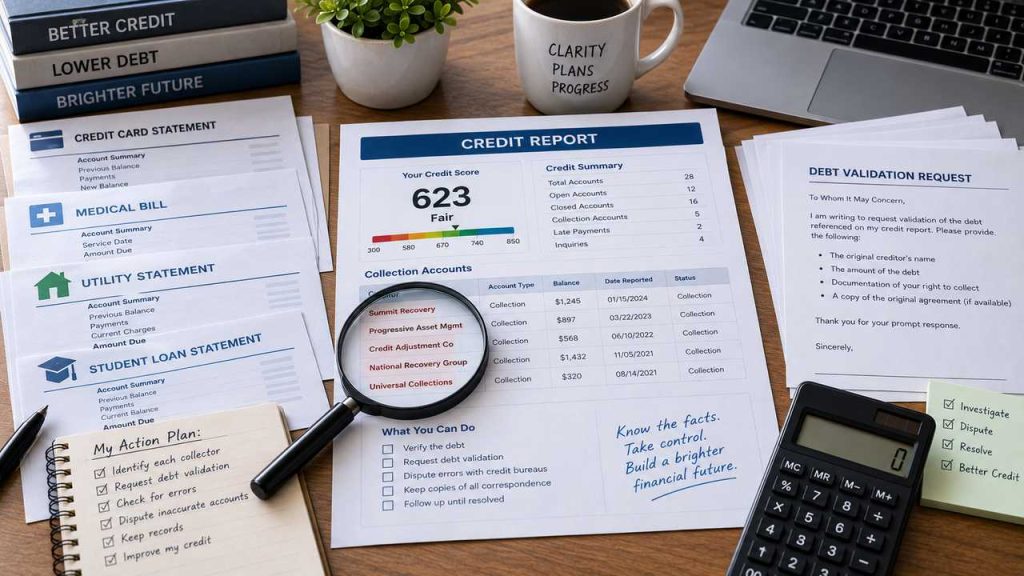
    A credit report is a detailed record of how you’ve borrowed and repaid money over time. Think of it as a financial history file. Lenders, landlords, insurers, and sometimes employers use it to decide how much they can trust you with credit or responsibility.

    Three major credit bureaus build and maintain these reports:

    • Equifax
    • Experian
    • TransUnion

    Each bureau keeps its own version, so the details can differ from one to the next. One lender might report to all three, while another reports to only one. That’s exactly why checking all three reports matters—an error can appear on one and stay hidden on the others.

    One quick clarification that trips people up: your credit report and your credit score are not the same thing. The report holds the raw information. The score is the three-digit summary that scoring models calculate from that information. In short, the report is the story, and the score is the headline.

    Why Your Credit Report Matters More Than You Think

    A single file can shape choices far beyond just loans. Here’s where your credit report shows up in everyday life:

    • Loan approvalsfor cars, homes, and personal financing
    • Interest rates, since stronger credit usually means lower rates
    • Credit card offersand the limits you’re given
    • Rental applicationsfor apartments and homes
    • Insurance premiumsin many states
    • Employment screeningfor certain roles

    Because so much rides on this one document, checking it regularly is one of the smartest and most affordable financial habits you can build. It costs nothing and takes minutes.

    How to Read Your Credit Report

    Opening your credit report for the first time can feel overwhelming. The pages are packed with dates, numbers, and account names. But once you understand what each section means, reading it becomes simple and even a little satisfying.

    Here’s a section-by-section breakdown so you always know what you’re looking at.

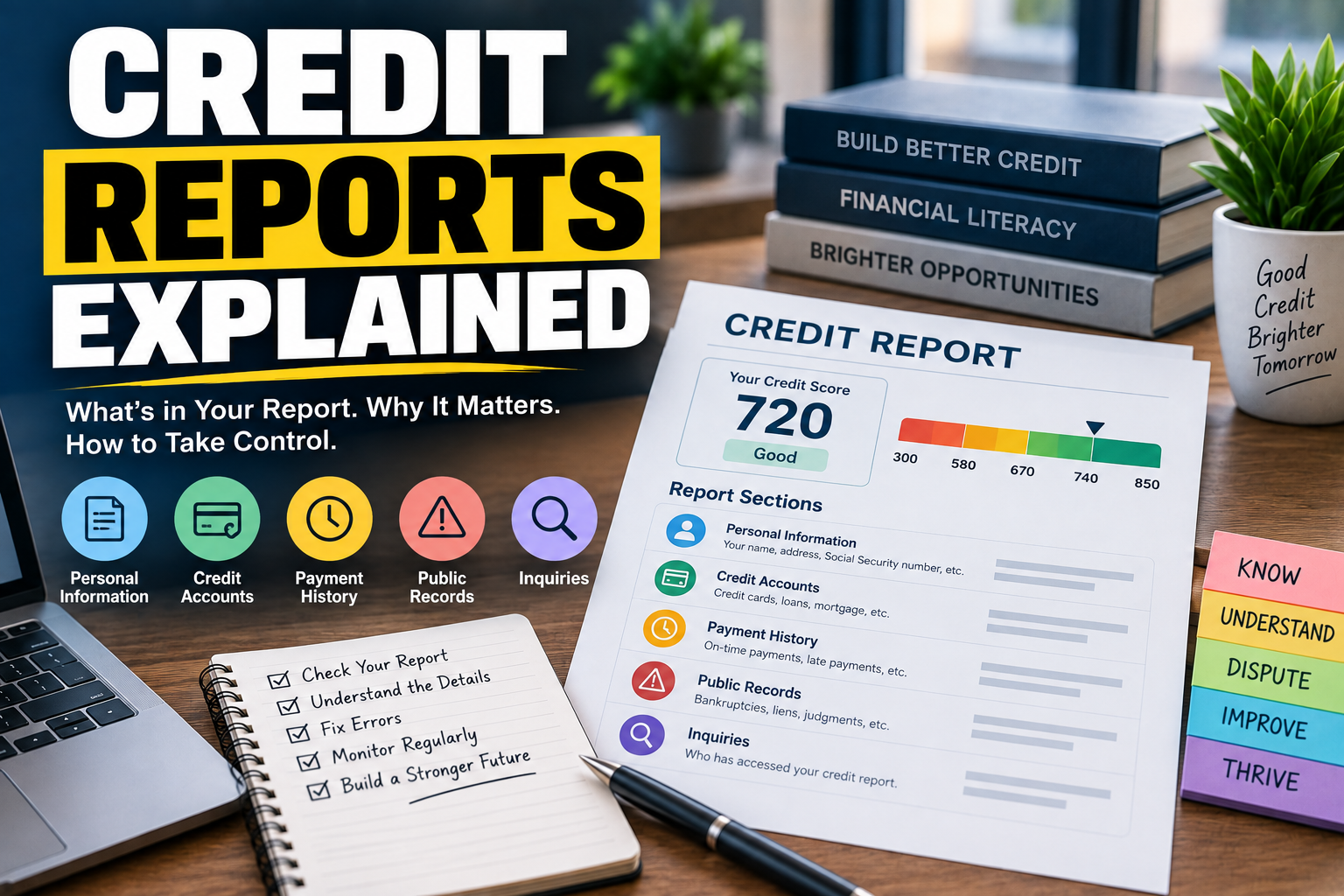
    1. Personal Information

    This top section lists your identifying details:

    • Full name and any variations or misspellings
    • Current and past addresses
    • Date of birth
    • Social Security number, usually partly hidden
    • Employment history

    Read this part closely. An unfamiliar address or a name you don’t recognize can point to a mixed file—where someone else’s data lands on your report—or even early signs of identity theft. Catching this early protects both your credit and your privacy.

    2. Credit Accounts (Tradelines)

    This is the heart of your report. Often called “tradelines,” these entries show every credit account tied to you. For each one, you’ll typically see:

    • The lender or creditor’s name
    • Account type, such as credit card, mortgage, or auto loan
    • Date the account opened
    • Credit limit or original loan amount
    • Current balance
    • A month-by-month payment history

    Lenders study this section the hardest. They want to know two things: Do you pay on time, and how much of your available credit are you using?

    3. Credit Inquiries

    Every time your credit gets checked, it lands here. There are two kinds:

    • Hard inquirieshappen when you apply for new credit. They can slightly lower your score and stay on your report for about two years.
    • Soft inquirieshappen when you check your own credit or a company pre-approves you. These never affect your score.

    Spot a hard inquiry you don’t remember authorizing? That’s worth a closer look, since it can signal fraud.

    4. Public Records and Collections

    This section covers serious negative events, such as:

    • Bankruptcies
    • Accounts sent to collections
    • Certain court judgments

    These carry the heaviest weight and can pull your score down for years. If something here looks wrong, it’s a top priority to dispute.

    How to Get Your Free Credit Report

    You’re entitled to a free copy of your credit report from each bureau. The official, federally authorized source is AnnualCreditReport.com. Many services now offer free weekly access, so there’s no reason to go without.

    Pull all three reports and compare them side by side. Reading them together is the most reliable way to catch errors and confirm your information is accurate everywhere it appears.

    How Credit Scores Are Calculated

    Your credit score is a three-digit number, usually ranging from 300 to 850. The higher it climbs, the better you look to lenders. Popular scoring models like FICO and VantageScore rely on similar factors, with slightly different weights.

    Understanding these five factors gives you a clear, practical roadmap. Improve them, and your score follows.

    Payment History (About 35%)

    This is the single biggest factor. It tracks whether you pay your bills on time. Late payments, missed payments, and collections all damage this category.

    Even one payment that’s 30 days late can noticeably ding your score. Paying on time, every single time, is the foundation of strong credit.

    Amounts Owed (About 30%)

    This measures how much debt you carry, with a heavy focus on your credit utilization ratio—the share of available credit you’re actually using.

    Here’s a quick example. If you have a $10,000 limit and a $3,000 balance, your utilization is 30%. A reliable rule of thumb is to keep it under 30%, and lower is even better.

    Length of Credit History (About 15%)

    The longer your track record, the more confident lenders feel. This factor weighs:

    • The age of your oldest account
    • The average age of all your accounts
    • How long specific accounts have stayed active

    This is why closing an old credit card can backfire. It shortens your history and may nudge your score down.

    Credit Mix (About 10%)

    Lenders like to see you handle different types of credit well. A healthy mix might include a credit card, an auto loan, and a mortgage. You don’t need every type—variety just helps.

    New Credit (About 10%)

    Opening several accounts in a short window can signal risk. Each application triggers a hard inquiry, and a cluster of them can temporarily lower your score.

    How to Dispute Credit Report Errors

    Credit report errors are more common than most people expect, and they can quietly cost you through higher interest rates or denied applications. The good news: you have the legal right to dispute anything inaccurate, and it costs nothing.

    Common Credit Report Errors to Watch For

    Keep an eye out for these frequent mistakes:

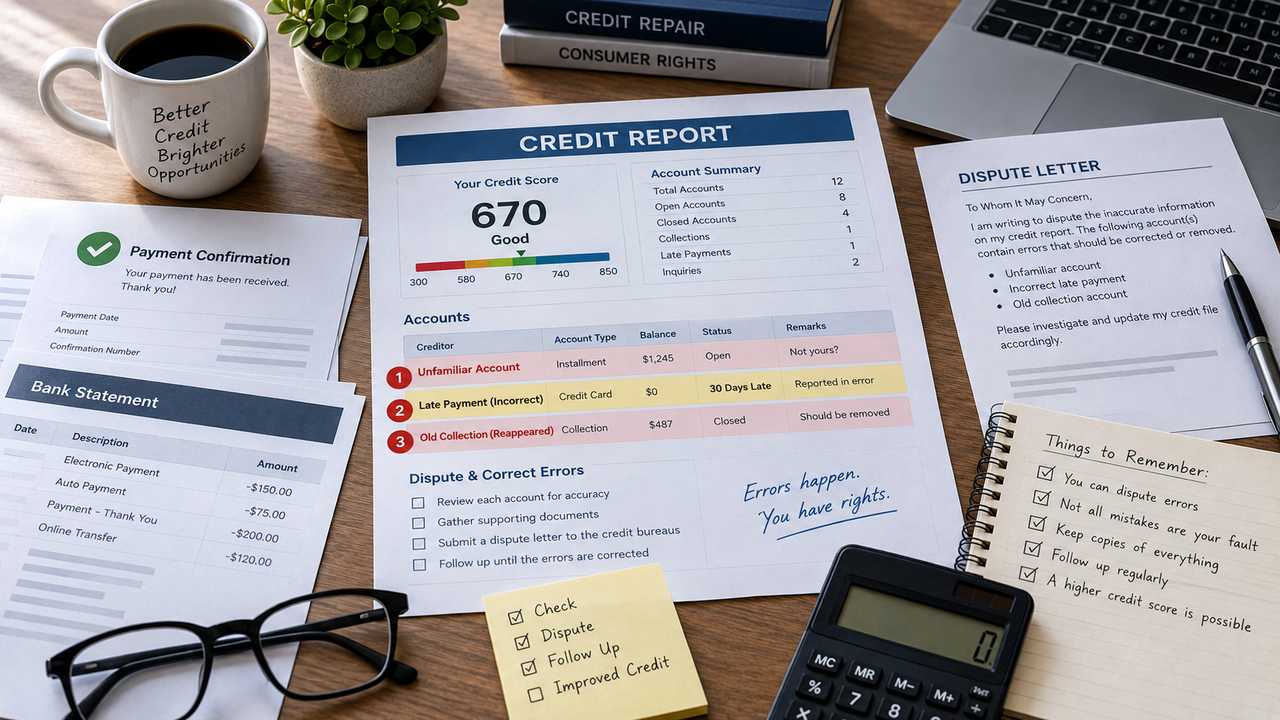
    • Accounts that don’t belong to you
    • Incorrect payment statuses, like a paid bill marked late
    • Duplicate accounts listed twice
    • Wrong balances or credit limits
    • Outdated negative items that should have aged off
    • Someone else’s information mixed into your file

    Step-by-Step: How to Dispute a Credit Report Error

    Fixing a mistake follows a clear, repeatable process. Here’s how to do it right.

    Step 1: Gather your evidence. Collect proof of the error, such as bank statements, payment confirmations, or letters from creditors.

    Step 2: File your dispute. Submit it to the credit bureau reporting the error. Most bureaus accept disputes online, by mail, or by phone. Mailing with tracking gives you a paper trail, which many people prefer for important disputes.

    Step 3: Explain the problem clearly. State exactly what’s wrong and what the correct information should be. Attach copies of your evidence—never send originals.

    Step 4: Wait for the investigation. The bureau generally has 30 days to investigate. They’ll contact the company that reported the information to verify it.

    Step 5: Review the results. When the investigation ends, the bureau sends you the outcome. If they agree, they’ll correct or remove the item. Then request an updated copy of your report to confirm the fix landed.

    What If Your Credit Dispute Is Denied?

    Sometimes a bureau sides with the creditor. If that happens, you still have solid options:

    • Add a statement of dispute to your file explaining your side
    • Contact the creditor directly to resolve the issue
    • File a complaint with a federal consumer protection agency

    Persistence pays off. If you know an item is wrong, keep pushing with clear documentation.

    How to Improve Your Credit Score in 6 Months

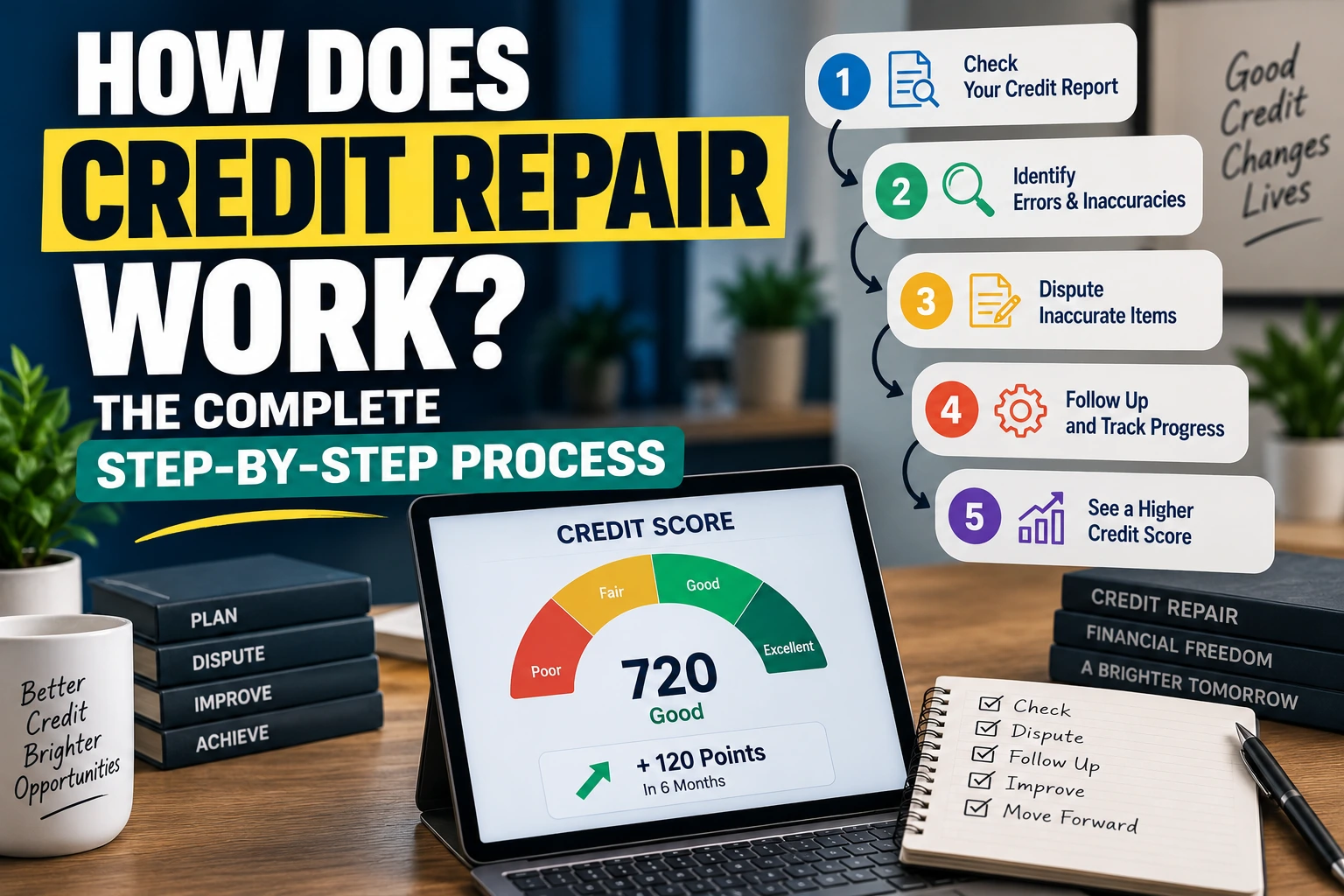
    Rebuilding credit doesn’t happen overnight, but real, visible progress in six months is absolutely realistic. The secret is consistency plus focusing on the factors that move the needle most.

    Here’s a month-by-month plan you can follow with confidence.

    Month 1: Check and Clean Up

    Pull all three credit reports and hunt for errors. Dispute anything inaccurate right away, since removing a wrong negative mark can lift your score fast. Then list every account and its balance—you can’t fix what you can’t see.

    Month 2: Lock In Your Payment Habits

    Set up automatic payments or reminders so you never miss a due date. Payment history carries the most weight, so this one habit protects your score more than anything else. If any accounts are past due, bring them current as soon as possible.

    Month 3: Lower Your Credit Utilization

    Focus on paying down credit card balances to get utilization under 30%, then keep pushing lower. A few smart moves help:

    • Pay more than the minimum
    • Make a second payment mid-month to reduce your reported balance
    • Ask for a credit limit increase without increasing your spending

    Month 4: Be Strategic With New Credit

    Avoid opening several new accounts at once. If you’re building credit from scratch, consider a secured credit card or becoming an authorized user on a trusted family member’s account. Use any new credit lightly and pay it off in full each month.

    Month 5: Keep Old Accounts Open

    Resist closing old credit cards, even ones you rarely touch. Keeping them open preserves your credit history length and total available credit—both help your score. If an old card has no annual fee, make a small purchase now and then to keep it active.

    Month 6: Review and Adjust

    Pull your reports again and measure your progress. Celebrate the wins and pinpoint what still needs work. By now, on-time payments and lower balances should be paying off.

    Building credit is a marathon, not a sprint. These habits compound, so keep them going well past month six.

    Quick Wins That Add Up

    Beyond the monthly plan, a few extra moves can speed things along:

    • Report rent and utility payments.Some services let you add these to your credit file.
    • Keep balances low before statement dates.Your reported balance drives utilization.
    • Avoid unnecessary hard inquiries.Only apply for credit you truly need.

    How Long Do Negative Items Stay on Your Credit Report?

    One of the most searched credit questions is how long a mistake will haunt you. The answer depends on the type of negative item—and the encouraging news is that most fade with time. Today’s setback won’t follow you forever.

    Here’s a quick reference table, followed by the details.

    Negative Item How Long It Stays Notes
    Late payments Up to 7 years Impact fades as it ages
    Collections Up to 7 years Paid looks better than unpaid
    Chapter 13 bankruptcy About 7 years From filing date
    Chapter 7 bankruptcy Up to 10 years Longest-lasting mark
    Hard inquiries About 2 years Usually stop affecting score after 1 year
    Charge-offs Up to 7 years From first missed payment


    Late Payments: Up to 7 Years

    A late payment can stay on your report for about seven years from when it happened. Its impact shrinks over time, so a late payment from five years ago hurts far less than one from last month.

    Collections: Up to 7 Years

    A collection account can remain for roughly seven years from the original delinquency date. Paying it off doesn’t always remove it, but a paid collection generally looks better to lenders than an unpaid one.

    Bankruptcies: 7 to 10 Years

    Bankruptcies linger longest. A Chapter 13 typically stays about seven years, while a Chapter 7 can remain for up to ten.

    Hard Inquiries: 2 Years

    Hard inquiries fall off after about two years and usually stop affecting your score after just one.

    Charge-Offs: Up to 7 Years

    When a creditor writes off a debt as a loss, that charge-off can stay around seven years from the date of the first missed payment.

    The Silver Lining

    Time genuinely heals credit wounds. As negative items age, their weight shrinks. At the same time, every on-time payment and lower balance builds fresh positive history. So even while you wait for old marks to disappear, your good habits actively push your score upward.

    Your Rights Under the Fair Credit Reporting Act {#your-rights-under-the-fair-credit-reporting-act}

    The Fair Credit Reporting Act (FCRA) is a federal law built to keep your credit information fair, accurate, and private. It governs how credit bureaus and businesses handle your data—and knowing these rights puts real power in your hands.

    Here are the key FCRA protections every consumer should understand.

    The Right to Access Your Information

    You can see what’s in your credit file. That includes free annual access from each of the three major bureaus, plus extra free copies in certain situations, such as after being denied credit.

    The Right to Accurate Reporting

    Credit bureaus must take reasonable steps to keep your information accurate. When you dispute an error, they’re required to investigate, usually within 30 days. If the information can’t be verified, it must be corrected or removed.

    The Right to Know When Your Report Is Used Against You

    If a company denies you credit, insurance, or a job based on your report, they must tell you and name the bureau that supplied the information. That lets you review the specific report for free.

    The Right to Dispute Inaccurate Information

    You can challenge anything you believe is wrong at no cost. Both the credit bureau and the company that reported the information share responsibility for investigating.

    The Right to Limit Access to Your Information

    Not just anyone can pull your credit report. Under the FCRA, only parties with a valid reason—like a lender reviewing a loan application—can access it. This helps protect your privacy.

    The Right to Have Outdated Information Removed

    Most negative items must drop off after the legal time limits covered above. Bureaus can’t report old negative information indefinitely.

    The Right to Seek Damages

    If a bureau or company violates your FCRA rights, you may be able to take legal action. That accountability keeps the whole system honest.

    Knowing these rules turns you from a passive subject into an active participant. When you understand the law, you can protect yourself and hold the system accountable.

    FAQs

    How often should I check my credit report?
    Aim for at least a few times a year. Since free weekly access is now widely available, many people check monthly to catch problems early and search their records with confidence.

    Does checking my own credit hurt my score?
    No. Checking your own report is a soft inquiry, which never affects your score. Review it as often as you like.

    How long does it take to improve a credit score?
    It varies. Some people see changes within a month or two after disputing errors or paying down balances. Meaningful progress often shows within three to six months of steady effort.

    Will paying off a collection remove it from my credit report?
    Not always. The account may stay, but its status usually updates to “paid.” A paid collection generally looks better to lenders than an unpaid one.

    Can I improve my credit without a credit card?
    Yes. Secured cards, credit-builder loans, and adding rent or utility payments to your file can all build credit responsibly.

    What’s the difference between a credit report and a credit score?
    Your report is the detailed record of your credit history. Your score is the three-digit number calculated from that data. The report is the story; the score is the summary.

    How do I know if my personal information on my report is accurate?
    Read the personal information section closely and compare it across all three bureaus. Unfamiliar names or addresses can signal a mixed file or identity theft, so flag anything that looks off.

    Take Control of Your Credit Today

    Your credit report isn’t set in stone. It’s a living record that responds to the choices you make. By learning how to read it, disputing errors quickly, and building steady habits, you shape a stronger financial future.

    Start small. Pull your free reports. Set up automatic payments. Pay down one balance. Each step builds momentum, and within six months you’ll likely see real, measurable results.

    Most of all, remember that time is on your side. Negative marks fade, positive habits compound, and your rights under the law protect you at every turn. You hold more control than you might think—so use it with confidence.
  • The Fair Credit Reporting Act (FCRA): A Complete Guide

    The Fair Credit Reporting Act (FCRA): A Complete Guide

    Your credit report can determine whether you get approved for a mortgage, land an apartment, or qualify for a competitive interest rate. Few consumers realize that a single federal law — the Fair Credit Reporting Act — gives them the legal power to demand accuracy in that report. Passed in 1970, the FCRA regulates how credit bureaus, lenders, and even employers collect, use, and share your personal financial information. This guide breaks down exactly what the FCRA covers, the rights it grants you, and the concrete steps you can take to dispute errors, report violations, and use the law to your advantage. Whether you’re rebuilding credit after a hardship or simply want to understand what’s happening behind the scenes of your credit file, this guide gives you the accurate, actionable information you need.

    Key Takeaways

    • The FCRA is a federal law that regulates how credit reporting agencies collect, maintain, and share consumer credit information.
    • Consumers have the right to access their credit reports, dispute inaccurate information, and demand timely investigations from credit bureaus.
    • Credit bureaus must investigate most disputes within 30 days and correct or delete information they cannot verify.
    • Violating the FCRA can result in legal liability for credit bureaus, lenders, and data furnishers — and consumers can report violations to the CFPB or FTC.
    • Understanding your FCRA rights is often the first step toward effective credit repair, especially when inaccurate items are dragging down your score.

    What Is the Fair Credit Reporting Act?

    The Fair Credit Reporting Act is a federal law that governs the collection, accuracy, and use of consumer credit information in the United States. Enacted in 1970 and enforced primarily by the Federal Trade Commission (FTC) and the Consumer Financial Protection Bureau (CFPB), the FCRA applies to the three major credit bureaus — Equifax, Experian, and TransUnion — as well as lenders, debt collectors, and any company that furnishes information to your credit file.

    At its core, the FCRA exists to promote accuracy, fairness, and privacy in consumer reporting. It gives you, the consumer, specific legal rights: the right to know what’s in your credit file, the right to dispute information you believe is wrong, and the right to have inaccurate or unverifiable items corrected or removed. Without the FCRA, credit bureaus would have little legal obligation to fix errors — and errors are more common than most people assume. A widely cited FTC study found that one in five consumers had an error on at least one of their three credit reports.

    The FCRA doesn’t just apply to credit cards and loans. It also covers background checks used for employment, tenant screening reports used by landlords, and insurance underwriting reports. Any time a company uses a “consumer report” to make a decision about you, the FCRA likely applies.

    History and Background of the FCRA

    Why Was the FCRA Created?

    Congress passed the FCRA in 1970 in response to growing concerns about the credit reporting industry operating with almost no oversight. Before the law existed, credit bureaus could collect and share information about consumers with little accountability for accuracy, and consumers had no formal right to see their own files or challenge what was in them.

    The FCRA established, for the first time, a legal framework requiring credit bureaus to maintain “reasonable procedures” to ensure accuracy and to give consumers a formal process for disputing errors. Over the following decades, the law has been amended several times to expand consumer protections and adapt to new technology.

    Major Amendments Over Time

    • 1996 Amendments: Strengthened dispute procedures and clarified the responsibilities of companies that furnish information to credit bureaus (called “furnishers”).
    • Fair and Accurate Credit Transactions Act (FACTA) of 2003: Added identity theft protections, created the right to a free annual credit report from each bureau, and introduced fraud alerts and credit freezes.
    • Dodd-Frank Act of 2010: Transferred primary rulemaking authority for the FCRA from the Federal Reserve to the newly created Consumer Financial Protection Bureau.

    These changes reflect a consistent theme: as credit reporting has grown more complex and more central to everyday financial life, lawmakers have continued to expand consumer protections rather than scale them back.

    Key Rights Consumers Have Under the FCRA

    Understanding your rights under the FCRA is the foundation for protecting your credit. Here are the core protections every consumer should know.

    The Right to Access Your Credit Report

    You’re entitled to a free copy of your credit report from each of the three bureaus every 12 months through AnnualCreditReport.com, the only site authorized by federal law to provide these free reports. You’re also entitled to a free report if you’ve been denied credit, employment, or insurance based on your credit report, or if you’re a victim of identity theft.

    The Right to Dispute Inaccurate Information

    If you find an error on your credit report, the FCRA gives you the right to dispute it directly with the credit bureau, the company that furnished the information, or both. Bureaus generally must investigate disputes within 30 days (this can extend to 45 days in some circumstances) and either correct, delete, or verify the disputed item.

    The Right to Limit Who Sees Your Report

    Companies can only access your credit report for a “permissible purpose” under the FCRA — such as extending credit, underwriting insurance, or making an employment decision with your consent. Businesses cannot pull your credit report just out of curiosity or for unrelated marketing purposes.

    The Right to Consent for Employment Checks

    If an employer wants to use your credit report as part of a hiring decision, the FCRA requires them to get your written consent first and notify you if the report leads to an adverse action, such as not hiring you.

    The Right to Time Limits on Negative Information

    Most negative information — including late payments, collections, and charge-offs — can only be reported for seven years. Chapter 7 bankruptcies can remain for up to 10 years. Once that window closes, the item must be removed regardless of accuracy.

    The Right to Seek Damages for Violations

    If a credit bureau, furnisher, or user of your report willfully or negligently violates the FCRA, you have the right to sue for actual damages, and in some cases, statutory and punitive damages plus attorney’s fees.

    How the FCRA Regulates Credit Reporting Agencies

    The FCRA places specific legal obligations on the three major credit bureaus — Equifax, Experian, and TransUnion — as well as on companies that report information to them (referred to as “furnishers,” such as banks, credit card issuers, and collection agencies).

    Accuracy Requirements

    Credit bureaus must follow “reasonable procedures to assure maximum possible accuracy” when compiling consumer reports. This standard doesn’t require perfection, but it does require bureaus to take meaningful steps to verify information before including it in your file.

    Investigation Obligations

    When you dispute an item, the bureau is legally required to forward your dispute to the furnisher, conduct a reasonable investigation, and report the results back to you — typically within 30 days. If the furnisher can’t verify the information, it must be deleted from your report.

    Furnisher Responsibilities

    Companies that report your account activity to the bureaus have their own obligations under the FCRA. They must:

    • Provide accurate information to the bureaus
    • Investigate disputes forwarded by the bureaus
    • Correct or update information found to be inaccurate
    • Notify bureaus when an account is settled, closed, or disputed by the consumer

    Permissible Purpose Restrictions

    Credit bureaus can only release your report to businesses with a legitimate, legally defined reason, such as extending credit, reviewing an existing account, or conducting employment screening with your consent. This restriction is designed to protect your privacy and limit unauthorized access to your financial history.

    How to Dispute Errors on Your Credit Report

    If you spot an error on your credit report, the FCRA gives you a clear, structured path to challenge it. Here’s how the process works, step by step.

    Step 1: Get Copies of Your Credit Reports

    Start by pulling your reports from all three bureaus at AnnualCreditReport.com. Because Equifax, Experian, and TransUnion don’t always receive the same information from lenders, an error on one report may not appear on another — so it’s worth reviewing all three.

    Step 2: Identify the Specific Error

    Common errors include accounts that aren’t yours, incorrect balances, payments marked late when they were paid on time, duplicate accounts, and outdated information that should have fallen off your report. Circle or list each specific inaccuracy.

    Step 3: File a Dispute With the Credit Bureau

    You can dispute online, by mail, or by phone with each bureau reporting the error. Written disputes sent by mail (ideally certified, with return receipt) create a paper trail, which can matter if you need to escalate later. Clearly identify each item you’re disputing and explain why it’s inaccurate, and include any supporting documentation.

    Step 4: Consider Disputing With the Furnisher Directly

    You also have the right to dispute directly with the company that reported the information — your bank, credit card issuer, or collection agency. This can sometimes resolve the issue faster, especially if you have documentation the furnisher didn’t previously have.

    Step 5: Wait for the Investigation

    The bureau generally has 30 days (45 days in certain cases) to investigate and respond. During this window, the bureau is required to notify the furnisher of your dispute and consider any documentation you submitted.

    Step 6: Review the Results

    The bureau will send you the results in writing. If the item is deleted or corrected, you’re entitled to a free updated copy of your report. If the bureau says the information was verified as accurate, you have the right to add a brief statement of dispute to your file, and you can escalate the issue further if you believe the investigation was inadequate.

    Step 7: Escalate If Necessary

    If your dispute isn’t resolved to your satisfaction, you can file a complaint with the CFPB or the FTC, consult an attorney about a potential FCRA violation, or work with a credit repair service that understands how to build a more thorough dispute strategy and escalate unresolved cases.

    Disputing errors on your own is entirely legal and within your rights — but the process can be time-consuming, especially if you’re managing disputes across multiple accounts and all three bureaus simultaneously. That’s part of why many consumers choose to work with a credit repair company rather than manage the process solo.

    FCRA Violations and How to Report Them

    Credit bureaus, furnishers, and businesses that misuse your credit report can all be held accountable under the FCRA. Recognizing a violation is the first step toward reporting it.

    Common Types of FCRA Violations

    • Failure to investigate disputes: Bureaus that ignore or conduct a superficial “investigation” of a legitimate dispute may be violating the FCRA.
    • Reporting information without a permissible purpose: A company pulling your credit report without a valid legal reason or your consent is a violation.
    • Failure to correct verified errors: If a bureau confirms an item is inaccurate but doesn’t update your file, that’s a violation.
    • Reinserting deleted information without notice: If a bureau reinserts previously deleted information, it must notify you within five business days.
    • Improper use of reports for employment decisions: Employers who pull credit reports without proper consent or fail to provide required adverse action notices can be held liable.
    • Mixed files: When your credit file becomes mixed with another consumer’s information (often due to a similar name or Social Security number typo), and the bureau fails to correct it after being notified.

    How to Report a Violation

    1. File a complaint with the CFPB at consumerfinance.gov/complaint. The CFPB forwards complaints to the company and requires a response, typically within 15 days.
    2. Report to the FTC at reportfraud.ftc.gov. While the FTC doesn’t resolve individual disputes, complaints help the agency identify patterns of abuse and take broader enforcement action.
    3. Consult a consumer protection attorney. Many attorneys handle FCRA cases on a contingency basis, since the law allows for recovery of attorney’s fees if you prevail.
    4. Keep detailed records. Save copies of dispute letters, certified mail receipts, and all correspondence with bureaus and furnishers. Documentation is critical if you need to pursue legal action.

    The Role of the FCRA in Credit Repair

    The FCRA is the legal backbone of virtually all legitimate credit repair work. Every dispute letter, every escalation, and every negotiation with a bureau or furnisher relies on rights created by this law.

    Why the FCRA Matters for Rebuilding Credit

    Credit repair isn’t about erasing accurate financial history — it’s about holding the reporting system accountable to the accuracy standards the FCRA already requires. Negative items that are inaccurate, outdated, incomplete, or unverifiable must be corrected or removed under federal law. That means a legitimate credit repair process is really a structured, persistent application of rights you already have.

    Where Professional Help Comes In

    Filing a single dispute is straightforward. Managing an ongoing strategy across three bureaus, multiple furnishers, and several disputed accounts — while tracking deadlines and building follow-up evidence when a bureau denies a dispute — is where many consumers get stuck. This is where working with a credit repair company can make a meaningful difference, particularly for people who’ve already tried disputing independently and hit a wall.

    If you’re dealing with collections accounts, late payments, charge-offs, or even a mixed credit file, understanding your FCRA rights is the first step. Applying them consistently and correctly is often the difference between a stalled dispute and a removed item. You can learn more about how the credit repair process works or get a free consultation to review your specific situation.

    It’s worth noting that the FCRA works alongside two other important consumer protection laws: the Fair Debt Collection Practices Act (FDCPA), which governs how debt collectors can contact and pursue you, and the Credit Repair Organizations Act (CROA), which regulates how credit repair companies themselves must operate — including a ban on collecting upfront fees before services are performed. Together, these three laws form the legal foundation that protects consumers throughout the credit repair process.

    Where to Learn More

    Several government resources offer authoritative, up-to-date information on your FCRA rights:

    Take Control of Your Credit Report

    The Fair Credit Reporting Act exists because accuracy in credit reporting was never optional — it’s a legal requirement. Whether you’ve spotted a clear error on your credit report or you’re dealing with a tangle of negative items you’re not sure how to address, your rights under the FCRA give you a real, enforceable path forward.

    Start by pulling your reports from all three bureaus and reviewing them carefully. If you find inaccuracies, you have every right to dispute them — and the bureaus have a legal obligation to investigate. If the process feels overwhelming, or you’ve disputed on your own without results, credit-repair.com can help you build a targeted strategy and manage the process on your behalf. Get a free credit consultation to find out exactly where you stand and what steps make sense for your situation.

    Frequently Asked Questions

    What is the Fair Credit Reporting Act in simple terms?

    The FCRA is a federal law that requires credit bureaus to maintain accurate consumer credit information and gives consumers the right to access, dispute, and correct errors in their credit reports.

    How long does a credit bureau have to investigate a dispute under the FCRA?

    Credit bureaus generally must complete their investigation within 30 days of receiving a dispute, though this can extend to 45 days if you submit additional information during the review period.

    Can I sue a credit bureau for an FCRA violation?

    Yes. If a bureau or furnisher willfully or negligently violates the FCRA — such as failing to correct verified inaccuracies — you may be entitled to actual damages, and in cases of willful violations, statutory and punitive damages plus attorney’s fees.

    Does disputing an item on my credit report hurt my score?

    No. Filing a dispute does not create a hard inquiry and does not negatively affect your credit score. If the dispute results in the removal of a negative item, your score may actually improve.

    What’s the difference between the FCRA and the FDCPA?

    The FCRA regulates how credit bureaus and furnishers report and maintain consumer credit information. The FDCPA regulates how third-party debt collectors can communicate with and pursue consumers. Both laws often come into play together during the credit repair process.

    How long can negative information legally stay on my credit report?

    Most negative items, including late payments, collections, and charge-offs, must be removed after seven years. Chapter 7 bankruptcies can remain for up to 10 years. Hard inquiries typically fall off after two years.

  • The Complete Guide to Understanding Debt Collector Names on Your Credit Report

    The Complete Guide to Understanding Debt Collector Names on Your Credit Report

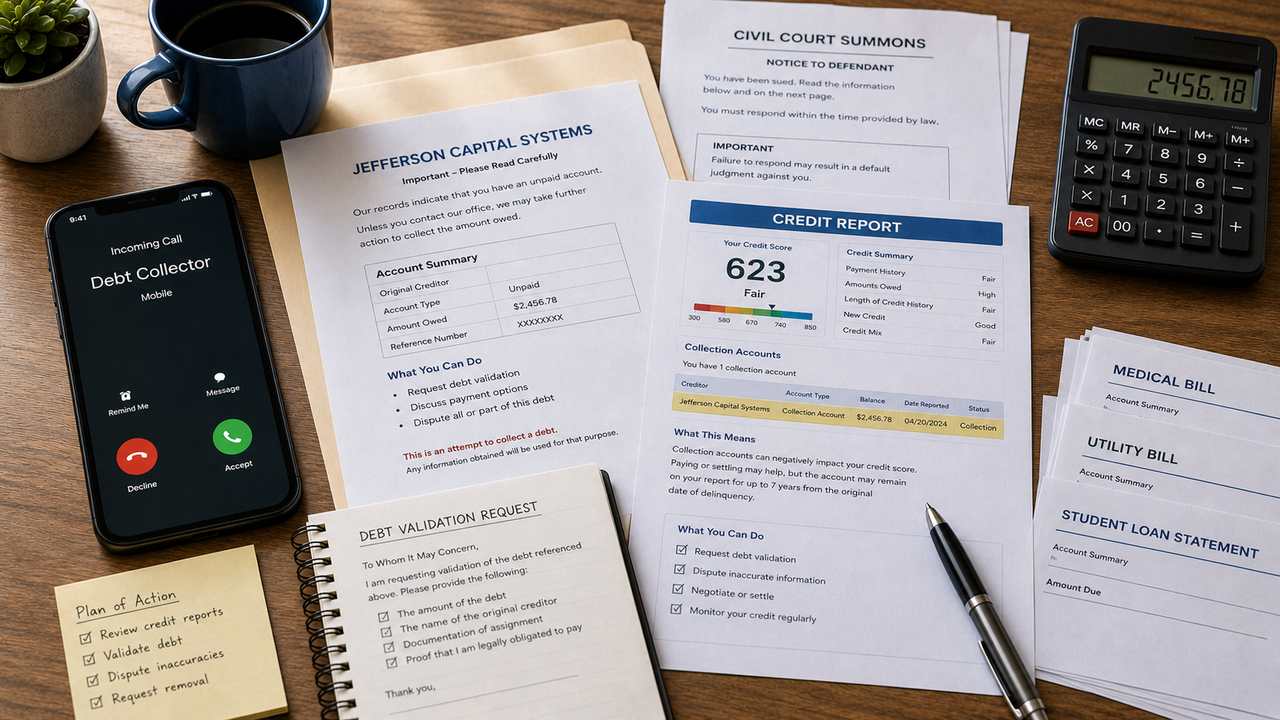
    Pulling up your credit report and seeing an unfamiliar company name attached to a debt is one of the more disorienting experiences in personal finance. You don’t recognize the name. It doesn’t match any bank or store you remember dealing with. And now you’re left wondering whether it’s legitimate, whether you actually owe the money, and what you’re supposed to do about it.This guide walks through exactly why unfamiliar debt collector names show up on your report, how the industry behind them actually works, and a complete, methodical process for handling any collector name you encounter — whether or not it’s specifically covered here.

    Why You Don’t Recognize the Name in the First Place

    The single most common reason for this confusion is that the company contacting you almost never had any original relationship with you. Your actual relationship was with a bank, a hospital, a phone company, or a retailer — and at some point, after an account went unpaid, it was either handed off to a third-party collection agency working on that original creditor’s behalf, or sold outright to a debt buyer who now owns it.

    Neither type of company markets itself to consumers the way a retail bank does, so it’s entirely normal to have never heard of them before this moment.

    The Two Fundamentally Different Business Models Behind These Names

    Understanding this distinction is the single most useful piece of context for evaluating any unfamiliar collector name, since it directly shapes what they can do, how much flexibility they have, and how you should approach them.

    Third-Party Collection Agencies

    These companies are hired by your original creditor to attempt collection on that creditor’s behalf, typically earning a commission or contingency fee based on what they successfully recover.

    Critically, the original creditor still owns the debt throughout this arrangement — the agency is simply acting as their collection arm. This means you may have the option to resolve the matter directly with the original creditor instead of the agency, and it means the agency’s negotiating flexibility is generally constrained by what that original creditor authorizes.

    Debt Buyers

    These companies purchase debt outright, typically buying large bundled portfolios of charged-off accounts from original creditors for a small fraction of the total balance — often somewhere between a few cents and twenty cents on the dollar, depending on the debt’s age and type.

    Once purchased, the debt buyer becomes the new legal owner and keeps everything they successfully collect. This generally gives debt buyers considerably more flexibility to negotiate a reduced settlement, since even a substantial discount off the full balance still represents a solid return relative to their purchase cost.

    Some companies do both, depending on the specific client relationship or account, and some collection agencies also operate a separate debt-buying division.

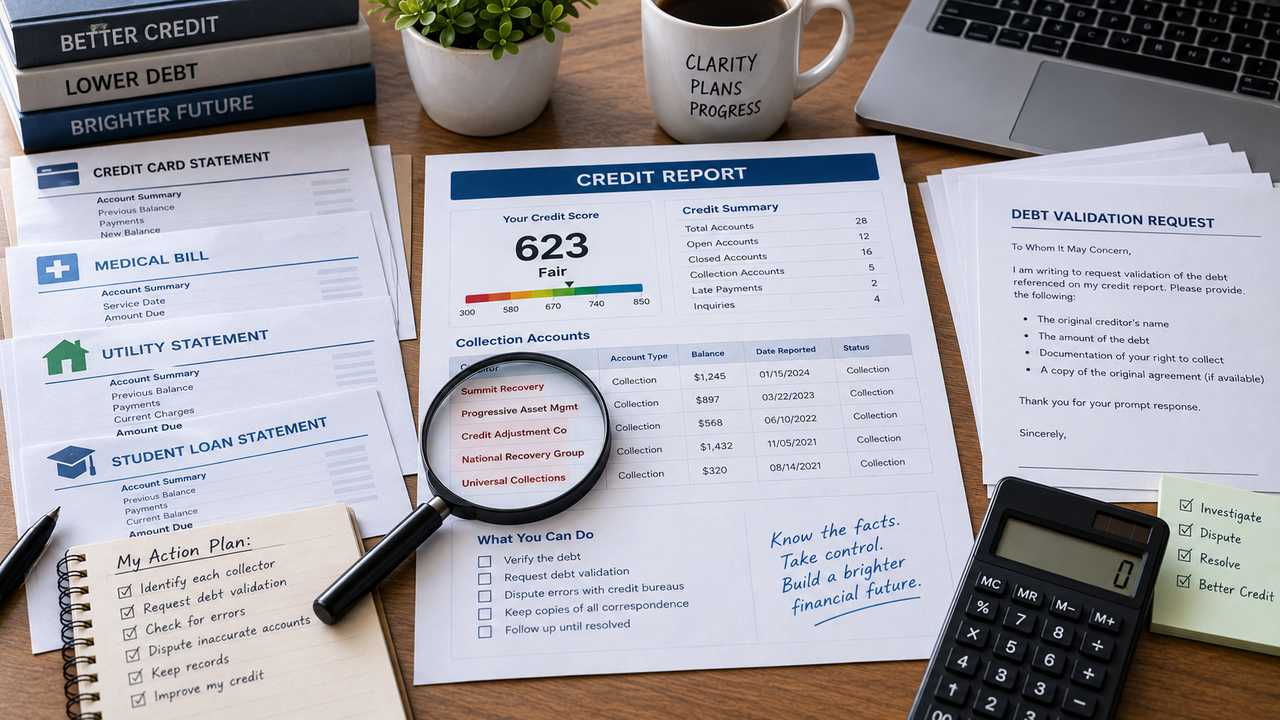
    Formal debt validation — your right under the Fair Debt Collection Practices Act to request written proof of who owns the debt, the amount owed, and the original creditor — is the most reliable way to determine which situation you’re actually in for any specific unfamiliar name.

    Categories of Debt Collector Names You’re Likely to Encounter

    Names Tied to Credit Card and Personal Loan Debt

    The largest, most active debt buyers in the U.S. specialize in purchasing charged-off credit card and personal loan portfolios from major banks. These companies are often subsidiaries of larger, sometimes publicly traded parent corporations, and their names frequently reference words like “credit management,” “capital,” “funding,” or “recovery” — reflecting their core business of acquiring and recovering value from purchased debt portfolios.

    Names Tied to Medical Debt

    Because medical billing is complex and providers often lack internal collection infrastructure, hospitals, clinics, and other healthcare providers frequently outsource unpaid balances to specialized collection agencies.

    These names might reference “healthcare,” “medical,” or simply appear as a general-purpose collection agency with healthcare-focused clients alongside other industries.

    Names Tied to Utility and Telecom Debt

    Phone, internet, and utility companies commonly place unpaid final bills with collection agencies specializing in this category.

    Given how easy it is to overlook a final bill after moving or switching providers, this is one of the more common sources of a genuinely surprising, unfamiliar collector contact.

    Names Tied to Government Debt

    Some collection agencies specialize specifically in government-referred debt — unpaid traffic fines, court fees, and municipal citations that a city or county government has outsourced to a private collector, since many government entities don’t have the internal resources to pursue these collections themselves.

    Names Tied to Student Loan Debt

    Both federal and private student loan servicers and collectors have their own distinct naming patterns, and private student loan debt specifically has been associated with well-documented ownership and documentation challenges, given how frequently these loans were bundled, securitized, and resold as investment assets to specialized trusts.

    A Universal, Step-by-Step Process for Any Unfamiliar Collector Name

    Regardless of which specific company you’re dealing with, this process applies consistently:

    Step One: Request Formal Debt Validation

    Send a written request via certified mail with return receipt requested, invoking your rights under the FDCPA, asking for the name of the original creditor, the amount owed, and confirmation of the company’s legal right to collect this specific debt from you.

    This legally requires them to pause collection activity until they respond, and you generally have 30 days from your first contact with them to make this request.

    Step Two: Cross-Reference the Response Against Your Own Records

    Does the original creditor’s name match an account you actually recognize? Does the timeframe make sense? Does the amount seem reasonable given what you remember owing?

    If everything checks out, you can move forward deciding how to resolve it. If something doesn’t add up, you have grounds to formally dispute it.

    Step Three: Determine Whether You’re Dealing With an Agency or a Buyer

    This shapes your negotiating strategy significantly.

    If it’s an agency still working on behalf of the original creditor, consider whether resolving directly with that original creditor might offer better terms.

    If it’s a debt buyer, there’s often meaningful room to negotiate a settlement well below the full claimed balance.

    Step Four: Check Your State’s Statute of Limitations Before Making Any Payment

    Every state has a legal time limit — commonly ranging from three to ten years depending on the state and debt type — within which a creditor or collector can sue you to collect through the courts.

    If the debt is old, verify whether it’s still within this window before doing anything involving payment, since in many states, making even a partial payment can restart this legal clock, potentially exposing you to renewed lawsuit risk on a debt that was otherwise safely past enforceability.

    Step Five: Negotiate, Settle, or Dispute Based on What You’ve Learned

    If the debt is accurate and still enforceable, decide between paying in full, negotiating a settlement, or setting up a payment plan — always getting any agreement in writing before sending money.

    If it’s inaccurate or unverifiable, formally dispute it with the credit bureaus.

    How to Verify That an Unfamiliar Debt Collector Is Legitimate

    An unfamiliar name alone doesn’t mean you’re dealing with a scam. The debt collection industry is full of companies most consumers have never heard of.

    However, you should independently verify any collector before providing sensitive information or making a payment.

    Look for the following:

    • A legitimate business name and physical mailing address
    • A valid phone number that can be independently verified
    • Information identifying the original creditor
    • A specific amount being claimed
    • A written validation notice explaining your rights

    Call the company directly using contact information you find independently — not from the letter or call itself — to confirm an account genuinely exists under your name before providing any sensitive information.

    What to Do If the Debt Genuinely Isn’t Yours

    Given how many accounts move through this industry, and how much data changes hands during resales, data-matching errors and identity theft are both real possibilities.

    If a debt doesn’t match anything in your history after validation, formally dispute it in writing with both the collector and the credit bureaus.

    If identity theft seems likely — particularly if you find multiple unfamiliar accounts, not just one — file a report at IdentityTheft.gov and consider a credit freeze while the matter is resolved.

    Why the Same Debt Can Appear Under Multiple Different Names Over Time

    It’s worth understanding that a single original debt can pass through several different collector names over its lifetime.

    If a debt buyer’s collection efforts on a specific account aren’t successful, they sometimes resell that account to yet another buyer, at an even steeper discount, who then makes their own fresh attempt — sometimes years after the original delinquency.

    This is why you might hear from what feels like a completely different company about what turns out to be the same underlying debt you dealt with — or ignored — years earlier.

    Throughout this chain, you only actually owe the debt once, to whichever company currently, legitimately owns it. Formal validation from each new name that contacts you is the way to confirm exactly that.

    Building Your Own Reference System for Ongoing Peace of Mind

    Given how confusing this landscape can be, it’s worth keeping your own simple record any time you interact with a debt collector — the company name, the date, what was discussed, and any documentation exchanged.

    If the same underlying debt resurfaces later under a different company name, having this record on hand lets you quickly identify the pattern and respond efficiently, rather than starting your research and verification process completely from scratch each time.

    Frequently Asked Questions

    Is there a master list of every legitimate debt collector name I might encounter?

    No single comprehensive list exists, given how many companies operate in this space and how frequently the industry changes through acquisitions and portfolio sales.

    The validation and verification process described in this guide is designed to work for any name you encounter, rather than relying on recognizing a specific company from a reference list.

    Does it matter if the collector’s address is in a state I’ve never lived in?

    Not necessarily — many collection agencies and debt buyers operate nationally from a centralized headquarters, regardless of where their individual customers happen to reside, so an out-of-state address alone isn’t a red flag.

    Can I request that a collector stop contacting me entirely, even for a legitimate debt?

    Yes — sending a written cease-and-desist request generally requires them to stop further contact, though this doesn’t erase the underlying debt or necessarily prevent a lawsuit if it’s still within your state’s statute of limitations.

    Should I be more cautious with a company I’ve never heard of versus a household-name bank collecting directly?

    The verification process should be the same either way — even household-name banks occasionally make errors, and an unfamiliar company isn’t automatically less trustworthy simply because you haven’t heard of it before, given how much of this industry operates without consumer-facing brand recognition by design.

    How long will an unfamiliar debt collector’s name stay associated with my credit report?

    The reporting itself follows the standard seven-year rule from the original delinquency date, regardless of how many different company names have appeared in connection with the debt during that period.

    A Deeper Look at How Portfolio Sales Actually Determine Which Name You See

    To understand why the specific name attached to your debt can feel almost arbitrary, it helps to understand the mechanics of a portfolio sale.

    When an original creditor decides to offload a batch of charged-off accounts, they typically work with a broker or directly negotiate with interested debt buyers, bundling hundreds or thousands of individual accounts together based on general characteristics — debt type, approximate age, and balance range — rather than marketing each account individually.

    The buyer who wins that specific portfolio auction is, in effect, essentially random from your perspective as an individual account holder. You have no input into who purchases your specific debt, and the winning buyer’s name is simply whichever company happened to have the appetite and capital to acquire that particular batch at that particular time.

    This randomness is part of why the same type of debt, even from the same original bank, can end up with completely different, unrelated collector names for different consumers, even those who defaulted around the same time.

    Understanding the Corporate Family Trees Behind Common Collector Names

    One detail that adds to the confusion is that many prominent debt buyers operate through multiple related entities, sometimes with genuinely different names, that all trace back to the same parent corporation.

    A large publicly traded debt buyer might service accounts through one subsidiary that purchases and legally owns debt, while a separately named subsidiary or division handles the actual customer-facing collection calls and correspondence.

    This means you might see two different company names associated with what is, underneath it all, a single corporate operation — one name representing the legal owner, which might appear as the “furnisher” on your credit report, and a different name representing the day-to-day servicing arm actually calling or writing to you.

    Understanding this structure explains why a formal validation request sometimes surfaces a different name than the one that initially contacted you, without this discrepancy being any kind of red flag — it’s simply how these corporate structures are commonly organized.

    A Detailed Walkthrough of a Realistic Multi-Company Debt Journey

    To make the full picture concrete, consider a realistic composite example spanning several years.

    In year one, a consumer stops paying an outstanding credit card balance of roughly $3,000. After 180 days of nonpayment, the original bank charges off the account and includes it in a larger portfolio sale to a debt buyer, receiving perhaps $250-300 for this and thousands of other similarly situated accounts.

    This first buyer, whose name the consumer has never heard before, attempts collection through calls and letters for a year or so without success. Finding limited returns on this particular account within their broader portfolio, they resell it — along with other underperforming accounts from the same original batch — to a second buyer, this time for an even smaller amount, since the debt is now known to be harder to collect.

    This second buyer, again an unfamiliar name, tries a different approach — perhaps a settlement offer emphasizing a steep discount — and this time succeeds in negotiating a reduced payment.

    Throughout this entire multi-year journey, the consumer encountered two entirely different, unfamiliar company names for what was, from the very beginning, a single $3,000 credit card debt from a bank they actually recognized.

    Neither subsequent company name represents a new or additional debt — simply different stages of the same underlying account’s ownership history.

    Comparing Recognition Rates: Why Some Categories of Collector Names Feel More Familiar Than Others

    Interestingly, not all debt collector names are equally unfamiliar to the average consumer.

    Companies handling government-referred debt, such as traffic fines and court fees, sometimes have more regional name recognition, since they may operate visibly within specific city or county government contracts that receive local news coverage.

    Companies specializing in medical debt collection, by contrast, tend to have the lowest public name recognition of any category, since healthcare providers rarely publicize which specific collection partners they use, and patients typically only encounter the name once a bill has already gone unpaid and been placed for collection.

    This pattern is worth keeping in mind specifically when you encounter a completely unfamiliar name attached to what turns out to be a medical debt — the obscurity of the collector’s name isn’t itself a red flag in this particular category, simply a reflection of how quietly this specific corner of the industry typically operates.

    Frequently Asked Questions, Continued

    Do debt collector names ever change without the underlying ownership changing, just through a company rebrand?

    Yes — companies sometimes rebrand or rename themselves for business reasons entirely unrelated to any change in debt ownership, which can create confusion if you see a name change on correspondence without any corresponding change in your validation documentation.

    If this happens, it’s reasonable to ask directly whether this represents the same company under a new name or an actual change in ownership.

    Is there a way to know in advance which company might end up owning my debt if it’s sold?

    No — as covered above, this process is effectively unpredictable from a consumer’s perspective, determined by portfolio sale dynamics you have no visibility into or control over.

    Does the specific collector’s name affect my legal rights in any way?

    No — your rights under the FDCPA and other consumer protection laws apply consistently regardless of which specific company’s name appears on your correspondence, as long as they’re operating as a third-party debt collector or debt buyer rather than the original creditor collecting their own debt directly, which is governed by a somewhat different, though still substantial, set of consumer protections.

    If a company’s name sounds like a law firm, does that change how I should approach them?

    Some collection efforts genuinely are handled by law firms, particularly once litigation becomes a possibility, and this should be verified the same way as any other company name — checking their actual bar registration and legitimate contact information — rather than assuming the “law firm” framing alone changes your fundamental rights or the validation process.

    How to Read a Validation Response Like an Expert

    Once you receive a validation response, knowing exactly what to look for separates a thorough review from a superficial glance.

    A genuinely complete response should include:

    • The original creditor’s full legal name, not just a general description like “credit card debt”
    • The original account number or a reference connecting it clearly to a specific account
    • An itemized explanation of how the current balance was calculated
    • Documentation establishing the chain of ownership if the company is a debt buyer

    An itemized explanation is particularly important if the balance is higher than what you remember owing, since this could reflect legitimate accrued interest or, in some cases, improperly added fees.

    If the company is a debt buyer rather than the original creditor, documentation establishing the chain of ownership should demonstrate that they actually purchased this specific account, not just provide a general assertion that they did.

    A response missing any of these elements isn’t necessarily proof of an invalid debt, but it does give you specific, legitimate grounds to request the missing information before proceeding with any payment.

    Why Some Companies Use Multiple Trade Names Simultaneously

    Beyond the sequential renaming discussed earlier, it’s also common for a single company to operate under several trade names or “doing business as” (DBA) designations at the same time, sometimes for different lines of business, different states’ regulatory requirements, or historical reasons tied to a past merger or acquisition.

    This can make a company appear unfamiliar even when it is part of a larger organization you might recognize under another name.

    debt-collector-names-credit-report-guide-under-100kb

    Understanding State-Level Differences in Debt Collection

    Federal law provides an important baseline of consumer protections, but individual states can impose additional requirements and restrictions on debt collectors.

    Some states require debt collectors to be specifically licensed to operate within that state, creating a public registry you can check to verify a company’s legitimacy.

    Some states impose additional restrictions on collection practices, shorter statutes of limitations than neighboring states, or specific disclosure requirements when a collector is pursuing a time-barred debt.

    Because these state-level protections genuinely vary, it’s worth researching your specific state’s consumer protection statutes, or asking a local consumer law attorney, if you want the fullest possible picture of your rights beyond the federal baseline covered throughout this guide.

    A Closer Look at How Debt Buyers Determine Which Accounts to Pursue First

    Within a large purchased portfolio, debt buyers don’t pursue every account with equal intensity or urgency.

    They typically use internal scoring models, not unlike the credit scoring models covered elsewhere in personal finance, to predict which accounts within a bulk purchase are most likely to result in successful recovery.

    Factors commonly used in this internal scoring include the debt’s age, the state you live in, since some states have more collector-friendly legal environments than others, any available information about your employment or assets, and how completely documented the specific account is.

    This is worth understanding because it explains why some people are contacted quickly and repeatedly after a debt is sold, while others might not hear from the new owner for a year or more.

    It’s not personal, and it doesn’t necessarily indicate anything about the debt’s validity. It simply reflects where you fell in that buyer’s internal prioritization model.

    The Growing Role of Digital Communication in Modern Debt Collection

    The debt collection industry has evolved considerably since the FDCPA was first written, and updated CFPB rules now explicitly address text messages and emails as legitimate, though regulated, communication channels, alongside traditional phone calls and letters.

    If you receive a text message or email from an unfamiliar debt collector name, the same core verification principles apply — request validation, verify independently, and don’t provide sensitive information or payment through a channel you haven’t confirmed is legitimate.

    These newer rules also specifically require collectors to provide a clear, easy method for you to opt out of a specific communication channel, such as requesting they stop texting you specifically while continuing to accept mail.

    This is worth knowing if you’d prefer to manage this kind of correspondence through a single, more easily documented channel like written mail.

    Frequently Asked Questions, Continued One Final Time

    Does the debt collection industry have its own trade association or self-regulatory body beyond government oversight?

    Yes — organizations like ACA International, formerly the American Collectors Association, represent the collection industry and have developed their own codes of conduct that member companies agree to follow.

    However, membership in such an organization is voluntary and doesn’t replace or supersede the legal requirements under the FDCPA and applicable state law.

    If a collector’s name includes “recovery” or “resolution,” does that indicate anything specific about how they operate?

    Not reliably — these terms are common across the industry regardless of whether a company operates as a third-party agency or a debt buyer, so they shouldn’t be treated as a meaningful signal on their own.

    The validation process remains the only reliable way to determine a specific company’s actual role and relationship to your debt.

    The Bottom Line

    An unfamiliar debt collector name on your credit report is disorienting but almost always explainable through one of two structures: a third-party agency working on behalf of your original creditor, or a debt buyer who’s purchased the account outright.

    Regardless of which specific name you’re facing, the same reliable process applies — request formal validation, verify the details against your own records, understand whether you’re dealing with an agency or a buyer, check your state’s statute of limitations before any payment, and proceed based on verified information rather than pressure.

    Understanding this system, rather than reacting to any single unfamiliar name in isolation, equips you to handle whatever specific company contacts you, now or in the future.

    Need Help Understanding Collection Accounts on Your Credit Report?

    An unfamiliar debt collector name can make it difficult to determine whether an account is accurate, who actually owns the debt, and what options may be available to you.

    A detailed credit report review can help identify collection accounts, reporting errors, and information that may need further investigation.

    Request a Credit Audit or Quote Today

  • 3 Credit Report Mistakes That Aren’t Actually Your Fault

    3 Credit Report Mistakes That Aren’t Actually Your Fault

    If you’ve ever pulled up your credit report and felt a jolt of confusion — a late payment you don’t remember, a collection account for a bill you’re sure you paid, a score that dropped for no reason you can pinpoint — you’re not alone, and more often than you’d think, it’s genuinely not something you did wrong. Credit reporting is a massive, largely automated system involving thousands of creditors, three separate bureaus, and countless data handoffs between them. Errors happen constantly, and they’re not always caught before they affect you.

    This isn’t about excusing genuine financial missteps — those happen too, and this article isn’t a way to dodge accountability for a payment you actually missed. It’s about the specific, well-documented category of credit report problems that occur through no fault of your own, so you can recognize them, understand why they happen, and know exactly what to do about each one.

    Mistake One: A Data-Matching Error Puts Someone Else’s Account on Your File

    Why This Happens

    Credit bureaus process an enormous volume of data every single day, matching incoming account information to the correct consumer file using identifiers like your name, address, date of birth, and Social Security Number. With millions of files and billions of data points, mismatches happen — particularly for people with common names, for family members who share a name (a “John Smith Jr.” confused with “John Smith Sr.,” for instance), or for people whose Social Security Number was transposed by even a single digit somewhere in a creditor’s system.

    This is a documented, well-understood category of credit reporting error, not a rare fluke. Studies examining credit report accuracy over the years have consistently found that a meaningful percentage of consumers have at least one error on at least one of their three credit reports, and mixed files — where information belonging to someone else ends up on your report — are one of the most common and consequential types.

    How to Spot It

    Look for anything that simply doesn’t match your own history: an account you never opened, an address you’ve never lived at, an employer you’ve never worked for, or a name variation you’ve never used. Sometimes the mismatch is obvious (a completely unfamiliar account with a large balance), and sometimes it’s subtler (an otherwise-plausible account that’s just slightly off in a detail like the opening date).

    What to Do About It

    Formally dispute it with whichever credit bureau is reporting the error, providing whatever documentation supports your position — proof of your actual address history, or simply a clear, factual statement that the account isn’t yours. Under the Fair Credit Reporting Act, the bureau is required to investigate, generally within 30 days, and correct or remove information that can’t be verified as accurately belonging to you.

    If the mismatch seems to involve identity theft rather than a simple data error (multiple unfamiliar accounts, for instance, rather than one isolated item), it’s worth filing a report at IdentityTheft.gov as well, since this provides additional documentation and protection as you work through the correction process.

    Mistake Two: A Payment You Made On Time Gets Reported Late

    Why This Happens

    This one is genuinely maddening because it can happen even when you did everything right. A few common, non-your-fault causes: your payment was processed by your bank or the creditor with an internal delay that pushed it past the due date on their end, even though you submitted it on time; a payment was misapplied to the wrong account (particularly common if you have multiple accounts with the same creditor, or a similar account number to another customer); or a system error at the creditor simply reported the wrong status entirely, something that happens more often than most people realize given how much of this process is automated with limited human review.

    How to Spot It

    Compare your own bank or payment records — statements showing exactly when a payment was sent and processed — against what your credit report shows for that specific account and date. If your bank statement shows a payment cleared before the due date, but your credit report shows a late payment for that same billing cycle, this is a genuine, documentable discrepancy worth challenging.

    What to Do About It

    Gather your proof first — bank statements, payment confirmation numbers, or screenshots showing the payment date. Contact the creditor directly, since they’re often able to correct their own reporting faster than going through a formal bureau dispute alone, though you can and should also file a formal dispute with the credit bureau reporting the error if the creditor doesn’t resolve it promptly.

    This is one of the stronger, more straightforward disputes to win, precisely because you likely have concrete, dated proof rather than a more abstract disagreement.

    Mistake Three: An Old, Paid Debt Resurfaces as a “New” Collection

    Why This Happens

    This is where the debt resale industry creates genuine confusion, even for people who did nothing wrong. When you pay off or settle a debt, that resolution needs to be accurately communicated back through the chain — from you, to the creditor or collector you paid, to the credit bureaus. If a debt was later sold to a different company before that resolution was properly recorded, or if a paid account gets confused with a similar unpaid one in a large resold portfolio, you can end up with what looks like a “new” collection account for a debt you already resolved, sometimes years earlier.

    This isn’t a hypothetical edge case — it’s a well-documented pattern in the debt-buying industry, where accounts get bundled, resold, and sometimes resold again, with documentation occasionally failing to travel cleanly through each transfer. A debt you settled with Company A years ago can genuinely resurface through Company C, unaware of (or simply not having received records of) your prior resolution.

    How to Spot It

    If a collection account appears for a debt you’re confident you already paid or settled, check the original creditor’s name and approximate account details against your own records. If they match a debt you resolved, even years ago, this is worth challenging directly rather than assuming you must have missed something.

    What to Do About It

    Locate your proof of the original resolution — a settlement letter, a payment confirmation, or bank records showing the payment. Dispute the new entry directly with both the company currently reporting it and the credit bureau, providing this documentation.

    It’s also worth requesting formal debt validation from whoever is currently attempting to collect, which legally requires them to pause collection activity and prove their claim before continuing — a request they often can’t fully satisfy once faced with your existing proof of resolution.

    The Broader Pattern Behind All Three

    What connects these three scenarios is that credit reporting, for all its importance in your financial life, is fundamentally a data-processing system with real, well-documented failure points — not a flawless record of your actual behavior.

    Recognizing this distinction matters for two reasons. First, it protects you from unnecessarily internalizing shame or self-blame over something that wasn’t actually your doing. Second, and more practically, it points you toward the right response: not quietly accepting whatever your report says, but actively verifying it and disputing what doesn’t hold up.

    Frequently Asked Questions

    How often should I check my credit report specifically to catch these kinds of errors?

    A full report review every three to four months is a reasonable general cadence for most people, striking a balance between catching problems in a timely way and not becoming excessively focused on frequent, minor fluctuations that don’t actually indicate an error.

    Does disputing an error ever hurt my credit score?

    No — filing a dispute itself has no negative effect on your score. If your dispute is successful and an inaccurate negative item is corrected or removed, your score can only improve or stay the same as a result, never worsen.

    Can these kinds of errors happen on more than one of my three credit reports at once?

    Yes, since some creditors report to all three bureaus, an error at the source can appear identically across all three — which is exactly why checking all three reports, not just one, matters for catching the full scope of any given issue.

    Is there a cost to disputing an error?

    No — filing a dispute with a credit bureau is free, and you’re never required to pay for this process, either directly to the bureau or through a third-party service, since it’s a right guaranteed under federal law.

    How These Three Credit Report Mistakes Interact With the Recent Wave of Medical Debt Reforms

    It’s worth briefly connecting this discussion to a genuinely positive, relevant development: medical debt reporting has changed meaningfully in recent years, with all three major bureaus now generally removing paid medical collections from credit reports entirely rather than simply marking them “paid,” and requiring a waiting period before an unpaid medical bill can even be reported in the first place.

    This matters directly to mistake three specifically, since medical billing — with its layers of insurance processing, claim denials, and delayed billing — has historically been one of the most error-prone categories of debt to end up incorrectly in collections. If your resurfaced or disputed collection traces back to a medical bill, these newer, more consumer-favorable rules may work directly in your favor, sometimes making an otherwise complicated dispute considerably more straightforward.

    A Broader Perspective on Why This Matters Beyond Just Your Score

    It’s worth stepping back from the mechanics for a moment to name something important: credit report errors aren’t just an abstract inconvenience. An uncorrected error at the wrong moment — right before a mortgage application, an auto loan, or even certain job or apartment applications — can have real, costly consequences: a higher interest rate, a denied application, or lost time scrambling to correct something under pressure that could have been caught and fixed calmly months earlier.

    This is precisely why proactive, periodic review matters more than reactive review only when something feels obviously wrong — many of the errors described in this article are subtle enough that they don’t announce themselves loudly; they simply sit quietly on your report until a lender happens to notice them at an inconvenient moment.

    Frequently Asked Questions, Continued

    If I successfully dispute one of these errors, will it definitely never come back?

    In most cases, once a bureau removes information because the furnisher couldn’t verify it, they’re not permitted to simply re-report the same unverified information later without new substantiation — if it does reappear without new documentation, that’s grounds for a further dispute and potentially a complaint about the furnisher’s reporting practices.

    Should I be more worried if I find one of these errors on my report, or is it truly common enough not to panic about?

    It’s genuinely common enough that discovering one of these issues shouldn’t trigger panic — treat it as a solvable, well-understood administrative problem with a clear resolution path, rather than a sign that something is fundamentally wrong with your finances or your credit management.

    Building a Personal Documentation Habit That Prevents These Problems From Becoming Bigger Issues

    One of the most effective, low-effort defenses against all three Credit Report mistakes described in this article is simply developing a habit of holding onto financial documentation longer than might feel intuitively necessary.

    Payment confirmations, settlement letters, and account closure notices are easy to discard once a matter feels resolved, but as this article has shown, resolved matters can resurface years later through no fault of your own. A simple digital folder — even just a dedicated email label or a folder of scanned documents — where you keep confirmation of every debt payoff, settlement, or dispute resolution gives you an immediate, ready answer if any of these situations ever arise again down the line, turning what could be a stressful scramble to reconstruct old records into a five-minute task of pulling up documentation you already have on hand.

    What Creditors and Bureaus Are Doing to Reduce These Errors Industry-Wide

    It’s worth noting that the credit reporting industry has faced real regulatory and public pressure over the years to improve accuracy, resulting in some genuine structural improvements: enhanced data-matching standards adopted by the major bureaus, more standardized reporting formats (like the Metro 2 format used industry-wide) intended to reduce inconsistent data submission from creditors, and increased scrutiny following high-profile regulatory settlements addressing credit reporting accuracy specifically.

    These improvements have measurably reduced error rates over time, though they haven’t eliminated the underlying structural vulnerabilities described throughout this article — which is exactly why individual vigilance remains a necessary complement to industry-level improvements, not a redundant extra step.

    Frequently Asked Questions, Continued Further

    Is it worth paying for a credit monitoring service specifically to catch these kinds of errors faster than checking manually?

    Paid monitoring services can provide faster alerts to new account openings or significant changes, which can help catch mistake one (a mixed file resulting in an unfamiliar new account) more quickly than periodic manual review alone — for Credit Report mistakes two and three specifically, which often involve existing accounts rather than new ones, a thorough periodic manual review of your full report remains valuable regardless of whether you also use a monitoring service.

    Does it matter which of the three bureaus I check first if I only have time to check one?

    Not particularly — since these errors can occur at any of the three bureaus depending on which creditors reported the problematic information to which bureau, there’s no single bureau inherently more likely to contain an error; checking all three periodically, even if staggered throughout the year, provides more complete protection than consistently favoring just one.

    How Each of the Three Bureaus Handles Disputes Slightly Differently

    While the Fair Credit Reporting Act sets the same baseline legal requirements for Equifax, Experian, and TransUnion, the practical experience of disputing an error with each bureau can differ in small but meaningful ways. Each bureau maintains its own online dispute portal, its own average processing timelines within the legally required 30-day window, and its own specific documentation upload requirements.

    Because a single error can sometimes appear on only one or two of your three reports (since not every creditor reports to all three bureaus), it’s important to check all three individually rather than assuming a clean result from one bureau means the same is true across all of them. If you find the same error on multiple reports, you’ll generally need to file a separate dispute with each bureau reporting it — resolving it with one doesn’t automatically correct the others, since they maintain independent files.

    The Role of the Original Creditor in Speeding Up Resolution

    While you have the right to dispute directly with the credit bureaus, it’s often faster and more effective to also contact the original creditor or furnisher of the disputed information directly, particularly for Credit Report mistakes two and three described above.

    This is because the bureau, upon receiving your dispute, generally forwards it to the furnisher (the creditor or collector who originally reported the item) for verification — meaning the furnisher is going to be involved in resolving your dispute either way.

    Reaching out to them proactively, with your documentation in hand, sometimes resolves the issue in days rather than waiting the full 30-day bureau investigation window, since a furnisher who immediately recognizes their own error can update their records and notify the bureau directly, short-circuiting the longer formal process.

    What Happens Behind the Scenes During a Bureau Investigation

    Understanding the mechanics of what actually happens once you file a dispute can help set realistic expectations. The bureau doesn’t independently investigate your claim from scratch — instead, they package your dispute and supporting information and send it to the furnisher through a system called e-OSCAR (Electronic Online Solution for Complete and Accurate Reporting), which most major creditors and collectors use to respond to disputes.

    The furnisher then has a limited window to investigate on their end and report back whether the information is accurate, should be updated, or should be deleted entirely.

    While the process is designed to resolve errors efficiently, it also explains why detailed documentation matters so much: the clearer and more specific your evidence is when the dispute reaches the furnisher, the easier it is for them to identify the problem and correct it.

    Why Paid and Resolved Debts Sometimes Get Swept Into Portfolio Sales

    When a creditor sells a batch of accounts, they’re often selling hundreds or thousands of individual debts at once, bundled together based on general characteristics like age and balance range, not individually verified one by one before the sale.

    If your specific account was actually already resolved at the time of a bulk sale — perhaps a payment posted right around the same time the portfolio was being finalized for transfer — it’s entirely possible for your resolved account to get swept into a batch sale anyway, simply because the seller’s records hadn’t yet caught up to reflect your payment before the sale was finalized.

    The buyer, receiving what looks like a straightforward unpaid account, has no way of knowing it was actually already resolved unless and until you point this out with your own documentation.

    The Bottom Line

    Credit reports are important, but they are not infallible. An unfamiliar account may belong to someone else. A payment you made on time may have been reported incorrectly. A debt you resolved years ago may resurface through the complicated chain of debt resale.

    The most important habit is to review your credit reports regularly, compare what you see against your own records, and avoid assuming that every piece of information on your report must automatically be correct.

    If something doesn’t match your financial history, investigate it. Gather documentation. Contact the furnisher when appropriate. Use your rights under the Fair Credit Reporting Act to dispute information that is inaccurate, incomplete, or cannot be properly verified.

    A credit report should reflect your actual financial history — not someone else’s account, a creditor’s processing error, or a debt that was already resolved.

    Need Help Finding Credit Report Errors?

    Reviewing three credit reports and identifying inaccurate accounts, incorrect late payments, or collections that should not be there can be complicated. A detailed review can help you understand what is accurate, what may be outdated, and what information may need to be disputed.

    If you want help reviewing your credit reports and understanding your available options, request a credit audit or quote today.

  • Does Autopay, BNPL, or PayPal Pay In 4 Affect Your Credit Score?

    Does Autopay, BNPL, or PayPal Pay In 4 Affect Your Credit Score?

    Autopay, buy now pay later (BNPL), and PayPal Pay in 4 all touch your wallet the same way, but they touch your credit file very differently. Autopay itself never changes your score it only protects the on-time payment history that already drives 35% of your FICO calculation. BNPL is in the middle of a reporting overhaul, with FICO’s new BNPL-aware scoring models rolling out through 2026. PayPal Pay in 4, meanwhile, stays off your credit report entirely unless you default.

    Key Takeaways

    • Autopay doesn’t add or subtract points; it just removes the risk of a missed payment, which is the single biggest score factor.
    • FICO began building BNPL data into new score models in late 2025, and Affirm now reports Pay in 4 loans to Experian and TransUnion.
    • PayPal Pay in 4 generally isn’t reported to any bureau for on-time use, so it neither builds nor damages your score until an account goes to collections.

    Does Autopay Affect Your Credit Score?

    Autopay has no direct line item in any scoring model no points are added for enrolling, and none are deducted for using it. What autopay does is protect payment history, which makes up 35% of a FICO score calculation according to myFICO. By auto-scheduling your bill, you remove the everyday risk of a forgotten due date turning into a 30-day-late mark.

    That said, autopay isn’t risk-free. A missed autopay withdrawal can still hurt your score, because the failed payment gets reported like any other late payment once it crosses 30 days past due, according to a 2026 explainer from LegalClarity. Common failure points include an expired debit card, insufficient funds, or a technical error on the lender’s end the payment simply never processes, and the clock toward a negative mark starts ticking from there.

    The practical takeaway: autopay is a payment-history insurance policy, not a score booster. Pair it with a low-balance alert on your checking account so a bounced autopay doesn’t quietly become a seven-year mark on your credit report.

    Does Buy Now, Pay Later Affect Your Credit Score?

    BNPL’s relationship with your credit score depends entirely on which provider you use and whether that provider reports to the bureaus at all. Some BNPL loans already show up on consumer credit reports today, but per ConsumerAffairs’ 2026 guide, they only affect your score when the specific plan and provider actually furnishes that activity reporting practices still vary widely across the industry.

    The scoring models themselves are changing fast. FICO announced in February 2025 that it had built a system to fold BNPL data into credit scores, following a 12-month study using data from roughly 500,000 Affirm borrowers, as reported by NMI. Early results were reassuring for most users: FICO’s own testing found that about 85% of consumers would see only a swing of 10 points or less once BNPL activity is factored in, with most people seeing no change or a slight increase.

    Provider behavior is the real deciding factor right now. As of mid-2026, Affirm reports its loans including Pay in 4 plans to Experian and TransUnion, while Klarna and Afterpay generally still don’t report routine U.S. payments to any bureau, according to Solid Credit’s July 2026 breakdown. That means the exact same shopping habit can be invisible or fully visible to a lender, depending only on which app you tapped at checkout.

    Late payments are the bigger risk regardless of reporting status. Federal Reserve data cited by Motley Fool Money’s 2025 BNPL Trends Report found that 24% of BNPL users had made a late payment, up from 18% the year before, with younger borrowers falling behind more often. Even providers that skip routine reporting can still send an unpaid balance to a collections agency, and that collection account will hit your score hard no matter who originally issued the loan.

    Does PayPal Pay In 4 Affect Your Credit Score?

    PayPal Pay in 4 sits on the “invisible unless things go wrong” end of the spectrum. Applying only triggers a soft credit check, which never harms your score, and PayPal doesn’t report your remaining installment payments to the credit bureaus, according to U.S. News. Paying every installment perfectly on time produces zero change to your credit file no boost, no ding.

    That invisibility cuts both ways. Because on-time Pay in 4 payments aren’t reported to the three major bureaus, using the service responsibly won’t help you build a credit history the way a reported installment loan would, per Firstcard’s 2026 breakdown. If you’re specifically trying to build a thin credit file, Pay in 4 simply won’t do that job.

    Default is where the risk lives. If a balance goes unpaid long enough, PayPal may hand the debt to a collections agency, and that collection can then appear on all three bureaus and lower your score, according to The Credit People. It’s worth noting that PayPal Pay in 4 is a separate product from PayPal Credit, a revolving line issued by Synchrony Bank that does report activity to the bureaus and can affect your score in the ordinary way.

    Autopay vs. BNPL vs. PayPal Pay In 4: Side-By-Side Credit Risk

    Payment method Reports on-time use? Can it help your score? Can it hurt your score?
    Autopay N/A it’s a payment mechanism, not a loan No, it only protects existing history Yes, if the withdrawal fails and goes unpaid 30+ days
    BNPL (varies by provider) Sometimes Affirm generally yes; Klarna/Afterpay generally no Only if the provider reports and you pay on time Yes, especially as FICO’s BNPL-aware models spread, or if sent to collections
    PayPal Pay in 4 No, for on-time payments No Yes, only if the account defaults and goes to collections

    The common thread across all three: on-time payments are either neutral or protective, and it’s always the miss not the payment method itself that does the damage.

    How to Use These Payment Tools Without Hurting Your Score

    • Turn on autopay for at least the minimum due, then set a separate calendar reminder to pay more if you can this covers you against both forgetfulness and card fraud holds.
    • Check whether your BNPL provider reports before you borrow. If building credit matters to you, a reporting provider is doing double duty; if avoiding any credit footprint matters more, a non-reporting provider keeps the loan off your file as long as you stay current.
    • Never treat Pay in 4 as consequence-free. The soft check and lack of reporting protect you on the way in, but a defaulted balance can still land in collections and follow you for years.
    • Watch your checking account balance around due dates. Most of the credit damage tied to these tools traces back to a payment that simply didn’t go through, not to the payment method itself.

    Frequently Asked Questions

    Will setting up autopay lower my credit score?

    No. Enrolling in autopay has no effect on your score in either direction. It only becomes a problem if the automatic payment fails to process and the bill goes unpaid past 30 days, at which point it’s reported the same as any other missed payment.

    Do all BNPL apps report to credit bureaus?

    No. As of mid-2026, Affirm reports its Pay in 4 and installment loans to Experian and TransUnion, while Klarna and Afterpay generally don’t report routine U.S. payments to any bureau. Always check the specific provider’s current disclosure before assuming either way.

    Can PayPal Pay in 4 help me build credit from scratch?

    No. Because on-time Pay in 4 payments aren’t sent to Equifax, Experian, or TransUnion, the plan won’t build a payment history the way a reported credit-builder card or installment loan would.

    What happens if I miss a PayPal Pay in 4 payment?

    A single missed payment typically stays off your credit report at first. If the balance goes unresolved and PayPal eventually sends it to a collections agency, that collection account can then appear on all three bureaus and lower your score.

    Will FICO’s new BNPL scoring model hurt everyone’s credit score?

    Unlikely for most people. FICO’s own testing found that roughly 85% of consumers saw a swing of 10 points or less once BNPL activity was factored into the score, with many seeing no change or a small increase.

    The Bottom Line

    None of these three tools is inherently good or bad for your credit the outcome depends on whether the provider reports to the bureaus and whether you pay on time. Autopay protects the payment history you already have. BNPL is actively moving from a credit blind spot toward standardized reporting, provider by provider. PayPal Pay in 4 stays off your report unless you default. Treat all three the same way: never schedule a payment for more than your account can cover, and check each provider’s current bureau-reporting policy before you assume it won’t show up on your credit file.

  • Is a 753 Credit Score Good? Full Guide to Every Score Range (560–753)

    Is a 753 Credit Score Good? Full Guide to Every Score Range (560–753)

    A three-digit number decides what you pay for a car, a house, and sometimes an apartment. Yet most people only think about it the moment a lender pulls it up on a screen in front of them.

    If you just checked your score and landed here, you want a fast, specific answer, not a lecture on credit theory. This guide gives you that answer for six of the most-searched scores: 753, 718, 677, 675, 590, and 560. Each section below stands on its own, so jump straight to your number if you’d rather skip the general background.

    Key Takeaways

    • A 753 credit score falls in FICO’s Very Good range (740-799) and beats roughly 62% of Americans, according to Experian’s 2025 credit review.
    • A 718 score sits almost exactly at the 2026 national average of 715-717 (Experian).
    • A 590 or 560 score lands in Fair-to-Poor territory and typically means higher rates, not automatic denial.
    • Moving from Fair to Good (580-669 to 670-739) unlocks the single biggest rate improvement of any tier jump, per LendingTree’s 2025 lifetime-interest analysis.
    • The fastest lever for any score is credit utilization: cutting card balances usually moves the number faster than any other single action.

    What Do Credit Score Ranges Actually Mean?

    FICO scores run from 300 to 850, and as of 2026 the model splits into five bands: Poor (300-579), Fair (580-669), Good (670-739), Very Good (740-799), and Exceptional (800-850), according to myFICO. Each band roughly maps to a lending outcome: Poor makes approval hard, Fair means approval with a price penalty, and everything from Good upward opens most mainstream credit products.

    Here’s a wrinkle worth knowing before you compare notes with a friend: VantageScore uses different cutoffs on the same 300-850 scale: good starts at 661, not 670. That gap is exactly why a 675 score and a 677 score can get labeled two different ways depending on which app you check, even though only two points separate them. Neither model is “more correct”; lenders simply choose which one they pull.

    Related Reading: Is Fico Score Accurate?

    Is a 753 Credit Score Good?

    Yes. A 753 credit score is Very Good on the FICO scale (740-799) and lands you in roughly the 78th percentile nationally. About a third of consumers score between 600 and 750, and another 48% score higher, per Experian’s 2025 credit review, which puts a 753 near the top of that middle group and just short of Exceptional.

    At 753, you’ll qualify for most credit cards, including premium rewards products, and you’re close enough to the 760 threshold that many mortgage lenders use for their best pricing tier. On a $350,000, 30-year fixed mortgage, borrowers in the 700-759 band paid around 6.63% APR as of April 2026, compared with 6.15% for the 760-plus tier, a gap worth roughly $107 a month, according to Experian/Curinos data compiled by Crowned Credit. A 753 score outperforms the 2026 national average FICO score of 715-717, according to Experian, and sits only seven points below the “Very Good” ceiling of 760 that many lenders treat as their best-rate cutoff.

    Should you chase the extra points before applying for a mortgage? If a big purchase is more than three months out, it’s worth trying: the jump from 753 to 760-plus can shave real money off a 30-year loan. If you’re applying next week, 753 already opens nearly every mainstream door.

    Is a 718 Credit Score Good?

    Yes. A 718 credit score is Good on the FICO scale and sits almost exactly on the 2026 national average, which Experian places at 715 to 717. That makes 718 a genuinely representative American credit score: unremarkable in a statistical sense, but perfectly workable for most financial products.

    A 718 clears the 700-point line that many auto lenders treat as a soft threshold for near-prime-to-prime pricing, and it’s well above the 620 minimum most conventional mortgage lenders require. It falls short, though, of the 740 mark that separates Good from Very Good, so you’ll typically see slightly higher APRs than someone scoring in the mid-700s or above.

    For new-car loans specifically, Experian’s Q1 2026 data put the average credit score for approved new-car buyers at 751, three points above a 718 score. That doesn’t mean 718 gets rejected; it means the average successful applicant is edging into Very Good territory, so a 718 buyer should expect a slightly above-average new-car rate rather than the best one on the lot.

    Is a 677 Credit Score Good?

    Yes, technically. A 677 credit score just clears FICO’s 670 cutoff for Good, and it comfortably clears VantageScore’s 661 cutoff too. It’s a real improvement over Fair credit, but it sits at the low end of the Good band, only seven points above the line.

    That position matters more than the label does. Lenders often set their best-rate cutoffs well above 670 (commonly at 700, 720, or 740), so a 677 score typically gets you approved without getting you the advertised lowest rate. Auto lenders using VantageScore’s near-prime band (601-660) versus prime (661-780) will treat 677 as solidly prime, which is a meaningfully better position than sitting just under 661.

    According to a 2025 LendingTree analysis, crossing from Fair into Good credit represents the single largest jump in borrowing terms of any adjacent tier change, with mortgage approval odds rising by roughly 27 percentage points. A 677 score means you’ve already made that jump; the next practical goal is pushing past 700, where rate tiers start improving again.

    Is a 675 Credit Score Good?

    Yes, with an asterisk. A 675 credit score is Good under FICO (670-739) but can show up as Fair on VantageScore, since some VantageScore models set the good threshold a bit higher in practice depending on the version. Two points below 677, a 675 still clears both major scoring models’ lower “good” boundaries in the current 4.0 VantageScore version (661), but it’s close enough to the line that a single missed payment or a utilization spike could knock it back into Fair.

    Practically, a 675 score should qualify you for most unsecured credit cards and a conventional mortgage, though probably not at the lowest advertised APR. Freddie Mac and Curinos pricing data consistently shows a meaningful rate step between the high-600s and the 700s, so borrowers at 675 have real incentive to wait and improve if a big loan isn’t urgent.

    Is a 590 Credit Score Good?

    No. A 590 credit score is in FICO’s Fair range (580-669), close to the bottom of it, and only ten points above the Poor cutoff. It’s not a crisis score, but it will limit your options and raise your cost of borrowing across nearly every product.

    At 590, expect higher APRs on any approved credit, tighter credit limits, and possible denials from mainstream unsecured card issuers. Auto lenders classify scores in the 601-660 VantageScore band as “near-prime,” so a 590 typically falls into “subprime,” where Experian’s Q1 2026 data shows average used-car rates climbing well above the 11.43% market average. Mortgages are still possible (FHA loans accept scores as low as 580 with 3.5% down), but conventional loans generally require at least 620. A borrower with Fair credit pays roughly $183,000 more in lifetime interest than someone with Exceptional credit, across mortgages, auto loans, and credit cards combined, according to a 2025 LendingTree analysis of lifetime borrowing costs.

    A 590 score isn’t permanent. Because it sits near the top of Fair rather than deep in Poor, relatively modest fixes, such as paying down revolving balances, clearing any past-due accounts, and avoiding new hard inquiries, can move it meaningfully within a few billing cycles

    Is a 560 Credit Score Good?

    No. A 560 credit score falls in FICO’s Poor range (below 580), and it will make approval difficult for most unsecured credit and many conventional loans. This is the range where lenders see the highest statistical risk of missed payments, and pricing reflects that directly.

    At 560, expect denials from most major unsecured card issuers, minimum down payments or co-signers on auto loans, and mortgage options largely limited to FHA loans (which can go as low as 500 with 10% down, or 580 with 3.5% down). Deep-subprime auto borrowers, Experian’s lowest VantageScore tier, saw average new-car APRs around 16% in recent data, roughly 3.5 times the super-prime rate.

    Is a 560 worth panicking over? No, but it is worth acting on immediately. The FICO scoring formula weighs payment history and credit utilization more heavily than any other factors, so the two fastest, most reliable moves are simple: stop missing payments starting today, and pay down any revolving balance above 30% of its limit. A secured card or a credit-builder loan, reported to all three bureaus, can add positive history within a few months.

    What Does Each Score Range Actually Cost You?

    The dollar gap between tiers is larger than most people expect. On a $350,000, 30-year fixed mortgage, Experian/Curinos data from April 2026 shows roughly a half-point APR difference between the 760-plus tier and the 700-759 tier, and that gap widens sharply once you drop into Fair or Poor territory.

    The pattern repeats on auto loans. Experian’s Q1 2026 State of the Automotive Finance Market report put average new-car APRs at 4.55% for super-prime borrowers (781+) versus 16.01% for deep-subprime borrowers, an 11.4-point spread that turns into thousands of dollars on the same car. Used-car rates spread even wider, from about 6.30% up to 21.77%.

    None of this is fixed forever. Every tier boundary in this guide (580, 620, 670, 740, 780) is a line you can cross with sustained, ordinary habits rather than a financial overhaul.

    How to Move Up a Tier, Whatever Your Starting Score

    Answer-first: payment history and credit utilization make up roughly two-thirds of a FICO score’s weighting combined, so the fastest, most reliable gains come from those two levers, not from disputing old accounts or chasing credit-repair services.

    A few moves apply regardless of whether you’re starting at 560 or 753:

    • Pay every bill on time, starting now. A single 30-day-late mark can cost more points than almost anything else on a report, and the damage fades faster the longer your on-time streak grows afterward.
    • Push revolving utilization under 30%, and under 10% if you’re chasing the top tiers. This is usually the single fastest lever, because balances reported to the bureaus can update within one billing cycle.
    • Leave old accounts open. Length of credit history and available credit both factor into your score, and closing a paid-off card can quietly work against you.
    • Add alternative payment history if you’re building from Fair or Poor. Programs like Experian Boost report rent, utility, and streaming payments, and Experian says they add an average 13 points for users who qualify.
    • Space out new credit applications. Each hard inquiry has a small, temporary effect, but several in a short window can compound right when you’re trying to move up.

    FAQ

    Is 753 a good credit score for buying a house?

    Yes. A 753 credit score clears the 620 minimum most conventional mortgage lenders require and sits close to the 760 mark many lenders use for their best rate tier, so you’ll qualify for competitive terms even if you don’t land the single lowest advertised APR (Experian, 2026).

    What’s the real difference between a 675 and a 677 credit score?

    Almost none in practice. Both clear FICO’s 670 “Good” threshold and VantageScore’s 661 threshold, and lenders decision in bands rather than by exact score, so a two-point gap rarely changes an approval or a rate offer on its own.

    Is a 718 credit score good enough for a car loan?

    Yes. A 718 sits close to Experian’s Q1 2026 average score for approved new-car buyers (751) and well within the “prime” tier most auto lenders use, so it typically qualifies for solid, if not the very lowest, financing rates.

    Can I get approved for anything with a 590 credit score?

    Often, yes. A 590 sits in FICO’s Fair range, which usually still allows FHA-backed mortgages, secured credit cards, and some subprime auto loans, but expect higher rates and lower limits than Good or Very Good credit would get you.

    How fast can a 560 credit score improve?

    Faster than most people expect. Because payment history and utilization carry the heaviest weighting in FICO’s formula, consistent on-time payments and lower card balances can produce visible score movement within one to three billing cycles, though a return to Good credit typically takes longer.

    The Bottom Line

    Wherever your score falls in this guide (560, 590, 675, 677, 718, or 753), the tier matters less than the direction it’s moving. A 753 is Very Good and close to Exceptional; a 718 is Good and dead-average; 675 and 677 sit at the low end of Good, thin enough to slip backward without upkeep; and 590 and 560 sit in Fair and Poor, where the same two habits, on-time payments and low utilization, do most of the work to climb out.

    Check your full report, not just the score, before you make a big borrowing decision. The number tells you the tier; the report tells you exactly what to fix next.

  • How to Dispute Credit Report Errors in 2026

    How to Dispute Credit Report Errors in 2026

    Table of Contents

    Last Updated: September 5, 2026

    A single error on your credit report can cost you a mortgage approval, a car loan, or a rental application. Knowing how to dispute credit report errors is one of the most direct ways to protect your financial future, yet most consumers never check their reports for mistakes. The Fair Credit Reporting Act gives you the legal right to challenge inaccurate information, and the process is more straightforward than you might think. At Credit Repair, we guide clients through this exact process every day, and this step-by-step guide will show you how to dispute credit report errors effectively, whether you are dealing with a simple clerical mistake or a more complex case of identity theft.

    The dispute process exists because credit bureaus make mistakes. The system relies on data furnishers, like lenders and collection agencies, to report accurate information, but errors happen far more often than they should. Many consumers find that a formal dispute is the only way to remove inaccurate negative items that are dragging down their score. Below, we will walk through each stage of the process, from pulling your reports to escalating a denied dispute, so you can take action with confidence.

    Why You Should Dispute Credit Report Errors

    Errors on your credit report can quietly undermine your financial goals for years. A credit reporting agency may list an account as delinquent when you paid on time, report a debt that belongs to someone else, or fail to update a balance that you have already settled. Each of these inaccuracies can suppress your credit score, leading to higher interest rates or outright denials when you apply for credit.

    The practical impact goes beyond the score itself. Landlords, insurers, and even some employers review credit history as part of their decision-making process. An unresolved error could cost you an apartment rental or a job offer, not just a loan. Disputing the error is not about gaming the system; it is about ensuring your credit file accurately reflects your financial behavior. Under the Fair Credit Reporting Act, both the credit bureaus and the data furnishers have a legal obligation to investigate and correct inaccurate information.

    Step 1: Get Your Free Credit Reports and Find the Errors

    Your first move is to request your credit reports from the three major credit reporting agencies: Equifax, Experian, and TransUnion. Federal law entitles you to a free report from each bureau every 12 months through the official government-authorized channel (consumer.ftc.gov). Reviewing all three matters because the bureaus do not always share information, so an error on one report may not appear on the others.

    Go through each report line by line. Look for accounts you do not recognize, payment statuses that seem wrong, balances that do not match your records, and any public record entries that are not yours. A common mistake is focusing only on negative accounts, but even a small error on a positive account can affect your credit use or payment history. Write down every item you believe is inaccurate, along with the bureau that reported it. This list becomes your roadmap for the dispute process.

    A person reviewing a credit report on a laptop at a clean desk, holding a highlighter to mark an error, with a cup of coffee nearby
    A person reviewing a credit report on a laptop at a clean desk, holding a highlighter to mark an error, with a cup of coffee nearby

    Step 2: Gather Supporting Documents for Credit Disputes

    Your dispute is only as strong as the supporting documents you provide. The credit bureau will not simply take your word that an error exists; you need to show them why the information is wrong. Start by collecting your own records: bank statements, payment confirmations, loan agreements, and any correspondence with the original creditor.

    For a dispute over an account that is not yours, you may need a police report or an identity theft affidavit if fraud is involved. For a dispute over an incorrect balance or payment status, a statement from your bank showing the payment you made can be decisive. The goal is to create a clear paper trail that contradicts the information on your report. Organize these supporting documents before you write your letter so you can reference them specifically and attach copies with your submission.

    Watch Out
    Never send original documents with your dispute. The credit bureau only needs copies, and original documents can be lost in the review process. Keep your originals in a safe place for your own records.

    Step 3: Write a Credit Dispute Letter Template That Works

    A well-written credit dispute letter template is the backbone of a successful dispute. The letter does not need to be long, but it must be clear, specific, and supported by evidence. Start with your full name, address, and a copy of your identification, then state exactly which item on your report is inaccurate and why.

    Here is a structure that works for most disputes:

    Subject: Dispute of Account Information

    To Whom It May Concern:

    I am writing to dispute the following information on my credit report. The item I am disputing is [account name and number] listed as [status, e.g., “delinquent” or “collection”]. This information is inaccurate because [specific reason, e.g., “I paid this account in full on June 15, 2025”].

    I have enclosed [list supporting documents] that demonstrate the error. Please investigate this matter and remove or correct the inaccurate information from my credit file.

    Sincerely,
    [Your Name]
    [Your Address]
    [Your Phone Number]

    Send a separate letter for each error and each bureau. If the same error appears on all three reports, you must file a dispute with all three bureaus separately. Keep a copy of every letter and a log of when you sent it.

    Step 4: File Your Dispute Online or by Certified Mail

    You have two main options for submitting your dispute: online through each bureau’s website, or by mail using certified mail with return receipt requested. Both methods are valid, but they serve different purposes. Online disputes are faster and allow you to upload supporting documents directly. Mail disputes create a physical paper trail that can be useful if the dispute escalates or if you need to demonstrate compliance later.

    Get a Free Consultation →

    For most consumers, starting online is the practical choice. The bureaus have simplified their dispute portals, and you will receive an immediate confirmation number. However, if you are disputing a complex issue or if you have been denied before, certified mail gives you proof of delivery and a receipt that the bureau received your dispute. This documentation becomes critical if you need to escalate the matter to a regulator or take legal action.

    The Fair Credit Reporting Act requires the credit reporting agency to conduct a reasonable investigation. Your dispute should include the specific item you are challenging, the reason for the dispute, and the supporting documentation that backs your claim. A vague dispute that simply says “this is wrong” is far less likely to succeed than one that clearly identifies the error and provides evidence.

    How Long Does a Credit Dispute Take? The Investigation Timeline

    The Fair Credit Reporting Act sets a clear timeline for the investigation period. Credit bureaus generally have 30 days to investigate your dispute from the date they receive it (consumer.ftc.gov). In some cases, they may take up to 45 days if you provide additional information during the review process. The clock starts when the bureau receives your dispute, so keep your confirmation number or your certified mail receipt as proof of the date.

    During the investigation, the credit reporting agency contacts the data furnisher, the company that provided the disputed information. The furnisher must review your claim and report back to the bureau. If the furnisher cannot verify the information, the bureau must remove it from your credit file. If the investigation finds the information is accurate, the bureau will keep it, and you will receive a notice of results explaining their decision.

    Dispute Stage Typical Duration What Happens
    Bureau receives dispute Day 1 Confirmation number issued
    Investigation period 30 days (up to 45) Bureau contacts data furnisher
    Notice of results Within 5 days of decision Bureau sends written outcome
    Re-insertion window Varies If removed, furnisher must notify before re-adding

    Know Your Fair Credit Reporting Act Dispute Rights

    The Fair Credit Reporting Act dispute rights are the legal foundation for your entire dispute process. This federal law governs how credit reporting agencies collect, use, and share your credit information. It requires bureaus to maintain reasonable procedures to ensure maximum possible accuracy, and it gives you the right to dispute incomplete or inaccurate information.

    Your rights extend beyond the initial dispute. If the investigation does not resolve the issue, you have the right to add a statement of dispute to your credit file explaining your side of the story. This statement becomes part of your file and must be included when your report is pulled. You also have the right to request that the bureau send your corrected report to anyone who received it in the past six months for employment purposes, or in the past two years for other purposes.

    Consumer protection under the Fair Credit Reporting Act also covers how data furnishers behave. If a furnisher reports information you have disputed, they must mark that information as disputed while the investigation is pending. If the investigation finds the information is inaccurate, the furnisher must notify all credit reporting agencies and correct the record (ecfr.gov).

    What to Do If the Credit Bureau Rejects Your Dispute

    A rejection is not the end of the road. If the credit bureau determines that the disputed information is accurate, you still have options. First, review the notice of results carefully. The bureau must explain the method of investigation and provide the name, address, and phone number of the furnisher who verified the information. This gives you a direct contact to pursue the matter.

    Your next step is to contact the data furnisher directly. Many consumers find that the furnisher is more responsive when approached directly with clear evidence. Write a letter to the furnisher explaining the error and include your supporting documents. The furnisher has its own obligation under the Fair Credit Reporting Act to investigate and correct inaccurate information. If they fail to do so, they can be held liable.

    If direct contact does not resolve the issue, you can file a complaint with the Consumer Financial Protection Bureau. The CFPB forwards your complaint to the company and works to get a response. For issues involving identity theft, you can also place a fraud alert or a credit freeze on your file to prevent further damage. A fraud alert requires creditors to verify your identity before opening new accounts, while a credit freeze blocks access to your credit report entirely.

    Pro Tip
    If an error is removed from your report and later reappears, the data furnisher must notify you before re-inserting it. This is called a re-insertion notice, and it gives you another opportunity to dispute the item. Keep your original documentation so you can respond quickly.

    Disputing credit report errors is a skill that improves with practice. The first dispute you file will take the most time because you are learning the process, but each subsequent dispute becomes faster. For consumers facing multiple errors or dealing with the aftermath of identity theft, professional guidance can make the difference between a resolved dispute and a frustrating dead end. Credit Repair specializes in identifying and disputing inaccurate or unverifiable items on your behalf, using the same Fair Credit Reporting Act provisions covered in this guide. Our team handles the heavy lifting of documentation and correspondence while you focus on your financial goals.


    The dispute process demands patience and precision, but the reward is a credit file that accurately reflects your history. You have the right to challenge inaccurate information, and the tools in this guide give you a clear path forward. For those who want expert support navigating complex disputes or recurring errors, Credit Repair offers personalized guidance based on the Fair Credit Reporting Act, with strict data privacy and an honest, no-pressure assessment of your situation. Get started with a free consultation and take the first step toward regaining financial control.

    Frequently Asked Questions

    Can errors on a credit report be reversed?

    Yes, but the process is called a dispute, not a reversal. If you find inaccurate information on your credit report, you can file a dispute with the credit bureau that issued the report. The bureau must investigate within 30 days. If they cannot verify the item with the data furnisher, they must remove it. This is a legal right under the Fair Credit Reporting Act, not a guarantee that every item will be removed.

    Is it worth it to dispute a credit report?

    Yes, particularly if the error is hurting your score. A single inaccurate collection account or late payment can lower your score significantly. Removing it could help you qualify for better rates on a mortgage or auto loan. There is no cost to dispute an error yourself, and the potential benefit to your credit history is substantial. It is a worthwhile step before applying for new credit.

    How long does the credit dispute process take?

    By law, the credit bureau must complete its investigation within 30 days of receiving your dispute. They can extend this to 45 days if you send additional information during the investigation. Once the investigation is complete, they must send you the results in writing. If the error is corrected, the bureau must also send updated copies of your credit report to anyone who requested it in the last six months.

    What should I say when disputing a credit report?

    Be specific and factual. State clearly that you are disputing an item as inaccurate and explain what is wrong. For example, say ‘This account is not mine’ or ‘This account was paid in full on [date].’ Do not use vague language. Attach copies of supporting documents that prove your claim, such as a bank statement or a letter from the original creditor. Send your dispute to the credit bureau by certified mail with a return receipt requested.

  • How Does Credit Repair Work? The Complete Step-by-Step Process

    How Does Credit Repair Work? The Complete Step-by-Step Process

    Credit repair works by identifying inaccurate, incomplete, or unverifiable items on your credit reports and formally disputing them with the credit bureaus, who must investigate within 30 to 45 days (Experian, 2026; Firstcard, 2026). If a disputed item can’t be verified as accurate, the bureau corrects or deletes it. If it’s confirmed accurate, it stays no company, paid or free, can remove a true negative mark early.

    That’s the entire mechanism in one sentence, but the real process has more moving parts: gathering the right proof, writing a dispute that survives the bureaus’ automated review system, tracking multiple 30-day windows across three separate bureaus, and knowing what to do when a dispute comes back “verified” even though you’re sure it’s wrong.

    This guide walks through every step, in order, whether you’re doing it yourself or evaluating what a paid service actually does on your behalf.

    Key Takeaways

    • Credit repair centers on formal disputes filed with Equifax, Experian, and TransUnion (Firstcard, 2026).
    • Bureaus must investigate within 30 days, extendable to 45 in some cases (Experian, 2026).
    • 2026 FCRA updates added a mandatory 10-day preliminary review for high-risk errors (Dispute Beast, 2026).
    • Vague disputes often get reduced to a two-digit code inside the bureaus’ e-OSCAR system specificity and documentation matter (Stacking Capital, via CreditCareCo, 2026).
    • Only inaccurate or unverifiable items can be removed; accurate negative marks stay for up to 7 years (Experian, 2026).

    Step 1: Pull and Review All Three Credit Reports

    The process starts with pulling your full credit reports from Equifax, Experian, and TransUnion and reviewing each one line by line (Firstcard, 2026). You’re looking for accounts you don’t recognize, duplicate listings, incorrect balances, and payment dates that don’t match your own records.

    Get your reports free through AnnualCreditReport.com, and save a copy of each so you can track exactly what changes later (Firstcard, 2026). A low score is rarely caused by one bad month it’s usually the accumulation of old mistakes and unresolved negative items still dragging the report down (ExpressCreditBoost, 2026). Why start here instead of jumping straight to disputes? Because you can’t fix what you haven’t fully mapped out first.

    If you’d rather handle the whole process without paying a company, this same review step is where a fix-your-own-credit playbook picks up in detail.

    Step 2: Identify Specific, Disputable Errors

    Not every negative item is fair game you’re specifically looking for information that’s inaccurate, outdated, unverifiable, or not yours (Firstcard, 2026). Common examples worth flagging include an account you don’t recognize, a duplicate collection for the same debt, a late-payment mark on an account you paid on time, or personal information that doesn’t belong to you.

    Make notes in plain language next to each one “account not mine,” “balance wrong,” “paid but shown as unpaid” rather than vague objections (Firstcard, 2026). Vague disputes are the ones most likely to get lost. The credit bureaus’ e-OSCAR verification system strips context from long, detailed letters, often reducing them to a simple two-digit dispute code before forwarding them to the creditor (Stacking Capital, via CreditCareCo, 2026) so a sharply specific claim survives that compression better than a paragraph of general complaints.

    Step 3: Gather Supporting Documentation

    Every dispute needs proof attached, not just an assertion. That means bank statements showing an on-time payment, account closure letters, identity theft reports, or anything else that directly contradicts what’s being reported. According to dispute-letter best practices, an effective letter clearly identifies the account, explains specifically why it’s inaccurate, and includes the supporting documentation up front (Crediful, via CreditCareCo, 2026).

    Skipping this step is one of the most common reasons a dispute comes back “verified” even when the consumer is right the furnisher simply confirms their own records because nothing was submitted to challenge them.

    One specific tool worth knowing at this stage is the 609 dispute letter, which cites your right under FCRA Section 609 to request the bureau’s method of verification alongside your dispute documentation.

    Step 4: File the Dispute With Each Bureau

    You can file a dispute online, by mail, or by phone, and the process differs slightly across Equifax, Experian, and TransUnion (Experian, 2026). Because each bureau maintains its own version of your file, an error appearing on two reports needs two separate disputes filing with one bureau doesn’t automatically correct the others.

    Under 2026 FCRA updates, high-risk errors now trigger a mandatory 10-day preliminary investigation in addition to the standard window, and bureaus must notify you if they need additional documentation before finishing their review (Dispute Beast, 2026). This is a meaningful shift: furnishers face stricter timelines, and slower or incomplete responses are no longer treated as acceptable under federal law.

    [CITATION CAPSULE]: The standard credit-bureau investigation window is 30 days, extendable to 45 if you submit additional relevant information during that period a rule unchanged even after the 2026 FCRA updates tightened requirements elsewhere (Firstcard; Dispute Beast, 2026).

    Step 5: The Bureau Investigates and Contacts the Furnisher

    Once filed, the bureau forwards your dispute to whoever reported the information the bank, collector, or lender and asks them to verify their records (Experian, 2026). This is the step most consumers can’t see happening, and it’s also where the e-OSCAR compression problem shows up most: a detailed letter can get boiled down to a short code before the furnisher ever reads your full explanation (Stacking Capital, via CreditCareCo, 2026).

    If the furnisher can’t verify the information as accurate, the bureau must correct or delete it. If they confirm it as accurate, it stays on your report, and you’ll be notified either way once the investigation closes (Experian, 2026).

    Step 6: Escalate If the Dispute Comes Back “Verified” Incorrectly

    If a dispute you’re confident is accurate still comes back verified, you’re not out of options. Escalation strategies include sending a follow-up dispute via certified mail with additional documentation, filing a complaint with the CFPB, or requesting the specific method the furnisher used to verify the record (Stacking Capital, via CreditCareCo, 2026). The CFPB has fined major bureaus for inadequate investigations in the past, and it continues to hold them accountable when consumers escalate formally.

    For debts you owe but want off your report faster, a pay-for-delete letter asking a collector to remove the account entirely in exchange for payment is a separate tool from a standard dispute, and it works only in specific situations (CreditCareCo, 2026).

    If the item in question is an accurate late payment rather than an error, a dispute won’t help that’s the situation goodwill letters are built for, asking a creditor to forgive a one-off late mark as a courtesy rather than contesting it as wrong.

    Step 7: Address What’s Left With Credit-Building Habits

    Once the disputable errors are resolved, whatever accurate negative information remains has to age off naturally, and the fastest path forward is standard credit-building: paying every bill on time, paying down balances, and avoiding unnecessary new credit applications (Experian, 2026). Most people see meaningful movement in their score within 45 to 90 days of starting the full process, with some early signs as soon as 30 days though the exact pace depends on how many negative items were on the report to begin with (Crowned Credit, 2026). For a fuller month-by-month picture, see how long credit repair actually takes.

    If you’re weighing whether to handle these steps yourself or pay someone to manage them, how much credit repair costs breaks down both paths in detail.

    FAQ

    How long does it take for credit repair to work?

    Most people see initial movement within 30 to 90 days, since bureaus must investigate disputes within 30 to 45 days (Crowned Credit; Experian, 2026). Full resolution across every disputed item can take several dispute cycles when errors appear on multiple bureaus or the case is more complex.

    Can a credit repair company remove accurate negative items?

    No. Credit repair whether done yourself or by a paid company can only dispute information that’s inaccurate, incomplete, or unverifiable. Accurate negative marks legally stay on your report for up to seven years regardless of who disputes them (Experian, 2026).

    What happens after I file a dispute?

    The bureau forwards your dispute to the company that reported the information and asks them to verify it. If they can’t confirm it’s accurate, the bureau corrects or deletes the item; if they confirm it, the item stays and you’re notified of the result (Experian, 2026).

    Do the 2026 FCRA updates change how disputes are handled?

    Yes. The 30-day standard window still applies, but high-risk errors now get a mandatory 10-day preliminary investigation, and bureaus must notify you if more documentation is needed, with stricter timelines imposed on furnishers as well (Dispute Beast, 2026).

    What if my dispute comes back “verified” but I know it’s wrong?

    You can escalate with a certified-mail follow-up including more documentation, request the furnisher’s verification method, or file a complaint with the CFPB, which has previously fined bureaus for inadequate investigations (Stacking Capital, via CreditCareCo, 2026).

    The Bottom Line

    Credit repair works through a defined legal process: pull your reports, flag specific errors with proof, file formal disputes with each bureau, and let the 30-to-45-day investigation window run its course. What changes between doing it yourself and paying a company is who manages that paperwork and follow-up not the underlying mechanism, and not what can legally be removed.

  • How Much Does Credit Repair Cost in 2026?

    How Much Does Credit Repair Cost in 2026?

    Credit repair costs $50 to $150 per month for professional services, plus a $70 to $249 setup fee in most cases, according to 2026 industry pricing pages (Experian; Credlocity, 2026). Flat-rate packages run $200 to over $1,500 depending on scope, and DIY dispute work costs $0 beyond the time it takes you.

    That’s a wide range, and the number that actually applies to you depends on how many errors are on your report, how long you stay enrolled, and whether you hire a company at all. Nearly 44,000 credit repair businesses operate in the U.S. right now (IBISWorld, 2026), competing for a market worth roughly $6.6 billion (Coinlaw, 2026) so pricing varies more than most shoppers expect.

    This guide breaks down what you’ll actually pay, what drives the cost up or down, and when paying for help beats doing it yourself.

    Key Takeaways

    • Professional credit repair typically runs $50–$150/month plus a $70–$249 setup fee (Experian; Credlocity, 2026).
    • Flat-rate packages range from about $200 for a 60-day plan to $1,500+ for comprehensive service (Broadview FCU, 2026).
    • DIY dispute filing is free under the Fair Credit Reporting Act you’re paying companies for time savings, not legal access.
    • Total cost depends heavily on timeline: simple cases resolve in 30–60 days, complex ones take 6–12 months (Broadview FCU, 2026).
    • No company can legally remove accurate negative information, regardless of what you pay (CROA; Credlocity, 2026).

    How Much Does Credit Repair Cost Per Month?

    Most credit repair companies charge $50 to $150 per month, with the bulk of legitimate providers clustering between $79 and $149 (Credlocity, 2026; Coinlaw, 2026). That fee typically covers dispute letters to the three bureaus, creditor correspondence, and account monitoring.

    Pricing generally breaks into three tiers:

    • Budget tier: $79–$99/month basic bureau disputes, limited dispute volume per round
    • Standard tier: $99–$149/month fuller dispute coverage plus creditor outreach
    • Premium/aggressive tier: $179–$250/month expanded disputes, faster turnaround, sometimes credit monitoring bundled in

    Couples or family plans combining two credit files often run $300–$400/month (Crowned Credit, 2026). Is a higher tier worth it? Only if your report has enough disputable items to justify the extra dispute volume a report with two or three errors rarely needs a premium plan.

    Read More: How Many Points Does a Hard Inquiry Actually Cost?

    What Does a Credit Repair Setup Fee Cover?

    A setup fee typically costs $70 to $249 and covers pulling your three-bureau credit report, analyzing it for errors, and drafting your first round of dispute letters (Experian, 2026; Crowned Credit, 2026). Some providers waive it entirely to compete for new clients, while premium or couples plans can push it to $400–$500.

    Under the Credit Repair Organizations Act (CROA), companies can’t collect payment before they’ve actually performed the work so a fee charged purely for “signing up,” with no report pull or dispute letters attached, is a red flag worth questioning (Credlocity, 2026). Before paying anything upfront, confirm exactly what the setup fee buys and ask for it in writing.

    How Much Do Flat-Rate Credit Repair Packages Cost?

    Flat-rate packages range from about $200 for a 60-day plan to $1,500 or more for comprehensive, multi-bureau service (Broadview FCU, 2026). Some providers also offer discounted multi-month bundles a six-month plan billed upfront, for example, can run several dozen dollars cheaper than paying the same monthly rate month to month (BadCredit.org, 2026).

    Flat-rate pricing appeals to people who want a predictable, capped cost instead of an open-ended monthly subscription that keeps billing until they cancel. The trade-off: if your case turns out to be more complex than the package assumes, you may still need to upgrade or add a follow-up round.

    DIY vs. Paying a Company: What’s the Real Cost Difference?

    DIY credit repair costs $0 in fees you can pull your reports for free at AnnualCreditReport.com and file disputes yourself under the Fair Credit Reporting Act at no charge (Firstcard, 2026). The only real cost is your time and the learning curve of writing effective dispute letters.

    Paying a professional service costs $50–$150/month specifically for convenience: someone else handles the paperwork, tracks bureau response deadlines, and follows up when a 30-day window lapses. Neither path can remove accurate negative information companies dispute inaccurate or unverifiable items only, and legitimate negative marks legally stay on your report for up to seven years, or ten for bankruptcies (Credlocity, 2026; Firstcard, 2026).

    Rhetorical question worth asking yourself: do you have 8+ errors across three bureaus and limited time to chase them down? That’s usually the tipping point where paying starts to make sense.

    How Long Does Credit Repair Take and What’s the Total Cost?

    Total cost depends heavily on your timeline. Simple cases resolve in 30–60 days, moderate cases take 3–6 months, and complex situations identity theft, multiple derogatory marks, bankruptcy-related items can take 6–12 months or longer (Broadview FCU, 2026). At $50–$150 a month, that stretches total spend anywhere from around $150 to well over $1,200 (CreditBooster.ai, 2026).

    The CFPB notes that meaningful changes to a credit profile typically take at least three to six months of consistent, active dispute work (Crowned Credit, 2026). Bankruptcy-related disputes are the hardest case: only about a 10% success rate for full early removal before the standard seven-year window closes (WiFiTalents, 2026).

    Read More: How does credit repair work

    Are There Hidden Costs or Red Flags to Watch For?

    The biggest hidden cost is paying month after month with no measurable progress, since standard contracts keep billing until you cancel. Watch for these red flags before signing anything (Credlocity, 2026):

    • Any company demanding hundreds of dollars before doing any work likely a CROA violation
    • Guarantees of a specific point increase no legitimate company can promise this
    • Suggestions to dispute every negative item regardless of accuracy frivolous disputes get rejected and can flag your file
    • Advice to use a new SSN or taxpayer ID “for a fresh start” this is fraud (sometimes marketed as CPN/credit-privacy-number schemes)

    Is Paying for Credit Repair Worth the Cost?

    Paying for credit repair is worth it when you have multiple disputable errors, limited time, or a looming deadline like a mortgage application not when your report only has one or two simple mistakes you could dispute yourself for free. About 40% of people who used a paid credit repair service went on to qualify for a credit card they’d previously been denied, and 28% saw interest rate cuts on existing cards after their profile was corrected (WiFiTalents, 2026).

    The math matters here: on a $300,000 mortgage, the swing between a 620 score and a 760 score can add up to roughly $100,000 in lifetime interest (WiFiTalents, 2026). Against that backdrop, a $600–$900 credit repair engagement over three to six months (Everything Credit LLC, 2026) can be a reasonable trade if your errors are genuinely inaccurate and worth disputing.

    FAQ

    How much does credit repair cost per month on average?

    Most professional credit repair services cost $50 to $150 per month, with standard-tier plans clustering around $99–$149 (Credlocity; Coinlaw, 2026). Budget plans start near $79/month, while premium or aggressive dispute plans can reach $250/month depending on scope.

    Is credit repair ever free?

    Yes. You can pull your credit reports for free at AnnualCreditReport.com and file disputes yourself under the Fair Credit Reporting Act at no cost. Nonprofit credit counseling is also free or low-cost (Firstcard, 2026). Paid services charge for convenience, not for access you don’t already have.

    Can a credit repair company legally charge me before doing any work?

    No. The Credit Repair Organizations Act (CROA) prohibits companies from collecting fees before they’ve completed the promised services, so demands for large payments upfront are a legal red flag (Credlocity, 2026). Setup fees of $70–$249 tied to an actual report pull and first dispute round are standard and compliant.

    How long until credit repair is worth what I paid for it?

    Simple disputes often resolve in 30–60 days, but the CFPB says meaningful profile changes typically need three to six months of active work, longer for complex cases (Broadview FCU; Crowned Credit, 2026). Budget for the full timeline, not just the first billing cycle, when weighing total cost.

    What’s the difference between DIY and professional credit repair cost?

    DIY costs $0 beyond your own time, since disputing errors is a right under federal law. Professional services cost $50–$150/month plus setup fees for the same dispute process, done on your behalf (Firstcard, 2026). Neither option can remove accurate negative information early.

    The Bottom Line

    Credit repair in 2026 costs $50–$150 a month for most professional services, $200–$1,500+ for flat-rate packages, or nothing if you handle disputes yourself. The right choice comes down to how many errors you’re disputing, how much time you have, and whether you’re comfortable managing bureau deadlines on your own. Whatever route you take, no legitimate company can remove accurate negative marks early so price out the convenience, not a promise no one can legally make.

  • What Is Jefferson Capital Systems and Why Are They Calling Me?

    What Is Jefferson Capital Systems and Why Are They Calling Me?

    If your phone has been lighting up with calls from an unfamiliar number, or you’ve opened a letter and seen the name “Jefferson Capital Systems” for the first time, your first reaction is probably somewhere between confusion and alarm. You don’t recognize the name. You’re not sure if it’s legitimate. And you’re definitely not sure whether you should answer the phone, ignore it, or panic.

    Take a breath — you’re not alone in this, and there’s a clear, factual answer to what’s going on. This guide explains exactly who Jefferson Capital Systems is, why they have your contact information, what they can and can’t legally do, and the specific steps to take depending on your situation.

    Who Is Jefferson Capital Systems?

    Jefferson Capital Systems, LLC (often abbreviated JCAP) is a debt buyer and debt collection company headquartered in St. Cloud, Minnesota. The company was originally founded in 2002 and has grown into one of the larger debt buyers operating in the United States, with additional operations extending into Canada and the United Kingdom. Over the years, Jefferson Capital has operated under different corporate ownership structures, as is common in the debt-buying industry, where companies are periodically acquired, merged, or restructured.

    Here’s the most important thing to understand right away: Jefferson Capital Systems is not a scam. It’s a real, legally operating company, registered and regulated as a debt collector under federal law, specifically the Fair Debt Collection Practices Act (FDCPA). That doesn’t mean every interaction with them will feel pleasant, and it doesn’t mean every debt they claim you owe is necessarily accurate or still legally collectible — but the company itself is a legitimate business, not a fraudulent operation preying on consumers with fake debts.

    What Does Jefferson Capital Actually Do?

    Jefferson Capital’s core business model is being a debt buyer, which is a specific and important distinction from a traditional third-party collection agency. Here’s the difference, and why it matters to you directly:

    A traditional collection agency is typically hired by your original creditor (say, a credit card company) to collect a debt on the creditor’s behalf, for a fee or commission. The creditor still legally owns the debt; the agency is just acting on their behalf.

    Jefferson Capital, by contrast, buys the debt outright, usually long after it’s been charged off by the original creditor (meaning the original lender has already written it off as a financial loss on their books — a separate accounting concept covered in more detail later in this guide). Debt buyers like Jefferson Capital typically purchase these charged-off accounts in large bundled portfolios, for a small fraction of the original balance — often just pennies on the dollar. Once purchased, Jefferson Capital becomes the new legal owner of the debt, which means any payment, negotiation, or settlement you make going forward would be with Jefferson Capital directly, not your original bank or lender.

    This is exactly why so many people are caught off guard: you might have taken out a credit card with one bank, stopped paying it years ago during a difficult financial stretch, largely forgotten about it, and then suddenly get a call from a company you’ve never heard of. The explanation is almost always the same — your original account was sold, once or sometimes multiple times, and Jefferson Capital is now the current owner attempting to collect.

    What Types of Debt Does Jefferson Capital Buy?

    Jefferson Capital purchases a wide range of charged-off consumer debt, commonly including:

    • Credit card debt from major banks and card issuers
    • Personal loans
    • Private student loans (not federal student loans, which are handled through an entirely separate government system)
    • Utility and telecom account balances, including unpaid phone or internet bills
    • Bankruptcy-related debt, including servicing certain secured and unsecured accounts tied to bankruptcy proceedings

    Because of this broad purchasing activity, Jefferson Capital’s name — or variations of it — can show up on your credit report or in collection correspondence in several different forms, including “Jefferson Capital Systems,” “Jefferson Capital LLC,” “JCAP Funding LLC,” “Jefferson Collection,” or even a name referencing the original creditor, such as “Jefferson Capital Systems Verizon,” if the debt originated with a telecom provider. If you’re trying to search your own credit report or old mail for a match, it’s worth checking for several of these name variations rather than assuming there’s only one exact way it would appear.

    Why Are They Calling or Writing to You Specifically?

    There are a few common scenarios that explain why you’re hearing from Jefferson Capital:

    • You have an old, unpaid account that was eventually charged off and sold. This is by far the most common reason. Somewhere in your financial history, an account went unpaid long enough that the original creditor gave up trying to collect it directly and sold it to a debt buyer — in this case, Jefferson Capital.
    • The debt was resold multiple times before reaching Jefferson Capital. It’s common for charged-off debt to be bought and sold more than once as it moves through the debt-buying industry, meaning Jefferson Capital might be the third or fourth company to have owned a particular account since it was originally charged off.
    • A mistake or mix-up has occurred. Less commonly, but not rarely, people are contacted about debt that isn’t actually theirs — due to identity theft, a case of mistaken identity (especially common with similar or shared names), or a data error somewhere along the chain of the debt being resold.
    • The debt may be outside your state’s legal collection window (statute of limitations), but they’re still permitted to contact you. Even if a debt is past the point where a collector could successfully sue you for it, in most cases collectors can still legally contact you and request payment, as long as they don’t misrepresent the enforceability status of the debt (a specific and important legal boundary covered later in this guide).

    Your Rights Under the FDCPA

    Because Jefferson Capital is legally classified as a debt collector, they’re required to follow the Fair Debt Collection Practices Act, a federal law that establishes clear boundaries on what debt collectors can and cannot do. Understanding these rights puts you in a much stronger position, regardless of whether the debt turns out to be legitimate or not.

    • They cannot call you at unreasonable hours. Under the FDCPA, debt collectors generally cannot contact you before 8 a.m. or after 9 p.m. in your time zone.
    • They cannot harass, threaten, or use abusive language. This includes repeated calls intended to annoy or harass, threats of violence, or the use of obscene language.
    • They cannot misrepresent themselves or the debt. This includes falsely claiming to be an attorney or government representative, misstating the amount owed, or falsely implying that failure to pay will result in arrest (a threat that’s simply not legally accurate for consumer debt in the United States).
    • They cannot contact you at your workplace if you’ve told them not to. Once you inform a collector, verbally or in writing, that you can’t receive calls at work, they’re legally required to stop contacting you there.
    • They must stop contacting you if you send a written cease-and-desist request. You have the right to request in writing that a collector stop all communication, though this doesn’t erase the debt itself, and it doesn’t necessarily prevent them from pursuing other legal remedies, such as a lawsuit, if the debt is still within the legal window to sue.
    • They cannot discuss your debt with third parties. This applies other than in very limited circumstances (such as confirming your location information), meaning they generally can’t disclose details of your debt to your family, employer, or neighbors.

    Step One: Do Not Ignore the Contact, But Don’t Panic Either

    A natural instinct when facing an unfamiliar collector is either to ignore it entirely, hoping it goes away, or to panic and immediately pay whatever is demanded just to make it stop. Neither of these is the ideal first move. The single most important first step is to request debt validation.

    What Is Debt Validation, and Why It Matters

    Under the FDCPA, you have the right to request that a debt collector validate a debt — meaning they must provide written proof of specific key facts, including the amount owed, the name of the original creditor, and confirmation that they have the legal right to collect this specific debt from you. You generally have 30 days from your first contact with the collector to make this request, and once you do, the collector is legally required to pause collection activity (including further calls) until they provide that validation.

    This step is valuable for everyone contacted by a debt collector, regardless of whether you believe the debt is legitimate, for a simple reason: it confirms the basic facts before you commit to anything, and it creates a paper trail. If the debt isn’t actually yours, is inaccurate, or the company can’t properly prove ownership and the amount owed, this process often reveals that clearly, without you having to take their word for it over the phone.

    How to request validation: Send a written letter (not just a phone request, which is harder to prove later) to the address provided in Jefferson Capital’s collection letter, clearly stating that you’re requesting debt validation under the FDCPA, and that you’re requesting they cease collection activity until validation is provided. Send it via certified mail with return receipt requested, so you have proof of when it was sent and received.

    Step Two: Check Whether the Debt Is Actually Yours

    Once you receive validation information, compare it carefully against your own records. A few things worth confirming:

    • Does the original creditor’s name match an account you actually had? If you don’t recognize the original creditor at all, this is a strong signal something may be wrong — either a data error or potential identity theft.
    • Does the amount claimed make sense relative to what you remember owing, accounting for any interest or fees that may have legitimately accrued?
    • Is the account genuinely yours, not a case of a similar name, a family member’s account, or identity theft?

    If anything doesn’t check out, this is the point to formally dispute the debt in writing, and if identity theft is suspected, to also file a report with the FTC at IdentityTheft.gov and place a fraud alert or credit freeze with the credit bureaus.

    Step Three: Check Your State’s Statute of Limitations

    Every state has a statute of limitations — a legal time limit within which a creditor or debt buyer can sue you to collect a debt through the court system. This period varies significantly by state, commonly ranging anywhere from three to ten years, and can also vary depending on the specific type of debt (written contract, credit card, promissory note, and so on).

    This is a critically important, and often misunderstood, legal concept, separate from how long a debt can appear on your credit report (governed by an entirely different federal rule under the Fair Credit Reporting Act, generally seven years from the original delinquency date). A debt can be past your state’s statute of limitations for lawsuits, while still legally appearing on your credit report if it’s within that separate seven-year window, and Jefferson Capital, like other debt buyers, is generally still permitted to contact you and ask for payment on a time-barred debt — they just can’t legally sue you over it (and in many states, and under a Consumer Financial Protection Bureau rule, they’re required to disclose to you that the debt is time-barred if they’re aware of it and still choose to attempt collection).

    Why this matters enormously before you pay anything: In many states, making even a partial payment, or in some cases simply acknowledging the debt in writing, can restart the statute of limitations clock, making you newly vulnerable to a lawsuit on a debt that was previously too old to be legally enforced in court. If you’re dealing with an old debt and you’re not sure whether your state’s statute of limitations has already expired, it’s worth researching this specifically, or consulting a consumer law attorney, before making any payment.

    Step Four: Decide How You Want to Handle It

    Once you’ve validated the debt and understand your legal timeline, you have several realistic paths forward, and the right one depends on your specific circumstances.

    • Pay the debt in full, if you have the means and confirm it’s accurate and something you want to resolve completely. This closes out the account and, under most current credit scoring models, is viewed more favorably than an unpaid balance.
    • Negotiate a settlement for less than the full amount. Since Jefferson Capital purchased the debt for a fraction of its original value, they often have real flexibility to accept a reduced lump-sum payment — sometimes 30-60% of the claimed balance, though this varies. Always get any settlement agreement in writing before sending payment.
    • Set up a payment plan, if a lump sum isn’t feasible, structured over time in a way that fits your budget — again, with any agreement documented in writing.
    • Dispute the debt formally, if validation reveals it isn’t accurate, isn’t yours, or the company can’t adequately prove their claim.
    • Do nothing further and let the reporting period run its course, if the debt is old, you’ve confirmed your state’s statute of limitations has already expired (making a lawsuit unlikely to succeed even if filed), and you’re not concerned about the remaining time it will stay on your credit report. This is a legitimate, if passive, strategy some people choose for very old debt, though it does mean the account may continue showing as unpaid on your credit report until it ages off.

    What If Jefferson Capital Sues You?

    If Jefferson Capital or a law firm representing them files a lawsuit against you, do not ignore it. This is one of the most consequential mistakes people make when dealing with any debt collector or debt buyer. If you don’t respond to a lawsuit by the deadline specified in the court papers, the court can enter a default judgment against you — meaning you automatically lose the case without ever presenting a defense, even if you had legitimate grounds to dispute the debt, such as an expired statute of limitations or a validation failure.

    If you’re served with a lawsuit, consider consulting a consumer law attorney, particularly one experienced in debt defense, even for a brief consultation. Many offer free or low-cost initial consultations specifically for this kind of case, and some potential defenses (like an expired statute of limitations, or the debt buyer’s inability to properly prove they own the debt and the amount claimed) can be effectively raised in court with the right approach.

    Does Jefferson Capital Show Up on Your Credit Report?

    Yes — if Jefferson Capital owns your debt and you haven’t resolved it, it will typically appear on your credit report as a collection account, under whichever of their name variations they use for reporting. This can affect your credit score, generally in a negative direction similar to any other unpaid collection account, and it follows the same seven-year reporting rule as other negative credit items, measured from the date of the original delinquency on the underlying account — not from whenever Jefferson Capital purchased it or began reporting.

    If you pay or settle the debt, your credit report should be updated to reflect that resolved status (paid or settled), which under most current scoring models is viewed more favorably than an ongoing unpaid balance, even though the entry itself typically remains visible for the remainder of the standard seven-year window.

    Red Flags That Would Suggest a Scam (Even Though Jefferson Capital Itself Is Legitimate)

    Because legitimate debt collection and scam operations can sometimes look similar on the surface, it’s worth knowing the specific warning signs of a scam, regardless of which company’s name is being used:

    • Demands for immediate payment via unusual methods, such as gift cards, cryptocurrency, or wire transfers — legitimate debt collectors accept standard payment methods and don’t demand these specific, hard-to-trace forms of payment.
    • Threats of immediate arrest or legal action within hours. Legitimate debt collection doesn’t work this way, and consumer debt in the U.S. does not result in criminal arrest.
    • Refusal to provide any written validation of the debt when you request it, or extreme pressure to pay before you’ve had a chance to verify anything.
    • A caller unable or unwilling to provide basic identifying information about themselves and the company they represent.

    If you experience any of these specific red flags, even from someone claiming to represent Jefferson Capital, treat it with heightened skepticism, verify independently by contacting Jefferson Capital directly through their official, publicly listed contact information, and consider reporting the suspicious contact to the FTC and your state attorney general’s office.

    How to Verify You’re Actually Speaking With Jefferson Capital

    If you want to independently confirm that a call or letter is genuinely from Jefferson Capital rather than an impersonator, look up their official contact information independently (rather than using a number provided in the potentially suspicious communication itself) and call to verify the account details match what you were told. Jefferson Capital, like other legitimate debt collectors, maintains official channels for consumers to contact them directly regarding account inquiries.

    What Happens If You Simply Never Respond?

    If you choose not to engage with Jefferson Capital at all — no validation request, no dispute, no payment — a few things are likely, depending on the specifics of your situation. If the debt is still within your state’s statute of limitations, Jefferson Capital retains the legal option to file a lawsuit to attempt to collect through the courts. If it’s outside that window, a lawsuit becomes far less viable for them, though they may continue occasional contact attempts (within FDCPA limits) for some additional time. In either case, the debt would likely continue appearing on your credit report as an unpaid collection until it eventually ages off after the standard seven-year reporting period from the original delinquency date, regardless of whether you’ve engaged with the collector directly.

    Simply avoiding all contact is a passive strategy that carries real risk if the debt is still legally suable, since it forfeits your opportunity to negotiate a potentially favorable settlement, correct any inaccuracy, or resolve the matter on more advantageous terms than what a court judgment might later impose.

    Frequently Asked Questions

    Is Jefferson Capital Systems a legitimate company?

    Yes. Jefferson Capital Systems, LLC is a real, legally operating debt buyer headquartered in St. Cloud, Minnesota, founded in 2002, and regulated as a debt collector under the FDCPA. It is not a scam, though individual scam operations sometimes attempt to impersonate legitimate collectors, which is why independent verification is always a reasonable precaution.

    Why does Jefferson Capital have my personal information?

    When your original creditor sells a charged-off debt, they typically transfer the associated account information — including your contact details, the account history, and the balance owed — to the purchasing debt buyer as part of the sale, which is how Jefferson Capital obtains your information without you ever having directly interacted with them before.

    Can Jefferson Capital garnish my wages?

    Only after successfully suing you and obtaining a court judgment against you — a debt collector generally cannot garnish wages simply by contacting you directly; this requires going through the legal process first, and even then, wage garnishment rules and exemptions vary significantly by state.

    What if I don’t recognize the original debt at all?

    This is worth taking seriously — request full validation, and if the details genuinely don’t match any account you’ve had, formally dispute it in writing and consider the possibility of identity theft or a data-matching error, which does happen, particularly with common names.

    Should I just pay whatever they ask to make the calls stop?

    Not without first validating the debt and understanding your state’s statute of limitations, since paying immediately without this basic verification could mean paying an inaccurate amount, paying for a debt that isn’t fully yours, or inadvertently restarting the legal clock on an otherwise expired debt.

    Can I negotiate directly with Jefferson Capital for a lower payoff amount?

    Yes, this is common and often successful, since debt buyers typically purchase accounts for a small fraction of the original balance and have real flexibility to accept a reduced settlement rather than pursuing the full amount, particularly for older debt they view as harder to collect in full.

    A Closer Look at How Debt Buying Actually Works

    To fully understand why a company like Jefferson Capital ends up owning your old debt, it helps to understand the broader debt-buying industry they operate within. When a lender — say, a major credit card issuer — has an account that goes unpaid for roughly 180 days, banking regulations generally require them to “charge off” that debt, meaning they write it off internally as a financial loss for accounting purposes (a specific accounting event that doesn’t mean the debt is forgiven, just that the original lender has stopped counting it as an asset they expect to collect).

    At this point, the original lender has a choice: continue trying to collect internally, hire a third-party agency to collect on their behalf, or sell the debt outright to a debt buyer. Selling to a company like Jefferson Capital is often the most immediately attractive option for the original lender, since it converts an uncertain, labor-intensive collection process into an immediate (if heavily discounted) cash recovery. Debt buyers purchase these accounts in bulk — sometimes thousands of accounts bundled together in a single portfolio sale — often paying somewhere in the range of a few cents to perhaps twenty cents on the dollar of the original balance, depending on the age of the debt, the type of debt, and how much documentation accompanies the sale.

    Once purchased, Jefferson Capital’s profit model depends on collecting more than they paid for the portfolio, even if they only recover a fraction of the original face value from each individual account. This is precisely why negotiation and settlement are often genuinely viable options when dealing with a debt buyer specifically — recovering even 30-40% of the original balance can still represent a substantial profit relative to what they paid to acquire the debt in the first place.

    Why Debt Gets Resold Multiple Times

    It’s not uncommon for a single unpaid account to change ownership more than once before landing with whichever company eventually contacts you. A credit card company might sell a batch of charged-off accounts to one debt buyer, who works the portfolio for a period of time, then sells whatever remains uncollected to a second buyer at an even steeper discount, and so on. Each time this happens, documentation can potentially degrade or become harder to fully trace back to the original account — which is part of why the debt validation process described earlier in this guide is so important. If Jefferson Capital purchased your account as the third or fourth owner in a chain of resales, it’s reasonable and appropriate to expect them to still produce adequate documentation proving the debt is accurately attributed to you and the amount is correct, regardless of how many times it’s changed hands.

    A Realistic Settlement Negotiation Walkthrough

    To make the negotiation process more concrete, here’s a realistic example of how a settlement conversation might unfold, and what reasonable expectations look like.

    Imagine Jefferson Capital claims you owe $4,000 on an old, charged-off credit card account. After validating the debt and confirming it’s accurate, you decide you’d rather resolve it than risk a potential lawsuit or let it continue affecting your credit report. Rather than agreeing to pay the full $4,000, a reasonable opening approach might be to offer a lump sum in the range of 25-40% of the balance — in this case, somewhere between $1,000 and $1,600 — explaining that this is what you’re realistically able to pay as a full and final settlement.

    Debt buyers often counter with a higher figure, and some back-and-forth negotiation is normal and expected. Settlements in the 40-60% range of the original claimed balance are common outcomes for debt-buyer negotiations, though the exact figure depends heavily on the specific account, how long Jefferson Capital has held it, and your own documented financial circumstances if you choose to share them as part of the negotiation.

    Whatever figure you ultimately agree to, insist on getting the agreement in writing before sending any payment — specifically stating the agreed amount, that it constitutes a full and final settlement of the account, and how the account will subsequently be reported to the credit bureaus. Never rely on a verbal agreement alone, since disputes about what was actually agreed to are difficult to resolve without documentation.

    What a Validation Letter Should Actually Include

    When Jefferson Capital or any debt collector responds to your validation request, the response should reasonably include: the name and address of the original creditor, the account number or a reference number tying the debt to a specific original account, the amount claimed to be owed (and ideally some accounting of how that figure was reached, particularly if it includes accrued interest or fees beyond the original charged-off balance), and confirmation of Jefferson Capital’s chain of ownership — meaning proof they actually purchased and now legally own this specific debt, not just a claim that they do.

    If the response you receive is vague, incomplete, or doesn’t actually address these specific points, you have grounds to continue disputing and can reasonably decline to proceed with payment until adequate documentation is provided. Some debt buyers, when faced with a well-documented validation dispute, will simply cease collection efforts on a specific account rather than go through the trouble of tracking down complete original documentation, particularly for older or smaller-balance accounts.

    Understanding the Relationship Between Jefferson Capital and Law Firms

    For accounts where informal collection attempts (calls and letters) haven’t resulted in payment, Jefferson Capital, like many debt buyers, sometimes works with law firms that specialize in debt collection litigation to pursue lawsuits on their behalf. If you receive court papers rather than a typical collection letter, this means the matter has escalated to formal litigation, and the stakes and urgency are meaningfully higher than an informal collection call. A law firm filing suit on Jefferson Capital’s behalf will need to prove, to the court’s satisfaction, the same basic elements covered in the validation process — that you owe the debt, the amount is accurate, and Jefferson Capital has the legal standing to collect it. This is exactly why responding to a lawsuit (rather than ignoring it) matters so much: it forces the plaintiff to actually prove their case rather than winning by default because you never showed up to contest it.

    A State-by-State Reality Check on Statutes of Limitations

    Because the statute of limitations varies so significantly by state and by debt type, it’s worth understanding the general categories most states use, even though you should verify your own specific state’s current law rather than relying solely on general guidance. Many states distinguish between debts based on a written contract (often a longer limitation period, sometimes 6-10 years) versus open-ended accounts like most credit cards (sometimes treated with a shorter period, commonly 3-6 years, though this varies considerably). Complicating this further, the relevant law can sometimes be determined by which state’s law governs the original credit agreement (often specified in the account’s original terms and conditions) rather than automatically your current state of residence, which can matter if you’ve moved since the account was originally opened. Given this complexity, if you’re relying on an expired statute of limitations as part of your strategy — particularly before deciding whether to make any payment at all — confirming the specific, current rule for your situation with a consumer law attorney is a reasonable and often worthwhile step, rather than relying on general online guidance alone.

    Common Misconceptions People Have About Jefferson Capital

    “If I ignore them, the debt just goes away eventually.”

    While it’s true that debts eventually age off your credit report and can become legally unenforceable in court once the statute of limitations expires, ignoring a debt collector doesn’t accelerate this process, and if the debt is still within the legally enforceable window, ignoring it leaves you vulnerable to a default judgment if they choose to sue.

    “Since they bought my debt for pennies on the dollar, I don’t really owe the full amount.”

    Legally, this isn’t accurate — the fact that a debt buyer purchased your account at a steep discount doesn’t reduce your legal obligation for the original amount owed, though it does explain why debt buyers often have significant room to negotiate a reduced settlement, since even a partial recovery represents a profitable outcome for them.

    “Jefferson Capital can have me arrested if I don’t pay.”

    This is false and is actually a specific tactic sometimes used by illegitimate scam operations impersonating real collectors. Consumer debt in the United States is a civil matter, not a criminal one, and no legitimate debt collector can have you arrested for an unpaid credit card, personal loan, or similar consumer debt.

    “Once I make a partial payment, they have to stop contacting me.”

    A partial payment doesn’t obligate a collector to cease contact regarding any remaining balance, and as covered earlier, a partial payment can actually restart your state’s statute of limitations clock in many states — a real risk worth understanding before making any payment on old debt you’re otherwise inclined to dispute or let age out.

    Building a Broader Plan If You Have Multiple Old Debts

    If Jefferson Capital’s contact is just one part of a larger picture — meaning you have several old, unresolved debts from different creditors or debt buyers — it’s worth stepping back and creating a complete inventory before tackling any single one in isolation. Pull your full credit reports from all three bureaus, list every open collection account, note the original creditor, the current balance claimed, and roughly how old each debt is (which affects both its statute of limitations status and how much longer it will remain on your credit report). From there, you can prioritize strategically: addressing the debts closest to a lawsuit risk (if still within your state’s statute of limitations and the creditor appears likely to litigate) before those that are older or smaller, and considering whether working with a nonprofit credit counseling agency to build a structured repayment plan across multiple debts makes sense for your overall financial situation, rather than negotiating each one reactively as contact happens to occur.

    Frequently Asked Questions, Continued

    Does Jefferson Capital ever remove accounts from credit reports as part of a settlement (a “pay for delete” arrangement)?

    This isn’t standard practice and isn’t something you should count on, though some consumers have reported success negotiating this specifically with smaller, independent debt buyers under certain circumstances. If you want to attempt this, get any such agreement explicitly in writing before sending payment, understanding it may well be declined.

    What happens to a Jefferson Capital debt if I file for bankruptcy?

    Most unsecured consumer debts, including those owned by debt buyers like Jefferson Capital, can typically be discharged through bankruptcy, subject to the specific rules of the bankruptcy chapter filed and your individual circumstances — consulting a bankruptcy attorney is the appropriate next step if this is something you’re considering as part of a broader debt resolution strategy.

    Can Jefferson Capital take money directly from my bank account?

    Not without first obtaining a court judgment against you and then following your state’s specific legal process for bank account levies or garnishment, which varies by state and often includes specific consumer protections and exemptions for certain funds (such as Social Security income in many cases).

    Is there a way to stop Jefferson Capital from contacting me entirely?

    Yes — sending a written cease-and-desist letter requires them to stop further communication, though it’s worth understanding this doesn’t erase the underlying debt or necessarily prevent a lawsuit if the debt is still within the legally enforceable window; it simply stops direct contact attempts.

    Should I get everything from Jefferson Capital in writing, even routine conversations?

    Yes, as a general practice, following up any verbal conversation with a brief written confirmation (an email or letter summarizing what was discussed and agreed to) creates a documented record that protects you if there’s ever a dispute about what was actually said or agreed upon.

    The Bottom Line

    Jefferson Capital Systems is a real, legally operating debt buyer, not a scam — but that doesn’t mean you should simply accept whatever they claim at face value or pay immediately out of pressure or fear. The right approach is methodical: request written validation of the debt before doing anything else, confirm the details genuinely match an account you actually owe, understand your state’s statute of limitations before making any payment, and then choose a resolution path — payment, settlement, a payment plan, or a formal dispute — based on accurate information rather than pressure from a phone call. Knowing your rights under the FDCPA, and using them, puts you in a far stronger position than either ignoring the situation entirely or reacting out of anxiety the moment the phone rings.

    Need Help Reviewing Your Credit Report?

    If Jefferson Capital Systems is appearing on your credit report and you’re unsure whether the account is accurate or how to address it, reviewing the account details and your available options can be an important first step.

    Request a Credit Audit or Quote