What “Pay for Delete” Actually Means
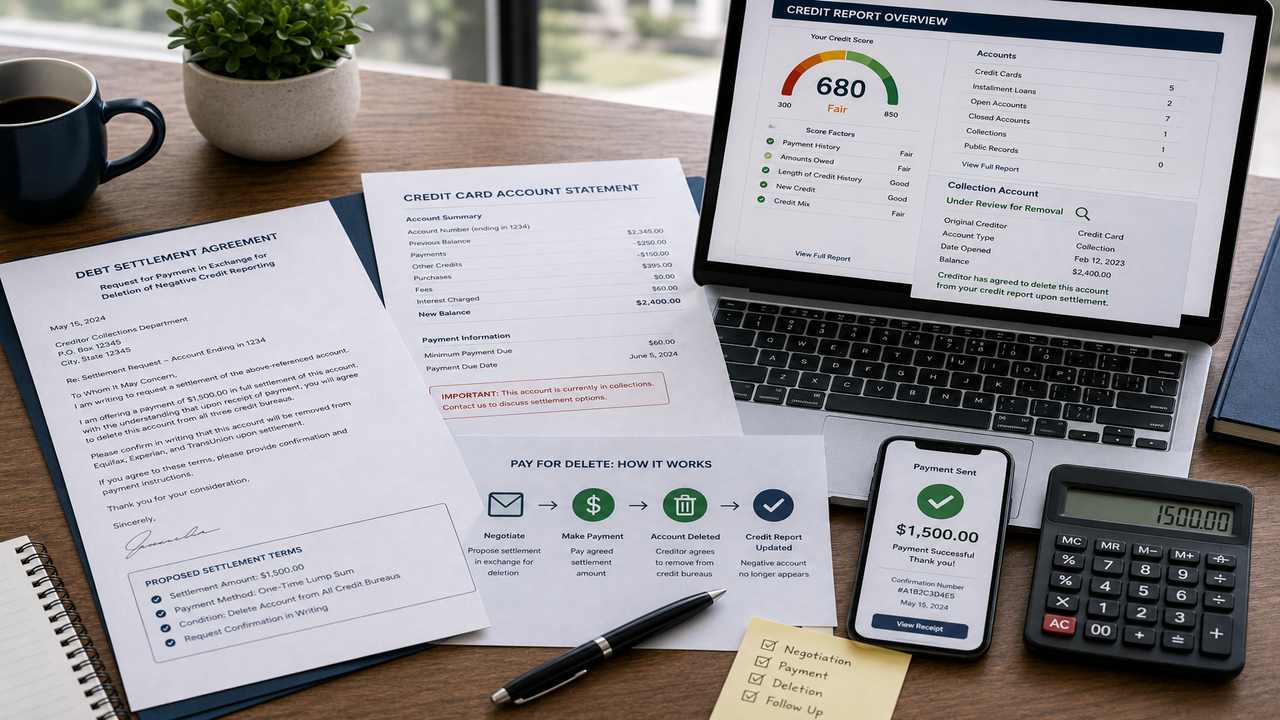
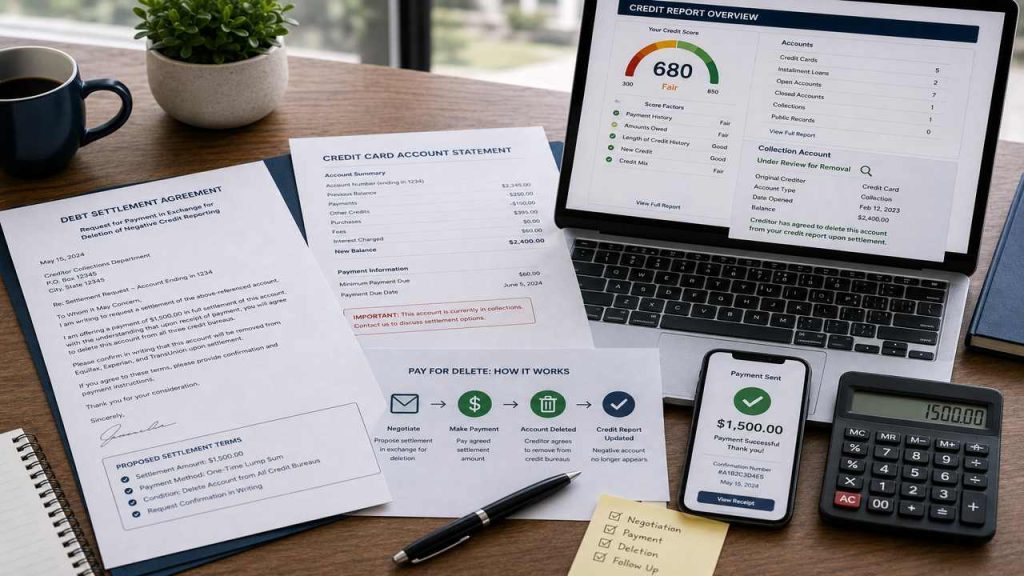
A pay for delete arrangement is an agreement, negotiated directly between a consumer and a creditor or collection agency, where the consumer pays some or all of the debt in exchange for the creditor agreeing to remove the negative account entirely from the consumer’s credit report, rather than reporting it as “paid” or “settled.” The appeal is obvious: a fully removed negative account has a more favorable effect on your credit score than the same account showing as paid, since the negative history itself disappears rather than remaining visible (even if marked positively resolved).
Why This Is Difficult, Specifically With Capital One
Here’s the important reality check: Capital One, like most major banks and original creditors, generally does not agree to pay for delete arrangements as a matter of internal policy. This isn’t unique to Capital One — most large, well-established financial institutions have policies against this practice, for a specific reason worth understanding: major creditors are typically members of the credit bureaus’ data furnisher agreements (through organizations like the Consumer Data Industry Association), which include commitments to report account information accurately and completely. Agreeing to selectively delete accurate information in exchange for payment would arguably violate the spirit, and in some interpretations the letter, of those data-accuracy commitments, exposing the institution to potential regulatory or contractual risk.
This means that, in practice, requesting pay for delete directly from Capital One while the debt is still held internally by Capital One is very unlikely to succeed, regardless of how the request is worded or how much you’re willing to pay upfront.
The Situation Changes If the Debt Has Been Sold to a Collector
Capital One, like most major creditors, will often sell charged-off debt to third-party collection agencies rather than pursuing it indefinitely themselves. If your original Capital One debt has been sold — meaning a separate collection agency now owns and is reporting the debt, not Capital One directly — the pay for delete conversation shifts to that collection agency, and the odds change somewhat.
Smaller, independent collection agencies, particularly those that purchased the debt for a steep discount, sometimes have more individual flexibility and less rigid institutional policy against pay for delete than Capital One itself does as the original creditor. Some are willing to agree to it, particularly for accounts they view as otherwise difficult to collect, since recovering something is generally better for them than recovering nothing at all. That said, this is far from guaranteed — many collection agencies also decline, either due to their own internal policy, their contractual agreements with the entity they purchased the debt from, or simply because they don’t see a strong incentive to agree to it.
How to Find Out Who Currently Holds Your Debt
Before attempting any negotiation, confirm exactly who currently owns and is reporting the debt:
- Check your current credit report for the specific name of whichever company is reporting the account — if it still shows as “Capital One,” they likely still hold the debt internally; if it shows a different, unfamiliar company name, that’s likely the collection agency that purchased it.
- Review any recent collection letters or calls you’ve received, which are legally required to identify the specific company attempting to collect and, under the Fair Debt Collection Practices Act, must provide validation of the debt if you request it within 30 days of first contact.
- Call Capital One directly if you’re unsure, and ask whether the account is still held internally or has been sold, and if sold, to which company — while they’re not obligated to proactively volunteer detailed collection strategy, they generally will confirm basic factual information like this upon request.
If Capital One Still Holds the Debt: Realistic Alternatives to Pay for Delete
Since a direct pay for delete request to Capital One itself is unlikely to succeed, here are more realistic paths that can still meaningfully improve your situation:
- Pay in full and let it report as “paid charge-off.” While this doesn’t remove the entry, it’s viewed more favorably than an unpaid charge-off under most current scoring models, and it demonstrates resolution if a future lender reviews your full report manually.
- Request a goodwill adjustment after paying in full. Some divisions of Capital One, particularly for a longtime customer with an otherwise reasonable account history, may consider a discretionary goodwill removal request after the debt is resolved, even though this is different from a pre-payment pay for delete negotiation and isn’t guaranteed.
- Negotiate a settlement for less than the full balance. Capital One and its internal recovery departments will sometimes accept a reduced lump-sum payment to resolve a charged-off account, even without agreeing to delete the entry, which at minimum reduces what you owe and updates your report to reflect a “settled” status rather than an ongoing unpaid balance.
- Let the seven-year reporting clock run its course if the account is old enough that it’s approaching the end of its reporting window anyway, in which case negotiating for early removal may add less value than simply waiting the remaining time, particularly if you’re not planning any major credit applications in the near term.
If the Debt Has Been Sold to a Collector: How to Approach the Conversation
If you’ve confirmed a different, third-party collection agency now holds the debt, here’s how to approach a pay for delete request with a realistic, professional tone:
- Get everything in writing before making any payment. Never send payment based on a verbal promise alone — insist on a written agreement, sent by mail or through a documented method, explicitly stating that in exchange for your payment of a specific amount, the company agrees to request deletion of the tradeline from all three credit bureaus they report to.
- Understand this remains at their discretion. Even collection agencies willing to consider pay for delete aren’t obligated to agree, and some major credit bureaus have specific data furnisher agreements that also discourage or prohibit this practice among the companies that report to them, meaning even a willing collector might technically be unable to follow through even if they verbally agree.
- Be specific in your request. Rather than a vague “can you delete this,” specify exactly what you’re asking: “I’m prepared to pay [amount] as full and final settlement, in exchange for your agreement to request deletion of this tradeline from Equifax, Experian, and TransUnion within [a specific number, e.g., 30] days of receiving payment.”
- Keep records of everything, including the agency’s name, any representative’s name, the date, and copies of all written correspondence, in case you need to follow up or dispute a failure to honor the agreement after payment.
Why Pay for Delete Is Controversial, Even When Offered
It’s worth understanding why this practice exists in something of a gray area, even when a collector agrees to it.
The Fair Credit Reporting Act requires furnishers of credit information to report data accurately; deleting an account that was, in fact, accurately reported (assuming there’s no actual error, just an agreement to remove accurate information as a negotiating incentive) arguably conflicts with that accuracy principle, which is exactly why major creditors like Capital One generally avoid the practice altogether, and why some smaller collectors willing to offer it are, in a technical sense, taking on some risk by doing so. This doesn’t make it illegal for you as the consumer to request or accept such an arrangement, but it does explain the institutional reluctance you’re likely to encounter, particularly from a large, compliance-focused institution like Capital One.
What to Do If You Suspect the Capital One Debt Isn’t Even Yours or Is Inaccurate
If you don’t recognize the debt at all, believe it belongs to someone else, or believe the amount is incorrect, this is a fundamentally different situation from a pay for delete negotiation — you have the right to formally dispute it as inaccurate under the FCRA, which, if successful, results in complete removal because the information was wrong, not because of any payment or negotiation. This path doesn’t require any payment at all and is worth pursuing first if you have genuine reason to believe the debt or its reported details are inaccurate.
A More Reliable Long-Term Strategy Than Chasing Deletion
Given how unlikely a direct pay for delete agreement is with Capital One specifically, and even with many collection agencies, it’s often more productive to focus energy on the things within your more reliable control: resolving the debt (through payment or settlement) so it reports as positively as possible under current status codes, building substantial positive credit history afterward through other accounts, and allowing time to naturally reduce the weight of the older negative item as your overall file grows stronger and the entry itself moves further into the past, eventually aging off your report entirely at the seven-year mark from the original delinquency date regardless of what happens with any deletion request.
Frequently Asked Questions
Has Capital One ever agreed to pay for delete for anyone?
While it’s difficult to rule out that some individual representative or unusual circumstance might have resulted in this at some point, it is not Capital One’s stated or general policy, and it should not be counted on or expected as a realistic outcome when planning your approach to resolving a Capital One debt.
Is it illegal to ask for pay for delete?
No, requesting it isn’t illegal for you as a consumer. It’s simply a negotiation request that the creditor or collector is free to accept or decline based on their own policies.
If a collector agrees to pay for delete in writing but doesn’t follow through, what can I do?
You’d have a written agreement documenting their commitment, which strengthens your position if you need to dispute their failure to honor it — contact them first to request compliance, and if that fails, you may have grounds for a complaint to the Consumer Financial Protection Bureau or, depending on your situation, consultation with a consumer law attorney about a potential breach of that written agreement.
Does paying off a Capital One charge-off in full without a pay for delete agreement still help my score?
Yes, generally — under current scoring models, a paid or settled charge-off is viewed more favorably than an unpaid one, even though the entry itself remains visible on your report (with an updated status) rather than being removed entirely.
Should I hire a credit repair company to negotiate pay for delete with Capital One on my behalf?
Be cautious about paying a company specifically for this service, since the same institutional policies that make pay for delete unlikely when you ask directly generally apply regardless of whether the request comes from you personally or from a company representing you — a credit repair company doesn’t have any special leverage or exception to Capital One’s general policy in this regard.
A Sample pay for delete Request Letter (For a Third-Party Collector)
If you’ve confirmed your Capital One debt has been sold to a collection agency and want to attempt this negotiation, here’s a template you can adapt:
[Your Name]
[Your Address]
[Date]

[Collection Agency Name]
[Collection Agency Address]

Re: Account [Reference Number], Original Creditor: Capital One

Dear Sir or Madam,

I am writing regarding the above-referenced account. I am prepared to pay [$X amount] as full and final settlement of this debt, contingent upon your agreement to request deletion of this tradeline from all three credit bureaus (Equifax, Experian, and TransUnion) within [30] days of receipt of payment.

Please confirm this agreement in writing prior to my sending payment. Once I receive your written confirmation, I will promptly submit payment via [method — cashier’s check, money order, etc.].

If this arrangement is not something your company is able to offer, please let me know, and I will consider alternative resolution options.

Sincerely,

[Your Name]
[Contact Information]
Always send this via a method that provides delivery confirmation (certified mail, for example), and keep a copy for your records. If they respond by phone rather than in writing, politely ask them to confirm any verbal agreement in writing before you proceed with payment.
Realistic Success Rate Expectations
It’s worth setting expectations honestly rather than optimistically: pay for delete requests to third-party collectors succeed only some of the time, and estimates and anecdotal experiences vary widely depending on the specific agency, the age and size of the debt, and how the request is framed. Larger, more established collection agencies with formal compliance departments are generally less likely to agree, given the same data-accuracy concerns that make major original creditors reluctant. Smaller, more aggressive debt-buying operations sometimes have more flexibility, precisely because they purchased the debt for a small fraction of its value and view any recovery as a win, with less concern for broader industry compliance norms.
Rather than assuming this will work, it’s more productive to treat it as worth trying (since there’s little downside to asking, as long as you don’t send any payment without written confirmation first) while having a solid backup plan — payment or settlement without deletion — ready to go if the request is declined, which is a common outcome.
Understanding the E-OSCAR System and Why Bureaus Discourage Pay for Delete
Credit bureaus process disputes and data updates for creditors and collectors through a system called e-OSCAR (Electronic Online Solution for Complete and Accurate Reporting), and both Equifax, Experian, and TransUnion have data furnisher agreements with the companies that report to them, generally requiring accurate and complete reporting rather than selective reporting based on payment arrangements. This is the structural reason pay for delete exists in tension with standard industry practice: a collector who agrees to delete an accurately reported account in exchange for payment is, in a sense, working around the spirit of these furnisher agreements, even though enforcement of this specific practice varies and doesn’t always result in consequences for the individual company involved. This background context helps explain why some companies flatly refuse (out of genuine compliance concern) while others quietly agree anyway (calculating that the practical risk of doing so is low).
Should You Pay a Credit Repair Company to Handle This for You?
Given how much of a pay for delete negotiation comes down to institutional policy rather than negotiation skill, it’s worth being skeptical of any company that charges a significant fee specifically promising to secure pay for delete arrangements with major creditors like Capital One.
As covered above, the same policy barriers apply whether you personally send the request or a company sends it on your behalf — there’s no special leverage a third-party company has that meaningfully changes Capital One’s institutional stance. If you do want assistance navigating this process, look for companies that are transparent about the realistic likelihood of success and that charge based on genuine legwork (like disputing actual inaccuracies, which is a different and often more reliably successful process) rather than a fee premised specifically on guaranteeing deletion of accurately reported debt.
A Side-by-Side Comparison: Approaching Capital One vs. a Third-Party Collector
| Capital One (original creditor) | Third-party collection agency |
|---|---|
| General policy on pay for delete | Generally against it |
| Varies by company; some willing | |
| Reason | Data furnisher accuracy commitments |
| Purchased debt cheaply; some prioritize recovery over compliance norms | |
| Better alternative | Pay in full or settle, then request goodwill adjustment |
| Negotiate settlement with deletion as a specific written condition | |
| How to confirm who holds the debt | Check credit report furnisher name; call Capital One directly |
| Check any collection letters for the specific company name |
Frequently Asked Questions, Continued
If I pay off my Capital One account without a pay for delete agreement, how long until my score improves?
Improvement can begin as soon as your next reporting cycle reflects the updated “paid” or “settled” status, typically within 30-45 days, though the overall magnitude of improvement depends on your specific scoring model and the rest of your credit file.
Can I ask Capital One’s recovery department specifically, rather than general customer service, about pay for delete?
You can ask, and speaking directly with their internal recovery or charge-off department (rather than general customer service, which typically has no authority over this) is the right channel if you want to pursue it — but the underlying institutional policy against the practice generally applies regardless of which specific department within Capital One you reach.
Does it matter how old the Capital One debt is when negotiating?
Yes, generally — older debt, particularly debt getting closer to its seven-year reporting expiration, sometimes gives you more leverage in settlement negotiations (since the creditor or collector has less time remaining to collect anything at all), though this doesn’t specifically change the likelihood of a deletion agreement, which remains governed primarily by institutional policy rather than debt age.
If Capital One declines pay for delete, is there any point in still negotiating a settlement?
Yes, absolutely — a settled or paid account is meaningfully better for your credit profile and your legal standing than an unpaid one, even without deletion, and it’s worth pursuing on its own merits rather than only as a consolation to a declined deletion request.
What Capital One’s Actual Charge-Off and Collections Process Looks Like
Understanding the typical internal timeline can help you know what stage you’re at and what to expect next. Capital One, like most major card issuers, generally follows a process similar to this: after a payment is missed, you’ll receive escalating notices at 30, 60, 90, and 120 days past due, often accompanied by calls from Capital One’s own internal collections department attempting to bring the account current or set up a payment arrangement. Around the 150-180 day mark, if the account remains unresolved, it’s charged off internally and reported to the credit bureaus as such.
After charge-off, Capital One may continue attempting to collect directly for some period, or may sell the debt to one of several third-party debt buyers they work with — this decision is made internally and isn’t something you’ll typically be notified about in advance, which is why checking your credit report periodically after a charge-off is the most reliable way to know whether the debt is still with Capital One or has moved to a new owner.
What If You’ve Already Made a Partial Payment Without an Agreement?
If you’ve already sent Capital One or a collector a partial payment without securing any written pay for delete agreement beforehand, it’s worth knowing this doesn’t prevent you from continuing to negotiate the remaining balance, though it does remove any leverage you might have had to request full account deletion in exchange for that specific payment, since it’s already been made unconditionally. Going forward, treat any additional payment as a fresh negotiation point, and don’t send further payments without a written agreement specifying exactly what you’re getting in return, whether that’s deletion (unlikely but possible with a third-party collector), a specific “paid in full” status update, or a formal settlement agreement closing out the account.
Frequently Asked Questions, Continued Further
Does Capital One ever reduce the amount owed even without a full pay for delete or settlement negotiation?
Sometimes, particularly if you’re proactive and call before the account is fully charged off, Capital One’s internal collections department may offer reduced settlement amounts or structured payment plans as part of standard hardship accommodation practices, separate from any pay for delete request specifically.
If Capital One sold my debt to a specific collector I don’t want to deal with, can I ask them to resell it elsewhere?
No, you don’t have the ability to direct who a creditor sells a debt to, but you do retain the same rights (debt validation, dispute rights, settlement negotiation) with whatever company currently and legitimately holds the debt, regardless of your preference about which company that is.
Is there a specific department at Capital One I should ask for regarding an old charged-off account?
Yes — asking specifically for their “recovery” or “charge-off recovery” department, rather than general customer service, will connect you with the team that actually has authority over settlement negotiations and payment arrangements for already-charged-off accounts.
The Bottom Line
Pay for delete is very unlikely to work directly with Capital One while they still hold the debt themselves, due to their general institutional policy against the practice. If your debt has been sold to a third-party collection agency, the odds improve somewhat, though it’s still far from guaranteed and depends heavily on the specific agency involved. In either case, get any agreement in writing before paying, and have a realistic backup plan — paying in full or negotiating a settlement, even without deletion, still meaningfully improves your situation compared to leaving an unpaid balance on your report, and time itself will eventually resolve the entry once the standard seven-year reporting window expires.
Need Help Reviewing Your Credit Report?
If you want help reviewing your credit report for inaccurate or potentially disputable information, you can request a credit audit or quote.
Leave a Reply