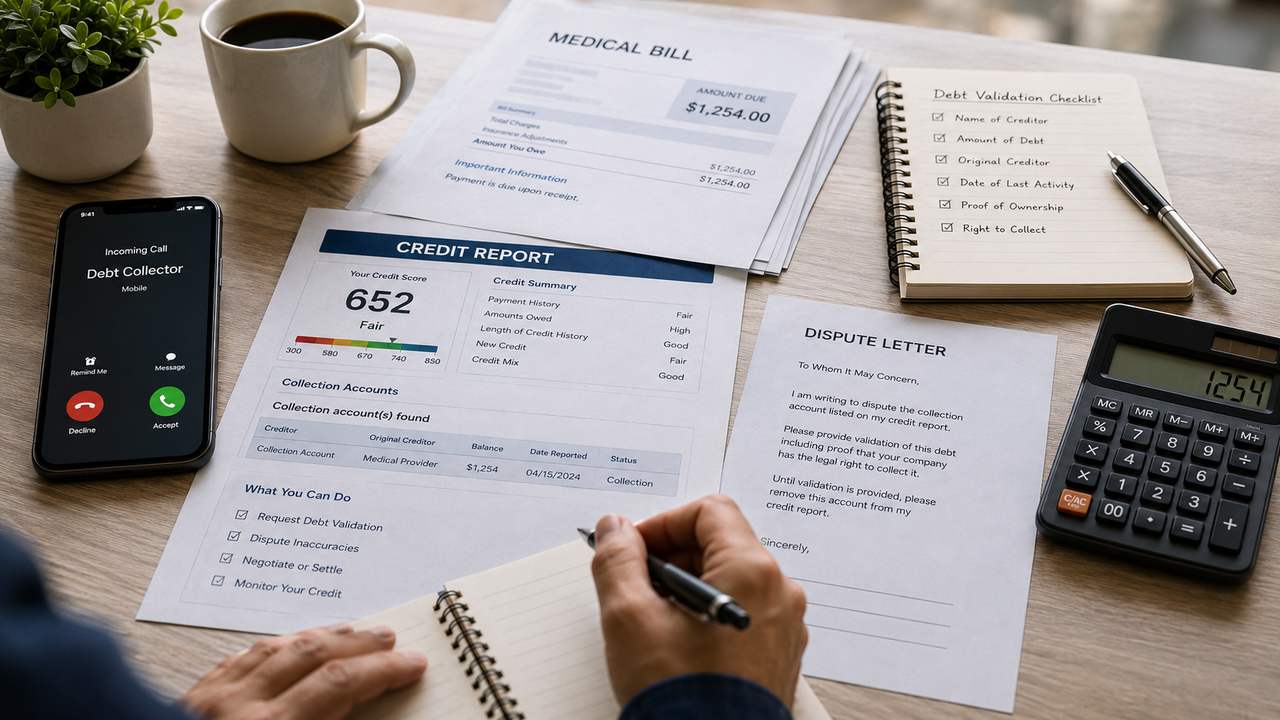
Who Is IC System?
IC System, Inc. is one of the oldest debt collection agencies operating in the United States, founded in 1938 and headquartered near St. Paul, Minnesota. Unlike many collection companies that have changed hands repeatedly through corporate acquisitions, IC System has remained a privately held, family-owned company now in its third generation of ownership, which is a notably long and stable history in an industry where mergers and private equity buyouts are common.
IC System holds an A+ rating with the Better Business Bureau and describes its own operating philosophy as “Making Collections Better” through what it characterizes as ethical, consumer-respectful collection practices — the company has also been recognized locally as a top workplace in Minnesota business rankings for several consecutive years. That said, a positive public image and a long operating history don’t mean every account attributed to you through IC System is automatically accurate, which is exactly why the verification process outlined below matters regardless of the company’s overall reputation.
Is IC System a Debt Buyer or a Traditional Collection Agency?
This is an important distinction, and IC System falls clearly into one category: they are a third-party collection agency, not a debt buyer. This means IC System does not purchase your debt outright the way a company like Midland Credit Management or Jefferson Capital Systems does. Instead, your original creditor retains ownership of the debt throughout the entire process, and IC System is simply hired to attempt collection on that creditor’s behalf, typically for a commission or contingency fee based on what they successfully recover.
This distinction matters practically in a couple of ways. First, it means you may have the option to resolve the matter directly with your original creditor (the hospital, clinic, telecom provider, or business you actually had a relationship with) rather than exclusively through IC System, which can sometimes produce a more favorable or straightforward outcome. Second, it means any settlement or payment arrangement ultimately needs to be consistent with what the original creditor is willing to accept, since they remain the actual owner of the debt even while IC System handles the collection effort itself.
What Types of Debt Does IC System Typically Collect?
IC System’s client base spans a genuinely wide range of industries, but they’ve built a particularly strong presence in two areas: healthcare and telecommunications.
Medical and healthcare debt makes up a large portion of IC System’s collection activity — unpaid bills from hospitals, physician groups, dental practices, and other healthcare providers frequently end up with IC System when a patient’s balance goes unresolved.
Telecommunications debt is another major category, with IC System having worked with major telecom providers, including companies like Sprint, on unpaid phone and service bills.
Beyond these two core areas, IC System also collects for a broad range of other clients, including small and medium-sized businesses, utility companies, pest control companies, government organizations, and educational institutions.
Why Medical Debt With IC System Deserves Extra Scrutiny
Because medical billing is exceptionally prone to errors — from insurance processing delays and denied claims that should have been covered, to duplicate billing and charges for services never actually received — a meaningful share of medical debt that ends up in collections turns out to be inaccurate or at least disputable in some respect. If your IC System account traces back to a medical bill, it’s worth taking the verification process seriously rather than assuming the balance is automatically correct, since billing errors of exactly this kind are a well-documented and common source of inaccurate medical collections across the industry generally, not specific to IC System alone.
It’s also worth knowing that medical debt now carries some additional consumer protections beyond standard debt collection rules: current credit bureau policy generally requires a waiting period (commonly one year) before an unpaid medical bill can even be reported to your credit file in the first place, and paid medical collections are now typically removed from credit reports entirely rather than simply marked as resolved — both more consumer-friendly standards than apply to most other types of debt.
Why Is IC System Contacting You?
A few scenarios commonly explain how IC System became involved in your situation:
- An unpaid medical bill was sent to collections after the original healthcare provider’s own billing attempts didn’t resolve the balance, often due to insurance coverage gaps, denied claims, or a bill that was simply never paid.
- A telecom or utility bill went unpaid, and the original service provider outsourced collection to IC System rather than pursuing it internally.
- A business, government, or educational debt — such as an unpaid invoice to a small business, a fine or fee owed to a government entity, or a tuition-related balance — was placed with IC System for collection.
- A billing error or insurance processing issue resulted in a balance being sent to collections that shouldn’t have gone there at all, or that’s for an incorrect amount.
- A data mix-up or identity theft situation has occurred, resulting in a debt being incorrectly attributed to you.
Step One: Determine Whether You Actually Owe the Debt
Since IC System doesn’t own the debt themselves, one of your most useful options — one that doesn’t exist when dealing with a true debt buyer — is going directly back to the original creditor to clarify the situation. Contact the hospital, clinic, telecom provider, or business named as the original creditor and ask them to confirm the balance, the dates of service or billing, and why it was sent to collections. In many cases, especially with medical billing, this direct conversation can resolve confusion faster than working exclusively through IC System, and if the original creditor confirms an error, they may be able to recall the account from collections and correct their own records directly.
Step Two: Request Formal Debt Validation From IC System
Regardless of whether you contact the original creditor, you also have the right to request formal validation directly from IC System under the Fair Debt Collection Practices Act. This requires them to provide written proof of the amount owed, the name of the original creditor, and confirmation of their authority to collect on that creditor’s behalf. You generally have 30 days from your first contact with them to make this request, during which they must pause collection activity until validation is provided.
How to request it: Send a written letter via certified mail with return receipt requested, explicitly invoking your rights under the FDCPA and requesting they cease collection activity until validation is provided. This creates a documented record that’s far more useful than a verbal exchange if any dispute arises later.
Step Three: Compare What You Find
Between the original creditor’s confirmation and IC System’s formal validation response, you should have a clear picture of whether the debt is accurate. If everything checks out and you recognize the debt as genuinely yours, you can move forward deciding how to resolve it. If something doesn’t match — an unfamiliar amount, a service or billing you don’t recognize, or a lack of adequate documentation — you have solid grounds to formally dispute the debt with the credit bureaus.
How to Resolve an Accurate IC System Debt
- Go back to the original creditor first, if possible. Since IC System doesn’t own the debt, resolving directly with the hospital, clinic, or business that originally billed you sometimes produces better outcomes — some original creditors, particularly medical providers, are more willing to offer a discount, payment plan, or hardship accommodation than a third-party collector working on commission might be authorized to offer.
- Pay in full, if you have the means and want to close out the account completely. This resolves the debt but doesn’t automatically remove it from your credit report — it simply updates the status.
- Negotiate a settlement, particularly for medical debt, where providers often accept a reduced amount — commonly cited ranges are 40 to 60% of the balance, sometimes lower for documented financial hardship. Get any agreement in writing before paying.
- Set up a payment plan, structured over time in a way that fits your budget, again with terms documented in writing.
- Request a pay-for-delete arrangement, understanding this isn’t standard or guaranteed practice, though IC System’s willingness to consider it can vary by account and circumstance — it doesn’t hurt to ask, provided you get any such agreement in writing before sending payment.
Your Rights Under the FDCPA When Dealing With IC System
- They cannot threaten arrest or jail. Unpaid consumer debt, including medical debt, is a civil matter, not a criminal one, and no legitimate collector can have you arrested for it.
- They cannot call at odd hours — contact is only permitted between 8 a.m. and 9 p.m. in your time zone.
- They must stop contacting you at work once you’ve told them, verbally or in writing, that you can’t take calls there.
- They cannot use profane, abusive, or derogatory language.
- They cannot disclose your debt to third parties, beyond limited circumstances permitted for locating you.
- They must honor a written cease-and-desist request, though this doesn’t erase the underlying debt or prevent the original creditor from pursuing other remedies if the debt is still legally enforceable.
If IC System violates any of these protections, you can file a complaint with the CFPB and, depending on severity, may have grounds for legal action under the FDCPA.
Can IC System Sue You?
Yes — debt collectors, including IC System, are legally permitted to sue over valid, non-expired debt, though there are required steps (like proper notice and, in many cases, an attempt at resolution) before litigation typically begins. If you’re served with a lawsuit, don’t ignore it — failing to respond by the court’s deadline can result in a default judgment against you, even if you had legitimate grounds to dispute the debt or challenge whether it was still within your state’s statute of limitations. Consider consulting a consumer law attorney if this happens, particularly given how often billing errors specifically affect the medical debt category IC System heavily focuses on.
Understanding IC System’s Complaint History in Context
Public complaint data shows IC System has received a meaningful volume of complaints filed with the CFPB over time, with the most common category being consumers disputing that they owe the debt at all, alongside complaints about certain fee or disclosure practices. It’s worth putting this in reasonable context: as one of the larger, most active collection agencies in the medical and telecom space, some volume of complaints is a near-mathematical certainty regardless of a company’s underlying practices, simply due to the sheer number of accounts they handle. That said, the specific pattern — disputes over whether debt is actually owed — reinforces why the validation and direct-verification steps in this guide are genuinely worthwhile precautions, rather than an assumption that anything is necessarily wrong.
What to Do If You Discover the Debt Isn’t Yours
If your review reveals the debt genuinely isn’t yours — due to a data-matching error, a billing mistake by the original creditor, or identity theft — formally dispute it in writing with both IC System and the credit bureaus reporting it, providing whatever documentation supports your position. If identity theft is suspected, file a report at IdentityTheft.gov and consider placing a fraud alert or credit freeze with the credit bureaus as an added precaution.
Frequently Asked Questions
Is IC System a legitimate company?
Yes. IC System is a real, licensed, family-owned debt collection agency operating since 1938, headquartered near St. Paul, Minnesota. It is not a scam, though that doesn’t guarantee every individual account they pursue is accurate.
Can I resolve my debt directly with the hospital or company instead of IC System?
Often, yes — since IC System typically doesn’t own the debt, contacting the original creditor directly is a legitimate option, and in some cases produces a better outcome, particularly for medical debt where providers sometimes have more flexibility than a third-party collector.
Does IC System buy debt, or do they only collect for others?
Historically and predominantly, IC System operates as a third-party collector hired by original creditors, rather than a debt buyer that purchases and owns accounts outright, distinguishing them from companies like Midland Credit Management or Jefferson Capital Systems.
Will a paid IC System medical collection stay on my credit report?
Under current, more consumer-friendly credit bureau policy specifically for medical debt, a paid medical collection is generally removed from your credit report entirely, rather than simply updated to a “paid” status — a more favorable standard than applies to most other debt types.
What if IC System’s letter references a company I don’t recognize?
This is worth investigating directly — ask IC System for documentation connecting that entity to services or an account you can verify, since original creditor names sometimes differ from the everyday name you knew a business by (a hospital system’s official billing entity versus the hospital’s public name, for example), but if nothing checks out, this is legitimate grounds for a dispute.
Is IC System likely to reduce a medical bill significantly if I negotiate?
Often yes — because IC System is collecting on a contingency basis, and because medical providers themselves are frequently willing to accept less than the full billed amount rather than pursue extended collection efforts, reasonable settlement offers on medical debt are commonly accepted, particularly when a documented financial hardship is involved.
A Sample Debt Validation Letter for IC System
Having a ready-to-adapt template makes this process considerably less intimidating:
[Your Name]
[Your Address]
[Date]IC System, Inc.
[Address provided in their correspondence]Re: Account [Reference Number]
To Whom It May Concern:
I am writing in response to your recent contact regarding the above-referenced account. Pursuant to my rights under the Fair Debt Collection Practices Act, I am requesting validation of this debt, including:
- The name and address of the original creditor
- An itemized statement showing the amount claimed and how it was calculated
- Confirmation of your authority to collect this debt on behalf of the original creditor
I am also requesting that you cease all collection activity, including phone calls and further correspondence, until this validation is provided, consistent with my rights under the FDCPA.
Sincerely,
[Your Name]
[Account Reference Number]
Send this via certified mail with return receipt requested, and keep copies of everything for your own records.
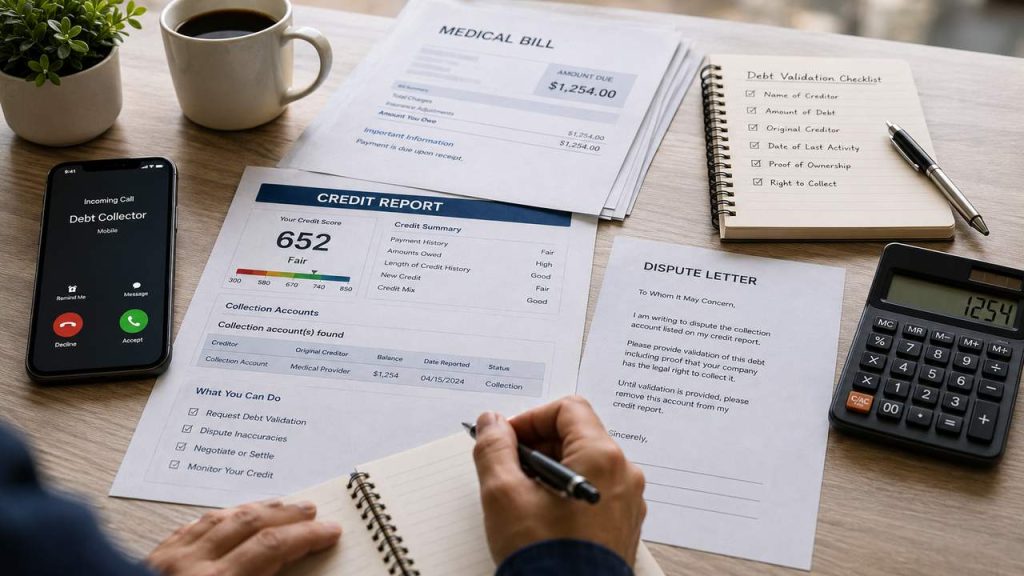
How Insurance Disputes Specifically Complicate Medical Debt With IC System
One of the more frustrating scenarios that leads to a legitimate medical bill ending up incorrectly in collections involves insurance processing timing. Here’s a common sequence: you receive care, your provider bills your insurance, the insurance company either delays processing, initially denies the claim pending additional information, or processes it incorrectly, and meanwhile, the provider’s billing system — often on a fixed automated timeline — sends the “patient responsibility” portion (or sometimes, due to an error, the full billed amount before insurance was ever properly applied) to collections before the insurance dispute is fully resolved.
If this describes your situation, the strongest first step is contacting your insurance company directly to confirm how the claim was actually processed, get a corrected Explanation of Benefits if there was an error, and provide that documentation to both the original medical provider and IC System. This kind of documented insurance processing error is one of the more reliably successful categories of medical debt dispute, precisely because it’s often demonstrably not a case of the patient failing to pay, but a claim that was never properly processed in the first place.
What a “Contingency Fee” Arrangement Means for Your Negotiation
Since IC System typically works on a contingency basis — meaning they earn a percentage of whatever they successfully collect, rather than a flat fee — this actually gives you some useful negotiating context. IC System has an incentive to actually collect something rather than nothing, since a settlement, even at a reduced amount, still generates a commission for them, whereas an account that goes completely unresolved and is eventually returned to the original creditor unpaid generates nothing. This dynamic is part of why reasonable settlement offers are often taken seriously rather than dismissed outright, even though the final decision on accepting a reduced amount ultimately still requires sign-off from the original creditor, since they remain the legal owner of the debt throughout the process.
When to Escalate Beyond Direct Negotiation
If you’ve validated the debt, confirmed it’s accurate, and negotiations with either IC System or the original creditor aren’t progressing reasonably, or if you believe IC System has violated your rights under the FDCPA during the process, a few escalation options exist: filing a formal complaint with the CFPB (which creates a public record and often prompts a company response, since collectors are required to respond to CFPB complaints), filing a complaint with your state attorney general’s consumer protection division, or consulting a consumer law attorney, particularly if you believe you have grounds for an FDCPA violation claim, which can include statutory damages if successful.
Frequently Asked Questions, Continued
Does IC System ever remove accounts from credit reports even for non-medical debt, in exchange for payment?
This varies by account and isn’t guaranteed or standard, similar to the general uncertainty around pay-for-delete arrangements industry-wide. For non-medical debt, where the more favorable “paid collections are removed” bureau policy doesn’t automatically apply, it’s worth explicitly asking about this as part of any settlement negotiation, while understanding it may be declined.
If my dispute with the original creditor is ongoing, should I still respond to IC System?
Yes — even while resolving a dispute directly with the original creditor, it’s worth also formally notifying IC System in writing that the debt is disputed and that you’re working to resolve the underlying issue with the original creditor, which helps ensure your dispute is properly documented on both fronts simultaneously.
Can IC System keep contacting me after I’ve disputed the debt with the original creditor?
If you’ve formally disputed the debt in writing with IC System specifically (not just with the original creditor), they’re required to cease collection activity until they provide validation, regardless of a separate, ongoing conversation you might be having directly with the original creditor about the underlying issue.
Is IC System likely to sell my debt to another collector if we can’t resolve it?
Since IC System typically doesn’t own the debt in the first place, they don’t have the ability to sell it themselves — however, the original creditor could choose to sell the debt to a different debt buyer at some point if IC System’s collection efforts on their behalf are ultimately unsuccessful, which would then start an entirely new collection relationship with a different company.
A Broader Look at Why Family-Owned Collection Agencies Sometimes Operate Differently
It’s worth noting a structural point that may partly explain IC System’s public emphasis on “ethical” collection practices and its comparatively strong BBB rating relative to some other large collectors: privately held, family-owned companies are not subject to the same quarterly earnings pressure that publicly traded debt buyers face, and a company now in its third generation of family ownership often has a longer-term view of its reputation within the specific industries it serves (healthcare and telecom relationships, in particular, often depend on long-term institutional trust rather than one-off transactions). This doesn’t mean every interaction with IC System will necessarily feel pleasant, and it certainly doesn’t exempt them from FDCPA requirements or from making mistakes on individual accounts, but it does offer some context for why their public complaint volume, while real, is sometimes cited as comparatively lower relative to their scale than some other major players in the collections industry.
A Comparison: IC System’s Model vs. a Debt Buyer’s Model
| Comparison | IC System (third-party collector) | A typical debt buyer (e.g., MCM, Jefferson Capital) |
|---|---|---|
| Who owns the debt | Original creditor | The debt buyer itself |
| Can you resolve it directly with the original creditor? | Often, yes | No — the original creditor no longer owns it |
| Payment structure | Contingency fee to IC System | IC System doesn’t apply; buyer keeps 100% of recovery |
| Typical debt types | Medical, telecom, government, education | Credit cards, personal loans, retail accounts |
| Negotiation flexibility | Limited by what original creditor authorizes | Often more flexible, since buyer purchased at deep discount |
This comparison highlights exactly why the “go back to the original creditor” strategy is uniquely available and often worth trying first with an IC System account specifically — it’s simply not an option once a debt buyer has purchased and now owns an account outright.
Frequently Asked Questions, Continued Further
Does IC System ever proactively reach out to correct an error once notified, without a formal dispute?
Given their emphasis on being a lower-complaint, relationship-focused collector working closely with the same original creditors repeatedly over time, some consumers report that a direct, well-documented conversation pointing out a clear error (such as a duplicate billing or an already-paid balance) is resolved without needing to escalate to a formal FCRA dispute — though a formal written dispute remains your strongest and most enforceable option if an informal conversation doesn’t resolve things.
Will contacting IC System reset any statute of limitations clock on an old debt?
As with any collector, making a payment or, in many states, simply acknowledging the debt in writing can potentially restart your state’s statute of limitations clock — this is a general principle that applies to IC System exactly as it would to any other collector, so the same caution about verifying your state’s rules before making any payment on older debt applies here as well.
Is it common for IC System accounts to involve amounts under $100?
Yes, particularly given their focus on smaller-scale medical copays, telecom balances, and municipal or small business fees — some of the more consumer-friendly medical debt reporting rules specifically include minimum dollar thresholds below which small medical collections aren’t reported to credit bureaus at all, which is worth checking if your IC System account involves a relatively small medical balance.
The Bottom Line
IC System is a long-established, legitimate, family-owned collection agency operating primarily on behalf of healthcare providers, telecom companies, and a range of other businesses and institutions — they don’t typically own the debt they’re collecting, which gives you the added option of resolving matters directly with your original creditor in many cases. Before paying anything, verify the debt through both the original creditor and formal validation from IC System itself, since medical and telecom billing in particular carries a meaningful risk of genuine errors. Once you’ve confirmed the debt is accurate, you have real room to negotiate a reasonable settlement or payment plan, and if it isn’t accurate, you have clear grounds — and a documented process — for disputing it successfully.
Need Help Reviewing Your Credit Report?
If an IC System collection is appearing on your credit report and you’re unsure whether the information is accurate, you can request a credit audit or quote to review your situation and identify potential credit-report issues.
Leave a Reply