Category: Uncategorized

  • Credit Repair Tips for Recently Divorced Individuals

    Credit Repair Tips for Recently Divorced Individuals

    Divorce creates a specific, often confusing category of credit problems, because a divorce decree — the legal document dividing responsibility for debts — has essentially no power over your actual credit report. Understanding this disconnect is the foundation for fixing credit issues that emerge during or after a divorce.

    The Core Problem: Divorce Decrees Don’t Bind Creditors

    If your divorce settlement assigns a joint credit card debt to your ex-spouse, that assignment is a legal agreement between the two of you, enforceable in family court. But the original creditor was never a party to that agreement — they only know about the account terms you originally signed, which almost always list both spouses as jointly and individually liable if it was a joint account.

    This means: if your ex-spouse was assigned a joint debt in the divorce and stops paying it, **the creditor can still come after you**, and that missed payment will still show up on your credit report, regardless of what the decree says. Your only recourse for the decree not being honored is back in family court against your ex — the creditor and credit bureau are entirely unaffected by that legal proceeding.

    Step 1: Identify Every Joint Account

    Before anything else, pull your credit report and identify every account where you’re listed as a joint holder or co-signer, not just an authorized user (a distinction that matters — authorized users generally aren’t legally liable for the debt, while joint holders and co-signers are).

    For each joint account:
    – Note the current balance and payment status.
    – Determine whether it was assigned to you or your ex-spouse in the divorce settlement.
    – Confirm who’s actually been making payments since the divorce, regardless of what was assigned.

    Step 2: Actually Close or Refinance Joint Accounts You Don’t Control

    This is the single most important practical step, and it’s the one people skip most often because it requires action, not just paperwork. If an account was assigned to your ex-spouse but remains open with both names on it:

    – **Request the account be closed** and any remaining balance refinanced solely in your ex-spouse’s name, if that was the agreed division.
    – **If refinancing isn’t possible**, at minimum, monitor the account closely, since you remain liable regardless of the decree.
    – **For accounts assigned to you**, consider removing your ex-spouse if the creditor allows it, both to simplify your file and to avoid disputes over an account they no longer have interest in.

    Waiting passively for the divorce decree to “handle” this is one of the most common and damaging mistakes — the decree only creates an obligation between you and your ex-spouse; it does nothing with the creditor unless you take separate action to actually restructure the account.

    Step 3: Dispute Any Post-Divorce Missed Payments Carefully

    If your ex-spouse missed a payment on an account assigned to them, and it’s now showing on your credit report, you generally cannot dispute this as “inaccurate” in the FCRA sense — if you were legally a joint account holder when the payment was missed, the reporting is technically accurate, even though it feels deeply unfair given the divorce agreement.

    Your options in this situation:
    – **Pursue enforcement in family court** against your ex-spouse for violating the decree — this doesn’t fix your credit report directly, but can result in the court ordering compensation or specific compliance.
    – **Consider paying the missed payment yourself** to stop further damage, then pursuing reimbursement from your ex-spouse separately, if the ongoing credit damage is a bigger concern than the immediate cash outlay.
    – **If the account can be refinanced or closed going forward**, prioritize that immediately to prevent recurring damage, even if you can’t undo what’s already been reported.

    Step 4: Build Independent Credit If You Relied on Joint Accounts

    Many people, especially those who weren’t the primary account holder on shared credit during the marriage, find themselves with a thinner independent credit file than expected post-divorce. If this applies to you:

    – Open **individual accounts in your own name** — a card or credit-builder loan solely under your name and Social Security number, separate from anything connected to your ex-spouse.
    – If you were mostly an authorized user on your ex-spouse’s accounts (rather than a joint holder), understand that being removed as an authorized user can actually reduce your available history, since authorized user history typically stops counting once removed — this is worth factoring into your planning before a divorce is finalized, if you have advance notice.

    Step 5: Address Name Changes Carefully

    If you’re changing your name post-divorce, make sure this is updated consistently across your credit accounts and with the bureaus, since a name mismatch can occasionally cause identity verification issues or slow down dispute processing. This is a minor administrative step but worth doing early to avoid downstream friction.

    Step 6: Consider the Alimony/Child Support Interaction

    If you’re receiving alimony or child support, be aware:
    – Consistent, documented alimony or child support income can generally be counted toward qualifying for new credit, which is useful if you’re

    trying to build independent credit post-divorce and have limited individual income otherwise.
    – If you’re paying alimony or child support and fall behind, this can result in its own collection or, in some states, judgment-related consequences, separate from any joint-debt credit issues.

    Special Consideration: Community Property States

    If you were divorced in a community property state (Arizona, California, Idaho, Louisiana, Nevada, New Mexico, Texas, Washington, Wisconsin), debts incurred during the marriage may be treated as jointly owned regardless of whose name is technically on the account, which can complicate the picture further — even an account solely in your ex-spouse’s name might have been treated as shared marital debt during the divorce proceedings. This is worth discussing directly with a family law attorney if you’re unsure how your state’s rules affected your specific settlement.

    A Realistic Timeline for Untangling Joint Credit

    – **Immediately post-divorce**: identify all joint accounts and prioritize closing or refinancing those not aligned with your intended financial independence.
    – **First 3-6 months**: monitor closely for any missed payments on accounts still technically joint, and address quickly if they occur.
    – **6-12 months**: as accounts are successfully separated and any new individual accounts season, your independent credit profile should start reflecting your own behavior more clearly, separate from your ex-spouse’s.

    The Bottom Line

    The single biggest mistake in post-divorce credit management is assuming the divorce decree itself protects your credit report — it doesn’t, and creditors will continue to hold both parties liable on joint accounts regardless of what a family court ordered. The real fix is taking active steps to close, refinance, or separate joint accounts as quickly as possible after the divorce, rather than relying on the paperwork to do that work automatically, and building independent credit history in parallel if your financial identity was previously intertwined with your former spouse’s.

  • How to Build Credit From Scratch With No Credit History

    How to Build Credit From Scratch With No Credit History

    Having no credit history at all is a genuinely different problem than having bad credit, even though both can result in loan denials — and the strategies that fix bad credit (disputing errors, negotiating settlements) are mostly irrelevant here, because there’s nothing to dispute. You’re not repairing anything; you’re establishing a file that doesn’t yet exist. Here’s a practical, step-by-step path.

    Why “No Credit” Can Be Almost as Hard as “Bad Credit”

    Lenders assess risk based on demonstrated behavior. Bad credit tells them “this person has struggled with credit,” which is a known, if unfavorable, data point. No credit tells them nothing at all — there’s no data to evaluate, which many automated underwriting systems and algorithms treat cautiously by default, sometimes resulting in denials that feel unfair given you haven’t actually done anything wrong. This is sometimes called being “credit invisible,” and it affects a meaningful share of adults, particularly younger people, recent immigrants, and those who’ve simply avoided debt.

    Step 1: Understand What “Scoring” Actually Requires

    Most scoring models require:
    – At least one account reported for a minimum period (often around 6 months) to generate a score at all.
    – Some models can score with less history using alternative data, but the most widely used mainstream scores (FICO, VantageScore in their standard forms) need this baseline before they’ll generate a number.

    This means your first priority isn’t optimizing an existing score — it’s simply getting *any* qualifying account open and reporting.

    Step 2: Start With a Secured Credit Card

    This is the most reliable, widely available starting point for someone with no credit history. You provide a cash deposit (often $200-500) that becomes your credit limit, which eliminates the lender’s risk and makes approval accessible even with zero credit history.

    What to look for:
    – **Confirm it reports to all three bureaus** — not all secured cards do, and this is non-negotiable for your purposes.
    – **Look for a card that eventually converts to unsecured** with responsible use, so you’re not stuck putting down a deposit indefinitely.
    – **Avoid cards with excessive fees** that eat into the value of building credit — some secured cards carry high annual fees that aren’t justified given the purpose.

    Step 3: Consider a Credit-Builder Loan

    These are specifically designed for this exact situation. Instead of receiving loan funds upfront, your payments go into a locked savings account, and you receive the funds (sometimes with a little interest)

    once the loan term completes. This builds installment credit history — a different category from the revolving credit history a secured card provides — which helps establish credit mix even at the very start.

    Many credit unions and community banks offer these specifically for building or rebuilding credit, often with low minimum requirements.

    Step 4: Become an Authorized User on a Family Member’s Account

    If you have a parent, spouse, or close family member with a long-standing, well-managed credit card, becoming an authorized user can add that account’s entire history to your own credit file — sometimes years of positive history appearing almost immediately once the card issuer reports the addition.

    Important caveats:
    – **This only works if the primary account holder’s history is genuinely strong** — a spotty payment history helps you just as much as it hurts you, in the negative direction.
    – **Confirm the card issuer reports authorized user activity to the bureaus** — not all do.
    – **This isn’t your own credit account legally** — the primary holder retains full responsibility, and if the relationship or arrangement changes, it’s worth understanding you don’t have independent control over that account.

    Step 5: Explore Alternative Data Reporting Services

    A newer category of tools has emerged specifically to help credit-invisible people establish history using bills that don’t traditionally report to credit bureaus:

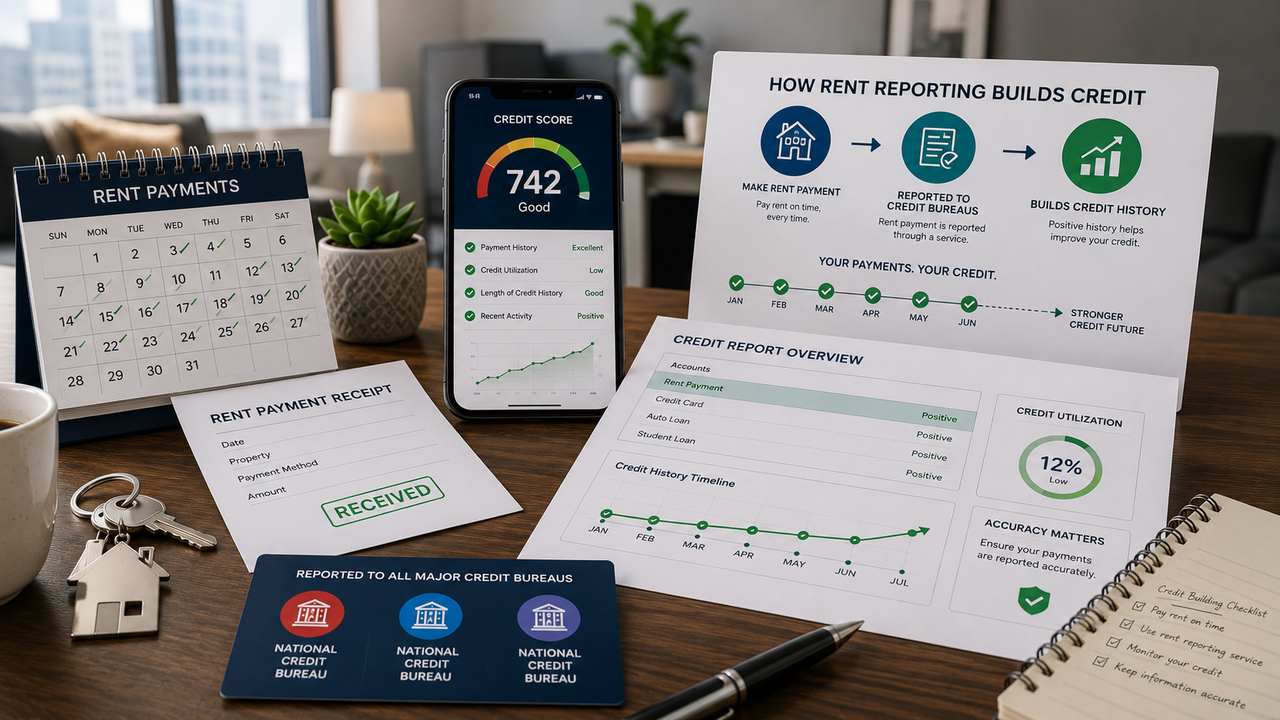
    – **Rent reporting services** — some let you report your on-time rent payments to credit bureaus, which traditionally aren’t captured even though rent is often someone’s largest recurring payment obligation.
    – **Utility and phone bill reporting services** — similarly, some services let you add a positive payment history from utility and phone bills, which otherwise typically only show up on your credit report if they go to collections (a negative event), not when paid on time (a positive one, if reported).

    These services often carry a modest fee, but for someone with genuinely no other credit history, they can accelerate the process meaningfully since you’re converting bills you’re already paying into credit-building data.

    Step 6: Understand What Not to Do

    – **Don’t apply for multiple credit products at once**, hoping one will approve you — each hard inquiry dings a thin file more noticeably than an established one, and multiple denials in a short window can compound the problem.

    – **Don’t take on a large loan you don’t need** just to “build credit” — the goal is demonstrated reliability, not debt volume, and a loan you struggle to repay defeats the purpose entirely.
    – **Don’t close your first account too quickly** once you qualify for something better — your average account age matters, and your oldest account (even a modest secured card) contributes positively the longer it stays open.

    Realistic Timeline

    – **Month 1**: open a secured card and/or credit-builder loan; if eligible, add rent/utility reporting.
    – **Months 2-6**: consistent on-time payments accumulate; most scoring models can generate a score once you hit roughly 6 months of reporting history on at least one account.
    – **Months 6-12**: with continued responsible use and low utilization, scores in this stage often land in the “fair to good” range, opening up better product options.
    – **12+ months**: a genuinely solid foundation, at which point you can consider graduating to unsecured products, potentially with better terms and rewards.

    Which Order Matters Most?

    If you can only do one thing first, prioritize whichever path gets an account reporting **fastest** — for most people, that’s a secured card, since approval is typically quick and reporting begins within the first billing cycle. Layer in a credit-builder loan and/or alternative data reporting once that first account is established, both to diversify your credit mix and to accelerate the overall timeline.

    A Note on Credit Unions

    If you’re struggling to get approved for standard secured cards or credit-builder loans through big banks, local credit unions are often significantly more flexible and consumer-friendly for exactly this situation — many have specific programs designed for members establishing first-time credit, sometimes with lower fees and more personalized underwriting than large national banks offer.

    The Bottom Line

    Building credit from zero isn’t about fixing anything — it’s about establishing a track record where none exists, and the fastest, most reliable path is a combination of a secured card, a credit-builder loan, and (if available) alternative data reporting for rent and utilities, layered together rather than pursued one at a time in sequence. Consistency matters more than speed here: a handful of accounts used lightly and paid on time for 6-12 months will do more for your credit than any single dramatic move.

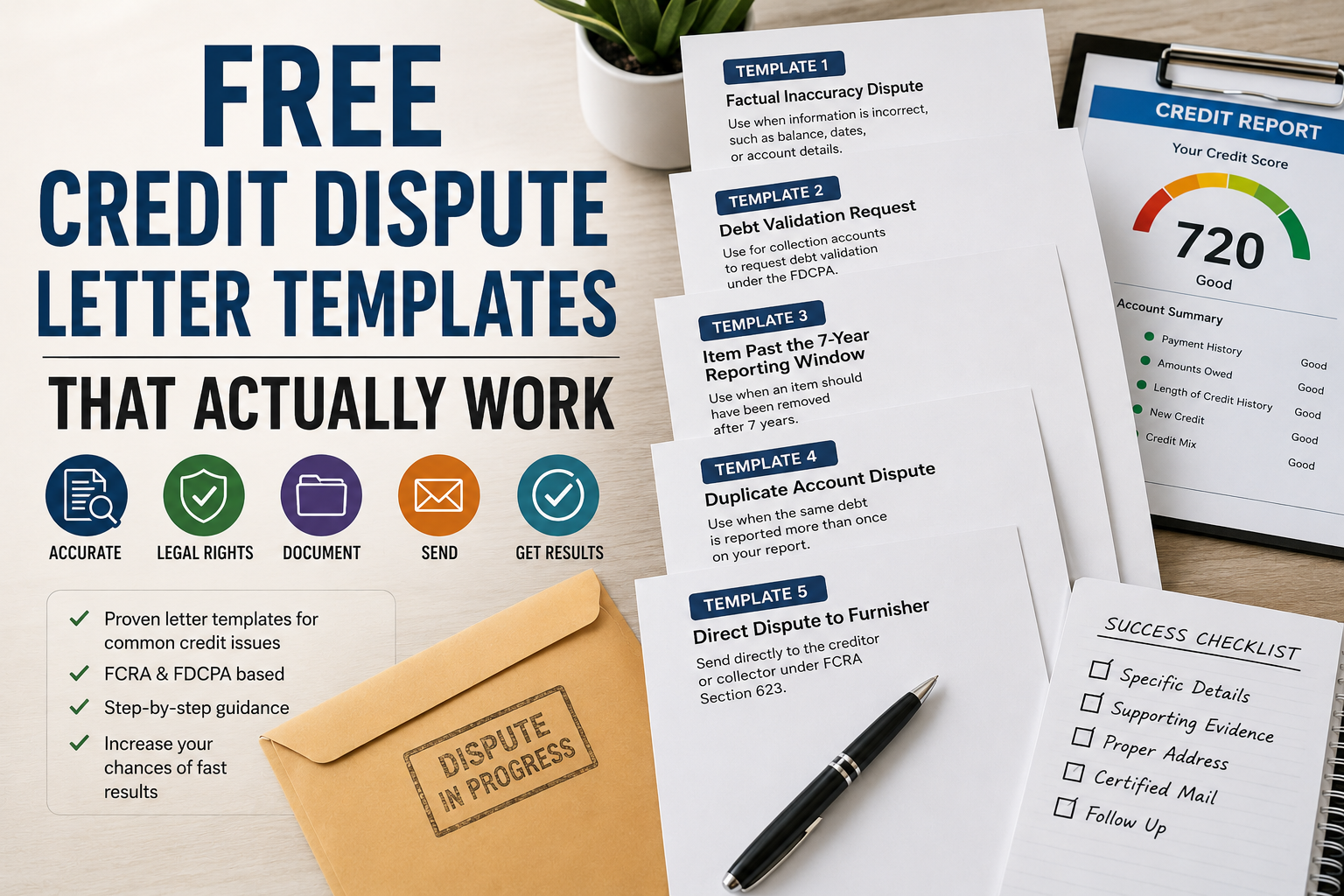
  • Free Credit Dispute Letter Templates That Actually Work

    Free Credit Dispute Letter Templates That Actually Work

    The internet has no shortage of “free dispute letter templates,” and unfortunately a lot of them are either generic to the point of uselessness, or built around outdated legal tactics (like the once-popular “606 method” that exploits alleged technicalities) that credit bureaus have specifically adapted their processes to catch and reject. Below are templates built around what actually gets results: specificity, documentation, and clear legal grounding — along with guidance on when to use each one.

    Why Most Generic Templates Fail

    A dispute letter that just says “this account is inaccurate, please remove it” tends to get a cursory review and a “verified as accurate” response, especially through the streamlined online dispute portals most bureaus use, which route disputes electronically to furnishers with minimal detail. The templates that actually move the needle share a few traits:

    – They name the **specific inaccuracy** (wrong balance, wrong date, duplicate account, wrong account holder).
    – They **reference specific documentation** you’re including or have available.
    – They cite the **relevant legal basis** (FCRA sections, specific bureau policy) where applicable.
    – They make a **specific, clear request** rather than a vague one.

    Template 1: Factual Inaccuracy Dispute

    Use this when you have concrete evidence that a reported detail is wrong — an incorrect balance, wrong dates, an account that isn’t yours, or a status that doesn’t match reality.

    *[Your Name]*
    *[Your Address]*
    *[Date]*

    *[Credit Bureau Name]*
    *[Credit Bureau Dispute Address]*

    Re: Dispute of Inaccurate Information — [Your Name], SSN ending in XXXX**

    To Whom It May Concern,

    I am writing to dispute the following item on my credit report, which I believe is being reported inaccurately:

    **Creditor/Furnisher Name:** [Name]
    **Account Number:** [Number, if available]

    **Nature of Inaccuracy:** [Specific description — e.g., “The reported balance of $X does not match my records, which show a balance of $Y as of Sat, 05 Sep 2026 17:18:17 +0000, as evidenced by the enclosed statement.”]

    I have enclosed supporting documentation demonstrating this inaccuracy. Under the Fair Credit Reporting Act, I am requesting that you investigate this matter and correct or remove this information if it cannot be verified as accurate.

    Please send me written confirmation of the results of your investigation.

    Sincerely,
    *[Your Name]*
    *[Contact information]*

    **Enclosures:** [List documents included]

    Template 2: Debt Validation Request (Sent to a Collector, Not a Bureau)

    Use this within 30 days of first contact from a collection agency, or any time you’re uncertain a debt is legitimate, accurate, or actually yours. This is a distinct legal right under the Fair Debt Collection Practices Act, separate from a credit bureau dispute.

    *[Your Name]*
    *[Your Address]*
    *[Date]*

    *[Collection Agency Name]*
    *[Collection Agency Address]*

    **Re: Debt Validation Request — Account [Number, if known]**

    To Whom It May Concern,

    I am writing in response to your communication regarding the above-referenced account. I do not have sufficient information to confirm this debt is valid, and I am formally requesting validation under the Fair Debt Collection Practices Act (15 U.S.C. § 1692g).

    Please provide the following:

    1. The original creditor’s name and address
    2. An itemized accounting showing how the current balance was calculated
    3. Proof that you are legally authorized to collect this debt
    4. A copy of the original signed agreement, if applicable

    Please be advised that I am requesting you cease collection activity on this account until this validation is provided.

    Sincerely,
    *[Your Name]*
    *[Contact information]*

    Template 3: Item Past the 7-Year Reporting Window

    Use this when an item’s date of first delinquency indicates it should have already aged off your report but hasn’t.

    *[Your Name]*
    *[Your Address]*
    *[Date]*

    *[Credit Bureau Name]*
    *[Credit Bureau Dispute Address]*

    **Re: Obsolete Information Dispute — [Your Name], SSN ending in XXXX**

    To Whom It May Concern,

    I am writing to dispute the continued reporting of the following account, which I believe has exceeded the maximum reporting period permitted under the Fair Credit Reporting Act (15 U.S.C. § 1681c):

    **Creditor/Furnisher Name:** [Name]
    **Account Number:** [Number, if available]
    **Date of First Delinquency:** [Date]

    Based on this date, this item should have been removed from my credit report no later than [calculated 7-year date]. It continues to appear as of the date of this letter. I am requesting immediate removal of this obsolete information.

    Please send me written confirmation once this has been corrected.

    Sincerely,
    *[Your Name]*
    *[Contact information]*

    Template 4: Duplicate Account Dispute

    Use this when the same debt appears more than once on your report — a common issue when an account is charged off and then also separately reported by a collection agency that purchased it.

    *[Your Name]*
    *[Your Address]*
    *[Date]*

    *[Credit Bureau Name]*
    *[Credit Bureau Dispute Address]*

    **Re: Duplicate Account Dispute — [Your Name], SSN ending in XXXX**

    To Whom It May Concern,

    I am writing to dispute duplicate reporting of the same debt appearing as two separate accounts on my credit report:

    **Account 1:** [Creditor name, account number]
    **Account 2:** [Creditor name, account number]

    Both accounts appear to reflect the same underlying debt, originally owed to [original creditor], with matching balances and dates. Reporting the same debt as two separate negative accounts inaccurately represents my credit history. I am requesting that this be corrected, with only the accurate, currently-owned account remaining on my report.

    Sincerely,
    *[Your Name]*
    *[Contact information]*

    Template 5: Direct Dispute to the Furnisher (Not the Bureau)

    Under FCRA Section 623, furnishers (the original creditor or collector) have an independent legal obligation to investigate disputes sent directly to them. This is worth doing in addition to, not instead of, a bureau dispute, since it creates a separate record and obligation.

    *[Your Name]*
    *[Your Address]*
    *[Date]*

    *[Furnisher Name]*
    *[Furnisher Address]*

    **Re: Direct Dispute of Inaccurate Reporting — Account [Number]**

    To Whom It May Concern,

    Pursuant to my rights under the Fair Credit Reporting Act (15 U.S.C. § 1681s-2), I am writing to dispute directly with you, as the furnisher of this information, the following inaccuracy on my credit report:

    [Describe the specific inaccuracy, as in Template 1]

    I am requesting that you investigate this matter and correct your reporting to the credit bureaus accordingly. Please confirm in writing once this has been resolved.

    Sincerely,
    *[Your Name]*
    *[Contact information]*

    Tips for Using These Templates Effectively

    – **Fill in real specifics.** The bracketed sections are where the actual power of these letters lives — a template with vague, unfilled details performs no better than a form letter.
    – **Send by certified mail with return receipt** when possible, so you have proof of delivery and a paper trail if you need to escalate.
    – **Keep copies of everything** — the letter, any enclosures, and the certified mail receipt.
    – **Don’t dispute multiple unrelated items in one letter** if they require different documentation — cleaner, single-issue letters tend to get more thorough individual review than one letter listing five unrelated disputes.
    – **Follow up if you don’t get a response within 30-45 days** — bureaus are legally obligated to respond within this window, and a lack of response is itself grounds for escalation, including a CFPB complaint.

    The Bottom Line

    The templates that work aren’t the ones with the most aggressive legal language — they’re the ones with the most specific, documented substance. Fill in real account numbers, real dates, real discrepancies, and attach real supporting evidence, and even a fairly plain letter will get a more serious investigation than an emotionally worded but vague one. Match the template to the actual situation — validation requests for uncertain debts, obsolete-item disputes for aged-out accounts, duplicate disputes for double-reported debts — rather than using one generic letter for every type of issue.

  • How to Write a Goodwill Letter to Remove a Late Payment

    How to Write a Goodwill Letter to Remove a Late Payment

    A goodwill letter is one of the more underused tools in credit repair, largely because it doesn’t fit neatly into the “dispute” framework most people are familiar with. It’s not a legal claim that something is inaccurate — it’s a direct, honest request that a creditor extend a courtesy, based on your overall relationship and history with them. Done well, it can work surprisingly often for the right situation. Done poorly (too long, too aggressive, or asking for the wrong thing), it rarely gets anywhere. Here’s how to write one that actually has a shot.

    When a Goodwill Letter Is the Right Tool

    Goodwill letters work best when:
    – The late payment (or other negative mark) is **accurate** — you’re not disputing the facts, you’re asking for a courtesy.
    – You have an **otherwise strong payment history** with this specific creditor, ideally spanning years.
    – There’s a **specific, genuine circumstance** behind the slip — job loss, medical emergency, a documented banking error, a one-time oversight after years of reliability.
    – You’re asking about **one or two isolated incidents**, not a pattern of repeated late payments.

    If any of these don’t apply — if your payment history with this creditor is actually spotty, or you’re asking them to overlook a pattern rather than a one-time event — a goodwill letter is much less likely to succeed, and you may be better served focusing effort elsewhere.

    What a Goodwill Letter Is Not

    It’s not a dispute, and it shouldn’t be written like one. Don’t cite FCRA violations or threaten legal action — that shifts the tone from “please consider this courtesy” to adversarial, and creditors have no obligation to grant a goodwill request in the first place. If there’s a genuine legal or factual issue, that’s a dispute, not a goodwill letter — see our separate guide on disputing inaccurate late payments for that process.

    The Structure That Works

    A strong goodwill letter is short — ideally under one page — and follows a clear structure:

    1. Identify the Account and the Specific Item

    Open by clearly stating the account number (or last 4 digits), the specific late payment date, and what the report currently shows. Don’t make the reader hunt for what you’re referring to.

    2. Acknowledge the Late Payment Honestly

    This matters more than people expect. Don’t make excuses or minimize — a brief, honest acknowledgment (“I understand this payment was late, and I

    take that seriously”) signals maturity and good faith, which is exactly the tone that makes a creditor more inclined to help.

    3. Explain the Specific Circumstance, Briefly

    One or two sentences, factual, not overly emotional or lengthy. If it was a job loss, medical event, or documented bank error, say so plainly. You don’t need to over-explain or provide extensive documentation unless specifically requested — the letter itself should be concise.

    4. Point to Your Overall History With Them

    This is the actual leverage in a goodwill letter — not the excuse, but the track record. Mention how long you’ve been a customer, and if applicable, note your broader relationship (other accounts held, total years as a customer).

    5. Make a Clear, Specific Request

    State exactly what you’re asking for: removal of the specific late payment notation from your credit report. Don’t ask vaguely for “help with my credit” — be precise about the single item and the single change you want.

    6. Close Politely, Without Pressure

    Thank them for considering the request. Don’t threaten to close your account or take your business elsewhere — this tends to read as pressure rather than genuine goodwill appeal, and creditors are more likely to help someone who seems like a valued, good-faith customer than someone issuing an ultimatum.

    Sample Goodwill Letter

    —

    *[Your Name]*
    *[Your Address]*
    *[Date]*

    *[Creditor Name]*
    *[Creditor Address]*

    **Re: Account ending in [XXXX] — Request for Goodwill Adjustment**

    To Whom It May Concern,

    I am writing regarding my account ending in [XXXX], specifically the late payment reported for [month/year]. I understand this payment was late, and I take my payment obligations seriously.

    The late payment occurred because of [brief, specific circumstance — e.g., “a medical emergency that required an extended hospital stay” or

    “an unexpected job loss following a company layoff”]. Since that time, I have brought the account current and have maintained on-time payments.

    I have been a customer with [Creditor Name] for [X years], and aside from this single incident, my payment history on this account has been consistent and reliable. I’m writing to respectfully request a goodwill adjustment to remove this late payment notation from my credit report, given the circumstances and my overall history with your institution.

    I appreciate your consideration of this request and am happy to provide any additional information if helpful.

    Sincerely,
    *[Your Name]*
    *[Account number]*
    *[Contact information]*

    —

    Where and How to Send It

    – **Mail is generally more effective than online chat or phone requests**, since it creates a paper trail and tends to be routed to someone with actual authority to make the adjustment, rather than a first-line customer service rep.
    – **Send to the address designated for written disputes or correspondence**, not necessarily general customer service — check the creditor’s website for their correspondence address, sometimes listed specifically for credit reporting matters.
    – **Some larger creditors have specific goodwill or executive customer service teams**; if you have a contact from a prior positive interaction, addressing the letter there (or via certified mail to corporate headquarters) sometimes gets better results than a general mailbox.

    What to Expect

    – **No guaranteed response or timeline.** Unlike formal disputes, goodwill requests aren’t governed by FCRA investigation deadlines.
    – **Success rates vary significantly by creditor.** Some banks and credit unions have specific, relatively generous goodwill adjustment policies; others essentially never grant these requests regardless of circumstance.
    – **One request is usually enough for a first attempt.** If you don’t hear back within 4-6 weeks, a brief, polite follow-up is reasonable, but repeated aggressive follow-up tends to work against you.

    What to Do If It’s Denied

    – **Try again after some time has passed**, especially if your payment history has continued to improve — a second attempt 6-12 months later, especially after other positive changes, sometimes succeeds where an earlier one didn’t.
    – **Try a different contact channel** — if you wrote to general correspondence and got a form denial, a request routed through a branch

    manager (for a bank) or member services (for a credit union) sometimes reaches someone with more discretion.
    – **Shift focus to building positive history elsewhere.** If the goodwill request doesn’t work, the late payment’s impact fades over time regardless, especially if you continue building a clean track record going forward.

    The Bottom Line

    A goodwill letter works by asking for a courtesy, not asserting a right — which means tone and brevity matter more than legal language or documentation. The strongest goodwill letters are honest about the mistake, specific about the circumstance, clear about the request, and grounded in a genuine track record with the creditor. It won’t work every time, and some creditors essentially never grant these requests, but for an isolated late payment against an otherwise strong history, it costs nothing to send and occasionally succeeds where a formal dispute (on accurate information) never could.

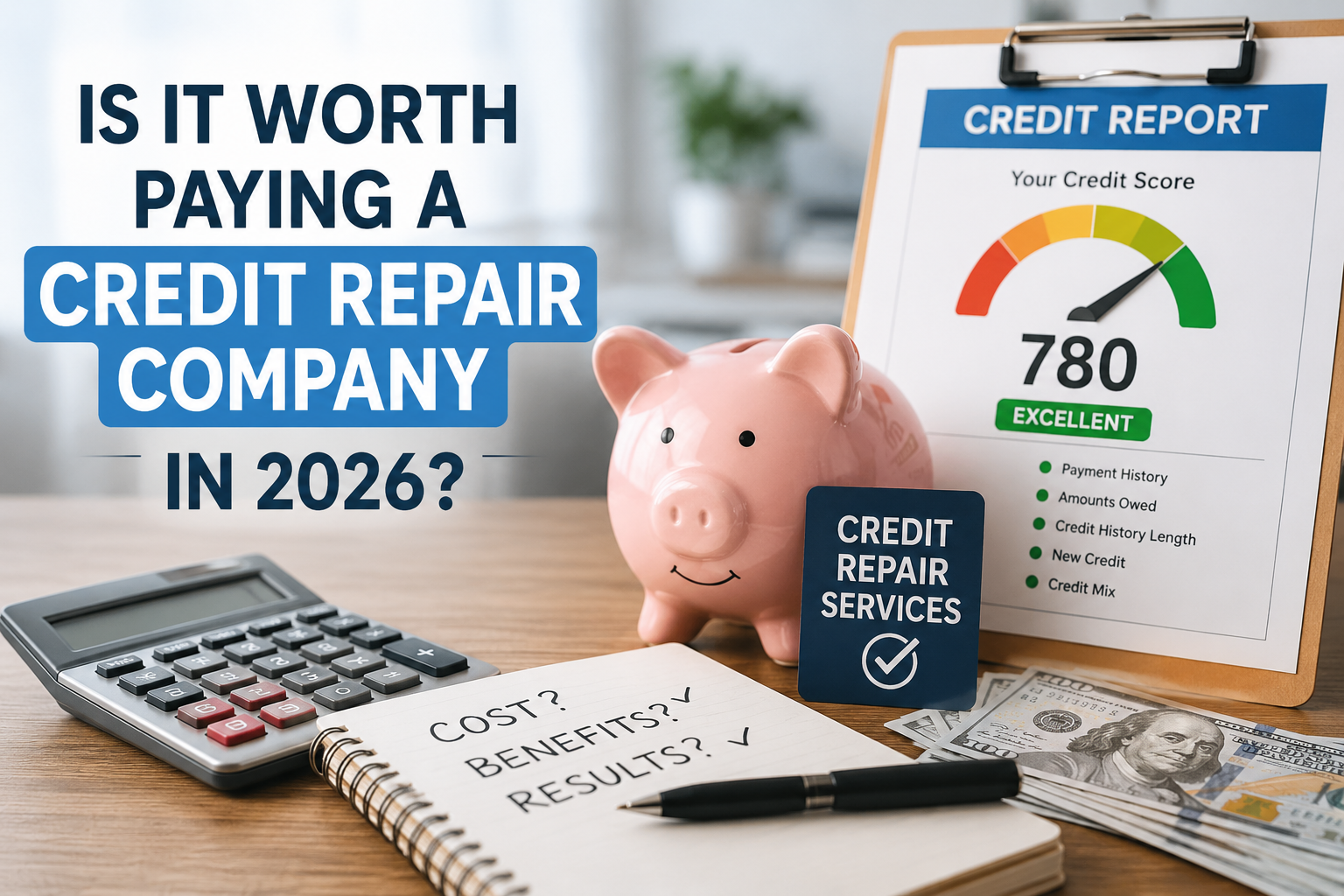
  • Is It Worth Paying a Credit Repair Company in 2026?

    Is It Worth Paying a Credit Repair Company in 2026?

    This question deserves a more precise answer than a simple yes or no, because “worth it” depends on a cost-benefit calculation that’s actually calculable if you know what to look for. Here’s a framework for figuring out whether it makes sense for your specific situation, along with real numbers to think through.

    What You’re Actually Paying For

    Credit repair companies in 2026 generally charge in one of two structures:

    – **Flat monthly subscription**, typically $50-150/month, for ongoing dispute filing and monitoring.
    – **Pay-per-deletion or first-work-fee models**, where you pay a setup fee plus either a smaller monthly rate or a fee tied to specific results (though results-based guarantees are legally restricted under CROA — companies can’t promise specific outcomes).

    Over a typical 4-6 month engagement, this often totals somewhere between $300 and $900, sometimes more for longer or more complex cases.

    The Core Math

    The question “is it worth it” really breaks down to: **would the same disputes, done yourself, produce meaningfully different results than what you’d pay a company to do?**

    In most cases, the honest answer is that a company isn’t doing anything you couldn’t do — filing FCRA disputes, sending goodwill letters, negotiating with collectors — but they’re doing it with practiced efficiency and without requiring your time. So the real question becomes: **what is your time worth, and how confident are you that you’d actually follow through consistently on your own?**

    Scenarios Where It’s More Likely Worth It

    **You have a genuinely complex file.** If you’re dealing with 10+ negative items across multiple bureaus, tracking disputes, responses, and re-disputes manually becomes a real time commitment — potentially several hours a month sustained over many months. If that time has real opportunity cost for you (competing with work, caregiving, etc.), paying for it can be reasonable.

    **You know you won’t follow through alone.** Be honest with yourself here. A DIY plan that stalls after the first dispute letter produces worse results than a company that, however imperfectly, keeps working the file consistently for months. If your track record with self-directed, paperwork-heavy projects is spotty, the “convenience premium” of a company may be worth paying for.

    **You’re preparing for a specific, time-sensitive goal**, like a mortgage application in the next 6-12 months, and want a structured process with

    accountability rather than an open-ended personal project competing with everything else in your life.

    **You’ve identified a reputable company with a clear track record**, transparent pricing, and no red flags (see our credit repair scam guide for specifics) — the “worth it” calculation shifts meaningfully based on company quality, and a genuinely good company operating within legal bounds is a different proposition than a mediocre or predatory one.

    Scenarios Where DIY Is Clearly Better Value

    **You have a small number of clear-cut errors.** If you’re looking at 1-3 disputable items — a clearly duplicated account, a debt that’s aged past 7 years but still showing, a late payment you can prove was actually on time — this is genuinely simple enough that paying monthly for months of work doesn’t make financial sense.

    **Your main lever is utilization, not disputes.** If your score is primarily being held down by high credit card balances rather than errors or old negative marks, no credit repair company can help with that — paying down balances is something only you can do, and no third party adds value to that process.

    **You’re financially tight already.** Paying $75-100/month for several months while also trying to pay down debt and build savings can work against your broader financial goals. If money is genuinely constrained, that fee is better spent directly on debt paydown, which produces its own credit benefit for free.

    **You have the time and patience to learn the process.** It’s genuinely not that complicated — identify errors, gather documentation, file specific disputes, follow up. If you’re willing to spend a few focused hours getting oriented, you can likely replicate most of what a company does.

    What a Good Company Adds Beyond What You’d Do Alone

    To be fair to the industry, a genuinely good credit repair company can add real value beyond pure convenience:

    – **Pattern recognition across many client files** — experienced staff who’ve seen thousands of disputes sometimes catch disputable angles a first-timer wouldn’t think to check.
    – **Persistence infrastructure** — systematic re-checking for reinstated items, which individuals often let slip after initial success.
    – **Negotiation experience** with collection agencies, particularly for pay-for-delete arrangements, where practiced negotiators may achieve better terms than a first-time negotiator.

    What to Calculate Before Deciding

    Run these numbers for your specific situation:

    1. **Total estimated cost** of the engagement (monthly fee × estimated months, based on the complexity of your file).
      2. **Number and type of disputable items** — more items and more complexity shifts the calculation toward “worth it,” assuming a reputable company.
      3. **Your realistic time availability and follow-through likelihood** — be honest, not aspirational.
      4. **What else that money could do for your credit directly** — for many people, that same $75-100/month applied straight to a high-interest credit card balance produces a faster, more certain score improvement (through utilization reduction) than a dispute process might.A Reasonable Hybrid Strategy

      Given all of this, a common-sense approach for many people:

      1. **Try DIY disputes first** on any clear, simple errors — this costs nothing and often resolves the easiest wins within 30-45 days.
      2. **Evaluate what’s left.** If you’re left with a handful of complex or contested items and you’ve confirmed you’re not making progress alone, that’s the point where hiring a company (or, if legal violations are involved, a consumer attorney) starts to look genuinely worth the cost.
      3. **Set a defined evaluation point** if you do hire someone — most legitimate engagements should show concrete progress within 3-6 months; if they haven’t, that’s a signal to reassess rather than continue paying indefinitely.

      The Bottom Line

      For simple, low-item credit files, paying a company is rarely worth it — you can likely achieve the same results yourself for free with a modest time investment. For complex, multi-item files where you either lack the time or the follow-through to manage a months-long dispute process alone, a reputable company can provide real value, primarily through convenience and persistence rather than any special access or ability you don’t already have. The honest test isn’t whether the company can do something you can’t — legally, they can’t — it’s whether the fee is worth the time and consistency they’re providing in your specific situation.

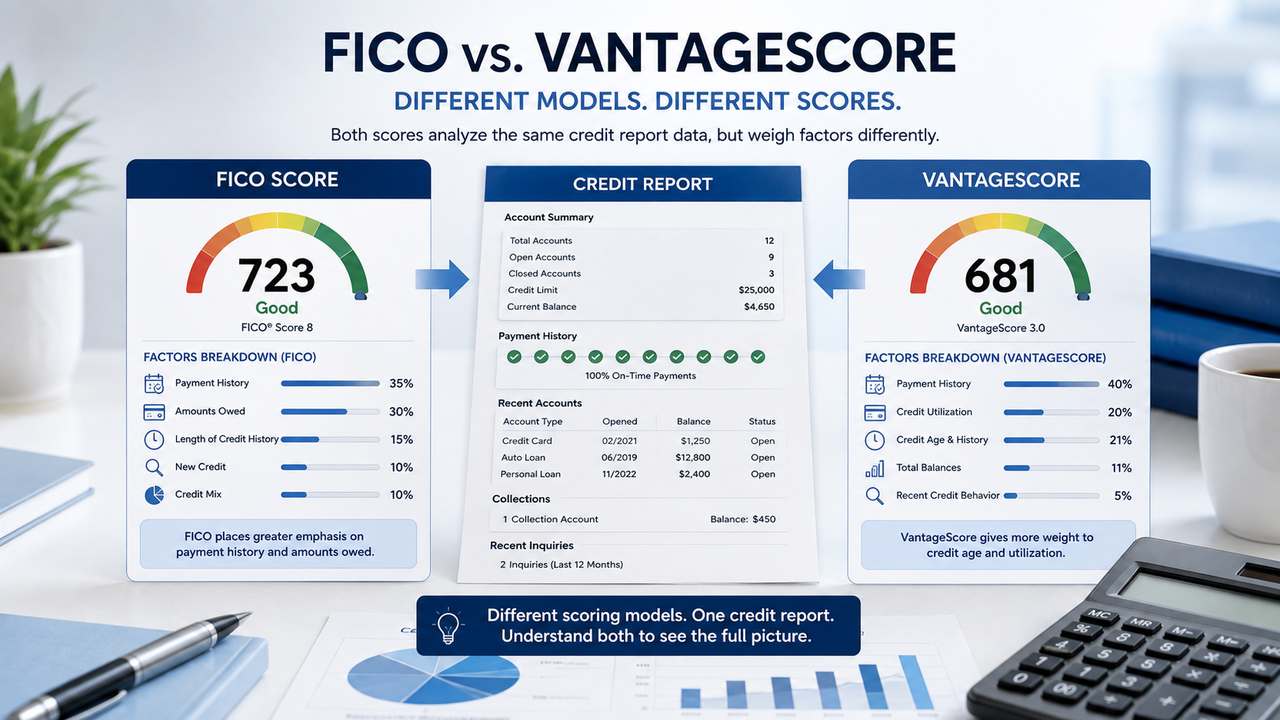
  • FICO vs. VantageScore: What’s the Difference?

    FICO vs. VantageScore: What’s the Difference?

    You check your credit score on a free app and see a 712. Feeling pretty good, you apply for a mortgage — and the lender pulls a 684. That 28-point gap isn’t a mistake. It’s the difference between two entirely different credit scoring models evaluating the same credit report through different lenses.If you’ve ever wondered why your score changes depending on where you look, or which number actually matters when a lender is deciding your future, you’re in the right place. Understanding the difference between FICO and VantageScore — the two dominant credit scoring models in the United States — is one of the most practical steps you can take toward owning your financial story.We’ve helped clients across the country navigate this exact confusion, and here’s the good news: once you understand how these models work, the mystery disappears. Your credit stops feeling like a black box and starts feeling like something you can genuinely influence.This guide walks you through everything: the history behind each model, how they weigh your credit behavior differently, which one lenders actually rely on for mortgages versus auto loans versus credit cards, and why that “free” score you see online might not match what a lender sees. No jargon, no quick-fix promises — just clear, honest information you can use.

    What Is a Credit Score, Really?

    Before we compare two scoring models, let’s make sure we’re on the same page about what a credit score actually is.

    A credit score is a three-digit number (typically ranging from 300 to 850) that summarizes the information on your credit report. Think of it as a grade — a quick way for lenders to assess how likely you are to repay borrowed money based on your past behavior.

    Here’s the key thing most people misunderstand: your credit score is not a single, universal number. It doesn’t live inside you like your blood type. Instead, it’s calculated on demand from the data on your credit report at one (or more) of the three major credit bureaus — Equifax, Experian, and TransUnion — using a specific scoring model.

    This means several variables are always in play:

    • Which bureau’s data is being used (Equifax, Experian, or TransUnion — and they don’t always have identical information)
    • Which scoring model is being applied (FICO 8, FICO 9, FICO 10T, VantageScore 3.0, VantageScore 4.0, or one of many industry-specific variants)
    • When the score is calculated (your report changes as creditors report new data, so a score pulled today may differ from one pulled next week)

    Change any one of those variables and the number changes — even though your actual credit behavior hasn’t. That’s why you can have a dozen different “credit scores” floating around at the same time, all of them technically correct.

    This is the foundation for everything that follows. When we talk about FICO vs. VantageScore, we’re talking about two different formulas applied to the same underlying raw material: your credit report.

    FICO: The Score That Started It All

    A Brief History of FICO

    The Fair Isaac Corporation — now known simply as FICO — introduced the first general-purpose credit score in 1989. It was a revolutionary idea at the time: instead of a loan officer subjectively reviewing your file and making a judgment call, a statistical model would weigh your credit history and produce an objective number.

    By the mid-1990s, Fannie Mae and Freddie Mac (the government-sponsored enterprises that buy most mortgages in the U.S.) began recommending FICO scores for mortgage lending. That endorsement cemented FICO’s dominance in the mortgage world — a position it still holds today.

    FICO isn’t a single score, though. Over the decades, the company has released multiple versions of its scoring model, each designed to improve predictive accuracy as consumer credit behavior evolved. Lenders choose which version to use based on their needs, their industry, and sometimes on requirements set by regulators or investors.

    This is why, when people say “my FICO score,” they’re really saying “my FICO score under a specific version of the model, pulled from a specific bureau, on a specific date.” It’s more precise than it sounds — and that precision matters.

    FICO Score Versions: 8, 9, and 10T

    FICO has released many versions over the years, but a few stand out as the most widely used today. Understanding the differences between them helps you see why your score might vary even between FICO pulls.

    FICO 8 — Released in 2009, this is still the most widely used FICO model for general lending, including most credit card and auto loan decisions. FICO 8 introduced more nuanced treatment of late payments (a single late payment hurts less if your overall profile is otherwise strong) and placed greater emphasis on credit utilization — the percentage of your available credit you’re using. It also isolated authorized-user accounts to prevent piggybacking schemes from artificially inflating scores.

    FICO 9 — Released in 2014, FICO 9 made several consumer-friendly changes. Most notably, it stopped counting paid collections in your score. Under FICO 8, a collection account — even one you’d paid off — could drag down your score for up to seven years. FICO 9 also reduced the impact of unpaid medical collections compared to other types of collections, recognizing that medical debt often results from circumstances beyond a consumer’s direct control.

    Despite these improvements, adoption of FICO 9 among lenders has been slower than FICO 8.

    FICO 10T — Released in 2020, this is FICO’s most significant update in years. The “T” stands for trended data. Instead of looking at a single snapshot of your balances and utilization, FICO 10T looks at your trajectory over the past 24 months. Have you been steadily paying down balances, or have you been creeping upward even while making minimum payments? That trend now influences your score.

    FICO 10T also treats personal loans differently, recognizing that consumers who consolidate credit card debt into a personal loan and then rack up new card balances are higher risk. As of this writing, FICO 10T adoption is still limited — most lenders continue to use FICO 8 for general lending — but it’s worth understanding because it represents the direction scoring is heading.

    Industry-Specific FICO Scores

    FICO also produces specialized scores tailored to specific types of lending. These scores use the same underlying FICO framework but are calibrated to predict risk for a particular loan type.

    FICO Bankcard Score — Optimized for credit card lending. This model places more weight on your history with revolving accounts (credit cards, store cards) and may produce a score that’s somewhat different from your general FICO score. If you’ve handled credit cards well but have a bumpy auto loan history, your Bankcard score might be higher than your general score.

    FICO Auto Score — Optimized for auto lending. This model gives extra weight to your history with auto loans and installment loans. A past repossession will hurt this score more than it might hurt a general FICO score, while a clean auto loan history can give it a boost.

    FICO Mortgage Scores — These are older FICO models (typically FICO 2, FICO 4, and FICO 5, pulled from Experian, TransUnion, and Equifax respectively) that Fannie Mae and Freddie Mac still require for mortgage lending. Yes, you read that right — the mortgage industry uses older FICO versions, not FICO 8 or 9. This is one of the biggest sources of confusion when people compare their “free” score to their mortgage pull.

    Each of these industry-specific scores has its own range. Some use the standard 300–850 range, while others (like the Auto and Bankcard scores) extend to 900. That’s another reason your numbers can look different depending on the context.

    The takeaway: FICO isn’t one score — it’s a family of scores, each calibrated for a specific purpose. The model your lender uses depends on what kind of credit you’re applying for.

    VantageScore: The Challenger

    How VantageScore Began

    VantageScore was introduced in 2006 as a joint venture by the three major credit bureaus — Equifax, Experian, and TransUnion. The bureaus created VantageScore to compete with FICO, offering a model that the bureaus themselves owned and could license more flexibly.

    From the beginning, VantageScore was designed with a few goals in mind:

    • Consistency across bureaus: The same model formula is applied at all three bureaus, so scores should be more comparable across bureaus (though the underlying data still differs).
    • Broader inclusion: VantageScore aimed to score more consumers, including those with thin credit files that FICO might not score at all.
    • Innovation in scoring: VantageScore has been quicker to adopt new techniques, like trended data and machine learning.

    VantageScore has gained significant traction over the years, particularly in the consumer-facing space. Many free credit score services — including Credit Karma — display VantageScore rather than FICO. That doesn’t make VantageScore “wrong” or “fake,” but it does explain a lot of the score discrepancies people experience.

    VantageScore 3.0 and 4.0

    Two versions of VantageScore matter most today:

    VantageScore 3.0 — Released in 2013, this is the version most commonly displayed on free credit monitoring apps. It uses the familiar 300–850 range (earlier VantageScore versions used a different 501–990 scale, which caused no end of confusion). VantageScore 3.0 was designed to score more consumers, including those with limited credit history, by considering alternative data like rent and utility payments when available. It also ignores paid collections, similar to FICO 9.

    VantageScore 4.0 — Released in 2017, VantageScore 4.0 was the first major scoring model to incorporate trended data — analyzing your balance and payment patterns over the prior 24 months rather than just a single snapshot. This means VantageScore 4.0 can tell the difference between someone who pays their balance in full each month and someone who carries a balance but makes minimum payments, even if both show the same utilization on a given day.

    VantageScore 4.0 also uses machine learning to improve predictive accuracy, particularly for consumers with thin credit files or negative events in their history. It weighs recent credit behavior more heavily than older behavior, which can work in your favor if you’re actively rebuilding.

    While VantageScore 4.0 is more advanced, VantageScore 3.0 remains more commonly displayed on consumer apps. Lender adoption of VantageScore, while growing, still trails FICO significantly — especially in mortgage lending.

    FICO vs. VantageScore: Side-by-Side Comparison

    Now let’s put the two models head to head. The table below highlights the most important differences between the dominant FICO and VantageScore versions in use today.

    Feature FICO 8 FICO 9 FICO 10T VantageScore 3.0 VantageScore 4.0
    Score range 300–850 300–850 300–850 300–850 300–850
    Minimum scoring criteria Needs at least one account 6+ months old and at least one account reported to bureau in last 6 months Same as FICO 8 Same as FICO 8 with trended data available Can score consumers with at least one account, no minimum age Can score many thin-file consumers
    Payment history weight 35% 35% ~35% (weighting not publicly disclosed) ~40% (extremely influential) Extremely influential
    Credit utilization weight 30% 30% Significant, plus trended utilization Highly influential (~23%) Highly influential, plus trended data
    Credit age / mix weight 15% age, 10% mix 15% age, 10% mix Not fully disclosed Moderately influential (~21% combined) Moderately influential
    New credit / inquiries weight 10% 10% Not fully disclosed Less influential (~11%) Less influential
    Paid collections Counted Ignored Counted (if unpaid) Ignored Ignored
    Unpaid medical collections Counted Reduced impact Counted Reduced impact Reduced impact
    Rent and utility payments Generally not included unless reported Generally not included Not standard Considered when reported Considered when reported
    Trended data (24-month history) No No Yes No Yes
    Hard inquiry window 12 months (scored), 24 months (visible on report) Same as FICO 8 Same as FICO 8 12 months (scored), 24 months (visible) 12 months (scored), 24 months (visible)
    Rate shopping (multiple inquiries for same loan type) Multiple auto or mortgage inquiries within ~14–45 days count as one Same as FICO 8 Same as FICO 8 14-day window 14-day window
    Machine learning No No No No Yes (for certain sub-models)
    Primary use Credit cards, auto loans, personal loans Limited adoption Emerging Consumer-facing free score apps Some lenders, emerging

    A few things deserve emphasis:

    The weighting differences are real but subtle. Both models agree that payment history is the single most important factor. Both agree utilization matters enormously. The percentage differences — 35% vs. “extremely influential” — sound dramatic, but in practice, the same behaviors that build a strong FICO score tend to build a strong VantageScore, and vice versa. The models diverge more in edge cases and in how they treat thin or damaged files.

    Trended data is the biggest differentiator. FICO 10T and VantageScore 4.0 both look at your 24-month trajectory, which means your direction of travel matters — not just your current position. If you’ve been steadily reducing your balances, that positive trend can help you. If you’ve been gradually increasing your debt even while making on-time payments, that trend can work against you.

    Treatment of collections has improved across both models. Paid collections are now ignored by FICO 9 and both VantageScore 3.0 and 4.0. Medical collections receive more lenient treatment across the board. This is a meaningful improvement for consumers rebuilding their credit.

    Which Credit Score Do Lenders Actually Use?

    This is the question that matters most, and the answer depends on the type of credit you’re seeking.

    Mortgages: FICO Dominates

    When you apply for a conventional mortgage — one that will be sold to Fannie Mae or Freddie Mac, which covers the vast majority of U.S. home loans — your lender is required to pull specific FICO scores: FICO Score 2 (Experian), FICO Score 4 (TransUnion), and FICO Score 5 (Equifax). These are older FICO models, not FICO 8 or 9 or 10T. The lender typically uses the middle of the three scores (or the lower of two if only two are available) as your qualifying score.

    This is enormously important and widely misunderstood. If you’ve been tracking your FICO 8 score on a banking app and it shows 720, but your mortgage lender pulls FICO Score 2/4/5 and sees 695, that’s not an error — it’s a different model applied to the same data. The older mortgage FICO models can be less forgiving of certain items like collections and high utilization.

    Auto Loans: FICO Auto Score or FICO 8

    Most auto lenders use either FICO Auto Score (specialized for auto lending) or FICO 8. Some subprime and near-prime lenders use VantageScore. The variability here is higher than in mortgages.

    If you’re shopping for an auto loan, track your FICO 8 score and be aware that your FICO Auto Score may be somewhat different (higher if you have strong auto-loan history, lower if you have a past repossession or auto loan delinquency).

    Auto loan score targets: Many lenders approve with scores of 660+, but the best rates typically go to borrowers with 720+.

    Credit Cards: FICO 8

    The vast majority of credit card issuers use FICO 8 for approval decisions, and some use FICO Bankcard Score for credit line and account management. If you’re applying for a credit card, your FICO 8 score from the bureau the issuer typically pulls is what matters.

    Credit card score targets: Approval thresholds vary widely by card. Premium rewards cards often want 700+ (sometimes 750+), while basic cards and secured cards are available to people rebuilding from the 500s upward.

    Personal Loans: FICO 8 or VantageScore

    Personal loan lenders split between FICO 8 and VantageScore, with online lenders and fintechs more likely to use VantageScore or proprietary models. If you’re applying with a traditional bank, FICO 8 is the safer bet to track.

    Personal loan score targets: Most personal loan lenders want 600+, with better rates starting around 680+.

    The practical framework: identify the type of credit you’re seeking, find out which scoring model that lender uses, and track that specific score. You can ask lenders directly which model and bureau they pull — they’re allowed to tell you, and reputable lenders will.

    Why Your Credit Karma Score Differs From Your Lender Pull

    This is one of the most common — and most frustrating — experiences for consumers. You check Credit Karma, see a solid 740, apply for a loan, and the lender tells you your score is 690. What happened?

    There are several reasons, and understanding them removes the frustration:

    Reason 1: Different scoring models

    Credit Karma displays VantageScore 3.0. Most lenders use FICO 8 (or an older FICO model for mortgages). These are different formulas applied to the same credit report data. They can produce meaningfully different numbers — sometimes 20 to 50 points apart — even when the underlying data is identical. Neither score is “wrong”; they’re just measuring the same risk through different statistical lenses.

    Reason 2: Different bureau data

    Credit Karma shows scores from TransUnion and Equifax. Your lender might pull Experian. Not all creditors report to all three bureaus, so the data at each bureau can differ. A collection that appears on your TransUnion report but not your Experian report will affect your TransUnion-based score but not your Experian-based one.

    Reason 3: Timing

    Credit reports update as creditors report new information — typically once per billing cycle. A score calculated today might differ from one calculated two weeks ago because a new balance, payment, or account has been reported in the interim. Credit Karma’s score is calculated when you log in and refresh; your lender’s score is calculated at the moment they pull your credit. Any data reported in between will cause a difference.

    Reason 4: Different scoring ranges

    If you’re looking at a FICO Bankcard or FICO Auto score, those models use a range that goes up to 900, not 850. A “780” on one of those scores isn’t directly comparable to a “780” on a standard 300–850 scale. This is less common but worth knowing about.

    Reason 5: Hard inquiries

    When your lender pulls your credit, that inquiry is recorded. If you’ve been rate-shopping (say, applying with multiple auto lenders), those inquiries may temporarily affect your score. However, both FICO and VantageScore have rate-shopping windows (typically 14–45 days) during which multiple inquiries for the same type of loan count as a single inquiry for scoring purposes. This protects you while comparison-shopping.

    The bottom line: don’t panic if your free app score doesn’t match your lender pull. It’s expected behavior, not a sign that something is wrong. What matters is that you understand which score your lender is likely to use and track that one when preparing for a major application.

    How Each Model Handles Late Payments, Collections, and Utilization

    The way FICO and VantageScore treat specific credit events is where their differences become most practical. Let’s break down the three areas that most affect consumers rebuilding their credit.

    Late Payments

    FICO’s approach: Payment history is the single largest factor in your FICO score (35%). A late payment — specifically one that’s 30+ days late — can cause a significant score drop, often 60 to 110 points depending on your starting score and credit profile. The higher your score, the bigger the drop, because a late payment is more “unusual” for someone with excellent credit.

    FICO considers:

    • How recent the late payment is (recent lates hurt more)
    • How severe it is (30 days vs. 60 days vs. 90+ days — longer delinquencies hurt more)
    • How frequent late payments are (a pattern of lates is worse than a one-time slip)

    FICO 8 introduced slightly more nuanced treatment: a single late payment has less impact if the rest of your credit history is strong. But don’t underestimate the damage — even one 30-day late can linger on your report for up to seven years and affect your score for much of that time.

    VantageScore’s approach: Payment history is weighted even more heavily in VantageScore (approximately 40% in VantageScore 3.0, described as “extremely influential” in 4.0). The practical impact of a late payment is similar to FICO — a significant drop — but VantageScore 4.0’s use of trended data means it can also see your payment pattern over time. If you have a long history of on-time payments with one recent slip, the trended data may contextualize that single late payment more favorably.

    Both models treat late payments seriously. The best strategy is the same regardless of model: never miss a payment, and if you do, bring the account current as quickly as possible. A 30-day late is far less damaging than a 60- or 90-day late, so acting fast matters.

    Collections

    FICO 8: Both paid and unpaid collections affect your score. The impact depends on the collection’s age, amount, and type. Newer collections hurt more than older ones.

    FICO 9: Paid collections are ignored. Unpaid collections still affect your score, but medical collections have reduced impact.

    FICO 10T: Returns to counting paid collections (in most implementations), though the model considers trended data that may contextualize the event.

    VantageScore 3.0 and 4.0: Both ignore paid collections. Medical collections receive more lenient treatment. VantageScore 4.0’s trended data can also see whether the collection is an isolated event or part of a broader pattern.

    The practical takeaway: paying off a collection can help your score under FICO 9 and both VantageScore models, but may not help under FICO 8 or FICO 10T.

    This doesn’t mean you shouldn’t pay — unpaid collections can still lead to lawsuits, wage garnishment, and continued credit damage. But it’s worth understanding that the score impact varies by model.

    Also note: under the National Consumer Assistance Plan (an agreement among the three bureaus), the bureaus no longer report medical collections that are less than 180 days old, giving you time to resolve insurance and billing issues before they affect your credit. And as of 2023, the bureaus removed all paid medical collections from credit reports, regardless of age.

    Credit Utilization

    FICO’s approach: Utilization — the percentage of your available revolving credit that you’re using — accounts for 30% of your FICO score. It’s calculated both per-account and overall. The general guidance:

    • Below 30% utilization is considered acceptable
    • Below 10% is ideal for maximizing your score
    • 0% (meaning you have balances but pay them in full) is excellent

    FICO 8 looks at utilization as a snapshot: whatever balance is reported to the bureau on your statement closing date is what gets scored. If you pay your balance in full after the statement closes but before the due date, the statement balance may still show as your reported balance — meaning you can appear to have high utilization even though you pay in full every month. This is why many people who pay in full see their score dip when they make a large purchase.

    VantageScore’s approach: Utilization is “highly influential” in VantageScore, weighted similarly to FICO. VantageScore 4.0, however, uses trended utilization data — it can see your utilization over the past 24 months. This means a single high-utilization month is less damaging if your long-term pattern shows low utilization. Conversely, a pattern of gradually increasing utilization can hurt you even if you’re currently under 30%.

    The strategy that works for both models: keep your balances low throughout the month, not just at statement time. If you’re planning a major application, consider paying down balances mid-cycle (before the statement closing date) so the lowest possible balance gets reported. This is one of the fastest, most reliable ways to boost your score under any model.

    Which Score Matters Most: Mortgages vs. Auto vs. Credit Cards

    Since different lenders use different scores, the question “which score matters most?” really has three answers:

    For Mortgages: Your FICO Mortgage Scores (2, 4, 5)

    If you’re planning to buy a home or refinance, the scores that matter are the specific FICO models required by Fannie Mae and Freddie Mac: FICO Score 2 (Experian), FICO Score 4 (TransUnion), and FICO Score 5 (Equifax). Your lender will pull all three and typically use the middle score for qualification. If you’re applying jointly with a co-borrower, the lender uses the lower of the two middle scores.

    These older FICO models can be less forgiving than FICO 8. They may weigh collections more heavily and don’t benefit from the consumer-friendly updates in FICO 9 (like ignoring paid collections). This means preparing for a mortgage requires extra diligence.

    To check your FICO mortgage scores, your best option is myFICO.com, which offers plans that include the specific mortgage scores lenders use. Some credit unions and mortgage lenders also provide these scores to members or pre-qualified applicants.

    Mortgage score targets: Most conventional loans require a minimum middle score of 620, though 680 or higher unlocks better rates. For the best rates, aim for 740+.

    For Auto Loans: FICO Auto Score or FICO 8

    Most auto lenders use either FICO Auto Score (specialized for auto lending) or FICO 8. Some subprime and near-prime lenders use VantageScore. The variability is higher here than in any other lending category.

    If you’re shopping for an auto loan, track your FICO 8 score and be aware that your FICO Auto Score may be somewhat different (higher if you have strong auto-loan history, lower if you have a past repossession or auto loan delinquency).

    Auto loan score targets: Many lenders approve with scores of 660+, but the best rates typically go to borrowers with 720+.

    For Credit Cards: FICO 8

    The vast majority of credit card issuers use FICO 8 for approval decisions, and some use FICO Bankcard Score for credit line and account management. If you’re applying for a credit card, your FICO 8 score from the bureau the issuer typically pulls is what matters.

    Credit card score targets: Approval thresholds vary widely by card. Premium rewards cards often want 700+ (sometimes 750+), while basic cards and secured cards are available to people rebuilding from the 500s upward.

    For Personal Loans: FICO 8 or VantageScore

    Personal loan lenders split between FICO 8 and VantageScore, with online lenders and fintechs more likely to use VantageScore or proprietary models. If you’re applying with a traditional bank, FICO 8 is the safer bet to track.

    Personal loan score targets: Most personal loan lenders want 600+, with better rates starting around 680+.

    The practical framework: identify the type of credit you’re seeking, find out which scoring model that lender uses, and track that specific score. You can ask lenders directly which model and bureau they pull — they’re allowed to tell you, and reputable lenders will.

    fico-vs-vantagescore-under-100kb

    How to Check Both Your FICO and VantageScore

    You don’t have to pay to see your scores, but you do need to know where to look for each type.

    Checking Your VantageScore (Free, Widely Available)

    • Credit Karma — Free VantageScore 3.0 from TransUnion and Equifax, updated weekly
    • Credit Sesame — Free VantageScore from TransUnion
    • Credit.com — Free VantageScore 3.0
    • NerdWallet — Free VantageScore 3.0 from TransUnion
    • Many bank and credit card apps — Some institutions now offer free VantageScore to customers

    VantageScore is the easiest score to access for free. It’s excellent for general monitoring — catching unexpected changes, spotting errors, and tracking your overall progress. Just remember that it may not match the FICO scores your lenders use.

    Checking Your FICO Score (Free Options Exist)

    • Discover Credit Scorecard — Free FICO 8 score from Experian, available to anyone (not just Discover customers)
    • Bank of America — Free FICO 8 for cardholders
    • Chase — Free FICO 8 for cardholders (via Chase Journey)
    • Citi — Free FICO 8 for cardholders (FICO Bankcard Score)
    • Wells Fargo — Free FICO 9 for customers
    • American Express — Free FICO 8 for cardholders
    • myFICO.com — Paid service that provides the most comprehensive FICO scores, including the specific mortgage scores (FICO 2, 4, 5) and industry-specific scores (Auto, Bankcard). If you’re preparing for a mortgage, this is the gold standard.

    Checking Your Credit Reports (Free, Required by Law)

    Under the Fair Credit Reporting Act (FCRA), you’re entitled to a free copy of your credit report from each of the three bureaus every 12 months through AnnualCreditReport.com. Since the COVID-19 pandemic, the bureaus have made weekly access available — you can now pull your reports for free every week if you want to.

    Your credit report is the raw data; your credit score is calculated from it. Reviewing your reports regularly is one of the most important things you can do, because errors on your report affect every score calculated from that report, regardless of model.

    Look for:

    • Accounts you don’t recognize (possible identity theft or reporting errors)
    • Incorrect payment statuses (payments marked late that were actually on time)
    • Outdated negative items (most negative information should fall off after 7 years; bankruptcies after 7–10 years)
    • Duplicate accounts
    • Incorrect balances or credit limits

    If you find errors, you have the right to dispute them with the credit bureau(s) and the creditor that reported the information. The FCRA requires bureaus to investigate disputes within 30 days and correct or remove inaccurate information. This is a process we help clients navigate every day, and it’s one of the most effective ways to improve your credit profile across all scoring models.

    Common Myths About Credit Scores

    Misinformation about credit scores is everywhere. Let’s clear up some of the most persistent myths.

    Myth 1: “Checking my own credit score hurts my credit.”

    False. When you check your own credit score or pull your own credit report, it’s a soft inquiry.

    Myth 2: “Carrying a credit card balance builds credit faster.”

    False. Carrying a balance does not improve your credit score. Paying your balance in full each month is generally the financially healthier approach, and the scoring models do not reward you for paying interest.

    Myth 3: “I only have one credit score.”

    False. There are multiple credit scoring models and multiple credit bureaus. Different combinations can produce different scores, and there is no single “master” score that every lender uses.

    Myth 4: “VantageScore is a fake credit score.”

    False. VantageScore is a legitimate credit scoring model developed by the three major credit bureaus. It is simply different from FICO, and a lender may use one model rather than the other depending on the type of credit and the lender’s practices.

    Myth 5: “My income determines my credit score.”

    Your income is not part of your credit report and is not a factor in any credit scoring model. Lenders may consider your income separately when evaluating your debt-to-income ratio for a loan application, but the scoring models themselves only look at your credit history — not your earnings.

    This means someone with a modest income and excellent credit habits can have a higher credit score than someone with a high income and poor credit habits. Credit scoring is about behavior, not wealth.

    Myth 6: “Negative items fall off your report automatically after 7 years.”

    Mostly true, but with caveats. Most negative information (late payments, collections, charge-offs) does fall off after 7 years. Chapter 7 bankruptcies remain for 10 years. Chapter 13 bankruptcies remain for 7 years. However, the item should fall off automatically — but that doesn’t always happen correctly. This is why reviewing your credit reports regularly is so important. If an item is still showing after its time limit, you have the right to dispute it and have it removed.

    Myth 7: “Paying off a collection immediately removes it from my report.”

    False. Paying off a collection updates the status to “paid,” but the collection can remain on your report for up to 7 years from the original delinquency date. As we discussed, FICO 9 and VantageScore 3.0/4.0 ignore paid collections for scoring purposes, but the item may still be visible on your report. Some collectors offer “pay-for-delete” agreements (you pay, they remove the collection from your report), but these are increasingly rare and not guaranteed.

    Myth 8: “Credit repair companies can remove accurate negative information.”

    False — and beware of anyone who promises this. Under the FCRA, accurate, verifiable, and timely negative information cannot be legally removed before its reporting time limit expires. What legitimate credit repair does is:

    • Dispute inaccurate information and have it corrected or removed
    • Ensure outdated items are removed on schedule
    • Negotiate with creditors for goodwill removals of isolated negative items (not guaranteed)
    • Help you build positive credit history to offset past negatives

    Anyone who promises to “remove all negative items” or “boost your score 100 points guaranteed” is not being honest. Legitimate credit improvement is a process — one that works, but that requires time, consistency, and an accurate understanding of your rights under federal law.

    Frequently Asked Questions

    1. Which credit score is most important?

    The one your lender uses for the type of credit you’re seeking. For mortgages, that’s the FICO mortgage scores (FICO 2, 4, 5). For credit cards and most general lending, it’s FICO 8. For general monitoring, VantageScore 3.0 (the free score on most apps) is useful for spotting changes and errors, even if it doesn’t match your lender’s pull exactly. If you’re not preparing for a specific application, tracking any reputable score consistently is more valuable than chasing the “right” one — what matters is the direction and trend.

    2. Why do I have so many different credit scores?

    Because each combination of scoring model (FICO 8, FICO 9, VantageScore 3.0, etc.) and credit bureau (Equifax, Experian, TransUnion) produces a different number. Your underlying credit behavior is the same, but each model weighs factors slightly differently, and each bureau may have slightly different data.

    There’s no single “master” score — there are dozens of valid scores, each designed for a specific lending context.

    3. Is VantageScore easier to get than FICO?

    VantageScore can score more consumers than FICO, particularly those with thin credit files (limited credit history). VantageScore 3.0 and 4.0 were specifically designed to include consumers that older FICO models couldn’t score. If you’re new to credit or rebuilding, you may get a VantageScore before you get a FICO score. However, both models reward the same positive behaviors — on-time payments, low utilization, and a mix of account types over time.

    4. How often should I check my credit score and report?

    Check your score monthly (or weekly if you’re actively preparing for an application) to monitor for unexpected changes. Check your credit reports from all three bureaus at least once per year, or more frequently if you’re rebuilding or have had identity theft concerns. Since the bureaus now offer free weekly access through AnnualCreditReport.com, there’s no reason not to review them regularly. The key is consistency — regular monitoring catches problems early.

    5. Does it hurt my score when a lender checks my credit?

    A hard inquiry from a lender typically causes a small, temporary score drop (usually 1–5 points). However, both FICO and VantageScore include rate-shopping windows — typically 14 to 45 days, depending on the model — during which multiple inquiries for the same type of loan (mortgage, auto, student loan) count as a single inquiry for scoring purposes. This means you can shop around for the best rate without each inquiry compounding the impact. Hard inquiries stop affecting your score after 12 months and fall off your report after 24 months.

    6. What credit score do I need to buy a house?

    For a conventional mortgage (the most common type), the minimum middle FICO score is typically 620. However, higher scores unlock better terms:

    • 620–679: You may qualify, but expect higher interest rates and potentially private mortgage insurance (PMI) requirements
    • 680–739: Better rates and terms; this is the range where most conventional loans are approved
    • 740+: The best available rates; above 740, additional points generally don’t improve your rate further

    Government-backed loans have lower minimums: FHA loans can accept scores as low as 500 (with a 10% down payment) or 580 (with a 3.5% down payment). VA and USDA loans typically want 580+, though some lenders set their own higher minimums. Remember that these are FICO mortgage scores (the older 2/4/5 models), not FICO 8 or VantageScore.

    7. Can I improve my credit score quickly, or does it take years?

    Both — depending on what you’re optimizing for.

    Take Control of Your Credit

    Understanding the difference between FICO and VantageScore is more than an academic exercise — it’s the foundation for making informed decisions about your financial future. When you know which score matters for which goal, you can prepare strategically instead of guessing. When you understand how each model treats your credit behavior, you can focus your energy on the actions that actually move the needle.

    Here’s what we want you to take away from this guide:

    Your credit score is not a mystery. It’s a calculated number based on your credit report, and you have significant influence over it through your daily financial decisions. Pay on time, keep utilization low, maintain a mix of accounts, and let your credit age — those fundamentals work under every model.

    Different scores serve different purposes. Track the one that matters for your next goal. For a mortgage, that’s your FICO mortgage scores. For credit cards, FICO 8. For general monitoring, VantageScore 3.0 is a useful (and free) barometer.

    Your credit report is the foundation. Review it regularly, dispute errors promptly, and know your rights under the FCRA. Every score is calculated from your report — fix the report, and the scores follow.

    Credit improvement is a process, not an event. There are no legitimate shortcuts, but there are proven strategies. The same behaviors that build a strong FICO score build a strong VantageScore. The work you do today compounds over time.

    If you’re feeling overwhelmed by credit issues — collections you’re not sure how to address, errors you’ve spotted but don’t know how to dispute, or a score that’s not where you need it to be for an upcoming application — you don’t have to navigate it alone.

    We offer a free credit audit at credit-repair.com. Our team will review your credit reports from all three bureaus, identify inaccuracies and negative items that may be affecting your scores, and walk you through a customized plan for improvement — all in full compliance with the FCRA, with attorney-backed oversight to ensure every step is ethical, accurate, and effective.

    No pressure, no quick-fix promises — just an honest assessment of where your credit stands and a clear path forward. Because we believe you deserve to understand your credit, own your financial story, and have the tools to keep your credit strong for life.

    Get your free credit audit at credit-repair.com →

    Disclaimer: This article is for educational purposes only and does not constitute legal or financial advice. Credit score models and lending requirements change over time. For specific guidance about your credit situation, consult with a qualified professional or schedule a free credit audit with our team.

    Last updated: August 2026

  • Rent Reporting Services: Does Paying Rent Build Credit?

    Rent Reporting Services: Does Paying Rent Build Credit?

    If you’ve paid rent on time every month for years, you’ve probably wondered why that discipline doesn’t show up on your credit report. You’re not alone. Millions of renters across the country faithfully send in their rent checks, yet the three major credit bureaus historically treated those payments as if they never happened. Meanwhile, one missed credit card payment can haunt your score for seven years.

    That gap is what rent reporting services aim to close. These services collect verification of your on-time rent payments and report them to credit bureaus so your history of responsible payment behavior becomes part of your credit profile. But before you sign up, it’s worth understanding the honest reality: rent reporting can help some people meaningfully, while for others the impact is modest or even invisible depending on which scoring model a lender pulls.

    In this guide, we’ll walk you through everything you need to know about rent reporting, how it works, which bureaus accept the data, whether it actually moves your credit score, how to choose a service, and how it compares to other credit-building strategies. No hype, no promises of overnight fixes. Just a clear, honest breakdown so you can decide whether rent reporting fits your larger credit-building plan.

    The Problem: Why Rent Didn’t Appear on Credit Reports

    For decades, the credit reporting system in the United States operated with a striking blind spot: rent, the single largest monthly expense for tens of millions of households, was effectively invisible.

    Here’s why that happened. The three major credit bureaus — Experian, TransUnion, and Equifax — built their databases around data furnished by lenders. Banks, credit card issuers, auto financiers, mortgage servicers, and student loan providers regularly report your payment activity to the bureaus. Landlords and property management companies, by contrast, were never required to report, and the vast majority had no incentive or infrastructure to do so. Rent payments simply weren’t part of the traditional furnishing ecosystem.

    This created a frustrating asymmetry. A single late credit card payment would be reported to all three bureaus almost immediately and could drag your score down for years. But a flawless five-year rent payment history? Invisible. No recognition, no credit score benefit, no signal to future lenders that you reliably handle a large monthly obligation.

    The consequences fell hardest on people building credit from scratch, recovering from past financial setbacks, or simply choosing to rent rather than own. If you’re a long-time renter with a thin credit file, your credit score may not reflect the financial discipline you’ve actually demonstrated. That can mean higher interest rates, denied applications, larger security deposits, and a harder path to qualifying for a mortgage when you’re ready to buy.

    The credit reporting system wasn’t designed with renters in mind, and it has taken years of advocacy, technology, and policy shifts to begin closing that gap. Rent reporting services are one of the most practical tools to emerge from that effort.

    What Rent Reporting Is and How It Works

    Rent reporting is the process of having your monthly rent payments verified and submitted to one or more credit bureaus so they appear on your credit report as a trade line — similar to how a credit card or loan account appears.

    The Basic Mechanism

    Here’s how rent reporting works in practice:

    1. You enroll with a rent reporting service. Some services work directly with renters, while others partner with landlords or property management platforms.
    2. Your rent payments are verified. Verification typically happens through bank account connections, payment processors, landlord confirmation, or lease documentation. The service needs to confirm that a payment was actually made, on time, for the amount specified in your lease.
    3. The service furnishes data to credit bureaus. On a recurring basis (usually monthly), the service sends updated payment records to the bureaus it partners with. Each on-time payment becomes a positive entry on that trade line.
    4. The bureau adds the data to your credit file. Depending on the bureau and the type of data, the rent trade line may appear on your credit report and potentially factor into certain credit scores.

    What Gets Reported

    A rent trade line typically includes:

    • The rental address associated with the payments
    • Monthly payment amount
    • Payment dates and status (on-time, late, missed)
    • Lease term information in some cases
    • The reporting entity’s name

    The key thing to understand is that rent reporting services don’t lend you money or extend credit. They’re data furnishers — they pass along verified information about payments you’re already making. That distinction matters because it means rent reporting doesn’t add debt, doesn’t require a credit check to enroll in most cases, and doesn’t carry the risk of borrowing.

    The Verification Layer

    Verification is the backbone of credible rent reporting. Credit bureaus require that furnished data be accurate and substantiated, which is why rent reporting services can’t simply take your word for it. They need evidence. The most common verification methods include:

    • Bank transaction verification — linking your checking account so the service can confirm rent payments cleared on specific dates
    • Landlord or property manager confirmation — the service contacts your landlord or integrates with property management software to verify payments
    • Payment platform integration — if you pay rent through a platform like a property management portal, the service can pull records directly
    • Lease and payment documentation — some services accept lease agreements and bank statements as supporting evidence

    The strength of verification affects how widely the data is accepted. Bureaus are more receptive to rent data that comes through rigorous, auditable verification channels.

    Which Credit Bureaus Accept Rent Data

    Not all three bureaus handle rent data the same way, and understanding the differences is essential before you invest time or money in a rent reporting service.

    Experian

    Experian has been the most proactive of the three bureaus in incorporating rent payment history. Experian accepts rent data through its Experian RentBureau division, which was specifically built to collect and process rental payment data from property managers, rent reporting services, and other furnishers.

    Key points about Experian’s handling of rent data:

    • Rent payment history can appear on your Experian credit report
    • Experian incorporates rent data into its Experian Boost program, which allows consumers to connect bank accounts and get credit for rent, utilities, streaming services, and other recurring payments
    • Experian’s own scoring models and some VantageScore models may reflect rent trade lines
    • Rent data furnished through Experian RentBureau is subject to the same accuracy and dispute standards under the Fair Credit Reporting Act (FCRA) as any other tradeline

    Experian is generally considered the most rent-friendly bureau. If you’re choosing a rent reporting service and want to prioritize one bureau, Experian is typically the strongest candidate.

    TransUnion

    TransUnion also accepts rent data, and several rent reporting services furnish to TransUnion. TransUnion has historically been receptive to alternative data sources, including rent, and may include rent trade lines on your TransUnion credit report.

    However, the degree to which rent data influences TransUnion-based credit scores depends on the scoring model used. TransUnion offers multiple scoring models, and not all of them weight rent data equally. VantageScore models (which TransUnion offers) tend to be more inclusive of alternative data, while some older FICO models pulled from TransUnion may not factor in rent at all.

    Equifax

    Equifax is the most complicated of the three when it comes to rent data. Equifax does accept rent trade lines in some cases, but its handling has historically been more limited and less consistent than Experian or TransUnion. Not all rent reporting services furnish to Equifax, and Equifax’s scoring models may not always reflect rent data in the same way.

    If Equifax coverage matters to you — for example, if you know a lender you’re planning to apply with pulls Equifax reports — check specifically whether a rent reporting service furnishes to Equifax before enrolling.

    What This Means for You

    The practical takeaway is that rent data doesn’t automatically appear on all three of your credit reports. If a service only furnishes to Experian, your TransUnion and Equifax reports won’t show your rent history. If you want maximum bureau coverage, look for a service that reports to multiple bureaus, and confirm which ones.

    It’s also worth remembering that lenders don’t all pull from the same bureau. A mortgage lender might pull all three. A credit card issuer might pull one. An auto lender might pull a different one. The bureau coverage of your rent reporting matters most in the context of which bureaus the lenders you care about actually use.

    Does Paying Rent Actually Build Credit?

    This is the question that matters most, and it deserves an honest, nuanced answer rather than a simple yes or no.

    The short version: rent reporting can help build credit, but the impact varies significantly depending on your existing credit profile and which scoring model a lender uses.

    When Rent Reporting Helps Most

    Rent reporting tends to have the most meaningful impact for people with thin credit files — that is, credit reports with few or no active trade lines. If you’re credit invisible or have only one or two accounts, adding a rent trade line with a history of on-time payments can:

    • Establish a payment history where little or none existed
    • Add depth to your credit file, making you appear less risky to some scoring models
    • Help you qualify for credit products that require a minimum number of trade lines
    • Provide a foundation on which you can build with other credit tools over time

    For renters in this situation, rent reporting can be a genuinely valuable first step. It takes a financial obligation you’re already meeting and converts it into recognized credit history.

    The Scoring Model Problem

    Here’s where the honest reality comes in. The most widely used credit scoring model in lending decisions is FICO Score 8, and FICO 8 has historically not incorporated rent trade lines in most configurations. This means that even if your rent payments appear on your credit report, a lender pulling a FICO 8 score may not see any score improvement from that data.

    VantageScore models — particularly VantageScore 3.0 and 4.0 — have been more receptive to alternative data, including rent. If a lender uses VantageScore, your rent reporting may positively influence the score you’re presented with.

    The problem is that most consumers don’t know which scoring model a lender will use until they apply. And since FICO models dominate mortgage lending and many credit card decisions, rent reporting alone may not move the needle in those specific contexts.

    What This Means in Practice

    Let’s be concrete about what you can realistically expect:

    • If you have a thin file and are building from scratch, rent reporting can meaningfully help by establishing a trade line and payment history that wasn’t there before.
    • If you already have several active credit accounts with good history, rent reporting is unlikely to move your score much because your payment history is already well-established through other trade lines.
    • If a lender uses FICO 8, rent data may appear on your report but may not affect the score itself.
    • If a lender uses VantageScore or a newer FICO model that incorporates alternative data, rent reporting may have a more visible effect.

    The most balanced way to think about rent reporting is as one tool in a broader credit-building strategy, not as a standalone solution. It’s especially valuable for people who are early in their credit journey or rebuilding after setbacks. For someone with a thick, established file, the benefit is smaller.

    Types of Rent Reporting Services

    Rent reporting services come in several varieties, and understanding the categories helps you evaluate which fits your situation.

    Direct-to-Consumer Services

    These services work directly with renters. You enroll on your own, connect your bank account or provide payment verification, and the service reports your rent to bureaus on a monthly basis. This is the most common type and the most accessible for renters whose landlords don’t participate in any reporting program.

    Examples in this category include Esusu and Boom report, among others. Each has its own fee structure, bureau coverage, and feature set.

    Landlord-Partnered Services

    Some services work primarily through landlords and property management companies. The landlord enrolls the property, and rent payments made through the property’s system are automatically reported to bureaus. As a renter, you may be enrolled automatically or have the option to opt in.

    This model can be seamless for the renter because verification happens through the property’s payment system. However, it depends entirely on your landlord participating, and many smaller landlords do not.

    Bureau-Native Tools

    Experian offers Experian Boost, which allows you to connect your bank account and get credit for rent payments, utilities, telecom bills, and streaming services. Boost is free and focuses on giving you credit for positive payment history on recurring bills. The trade-off is that Boost primarily influences your Experian-based scores and the impact varies.

    What to Look For

    Regardless of category, the services worth considering share certain characteristics:

    • Clear fee structure with no hidden charges
    • Transparency about which bureaus they report to
    • Robust verification methods so the data is credible to bureaus
    • Options for retroactive reporting if you want past payments counted
    • FCRA-compliant dispute process if reported information is inaccurate
    • Accessible customer support

    We’ll get into a detailed comparison framework in the next section.
    rent-reporting-services-credit-building-under-100kb

    How to Choose a Rent Reporting Service

    Choosing a rent reporting service comes down to matching a service’s strengths to your specific situation and goals. Here’s a framework for evaluating your options.

    Comparison Table: What to Evaluate

    Factor Why It Matters What to Look For
    Bureau coverage Determines which of your credit reports show rent history Services that report to multiple bureaus, especially Experian and TransUnion
    Monthly fee or one-time cost Affects total cost over time Low or transparent fees; avoid services with unclear pricing or hidden upsells
    Retroactive reporting Allows past on-time payments to count, sometimes up to 24 months Services that offer history backfill if establishing longer track record matters to you
    Verification method Affects data credibility and bureau acceptance Bank linking, landlord confirmation, or payment platform integration
    Landlord involvement required Determines whether you can enroll independently Services that let you enroll without landlord participation if your landlord isn’t involved
    Credit check on enrollment Some services pull credit, which can create a hard inquiry Services that don’t require a hard credit pull to enroll
    Cancellation terms Life changes; you shouldn’t be locked in Clear, simple cancellation without penalties
    FCRA compliance and dispute process Protects your right to correct inaccurate reported data Published dispute process and clear compliance language
    User reviews and reputation Signals reliability and customer experience Consistent positive reviews and a track record of accurate reporting
    Additional features Some services offer credit monitoring, identity tools, or financial coaching Features that align with your broader financial goals

    Questions to Ask Before Enrolling

    Before you commit to a service, get clear answers to these questions:

    1. Which bureaus will receive my rent data? If you care about a specific bureau, confirm it’s covered.
    2. How much will this cost me over a year? Multiply the monthly fee by 12 and add any setup fees.
    3. Can my past rent payments be reported, and how far back? This matters if you want credit for established history.
    4. Will enrolling create a hard inquiry on my credit report? Hard inquiries can temporarily lower your score.
    5. What happens if I move mid-lease? Make sure you understand how the service handles address changes and new leases.
    6. How do I dispute inaccuracies in reported rent data? You should have a clear path under FCRA to correct errors.
    7. What happens if a rent payment is late? Understand whether the service reports late payments and how that could affect you.

    A Note on Fees

    Rent reporting services typically charge either a monthly subscription, a one-time setup fee, or both. Some offer free basic tiers with paid upgrades. Be cautious of services that promise dramatic score increases or charge premium prices without clearly explaining what you’re getting. Credit building is a gradual process, and no legitimate service can guarantee a specific score outcome.

    Can Past Rent Payments Count?

    One of the most common questions about rent reporting is whether past rent payments can be added to your credit report retroactively. The answer is: yes, in some cases, but with important limitations.

    How Retroactive Reporting Works

    Some rent reporting services offer the ability to backfill your rent payment history — meaning they verify and report payments you made in the past, not just going forward. This can be valuable if you have a strong history of on-time rent payments over the past year or two and want that track record reflected on your credit report.

    The typical maximum for retroactive reporting is up to 24 months of past payments, though the exact window depends on the service and what verification they can obtain for older payments.

    What’s Required for Retroactive Reporting

    To report past rent payments, the service needs to verify that those payments actually occurred. This usually requires:

    • Bank statements showing rent payments clearing your account on specific dates
    • Lease agreements documenting the rental terms and dates
    • Landlord confirmation of payment history in some cases
    • Payment platform records if you paid through an online system

    The older the payments, the harder verification becomes. Services that offer retroactive reporting typically cap how far back they’ll go, and some charge an additional fee for backfilling history.

    When Retroactive Reporting Is Worth It

    Retroactive reporting is most valuable when:

    • You have a limited credit history and want to add depth quickly
    • You’re planning to apply for credit in the near future and want your report to reflect your established rent track record
    • You have verifiable documentation of past payments readily available

    It’s less essential if you’re planning to rent at the same place for a long time and can simply let ongoing monthly reporting build your history over time.

    Pros and Cons of Rent Reporting

    Like any credit-building tool, rent reporting has strengths and limitations. Here’s an honest look at both sides.

    Pros

    • Recognizes payment behavior you’re already demonstrating. If you’re paying rent on time, rent reporting converts that existing discipline into credit history without requiring you to take on new debt.
    • No new borrowing required. Unlike a credit card or loan, rent reporting doesn’t extend credit or create new debt. You’re simply getting recognition for payments you’re already making.
    • Can help build a file from scratch. For people with thin or no credit history, adding a rent trade line establishes a payment record where none existed.
    • May help with rental screening. Some landlords and property management companies review credit reports during the application process. A positive rent trade line can reinforce your reliability as a tenant.
    • Low cost relative to other credit-building tools. Many rent reporting services are inexpensive compared to secured credit cards or credit-builder loans, especially if your primary goal is simply to add a positive trade line.
    • May positively influence VantageScore models. If a lender uses VantageScore, your rent data may be reflected in the score.

    Cons

    • FICO Score 8 often ignores rent data. The most widely used scoring model in lending may not factor in rent trade lines, meaning the score many lenders see may not reflect your rent history.
    • Bureau coverage is inconsistent. Not all services report to all three bureaus, so your rent history may appear on some reports but not others.
    • Impact is limited for thick files. If you already have multiple active credit accounts with good payment history, adding rent reporting is unlikely to meaningfully change your score.
    • Late payments can be reported too. If a service reports your rent and you later pay late, that negative information can appear on your credit report just like a late credit card payment.
    • Fees can add up over time. A monthly subscription may seem small, but over years the cumulative cost may exceed the benefit, especially if the score impact is minimal.
    • Verification can be friction-heavy. Connecting accounts, gathering documentation, and coordinating with landlords takes time and effort.

    Rent Reporting vs. Other Credit-Building Methods

    Rent reporting is one of several tools that can help build or rebuild credit. Understanding how it compares to other options helps you build a strategy rather than relying on a single approach.

    Rent Reporting vs. Secured Credit Cards

    A secured credit card requires a refundable deposit that becomes your credit line. You use the card for small purchases, pay it off on time each month, and the issuer reports your activity to the bureaus.

    • Secured cards report to all three bureaus and influence FICO scores, making them more universally impactful than rent reporting for score-building purposes.
    • Rent reporting doesn’t require a deposit or new borrowing, but its score impact may be more limited.
    • Best approach: Many people benefit from using both. A secured card builds FICO-relevant history while rent reporting adds an additional positive trade line.

    Rent Reporting vs. Credit-Builder Loans

    A credit-builder loan holds the loan amount in a savings account while you make monthly payments. Once paid off, you receive the funds. The lender reports your payments to the bureaus.

    • Credit-builder loans create an installment trade line, which diversifies your credit mix — a factor in many scoring models.
    • Rent reporting adds a different type of trade line but doesn’t contribute to credit mix in the same way.
    • Best approach: If you can afford the monthly payment, a credit-builder loan can be a strong complement to rent reporting, especially for people rebuilding after negative marks.

    Rent Reporting vs. Authorized User Status

    Being added as an authorized user on someone else’s credit card allows that account’s history to appear on your credit report.

    • Authorized user status can rapidly add a long, positive payment history to your report if the primary account is in excellent standing.
    • Rent reporting builds history based on your own behavior, which some lenders view more favorably than authorized user status.
    • Best approach: If you have a trusted family member with a strong credit account, authorized user status can be a quick win, while rent reporting builds independent history over time.

    Rent Reporting vs. Experian Boost

    Experian Boost is a free tool that connects to your bank account and identifies eligible on-time payments for rent, utilities, telecom, and streaming services, then adds them to your Experian credit file.

    • Experian Boost is free and immediate but only affects your Experian-based scores.
    • Rent reporting services may offer broader bureau coverage and deeper rent-specific reporting but typically charge fees.
    • Best approach: If your priority is Experian specifically, start with Boost. If you want broader coverage or retroactive reporting, a paid service may be worth considering.

    A Balanced Strategy

    The strongest credit-building strategies typically combine multiple tools rather than relying on a single one. For someone building from scratch, a reasonable approach might include rent reporting for ongoing recognition, a secured credit card for FICO-relevant payment history, and consistent on-time payments across all obligations. Over time, these layers compound into a robust credit profile that reflects your actual financial responsibility.

    Common Mistakes to Avoid

    Rent reporting can be helpful, but certain missteps can undermine the benefit or even create new problems.

    1. Assuming Rent Reporting Will Fix a Damaged Score

    Rent reporting adds positive payment history, but it doesn’t remove negative items like late payments, collections, or charge-offs that are already on your report. If your score is suffering from inaccurate negative marks, disputing those errors under the FCRA is typically more impactful than adding rent data alone. Rent reporting is a complement to credit repair, not a substitute for it.

    2. Choosing a Service Without Checking Bureau Coverage

    If you enroll with a service that only reports to Experian, your TransUnion and Equifax reports won’t reflect your rent history. Before enrolling, confirm which bureaus the service furnishes to and align that with the bureaus your prospective lenders use.

    3. Ignoring the Cost Over Time

    A service charging $8 per month costs nearly $100 per year. If the score impact is minimal because you already have a thick file, that money may be better spent elsewhere in your financial plan. Evaluate the realistic benefit before committing long-term.

    4. Forgetting That Late Payments Get Reported Too

    Once a service is reporting your rent, late or missed payments can appear on your credit report as negative entries. If there’s a chance you’ll struggle with rent payments in the near future, weigh that risk before enrolling in ongoing reporting.

    5. Not Verifying That Payments Are Actually Being Reported

    Enrollment doesn’t guarantee successful reporting. Pull your credit reports from all three bureaus periodically (you’re entitled to free reports at AnnualCreditReport.com) to confirm the rent trade line is appearing as expected. If it’s not, follow up with the service.

    6. Overlooking FCRA Rights

    Under the Fair Credit Reporting Act, you have the right to dispute inaccurate information on your credit report, including inaccurate rent trade lines. If a rent reporting service reports a late payment you actually made on time, you can dispute it with both the service and the bureau. Don’t assume reported data is always accurate — verify it.

    7. Treating Rent Reporting as a Standalone Solution

    As discussed above, rent reporting is most effective as part of a layered strategy. Relying on it alone, especially if you’re rebuilding after financial setbacks, may leave you underprepared when you apply for a mortgage, auto loan, or credit card.

    Frequently Asked Questions

    Does paying rent build credit automatically?

    No. Rent payments do not appear on your credit reports unless they are actively reported by a rent reporting service, your landlord, or a property management platform. Simply paying rent on time, by itself, does not build credit. You need a reporting mechanism in place for that payment history to reach the bureaus.

    Which credit bureau is most receptive to rent data?

    Experian is generally considered the most rent-friendly bureau through its Experian RentBureau division and Experian Boost program. TransUnion also accepts rent data from various services. Equifax’s handling of rent data has historically been more limited. If bureau coverage matters to you, confirm which bureaus a service reports to before enrolling.

    Will rent reporting increase my FICO score?

    It depends. FICO Score 8, the most widely used model in lending, has historically not incorporated rent trade lines in most configurations, so your FICO 8 score may not change. Newer FICO models and VantageScore models may be more receptive to rent data. If a specific lender uses a scoring model that includes alternative data, you may see an effect. The impact is most noticeable for people with thin credit files.

    Can I report rent payments from a previous apartment?

    In some cases, yes. Certain rent reporting services offer retroactive reporting of past rent payments, typically up to 24 months, provided you can verify those payments through bank statements, lease documents, or landlord confirmation. Not all services offer this, and some charge an additional fee for backfilling history.

    Is Experian Boost the same as a rent reporting service?

    Not exactly. Experian Boost is a free tool that scans your connected bank account for eligible on-time payments — including rent, utilities, telecom, and streaming — and adds them to your Experian credit file. It only affects Experian-based scores. A dedicated rent reporting service may offer broader bureau coverage, retroactive reporting, and deeper rent-specific features, but typically charges fees. They serve different needs and can complement each other.

    What happens if I pay rent late while enrolled in a reporting service?

    If a rent reporting service is furnishing your payment data to bureaus, a late payment may be reported as a negative entry on your credit report, similar to a late credit card payment. This can harm your credit score. Before enrolling, understand the service’s policy on late payments and consider whether your financial situation is stable enough to avoid missing rent while enrolled.

    Do I need my landlord’s involvement to use a rent reporting service?

    It depends on the service. Some direct-to-consumer services allow you to enroll independently by connecting your bank account and providing verification. Others work through landlords and property management platforms, requiring your landlord to participate. If your landlord isn’t enrolled in any reporting program, look for a service that supports independent enrollment.

    How much do rent reporting services cost?

    Costs vary. Some services charge a one-time setup fee, others a monthly subscription, and some offer free basic tiers with paid upgrades. Typical monthly fees range from around $5 to $10, though premium features or retroactive reporting may cost more. Always read the fee structure carefully and calculate the annual cost before committing.

    Take the Next Step Toward Stronger Credit

    Rent reporting is one piece of a larger credit-building picture, and whether it’s the right next step for you depends on your current credit profile, your goals, and the lenders you’re planning to work with. If you have a thin file and pay rent consistently, it can be a meaningful addition. If you’re navigating negative marks on your credit report, inaccurate trade lines, or a complex credit history, rent reporting alone won’t solve those issues.

    That’s where a comprehensive approach comes in. At credit-repair.com, we help individuals and families across the country take control of their financial future through honest, results-driven credit solutions. Our process includes in-depth credit audits across all three major bureaus, disputing inaccuracies under the FCRA, negotiating with creditors, removing negative marks where legally warranted, and building fully customized repair plans tailored to each client’s goals.

    Get your free credit audit or request a quote at credit-repair.com.

    This article is for educational purposes only and does not constitute legal or financial advice. Your individual situation may vary. The information provided reflects general principles of federal credit law as of the date of writing and may be subject to change. For advice specific to your circumstances, consult a qualified professional.
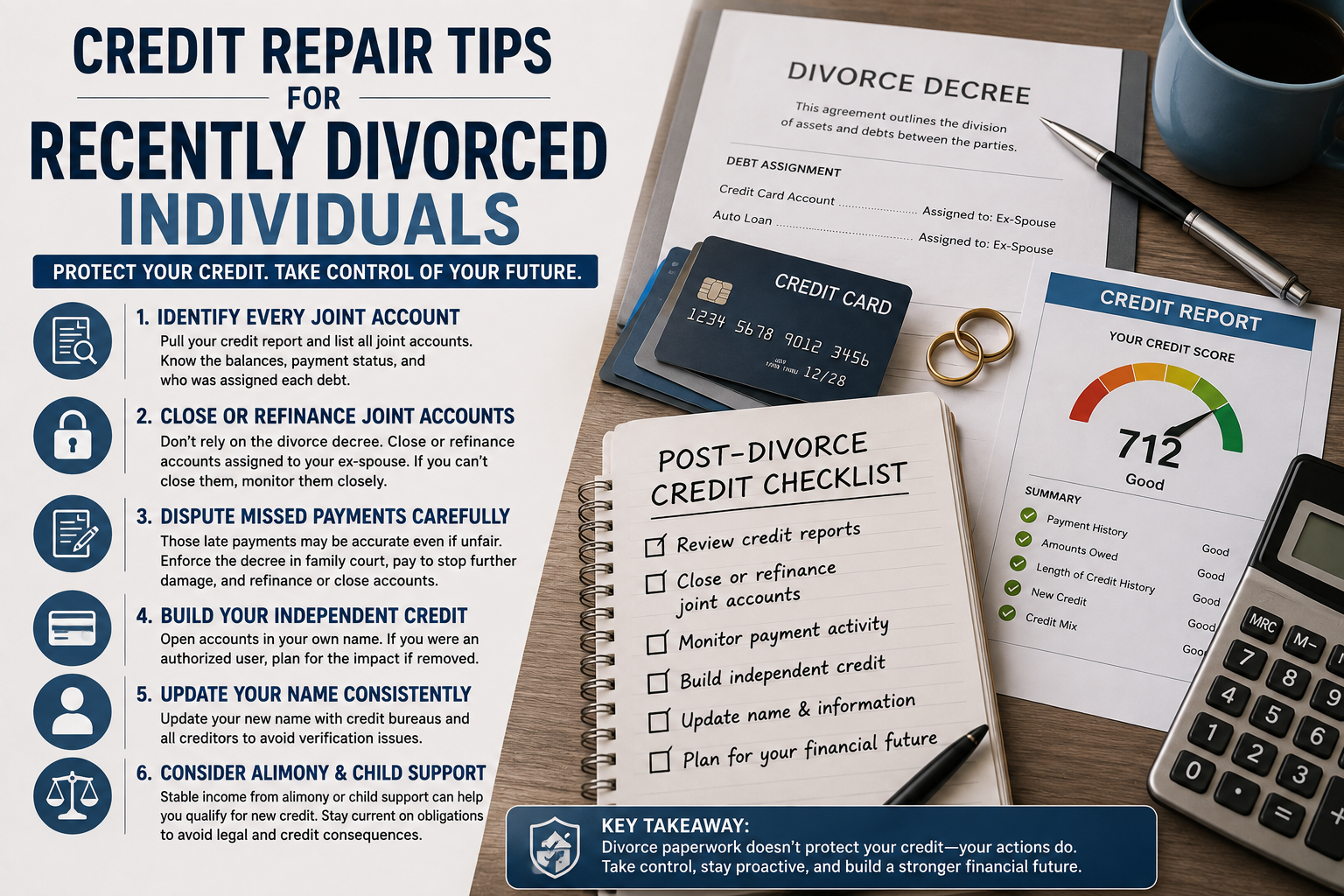

  • Credit Freeze vs. Fraud Alert vs. Credit Lock: Which Protects You Best?

    Credit Freeze vs. Fraud Alert vs. Credit Lock: Which Protects You Best?

    If you’ve ever opened your inbox to find a credit card you never applied for, or seen a hard inquiry from a lender you’ve never heard of, you already know the sickening lurch that identity theft sends through your stomach. You also know the first question that follows: What do I do right now to make this stop?

    The answer almost always comes down to three tools — a credit freeze, a fraud alert, and a credit lock. They sound interchangeable. They are not. One is a federal right backed by law. One is a request that lenders verify your identity. One is a commercial product that behaves a lot like the first but without the legal scaffolding. Choosing the wrong one can leave a gap a thief walks right through, or slow you down the next time you genuinely need credit.

    This guide breaks down each option in plain language, compares them side by side, and walks you through exactly how to place, lift, and combine them across all three bureaus — Equifax, Experian, and TransUnion. No quick-fix promises, no scare tactics. Just the clear, legally grounded information you need to protect your credit with confidence.

    What Is a Credit Freeze?

    A credit freeze — sometimes called a security freeze — is the strongest single tool available to lock down your credit file. When you place a freeze, the three major credit bureaus (Equifax, Experian, and TransUnion) restrict access to your credit report. Because almost every legitimate lender checks your report before approving new credit, a freeze effectively stops new accounts from being opened in your name.

    Here’s the part most people misunderstand: a freeze does not close your existing accounts, and it does not prevent you from using the credit you already have. Your current credit cards, loans, and lines of credit keep working exactly as they did before. Your payment history keeps reporting. Your balances keep updating. The freeze only blocks new third parties from pulling your report for the purpose of opening new accounts.

    It’s a Federal Right, Not a Favor

    This is the single most important distinction between a freeze and the other two options. A credit freeze is guaranteed to you under federal law — specifically, the Fair Credit Reporting Act (FCRA), as strengthened by the Economic Growth, Regulatory Relief, and Consumer Protection Act of 2018. Before that law, bureaus could charge fees to freeze and thaw your file in some states. Today, placing, temporarily lifting, and permanently removing a freeze is free at all three bureaus, nationwide, regardless of where you live or whether you’ve been a victim of identity theft.

    That legal grounding matters. A freeze isn’t a promotional product the bureau can reprice, deprecate, or bury in fine print. It’s a statutory right. If a bureau fails to comply, you have a legal remedy — and regulators who want to hear about it.

    How a Freeze Actually Works

    When you place a freeze, each bureau issues you a PIN (or, in some cases, a password or account-based credential) that you use to thaw — temporarily lift — the freeze later. Without that PIN, no one can lift the freeze on your file. That’s your control mechanism.

    A few things to know about how the freeze behaves day to day:

    • Existing creditors can still access your report. Companies you already do business with — your current bank, your existing card issuer, your mortgage servicer — retain access for account management, collections, and similar purposes permitted under the FCRA.
    • Soft inquiries still go through. Prequalification checks, credit monitoring services you’ve enrolled in, and insurance underwriting inquiries that don’t involve new credit may still be visible. A freeze targets the hard inquiries that accompany new account applications.
    • Government agencies can access your report in limited circumstances. This includes court orders, warrants, and certain benefit investigations.
    • Your credit score keeps moving. A freeze does not pause your score. Payments, balances, new inquiries from existing creditors, and aging all continue to affect your score as normal.

    Who Should Consider a Freeze?

    A credit freeze is the right choice when you don’t expect to apply for new credit in the near future and you want maximum protection against new-account identity theft.

    credit-freeze-vs-fraud-alert-vs-credit-lock-under-100kb

    What Is a Fraud Alert?

    A fraud alert is a lighter-touch form of identity-theft protection. Instead of blocking access to your credit report, it tells lenders to take extra steps to verify your identity before extending new credit.

    A fraud alert does not prevent a lender from pulling your credit report. Instead, it creates an additional verification checkpoint intended to make it harder for an identity thief to successfully open an account in your name.

    Types of Fraud Alerts

    There are three types of fraud alerts, each tied to a specific situation:

    1. Initial Fraud Alert — 1 Year

    An initial fraud alert lasts for one year and is available to anyone who suspects — but may not yet be able to prove — that they are or are about to become a victim of identity theft. You don’t need a police report to place one. You can place it if your wallet was stolen, if you clicked a phishing link, if your information showed up in a breach notification, or simply if something feels off.

    Under federal law, when you place an initial fraud alert with one bureau, that bureau is required to notify the other two. In practice, it’s still wise to confirm with all three that the alert is showing, but you should not need to place it three separate times.

    Key features:

    • Free to place
    • Lasts one year (and can be renewed)
    • Requires lenders to verify your identity before extending credit
    • Does not block access to your credit report — lenders can still pull it; they just have to take extra steps
    • You can still apply for credit; you’ll simply be asked to verify your identity

    2. Extended Fraud Alert — 7 Years

    An extended fraud alert lasts for seven years and is reserved for confirmed victims of identity theft. To place one, you must submit a copy of an identity theft report — typically a police report, a Federal Trade Commission (FTC) Identity Theft Report, or another report filed with a law enforcement agency — to each bureau.

    The extended alert carries the same identity-verification requirement as the initial alert, plus an important additional benefit: it removes you from prescreened offers of credit and insurance for five years. That means fewer preapproval mailers in your mailbox — and fewer opportunities for someone to intercept one and respond in your name.

    Key features:

    • Free to place
    • Requires an identity theft report (police report or FTC report)
    • Lasts seven years
    • Removes you from prescreened offer lists for five years
    • Requires identity verification before new credit is extended
    • Like the initial alert, placing it with one bureau triggers notification to the other two

    3. Active-Duty Military Alert — 1 Year

    An active-duty military alert is available to members of the U.S. armed forces on active duty. It functions like an initial fraud alert — requiring identity verification before new credit is extended — and also removes you from prescreened offer lists for two years. It lasts for one year and can be renewed for the duration of your deployment.

    This alert exists because service members deployed away from home are frequent targets for identity theft. A fraud alert, combined with a freeze, is one of the strongest defensive postures a deployed service member can take.

    The Limitation to Understand

    A fraud alert is a speed bump, not a roadblock. It depends on the lender acting on it. Most do — the FCRA creates legal exposure for lenders who ignore alerts — but a fraud alert does not physically prevent a hard pull the way a freeze does. If you want a guarantee that no new account can be opened, a freeze is the stronger tool. A fraud alert is better suited to situations where you still want relatively frictionless access to new credit but want lenders to pause and check first.

    For a step-by-step identity theft recovery roadmap, see [what to do if your identity is stolen].

    What Is a Credit Lock?

    A credit lock is where things get confusing for a lot of people, because from the outside it looks and feels almost identical to a credit freeze.

    You lock your file; new lenders can’t see it; you unlock it when you need credit. The day-to-day experience is similar.

    The difference is in what’s behind the lock.

    Commercial Product, Not a Federal Right

    A credit lock is a commercial product offered by each credit bureau — not a federal right. It is governed by the terms of service of the bureau’s lock program, not by the FCRA. That distinction matters in several practical ways:

    Speed and Convenience

    This is where locks shine. Because a lock is administered through the bureau’s app or website and tied to your account credentials, locking and unlocking can typically be done with a tap or a click — sometimes in seconds. There’s no PIN to manage, no scheduled thaw window, no calling. For people who open new accounts frequently or who want the ability to toggle protection on and off without friction, a lock is the most convenient option.

    Some bureaus pair their lock products with mobile app features like instant push notifications when someone attempts to access your file. That real-time awareness can be valuable.

    Cost and Terms

    Here’s the catch. While credit freezes are free by law, credit locks operate under the bureau’s commercial terms. Depending on the bureau and the plan you choose:

    • A lock may be free (some bureaus offer a basic free lock)
    • A lock may be bundled into a paid monthly subscription that includes credit monitoring, identity theft insurance, and other features
    • A lock may include advertising or marketing offers within the bureau’s app
    • The bureau can change the terms of the lock program — pricing, features, availability — because it’s a product, not a statute

    That last point is the core trade-off. A freeze is yours by right and can’t be repriced. A lock is a service the bureau provides under terms it controls. If you’re paying for a lock as part of a broader identity protection subscription, that can be perfectly reasonable — just go in understanding that you’re buying a product, not exercising a right.

    Because a freeze is grounded in federal law, if a bureau mishandles your freeze, you have statutory remedies and a clear path to complain to the Consumer Financial Protection Bureau (CFPB). With a lock, your recourse is primarily the contract (the terms of service) you agreed to. That’s not necessarily worse — contracts are enforceable — but it’s a different and generally weaker posture than federal statute.

    When a Lock Makes Sense

    A credit lock is a good fit when:

    • You want the convenience of app-based, instant lock/unlock
    • You’re already paying for a bureau’s identity protection subscription that includes a lock
    • You apply for credit often enough that PIN-based thawing feels like too much friction
    • You’re comfortable with the bureau’s terms of service

    It’s less ideal when:

    • You want the strongest legal protection available
    • You’re uncomfortable with a commercial product governing access to your credit file
    • You don’t want to be exposed to potential pricing or feature changes
    • You’re dealing with active, serious identity theft where you want every statutory protection on your side

    Internal link placeholder: Compare bureau monitoring products side by side in [our credit monitoring guide].

    Side-by-Side Comparison

    The fastest way to understand the difference is to see them next to each other.

    Feature Credit Freeze Fraud Alert Credit Lock
    Legal basis Federal law (FCRA) Federal law (FCRA) Bureau terms of service (contract)
    Cost Free by law Free Free tier at some bureaus; often part of paid subscription
    Duration Remains until you remove it Initial: 1 year. Extended: 7 years. Active-duty: 1 year. All renewable. Remains until you remove it
    What it does to your report Blocks access by new lenders Allows access but requires identity verification Blocks access by new lenders
    Protection level Strongest — physically prevents new hard pulls Moderate — depends on lender action Strong — similar to freeze, but governed by contract
    Convenience when applying for credit Requires thaw (PIN or account login) Minimal friction — you verify identity with the lender Fastest — tap to unlock in the app
    Who can place it Anyone Initial: anyone. Extended: identity theft victims with a report. Active-duty: service members. Anyone with a bureau account
    Identity theft report required? No Only for the 7-year extended alert No
    Blocks prescreened offers? No (though you can opt out separately at OptOutPrescreen.com) Extended alert: yes, for 5 years. Active-duty: yes, for 2 years. Depends on the bureau product
    Cross-bureau placement Must place separately with all three bureaus Place with one; bureau notifies the other two Must lock separately with all three bureaus
    Recourse if mishandled Statutory remedy + CFPB complaint Statutory remedy + CFPB complaint Contractual remedy under terms of service
    Best for Maximum protection when you’re not applying for credit soon Recent ID theft or you’re applying for credit soon and want a verification check Frequent credit applicants who want app-based convenience

    A few things stand out in that table:

    • Freeze and lock both block access; a fraud alert does not. If your top priority is making sure no new account can be opened, the alert alone won’t get you there.
    • A freeze is free forever; a lock’s terms can change. The cost difference may be small today, but the legal posture is fundamentally different.
    • A fraud alert is the only one that places a verification requirement on lenders. That’s useful in a different way — it doesn’t block, but it does create a checkpoint a thief is likely to fail.
    • Only the fraud alert auto-propagates across bureaus. A freeze or a lock requires action at all three.

    Which Is Best for Your Situation?

    There’s no single right answer — the best choice depends on what’s happening in your life and what you’re trying to protect against. Here are the most common scenarios and the tool that fits each.

    You’re not applying for credit anytime soon — go with a freeze

    If you already have the credit cards you need, your mortgage is in place, your car loan is set, and you’re not planning any new applications for the next six to twelve months, a credit freeze at all three bureaus is the strongest, simplest protection you can put in place. It’s free, it stays until you remove it, and it blocks new-account fraud at the source.

    This is the baseline recommendation for most adults in the U.S. today, given how frequently consumer data is exposed in breaches. You don’t need to have been a victim to benefit — a freeze is preventive, not just reactive.

    You’re applying for credit soon — use a fraud alert

    If you’re about to shop for a mortgage, apply for an auto loan, or open a new rewards card in the coming weeks, a full freeze creates friction every time a lender needs to pull your report. A fraud alert is the better fit here. It tells lenders to verify your identity before extending credit, which adds a checkpoint for thieves without blocking your own applications. You’ll still get approved; you’ll just be asked to confirm who you are.

    You can also place a fraud alert as a bridge — protection now, while you decide whether a longer-term freeze makes sense.

    You’ve recently been a victim of identity theft — freeze + extended alert

    If you’ve confirmed identity theft, don’t choose between the two. Use both:

    1. Place a freeze at all three bureaus to block any further new-account openings immediately.
    2. File an identity theft report with the FTC at IdentityTheft.gov and/or your local police department.
    3. Place an extended fraud alert (7-year) at one bureau using your identity theft report — it will propagate to the other two.
    4. Request removal from prescreened offer lists at OptOutPrescreen.com (the extended alert does this for five years, but you can do it independently too).

    This combination gives you the strongest available posture: a freeze that physically blocks new pulls, plus an alert that creates a verification requirement for any thaw you authorize, plus reduced exposure to intercepted preapproval mail.

    You want maximum convenience and don’t mind a commercial product — consider a lock

    If you apply for credit frequently — you churn credit card bonuses, you’re a real estate investor running multiple financings, you’re shopping several lenders for a big loan — and PIN-based thawing feels like too much friction, a credit lock at all three bureaus may fit your life better. You get app-based instant toggle without a PIN, and you can unlock for a specific lender in seconds.

    Just understand the trade: you’re trading statutory protection for convenience. If you’re already paying for one of the bureau’s identity protection subscriptions, the lock may be included, which makes the cost question moot. If you’re not, weigh whether the convenience is worth the terms-of-service posture.

    You’re deploying or on active military duty — active-duty alert + freeze

    Service members on active duty get a dedicated tool — the active-duty military alert — that lasts one year, requires lender identity verification, and removes you from prescreened lists for two years. Pair it with a freeze for the strongest protection while you’re deployed and less able to monitor your accounts in real time.

    You’re protecting a minor child — freeze

    Children are increasingly targeted by identity thieves because their credit files are clean and rarely monitored. Under federal law, you can place a freeze on a child’s credit file at all three bureaus if one exists (and if one doesn’t, you can request that the bureau create one for the purpose of freezing it). This is one of the most effective preventive steps a parent can take. The process requires documentation proving your authority to act on the child’s behalf — birth certificate, your ID, a utility bill — but it’s straightforward and free.

    You’re caring for an older adult — freeze

    Older adults are another frequent target. If you’re helping a parent or older relative manage their finances and they don’t plan to apply for new credit, a freeze at all three bureaus is the cleanest protection. Be sure to store the PINs securely and document the process so that you (or they) can thaw when needed.

    How to Place Each One With Each Bureau

    You’ll work with the three major credit bureaus — Equifax, Experian, and TransUnion — for all three tools. The general steps are similar; the specifics differ slightly by bureau. In every case, have your personal information ready: full name, address, date of birth, Social Security number, and a government-issued ID.

    Placing a Credit Freeze

    You can place a freeze online, by phone, or by mail with each bureau. Online is fastest. You’ll need to place it separately with each of the three.

    Equifax

    • Online: Visit Equifax’s security freeze page and follow the prompts to create or log into your myEquifax account and place the freeze.
    • Phone: Call Equifax’s dedicated freeze line.
    • Mail: Send a written request with your identifying information and copies of supporting documents to Equifax’s freeze mailing address.
    • Equifax typically does not require a PIN for online freeze management — you manage it through your account credentials.

    Experian

    • Online: Visit Experian’s freeze center, create or log into your account, and place the freeze.
    • Phone: Call Experian’s freeze line.
    • Mail: Send a written request with your personal information and ID documents.
    • Experian issues a PIN that you’ll use to thaw by phone or mail. Online thawing may use your account credentials instead.

    TransUnion

    • Online: Visit TransUnion’s freeze page, create or log into your account, and place the freeze.
    • Phone: Use TransUnion’s automated freeze line or speak with a representative.
    • Mail: Send a written request with identification to TransUnion’s freeze address.
    • TransUnion issues a PIN for phone and mail thawing. Online management uses your account credentials.

    General steps (online):

    1. Go to the bureau’s freeze page.
    2. Create an account or log in (you may need to answer identity-verification questions based on your credit history).
    3. Follow the prompts to “Place a freeze” or “Add a freeze.”
    4. Save your PIN and/or account credentials in a secure, encrypted location — a password manager is ideal. You will need these to thaw.
    5. Repeat at all three bureaus. A freeze at one bureau does not freeze your file at the others.

    By mail, include:

    • Your full name, current address, date of birth, and Social Security number
    • Any previous addresses from the past several years
    • A copy of a government-issued ID (driver’s license, state ID, or passport)
    • A copy of a utility bill, bank statement, or insurance statement showing your name and address
    • For a child or a protected person, the documents proving your authority to act on their behalf

    Mail-based freezes take longer (typically a few business days after receipt) but are a good option if you prefer not to manage the freeze online or if you’re placing one on behalf of someone else.

    Placing a Fraud Alert

    A fraud alert is simpler because placing it with one bureau triggers notification to the other two. You only need to contact one.

    For an initial 1-year alert:

    • Visit any one bureau’s fraud alert page (Equifax, Experian, or TransUnion) and follow the prompts.
    • You’ll provide your information and confirm your contact details (phone number, email) — these are what lenders will use to verify your identity.
    • The bureau you contact is required to forward the alert to the other two.

    For a 7-year extended alert:

    • You must submit an identity theft report — a report filed with the FTC at IdentityTheft.gov and/or a police report — to each bureau.
    • Contact each bureau and follow its process for submitting the report and placing the extended alert. Because this is tied to documented identity theft, the bureaus want to see the report before placing the longer alert.
    • The extended alert also removes you from prescreened offer lists for five years.

    For an active-duty military alert:

    • Contact any one bureau and verify your active-duty status.
    • The alert lasts one year and can be renewed. It also removes you from prescreened offer lists for two years.

    Placing a Credit Lock

    A credit lock is managed through each bureau’s app or website account. Because it’s a product, you’ll typically need to:

    1. Create an account with the bureau (if you don’t already have one).
    2. Enroll in the bureau’s lock product — confirm whether you’re using the free tier or a paid subscription tier that includes monitoring and other features.
    3. Lock your file through the app or dashboard.
    4. Repeat at all three bureaus. Like a freeze, a lock at one bureau does not lock your file at the others.

    Be sure to read the terms of service before enrolling, particularly around any arbitration clauses, data-use permissions, and whether the free tier can be converted to a paid tier automatically.

    How to Thaw or Temporarily Lift a Freeze

    When you’re ready to apply for credit, you’ll need to temporarily lift the freeze at the bureau or bureaus the lender will pull from.

    You can request:

    • A temporary lift for a specific time period, after which the freeze automatically goes back into effect.
    • A specific lift for a specific lender, allowing only that lender to access your report.
    • A permanent removal of the freeze, although this is not recommended unless you have a specific reason.

    When you’re applying for credit, ask the lender which bureau it pulls from. Most lenders pull from one bureau (some pull from two or all three). If you know which one, you can thaw only that bureau and leave the other two frozen — keeping your protection tighter during the application window.

    If the lender won’t tell you, thaw all three for a short, defined window — say, three to five business days — and let them re-freeze automatically. Don’t leave a thaw open-ended.

    Does Freezing or Locking Hurt Your Credit Score?

    No. This is one of the most persistent myths, and it’s worth putting to rest clearly.

    A credit freeze (or lock) does not affect your credit score in any way. It does not:

    • Lower your score
    • Pause your score’s movement
    • Remove your accounts from your report
    • Stop your payment history from reporting
    • Count as a negative item on your report

    Your score continues to be calculated based on the same factors it always has — payment history, amounts owed, length of credit history, credit mix, and new credit. A freeze simply controls who can see the report your score is based on. It doesn’t change the contents of the report or the score itself.

    What a freeze does prevent is new hard inquiries from lenders you haven’t authorized. Since hard inquiries can have a small negative impact on your score, a freeze actually removes one pathway by which your score could be dinged — a fraudulent application. In that indirect sense, a freeze can help protect your score from identity-theft-driven damage.

    The one scenario where a freeze creates score-related friction is if you forget to thaw before applying for credit and the lender can’t pull your report. In that case, the application simply can’t be processed — it doesn’t result in a denial that hurts your score, but it does result in a delay. The solution is straightforward: thaw before you apply.

    Can You Still Be Approved for Credit While Frozen?

    Yes — but you have to thaw first.

    While your file is frozen, a lender that tries to pull your report for a new application will receive a message indicating the file is frozen and inaccessible. The application cannot proceed. The lender will typically contact you (if it has your contact information) to let you know a thaw is needed, or you’ll see a message in the application portal.

    To be approved:

    1. Find out which bureau(s) the lender pulls from (ask the lender, or check your past reports to see which bureau your existing accounts report to).
    2. Thaw your file at that bureau — a temporary lift for a specific creditor or a short date range.
    3. Re-apply or have the lender re-pull your report.
    4. Once the application is processed, let the freeze automatically re-engage (if you used a scheduled lift) or manually re-freeze.

    If you’re rate-shopping — say, for a mortgage — you can thaw for a window of a couple of weeks. The credit scoring models treat multiple mortgage inquiries within a short period (typically 14–45 days, depending on the model) as a single inquiry, so rate-shopping within that window won’t ding your score beyond the initial inquiry.

    The bottom line: a freeze is not a permanent wall. It’s a gate you control. When you want credit, you open the gate; when you’re done, you close it.

    Using a Freeze and a Fraud Alert Together

    Yes — you can, and in some situations you should. A freeze and a fraud alert serve different purposes and don’t conflict with each other.

    • The freeze blocks new lenders from pulling your report.
    • The fraud alert requires lenders to verify your identity before extending credit (on the occasions when you’ve thawed and a pull is happening).

    Together, they create layered protection: the freeze stops unauthorized pulls entirely, and the alert adds a verification checkpoint whenever you intentionally open the gate for your own application. If you’ve been a victim of identity theft, this layering is worth the small extra effort.

    A credit lock and a fraud alert can also coexist, with the same layering logic.

    What you generally don’t need: a freeze and a lock at the same bureau on the same file. They do essentially the same thing at the access-control level. Pick one per bureau. If you want statutory protection, choose the freeze. If you want app-based convenience and are comfortable with the terms, choose the lock.

    Common Myths to Stop Believing

    A surprising amount of bad advice circulates about freezes, alerts, and locks. Let’s clear up the ones we hear most often.

    Myth 1: “A freeze hurts your credit score.”

    False. A freeze has zero direct impact on your score. Your score keeps moving based on your payment behavior, balances, and account aging — exactly as it did before. The freeze only controls who can see your report.

    Myth 2: “If you freeze your credit, you can’t use your existing cards.”

    False. A freeze blocks new third-party access. Your existing creditors retain access for account management, and you can use your current cards, lines of credit, and loans exactly as before.

    Myth 3: “A fraud alert is just as strong as a freeze.”

    Not quite. A fraud alert adds a verification requirement, but it does not block access to your report. A lender could still pull your report — they’re just supposed to verify your identity first. A freeze physically prevents the pull. If you want guaranteed blocking, choose a freeze.

    Myth 4: “Locks and freezes are the same thing legally.”

    No. A freeze is a federal right under the FCRA. A lock is a commercial product governed by the bureau’s terms of service. The day-to-day experience is similar, but the legal posture and your recourse if something goes wrong are different.

    Myth 5: “You only need to freeze at one bureau.”

    False. Equifax, Experian, and TransUnion are separate companies. A freeze at one does not propagate to the others. You must place a freeze at all three to fully protect your file. (A fraud alert, by contrast, does propagate — but a freeze does not.)

    Myth 6: “Freezing your credit costs money.”

    False. Since the 2018 federal law, placing, temporarily lifting, and permanently removing a freeze is free at all three bureaus nationwide.

    Myth 7: “Once you freeze, you can never get credit again.”

    False. You thaw the freeze — temporarily and for free — whenever you need to apply. Many people schedule a thaw in under a minute through a bureau’s app or website.

    Myth 8: “A lock is always free.”

    Not necessarily. Some bureaus offer a free basic lock, but many lock products are bundled into paid subscriptions. Read the terms before enrolling.

    Myth 9: “Credit monitoring replaces a freeze.”

    No. Credit monitoring alerts you after something happens on your report. A freeze prevents the thing from happening in the first place. Monitoring is reactive; a freeze is preventive. They’re complementary, not substitutes.

    Myth 10: “If you’ve never been a victim, you don’t need a freeze.”

    You don’t have to freeze, but given the frequency of data breaches and the low cost (free) and low effort of freezing, many people who have never been victims choose to freeze as a preventive measure. A freeze doesn’t require you to have been harmed first.

    Frequently Asked Questions

    1. Is a credit freeze or a fraud alert better?

    It depends on your situation. A freeze is stronger — it blocks new lenders from accessing your report entirely. A fraud alert is lighter — it allows access but requires lenders to verify your identity first. If you’re not applying for credit soon and want maximum protection, a freeze is better. If you’re actively applying for credit and just want an identity checkpoint, a fraud alert is the more convenient fit. For confirmed identity theft victims, use both.

    2. How long does a credit freeze last?

    A freeze remains in place until you remove it. There is no expiration. You can leave it frozen for years if you want, thawing only when you need to apply for credit.

    3. Does placing a fraud alert cost anything?

    No. Fraud alerts — initial (1-year), extended (7-year), and active-duty military (1-year) — are all free under federal law.

    4. Can I have a freeze and a lock at the same time?

    Technically possible at different bureaus, but redundant at the same bureau. Since a freeze and a lock serve the same access-control function, pick one per bureau. Mixing across bureaus (freeze at Equifax, lock at Experian, freeze at TransUnion) is unusual but workable. Most people choose one approach and apply it consistently at all three.

    5. What happens if I lose my freeze PIN?

    Each bureau has a process to recover or reset a lost PIN. You’ll need to verify your identity — typically with your personal information and supporting documents. It adds friction, which is by design: the PIN is a security control, so resetting it has to be deliberate. Store your PIN in a password manager or a secure physical location to avoid this.

    6. Will a freeze stop someone from using my existing credit card?

    No. A freeze only prevents new account openings. It does not prevent someone from using a card you already have if they’ve obtained the number. Protect existing accounts separately — strong, unique passwords, two-factor authentication on financial accounts, and regular statement review.

    7. Can I place a freeze on my child’s credit?

    Yes. Under federal law, parents or legal guardians can place a freeze on a minor child’s credit file at all three bureaus. If the child doesn’t have a credit file (which is typical), the bureau can create one for the purpose of freezing it. You’ll need to provide documentation proving your identity, the child’s identity, and your authority to act on the child’s behalf.

    8. Should I freeze my credit if I’ve never been a victim of identity theft?

    For many people, yes. A freeze is free, doesn’t affect your score, and provides the strongest available protection against new-account identity theft. You don’t need to have been a victim to benefit — prevention is the whole point. If you’re not applying for credit soon, the downside is minimal (the occasional thaw), and the upside is substantial peace of mind.

    Take the Next Step Toward Stronger Credit

    A credit freeze, a fraud alert, and a credit lock are all powerful tools — but they’re just one piece of a larger picture. Strong credit is built and protected through consistent habits: on-time payments, careful management of balances, regular review of your reports from all three bureaus, and a clear plan for addressing anything inaccurate, outdated, or fraudulent that shows up on your file.

    If you’re dealing with the aftermath of identity theft, wrestling with errors on your report, or simply not sure where your credit stands, that’s where we come in. At credit-repair.com, we offer a free credit audit across all three major bureaus — Equifax, Experian, and TransUnion — to help you see exactly what’s on your report and identify anything that shouldn’t be there. Our process is FCRA-compliant and attorney-backed, which means every step we take is grounded in federal law and reviewed by experienced legal professionals.

    We don’t make empty promises or sell quick fixes. What we do is walk beside you, step by step, to dispute inaccuracies, negotiate with creditors, remove unverifiable negative marks, and build a customized repair plan that fits your goals — so your credit is not just repaired, but stronger for the long term.

    Ready to see where you stand? Visit credit-repair.com to request your free credit audit today. It’s the first step toward a credit file you can trust — and a financial future you control.


  • Balance Transfer Cards to Pay Off Debt: A Smart Move or Trap?

    Balance Transfer Cards to Pay Off Debt: A Smart Move or Trap?

    If you’re carrying a balance on a high-interest credit card, you already know the math is brutal. A typical card charges somewhere between 22% and 29% APR these days. On a $5,000 balance, making minimum payments, you can easily spend five years and thousands of dollars in interest just to pay down the principal. It’s a slow drain, and most of your monthly payment is going to the bank — not your debt.

    That’s where a balance transfer credit card enters the conversation. The pitch is simple: move your existing balance to a new card with a 0% introductory APR for 12 to 21 months, and every dollar you pay during that window goes straight to principal. No interest. Just progress.

    Sounds great, right? And it can be. A balance transfer, done carefully, is one of the most effective tools for paying down credit card debt without taking out a loan. But it can also go sideways — fast. We’ve seen people transfer a balance, feel relief, then run the old card right back up and end up owing twice as much. We’ve seen people miss the end of the intro window and get hit with deferred interest they didn’t know was coming. We’ve seen people apply for a transfer, get denied, and take a hard inquiry hit on a score they were trying to rebuild.

    So is a balance transfer credit card a smart move or a trap? The honest answer is: it depends entirely on how you use it. The same tool that frees one person buries another. This guide walks you through both sides — what these cards do well, where they bite, and the specific rules that make the difference.

    We’re a San Diego-based credit repair firm, and we talk to people every day who are weighing this exact decision. Our job isn’t to sell you on a balance transfer. It’s to help you understand the full picture, in plain language, so you can make the call that’s right for your situation — and your credit.

    Get a free credit audit or request a quote.

    What Is a Balance Transfer Credit Card?

    A balance transfer credit card is a card designed to let you move an existing balance from one (or more) credit cards onto it, usually at a promotional interest rate — most commonly 0% APR — for a set period. The goal is to stop paying interest on your existing debt so your payments actually reduce what you owe.

    Here’s the mechanics in plain terms. Say you have a $4,000 balance on a card charging 26% APR. You apply for a balance transfer card offering 0% intro APR for 18 months. If approved, the new card issuer pays off your old card (or you do it yourself with a transfer check or online tool), and that $4,000 now lives on the new card — with no interest accruing for 18 months, assuming you follow the rules.

    You can typically transfer balances from:

    • Other credit cards (the most common scenario)
    • Store cards and retail cards
    • Gas cards
    • Some personal loans (card-dependent)
    • Sometimes medical debt or other installment loans — though this varies by issuer

    What you usually can’t transfer is a balance from another card issued by the same bank. Chase won’t let you transfer a balance from one Chase card to another Chase card. Same with Citi, Bank of America, Discover, and the rest. You’ll need to move the debt to a different issuer.

    There’s also a limit to how much you can transfer. The new card comes with a credit limit, and most issuers cap the transfer amount at some percentage of that limit — often 70% to 95%. If you get approved for a $10,000 limit, you may be able to transfer somewhere between $7,000 and $9,500, depending on the issuer. You won’t know the exact cap until you’re approved and see the limit, which is one of the frustrations of the process — you may be counting on transferring a specific amount and end up short.

    The transfer itself usually happens one of three ways:

    1. Direct transfer — you provide the old card details when you apply (or right after approval), and the new issuer pays the old card directly. This is the cleanest method.
    2. Transfer checks — the new issuer mails you checks drawn on the new card account. You write one to your old card issuer. Takes longer, and some issuers treat check-initiated transfers differently than direct ones.
    3. Online transfer tool — once your new card is active, you log into the new issuer’s portal and initiate the transfer there.

    Each method has timing considerations. Direct transfers typically process in 7 to 14 days, though some issuers say up to 6 weeks. During that window, you still need to make at least the minimum payment on your old card — if you don’t, you risk a late payment, which is the last thing you need when you’re trying to clean up your credit.

    How the 0% Intro APR Actually Works

    The headline feature of any balance transfer credit card is the 0% introductory APR. “Intro APR” just means the interest rate the card charges for a limited time after you open the account. For balance transfers, that intro rate is almost always 0%, and the window usually lasts somewhere between 12 and 21 months.

    During that intro period, no interest accrues on the balance you transferred. This is the entire value proposition. If you transfer $5,000 and pay it off in full before the intro period ends, you pay zero interest on that debt. Every dollar you send the card company goes to principal.

    There are a few things to understand clearly, because the marketing doesn’t always spell them out:

    The 0% rate may not apply to new purchases

    The 0% rate applies to the balance you transferred — not necessarily to new purchases. Many balance transfer cards also offer a 0% intro APR on purchases, but not all do. Some cards give you 0% on balance transfers for 18 months but charge the regular purchase APR from day one.

    If you’re planning to use the card for new spending, check whether purchases are covered by the intro offer — and honestly, if you’re transferring a balance to pay off debt, you probably shouldn’t be making new purchases on the card anyway.

    The intro clock starts when you open the account

    The intro period starts when you open the account, not when you complete the transfer. This matters more than people realize. If your intro period is 15 months and it takes you 6 weeks to actually complete the transfer because of processing time or mailing checks, you’ve already burned more than a month of your interest-free window. The clock starts the day you’re approved, so initiate the transfer as quickly as possible.

    Missing a payment can destroy the benefit

    The 0% rate is conditional on making your minimum payments. If you miss a payment during the intro period, most issuers will immediately cancel the promotional rate and kick you up to the standard APR — sometimes even higher, in the form of a penalty APR that can reach 29.99% or more. One late payment can undo the entire reason you did the transfer. This is why automating your payments is non-negotiable.

    Intro APR is not the same as “no interest ever”

    Once the intro window closes, any remaining balance starts accruing interest at the card’s standard ongoing APR. That ongoing rate is typically in the 19% to 29% range depending on your credit and the card. There is no extension. There is no grace. The day after the intro period ends, interest starts calculating on whatever’s left.

    Watch for deferred interest

    Some cards — and this is critical to watch for — use deferred interest instead of true 0% intro APR. Deferred interest means the interest is calculated every month but not charged to your account — as long as you pay off the full balance before the promo ends. If you don’t pay it all off, all that accrued interest gets added to your balance retroactively, as if the 0% never existed.

    This is more common with store cards (like those offered by retailers and medical financing companies) than on major credit cards, but always read the terms to know which you’re getting. True 0% intro APR means no interest accrues during the period. Deferred interest means interest accrues in the background and gets waived only if you cross the finish line in time.

    Typical Terms: 12 to 21 Months, Then the Real APR Kicks In

    When you’re shopping for a balance transfer credit card, the intro period length is one of the two most important variables (the other being the balance transfer fee). Here’s how the landscape typically looks:

    Intro Period What It Means for You Common Cards in This Range
    12 months Tight but workable for smaller balances. You need a clear payoff plan. Many entry-level balance transfer cards
    15 months A solid middle ground. Gives breathing room for balances in the $3,000–$8,000 range. Several mid-tier offers
    18 months Strong. Comfortable window for most payoff plans. Popular cards from major issuers
    21 months The longest commonly available. Best for larger balances or if you want a safety margin. A small number of top-tier cards

    The longer the intro period, the more flexibility you have — and the lower your monthly payment needs to be to clear the balance in time.

    Here’s a quick illustration:

    Intro Period Monthly Payment to Pay Off in Full Total Interest Paid
    12 months ~$417 $0 (plus transfer fee)
    15 months ~$334 $0 (plus transfer fee)
    18 months ~$278 $0 (plus transfer fee)
    21 months ~$238 $0 (plus transfer fee)

    That table assumes you make equal payments and pay it off exactly at the end of the intro period. Real life is messier — you might pay more some months and less others — but the point is clear: a longer intro period means a lower required monthly payment, which means more room in your budget and less risk of falling short.

    What happens after the intro period?

    Once the promotional window closes, the card’s ongoing APR applies to any remaining balance. This rate is determined when you’re approved and is based on your credit profile. Current typical ranges:

    • Excellent credit (760+): around 19%–23%
    • Good credit (670–759): around 22%–26%
    • Fair credit (640–669): around 25%–29%
    • Below that: you’re unlikely to be approved for most balance transfer cards

    If you still have, say, $1,500 left on the card when the intro period ends and your ongoing APR is 24%, you’ll start paying about $30/month in interest on that remaining balance. That’s not catastrophic, but it defeats the purpose — you did the transfer to stop paying interest, and now you’re paying interest again, just on a smaller amount.

    This is why the single most important number to calculate before you transfer a balance is: can I realistically pay this off before the intro period ends? If the answer is “probably not,” a balance transfer may not be the right tool — or you may need a longer intro period than you originally planned for.

    Can you extend the intro period?

    Generally, no. The intro period is set when you open the account and doesn’t renew or extend. Some issuers have occasionally offered to let customers transfer a new balance at a promotional rate after the first one is paid off, but this is not something to count on. The intro period you sign up for is the one you get.

    One option that exists: if you’ve paid off your first transfer and your credit is still in good shape, you can apply for a second balance transfer card with a new intro period and transfer any remaining balance (or a new balance) there. This is sometimes called “balance transfer surfing” or “churning.” It can work, but it has real downsides — each application is a hard inquiry, each new account lowers your average account age, and issuers are increasingly wise to the pattern and may deny you if they see you’ve done it recently. We don’t recommend this as a primary strategy, though it’s an option in specific situations.

    The Balance Transfer Fee: Usually 3% to 5%

    The 0% APR is the headline. The balance transfer fee is the fine print. Almost every balance transfer card charges a fee to move your debt over, and it’s almost always a percentage of the amount transferred.

    The standard range is 3% to 5%, with 3% being the most common on competitive cards and 5% showing up on some less generous offers. The fee is typically added to your new card balance — it’s not a separate charge you pay out of pocket.

    Example: You transfer $5,000 to a card with a 3% balance transfer fee. The fee is $150. Your starting balance on the new card is $5,150. That $150 is the cost of doing the transfer, and it’s rolled into the balance you’ll pay off during the intro period.

    A few important details:

    • The fee is charged per transfer. If you transfer balances from three different cards, you pay the fee three times — once on each amount.
    • Some cards cap the fee. A few issuers charge “3% of the amount transferred, with a minimum of $5” — the minimum matters only for very small transfers. Most don’t have a maximum cap, which means on a large transfer, the fee can be substantial (5% of $15,000 = $750).
    • A small number of cards waive the fee entirely. These are rare and usually require excellent credit. When they exist, they’re worth looking at — but the intro period is sometimes shorter on no-fee cards, so you have to weigh the tradeoff.
    • The fee is almost always non-negotiable. You can’t call up and ask them to waive it (though there’s no harm in asking — occasionally a retention specialist will have some flexibility, especially if you’re an existing customer).

    How to factor the fee into your decision

    The fee is the upfront cost of the transfer. The 0% APR is the ongoing benefit. To know if the transfer is worth it, you compare the fee to the interest you’d pay if you left the balance where it is.

    Rough rule of thumb: if the interest you’d pay on your current card during the intro period is more than the balance transfer fee, the transfer saves you money. If the fee is more than the interest you’d pay, it doesn’t.

    We’ll do the full math in the next section, but here’s the quick version:

    • You have a $4,000 balance at 26% APR.
    • Over 12 months, you’d pay roughly $1,040 in interest if you made minimum payments (this is approximate — actual interest depends on your payment pattern).
    • A 3% transfer fee on $4,000 is $120.
    • You save about $920 by transferring.

    That’s a clear win. But flip the numbers:

    • You have a $1,000 balance at 22% APR.
    • Over 12 months, you’d pay roughly $220 in interest at minimum payments.
    • A 3% transfer fee on $1,000 is $30.
    • You save about $190.

    Still a win, but a smaller one — and if your payoff timeline is short (say you’ll have it paid off in 3 months either way), the math might not work. On a 3-month payoff, you’d pay about $55 in interest on the old card, and the transfer fee is $30 — so the transfer saves you only $25, which may not be worth the hassle, the hard inquiry, and the new account on your credit report.

    The bottom line on fees: they’re the price of admission. They’re usually worth it for balances you’ll need more than a few months to pay off, and usually not worth it for small balances you can knock out quickly. Always calculate before you commit.

    What Credit Score Do You Need? (The Honest Answer)

    This is where the conversation gets uncomfortable, and we’re not going to sugarcoat it.

    Balance transfer credit cards are generally designed for people with good to excellent credit. The typical approval threshold is a FICO score of 670 or higher, with the best offers (longest intro periods, lowest fees, highest credit limits) reserved for scores of 740 and above.

    But your score isn’t the only thing the issuer looks at. They also consider:

    • Credit utilization — if your existing cards are maxed out or near their limits, it signals financial strain.
    • Income — issuers want to see that you have the means to pay back what you transfer.
    • Payment history — recent late payments, even if your score has recovered, can be a red flag.
    • Age of credit history — a longer history with multiple accounts in good standing helps.

    If you apply and get denied, you’ll receive a letter explaining why. Read it — it’s useful information. If the reason was “insufficient credit score” or “high utilization,” those are things you can work on. If it was “too many recent inquiries,” waiting a few months before reapplying can help.

    Should you apply if you’re not sure you’ll be approved?

    This is a judgment call. Every application is a hard inquiry, which typically drops your score by a few points (usually 1–5, recovering within a few months). If you’re borderline and get denied, you’ve taken the hit with no benefit. On the other hand, if you don’t apply, you definitely won’t get the transfer.

    A few ways to reduce the risk:

    • Check for prequalification. Some issuers and card comparison sites offer a prequalification tool that does a soft pull (no score impact) to tell you whether you’re likely to be approved. This isn’t a guarantee, but it’s a good signal.
    • Check your credit reports first. Know where you stand before you apply. You can get free reports from all three bureaus at AnnualCreditReport.com.
    • Apply for the card you’re most likely to get. Don’t shoot for the 21-month intro card if your score is 680 — target a card whose approval range includes your score.

    How a Balance Transfer Can Help You

    Now let’s talk about the upside — because when a balance transfer works, it works remarkably well. Here’s what it does for you:

    1. The Interest Pause Lets Your Principal Drop Fast

    This is the big one. On a normal high-interest card, a large chunk of your monthly payment goes to interest, not principal. The result: your balance barely moves, even when you’re paying every month. It’s demoralizing, and it’s by design — the card issuer profits from you carrying the balance.

    When you transfer to a 0% intro APR card, that dynamic flips. Every dollar you pay (minus the minimum payment on any new fees) goes to principal. Your balance drops visibly, month over month. You can see the progress, and that psychological effect matters — people who see their debt shrinking are more likely to keep paying it down.

    Concrete example: You have a $6,000 balance at 24% APR. Your minimum payment is about $180/month, and roughly $120 of that goes to interest. Only $60 goes to principal. After a year of minimum payments, your balance has dropped from $6,000 to about $5,280. You paid $2,160 and knocked off $720. Brutal.

    Transfer that to a 0% APR card with an 18-month intro. Now your entire $180 payment goes to principal. After 12 months at $180/month, your balance is $3,840 — you’ve knocked off $2,160 instead of $720. Three times the progress, same payment. That’s the power of the interest pause.

    2. It Can Lower Your Credit Utilization

    Credit utilization is the percentage of your available revolving credit that you’re using. It’s calculated both per-card and overall. The lower your utilization, the better, with most scoring models rewarding utilization below 30% and especially below 10%.

    A balance transfer can help utilization in a specific way: if you transfer a balance from a card that’s near its limit to a new card with a higher limit, you spread your debt across more available credit. Say you have a card with a $5,000 limit and a $4,500 balance (90% utilization — very bad for your score). You transfer that balance to a new card with a $10,000 limit. Now your old card is at $0 (0% utilization) and your new card is at $4,500 (45% utilization). Your overall utilization dropped from 90% to 30%. That can meaningfully help your score.

    There’s a catch, though — and it’s important. This benefit depends on you not closing the old card and not running it back up. More on both in the next section.

    3. It Simplifies Your Payments

    If you’re juggling balances on three or four cards, each with its own due date and minimum payment, consolidating them onto one balance transfer card means one payment, one due date, one account to track. This reduces the chance of missing a payment (which would be disastrous — remember, a missed payment can cancel your intro APR) and makes budgeting cleaner.

    4. It Creates a Defined Payoff Timeline

    When you’re paying down a regular card at 24% APR, there’s no natural endpoint — you can make minimum payments forever, and the issuer is fine with that. A balance transfer card with an 18-month intro period creates a deadline. You know exactly when the 0% window closes, and that creates a natural forcing function: you need to be done by then. This helps people who do better with a clear target than an open-ended grind.

    5. It Can Be a Stepping Stone to Better Credit

    If you handle the balance transfer well — pay on time every month, pay down the balance steadily, don’t run up other cards — you’re building a positive payment history on a new account and improving your utilization. Both of those help your score. By the time the intro period ends, your score may be meaningfully higher, which gives you more options (better cards, better loan rates, better insurance rates in many states) going forward.

    How a Balance Transfer Can Hurt You

    Here’s the other side. A balance transfer is a tool, and like any tool, it can cause damage if used wrong. Here’s what can go wrong:

    1. The Hard Inquiry and New Account

    When you apply for a balance transfer card, the issuer does a hard inquiry on your credit report. This typically drops your score by a few points and stays on your report for two years (though the scoring impact fades after about 6–12 months).

    Then, when you’re approved and open the account, you have a new account on your report. This lowers your average age of accounts — another factor in your credit score. If your credit history is short (say, you only have one other card that’s two years old), adding a brand-new account can drop your average age significantly. If your history is long, the impact is smaller.

    These two effects — the hard inquiry and the new account — typically cause a small, temporary score dip. For most people, it’s 5 to 15 points, recovering within 6 to 12 months if you manage the new account well. But if you’re already on the credit score bubble, even a small dip can matter.

    2. Closing the Old Card Can Raise Your Utilization

    We mentioned earlier that a balance transfer can help your utilization by spreading debt across more credit. The flip side: if you close the old card after transferring the balance, you lose its credit limit from your utilization calculation.

    Example: You have two cards. Card A has a $5,000 limit and a $4,000 balance. Card B (new) has a $10,000 limit and you transfer the $4,000 to it. If you keep Card A open:

    • Card A: $0 balance / $5,000 limit = 0% utilization
    • Card B: $4,000 balance / $10,000 limit = 40% utilization
    • Overall: $4,000 / $15,000 = 27% utilization — good

    If you close Card A:

    • Only Card B counts: $4,000 / $10,000 = 40% utilization — worse

    Closing Card A also removes it from your average age calculation eventually (closed accounts stay on your report for up to 10 years if in good standing, but they stop contributing to your active credit picture). The general rule: don’t close the old card after a transfer. Keep it open, let it report a $0 balance, and maybe put a small recurring charge on it (like a streaming subscription) that you pay off every month to keep it active.

    3. The Deferred-Interest Trap

    We covered this briefly above, but it deserves emphasis. If your card uses deferred interest rather than true 0% intro APR, and you don’t pay off the entire transferred balance before the promo period ends, you get hit with all the interest that accrued during the promo period — retroactively, as if the 0% never existed.

    This is more common with store cards and medical financing offers than with major credit cards, but always check. If the terms say “no interest if paid in full within X months,” that’s deferred interest. If they say “0% intro APR for X months,” that’s true intro APR. The difference matters enormously.

    4. The New Card’s Terms May Not Be What You Expected

    The offer you saw online may not be the offer you get. Issuers sometimes advertise a range — “0% intro APR for 15 or 18 months, depending on creditworthiness” — and you don’t find out which you got until after approval. Same with the credit limit: you might apply expecting to transfer $8,000 and get approved for a $5,000 limit, leaving you with $3,000 still on the old card. Now you’re making payments on two cards, which is exactly the complication you were trying to avoid.

    5. The Temptation to Spend

    This is the biggest behavioral risk, and we’ll dedicate the next section to it. A balance transfer card arrives in the mail with a $0 balance (after the transfer processes) or a low balance, and a fresh credit limit. For someone who has been living with maxed-out cards, that empty credit line can feel like breathing room — and the temptation to use it can be overwhelming.

    balance-transfer-credit-cards-under-100kb

    The Math: When the Fee Is Worth It vs. When It’s Not

    Let’s get into the actual numbers. The decision to do a balance transfer comes down to a calculation: does the fee cost less than the interest you’d otherwise pay?

    Here’s a worked example with the key variables:

    Scenario A: Large balance, long payoff, high APR

    • Current balance: $8,000
    • Current APR: 26%
    • Transfer fee: 3% ($240)
    • New card intro period: 18 months at 0%
    • Your planned monthly payment: $450

    Without transfer (staying on the 26% card):

    Month Payment Interest Principal Remaining Balance
    1 $450 $173 $277 $7,723
    6 $450 $151 $299 $6,541
    12 $450 $126 $324 $5,247
    18 $450 $97 $353 $3,793

    After 18 months, you’ve paid $8,100 total and still owe $3,793. Roughly $1,893 of your payments went to interest.

    With transfer (0% intro APR for 18 months, $240 fee):

    Month Payment Interest Principal Remaining Balance
    1 $450 $0 $450 $7,790 (after fee)
    6 $450 $0 $450 $5,590
    12 $450 $0 $450 $2,890
    18 $450 $0 $450 $190

    Starting balance on new card: $8,000 + $240 fee = $8,240. After 18 months at $450/month ($8,100 paid), you owe $190. You’ve nearly paid it off entirely.

    Savings: In the no-transfer scenario, you still owe $3,793 after 18 months. In the transfer scenario, you owe $190. The difference is about $3,600 — the interest you didn’t have to pay, minus the $240 fee. Net savings: roughly $3,360.

    This is a clear, decisive win for the balance transfer.

    Scenario B: Small balance, short payoff

    • Current balance: $1,500
    • Current APR: 22%
    • Transfer fee: 3% ($45)
    • New card intro period: 15 months at 0%
    • Your planned monthly payment: $500 (you can afford to pay this off fast)

    Without transfer:

    You pay $500/month on the $1,500 balance at 22%. Month 1: $27.50 interest, $472.50 principal, balance $1,027.50. Month 2: $18.84 interest, $481.16 principal, balance $546.34. Month 3: $10.01 interest, $489.99 principal, balance $56.35. Done in about 3.5 months. Total interest paid: roughly $60.

    With transfer:

    You pay $500/month on $1,545 ($1,500 + $45 fee) at 0%. Month 1: balance $1,045. Month 2: balance $545. Month 3: balance $45. Done in about 3.1 months. Total interest: $0. Total fee: $45.

    Savings: You save about $60 in interest but pay $45 in fees. Net savings: about $15.

    This is technically a win, but barely. For $15, it’s not worth the hard inquiry, the new account on your credit report, and the administrative hassle. If you can pay off a small balance in 3–4 months, just pay it off — don’t bother with a transfer.

    The Trap: Running Up the Old Card Again

    The danger feels gone. But the danger hasn’t gone anywhere; it’s just moved to a new card. And the underlying spending patterns that created the debt in the first place haven’t been addressed.

    We see this in our work regularly. People come to us with two cards, both carrying balances, and one of them is a balance transfer card they used to consolidate debt six months ago. They meant well. They intended to pay it down. But the old card crept back up, and now they’re in worse shape than before.

    How to avoid the trap:

    1. Cut up the old card. Not close the account — you want to keep it open for credit score reasons (utilization and account age). But physically destroy the card so you can’t use it. Remove it from your digital wallets and online payment profiles. If you can’t physically get to it, some issuers let you “lock” the card so it can’t be used for new charges while still reporting as open.
    2. Do not carry the old card with you. Out of sight, out of wallet. If it’s not in your pocket, you can’t swipe it.
    3. Address the spending that created the debt. A balance transfer moves the debt; it doesn’t fix the cause. If you don’t have a budget, make one. If you don’t know where your money goes, track it for a month. If there’s an income problem (not just a spending problem), that needs a different solution — possibly one of the alternatives we’ll discuss below.
    4. Consider keeping the new card for the transfer only. Don’t use it for purchases. Don’t carry it either, if you can help it. Treat it as a debt payoff tool, not a spending tool. Some people literally tape the card to a piece of paper with their payoff plan written on it and stick it in a drawer.
    5. Be honest with yourself about your patterns. If you’ve done a balance transfer before and ended up with more debt, another transfer is probably not the right move. The pattern is telling you something. A debt management plan (which we’ll cover below) might be a better fit because it includes structure and accountability.

    The people who succeed with balance transfers treat them as a one-time intervention — a reset button, not a recurring strategy. The people who struggle treat them as a recurring strategy. Know the difference.

    Rules to Make a Balance Transfer Work

    If you’ve decided a balance transfer is right for your situation, here are the rules that separate the people who succeed from the people who end up worse off. These aren’t suggestions — they’re the operating manual.

    Rule 1: Pay Off the Balance Before the Intro Period Ends

    This is the whole point. Calculate your required monthly payment (balance including fee, divided by months in intro period) and pay at least that every month. If the intro period is 18 months and your transferred balance (with fee) is $5,200, your number is $289/month. Pay that or more, every month, without exception.

    Build in a buffer. If you can afford $325/month, pay $325. That gives you a cushion for months when money is tight and ensures you finish early rather than right at the deadline.

    Rule 2: Stop Using the Old Cards

    See the previous section. Cut them up, lock them, remove them from your wallet and digital wallets.

    The only reason to keep the accounts open is for your credit score — not for spending.

    Rule 3: Automate Your Payments

    Set up automatic payments for at least the minimum (ideally your full planned payment amount) from your bank account. This ensures you never miss a payment, which is critical — a missed payment can cancel your intro APR and trigger a penalty rate. Automate it the day you open the account. Don’t wait.

    If you’re worried about overdrawing your checking account, set the auto-pay for a few days after payday, and set up low-balance alerts with your bank.

    Rule 4: Read the Fine Print on Which Balances Qualify

    Not all balances are eligible for transfer, and not all transfers qualify for the 0% intro APR. Common restrictions:

    • Same-issuer transfers are usually blocked. You can’t transfer from one Citi card to another Citi card.
    • Some issuers exclude certain types of debt. Business card balances, for instance, may not qualify for a personal card transfer.
    • The promo rate may only apply to transfers initiated within a specific window — often 60 to 120 days from account opening. If you initiate a transfer six months in, it may be charged the standard APR, not 0%.
    • Transfer limits. You can only transfer up to your credit limit (minus the fee), and some issuers cap transfers at a percentage of the limit.

    Read the terms before you apply, and confirm the details after you’re approved before initiating the transfer.

    Rule 5: Don’t Make New Purchases on the Transfer Card

    This is both a behavioral rule and a financial one. Behaviorally, using the transfer card for purchases puts you back in the spending mindset you’re trying to escape. Financially, it complicates your payoff plan — purchases may or may not be covered by the 0% intro APR, and even if they are, they add to the balance you’re trying to pay down.

    If you need a card for everyday spending, use a different one — ideally one you pay off in full every month. The transfer card is for debt payoff, not for spending.

    Rule 6: Keep Making Minimum Payments on the Old Card During the Transfer Window

    The transfer isn’t instant. It can take 7 to 14 days (sometimes longer) for the new issuer to pay off your old card. During that window, you still owe the old card, and you need to make at least the minimum payment. If you don’t, you risk a late payment — which hits your credit score and can stay on your report for up to seven years.

    Once the transfer posts and the old card shows $0, you can stop making payments on it (though you should verify the balance is actually $0 — don’t assume).

    Rule 7: Watch for the End of the Intro Period

    Mark the date on your calendar — the exact month the intro APR expires. If you have a balance remaining, decide in advance what you’ll do: pay it off with savings, transfer it to a new card, or accept the ongoing APR. Don’t get surprised by it.

    Rule 8: Don’t Apply for Multiple Transfer Cards at Once

    Each application is a hard inquiry. Multiple hard inquiries in a short period signal to issuers that you’re scrambling for credit, which makes them less likely to approve you and dings your score. Apply for one card, see what you get, and work with it. If you need to consolidate multiple balances and the credit limit isn’t high enough, focus on paying down what you transferred first — then consider a second transfer later if needed.

    Balance Transfer vs. Personal Loan vs. Debt Management Plan

    A balance transfer card is one of three common tools for consolidating and paying down credit card debt. It’s not always the best one. Here’s how the three compare:

    Balance Transfer Credit Card

    Best for: People with good to excellent credit (670+) who can pay off the balance within the intro period (12–21 months) and are confident they won’t run up the old cards.

    Pros:

    • 0% intro APR means all payments go to principal
    • Potential for large interest savings
    • Can improve credit utilization

    Cons:

    • Requires good credit to qualify
    • Balance transfer fee (3%–5%)
    • Intro period is limited — after that, ongoing APR kicks in
    • Risk of running up old cards
    • Hard inquiry and new account affect credit score

    Personal Loan (Debt Consolidation Loan)

    Best for: People who want a fixed payoff timeline and fixed monthly payment, and whose credit may not qualify for the best balance transfer cards.

    How it works: You take out a personal loan for the amount of your credit card debt, use it to pay off the cards, and then repay the loan in fixed monthly installments over a set term (typically 2–7 years) at a fixed interest rate.

    Pros:

    • Fixed rate and fixed payment — you know exactly when you’ll be done
    • Rates can be lower than credit card APRs (especially for good credit), often 8%–18%
    • No “intro period” deadline — the rate is the rate for the whole term
    • May be easier to qualify for than a top-tier balance transfer card
    • Simplifies payments to one monthly amount

    Cons:

    • Interest rate is not 0% — you’re paying interest the whole time
    • Origination fees (1%–8% of the loan amount on some loans)
    • Loan amount may not cover all your debt
    • Still requires decent credit for good rates
    • Doesn’t address the spending behavior that caused the debt

    Debt Management Plan (DMP)

    Best for: People who are struggling to make minimum payments, whose credit may not qualify for balance transfers or personal loans at good rates, or who want structured support and accountability.

    How it works: You work with a nonprofit credit counseling agency (look for one affiliated with the National Foundation for Credit Counseling). They negotiate with your creditors to lower your interest rates and waive certain fees, and you make one monthly payment to the agency, which distributes it to your creditors. Plans typically last 3–5 years.

    Pros:

    • Can significantly lower interest rates (often to 6%–10%, sometimes lower)
    • One monthly payment
    • Structured timeline and counseling support
    • Credit score doesn’t need to be good — the plan is based on your situation, not your score
    • Creditors may waive late fees and over-limit fees
    • Forces you to stop using the cards (they’re typically closed as part of the plan)

    Cons:

    • You usually have to close the credit cards included in the plan — this can lower your score in the short term
    • Not all creditors participate
    • You can’t use the cards while on the plan (which is partly a pro and partly a con)
    • Some scam operators pose as credit counselors — always verify you’re working with a legitimate nonprofit
    • The plan is noted on your credit report, which some lenders view cautiously (though it doesn’t directly affect your FICO score)

    Which should you choose?

    There’s no one-size answer. The right choice depends on your credit score, your discipline, your balance size, and your timeline. Here’s a rough decision framework:

    Your Situation Consider
    Good credit, can pay off in 12–18 months, confident about discipline Balance transfer card
    Good credit, want a fixed timeline, prefer predictable payments Personal loan
    Fair credit, struggling with minimums, want support and structure Debt management plan
    Below fair credit, limited options DMP or work on credit repair first, then reassess
    Large balance that won’t fit on one transfer card Personal loan or DMP

    And there’s a fourth option we should mention: directly negotiating with your creditors. You can call your card issuer and ask for a lower APR, a hardship program, or a payment plan. They won’t always say yes, but they sometimes will — especially if you’ve been a long-time customer and you explain that you’re trying to avoid defaulting. This doesn’t require good credit, doesn’t involve a new application, and can provide real relief. It’s not a consolidation tool, but it’s worth trying before you commit to any of the above.

    Common Mistakes to Avoid

    We’ve touched on most of these throughout the guide, but let’s consolidate them into a checklist you can refer back to:

    1. Not Having a Payoff Plan Before You Transfer. Transferring a balance without knowing how you’ll pay it off is like starting a road trip without a map. Before you apply, calculate: total balance (including fee), divided by months in intro period, equals your required monthly payment. If you can’t afford that payment, the transfer may not be the right tool — or you need a longer intro period.
    2. Missing a Payment. One missed payment can cancel your 0% intro APR and trigger a penalty APR. Automate your payments. We can’t say this enough.
    3. Closing the Old Card. This hurts your utilization and your average account age. Keep the old card open with a $0 balance. If you’re worried about temptation, cut up the card or lock it — but don’t close the account.
    4. Using the Transfer Card for New Purchases. This adds to the balance you’re trying to pay down and blurs the line between debt payoff and spending. Keep the transfer card for the transfer only.
    5. Ignoring the Balance Transfer Fee. The fee is real money, added to your balance. Factor it into your calculations. A 5% fee on a $10,000 transfer is $500 — that’s not trivial.
    6. Applying for the Wrong Card. If your credit is at 680, don’t apply for the card that typically approves at 750+. You’ll get denied, take a hard inquiry hit, and get nothing. Check for prequalification, know your score, and target realistically.
    7. Not Reading the Fine Print on Deferred Interest. If your card uses deferred interest instead of true 0% intro APR, you need to know — because the consequences of not paying it off in time are much worse. Read the terms.
    8. Transferring Too Little. If you transfer part of a balance and leave the rest on a high-APR card, you’re now managing two payments. This is sometimes unavoidable (if your credit limit won’t cover the full balance), but it’s not ideal. If you can only transfer part, focus your payoff efforts on the remaining high-APR balance first.
    9. Applying for Multiple Cards Simultaneously. Each application is a hard inquiry. Multiple inquiries in a short window look desperate to issuers and compound the score impact. Apply for one, see what you get, proceed from there.
    10. Not Addressing the Root Cause. A balance transfer moves debt. It doesn’t fix the spending or income patterns that created the debt. If you don’t address those, you’ll be back here in a year — possibly worse. Budgeting, spending tracking, and (if needed) financial counseling are part of the solution. The transfer is a tool, not a cure.

    Frequently Asked Questions

    1. Does a balance transfer hurt your credit score?

    In the short term, yes — slightly. The hard inquiry from your application typically drops your score by a few points, and the new account lowers your average account age. However, if you manage the new card well (on-time payments, steady payoff, low utilization), your score usually recovers within 6–12 months and can end up higher than before, thanks to improved utilization and added payment history.

    2. Can I transfer a balance from the same bank?

    Generally, no. Most issuers won’t let you transfer a balance from one of their own cards to another of their cards. You need to move the debt to a different issuer. If you have a Chase card, you’d need to transfer to a Citi, Discover, Bank of America, Wells Fargo, or other non-Chase card.

    3. What happens if I don’t pay off the balance before the intro period ends?

    Any remaining balance starts accruing interest at the card’s ongoing APR — typically 19%–29%. There’s no penalty beyond the interest itself (for true 0% intro APR cards). For deferred-interest cards, the terms are much worse: all the interest that accrued during the promo period gets added to your balance retroactively. Know which type you have.

    4. Can I do multiple balance transfers?

    Yes, but each one is a separate application with a separate hard inquiry. Doing several in a short period can hurt your score and make issuers wary. A better approach: transfer what you can to one card, pay it down, and only apply for a second transfer if needed after you’ve made progress.

    5. Is there a limit to how much I can transfer?

    Yes. You can generally transfer up to your credit limit (or a percentage of it, often 70%–95%) minus the balance transfer fee. You won’t know the exact limit until you’re approved and see your credit limit. This is one reason it’s hard to know in advance exactly how much you’ll be able to move.

    6. Are there balance transfer cards with no fee?

    Yes, but they’re rare and typically require excellent credit. No-fee transfer cards sometimes have shorter intro periods, so you have to weigh the fee savings against the shorter payoff window. If a no-fee card offers 12 months at 0% and a 3% fee card offers 18 months at 0%, the longer period may save you more than the fee costs — do the math.

    7. Can I transfer balances other than credit card debt?

    It depends on the issuer. Some allow transfers from personal loans, auto loans, student loans, or other installment loans. Some allow medical debt. The specifics vary by card, so check the terms or call the issuer before applying if you’re hoping to transfer a non-credit-card balance.

    8. Should I use a balance transfer or a personal loan?

    It depends on your credit, your payoff timeline, and your preference for structure. A balance transfer saves you more money if you can pay it off during the intro period, but it requires discipline and good credit. A personal loan has a higher rate than 0% but gives you a fixed timeline and fixed payment, which some people find easier to stick to. If your credit is fair rather than good, a personal loan may be easier to qualify for at a reasonable rate. See the comparison section above for more detail.

    Improving Your Score First Unlocks Better Offers

    Here’s something we want you to take away from this guide, especially if you’ve read this far and realized your credit isn’t quite where it needs to be for a balance transfer: you don’t have to stay where you are.

    The offers you qualify for are directly tied to your credit score. A score of 680 gets you decent balance transfer cards. A score of 740 gets you the best ones — longer intro periods, lower fees, higher limits. The difference between “decent” and “best” can be thousands of dollars in interest savings on a large balance.

    That’s where we come in. At credit-repair.com, we help people improve their credit scores through a process that’s honest, legally compliant, and built for the long term. Here’s what that looks like:

    • A full credit audit across all three major bureaus — Experian, Equifax, and TransUnion. We look at everything: accounts, balances, payment history, inquiries, public records, and personal information.
    • Disputing inaccuracies under the Fair Credit Reporting Act (FCRA). If something on your report is wrong, outdated, or unverifiable, you have the legal right to dispute it, and we handle that process for you.
    • Working with creditors and negotiating where appropriate — sometimes directly with the original creditor or collection agency to resolve outstanding items.
    • Building a customized repair plan based on your specific goals. If your goal is to qualify for a balance transfer card in six months, we build the plan around that timeline and those requirements.
    • Educating you along the way — because the score improvement only sticks if you understand how credit works. We don’t just fix things; we teach you how to keep them fixed.

    We’re attorney-backed and FCRA-compliant, which means every step we take is within the bounds of federal law. We don’t make promises we can’t keep, and we don’t use tricks or shortcuts. We use the legal process the way it was designed — to make sure your credit report is accurate, fair, and verified.

    Why this matters for balance transfers specifically:

    If you’re at a 640 score and you improve to a 700, you cross the threshold from “probably won’t be approved” to “likely will be approved.” If you’re at 700 and improve to 760, you go from “decent offers” to “best offers.” Every point you gain opens doors — not just for balance transfers, but for personal loans, mortgages, auto loans, insurance rates, and even job applications (in states where employment credit checks are legal).

    A free credit audit is the starting point. It gives you a clear picture of where you are, what’s on your report, and what we can do about it. There’s no obligation, no pressure, and no cost to find out. You’ll talk with a real person who will walk you through your report in plain language and explain your options.

    Visit credit-repair.com to request your free credit audit. Whether you’re planning a balance transfer next month or next year, knowing where you stand — and having a plan to improve it — puts you in control.

    The Bottom Line

    A balance transfer credit card is a powerful tool. It can save you thousands in interest, accelerate your debt payoff, and help you build better credit — if you use it right. The mechanics are straightforward: move your balance to a 0% intro APR card, pay it off before the intro period ends, don’t run up the old cards, and automate your payments so you never miss one.

    But it’s not a magic solution. It requires a credit score that not everyone has yet. It comes with a fee. It has a deadline. And most importantly, it doesn’t fix the underlying behaviors that created the debt in the first place. If you transfer a balance and then run the old card back up, you’ll end up in a deeper hole than the one you started in.

    The smart move is to use a balance transfer as part of a broader plan — one that includes a budget, a payoff timeline, and a strategy for improving your credit so you have better options going forward. The trap is to use it as a quick fix that masks the real problem.

    We’re here to help you build the plan, not just move the debt. If your credit isn’t where it needs to be for the best offers, let’s fix that first.

    Request a free credit audit or quote.

    Disclaimer: This article is for educational purposes only and does not constitute legal or financial advice. Individual results vary based on credit history, lender requirements, account terms, and other factors. No credit repair organization can guarantee the removal of accurate, verifiable information from a credit report.

  • DIY Credit Repair vs. Hiring a Credit Repair Company: Which Actually Works?

    This decision usually comes down to one honest question: is the value a credit repair company adds worth its monthly fee, given that most of what they do is legally something you can do yourself for free? The answer depends heavily on your specific situation, how much time you have, and how comfortable you are navigating a somewhat bureaucratic dispute process. Here’s an honest breakdown of both paths.

    ## What Credit Repair Companies Actually Do

    Strip away the marketing, and most credit repair companies perform a fairly narrow set of services:

    1. **Pull your credit reports** and review them for potential errors or disputable items.
    2. **File disputes on your behalf** with the credit bureaus, often using templated or semi-customized dispute letters.
    3. **Track the status** of disputes and follow up on results.
    4. **Sometimes send goodwill letters** or negotiate with collection agencies on your behalf.
    5. **Provide ongoing account monitoring** and periodic re-disputing of items that get reinstated.

    Critically, everything on this list is something you’re legally entitled to do yourself, for free, under the Fair Credit Reporting Act. Credit repair companies aren’t performing a service that’s otherwise unavailable to you — they’re performing a service that saves you time and, in theory, brings expertise about what’s actually disputable.

    ## What Credit Repair Companies Cannot Do

    This is important, because some marketing implies otherwise:

    – They **cannot remove accurate, verifiable negative information** just because you’re paying them. If a late payment genuinely happened and can be verified, no company has special power to erase it.
    – They **cannot guarantee specific results**, and under the Credit Repair Organizations Act (CROA), it’s actually illegal for them to make guarantees about results before services are performed, or to charge you before services are rendered.
    – They **cannot access any dispute process you don’t have access to yourself** — there’s no secret back channel or insider process.

    ## The Case for DIY

    **Cost.** This is the most obvious advantage — filing disputes yourself costs nothing beyond your time, whereas credit repair companies typically charge somewhere in the range of $50-150 per month, which adds up considerably over a multi-month or multi-year repair process.

    **Direct knowledge of your situation.** You know your own financial history better than any company reviewing your file at a glance. You know

    which late payment was actually a bank error, which collection is genuinely unfamiliar to you, and which account has a backstory worth documenting — nuance that’s harder for a third party to catch from a standardized review process.

    **No risk of company-related issues.** The credit repair industry, unfortunately, includes a meaningful number of low-quality or outright scam operators (more on spotting these in our dedicated guide). Doing it yourself eliminates this risk entirely.

    **It’s not actually that complicated for most disputes.** Filing a dispute involves identifying the inaccurate item, gathering supporting documentation, and submitting a clear, specific dispute letter or online submission. This is very learnable, even without specialized expertise.

    ## The Case for Hiring a Company

    **Time savings.** If you have a complex credit file with many items to address across all three bureaus, doing this thoroughly — tracking each dispute, following up, escalating unsuccessful attempts — is genuinely time-consuming. Some people would rather pay for that time back.

    **Unfamiliarity with the process.** If the idea of writing formal dispute letters, understanding FCRA rights, and navigating bureau bureaucracy feels overwhelming, a reputable company’s structure and experience can lower the barrier to actually getting started, which matters if the alternative is doing nothing.

    **Ongoing monitoring and persistence.** Items sometimes get reinstated after initial removal, especially if a furnisher responds late. A company doing continuous monitoring may catch and re-dispute this faster than someone checking their credit report only occasionally.

    **Negotiation experience.** For things like negotiating pay-for-delete arrangements with collection agencies, an experienced negotiator who does this regularly may have more leverage or know-how than someone doing it for the first time, though this varies enormously by company quality.

    ## The Honest Middle Ground

    Many people do best with a hybrid approach:

    1. **Learn the basics yourself first** — pull your reports, identify clear errors, and try straightforward disputes on your own. This costs nothing and often resolves the easiest wins immediately.
    2. **Reserve professional help for genuinely complex situations** — a contested large debt, a pattern of furnisher non-compliance, or a situation involving potential legal violations (illegal re-aging, FDCPA violations) where professional guidance or even a consumer attorney adds real value.
    3. **If you do hire a company, understand exactly what you’re paying for** and set a defined timeline — most legitimate credit repair processes should show meaningful movement within 3-6 months; if a company can’t point to concrete progress by then, that’s worth questioning.

    ## Red Flags That Should Push You Toward DIY

    – Any company asking for payment **before** performing services (illegal under CROA).
    – Any guarantee of a specific score increase or specific item removal.
    – Pressure to dispute items you know are accurate, on the theory that bureaus might not verify in time — this is a legally gray, high-risk strategy that can also flag you for “frivolous dispute” treatment going forward.
    – Vague, unclear pricing or contract terms.

    ## When a Consumer Attorney Beats Both Options

    If your situation involves what looks like a genuine legal violation — a debt collector harassing you in violation of the FDCPA, a furnisher repeatedly re-reporting information after a successful dispute, illegal re-aging of a debt to extend its reporting window — a consumer protection attorney is often a better investment than either DIY or a standard credit repair company. Many such attorneys work on a contingency basis or under fee-shifting provisions in consumer protection law, meaning you may not pay out of pocket at all if your claim has merit.

    ## A Practical Decision Framework

    Ask yourself:

    1. **How many items need addressing, and how complex are they?** A handful of straightforward errors: strongly favors DIY. A dozen+ items across multiple bureaus with complicated histories: a company (or attorney, if legal violations are involved) starts to look more worthwhile.
    2. **How much time do you realistically have?** Be honest about whether you’ll actually follow through on a DIY plan over several months, or whether it’ll stall out after the first dispute.
    3. **Is there a genuine legal violation involved?** If so, skip both DIY and standard credit repair companies and consult a consumer attorney directly.
    4. **Can you afford the monthly fee without it becoming its own financial strain?** Ironically, paying a credit repair company you can’t comfortably afford while you’re also trying to improve your financial position undermines the goal.

    ## The Bottom Line

    Nothing a credit repair company does is legally unavailable to you directly, and for straightforward situations — a handful of clear errors, a late payment worth disputing, a collection account to validate — DIY is usually the more cost-effective and equally (sometimes more) effective path. Where companies earn their fee is time savings and persistence on complex, multi-item files, though the quality varies enormously across the industry, and it’s worth going in with realistic expectations about what any company legally can and cannot do for you.