This is one of the most common misconceptions in personal finance, and it trips up even people who are otherwise financially savvy: paying off a charged-off account does **not** automatically remove it from your credit report. It’s a distinction that matters a lot if you’re trying to decide how to spend limited money on debt repayment, so it’s worth understanding exactly what paying a charge-off does and doesn’t do.
## What a Charge-Off Actually Is
A charge-off happens when a creditor decides an account is unlikely to be collected through normal means — typically after 180 days of non-payment — and writes it off as a loss for accounting purposes. This is an internal accounting decision by the creditor, not a legal forgiveness of the debt. You still owe the money. The creditor (or whoever they sell the debt to) can still pursue collection, and in most states, can still sue you for it within the statute of limitations.
The charge-off itself gets reported to the credit bureaus as a status on the account, and it’s one of the more damaging marks on a credit report — second really only to a bankruptcy or foreclosure in terms of scoring impact.
## Why Paying It Off Doesn’t Erase It
Here’s the part that surprises people: paying a charge-off changes the account’s **status** from “unpaid charge-off” to “paid charge-off,” but the charge-off itself — the fact that the account went unpaid long enough to be written off — remains on your report for seven years from the original date of delinquency.
Think of it less like erasing a stain and more like changing the label on it. “Charge-off, paid” is better than “charge-off, unpaid,” but both say charge-off.
That said, “paid” does matter in a few concrete ways:
– **Lenders reviewing manually** (mortgage underwriters, for instance) generally view a paid charge-off more favorably than an unpaid one, even if the score impact is similar.
– **Some newer scoring models** (FICO 9 and later, VantageScore 3.0 and later) treat paid collections and charge-offs somewhat less harshly than older models still used by some lenders.
– **It stops the debt from being sold again.** An unpaid charge-off is often sold to a new collector, which can result in a fresh collection account appearing on your report — effectively re-aging the negative mark in the eyes of anyone glancing at your file, even though the legal reporting clock (7 years from original delinquency) doesn’t actually reset.
## When Paying Makes Sense — and When It Doesn’t
**Paying makes sense if:**
– You’re within the statute of limitations and want to avoid a lawsuit or wage garnishment.
– You’re applying for a mortgage soon and the underwriter requires paid or resolved collections.
– You can negotiate a pay-for-delete arrangement (see below) — this is the one scenario where payment can result in outright removal.
– The debt is still with the original creditor and you want to preserve a relationship (e.g., a bank you want to keep doing business with).
**Paying may not be worth it if:**
– The debt is old and close to falling off your report naturally (within a year or so of the 7-year mark) — paying it now won’t change the fall-off date, and it might reset how recently the account shows activity in some models.
– You’re outside the statute of limitations and the debt is unlikely to be collected on anyway. Paying could restart the clock on the statute of limitations in some states, actually increasing your legal risk.
– You don’t have documentation confirming exactly who owns the debt and how much is owed — paying the wrong party doesn’t extinguish the original creditor’s claim.
## The One Way Paying Can Get It Removed: Pay-for-Delete
A pay-for-delete arrangement is where you negotiate with the collector, in writing, before you pay: in exchange for payment, they agree to request the account’s removal from your credit report entirely, rather than just updating it to “paid.”
A few important realities about pay-for-delete:
– **It’s not guaranteed to work even after they agree.** The collector requests deletion from the bureau, but the bureau isn’t obligated to honor it, and increasingly, bureaus have started pushing back on pay-for-delete requests specifically because they’re seen as manipulating the accuracy of credit files.
– **Get it in writing before you send money.** A verbal promise from a collections rep is worth nothing. Get the agreement on letterhead or in a formal email before you pay a cent.
– **Not all collectors will agree.** Original creditors almost never do this since it involves under-the-table adjustment of a factual record; third-party collection agencies are more likely to negotiate since their only goal is recovering money.
## What Actually Removes a Charge-Off
Outside of pay-for-delete, there are only a few legitimate paths to getting a charge-off off your report before the 7-year mark:
1. **It’s inaccurate.** If the charge-off doesn’t belong to you, has the wrong balance, or has an incorrect date of delinquency (which affects when it falls off), you can dispute it directly.
2. **The furnisher can’t verify it.** If you dispute and the creditor/collector doesn’t respond with adequate documentation within the bureau’s investigation window, it gets removed.
**It naturally ages off.** Seven years from the original delinquency date, it comes off regardless of payment status.## A Practical Approach
If you’re deciding what to do with a charge-off on your report, work through this order:
1. **Check the date of first delinquency.** If it’s close to seven years old, you may be better off just waiting it out rather than paying, since payment won’t accelerate removal.
2. **Verify accuracy.** Pull the account details and check the balance, dates, and creditor name against your own records.
3. **If accurate and you want it gone, negotiate pay-for-delete in writing first**, then pay only after you have the agreement documented.
4. **If pay-for-delete isn’t on the table**, weigh whether paying is worth it for the “paid” status improvement and to avoid collection/legal risk, understanding it won’t remove the item.
## The Bottom Line
Paying a charge-off is often the right financial move, but don’t do it under the assumption it will clean your credit report. It changes the story the report tells — from “never paid” to “eventually paid” — which matters to some lenders and scoring models, but the mark itself sticks around for up to seven years unless you specifically negotiate its removal before paying, or successfully dispute it as inaccurate or unverifiable.
A late payment can leave a mark on your credit report, even if it was a one-time mistake. But, there is a way, if the payment was accurate, you can still ask the creditor to remove it by sending a goodwill letter.
A goodwill letter can help you here. But goodwill requests are different from credit repair dispute letters, which are used to challenge inaccurate or incomplete information. Knowing the difference can help you choose the right approach for your situation.
What Is a Goodwill Letter?
A goodwill letter is a written request to a creditor or lender asking them to remove a negative item, such as a late payment, from your credit report as a courtesy.
The key point is that you are not claiming the information is wrong. You are acknowledging that the late payment happened and asking the creditor to consider removing it based on your circumstances.
For example, you might explain that:
You experienced a temporary financial hardship.
You were dealing with an unexpected personal or financial event.
You accidentally missed a payment despite normally paying on time.
You misunderstood a payment due date.
You have since brought the account current and maintained a good payment history.
A creditor is generally not required to approve a goodwill request. The decision is voluntary and depends on the creditor’s policies and your individual situation.
How Does a Goodwill Letter Work?
Basically it means you contact the company that reported the late payment and make a reasonable, personal request for help. A strong goodwill letter usually has four parts:
Identify the account: Provide enough information for the creditor to locate your account.
Explain what happened: Give a short and honest explanation for the missed payment.
Show what has changed: Explain how you resolved the situation and why the late payment was an isolated event.
Make a specific request: Ask the creditor to consider removing the late payment from your credit reports as a goodwill adjustment.
The goal is not to argue with the creditor. It is to show that the late payment does not represent your normal financial behavior and respectfully ask for a second chance.
For example, someone who has made dozens of payments on time but missed one payment during a temporary hardship may have a stronger goodwill request than someone with a long history of repeated late payments.
This is one of the most important distinctions to understand before sending a letter. A goodwill letter is used when the negative information is accurate but you want the creditor to voluntarily remove it.
A credit repair dispute letter is used when you believe information on your credit report is inaccurate, incomplete, duplicated, outdated, or otherwise incorrectly reported.
Goodwill Letter
Credit Repair Dispute Letter
Requests a voluntary courtesy adjustment
Challenges inaccurate or incomplete information
Usually sent to the creditor or lender
Can be sent to the credit bureau and/or information furnisher
Does not claim the information is inaccurate
Explains why the information is inaccurate or incomplete
Removal is generally at the creditor’s discretion
The dispute must be investigated under applicable credit reporting rules
Often used for accurate late payments
Used for legitimate credit report errors
Federal consumer guidance says accurate negative information generally cannot simply be removed because it is unfavorable. However, inaccurate or incomplete information can be disputed with the credit reporting company and the business that supplied the information.
When Should You Send a Goodwill Letter?
A goodwill request may make sense when the late payment is accurate but there is a reasonable explanation behind it.
It can be particularly worth considering when the late payment is an isolated incident and your account otherwise shows a strong payment history.
For example, imagine you had a credit card for several years and consistently paid on time. You then missed one payment after an unexpected financial problem, caught up shortly afterward, and have made every payment on time since. You could explain that history in your goodwill letter and ask the creditor to consider removing the late payment as a courtesy.
Your request may be less persuasive if the account has numerous recent late payments or a continuing history of missed payments. Still, you can make a respectful request. Just avoid presenting a goodwill letter as a guaranteed solution.
What Should You Include in a Goodwill Letter?
A good goodwill letter does not need to be several pages long. In most cases, clear and personal writing is more useful than a long explanation. Include the following:
1. Your Account Information
Give the creditor enough information to identify your account. Depending on the company’s requirements, this may include your name, address, account number, and other identifying information. Avoid putting unnecessary sensitive information into a letter.
2. A Clear Explanation
Briefly explain why you missed the payment. But you do not need to provide an extremely detailed personal story. Focus on the relevant facts and explain why the missed payment was unusual.
3. Your Payment History
If you have generally paid the account on time, mention it. A creditor may be more receptive when you can show that the late payment was an isolated mistake rather than part of an ongoing pattern.
4. What You Have Done Since
Explain how you corrected the situation. For example, you might mention that you paid the overdue amount, brought the account current, set up automatic payments, or changed your payment system to prevent another missed payment.
5. A Specific Request
Do not leave the creditor guessing about what you want. Ask them to consider removing the late payment from your credit reports as a goodwill adjustment.
Remember, keep the tone respectful. You are asking for a courtesy, not demanding that the creditor change accurate information.
Goodwill Letter Template for a Late Payment
Here is a simple example you can customize:
Subject: Goodwill Request for Removal of Late Payment
Dear [Creditor Name],
I am writing regarding my [account type] account ending in [last four digits].
I understand that a late payment was reported on my account for [month/year]. I take responsibility for the missed payment and understand that the information reported reflects what occurred.
The late payment happened because [brief explanation]. This was an unusual situation for me, and I took steps to resolve it. Since then, I have [explain what you did to prevent another missed payment], and I have worked to maintain a consistent payment history.
I value my relationship with [creditor name] and would be grateful if you would consider removing the late payment from my credit reports as a goodwill adjustment.
I understand that this request is being made as a courtesy and that the decision is at your discretion. Thank you for taking the time to review my request.
The strongest version of this letter is usually the one that accurately reflects your situation. Avoid copying a generic story that does not apply to you.
How to Send a Goodwill Letter
You have to start by identifying the company that reported the late payment. You can usually find the creditor or furnisher listed on your credit report. Then check the company’s website or account information for the appropriate correspondence address. Some companies have specific departments or addresses for credit reporting matters.
Keep a copy of everything you send, including the letter and supporting documents. You can also consider sending the request in a way that gives you proof of delivery. For formal credit report disputes, the CFPB and FTC recommend keeping documentation and provide guidance on written disputes.
If the creditor says no, you can decide whether to make another reasonable request later, but avoid sending the exact same letter repeatedly without adding anything useful.
What If the Creditor Says No?
A rejected goodwill request does not mean you have no other options. First, review the late payment and make sure the information is accurate. If you actually paid on time, notice an incorrect date, or find another reporting error, you may have a legitimate reason to challenge it.
That is where dispute letters for credit repair can help. Instead of asking for a favor, you are asking the creditor or credit bureau to investigate information you believe is inaccurate or incomplete.
Can Credit Repair Dispute Letters Help Instead?
Yes, but only when there is a genuine error on your credit report. Unlike a goodwill letter, credit repair dispute letters are used to challenge information you believe is inaccurate or incomplete.
For example, if you paid a credit card bill on time but it was reported as 30 days late, you can explain the error and provide proof of payment. The credit bureau or creditor can then review the information and make corrections if the dispute is valid.
Goodwill Request or Formal Dispute?
Use the goodwill approach when the late payment is accurate and you are asking for a voluntary courtesy adjustment.
Use a formal dispute when you have a legitimate reason to believe the information is inaccurate or incomplete.
Do not turn an accurate late payment into a false dispute just because you want it removed. Accurate negative information can generally remain on your credit report for up to seven years, while some types of information have different reporting periods.
Final Thoughts: Start With the Right Letter
A goodwill letter can be worth trying when an accurate late payment was a one-time mistake. If the information is inaccurate, credit repair dispute letters may be the better option.
The key is choosing the right approach for your situation. Need help reviewing your credit report and identifying what you can dispute? Start your credit repair journey today.
FAQ
Can a goodwill letter remove a late payment?
It can, but there is no guarantee. A goodwill letter asks the creditor to voluntarily remove or adjust an accurate late payment as a courtesy. The creditor decides whether to approve the request.
How successful are goodwill letters?
Success depends on factors such as the creditor’s policies, your payment history, the reason for the missed payment, and your overall relationship with the company. A strong history of on-time payments and an isolated late payment may make your request more persuasive, but approval is never guaranteed.
Can I write my own goodwill letter?
Yes. You can write a goodwill letter yourself. Keep it concise, honest, personal, and specific about what you are asking the creditor to do.
What is the difference between a goodwill letter and a dispute letter?
A goodwill letter asks a creditor to voluntarily remove an accurate negative item. A dispute letter challenges information that you believe is inaccurate or incomplete. You should not dispute accurate information simply because it is negative.
How many goodwill letters can I send?
There is no universal number that guarantees success. If your first request is rejected, you may choose to make another reasonable request, especially if you have new relevant information. Avoid flooding the creditor with repetitive requests.
Can a creditor remove an accurate late payment?
A creditor may choose to make a voluntary adjustment, but it is not required to remove accurate information simply because you ask. Accurate negative information can generally remain on a credit report for the applicable reporting period.
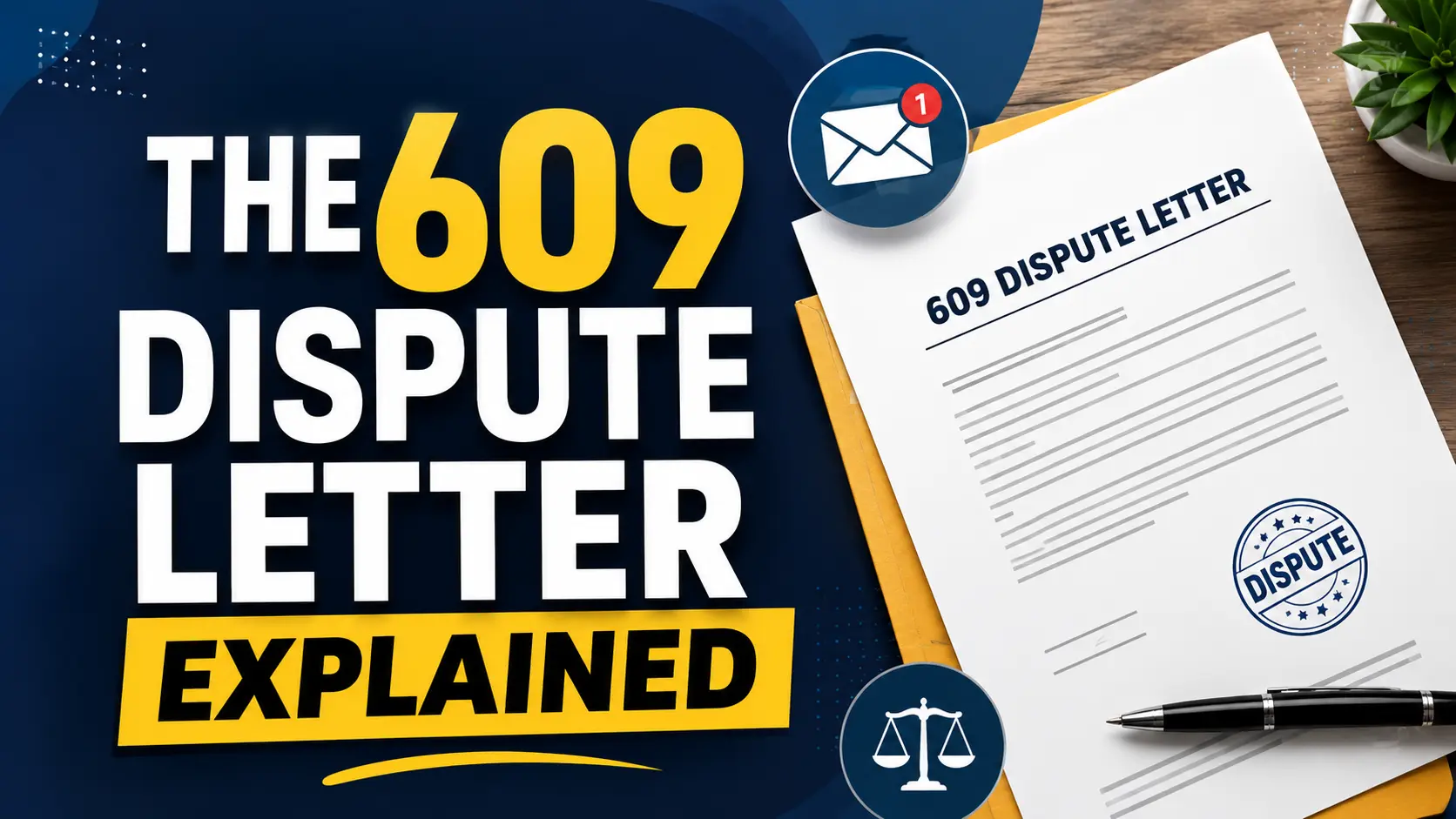
If you’ve searched for ways to remove inaccurate information from your credit report, you’ve likely come across the term 609 dispute letter. It’s often described online as a credit repair tactic, but that’s not quite accurate.
A 609 letter is tied to Section 609 of the Fair Credit Reporting Act (FCRA), which gives you the right to access information in your credit file and learn where it came from. However, it does not require credit bureaus to remove accurate negative information just because you request it.
Understanding this difference is important if you’re trying to fix your credit the right way instead of relying on a supposed loophole.
What Is a 609 Dispute Letter?
A 609 dispute letter is a written request generally sent to a credit reporting agency asking for information in your credit file and the sources of that information under Section 609 of the FCRA.
Under 15 U.S.C. § 1681g, a consumer reporting agency must, upon request and subject to identity requirements, clearly and accurately disclose information in the consumer’s file and the sources of that information. The law also covers certain information about who accessed the report and other details maintained by the agency.
Actually, calling it a “dispute letter” can be misleading. Section 609 primarily concerns disclosure, while the FCRA’s formal process for disputing inaccurate or incomplete information is found in Section 611, codified at 15 U.S.C. § 1681i.
Think of it this way:
Section 609 helps you understand what is in your file and where information came from. Section 611 provides the formal process for challenging information you believe is inaccurate or incomplete.
What Does Section 609 Actually Give You the Right to Request?
Section 609 is broader than simply asking a credit bureau to “prove the debt.” The law says a consumer reporting agency must disclose several categories of information upon a proper request. These include:
Information currently contained in your consumer file
The sources of information in your file
Certain people or businesses that obtained your report
Certain records connected to adverse check information
Certain inquiries made in connection with credit or insurance transactions
Information about obtaining a credit score when applicable
For example, if you see an account you do not recognize, requesting information about the source can help you understand where the account information originated.
Does a 609 Letter Remove Negative Information?
No, not automatically. This is one of the biggest misconceptions surrounding 609 letters. Sending a letter that cites Section 609 does not require a credit bureau to delete accurate negative information. The FCRA itself states that a consumer reporting agency is not required to remove accurate derogatory information unless the information is outdated under applicable law or cannot be verified.
A 609 request can still be useful when you need more information about something appearing on your credit report. But it should not be treated as a guaranteed method for deleting legitimate debts.
If you have found information that is inaccurate, incomplete, or cannot be verified, the formal dispute process becomes more important.
The two approaches are related, but they serve different purposes.
Approach
Purpose
What It Does
609 Request
Obtaining information and identifying sources
Focuses on requesting details about what is in your credit file and where the information came from.
Standard Credit Dispute (Section 611)
Challenging accuracy or completeness
Triggers a formal reinvestigation by the credit bureau when you believe information is inaccurate, incomplete, or cannot be verified. If the issue is confirmed, the bureau must delete or correct the item.
Under Section 611, when a consumer disputes information with a credit reporting agency, the agency generally must conduct a reasonable reinvestigation. If the information is found to be inaccurate or incomplete, or cannot be verified, the agency must delete or modify it as appropriate.
The FTC also recommends identifying each error clearly, explaining why it is inaccurate or incomplete, and providing copies of documents that support the dispute.
So, instead of thinking about a 609 letter as a magic removal tool, it is better to view it as one possible part of a broader credit-report review and dispute strategy.
When Might a 609 Letter Be Useful?
A 609 request may be useful when you want more information about items appearing in your credit file before deciding how to proceed.
For example, you may want to investigate:
An account you do not recognize
Information that appears inconsistent across your records
The source of information reported on your file
Accounts where you need additional documentation
Inquiries or other report activity you want to understand
The key is to use the information you receive to identify specific, legitimate issues rather than simply asking the bureau to delete everything negative.
If you already know that an account contains an inaccurate balance, payment history, account status, ownership detail, or other reportable information, a direct dispute that clearly identifies the error may be more appropriate.
What Should You Include in a 609 Dispute Letter?
There is no official government “609 letter form” that you must use. The important part is making a clear request and providing enough information for the credit reporting agency to identify your file and process your request.
A practical letter can include:
Your full name and mailing address
Date of the request
The credit reporting agency’s information
A clear request for disclosure under Section 609
Identification information needed to verify your identity
The specific information or accounts you want clarified
Copies of relevant supporting documents
A request for the response in writing
A list of documents enclosed with the letter
Do not send original documents unless specifically required. The FTC recommends keeping your original records and sending copies of supporting documentation with a dispute.
Free 609 Dispute Letter Template
Here is a simple starting point you can customize for your situation.
[Your Full Name] [Your Address] [City, State, ZIP Code] [Date]
[Credit Reporting Agency Name] [Dispute or Consumer Relations Address]
Subject: Request for Disclosure Under Section 609 of the Fair Credit Reporting Act
Dear Sir or Madam,
I am writing to request disclosure of information contained in my consumer file pursuant to Section 609 of the Fair Credit Reporting Act, 15 U.S.C. § 1681g.
Please provide the information currently contained in my consumer file, along with the sources of the information as required under applicable provisions of the FCRA.
I am specifically requesting information regarding the following item(s):
Account/Item: [Name of creditor or account] Account Number: [Account number or last four digits] Information Requested: [Describe the information you want clarified]
Please provide the requested information and identify the source of the information associated with the item listed above.
I have enclosed copies of documents to assist with identifying my file and processing this request.
Please send your response to the mailing address listed above.
Sincerely,
[Your Full Name]
Enclosures: [Identify documents enclosed]
Important Note About the Template
This template is for educational purposes only and is not legal advice. Make sure your request accurately describes what you need and is supported by your records. If you are disputing an error, use a formal dispute that clearly states what is wrong, why it is wrong, and what correction you are requesting, as shown in the FTC sample letter.
How to Send a 609 Dispute Letter
After completing and reviewing the letter, make sure the credit reporting agency can identify you and the information you are asking about. Include appropriate supporting documentation and keep a complete copy of the package for your records.
If you mail the request, the FTC recommends using certified mail with a return receipt when disputing credit-report errors so you have documentation that the credit bureau received your correspondence.
You should also keep track of:
The date you sent the letter
The documents you included
The mailing or delivery confirmation
The response from the credit bureau
Any changes made to your credit report
What Happens After You Send the Letter?
The outcome depends on what you requested and whether you are also disputing inaccurate information.
For a formal dispute concerning the accuracy or completeness of information, the FCRA generally requires the credit reporting agency to conduct a reasonable reinvestigation. The standard period is generally 30 days, with a possible extension of up to 15 additional days in certain circumstances when relevant information is received during the investigation.
If the investigation determines that disputed information is inaccurate, incomplete, or cannot be verified, the agency must generally delete or modify the information as appropriate.
That process is different from simply sending a Section 609 request for disclosure.
What If the Credit Bureau Says the Information Is Accurate?
A 609 letter does not give you a guaranteed way around accurate negative information.
If the information is accurate and legally reportable, citing Section 609 does not automatically require its removal. The better approach is to review the information carefully and determine if there is a genuine error or another valid issue that can be disputed.
The FTC specifically notes that accurate negative information generally does not have to be removed simply because a consumer asks for it to be deleted.
This is an important distinction because many online articles describe 609 letters as a “secret loophole.” They are not.
Can You Get a 609 Dispute Letter PDF?
Yes. A 609 dispute letter PDF can be useful if you want a printable version of your request that you can fill out, save, and mail. The format itself is not what gives the letter legal effect. What matters is the substance of your request, your ability to identify your file, and the applicable rights under the FCRA.
Before using any downloadable 609 letter PDF, check that it does not make exaggerated claims such as:
“The credit bureau must delete any account that cannot produce an original signed contract.”
That is not what Section 609 says. A better template should focus on requesting information you are legally entitled to receive and clearly identifying the specific items you want reviewed.
At the Last…..
A 609 dispute letter can help you better understand what’s in your credit file, but it is not a tool for automatically removing accurate negative information.
Section 609 allows you to request details about the information in your report and where it came from. However, if you find errors or incomplete data, the formal dispute process under Section 611 is the proper way to challenge it.
If you’re serious about improving your credit and want expert help navigating the process, visit https://credit-repair.com/ to learn how professional credit repair services can help you take the next step toward better financial health.
Credit Glory LLC, Credit Repair Review, How Is Credit Glory
People increasingly recognise credit repair as necessary to enhance financial stability and economic liberty. Around the globe, credit scores determine access to loans, mortgages, and rental agreements; a good score remains crucial. However, the technical aspects of credit repair go beyond what most people can handle alone. Credit Glory LLC works with other credit repair companies to assist consumers in improving their credit scores.
The credit repair industry contains Credit Glory LLC, which has emerged as one of its top operators because it delivers comprehensive services for credit score enhancement. Do the final results of service match those promoted to customers through Credit Glory? This assessment explores Credit Glory LLC’s services and operational approach to give readers insight into its benefits for customers seeking credit repair help. Research findings about Credit Glory LLC are presented along with historical company background and pricing information as we analyse their service effectiveness to guide your educated decisions.
What is Credit Glory LLC?
As a professional credit repair company, Credit Glory LLC helps people improve their credit scores by reviewing inaccurate information in their credit reports. The company emerged to help consumers improve their credit status by developing personalised credit restoration services that target creditworthiness enhancement. The company operates with a simple premise: It delivers services to clients who seek enhanced credit scores through its staff, who remove mistakes, ho old data, and unfavourable credit marks that decrease score values.
Credit Glory distinguishes itself from standard credit repair companies by providing tailored service solutions that differ from mass-produced approaches. The experts at Credit Glory develop specific plans to meet individual client specifications. They also customise programs to help clients remove incorrect items from their credit reports. Credit Glory maintains its status as a reliable solution through its dedication to creating tailored credit solutions.
Credit Glory LLC provides credit repair support as its primary function, though the company also helps clients understand credit reports while training them in better financial behaviour. Through its technology platform, Credit Glory provides consumers with financial management tools alongside credit tracking features that help build better credit profiles for lasting credit health.
How Does Credit Glory LLC Work?
After contacting Credit Glory LLC, your journey starts with scheduling a face-to-face meeting. As the beginning point, the company must acquire complete details about your financial standing, credit history information, and desired credit enhancement outcomes. By consulting, CreditGlory will develop specific solutions that align with your credit difficulties.
The steps involved in the credit repair process
Once your initial consultation is complete, Credit Glory moves into the next phase: a comprehensive credit report analysis. Credit Glory experts examine data from Experian, TransUnion, and Equifax to identify factors that damage your credit score in your credit report. This stage aims to locate disputed items, including delayed payments, multiple accounts, and outdated information that is no longer needed on your credit report. After data evaluation,
Credit Glory implements a plan that includes direct communication with credit bureaus about disputed, negative items. Their direct actions protect your credit scores by correcting or completely removing wrong or damaging items from your report files. Credit Glory maintains constant oversight over disputes to achieve smooth and efficient movement during a lengthy procedure with credit bureaus and creditors.
Your Credit Glory team provides continuous progress updates and maintains open communication lines with you until your case completion. The company openly shares information as an essential principle because they prioritise client updates while building strong client-trust relationships.
Credit Glory is a credit repair company That employs credit monitoring tools as its core process element. The company’s monitoring platforms show current updates and scores directly connected to your credit report so you can follow your achievements in credit repair. The availability of your credit data through the monitoring tools lets you detect enhancements in credit score performance while helping you spot any emerging disconcerting issues. The proactive system allows clients to discover emerging challenges in advance so they can immediately adjust their plans.
Tools and resources provided by Credit Glory
Credit Glory teams furnish clients with knowledge tools through which they learn about their credit score components throughout their service journey. Credit score knowledge plays a vital role in education during credit repair so clients can make sound financial choices while ensuring their previous financial problems do not come back.
Credit Glory staff perform statement dispute work, which fixes errors and helps customers develop more assertive financial behaviours. The team also provides clients with guidelines for expenses and debt-handling procedures with additional onesies, which help enhance payment behaviour. The primary purpose of Credit Glory is to generate sustainable financial stability by providing extended credit score growth.
What Makes Credit Glory Stand Out?
Credit Glory LLC’s customised credit repair solutions differentiate this business from numerous sector competitors. The organisational distinctions reflect the company’s promotion methods and commitment to fantastic customer-focused service delivery. A closer look at Credit Glory’s competitive features leads our discussion into the crowded sector.
Personalised Approach to Credit Repair
Credit Glory LLC delivers credit repair services as the core business component through its personalised solutions. The credit repair firm Credit Glory sets itself apart from conventional credit services by exclusively developing personalised solutions for each customer. Differentiates itself rom traditional credit repair services by selecting bespoke solutions that match every client’s needs. A comprehensive assessment that includes credit history evaluation, financial need assessment, and specific credit status concerns takes place before beginning any work. Credit Glory develops customised credit improvement plans that meet the precise needs of every unique client through its personalised system.
The company displays personalisation through its dispute management approach. Credit Glory constructs unique personalised disputes for credit bureaus based on the data provided in each client’s credit records. Every credit dispute handled by Credit Glory benefits from specialised case planning that maximises the chances for successful dispute results, no matter what type of credit error needs remediation.
Transparency and Communication
Credit Glory stands out due to its support for complete transparency in all activities. Numerous consumers who use credit repair programs experience confusion about process details and fail to obtain satisfactory explanations from service providers. At Credit Glory, transparency remains front and centre among core priorities. Credit repair steps are completely disclosed at the start of service, followed by regular updates that detail disputes and their corresponding actions. Maintaining complete transparency creates client confidence in the service value they receive.
Users can always review their credit scores and reports through their accounts. These benefits allow clients to follow their repair journey in real-time, thus monitoring their progress and detecting any developments during this process. In addition to regular updates, the team at Credit Glory remains accessible to answer any questions and offer necessary guidance. Clients stay engaged through an open communication channel, preventing any loss of understanding as they proceed through their credit repair process.
Focus on Education and Financial Literacy
Credit Glory outperforms its competitors because it consistently achieves results in its credit repair activities. It distinguishes itself from other credit repair firms by using verifiable results rather than deceptive tactics, which competitors typically use. Successful client testimonials on the Credit Glory platform showcase how the company enhances customer credit scores. Testimonials show how Credit Glory clears negative marks from profiles, leading to substantial improvements in credit scores.
Although Credit Glory cannot promise exact credit score improvements, its data-driven success statistics demonstrate its commitment to delivering effective solutions. Customers who use Credit Glory’s services express enhanced financial confidence about their future because their better credit scores enable them to secure improved loan options, mortgages, and employment opportunities. Numerous stories demonstrate how Credit Glory creates substantial positive change for its customer base.
Success Rate and Testimonials
Credit Glory receives customer acclaim because of its accomplished history of delivering successful results. Numerous companies in the credit repair industry use ambiguous promises and inflated achievements, yet Credit Glory demonstrates actual positive effects through its services. Customers can see a collection of success stories and testimonies showing the compelling credit score improvements Credit Glory delivered to its customers. According to client testimonials, Credit Glory provided solutions to remove negative items from credit reports while substantially boosting credit scores.
Credit Glory achieves its stated success rate in boosting credit scores because of its continual commitment to delivering effective resolution services. Most Credit Glory clientele express improved financial confidence because their enhanced credit scores enabled them to secure better loan terms, obtain mortgages, and pursue significant job opportunities. These testimonials establish Credit Glory’s systematic ability to help consumers achieve essential results that impact their lives.
Credit Glory LLC Pricing: Is It Worth the Investment?
Cost evaluation is essential for anyone looking for credit repair assistance. Comparing prices between multiple companies offering varying service levels can confuse customers about where service value aligns with their investment. Credit Glory LLC’s pricing system competes favourably against competitive firms yet delivers extraordinary ROI to its clientele.
Credit Glory’s Pricing Model
The service pricing at Credit Glory LLC depends on the specific services clients wish to obtain. Clients face price variation that reflects service complexity and the combination of provided features for credit repair. Credit Glory provides clear pricing solutions that fit different budget requirements and demonstrate flexibility in rates for various client options.
Before starting the cost assessment, the company offers free consultations to examine your financial profile and credit information. After conducting a review, Credit Glory creates personalised strategies at transparent rates to ensure service recipients entirely understand their financial commitments. Credit Glory provides customised pricing options through differing complex plans, enabling clients to select services according to their specific requirements. This service offers multiple payment plans so clients can choose from available options to meet their budget constraints and preferred functional level.
Value for Money
Due to its high communication transparency and support, Credit Glory provides reasonable pricing compared to competitors who demand higher fees for less intensive services.
Credit Glory extends value beyond basic credit repair through its ongoing credit monitoring services and educational tools that deliver lasting benefits to clients’ credit health.
Comparison to Industry Standards
The pricing system at Credit Glory competes favourably against standard rates within the credit repair service markets. Lower-priced credit repair services exist in the market but fall short because they provide inadequate customisation and support, which Credit Glory maintains as an organisation’s standard. Credit Glory’s customer-centric approach defines its services rather than similar offerings in pricier market options.
A rational assessment of Credit Glory’s service costs requires investors to evaluate how their investment will generate monetary returns. People who improve their credit scores significantly to qualify for mortgages, reduce loan interest rates, or gain superior financial options through Credit Glory will experience significant, lasting financial advantages. Credit Glory customers also experience financial gain through better loan terms that exceed the initial service cost after implementing their credit repair program.
Pros of Credit Glory LLC
Credit Glory LLC is the preferred solution for customers seeking credit repair assistance. The business combines credit repair services with extraordinary customer retention. Various clients who received services from Credit Glory reported positive outcomes, including removing negative credit items and considerably increased scores.
Credit Glory uses tailored approaches to provide helpful service to its customers. The company dedicates time to evaluating consumer situations to deliver optimised service delivery. Clients appreciate individual attention from service representatives and straightforward information about their program progress throughout credit repair.
Credit Glory offers personalised services and educational resources that combine credit repair knowledge with financial literacy training for its clientele. Thus, Credit Glory equips its customers to achieve economic independence, build a successful future, and prevent previous spending problems.
Customers recognise that Credit Gthat lory’s services deliver superior value to their payment investments. Through its competitive rates, Credit, Glory provides an advantageous investment for clients who gain thorough analysis of their credit reports and dis, dispute resolution, monitoring and fin, and financial education resources. A typical credit collaboration with Credit Glory leads helps clients better understand and manage their credit correctly moving forward.
Credit Glory LLC provides personal service excellence and transparent reporting, giving customers strong protection against credit repair needs. The traditional success track record and outstanding customer care make Credit Glory the most logical initial choice for customers.
Cons of Credit Glory LLC
Credit Glory LLC offers numerous valuable features, but its services have unavoidable limitations. Prospective customers need to fully understand all the advantages and drawbacks before deciding. This article will examine some critical potential negatives about Credit Glory LLC’s credit repair service.
Limited Scope for Severe Credit Issue
Users whose credit reports contain errors should utilise Credit Glory’s accuracy correction services. Advanced credit problems, such as bankruptcy, foreclosure, and substantial debt buildup, will reduce the operational effectiveness of Credit Glory LLC services. Credit Glory provides critical credit repair services but cannot wholly remove deeply rooted financial issues.
To address severe financial problems requires professional economic assessments and debt solutions advice for debt relief assistance. The services from Credit Glory fix incorrect or outdated information in credit reports but fail to resolve all elements, leading to poor credit scores in multiple situations.
Time-Consuming Process
Prospective clients who select Credit Glory LLC for credit repair must understand that the process requires time before completion. The company’s credit dispute process extends beyond months and might stretch to extended periods that depend on the situation’s complexity.
Clients achieve different denouements in their credit score improvements, some making notable progress and others attaining modest changes. Potential customers must manage their expectations regarding credit repair because the process takes time. Although positive effects often materialise, they do not occur predictably since improvement requires patience over an extended period.
How Effective is Credit Glory LLC in Improving Your Credit?
A credit repair company’s effectiveness rates are essential when selecting a provider. Credit Glory LLC’s track record shows it can deliver satisfactory results and help clients improve their credit scores. Credit Glory’s services allow numerous customers to achieve notable credit score enhancements, specifically when their reports contain inaccuracies or errors.
Success Stories and Client Testimonials
The evaluations customers write about Credit Glory services help demonstrate the effectiveness of the company’s operations. Positive reviews consistently highlight Credit Glory’s success in removing superfluous or aged items from credit reports. Unique success stories demonstrate improved credit scores for numerous clients when Credit Glory correctly disputed incorrect or outdated past-due payments, charge-offs, or invalid collections.
The financial success of being loan—or mortgage-eligible emerged when customers partnered with Credit Glory. Several clients told us their original loan applications were not refused due to poor credit, but Credit Glory enabled them to obtain much-needed credit products. Clients with incorrect or outdated credit report information can successfully use Credit Glory services to achieve their financial goals.
Clients discover various outcomes throughout their credit repair journey since every service delivers similar results. People with core credit problems, such as ongoing debt or damaging financial actions, generally only get moderate improvements. The company faces limitations in achieving successful results because it cannot resolve customers’ fundamental economic issues.
Realistic Expectations for Credit Improvement
All Credit Glory LLC clients require proper expectations as their fundamental starting point. Credit Glory LLC properly fixes credit report mistakes, but clients must understand that errors require time to generate visible outcomes. A credit repair process requires enough time to produce effective results, and patients need to maintain persistence when working to fix several negative items on their reports. The resolution process produces faster outcomes than what clients with multiple problems, such as unpaid debts or neglect, encounter.
Although Credit Glory cannot modify specific credit report entries, its customers receive vital financial guidance that helps them defend their credit scores. Credit Glory’s educational support protects clients’ credit health by enabling them to maintain their path toward positive credit scores.
Is Credit Glory LLC Right for You?
What factors make Credit Glory LLC the proper choice for your credit repair requirements? Your options depend on your financial details and your objectives for credit repair efforts.
When your credit issues are severe and you need quick fixes, you should consider alternative solutions.
Take Control of Your Credit Today
The team at Credit-Repair stands prepared to help you boost your credit score rating.
At Credit-Repair.com, our mission prioritises integrity alongside complete disclosure. Our team will provide support from start to finish.
Call our support team right away to schedule your first appointment. Once you contact us, our team will help you achieve financial freedom through credit rebuilding and economic enhancement.
Building or rebuilding credit needs a reliable tool. The Chime credit builder is a brilliant choice. It lets you build credit quickly and easily. Its easy-to-use design and helpful features help you reach your credit goals fast.
Many people choose the Chime credit builder to boost their credit scores. It’s appealing because it has no annual fee and no credit check. This makes it ideal for those wanting to rapidly build credit.
The Chime credit builder helps you rebuild and build credit fast. It also gives you the tools to manage your money well. Using it can improve your credit score and reach your financial goals.
Whether starting from scratch or fixing your credit, the Chime credit builder is great.
Important points
The Chime credit builder is a top choice for building or rebuilding credit.
It offers a no-annual fee structure and no credit check requirement.
The Chime credit builder allows you to build credit fast and rebuild credit with ease.
It provides a user-friendly interface and beneficial features to help you achieve your credit goals.
The Chime credit builder is a popular option for individuals looking to improve their credit scores.
It helps you manage your finances effectively and take control of your credit score.
The Chime credit builder is an excellent choice for those who want to build credit fast and rebuild credit.
Understanding Credit Builder Cards and Their Impact
Credit builder cards help people build or fix their credit. They offer a safe way to borrow money. Unlike regular credit cards, they need a security deposit that acts as the credit limit. This deposit is usually refundable and lowers the lender’s risk.
Using a credit builder card can boost your credit score. You show you can handle credit well by paying on time and keeping your credit use low. Knowing how these cards affect your score is key, and using them smartly to reach your credit goals is key.
What makes credit builder cards different?
Credit builder cards are often secured, meaning you need to put down a deposit. This deposit sets your credit limit and lowers the lender’s risk. They’re great for those new to credit or with bad credit, as they help build a good credit history.
Credit builder cards can improve your credit score by reporting your payment history. Making payments on time and keeping your credit use low can help. However, late fees and high credit use can hurt your score. Using these cards wisely and paying on time is essential for the best results.
The importance of secured vs unsecured credit
Secured credit, like credit builder cards, is a good choice for those new to credit or with poor credit. Unsecured credit might have higher interest rates and fees. Knowing the difference between secured and unsecured credit helps you pick the right credit builder cards for your needs.
Why Choose Chime Credit Builder Over Other Options
When looking at credit builder cards, Chime stands out. It offers unique features and benefits. With Chime, you can build or rebuild your credit score faster than other cards.
Here are some reasons to choose the Chime credit builder:
No annual fee
No credit check requirement
Automated payment options-the Chime credit builder helps you reach your credit goals easily.
It’s designed to help you manage your credit score without the usual costs. By using Chime, you can start building a better financial future.
Chime is the top choice for improving your credit score. Its special features make it better than other credit builder cards for reaching your credit goals.
Getting Started with Your Chime Credit Builder Card
To start with the Chime credit builder, you need to know how to begin. The application process is simple. This makes it easy for you to start building your credit.
The first thing to do is check if you meet the eligibility requirements. Go to the Chime website and fill out some basic information about yourself. This will tell you if you can get the Chime credit builder.
Eligibility Requirements
The requirements to get the Chime credit builder are clear. You must be a US citizen, have a valid social security number, and be at least 18 years old.
Application Process Step-by-Step
The application for the Chime credit builder is straightforward. Here’s how to do it:
Visit the Chime website and click on “Apply Now”
Provide your personal and financial information
Review and agree to the terms and conditions
Submit your application
Setting Up Your Secure Account
After you approve the application, you must set up your account. You’ll create a username and password. You’ll also set up two-factor authentication to keep your account safe.
You can quickly start with your Chime credit builder by following these steps. Always give accurate information during the application process. This will help you set up your account smoothly and efficiently.
How Chime Credit Builder Works in Practice
Using a Chime credit builder card is easy and can help you build or rebuild your credit score. The card uses a special algorithm to set your credit limits and interest rates. This makes it a brilliant choice for those wanting to boost their credit score.
The Chime credit builder card is great for starting a positive credit history. Paying on time and keeping your credit use low shows you’re responsible for credit. This can help raise your credit score over time. Plus, the card reports to all three major credit bureaus, so everyone sees your good credit habits everyone sees.
Some key features of the Chime credit builder card include:
No annual fee
No credit check requirement
Automated payment options
These features make it simple to use the Chime credit builder card and pay on time. You can improve your credit score by combining these features with good credit habits.
The Chime credit builder card is an excellent tool for building or rebuilding credit. You can start improving your credit score by understanding how it works and using it wisely. This is a big step towards reaching your financial goals.
Feature
Benefit
Unique algorithm
Determines credit limits and interest rates
Reports to all three major credit bureaus
Helps establish a positive credit history
No annual fee
Saves you money on fees
Key Features That Make Chime Credit Builder Stand Out
The Chime credit builder card is a brilliant choice for building or rebuilding credit. It has a no annual fee structure, so you don’t have to worry about extra costs. Plus, it has no credit check needed, making it easy for those with little or no credit history to use.
This card also offers automated payment options. This helps you make payments on time and avoid late fees. It’s perfect for those who want to improve their credit score by paying on time.
Some of the key benefits of the Chime credit builder card include:
No annual fee
No credit check requirement
Automated payment options
Opportunity to build or rebuild credit
In summary, the Chime credit builder card is a smart choice for those looking to improve their credit. With its no annual fee, no credit check, and automated payment options, it’s easy to use and helps you build a good credit history. Using this card wisely can be the first step towards a stronger financial future.
Understanding the Move Money Feature
With the Chime credit builder, you can move money from your credit builder card to your checking account. This feature helps you manage your finances and build or rebuild your credit. It lets you transfer funds from your Chime credit builder card to your checking account, giving you more control over your money.
The move money feature offers several benefits:
Easy transfer of funds from your Chime credit builder card to your checking account
More control over your money and finances
Helps you build or rebuild your credit with the Chime credit builder
Using the move money feature is simple. You can transfer funds from your Chime credit builder card to your checking account. This makes managing your finances easy. The move money feature is just one of the many benefits of using the Chime credit builder.
Using the Chime credit builder and the move money feature, you can build credit and improve your financial situation. The Chime credit builder is a powerful tool for building or rebuilding credit. The move money feature is just one of the many features that make it an excellent choice.
Feature
Benefit
Move Money
Easy transfer of funds from Chime credit builder card to checking account
Chime Credit Builder
Helps build or rebuild credit
Maximizing Your Credit-Building Potential
It’s key to use your credit wisely and pay on time to boost your credit score. The Chime Credit Builder card helps you do just that. Using it often and paying on schedule shows you’re good with money. This can help your credit score.
Keep your credit use low and avoid late fees for the best results. Also, check your credit report often. The Chime Credit Builder card makes paying easy with automatic options. These steps help you reach your credit goals faster.
Here are more tips to boost your credit:
Make regular payments to show you’re responsible with credit.
Keep your credit use low to not hurt your score.
Check your credit report often to catch errors.
Following these tips and using the Chime Credit Builder card well, you can improve your credit. Always focus on using your credit wisely and paying on time. This will help you achieve a better financial future.
Avoids negatively impacting credit scores, improves credit utilization ratio
Credit Report Monitoring
Ensures accuracy, detects potential errors, improves overall credit health
Timeline for Credit Score Improvement
Improving your credit score takes time and effort. The Chime Credit Builder card helps you start seeing better scores. Just remember to use the card wisely and pay on time.
Keep an eye on your progress and tweak your plan if needed. This might mean checking your credit report often and adjusting how you spend.
Short-term Expectations
Short term, you’ll likely see better credit utilization and payment history. The Chime Credit Builder card reports to big credit bureaus. This helps you build an excellent credit history.
Long-term Credit Building Results
Over time, your credit score will rise a lot. This is because you’re using the Chime Credit Builder card well. You might see your credit limit increase and your overall credit profile improve.
Stick to a credit-building plan and use the Chime Credit Builder card smartly. This way, you can reach your credit score goals and improve your financial health.
Comparing Chime’s Credit Reporting Methods
Chime Credit Builder is unique for credit reporting. It helps you build or improve your credit score efficiently. Chime reports your payments to major credit bureaus, helping you create a positive credit history.
Chime’s method is clear and easy to understand compared to other credit builders. You can easily track your credit score and stay updated on your credit reporting with Chime’s interface. Some benefits of Chime’s credit reporting include:
No hidden fees or charges
Regular payment reporting to major credit bureaus
Access to your credit score and credit history
With Chime Credit Builder, you can manage your credit reporting and aim for a better credit score. You can build a solid credit base with Chime by paying on time and keeping your credit utilization low.
Smart Strategies for Faster Credit Building
To build credit fast, it’s key to know how spending and payment timing affect your score. The Chime Credit Builder card helps you manage your credit journey. It lets you make smart choices about your money habits.
Focus on spending patterns that help your score. This means paying on time, using less credit, and avoiding late fees. Good spending habits show you’re responsible with credit, boosting your score.
Payment scheduling is also vital. Set up automatic payments to avoid late fees and keep your credit report clean. The Chime Credit Builder card provides tools to help you manage payments and reach your credit goals.
Regularly check your credit report for errors
Keep your credit use under 30% to show you’re responsible
Try to avoid new credit checks, as they can lower your score
You can speed up your credit building using these innovative strategies and the card. Stay focused on your goals and make wise money choices for long-term success.
Ensures timely payments, avoids late fees and negative marks
Common Mistakes to Avoid with Credit Builder Cards
Using credit builder cards wisely is key. One big mistake is overspending. This can lead to late payments and hurt your credit score. Always track your spending and only charge what you can pay back.
Another error is ignoring your credit utilization. Keeping your credit use low is vital for a good credit score. Remember, these cards are for building credit, not for debt.
Not making payments on time.
Applying for too many credit cards at once
Not checking your credit report regularly
Knowing these mistakes helps you use credit builder cards correctly. This way, you can boost your credit score and reach financial stability.
Understanding the Spot Me Feature and Credit Impact
The Spot Me feature lets you overdraft up to $200 without fees. This is great for building your credit. It enables you to make purchases and payments, even when short on cash.
This feature works by letting you go over your account limit. Then, you pay back the extra when you deposit money again. It suits your credit because it helps avoid late fees and overdraft penalties.
How to Spot Me Works
The Spot Me feature is a smart way to handle your money. It’s especially useful when you’re trying to improve your credit score. It helps you avoid overdraft fees and negative marks on your credit report.
Impact on Credit Building
Using Spot Me can help your credit score. It shows you’re managing your money well. This can lead to a better credit score over time.
Avoiding overdraft fees
Avoiding negative credit impact
Demonstrating responsible financial behavior
Spot Me lets you manage your finances better. It helps you build or improve your credit score.
Security Features and Account Protection
Keeping your financial info safe is key. The Chime Credit Builder card protects your account and credit score in many ways. It uses two-factor authentication to ensure you can access your account only.
The card also uses encryption and monitoring for account protection. This keeps your sensitive info safe from threats. So, you can work on improving your credit score without worrying about security issues.
Here are some important security features of the Chime Credit Builder card:
Encryption to protect your personal and financial information
Two-factor authentication to prevent unauthorized access
Account monitoring to detect and prevent potential security breaches
With a focus on security features and account protection, the Chime Credit Builder card is a safe choice. It helps you build a strong credit score with confidence.
Tips for Graduating to Traditional Credit Cards
You might wonder when to move to traditional credit cards as you build or rebuild your credit with the Chime Credit Builder card. This step is a big deal. It’s key to be ready to increase your chances of approval. A strong application profile is crucial; knowing what lenders want is vital.
Before upgrading, check your current credit score and history. Understand your credit utilization ratio and payment history well. These factors greatly affect your credit score. Showing responsible credit behavior helps build a strong profile. This makes lenders more likely to approve your application for traditional credit cards.
Monitor your credit report and score regularly to ensure there are no errors or inaccuracies.
Keep your credit utilization ratio below 30% to demonstrate responsible credit behavior.
Make timely payments to establish a positive payment history.
By following these tips and keeping a strong application profile, you can move to traditional credit cards. Enjoy the rewards and sign-up bonuses they offer. Always use your credit wisely and make smart choices when applying for new cards.
Real Success Stories and Results
Many people have seen big improvements in their credit scores with the Chime Credit Builder card. They’ve used the card’s features to build or fix their credit. This shows how well the Chime Credit Builder card works for credit building.
Some notable examples include:
Individuals who have increased their credit scores by 100 points or more within a year
Users who have successfully graduated to traditional credit cards after using the Chime Credit Builder card
People who have improved their credit utilization ratios and reduced their debt
These success stories show the Chime Credit Builder card’s power. By using it wisely, people can reach their credit-building goals. This leads to better financial health and positive results.
Category
Success Stories
Results
Credit Score Improvement
100+ point increase
Improved credit profile
Credit Utilization
Reduced debt
Improved credit utilization ratio
Graduation to Traditional Credit Cards
Successful graduation
Increased credit limit
Conclusion
The Chime Credit Builder card is a powerful tool for building or rebuilding credit. It offers features like Move Money and automated payments. These help you manage your credit journey and reach your financial goals.
If you’re new to credit or want to boost your score, this card is a brilliant choice. It’s easy to use and keeps your financial information safe. You can get the most out of the card by avoiding common mistakes and using innovative strategies.
Building credit is a journey, not just a goal. The Chime Credit Builder card gives you the tools and support for a better financial future. Start building your credit today and move closer to financial freedom.
FAQ
Does Chime Credit Builder build credit fast?
The Chime Credit Builder card can help you build credit faster than some traditional cards. It reports your on-time payments to major credit bureaus. This can improve your credit score over time.
What credit card helps build credit the fastest?
The Chime Credit Builder card is a top choice for quick credit building. It has no credit check and no annual fee. These features make it appealing for those starting or rebuilding their credit.
How long does it take to build credit with a credit builder card?
Building credit with a card like Chime Credit Builder varies. But, many sea score improvements with responsible use in 6-12 months. Payment history and credit use also affect how fast you build credit.
Does Chime Spot Me help build credit?
Chime Spot Me, which lets you overdraft up to $200 without fees, is useful for managing money. But it doesn’t directly affect your credit score. The Chime Credit Builder card is the primary tool for building or rebuilding credit.
Are you dealing with a collections account from Helvey and Associates on your credit report? You might be wondering how to get rid of it and boost your credit score. With 79% of credit reports having mistakes or serious errors, knowing your rights and how to dispute errors is key to removing Helvey and Associates from your report.
Getting Helvey and Associates off your credit report can help your score. Collections accounts can stick around for up to 7 years. By learning about the rules Helvey and Associates must follow, like the Fair Debt Collection Practices Act (FDCPA) and the Fair Credit Reporting Act (FCRA), you can manage your credit report better and work towards a brighter financial future.
Important points
Helvey and Associates is a debt collection agency that buys debt from creditors and tries to collect it from consumers.
79% of credit reports have errors, which can hurt your credit score.
Collection accounts can stay on your credit report for up to 7 years, even if they’re marked as ‘paid’ or ‘unpaid.’
The Fair Credit Reporting Act (FCRA) lets consumers challenge any debt reported by Helvey and Associates.
Knowing your rights and how to dispute errors is important to remove Helvey and Associates from your credit report and improve your score.
Many customers have seen benefits from services that help remove errors from their credit reports, helping them get mortgages, auto loans, and more.
Helvey and Associates follow the FDCPA and FCRA, giving consumers specific rights to dispute and remove collections accounts from their credit reports.
Understanding Helvey and Associates Collections
As a consumer, knowing about debt collection agencies like Helvey and Associates is key. They buy debt from creditors and try to collect it from you. This can be stressful, with letters and phone calls demanding payment.
To handle Helvey and Associates, you must understand your rights and debt collection laws. This knowledge is vital.
Helvey and Associates have been in the debt collection business for over 60 years. They work with various industries, like utility companies and healthcare providers. Many agencies, including Helvey, might settle for less than the original debt. This means you could negotiate a lower amount.
https://youtube.com/watch?v=9N4jJdra1wg
To tackle Helvey and Associates, knowing what debt they collect is important. They handle utility bills, medical bills, and other consumer debts. As a legitimate agency, it follows the Fair Debt Collection Practices Act (FDCPA). This law prevents debt collectors from misrepresenting debts and contacting third parties without consent.
When facing Helvey and Associates, remember your rights under the FDCPA and Fair Credit Reporting Act (FCRA). These laws protect you from unfair debt collection and ensure your credit report is accurate. Knowing your rights helps you deal with Helvey and Associates and safeguard your credit report.
Your Rights When Dealing with Helvey and Associates
As a consumer, you have rights when dealing with debt collectors like Helvey and Associates. The Fair Debt Collection Practices Act (FDCPA) protects you from unfair treatment. You can dispute a debt and ask for proof from the collector.
Under the FDCPA, you can also ask collectors to stop contacting you. This is useful if you feel they’re being too aggressive. The FDCPA also bans collectors from making threats or using foul language.
Important things to remember when dealing with Helvey and Associates include:
The agency must validate any debt they are trying to collect from you
You have the right to dispute any debt that you do not believe is valid
Helvey and Associates must cease communication with you if you request it
The agency is prohibited from engaging in abusive or harassing behavior
Helvey and Associates must follow the FDCPA rules. This means they must give you clear information about the debt and respect your rights.
Steps to Remove Helvey and Associates from Your Credit Report
To remove Helvey and Associates from your credit report, start by asking for debt validation. Then, dispute any wrong information. This process can be tough, but it’s key to keep your credit report correct and current. With 79% of credit reports having mistakes, it’s vital to check yours and fix any errors.
When facing Helvey and Associates, know your rights under the Fair Debt Collection Practices Act (FDCPA) and the Fair Credit Reporting Act (FCRA). You can dispute debts and challenge any wrong information Helvey and Associates reports. If you’re not sure what to do, consider getting help from a credit repair expert or a financial advisor.
https://youtube.com/watch?v=zSMavW1cvKo
Here are some steps to remove Helvey and Associates from your credit report:
Request debt validation from Helvey and Associates to confirm the debt’s legitimacy and accuracy.
Dispute any wrong information on your credit report, including errors or inaccuracies from Helvey and Associates.
Negotiate a settlement with Helvey and Associates, which might involve paying part of the total amount owed.
Removing Helvey and Associates from your credit report takes patience and persistence. By following these steps and knowing your rights, you can manage your credit report and boost your financial health.
The Duke Energy Connection: What You Need to Know
Understanding the link between Helvey and Associates and Duke Energy is key. If you owe money to Duke Energy, Helvey might be collecting it. This can harm your credit report and lower your score.
Be careful of scams that pretend to be from Duke Energy. They might say they’ll cut off your service unless you pay right away. But Duke Energy says they never threaten disconnection over the phone. If you get such a call, call Duke Energy back using the number on your bill to check if it’s real.
Here are some important points to remember:
Duke Energy doesn’t take payments through Cash App, Venmo, or Zelle apps.
Duke Energy employees should show an official ID badge to prove who they are.
Scammers might promise to wipe out your debt for cash, but this is not true.
Being careful with debt collectors like Helvey and Associates is important, even more so when they work for a big company like Duke Energy. Knowing your rights and being alert to scams can help keep your credit report safe and your finances sound.
Always check if calls or payment requests are real. And don’t be afraid to contact Duke Energy or Helvey and Associates directly if you’re unsure.
Company
Contact Information
Duke Energy
The phone number on your bill
Helvey and Associates
Phone number and address available on their website
Essential Contact Information for Helvey and Associates
To reach Helvey and Associates, you can use their phone number and address. This is key for those who need to contact them. Reasons include disputing a debt or asking for debt validation.
Helvey and associates make it easy to get in touch. You can find their phone number on their website. They also have a physical address for sending letters. Plus, there’s an online portal for account management and important info.
Contact Details
Phone Number: Available on their website
Physical Address: Available on their website
Online Portal: Accessible through their website
Having the right contact info for Helvey and Associates is vital. It ensures your messages get through. Use their phone number, address, or online portal to manage your account and solve problems.
https://youtube.com/watch?v=hZvbVtxEvXA
Having the right contact info for Helvey and Associates can greatly help with debt issues. With their phone number, address, and online portal, you can take charge of your finances and find a solution.
Writing an Effective Dispute Letter
When dealing with Helvey and Associates, it’s key to know how to write a dispute letter. This letter should include your name, address, and account number. It should also clearly state the dispute and any supporting documents.
To make your dispute letter more effective, consider these key points:
Clearly state the reason for the dispute
Provide your account number and relevant identification
Include any supporting documentation, such as payment records or correspondence with Helvey and Associates
Specify the desired outcome, such as removal of the disputed item from your credit report
Keep your tone professional and avoid being confrontational. You aim to resolve the dispute and remove the incorrect information from your credit report. By following these tips and including the right information, you can write an effective dispute letter to Helvey and Associates. This is the first step towards improving your credit score.
It’s also important to remember that collection accounts can affect your credit score for up to seven years. Credit repair professionals can help remove millions of negative items each year from companies like Helvey and Associates. By writing a dispute letter and addressing any inaccuracies on your credit report, you can take control of your finances. This will help you work towards a better credit future.
Understanding the Validation Process
The validation process for Helvey and Associates checks if the debt is real and provides proof. This includes showing the original debt, like a contractor invoice. It also includes any payments or messages later on. You have the right to ask for debt validation, and knowing the process is key to protecting your rights.
When you ask for debt validation, Helvey and Associates must send a written notice. It will have details like the debt amount, and the creditor’s name, and you’re right to dispute it. You then have 30 days to reply and dispute the debt if you need to.
Required Documentation
To confirm a debt, Helvey and Associates might ask for:
Original contract or agreement
Invoice or statement
Payment records
Communication records
Timeline Expectations
The validation process can take up to 30 days. It’s important to know this timeline to respond quickly. If you dispute the debt, Helvey and Associates must stop collecting until they prove the debt.
Remember, you have the right to request debt validation. It’s vital to understand the process to protect your rights. By knowing what to expect and how to respond, you can make sure your debt is handled fairly and legally.
Pay-for-Delete Agreements: What to Consider
When you work with Helvey and Associates, you might see a pay-for-delete option. This means you pay off the debt to have it removed from your credit report. It’s important to think about how this could affect your credit score and if the debt might come back.
A pay-for-delete deal can help clear a collection from your credit report. But, you must understand the agreement’s terms before agreeing. Paying off the debt doesn’t always mean it’s removed from your report. Also, Helvey and Associates might not always keep their promise, and the debt could be reported again.
Here are some key points to consider when evaluating a pay-for-delete agreement with Helvey and Associates:
The agreement should be in writing, outlining the terms and conditions of the payment and the removal of the debt from your credit report.
You should ensure that the agreement includes a statement that the debt will be removed from your credit report once the payment is made.
It’s essential to verify that the debt is legitimate and that you owe the amount stated in the agreement.
Before deciding, weigh the good and bad of a pay-for-delete deal. It might improve your credit score by removing a negative mark. But, it doesn’t always work, and you could face the debt again.
In conclusion, a pay-for-delete deal with Helvey and Associates could help clear a collection from your credit report. But, it’s key to carefully look at the agreement’s terms and think about the possible outcomes before you decide.
Pay-for-Delete Agreement
Benefits
Risks
Removal of debt from credit report
Improved credit score
Debt may be re-reported
Payment of debt
Resolution of debt
No guarantee of removal
Common Issues with Helvey and Associates Collections
Dealing with Helvey and Associates can lead to common issues like reporting errors or communication problems. These can make it hard to resolve your debt. It’s key to stay calm and professional when talking to them. Also, keep a record of all your conversations.
To tackle these problems, you can:
Ask for debt validation to check if the debt is real and right
Challenge any wrong info on your credit report
Work out a settlement or payment plan to clear the debt
Knowing your rights is also vital. You have the right to dispute any debt and stop unwanted calls. By understanding your rights and acting on them, you can protect your credit and finances.
Keep an eye on your credit report to make sure it’s correct. You can get a free report from the big credit bureaus to spot any mistakes. By managing your credit and fixing any problems with Helvey and Associates, you can keep your credit score healthy and reach your financial goals.
Time-Barred Debt and Statute of Limitations
Understanding time-barred debt and the statute of limitations is key when dealing with debt. The statute of limitations varies by state and debt type. It can range from 2 to 21 years.
For instance, oral debt has a statute of 3 to 6 years. Written debt ranges from 3 to 10 years. Credit card debt is usually 3 to 6 years. Remember, paying a time-barred debt can restart the clock, allowing collectors to sue again.
Helvey and Associates, a debt collection agency, might contact you about old debts. But they can’t sue for them. Knowing your rights with debt collectors, including Helvey and Associates, is vital. If your debt is beyond the statute of limitations, you might not have to pay it. Yet, it can harm your credit score by being reported.
Check the statute of limitations for your specific debt and state
Understand your rights when dealing with debt collectors, including Helvey and Associates
Be cautious when making payments on time-barred debt, as it may restart the statute of limitations clock
Knowing about time-barred debt and the statute of limitations helps you manage your debt. It also protects your credit score. Keep track of your debt and talk to collectors, like Helvey and Associates, to ensure fairness and legal compliance.
Monitoring Your Credit Report After Removal
After removing a collection from your credit report, it’s key to keep an eye on it. You can get a free credit report from the credit agency. This helps you track changes and keep your credit score healthy.
Regularly checking your credit report can spot any issues that might harm your score. You can get free reports from Experian, Equifax, and TransUnion once a year. This lets you make sure your report is correct and up-to-date.
Free Credit Report Access
You can get your credit report for free from the agency’s website or by mail. This service is available once a year. It’s a great way to keep an eye on your report and score.
Tracking Changes and Updates
It’s important to watch for changes in your credit report. A credit monitoring service can alert you to any updates. This helps you catch and fix any mistakes quickly.
To keep your credit score healthy, follow these steps. Request a free report, track changes, and fix any mistakes fast. With Helvey and Associates and others, watching your report closely is vital. It helps you keep a good credit score and strong financial health.
Working with Credit Bureaus During the Process
When you work with Helvey and Associates, it’s key to know how to deal with credit bureaus. You can reach out to them directly to fix any mistakes on your credit report. You’ll need to provide proof, like payment records, to support your claims. This step might take some time, but it’s vital for keeping your credit report correct.
Here are some important steps to follow when working with credit bureaus:
Get a copy of your credit report to spot any errors.
Dispute any wrong information with the credit bureau.
Send in documents to back up your dispute, like payment records or ID.
Credit bureaus play a big role in your credit score. Any mistakes can hurt your creditworthiness. By working with them and Helvey and Associates, you can fix these issues and boost your score over time.
Keep everything organized and document all your talks with credit bureaus and Helvey and Associates. This will help you track your progress and make sure any agreements are followed through. With dedication and effort, you can fix any problems and enhance your credit report.
Legal Options and Consumer Protection
When you’re dealing with Helvey and Associates, knowing your legal options and consumer protection laws is key. As a consumer, you can dispute a debt and ask for proof from the collection agency. This is under the Fair Debt Collection Practices Act (FDCPA).
If you disagree with a debt, you have legal ways to handle it. You can file a complaint with the Federal Trade Commission (FTC) or reach out to a consumer protection agency in your state. Helvey and Associates, like other agencies, must follow the FDCPA and respect your rights.
Requesting debt validation and verification
Filing a complaint with the FTC or state agency
Seeking damages for FDCPA violations
Working with a consumer protection attorney to resolve the issue
Knowing your legal options and consumer protection laws helps you deal with debt collectors. This way, you can protect your rights when facing Helvey and Associates.
Professional Credit Repair Services vs. DIY Approach
When dealing with Helvey and Associates, you have two main options: using a professional credit repair service or taking a DIY approach. Credit repair services can offer expertise and help in removing collections from your credit report. But, they might charge fees for their services.
A DIY approach can be more affordable. It might need more time and effort from you. It’s important to think about the good and bad points of each option before deciding. Here are some things to consider:
Expertise: Professional credit repair services have experience with collection agencies like Helvey and Associates.
Time and effort: A DIY approach may need more time and effort from you, but it can be more cost-effective.
Fees: Professional credit repair services may charge fees for their services but can provide guidance and expertise.
The choice between a professional credit repair service and a DIY approach depends on your situation and preferences. It’s key to weigh the pros and cons of each option and make a well-informed decision.
Conclusion
By following the steps in this guide, you can remove Helvey and Associates from your credit report. This will help you take control of your credit future. Persistence, patience, and knowing your consumer rights are essential.
Reclaiming your credit health is a journey. But with the right info and strategies, you can beat Helvey and Associates’ challenges. Always watch your credit report, fix any mistakes, and get help if you need it.
Your credit future is yours to shape. Now that you know more, you can improve your credit score. This will open up better financial chances and help you reach your financial goals.
FAQ
What is Helvey and Associates?
Helvey and Associates is a real debt collection agency that follows the law. They might send lots of letters or call you a lot to collect debts.
What types of debt do Helvey and Associates collect?
They collect many debts, like unpaid bills and loans. They even work for companies like Duke Energy.
What are my rights when dealing with Helvey and Associates?
You can dispute a debt and ask them to prove it. You also have the right to stop them from contacting you. The FDCPA stops them from being too pushy.
How can I remove Helvey and Associates from my credit report?
To get them off your credit report, you need to ask them to prove the debt. Then, you can dispute any wrong information and try to settle with them.
What is the connection between Helvey and Associates and Duke Energy?
If you owe Duke Energy money, Helvey and Associates might be trying to collect it. This can hurt your credit score, but you can fight it by asking them to prove the debt.
How can I contact Helvey and Associates?
You can call them at their listed number or write to their address. You can also use their online portal to manage your account.
What should I include in a dispute letter to Helvey and Associates?
In your dispute letter, include your name, address, and account number. Clearly state why you’re disputing the debt and attach any proof you have.
What is the validation process for Helvey and Associates?
They need to prove the debt to you. This includes showing you the original debt and any payments or communications about it.
What should I consider when negotiating a pay-for-delete agreement?
Paying to have a collection removed can help your credit score. But think about how it might affect your credit score and if the debt could be reported again.
What if I have a time-barred debt with Helvey and Associates?
If the debt is too old, you might not have to pay it. But it can stay on your credit report, which can lower your score.
How can I monitor my credit report after removing a Helvey and Associates collection?
Keep an eye on your credit report after removing a collection. You can get a free report from the credit agency and watch for any changes or updates to your score.
What are my legal options when dealing with Helvey and Associates?
You can dispute a debt and ask them to prove it under the FDCPA. If they’re too aggressive, you can take legal action against them.
Should I use a professional credit repair service or a DIY approach?
Choosing between a credit repair service and doing it yourself depends on what you need. Services can help, but they might cost money.
You check your credit score and see 720. A credit app shows 750. Then you apply for a loan and the lender comes back with a different number.
Which score is right? The answer is that all of these numbers can be legitimate. You are likely seeing different credit scoring models, mainly FICO Score and VantageScore. Both use information from your credit reports, but they calculate risk differently.
Difference Between Vantage and Fico?
FICO Score was created by Fair Isaac Corporation and has been widely used by lenders for decades. VantageScore was developed by Equifax, Experian, and TransUnion as an alternative scoring model.
Both generally use a 300 to 850 range and consider information such as payment history, credit utilization, account age, and new credit. The difference is in how each model evaluates and weighs that information.
Here is a quick comparison:
Feature
FICO Score
VantageScore
Scoring range
300 to 850
300 to 850
Developed by
Fair Isaac Corporation
Equifax, Experian and TransUnion
Common use
Lending decisions
Credit decisions and monitoring
Uses credit report data
Yes
Yes
Multiple versions
Yes
Yes
Can vary by bureau
Yes
Yes
Is FICO Score Accurate?
If you have searched is FICO score accurate, the short answer is yes. A FICO Score is an accurate calculation based on the information available to the specific FICO scoring model.
The confusing part is that you do not have just one FICO Score. There are multiple FICO versions, and different lenders can use different versions. A credit card company may use one FICO model, while an auto lender or mortgage lender may use another.
The credit bureau being used can also affect your score. Your Experian, Equifax, and TransUnion credit reports may not contain exactly the same information. This means the FICO Score you see online may not match the score a lender sees. That does not make either score inaccurate.
The more important thing to check is the information behind the score. An incorrect account, balance, or payment history can affect your credit score regardless of which scoring model is being used.
Why Did My FICO Score Drop?
Seeing your score fall can be frustrating, especially when you have not missed a payment. If you are asking why did my FICO score drop, start by checking your credit reports. A change in your reported credit information is usually the best place to look for an explanation.
One common reason is increased credit utilization. For example, if your credit card balance was higher when your issuer reported it to the credit bureaus, your score could temporarily decrease.
Other possible reasons include a new credit account, a hard inquiry, a reported late payment, a closed account, or a negative item appearing on your credit report. Sometimes, the problem is simply an error.
That is why it is better to investigate the change instead of immediately trying to fix the score itself. Review your credit reports and look for anything that changed recently.
Do Landlords Use FICO or Vantage?
If you are renting a home or apartment, you may wonder, do landlords use FICO or Vantage? Actually, there is no universal answer. Landlords and property management companies can use different tenant-screening services. Some may use FICO-based scores, while others may use VantageScore or another scoring system.
A landlord may also consider factors beyond your credit score, including income, rental history, outstanding debt, payment history, and previous rental problems. So, the score you see in a credit monitoring app may not be the exact score a landlord sees.
For renters, the best approach is to maintain a healthy overall credit profile instead of focusing on one specific score.
Which is More Accurate Fico or Vantage?
For many lending decisions, FICO Score deserves particular attention because it has a long history of use in the lending industry.
If you are applying for a mortgage, auto loan, or credit card, knowing which scoring model the lender uses can give you a better idea of what to expect.
VantageScore is still useful. It can help you monitor changes in your credit profile and understand how your credit is trending over time. You also should not be concerned simply because your FICO Score is higher or lower than your VantageScore. A difference between the two is normal.
What Should You Do When Your Scores Differ?
Start with your credit reports, not the score itself. Check your payment history, balances, credit limits, account information, and recent inquiries across all three major credit bureaus. Differences in the information reported by each bureau can contribute to different scores.
If you find inaccurate information, you can dispute it with the appropriate credit bureau and the company that reported it.
At the same time, focus on the credit habits that support stronger scores across different models. Pay your bills on time, keep credit card balances under control, avoid unnecessary credit applications, and give your accounts time to build history.
At The End….
FICO and VantageScore are both legitimate credit scoring models, but they serve slightly different purposes and can produce different results.
FICO is especially important for many lending decisions, while VantageScore can be useful for monitoring your overall credit health.
Instead of obsessing over which score is the “real” one, pay attention to your credit reports and the factors affecting them. Accurate information, consistent payments, and responsible credit use matter far more than a small difference between two scoring models.
If your score changes unexpectedly, find out why before taking action. The reason behind the number is often more important than the number itself.