Blog

  • How to Rebuild Credit After a Job Loss

    How to Rebuild Credit After a Job Loss

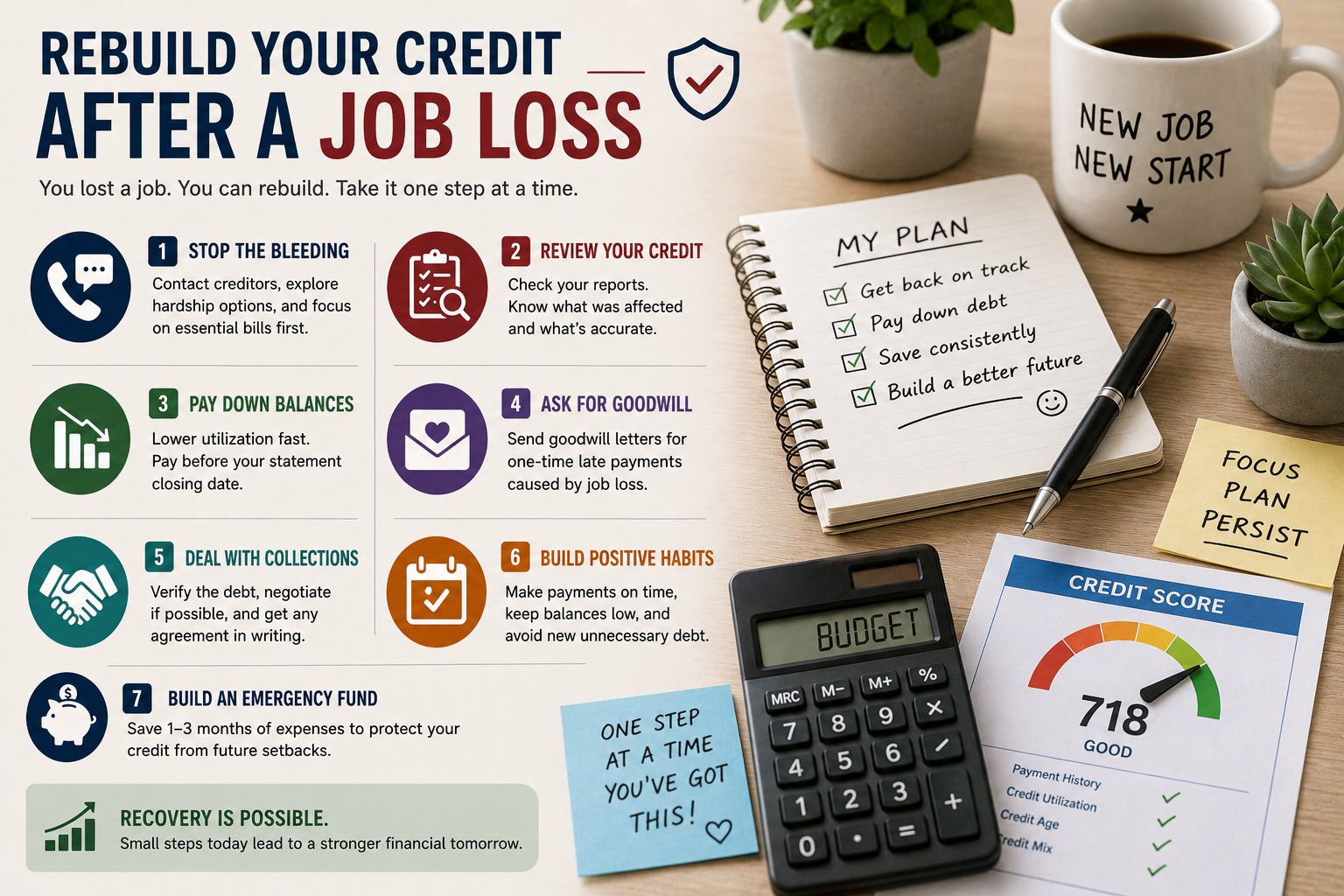
    Job loss is one of the most common triggers behind an otherwise strong credit history suddenly taking a hit — a missed payment here, rising utilization there, sometimes a collection account if things dragged on longer than expected. The good news is that credit damage tied to a temporary income disruption tends to be more recoverable, and often faster to recover from, than damage from ongoing financial mismanagement, precisely because the underlying cause has typically resolved by the time you’re rebuilding. Here’s a practical, sequenced approach.

    Step 1: Stop the Bleeding Before You Start Rebuilding

    If you’re still in the immediate aftermath of a job loss, rebuilding strategy comes second to damage control. Before focusing on your credit score specifically:

    – **Contact creditors proactively**, before you miss a payment if possible, or as soon as possible after. Many card issuers and lenders have hardship programs — reduced payments, temporarily paused interest, deferred due dates — that can prevent a missed payment from ever being reported in the first place. This is dramatically more effective than waiting until after a late payment has already hit your report and then trying to fix it.
    – **Prioritize which bills to pay if funds are truly insufficient for everything.** Secured debts with serious consequences (mortgage, auto loan) and anything already reporting delinquent typically take priority over unsecured debts where the immediate consequence of a missed payment is “only” credit damage, though this is a genuinely difficult triage decision that depends on your full financial picture.
    – **Apply for unemployment benefits immediately** if eligible — this is obvious but worth stating, since delayed applications mean delayed income replacement, which compounds the pressure on your other financial obligations.

    Step 2: Assess What Actually Happened to Your Credit

    Once your immediate income situation has stabilized (new job, unemployment benefits flowing, or otherwise), pull your full credit report and take honest stock:

    – **Identify every account affected** — late payments, increased utilization from relying on credit cards during the gap, any accounts that went to collections.
    – **Check for accuracy**, especially around dates — if you were on an approved hardship program with a creditor and they still reported a late payment in violation of that agreement, that’s a legitimate, disputable error.
    – **Distinguish between accounts that are simply high-utilization but current, versus accounts that are actually delinquent** — these require different strategies (paydown vs. dispute/negotiation).

    Step 3: Address Utilization First — It’s the Fastest Lever

    If your credit cards carry elevated balances from the income gap but payments are current, paying these down is your fastest path to score recovery, often showing up within a single billing cycle once the lower balance is reported. Prioritize:

    – **The card(s) with the highest utilization percentage first**, since crossing key thresholds (from over 90% to under 30%, for example) tends to produce more noticeable score movement than incremental paydowns spread evenly across several cards.
    – **Paying down before the statement closing date**, not just before the due date, since the reported balance is typically based on the statement close, not whether you eventually paid by the due date.

    Step 4: Address Any Late Payments With Goodwill Requests

    If you have one or two isolated late payments tied specifically to the job loss period, and you’ve otherwise had a strong history with that creditor, a goodwill letter (see our dedicated guide) is worth sending once you’re back on stable footing. Job loss is exactly the kind of specific, sympathetic, verifiable circumstance that goodwill requests are designed for, and creditors are often more receptive to this kind of request than to a vague “please forgive this” ask.

    Step 5: If Accounts Went to Collections, Address Strategically

    If the gap was long enough that an account went unpaid to the point of collections, treat this the same way you would any collection account:

    – **Verify the debt** before paying anything.
    – **Negotiate**, especially if you can now pay a lump sum from back pay, a new job’s signing bonus, or accumulated unemployment benefits — collectors are often willing to settle for less than the full balance, and pay-for-delete may be on the table.
    – **Get any agreement in writing** before sending payment.

    Step 6: Rebuild Positive History Going Forward

    Once you’re financially stable again, focus on demonstrating consistency:

    – **Keep utilization low going forward**, ideally under 30%, to show the elevated balances during the job loss period were situational, not a lasting pattern.
    – **Avoid taking on unnecessary new debt** immediately after returning to stability — focus on rebuilding a cash cushion first, so a future disruption doesn’t require leaning on credit again in the same way.
    – **Set up autopay for at least minimum payments** on all accounts going forward, as a safeguard against a future gap resulting in an accidentally missed payment even during a stressful period.

    Step 7: Build (or Rebuild) an Emergency Fund as Credit Protection

    This isn’t a credit repair tactic in the traditional sense, but it’s arguably the most effective long-term credit protection available: a cash emergency fund means a future job loss doesn’t have to touch your credit

    at all. Even a modest fund — enough to cover 1-2 months of essential expenses — meaningfully reduces the odds that the next unexpected income gap turns into new credit damage. Building this back up should be a real priority once you’re stable, not an afterthought.

    Realistic Timeline for Recovery

    – **Weeks 1-6 post-stabilization**: utilization paydowns show up and begin lifting your score; this is often the fastest, most encouraging part of the recovery.
    – **Months 2-4**: goodwill requests and any collection negotiations resolve; continued on-time payments accumulate.
    – **Months 6-12**: assuming no further disruptions, most people see substantial recovery back toward their pre-job-loss score range within this window, particularly if the credit damage was limited to a handful of specific, addressed items rather than a broad pattern.

    A Note on Emotional Weight

    Job loss-related credit damage often carries more emotional weight than its practical financial impact — people frequently feel a sense of shame or failure about credit dings tied to unemployment, even though this is one of the most common and understandable causes of credit disruption that exists. It’s worth separating the emotional reaction from the practical recovery plan: a temporary income gap that led to a few late payments or higher utilization is genuinely one of the more recoverable credit situations, precisely because the underlying cause is identifiable, sympathetic to creditors, and (once you’re re-employed) resolved.

    The Bottom Line

    Credit damage from job loss tends to be more recoverable and faster to recover from than people expect, mainly because the underlying cause is temporary and creditors — especially through hardship programs and goodwill requests — often have specific accommodations for exactly this situation. Prioritize stopping further damage first through proactive creditor communication, then tackle utilization paydown as your fastest score lever, follow up with goodwill requests for any isolated late payments, and use the recovery period to build the kind of emergency cash cushion that protects your credit the next time life throws an income disruption your way.

  • Credit Repair Tips for Immigrants New to the US Credit System

    Credit Repair Tips for Immigrants New to the US Credit System

    If you’re new to the United States, one of the most disorienting financial realities is that your credit history — even an excellent one — from your home country almost never transfers over. The US credit system is largely self-contained, and starting from zero here is a normal, expected part of the process, not a reflection of anything about your actual financial reliability. Here’s a practical, realistic path through it.

    Why Foreign Credit History Doesn’t Transfer

    US credit bureaus (Equifax, Experian, TransUnion) only track data reported by US-based lenders and furnishers. Credit history built in another country — even decades of it — simply isn’t in their system, because foreign financial institutions generally don’t report to US bureaus. A small number of specialized services have emerged attempting to bridge this gap for people relocating from specific countries, but they’re limited in scope and not universally recognized by US lenders, so it’s realistic to expect you’re building a file from scratch regardless of your financial history elsewhere.

    Step 1: Get an SSN or ITIN

    Before you can build a US credit file, you generally need either:
    – A **Social Security Number (SSN)**, if you’re authorized to work in the US.
    – An **Individual Taxpayer Identification Number (ITIN)**, available to those who don’t qualify for an SSN but need to file taxes or, in some cases, apply for certain credit products.

    Some credit-building products (a small number of secured cards and specific immigrant-focused lenders) accept ITIN applicants, which is worth knowing if you don’t yet have work authorization but want to start building credit.

    Step 2: Open a US Bank Account First

    This is a foundational step that isn’t credit-building directly, but it’s usually a prerequisite for what comes next, and it also starts establishing a US financial footprint that some newer credit products consider during underwriting. Most major banks have accounts specifically designed to be accessible to new arrivals, sometimes with reduced documentation requirements compared to standard account opening.

    Step 3: Apply for a Secured Credit Card

    This is the most reliable and widely accessible starting point, largely because approval is based on your cash deposit rather than US credit history or, in many cases, even a long US income history. Look specifically for:

    – **Cards that accept ITIN applicants**, if you don’t have an SSN.

    – **Cards from banks with immigrant-focused programs** — several major banks have specific secured card products marketed toward new arrivals, sometimes with more accessible underwriting than their standard secured card offerings.
    – **Confirmed reporting to all three bureaus**, as always.

    Step 4: Look Into Alternative Data and Specialized Immigrant Credit Services

    A growing category of services specifically addresses the “no US credit history” problem for immigrants:

    – **Nova Credit and similar services** attempt to translate credit history from certain specific countries (the list of supported countries is limited but has been expanding) into a form some US lenders will consider, though this isn’t universally accepted and works only for immigrants from supported countries.
    – **Rent and utility reporting services**, as covered in our credit-from-scratch guide, are particularly useful here since many new arrivals are reliably paying rent and utilities but not seeing that reflected anywhere on a credit file.

    Step 5: Consider a Credit-Builder Loan Through a Community-Focused Institution

    Community development financial institutions (CDFIs) and many credit unions specifically serve immigrant communities and often have credit-builder loan products designed for exactly this situation, sometimes with more flexible documentation requirements and staff experienced in helping new-to-country members navigate the process. These are worth researching in your specific area, since availability and terms vary by institution.

    Step 6: Be Cautious With Employer- or Community-Based Informal Lending

    In some immigrant communities, informal lending circles (sometimes called by various cultural names — tandas, susu, hui, and others depending on the community) are a longstanding and often effective way to save and access funds collectively. These are valuable financial tools, but it’s worth understanding they generally don’t report to US credit bureaus, so while they may serve real financial purposes, they won’t substitute for building an actual US credit file if that’s part of your goal (for future mortgage qualification, for example).

    Step 7: Understand How US Employment History Affects Credit Applications

    Beyond credit history specifically, many credit and loan applications ask about employment history and time at your current address, both of which are naturally limited for recent arrivals. A few practical notes:

    – **Some lenders have specific accommodations for recent immigrants**, recognizing that standard “2 years at current job” thresholds don’t fit new arrivals — worth asking directly rather than assuming disqualification.

    – **Building a consistent employment record, even across different employers**, generally satisfies most underwriting requirements better than gaps, so continuity matters more than tenure at a single employer in the early years.

    Step 8: Avoid Predatory Products Targeting New Immigrants

    Unfortunately, new arrivals are sometimes specifically targeted by less scrupulous lenders and “credit repair” operations that overstate what they can do, or by exploitative rent-to-own and high-interest installment lenders. Red flags to watch for:

    – Any company implying they can “transfer” or “restore” your foreign credit history in a way that sounds too easy or complete.
    – High-pressure sales tactics specifically targeting language barriers or unfamiliarity with US financial norms.
    – Requests for large upfront fees before any service is rendered (illegal for credit repair companies specifically under CROA, and a red flag in lending contexts generally).

    Community organizations, immigrant resource centers, and many credit unions offer free or low-cost financial counseling specifically for new arrivals, and are often a safer and more knowledgeable starting point than a cold-outreach product or service.

    Realistic Timeline

    – **First few months**: SSN/ITIN obtained, bank account opened, secured card and/or credit-builder loan application submitted.
    – **6 months**: enough reporting history for most models to generate an initial score, assuming consistent on-time payments.
    – **12-24 months**: with continued responsible use, a genuinely solid US credit foundation, often sufficient to qualify for unsecured products, better rental terms without requiring extra deposits, and eventually more substantial financing like an auto loan or, further down the line, a mortgage.

    The Bottom Line

    Starting a US credit file as a new immigrant is a genuine reset, regardless of your financial history elsewhere, and there’s no way around that structurally — US credit bureaus simply don’t have access to foreign financial data. The most reliable path is the same fundamental toolkit used by anyone building credit from scratch (secured cards, credit-builder loans, alternative data reporting), layered with an awareness of ITIN-accepting products if you don’t yet have an SSN, and a healthy skepticism toward any service overpromising a shortcut around the fact that this genuinely does take consistent time and responsible use to build.

  • Credit Score Dropped 100 Points for No Reason: What’s Really Going On

    Credit Score Dropped 100 Points for No Reason: What’s Really Going On

    Watching your credit score fall by 100 points is alarming, and the phrase “for no reason” captures exactly how disorienting it feels — you didn’t miss a payment you know of, you haven’t applied for anything major, and yet the number has dropped dramatically. The reassuring news is that a drop this large is never truly random, even when the cause isn’t immediately obvious. Scoring models don’t move by triple digits without a specific, identifiable trigger. This guide walks through every plausible cause for a drop this significant, how to systematically identify which one applies to your situation, and exactly what to do once you know.

    Why “No Reason” Almost Always Means “A Reason You Haven’t Found Yet”

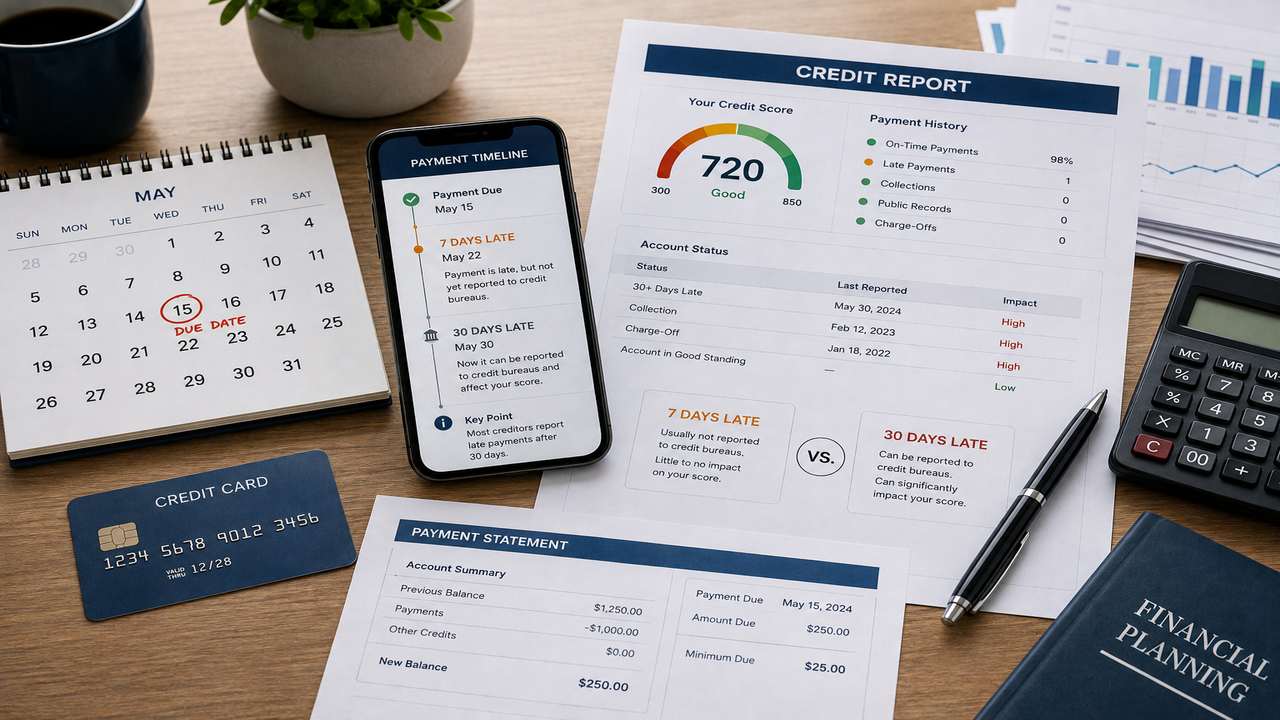
    A 100-point drop is a completely different category of event from the smaller 10-20 point fluctuations covered elsewhere, which are often routine and unremarkable. A change this large virtually always corresponds to one specific, identifiable, and usually serious event: a missed payment reaching the 30-day reporting threshold, a new collection or public record, a charge-off, a significant utilization spike (often from a specific large purchase or a credit limit reduction), a closed account materially affecting your file, or in some cases, identity theft or a reporting error. The task in front of you isn’t to wonder whether something happened — something did — but to identify exactly what, since your credit report itself will contain the answer.

    Step One: Pull Your Full Credit Report Immediately

    Don’t just check your score again — pull the full underlying report from all three bureaus at AnnualCreditReport.com. The score is a summary output; the report is the actual data driving it, and it’s the only place you’ll find the specific cause. Compare it carefully against what you remember from before the drop, looking specifically at the sections below.

    The Most Likely Causes, Ranked by How Often They Explain a Drop This Large

    1. A Missed Payment That Reached 30+ Days Past Due

    This is the single most common cause of a drop in this range, particularly for someone with an otherwise strong credit history (counterintuitively, the stronger your existing credit, the more a single serious negative mark can move the needle, since the scoring model has less room to reassess a previously excellent record). Check every account for a payment status showing 30, 60, 90, or more days late. This can happen more easily than people expect — an autopay failure due to an expired card, a bank account closed and forgotten with a small automatic payment still linked to it, or a bill you didn’t realize existed (a medical bill sent to an old address, for instance).

    2. A New Collection Account or Charge-Off

    A previously unknown debt — a medical bill, a forgotten subscription, a utility final bill from a former address — reaching collections status can appear as a completely new negative item you had no prior awareness of. Similarly, if an existing account you knew was struggling finally crossed the charge-off threshold (typically 180 days of nonpayment for credit cards), this alone can produce a drop in this range, especially layered on top of the preceding months of late payment reports that led up to it.

    3. A Significant, Sudden Utilization Spike

    While routine utilization changes typically produce smaller score movements, a dramatic spike — maxing out a card, or having a credit limit sharply and unexpectedly reduced by your issuer (which can happen due to the issuer’s own internal risk reassessment, entirely independent of anything you did) — can produce a much larger impact than a routine month-to-month fluctuation, particularly if it affects your overall utilization ratio significantly or pushes a previously low-utilization card into a very high range.

    A civil judgment, a tax lien (though federal tax liens are no longer included on standard credit reports as of a change implemented several years ago, some state and local liens or other judgments can still appear depending on your jurisdiction and specific circumstances), or in more serious cases, a bankruptcy filing, are all major public records that can trigger a drop of this magnitude or larger. If any legal action has been taken against you that you’re aware of — even one that felt minor or was resolved on your end — it’s worth confirming whether and how it appears on your credit report.

    5. Identity Theft or Fraudulent Account Activity

    If a fraudster opened a new account in your name, ran up significant charges, or defaulted on a fraudulent loan, this can appear on your report as new accounts, new hard inquiries, and eventually new negative payment history — all without any legitimate action on your part, making this one of the scenarios that most genuinely fits the description “for no reason,” since from your perspective, nothing you actually did caused it.

    6. A Reporting Error

    Sometimes a creditor’s system genuinely makes a mistake — reporting a payment as late when it was actually on time, misapplying a payment to the wrong account, or duplicating a negative item that should only appear once. These errors are less common than the causes above but do happen, and they’re worth ruling out if you’ve reviewed everything else and nothing seems to genuinely explain the drop.

    7. An Authorized-User Account’s Serious Negative Event

    If you’re an authorized user on someone else’s account, and that account experienced something serious on their end — a significant missed payment, a charge-off, a maxed-out balance — it flows into your credit file exactly as if it were your own account, and can easily be the kind of thing you’d have no direct awareness of, making it a genuinely plausible explanation for an otherwise mysterious drop.

    8. Account Closure by the Issuer (Not You)

    If a credit card issuer closed one of your accounts — due to their own internal risk assessment, extended inactivity, or a broader portfolio decision unrelated to your specific behavior — and it was a significant portion of your total available credit or one of your oldest accounts, the combined effect on your utilization ratio and average account age can be more substantial than a routine account closure you initiated yourself, especially if it happened without any advance notice you noticed.

    A Systematic Diagnostic Process

    Step 1: Note the exact date range.

    Identify when your score was last known to be normal and when you first noticed the drop, to narrow your search to the specific reporting period involved.

    Step 2: Review every account’s payment status.

    Look specifically for any status other than “current” or “paid as agreed” across every single account, including ones you might not think of as active or important.

    Step 3: Check for any new accounts you don’t recognize.

    This includes both new credit accounts and new hard inquiries, which would indicate either your own forgotten application or, more concerning, unauthorized activity.

    Step 4: Check for new public records or collections.

    Look specifically for anything in these sections that wasn’t there before, even for a small dollar amount, since even modest new negative items can meaningfully affect a score, particularly layered onto an otherwise strong file.

    Step 5: Review each account’s reported balance and limit.

    Look for either a significant balance increase or, just as importantly, a limit decrease that wasn’t initiated by you.

    Step 6: Check whether you’re an authorized user anywhere, and if so, contact the primary cardholder to ask whether anything changed on their end.

    Step 7: Compare reports across all three bureaus.

    Since not every creditor reports to every bureau, or reports at exactly the same time, comparing all three can sometimes reveal that an issue appears on one report but not the others, narrowing down exactly where the problem originated.

    What to Do Once You’ve Found the Cause

    If it’s a missed payment:

    Bring the account current immediately if it isn’t already. Consider a goodwill adjustment request if this was a genuine one-time circumstance on an account with an otherwise strong history.

    If it’s a new collection or charge-off:

    Verify the debt is actually yours and accurate before paying anything, using your right to request debt validation. If accurate, decide on paying in full, negotiating a settlement, or, for very old or fraudulent debt, disputing it directly.

    If it’s a utilization spike:

    Pay down the balance as quickly as possible if it’s from your own spending. If it’s from an unexpected credit limit reduction, consider contacting the issuer to ask about reinstating your previous limit, and if declined, focus on paying down balances on other cards to help offset the overall utilization impact.

    Consult with a consumer law attorney if you believe the judgment is inaccurate, improperly obtained, or eligible to be vacated or resolved; if accurate and valid, understand your resolution options (payment, negotiated settlement, or, in bankruptcy cases, understanding your specific discharge and reporting timeline).

    If it’s identity theft:

    Place an immediate fraud alert or credit freeze with all three bureaus, file a report at IdentityTheft.gov (which generates an official FTC identity theft report you can use to dispute fraudulent accounts), and dispute every fraudulent item directly with the credit bureaus and creditors involved, providing your identity theft report as documentation.

    If it’s a reporting error:

    Gather your supporting documentation (payment confirmations, bank statements, prior correspondence) and file a formal dispute with whichever bureau shows the error, and separately contact the creditor directly to request they correct their reporting at the source.

    If it’s an authorized-user account:

    Consider whether remaining an authorized user on that account still serves your interests, and have a direct conversation with the primary cardholder about what happened and whether it’s likely to recur.

    When It Might Genuinely Be Identity Theft: Red Flags to Watch For

    Beyond the general process above, a few specific signs point more strongly toward fraud rather than an oversight or error on your own accounts: unfamiliar hard inquiries from lenders you’ve never applied with, an account opened with a different address than yours, a sudden change in your mailing address on file with a creditor that you didn’t make, being denied a legitimate application because of accounts you don’t recognize, or receiving collection notices for debts entirely unfamiliar to you. If any of these appear during your review, treat identity theft as the leading explanation and act with urgency — the sooner you freeze your credit and dispute fraudulent items, the less additional damage can accumulate while the issue remains unresolved.

    How Long Recovery Takes From a 100-Point Drop

    Recovery timelines vary enormously depending on the specific cause. A resolved reporting error can often be corrected within 30-45 days of a successful dispute, restoring your score close to its prior level relatively quickly once the inaccurate information is removed. A genuine missed payment or new collection, once resolved through payment, typically shows gradual improvement over several months to a year as the negative mark ages and is outweighed by continued positive payment history, though the specific item remains visible on your report for up to seven years even after being resolved. A charge-off or serious delinquency generally takes the longest to fully recover from, often requiring a year or more of consistent positive credit behavior to see substantial score improvement, even though the impact does lessen progressively over that time rather than remaining constant.
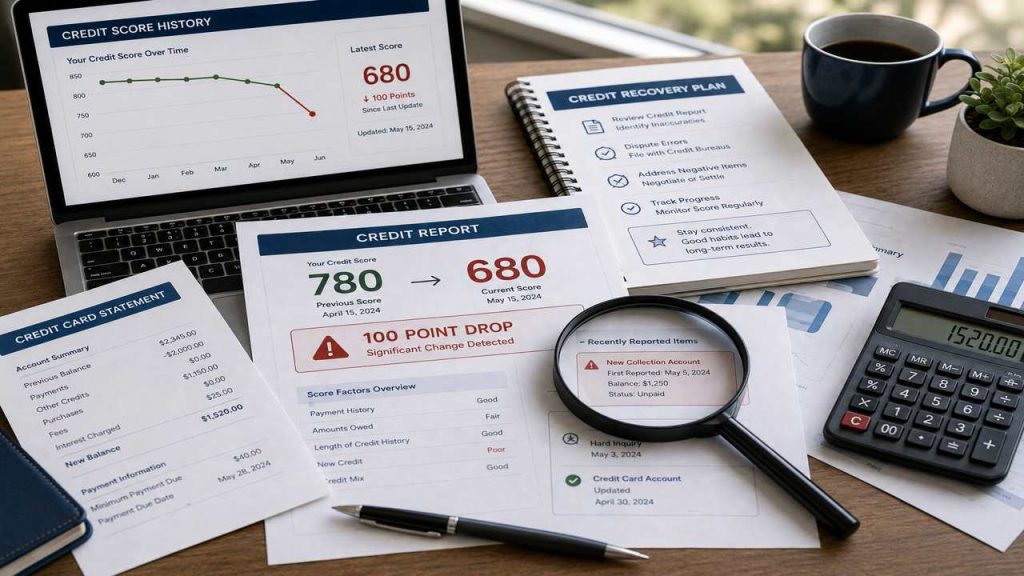
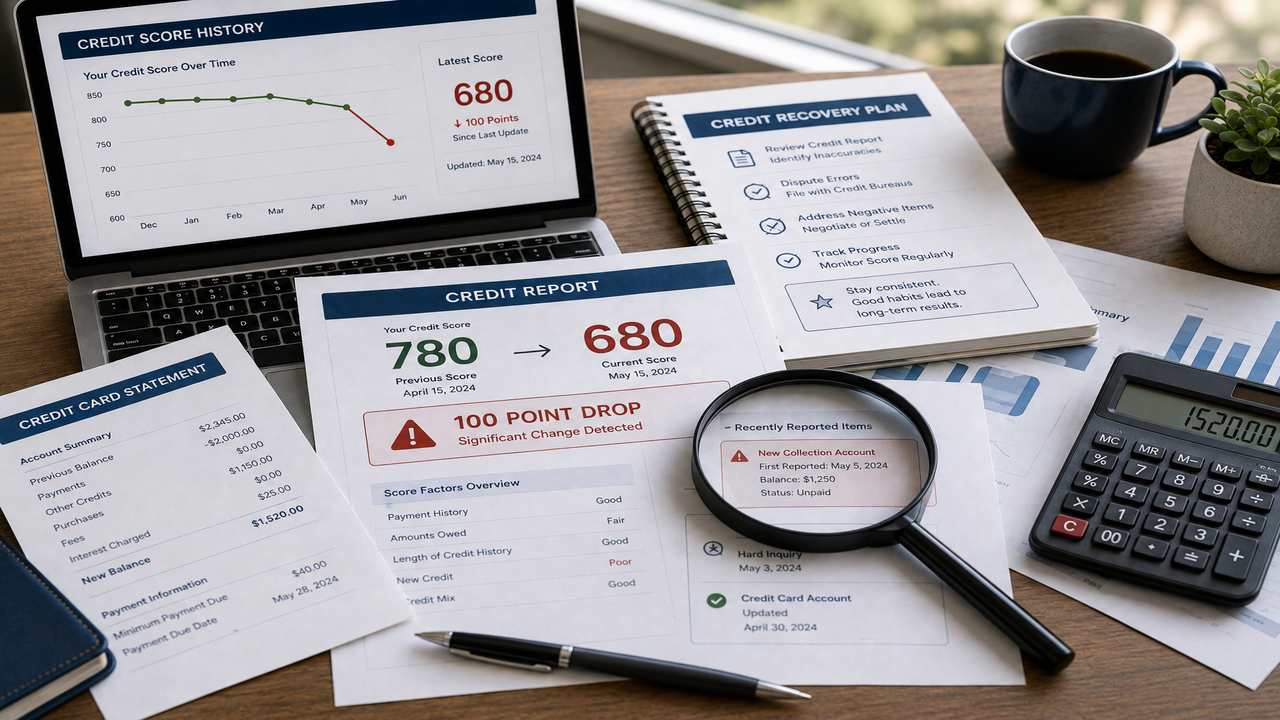
    credit-score-dropped-100-points-under-100kb

    Preventing Future Large, Unexplained Drops

    Set up account alerts with every creditor for payment due dates, balance thresholds, and any changes to your account terms or limits, so you’re notified in real time rather than discovering an issue weeks or months later during a routine score check.

    Consider a credit freeze with all three bureaus if you’re not actively planning to apply for new credit, which prevents new fraudulent accounts from being opened in your name in the first place.

    Review your full credit report, not just your score, on a regular schedule — quarterly is a reasonable cadence for most people — so that any new issue is caught closer to when it happens rather than accumulating for months before you notice a dramatic score change.

    Keep contact information current with every creditor, since missed notices due to an old address or expired email are a common, preventable cause of payments or bills falling through the cracks unnoticed.

    Frequently Asked Questions

    Can a 100-point drop happen from a single missed payment alone?

    Yes, particularly for someone with an otherwise excellent credit history and a relatively short list of negative marks — in these cases, a single serious late payment (especially 90+ days late, or a first-time charge-off) can produce an outsized impact precisely because the scoring model previously had very little negative information to weigh it against.

    Is it possible for a drop this large to be completely unexplainable, even after a thorough review?

    This is extremely rare. If you’ve genuinely reviewed your full report from all three bureaus and truly cannot find any specific new negative item, new inquiry, balance change, or closed account, it’s worth contacting the specific credit monitoring service showing you the drop directly, since in rare cases a monitoring service itself can display an inaccurate or delayed score due to its own technical issue, separate from your actual underlying credit report data.

    How quickly should I act if I suspect identity theft caused this?

    Immediately — the longer fraudulent accounts remain open and unaddressed, the more potential damage (additional fraudulent charges, further accounts opened, more significant score impact) can accumulate. Placing a fraud alert or freeze and filing your identity theft report should be your first actions upon strong suspicion, even before you’ve finished a full diagnostic review of every account.

    Will my score ever fully return to where it was before a 100-point drop?

    In most cases, yes, given enough time and consistent positive credit behavior afterward, particularly once the underlying negative item ages significantly or drops off your report entirely after seven years. The timeline varies considerably based on the specific cause and your overall credit management afterward, but a drop of this size is very rarely permanent if you address the underlying cause and continue building positive history.

    Should I dispute everything on my report just in case something is wrong that I haven’t identified?

    No — disputing accurate information doesn’t help and can create unnecessary complications. Focus your dispute efforts specifically on items you have genuine reason to believe are inaccurate, incomplete, or fraudulent, based on your careful review, rather than disputing broadly and indiscriminately.

    A Real Example of How Multiple Small Issues Compound Into a Large Drop

    Sometimes a 100-point drop isn’t one single dramatic event, but several moderate issues that happened close together and compounded. Consider this composite, illustrative scenario: a medical procedure results in a bill that’s misdirected to an old address and goes unpaid for months before being sent to collections (a new negative item, potentially a 40-60 point impact on its own for someone with a previously clean file). During the same general period, the financial strain of unexpected medical costs leads to a missed credit card payment that reaches 30 days late before being caught and resolved (another significant hit, particularly layered onto an already-strained month). And separately, the same card issuer, noticing the missed payment, proactively reduces the credit limit on that card as a risk-management measure, pushing utilization on that specific card up sharply even though the balance itself didn’t change (a further contributing factor).

    Individually, any one of these might have produced a 20-40 point drop. Together, compounding within the same reporting period, they can easily combine into something in the 100-point range, which is why a “for no reason” drop this large often benefits from a careful, complete review rather than stopping the search after finding the first explanation — there may be more than one contributing factor, and understanding the full picture helps you address everything rather than just the most obvious piece.

    How to Prioritize When You Find Multiple Issues at Once

    If your review turns up more than one contributing factor, prioritize in roughly this order: first, anything indicating fraud or identity theft (since this requires the most urgent action to prevent further damage); second, anything that’s actively still delinquent or accruing further negative status (like a payment still currently past due, where every additional day makes the situation modestly worse); third, anything you can resolve quickly and completely (a small collection you can pay off in full immediately); and finally, anything that requires a longer-term approach (rebuilding utilization gradually, or waiting out an aging negative item). Tackling issues in this order ensures you stop any ongoing damage first, then address what you can control most immediately, before turning to the factors that simply require patience and continued good habits over time.

    The Emotional Toll of a Large, Unexpected Drop — and Why It’s Worth Naming

    It’s worth acknowledging directly: discovering a 100-point drop, especially one you can’t immediately explain, is genuinely stressful, and for many people it triggers a cascade of worry about mortgage applications, upcoming purchases, or a general sense that their financial life is less stable than they believed. This reaction is completely understandable, and it’s worth giving yourself permission to take the diagnostic process one step at a time rather than trying to solve everything in a single anxious evening. Most causes, once identified, come with a clear and manageable path forward — this isn’t a problem without solutions, even when it initially feels overwhelming. Approaching it as a solvable puzzle rather than a catastrophe tends to produce both better outcomes and considerably less stress along the way.

    Frequently Asked Questions, Continued

    Can a divorce or separation cause a 100-point drop?

    Not directly through the credit scoring system itself — a divorce doesn’t automatically split or affect your credit file. However, the financial disruption sometimes associated with separating households (missed payments during a chaotic transition period, a joint account where an ex-partner stops paying their share, or removal from a joint account you’d relied on for a strong utilization ratio) can indirectly lead to exactly the kinds of events that do cause significant score drops.

    If my score dropped 100 points, will every lender see the same reduced number?

    Not necessarily the identical number, since different lenders may pull from different bureaus and use different scoring models, but if the underlying cause is a serious, accurately reported negative item, its impact would generally be reflected across whichever bureau received that information, even if the exact point value differs slightly between different scoring models.

    Does a 100-point drop ever resolve itself without me taking any action?

    Only in the specific case where the underlying cause was temporary or already resolving on its own (for example, a utilization spike from a large one-time purchase that you were already planning to pay off before your next statement closes) — for anything involving an actual delinquency, collection, or public record, meaningful recovery requires you to actively resolve the underlying issue rather than simply waiting.

    Is it worth paying for a paid credit monitoring service after an event like this, rather than relying on free options?

    Free monitoring (through your bank, card issuer, or services like Credit Karma) is generally sufficient for catching and understanding most score changes. A paid service with three-bureau monitoring and real-time alerts can offer faster notification and slightly more comprehensive coverage, which may be worth the cost specifically if you’ve just experienced a significant, concerning event like this and want the added reassurance of closer monitoring during your recovery period.

    A Note on How This Differs From a Gradual Decline

    It’s worth distinguishing a sudden 100-point drop from a gradual decline of the same magnitude spread across many months, since they usually point to different underlying stories and require somewhat different approaches. A sudden drop, as covered throughout this guide, typically traces to one or two specific, identifiable events within a single reporting period. A gradual decline of similar total magnitude — losing 8-10 points a month over the course of a year, for instance — more often reflects an ongoing pattern: slowly rising balances across several accounts, a series of small late payments accumulating over time, or a gradually worsening debt-to-income situation. If your situation looks more like the latter, the diagnostic process is less about finding a single smoking gun and more about honestly assessing your overall spending and payment patterns over the full period in question, since the “cause” in this case is more likely a trend than a single event.

    Frequently Asked Questions, Continued Further

    If I find the cause and fix it immediately, does my score jump back up right away?

    Not usually instantly — most fixes take at least one full billing/reporting cycle (typically 30-45 days) to be reflected in an updated score, since your creditor needs to report the corrected or resolved status to the bureaus before it factors into a recalculated score. Some improvements, particularly a corrected error following a successful dispute, can show meaningful recovery relatively quickly once the correction is processed, while others, like recovering from a genuine charge-off, unfold more gradually over many months.

    Could a 100-point drop be caused by something on my spouse’s credit report if we have joint finances?

    Only if you have specific joint accounts together, or if you’re an authorized user on their individual accounts — otherwise, spouses maintain entirely separate credit files, and one spouse’s individual account activity (outside of shared or authorized-user accounts) has no direct effect on the other’s credit report or score.

    Is it common for a drop this large to be permanent even after doing everything right?

    No — while certain very serious items (a Chapter 7 bankruptcy, for example) do carry a longer-lasting impact than a single late payment, even these become progressively less impactful over time as they age and as you build new positive history, and all negative items eventually age off your report entirely, most within seven years, ensuring the impact is never truly permanent.

    The Bottom Line

    A 100-point credit score drop always has a specific, identifiable cause, even when it initially feels like it came from nowhere. The path forward is the same regardless of how alarming the number feels: pull your full credit report from all three bureaus, systematically review every account for missed payments, new negative items, utilization changes, and unfamiliar activity, and address whatever you find directly — through payment, dispute, a goodwill request, or fraud protection measures as appropriate. Once you understand the specific cause, a drop this size stops feeling mysterious and starts being simply another, more serious version of the same kind of credit management challenge that smaller fluctuations represent — solvable with the same combination of accurate information, direct action, and time.

    Get a Credit Audit or Quote
  • Pay for Delete Capital One: Does It Actually Work?

    Pay for Delete Capital One: Does It Actually Work?

    If you have a charged-off or collection account tied to Capital One and you’ve come across the term “pay for delete,” you’re likely hoping there’s a straightforward way to pay off the debt and have it disappear from your credit report entirely, rather than simply showing as “paid.” This is a completely understandable goal, and it’s worth understanding exactly how likely it is to work with Capital One specifically, what the realistic alternatives are, and how to approach the conversation if you decide to try.

    What “Pay for Delete” Actually Means

    A pay for delete arrangement is an agreement, negotiated directly between a consumer and a creditor or collection agency, where the consumer pays some or all of the debt in exchange for the creditor agreeing to remove the negative account entirely from the consumer’s credit report, rather than reporting it as “paid” or “settled.” The appeal is obvious: a fully removed negative account has a more favorable effect on your credit score than the same account showing as paid, since the negative history itself disappears rather than remaining visible (even if marked positively resolved).

    Why This Is Difficult, Specifically With Capital One

    Here’s the important reality check: Capital One, like most major banks and original creditors, generally does not agree to pay for delete arrangements as a matter of internal policy. This isn’t unique to Capital One — most large, well-established financial institutions have policies against this practice, for a specific reason worth understanding: major creditors are typically members of the credit bureaus’ data furnisher agreements (through organizations like the Consumer Data Industry Association), which include commitments to report account information accurately and completely. Agreeing to selectively delete accurate information in exchange for payment would arguably violate the spirit, and in some interpretations the letter, of those data-accuracy commitments, exposing the institution to potential regulatory or contractual risk.

    This means that, in practice, requesting pay for delete directly from Capital One while the debt is still held internally by Capital One is very unlikely to succeed, regardless of how the request is worded or how much you’re willing to pay upfront.

    The Situation Changes If the Debt Has Been Sold to a Collector

    Capital One, like most major creditors, will often sell charged-off debt to third-party collection agencies rather than pursuing it indefinitely themselves. If your original Capital One debt has been sold — meaning a separate collection agency now owns and is reporting the debt, not Capital One directly — the pay for delete conversation shifts to that collection agency, and the odds change somewhat.

    Smaller, independent collection agencies, particularly those that purchased the debt for a steep discount, sometimes have more individual flexibility and less rigid institutional policy against pay for delete than Capital One itself does as the original creditor. Some are willing to agree to it, particularly for accounts they view as otherwise difficult to collect, since recovering something is generally better for them than recovering nothing at all. That said, this is far from guaranteed — many collection agencies also decline, either due to their own internal policy, their contractual agreements with the entity they purchased the debt from, or simply because they don’t see a strong incentive to agree to it.

    How to Find Out Who Currently Holds Your Debt

    Before attempting any negotiation, confirm exactly who currently owns and is reporting the debt:

    • Check your current credit report for the specific name of whichever company is reporting the account — if it still shows as “Capital One,” they likely still hold the debt internally; if it shows a different, unfamiliar company name, that’s likely the collection agency that purchased it.
    • Review any recent collection letters or calls you’ve received, which are legally required to identify the specific company attempting to collect and, under the Fair Debt Collection Practices Act, must provide validation of the debt if you request it within 30 days of first contact.
    • Call Capital One directly if you’re unsure, and ask whether the account is still held internally or has been sold, and if sold, to which company — while they’re not obligated to proactively volunteer detailed collection strategy, they generally will confirm basic factual information like this upon request.

    If Capital One Still Holds the Debt: Realistic Alternatives to Pay for Delete

    Since a direct pay for delete request to Capital One itself is unlikely to succeed, here are more realistic paths that can still meaningfully improve your situation:

    • Pay in full and let it report as “paid charge-off.” While this doesn’t remove the entry, it’s viewed more favorably than an unpaid charge-off under most current scoring models, and it demonstrates resolution if a future lender reviews your full report manually.
    • Request a goodwill adjustment after paying in full. Some divisions of Capital One, particularly for a longtime customer with an otherwise reasonable account history, may consider a discretionary goodwill removal request after the debt is resolved, even though this is different from a pre-payment pay for delete negotiation and isn’t guaranteed.
    • Negotiate a settlement for less than the full balance. Capital One and its internal recovery departments will sometimes accept a reduced lump-sum payment to resolve a charged-off account, even without agreeing to delete the entry, which at minimum reduces what you owe and updates your report to reflect a “settled” status rather than an ongoing unpaid balance.
    • Let the seven-year reporting clock run its course if the account is old enough that it’s approaching the end of its reporting window anyway, in which case negotiating for early removal may add less value than simply waiting the remaining time, particularly if you’re not planning any major credit applications in the near term.

    If the Debt Has Been Sold to a Collector: How to Approach the Conversation

    If you’ve confirmed a different, third-party collection agency now holds the debt, here’s how to approach a pay for delete request with a realistic, professional tone:

    • Get everything in writing before making any payment. Never send payment based on a verbal promise alone — insist on a written agreement, sent by mail or through a documented method, explicitly stating that in exchange for your payment of a specific amount, the company agrees to request deletion of the tradeline from all three credit bureaus they report to.
    • Understand this remains at their discretion. Even collection agencies willing to consider pay for delete aren’t obligated to agree, and some major credit bureaus have specific data furnisher agreements that also discourage or prohibit this practice among the companies that report to them, meaning even a willing collector might technically be unable to follow through even if they verbally agree.
    • Be specific in your request. Rather than a vague “can you delete this,” specify exactly what you’re asking: “I’m prepared to pay [amount] as full and final settlement, in exchange for your agreement to request deletion of this tradeline from Equifax, Experian, and TransUnion within [a specific number, e.g., 30] days of receiving payment.”
    • Keep records of everything, including the agency’s name, any representative’s name, the date, and copies of all written correspondence, in case you need to follow up or dispute a failure to honor the agreement after payment.

    Why Pay for Delete Is Controversial, Even When Offered

    It’s worth understanding why this practice exists in something of a gray area, even when a collector agrees to it.

    The Fair Credit Reporting Act requires furnishers of credit information to report data accurately; deleting an account that was, in fact, accurately reported (assuming there’s no actual error, just an agreement to remove accurate information as a negotiating incentive) arguably conflicts with that accuracy principle, which is exactly why major creditors like Capital One generally avoid the practice altogether, and why some smaller collectors willing to offer it are, in a technical sense, taking on some risk by doing so. This doesn’t make it illegal for you as the consumer to request or accept such an arrangement, but it does explain the institutional reluctance you’re likely to encounter, particularly from a large, compliance-focused institution like Capital One.

    What to Do If You Suspect the Capital One Debt Isn’t Even Yours or Is Inaccurate

    If you don’t recognize the debt at all, believe it belongs to someone else, or believe the amount is incorrect, this is a fundamentally different situation from a pay for delete negotiation — you have the right to formally dispute it as inaccurate under the FCRA, which, if successful, results in complete removal because the information was wrong, not because of any payment or negotiation. This path doesn’t require any payment at all and is worth pursuing first if you have genuine reason to believe the debt or its reported details are inaccurate.

    A More Reliable Long-Term Strategy Than Chasing Deletion

    Given how unlikely a direct pay for delete agreement is with Capital One specifically, and even with many collection agencies, it’s often more productive to focus energy on the things within your more reliable control: resolving the debt (through payment or settlement) so it reports as positively as possible under current status codes, building substantial positive credit history afterward through other accounts, and allowing time to naturally reduce the weight of the older negative item as your overall file grows stronger and the entry itself moves further into the past, eventually aging off your report entirely at the seven-year mark from the original delinquency date regardless of what happens with any deletion request.

    Frequently Asked Questions

    Has Capital One ever agreed to pay for delete for anyone?

    While it’s difficult to rule out that some individual representative or unusual circumstance might have resulted in this at some point, it is not Capital One’s stated or general policy, and it should not be counted on or expected as a realistic outcome when planning your approach to resolving a Capital One debt.

    Is it illegal to ask for pay for delete?

    No, requesting it isn’t illegal for you as a consumer. It’s simply a negotiation request that the creditor or collector is free to accept or decline based on their own policies.

    If a collector agrees to pay for delete in writing but doesn’t follow through, what can I do?

    You’d have a written agreement documenting their commitment, which strengthens your position if you need to dispute their failure to honor it — contact them first to request compliance, and if that fails, you may have grounds for a complaint to the Consumer Financial Protection Bureau or, depending on your situation, consultation with a consumer law attorney about a potential breach of that written agreement.

    Does paying off a Capital One charge-off in full without a pay for delete agreement still help my score?

    Yes, generally — under current scoring models, a paid or settled charge-off is viewed more favorably than an unpaid one, even though the entry itself remains visible on your report (with an updated status) rather than being removed entirely.

    Should I hire a credit repair company to negotiate pay for delete with Capital One on my behalf?

    Be cautious about paying a company specifically for this service, since the same institutional policies that make pay for delete unlikely when you ask directly generally apply regardless of whether the request comes from you personally or from a company representing you — a credit repair company doesn’t have any special leverage or exception to Capital One’s general policy in this regard.

    A Sample pay for delete Request Letter (For a Third-Party Collector)

    If you’ve confirmed your Capital One debt has been sold to a collection agency and want to attempt this negotiation, here’s a template you can adapt:

    [Your Name]
    [Your Address]
    [Date]
    
    [Collection Agency Name]
    [Collection Agency Address]
    
    Re: Account [Reference Number], Original Creditor: Capital One
    
    Dear Sir or Madam,
    
    I am writing regarding the above-referenced account. I am prepared to pay [$X amount] as full and final settlement of this debt, contingent upon your agreement to request deletion of this tradeline from all three credit bureaus (Equifax, Experian, and TransUnion) within [30] days of receipt of payment.
    
    Please confirm this agreement in writing prior to my sending payment. Once I receive your written confirmation, I will promptly submit payment via [method — cashier’s check, money order, etc.].
    
    If this arrangement is not something your company is able to offer, please let me know, and I will consider alternative resolution options.
    
    Sincerely,
    
    [Your Name]
    [Contact Information]
    

    Always send this via a method that provides delivery confirmation (certified mail, for example), and keep a copy for your records. If they respond by phone rather than in writing, politely ask them to confirm any verbal agreement in writing before you proceed with payment.

    Realistic Success Rate Expectations

    It’s worth setting expectations honestly rather than optimistically: pay for delete requests to third-party collectors succeed only some of the time, and estimates and anecdotal experiences vary widely depending on the specific agency, the age and size of the debt, and how the request is framed. Larger, more established collection agencies with formal compliance departments are generally less likely to agree, given the same data-accuracy concerns that make major original creditors reluctant. Smaller, more aggressive debt-buying operations sometimes have more flexibility, precisely because they purchased the debt for a small fraction of its value and view any recovery as a win, with less concern for broader industry compliance norms.

    Rather than assuming this will work, it’s more productive to treat it as worth trying (since there’s little downside to asking, as long as you don’t send any payment without written confirmation first) while having a solid backup plan — payment or settlement without deletion — ready to go if the request is declined, which is a common outcome.

    Understanding the E-OSCAR System and Why Bureaus Discourage Pay for Delete

    Credit bureaus process disputes and data updates for creditors and collectors through a system called e-OSCAR (Electronic Online Solution for Complete and Accurate Reporting), and both Equifax, Experian, and TransUnion have data furnisher agreements with the companies that report to them, generally requiring accurate and complete reporting rather than selective reporting based on payment arrangements. This is the structural reason pay for delete exists in tension with standard industry practice: a collector who agrees to delete an accurately reported account in exchange for payment is, in a sense, working around the spirit of these furnisher agreements, even though enforcement of this specific practice varies and doesn’t always result in consequences for the individual company involved. This background context helps explain why some companies flatly refuse (out of genuine compliance concern) while others quietly agree anyway (calculating that the practical risk of doing so is low).

    Should You Pay a Credit Repair Company to Handle This for You?

    Given how much of a pay for delete negotiation comes down to institutional policy rather than negotiation skill, it’s worth being skeptical of any company that charges a significant fee specifically promising to secure pay for delete arrangements with major creditors like Capital One.

    As covered above, the same policy barriers apply whether you personally send the request or a company sends it on your behalf — there’s no special leverage a third-party company has that meaningfully changes Capital One’s institutional stance. If you do want assistance navigating this process, look for companies that are transparent about the realistic likelihood of success and that charge based on genuine legwork (like disputing actual inaccuracies, which is a different and often more reliably successful process) rather than a fee premised specifically on guaranteeing deletion of accurately reported debt.

    A Side-by-Side Comparison: Approaching Capital One vs. a Third-Party Collector

    Capital One (original creditor) Third-party collection agency
    General policy on pay for delete Generally against it
    Varies by company; some willing
    Reason Data furnisher accuracy commitments
    Purchased debt cheaply; some prioritize recovery over compliance norms
    Better alternative Pay in full or settle, then request goodwill adjustment
    Negotiate settlement with deletion as a specific written condition
    How to confirm who holds the debt Check credit report furnisher name; call Capital One directly
    Check any collection letters for the specific company name

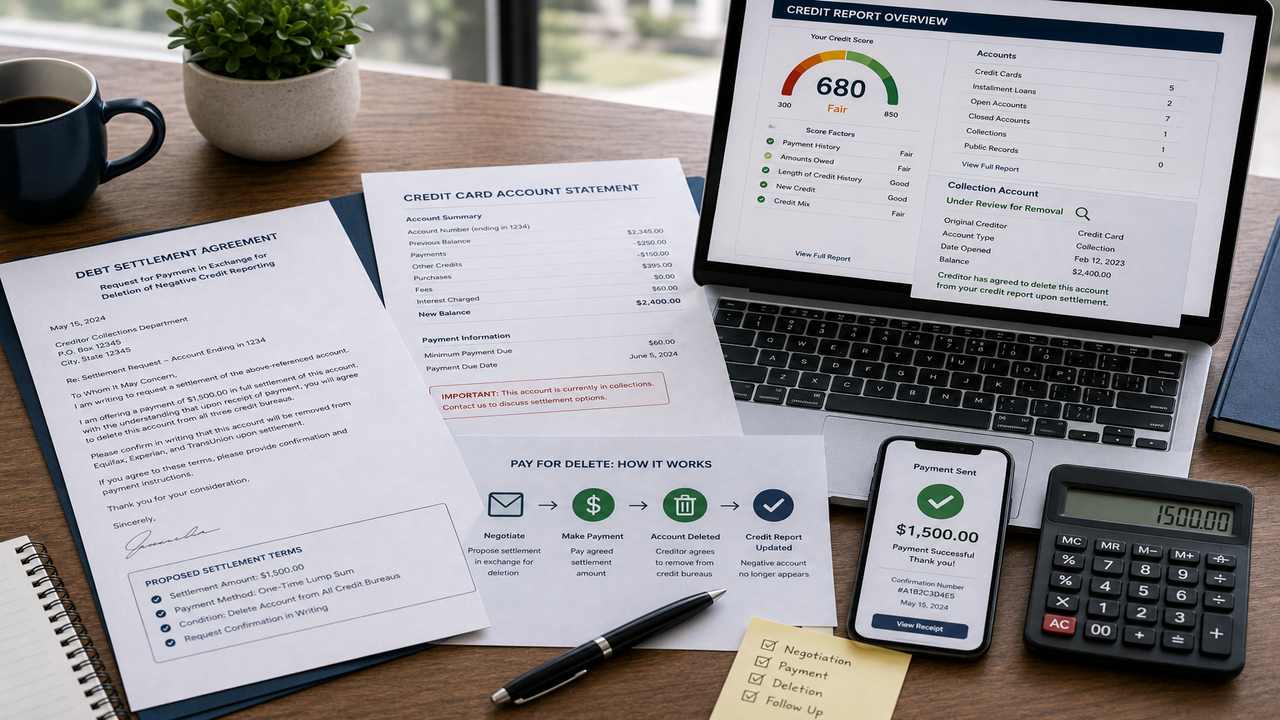
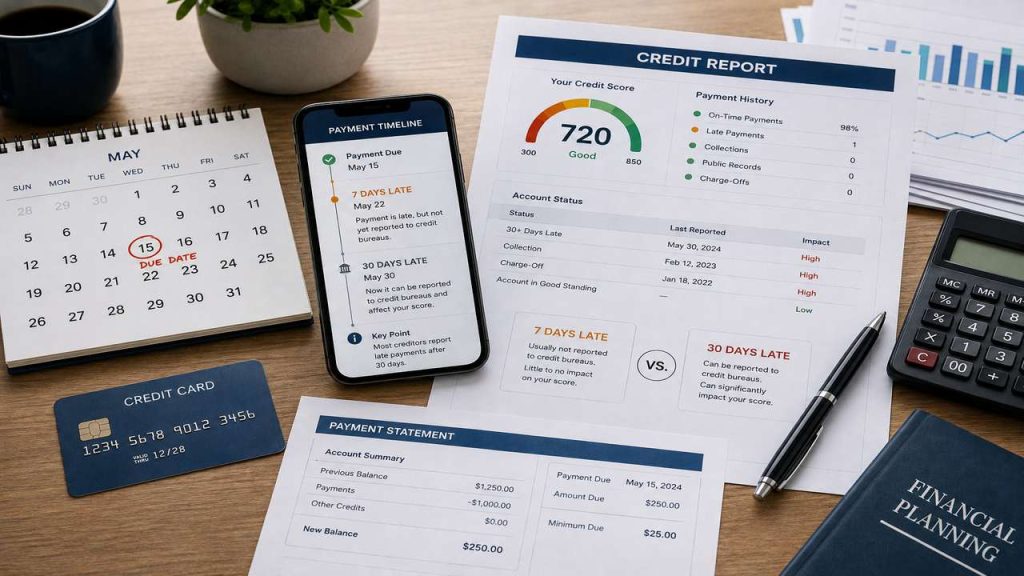
    pay-for-delete-capital-one-under-100kb

    Frequently Asked Questions, Continued

    If I pay off my Capital One account without a pay for delete agreement, how long until my score improves?

    Improvement can begin as soon as your next reporting cycle reflects the updated “paid” or “settled” status, typically within 30-45 days, though the overall magnitude of improvement depends on your specific scoring model and the rest of your credit file.

    Can I ask Capital One’s recovery department specifically, rather than general customer service, about pay for delete?

    You can ask, and speaking directly with their internal recovery or charge-off department (rather than general customer service, which typically has no authority over this) is the right channel if you want to pursue it — but the underlying institutional policy against the practice generally applies regardless of which specific department within Capital One you reach.

    Does it matter how old the Capital One debt is when negotiating?

    Yes, generally — older debt, particularly debt getting closer to its seven-year reporting expiration, sometimes gives you more leverage in settlement negotiations (since the creditor or collector has less time remaining to collect anything at all), though this doesn’t specifically change the likelihood of a deletion agreement, which remains governed primarily by institutional policy rather than debt age.

    If Capital One declines pay for delete, is there any point in still negotiating a settlement?

    Yes, absolutely — a settled or paid account is meaningfully better for your credit profile and your legal standing than an unpaid one, even without deletion, and it’s worth pursuing on its own merits rather than only as a consolation to a declined deletion request.

    What Capital One’s Actual Charge-Off and Collections Process Looks Like

    Understanding the typical internal timeline can help you know what stage you’re at and what to expect next. Capital One, like most major card issuers, generally follows a process similar to this: after a payment is missed, you’ll receive escalating notices at 30, 60, 90, and 120 days past due, often accompanied by calls from Capital One’s own internal collections department attempting to bring the account current or set up a payment arrangement. Around the 150-180 day mark, if the account remains unresolved, it’s charged off internally and reported to the credit bureaus as such.

    After charge-off, Capital One may continue attempting to collect directly for some period, or may sell the debt to one of several third-party debt buyers they work with — this decision is made internally and isn’t something you’ll typically be notified about in advance, which is why checking your credit report periodically after a charge-off is the most reliable way to know whether the debt is still with Capital One or has moved to a new owner.

    What If You’ve Already Made a Partial Payment Without an Agreement?

    If you’ve already sent Capital One or a collector a partial payment without securing any written pay for delete agreement beforehand, it’s worth knowing this doesn’t prevent you from continuing to negotiate the remaining balance, though it does remove any leverage you might have had to request full account deletion in exchange for that specific payment, since it’s already been made unconditionally. Going forward, treat any additional payment as a fresh negotiation point, and don’t send further payments without a written agreement specifying exactly what you’re getting in return, whether that’s deletion (unlikely but possible with a third-party collector), a specific “paid in full” status update, or a formal settlement agreement closing out the account.

    Frequently Asked Questions, Continued Further

    Does Capital One ever reduce the amount owed even without a full pay for delete or settlement negotiation?

    Sometimes, particularly if you’re proactive and call before the account is fully charged off, Capital One’s internal collections department may offer reduced settlement amounts or structured payment plans as part of standard hardship accommodation practices, separate from any pay for delete request specifically.

    If Capital One sold my debt to a specific collector I don’t want to deal with, can I ask them to resell it elsewhere?

    No, you don’t have the ability to direct who a creditor sells a debt to, but you do retain the same rights (debt validation, dispute rights, settlement negotiation) with whatever company currently and legitimately holds the debt, regardless of your preference about which company that is.

    Is there a specific department at Capital One I should ask for regarding an old charged-off account?

    Yes — asking specifically for their “recovery” or “charge-off recovery” department, rather than general customer service, will connect you with the team that actually has authority over settlement negotiations and payment arrangements for already-charged-off accounts.

    The Bottom Line

    Pay for delete is very unlikely to work directly with Capital One while they still hold the debt themselves, due to their general institutional policy against the practice. If your debt has been sold to a third-party collection agency, the odds improve somewhat, though it’s still far from guaranteed and depends heavily on the specific agency involved. In either case, get any agreement in writing before paying, and have a realistic backup plan — paying in full or negotiating a settlement, even without deletion, still meaningfully improves your situation compared to leaving an unpaid balance on your report, and time itself will eventually resolve the entry once the standard seven-year reporting window expires.

    Need Help Reviewing Your Credit Report?

    If you want help reviewing your credit report for inaccurate or potentially disputable information, you can request a credit audit or quote.

    Request a Credit Audit or Quote
  • Charge-Off vs. Write-Off: Are They the Same Thing?

    Charge-Off vs. Write-Off: Are They the Same Thing?

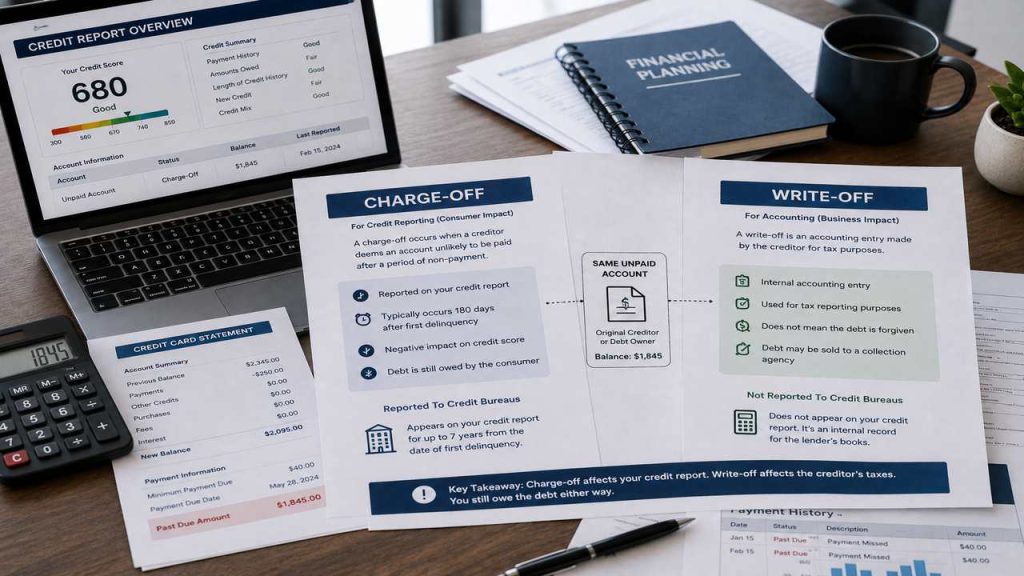
    These two terms get used almost interchangeably in everyday conversation, and understanding whether — and when — they actually mean the same thing can clear up a lot of confusion about what’s happening to an unpaid debt and what it means for you. The short answer: in most everyday consumer credit contexts, “charge-off” and “write-off” refer to the same underlying event, but the terms come from slightly different contexts and carry slightly different technical connotations worth understanding.

    The Core Definitions

    A write-off, in general accounting terminology, is the broad concept of a business removing an asset — in this case, a debt owed to them — from their books because they’ve determined it’s unlikely to be collected. This is a universal accounting concept that applies across virtually every industry, not just lending: businesses write off unpaid invoices, obsolete inventory, or bad investments using the same fundamental accounting principle.

    A charge-off is the specific term used within consumer lending and banking for exactly this same write-off process, applied specifically to a delinquent loan or credit account. It’s essentially “write-off” using the vocabulary specific to the lending industry, governed by particular regulatory guidance (particularly for credit cards, guided by interagency banking regulator standards recommending charge-off after 180 days of delinquency).

    So in the specific context of an unpaid credit card, personal loan, or similar consumer debt, “charge-off” and “write-off” are functionally describing the same event: the creditor’s internal decision to stop counting the debt as a collectible asset and record it as a loss for accounting and tax purposes.

    Why Both Terms Show Up in Different Places

    You’ll typically see “charge-off” used specifically on your credit report, in communications from credit card issuers and banks, and in consumer-facing credit education content, since it’s the standard terminology within consumer credit reporting (the Metro 2 reporting format used industry-wide specifically uses “charge-off” status codes).

    You’ll more often see “write-off” used in broader financial, accounting, business, and tax contexts — a company’s annual report might discuss “writing off” a category of bad debt in aggregate, an accountant might refer to “writing off” a specific client’s unpaid invoice, or general financial news might discuss a bank “writing off” a portion of its loan portfolio. It’s the more universal accounting term, while “charge-off” is the consumer-lending-specific application of that same concept.

    Does the Terminology Difference Affect You Practically?

    For virtually all practical consumer purposes, no. If your credit card is charged off, this is the exact same event a business accountant would describe as a write-off. It doesn’t affect:

    • Whether you still owe the debt. In both framings, the answer is yes — the accounting treatment on the creditor’s books doesn’t erase your legal obligation to repay what you borrowed.
    • How it’s reported to credit bureaus. Your credit report will use the “charge-off” terminology specifically, regardless of how the creditor’s internal accounting department or annual financial statements might refer to the same underlying event.
    • Your rights and options. Everything covered in guidance about handling a charge-off — debt validation, settlement negotiation, understanding the seven-year reporting clock, understanding your state’s statute of limitations — applies identically regardless of which term is used to describe the event.

    Where a Meaningful Difference Can Appear: Full vs. Partial Write-Offs

    One place the terminology does carry a slightly different practical implication is around the concept of a partial write-off, which is more of an accounting concept than a term you’ll typically see directly on your credit report. Sometimes a creditor writes off only a portion of a debt — for example, if you settle a $5,000 balance for $2,000, the creditor might write off the remaining $3,000 as a loss on their books while recording the $2,000 as collected. In consumer-facing terms, your account would likely show as “settled” or “paid, settled for less than full balance” on your credit report, rather than a full “charge-off” status, since the account was resolved rather than remaining in a state of complete non-payment.

    This distinction matters because a full charge-off typically represents a debt where essentially nothing has been recovered, while write-off language in broader financial contexts can refer to either a full or partial loss, giving it a slightly broader and more flexible technical meaning than the more binary consumer credit report status of “charged off” (which specifically indicates the account was never brought current through the creditor’s normal collection process before being written off).

    How This Plays Out on Your Actual Credit Report

    Your credit report itself will consistently use “charge-off” terminology (or similar Metro 2 standardized codes) rather than “write-off,” since it’s built specifically around consumer lending’s standardized reporting language. You would never see a credit report entry literally labeled “write-off” — that language exists in the broader accounting and financial world your creditor operates in internally, but it doesn’t cross over into the standardized consumer credit reporting format you’ll actually see when you pull your report.

    Tax Documentation and the Terms

    When a creditor issues a Form 1099-C for cancellation of debt (covered in more detail in guides specifically about charge-offs and IRS reporting), the form itself uses the term “cancellation of debt” rather than either “charge-off” or “write-off” directly, though the underlying event that typically triggers this form is the same charge-off/write-off event described throughout this guide. If a creditor considers a debt fully written off with no expectation of recovery, that’s often the trigger point for considering whether a 1099-C is required, separate from the earlier accounting-only charge-off decision that may have happened months or years prior.

    A Note on Business and Commercial Debt Terminology

    If you’re dealing with a business debt rather than personal consumer debt — for instance, if you’re a small business owner with an unpaid business line of credit or vendor invoice — you may encounter “write-off” used more prominently and directly in your communications with creditors and collection agencies, since business lending doesn’t always follow the exact same standardized consumer credit reporting conventions (though business credit does have its own separate reporting systems, primarily through Dun & Bradstreet, Experian Business, and Equifax Business, distinct from personal consumer credit reports). The underlying concepts — an unresolved debt eventually being recorded as an uncollectible loss — remain conceptually identical, but the specific reporting mechanisms and terminology conventions differ somewhat between personal and business credit contexts.

    Common Misconceptions About Both Terms

    “A write-off means the debt is forgiven and I don’t owe it anymore.”

    This is the single most common and costly misconception associated with either term. Neither a charge-off nor a write-off constitutes debt forgiveness from a legal standpoint — it’s an accounting classification on the creditor’s side, and the underlying legal debt obligation typically remains fully enforceable (subject to your state’s statute of limitations) unless the creditor separately and explicitly forgives it or you resolve it through payment or a formal settlement agreement.

    “Once it’s written off, the original creditor can’t do anything else about it.”

    In reality, the original creditor retains the legal right to continue pursuing the debt themselves, or to sell it to a collection agency, even after a charge-off/write-off has occurred internally. The accounting classification doesn’t restrict their legal collection options.

    “A write-off and a charge-off have different effects on my credit score.”

    Since your credit report specifically uses “charge-off” terminology and doesn’t separately track a “write-off” as a distinct reportable status, there’s no separate or different score impact to worry about based on which term might be used in a given conversation or document you’re looking at — it’s the same underlying event with the same credit reporting consequences either way.

    What Actually Matters More Than the Terminology

    Rather than focusing on which specific word is being used in a given piece of communication, the more useful things to actually track are: the exact date of original delinquency (which determines your seven-year credit reporting clock), the current balance and whether it’s accurate, whether the debt has been sold to a third party and to whom, your state’s statute of limitations for the type of debt involved, and whether you’re working toward resolving it through payment, settlement, or a documented decision to let the reporting period run its course. These practical facts determine your actual options and outcomes, regardless of whether any particular document or conversation happens to use “charge-off” or “write-off” language to describe the underlying situation.

    Frequently Asked Questions

    Is “bad debt write-off” the same thing as a charge-off?

    Yes — “bad debt write-off” is simply a more descriptive, explicit version of the general write-off concept, specifying that the asset being written off is a debt considered unlikely to be collected, which is exactly what a charge-off is within consumer lending specifically.

    Will I ever see the word “write-off” directly on my credit report?

    No, standard consumer credit reports use “charge-off” or related standardized status codes, not “write-off,” since that’s the terminology built into the Metro 2 reporting format used across the consumer credit reporting industry.

    Does a partial settlement count as a full charge-off or a partial write-off for credit reporting purposes?

    If you settle a debt for less than the full amount before it’s ever charged off, your account typically shows as “settled” or “paid, less than full balance,” a different status from a full, unresolved charge-off. If the account is charged off first and later partially recovered through a settlement with a collection agency, the reporting can vary depending on exactly how and when each party reports the resolution.

    Do businesses write off consumer debt for tax purposes the same way they’d write off any other bad debt?

    Generally yes, in broad accounting principle — the ability to deduct bad debt as a business loss for tax purposes follows established accounting and tax rules that apply similarly across different types of written-off receivables, though the specific tax treatment can vary by business type and the nature of the debt involved.

    If a company says they’ve “written off” my debt, does that mean I don’t have to pay anymore?

    Not necessarily — as covered throughout, this is an internal accounting determination on the creditor’s side, not a legal forgiveness of your obligation, unless the creditor specifically and separately states in writing that the debt is being forgiven or canceled, distinct from simply being written off their books as a loss for accounting purposes.

    A Simplified Look at the Accounting Behind the Scenes

    Understanding roughly what happens on the creditor’s books can demystify why this process exists at all, and why it’s handled the way it is. When you take out a loan or use a credit card, the amount you owe sits on the lender’s balance sheet as an asset — money they expect to receive. Banks and lenders are also required to maintain an “allowance for loan losses” or “allowance for doubtful accounts,” essentially a reserve fund set aside in anticipation that some percentage of loans across their portfolio won’t be repaid.

    When a specific account becomes seriously delinquent and is charged off, the lender removes that specific amount from their “assets we expect to collect” category and effectively moves it against that pre-established loss reserve, formally recognizing the loss on that individual account. This is why banking regulators require charge-offs at a standardized point (180 days for most consumer revolving credit) — it ensures banks aren’t allowed to indefinitely carry clearly uncollectible debt as a healthy-looking asset on their books, which protects the broader financial system’s transparency and accuracy.

    This is also, incidentally, part of why charged-off debt is often sold to third-party collectors for pennies on the dollar: once a lender has already recognized the full loss for accounting and tax purposes, any amount subsequently recovered — even a small percentage through a debt sale — is essentially “found money” from their accounting perspective, which is why debt buyers can profitably purchase charged-off accounts at steep discounts and still make a profit collecting even a fraction of the original balance.

    Historical Context: Where These Terms Come From

    The concept of writing off bad debt has existed in accounting practice for centuries, tracing back to fundamental double-entry bookkeeping principles that require assets to be accurately valued on a company’s books. “Charge-off” as a specific banking term became more standardized in the United States particularly through 20th-century banking regulation, as federal and state banking regulators developed more specific, standardized guidance for how and when financial institutions must recognize loan losses, partly in response to historical banking crises where institutions had been allowed to carry clearly bad debt as if it were healthy, contributing to inaccurate financial reporting and, in some cases, bank failures. The modern 180-day standard for most consumer revolving credit reflects decades of refined regulatory guidance aimed at balancing accurate financial reporting against giving struggling borrowers a reasonable window to become current before the more serious charge-off classification applies.

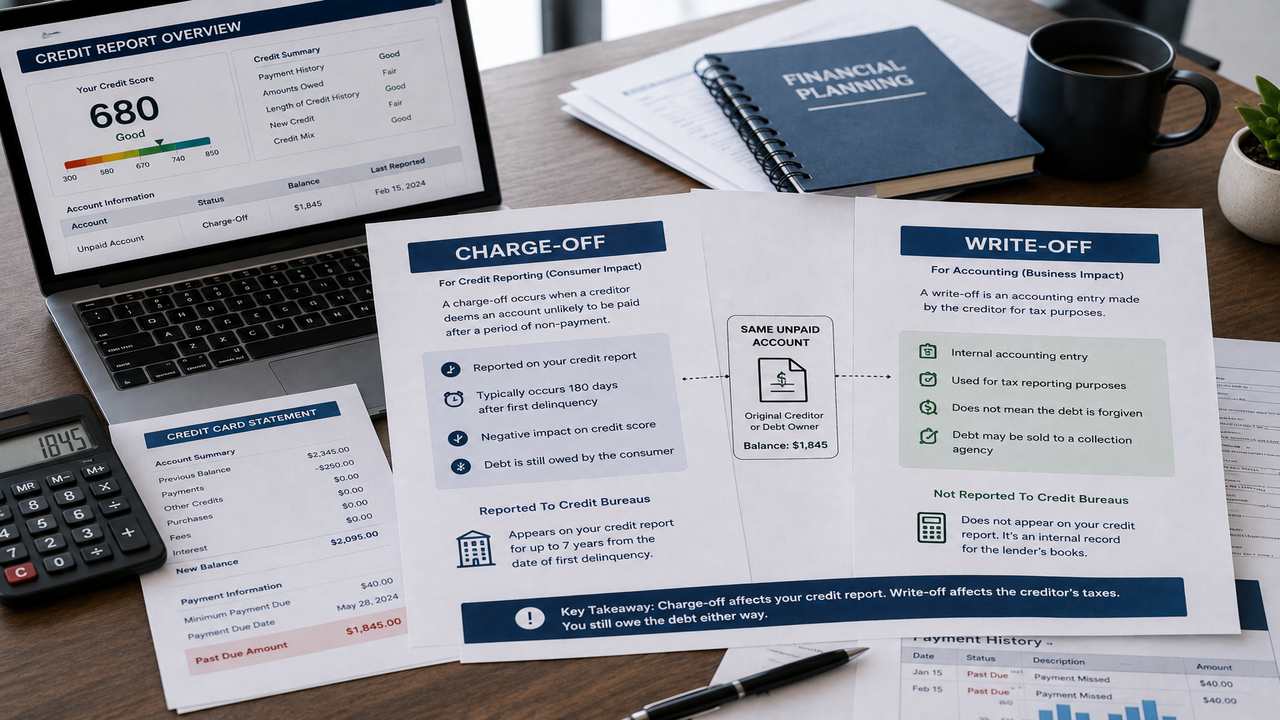
    charge-off-vs-write-off-under-100kb

    How This Affects Business Credit Differently From Personal Credit

    If you’re a business owner, it’s worth understanding that business credit operates under a meaningfully different reporting system than personal consumer credit. Business credit bureaus (primarily Dun & Bradstreet, Experian Business, and Equifax Business) track business-specific credit files, often tied to your Employer Identification Number (EIN) rather than your Social Security Number, and they don’t universally follow the same standardized 7-year reporting window or Metro 2 format conventions used in personal consumer credit reporting. A “write-off” of unpaid vendor credit or a business line of credit can appear on a business credit file, sometimes with different reporting timelines and dispute processes than the personal consumer system, and business owners who’ve personally guaranteed a business debt (common with small business loans and credit cards) may see the same charged-off or written-off debt reflected on both their business credit file and their personal credit report simultaneously, since a personal guarantee makes the individual legally responsible in addition to the business entity itself.

    A Comparison Table for Quick Reference

    Charge-off Write-off
    Context Consumer lending, specifically
    General business accounting (all industries)
    Appears on Credit reports directly Internal financial statements, not directly on consumer credit reports
    Governed by Banking regulatory guidance (commonly 180-day standard)
    General accepted accounting principles (GAAP)
    Does debt still exist legally? Yes
    Can apply to Credit cards, loans
    Any uncollectible asset, including but not limited to consumer debt
    Consumer-facing term? Yes — this is what you’ll see and hear about your own accounts
    Rarely — mostly an internal or broader financial industry term

    Frequently Asked Questions, Continued

    If a creditor’s annual report mentions “writing off” a large amount of debt, does that mean my specific account was part of that?

    Possibly, if your account was charged off during the reporting period the annual report covers, but these aggregate figures represent the combined total across potentially millions of individual accounts and don’t provide any specific information about your particular situation — you’d need to check your own credit report and account status directly to know how your specific debt was handled.

    Does a write-off ever get reversed if the creditor later collects the debt in full?

    From an accounting standpoint, yes — if a previously written-off debt is later recovered (whether through the original creditor’s continued collection efforts or a percentage recovered through a debt sale), that recovery is recorded as a financial recovery on the creditor’s books, sometimes called a “recovery” in their accounting records, separate from reversing the original charge-off status on your credit report, which would instead be updated to reflect your account’s new “paid” or “settled” status through the standard credit reporting update process.

    Is there a difference between how the IRS treats “charge-off” versus “write-off” for tax purposes?

    The IRS doesn’t distinguish based on the terminology used — what matters for tax purposes (including whether a Form 1099-C is required) is the substance of whether debt has actually been cancelled or forgiven, not which specific word a company’s internal documents happen to use to describe that determination.

    Practical Steps If You’re Dealing With Either One

    Regardless of which term you encounter in your specific situation, the practical response is identical, since — as established throughout this guide — they refer to the same underlying event for consumer debt purposes:

    Confirm exactly what you’re dealing with.

    Pull your credit report and identify the specific account, its reported balance, the original delinquency date, and whether it’s still with the original creditor or has been sold to a collection agency.

    Verify the debt before paying anything.

    Request debt validation if a third-party collector is involved, confirming they have the legal right to collect and that the amount claimed is accurate.

    Understand both relevant timeframes.

    The seven-year credit reporting window (from the original delinquency date) and your state’s separate statute of limitations on legal enforceability are both worth knowing before deciding how to proceed.

    Decide on your approach.

    Whether that’s paying in full, negotiating a settlement, setting up a payment plan, or — for very old debt past your state’s statute of limitations and close to falling off your credit report — deciding to let the remaining reporting period run its course without making a payment that could restart the legal enforceability clock.

    Get everything in writing.

    Any settlement, payment plan, or agreement about how an account will be reported going forward should be documented in writing before you send any payment, regardless of whether the conversation used “charge-off,” “write-off,” or any other terminology to describe the situation.

    Why Understanding the Terminology Still Has Some Value

    Even though the practical implications are identical for consumer purposes, understanding the distinction has genuine value in a few situations: it helps you read and understand financial news, annual reports, or broader economic commentary about lending and bad debt trends without confusion; it helps you communicate more precisely and confidently if you ever need to discuss your situation with a financial counselor, attorney, or tax professional; and it helps you recognize when someone — whether a well-meaning friend or a less scrupulous debt settlement company — might be using imprecise or even deliberately confusing terminology to make a situation sound different (better or worse) than it actually is. Debt settlement and credit repair scams sometimes exploit consumer confusion around exactly this kind of terminology, implying that a “write-off” is somehow different from and less serious than a “charge-off,” when in fact, for your personal credit report, they describe the identical situation.

    Frequently Asked Questions, Continued Further

    If I hear a debt collector use “write-off” instead of “charge-off,” should that change how I respond?

    No — treat the underlying situation identically regardless of which term is used. Focus on verifying the debt, understanding your reporting and legal timelines, and getting any agreement in writing, rather than reading extra meaning into which specific word happened to be used in the conversation.

    Can a creditor “un-write-off” or “un-charge-off” an account if I start making payments again?

    Once an account has been formally charged off/written off and closed, creditors generally don’t reopen the original account or reverse the charge-off status on your credit report simply because you resume paying — instead, subsequent payments are typically applied toward resolving the outstanding balance, and your credit report would be updated to reflect a “paid” or “settled” status on the existing charged-off account, rather than the charge-off designation itself being erased or reversed as if it never happened.

    Does a charge-off/write-off affect my ability to open a new account with the same bank in the future?

    This varies by institution, but many banks maintain internal records (sometimes shared across their own internal systems, and sometimes reported to specialized consumer reporting agencies like ChexSystems for banking-specific history) that can affect your ability to open new accounts with that same institution, or sometimes other institutions, separate from and in addition to how the charge-off affects your standard credit report and score.

    The Bottom Line

    “Charge-off” and “write-off” describe the same fundamental event — a creditor’s decision to stop treating an unpaid debt as a collectible asset and record it as a financial loss — with “charge-off” being the specific term used within consumer lending and credit reporting, and “write-off” being the broader accounting term used across all types of business contexts. For nearly every practical purpose relevant to you as a consumer, they’re interchangeable, and neither term means your debt has been forgiven or that you’re no longer responsible for repaying it. What matters far more than the specific word used is understanding the concrete facts of your situation: the original delinquency date, the accuracy of the reported balance, who currently holds the debt, and your specific state’s statute of limitations, all of which determine your actual rights and options going forward.

    Get a Credit Audit

    If you’re dealing with a charge-off or write-off and want to review your credit report for inaccurate or potentially disputable information, you can request a credit audit or quote.

    Request a Credit Audit or Quote
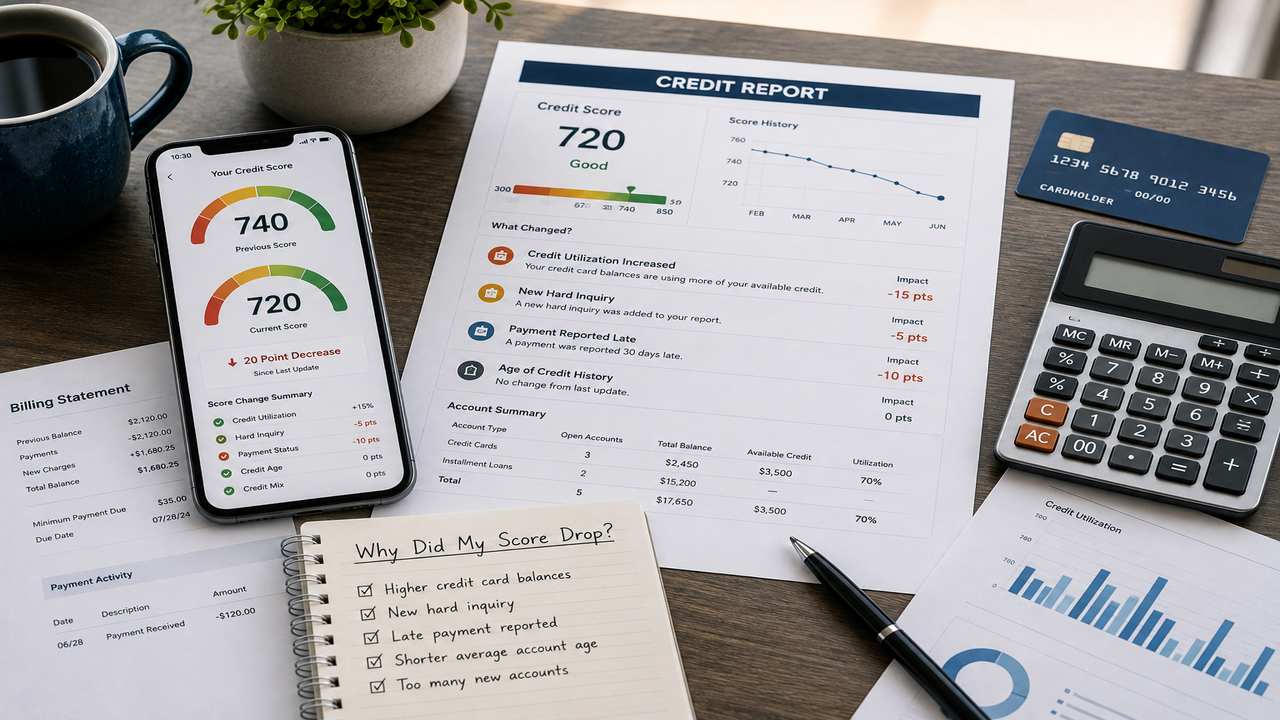
  • Why Did My Credit Score Drop 10 Points?

    Why Did My Credit Score Drop 10 Points?

    A 10-point credit score drop sits right at the edge of “probably nothing” and “worth a quick look.” It’s small enough that it’s rarely a sign of a serious problem, but noticeable enough to make you pause and wonder what changed. The good news is that a shift this small almost always traces back to one of a short list of routine, easily explainable causes — and in most cases, requires no action at all beyond understanding what happened.

    This guide walks through the specific causes behind a small score movement like this, how it differs from a larger drop, and when — if ever — it’s worth taking action.

    Why 10 Points Is Genuinely a Small Move

    Before diving into causes, it’s worth putting this in context. Credit scores routinely fluctuate by five to fifteen points from month to month as part of completely normal account activity — a slightly different reported balance, the natural aging of an account, or a small shift in how the scoring algorithm weighs your current file. A 10-point move sits squarely within this normal range of month-to-month variation, and by itself, it isn’t a signal that anything is meaningfully wrong with your credit management.

    This is different from a 50-, 75-, or 100-point drop, which almost always indicates something more specific and worth investigating in detail — a missed payment, a new collection, or a significant utilization spike. A 10-point change is more often the accumulation of very minor factors, or a single mild one, rather than anything dramatic.

    Common Causes of a Small, 10-Point Drop

    A Modest Increase in Reported Utilization

    Perhaps the single most common cause at this scale. If your card’s reported balance ticked up slightly from one statement to the next — even by a relatively small amount — your utilization ratio shifts accordingly, and a modest utilization increase produces a modest score effect. This is especially likely if the increase pushed your utilization across one of the general benchmark thresholds scoring models are believed to weigh somewhat more heavily around, such as moving from under 10% to somewhere in the 10-29% range, or from under 30% into the 30-49% range.

    A Single New Hard Inquiry

    While a new inquiry can sometimes cause a larger drop, especially on a thin credit file, for someone with a longer, more established credit history, a single new inquiry often produces an effect in this smaller range, since the scoring model has more existing data to weigh it against.

    Normal Account Aging Effects

    As your accounts age each month, the average age of your credit history shifts slightly, and if you have a mix of newer and older accounts, small month-to-month shifts in this average can contribute modestly to score movement, independent of anything specific you did.

    A Minor Change in Your Number of Open Accounts

    Opening a new account, even one you plan to manage perfectly, can temporarily lower your average account age and add a new hard inquiry, both modest factors that combine to produce a small overall dip even before that new account has a chance to demonstrate a positive payment history over time.

    An Authorized-User Account’s Minor Change

    If you’re an authorized user on someone else’s card, even a modest change on their end — a slightly higher balance one month, for instance — can produce a small ripple effect on your own score, since that account’s data flows into your file as well.

    Scoring Model or Bureau Data Timing Differences

    Sometimes what looks like a “drop” is actually a difference in timing between when different creditors report to different bureaus, or a difference between which specific scoring model version a particular app or lender is showing you. If you’re comparing scores from two different sources, a small discrepancy might not represent an actual change in your underlying file at all, but rather a difference in which data each source is pulling from and when.

    How to Quickly Check Whether Anything Actually Changed

    Look at your utilization first. This is the fastest and most common explanation to check — compare your current reported balances and limits against last month’s, on each individual card, not just your overall total.

    Check for any new inquiries. Review the “hard inquiries” section of your credit report for anything in the past month you might not immediately connect to the score change.

    Confirm no payments were missed or reported late. Even though a missed payment usually causes a larger drop than 10 points, it’s worth ruling out, especially if you have a shorter credit history where the impact of a single new negative item might be smaller relative to what a longer-established file would experience.

    Check whether any account was closed, including one you closed yourself or one an issuer closed for inactivity, which reduces your total available credit and can modestly raise your utilization ratio.

    When You Genuinely Don’t Need to Take Any Action

    If your review above doesn’t turn up anything beyond routine utilization fluctuation, a single expected hard inquiry from something you applied for, or simple month-to-month variation with no clear single cause, there’s genuinely nothing that needs fixing. This is one of the more common and least alarming score movements you’ll experience, and it typically self-corrects, or simply becomes irrelevant as your file continues to build positive history over subsequent months.

    When a Small Drop Is Actually Worth a Closer Look

    If it’s part of a consistent, ongoing downward trend rather than an isolated single-month dip — several consecutive months of small declines can add up to something more meaningful and worth investigating for an underlying cause you might have missed, like a gradually increasing balance across several cards.

    If you genuinely can’t identify any cause after reviewing your full report, particularly if you haven’t applied for anything, your balances look normal, and no accounts have changed — this is a reasonable trigger to check for a potential reporting error or, in rare cases, unauthorized account activity you haven’t otherwise noticed.

    If it coincides with an important, time-sensitive application, such as a mortgage pre-approval you’re actively pursuing — even a small drop is worth understanding in that specific context, simply because you want full clarity on your file at a moment when precision matters more than usual.

    A Practical Habit: Don’t Chase Every Small Fluctuation

    One of the more counterproductive habits people develop with free credit monitoring apps is checking their score daily or even weekly and reacting emotionally to every small movement. Scores are dynamic, recalculating regularly as new data comes in, and normal daily life — spending on a credit card, a bill getting paid, a statement closing — will naturally produce small fluctuations that don’t reflect any meaningful change in your actual creditworthiness. A more useful habit is checking in on a monthly or quarterly basis, focusing on the overall trend over several months rather than any single data point, and reserving genuine investigation for either a larger, unexplained drop or a persistent multi-month downward trend.

    What a 10-Point Drop Typically Does NOT Mean

    It doesn’t mean you’re at meaningfully higher risk of loan denial, since a 10-point difference rarely crosses a lender’s specific approval threshold or interest-rate-tier boundary on its own, though it’s worth noting that being right at the edge of a tier boundary is one of the few scenarios where even a small difference could matter practically.

    It doesn’t mean something is fundamentally wrong with your credit habits. As covered throughout this guide, this scale of movement is well within the range of completely normal, expected monthly variation.

    It doesn’t require you to take on debt or change your spending to “fix” it, since in the vast majority of cases there’s nothing broken that needs fixing — the fluctuation is simply how the scoring system naturally responds to routine account activity.

    Frequently Asked Questions

    Should I be more worried about a 10-point drop if my score is already excellent (800+)?

    Not particularly — in fact, scores at the very top of the range can sometimes show slightly more relative movement from small changes, simply because there’s more room within the highest tiers for minor factors to shift the number around, without any real change in your underlying creditworthiness or lending risk.

    Can a 10-point drop happen with no changes to my credit report at all?

    It’s uncommon but not impossible, particularly if you’re comparing scores calculated by different scoring models or pulled at slightly different times relative to when various creditors report their monthly updates — in these cases the “drop” may partly reflect differences in measurement rather than an actual change in the underlying data.

    How quickly does a 10-point drop typically recover?

    Usually within one to two billing cycles if it’s tied to a temporary utilization increase, and often faster than that if it was simply a timing artifact rather than a genuine account change. A hard inquiry’s small effect fades gradually over several months and disappears from scoring entirely after 12 months.

    Is it worth disputing anything for just a 10-point difference?

    Only if you find a genuine inaccuracy while reviewing your report — the size of the score impact shouldn’t be the deciding factor in whether to dispute an error; accuracy on your report matters regardless of how many points are currently at stake, since an uncorrected error could compound or resurface in a more consequential way later.

    Does closing an unused credit card that I never use cause this kind of small drop?

    Yes, this is a very plausible and common cause — closing a card, even one you rarely use, reduces your total available credit, which increases your overall utilization ratio proportionally, even without any change to your actual spending.

    Comparing Score Drops by Severity

    Drop size Typical cause(s) Action needed?
    1-15 points Routine utilization shift, single inquiry, normal monthly variation Usually none
    15-30 points New inquiry on a thinner file, moderate utilization jump, single late payment on a strong file Review report, monitor next cycle
    30-60 points Missed payment, new collection, significant utilization spike, closed major account Investigate specific cause and address it
    60-100+ points Charge-off, bankruptcy filing, multiple missed payments, identity theft Immediate investigation, likely dispute or hardship action needed

    This table is illustrative rather than a precise formula — actual point impacts vary by scoring model, your existing file thickness, and the specific combination of factors at play — but it’s a useful mental framework for calibrating how seriously to treat any given drop.

    Why File Thickness Changes How Much Any Single Factor Moves Your Score

    One of the more counterintuitive aspects of credit scoring is that the same event can produce very different point impacts depending on how much existing history you have. Someone with a thin file — a year or two of credit history and only one or two accounts — will typically see larger swings from any single new event (an inquiry, a new account, a modest utilization change) because that new data represents a much larger proportion of their total available information. Someone with a thick file — a decade or more of history across several account types — has enough existing data that any single new event gets “diluted” across a much larger overall picture, typically producing smaller point movements for the same type of event.

    This is part of why a 10-point drop is more likely to represent something genuinely minor for someone with an established, longer credit history, while the same numerical drop might represent a comparatively more significant proportional event for someone still early in building their file. If you’re relatively new to credit, it’s worth keeping this in mind — the same explanations apply, but the relative significance of a 10-point move for you might be slightly different than it would be for someone with 15 years of credit history.

    A Look at How Monitoring Tools Can Create Confusion

    Many people track their credit through more than one free source: their bank’s app, a card issuer’s provided score, and perhaps a dedicated credit monitoring service. It’s extremely common for these different sources to show slightly different scores at any given time, and slightly different month-to-month changes, for a few structural reasons:

    They may pull from different bureaus. One service might show your Experian-based score while another shows TransUnion, and since not every creditor reports identically or simultaneously to every bureau, the underlying data can differ.

    They may use different scoring models. A VantageScore 3.0 score and a FICO 8 score, even calculated from identical underlying data, can produce different numbers and react somewhat differently to the same changes, since the two models weight certain factors differently.

    They update on different schedules. Some services refresh weekly, others monthly, and the specific day of the month a given app checks in relative to when your creditors report their monthly updates can create the appearance of a “sudden” change that’s really just catching up to information that changed gradually or was already reflected elsewhere.

    If you’re seeing conflicting information about a small score change across different apps, it’s more productive to focus on your actual credit report details (which are consistent, factual data) rather than trying to reconcile exactly why two different scoring apps show slightly different numbers or timing.

    A Broader Perspective on What Actually Matters for Your Financial Life

    It’s worth zooming out from any single month’s score movement to what actually determines your access to good credit terms over time: a consistent, multi-year pattern of on-time payments, reasonably low utilization, and a mix of account types managed responsibly. Lenders evaluating a mortgage, auto loan, or major credit line application are looking at this broader pattern, not obsessing over whether your score was 3 points higher or lower in any particular month along the way. Building genuinely good financial habits — the kind that show up consistently in your credit report over years — matters enormously more than reacting to or trying to optimize away every small, routine fluctuation your score naturally goes through as part of ordinary account activity.

    why-did-my-credit-score-drop-10-points-under-100kb

    Frequently Asked Questions, Continued

    Does my score drop by a predictable amount every time I apply for something?

    No — the exact point impact of any single hard inquiry varies based on your overall file, how many other recent inquiries you have, and which specific scoring model is being used to calculate the score you’re viewing. There’s no single fixed number that applies universally to every person and every application.

    If I see a 10-point drop right after paying off a loan in full, is that expected?

    Yes, this is a known and reasonably common pattern. Paying off and closing an installment loan (like a car loan reaching its final payment) can modestly reduce your credit mix diversity and, if it was an older account, eventually affect your average account age once it fully drops off your report — both minor factors that can produce a small score dip even though paying off debt is, in every practical sense, a positive financial achievement.

    Will a small score drop like this affect my credit card’s advertised interest rate on an existing account?

    Generally no — a modest score change on an existing account doesn’t typically trigger an automatic interest rate change on that specific account (rates are usually governed by your account agreement and broader market rate changes, not minute-to-minute score fluctuations), though a larger, more sustained decline could factor into a card issuer’s periodic account reviews.

    Is there a way to prevent this type of small monthly fluctuation entirely?

    Not entirely, since some fluctuation is a structural feature of how scoring models work with dynamically updating credit report data, not a flaw to be eliminated. You can minimize the more controllable contributors — keeping utilization consistently low and stable, spacing out credit applications, and maintaining long-term account relationships — but some degree of natural month-to-month variation is a normal and expected part of having an active credit file.

    A Step-by-Step Diagnostic Process

    If you want to be thorough rather than just accepting “it’s probably nothing,” here’s a simple process to work through in about ten minutes:

    Step one: Pull your current full credit report, not just the score, from whichever bureau your monitoring service is showing you.

    Free reports are available from all three bureaus at AnnualCreditReport.com.

    Step two: List your open accounts and their current reported balances and limits.

    Calculate your overall utilization percentage and compare it mentally to what you’d estimate it was last month based on your typical spending pattern.

    Step three: Check the hard inquiries section for anything within the last month you might have forgotten about.

    Sometimes even a phone carrier upgrade, a new insurance policy, or a rental application triggers one without you necessarily connecting it immediately to “applying for credit.”

    Step four: Review the payment status of every account to confirm everything shows current and on-time.

    Rule out a late payment as the cause.

    Step five: Check for any new accounts, closed accounts, or newly appearing collection entries you don’t immediately recognize.

    Step six: If everything checks out normal, conclude confidently that this is routine fluctuation and move on without further concern.

    If something looks genuinely unfamiliar — an account you don’t recognize, an inquiry from a company you’ve never interacted with — treat that specific item as a possible identity theft indicator and consider a fraud alert or credit freeze as a precaution, even though the score drop itself is small.

    Understanding Your Personal Baseline Range

    Everyone’s credit file has a certain amount of natural “bounce” around a central trend, and getting familiar with your own typical range makes future fluctuations far less anxiety-inducing. If you check your score consistently for a few months and notice it typically moves within a 15-20 point band during ordinary financial activity, then a future 10-point dip immediately reads as unremarkable, comfortably within your established normal range, rather than as an unknown, alarming event each time it happens. This kind of personal calibration is one of the most underrated tools for maintaining a healthy, non-anxious relationship with credit monitoring over the long run.

    What Credit Bureaus and Scoring Companies Say About Normal Variation

    Both FICO and VantageScore, along with all three major credit bureaus, publicly acknowledge that scores naturally fluctuate as part of normal, ongoing credit report updates, and none of them position small movements as inherently meaningful signals requiring consumer action. This industry-wide acknowledgment reflects the underlying mathematical reality of how these models work: they’re recalculated fresh each time new data is available, based on a snapshot of your file at that moment, and any change to that underlying data — even a small, routine one — will produce some corresponding change in the calculated output. This is simply how a dynamic, continuously updated scoring system is designed to function, not a flaw or a cause for concern at this scale.

    Frequently Asked Questions, Continued Further

    Does my score typically fluctuate more right after I pay off my full statement balance?

    It can, in either direction depending on timing — paying off your full balance generally lowers your reported utilization once your next statement closes with the reduced balance, which would be a positive contributor rather than a cause for a drop. If you see a drop right after paying off a balance, it’s more likely coincidental with some other factor (a new inquiry, another account’s balance shift) happening around the same time, rather than caused by the payoff itself.

    Can weather or economic news affect my personal credit score?

    No — your individual credit score is calculated entirely from your own personal credit report data. Broader economic conditions, interest rate changes, or news events have no direct mechanical effect on your individual score calculation, though they can indirectly affect things like available credit offers or interest rates lenders choose to offer, which is a separate matter from your score itself.

    Is a 10-point drop more concerning right before a big purchase like a car?

    Timing matters more for practical reasons than for the size of the drop itself — if you’re actively planning a major purchase requiring financing, it’s worth doing the quick diagnostic check above simply for peace of mind and to rule out anything that might affect your application, even though a 10-point difference is unlikely to change your approval odds or rate tier in most cases.

    The Bottom Line

    A 10-point credit score drop is one of the least concerning score movements you’re likely to encounter, almost always attributable to routine causes like a modest utilization shift, a single hard inquiry, or normal account aging. In the vast majority of cases, no action is needed — the fluctuation naturally resolves as your account activity continues. The one habit worth building is checking your full credit report periodically, so that if something more significant ever does happen, you’re already familiar with what a normal, unremarkable fluctuation looks like and can recognize a genuine issue when it appears by contrast.

    Need Help Reviewing Your Credit?

    If you’re concerned about an unexpected credit score change and want to review your credit reports for inaccurate or negative information, you can request a credit audit or quote.

    Request a Credit Audit or Quote
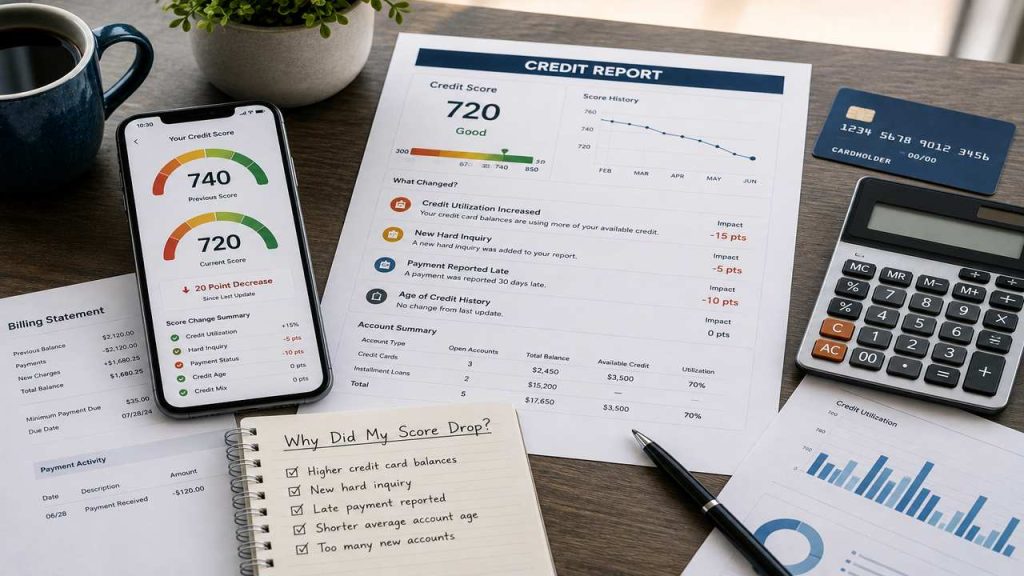
  • Does an Eviction Affect Buying a House? What Homebuyers Need to Know

    Does an Eviction Affect Buying a House? What Homebuyers Need to Know

    If you have an eviction in your past and you’re thinking ahead to homeownership, it’s natural to wonder whether that one chapter will permanently close the door on qualifying for a mortgage. The honest answer is nuanced: an eviction itself is usually not a direct disqualifier for a mortgage the way a bankruptcy or foreclosure can be, but the financial fallout that often accompanies an eviction — unpaid debt, damaged credit, a gap in your rental or housing history — absolutely can affect your ability to qualify, and it’s worth understanding exactly how and why.

    This guide walks through how mortgage underwriting actually treats an eviction, what specifically does and doesn’t show up during the process, and the concrete steps to strengthen your position if you’re working toward buying a home after one.

    The Key Distinction: The Eviction Itself vs. What It Left Behind

    An eviction, as a court proceeding, typically doesn’t appear directly on your credit report the way a bankruptcy or foreclosure does. Mortgage lenders primarily evaluate your credit report, your income, your debt-to-income ratio, and your overall financial documentation — not a search of court eviction filings. This means the eviction case itself, in isolation, often isn’t something a mortgage underwriter would even see through standard underwriting channels.

    What typically does show up, and what actually drives most of the mortgage-qualification impact, are the financial consequences that frequently accompany an eviction:

    • Unpaid rent or a judgment sent to collections, which would appear on your credit report as a collection account, directly affecting your credit score and potentially your debt-to-income calculations if unresolved.
    • A broader pattern of missed payments around the same period, since an eviction often coincides with a period of financial hardship that affected other bills too — a stretch of late credit card payments, a charged-off account, or other collections from the same timeframe.
    • A gap or inconsistency in your housing history, which some loan applications specifically ask about (typically your address history for the past two years), and which an underwriter may ask you to explain if there’s an unusual gap or a rapid series of address changes.
    • A lower credit score overall, driven by whatever combination of the above, which affects not just whether you qualify but what interest rate and terms you’re offered.

    How Mortgage Underwriting Actually Works

    To understand where an eviction’s effects can surface, it helps to understand the basic structure of mortgage underwriting. Lenders evaluate four main pillars, often summarized as the “four C’s”: capacity (your income and ability to repay, measured through your debt-to-income ratio), credit (your credit score and credit report history), capital (your savings, down payment, and reserves), and collateral (the value of the home itself relative to the loan amount).

    An eviction’s aftermath most directly affects the “credit” pillar, through any resulting collections or score damage, and potentially the “capacity” pillar if outstanding debt from the eviction increases your overall debt burden. It generally doesn’t affect “capital” or “collateral” at all, meaning a strong down payment and a reasonably priced home relative to your income can help offset weaknesses elsewhere in your file.

    Different Loan Types Handle This Differently

    Conventional Loans

    Conventional loans (backed by Fannie Mae or Freddie Mac) generally focus on your credit score, debt-to-income ratio, and overall credit report, without a specific eviction-related question on standard loan applications, though large or unresolved collections can affect qualification as described above.

    FHA Loans

    FHA loans, backed by the Federal Housing Administration, are generally more flexible on credit history than conventional loans and are often used by first-time buyers or those rebuilding credit. FHA guidelines don’t have an explicit eviction-specific disqualification, but they do require any collections and judgments above certain thresholds to be addressed, and significant derogatory credit history can still affect approval and terms.

    VA Loans

    VA loans, available to eligible veterans and service members, are known for relatively flexible underwriting, and similarly don’t have an explicit “no eviction” rule, though unresolved debt and credit issues stemming from a past eviction would still be evaluated as part of the overall credit review.

    USDA Loans

    USDA loans, for eligible rural properties, follow a similar pattern — no specific eviction disqualification, but overall creditworthiness still matters.

    Across all these loan types, the pattern is consistent: it’s rarely the eviction record itself causing a denial, and almost always the associated debt or credit damage.

    Step One: Find Out Exactly What’s on Your Credit Report

    Before assuming anything about how an old eviction might affect a mortgage application, pull your free credit reports from all three bureaus and look specifically for any collection accounts, judgments, or charge-offs from around the time of the eviction. This tells you concretely what an underwriter would actually see, rather than leaving you to worry about an unknown.

    Step Two: Resolve Any Outstanding Debt From the Eviction

    If there’s an unpaid balance connected to the eviction — back rent, court costs, damages awarded to the landlord — resolving it before applying for a mortgage is one of the highest-value things you can do. This matters for a few concrete reasons:

    • It removes the debt from your debt-to-income calculation. Even a relatively small ongoing collection balance can factor into how much home you qualify for, depending on the specific loan program’s underwriting rules.
    • It can improve your credit score, particularly under newer scoring models that treat paid collections meaningfully better than unpaid ones, potentially moving you into a better interest rate tier.
    • It removes a potential red flag an underwriter might otherwise ask you to explain, streamlining the underwriting process and reducing the chance of delays or requests for additional documentation.

    If you can’t pay the full amount, negotiating a settlement, and getting it in writing, is generally the next best option, followed by at minimum setting up and maintaining a payment plan if a lump sum isn’t feasible.

    Step Three: Address Any Housing History Gaps Proactively

    Mortgage applications commonly ask for your address history over the past two years. If your eviction led to an unstable period — moving in with family temporarily, multiple short-term addresses, or a period without a formal lease — be prepared to explain this clearly and honestly if asked. A brief, factual explanation (“I stayed with family for several months after resolving a prior housing situation before securing my current apartment”) is generally sufficient; underwriters are typically looking for a coherent, non-alarming explanation rather than a perfect record.

    Step Four: Build Your Overall Financial Profile

    Since an eviction’s main effect on mortgage qualification runs through your broader credit and financial picture rather than a direct rule against it, the most effective overall strategy is simply building the strongest financial profile you can in the time before you apply:

    • Rebuild your credit score through consistent on-time payments, low utilization, and resolving any other outstanding negative items, giving yourself time (often a year or more) for meaningful improvement to show.
    • Save for a larger down payment than the minimum required, which can offset weaker credit in some loan programs’ overall risk assessment, and reduces your loan-to-value ratio, which lenders view favorably.
    • Build a strong, positive current rental history, ideally for at least the two years mortgage applications typically ask about, since a landlord reference showing consistent on-time payments during this period is a meaningful counterbalance to an older eviction.
    • Keep your overall debt-to-income ratio low by paying down other debts and avoiding new significant debt in the months before applying, since this is one of the most heavily weighted factors in mortgage qualification across every loan type.

    What If the Eviction Resulted in a Judgment That’s Still Unresolved?

    An unresolved judgment is a more serious situation than a simple unpaid collection, since judgments can sometimes lead to wage garnishment or liens depending on your state’s laws, and some mortgage underwriting guidelines specifically require outstanding judgments to be paid off or satisfactorily resolved (sometimes even paid off at closing from loan proceeds, depending on the specific loan program and lender policy) before a loan can close. If you have an unresolved judgment, addressing it well before you plan to apply — through payment, a negotiated settlement, or, if applicable, a successful legal challenge to the judgment itself — is generally necessary rather than optional for a smooth mortgage approval process.

    Does a Landlord Ever Find Out You’re Buying a House Because of Your Eviction History?

    This question sometimes comes up out of a fear that seeking a mortgage will somehow “reopen” the eviction case or notify the original landlord. In reality, mortgage underwriting doesn’t involve any kind of court notification process, and your mortgage lender has no reason to and generally cannot contact your former landlord about an old eviction case. The processes are entirely separate — mortgage underwriting evaluates your current financial documentation and credit report, not an independent investigation into your rental history.

    Timeline: How Long Before an Old Eviction Stops Mattering for a Mortgage?

    There’s no fixed, universal waiting period tied specifically to an eviction for mortgage purposes, unlike bankruptcy or foreclosure, which do have specific mandatory waiting periods under most loan programs (commonly two to seven years, depending on the type of bankruptcy or foreclosure and the loan program). Since an eviction itself generally isn’t a direct underwriting factor, what actually needs to “age out” or be resolved is whatever negative credit history resulted from it — a collection account, once resolved, contributes less negative weight to your file the further in the past it becomes, and it drops off your credit report entirely after seven years from the original delinquency date, regardless of your mortgage application timeline.

    In practice, many people who experienced a financially difficult eviction find their credit and overall financial profile strong enough to qualify for a mortgage within two to four years of resolving the underlying debt and consistently rebuilding their credit, though this varies considerably based on individual circumstances, the loan program pursued, and how quickly the resulting negative items were addressed.

    Frequently Asked Questions

    Will a mortgage lender ask me directly if I’ve ever been evicted?

    Standard mortgage applications don’t typically include a direct question specifically asking about past evictions, unlike the specific questions asked about bankruptcy and foreclosure history. The focus is on your current credit report, income, and financial documentation rather than a direct eviction disclosure requirement.

    Can an eviction show up in a background check during the mortgage process, separate from my credit report?

    Standard mortgage underwriting doesn’t typically include a tenant-screening-style court records search the way a rental application does. It’s focused on credit, income, and asset documentation. An eviction record existing in court databases generally wouldn’t surface through this process unless it directly connects to a credit report entry (like a resulting collection).

    Does an eviction affect the interest rate I’d be offered, even if I still qualify for a mortgage?

    Indirectly, yes, through its effect on your credit score. A lower credit score, whatever the underlying cause, typically results in a higher offered interest rate across most loan programs, since rate tiers are generally structured around specific credit score ranges.

    If I successfully disputed and removed a related collection account, does that fully resolve any mortgage-related concern?

    Removing an inaccurately reported collection account does remove that specific negative mark and its associated impact on your score and debt-to-income calculation. If the underlying eviction still shows up in a records search for some other reason (uncommon, but not impossible depending on the specific process), it wouldn’t be affected by a credit report dispute, since that’s a different (public court record) system entirely.

    Is it easier to qualify for a mortgage with a spouse or co-borrower if I have a past eviction?

    Applying with a co-borrower who has strong, independent credit and income can help offset a weaker individual credit profile, since underwriters evaluate the combined application. This isn’t specific to eviction history particularly, but is a generally available strategy for anyone whose individual credit profile alone might not qualify for the most favorable terms.

    A Concrete Example: How an Old Eviction Debt Affects Debt-to-Income Math

    Debt-to-income ratio (DTI) is one of the most heavily weighted factors in mortgage underwriting, and it’s worth seeing exactly how an unresolved eviction-related debt can factor into it. Say your gross monthly income is $5,000. Most conventional loan programs look for a total DTI (including the new mortgage payment) below roughly 43-50%, depending on the specific program and other compensating factors.

    If you have $200 in existing monthly debt obligations (a car payment and a credit card minimum) and you’re applying for a mortgage with an estimated $1,800 monthly payment, your DTI before considering any eviction-related debt would be ($200 + $1,800) / $5,000 = 40%, likely within range for many loan programs.

    Now suppose an unresolved collection account from a past eviction, in a $3,000 balance, is being actively reported to a collection agency. If that collection is required to be included in your DTI calculation (some loan programs require unpaid collections above a certain dollar threshold, commonly $2,000, to either be paid off or included in a calculated minimum monthly payment, depending on the specific loan program’s guidelines and whether the collection is in active collection status), an underwriter might add an estimated monthly obligation for it — even a modest addition of $100-150 in this example could push your total DTI closer to or above 43%, potentially requiring you to pay it off before final loan approval, or affecting the loan amount you qualify for.

    This example illustrates why “small” unresolved debt from years ago can still have an outsized effect at the exact moment you’re trying to qualify for something significant — it’s not necessarily the dollar amount itself that matters most, but how underwriting rules treat any unresolved status specifically.

    A Sample Letter of Explanation for Mortgage Underwriting

    If an underwriter flags a past eviction-related item and requests a letter of explanation (a common, routine part of underwriting for any unusual item on a file, not a sign of impending denial), here’s a template structure that works well:

    Re: Letter of Explanation – [Account/Item in Question]
    
    To Whom It May Concern:
    
    I am writing to provide context regarding [the collection account / the address history gap] noted on my credit report and application, dated [approximate timeframe].
    
    This resulted from [brief, factual explanation — e.g., “a period of job loss that led to a temporary inability to maintain my prior lease, resulting in an eviction filing and associated unpaid rent balance”]. I have since [resolved the balance in full on DATE / entered into a settlement agreement paid in full on DATE], and I have maintained consistent, on-time payments on all my current obligations since that time, as reflected in my credit history over the past [X months/years].
    
    I’m happy to provide any additional documentation that would support this explanation.
    
    Sincerely,
    [Your Name]
    

    Attach any supporting documentation you have — proof of payment or settlement, for instance — directly with this letter, since underwriters generally prefer a written explanation paired with concrete evidence over an explanation alone.

    What an Underwriter Is Actually Trying to Determine

    It helps to understand the underwriter’s actual goal when they flag something like this: they aren’t making a moral judgment about what happened in your past. They’re specifically trying to determine two things — whether the item represents an ongoing, unresolved financial risk (an open collection that could still grow, a pattern of instability that might recur), and whether your current financial picture demonstrates the stability needed to reliably make mortgage payments for the next 15 to 30 years. A well-documented, clearly resolved past incident, paired with a stable and consistent recent financial track record, generally satisfies both of these underwriting concerns even when the past incident itself was genuinely serious.

    does-an-eviction-affect-buying-a-house-under-100kb

    The Role of Overlays: Why Two Lenders Can Treat the Same File Differently

    An important and often overlooked detail: individual lenders can apply their own additional underwriting requirements, called “overlays,” on top of the baseline guidelines set by Fannie Mae, Freddie Mac, FHA, VA, or USDA. This means one lender might have a stricter internal policy about unresolved collections or recent housing instability than another lender working with the exact same baseline loan program guidelines. If you’re denied or discouraged by one lender, particularly a large bank with more conservative overlays, it’s often worth consulting with a mortgage broker or a different lender — such as a credit union or a lender specializing in FHA loans for buyers rebuilding credit — since their specific underwriting overlays might be considerably more accommodating for your particular situation.

    Building Toward Pre-Approval With an Eviction in Your Past

    Before formally applying, getting pre-qualified or pre-approved with a few different lenders (each generating only a soft or limited inquiry in early conversations, though a full pre-approval typically does involve a hard inquiry) lets you understand where you stand and address any concerns before you’re deep into a home search and under time pressure from a purchase contract. Many mortgage brokers and loan officers, especially those experienced with FHA loans or first-time and credit-rebuilding buyers, are accustomed to discussing past financial difficulties candidly and can tell you early on what specifically, if anything, still needs to be resolved before you’d be in a strong position to apply formally.

    Frequently Asked Questions, Continued

    Does the type of eviction (nonpayment vs. lease violation) matter for mortgage purposes?

    Since mortgage underwriting generally isn’t evaluating the eviction case itself, the underlying reason for the eviction matters less than its financial aftermath. A nonpayment eviction is somewhat more likely to have left an unpaid debt behind (which does matter for underwriting), while a lease-violation eviction without an associated financial balance might leave less of a lasting credit-report footprint.

    If I’m self-employed, does an old eviction weigh more heavily given other income documentation requirements?

    Self-employed borrowers already face more extensive income documentation requirements regardless of eviction history, and an old, resolved eviction with a clean recent record generally doesn’t add meaningfully to that separate documentation burden, though it’s one more factor an underwriter reviewing a more complex file might ask about.

    Can I get pre-approved before fully resolving an old eviction-related debt?

    It depends on the amount and status of the debt and the specific loan program’s guidelines. Small, resolved, or older debts are less likely to be an issue; larger, active, unresolved collections or judgments are more likely to require resolution before final approval, even if initial pre-qualification conversations proceed without addressing it immediately.

    Does refinancing later remove any lingering effects of a past eviction on my mortgage terms?

    If your credit and financial profile have improved by the time you refinance, you’d generally qualify for whatever current rates and terms your improved profile supports, independent of your original mortgage’s terms. A past eviction, once resolved and aged, would carry less weight the further removed you are from it and the stronger your subsequent financial track record.

    A Broader Perspective: Millions of Homeowners Have Overcome Similar Setbacks

    It’s worth stepping back from the underwriting mechanics for a moment to note something reassuring: financial setbacks, including evictions, job loss, and periods of significant debt, are extremely common life experiences, and mortgage lending as an industry is fundamentally built around evaluating current, forward-looking creditworthiness rather than permanently penalizing past difficulty. The entire structure of credit reporting — with its defined seven-year windows, its more forgiving treatment of paid versus unpaid negative items, and its heavy weighting toward recent behavior — reflects an underlying philosophy that people’s financial situations change, often for the better, and that a past hardship shouldn’t permanently define someone’s access to credit and homeownership. Millions of current homeowners have a past eviction, bankruptcy, or period of serious financial difficulty somewhere in their history; what distinguishes those who go on to qualify for a mortgage is primarily the deliberate rebuilding work described throughout this guide, not some rare exception to how the system usually works.

    Frequently Asked Questions, Continued Further

    Should I disclose an old eviction proactively to my loan officer even if not directly asked?

    If it resulted in any collection, judgment, or credit report item, your loan officer will likely see it during the credit pull regardless, so proactively mentioning it and providing context upfront is generally viewed more favorably than having it come up cold during underwriting, since it demonstrates transparency and gives you the chance to frame the explanation on your own terms.

    Does a rental payment history service that reports positive rent payments help offset an old eviction for mortgage purposes?

    Yes, in a meaningful way — some mortgage programs, including certain Fannie Mae underwriting paths, now allow or even proactively look for reported positive rental payment history as a supplementary credit factor, particularly useful for buyers with thinner traditional credit files. Building this kind of positive, recent rental history is a direct, concrete counterbalance to an older negative rental event.

    How does a co-signed lease eviction (where I wasn’t the primary tenant) affect my own mortgage application?

    If your name appeared on the lease and the eviction case, it can affect your individual credit and record regardless of whether you were the “primary” tenant in practice. Whether it created a debt attributable specifically to you depends on how any judgment or collection was structured; this is worth clarifying directly by pulling your own credit report and understanding exactly what, if anything, is attached to your name specifically.

    The Bottom Line

    An eviction itself is rarely a direct dealbreaker for mortgage qualification, since most underwriting processes don’t specifically search for or ask about eviction history. What matters far more is the financial aftermath — any unpaid debt, credit score damage, or housing history gaps that resulted from it. Resolving outstanding balances, rebuilding your credit through consistent on-time payments, saving a solid down payment, and building a strong recent rental history are the concrete, controllable steps that determine whether and how favorably you’ll qualify, regardless of what happened in the past.

    Get a Credit Audit

    If you’re preparing to buy a home after an eviction and want to review your credit reports for collections, judgments, or other negative information that may affect mortgage qualification, you can request a credit audit or quote.

    Request a Credit Audit or Quote

  • Acceptable Reasons for Late Payments (And How to Use Them Effectively)

    Acceptable Reasons for Late Payments (And How to Use Them Effectively)

    Life happens, and sometimes a payment gets missed despite your best intentions. What many people don’t realize is that not all late payments are treated equally once you’re on the other side of it, trying to explain or recover from one. Creditors, lenders, and even the credit bureaus themselves have established, well-understood categories of circumstances that are more likely to result in leniency — whether that’s a waived fee, a removed late mark, or simply a more sympathetic conversation with a customer service representative.

    This guide covers what actually counts as an acceptable, persuasive reason for a late payment, how to present it effectively, and the specific tools (goodwill letters, hardship programs, formal disputes) available depending on your situation.

    Why “Acceptable Reasons” Matter More Than People Realize

    To be clear from the outset: creditors are never legally required to remove an accurate late payment mark just because you have a good explanation. Goodwill adjustments and hardship accommodations are discretionary, not guaranteed rights. That said, creditors do have real business incentives to retain good customers and avoid unnecessary disputes, and a well-presented, credible explanation meaningfully increases your odds of a favorable outcome compared to no explanation at all, or a poorly presented one.

    Understanding which explanations tend to land well — and which ones don’t — helps you communicate more effectively when you do need to ask for consideration.

    Reasons That Tend to Be Well-Received

    A Documented Medical Emergency

    Hospitalization, a serious injury, or a medical crisis affecting you or an immediate family member is one of the most consistently well-received explanations, particularly when it’s a one-time event on an account with an otherwise strong payment history. Creditors deal with this scenario often enough to have some institutional sympathy for it, and if you can provide documentation (a hospital discharge summary, for instance, though full medical details usually aren’t necessary — a brief confirmation of dates is often sufficient), it strengthens the request considerably.

    A Natural Disaster or Declared Emergency

    If you were affected by a hurricane, wildfire, flood, or another event covered by a federal or state disaster declaration, many creditors have specific, sometimes automatic, hardship accommodations for affected customers, including payment deferrals and late fee waivers, and in some cases these creditors proactively suppress credit bureau reporting for affected accounts during the crisis window. Check whether your creditor has a disaster relief program before assuming you need to negotiate this individually.

    A Job Loss or Significant Income Disruption

    Losing a job or experiencing a sudden, significant drop in income (such as being moved to reduced hours, or a business you own experiencing a temporary but serious downturn) is a commonly accepted hardship reason, especially if you can show it was resolved by the time you’re making the request — meaning you’re not simply explaining an ongoing inability to pay, but a specific past event that’s now behind you.

    A Bank or Payment Processing Error

    If a payment failed due to a documented error on the bank’s or creditor’s side — a processing glitch, an incorrectly declined transaction despite sufficient funds, a payment portal outage — this is one of the strongest possible explanations, since it isn’t really “your” late payment at all in a meaningful sense. Get whatever documentation you can (a bank statement showing the funds were available, a screenshot of an error message, a reference number from a customer service call made at the time) to support this kind of dispute.

    A Death in the Family

    The death of an immediate family member, particularly if you were managing their affairs or the event caused significant personal disruption, is generally treated with real sympathy by creditor representatives, most of whom have encountered this situation many times and have some latitude to extend grace in response to it.

    Military Deployment or Active Duty Complications

    Service members facing deployment-related payment disruptions have some additional legal protections under the Servicemembers Civil Relief Act (SCRA), which can include interest rate caps and other accommodations during active duty, separate from and in addition to any discretionary goodwill a creditor might extend.

    An Identity Theft or Fraud Situation

    If a late payment resulted from fraudulent activity on your account — an unauthorized user changing your payment information, or a fraudster intercepting statements — this isn’t really a “late payment reason” so much as a dispute of the underlying facts, and should be treated as a formal fraud dispute rather than a goodwill request, since you may have a right to have the item removed entirely rather than simply forgiven.

    Reasons That Tend to Land Poorly

    “I forgot.”

    While completely human and extremely common, this explanation on its own doesn’t give a creditor much reason to extend discretionary leniency, since it doesn’t point to a specific, non-recurring circumstance. If forgetting was tied to something more specific — a house move that disrupted your mail, a period of genuine chaos in your life — including that context helps, but “I simply forgot” alone is a weak standalone explanation.

    “I didn’t realize the bill was due.”

    Similar to the above — this can work better if there’s a specific reason you didn’t realize (a billing address error, a paperless statement that went to an old email address you no longer check), but as a general statement it doesn’t carry much persuasive weight on its own.

    Vague or unverifiable hardship claims.

    A general statement like “I was going through a hard time” without any specifics is far less effective than a concrete, briefly stated circumstance, even if you don’t want to share extensive personal detail. A middle ground — specific enough to be credible, general enough to preserve privacy — tends to work best.

    Blaming the creditor without documentation.

    Claiming a payment failed due to their system when you don’t have any supporting evidence is unlikely to be taken seriously and can come across as an attempt to avoid responsibility rather than a genuine dispute.

    A pattern of repeated “one-time” explanations.

    If you’ve already used a goodwill request for a similar reason in the recent past, a second nearly identical request is far less likely to be granted, since it starts to look like a pattern rather than a genuine one-off circumstance.

    How to Actually Request Leniency: The Goodwill Letter

    A goodwill letter (sometimes called a goodwill adjustment request) is a written request asking a creditor to remove a late payment mark from your credit report, typically sent after you’ve already brought the account current. It works best under these conditions: the account has an otherwise strong payment history, the late payment was a genuine one-time event, and you can state your reason concisely and credibly.

    A basic structure that works well:

    Opening

    Identify yourself and the account clearly, and state your request directly. “I’m writing to request a goodwill adjustment for a late payment reported on my account in [month/year].”

    Context

    Briefly explain what happened, in a sentence or two, without excessive detail. “This occurred during a period when I was hospitalized following [brief description], which disrupted my ability to manage bill payments during that specific window.”

    Your track record

    Point to your broader history with them. “Prior to this incident, and in the time since, I’ve maintained an on-time payment record on this account for [X years/months].”

    The specific ask

    State clearly what you’re requesting. “I’m respectfully requesting that this late payment be removed from my credit report as a one-time goodwill exception.”

    Close

    A polite, professional close, with your account information and contact details for follow-up.

    Send this through whatever channel the creditor has designated for such requests — sometimes a written letter to a specific address, sometimes an online secure message through your account portal, sometimes through a phone call followed by a written confirmation. Persistence and a professional tone matter more than any specific magic wording.

    What to Do If the Goodwill Request Is Denied

    Not every goodwill request succeeds, and that’s a normal outcome, not a sign you did something wrong in how you asked. If denied, a few options remain:

    • Try again after some additional time has passed, particularly if you continue building a clean payment record in the meantime, strengthening your case for a future request.
    • Try a different contact channel or representative. Since these requests are discretionary, different representatives sometimes have different levels of authority or willingness to grant them, and a second attempt through a different channel occasionally succeeds where a first attempt didn’t.
    • Focus on what you can control going forward. A single late payment’s impact on your score diminishes over time, particularly as it moves further into the past and gets outweighed by continued on-time payments. Building that ongoing track record is, in most cases, ultimately more impactful than any single goodwill request.
    • Consider whether the item is genuinely disputable rather than simply requiring goodwill. If you believe the late payment was reported in error — wrong date, wrong amount, or shouldn’t be attributed to you at all — that’s a formal dispute under the FCRA, a different (and, when applicable, more powerful) process than a discretionary goodwill request.

    Documenting Hardship the Right Way

    If your situation involves an ongoing hardship rather than a single past event, many creditors offer formal hardship programs — temporary reduced payments, interest rate reductions, or forbearance — that are different from, and often more useful than, a goodwill request for a single already-reported late payment. These programs typically require you to proactively contact the creditor before missing additional payments, provide some documentation of your circumstances (which varies by creditor and program), and agree to specific terms for a defined period. Enrolling in a formal hardship program, when available, is generally a stronger and more reliable path than hoping for individual goodwill exceptions on a series of ongoing late payments.

    A Note on Timing: Act Before, Not Just After

    Every strategy discussed so far becomes meaningfully more effective when you reach out to your creditor before missing a payment, rather than only after the fact. A phone call in advance explaining a temporary hardship and asking about accommodation options is taken more seriously, and often produces better outcomes (a deferred due date, a waived fee, a formal hardship enrollment) than an after-the-fact request for forgiveness once the late payment has already been reported. If you know a payment issue is coming, treat that advance notice as your best opportunity to prevent the problem entirely, rather than saving your explanation for after the damage is done.

    Frequently Asked Questions

    Do I need to provide actual documentation, or is a written explanation enough?

    It depends on the creditor and the specific circumstance. For less serious or lower-stakes requests, a credible written explanation alone is often sufficient. For more significant requests, or larger creditors with more formal processes, providing supporting documentation (even something as simple as a hospital admission date) strengthens your request considerably.

    How many goodwill letters can I send for the same account?

    There’s no fixed legal limit, but sending multiple requests for the same isolated incident rarely helps and can come across as excessive. If your first well-constructed request is denied, spacing out a follow-up by a meaningful amount of time, or waiting until you have additional positive history to point to, is a more effective approach than repeated immediate requests.

    Does a “reasonable explanation” ever legally require a creditor to remove a late payment?

    No, with one important exception: if the late payment was reported inaccurately in the first place (wrong date, wrong amount, fraud, or a documented creditor processing error), you have a legal right to dispute it under the FCRA, and if the creditor can’t verify its accuracy, it must be corrected or removed. A goodwill request, by contrast, is about accurate information the creditor chooses to forgive as a courtesy, and there’s no legal entitlement to that forgiveness.

    Should I mention that I’m applying for a mortgage soon as part of my explanation?

    This is generally not an effective inclusion, since it can come across as asking for a favor tied to your own upcoming benefit rather than a straightforward explanation of what happened, and creditors have heard this angle often enough that it doesn’t add persuasive weight.

    What if the late payment happened years ago — is it still worth requesting a goodwill adjustment?

    It’s still possible, though generally somewhat less likely to succeed the further removed it is from an active relationship-management conversation, since the creditor’s incentive to accommodate a currently active, valuable customer may feel less immediate for an old, resolved incident. That said, it doesn’t hurt to ask, particularly if the account is still open and you remain a customer in good standing.

    A Complete Sample Goodwill Letter

    Having a full template to adapt can make the process far less intimidating. Here’s a complete example you can modify for your own situation:

    [Your Name]
    [Your Address] [Date]
    
    [Creditor Name] [Creditor Address, or note if sending via secure online message]
    Re: Account Number [XXXX-XXXX-XXXX-XXXX]
    
    Dear [Creditor Name] Customer Service,
    
    I am writing to respectfully request a goodwill adjustment regarding a late payment reported on my account for [month/year]. I have been a customer with this account since [year], and prior to and following this single incident, I have maintained a consistent, on-time payment history.
    
    The late payment occurred during [brief, specific circumstance — e.g., “a period when I was hospitalized due to a sudden medical emergency,” or “a natural disaster that significantly disrupted my household for several weeks”]. This was an isolated, non-recurring event, and I brought the account current as soon as I was able to address it.
    
    I value my relationship with [Creditor Name] and would greatly appreciate your consideration in removing this late payment mark from my credit report as a one-time goodwill exception. I’m happy to provide any additional information that would be helpful in reviewing this request.
    
    Thank you for your time and consideration.
    
    Sincerely,
    [Your Name] [Account Number] [Phone Number / Email]

    Adjust the tone and specifics to match your actual situation and your natural voice — a letter that sounds authentically like you, rather than an overly formal template, tends to read more genuinely to the person reviewing it.

    Goodwill Request vs. Dispute vs. Hardship Program: Choosing the Right Tool

    These three tools solve different problems, and using the wrong one wastes time and can weaken your position. Here’s how to tell them apart:

    • Use a goodwill request when the late payment was reported accurately, you don’t dispute that it happened, but you have a sympathetic, specific circumstance and a generally strong payment history, and you’re asking the creditor for a discretionary courtesy.
    • Use a formal dispute when you believe the information itself is wrong — the date is incorrect, the payment was actually made on time and there’s a processing error, the account doesn’t belong to you, or it resulted from fraud. This is a legal right under the FCRA, not a request for a favor, and the creditor must investigate and correct verified inaccuracies.
    • Use a hardship program enrollment when you’re facing an ongoing, current difficulty (not a single past event) and need structural help — reduced payments, a paused due date, a lower interest rate — for a defined period going forward, rather than forgiveness for something that’s already happened and been resolved.

    Sometimes more than one applies simultaneously: for example, you might dispute an inaccurately dated late payment while also enrolling in a hardship program for genuinely ongoing difficulty affecting future payments. Being clear with yourself about which category your situation falls into helps you approach the right department and use the right language when you reach out.

    How Creditors Internally Evaluate These Requests

    Understanding roughly how a customer service representative or their internal system evaluates a goodwill request can help you present a stronger case. Most major creditors use some combination of the following factors, whether through a formal internal scoring system or a representative’s informal judgment:

    Account tenure and overall payment history

    A longtime customer with years of on-time payments carries far more weight than a newer account or one with a spottier history.

    Total account value and relationship

    Customers with higher balances, multiple products with the same institution, or a generally more valuable overall relationship sometimes receive more consideration, though this isn’t something you can control after the fact and isn’t guaranteed to matter at every institution.

    How the request is framed

    A concise, specific, professional request is easier for a representative to act on and justify internally than a vague or emotionally charged one, even when the underlying circumstance is equally sympathetic.

    Whether it’s a genuinely isolated incident

    Internal systems often flag whether an account has multiple late payments across its history, and a single isolated incident against an otherwise clean record is treated very differently than one in a string of several.

    acceptable-reasons-for-late-payments-under-100kb

    Frequently Asked Questions, Continued

    Is it worth calling instead of writing a letter?

    Both approaches have merit. A phone call allows for real-time conversation and can sometimes resolve things faster, but it’s harder to document precisely what was said. Many people find success with a hybrid approach: calling first to explain the situation and ask about the process, then following up in writing to formally document the request, which also gives the representative something concrete to escalate if they don’t have the authority to approve it themselves.

    Can a goodwill letter backfire and draw more attention to the late payment?

    This is very unlikely. The late payment is already visible to the creditor and on your credit report regardless of whether you request a goodwill adjustment — asking about it doesn’t create new negative information or draw attention that wasn’t already there.

    Do all three credit bureaus need to be contacted separately if a goodwill request is approved?

    No — when a creditor agrees to a goodwill removal, they typically update their reporting with all three bureaus they report to as part of their normal monthly reporting cycle, rather than requiring you to separately contact each bureau. It can take a billing cycle or two for the update to fully reflect across all your reports.

    What if my hardship is ongoing rather than a single past event — should I still send a goodwill letter?

    A goodwill letter is designed for a specific past incident, not an ongoing situation. If your hardship is continuing, focus on contacting the creditor about hardship program enrollment for your current and future payments first, and address any already-reported late payment through a goodwill request only once the immediate situation has stabilized.

    How This Plays Out Differently Across Loan Types

    Credit Cards

    Credit cards tend to have the most accessible and flexible goodwill processes, since card issuers manage huge numbers of these requests routinely and often have dedicated customer retention teams with some discretion built into their role.

    Mortgages

    Mortgages are more complex, since mortgage servicers often have less individual discretion than credit card issuers, and a late payment on a mortgage carries more weight in future underwriting (particularly for a future refinance or new home purchase). If you’re facing mortgage hardship, contacting your servicer proactively about a formal loss mitigation or forbearance program is generally more productive than a goodwill letter after the fact, and federally backed mortgages (FHA, VA, USDA, Fannie Mae, and Freddie Mac loans) have specific, more standardized hardship protections you may be entitled to.

    Auto Loans

    Auto loans vary significantly by lender — some, particularly captive finance arms of auto manufacturers, have structured hardship programs, while smaller or subprime auto lenders may have less flexibility and, in some cases, a lower threshold for pursuing repossession, making proactive communication especially important if you anticipate any payment difficulty.

    Student Loans

    Student loans (federal) have some of the most robust built-in hardship options of any loan type, including income-driven repayment plans, deferment, and forbearance, which are formal program enrollments rather than discretionary goodwill and are worth exploring first if you’re facing ongoing difficulty with federal student loan payments specifically. Private student loans function more like traditional personal loans, with hardship options varying by lender.

    Personal Loans and Lines of Credit

    Personal loans and lines of credit vary the most by individual lender, with online and fintech lenders sometimes having less flexible, more automated processes compared to traditional banks and credit unions, where a personal relationship or longer account history can matter more.

    When a Late Payment Reason Also Signals a Bigger Financial Issue Worth Addressing

    Sometimes the process of explaining a late payment reveals something worth addressing beyond the single incident itself. If you find yourself repeatedly constructing explanations for missed payments — even individually reasonable ones — it may be worth stepping back and looking at your overall budget, emergency savings, and bill payment system as a whole. A single unexpected expense causing a missed payment is a normal part of life; a pattern of near-misses or actual misses often points to a gap between income and obligations, insufficient emergency savings, or a bill-tracking system that isn’t working well for your specific life circumstances.

    Addressing that underlying structural issue — whether through a formal budgeting approach, automating more of your bill payments, or building a small emergency fund specifically earmarked for bill continuity — tends to be far more valuable long-term than getting skilled at writing effective goodwill letters after the fact.

    Frequently Asked Questions, Continued Further

    Does a co-signer’s late payment reason matter for goodwill purposes on a jointly held account?

    Yes — a goodwill request can reference the circumstances of either the primary borrower or a co-signer, since the late payment appears on both parties’ credit reports identically for a jointly held account. The explanation should focus on whatever circumstance actually caused the missed payment, regardless of which named party it happened to.

    If my late payment reason involves my employer (like a delayed paycheck), is that considered acceptable?

    This can be a reasonably persuasive explanation, particularly if it was a one-time, documented payroll issue rather than a chronic income timing problem. Providing a brief note or confirmation from your employer about the payroll delay, if available, can strengthen this type of request.

    Can I request a goodwill adjustment before the late payment is even reported, if I know it’s coming?

    It’s generally more effective to contact your creditor before a payment becomes 30 days late in the first place — at that point, you’re not asking for forgiveness of something already reported, but proactively seeking an accommodation (a short extension, a payment plan) that can prevent the negative reporting from happening at all, which is a stronger position to be in than any after-the-fact request.

    The Bottom Line

    Not every late payment explanation carries the same weight, and understanding which reasons genuinely tend to move creditors — documented medical emergencies, natural disasters, job loss, processing errors, and similar concrete, one-time circumstances — helps you present your situation as effectively as possible. Reach out proactively when you can, keep your explanation concise and credible, get anything agreed to in writing, and remember that a goodwill adjustment is always a discretionary courtesy rather than a guaranteed right, which makes a well-prepared, professional request all the more valuable when you do need to ask for one.

    Need Help Reviewing Your Credit?

    If you’re dealing with a late payment or want to review your credit reports for inaccurate or negative information, you can request a credit audit or quote.

    Request a Credit Audit or Quote

  • Does a 7-Day Late Payment Affect Your Credit Score?

    Does a 7-Day Late Payment Affect Your Credit Score?

    If you’ve missed a payment due date by a week, the anxious question that follows is almost always the same: is this going to show up on my credit report and tank my score? The short answer is reassuring for most people: a payment that’s late by seven days almost never gets reported to the credit bureaus at all, and in most cases won’t affect your credit score directly. But there’s real nuance here worth understanding, because “almost never” isn’t “never,” and the fees and other consequences of a short late payment are still worth taking seriously even when your score isn’t at risk.

    This guide explains exactly how late payment reporting works, why the 30-day mark is the real threshold that matters, what does happen during that first week even if your score is unaffected, and the specific situations where a short delay can still cause a problem.

    The 30-Day Rule: Why It’s the Number That Actually Matters

    Credit card companies, mortgage servicers, auto lenders, and virtually all other creditors that report to the major credit bureaus (Equifax, Experian, and TransUnion) follow a standard convention: a payment isn’t reported as “late” to the bureaus until it’s at least 30 days past the due date. This isn’t just an industry courtesy — it’s baked into how the reporting fields in the credit bureau data systems (following the Metro 2 reporting format used industry-wide) are structured, with late payment statuses defined in 30-day increments: 30, 60, 90, 120+ days past due.

    This means a payment made 7 days late, while genuinely late from your creditor’s internal perspective, falls well short of the threshold that triggers a report to the credit bureaus. In the vast majority of cases, a payment made within that first 30-day window — even if it’s technically past the stated due date — will not appear on your credit report as a late payment at all, and will have zero effect on your credit score.

    What Actually Happens During Those First 7 Days, Even If Your Score Is Safe

    Even though your score is very likely unaffected, a payment that’s a week late isn’t consequence-free. Here’s what’s actually happening behind the scenes with most creditors during that window:

    A late fee is typically charged, often in the range of $25 to $40 for credit cards, though this varies by issuer and is subject to certain regulatory caps under the CARD Act for credit cards specifically. Other loan types (mortgages, auto loans, personal loans) have their own late fee structures defined in your original loan agreement.

    Your interest rate could be affected on some credit cards. Many credit card agreements include an “penalty APR” clause that can be triggered once a payment is 60 days late (again, past the 30-day reporting threshold, but worth knowing the escalation path), so a single 7-day late payment alone typically won’t trigger this, but it’s a reminder of what’s at stake if a short delay turns into a longer one.

    Your grace period for new purchases may be affected. If you’re carrying a balance and miss your due date, even briefly, some card issuers will begin charging interest on new purchases immediately rather than extending the usual grace period, until you’ve paid your balance in full again.

    Internal account flags may be set. Even if nothing reaches the credit bureaus, your creditor’s internal system now shows a late payment on your account history with them specifically, which they can reference for their own purposes — such as evaluating you for a credit limit increase, a retention offer, or future account decisions — even though this internal note isn’t visible to other lenders or reflected in your credit score.

    When a 7-Day Late Payment CAN Still Cause a Problem

    While the 30-day reporting threshold covers the vast majority of situations, there are a few specific scenarios where a short delay can still matter:

    If it happens repeatedly

    A pattern of consistently paying a few days late, even if each individual instance stays under the 30-day reporting threshold, can eventually lead a creditor to take other actions — closing your account for risk management reasons, declining to extend a credit limit increase, or, in some subscription or utility contexts, canceling the service — even without any single late payment ever reaching your credit report.

    If your specific due date and the 30-day window overlap in an unusual way

    In rare cases involving certain loan servicers or unusual billing cycles, the exact timing of when a “30 days late” status gets calculated and reported can vary slightly. If you’re right at the edge of that window due to a payment processing delay, a mailed check, or a bank transfer that took longer than expected, it’s worth confirming directly with your creditor exactly when your account will be considered officially delinquent for reporting purposes, rather than assuming the standard convention applies exactly.

    If it’s a rent payment, and your landlord uses rent-reporting

    Some landlords and property managers use services that report rent payments to the credit bureaus, and these services don’t always follow the same 30-day convention as traditional lenders — some report payment timeliness on a more granular basis. If your lease specifies rent reporting, it’s worth checking the specific service’s policy on late payment reporting thresholds.

    If your account was already delinquent from a previous missed payment

    If a 7-day-late payment is actually the second consecutive missed payment on an account where the first one was never fully caught up, the cumulative delinquency could already be approaching or past the 30-day mark from the original missed due date, in which case the “7 days late” framing understates how far behind the account actually is.

    Certain non-traditional or specialty lenders may report differently

    Some smaller lenders, certain buy-now-pay-later services, or specialty financing products don’t always follow the standard Metro 2 reporting conventions used by major banks and credit unions, and some report payment status on a more frequent or different schedule. If you’re using a newer or less traditional lending product, it’s worth directly confirming their specific reporting practices rather than assuming the standard 30-day rule applies.

    What to Do If You’re About to Be a Few Days Late

    Contact your creditor before the due date if you already know you’ll be late. Many creditors, especially for a customer with an otherwise good payment history, will work with you — extending the due date slightly, waiving the late fee, or at minimum confirming exactly when a payment would need to post to avoid any issue.

    Make the payment as soon as possible, even if it’s already past the due date. The sooner you pay, the sooner any grace period effects or reporting risk resolve, and this also minimizes any additional late fees or interest that might accrue with additional delay.

    Set up autopay for at least the minimum payment going forward, even if you prefer to manually pay in full each month. This creates a safety net so that a forgotten manual payment doesn’t accidentally cross the 30-day threshold due to being overlooked for weeks rather than days.

    Double check whether your specific creditor’s grace period differs from the standard. While 30 days is the near-universal convention for credit bureau reporting, individual account-level grace periods (for late fees, interest, or promotional rate forfeiture) can be shorter, and it’s worth knowing your specific account’s terms, usually found in your cardholder agreement or loan documents.

    If You Discover a 7-Day-Late Payment Was Incorrectly Reported

    Although rare, reporting errors do happen — a creditor’s system glitch, a misapplied payment, or an administrative mistake can occasionally result in a payment being reported as late to the credit bureaus even when it was actually made within the standard grace window. If you find what you believe is an inaccurately reported late payment on your credit report:

    Gather your proof first

    Bank statements, payment confirmations, or screenshots showing the exact date and time your payment was made or posted are essential for a successful dispute.

    Contact the creditor directly before filing a formal dispute

    Many disputes can be resolved faster by calling the creditor’s customer service line directly, explaining the discrepancy, and asking them to correct their reporting to the bureaus — this is often faster than the formal bureau dispute process, though it doesn’t replace your right to file a formal dispute if the creditor doesn’t cooperate.

    File a formal dispute with the credit bureau if needed

    If the creditor won’t correct an error you can document, file a dispute directly with whichever bureau (or bureaus) shows the incorrect information, including your supporting documentation. Under the FCRA, the bureau is required to investigate, typically within 30 days.

    How to Think About the Distinction Between “Late” and “Reported Late”

    It’s worth internalizing this distinction clearly, since it resolves a lot of unnecessary anxiety: being “late” in the everyday sense — missing your stated due date by any amount of time — has real consequences (fees, interest, and potentially account-level flags with that specific creditor), but it is meaningfully different from being “reported late” to the credit bureaus, which is the thing that actually affects your credit score and appears on your report for other lenders to see. A short delay puts you in the first category without typically crossing into the second, but treating the two as identical leads either to unnecessary panic over a minor delay, or, in the opposite direction, to complacency about repeatedly paying just a few days late without recognizing the compounding fee costs and creditor-relationship risk that come with it, even absent any credit score impact.

    Frequently Asked Questions

    Will a 7-day late payment show up if I check my credit report immediately?

    No, assuming your creditor follows the standard 30-day reporting convention, a payment made within that window — even after the due date — won’t generate a late payment entry on your report at all, regardless of when you check.

    Does this apply to mortgages the same way it applies to credit cards?

    Generally yes, mortgage servicers also follow the standard 30-day reporting convention for credit bureau purposes, though mortgage late fees and specific account-level consequences (which can include escalating notices well before the 30-day mark) are governed by your specific loan agreement and can differ from credit card terms.

    If I’m late by 7 days every single month, will that eventually catch up with my score?

    Not through credit bureau reporting directly, as long as each individual instance stays under 30 days. However, a consistent pattern like this carries real risk of other consequences — a creditor closing your account, declining future credit limit increases, or in some cases reporting the account differently if they determine the pattern represents a heightened risk, so it’s worth addressing the underlying cause of consistently paying late even if your score isn’t directly affected yet.

    What’s the safest number of days to consider a hard deadline?

    Given the standard is 30 days, but grace periods, fees, and account-specific terms all vary, a reasonable personal rule of thumb is to treat any missed due date as requiring payment within a few days at most, both to avoid unnecessary fees and interest, and to build in a safety margin against any variation in how a specific creditor calculates and reports delinquency.

    Can a 7-day late payment affect a mortgage application I’m currently in the middle of?

    If it doesn’t get reported to the credit bureaus, it generally won’t show up on a credit report pulled during underwriting. However, some mortgage lenders request recent bank statements as part of underwriting, and a pattern of late payments or overdrafts visible in those statements (separate from your credit report) could still raise questions during the underwriting process, even without a formal late payment report.

    How Different Types of Accounts Handle a Short Delay

    Account type Credit bureau reporting threshold Late fee risk in first 7 days Other early consequences
    Credit card 30 days (standard) High — often charged after just 1 day late Grace period on new purchases may be lost
    Mortgage 30 days (standard) Varies by servicer, often after a short window (commonly 10-15 days per loan terms) Servicer may send early notices well before 30 days
    Auto loan 30 days (standard) Varies by lender, sometimes after just a few days Some loans allow repossession proceedings to begin surprisingly early per contract terms, even without credit reporting yet
    Personal loan 30 days (standard) Varies by lender agreement Some online lenders use non-standard reporting schedules — worth confirming directly
    Rent (if reported) Varies by rent-reporting service Governed by lease terms and state/local law Some services report more granularly than the standard 30-day convention
    Student loans (federal) 90 days for federal loans specifically Grace period varies by loan type Federal loans have a notably longer reporting grace period than most other credit types

    This table highlights something important: federal student loans are a notable exception to the general 30-day rule, with a longer 90-day window before being reported as delinquent to the credit bureaus. This doesn’t mean a short delay on a federal student loan is risk-free — interest continues accruing and other consequences can apply — but it does mean the credit-reporting risk specifically is even more limited than with most other account types.

    Understanding What “Day One” of Lateness Actually Means

    A subtle point that trips people up: your due date itself is not a late day. If your payment is due on the 15th, a payment made on the 15th is on time, and a payment made on the 16th is one day late — not the “first day of your grace period” in some interpretations, but genuinely one day past due from your creditor’s perspective, even though (as covered above) it won’t be reported to the credit bureaus until it reaches 30 days past that due date. Some people mistakenly believe there’s an automatic few-day cushion built into every due date; while some individual account terms do include an explicit grace period for fees specifically (common with mortgages, for example, which often have a 10-to-15-day grace period before a late fee is charged, separate from the 30-day credit bureau threshold), this isn’t universal, and it’s worth checking your specific account terms rather than assuming a cushion exists.

    A Practical Autopay Setup Guide to Prevent This Entirely

    Given how much of the risk here comes down to timing rather than an inability to pay, setting up a reliable autopay system is one of the highest-value, lowest-effort things you can do. A few specifics worth getting right:

    • Choose “pay in full” rather than “minimum payment only” if your cash flow reliably supports it. This avoids carrying a balance and paying interest, while still providing the safety net against a missed due date.
    • If your income is variable, consider autopay for the minimum payment only, with manual additional payments when you have extra funds. This ensures you never technically miss a due date (avoiding the fee and reporting risk entirely) while giving you flexibility on the rest.
    • Verify your payment method on file is current, especially before it expires. An expired card or a closed bank account linked to autopay is one of the most common reasons a payment silently fails despite autopay being “set up,” precisely the kind of surprise that can turn into an unintentional multi-week delay if you’re not checking your statements regularly.
    • Set a backup calendar reminder a few days before each due date anyway. Autopay failures do happen — due to a bank processing delay, an issuer’s system error, or an account status change — and a simple manual check a few days early catches this before it becomes a genuine problem.
    • Consider aligning due dates across multiple accounts to a schedule that matches your pay cycle. Many creditors will let you request a specific due date; aligning several bills to fall shortly after payday reduces the chance of a payment failing due to insufficient funds at the moment it’s scheduled.

    What a Short Late Payment Does to Your Relationship With a Creditor, Beyond the Score

    Even when your credit score is completely unaffected, it’s worth remembering that your creditor’s internal records are a separate thing entirely, and they do track your payment behavior over time for their own purposes. A card issuer deciding whether to offer you a credit limit increase, a lower interest rate, or a retention bonus when you consider closing an account will often reference their own internal history with you — which does include every late payment, regardless of whether it was ever reported to the bureaus. This is a good reason to treat on-time payment as a broader habit worth maintaining consistently, not simply a box to check only when the credit-bureau reporting threshold is at stake.

    does-a-7-day-late-payment-affect-credit-score-under-100kb

    Frequently Asked Questions, Continued

    Does a 7-day late payment affect my ability to get a new credit card while it’s outstanding?

    If it isn’t reported to the credit bureaus (the typical case), it won’t appear on the credit report a new card issuer would review, so it generally wouldn’t affect a new application. If the payment is still outstanding at the time you apply, though, it’s better practice to resolve it first regardless, both for the late fee and to keep your account in good standing with your existing creditor.

    If I pay 7 days late but the creditor charges a late fee, does that fee itself ever get reported to credit bureaus?

    No, fees themselves aren’t reported as a line item to credit bureaus. What matters for reporting purposes is your payment status (on time vs. a specific number of days past due), not fees assessed on the account.

    Can a creditor choose to report a late payment sooner than 30 days if they want to?

    While the 30-day convention is a strong industry norm tied to the standardized Metro 2 reporting format, technically nothing legally requires every creditor to use exactly that threshold. In practice, virtually all major banks, credit unions, and mainstream lenders follow it, but it’s worth being aware that a small number of alternative or non-traditional lenders could theoretically report differently, which is why checking your specific creditor’s stated policy is a reasonable extra precaution if you’re ever genuinely unsure.

    Is there a difference between “late” and “past due” on my account statement?

    These terms are often used interchangeably by creditors and generally mean the same thing: a payment hasn’t been received by the stated due date. Neither term on its own indicates whether the account has crossed the 30-day credit-bureau reporting threshold — you’d need to check the specific number of days past due to know that.

    Why This Reporting Standard Exists in the First Place

    It’s worth understanding the reasoning behind the 30-day convention, since it isn’t arbitrary. Credit reporting exists to help lenders assess long-term repayment reliability, not to penalize every minor timing slip a person makes in daily financial life. Bills get missed for all kinds of ordinary reasons — a bank holiday delaying a transfer, a forgotten due date during a busy week, a temporary mail delay for a paper check — that have little to do with someone’s actual ability or willingness to repay debt. A reporting standard that flagged every single-day delay would generate enormous noise in the credit system and would punish minor administrative slip-ups as harshly as genuine payment difficulty, making credit scores far less useful as a signal of real risk.

    The 30-day threshold represents an industry-wide judgment that a delay of less than a month is common enough, and generally recoverable enough, that it doesn’t yet indicate meaningful credit risk on its own. Once a payment crosses that threshold, it starts to represent a more genuine signal — the person either can’t currently pay, is actively avoiding payment, or has lost track of the obligation entirely — which is the kind of information a future lender genuinely benefits from knowing about.

    A Note on Buy Now, Pay Later Services

    Buy Now, Pay Later (BNPL) services like Klarna, Afterpay, and Affirm have grown enormously in recent years, and their credit reporting practices are still evolving and vary significantly between providers. Some BNPL providers don’t report to the major credit bureaus at all under normal circumstances, only doing so if an account becomes seriously delinquent or is sent to collections. Others have begun reporting more routinely, including for on-time payments, as the industry moves toward more standardized practices. If you use these services regularly, it’s worth checking the specific provider’s current reporting policy directly, since the general 30-day guidance for traditional credit doesn’t necessarily map cleanly onto every BNPL provider’s practices, and this is an area where policies have been changing faster than most other parts of consumer credit reporting.

    Frequently Asked Questions, Continued Further

    Does my bank see a late payment on my checking account the same way a credit late payment works?

    No — an overdraft or low balance on a checking account is an entirely separate matter from credit reporting and doesn’t follow the same 30-day convention. Overdrafts are typically tracked through a different system (sometimes ChexSystems, used for banking history rather than credit history) and can affect your ability to open new bank accounts, separate from your credit score.

    If I’m 7 days late on one card but current on all my others, does that isolated instance affect my overall creditworthiness in any lender’s eyes?

    Since it’s very unlikely to be reported to the credit bureaus, it generally won’t be visible to other lenders reviewing your credit report. The one exception is if that specific creditor is later asked directly by another party (which is uncommon) or if you disclose it yourself during an application process that asks about your payment history in detail.

    Can I ask my creditor to simply not report this if it does end up crossing 30 days?

    In rare cases, particularly for a longtime customer with an excellent payment history and a clearly explainable one-time circumstance (a documented medical emergency, for example), some creditors will agree to a “goodwill” non-reporting or later removal of an isolated late payment, though this is entirely at their discretion and not something you’re legally entitled to request.

    The Bottom Line

    A payment that’s seven days late almost always falls safely under the 30-day threshold that triggers credit bureau reporting, meaning your credit score is very unlikely to be directly affected. That said, late fees, potential interest rate consequences, and the risk of an escalating pattern with your creditor are all real considerations even when your score is untouched. The safest approach is simple: treat every due date as a genuine deadline, set up autopay as a backstop, and if you do end up a few days late, pay as soon as possible and don’t hesitate to contact your creditor proactively if you know a delay is coming.

    Get a Credit Audit

    If you’re dealing with a late payment or want to review your credit reports for inaccurate or negative information, you can request a credit audit or quote.

    Request a Credit Audit or Quote

  • Why Did My Credit Score Drop 20 Points? Common Causes Explained

    Why Did My Credit Score Drop 20 Points? Common Causes Explained

    Opening a credit monitoring app and seeing your score has dropped by 20 points, seemingly out of nowhere, is unsettling. Twenty points is enough to notice, enough to potentially move you into a different lending tier, and often confusing enough that you can’t immediately connect it to anything you remember doing. The good news is that a 20-point drop is almost always explainable once you know where to look, and it’s rarely the sign of a catastrophic problem.

    This guide walks through the most common causes of a moderate score drop like this, how to identify which one applies to you, and what to do about it.

    Start With Your Credit Report, Not Just Your Score

    Your score is a single number, but it’s calculated from the detailed information in your credit report. Before guessing at causes, pull your current reports from all three bureaus (free at AnnualCreditReport.com) and compare them to what you remember from before the drop. Most monitoring apps and services also show you the specific factors contributing to a recent score change, sometimes explicitly, which is the fastest way to identify the cause without guesswork.

    The Most Common Causes of a 20-Point Drop

    A New Hard Inquiry

    Applying for any new credit — a credit card, an auto loan, a personal loan, sometimes even a new phone plan or apartment application that includes a credit check — generates a “hard inquiry” on your report. A single hard inquiry typically causes a drop of somewhere in the range of 5 to 10 points, though it can be more for someone with a shorter credit history or fewer total accounts, where each new data point carries relatively more weight.

    If you recently applied for anything requiring a credit check, this is the first and most likely explanation to check. Multiple applications close together compound this effect, though many scoring models group similar inquiries (like rate shopping for a mortgage or auto loan within a short window) as a single inquiry for scoring purposes.

    A Increase in Credit Utilization

    If your reported balance on one or more cards went up relative to your limit — even due to normal spending rather than a new charge-off or missed payment — your utilization ratio increases, and this is one of the more common drivers of a moderate score change. Remember that your card issuer reports your balance on your statement closing date, not in real time, so a temporarily higher balance from a large purchase, holiday spending, or a big one-time expense can show up on your report even if you plan to pay it off in full before interest accrues.

    A jump from, say, 10% utilization to 40% utilization on a card can easily account for a drop in this range, especially if that card carries a meaningful portion of your total available credit.

    A Late Payment

    Even a single payment reported 30 days late can cause a drop in this range or larger, particularly if your credit was otherwise in very good standing beforehand (counterintuitively, a strong existing credit history tends to make each new negative mark relatively more impactful, since the scoring model has less “room” to reassess a previously excellent payment record). Double-check your accounts for any payment that might have been processed late, even by a day or two past the grace period, due to a forgotten autopay, an expired card on file, or a bank holiday delaying a transfer.

    An Account Was Closed

    Closing a credit card — whether you did it deliberately or the issuer closed it for inactivity — can affect your score in two ways: it reduces your total available credit, which raises your overall utilization ratio even if your spending hasn’t changed, and if it was one of your older accounts, it can eventually reduce your average account age once it fully drops off your report (closed accounts in good standing typically remain on your report and continue counting toward your history for up to ten years, but they’ll eventually age out, and in the meantime the loss of available credit is the more immediate effect).

    A Change in Your Credit Mix

    If you paid off and closed your only installment loan (like a car loan reaching its final payment), your remaining credit mix skews more heavily toward revolving credit alone, which can have a modest negative effect on the “credit mix” component of your score, even though paying off a loan is, in every other sense, a positive financial event.

    An Authorized User Account Changed

    If you were an authorized user on someone else’s credit card and that person’s account status changed — they missed a payment, their utilization spiked, or they closed the card — it can affect your score too, since authorized-user accounts contribute to your file the same way your own accounts do. This is easy to overlook because the change wasn’t something you did yourself.

    A New Collection or Public Record

    A medical bill, unpaid parking ticket sent to collections, gym membership dispute, or library fine (yes, some of these genuinely do get reported) that you may not have even known about can appear as a new negative item and cause a noticeable drop. These are often small-dollar items that catch people completely off guard because they never received a bill or didn’t realize an old dispute had escalated.

    Normal Scoring Model Fluctuation

    Sometimes a score genuinely shifts by a small amount for reasons that aren’t tied to any single dramatic event — simply the natural month-to-month recalculation as your account ages, balances shift slightly, and the relative weighting of different factors in the algorithm responds to the overall combination of your file. This is less common as an explanation for a full 20-point move (which usually does have an identifiable cause) but can be a contributing factor alongside one of the more specific reasons above.

    How to Diagnose Your Specific Cause

    Compare report dates. Pull the date of your last known good score and the date of the drop, then look specifically at what changed on your credit report in that window: new accounts, new inquiries, updated balances, or new negative marks.

    Check each account’s reported balance against what you remember. A surprising number of moderate score drops trace back to one card’s balance being higher than expected on its specific statement date, even if your overall spending habits haven’t meaningfully changed.

    Look for anything genuinely unfamiliar. A new inquiry you don’t recognize, a new account you didn’t open, or a collection for a debt you’ve never heard of could indicate identity theft or an error, both of which require a formal dispute rather than simply waiting for the score to recover on its own.

    Check whether an authorized-user account changed. If applicable, ask the primary cardholder whether anything changed on their end recently.

    What to Do Once You’ve Identified the Cause

    If it’s a new hard inquiry: No action needed beyond patience. The impact fades within a few months and disappears from scoring calculations entirely after 12 months, even though the inquiry itself remains visible on your report for 24 months.

    If it’s increased utilization from normal spending: Pay down the balance, and consider paying before your statement closing date going forward if you want tighter control over what gets reported each month. The score typically recovers within one to two billing cycles once the balance is reduced.

    If it’s a late payment: Bring the account current immediately if it isn’t already, and consider calling the creditor to request a “goodwill adjustment” — some creditors, especially for a first-time late payment on an account with an otherwise clean history, will agree to remove the late mark as a customer service gesture, though this isn’t guaranteed and isn’t a right you can demand.

    If it’s a closed account: There’s not much to reverse after the fact, but going forward, consider keeping no-annual-fee cards open even if unused, specifically to preserve your available credit and account age.

    If it’s an unfamiliar item that shouldn’t be there: File a dispute with the credit bureau reporting it, and if it appears to be identity theft, place a fraud alert or credit freeze and file a report with the FTC at IdentityTheft.gov.

    why-did-my-credit-score-drop-20-points-under-100kb

    When a 20-Point Drop Is Actually Nothing to Worry About

    It’s worth putting this in perspective: a 20-point fluctuation, especially one tied to routine causes like a single hard inquiry or a temporarily elevated statement balance, is a completely normal part of how credit scores work, not a sign your credit is in trouble. Scores move up and down in small to moderate increments constantly as your file updates each month. The number that matters most for actual lending decisions is your score trend over months and years, not any single month’s fluctuation, and most lenders also look at the underlying report details, not just the headline number, when evaluating an application.

    When It’s Worth Digging Deeper

    If you’ve ruled out all the common explanations above and genuinely can’t identify a cause, or if the drop is part of a larger, ongoing decline rather than an isolated one-time event, it’s worth a closer, line-by-line review of your full credit report from all three bureaus, since scores can sometimes differ between bureaus if only one of them received updated (or inaccurate) information. Persistent unexplained drops, especially across multiple months, are also a reasonable trigger to consider a credit freeze or monitoring service if you haven’t already, simply as a precaution against undetected fraud.

    Frequently Asked Questions

    How long does it take for a score to recover after a 20-point drop from a hard inquiry?

    Typically within a few months, as the inquiry’s impact diminishes with time even before it fully drops off your report at 24 months and stops counting toward scoring entirely after 12 months.

    Can checking my own credit score cause a 20-point drop?

    No. Checking your own score or report is always a soft inquiry and never affects your score, regardless of how often you check.

    Why did my score drop even though I didn’t do anything unusual that month?

    The most common overlooked cause is a higher-than-usual statement balance being reported on a normal billing cycle, an authorized-user account changing, or a small collection account you weren’t aware of. A careful review of your full report, not just the score, usually reveals the specific cause.

    Is a 20-point drop the same across all three bureaus?

    Not necessarily. Since Equifax, Experian, and TransUnion don’t always receive identical information from every creditor at the same time, your score can differ between them, and a drop reported by one monitoring service pulling from a single bureau might not exactly match what you’d see from a different service.

    Should I be worried about a 20-point drop before applying for a mortgage?

    It’s worth understanding the cause before applying, since even a modest score difference can occasionally shift you into a different mortgage rate tier depending on where you fall relative to lender thresholds. If the cause is a routine hard inquiry or a temporarily elevated balance, allowing a couple of months for it to settle before applying, if your timeline allows, is a reasonable precaution.

    Why FICO and VantageScore Can React Differently to the Same Event

    If you’re tracking your score through more than one app or service, you may notice they don’t always move by the same amount, or even in the same direction, after the same event. This is because FICO and VantageScore — the two major scoring model families — weight certain factors slightly differently, and even different versions within each family (FICO 8 versus FICO 9 versus FICO 10, for example) handle specific situations differently.

    A notable example: older FICO models treat all collection accounts similarly regardless of amount, while newer FICO models and VantageScore 3.0/4.0 ignore paid collections and treat small-dollar or medical collections more leniently. Similarly, how heavily a single new hard inquiry is weighted can vary slightly between model versions and depending on the overall thickness of your file. This is why two people can experience the exact same event — say, opening one new credit card — and see meaningfully different point drops, and why your own score might show a 12-point drop on one app and a 25-point drop on another for what appears to be the same underlying change.

    Rather than treating any single app’s number as the absolute truth, it’s more useful to watch the general trend across your monitoring tools and to understand the underlying reason for a change, since the reason matters more than the exact point value assigned to it by any one model.

    A Month-by-Month Example Scenario

    To illustrate how a 20-point drop can quietly build from more than one small factor at once, consider this composite (illustrative, not calculated from any specific real scoring formula) scenario:

    Early in the month

    You apply for a new rewards credit card to take advantage of a sign-up bonus. This generates a hard inquiry, contributing an estimated 6-point dip.

    Mid-month

    You put a larger-than-usual purchase — a plane ticket for an upcoming trip — on an existing card, planning to pay it off in full when the bill arrives. Your statement closes before you’ve paid it down, reporting a utilization jump on that card from around 8% to 35%, contributing an estimated 10-point dip.

    Later in the month

    A subscription service you forgot about attempts to charge an expired card on file, the payment fails, and after a couple of follow-up attempts, it gets reported 30 days past due before you notice and resolve it, contributing an estimated additional dip on top of the other two factors.

    Individually, none of these would necessarily be alarming, and none represents a change in your actual overall financial reliability. Together, though, they can combine into a drop in the 20-point range within a single reporting cycle, which is why a moderate drop often has more than one small contributing cause rather than a single dramatic one.

    Things That Do NOT Directly Affect Your Score (Common Misconceptions)

    Your income.

    Income isn’t a factor in credit scoring at all — it’s not reported to the credit bureaus by employers or otherwise, though lenders may separately ask for it during a loan application.

    Your savings account balance.

    Bank account balances aren’t part of your credit file or score calculation.

    Checking your own credit report or score.

    As mentioned above, this is always a soft inquiry with zero score impact, no matter how often you do it.

    Marital status or a spouse’s credit history, unless you have joint accounts together or you cosign for something specific.

    Getting married doesn’t merge two individual credit files into one.

    Being denied credit.

    The denial itself doesn’t affect your score; only the hard inquiry generated by the application does, and that impact is small and temporary regardless of the outcome of the application.

    Age, employment history, or where you live.

    None of these are part of the scoring formula, though some lenders do independently consider factors like employment and income during underwriting, separate from the credit score itself.

    A Prevention Checklist to Avoid Future Unexplained Drops

    1. Set up balance alerts with your card issuer so you’re notified if a balance crosses a threshold you set, helping you catch a utilization spike before your statement closes.
    2. Keep at least one payment method’s expiration date updated everywhere it’s saved, particularly for recurring subscriptions, to avoid an accidental missed payment from an expired card.
    3. Space out credit applications rather than applying for several products in a short window, unless you’re specifically rate-shopping for a mortgage or auto loan, where similar inquiries within a short period are often grouped together by scoring models.
    4. Review your full credit report, not just your score, every few months, since the report shows the specific line items that drive any score change, while the score alone doesn’t explain itself.
    5. Set a calendar reminder to check accounts you rarely use, such as a card you keep open but don’t actively use, to catch any unexpected activity, fees, or issuer-initiated changes.
    6. Consider a credit freeze if you’re not planning to apply for new credit soon, which prevents new accounts from being opened in your name without your explicit unlocking of the freeze first.

    Frequently Asked Questions, Continued

    Can a credit limit decrease from my card issuer cause a score drop even if I didn’t do anything?

    Yes. If your issuer reduces your credit limit — sometimes done unilaterally due to their own risk assessment, unrelated to anything you did — your utilization ratio increases immediately even with an unchanged balance, which can cause a moderate score drop you had no direct control over.

    Does paying my credit card multiple times a month help prevent these drops?

    It can help, particularly if you make a payment before your statement closing date to ensure a lower balance gets reported that cycle, rather than waiting until the due date, by which point the higher balance may have already been reported.

    Why did my score drop even though my report shows no new negative items?

    Sometimes a shift in utilization or a hard inquiry is the entire explanation and doesn’t require any “negative item” in the traditional sense — an inquiry and a balance increase are both neutral factual changes, not derogatory marks, but they still influence the score calculation.

    Is there a way to see exactly which factor caused my score change?

    Many free credit monitoring services and card issuer apps provide a breakdown of the top factors influencing your current score, and some explicitly flag month-over-month changes with a stated reason. This is usually the fastest way to pinpoint a cause without manually comparing full reports.

    How Lenders Interpret a Recent Score Drop

    It’s natural to worry that a lender reviewing your application will see a recent drop and treat it as a red flag on its own. In practice, most lenders only see your score at the moment they pull it — they generally don’t see a graph of your recent history the way you might in a monitoring app, unless they specifically request a more detailed report. What they do see, if they review your full report rather than just the score, is the same underlying detail you’d see: a new inquiry, an elevated balance, or a payment status.

    A single new inquiry from a recent application is a completely normal and expected part of a credit file and isn’t treated as suspicious on its own — lenders extend credit to millions of people who have applied for other things recently. An elevated utilization ratio is more likely to be weighed as a genuine risk factor if you’re applying for new credit at the same time, since it can suggest reliance on available credit, which is worth being mindful of if you’re planning a major application in the near future. A late payment is the one factor genuinely worth proactively addressing (through a goodwill letter, or simply time and a clean record afterward) before applying for something significant, since it’s viewed as a more direct signal of payment reliability.

    Hard Inquiries vs. Soft Inquiries: A Closer Look

    Because hard inquiries come up so often as an explanation for a moderate score drop, it’s worth understanding exactly what triggers one versus what doesn’t, since the distinction isn’t always obvious from a consumer’s perspective.

    Triggers a hard inquiry

    Applying for a credit card, auto loan, mortgage, personal loan, a new cell phone plan requiring a credit check, and some rental applications and utility setups that specifically pull a full credit report as part of the approval decision.

    Does not trigger a hard inquiry (soft inquiry only)

    Checking your own score through any app or service, a credit card issuer checking your file to offer you a pre-approved offer, an existing lender periodically reviewing your account (called an “account review,” common practice for credit card issuers), and most employment background checks (which typically use a modified version of your report that doesn’t include your score and is coded as a soft inquiry).

    If you’re ever unsure whether a specific application will trigger a hard or soft inquiry, it’s reasonable to ask directly before proceeding, particularly for financial products where multiple similar applications close together could compound the score impact more than a single one would.

    Building a Buffer So Small Drops Don’t Feel Alarming

    Part of what makes a 20-point drop feel unsettling is not knowing whether it’s routine or a sign of a bigger problem. A practical way to build confidence here is to establish a personal baseline: check your score and full report at the same time each month for a few months, noting the typical range your score moves within during ordinary financial activity. Once you have that baseline, a routine fluctuation becomes recognizable as exactly that, rather than a surprise each time it happens, and a genuinely unusual move (a much larger drop, or one with no identifiable cause after reviewing your full report) becomes easier to distinguish and take seriously when it does occur.

    Frequently Asked Questions, Continued Further

    Will my score automatically bounce back to where it was before?

    In most cases, yes, once the underlying cause resolves — the inquiry ages out of scoring relevance, the balance is paid down, or enough time passes after a late payment with continued on-time payments afterward. There’s no fixed guaranteed timeline, since it depends on the specific cause and your overall file, but routine causes typically resolve within a few months.

    Does disputing an item on my credit report cause a temporary score drop while it’s under investigation?

    No. Filing a dispute itself doesn’t lower your score. If the dispute results in a negative item being corrected or removed, your score can only stay the same or improve as a result, never worsen from the dispute process itself.

    Can two people with a joint credit card see different score impacts from the same activity?

    Generally no, for the joint account itself — both cardholders’ reports reflect the same account status and balance information identically, since it’s a shared account, not an authorized-user arrangement. However, each person’s overall score can still differ due to their other, separate accounts and credit history.

    I paid my card in full and on time, so why did my utilization still show up higher this month?

    This traces back to the statement closing date issue covered earlier — your issuer reports the balance as of a fixed date each cycle, which may not be zero even if you always pay in full, simply because you had a balance on that specific day before your payment posted.

    The Bottom Line

    A 20-point credit score drop almost always has an identifiable, usually unremarkable cause: a new hard inquiry, a higher reported balance, a late payment, a closed account, or a change tied to an authorized-user account. Pulling your full credit report rather than fixating on the score alone is the fastest way to find the specific reason, and most causes at this scale resolve themselves naturally within a few months of continued responsible credit management.

    Need Help Reviewing Your Credit?

    If you’re dealing with an unexplained credit score drop or want to identify inaccurate or negative information on your credit reports, you can request a credit audit to review your situation.

    Request a Credit Audit or Quote