Category: Issue

  • Foreclosure: What It Actually Means and How to Avoid It

    Foreclosure: What It Actually Means and How to Avoid It

    Foreclosure is one of the most feared words in personal finance, and for good reason — losing a home is a genuinely severe outcome. But foreclosure is also a legal process with specific stages, specific timelines, and, importantly, specific points along the way where intervention can still prevent the worst outcome. Understanding exactly how the process works demystifies it and clarifies where your real opportunities to act actually are.

    What Foreclosure Actually Is

    Foreclosure is the legal process through which a mortgage lender repossesses and sells a property after the borrower has defaulted on their mortgage payments, using the sale proceeds to recover what’s owed on the loan. It’s the lender’s enforcement mechanism for the security interest they hold in the property, since a mortgage loan is secured by the home itself as collateral.

    How the Process Typically Unfolds

    Missed Payments and Early Delinquency

    The process generally begins with a missed payment, followed by increasingly serious notices as delinquency continues.

    Default Notice

    After a specific period of continued nonpayment (commonly around 90-120 days, though this varies by state, lender, and loan type), the lender formally declares default and often sends a formal notice, sometimes called a “Notice of Default,” which is often the first clearly foreclosure-specific document a borrower receives.

    Pre-Foreclosure Period

    Depending on your state, there’s often a period between formal default notice and an actual foreclosure sale during which specific rights and options may apply, including a right to “cure” the default by catching up on missed payments plus fees.

    Foreclosure Filing or Notice of Sale

    Depending on your state’s specific process (judicial foreclosure, which goes through the court system, versus non-judicial foreclosure, which follows a specific out-of-court process defined by state law and your original loan documents), formal foreclosure proceedings begin.

    Foreclosure Sale

    The property is sold, typically at a public auction, with proceeds going toward the outstanding loan balance, fees, and costs.

    Eviction, if Necessary

    If you’re still occupying the home at the time of sale, a separate eviction process typically follows to formally remove you from the property.

    Judicial vs. Non-Judicial Foreclosure

    Judicial Foreclosure

    Judicial foreclosure requires the lender to file a lawsuit and obtain a court order to foreclose, generally providing more procedural protections and time for the borrower, since it goes through the full court process.

    Non-Judicial Foreclosure

    Non-judicial foreclosure, used in many states, follows a specific process outlined in state law and your original mortgage documents (specifically the “power of sale” clause many deeds of trust include), generally proceeding faster than judicial foreclosure since it doesn’t require a separate court lawsuit.

    Which process applies to you depends entirely on your state’s law, and this significantly affects your realistic timeline and specific procedural rights, making it worth understanding which type applies in your specific state early in any foreclosure concern.

    The Critical Window: Options Available Before Foreclosure Sale

    Reinstatement

    Paying the full past-due amount (plus fees and costs) to bring your loan current, stopping foreclosure and returning to your normal payment schedule. This is often available, though sometimes only up to a specific point in the process defined by your state’s law.

    Forbearance

    A temporary reduction or pause in payments, agreed to by the lender, typically for a defined period, with a plan for how the paused amount will eventually be addressed (added to the end of the loan, a repayment plan, or in some cases as part of a broader modification).

    Loan Modification

    A more permanent restructuring of your loan terms — potentially a lower interest rate, extended term, or other changes — to make your payment more sustainable going forward.

    Repayment Plan

    An agreement to pay your regular payment plus an additional amount over a defined period specifically to catch up on the missed payments.

    Short Sale

    Selling the home for less than the remaining mortgage balance, with the lender’s approval, avoiding foreclosure while still resulting in the loss of the home, but generally with less severe credit and financial consequences than an actual foreclosure.

    Deed in Lieu of Foreclosure

    Voluntarily transferring the property back to the lender to avoid the formal foreclosure process, again resulting in loss of the home but sometimes with somewhat less severe consequences than a completed foreclosure, depending on the specific circumstances and lender.

    Why Contacting Your Servicer Early Matters So Much

    Similar to other hardship situations, the earlier you engage with your mortgage servicer, the more options remain realistically available. Many of the options above — forbearance, modification, repayment plans — are far more accessible when requested proactively or early in delinquency than once foreclosure proceedings have formally begun. Federal regulations actually require mortgage servicers to make good-faith efforts to contact borrowers and discuss loss mitigation options before initiating formal foreclosure in many circumstances, but proactively reaching out yourself, rather than waiting for the servicer to initiate contact, generally puts you in a stronger position.

    For more guidance on communicating with creditors during financial hardship, see our guide on how to negotiate with creditors when you’re struggling.

    Specific Protections for Federally Backed Loans

    If your mortgage is backed by the FHA, VA, USDA, Fannie Mae, or Freddie Mac (a very large portion of U.S. mortgages fall into one of these categories), you have access to specific, more standardized hardship and loss mitigation programs than a purely private, non-backed loan might offer. Finding out which category your loan falls into (your servicer can confirm this, or you can often check through Fannie Mae’s or Freddie Mac’s own loan lookup tools) is a valuable early step, since it clarifies which specific programs and protections apply to your situation.

    Working With a HUD-Approved Housing Counselor

    The U.S. Department of Housing and Urban Development (HUD) certifies housing counseling agencies that provide free or low-cost foreclosure prevention counseling, helping you understand your options, communicate with your servicer, and sometimes directly assist in negotiating a resolution. This is a genuinely valuable, often underused resource — working with a HUD-approved counselor is free and can meaningfully improve your ability to navigate a complex, high-stakes process.

    What Happens to Your Credit After Foreclosure

    A completed foreclosure is a serious negative item, generally remaining on your credit report for up to seven years from the date of the first missed payment that led to the foreclosure. This significantly affects your ability to qualify for a new mortgage for a period (commonly several years, depending on the specific loan program you’d apply for in the future), though — similar to bankruptcy — many people who go through foreclosure rebuild their credit and can qualify for a new mortgage again within a few years of consistent, responsible financial management afterward.

    If you are working to recover from negative credit information, our guides on how to improve your credit score and how to fix your credit provide additional information.

    What Happens If the Sale Doesn’t Cover the Full Loan Balance?

    If your home sells for less than what you owed (a “deficiency”), some states allow lenders to pursue you for this remaining deficiency balance through a separate legal action, while other states have specific anti-deficiency laws limiting or eliminating this possibility for certain types of loans (commonly purchase-money mortgages on a primary residence, though rules vary considerably). Understanding your specific state’s deficiency rules is an important part of understanding your full financial exposure if foreclosure does ultimately occur.

    Frequently Asked Questions

    How long does the entire foreclosure process typically take, from first missed payment to actual sale?

    This varies enormously by state and specific circumstances, ranging anywhere from a few months in some non-judicial foreclosure states to well over a year in judicial foreclosure states with more extended court processes — there’s no single universal timeline, making it important to understand your specific state’s typical process.

    Can I sell my home myself to avoid foreclosure, even if I owe more than it’s worth?

    Yes, through a short sale, though this requires your lender’s approval since they’re agreeing to accept less than the full amount owed — this process takes some time to negotiate and complete, so it’s most viable if pursued before you’re extremely close to an actual scheduled foreclosure sale date.

    Does forbearance mean I don’t have to pay anything, or does the paused amount still need to be addressed eventually?

    Forbearance pauses your required payment temporarily, but the paused amount generally still needs to be addressed eventually — through a lump-sum repayment, a repayment plan spread over time, or, sometimes, being added to the end of your loan term through a modification, depending on what your specific lender and program allow.

    Is bankruptcy an option to stop a foreclosure that’s already in progress?

    Yes — filing for bankruptcy triggers the automatic stay, which immediately halts foreclosure proceedings, at least temporarily, while your bankruptcy case is active; whether this provides a lasting solution depends on your specific situation and which type of bankruptcy you file, making this worth discussing with a bankruptcy attorney if foreclosure feels imminent and other options haven’t resolved the situation.

    For additional information, see our guide explaining Chapter 7 and Chapter 13 bankruptcy.

    Should I keep making partial mortgage payments if I can’t afford the full amount, or does that not help?

    This depends on your specific servicer’s policies — some servicers will not accept and simply return partial payments, since they’re not the full contractual amount due, which can actually leave you appearing to have made no payment at all; it’s worth directly asking your servicer how they’d prefer you handle a partial payment situation before assuming it’s automatically helpful.

    A Realistic Timeline Comparison: Judicial vs. Non-Judicial States

    To make the practical difference more concrete: in a typical non-judicial foreclosure state, the process from initial notice of default to an actual foreclosure sale might take roughly 3-6 months, following a specific statutory timeline with defined notice periods. In a judicial foreclosure state, where the lender must file and win a lawsuit, the same process — accounting for court scheduling, potential borrower response and defense, and standard litigation timelines — might take a year or considerably longer. This difference matters enormously for how much time you realistically have to pursue alternatives once formal proceedings begin, which is exactly why identifying which type of process applies in your state early on helps you calibrate your own sense of urgency and timeline for pursuing loss mitigation options.

    What a Notice of Default Should Include, and Why Reading It Carefully Matters

    If you receive a formal Notice of Default, this document typically specifies the exact amount needed to cure the default (reinstate your loan), any applicable deadline for doing so, and often information about foreclosure prevention resources and your right to request a meeting or discussion with the servicer about alternatives. Reading this document carefully — rather than setting it aside out of anxiety, which is an understandable but costly response — gives you the specific facts and deadlines you need to act effectively, including the exact reinstatement amount and timeline, which is often more precise and actionable than general assumptions about your situation.

    How a HUD-Approved Counselor Session Typically Unfolds

    For anyone hesitant about what working with a HUD-approved housing counselor actually involves: a typical session includes a comprehensive review of your income, expenses, and mortgage details, an explanation of which specific loss mitigation options you likely qualify for given your loan type and circumstances, help preparing any documentation your servicer might require, and sometimes direct assistance communicating with your servicer on your behalf or alongside you. This service is genuinely free (funded through HUD, not charged to you), and counselors are specifically trained in foreclosure prevention, making this one of the highest-value, lowest-cost resources available if you’re facing this situation — finding a HUD-approved counselor near you is possible through HUD’s own website or by phone.

    Frequently Asked Questions, Continued

    Does a foreclosure affect only my credit, or does it show up anywhere else beyond my credit report?

    Beyond your credit report, a completed foreclosure is generally part of the public record (since it typically involves a legal filing or recorded document, depending on judicial vs. non-judicial process), meaning it could theoretically be found through a public records search, separate from and in addition to its credit report impact.

    Can I still apply for a HELOC or refinance while behind on my current mortgage?

    Generally, no — most lenders require your existing mortgage to be current to approve a new loan against the same property, meaning refinancing typically isn’t a viable path once you’re already behind, though it may have been a reasonable option to explore earlier, before delinquency began, if you’d anticipated difficulty.

    If my home is foreclosed on, do I get any of the sale proceeds if it sells for more than I owed?

    In most cases, yes — if a foreclosure sale generates proceeds exceeding the total amount owed (principal, interest, fees, and costs), the excess is generally required to be returned to the former homeowner, though the specific process for claiming this varies by state and isn’t always straightforward, sometimes requiring you to actively file a claim rather than receiving it automatically.

    How Property Taxes and Insurance Factor Into Foreclosure Risk

    It’s worth knowing that falling behind on property taxes or homeowners insurance, separate from your actual mortgage payment, can also create serious risk, even if your mortgage payments themselves are current. Many mortgage agreements require you to maintain insurance and stay current on property taxes, and a lapse can trigger the lender to force-place expensive insurance on your behalf (added to your loan balance) or, in the case of significant tax delinquency, potentially even trigger a separate tax lien or tax foreclosure process entirely independent of your mortgage lender. Keeping both of these obligations current, even during a period of mortgage-specific hardship negotiation, protects against this additional layer of risk.

    Frequently Asked Questions, Continued One More Time

    Does a completed foreclosure ever get removed from my credit report early, before the standard seven years?

    Generally, no — like most negative credit items, a foreclosure follows the standard reporting period tied to the original delinquency date, and there’s no standard early-removal mechanism simply based on time passing faster than expected or your subsequent good financial behavior, though disputing any inaccuracy in how it’s reported remains available if genuine errors exist.

    If you believe your credit report contains inaccurate foreclosure-related information, you can learn more about how to dispute credit report errors.

    Is it possible to negotiate a repayment plan that includes both catching up on missed payments and a permanent rate reduction simultaneously?

    Yes, some loan modification programs combine elements of both — addressing past-due amounts while also permanently adjusting terms going forward — though the specific structure available depends heavily on your loan type, investor requirements (for loans backed by Fannie Mae, Freddie Mac, FHA, VA, or USDA specifically), and your servicer’s particular programs, making this worth discussing comprehensively with your servicer or a HUD-approved counselor rather than assuming only one type of solution is available.

    The Bottom Line

    Foreclosure is a formal legal process with distinct stages, and the further along that process you are, the fewer options typically remain available — which is exactly why understanding the process and reaching out to your servicer (and, ideally, a free HUD-approved housing counselor) as early as possible in any payment difficulty gives you access to the widest range of potential solutions: reinstatement, forbearance, modification, or, if keeping the home genuinely isn’t feasible, a short sale or deed in lieu that generally results in less severe consequences than letting the process run its full course to a completed foreclosure sale.

    Need Help Reviewing Your Credit Situation?

    If foreclosure or mortgage hardship has affected your credit report, reviewing your credit history can help you identify inaccurate or potentially disputable information as you work toward financial recovery.


    Request a Credit Audit

  • How to Negotiate With Creditors When You’re Genuinely Struggling

    How to Negotiate With Creditors When You’re Genuinely Struggling

    There’s a meaningful difference between negotiating a settlement on old, charged-off debt and negotiating with a creditor while you’re still current, or only slightly behind, but genuinely struggling to keep up. This earlier-stage conversation has its own dynamics, its own available tools, and its own strategic considerations — and getting it right can prevent a temporary hardship from escalating into a much larger, harder-to-resolve problem. This guide focuses specifically on this earlier-stage negotiation.

    Why Timing Matters More Than Almost Anything Else

    The single biggest factor determining your negotiating leverage and options is how early you engage. A creditor is generally far more willing to offer meaningful accommodation to a customer who reaches out before missing a payment, or immediately after a first missed payment, than to one who’s already deep into delinquency or default. Early engagement signals reliability and good faith, and it also means you’re working with the creditor directly rather than a third-party collector or debt buyer with different incentives and less flexibility.

    What to Actually Say When Reaching Out

    Be direct and factual about your situation. “I’m experiencing a temporary financial hardship due to [brief, honest reason — job loss, medical expense, reduced hours] and I want to discuss options before this affects my account status.”

    State what you’re hoping for, even if approximately. “I’m hoping to explore a temporarily reduced payment, a short deferment, or another accommodation that might be available.”

    Ask directly what programs exist, rather than assuming you know your only options. “What hardship programs does your company offer for a situation like mine?”

    The Range of Accommodations Creditors Commonly Offer

    Temporary Payment Reduction

    Temporary payment reduction, often for a defined period (three to six months is common), after which your payment returns to the standard amount.

    Interest Rate Reduction

    Interest rate reduction, sometimes temporary, sometimes for the remainder of the loan, reducing the total cost of carrying the balance even if the payment structure doesn’t dramatically change.

    Deferment or Forbearance

    Deferment or forbearance, pausing payments entirely for a period, though it’s important to understand whether interest continues accruing during this pause, since this affects the total cost.

    Loan Modification

    Loan modification, more substantial restructuring (common with mortgages specifically), potentially extending the loan term or otherwise permanently adjusting terms to make payments more sustainable going forward.

    Fee Waivers

    Fee waivers, less significant individually but worth asking about, particularly late fees that might otherwise accumulate during a difficult stretch.

    What Documentation to Have Ready

    Creditors often require some documentation supporting your hardship claim before approving formal accommodation:

    • Proof of income change — a layoff notice, reduced pay stubs, or similar documentation.
    • Medical documentation, if a health issue is the underlying cause, though detailed medical records typically aren’t required — a general confirmation is often sufficient.
    • A basic budget or hardship letter, outlining your income, essential expenses, and why the requested accommodation would help you remain current going forward.

    Having this ready before you call, rather than scrambling to produce it after being asked, speeds up the process and demonstrates preparedness.

    How to Negotiate Different Types of Creditors

    Mortgage Servicers

    Mortgage servicers often have the most formalized hardship processes, particularly for federally backed loans (FHA, VA, USDA, Fannie Mae, Freddie Mac), which have specific, sometimes mandated forbearance and modification programs. Contact your servicer’s loss mitigation department specifically, rather than general customer service, for the most direct path to these programs.

    Credit Card Issuers

    Credit card issuers vary considerably in their formal hardship program structure, though most major issuers do have some options — asking specifically for their “hardship department” or “financial assistance program” often gets you to the right team faster than general customer service.

    Auto Lenders

    Auto lenders may offer deferment (pushing a missed payment to the end of the loan term) or a temporary modified payment, though flexibility varies more by individual lender than with mortgages, given less standardized federal program involvement.

    Utility Companies

    Utility companies often have their own hardship and payment plan programs, sometimes combined with state or local assistance program eligibility, worth asking about directly if utility payments are part of your broader struggle.

    What If the Creditor’s Initial Response Isn’t Sufficient?

    Ask if there’s a supervisor or specialized hardship team you can be escalated to, since front-line representatives sometimes have less authority or flexibility than a dedicated hardship or loss mitigation team.

    Consider whether a formal, written hardship request (rather than only a phone conversation) might receive more serious consideration, particularly for larger creditors with formal review processes.

    Explore nonprofit credit counseling if you’re struggling across multiple creditors simultaneously, since a credit counselor can sometimes negotiate more favorable terms across your full financial picture than you might achieve creditor-by-creditor on your own, and can help you develop a comprehensive plan rather than addressing each account in isolation.

    Common Mistakes in This Type of Negotiation

    • Waiting until you’ve already missed several payments before reaching out, which significantly narrows your available options compared to earlier engagement.
    • Not asking specifically about hardship programs, assuming none exist simply because they weren’t offered proactively — many creditors don’t advertise these programs prominently, requiring you to ask directly.
    • Agreeing to an accommodation without fully understanding the terms, particularly whether interest continues accruing during a payment pause, or what happens if your hardship extends beyond the accommodation’s defined period.
    • Not getting the agreed terms in writing, which protects you if any confusion or dispute arises about what was actually agreed to.
    • Feeling too embarrassed to reach out at all, which is an understandable but ultimately costly instinct to give in to — creditors deal with hardship requests constantly and generally aren’t judging you personally; they’re simply processing a routine (if individually significant to you) business request.

    What Happens After Your Accommodation Period Ends

    Have a plan for what happens once a temporary accommodation concludes — if your hardship is genuinely resolved by then, you’d simply resume standard payments. If it’s not fully resolved, proactively reaching back out before the accommodation ends, rather than waiting to see what happens once it expires, gives you the best chance of extending or modifying your arrangement rather than falling back into default status once the temporary measure concludes.

    Frequently Asked Questions

    Does requesting a hardship accommodation appear on my credit report or affect my score?

    Simply requesting or being granted an accommodation generally doesn’t directly harm your score — what matters for your credit is whether you’re actually making the agreed payments under the modified terms, which, if maintained, should continue reporting as current rather than delinquent.

    Can I negotiate hardship terms if I’m not yet behind, just concerned I might fall behind soon?

    Yes, and this is actually the ideal time to reach out — creditors are often most flexible and accommodating for a customer who’s still current but proactively addressing an anticipated difficulty, compared to one who’s already delinquent.

    Is there a limit to how many times I can request a hardship accommodation from the same creditor?

    There’s no universal legal limit, though creditors do have discretion, and a pattern of repeated hardship requests may be viewed differently than a single, isolated one — this varies by creditor and specific program, making it worth understanding your specific creditor’s policy if you anticipate needing this kind of accommodation more than once.

    Should I prioritize which creditors to negotiate with first if I’m struggling across multiple accounts?

    Yes — prioritizing based on consequence severity (as covered in related guides — housing and secured debts generally first, given the more severe consequences of falling behind on these specifically) is a reasonable approach if you need to focus your limited time and energy on the negotiations most likely to prevent the most serious outcomes.

    Is it better to negotiate hardship terms myself, or work with a nonprofit credit counselor from the start?

    Many people successfully negotiate directly, particularly for a single creditor or a straightforward situation — a nonprofit credit counselor becomes more valuable when you’re managing hardship across multiple creditors simultaneously, or when you want professional guidance navigating options you’re not confident evaluating on your own.

    A Complete Sample Hardship Request Letter

    For creditors that accept or prefer written hardship requests, having a template ready streamlines the process:

    [Your Name]
    [Your Address]
    [Date]

    [Creditor Name]
    Re: Account [Number]

    To Whom It May Concern:

    I am writing to request assistance due to a financial hardship. [Brief explanation — e.g., “I was laid off from my position on [date] and am currently seeking new employment while managing reduced income from unemployment benefits.”]

    I have been a customer in good standing since [year/date if known], and I want to remain current on this account. I am requesting information about any hardship programs available, including temporary payment reduction, deferment, or interest rate adjustment.

    I can provide documentation supporting my situation, including [income documentation, layoff notice, etc.], and I’m happy to discuss my situation further by phone.

    Thank you for your consideration.

    Sincerely,
    [Your Name]
    [Account Number]
    [Phone Number]

    Send this via whatever channel the creditor prefers (mail, secure online messaging through your account portal, or as a follow-up after an initial phone call), and keep a copy for your records.

    negotiating

    How Creditors Internally Evaluate Hardship Requests

    Understanding roughly what a creditor’s internal review considers can help you present a stronger request. Most look at: your account tenure and payment history (a longer, cleaner history generally supports more favorable consideration), the nature and apparent temporariness of your hardship (a clearly temporary situation, like a specific medical event or job loss with an active search underway, is often viewed more favorably than an open-ended, unclear situation), and your overall relationship value to the institution (larger balances or additional products with the same institution sometimes receive more attention, simply reflecting the creditor’s own risk exposure). None of these factors are things you can necessarily change quickly, but understanding them helps you present your specific situation in the most relevant, complete light.

    The Difference Between Asking for Help and Asking for Forgiveness

    It’s worth framing this type of negotiation clearly in your own mind: you’re generally asking for temporary accommodation to get through a difficult period while remaining a paying customer, not asking the creditor to forgive or reduce what you ultimately owe (which is a different kind of negotiation, more relevant to already-defaulted debt with a debt buyer, covered in other guides). This framing matters both for how you present your request and for realistically calibrating what’s likely to be offered — creditors are often considerably more willing to adjust timing and short-term terms than to reduce the fundamental amount owed on a current, still-performing account.

    If you are dealing with older collection accounts instead of a current account, see our guide on how to remove collections from your credit report and learn about debt validation letters.

    Frequently Asked Questions, Continued

    Does my credit score itself affect how much flexibility a creditor is willing to offer during hardship negotiation?

    It can be a factor, since a strong existing credit history and payment record on that specific account generally supports a stronger case for accommodation, though creditors also specifically design hardship programs anticipating that people using them are, by definition, going through a difficult period, so a temporarily strained situation doesn’t automatically disqualify you.

    Can I negotiate hardship terms on behalf of an aging parent or family member?

    This is possible but generally requires proper authorization — either being an authorized representative on the account, having power of attorney, or the account holder participating directly in the conversation to provide consent for the creditor to discuss their account details with you.

    Is it worth negotiating hardship terms even for a very small remaining balance?

    Even a small balance is worth addressing if maintaining it in good standing genuinely matters to you (for your credit history, or your ongoing relationship with that specific creditor for future needs), though the time and effort involved should reasonably scale with the stakes involved — a very small balance might not warrant the same intensive negotiation effort as a significant one.

    What to Do If a Creditor’s Hardship Program Feels Insufficient

    Sometimes the accommodation offered genuinely doesn’t fully solve your situation — perhaps the reduced payment is still more than you can manage, or the deferment period is shorter than your anticipated hardship. In this case, it’s worth being honest about this gap during the conversation itself, rather than accepting an insufficient arrangement and risking a second, compounding default shortly after. Asking directly, “Is there anything beyond this that might work better for my situation?” or requesting to explore a different type of accommodation than what was initially offered, keeps the conversation open rather than prematurely closing it around an option that isn’t actually going to work.

    Frequently Asked Questions, Continued One More Time

    Does it help to have a specific end date in mind for my hardship when negotiating, even if I’m not entirely certain?

    Yes, having even an approximate expected timeline (based on your job search progress, a medical recovery timeline, or similar) helps a creditor structure an appropriate accommodation — open-ended requests without any sense of duration can be harder for a creditor to accommodate with a specific, time-bound program.

    Can I negotiate hardship terms over email or written request if I genuinely prefer not to call?

    Many creditors do accept written hardship requests through their online portal, secure messaging, or in some cases traditional mail, as an alternative to a phone call — this is a completely legitimate approach if it better fits your communication preference, though response times may be somewhat slower than a real-time phone conversation.

    The Bottom Line

    Negotiating with creditors while you’re still current, or only recently behind, offers meaningfully more flexibility and better options than negotiating after a debt has been charged off or sold to a collector. Reaching out proactively and early, being direct about your situation, specifically asking what hardship programs exist, and getting any agreed terms in writing are the core principles that consistently improve outcomes in this earlier-stage negotiation — turning what could become a much larger, harder-to-resolve problem into a manageable, temporary accommodation that gets you back to stable footing.

    For additional guidance on managing your credit during financial hardship, explore our credit repair tips or learn how to fix your credit.

    Need Help Reviewing Your Credit Situation?

    If financial hardship has already resulted in negative or inaccurate information on your credit reports, a professional credit review can help you understand what may need attention.

    Request a Credit Audit

  • How to Dispute a Fraudulent Credit Card Charge

    How to Dispute a Fraudulent Credit Card Charge

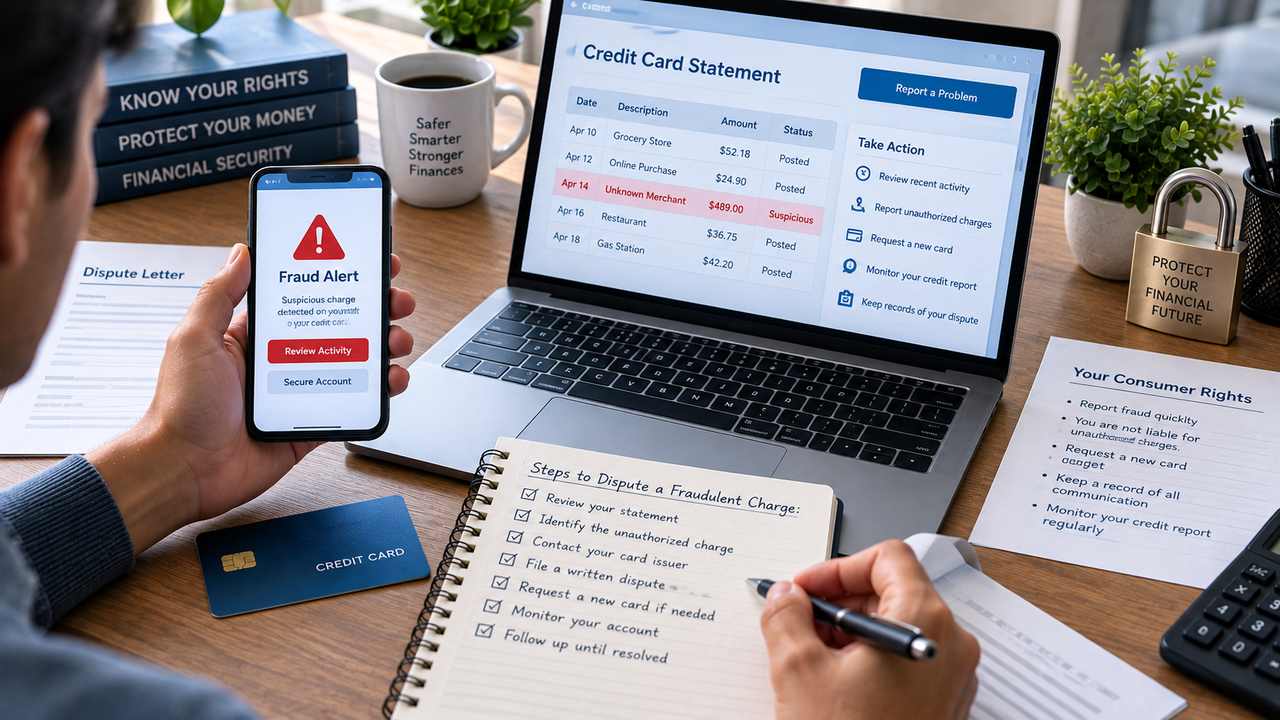
    Spotting a charge on your credit card statement that you never made triggers an immediate mix of confusion and alarm — but disputing a fraudulent credit card charge is actually one of the more consumer-protected processes in personal finance, with strong legal backing and, in most cases, a fairly straightforward resolution path. This guide walks through exactly what to do, your legal protections, and how to navigate the process efficiently.

    Your Legal Protection: The Fair Credit Billing Act

    Fraudulent credit card charges are governed by the Fair Credit Billing Act (FCBA), which limits your maximum liability for unauthorized charges to $50 — and in practice, most major card issuers voluntarily offer $0 liability for fraud as part of their standard policy, going beyond what federal law technically requires. This is meaningfully more protective than debit card fraud liability, which can be higher depending on how quickly you report it, making credit cards generally the safer payment method when fraud risk is a concern.

    For additional information about your consumer rights, visit the Consumer Financial Protection Bureau (CFPB).

    Step One: Identify the Charge Precisely

    Before disputing anything, make sure the charge is genuinely unfamiliar rather than simply unrecognized due to an unfamiliar merchant name. Many legitimate charges appear on statements under a parent company or processing name different from the actual business you interacted with — a quick search of the exact charge description alongside the amount often reveals it’s actually a subscription you forgot about, a purchase made by a family member with authorized access to your card, or a merchant operating under a different registered business name than their storefront branding.

    Step Two: Report It to Your Card Issuer Immediately

    Once you’ve confirmed a charge is genuinely unauthorized, contact your card issuer as soon as possible — most have a dedicated fraud reporting line, often available 24/7, and reporting promptly both limits your legal liability and starts the formal dispute and investigation process.

    Most issuers allow you to initiate this report by phone, through their mobile app, or online, and will typically issue a temporary credit for the disputed amount while they investigate.

    Step Three: Consider Whether Your Card Needs to Be Replaced

    If the fraud suggests your physical card number has been compromised (rather than, say, a single unauthorized use by someone with brief physical access), your issuer will typically recommend or automatically issue a replacement card with a new number, closing the compromised number to prevent further unauthorized charges. This is a normal and appropriate response even for a single fraudulent charge, since it’s often difficult to know with certainty how a fraudster obtained your information or whether they might attempt further charges.

    Step Four: Monitor for Additional Fraudulent Activity

    Since a single fraudulent charge sometimes indicates a broader compromise (your card information stolen through a data breach, a skimming device, or an online store’s security failure), it’s worth reviewing your recent statements more closely for any other unfamiliar activity, and considering whether the same compromised information might affect other accounts if you’ve used that specific card number in multiple places recently.

    For broader protection strategies, see our guide to identity theft protection.

    What Happens During the Investigation

    Your card issuer is generally required to investigate and resolve billing disputes within specific timeframes under the FCBA — acknowledging your dispute within 30 days and resolving it within two billing cycles (generally no more than 90 days). During this period, the disputed amount is typically not counted against your available credit or considered part of your minimum payment due, and shouldn’t negatively affect your credit report while the investigation is pending.

    What If the Issuer Denies Your Dispute?

    If your issuer determines the charge was actually authorized (or was made by someone with legitimate access to your card, like a family member, which complicates the “fraud” classification even if you personally didn’t make the purchase), they’ll typically explain their reasoning and you have the right to request the specific documentation supporting their conclusion. If you believe this determination is incorrect, you can request further review, provide additional evidence supporting your position, or, if necessary, escalate through a complaint to the CFPB.

    You can submit or learn more about consumer complaints through the CFPB’s complaint process.

    How This Differs From a Simple Billing Error or Merchant Dispute

    It’s worth distinguishing true fraud (someone else used your card without any authorization) from a billing dispute with a legitimate merchant you did transact with — a wrong amount charged, goods never received, or a service not as described. These are also disputable under consumer protection law, but they follow a somewhat different track (often starting with the merchant directly) than pure fraud, though your card issuer’s dispute process typically handles both categories, just potentially with different specific documentation requirements.

    Protecting Yourself Going Forward

    Enable transaction alerts through your card issuer, so you’re notified in real time of any charge, making unauthorized activity far easier to catch quickly.

    Use virtual card numbers for online purchases where your issuer offers this feature, which limits exposure since a compromised virtual number can be easily deactivated without affecting your actual card.

    Be cautious about where you use your physical card, particularly at gas station pumps and ATMs, which are common targets for card-skimming devices — using tap-to-pay or chip insertion rather than swiping where possible reduces skimming risk.

    Review your statements regularly rather than only when something feels obviously wrong, since smaller fraudulent charges are sometimes deliberately kept low to avoid detection.

    Frequently Asked Questions

    Does disputing a fraudulent charge hurt my credit score?

    No — the dispute process itself doesn’t affect your score, and a properly resolved fraudulent charge shouldn’t appear as a negative mark on your credit report at all, since it’s not actually your legitimate debt or payment history.

    What if I don’t notice the fraudulent charge until months later?

    Report it as soon as you notice it, though your protection under the FCBA is strongest when reported promptly — very delayed reporting can complicate the investigation and, in rare cases, affect your liability, though most issuers still work with customers reasonably even on somewhat delayed reports, especially for clearly fraudulent activity.

    Can I dispute a charge if I willingly gave my card information to someone who then misused it?

    This is more complicated — if you voluntarily shared your card details with someone who then made unauthorized purchases beyond what you agreed to, this may be treated differently than a stranger stealing your information, and it’s worth discussing the specific circumstances directly with your issuer’s fraud department.

    Do I need a police report to dispute a fraudulent charge?

    Generally, no — for a standard fraud dispute with your card issuer, a police report typically isn’t required, though for more serious identity theft situations involving multiple accounts, filing a police report and an identity theft report can support your broader recovery efforts.

    Is there a difference in how this works for a debit card versus a credit card?

    Yes, meaningfully — debit card fraud liability under the Electronic Fund Transfer Act scales based on how quickly you report it (potentially higher liability for delayed reporting), and disputed debit funds may not be temporarily credited back as quickly as with a credit card, since the money has already left your actual bank account rather than simply being an unpaid credit balance.

    A Step-by-Step Checklist for the Dispute Process

    1. Confirm the charge is genuinely unfamiliar, checking the exact merchant name and amount against your own records and any family members with card access.
    2. Contact your card issuer immediately through their fraud reporting line, app, or online portal.
    3. Request a temporary credit for the disputed amount while the investigation proceeds.
    4. Ask whether your card needs to be replaced, and follow through on getting a new card number if recommended.
    5. Document the date you reported the fraud, who you spoke with, and any reference or case number provided.
    6. Monitor your account over the following weeks for the investigation’s resolution and any additional suspicious activity.
    7. If denied, request the specific documentation behind the decision and consider escalating through a formal complaint if you believe the determination is wrong.

    Why Reporting Promptly Matters Beyond Just Your Own Liability

    Beyond protecting your own limited liability, prompt reporting helps your card issuer identify and shut down broader fraud patterns faster — if your card number was compromised through a specific merchant’s data breach or a skimming device at a specific location, your report contributes to the issuer’s ability to identify and block the same compromised card numbers before they’re used fraudulently elsewhere, potentially protecting other cardholders as well as yourself from further unauthorized use of the same underlying stolen data.

    What a Card Issuer’s Fraud Investigation Actually Looks At

    Understanding roughly what investigators review can help you provide useful supporting information proactively. This typically includes: the specific transaction’s location and time, compared against your typical spending patterns and recent card usage; whether the transaction matches a pattern consistent with known fraud schemes; any device or IP information available for online transactions; and sometimes a comparison against other reported fraud involving the same merchant or a similar pattern across other cardholders. Providing your own supporting context — confirming you were nowhere near the transaction’s location, for instance, or that you’d already reported your card lost around that time — can help streamline this investigation.

    how-to-dispute-a-fraudulent-credit-card-charge-under-100kb

    Frequently Asked Questions, Continued

    Can a merchant refuse to accept my card issuer’s fraud determination and pursue me directly for the charge?

    Generally, once your issuer resolves a dispute in your favor, the merchant is bound by that outcome through their agreement with the card network and cannot separately pursue you directly for the same disputed amount.

    Does using a credit monitoring service help catch fraudulent Credit Card charges faster than reviewing statements myself?

    Credit monitoring services generally focus on new account openings and credit report changes rather than individual transaction-level charges on existing cards — for catching a specific fraudulent Credit Card charge, your card issuer’s own transaction alerts and regular statement review remain the more directly relevant tools.

    You may also want to review our guide to the best credit monitoring services.

    If my card was used fraudulently at a specific store, should I avoid shopping there in the future?

    Not necessarily — a fraudulent Credit Card charge doesn’t always indicate a security failure specific to that merchant; your information could have been compromised through many other channels entirely unrelated to that specific transaction location, so this alone isn’t a reliable signal about that merchant’s own security practices.

    How Card Issuers’ Zero-Liability Policies Compare to Each Other

    While federal law caps your liability at $50, most major issuers advertise “zero liability” policies that go further, but the fine print varies. Some zero-liability policies exclude certain situations — a PIN-based transaction versus a signature-based one, for instance, or cases involving “gross negligence” on the cardholder’s part, like writing your PIN on the card itself. Reading your specific issuer’s zero-liability terms, or simply asking their fraud department directly when you report an incident, clarifies exactly what protection applies to your specific situation rather than assuming the broadest possible interpretation automatically applies.

    What to Do If Fraud Occurs While You’re Traveling Internationally

    Fraudulent Credit Card charges sometimes surface while you’re traveling, which adds logistical complexity to reporting and resolving them. Most major issuers have international collect-call numbers specifically for cardholders abroad, and many banking apps allow you to freeze or report a card entirely through the app without needing a phone call at all. It’s worth locating this information (saving the international fraud line number somewhere accessible, separate from the card itself) before traveling, precisely because dealing with this while already navigating an unfamiliar location adds unnecessary stress if you haven’t prepared in advance.

    Frequently Asked Questions, Continued Further Still

    Does my card issuer ever proactively catch fraud before I even notice it myself?

    Yes, often — most major issuers use automated fraud detection systems that flag unusual spending patterns (a purchase in an unusual location, an atypical spending category, unusually high-value transactions) and may temporarily hold or decline a suspicious charge, sometimes contacting you directly to verify before you’ve even reviewed your statement.

    If I dispute a charge and win, does the merchant find out it was me who disputed it?

    Generally, yes, in the sense that the merchant is notified a dispute was filed and by which customer, as part of the standard chargeback process between your card issuer and the merchant’s payment processor — this is a normal part of the dispute mechanism and isn’t something to be concerned about from a privacy standpoint.

    The Bottom Line

    Disputing a fraudulent credit card charge is a well-protected, relatively straightforward process: report it to your issuer promptly, let them investigate under the legally mandated timeframes, and monitor for any additional unauthorized activity in the meantime. Your maximum liability is capped at $50 by federal law, and most issuers offer $0 liability in practice, making credit cards one of the more consumer-protected ways to pay specifically because of how thoroughly fraud disputes are legally structured to favor quick, low-cost resolution for the cardholder.

    Concerned About Fraud or Inaccurate Information on Your Credit Report?

    Fraud and identity theft can sometimes affect more than just individual credit card transactions. Unauthorized accounts or inaccurate information may also appear on your credit report.

    A professional credit report review can help you better understand what is being reported and identify potential issues that may need attention.

    Request a Credit Audit or Quote Today