Category: Credit Repair

  • Midland Credit Management Is Suing Me — What Are My Options?

    Midland Credit Management Is Suing Me — What Are My Options?

    Being served with a lawsuit is one of the more frightening moments in dealing with debt, and if the plaintiff is Midland Credit Management, it can feel especially disorienting because you may not have interacted with this specific company before — even if the underlying debt traces back to a credit card or loan you recognize. This guide walks through exactly what’s happening, what your realistic options are, and the specific steps to take right now, because how you respond in the coming days genuinely matters.

    First: Do Not Ignore This

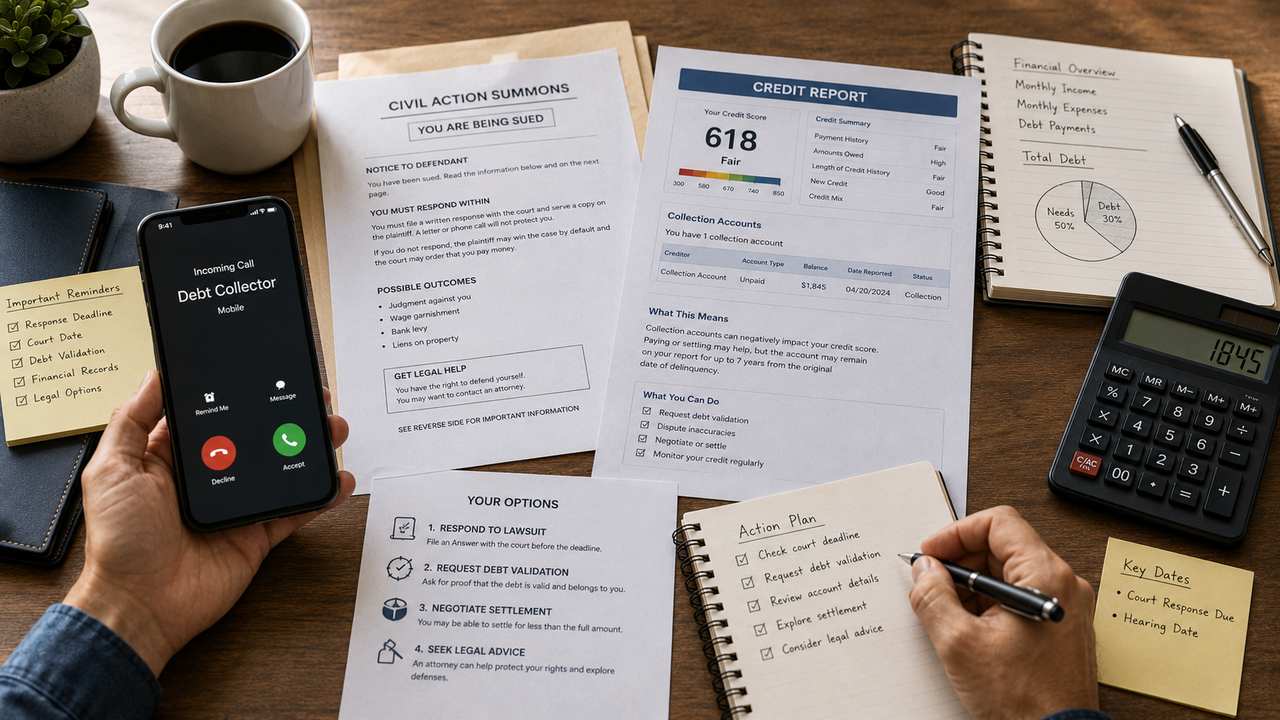
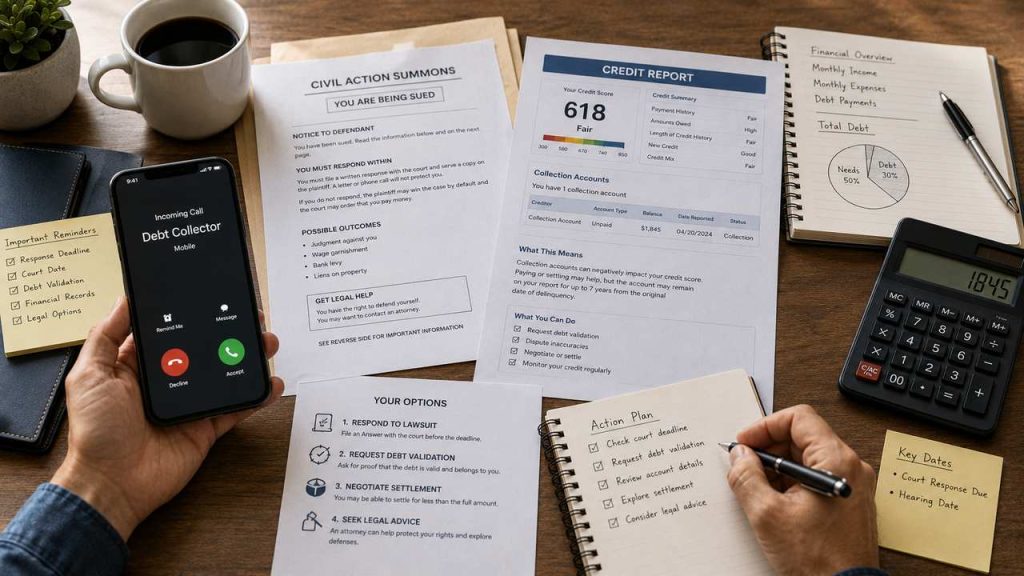
    Before anything else, understand this clearly: ignoring a lawsuit is the single worst thing you can do, regardless of whether you believe the debt is accurate, too old, or improperly pursued. Every lawsuit comes with a specific deadline to file a formal response (called an “Answer” in most courts), typically ranging from 14 to 30 days depending on your state and the type of court. If you don’t respond by that deadline, the court can enter a default judgment against you — meaning you automatically lose the case without ever presenting any defense, even a legitimate one like an expired statute of limitations or inadequate proof of the debt. A default judgment can lead to wage garnishment, bank account levies, or property liens, depending on your state’s laws, and it’s considerably harder to undo after the fact than it is to prevent by responding on time.

    Who Is Midland Credit Management, and Why Are They Suing You?

    Midland Credit Management (MCM) is a large debt buyer, a subsidiary of publicly traded Encore Capital Group (NASDAQ: ECPG), headquartered in San Diego, California. Unlike a traditional collection agency hired by your original bank, MCM (often through its affiliate Midland Funding LLC, which frequently holds legal ownership of the purchased accounts) buys charged-off debt outright, typically credit card debt, for a small fraction of the original balance. When informal collection efforts — calls, letters, settlement offers — don’t result in payment, MCM sometimes escalates to filing a lawsuit to obtain a court judgment, which gives them additional legal tools (like wage garnishment or bank levies, depending on your state) to collect.

    If you’re being sued, it almost always means an old, unpaid credit card or similar account was charged off by your original bank, sold to MCM (or Midland Funding), and MCM has now decided that litigation is the most effective way to pursue collection on that specific account.

    Step One: Confirm the Lawsuit Is Legitimate

    Before anything else, verify that what you’ve received is a genuine court filing, not a scam. Legitimate lawsuits are filed with an actual court, will reference a specific case number, and can be verified by contacting the clerk of the court listed on the documents directly (using contact information you look up independently, not from the paperwork itself, as an added precaution). If you have any doubt about legitimacy, this verification step takes only a few minutes and provides real peace of mind either way.

    Step Two: Read the Documents Carefully and Note the Deadline

    Court documents can be dense and intimidating, but the most important details to identify immediately are: the specific deadline to respond, which court the case was filed in, the case number, and the exact amount MCM is claiming you owe. Mark the response deadline prominently — this is the single most time-sensitive piece of information in the entire process.

    Step Three: Determine Whether You Have a Response Strategy

    You generally have a few broad paths once served: filing a formal Answer contesting the lawsuit (in whole or in part), attempting to settle with MCM before the case proceeds further, or, in rare cases, allowing a judgment if you have no viable defense and no ability to negotiate (though even in this scenario, responding is still generally preferable to a default judgment, since it may allow you to negotiate a structured payment arrangement as part of the judgment rather than facing more aggressive collection tools).

    Filing a Formal Answer

    An Answer is your formal written response to the lawsuit, addressing each claim MCM has made. This doesn’t need to be a lengthy legal document — many court systems provide simplified Answer forms, and some consumer advocacy organizations offer templates specifically designed for responding to debt collection lawsuits. Filing an Answer, even a relatively simple one, prevents a default judgment and forces MCM to actually prove their case in court, which shifts real leverage back toward you, since debt buyers sometimes struggle to produce complete documentation for older, resold accounts.

    Common Defenses Worth Considering

    • The statute of limitations has expired. Every state has a legal time limit (commonly 3-10 years, depending on the state and debt type) within which a creditor can sue you to collect. If MCM filed suit after this window closed, this is a strong, often case-ending defense — but it must generally be raised affirmatively in your Answer, since courts don’t always apply it automatically on your behalf.
    • MCM can’t adequately prove ownership of the debt. Debt buyers must be able to demonstrate a clear chain of ownership from the original creditor to themselves, along with accurate documentation of the amount owed. For older debt that’s been resold multiple times, this documentation is sometimes incomplete or missing, which can be a genuine, successful defense if the plaintiff can’t meet their burden of proof.
    • The amount claimed is inaccurate. If MCM’s claimed balance includes improper fees, incorrect interest calculations, or simply doesn’t match your own records, this is worth raising specifically.
    • You’ve already paid or settled this debt. If you have documentation showing prior resolution, this is a straightforward and often decisive defense.
    • The debt isn’t yours. Whether due to identity theft or a data-matching error, this is worth raising if applicable, along with any supporting documentation.

    Step Four: Consider Consulting a Consumer Law Attorney

    Given what’s potentially at stake — a court judgment, wage garnishment, and lasting damage to your credit and finances — consulting an attorney, even for a single initial conversation, is genuinely worth considering. Many consumer law attorneys who handle debt defense cases offer free or low-cost initial consultations, and some even work on a contingency or fee-shifting basis in cases involving FDCPA violations, since that law allows for recovery of attorney’s fees if a violation is successfully proven. An attorney can help you identify which specific defenses genuinely apply to your situation, draft a proper Answer, and potentially negotiate a more favorable settlement than you might secure on your own, given their familiarity with how MCM and similar debt buyers typically approach litigation and settlement.

    Step Five: Explore Settlement, Even After Being Sued

    Being sued doesn’t mean settlement is off the table — in fact, many debt buyer lawsuits, including those filed by MCM, are resolved through a negotiated settlement rather than proceeding to a full trial. Since MCM purchased the debt at a steep discount, there’s often genuine room to negotiate a reduced lump-sum payment or structured payment plan, even after litigation has begun, sometimes resulting in the lawsuit being dismissed as part of the settlement agreement.

    If you pursue this route, get any settlement agreement in writing before making a payment, and specifically confirm what happens to the lawsuit itself — ideally, a dismissal with prejudice (meaning it can’t be refiled later) as part of the agreement, rather than simply an informal understanding that they won’t pursue it further.

    What Happens If You Don’t Respond and a Default Judgment Is Entered?

    If you miss the response deadline and a default judgment is entered against you, MCM gains access to additional legal collection tools that vary by state but commonly include:

    • Wage garnishment, where a portion of your paycheck is legally redirected to satisfy the judgment, subject to state and federal limits on how much can be garnished.
    • Bank account levies, where funds in your bank account can be seized to satisfy the judgment, though certain funds (like Social Security income, in many states) are often protected from this.
    • Property liens, particularly relevant if you own real estate, which can complicate selling or refinancing the property until the judgment is resolved.

    It’s sometimes possible to have a default judgment vacated (undone) after the fact, particularly if you can show you weren’t properly served or had a legitimate reason for missing the deadline, but this is a more difficult and uncertain process than simply responding on time in the first place — which is exactly why acting quickly upon being served matters so much.

    Understanding MCM’s Documentation Requirements in Court

    Because MCM is a debt buyer rather than the original creditor, they’re generally required to prove, to the court’s satisfaction, a complete chain connecting the original account to their current ownership, along with accurate records of the amount owed. This typically requires records like the original account agreement, a bill of sale or assignment document showing the debt was properly transferred to Midland Funding or MCM, and account statements showing the balance history. In practice, this documentation is sometimes incomplete, especially for older debt that’s changed hands more than once before reaching MCM — which is exactly why a well-prepared response that specifically challenges MCM to produce this documentation, rather than simply asserting the debt isn’t yours in general terms, is often the more effective legal strategy.

    What to Expect at Each Stage of the Process

    After filing your Answer, the case typically proceeds to a discovery phase, where both sides can request documentation from each other — this is your opportunity to formally request MCM produce their complete chain-of-ownership documentation.

    Settlement discussions often occur throughout this process, sometimes initiated by MCM, sometimes by you or your attorney, and many cases resolve at this stage without ever reaching trial.

    If the case does proceed to trial (relatively uncommon for smaller consumer debt amounts, though not impossible, particularly in small claims court), you or your attorney would present your defense, and MCM would need to prove their case with adequate documentation and testimony.

    Frequently Asked Questions

    How much time do I actually have to respond to a lawsuit from Midland Credit Management?

    This varies by state and court, but commonly ranges from 14 to 30 days from when you were served. The exact deadline should be specified in the court documents themselves — confirm this immediately upon receiving the paperwork.

    Can I represent myself in court against MCM without an attorney?

    Yes, this is legally permitted (called appearing “pro se”), and many people do successfully respond to and even win debt collection lawsuits without an attorney, particularly with the help of self-help resources many courts provide specifically for this type of case. That said, given what’s potentially at stake, at least a brief consultation with an attorney is worth considering if it’s accessible to you.

    Will settling with MCM after being sued still show up as a lawsuit on my record?

    The underlying court case is a matter of public record regardless of the outcome, though a settled or dismissed case is generally viewed far more favorably than an unpaid judgment, both practically and in terms of your credit report, which would reflect the resolved status rather than an open judgment.

    Can MCM garnish my wages immediately after filing the lawsuit?

    No — garnishment generally can’t occur until after a court judgment has been entered against you, which requires either a default (from not responding) or an actual court ruling in MCM’s favor after the case proceeds.

    Is it worth negotiating with MCM before my response deadline, or should I file an Answer first?

    Both are worth pursuing simultaneously if possible — filing your Answer protects you from a default judgment regardless of how settlement discussions proceed, so it’s generally not advisable to rely solely on settlement negotiations without also meeting your formal response deadline, since a settlement isn’t guaranteed to be finalized before that deadline passes.

    What if I can prove the statute of limitations has expired — do I still need to respond to the lawsuit?

    Yes, absolutely — an expired statute of limitations is a defense you generally need to raise affirmatively in your Answer; it doesn’t automatically dismiss the case on its own, and failing to respond and raise this defense properly could still result in a default judgment despite having a technically valid defense available.
    midland-credit-management-is-suing-me-under-100kb

    A Sample Structure for Your Answer

    While you should always check your specific court’s required format (many courts provide official fillable Answer forms specifically for debt collection cases, which is generally preferable to a freeform document), a basic Answer typically includes:

    • Case caption information — the court name, case number, and the names of both parties, copied exactly from the summons or complaint you received.
    • A response to each numbered allegation in MCM’s complaint — for each numbered paragraph they’ve filed, you’ll typically respond with “admit,” “deny,” or “without sufficient knowledge to admit or deny” as appropriate.
    • Any affirmative defenses, listed specifically — this is where you’d state, for example, “Plaintiff’s claim is barred by the applicable statute of limitations” or “Plaintiff has failed to establish ownership of the alleged debt,” if these apply to your situation.
    • Your signature and the date, along with proper filing according to your specific court’s rules (which may include filing fees, though fee waivers are often available for those who qualify based on income).

    Many state court websites and legal aid organizations provide specific, free Answer templates designed for debt collection lawsuits, which can meaningfully simplify this process compared to drafting one entirely from scratch.

    What Discovery Requests You Can Send to Challenge MCM’s Case

    Once your Answer is filed, the discovery phase gives you the opportunity to formally request that MCM produce specific documentation supporting their claim. Useful requests often include: the original credit agreement or account terms, a complete accounting showing how the current claimed balance was calculated, documentation showing the specific chain of assignment or sale from the original creditor to Midland Funding or MCM, and any documentation of your specific account’s payment history. If MCM cannot produce adequate documentation in response to a properly formatted discovery request, this can significantly strengthen your position, sometimes leading to a case being dismissed or MCM offering a considerably more favorable settlement rather than risk proceeding without adequate proof.

    Understanding Settlement Timing: Before vs. After Judgment

    It’s worth being explicit about why settling before a judgment is entered is almost always preferable to settling after. Before judgment, you’re negotiating as an equal party in an unresolved dispute, with real leverage if MCM’s documentation is incomplete or if a statute of limitations defense is available. After a judgment is entered against you, MCM has already secured the legal tools (potential garnishment, liens, levies depending on your state) to compel payment, considerably reducing your negotiating leverage — settlement is still often possible even at this stage, but typically on less favorable terms than could have been achieved earlier in the process. This is one of the most concrete, practical reasons responding promptly and considering settlement discussions early matters so much.

    A Note on Arbitration Clauses

    Some original credit card agreements include a mandatory arbitration clause, requiring disputes to be resolved through private arbitration rather than in court. If your original account included such a clause, it’s worth discussing with an attorney whether this could be raised as a basis to compel arbitration instead of court litigation — though whether this genuinely benefits you depends heavily on the specific circumstances, since arbitration isn’t inherently more favorable to consumers than court litigation, and pursuing this path adds its own complexity and cost considerations.

    What If You Genuinely Owe the Debt and Have No Viable Defense?

    Not every situation involves a strong defense, and that’s an important reality to acknowledge honestly. If you genuinely owe the debt, the statute of limitations hasn’t expired, and MCM’s documentation appears to be in order, your best path is often straightforward: still file a timely Answer (to preserve your negotiating position and avoid the additional consequences of a default judgment), and focus your energy on negotiating the most favorable settlement or payment plan possible, ideally resulting in a dismissal of the lawsuit as part of that agreement, rather than allowing it to proceed to an uncontested judgment.

    Frequently Asked Questions, Continued

    If MCM’s lawsuit is dismissed due to inadequate documentation, can they refile it later?

    This depends on how the dismissal is entered — a dismissal “without prejudice” generally allows the case to be refiled later if MCM later obtains adequate documentation, while a dismissal “with prejudice” permanently bars them from refiling on the same claim. This distinction is worth clarifying and, where possible, negotiating for specifically, whether through a contested dismissal or as part of a settlement agreement.

    Does being sued by MCM mean my wages are automatically at risk?

    No — wage garnishment can only occur after a judgment is actually entered against you, and even then, is subject to state and federal limits on the percentage of income that can be garnished, along with certain state-specific exemptions and protections.

    Can I still negotiate with MCM if I’ve already missed my response deadline?

    It’s worth trying, though your leverage is considerably weaker once a default judgment risk is imminent or has already occurred. If you’ve missed the deadline, acting immediately — potentially seeking to have a default judgment vacated if one has been entered, or urgently negotiating if it hasn’t yet been finalized — is critical, and consulting an attorney quickly in this scenario is especially valuable given the time pressure involved.

    Should I attend the court hearing even if I’ve reached a settlement with MCM beforehand?

    Generally yes, unless your settlement agreement specifically confirms the case has been or will be formally dismissed with the court before your hearing date — verbal or informal settlement agreements don’t automatically update the court’s own records, so confirming the case status directly with the court, not just with MCM, is an important final step.

    How to Find Free or Low-Cost Legal Help

    If hiring a private attorney isn’t financially feasible, several resources exist specifically for consumers facing debt collection lawsuits: local legal aid organizations (often income-qualified but free), law school legal clinics (many law schools operate clinics where supervised students provide free representation or guidance), your state or local bar association’s lawyer referral service (which can connect you with attorneys offering free or reduced-cost initial consultations), and self-help centers operated by many state and county courts specifically designed to help unrepresented parties understand and navigate the process, including debt collection defense specifically. The National Association of Consumer Advocates also maintains a directory of attorneys who specialize in consumer protection and debt collection defense cases, some of whom work on contingency or fee-shifting arrangements particularly suited to FDCPA-related claims.

    A Realistic Timeline of a Typical MCM Lawsuit

    Understanding roughly how long this process tends to unfold can help manage expectations and plan accordingly. After being served, you’ll have your initial response window (commonly 14-30 days). If you file an Answer, the case typically moves into a discovery and pretrial phase that can last anywhere from a few weeks to several months, depending on your specific court’s caseload and procedures. Many cases settle during this window once both sides have exchanged basic information and assessed their respective positions. If a case does proceed toward trial, this can add additional months to the timeline, though — as noted earlier — trial is relatively uncommon for this type of consumer debt case, since a large percentage resolve through settlement or dismissal before reaching that stage.

    Frequently Asked Questions, Continued Further

    Does it help my case if I can show I attempted good-faith settlement discussions with MCM before being sued?

    This can be a favorable fact to raise in court or during settlement discussions, since it demonstrates you weren’t simply avoiding the debt, though it doesn’t substitute for a substantive legal defense if one is genuinely available and applicable to your situation.

    If I successfully defend against this lawsuit, does that mean the underlying debt is erased entirely?

    Not necessarily in every circumstance — a successful defense based on inadequate documentation might mean MCM loses this specific case without proving they own the debt, but if they later obtain proper documentation (and the case wasn’t dismissed with prejudice, and the statute of limitations hasn’t independently expired), it’s theoretically possible for the debt to be pursued again. A successful expired-statute-of-limitations defense, by contrast, generally means the debt can no longer be pursued through the courts at all, regardless of documentation.

    Can I countersue Midland Credit Management if I believe they violated the FDCPA?

    Yes, if you have evidence of a genuine FDCPA violation (such as improper contact practices, misrepresentation of the debt, or pursuing a clearly time-barred debt through litigation), you may have grounds for a counterclaim, potentially including statutory damages and recovery of attorney’s fees if successful — this is exactly the kind of scenario where consulting a consumer law attorney is particularly valuable, since these claims require specific legal knowledge to properly identify and pursue.

    The Bottom Line

    Being sued by Midland Credit Management is serious, but it’s a manageable situation with clear, time-sensitive steps: verify the lawsuit is legitimate, note your response deadline immediately, and file a formal Answer rather than ignoring it, regardless of your ultimate strategy. From there, whether you pursue a specific legal defense (like an expired statute of limitations or inadequate documentation), negotiate a settlement, or consult an attorney for guidance, you’re in a fundamentally stronger position than if you allow a default judgment to be entered by missing the deadline. The single most important thing to take away from this guide is simple: however you choose to handle the substance of the case, respond by the deadline.

    Need Help Reviewing Your Credit Report?

    If Midland Credit Management is suing you or a related collection account is appearing on your credit report, you can request a credit audit or quote to review your situation and identify potential credit-report issues.
    Request a Credit Audit or Quote

  • AllianceOne Is Calling Me — Who Are They and What Do They Want?

    AllianceOne Is Calling Me — Who Are They and What Do They Want?

    An unexpected call or letter from AllianceOne can feel especially confusing because, unlike a bank or a store you’ve shopped at, the name doesn’t obviously connect to anything in your financial life. This guide explains exactly who AllianceOne is, the surprisingly wide range of debts they collect on, and the specific steps to figure out what they actually want from you and how to respond.

    Who Is AllianceOne?

    AllianceOne Receivables Management, Inc. is a large, long-operating third-party debt collection agency formed in 1999 through the merger and acquisition of five separate collection companies — one of which had reportedly been operating since as far back as 1912, making parts of AllianceOne’s institutional history genuinely quite old, even though the combined company under its current name is a more recent creation. AllianceOne is a subsidiary of Teleperformance, a large global company specializing in call center and customer contact management services, and AllianceOne itself maintains offices not just across the United States but internationally as well, including operations in Canada, South America, India, and the Philippines.

    AllianceOne is a legitimate, licensed collection agency, not a scam, though — as with any large collector — that doesn’t guarantee every account attributed to you is automatically accurate, which is exactly why verification matters regardless of the company’s overall legitimacy.

    What Makes AllianceOne Distinctive: Government Debt Collection

    While many collection agencies focus primarily on consumer credit accounts, AllianceOne has built a particularly notable specialization in government-related debt collection — a category that trips up a lot of people because it doesn’t fit the usual mental picture of “debt collection” most people have in mind. This includes:

    • Traffic tickets and fines that went unpaid, sometimes referred to collections by municipal or county governments after a certain period.
    • Court fees and court-related fines, including certain criminal justice-related financial obligations in some jurisdictions.
    • State and local tax debt in some cases, depending on the specific government entity’s collection arrangements.
    • Parking violations and municipal citations more broadly.

    Beyond this government-focused niche, AllianceOne also collects for a wide range of more traditional clients, including financial services institutions, healthcare providers, retailers, utility companies, and telecommunications carriers.

    Is AllianceOne a Debt Buyer or a Collection Agency?

    AllianceOne operates as a third-party collection agency, not a debt buyer. This means they don’t purchase your debt outright — instead, they’re hired by the actual creditor (whether that’s a government entity, a bank, a healthcare provider, or another business) to attempt collection on that creditor’s behalf, typically for a fee or commission based on what they successfully recover. The original creditor retains ownership of the debt throughout this process, which — similar to dealing with IC System — means you may have the option of resolving certain matters directly with the original creditor rather than exclusively through AllianceOne.

    This distinction is especially relevant for government debt specifically: if AllianceOne is collecting a traffic fine or court fee on behalf of a municipality, you may be able to resolve it directly with that municipal court or government office, sometimes with more flexibility (like a payment plan or fine reduction hearing) than a private collection agency working on commission is authorized to offer.

    Why Is AllianceOne Contacting You?

    A few common scenarios explain how AllianceOne became involved in your situation:

    • An unpaid traffic ticket, court fee, or municipal fine was referred to AllianceOne after going unresolved for a period defined by the specific government entity’s own policies.
    • A student loan or education-related balance went unpaid and was placed with AllianceOne for collection.
    • A medical bill, utility account, or telecom balance went to collections through your original healthcare provider, utility company, or service provider outsourcing the effort to AllianceOne.
    • A financial services account, such as a bank fee or overdraft balance, was placed with AllianceOne by your bank or credit union.
    • A mistake or data error has occurred, resulting in a debt incorrectly attributed to you — a real possibility with any large-scale collector handling accounts across many different types of creditors and government entities.

    Why Government Debt Collection Deserves Special Attention

    If AllianceOne is contacting you specifically about a traffic ticket, court fee, or similar government-related debt, it’s worth understanding that some additional or different rules can apply compared to standard consumer debt. Depending on your state and the specific type of obligation, unpaid fines and court fees can sometimes carry consequences beyond a standard credit report entry — including, in some jurisdictions, driver’s license suspension or renewal holds, though many states have moved away from license suspension specifically for unpaid fines in recent years due to legal challenges and reform efforts. Because these specific consequences vary so significantly by state and by the type of underlying obligation, it’s worth confirming directly with the referring government entity (not just AllianceOne) exactly what’s at stake and what resolution options — including payment plans, fine reduction, or community service alternatives in some jurisdictions — might be available that a private collector wouldn’t necessarily volunteer.

    Step One: Confirm Exactly What Debt They’re Referring To

    Before anything else, get AllianceOne to specify precisely what account or obligation they’re contacting you about — the type of debt, the original creditor or government entity, the amount, and the general timeframe. Given the sheer breadth of client types AllianceOne works with, from traffic courts to hospitals to banks, this initial clarification is more important than it might be with a more narrowly focused collector, simply because the range of possibilities is so wide.

    Step Two: Request Formal Debt Validation

    Once you know generally what they’re referring to, request formal written validation under the Fair Debt Collection Practices Act, requiring AllianceOne to provide the name of the original creditor, the amount owed, and confirmation of their authority to collect on that creditor’s behalf. You generally have 30 days from your first contact to make this request, during which they must pause collection activity until validation is provided.

    Important note on government debt: the FDCPA’s protections generally apply to consumer debt collection, and while much of what AllianceOne handles (traffic fines, court fees) does fall under FDCPA coverage when collected by a third party like AllianceOne, some purely governmental collection activities conducted directly by a government agency itself (rather than through a private collector) may be treated differently under the law. Since AllianceOne is acting as a private, third-party collector in this scenario, FDCPA protections should generally apply to their specific collection conduct, even for government-referred debt.

    How to request validation: Send a written letter via certified mail with return receipt requested, explicitly invoking your FDCPA rights and requesting a cessation of collection activity until validation is provided.

    Step Three: Verify Directly With the Original Creditor or Government Entity

    Since AllianceOne doesn’t own the underlying debt, contacting the original creditor or referring government agency directly can be a valuable parallel step. For a traffic ticket or court fee, this might mean contacting the specific court clerk’s office; for a medical bill, the original healthcare provider’s billing department; for a student loan, the original lender or servicer. This direct verification can sometimes resolve confusion faster than working exclusively through AllianceOne, and for government debt specifically, it may reveal resolution options (payment plans, fine reductions, alternative arrangements) that AllianceOne itself isn’t necessarily positioned to offer or discuss.

    How to Resolve an Accurate AllianceOne Debt

    • Consider contacting the original creditor or government entity directly first, particularly for traffic fines, court fees, or medical debt, where more flexible resolution options sometimes exist outside the collection agency itself.
    • Pay in full, if you have the means, which resolves the underlying obligation completely, though it doesn’t automatically remove a related entry from your credit report — it updates the status to reflect payment.
    • Negotiate a settlement, where applicable — this is more commonly available for medical, financial services, and retail-type debt than for government fines and fees, which often have less room for negotiated reduction due to their statutory nature, though payment plans are frequently available even when the total amount isn’t negotiable.
    • Set up a structured payment plan, especially useful for government debt where a lump-sum payment may not be feasible, and many courts and government agencies offer formal payment plan programs specifically designed for this purpose.
    • Get any agreement in writing before making a payment, regardless of which type of debt is involved.

    Your Rights Under the FDCPA When Dealing With AllianceOne

    • They cannot call before 8 a.m. or after 9 p.m. in your time zone.
    • They cannot harass you through repeated calls intended to annoy, or through abusive, threatening, or profane language.
    • They cannot misrepresent the debt or falsely threaten consequences that aren’t legally accurate for your specific situation.
    • They must stop calling your workplace once informed you can’t take calls there.
    • They cannot disclose your debt to third parties, beyond narrow circumstances permitted for locating you.
    • They must honor a written cease-and-desist request, though this doesn’t erase the underlying obligation or necessarily prevent the original creditor or government entity from pursuing other remedies.

    Can AllianceOne Sue You?

    Yes, for debt that’s still within your state’s statute of limitations and that they (or the entity they’re collecting for) can adequately document. If you’re served with a lawsuit, don’t ignore it — even a debt you believe is inaccurate or improperly pursued requires a response by the specified deadline, or the court can enter a default judgment against you automatically. For government debt specifically, the “lawsuit” scenario may instead take the form of continued fine escalation, referral to a different enforcement process, or, in some states, other administrative consequences rather than a standard civil lawsuit — the appropriate response varies enough by jurisdiction and debt type that consulting a local consumer law attorney or, for government fines specifically, a local public defender or legal aid organization if you can’t afford private counsel, is worth considering if the situation escalates.

    What to Do If You Believe the Debt Isn’t Yours

    Given how many different types of debt and government obligations AllianceOne handles, and the scale at which they operate across multiple countries and industries, data-matching errors are a genuine possibility. If you don’t recognize the debt at all, formally dispute it in writing with both AllianceOne and the credit bureaus (if it’s affecting your credit report), and if identity theft is suspected, file a report at IdentityTheft.gov and consider a fraud alert or credit freeze.

    Frequently Asked Questions

    Is AllianceOne a legitimate company?

    Yes. AllianceOne Receivables Management is a real, licensed, long-operating collection agency and a subsidiary of Teleperformance, a large global customer service and contact center company. It is not a scam.

    Does AllianceOne buy debt, or only collect on behalf of others?

    AllianceOne operates as a third-party collection agency, meaning the original creditor or government entity retains ownership of the debt, and AllianceOne collects on their behalf for a fee, rather than purchasing accounts outright.

    Can unpaid debt with AllianceOne affect my driver’s license?

    This depends entirely on your state’s specific laws and the type of underlying obligation — some states have historically suspended licenses for unpaid traffic fines or court fees, though many have reformed or eliminated this practice in recent years. Checking directly with the referring court or government agency is the most reliable way to understand what’s actually at stake in your specific state and situation.

    Why is AllianceOne contacting me about something that doesn’t feel like a typical “debt”?

    Because AllianceOne specializes heavily in government-related collections (traffic tickets, court fees, municipal fines) in addition to more traditional consumer debt, it’s common for people to be surprised that an unpaid fine or fee has been referred to a private collection agency at all — this is a normal and increasingly common practice for many government entities that don’t have the internal resources to pursue these collections themselves.

    Should I try to resolve a traffic fine directly with the court instead of AllianceOne?

    Often, yes — many courts offer payment plans, fine reduction hearings, or other alternatives that a private collection agency working on commission isn’t necessarily positioned to offer or discuss, so it’s worth checking directly with the referring court about your options even after AllianceOne has become involved.

    What happens if I ignore AllianceOne completely?

    For consumer debt, this risks a potential lawsuit if the debt is within your state’s statute of limitations, and continued negative credit reporting. For government debt specifically, ignoring it can sometimes lead to escalating consequences defined by that specific government entity’s own enforcement policies, which vary significantly and are worth understanding directly from the source rather than assuming they mirror standard consumer debt collection consequences.

    A Deeper Look at How Government Debt Collection Actually Works

    Because this is one of the more unusual and less understood parts of AllianceOne’s business, it’s worth walking through the mechanics in more detail. When a government entity — a municipal court, a county tax office, a state agency — has a category of unpaid obligations that it doesn’t have the internal staffing or systems to pursue efficiently, it will often issue a contract to a private collection agency like AllianceOne to handle that work. These contracts are typically the result of a competitive government procurement process, meaning AllianceOne’s arrangement with a specific court or agency is a formal, publicly awarded contract rather than an informal referral arrangement.

    Under most such contracts, the collection agency earns a percentage of what it successfully recovers, similar to how contingency-based collection works for private commercial debt. The government entity remains the actual owner of the underlying fine, fee, or tax obligation throughout the process, which is exactly why direct communication with that government entity remains a viable and often valuable option even after your account has been placed with AllianceOne for active collection.

    Some jurisdictions have specific consumer-protection-style rules that apply even to government debt collection contracts — for example, requiring that any additional collection fees added to the original fine be capped at a certain percentage, or requiring the collector to offer a payment plan option before pursuing more aggressive collection measures. These rules vary enormously by state and even by individual municipality, so if you’re dealing with a government-related debt through AllianceOne, it’s worth researching your specific jurisdiction’s rules or consulting a local legal aid organization, which often has specific expertise in exactly this category of debt.

    What “Collection Fees” Added to Government Debt Might Mean for Your Balance

    One detail that surprises many people dealing with AllianceOne on a government-referred debt is that the amount they’re asked to pay is sometimes higher than the original fine or fee, due to additional collection costs added on top. Many jurisdictions explicitly authorize this — the underlying statute governing the fine or fee often includes a provision allowing collection costs to be added if the obligation goes to a collection agency, sometimes capped at a specific percentage (commonly cited figures in various state laws range from around 15% to 40%, though this varies enormously and you should verify your own state and municipality’s specific rule). If your total balance with AllianceOne seems significantly higher than you remember the original fine being, this added-collection-fee structure is a common and often legitimate explanation, though it’s still worth confirming the specific fee percentage applied is consistent with what your jurisdiction actually authorizes, since errors and improper fee calculations do occur.

    A Realistic Example: Navigating an Old Traffic Fine

    To make this more concrete, imagine you received a traffic ticket several years ago in a city you no longer live in, and you either forgot about it or didn’t realize it had gone unpaid, and it’s since been referred to AllianceOne for collection, now showing a balance that includes additional collection fees on top of the original fine amount.

    A reasonable approach: first, contact the specific court that issued the original ticket (information usually available on the ticket itself or through AllianceOne’s validation response) to confirm the original fine amount, whether a payment plan is available, and whether any fine reduction process exists in that jurisdiction for old, unpaid tickets. Many courts have specific “fine amnesty” or reduction programs periodically, particularly for older tickets, precisely because they’d rather recover a partial payment than continue an extended collection effort. Simultaneously, request formal validation from AllianceOne to confirm the current total balance and how the collection fee portion was calculated. Armed with information from both sources, you’re in a strong position to either negotiate directly with the court, set up a payment plan through AllianceOne consistent with what the court has authorized, or identify a genuine mistake if the numbers don’t reconcile between what the court confirms and what AllianceOne is claiming.

    Frequently Asked Questions, Continued

    Does dealing with AllianceOne for a traffic fine affect my credit score the same way a credit card collection would?

    It can, if the debt is reported to the credit bureaus, though not every government-referred collection is necessarily reported this way — reporting practices vary by the specific government entity’s arrangement with AllianceOne. Checking your actual credit report is the only reliable way to know whether a specific government debt is affecting your score.

    Can I negotiate the collection fee portion separately from the original fine?

    Sometimes — since the collection fee is often governed by a different statutory rule than the original fine itself, it’s worth asking specifically whether the collection fee portion has any flexibility, separate from the underlying fine amount, which the original government entity may have less ability to reduce.

    What if AllianceOne is collecting a debt for a company that’s gone out of business?

    This can happen, particularly with older accounts — the debt itself doesn’t disappear simply because the original creditor no longer operates, especially if the debt was properly assigned or sold to another entity before the original company closed. Requesting validation showing the current legitimate chain of ownership or authority becomes especially important in this scenario.

    Is it worth getting a local attorney involved for a relatively small traffic fine collection matter?

    For a small, straightforward fine, this is often not cost-effective given typical attorney fees relative to the amount at stake — direct communication with the court and AllianceOne, following the steps in this guide, is usually sufficient. Legal help becomes more valuable if the situation escalates significantly, involves a much larger sum, or if you believe your rights have been violated in a way that could support a legal claim.

    How AllianceOne’s International Operations Might Factor In

    Given that AllianceOne, through its parent company Teleperformance, operates contact centers not just across the United States but internationally as well, it’s entirely possible that a call you receive is being handled by a representative working from an overseas contact center rather than a domestic U.S. office. This is a common and legal practice across the customer service and collections industry broadly, and it doesn’t change your underlying legal rights under the FDCPA, which apply based on the debt being collected and where you, the consumer, are located, not based on where the calling representative happens to be physically situated. If you find this detail relevant to how you want to communicate (for instance, preferring written correspondence specifically to maintain a clearer record regardless of which office handles a given call), that preference remains entirely reasonable and doesn’t affect your legal standing in the process.

    A Quick Reference Table: Matching Your Situation to Your Best First Move

    Type of AllianceOne debt Best first move
    Traffic fine or court fee Contact the issuing court directly to confirm amount and ask about payment plans or reduction programs
    Medical bill Contact the original healthcare provider’s billing department; check for insurance processing errors
    Student loan Contact the original loan servicer to confirm status and explore federal hardship programs if applicable
    Utility or telecom bill Contact the original service provider to confirm the final balance and any applicable credits
    Unfamiliar debt of any kind Request formal validation from AllianceOne first, then investigate further before any payment

    Frequently Asked Questions, Continued Further

    Does AllianceOne handle federal student loan debt, or only private loans?

    This can vary — some government contracts, including certain federal student loan collection arrangements, have historically involved companies like AllianceOne, though federal student loan servicing and collection structures have changed over time. If your AllianceOne contact involves a student loan, confirming directly with the Department of Education or your loan servicer whether it’s a federal or private loan is an important first step, since federal loans carry specific hardship and rehabilitation programs that private loans don’t.

    If I pay AllianceOne directly, does that guarantee the original creditor or court recognizes the payment right away?

    There can sometimes be a processing delay between AllianceOne receiving payment and that payment being reflected in the original creditor’s or court’s own records. Requesting a receipt or confirmation immediately upon payment, and following up with the original entity after a reasonable processing period, helps ensure the resolution is fully and accurately reflected everywhere it needs to be.

    Can AllianceOne’s collection activity on a government fine result in additional legal consequences beyond the fine itself?

    This depends entirely on your specific state and the type of underlying obligation — some jurisdictions have specific escalation processes for certain categories of unpaid government debt that go beyond a standard civil collection matter. If you’re uncertain what’s genuinely at stake in your specific situation, contacting the referring court or agency directly, or consulting local legal aid, is the most reliable way to understand your actual exposure.

    The Bottom Line

    AllianceOne is a large, legitimate, long-operating third-party collection agency with a notably broad client base spanning traditional consumer debt, healthcare, utilities, and — distinctively — government-related collections like traffic fines and court fees. Because they don’t own the underlying debt, verifying directly with the original creditor or government entity, in addition to requesting formal validation from AllianceOne itself, often reveals more complete information and sometimes more flexible resolution options than working with the collection agency alone. Whether you’re dealing with an old medical bill or an unpaid traffic fine, the same core principles apply: verify before you pay, understand your specific rights and options for that particular type of debt, and get any resolution documented in writing.

    Need Help Reviewing Your Credit Report?

    If an AllianceOne collection is appearing on your credit report and you’re unsure whether the information is accurate, you can request a credit audit or quote to review your situation and identify potential credit-report issues.
    Request a Credit Audit or Quote

  • Who Is IC System Debt Collector and Do I Owe Them Money?

    Who Is IC System Debt Collector and Do I Owe Them Money?

    Finding “IC System” on your credit report or fielding a call from them for the first time understandably raises a lot of questions at once. Who are they? Why do they have your information? And most importantly — do you actually owe them anything, or is this some kind of mistake? This guide walks through exactly who IC System is, how they typically get involved in your financial life, and the specific steps to determine whether you genuinely owe them money and how to handle it either way.

    Who Is IC System?

    IC System, Inc. is one of the oldest debt collection agencies operating in the United States, founded in 1938 and headquartered near St. Paul, Minnesota. Unlike many collection companies that have changed hands repeatedly through corporate acquisitions, IC System has remained a privately held, family-owned company now in its third generation of ownership, which is a notably long and stable history in an industry where mergers and private equity buyouts are common.

    IC System holds an A+ rating with the Better Business Bureau and describes its own operating philosophy as “Making Collections Better” through what it characterizes as ethical, consumer-respectful collection practices — the company has also been recognized locally as a top workplace in Minnesota business rankings for several consecutive years. That said, a positive public image and a long operating history don’t mean every account attributed to you through IC System is automatically accurate, which is exactly why the verification process outlined below matters regardless of the company’s overall reputation.

    Is IC System a Debt Buyer or a Traditional Collection Agency?

    This is an important distinction, and IC System falls clearly into one category: they are a third-party collection agency, not a debt buyer. This means IC System does not purchase your debt outright the way a company like Midland Credit Management or Jefferson Capital Systems does. Instead, your original creditor retains ownership of the debt throughout the entire process, and IC System is simply hired to attempt collection on that creditor’s behalf, typically for a commission or contingency fee based on what they successfully recover.

    This distinction matters practically in a couple of ways. First, it means you may have the option to resolve the matter directly with your original creditor (the hospital, clinic, telecom provider, or business you actually had a relationship with) rather than exclusively through IC System, which can sometimes produce a more favorable or straightforward outcome. Second, it means any settlement or payment arrangement ultimately needs to be consistent with what the original creditor is willing to accept, since they remain the actual owner of the debt even while IC System handles the collection effort itself.

    What Types of Debt Does IC System Typically Collect?

    IC System’s client base spans a genuinely wide range of industries, but they’ve built a particularly strong presence in two areas: healthcare and telecommunications.

    Medical and healthcare debt makes up a large portion of IC System’s collection activity — unpaid bills from hospitals, physician groups, dental practices, and other healthcare providers frequently end up with IC System when a patient’s balance goes unresolved.

    Telecommunications debt is another major category, with IC System having worked with major telecom providers, including companies like Sprint, on unpaid phone and service bills.

    Beyond these two core areas, IC System also collects for a broad range of other clients, including small and medium-sized businesses, utility companies, pest control companies, government organizations, and educational institutions.

    Why Medical Debt With IC System Deserves Extra Scrutiny

    Because medical billing is exceptionally prone to errors — from insurance processing delays and denied claims that should have been covered, to duplicate billing and charges for services never actually received — a meaningful share of medical debt that ends up in collections turns out to be inaccurate or at least disputable in some respect. If your IC System account traces back to a medical bill, it’s worth taking the verification process seriously rather than assuming the balance is automatically correct, since billing errors of exactly this kind are a well-documented and common source of inaccurate medical collections across the industry generally, not specific to IC System alone.

    It’s also worth knowing that medical debt now carries some additional consumer protections beyond standard debt collection rules: current credit bureau policy generally requires a waiting period (commonly one year) before an unpaid medical bill can even be reported to your credit file in the first place, and paid medical collections are now typically removed from credit reports entirely rather than simply marked as resolved — both more consumer-friendly standards than apply to most other types of debt.

    Why Is IC System Contacting You?

    A few scenarios commonly explain how IC System became involved in your situation:

    • An unpaid medical bill was sent to collections after the original healthcare provider’s own billing attempts didn’t resolve the balance, often due to insurance coverage gaps, denied claims, or a bill that was simply never paid.
    • A telecom or utility bill went unpaid, and the original service provider outsourced collection to IC System rather than pursuing it internally.
    • A business, government, or educational debt — such as an unpaid invoice to a small business, a fine or fee owed to a government entity, or a tuition-related balance — was placed with IC System for collection.
    • A billing error or insurance processing issue resulted in a balance being sent to collections that shouldn’t have gone there at all, or that’s for an incorrect amount.
    • A data mix-up or identity theft situation has occurred, resulting in a debt being incorrectly attributed to you.

    Step One: Determine Whether You Actually Owe the Debt

    Since IC System doesn’t own the debt themselves, one of your most useful options — one that doesn’t exist when dealing with a true debt buyer — is going directly back to the original creditor to clarify the situation. Contact the hospital, clinic, telecom provider, or business named as the original creditor and ask them to confirm the balance, the dates of service or billing, and why it was sent to collections. In many cases, especially with medical billing, this direct conversation can resolve confusion faster than working exclusively through IC System, and if the original creditor confirms an error, they may be able to recall the account from collections and correct their own records directly.

    Step Two: Request Formal Debt Validation From IC System

    Regardless of whether you contact the original creditor, you also have the right to request formal validation directly from IC System under the Fair Debt Collection Practices Act. This requires them to provide written proof of the amount owed, the name of the original creditor, and confirmation of their authority to collect on that creditor’s behalf. You generally have 30 days from your first contact with them to make this request, during which they must pause collection activity until validation is provided.

    How to request it: Send a written letter via certified mail with return receipt requested, explicitly invoking your rights under the FDCPA and requesting they cease collection activity until validation is provided. This creates a documented record that’s far more useful than a verbal exchange if any dispute arises later.

    Step Three: Compare What You Find

    Between the original creditor’s confirmation and IC System’s formal validation response, you should have a clear picture of whether the debt is accurate. If everything checks out and you recognize the debt as genuinely yours, you can move forward deciding how to resolve it. If something doesn’t match — an unfamiliar amount, a service or billing you don’t recognize, or a lack of adequate documentation — you have solid grounds to formally dispute the debt with the credit bureaus.

    How to Resolve an Accurate IC System Debt

    • Go back to the original creditor first, if possible. Since IC System doesn’t own the debt, resolving directly with the hospital, clinic, or business that originally billed you sometimes produces better outcomes — some original creditors, particularly medical providers, are more willing to offer a discount, payment plan, or hardship accommodation than a third-party collector working on commission might be authorized to offer.
    • Pay in full, if you have the means and want to close out the account completely. This resolves the debt but doesn’t automatically remove it from your credit report — it simply updates the status.
    • Negotiate a settlement, particularly for medical debt, where providers often accept a reduced amount — commonly cited ranges are 40 to 60% of the balance, sometimes lower for documented financial hardship. Get any agreement in writing before paying.
    • Set up a payment plan, structured over time in a way that fits your budget, again with terms documented in writing.
    • Request a pay-for-delete arrangement, understanding this isn’t standard or guaranteed practice, though IC System’s willingness to consider it can vary by account and circumstance — it doesn’t hurt to ask, provided you get any such agreement in writing before sending payment.

    Your Rights Under the FDCPA When Dealing With IC System

    • They cannot threaten arrest or jail. Unpaid consumer debt, including medical debt, is a civil matter, not a criminal one, and no legitimate collector can have you arrested for it.
    • They cannot call at odd hours — contact is only permitted between 8 a.m. and 9 p.m. in your time zone.
    • They must stop contacting you at work once you’ve told them, verbally or in writing, that you can’t take calls there.
    • They cannot use profane, abusive, or derogatory language.
    • They cannot disclose your debt to third parties, beyond limited circumstances permitted for locating you.
    • They must honor a written cease-and-desist request, though this doesn’t erase the underlying debt or prevent the original creditor from pursuing other remedies if the debt is still legally enforceable.

    If IC System violates any of these protections, you can file a complaint with the CFPB and, depending on severity, may have grounds for legal action under the FDCPA.

    Can IC System Sue You?

    Yes — debt collectors, including IC System, are legally permitted to sue over valid, non-expired debt, though there are required steps (like proper notice and, in many cases, an attempt at resolution) before litigation typically begins. If you’re served with a lawsuit, don’t ignore it — failing to respond by the court’s deadline can result in a default judgment against you, even if you had legitimate grounds to dispute the debt or challenge whether it was still within your state’s statute of limitations. Consider consulting a consumer law attorney if this happens, particularly given how often billing errors specifically affect the medical debt category IC System heavily focuses on.

    Understanding IC System’s Complaint History in Context

    Public complaint data shows IC System has received a meaningful volume of complaints filed with the CFPB over time, with the most common category being consumers disputing that they owe the debt at all, alongside complaints about certain fee or disclosure practices. It’s worth putting this in reasonable context: as one of the larger, most active collection agencies in the medical and telecom space, some volume of complaints is a near-mathematical certainty regardless of a company’s underlying practices, simply due to the sheer number of accounts they handle. That said, the specific pattern — disputes over whether debt is actually owed — reinforces why the validation and direct-verification steps in this guide are genuinely worthwhile precautions, rather than an assumption that anything is necessarily wrong.

    What to Do If You Discover the Debt Isn’t Yours

    If your review reveals the debt genuinely isn’t yours — due to a data-matching error, a billing mistake by the original creditor, or identity theft — formally dispute it in writing with both IC System and the credit bureaus reporting it, providing whatever documentation supports your position. If identity theft is suspected, file a report at IdentityTheft.gov and consider placing a fraud alert or credit freeze with the credit bureaus as an added precaution.

    Frequently Asked Questions

    Is IC System a legitimate company?

    Yes. IC System is a real, licensed, family-owned debt collection agency operating since 1938, headquartered near St. Paul, Minnesota. It is not a scam, though that doesn’t guarantee every individual account they pursue is accurate.

    Can I resolve my debt directly with the hospital or company instead of IC System?

    Often, yes — since IC System typically doesn’t own the debt, contacting the original creditor directly is a legitimate option, and in some cases produces a better outcome, particularly for medical debt where providers sometimes have more flexibility than a third-party collector.

    Does IC System buy debt, or do they only collect for others?

    Historically and predominantly, IC System operates as a third-party collector hired by original creditors, rather than a debt buyer that purchases and owns accounts outright, distinguishing them from companies like Midland Credit Management or Jefferson Capital Systems.

    Will a paid IC System medical collection stay on my credit report?

    Under current, more consumer-friendly credit bureau policy specifically for medical debt, a paid medical collection is generally removed from your credit report entirely, rather than simply updated to a “paid” status — a more favorable standard than applies to most other debt types.

    What if IC System’s letter references a company I don’t recognize?

    This is worth investigating directly — ask IC System for documentation connecting that entity to services or an account you can verify, since original creditor names sometimes differ from the everyday name you knew a business by (a hospital system’s official billing entity versus the hospital’s public name, for example), but if nothing checks out, this is legitimate grounds for a dispute.

    Is IC System likely to reduce a medical bill significantly if I negotiate?

    Often yes — because IC System is collecting on a contingency basis, and because medical providers themselves are frequently willing to accept less than the full billed amount rather than pursue extended collection efforts, reasonable settlement offers on medical debt are commonly accepted, particularly when a documented financial hardship is involved.

    A Sample Debt Validation Letter for IC System

    Having a ready-to-adapt template makes this process considerably less intimidating:

    [Your Name]
    [Your Address]
    [Date]

    IC System, Inc.
    [Address provided in their correspondence]

    Re: Account [Reference Number]

    To Whom It May Concern:

    I am writing in response to your recent contact regarding the above-referenced account. Pursuant to my rights under the Fair Debt Collection Practices Act, I am requesting validation of this debt, including:

    1. The name and address of the original creditor
    2. An itemized statement showing the amount claimed and how it was calculated
    3. Confirmation of your authority to collect this debt on behalf of the original creditor

    I am also requesting that you cease all collection activity, including phone calls and further correspondence, until this validation is provided, consistent with my rights under the FDCPA.

    Sincerely,
    [Your Name]
    [Account Reference Number]

    Send this via certified mail with return receipt requested, and keep copies of everything for your own records.

    who-is-ic-system-debt-collector-under-100kb

    How Insurance Disputes Specifically Complicate Medical Debt With IC System

    One of the more frustrating scenarios that leads to a legitimate medical bill ending up incorrectly in collections involves insurance processing timing. Here’s a common sequence: you receive care, your provider bills your insurance, the insurance company either delays processing, initially denies the claim pending additional information, or processes it incorrectly, and meanwhile, the provider’s billing system — often on a fixed automated timeline — sends the “patient responsibility” portion (or sometimes, due to an error, the full billed amount before insurance was ever properly applied) to collections before the insurance dispute is fully resolved.

    If this describes your situation, the strongest first step is contacting your insurance company directly to confirm how the claim was actually processed, get a corrected Explanation of Benefits if there was an error, and provide that documentation to both the original medical provider and IC System. This kind of documented insurance processing error is one of the more reliably successful categories of medical debt dispute, precisely because it’s often demonstrably not a case of the patient failing to pay, but a claim that was never properly processed in the first place.

    What a “Contingency Fee” Arrangement Means for Your Negotiation

    Since IC System typically works on a contingency basis — meaning they earn a percentage of whatever they successfully collect, rather than a flat fee — this actually gives you some useful negotiating context. IC System has an incentive to actually collect something rather than nothing, since a settlement, even at a reduced amount, still generates a commission for them, whereas an account that goes completely unresolved and is eventually returned to the original creditor unpaid generates nothing. This dynamic is part of why reasonable settlement offers are often taken seriously rather than dismissed outright, even though the final decision on accepting a reduced amount ultimately still requires sign-off from the original creditor, since they remain the legal owner of the debt throughout the process.

    When to Escalate Beyond Direct Negotiation

    If you’ve validated the debt, confirmed it’s accurate, and negotiations with either IC System or the original creditor aren’t progressing reasonably, or if you believe IC System has violated your rights under the FDCPA during the process, a few escalation options exist: filing a formal complaint with the CFPB (which creates a public record and often prompts a company response, since collectors are required to respond to CFPB complaints), filing a complaint with your state attorney general’s consumer protection division, or consulting a consumer law attorney, particularly if you believe you have grounds for an FDCPA violation claim, which can include statutory damages if successful.

    Frequently Asked Questions, Continued

    Does IC System ever remove accounts from credit reports even for non-medical debt, in exchange for payment?

    This varies by account and isn’t guaranteed or standard, similar to the general uncertainty around pay-for-delete arrangements industry-wide. For non-medical debt, where the more favorable “paid collections are removed” bureau policy doesn’t automatically apply, it’s worth explicitly asking about this as part of any settlement negotiation, while understanding it may be declined.

    If my dispute with the original creditor is ongoing, should I still respond to IC System?

    Yes — even while resolving a dispute directly with the original creditor, it’s worth also formally notifying IC System in writing that the debt is disputed and that you’re working to resolve the underlying issue with the original creditor, which helps ensure your dispute is properly documented on both fronts simultaneously.

    Can IC System keep contacting me after I’ve disputed the debt with the original creditor?

    If you’ve formally disputed the debt in writing with IC System specifically (not just with the original creditor), they’re required to cease collection activity until they provide validation, regardless of a separate, ongoing conversation you might be having directly with the original creditor about the underlying issue.

    Is IC System likely to sell my debt to another collector if we can’t resolve it?

    Since IC System typically doesn’t own the debt in the first place, they don’t have the ability to sell it themselves — however, the original creditor could choose to sell the debt to a different debt buyer at some point if IC System’s collection efforts on their behalf are ultimately unsuccessful, which would then start an entirely new collection relationship with a different company.

    A Broader Look at Why Family-Owned Collection Agencies Sometimes Operate Differently

    It’s worth noting a structural point that may partly explain IC System’s public emphasis on “ethical” collection practices and its comparatively strong BBB rating relative to some other large collectors: privately held, family-owned companies are not subject to the same quarterly earnings pressure that publicly traded debt buyers face, and a company now in its third generation of family ownership often has a longer-term view of its reputation within the specific industries it serves (healthcare and telecom relationships, in particular, often depend on long-term institutional trust rather than one-off transactions). This doesn’t mean every interaction with IC System will necessarily feel pleasant, and it certainly doesn’t exempt them from FDCPA requirements or from making mistakes on individual accounts, but it does offer some context for why their public complaint volume, while real, is sometimes cited as comparatively lower relative to their scale than some other major players in the collections industry.

    A Comparison: IC System’s Model vs. a Debt Buyer’s Model

    Comparison IC System (third-party collector) A typical debt buyer (e.g., MCM, Jefferson Capital)
    Who owns the debt Original creditor The debt buyer itself
    Can you resolve it directly with the original creditor? Often, yes No — the original creditor no longer owns it
    Payment structure Contingency fee to IC System IC System doesn’t apply; buyer keeps 100% of recovery
    Typical debt types Medical, telecom, government, education Credit cards, personal loans, retail accounts
    Negotiation flexibility Limited by what original creditor authorizes Often more flexible, since buyer purchased at deep discount

    This comparison highlights exactly why the “go back to the original creditor” strategy is uniquely available and often worth trying first with an IC System account specifically — it’s simply not an option once a debt buyer has purchased and now owns an account outright.

    Frequently Asked Questions, Continued Further

    Does IC System ever proactively reach out to correct an error once notified, without a formal dispute?

    Given their emphasis on being a lower-complaint, relationship-focused collector working closely with the same original creditors repeatedly over time, some consumers report that a direct, well-documented conversation pointing out a clear error (such as a duplicate billing or an already-paid balance) is resolved without needing to escalate to a formal FCRA dispute — though a formal written dispute remains your strongest and most enforceable option if an informal conversation doesn’t resolve things.

    Will contacting IC System reset any statute of limitations clock on an old debt?

    As with any collector, making a payment or, in many states, simply acknowledging the debt in writing can potentially restart your state’s statute of limitations clock — this is a general principle that applies to IC System exactly as it would to any other collector, so the same caution about verifying your state’s rules before making any payment on older debt applies here as well.

    Is it common for IC System accounts to involve amounts under $100?

    Yes, particularly given their focus on smaller-scale medical copays, telecom balances, and municipal or small business fees — some of the more consumer-friendly medical debt reporting rules specifically include minimum dollar thresholds below which small medical collections aren’t reported to credit bureaus at all, which is worth checking if your IC System account involves a relatively small medical balance.

    The Bottom Line

    IC System is a long-established, legitimate, family-owned collection agency operating primarily on behalf of healthcare providers, telecom companies, and a range of other businesses and institutions — they don’t typically own the debt they’re collecting, which gives you the added option of resolving matters directly with your original creditor in many cases. Before paying anything, verify the debt through both the original creditor and formal validation from IC System itself, since medical and telecom billing in particular carries a meaningful risk of genuine errors. Once you’ve confirmed the debt is accurate, you have real room to negotiate a reasonable settlement or payment plan, and if it isn’t accurate, you have clear grounds — and a documented process — for disputing it successfully.

    Need Help Reviewing Your Credit Report?

    If an IC System collection is appearing on your credit report and you’re unsure whether the information is accurate, you can request a credit audit or quote to review your situation and identify potential credit-report issues.
    Request a Credit Audit or Quote

  • What Is MCM Collections and Why Are They Contacting Me?

    What Is MCM Collections and Why Are They Contacting Me?

    Seeing “MCM” show up as a missed call, a letter in your mailbox, or a mysterious line item on your credit report is disorienting if you’ve never heard the name before. It doesn’t sound like a bank. It doesn’t sound like a store you shopped at. And yet here they are, asking you for money. This guide explains exactly who MCM is, why they likely have your information, and the specific, methodical steps to take to figure out what’s actually going on and resolve it on the best possible terms.

    Who Is MCM?

    MCM stands for Midland Credit Management, one of the largest debt buyers and collection companies operating in the United States. Midland Credit Management is a wholly owned subsidiary of Encore Capital Group, Inc., a publicly traded company listed on NASDAQ under the ticker symbol ECPG. Because Encore is publicly traded, it’s required to report its financial performance to the SEC and shareholders, which means MCM’s collection activity is, in a very literal sense, a disclosed revenue line in a public company’s earnings reports — this is a legitimate, large-scale, closely regulated financial operation, not an obscure or fly-by-night outfit.

    MCM is headquartered in San Diego, California, and according to industry reporting, millions of consumers have resolved debts with the company over the years. Understanding that you’re dealing with a major, established financial company (even though it’s one most people have never heard of before receiving a letter) is a useful starting point for approaching this rationally rather than fearfully.

    MCM vs. Midland Funding: Why You Might See Two Different Names

    One of the most common points of confusion is the relationship between “Midland Credit Management” and “Midland Funding, LLC” — two closely related but technically distinct entities that often show up together in this process. Here’s the practical distinction: Midland Funding LLC is the entity that actually purchases and owns many of the debt accounts, while Midland Credit Management is the entity that services those accounts and handles the actual collection communication — the calls, letters, and payment processing.

    This means you might see “Midland Funding” listed as the account owner on your credit report, while “Midland Credit Management” is the company actually calling or writing to you about it. Both names ultimately trace back to the same corporate family under Encore Capital Group, so functionally, you’re dealing with the same overall organization regardless of which specific name appears on a given piece of correspondence.

    MCM’s Core Business Model: They Buy Debt, They Don’t Just Collect It

    This is the single most important thing to understand about how MCM operates, because it fundamentally shapes your negotiating position. Unlike a traditional collection agency that’s hired by your original bank and works on a commission or contingency basis, MCM purchases debt outright, typically buying large bundled portfolios of charged-off accounts from banks and other original creditors for a fraction of the original balance — often reported to be somewhere in the range of 4 to 15 cents on the dollar, depending on the age of the debt and how likely it seems to be collectible.

    Once purchased, MCM becomes the legal owner of the debt and keeps whatever they successfully collect, rather than passing a portion back to your original bank. This matters directly to you because it means MCM has genuine financial flexibility to negotiate: recovering even 30-40% of the original claimed balance can still represent a solid return on what they paid to acquire the account in bulk, which is exactly why settlement negotiations with a debt buyer like MCM are often more productive than people initially assume.

    What Kinds of Debt Does MCM Collection Buy?

    MCM primarily purchases charged-off consumer credit accounts, most commonly:

    • Credit card debt, representing the largest single category, purchased from a wide range of major banks and card issuers, including companies like Capital One, Synchrony Bank (which issues many store-branded cards for retailers), Citibank, Comenity Bank, and Discover, among others
    • Personal loans
    • Retail store credit accounts
    • Auto loan deficiency balances (the remaining amount owed after a repossessed vehicle is sold and doesn’t cover the full loan balance)
    • Medical bills, utility accounts, and telecommunications debt, in some cases, alongside their more heavily credit-card-focused core business

    If you had a credit card, personal loan, or similar account with any of these types of lenders that went unpaid for an extended period, there’s a reasonable chance it eventually ended up in a portfolio sale to MCM (or one of its Midland Funding affiliates), even if you’ve since largely forgotten about the original account.

    Why Is MCM Contacting You?

    By the time MCM gets involved, an account has typically been unpaid with the original creditor for at least 180 days — the point at which most credit card issuers are required to formally “charge off” a seriously delinquent account, writing it off internally as a financial loss before selling it. After that charge-off, the original lender often bundles the account into a larger portfolio sale to a debt buyer like MCM, sometimes fairly quickly, sometimes after a period of continued internal collection efforts or a sale to a different intermediate collector first.

    If you’re hearing from MCM, it almost always means one of your old accounts — most likely a credit card — went unpaid long enough to be charged off and subsequently sold. It’s also possible, though less common, that the debt isn’t accurately attributed to you due to a data error somewhere in the resale chain, or in rarer cases, identity theft, which is exactly why the verification step described below matters regardless of how confident you feel about your own account history.

    Step One: Request Debt Validation Before Anything Else

    Whether you fully expect the debt is legitimate or you’re genuinely unsure, your first move should be requesting formal debt validation. Under the Fair Debt Collection Practices Act (FDCPA), you have the right to require MCM to provide written proof of the original creditor’s name, the amount owed, and confirmation that MCM (or its affiliate Midland Funding) actually owns and has the legal right to collect this specific debt. You generally have 30 days from your first contact with MCM to make this request, and once you do, they’re required to pause collection activity until they respond with adequate documentation.

    How to request it properly: Send a written letter — not just a verbal request over the phone, which is far harder to prove later — to whichever address MCM provided in their initial letter, explicitly invoking your rights under the FDCPA and requesting they cease collection activity until validation is provided. Sending it via certified mail with return receipt requested gives you documented proof of when it was sent and received.

    Step Two: Compare the Validation Response Against Your Own Records

    Once MCM responds, review the details carefully: does the original creditor’s name match an account you genuinely remember having? Is the claimed balance roughly consistent with what you’d expect, accounting for any interest that may have legitimately accrued before charge-off? Does the timeline make sense?

    If everything checks out, you’re in a position to make an informed decision about how to resolve it. If something doesn’t add up — an unfamiliar original creditor, a balance that seems inflated beyond what interest alone would explain, or documentation that simply doesn’t adequately prove MCM’s ownership of the account — you have legitimate grounds to formally dispute the debt with the credit bureaus rather than simply accepting it.

    Step Three: Check Your State’s Statute of Limitations Before Paying Anything

    This is one of the most important — and most commonly overlooked — steps in dealing with any debt buyer, including MCM. Every state has a statute of limitations, a legal time limit within which a creditor or debt buyer can sue you to collect through the court system. This period varies significantly by state, commonly ranging from three to ten years depending on both your state and the type of debt involved.

    Here’s the part that catches people off guard: courts and consumer protection cases nationwide have specifically scrutinized large debt buyers, including MCM and its affiliates, for pursuing legal action or sending settlement offers on debts that were already outside this legal window — and in many states, making even a partial payment, or sometimes simply acknowledging the debt in writing, can restart this statute of limitations clock, exposing you to a lawsuit on a debt that was previously too old to be legally enforced in court. Before making any payment, especially on an older account, it’s worth confirming your specific state’s rule, or consulting a consumer law attorney if you’re unsure, since this single piece of information can significantly change your best strategy.

    How to Negotiate a Settlement With MCM

    Because MCM purchased your debt for a steep discount, there’s usually genuine room to negotiate a settlement well below the full claimed balance. A few practical guidelines:

    • Start with a realistic opening offer. Given that debt buyers often paid somewhere between 4 and 15 cents on the dollar, an opening offer in the range of 20-30% of the claimed balance isn’t unreasonable, with room to negotiate upward if needed.
    • Get everything in writing before paying anything. Never send payment based on a verbal agreement alone — insist on a written settlement letter specifying the exact amount, that it constitutes payment in full and final settlement of the account, and how the account will subsequently be reported to the credit bureaus.
    • Consider asking about a “pay for delete” arrangement, understanding it’s not standard practice and isn’t guaranteed, though it doesn’t hurt to ask as part of the negotiation, provided you still get everything in writing regardless of the outcome.
    • Don’t feel pressured to agree during the first call. Debt buyers are accustomed to negotiation taking more than one conversation, and taking time to review any offer in writing before committing is a completely reasonable and common approach.

    Does MCM Show Up on Your Credit Report?

    Yes — if MCM or its affiliate Midland Funding owns your unresolved debt, it will typically appear as a collection account on your credit report, under either “Midland Credit Management” or “Midland Funding,” depending on which specific entity is reporting. This follows the standard federal rule limiting negative information to seven years from the date of your original delinquency with the original creditor — not from whenever MCM purchased the account or began reporting it themselves.

    If you pay or settle the debt, your report should be updated to reflect that resolved status, which under most current credit scoring models is treated more favorably than an ongoing unpaid balance, even though the entry itself typically remains visible for the remainder of that seven-year window.

    What If MCM Sues You?

    MCM and its affiliates have pursued litigation against consumers as part of their collection strategy, sometimes through their own legal teams and sometimes through affiliated law firms. If you’re served with a lawsuit, do not ignore it under any circumstances, even if you believe the debt is inaccurate, too old, or improperly documented. Failing to respond by the court’s specified deadline can result in a default judgment against you — an automatic loss without ever presenting your side, even if you had legitimate defenses available.

    If you’re facing a lawsuit, strongly consider consulting a consumer law attorney, particularly one experienced in debt buyer litigation defense. Many offer free or low-cost initial consultations, and there’s a well-documented body of case law where debt buyers, including MCM’s affiliates, have struggled to produce adequate documentation proving the full chain of ownership and accuracy of the amount claimed — meaning a well-prepared defense sometimes succeeds specifically on these grounds, separate from any question about whether you may have owed money to the original creditor at some point.

    Your Rights Under the FDCPA When Dealing With MCM Collection

    • They cannot call before 8 a.m. or after 9 p.m. in your time zone.
    • They cannot harass you through repeated calls intended to annoy, or through threatening or abusive language.
    • They cannot misrepresent the debt or falsely imply legal consequences that aren’t accurate, such as suggesting criminal arrest is possible for unpaid consumer debt, which it is not.
    • They must stop calling your workplace once you inform them, in writing or verbally, that you can’t take calls there.
    • They must honor a written cease-and-desist request, though this stops direct contact without erasing the underlying debt or preventing a lawsuit if the debt remains legally enforceable.
    • They cannot disclose your debt to third parties, other than in narrow circumstances permitted for locating you.

    If MCM violates any of these protections, you can file a complaint with the CFPB, and depending on the severity, may have grounds for legal action under the FDCPA, which can include statutory damages.

    A Realistic Step-by-Step Plan

    1. Pull your full credit reports from all three bureaus and identify the exact entry — noting whether it’s listed under Midland Credit Management or Midland Funding, the balance claimed, and the original creditor.
    2. Send a written debt validation request via certified mail, and wait for their documented response.
    3. Compare the response against your own memory and records to confirm accuracy.
    4. Check your state’s statute of limitations before doing anything involving payment.
    5. If accurate and still enforceable, decide your approach: pay in full, negotiate a settlement (often significantly reduced, given MCM’s acquisition cost), or set up a structured payment plan.
    6. If inaccurate, unvalidated, or outside your state’s statute of limitations and you’d rather not engage further, formally dispute the entry with the credit bureaus and/or respond appropriately if any legal action is threatened.
    7. Get every agreement in writing before sending payment, and keep thorough records of all correspondence.

    mcm-collections-why-are-they-contacting-me-under-100kb

    Frequently Asked Questions

    Is MCM the same as Midland Credit Management?

    Yes — MCM is simply the commonly used abbreviation for Midland Credit Management, a subsidiary of Encore Capital Group.

    Does MCM actually own my debt, or are they just collecting it for someone else?

    In most cases, MCM (through its affiliate Midland Funding) purchases and owns the debt outright, rather than collecting on behalf of your original creditor. This is confirmed through the debt validation process, which should specify current ownership.

    Can MCM add extra fees or interest to what I originally owed?

    This depends on what’s legally permitted under your original credit agreement and your state’s laws. Any validation response should clearly break down how the current claimed balance was calculated, and you’re entitled to dispute charges that don’t appear properly substantiated.

    Is it better to negotiate directly with MCM or hire a debt settlement company?

    Many consumers successfully negotiate directly with MCM without paying a third party for this service, particularly since debt buyers are generally open to reasonable settlement offers. A debt settlement company or attorney becomes more valuable if you’re facing an active lawsuit, have multiple debts to manage simultaneously, or simply want professional guidance through the process.

    What happens if I ignore MCM completely?

    If the debt is still within your state’s statute of limitations, MCM retains the option to pursue a lawsuit, and the account will likely continue reporting as unpaid until it eventually ages off your credit report after seven years from the original delinquency date. Ignoring the situation entirely forfeits your opportunity to negotiate more favorable terms than a court judgment might otherwise later impose.

    Does paying off an MCM debt improve my credit score right away?

    Under most current scoring models, resolving a debt (through payment or settlement) is viewed more favorably than leaving it unpaid, and some score improvement is common, though the entry itself typically remains visible on your report — just with an updated status — for the remainder of the standard seven-year reporting period.

    A Closer Look at How MCM’s Settlement Offers Are Usually Structured

    When MCM sends a written settlement offer, it typically includes a few standard components worth understanding before you respond. First, the offer usually presents a specific percentage of the total balance — commonly somewhere between 25% and 60%, though this varies by account age and MCM’s internal assessment of collectibility — often framed with an artificial urgency (“this offer expires in 30 days”) designed to prompt a quicker decision. Second, many offers present multiple payment structure options: a single lump-sum payment (usually the most heavily discounted option), or a short-term payment plan spread across a few months (sometimes at a slightly higher total percentage than the lump-sum option, reflecting the value to MCM of guaranteed, immediate cash versus a plan that carries some risk of non-completion).

    It’s worth understanding that the specific percentage offered in an initial letter is rarely MCM’s true floor — like most large-scale debt buyers, they have internal guidelines allowing further negotiation, and counter-offering below their initial written proposal is a completely normal and often successful part of the process, rather than something that would offend or alienate them. If your counter-offer is rejected, it’s common for MCM to come back with a revised figure somewhere between your offer and their original one, rather than an outright refusal to negotiate further.

    What Happens to Your Credit Report Information If MCM Collection Is Involved in Litigation

    If MCM’s collection escalates to a lawsuit and results in a court judgment against you, this judgment itself can become a separate, additional negative item, distinct from the original debt collection entry, depending on your state’s specific rules around judgment reporting (federal civil judgments were removed from standard credit reports several years ago as part of an industry-wide change, though state court judgments and their downstream effects, like wage garnishment or bank levies, can still create additional financial and credit complications). This is one of several reasons responding to any lawsuit rather than ignoring it matters so much — a negotiated settlement reached before a judgment is entered is almost always a better outcome than the same debt resolved after a judgment, both financially and in terms of the potential for additional collection actions like garnishment.

    A Word on MCM’s Documented Regulatory and Legal History

    Multiple sources note that MCM has accumulated a substantial volume of consumer complaints in the CFPB’s public complaint database over the years, and federal courts have, in specific cases, ruled against the company or its affiliates for practices including attempts to collect on debts that were already outside the applicable statute of limitations, and for using collection envelope language that courts found could be misleading to consumers. This regulatory and litigation history doesn’t mean every individual account MCM pursues is problematic — the overwhelming majority of their collection activity involves genuinely owed, accurately documented debt — but it does reinforce why the verification steps in this guide (validation, checking your statute of limitations, reviewing any offer carefully before agreeing) are worthwhile precautions rather than unnecessary caution, given the company’s own documented track record in these specific areas.

    Understanding “Zombie Debt” and Why It Matters With MCM Specifically

    “Zombie debt” is a term used in consumer advocacy circles to describe old debt — sometimes debt that’s already outside the statute of limitations, sometimes debt a consumer believed was long resolved or discharged — that gets revived through resale to a new debt buyer who attempts fresh collection efforts, sometimes years or even over a decade after the original delinquency. Because MCM is one of the largest and most active purchasers of aged debt portfolios in the country, it’s a company frequently associated with this pattern, not necessarily through any wrongdoing, but simply due to the sheer scale and breadth of its debt-buying operations across many different vintages of charged-off accounts.

    If the MCM debt you’re facing feels like it’s resurfacing from a period of your financial life you thought was long behind you, this is precisely the scenario where checking your state’s statute of limitations before doing anything else becomes especially important, since “zombie debt” by definition often sits right at or past that legal threshold.

    Building Your Own Documentation File

    Regardless of which path you ultimately choose — payment, settlement, or dispute — keeping an organized personal file throughout the process protects you if any disagreement arises later. This should include: copies of all correspondence sent and received (dated), notes from any phone conversations (date, time, representative’s name, and a summary of what was discussed), your original validation request and MCM’s response, any settlement agreement or payment confirmation, and updated copies of your credit report showing how the account is being reported at each stage of the process. This kind of documentation costs you nothing to maintain and can be invaluable if a dispute, a reporting error, or a disagreement about what was actually agreed to ever arises down the line.

    Frequently Asked Questions, Continued

    Can MCM resell my debt to yet another company if we don’t reach an agreement?

    Yes, this is possible, and debt can sometimes be resold multiple times as it moves through the debt-buying industry. If this happens, the new owner would need to go through the same validation process, and your state’s statute of limitations clock continues running from the original delinquency date regardless of how many times the account changes hands.

    Does MCM ever agree to accept payments over an extended period, like a year or more?

    This is less common than shorter-term payment plans (a few months) or lump-sum settlements, but it’s not impossible, particularly for larger balances where a longer structured plan might be the only realistic path to full or near-full recovery for MCM. It’s worth asking directly about longer-term options if a lump sum or short-term plan doesn’t fit your budget.

    If I successfully dispute an MCM account and it’s removed, can it reappear later?

    Generally, no — once a credit bureau removes an entry because the furnisher (MCM, in this case) couldn’t adequately verify it, they’re not permitted to simply re-report the same unverified information without new substantiation. If it does reappear without new documentation, this is itself grounds for a further dispute and potentially a complaint to the CFPB.

    Should I answer calls from MCM Collection, or only communicate in writing?

    Many consumer advocates recommend handling debt collection matters in writing wherever possible, since it creates a clear paper trail and prevents any ambiguity about what was said or agreed to. If you do speak by phone, taking detailed notes immediately afterward (date, time, representative’s name, summary) helps preserve some of that same protective documentation.

    How MCM Collection Compares to a Traditional Third-Party Collection Agency

    It’s worth explicitly contrasting MCM’s debt-buyer model against a traditional third-party agency, since understanding this distinction changes how you’d approach two different collectors. A traditional agency, hired on commission by your original bank, generally has less flexibility to reduce your balance significantly, since a large discount cuts directly into a fee they split with the original creditor, and the original creditor often retains some say over acceptable settlement terms. MCM, having purchased the debt outright and answering to no one but its own internal profitability targets for that specific portfolio, typically has considerably more room to negotiate a meaningful reduction, since any amount collected above their original purchase cost is effectively pure recovery for them. This is a big part of why settlement percentages with genuine debt buyers like MCM tend to run more favorably for consumers than negotiations with agencies still working on behalf of the original creditor.

    Frequently Asked Questions About MCM Collections, Continued Further

    Does MCM report differently depending on which state I live in?

    The underlying federal rules (FDCPA protections, the seven-year credit reporting window) apply nationwide regardless of state, but state-specific statute of limitations periods and certain state consumer protection laws (some states have additional debt collection protections beyond the federal baseline) can meaningfully affect your specific situation and strategy.

    If I move to a new state, does that change which statute of limitations applies to an MCM debt?

    This can be genuinely complicated — some courts apply the law of the state where the original credit agreement was entered into or where the contract specifies, while others may apply your current state of residence. Given this complexity, if you’ve moved since the original account was opened and are relying on a statute of limitations argument, confirming the specific applicable rule with a consumer law attorney is a reasonable step before assuming either state’s law automatically applies.

    Is there a way to verify MCM’s identity before providing any personal information over the phone?

    Yes — rather than confirming details based on a call you didn’t initiate, you can hang up and call MCM back using contact information you find independently (through their known corporate contact channels, not a number provided in the potentially unsolicited call itself) to confirm an account genuinely exists under your name before discussing any specifics.

    The Bottom Line

    MCM, or Midland Credit Management, is a large, legitimate, publicly traded-affiliated debt buyer, not a scam operation — but that doesn’t mean you should accept their claims at face value or pay reflexively out of pressure. Request written validation first, confirm the details are accurate, check your state’s statute of limitations before making any payment, and then approach resolution — whether through a negotiated settlement, a payment plan, or a formal dispute — from a position of verified information rather than fear. Given that MCM purchased your debt at a steep discount, there’s often genuine room to negotiate a settlement well below the full claimed amount, making an informed, unhurried approach considerably more valuable than reacting the moment the phone rings.

    Get a Credit Audit

    If you need help reviewing an MCM collection account or identifying inaccurate information on your credit report, you can request a credit audit or quote.

    Request a Credit Audit or Quote

    “`

  • Credit Score Dropped 100 Points for No Reason: What’s Really Going On

    Credit Score Dropped 100 Points for No Reason: What’s Really Going On

    Watching your credit score fall by 100 points is alarming, and the phrase “for no reason” captures exactly how disorienting it feels — you didn’t miss a payment you know of, you haven’t applied for anything major, and yet the number has dropped dramatically. The reassuring news is that a drop this large is never truly random, even when the cause isn’t immediately obvious. Scoring models don’t move by triple digits without a specific, identifiable trigger. This guide walks through every plausible cause for a drop this significant, how to systematically identify which one applies to your situation, and exactly what to do once you know.

    Why “No Reason” Almost Always Means “A Reason You Haven’t Found Yet”

    A 100-point drop is a completely different category of event from the smaller 10-20 point fluctuations covered elsewhere, which are often routine and unremarkable. A change this large virtually always corresponds to one specific, identifiable, and usually serious event: a missed payment reaching the 30-day reporting threshold, a new collection or public record, a charge-off, a significant utilization spike (often from a specific large purchase or a credit limit reduction), a closed account materially affecting your file, or in some cases, identity theft or a reporting error. The task in front of you isn’t to wonder whether something happened — something did — but to identify exactly what, since your credit report itself will contain the answer.

    Step One: Pull Your Full Credit Report Immediately

    Don’t just check your score again — pull the full underlying report from all three bureaus at AnnualCreditReport.com. The score is a summary output; the report is the actual data driving it, and it’s the only place you’ll find the specific cause. Compare it carefully against what you remember from before the drop, looking specifically at the sections below.

    The Most Likely Causes, Ranked by How Often They Explain a Drop This Large

    1. A Missed Payment That Reached 30+ Days Past Due

    This is the single most common cause of a drop in this range, particularly for someone with an otherwise strong credit history (counterintuitively, the stronger your existing credit, the more a single serious negative mark can move the needle, since the scoring model has less room to reassess a previously excellent record). Check every account for a payment status showing 30, 60, 90, or more days late. This can happen more easily than people expect — an autopay failure due to an expired card, a bank account closed and forgotten with a small automatic payment still linked to it, or a bill you didn’t realize existed (a medical bill sent to an old address, for instance).

    2. A New Collection Account or Charge-Off

    A previously unknown debt — a medical bill, a forgotten subscription, a utility final bill from a former address — reaching collections status can appear as a completely new negative item you had no prior awareness of. Similarly, if an existing account you knew was struggling finally crossed the charge-off threshold (typically 180 days of nonpayment for credit cards), this alone can produce a drop in this range, especially layered on top of the preceding months of late payment reports that led up to it.

    3. A Significant, Sudden Utilization Spike

    While routine utilization changes typically produce smaller score movements, a dramatic spike — maxing out a card, or having a credit limit sharply and unexpectedly reduced by your issuer (which can happen due to the issuer’s own internal risk reassessment, entirely independent of anything you did) — can produce a much larger impact than a routine month-to-month fluctuation, particularly if it affects your overall utilization ratio significantly or pushes a previously low-utilization card into a very high range.

    A civil judgment, a tax lien (though federal tax liens are no longer included on standard credit reports as of a change implemented several years ago, some state and local liens or other judgments can still appear depending on your jurisdiction and specific circumstances), or in more serious cases, a bankruptcy filing, are all major public records that can trigger a drop of this magnitude or larger. If any legal action has been taken against you that you’re aware of — even one that felt minor or was resolved on your end — it’s worth confirming whether and how it appears on your credit report.

    5. Identity Theft or Fraudulent Account Activity

    If a fraudster opened a new account in your name, ran up significant charges, or defaulted on a fraudulent loan, this can appear on your report as new accounts, new hard inquiries, and eventually new negative payment history — all without any legitimate action on your part, making this one of the scenarios that most genuinely fits the description “for no reason,” since from your perspective, nothing you actually did caused it.

    6. A Reporting Error

    Sometimes a creditor’s system genuinely makes a mistake — reporting a payment as late when it was actually on time, misapplying a payment to the wrong account, or duplicating a negative item that should only appear once. These errors are less common than the causes above but do happen, and they’re worth ruling out if you’ve reviewed everything else and nothing seems to genuinely explain the drop.

    7. An Authorized-User Account’s Serious Negative Event

    If you’re an authorized user on someone else’s account, and that account experienced something serious on their end — a significant missed payment, a charge-off, a maxed-out balance — it flows into your credit file exactly as if it were your own account, and can easily be the kind of thing you’d have no direct awareness of, making it a genuinely plausible explanation for an otherwise mysterious drop.

    8. Account Closure by the Issuer (Not You)

    If a credit card issuer closed one of your accounts — due to their own internal risk assessment, extended inactivity, or a broader portfolio decision unrelated to your specific behavior — and it was a significant portion of your total available credit or one of your oldest accounts, the combined effect on your utilization ratio and average account age can be more substantial than a routine account closure you initiated yourself, especially if it happened without any advance notice you noticed.

    A Systematic Diagnostic Process

    Step 1: Note the exact date range.

    Identify when your score was last known to be normal and when you first noticed the drop, to narrow your search to the specific reporting period involved.

    Step 2: Review every account’s payment status.

    Look specifically for any status other than “current” or “paid as agreed” across every single account, including ones you might not think of as active or important.

    Step 3: Check for any new accounts you don’t recognize.

    This includes both new credit accounts and new hard inquiries, which would indicate either your own forgotten application or, more concerning, unauthorized activity.

    Step 4: Check for new public records or collections.

    Look specifically for anything in these sections that wasn’t there before, even for a small dollar amount, since even modest new negative items can meaningfully affect a score, particularly layered onto an otherwise strong file.

    Step 5: Review each account’s reported balance and limit.

    Look for either a significant balance increase or, just as importantly, a limit decrease that wasn’t initiated by you.

    Step 6: Check whether you’re an authorized user anywhere, and if so, contact the primary cardholder to ask whether anything changed on their end.

    Step 7: Compare reports across all three bureaus.

    Since not every creditor reports to every bureau, or reports at exactly the same time, comparing all three can sometimes reveal that an issue appears on one report but not the others, narrowing down exactly where the problem originated.

    What to Do Once You’ve Found the Cause

    If it’s a missed payment:

    Bring the account current immediately if it isn’t already. Consider a goodwill adjustment request if this was a genuine one-time circumstance on an account with an otherwise strong history.

    If it’s a new collection or charge-off:

    Verify the debt is actually yours and accurate before paying anything, using your right to request debt validation. If accurate, decide on paying in full, negotiating a settlement, or, for very old or fraudulent debt, disputing it directly.

    If it’s a utilization spike:

    Pay down the balance as quickly as possible if it’s from your own spending. If it’s from an unexpected credit limit reduction, consider contacting the issuer to ask about reinstating your previous limit, and if declined, focus on paying down balances on other cards to help offset the overall utilization impact.

    Consult with a consumer law attorney if you believe the judgment is inaccurate, improperly obtained, or eligible to be vacated or resolved; if accurate and valid, understand your resolution options (payment, negotiated settlement, or, in bankruptcy cases, understanding your specific discharge and reporting timeline).

    If it’s identity theft:

    Place an immediate fraud alert or credit freeze with all three bureaus, file a report at IdentityTheft.gov (which generates an official FTC identity theft report you can use to dispute fraudulent accounts), and dispute every fraudulent item directly with the credit bureaus and creditors involved, providing your identity theft report as documentation.

    If it’s a reporting error:

    Gather your supporting documentation (payment confirmations, bank statements, prior correspondence) and file a formal dispute with whichever bureau shows the error, and separately contact the creditor directly to request they correct their reporting at the source.

    If it’s an authorized-user account:

    Consider whether remaining an authorized user on that account still serves your interests, and have a direct conversation with the primary cardholder about what happened and whether it’s likely to recur.

    When It Might Genuinely Be Identity Theft: Red Flags to Watch For

    Beyond the general process above, a few specific signs point more strongly toward fraud rather than an oversight or error on your own accounts: unfamiliar hard inquiries from lenders you’ve never applied with, an account opened with a different address than yours, a sudden change in your mailing address on file with a creditor that you didn’t make, being denied a legitimate application because of accounts you don’t recognize, or receiving collection notices for debts entirely unfamiliar to you. If any of these appear during your review, treat identity theft as the leading explanation and act with urgency — the sooner you freeze your credit and dispute fraudulent items, the less additional damage can accumulate while the issue remains unresolved.

    How Long Recovery Takes From a 100-Point Drop

    Recovery timelines vary enormously depending on the specific cause. A resolved reporting error can often be corrected within 30-45 days of a successful dispute, restoring your score close to its prior level relatively quickly once the inaccurate information is removed. A genuine missed payment or new collection, once resolved through payment, typically shows gradual improvement over several months to a year as the negative mark ages and is outweighed by continued positive payment history, though the specific item remains visible on your report for up to seven years even after being resolved. A charge-off or serious delinquency generally takes the longest to fully recover from, often requiring a year or more of consistent positive credit behavior to see substantial score improvement, even though the impact does lessen progressively over that time rather than remaining constant.

    credit-score-dropped-100-points-under-100kb

    Preventing Future Large, Unexplained Drops

    Set up account alerts with every creditor for payment due dates, balance thresholds, and any changes to your account terms or limits, so you’re notified in real time rather than discovering an issue weeks or months later during a routine score check.

    Consider a credit freeze with all three bureaus if you’re not actively planning to apply for new credit, which prevents new fraudulent accounts from being opened in your name in the first place.

    Review your full credit report, not just your score, on a regular schedule — quarterly is a reasonable cadence for most people — so that any new issue is caught closer to when it happens rather than accumulating for months before you notice a dramatic score change.

    Keep contact information current with every creditor, since missed notices due to an old address or expired email are a common, preventable cause of payments or bills falling through the cracks unnoticed.

    Frequently Asked Questions

    Can a 100-point drop happen from a single missed payment alone?

    Yes, particularly for someone with an otherwise excellent credit history and a relatively short list of negative marks — in these cases, a single serious late payment (especially 90+ days late, or a first-time charge-off) can produce an outsized impact precisely because the scoring model previously had very little negative information to weigh it against.

    Is it possible for a drop this large to be completely unexplainable, even after a thorough review?

    This is extremely rare. If you’ve genuinely reviewed your full report from all three bureaus and truly cannot find any specific new negative item, new inquiry, balance change, or closed account, it’s worth contacting the specific credit monitoring service showing you the drop directly, since in rare cases a monitoring service itself can display an inaccurate or delayed score due to its own technical issue, separate from your actual underlying credit report data.

    How quickly should I act if I suspect identity theft caused this?

    Immediately — the longer fraudulent accounts remain open and unaddressed, the more potential damage (additional fraudulent charges, further accounts opened, more significant score impact) can accumulate. Placing a fraud alert or freeze and filing your identity theft report should be your first actions upon strong suspicion, even before you’ve finished a full diagnostic review of every account.

    Will my score ever fully return to where it was before a 100-point drop?

    In most cases, yes, given enough time and consistent positive credit behavior afterward, particularly once the underlying negative item ages significantly or drops off your report entirely after seven years. The timeline varies considerably based on the specific cause and your overall credit management afterward, but a drop of this size is very rarely permanent if you address the underlying cause and continue building positive history.

    Should I dispute everything on my report just in case something is wrong that I haven’t identified?

    No — disputing accurate information doesn’t help and can create unnecessary complications. Focus your dispute efforts specifically on items you have genuine reason to believe are inaccurate, incomplete, or fraudulent, based on your careful review, rather than disputing broadly and indiscriminately.

    A Real Example of How Multiple Small Issues Compound Into a Large Drop

    Sometimes a 100-point drop isn’t one single dramatic event, but several moderate issues that happened close together and compounded. Consider this composite, illustrative scenario: a medical procedure results in a bill that’s misdirected to an old address and goes unpaid for months before being sent to collections (a new negative item, potentially a 40-60 point impact on its own for someone with a previously clean file). During the same general period, the financial strain of unexpected medical costs leads to a missed credit card payment that reaches 30 days late before being caught and resolved (another significant hit, particularly layered onto an already-strained month). And separately, the same card issuer, noticing the missed payment, proactively reduces the credit limit on that card as a risk-management measure, pushing utilization on that specific card up sharply even though the balance itself didn’t change (a further contributing factor).

    Individually, any one of these might have produced a 20-40 point drop. Together, compounding within the same reporting period, they can easily combine into something in the 100-point range, which is why a “for no reason” drop this large often benefits from a careful, complete review rather than stopping the search after finding the first explanation — there may be more than one contributing factor, and understanding the full picture helps you address everything rather than just the most obvious piece.

    How to Prioritize When You Find Multiple Issues at Once

    If your review turns up more than one contributing factor, prioritize in roughly this order: first, anything indicating fraud or identity theft (since this requires the most urgent action to prevent further damage); second, anything that’s actively still delinquent or accruing further negative status (like a payment still currently past due, where every additional day makes the situation modestly worse); third, anything you can resolve quickly and completely (a small collection you can pay off in full immediately); and finally, anything that requires a longer-term approach (rebuilding utilization gradually, or waiting out an aging negative item). Tackling issues in this order ensures you stop any ongoing damage first, then address what you can control most immediately, before turning to the factors that simply require patience and continued good habits over time.

    The Emotional Toll of a Large, Unexpected Drop — and Why It’s Worth Naming

    It’s worth acknowledging directly: discovering a 100-point drop, especially one you can’t immediately explain, is genuinely stressful, and for many people it triggers a cascade of worry about mortgage applications, upcoming purchases, or a general sense that their financial life is less stable than they believed. This reaction is completely understandable, and it’s worth giving yourself permission to take the diagnostic process one step at a time rather than trying to solve everything in a single anxious evening. Most causes, once identified, come with a clear and manageable path forward — this isn’t a problem without solutions, even when it initially feels overwhelming. Approaching it as a solvable puzzle rather than a catastrophe tends to produce both better outcomes and considerably less stress along the way.

    Frequently Asked Questions, Continued

    Can a divorce or separation cause a 100-point drop?

    Not directly through the credit scoring system itself — a divorce doesn’t automatically split or affect your credit file. However, the financial disruption sometimes associated with separating households (missed payments during a chaotic transition period, a joint account where an ex-partner stops paying their share, or removal from a joint account you’d relied on for a strong utilization ratio) can indirectly lead to exactly the kinds of events that do cause significant score drops.

    If my score dropped 100 points, will every lender see the same reduced number?

    Not necessarily the identical number, since different lenders may pull from different bureaus and use different scoring models, but if the underlying cause is a serious, accurately reported negative item, its impact would generally be reflected across whichever bureau received that information, even if the exact point value differs slightly between different scoring models.

    Does a 100-point drop ever resolve itself without me taking any action?

    Only in the specific case where the underlying cause was temporary or already resolving on its own (for example, a utilization spike from a large one-time purchase that you were already planning to pay off before your next statement closes) — for anything involving an actual delinquency, collection, or public record, meaningful recovery requires you to actively resolve the underlying issue rather than simply waiting.

    Is it worth paying for a paid credit monitoring service after an event like this, rather than relying on free options?

    Free monitoring (through your bank, card issuer, or services like Credit Karma) is generally sufficient for catching and understanding most score changes. A paid service with three-bureau monitoring and real-time alerts can offer faster notification and slightly more comprehensive coverage, which may be worth the cost specifically if you’ve just experienced a significant, concerning event like this and want the added reassurance of closer monitoring during your recovery period.

    A Note on How This Differs From a Gradual Decline

    It’s worth distinguishing a sudden 100-point drop from a gradual decline of the same magnitude spread across many months, since they usually point to different underlying stories and require somewhat different approaches. A sudden drop, as covered throughout this guide, typically traces to one or two specific, identifiable events within a single reporting period. A gradual decline of similar total magnitude — losing 8-10 points a month over the course of a year, for instance — more often reflects an ongoing pattern: slowly rising balances across several accounts, a series of small late payments accumulating over time, or a gradually worsening debt-to-income situation. If your situation looks more like the latter, the diagnostic process is less about finding a single smoking gun and more about honestly assessing your overall spending and payment patterns over the full period in question, since the “cause” in this case is more likely a trend than a single event.

    Frequently Asked Questions, Continued Further

    If I find the cause and fix it immediately, does my score jump back up right away?

    Not usually instantly — most fixes take at least one full billing/reporting cycle (typically 30-45 days) to be reflected in an updated score, since your creditor needs to report the corrected or resolved status to the bureaus before it factors into a recalculated score. Some improvements, particularly a corrected error following a successful dispute, can show meaningful recovery relatively quickly once the correction is processed, while others, like recovering from a genuine charge-off, unfold more gradually over many months.

    Could a 100-point drop be caused by something on my spouse’s credit report if we have joint finances?

    Only if you have specific joint accounts together, or if you’re an authorized user on their individual accounts — otherwise, spouses maintain entirely separate credit files, and one spouse’s individual account activity (outside of shared or authorized-user accounts) has no direct effect on the other’s credit report or score.

    Is it common for a drop this large to be permanent even after doing everything right?

    No — while certain very serious items (a Chapter 7 bankruptcy, for example) do carry a longer-lasting impact than a single late payment, even these become progressively less impactful over time as they age and as you build new positive history, and all negative items eventually age off your report entirely, most within seven years, ensuring the impact is never truly permanent.

    The Bottom Line

    A 100-point credit score drop always has a specific, identifiable cause, even when it initially feels like it came from nowhere. The path forward is the same regardless of how alarming the number feels: pull your full credit report from all three bureaus, systematically review every account for missed payments, new negative items, utilization changes, and unfamiliar activity, and address whatever you find directly — through payment, dispute, a goodwill request, or fraud protection measures as appropriate. Once you understand the specific cause, a drop this size stops feeling mysterious and starts being simply another, more serious version of the same kind of credit management challenge that smaller fluctuations represent — solvable with the same combination of accurate information, direct action, and time.

    Get a Credit Audit or Quote

  • Pay for Delete Capital One: Does It Actually Work?

    Pay for Delete Capital One: Does It Actually Work?

    If you have a charged-off or collection account tied to Capital One and you’ve come across the term “pay for delete,” you’re likely hoping there’s a straightforward way to pay off the debt and have it disappear from your credit report entirely, rather than simply showing as “paid.” This is a completely understandable goal, and it’s worth understanding exactly how likely it is to work with Capital One specifically, what the realistic alternatives are, and how to approach the conversation if you decide to try.

    What “Pay for Delete” Actually Means

    A pay for delete arrangement is an agreement, negotiated directly between a consumer and a creditor or collection agency, where the consumer pays some or all of the debt in exchange for the creditor agreeing to remove the negative account entirely from the consumer’s credit report, rather than reporting it as “paid” or “settled.” The appeal is obvious: a fully removed negative account has a more favorable effect on your credit score than the same account showing as paid, since the negative history itself disappears rather than remaining visible (even if marked positively resolved).

    Why This Is Difficult, Specifically With Capital One

    Here’s the important reality check: Capital One, like most major banks and original creditors, generally does not agree to pay for delete arrangements as a matter of internal policy. This isn’t unique to Capital One — most large, well-established financial institutions have policies against this practice, for a specific reason worth understanding: major creditors are typically members of the credit bureaus’ data furnisher agreements (through organizations like the Consumer Data Industry Association), which include commitments to report account information accurately and completely. Agreeing to selectively delete accurate information in exchange for payment would arguably violate the spirit, and in some interpretations the letter, of those data-accuracy commitments, exposing the institution to potential regulatory or contractual risk.

    This means that, in practice, requesting pay for delete directly from Capital One while the debt is still held internally by Capital One is very unlikely to succeed, regardless of how the request is worded or how much you’re willing to pay upfront.

    The Situation Changes If the Debt Has Been Sold to a Collector

    Capital One, like most major creditors, will often sell charged-off debt to third-party collection agencies rather than pursuing it indefinitely themselves. If your original Capital One debt has been sold — meaning a separate collection agency now owns and is reporting the debt, not Capital One directly — the pay for delete conversation shifts to that collection agency, and the odds change somewhat.

    Smaller, independent collection agencies, particularly those that purchased the debt for a steep discount, sometimes have more individual flexibility and less rigid institutional policy against pay for delete than Capital One itself does as the original creditor. Some are willing to agree to it, particularly for accounts they view as otherwise difficult to collect, since recovering something is generally better for them than recovering nothing at all. That said, this is far from guaranteed — many collection agencies also decline, either due to their own internal policy, their contractual agreements with the entity they purchased the debt from, or simply because they don’t see a strong incentive to agree to it.

    How to Find Out Who Currently Holds Your Debt

    Before attempting any negotiation, confirm exactly who currently owns and is reporting the debt:

    • Check your current credit report for the specific name of whichever company is reporting the account — if it still shows as “Capital One,” they likely still hold the debt internally; if it shows a different, unfamiliar company name, that’s likely the collection agency that purchased it.
    • Review any recent collection letters or calls you’ve received, which are legally required to identify the specific company attempting to collect and, under the Fair Debt Collection Practices Act, must provide validation of the debt if you request it within 30 days of first contact.
    • Call Capital One directly if you’re unsure, and ask whether the account is still held internally or has been sold, and if sold, to which company — while they’re not obligated to proactively volunteer detailed collection strategy, they generally will confirm basic factual information like this upon request.

    If Capital One Still Holds the Debt: Realistic Alternatives to Pay for Delete

    Since a direct pay for delete request to Capital One itself is unlikely to succeed, here are more realistic paths that can still meaningfully improve your situation:

    • Pay in full and let it report as “paid charge-off.” While this doesn’t remove the entry, it’s viewed more favorably than an unpaid charge-off under most current scoring models, and it demonstrates resolution if a future lender reviews your full report manually.
    • Request a goodwill adjustment after paying in full. Some divisions of Capital One, particularly for a longtime customer with an otherwise reasonable account history, may consider a discretionary goodwill removal request after the debt is resolved, even though this is different from a pre-payment pay for delete negotiation and isn’t guaranteed.
    • Negotiate a settlement for less than the full balance. Capital One and its internal recovery departments will sometimes accept a reduced lump-sum payment to resolve a charged-off account, even without agreeing to delete the entry, which at minimum reduces what you owe and updates your report to reflect a “settled” status rather than an ongoing unpaid balance.
    • Let the seven-year reporting clock run its course if the account is old enough that it’s approaching the end of its reporting window anyway, in which case negotiating for early removal may add less value than simply waiting the remaining time, particularly if you’re not planning any major credit applications in the near term.

    If the Debt Has Been Sold to a Collector: How to Approach the Conversation

    If you’ve confirmed a different, third-party collection agency now holds the debt, here’s how to approach a pay for delete request with a realistic, professional tone:

    • Get everything in writing before making any payment. Never send payment based on a verbal promise alone — insist on a written agreement, sent by mail or through a documented method, explicitly stating that in exchange for your payment of a specific amount, the company agrees to request deletion of the tradeline from all three credit bureaus they report to.
    • Understand this remains at their discretion. Even collection agencies willing to consider pay for delete aren’t obligated to agree, and some major credit bureaus have specific data furnisher agreements that also discourage or prohibit this practice among the companies that report to them, meaning even a willing collector might technically be unable to follow through even if they verbally agree.
    • Be specific in your request. Rather than a vague “can you delete this,” specify exactly what you’re asking: “I’m prepared to pay [amount] as full and final settlement, in exchange for your agreement to request deletion of this tradeline from Equifax, Experian, and TransUnion within [a specific number, e.g., 30] days of receiving payment.”
    • Keep records of everything, including the agency’s name, any representative’s name, the date, and copies of all written correspondence, in case you need to follow up or dispute a failure to honor the agreement after payment.

    Why Pay for Delete Is Controversial, Even When Offered

    It’s worth understanding why this practice exists in something of a gray area, even when a collector agrees to it.

    The Fair Credit Reporting Act requires furnishers of credit information to report data accurately; deleting an account that was, in fact, accurately reported (assuming there’s no actual error, just an agreement to remove accurate information as a negotiating incentive) arguably conflicts with that accuracy principle, which is exactly why major creditors like Capital One generally avoid the practice altogether, and why some smaller collectors willing to offer it are, in a technical sense, taking on some risk by doing so. This doesn’t make it illegal for you as the consumer to request or accept such an arrangement, but it does explain the institutional reluctance you’re likely to encounter, particularly from a large, compliance-focused institution like Capital One.

    What to Do If You Suspect the Capital One Debt Isn’t Even Yours or Is Inaccurate

    If you don’t recognize the debt at all, believe it belongs to someone else, or believe the amount is incorrect, this is a fundamentally different situation from a pay for delete negotiation — you have the right to formally dispute it as inaccurate under the FCRA, which, if successful, results in complete removal because the information was wrong, not because of any payment or negotiation. This path doesn’t require any payment at all and is worth pursuing first if you have genuine reason to believe the debt or its reported details are inaccurate.

    A More Reliable Long-Term Strategy Than Chasing Deletion

    Given how unlikely a direct pay for delete agreement is with Capital One specifically, and even with many collection agencies, it’s often more productive to focus energy on the things within your more reliable control: resolving the debt (through payment or settlement) so it reports as positively as possible under current status codes, building substantial positive credit history afterward through other accounts, and allowing time to naturally reduce the weight of the older negative item as your overall file grows stronger and the entry itself moves further into the past, eventually aging off your report entirely at the seven-year mark from the original delinquency date regardless of what happens with any deletion request.

    Frequently Asked Questions

    Has Capital One ever agreed to pay for delete for anyone?

    While it’s difficult to rule out that some individual representative or unusual circumstance might have resulted in this at some point, it is not Capital One’s stated or general policy, and it should not be counted on or expected as a realistic outcome when planning your approach to resolving a Capital One debt.

    Is it illegal to ask for pay for delete?

    No, requesting it isn’t illegal for you as a consumer. It’s simply a negotiation request that the creditor or collector is free to accept or decline based on their own policies.

    If a collector agrees to pay for delete in writing but doesn’t follow through, what can I do?

    You’d have a written agreement documenting their commitment, which strengthens your position if you need to dispute their failure to honor it — contact them first to request compliance, and if that fails, you may have grounds for a complaint to the Consumer Financial Protection Bureau or, depending on your situation, consultation with a consumer law attorney about a potential breach of that written agreement.

    Does paying off a Capital One charge-off in full without a pay for delete agreement still help my score?

    Yes, generally — under current scoring models, a paid or settled charge-off is viewed more favorably than an unpaid one, even though the entry itself remains visible on your report (with an updated status) rather than being removed entirely.

    Should I hire a credit repair company to negotiate pay for delete with Capital One on my behalf?

    Be cautious about paying a company specifically for this service, since the same institutional policies that make pay for delete unlikely when you ask directly generally apply regardless of whether the request comes from you personally or from a company representing you — a credit repair company doesn’t have any special leverage or exception to Capital One’s general policy in this regard.

    A Sample pay for delete Request Letter (For a Third-Party Collector)

    If you’ve confirmed your Capital One debt has been sold to a collection agency and want to attempt this negotiation, here’s a template you can adapt:

    [Your Name]
    [Your Address]
    [Date]
    
    [Collection Agency Name]
    [Collection Agency Address]
    
    Re: Account [Reference Number], Original Creditor: Capital One
    
    Dear Sir or Madam,
    
    I am writing regarding the above-referenced account. I am prepared to pay [$X amount] as full and final settlement of this debt, contingent upon your agreement to request deletion of this tradeline from all three credit bureaus (Equifax, Experian, and TransUnion) within [30] days of receipt of payment.
    
    Please confirm this agreement in writing prior to my sending payment. Once I receive your written confirmation, I will promptly submit payment via [method — cashier’s check, money order, etc.].
    
    If this arrangement is not something your company is able to offer, please let me know, and I will consider alternative resolution options.
    
    Sincerely,
    
    [Your Name]
    [Contact Information]
    

    Always send this via a method that provides delivery confirmation (certified mail, for example), and keep a copy for your records. If they respond by phone rather than in writing, politely ask them to confirm any verbal agreement in writing before you proceed with payment.

    Realistic Success Rate Expectations

    It’s worth setting expectations honestly rather than optimistically: pay for delete requests to third-party collectors succeed only some of the time, and estimates and anecdotal experiences vary widely depending on the specific agency, the age and size of the debt, and how the request is framed. Larger, more established collection agencies with formal compliance departments are generally less likely to agree, given the same data-accuracy concerns that make major original creditors reluctant. Smaller, more aggressive debt-buying operations sometimes have more flexibility, precisely because they purchased the debt for a small fraction of its value and view any recovery as a win, with less concern for broader industry compliance norms.

    Rather than assuming this will work, it’s more productive to treat it as worth trying (since there’s little downside to asking, as long as you don’t send any payment without written confirmation first) while having a solid backup plan — payment or settlement without deletion — ready to go if the request is declined, which is a common outcome.

    Understanding the E-OSCAR System and Why Bureaus Discourage Pay for Delete

    Credit bureaus process disputes and data updates for creditors and collectors through a system called e-OSCAR (Electronic Online Solution for Complete and Accurate Reporting), and both Equifax, Experian, and TransUnion have data furnisher agreements with the companies that report to them, generally requiring accurate and complete reporting rather than selective reporting based on payment arrangements. This is the structural reason pay for delete exists in tension with standard industry practice: a collector who agrees to delete an accurately reported account in exchange for payment is, in a sense, working around the spirit of these furnisher agreements, even though enforcement of this specific practice varies and doesn’t always result in consequences for the individual company involved. This background context helps explain why some companies flatly refuse (out of genuine compliance concern) while others quietly agree anyway (calculating that the practical risk of doing so is low).

    Should You Pay a Credit Repair Company to Handle This for You?

    Given how much of a pay for delete negotiation comes down to institutional policy rather than negotiation skill, it’s worth being skeptical of any company that charges a significant fee specifically promising to secure pay for delete arrangements with major creditors like Capital One.

    As covered above, the same policy barriers apply whether you personally send the request or a company sends it on your behalf — there’s no special leverage a third-party company has that meaningfully changes Capital One’s institutional stance. If you do want assistance navigating this process, look for companies that are transparent about the realistic likelihood of success and that charge based on genuine legwork (like disputing actual inaccuracies, which is a different and often more reliably successful process) rather than a fee premised specifically on guaranteeing deletion of accurately reported debt.

    A Side-by-Side Comparison: Approaching Capital One vs. a Third-Party Collector

    Capital One (original creditor) Third-party collection agency
    General policy on pay for delete Generally against it
    Varies by company; some willing
    Reason Data furnisher accuracy commitments
    Purchased debt cheaply; some prioritize recovery over compliance norms
    Better alternative Pay in full or settle, then request goodwill adjustment
    Negotiate settlement with deletion as a specific written condition
    How to confirm who holds the debt Check credit report furnisher name; call Capital One directly
    Check any collection letters for the specific company name

    pay-for-delete-capital-one-under-100kb

    Frequently Asked Questions, Continued

    If I pay off my Capital One account without a pay for delete agreement, how long until my score improves?

    Improvement can begin as soon as your next reporting cycle reflects the updated “paid” or “settled” status, typically within 30-45 days, though the overall magnitude of improvement depends on your specific scoring model and the rest of your credit file.

    Can I ask Capital One’s recovery department specifically, rather than general customer service, about pay for delete?

    You can ask, and speaking directly with their internal recovery or charge-off department (rather than general customer service, which typically has no authority over this) is the right channel if you want to pursue it — but the underlying institutional policy against the practice generally applies regardless of which specific department within Capital One you reach.

    Does it matter how old the Capital One debt is when negotiating?

    Yes, generally — older debt, particularly debt getting closer to its seven-year reporting expiration, sometimes gives you more leverage in settlement negotiations (since the creditor or collector has less time remaining to collect anything at all), though this doesn’t specifically change the likelihood of a deletion agreement, which remains governed primarily by institutional policy rather than debt age.

    If Capital One declines pay for delete, is there any point in still negotiating a settlement?

    Yes, absolutely — a settled or paid account is meaningfully better for your credit profile and your legal standing than an unpaid one, even without deletion, and it’s worth pursuing on its own merits rather than only as a consolation to a declined deletion request.

    What Capital One’s Actual Charge-Off and Collections Process Looks Like

    Understanding the typical internal timeline can help you know what stage you’re at and what to expect next. Capital One, like most major card issuers, generally follows a process similar to this: after a payment is missed, you’ll receive escalating notices at 30, 60, 90, and 120 days past due, often accompanied by calls from Capital One’s own internal collections department attempting to bring the account current or set up a payment arrangement. Around the 150-180 day mark, if the account remains unresolved, it’s charged off internally and reported to the credit bureaus as such.

    After charge-off, Capital One may continue attempting to collect directly for some period, or may sell the debt to one of several third-party debt buyers they work with — this decision is made internally and isn’t something you’ll typically be notified about in advance, which is why checking your credit report periodically after a charge-off is the most reliable way to know whether the debt is still with Capital One or has moved to a new owner.

    What If You’ve Already Made a Partial Payment Without an Agreement?

    If you’ve already sent Capital One or a collector a partial payment without securing any written pay for delete agreement beforehand, it’s worth knowing this doesn’t prevent you from continuing to negotiate the remaining balance, though it does remove any leverage you might have had to request full account deletion in exchange for that specific payment, since it’s already been made unconditionally. Going forward, treat any additional payment as a fresh negotiation point, and don’t send further payments without a written agreement specifying exactly what you’re getting in return, whether that’s deletion (unlikely but possible with a third-party collector), a specific “paid in full” status update, or a formal settlement agreement closing out the account.

    Frequently Asked Questions, Continued Further

    Does Capital One ever reduce the amount owed even without a full pay for delete or settlement negotiation?

    Sometimes, particularly if you’re proactive and call before the account is fully charged off, Capital One’s internal collections department may offer reduced settlement amounts or structured payment plans as part of standard hardship accommodation practices, separate from any pay for delete request specifically.

    If Capital One sold my debt to a specific collector I don’t want to deal with, can I ask them to resell it elsewhere?

    No, you don’t have the ability to direct who a creditor sells a debt to, but you do retain the same rights (debt validation, dispute rights, settlement negotiation) with whatever company currently and legitimately holds the debt, regardless of your preference about which company that is.

    Is there a specific department at Capital One I should ask for regarding an old charged-off account?

    Yes — asking specifically for their “recovery” or “charge-off recovery” department, rather than general customer service, will connect you with the team that actually has authority over settlement negotiations and payment arrangements for already-charged-off accounts.

    The Bottom Line

    Pay for delete is very unlikely to work directly with Capital One while they still hold the debt themselves, due to their general institutional policy against the practice. If your debt has been sold to a third-party collection agency, the odds improve somewhat, though it’s still far from guaranteed and depends heavily on the specific agency involved. In either case, get any agreement in writing before paying, and have a realistic backup plan — paying in full or negotiating a settlement, even without deletion, still meaningfully improves your situation compared to leaving an unpaid balance on your report, and time itself will eventually resolve the entry once the standard seven-year reporting window expires.

    Need Help Reviewing Your Credit Report?

    If you want help reviewing your credit report for inaccurate or potentially disputable information, you can request a credit audit or quote.

    Request a Credit Audit or Quote

  • Charge-Off vs. Write-Off: Are They the Same Thing?

    Charge-Off vs. Write-Off: Are They the Same Thing?

    These two terms get used almost interchangeably in everyday conversation, and understanding whether — and when — they actually mean the same thing can clear up a lot of confusion about what’s happening to an unpaid debt and what it means for you. The short answer: in most everyday consumer credit contexts, “charge-off” and “write-off” refer to the same underlying event, but the terms come from slightly different contexts and carry slightly different technical connotations worth understanding.

    The Core Definitions

    A write-off, in general accounting terminology, is the broad concept of a business removing an asset — in this case, a debt owed to them — from their books because they’ve determined it’s unlikely to be collected. This is a universal accounting concept that applies across virtually every industry, not just lending: businesses write off unpaid invoices, obsolete inventory, or bad investments using the same fundamental accounting principle.

    A charge-off is the specific term used within consumer lending and banking for exactly this same write-off process, applied specifically to a delinquent loan or credit account. It’s essentially “write-off” using the vocabulary specific to the lending industry, governed by particular regulatory guidance (particularly for credit cards, guided by interagency banking regulator standards recommending charge-off after 180 days of delinquency).

    So in the specific context of an unpaid credit card, personal loan, or similar consumer debt, “charge-off” and “write-off” are functionally describing the same event: the creditor’s internal decision to stop counting the debt as a collectible asset and record it as a loss for accounting and tax purposes.

    Why Both Terms Show Up in Different Places

    You’ll typically see “charge-off” used specifically on your credit report, in communications from credit card issuers and banks, and in consumer-facing credit education content, since it’s the standard terminology within consumer credit reporting (the Metro 2 reporting format used industry-wide specifically uses “charge-off” status codes).

    You’ll more often see “write-off” used in broader financial, accounting, business, and tax contexts — a company’s annual report might discuss “writing off” a category of bad debt in aggregate, an accountant might refer to “writing off” a specific client’s unpaid invoice, or general financial news might discuss a bank “writing off” a portion of its loan portfolio. It’s the more universal accounting term, while “charge-off” is the consumer-lending-specific application of that same concept.

    Does the Terminology Difference Affect You Practically?

    For virtually all practical consumer purposes, no. If your credit card is charged off, this is the exact same event a business accountant would describe as a write-off. It doesn’t affect:

    • Whether you still owe the debt. In both framings, the answer is yes — the accounting treatment on the creditor’s books doesn’t erase your legal obligation to repay what you borrowed.
    • How it’s reported to credit bureaus. Your credit report will use the “charge-off” terminology specifically, regardless of how the creditor’s internal accounting department or annual financial statements might refer to the same underlying event.
    • Your rights and options. Everything covered in guidance about handling a charge-off — debt validation, settlement negotiation, understanding the seven-year reporting clock, understanding your state’s statute of limitations — applies identically regardless of which term is used to describe the event.

    Where a Meaningful Difference Can Appear: Full vs. Partial Write-Offs

    One place the terminology does carry a slightly different practical implication is around the concept of a partial write-off, which is more of an accounting concept than a term you’ll typically see directly on your credit report. Sometimes a creditor writes off only a portion of a debt — for example, if you settle a $5,000 balance for $2,000, the creditor might write off the remaining $3,000 as a loss on their books while recording the $2,000 as collected. In consumer-facing terms, your account would likely show as “settled” or “paid, settled for less than full balance” on your credit report, rather than a full “charge-off” status, since the account was resolved rather than remaining in a state of complete non-payment.

    This distinction matters because a full charge-off typically represents a debt where essentially nothing has been recovered, while write-off language in broader financial contexts can refer to either a full or partial loss, giving it a slightly broader and more flexible technical meaning than the more binary consumer credit report status of “charged off” (which specifically indicates the account was never brought current through the creditor’s normal collection process before being written off).

    How This Plays Out on Your Actual Credit Report

    Your credit report itself will consistently use “charge-off” terminology (or similar Metro 2 standardized codes) rather than “write-off,” since it’s built specifically around consumer lending’s standardized reporting language. You would never see a credit report entry literally labeled “write-off” — that language exists in the broader accounting and financial world your creditor operates in internally, but it doesn’t cross over into the standardized consumer credit reporting format you’ll actually see when you pull your report.

    Tax Documentation and the Terms

    When a creditor issues a Form 1099-C for cancellation of debt (covered in more detail in guides specifically about charge-offs and IRS reporting), the form itself uses the term “cancellation of debt” rather than either “charge-off” or “write-off” directly, though the underlying event that typically triggers this form is the same charge-off/write-off event described throughout this guide. If a creditor considers a debt fully written off with no expectation of recovery, that’s often the trigger point for considering whether a 1099-C is required, separate from the earlier accounting-only charge-off decision that may have happened months or years prior.

    A Note on Business and Commercial Debt Terminology

    If you’re dealing with a business debt rather than personal consumer debt — for instance, if you’re a small business owner with an unpaid business line of credit or vendor invoice — you may encounter “write-off” used more prominently and directly in your communications with creditors and collection agencies, since business lending doesn’t always follow the exact same standardized consumer credit reporting conventions (though business credit does have its own separate reporting systems, primarily through Dun & Bradstreet, Experian Business, and Equifax Business, distinct from personal consumer credit reports). The underlying concepts — an unresolved debt eventually being recorded as an uncollectible loss — remain conceptually identical, but the specific reporting mechanisms and terminology conventions differ somewhat between personal and business credit contexts.

    Common Misconceptions About Both Terms

    “A write-off means the debt is forgiven and I don’t owe it anymore.”

    This is the single most common and costly misconception associated with either term. Neither a charge-off nor a write-off constitutes debt forgiveness from a legal standpoint — it’s an accounting classification on the creditor’s side, and the underlying legal debt obligation typically remains fully enforceable (subject to your state’s statute of limitations) unless the creditor separately and explicitly forgives it or you resolve it through payment or a formal settlement agreement.

    “Once it’s written off, the original creditor can’t do anything else about it.”

    In reality, the original creditor retains the legal right to continue pursuing the debt themselves, or to sell it to a collection agency, even after a charge-off/write-off has occurred internally. The accounting classification doesn’t restrict their legal collection options.

    “A write-off and a charge-off have different effects on my credit score.”

    Since your credit report specifically uses “charge-off” terminology and doesn’t separately track a “write-off” as a distinct reportable status, there’s no separate or different score impact to worry about based on which term might be used in a given conversation or document you’re looking at — it’s the same underlying event with the same credit reporting consequences either way.

    What Actually Matters More Than the Terminology

    Rather than focusing on which specific word is being used in a given piece of communication, the more useful things to actually track are: the exact date of original delinquency (which determines your seven-year credit reporting clock), the current balance and whether it’s accurate, whether the debt has been sold to a third party and to whom, your state’s statute of limitations for the type of debt involved, and whether you’re working toward resolving it through payment, settlement, or a documented decision to let the reporting period run its course. These practical facts determine your actual options and outcomes, regardless of whether any particular document or conversation happens to use “charge-off” or “write-off” language to describe the underlying situation.

    Frequently Asked Questions

    Is “bad debt write-off” the same thing as a charge-off?

    Yes — “bad debt write-off” is simply a more descriptive, explicit version of the general write-off concept, specifying that the asset being written off is a debt considered unlikely to be collected, which is exactly what a charge-off is within consumer lending specifically.

    Will I ever see the word “write-off” directly on my credit report?

    No, standard consumer credit reports use “charge-off” or related standardized status codes, not “write-off,” since that’s the terminology built into the Metro 2 reporting format used across the consumer credit reporting industry.

    Does a partial settlement count as a full charge-off or a partial write-off for credit reporting purposes?

    If you settle a debt for less than the full amount before it’s ever charged off, your account typically shows as “settled” or “paid, less than full balance,” a different status from a full, unresolved charge-off. If the account is charged off first and later partially recovered through a settlement with a collection agency, the reporting can vary depending on exactly how and when each party reports the resolution.

    Do businesses write off consumer debt for tax purposes the same way they’d write off any other bad debt?

    Generally yes, in broad accounting principle — the ability to deduct bad debt as a business loss for tax purposes follows established accounting and tax rules that apply similarly across different types of written-off receivables, though the specific tax treatment can vary by business type and the nature of the debt involved.

    If a company says they’ve “written off” my debt, does that mean I don’t have to pay anymore?

    Not necessarily — as covered throughout, this is an internal accounting determination on the creditor’s side, not a legal forgiveness of your obligation, unless the creditor specifically and separately states in writing that the debt is being forgiven or canceled, distinct from simply being written off their books as a loss for accounting purposes.

    A Simplified Look at the Accounting Behind the Scenes

    Understanding roughly what happens on the creditor’s books can demystify why this process exists at all, and why it’s handled the way it is. When you take out a loan or use a credit card, the amount you owe sits on the lender’s balance sheet as an asset — money they expect to receive. Banks and lenders are also required to maintain an “allowance for loan losses” or “allowance for doubtful accounts,” essentially a reserve fund set aside in anticipation that some percentage of loans across their portfolio won’t be repaid.

    When a specific account becomes seriously delinquent and is charged off, the lender removes that specific amount from their “assets we expect to collect” category and effectively moves it against that pre-established loss reserve, formally recognizing the loss on that individual account. This is why banking regulators require charge-offs at a standardized point (180 days for most consumer revolving credit) — it ensures banks aren’t allowed to indefinitely carry clearly uncollectible debt as a healthy-looking asset on their books, which protects the broader financial system’s transparency and accuracy.

    This is also, incidentally, part of why charged-off debt is often sold to third-party collectors for pennies on the dollar: once a lender has already recognized the full loss for accounting and tax purposes, any amount subsequently recovered — even a small percentage through a debt sale — is essentially “found money” from their accounting perspective, which is why debt buyers can profitably purchase charged-off accounts at steep discounts and still make a profit collecting even a fraction of the original balance.

    Historical Context: Where These Terms Come From

    The concept of writing off bad debt has existed in accounting practice for centuries, tracing back to fundamental double-entry bookkeeping principles that require assets to be accurately valued on a company’s books. “Charge-off” as a specific banking term became more standardized in the United States particularly through 20th-century banking regulation, as federal and state banking regulators developed more specific, standardized guidance for how and when financial institutions must recognize loan losses, partly in response to historical banking crises where institutions had been allowed to carry clearly bad debt as if it were healthy, contributing to inaccurate financial reporting and, in some cases, bank failures. The modern 180-day standard for most consumer revolving credit reflects decades of refined regulatory guidance aimed at balancing accurate financial reporting against giving struggling borrowers a reasonable window to become current before the more serious charge-off classification applies.

    charge-off-vs-write-off-under-100kb

    How This Affects Business Credit Differently From Personal Credit

    If you’re a business owner, it’s worth understanding that business credit operates under a meaningfully different reporting system than personal consumer credit. Business credit bureaus (primarily Dun & Bradstreet, Experian Business, and Equifax Business) track business-specific credit files, often tied to your Employer Identification Number (EIN) rather than your Social Security Number, and they don’t universally follow the same standardized 7-year reporting window or Metro 2 format conventions used in personal consumer credit reporting. A “write-off” of unpaid vendor credit or a business line of credit can appear on a business credit file, sometimes with different reporting timelines and dispute processes than the personal consumer system, and business owners who’ve personally guaranteed a business debt (common with small business loans and credit cards) may see the same charged-off or written-off debt reflected on both their business credit file and their personal credit report simultaneously, since a personal guarantee makes the individual legally responsible in addition to the business entity itself.

    A Comparison Table for Quick Reference

    Charge-off Write-off
    Context Consumer lending, specifically
    General business accounting (all industries)
    Appears on Credit reports directly Internal financial statements, not directly on consumer credit reports
    Governed by Banking regulatory guidance (commonly 180-day standard)
    General accepted accounting principles (GAAP)
    Does debt still exist legally? Yes
    Can apply to Credit cards, loans
    Any uncollectible asset, including but not limited to consumer debt
    Consumer-facing term? Yes — this is what you’ll see and hear about your own accounts
    Rarely — mostly an internal or broader financial industry term

    Frequently Asked Questions, Continued

    If a creditor’s annual report mentions “writing off” a large amount of debt, does that mean my specific account was part of that?

    Possibly, if your account was charged off during the reporting period the annual report covers, but these aggregate figures represent the combined total across potentially millions of individual accounts and don’t provide any specific information about your particular situation — you’d need to check your own credit report and account status directly to know how your specific debt was handled.

    Does a write-off ever get reversed if the creditor later collects the debt in full?

    From an accounting standpoint, yes — if a previously written-off debt is later recovered (whether through the original creditor’s continued collection efforts or a percentage recovered through a debt sale), that recovery is recorded as a financial recovery on the creditor’s books, sometimes called a “recovery” in their accounting records, separate from reversing the original charge-off status on your credit report, which would instead be updated to reflect your account’s new “paid” or “settled” status through the standard credit reporting update process.

    Is there a difference between how the IRS treats “charge-off” versus “write-off” for tax purposes?

    The IRS doesn’t distinguish based on the terminology used — what matters for tax purposes (including whether a Form 1099-C is required) is the substance of whether debt has actually been cancelled or forgiven, not which specific word a company’s internal documents happen to use to describe that determination.

    Practical Steps If You’re Dealing With Either One

    Regardless of which term you encounter in your specific situation, the practical response is identical, since — as established throughout this guide — they refer to the same underlying event for consumer debt purposes:

    Confirm exactly what you’re dealing with.

    Pull your credit report and identify the specific account, its reported balance, the original delinquency date, and whether it’s still with the original creditor or has been sold to a collection agency.

    Verify the debt before paying anything.

    Request debt validation if a third-party collector is involved, confirming they have the legal right to collect and that the amount claimed is accurate.

    Understand both relevant timeframes.

    The seven-year credit reporting window (from the original delinquency date) and your state’s separate statute of limitations on legal enforceability are both worth knowing before deciding how to proceed.

    Decide on your approach.

    Whether that’s paying in full, negotiating a settlement, setting up a payment plan, or — for very old debt past your state’s statute of limitations and close to falling off your credit report — deciding to let the remaining reporting period run its course without making a payment that could restart the legal enforceability clock.

    Get everything in writing.

    Any settlement, payment plan, or agreement about how an account will be reported going forward should be documented in writing before you send any payment, regardless of whether the conversation used “charge-off,” “write-off,” or any other terminology to describe the situation.

    Why Understanding the Terminology Still Has Some Value

    Even though the practical implications are identical for consumer purposes, understanding the distinction has genuine value in a few situations: it helps you read and understand financial news, annual reports, or broader economic commentary about lending and bad debt trends without confusion; it helps you communicate more precisely and confidently if you ever need to discuss your situation with a financial counselor, attorney, or tax professional; and it helps you recognize when someone — whether a well-meaning friend or a less scrupulous debt settlement company — might be using imprecise or even deliberately confusing terminology to make a situation sound different (better or worse) than it actually is. Debt settlement and credit repair scams sometimes exploit consumer confusion around exactly this kind of terminology, implying that a “write-off” is somehow different from and less serious than a “charge-off,” when in fact, for your personal credit report, they describe the identical situation.

    Frequently Asked Questions, Continued Further

    If I hear a debt collector use “write-off” instead of “charge-off,” should that change how I respond?

    No — treat the underlying situation identically regardless of which term is used. Focus on verifying the debt, understanding your reporting and legal timelines, and getting any agreement in writing, rather than reading extra meaning into which specific word happened to be used in the conversation.

    Can a creditor “un-write-off” or “un-charge-off” an account if I start making payments again?

    Once an account has been formally charged off/written off and closed, creditors generally don’t reopen the original account or reverse the charge-off status on your credit report simply because you resume paying — instead, subsequent payments are typically applied toward resolving the outstanding balance, and your credit report would be updated to reflect a “paid” or “settled” status on the existing charged-off account, rather than the charge-off designation itself being erased or reversed as if it never happened.

    Does a charge-off/write-off affect my ability to open a new account with the same bank in the future?

    This varies by institution, but many banks maintain internal records (sometimes shared across their own internal systems, and sometimes reported to specialized consumer reporting agencies like ChexSystems for banking-specific history) that can affect your ability to open new accounts with that same institution, or sometimes other institutions, separate from and in addition to how the charge-off affects your standard credit report and score.

    The Bottom Line

    “Charge-off” and “write-off” describe the same fundamental event — a creditor’s decision to stop treating an unpaid debt as a collectible asset and record it as a financial loss — with “charge-off” being the specific term used within consumer lending and credit reporting, and “write-off” being the broader accounting term used across all types of business contexts. For nearly every practical purpose relevant to you as a consumer, they’re interchangeable, and neither term means your debt has been forgiven or that you’re no longer responsible for repaying it. What matters far more than the specific word used is understanding the concrete facts of your situation: the original delinquency date, the accuracy of the reported balance, who currently holds the debt, and your specific state’s statute of limitations, all of which determine your actual rights and options going forward.

    Get a Credit Audit

    If you’re dealing with a charge-off or write-off and want to review your credit report for inaccurate or potentially disputable information, you can request a credit audit or quote.

    Request a Credit Audit or Quote

  • Why Did My Credit Score Drop 10 Points?

    Why Did My Credit Score Drop 10 Points?

    A 10-point credit score drop sits right at the edge of “probably nothing” and “worth a quick look.” It’s small enough that it’s rarely a sign of a serious problem, but noticeable enough to make you pause and wonder what changed. The good news is that a shift this small almost always traces back to one of a short list of routine, easily explainable causes — and in most cases, requires no action at all beyond understanding what happened.

    This guide walks through the specific causes behind a small score movement like this, how it differs from a larger drop, and when — if ever — it’s worth taking action.

    Why 10 Points Is Genuinely a Small Move

    Before diving into causes, it’s worth putting this in context. Credit scores routinely fluctuate by five to fifteen points from month to month as part of completely normal account activity — a slightly different reported balance, the natural aging of an account, or a small shift in how the scoring algorithm weighs your current file. A 10-point move sits squarely within this normal range of month-to-month variation, and by itself, it isn’t a signal that anything is meaningfully wrong with your credit management.

    This is different from a 50-, 75-, or 100-point drop, which almost always indicates something more specific and worth investigating in detail — a missed payment, a new collection, or a significant utilization spike. A 10-point change is more often the accumulation of very minor factors, or a single mild one, rather than anything dramatic.

    Common Causes of a Small, 10-Point Drop

    A Modest Increase in Reported Utilization

    Perhaps the single most common cause at this scale. If your card’s reported balance ticked up slightly from one statement to the next — even by a relatively small amount — your utilization ratio shifts accordingly, and a modest utilization increase produces a modest score effect. This is especially likely if the increase pushed your utilization across one of the general benchmark thresholds scoring models are believed to weigh somewhat more heavily around, such as moving from under 10% to somewhere in the 10-29% range, or from under 30% into the 30-49% range.

    A Single New Hard Inquiry

    While a new inquiry can sometimes cause a larger drop, especially on a thin credit file, for someone with a longer, more established credit history, a single new inquiry often produces an effect in this smaller range, since the scoring model has more existing data to weigh it against.

    Normal Account Aging Effects

    As your accounts age each month, the average age of your credit history shifts slightly, and if you have a mix of newer and older accounts, small month-to-month shifts in this average can contribute modestly to score movement, independent of anything specific you did.

    A Minor Change in Your Number of Open Accounts

    Opening a new account, even one you plan to manage perfectly, can temporarily lower your average account age and add a new hard inquiry, both modest factors that combine to produce a small overall dip even before that new account has a chance to demonstrate a positive payment history over time.

    An Authorized-User Account’s Minor Change

    If you’re an authorized user on someone else’s card, even a modest change on their end — a slightly higher balance one month, for instance — can produce a small ripple effect on your own score, since that account’s data flows into your file as well.

    Scoring Model or Bureau Data Timing Differences

    Sometimes what looks like a “drop” is actually a difference in timing between when different creditors report to different bureaus, or a difference between which specific scoring model version a particular app or lender is showing you. If you’re comparing scores from two different sources, a small discrepancy might not represent an actual change in your underlying file at all, but rather a difference in which data each source is pulling from and when.

    How to Quickly Check Whether Anything Actually Changed

    Look at your utilization first. This is the fastest and most common explanation to check — compare your current reported balances and limits against last month’s, on each individual card, not just your overall total.

    Check for any new inquiries. Review the “hard inquiries” section of your credit report for anything in the past month you might not immediately connect to the score change.

    Confirm no payments were missed or reported late. Even though a missed payment usually causes a larger drop than 10 points, it’s worth ruling out, especially if you have a shorter credit history where the impact of a single new negative item might be smaller relative to what a longer-established file would experience.

    Check whether any account was closed, including one you closed yourself or one an issuer closed for inactivity, which reduces your total available credit and can modestly raise your utilization ratio.

    When You Genuinely Don’t Need to Take Any Action

    If your review above doesn’t turn up anything beyond routine utilization fluctuation, a single expected hard inquiry from something you applied for, or simple month-to-month variation with no clear single cause, there’s genuinely nothing that needs fixing. This is one of the more common and least alarming score movements you’ll experience, and it typically self-corrects, or simply becomes irrelevant as your file continues to build positive history over subsequent months.

    When a Small Drop Is Actually Worth a Closer Look

    If it’s part of a consistent, ongoing downward trend rather than an isolated single-month dip — several consecutive months of small declines can add up to something more meaningful and worth investigating for an underlying cause you might have missed, like a gradually increasing balance across several cards.

    If you genuinely can’t identify any cause after reviewing your full report, particularly if you haven’t applied for anything, your balances look normal, and no accounts have changed — this is a reasonable trigger to check for a potential reporting error or, in rare cases, unauthorized account activity you haven’t otherwise noticed.

    If it coincides with an important, time-sensitive application, such as a mortgage pre-approval you’re actively pursuing — even a small drop is worth understanding in that specific context, simply because you want full clarity on your file at a moment when precision matters more than usual.

    A Practical Habit: Don’t Chase Every Small Fluctuation

    One of the more counterproductive habits people develop with free credit monitoring apps is checking their score daily or even weekly and reacting emotionally to every small movement. Scores are dynamic, recalculating regularly as new data comes in, and normal daily life — spending on a credit card, a bill getting paid, a statement closing — will naturally produce small fluctuations that don’t reflect any meaningful change in your actual creditworthiness. A more useful habit is checking in on a monthly or quarterly basis, focusing on the overall trend over several months rather than any single data point, and reserving genuine investigation for either a larger, unexplained drop or a persistent multi-month downward trend.

    What a 10-Point Drop Typically Does NOT Mean

    It doesn’t mean you’re at meaningfully higher risk of loan denial, since a 10-point difference rarely crosses a lender’s specific approval threshold or interest-rate-tier boundary on its own, though it’s worth noting that being right at the edge of a tier boundary is one of the few scenarios where even a small difference could matter practically.

    It doesn’t mean something is fundamentally wrong with your credit habits. As covered throughout this guide, this scale of movement is well within the range of completely normal, expected monthly variation.

    It doesn’t require you to take on debt or change your spending to “fix” it, since in the vast majority of cases there’s nothing broken that needs fixing — the fluctuation is simply how the scoring system naturally responds to routine account activity.

    Frequently Asked Questions

    Should I be more worried about a 10-point drop if my score is already excellent (800+)?

    Not particularly — in fact, scores at the very top of the range can sometimes show slightly more relative movement from small changes, simply because there’s more room within the highest tiers for minor factors to shift the number around, without any real change in your underlying creditworthiness or lending risk.

    Can a 10-point drop happen with no changes to my credit report at all?

    It’s uncommon but not impossible, particularly if you’re comparing scores calculated by different scoring models or pulled at slightly different times relative to when various creditors report their monthly updates — in these cases the “drop” may partly reflect differences in measurement rather than an actual change in the underlying data.

    How quickly does a 10-point drop typically recover?

    Usually within one to two billing cycles if it’s tied to a temporary utilization increase, and often faster than that if it was simply a timing artifact rather than a genuine account change. A hard inquiry’s small effect fades gradually over several months and disappears from scoring entirely after 12 months.

    Is it worth disputing anything for just a 10-point difference?

    Only if you find a genuine inaccuracy while reviewing your report — the size of the score impact shouldn’t be the deciding factor in whether to dispute an error; accuracy on your report matters regardless of how many points are currently at stake, since an uncorrected error could compound or resurface in a more consequential way later.

    Does closing an unused credit card that I never use cause this kind of small drop?

    Yes, this is a very plausible and common cause — closing a card, even one you rarely use, reduces your total available credit, which increases your overall utilization ratio proportionally, even without any change to your actual spending.

    Comparing Score Drops by Severity

    Drop size Typical cause(s) Action needed?
    1-15 points Routine utilization shift, single inquiry, normal monthly variation Usually none
    15-30 points New inquiry on a thinner file, moderate utilization jump, single late payment on a strong file Review report, monitor next cycle
    30-60 points Missed payment, new collection, significant utilization spike, closed major account Investigate specific cause and address it
    60-100+ points Charge-off, bankruptcy filing, multiple missed payments, identity theft Immediate investigation, likely dispute or hardship action needed

    This table is illustrative rather than a precise formula — actual point impacts vary by scoring model, your existing file thickness, and the specific combination of factors at play — but it’s a useful mental framework for calibrating how seriously to treat any given drop.

    Why File Thickness Changes How Much Any Single Factor Moves Your Score

    One of the more counterintuitive aspects of credit scoring is that the same event can produce very different point impacts depending on how much existing history you have. Someone with a thin file — a year or two of credit history and only one or two accounts — will typically see larger swings from any single new event (an inquiry, a new account, a modest utilization change) because that new data represents a much larger proportion of their total available information. Someone with a thick file — a decade or more of history across several account types — has enough existing data that any single new event gets “diluted” across a much larger overall picture, typically producing smaller point movements for the same type of event.

    This is part of why a 10-point drop is more likely to represent something genuinely minor for someone with an established, longer credit history, while the same numerical drop might represent a comparatively more significant proportional event for someone still early in building their file. If you’re relatively new to credit, it’s worth keeping this in mind — the same explanations apply, but the relative significance of a 10-point move for you might be slightly different than it would be for someone with 15 years of credit history.

    A Look at How Monitoring Tools Can Create Confusion

    Many people track their credit through more than one free source: their bank’s app, a card issuer’s provided score, and perhaps a dedicated credit monitoring service. It’s extremely common for these different sources to show slightly different scores at any given time, and slightly different month-to-month changes, for a few structural reasons:

    They may pull from different bureaus. One service might show your Experian-based score while another shows TransUnion, and since not every creditor reports identically or simultaneously to every bureau, the underlying data can differ.

    They may use different scoring models. A VantageScore 3.0 score and a FICO 8 score, even calculated from identical underlying data, can produce different numbers and react somewhat differently to the same changes, since the two models weight certain factors differently.

    They update on different schedules. Some services refresh weekly, others monthly, and the specific day of the month a given app checks in relative to when your creditors report their monthly updates can create the appearance of a “sudden” change that’s really just catching up to information that changed gradually or was already reflected elsewhere.

    If you’re seeing conflicting information about a small score change across different apps, it’s more productive to focus on your actual credit report details (which are consistent, factual data) rather than trying to reconcile exactly why two different scoring apps show slightly different numbers or timing.

    A Broader Perspective on What Actually Matters for Your Financial Life

    It’s worth zooming out from any single month’s score movement to what actually determines your access to good credit terms over time: a consistent, multi-year pattern of on-time payments, reasonably low utilization, and a mix of account types managed responsibly. Lenders evaluating a mortgage, auto loan, or major credit line application are looking at this broader pattern, not obsessing over whether your score was 3 points higher or lower in any particular month along the way. Building genuinely good financial habits — the kind that show up consistently in your credit report over years — matters enormously more than reacting to or trying to optimize away every small, routine fluctuation your score naturally goes through as part of ordinary account activity.

    why-did-my-credit-score-drop-10-points-under-100kb

    Frequently Asked Questions, Continued

    Does my score drop by a predictable amount every time I apply for something?

    No — the exact point impact of any single hard inquiry varies based on your overall file, how many other recent inquiries you have, and which specific scoring model is being used to calculate the score you’re viewing. There’s no single fixed number that applies universally to every person and every application.

    If I see a 10-point drop right after paying off a loan in full, is that expected?

    Yes, this is a known and reasonably common pattern. Paying off and closing an installment loan (like a car loan reaching its final payment) can modestly reduce your credit mix diversity and, if it was an older account, eventually affect your average account age once it fully drops off your report — both minor factors that can produce a small score dip even though paying off debt is, in every practical sense, a positive financial achievement.

    Will a small score drop like this affect my credit card’s advertised interest rate on an existing account?

    Generally no — a modest score change on an existing account doesn’t typically trigger an automatic interest rate change on that specific account (rates are usually governed by your account agreement and broader market rate changes, not minute-to-minute score fluctuations), though a larger, more sustained decline could factor into a card issuer’s periodic account reviews.

    Is there a way to prevent this type of small monthly fluctuation entirely?

    Not entirely, since some fluctuation is a structural feature of how scoring models work with dynamically updating credit report data, not a flaw to be eliminated. You can minimize the more controllable contributors — keeping utilization consistently low and stable, spacing out credit applications, and maintaining long-term account relationships — but some degree of natural month-to-month variation is a normal and expected part of having an active credit file.

    A Step-by-Step Diagnostic Process

    If you want to be thorough rather than just accepting “it’s probably nothing,” here’s a simple process to work through in about ten minutes:

    Step one: Pull your current full credit report, not just the score, from whichever bureau your monitoring service is showing you.

    Free reports are available from all three bureaus at AnnualCreditReport.com.

    Step two: List your open accounts and their current reported balances and limits.

    Calculate your overall utilization percentage and compare it mentally to what you’d estimate it was last month based on your typical spending pattern.

    Step three: Check the hard inquiries section for anything within the last month you might have forgotten about.

    Sometimes even a phone carrier upgrade, a new insurance policy, or a rental application triggers one without you necessarily connecting it immediately to “applying for credit.”

    Step four: Review the payment status of every account to confirm everything shows current and on-time.

    Rule out a late payment as the cause.

    Step five: Check for any new accounts, closed accounts, or newly appearing collection entries you don’t immediately recognize.

    Step six: If everything checks out normal, conclude confidently that this is routine fluctuation and move on without further concern.

    If something looks genuinely unfamiliar — an account you don’t recognize, an inquiry from a company you’ve never interacted with — treat that specific item as a possible identity theft indicator and consider a fraud alert or credit freeze as a precaution, even though the score drop itself is small.

    Understanding Your Personal Baseline Range

    Everyone’s credit file has a certain amount of natural “bounce” around a central trend, and getting familiar with your own typical range makes future fluctuations far less anxiety-inducing. If you check your score consistently for a few months and notice it typically moves within a 15-20 point band during ordinary financial activity, then a future 10-point dip immediately reads as unremarkable, comfortably within your established normal range, rather than as an unknown, alarming event each time it happens. This kind of personal calibration is one of the most underrated tools for maintaining a healthy, non-anxious relationship with credit monitoring over the long run.

    What Credit Bureaus and Scoring Companies Say About Normal Variation

    Both FICO and VantageScore, along with all three major credit bureaus, publicly acknowledge that scores naturally fluctuate as part of normal, ongoing credit report updates, and none of them position small movements as inherently meaningful signals requiring consumer action. This industry-wide acknowledgment reflects the underlying mathematical reality of how these models work: they’re recalculated fresh each time new data is available, based on a snapshot of your file at that moment, and any change to that underlying data — even a small, routine one — will produce some corresponding change in the calculated output. This is simply how a dynamic, continuously updated scoring system is designed to function, not a flaw or a cause for concern at this scale.

    Frequently Asked Questions, Continued Further

    Does my score typically fluctuate more right after I pay off my full statement balance?

    It can, in either direction depending on timing — paying off your full balance generally lowers your reported utilization once your next statement closes with the reduced balance, which would be a positive contributor rather than a cause for a drop. If you see a drop right after paying off a balance, it’s more likely coincidental with some other factor (a new inquiry, another account’s balance shift) happening around the same time, rather than caused by the payoff itself.

    Can weather or economic news affect my personal credit score?

    No — your individual credit score is calculated entirely from your own personal credit report data. Broader economic conditions, interest rate changes, or news events have no direct mechanical effect on your individual score calculation, though they can indirectly affect things like available credit offers or interest rates lenders choose to offer, which is a separate matter from your score itself.

    Is a 10-point drop more concerning right before a big purchase like a car?

    Timing matters more for practical reasons than for the size of the drop itself — if you’re actively planning a major purchase requiring financing, it’s worth doing the quick diagnostic check above simply for peace of mind and to rule out anything that might affect your application, even though a 10-point difference is unlikely to change your approval odds or rate tier in most cases.

    The Bottom Line

    A 10-point credit score drop is one of the least concerning score movements you’re likely to encounter, almost always attributable to routine causes like a modest utilization shift, a single hard inquiry, or normal account aging. In the vast majority of cases, no action is needed — the fluctuation naturally resolves as your account activity continues. The one habit worth building is checking your full credit report periodically, so that if something more significant ever does happen, you’re already familiar with what a normal, unremarkable fluctuation looks like and can recognize a genuine issue when it appears by contrast.

    Need Help Reviewing Your Credit?

    If you’re concerned about an unexpected credit score change and want to review your credit reports for inaccurate or negative information, you can request a credit audit or quote.

    Request a Credit Audit or Quote

  • Does an Eviction Affect Buying a House? What Homebuyers Need to Know

    Does an Eviction Affect Buying a House? What Homebuyers Need to Know

    If you have an eviction in your past and you’re thinking ahead to homeownership, it’s natural to wonder whether that one chapter will permanently close the door on qualifying for a mortgage. The honest answer is nuanced: an eviction itself is usually not a direct disqualifier for a mortgage the way a bankruptcy or foreclosure can be, but the financial fallout that often accompanies an eviction — unpaid debt, damaged credit, a gap in your rental or housing history — absolutely can affect your ability to qualify, and it’s worth understanding exactly how and why.

    This guide walks through how mortgage underwriting actually treats an eviction, what specifically does and doesn’t show up during the process, and the concrete steps to strengthen your position if you’re working toward buying a home after one.

    The Key Distinction: The Eviction Itself vs. What It Left Behind

    An eviction, as a court proceeding, typically doesn’t appear directly on your credit report the way a bankruptcy or foreclosure does. Mortgage lenders primarily evaluate your credit report, your income, your debt-to-income ratio, and your overall financial documentation — not a search of court eviction filings. This means the eviction case itself, in isolation, often isn’t something a mortgage underwriter would even see through standard underwriting channels.

    What typically does show up, and what actually drives most of the mortgage-qualification impact, are the financial consequences that frequently accompany an eviction:

    • Unpaid rent or a judgment sent to collections, which would appear on your credit report as a collection account, directly affecting your credit score and potentially your debt-to-income calculations if unresolved.
    • A broader pattern of missed payments around the same period, since an eviction often coincides with a period of financial hardship that affected other bills too — a stretch of late credit card payments, a charged-off account, or other collections from the same timeframe.
    • A gap or inconsistency in your housing history, which some loan applications specifically ask about (typically your address history for the past two years), and which an underwriter may ask you to explain if there’s an unusual gap or a rapid series of address changes.
    • A lower credit score overall, driven by whatever combination of the above, which affects not just whether you qualify but what interest rate and terms you’re offered.

    How Mortgage Underwriting Actually Works

    To understand where an eviction’s effects can surface, it helps to understand the basic structure of mortgage underwriting. Lenders evaluate four main pillars, often summarized as the “four C’s”: capacity (your income and ability to repay, measured through your debt-to-income ratio), credit (your credit score and credit report history), capital (your savings, down payment, and reserves), and collateral (the value of the home itself relative to the loan amount).

    An eviction’s aftermath most directly affects the “credit” pillar, through any resulting collections or score damage, and potentially the “capacity” pillar if outstanding debt from the eviction increases your overall debt burden. It generally doesn’t affect “capital” or “collateral” at all, meaning a strong down payment and a reasonably priced home relative to your income can help offset weaknesses elsewhere in your file.

    Different Loan Types Handle This Differently

    Conventional Loans

    Conventional loans (backed by Fannie Mae or Freddie Mac) generally focus on your credit score, debt-to-income ratio, and overall credit report, without a specific eviction-related question on standard loan applications, though large or unresolved collections can affect qualification as described above.

    FHA Loans

    FHA loans, backed by the Federal Housing Administration, are generally more flexible on credit history than conventional loans and are often used by first-time buyers or those rebuilding credit. FHA guidelines don’t have an explicit eviction-specific disqualification, but they do require any collections and judgments above certain thresholds to be addressed, and significant derogatory credit history can still affect approval and terms.

    VA Loans

    VA loans, available to eligible veterans and service members, are known for relatively flexible underwriting, and similarly don’t have an explicit “no eviction” rule, though unresolved debt and credit issues stemming from a past eviction would still be evaluated as part of the overall credit review.

    USDA Loans

    USDA loans, for eligible rural properties, follow a similar pattern — no specific eviction disqualification, but overall creditworthiness still matters.

    Across all these loan types, the pattern is consistent: it’s rarely the eviction record itself causing a denial, and almost always the associated debt or credit damage.

    Step One: Find Out Exactly What’s on Your Credit Report

    Before assuming anything about how an old eviction might affect a mortgage application, pull your free credit reports from all three bureaus and look specifically for any collection accounts, judgments, or charge-offs from around the time of the eviction. This tells you concretely what an underwriter would actually see, rather than leaving you to worry about an unknown.

    Step Two: Resolve Any Outstanding Debt From the Eviction

    If there’s an unpaid balance connected to the eviction — back rent, court costs, damages awarded to the landlord — resolving it before applying for a mortgage is one of the highest-value things you can do. This matters for a few concrete reasons:

    • It removes the debt from your debt-to-income calculation. Even a relatively small ongoing collection balance can factor into how much home you qualify for, depending on the specific loan program’s underwriting rules.
    • It can improve your credit score, particularly under newer scoring models that treat paid collections meaningfully better than unpaid ones, potentially moving you into a better interest rate tier.
    • It removes a potential red flag an underwriter might otherwise ask you to explain, streamlining the underwriting process and reducing the chance of delays or requests for additional documentation.

    If you can’t pay the full amount, negotiating a settlement, and getting it in writing, is generally the next best option, followed by at minimum setting up and maintaining a payment plan if a lump sum isn’t feasible.

    Step Three: Address Any Housing History Gaps Proactively

    Mortgage applications commonly ask for your address history over the past two years. If your eviction led to an unstable period — moving in with family temporarily, multiple short-term addresses, or a period without a formal lease — be prepared to explain this clearly and honestly if asked. A brief, factual explanation (“I stayed with family for several months after resolving a prior housing situation before securing my current apartment”) is generally sufficient; underwriters are typically looking for a coherent, non-alarming explanation rather than a perfect record.

    Step Four: Build Your Overall Financial Profile

    Since an eviction’s main effect on mortgage qualification runs through your broader credit and financial picture rather than a direct rule against it, the most effective overall strategy is simply building the strongest financial profile you can in the time before you apply:

    • Rebuild your credit score through consistent on-time payments, low utilization, and resolving any other outstanding negative items, giving yourself time (often a year or more) for meaningful improvement to show.
    • Save for a larger down payment than the minimum required, which can offset weaker credit in some loan programs’ overall risk assessment, and reduces your loan-to-value ratio, which lenders view favorably.
    • Build a strong, positive current rental history, ideally for at least the two years mortgage applications typically ask about, since a landlord reference showing consistent on-time payments during this period is a meaningful counterbalance to an older eviction.
    • Keep your overall debt-to-income ratio low by paying down other debts and avoiding new significant debt in the months before applying, since this is one of the most heavily weighted factors in mortgage qualification across every loan type.

    What If the Eviction Resulted in a Judgment That’s Still Unresolved?

    An unresolved judgment is a more serious situation than a simple unpaid collection, since judgments can sometimes lead to wage garnishment or liens depending on your state’s laws, and some mortgage underwriting guidelines specifically require outstanding judgments to be paid off or satisfactorily resolved (sometimes even paid off at closing from loan proceeds, depending on the specific loan program and lender policy) before a loan can close. If you have an unresolved judgment, addressing it well before you plan to apply — through payment, a negotiated settlement, or, if applicable, a successful legal challenge to the judgment itself — is generally necessary rather than optional for a smooth mortgage approval process.

    Does a Landlord Ever Find Out You’re Buying a House Because of Your Eviction History?

    This question sometimes comes up out of a fear that seeking a mortgage will somehow “reopen” the eviction case or notify the original landlord. In reality, mortgage underwriting doesn’t involve any kind of court notification process, and your mortgage lender has no reason to and generally cannot contact your former landlord about an old eviction case. The processes are entirely separate — mortgage underwriting evaluates your current financial documentation and credit report, not an independent investigation into your rental history.

    Timeline: How Long Before an Old Eviction Stops Mattering for a Mortgage?

    There’s no fixed, universal waiting period tied specifically to an eviction for mortgage purposes, unlike bankruptcy or foreclosure, which do have specific mandatory waiting periods under most loan programs (commonly two to seven years, depending on the type of bankruptcy or foreclosure and the loan program). Since an eviction itself generally isn’t a direct underwriting factor, what actually needs to “age out” or be resolved is whatever negative credit history resulted from it — a collection account, once resolved, contributes less negative weight to your file the further in the past it becomes, and it drops off your credit report entirely after seven years from the original delinquency date, regardless of your mortgage application timeline.

    In practice, many people who experienced a financially difficult eviction find their credit and overall financial profile strong enough to qualify for a mortgage within two to four years of resolving the underlying debt and consistently rebuilding their credit, though this varies considerably based on individual circumstances, the loan program pursued, and how quickly the resulting negative items were addressed.

    Frequently Asked Questions

    Will a mortgage lender ask me directly if I’ve ever been evicted?

    Standard mortgage applications don’t typically include a direct question specifically asking about past evictions, unlike the specific questions asked about bankruptcy and foreclosure history. The focus is on your current credit report, income, and financial documentation rather than a direct eviction disclosure requirement.

    Can an eviction show up in a background check during the mortgage process, separate from my credit report?

    Standard mortgage underwriting doesn’t typically include a tenant-screening-style court records search the way a rental application does. It’s focused on credit, income, and asset documentation. An eviction record existing in court databases generally wouldn’t surface through this process unless it directly connects to a credit report entry (like a resulting collection).

    Does an eviction affect the interest rate I’d be offered, even if I still qualify for a mortgage?

    Indirectly, yes, through its effect on your credit score. A lower credit score, whatever the underlying cause, typically results in a higher offered interest rate across most loan programs, since rate tiers are generally structured around specific credit score ranges.

    If I successfully disputed and removed a related collection account, does that fully resolve any mortgage-related concern?

    Removing an inaccurately reported collection account does remove that specific negative mark and its associated impact on your score and debt-to-income calculation. If the underlying eviction still shows up in a records search for some other reason (uncommon, but not impossible depending on the specific process), it wouldn’t be affected by a credit report dispute, since that’s a different (public court record) system entirely.

    Is it easier to qualify for a mortgage with a spouse or co-borrower if I have a past eviction?

    Applying with a co-borrower who has strong, independent credit and income can help offset a weaker individual credit profile, since underwriters evaluate the combined application. This isn’t specific to eviction history particularly, but is a generally available strategy for anyone whose individual credit profile alone might not qualify for the most favorable terms.

    A Concrete Example: How an Old Eviction Debt Affects Debt-to-Income Math

    Debt-to-income ratio (DTI) is one of the most heavily weighted factors in mortgage underwriting, and it’s worth seeing exactly how an unresolved eviction-related debt can factor into it. Say your gross monthly income is $5,000. Most conventional loan programs look for a total DTI (including the new mortgage payment) below roughly 43-50%, depending on the specific program and other compensating factors.

    If you have $200 in existing monthly debt obligations (a car payment and a credit card minimum) and you’re applying for a mortgage with an estimated $1,800 monthly payment, your DTI before considering any eviction-related debt would be ($200 + $1,800) / $5,000 = 40%, likely within range for many loan programs.

    Now suppose an unresolved collection account from a past eviction, in a $3,000 balance, is being actively reported to a collection agency. If that collection is required to be included in your DTI calculation (some loan programs require unpaid collections above a certain dollar threshold, commonly $2,000, to either be paid off or included in a calculated minimum monthly payment, depending on the specific loan program’s guidelines and whether the collection is in active collection status), an underwriter might add an estimated monthly obligation for it — even a modest addition of $100-150 in this example could push your total DTI closer to or above 43%, potentially requiring you to pay it off before final loan approval, or affecting the loan amount you qualify for.

    This example illustrates why “small” unresolved debt from years ago can still have an outsized effect at the exact moment you’re trying to qualify for something significant — it’s not necessarily the dollar amount itself that matters most, but how underwriting rules treat any unresolved status specifically.

    A Sample Letter of Explanation for Mortgage Underwriting

    If an underwriter flags a past eviction-related item and requests a letter of explanation (a common, routine part of underwriting for any unusual item on a file, not a sign of impending denial), here’s a template structure that works well:

    Re: Letter of Explanation – [Account/Item in Question]
    
    To Whom It May Concern:
    
    I am writing to provide context regarding [the collection account / the address history gap] noted on my credit report and application, dated [approximate timeframe].
    
    This resulted from [brief, factual explanation — e.g., “a period of job loss that led to a temporary inability to maintain my prior lease, resulting in an eviction filing and associated unpaid rent balance”]. I have since [resolved the balance in full on DATE / entered into a settlement agreement paid in full on DATE], and I have maintained consistent, on-time payments on all my current obligations since that time, as reflected in my credit history over the past [X months/years].
    
    I’m happy to provide any additional documentation that would support this explanation.
    
    Sincerely,
    [Your Name]
    

    Attach any supporting documentation you have — proof of payment or settlement, for instance — directly with this letter, since underwriters generally prefer a written explanation paired with concrete evidence over an explanation alone.

    What an Underwriter Is Actually Trying to Determine

    It helps to understand the underwriter’s actual goal when they flag something like this: they aren’t making a moral judgment about what happened in your past. They’re specifically trying to determine two things — whether the item represents an ongoing, unresolved financial risk (an open collection that could still grow, a pattern of instability that might recur), and whether your current financial picture demonstrates the stability needed to reliably make mortgage payments for the next 15 to 30 years. A well-documented, clearly resolved past incident, paired with a stable and consistent recent financial track record, generally satisfies both of these underwriting concerns even when the past incident itself was genuinely serious.

    does-an-eviction-affect-buying-a-house-under-100kb

    The Role of Overlays: Why Two Lenders Can Treat the Same File Differently

    An important and often overlooked detail: individual lenders can apply their own additional underwriting requirements, called “overlays,” on top of the baseline guidelines set by Fannie Mae, Freddie Mac, FHA, VA, or USDA. This means one lender might have a stricter internal policy about unresolved collections or recent housing instability than another lender working with the exact same baseline loan program guidelines. If you’re denied or discouraged by one lender, particularly a large bank with more conservative overlays, it’s often worth consulting with a mortgage broker or a different lender — such as a credit union or a lender specializing in FHA loans for buyers rebuilding credit — since their specific underwriting overlays might be considerably more accommodating for your particular situation.

    Building Toward Pre-Approval With an Eviction in Your Past

    Before formally applying, getting pre-qualified or pre-approved with a few different lenders (each generating only a soft or limited inquiry in early conversations, though a full pre-approval typically does involve a hard inquiry) lets you understand where you stand and address any concerns before you’re deep into a home search and under time pressure from a purchase contract. Many mortgage brokers and loan officers, especially those experienced with FHA loans or first-time and credit-rebuilding buyers, are accustomed to discussing past financial difficulties candidly and can tell you early on what specifically, if anything, still needs to be resolved before you’d be in a strong position to apply formally.

    Frequently Asked Questions, Continued

    Does the type of eviction (nonpayment vs. lease violation) matter for mortgage purposes?

    Since mortgage underwriting generally isn’t evaluating the eviction case itself, the underlying reason for the eviction matters less than its financial aftermath. A nonpayment eviction is somewhat more likely to have left an unpaid debt behind (which does matter for underwriting), while a lease-violation eviction without an associated financial balance might leave less of a lasting credit-report footprint.

    If I’m self-employed, does an old eviction weigh more heavily given other income documentation requirements?

    Self-employed borrowers already face more extensive income documentation requirements regardless of eviction history, and an old, resolved eviction with a clean recent record generally doesn’t add meaningfully to that separate documentation burden, though it’s one more factor an underwriter reviewing a more complex file might ask about.

    Can I get pre-approved before fully resolving an old eviction-related debt?

    It depends on the amount and status of the debt and the specific loan program’s guidelines. Small, resolved, or older debts are less likely to be an issue; larger, active, unresolved collections or judgments are more likely to require resolution before final approval, even if initial pre-qualification conversations proceed without addressing it immediately.

    Does refinancing later remove any lingering effects of a past eviction on my mortgage terms?

    If your credit and financial profile have improved by the time you refinance, you’d generally qualify for whatever current rates and terms your improved profile supports, independent of your original mortgage’s terms. A past eviction, once resolved and aged, would carry less weight the further removed you are from it and the stronger your subsequent financial track record.

    A Broader Perspective: Millions of Homeowners Have Overcome Similar Setbacks

    It’s worth stepping back from the underwriting mechanics for a moment to note something reassuring: financial setbacks, including evictions, job loss, and periods of significant debt, are extremely common life experiences, and mortgage lending as an industry is fundamentally built around evaluating current, forward-looking creditworthiness rather than permanently penalizing past difficulty. The entire structure of credit reporting — with its defined seven-year windows, its more forgiving treatment of paid versus unpaid negative items, and its heavy weighting toward recent behavior — reflects an underlying philosophy that people’s financial situations change, often for the better, and that a past hardship shouldn’t permanently define someone’s access to credit and homeownership. Millions of current homeowners have a past eviction, bankruptcy, or period of serious financial difficulty somewhere in their history; what distinguishes those who go on to qualify for a mortgage is primarily the deliberate rebuilding work described throughout this guide, not some rare exception to how the system usually works.

    Frequently Asked Questions, Continued Further

    Should I disclose an old eviction proactively to my loan officer even if not directly asked?

    If it resulted in any collection, judgment, or credit report item, your loan officer will likely see it during the credit pull regardless, so proactively mentioning it and providing context upfront is generally viewed more favorably than having it come up cold during underwriting, since it demonstrates transparency and gives you the chance to frame the explanation on your own terms.

    Does a rental payment history service that reports positive rent payments help offset an old eviction for mortgage purposes?

    Yes, in a meaningful way — some mortgage programs, including certain Fannie Mae underwriting paths, now allow or even proactively look for reported positive rental payment history as a supplementary credit factor, particularly useful for buyers with thinner traditional credit files. Building this kind of positive, recent rental history is a direct, concrete counterbalance to an older negative rental event.

    How does a co-signed lease eviction (where I wasn’t the primary tenant) affect my own mortgage application?

    If your name appeared on the lease and the eviction case, it can affect your individual credit and record regardless of whether you were the “primary” tenant in practice. Whether it created a debt attributable specifically to you depends on how any judgment or collection was structured; this is worth clarifying directly by pulling your own credit report and understanding exactly what, if anything, is attached to your name specifically.

    The Bottom Line

    An eviction itself is rarely a direct dealbreaker for mortgage qualification, since most underwriting processes don’t specifically search for or ask about eviction history. What matters far more is the financial aftermath — any unpaid debt, credit score damage, or housing history gaps that resulted from it. Resolving outstanding balances, rebuilding your credit through consistent on-time payments, saving a solid down payment, and building a strong recent rental history are the concrete, controllable steps that determine whether and how favorably you’ll qualify, regardless of what happened in the past.

    Get a Credit Audit

    If you’re preparing to buy a home after an eviction and want to review your credit reports for collections, judgments, or other negative information that may affect mortgage qualification, you can request a credit audit or quote.

    Request a Credit Audit or Quote

  • Acceptable Reasons for Late Payments (And How to Use Them Effectively)

    Acceptable Reasons for Late Payments (And How to Use Them Effectively)

    Life happens, and sometimes a payment gets missed despite your best intentions. What many people don’t realize is that not all late payments are treated equally once you’re on the other side of it, trying to explain or recover from one. Creditors, lenders, and even the credit bureaus themselves have established, well-understood categories of circumstances that are more likely to result in leniency — whether that’s a waived fee, a removed late mark, or simply a more sympathetic conversation with a customer service representative.

    This guide covers what actually counts as an acceptable, persuasive reason for a late payment, how to present it effectively, and the specific tools (goodwill letters, hardship programs, formal disputes) available depending on your situation.

    Why “Acceptable Reasons” Matter More Than People Realize

    To be clear from the outset: creditors are never legally required to remove an accurate late payment mark just because you have a good explanation. Goodwill adjustments and hardship accommodations are discretionary, not guaranteed rights. That said, creditors do have real business incentives to retain good customers and avoid unnecessary disputes, and a well-presented, credible explanation meaningfully increases your odds of a favorable outcome compared to no explanation at all, or a poorly presented one.

    Understanding which explanations tend to land well — and which ones don’t — helps you communicate more effectively when you do need to ask for consideration.

    Reasons That Tend to Be Well-Received

    A Documented Medical Emergency

    Hospitalization, a serious injury, or a medical crisis affecting you or an immediate family member is one of the most consistently well-received explanations, particularly when it’s a one-time event on an account with an otherwise strong payment history. Creditors deal with this scenario often enough to have some institutional sympathy for it, and if you can provide documentation (a hospital discharge summary, for instance, though full medical details usually aren’t necessary — a brief confirmation of dates is often sufficient), it strengthens the request considerably.

    A Natural Disaster or Declared Emergency

    If you were affected by a hurricane, wildfire, flood, or another event covered by a federal or state disaster declaration, many creditors have specific, sometimes automatic, hardship accommodations for affected customers, including payment deferrals and late fee waivers, and in some cases these creditors proactively suppress credit bureau reporting for affected accounts during the crisis window. Check whether your creditor has a disaster relief program before assuming you need to negotiate this individually.

    A Job Loss or Significant Income Disruption

    Losing a job or experiencing a sudden, significant drop in income (such as being moved to reduced hours, or a business you own experiencing a temporary but serious downturn) is a commonly accepted hardship reason, especially if you can show it was resolved by the time you’re making the request — meaning you’re not simply explaining an ongoing inability to pay, but a specific past event that’s now behind you.

    A Bank or Payment Processing Error

    If a payment failed due to a documented error on the bank’s or creditor’s side — a processing glitch, an incorrectly declined transaction despite sufficient funds, a payment portal outage — this is one of the strongest possible explanations, since it isn’t really “your” late payment at all in a meaningful sense. Get whatever documentation you can (a bank statement showing the funds were available, a screenshot of an error message, a reference number from a customer service call made at the time) to support this kind of dispute.

    A Death in the Family

    The death of an immediate family member, particularly if you were managing their affairs or the event caused significant personal disruption, is generally treated with real sympathy by creditor representatives, most of whom have encountered this situation many times and have some latitude to extend grace in response to it.

    Military Deployment or Active Duty Complications

    Service members facing deployment-related payment disruptions have some additional legal protections under the Servicemembers Civil Relief Act (SCRA), which can include interest rate caps and other accommodations during active duty, separate from and in addition to any discretionary goodwill a creditor might extend.

    An Identity Theft or Fraud Situation

    If a late payment resulted from fraudulent activity on your account — an unauthorized user changing your payment information, or a fraudster intercepting statements — this isn’t really a “late payment reason” so much as a dispute of the underlying facts, and should be treated as a formal fraud dispute rather than a goodwill request, since you may have a right to have the item removed entirely rather than simply forgiven.

    Reasons That Tend to Land Poorly

    “I forgot.”

    While completely human and extremely common, this explanation on its own doesn’t give a creditor much reason to extend discretionary leniency, since it doesn’t point to a specific, non-recurring circumstance. If forgetting was tied to something more specific — a house move that disrupted your mail, a period of genuine chaos in your life — including that context helps, but “I simply forgot” alone is a weak standalone explanation.

    “I didn’t realize the bill was due.”

    Similar to the above — this can work better if there’s a specific reason you didn’t realize (a billing address error, a paperless statement that went to an old email address you no longer check), but as a general statement it doesn’t carry much persuasive weight on its own.

    Vague or unverifiable hardship claims.

    A general statement like “I was going through a hard time” without any specifics is far less effective than a concrete, briefly stated circumstance, even if you don’t want to share extensive personal detail. A middle ground — specific enough to be credible, general enough to preserve privacy — tends to work best.

    Blaming the creditor without documentation.

    Claiming a payment failed due to their system when you don’t have any supporting evidence is unlikely to be taken seriously and can come across as an attempt to avoid responsibility rather than a genuine dispute.

    A pattern of repeated “one-time” explanations.

    If you’ve already used a goodwill request for a similar reason in the recent past, a second nearly identical request is far less likely to be granted, since it starts to look like a pattern rather than a genuine one-off circumstance.

    How to Actually Request Leniency: The Goodwill Letter

    A goodwill letter (sometimes called a goodwill adjustment request) is a written request asking a creditor to remove a late payment mark from your credit report, typically sent after you’ve already brought the account current. It works best under these conditions: the account has an otherwise strong payment history, the late payment was a genuine one-time event, and you can state your reason concisely and credibly.

    A basic structure that works well:

    Opening

    Identify yourself and the account clearly, and state your request directly. “I’m writing to request a goodwill adjustment for a late payment reported on my account in [month/year].”

    Context

    Briefly explain what happened, in a sentence or two, without excessive detail. “This occurred during a period when I was hospitalized following [brief description], which disrupted my ability to manage bill payments during that specific window.”

    Your track record

    Point to your broader history with them. “Prior to this incident, and in the time since, I’ve maintained an on-time payment record on this account for [X years/months].”

    The specific ask

    State clearly what you’re requesting. “I’m respectfully requesting that this late payment be removed from my credit report as a one-time goodwill exception.”

    Close

    A polite, professional close, with your account information and contact details for follow-up.

    Send this through whatever channel the creditor has designated for such requests — sometimes a written letter to a specific address, sometimes an online secure message through your account portal, sometimes through a phone call followed by a written confirmation. Persistence and a professional tone matter more than any specific magic wording.

    What to Do If the Goodwill Request Is Denied

    Not every goodwill request succeeds, and that’s a normal outcome, not a sign you did something wrong in how you asked. If denied, a few options remain:

    • Try again after some additional time has passed, particularly if you continue building a clean payment record in the meantime, strengthening your case for a future request.
    • Try a different contact channel or representative. Since these requests are discretionary, different representatives sometimes have different levels of authority or willingness to grant them, and a second attempt through a different channel occasionally succeeds where a first attempt didn’t.
    • Focus on what you can control going forward. A single late payment’s impact on your score diminishes over time, particularly as it moves further into the past and gets outweighed by continued on-time payments. Building that ongoing track record is, in most cases, ultimately more impactful than any single goodwill request.
    • Consider whether the item is genuinely disputable rather than simply requiring goodwill. If you believe the late payment was reported in error — wrong date, wrong amount, or shouldn’t be attributed to you at all — that’s a formal dispute under the FCRA, a different (and, when applicable, more powerful) process than a discretionary goodwill request.

    Documenting Hardship the Right Way

    If your situation involves an ongoing hardship rather than a single past event, many creditors offer formal hardship programs — temporary reduced payments, interest rate reductions, or forbearance — that are different from, and often more useful than, a goodwill request for a single already-reported late payment. These programs typically require you to proactively contact the creditor before missing additional payments, provide some documentation of your circumstances (which varies by creditor and program), and agree to specific terms for a defined period. Enrolling in a formal hardship program, when available, is generally a stronger and more reliable path than hoping for individual goodwill exceptions on a series of ongoing late payments.

    A Note on Timing: Act Before, Not Just After

    Every strategy discussed so far becomes meaningfully more effective when you reach out to your creditor before missing a payment, rather than only after the fact. A phone call in advance explaining a temporary hardship and asking about accommodation options is taken more seriously, and often produces better outcomes (a deferred due date, a waived fee, a formal hardship enrollment) than an after-the-fact request for forgiveness once the late payment has already been reported. If you know a payment issue is coming, treat that advance notice as your best opportunity to prevent the problem entirely, rather than saving your explanation for after the damage is done.

    Frequently Asked Questions

    Do I need to provide actual documentation, or is a written explanation enough?

    It depends on the creditor and the specific circumstance. For less serious or lower-stakes requests, a credible written explanation alone is often sufficient. For more significant requests, or larger creditors with more formal processes, providing supporting documentation (even something as simple as a hospital admission date) strengthens your request considerably.

    How many goodwill letters can I send for the same account?

    There’s no fixed legal limit, but sending multiple requests for the same isolated incident rarely helps and can come across as excessive. If your first well-constructed request is denied, spacing out a follow-up by a meaningful amount of time, or waiting until you have additional positive history to point to, is a more effective approach than repeated immediate requests.

    Does a “reasonable explanation” ever legally require a creditor to remove a late payment?

    No, with one important exception: if the late payment was reported inaccurately in the first place (wrong date, wrong amount, fraud, or a documented creditor processing error), you have a legal right to dispute it under the FCRA, and if the creditor can’t verify its accuracy, it must be corrected or removed. A goodwill request, by contrast, is about accurate information the creditor chooses to forgive as a courtesy, and there’s no legal entitlement to that forgiveness.

    Should I mention that I’m applying for a mortgage soon as part of my explanation?

    This is generally not an effective inclusion, since it can come across as asking for a favor tied to your own upcoming benefit rather than a straightforward explanation of what happened, and creditors have heard this angle often enough that it doesn’t add persuasive weight.

    What if the late payment happened years ago — is it still worth requesting a goodwill adjustment?

    It’s still possible, though generally somewhat less likely to succeed the further removed it is from an active relationship-management conversation, since the creditor’s incentive to accommodate a currently active, valuable customer may feel less immediate for an old, resolved incident. That said, it doesn’t hurt to ask, particularly if the account is still open and you remain a customer in good standing.

    A Complete Sample Goodwill Letter

    Having a full template to adapt can make the process far less intimidating. Here’s a complete example you can modify for your own situation:

    [Your Name]
    [Your Address] [Date]
    
    [Creditor Name] [Creditor Address, or note if sending via secure online message]
    Re: Account Number [XXXX-XXXX-XXXX-XXXX]
    
    Dear [Creditor Name] Customer Service,
    
    I am writing to respectfully request a goodwill adjustment regarding a late payment reported on my account for [month/year]. I have been a customer with this account since [year], and prior to and following this single incident, I have maintained a consistent, on-time payment history.
    
    The late payment occurred during [brief, specific circumstance — e.g., “a period when I was hospitalized due to a sudden medical emergency,” or “a natural disaster that significantly disrupted my household for several weeks”]. This was an isolated, non-recurring event, and I brought the account current as soon as I was able to address it.
    
    I value my relationship with [Creditor Name] and would greatly appreciate your consideration in removing this late payment mark from my credit report as a one-time goodwill exception. I’m happy to provide any additional information that would be helpful in reviewing this request.
    
    Thank you for your time and consideration.
    
    Sincerely,
    [Your Name] [Account Number] [Phone Number / Email]

    Adjust the tone and specifics to match your actual situation and your natural voice — a letter that sounds authentically like you, rather than an overly formal template, tends to read more genuinely to the person reviewing it.

    Goodwill Request vs. Dispute vs. Hardship Program: Choosing the Right Tool

    These three tools solve different problems, and using the wrong one wastes time and can weaken your position. Here’s how to tell them apart:

    • Use a goodwill request when the late payment was reported accurately, you don’t dispute that it happened, but you have a sympathetic, specific circumstance and a generally strong payment history, and you’re asking the creditor for a discretionary courtesy.
    • Use a formal dispute when you believe the information itself is wrong — the date is incorrect, the payment was actually made on time and there’s a processing error, the account doesn’t belong to you, or it resulted from fraud. This is a legal right under the FCRA, not a request for a favor, and the creditor must investigate and correct verified inaccuracies.
    • Use a hardship program enrollment when you’re facing an ongoing, current difficulty (not a single past event) and need structural help — reduced payments, a paused due date, a lower interest rate — for a defined period going forward, rather than forgiveness for something that’s already happened and been resolved.

    Sometimes more than one applies simultaneously: for example, you might dispute an inaccurately dated late payment while also enrolling in a hardship program for genuinely ongoing difficulty affecting future payments. Being clear with yourself about which category your situation falls into helps you approach the right department and use the right language when you reach out.

    How Creditors Internally Evaluate These Requests

    Understanding roughly how a customer service representative or their internal system evaluates a goodwill request can help you present a stronger case. Most major creditors use some combination of the following factors, whether through a formal internal scoring system or a representative’s informal judgment:

    Account tenure and overall payment history

    A longtime customer with years of on-time payments carries far more weight than a newer account or one with a spottier history.

    Total account value and relationship

    Customers with higher balances, multiple products with the same institution, or a generally more valuable overall relationship sometimes receive more consideration, though this isn’t something you can control after the fact and isn’t guaranteed to matter at every institution.

    How the request is framed

    A concise, specific, professional request is easier for a representative to act on and justify internally than a vague or emotionally charged one, even when the underlying circumstance is equally sympathetic.

    Whether it’s a genuinely isolated incident

    Internal systems often flag whether an account has multiple late payments across its history, and a single isolated incident against an otherwise clean record is treated very differently than one in a string of several.

    acceptable-reasons-for-late-payments-under-100kb

    Frequently Asked Questions, Continued

    Is it worth calling instead of writing a letter?

    Both approaches have merit. A phone call allows for real-time conversation and can sometimes resolve things faster, but it’s harder to document precisely what was said. Many people find success with a hybrid approach: calling first to explain the situation and ask about the process, then following up in writing to formally document the request, which also gives the representative something concrete to escalate if they don’t have the authority to approve it themselves.

    Can a goodwill letter backfire and draw more attention to the late payment?

    This is very unlikely. The late payment is already visible to the creditor and on your credit report regardless of whether you request a goodwill adjustment — asking about it doesn’t create new negative information or draw attention that wasn’t already there.

    Do all three credit bureaus need to be contacted separately if a goodwill request is approved?

    No — when a creditor agrees to a goodwill removal, they typically update their reporting with all three bureaus they report to as part of their normal monthly reporting cycle, rather than requiring you to separately contact each bureau. It can take a billing cycle or two for the update to fully reflect across all your reports.

    What if my hardship is ongoing rather than a single past event — should I still send a goodwill letter?

    A goodwill letter is designed for a specific past incident, not an ongoing situation. If your hardship is continuing, focus on contacting the creditor about hardship program enrollment for your current and future payments first, and address any already-reported late payment through a goodwill request only once the immediate situation has stabilized.

    How This Plays Out Differently Across Loan Types

    Credit Cards

    Credit cards tend to have the most accessible and flexible goodwill processes, since card issuers manage huge numbers of these requests routinely and often have dedicated customer retention teams with some discretion built into their role.

    Mortgages

    Mortgages are more complex, since mortgage servicers often have less individual discretion than credit card issuers, and a late payment on a mortgage carries more weight in future underwriting (particularly for a future refinance or new home purchase). If you’re facing mortgage hardship, contacting your servicer proactively about a formal loss mitigation or forbearance program is generally more productive than a goodwill letter after the fact, and federally backed mortgages (FHA, VA, USDA, Fannie Mae, and Freddie Mac loans) have specific, more standardized hardship protections you may be entitled to.

    Auto Loans

    Auto loans vary significantly by lender — some, particularly captive finance arms of auto manufacturers, have structured hardship programs, while smaller or subprime auto lenders may have less flexibility and, in some cases, a lower threshold for pursuing repossession, making proactive communication especially important if you anticipate any payment difficulty.

    Student Loans

    Student loans (federal) have some of the most robust built-in hardship options of any loan type, including income-driven repayment plans, deferment, and forbearance, which are formal program enrollments rather than discretionary goodwill and are worth exploring first if you’re facing ongoing difficulty with federal student loan payments specifically. Private student loans function more like traditional personal loans, with hardship options varying by lender.

    Personal Loans and Lines of Credit

    Personal loans and lines of credit vary the most by individual lender, with online and fintech lenders sometimes having less flexible, more automated processes compared to traditional banks and credit unions, where a personal relationship or longer account history can matter more.

    When a Late Payment Reason Also Signals a Bigger Financial Issue Worth Addressing

    Sometimes the process of explaining a late payment reveals something worth addressing beyond the single incident itself. If you find yourself repeatedly constructing explanations for missed payments — even individually reasonable ones — it may be worth stepping back and looking at your overall budget, emergency savings, and bill payment system as a whole. A single unexpected expense causing a missed payment is a normal part of life; a pattern of near-misses or actual misses often points to a gap between income and obligations, insufficient emergency savings, or a bill-tracking system that isn’t working well for your specific life circumstances.

    Addressing that underlying structural issue — whether through a formal budgeting approach, automating more of your bill payments, or building a small emergency fund specifically earmarked for bill continuity — tends to be far more valuable long-term than getting skilled at writing effective goodwill letters after the fact.

    Frequently Asked Questions, Continued Further

    Does a co-signer’s late payment reason matter for goodwill purposes on a jointly held account?

    Yes — a goodwill request can reference the circumstances of either the primary borrower or a co-signer, since the late payment appears on both parties’ credit reports identically for a jointly held account. The explanation should focus on whatever circumstance actually caused the missed payment, regardless of which named party it happened to.

    If my late payment reason involves my employer (like a delayed paycheck), is that considered acceptable?

    This can be a reasonably persuasive explanation, particularly if it was a one-time, documented payroll issue rather than a chronic income timing problem. Providing a brief note or confirmation from your employer about the payroll delay, if available, can strengthen this type of request.

    Can I request a goodwill adjustment before the late payment is even reported, if I know it’s coming?

    It’s generally more effective to contact your creditor before a payment becomes 30 days late in the first place — at that point, you’re not asking for forgiveness of something already reported, but proactively seeking an accommodation (a short extension, a payment plan) that can prevent the negative reporting from happening at all, which is a stronger position to be in than any after-the-fact request.

    The Bottom Line

    Not every late payment explanation carries the same weight, and understanding which reasons genuinely tend to move creditors — documented medical emergencies, natural disasters, job loss, processing errors, and similar concrete, one-time circumstances — helps you present your situation as effectively as possible. Reach out proactively when you can, keep your explanation concise and credible, get anything agreed to in writing, and remember that a goodwill adjustment is always a discretionary courtesy rather than a guaranteed right, which makes a well-prepared, professional request all the more valuable when you do need to ask for one.

    Need Help Reviewing Your Credit?

    If you’re dealing with a late payment or want to review your credit reports for inaccurate or negative information, you can request a credit audit or quote.

    Request a Credit Audit or Quote