
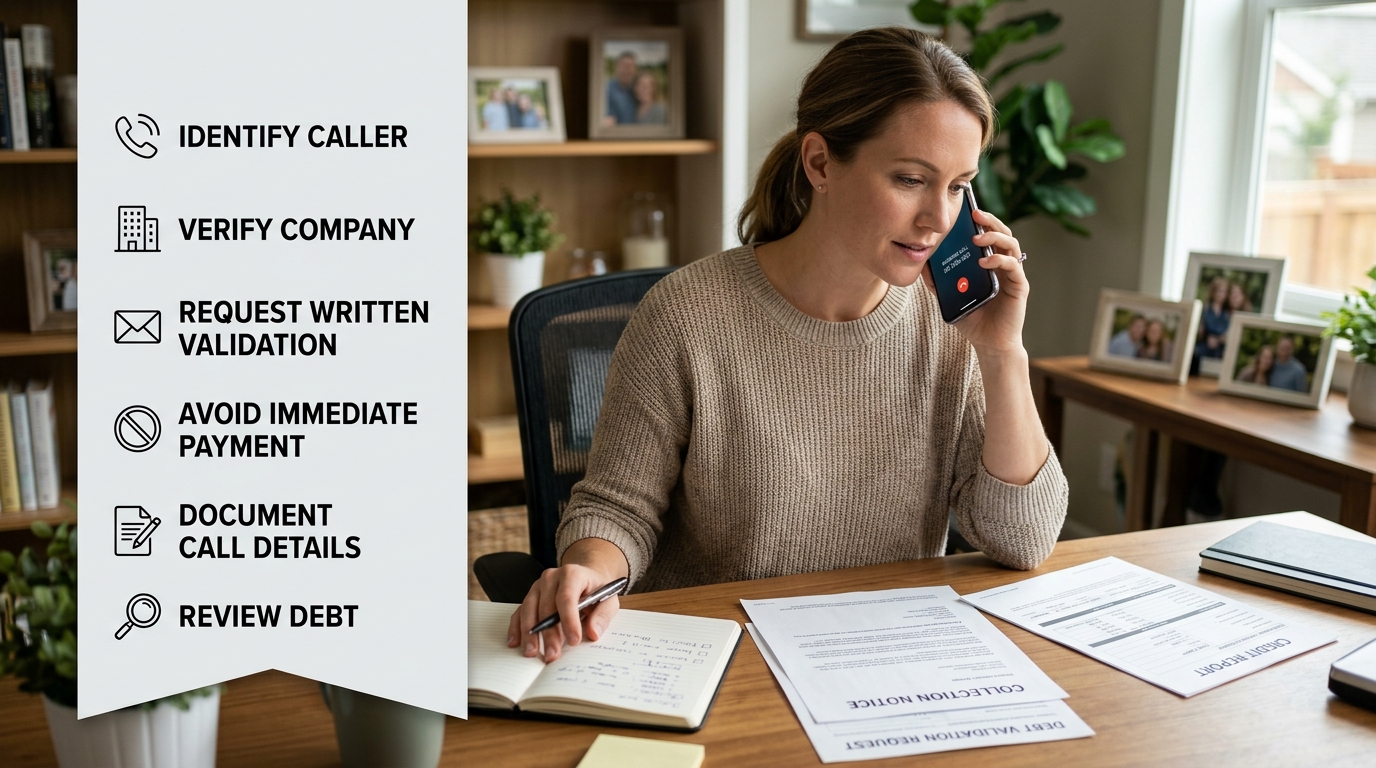
Hearing from an unfamiliar person on an unfamiliar number can trigger anxiety and uncertainty about what you are supposed to say or do.
The good news is that you do not have to solve everything during the first phone call.
The first conversation is primarily an opportunity to identify the caller, understand what debt they are referring to, request the required information, and avoid making decisions under pressure.
This guide explains what to expect during your first debt-collection call, what you can say, what you should avoid doing, how debt validation works, how to recognize potential scams, and what steps to take after the call.
Know Your Rights Before the Call Happens
Many third-party debt collectors are subject to the Fair Debt Collection Practices Act (FDCPA) and the federal Debt Collection Rule.
These rules establish limits on how covered debt collectors can communicate with consumers.
For example, debt collectors generally cannot:
- Contact you before 8 a.m. or after 9 p.m. local time, unless an applicable exception applies.
- Use repeated calls as a means of harassing or abusing you.
- Use obscene or profane language.
- Make false or misleading statements.
- Threaten violence or falsely threaten arrest.
- Misrepresent the amount or legal status of a debt.
- Misrepresent who they are or the company they represent.
The CFPB explains that debt collectors generally cannot contact consumers at unusual or inconvenient times and provides specific rules concerning repeated telephone calls.
Knowing these boundaries before you receive a call can make it easier to remain calm if a collector contacts you unexpectedly.
What to Do the Moment You Realize It Is a Debt Collector
The first thing to remember is simple:
You do not have to make a payment or agree to a settlement during the first call.
Instead, focus on gathering information.
Stay Calm
Do not allow the unexpected nature of the call to push you into making an immediate financial decision.
You can tell the caller that you want to review the information before discussing payment.
Write Down the Details
If possible, record:
- The collector’s name
- The collection company’s name
- The telephone number
- The date and time of the call
- The amount the caller says you owe
- The name of the creditor
- The account or reference number, if provided
- A general summary of what the caller said
Keeping records can become valuable if you later dispute the debt or need to document a collection problem.
The CFPB specifically recommends keeping letters, messages, and records of communications with debt collectors.
Ask the Caller to Identify the Company
Ask for the company’s:
- Full name
- Mailing address
- Telephone number
- Collector’s name
- Name of the creditor associated with the debt
If the caller refuses to provide basic identifying information, becomes unusually aggressive, or pressures you to pay immediately, treat that as a warning sign.
What Should You Say on the First Debt Collector Call?
You do not need to provide a detailed explanation of your finances or argue about whether you owe the debt.
A simple response can keep the conversation controlled:
“I understand you are calling about a debt. Before I discuss payment or make any commitment, I would like to receive the required validation information in writing, including the creditor’s name, the amount claimed, and information about how I can dispute or verify the debt.”
This keeps the first conversation focused on verification rather than payment.
The CFPB recommends obtaining validation information before agreeing to pay or negotiate, particularly when you are unsure whether the debt is legitimate.
What Not to Say or Do During the First Call
Do Not Immediately Confirm Sensitive Personal Information
A legitimate collector may need to verify that they are speaking with the correct person, but you should be cautious about providing sensitive financial information before independently confirming who is contacting you and why.
Avoid unnecessarily providing information such as:
- Full Social Security number
- Bank account numbers
- Routing numbers
- Debit-card information
- Online banking credentials
The CFPB advises consumers not to provide sensitive or financial information until they have verified the debt collector and determined that the contact is legitimate.
Do Not Make an Immediate Payment
Be particularly cautious if the caller says you must pay immediately or that a special offer will disappear within a few hours.
First determine whether the debt is actually yours, how much is owed, who currently owns the debt, and whether the collection company is legitimate.
Artificial urgency can be a warning sign, particularly when combined with unusual payment demands.
Do Not Get Into a Long Argument
If you believe the debt is inaccurate, already paid, or not yours, you do not need to spend 30 minutes arguing with the collector over the telephone.
Instead, document your position and use the applicable written dispute process.
Our guide on what to do if a debt isn’t yours explains the process in greater detail.
Do Not Agree to a Payment Plan Without Written Terms
If the collector offers a payment arrangement, ask for the terms in writing before making the first payment.
The written agreement should clearly identify:
- The total amount to be paid
- The payment schedule
- Any fees or interest
- What happens when the agreed amount is paid
- How the account will be reported, where applicable
What Is a Debt Validation Notice?
Federal debt-collection rules require covered debt collectors to provide specific validation information when they first communicate with a consumer or within five days afterward, subject to the applicable rules.
The validation information generally includes:
- The name of the creditor
- The amount of the debt
- The debt collector’s identifying information
- The account number, if any
- An itemization of the current amount of the debt
- Information explaining how to dispute the debt
- The deadline for disputing the debt
The CFPB explains that this information is designed to help consumers determine whether the debt is theirs and whether the amount is accurate.
When Does the 30-Day Debt Dispute Period Begin?
This is an important distinction.
The federal 30-day validation period is generally tied to receipt of the validation information, rather than simply the date of the first telephone call.
The validation notice should identify the applicable end date for the 30-day validation period.
If you dispute the debt in writing within that validation period, the debt collector generally must stop collection activity on the disputed debt or disputed portion until it provides the required verification or other information specified by the rule.
That distinction matters because a phone call alone does not necessarily start the same 30-day period described in the validation rules.
What Happens After You Send a Written Dispute?
If you receive the validation notice and dispute the debt in writing within the applicable 30-day validation period, the collector generally must pause collection activity on the disputed debt until it provides verification responsive to your dispute.
The CFPB states that collection activity can resume after the collector provides the required verification.
Keep copies of:
- Your dispute letter
- The validation notice
- Any supporting documents
- Proof of mailing or electronic submission
- The collector’s response
- Any subsequent communications
Our guide on debt validation letters can help you understand the process.
How to Review the Validation Information
When the collector responds, compare the information with your own records.
Check the Original Creditor
Does the creditor name match an account you recognize?
If the collector is contacting you about a debt originally owed to another company, make sure the creditor information makes sense.
Check the Amount
Compare the claimed balance with your records.
The validation information should generally provide an itemization that helps explain the current amount, including relevant interest, fees, payments, and credits.
Check Whether the Debt Is Actually Yours
If you have never opened the account or believe someone else is responsible, treat that as a potential dispute rather than assuming the collector is correct.
Check the Age of the Debt
If the debt is old, determine whether the applicable statute of limitations may affect the creditor’s ability to sue.
Our guide on the statute of limitations on debt explains why the age of an account can matter.
What If You Confirm the Debt Is Accurate?
Once you have verified that the debt is legitimate, you can evaluate your options rather than reacting to the first call.
Depending on your circumstances, those options may include:
- Paying the balance in full
- Negotiating a settlement
- Setting up a payment plan
- Disputing information that remains inaccurate
- Seeking professional legal or financial guidance
If the debt is old, check the applicable statute of limitations before making a payment or acknowledging the debt in a way that could have legal consequences under state law.
Should You Negotiate With a Debt Collector?
Negotiation may be an option if the debt is legitimate and you want to resolve it.
Before negotiating:
- Verify the debt.
- Confirm who currently owns the account.
- Determine the total amount claimed.
- Review your financial ability to pay.
- Check the applicable statute of limitations if the debt is old.
- Get any settlement terms in writing.
Our guide on how to negotiate with a debt collector without getting taken advantage of covers the negotiation process in more detail.
What If You Do Not Recognize the Debt?
Not recognizing the debt does not automatically mean that it is fraudulent, but it is a reason to investigate before paying.
Possible explanations include:
- A legitimate old debt you forgot about
- A debt that was sold to a new company
- A data-matching error
- Someone with a similar name
- Identity theft
- An account that was previously paid or resolved
Request the validation information and compare it with your records.
If the debt still appears inaccurate, dispute it in writing.
If you suspect identity theft, the FTC recommends using IdentityTheft.gov to create an identity-theft report and take recovery steps.
You can also learn more about identity theft protection and credit freezes and fraud alerts.
How to Tell if the Debt Collector Is a Scam
Not every person who calls claiming to collect a debt is a legitimate debt collector.
The FTC warns consumers about fake debt collectors who use threats and pressure to obtain money.
Warning Sign 1: Immediate Payment Demands
Be cautious if the caller insists that you must pay immediately or threatens consequences if you do not make an instant payment.
Warning Sign 2: Gift Cards or Cryptocurrency
Requests for payment through gift cards, cryptocurrency, or unusual wire-transfer methods are major scam warning signs.
The FTC specifically warns consumers about scammers who demand these difficult-to-recover payment methods.
Warning Sign 3: Threats of Arrest
Unpaid consumer debt generally does not mean that you will be arrested simply because you cannot pay.
The FTC specifically identifies threats of arrest as a warning sign associated with fake or abusive debt collectors.
Warning Sign 4: Refusal to Identify the Company
If the caller refuses to provide a company name, mailing address, telephone number, or information about the debt, be cautious.
Warning Sign 5: Pressure to Provide Sensitive Information
Do not provide bank-account or other sensitive financial information simply because someone calls and claims that you owe a debt.
Verify the company independently before sharing sensitive information.
How to Independently Verify a Suspicious Caller
If something about the call feels suspicious, do not rely solely on the phone number or website provided by the caller.
Instead:
- Write down the company name.
- End the call if necessary.
- Search for the company’s official contact information independently.
- Contact the company through independently obtained information.
- Check your credit reports for the alleged account.
- Request the required validation information.
Caller ID is not proof that a caller is legitimate because phone numbers can be spoofed.
Should You Answer a Debt Collector’s Call?
You are not generally required to answer every telephone call from a debt collector.
If you are unsure who is calling, allowing the call to go to voicemail can give you time to identify the company and prepare before responding.
However, completely ignoring a legitimate debt does not make the debt disappear.
A creditor or collector may have other lawful collection options, including potentially filing a lawsuit where permitted.
The CFPB advises consumers to address debt collection rather than simply assuming that ignoring communications will resolve the problem.
Can You Ask a Debt Collector to Stop Calling?
Yes. You can request that a debt collector stop contacting you, and a written request provides a clear record of your instruction.
The CFPB explains that if you ask a debt collector in writing to stop contacting you, the collector generally must stop communications, although there are limited exceptions for certain required or legally permitted notices. The request does not erase the underlying debt.
If repeated calls are the problem, you can also review our guide on debt collector harassment and the FDCPA.
What If You Already Made a Payment?
If you already made a payment before learning about validation procedures, do not assume that you have lost every option.
You can still review the remaining balance, request appropriate information, and dispute inaccurate information.
However, if the debt is old, investigate the applicable state statute-of-limitations rules before making additional payments or acknowledgments.
Our article on why paying old debt can sometimes backfire explains this issue in more detail.
Should You Tell the Collector About Your Financial Hardship?
You can decide how much information you want to disclose about your financial situation.
Some consumers may choose to explain a genuine hardship because the collector may have payment-plan or hardship options.
Others may prefer to keep the first conversation focused on verification and handle financial negotiations later, after they have reviewed the debt.
There is no requirement that you explain your entire financial history during the first call.
What About Debt Collection Apps and Online Portals?
Some collectors may direct consumers to online portals or apps for account management and payment.
The same verification principles apply.
Before entering sensitive information or making a payment through an unfamiliar portal:
- Verify the company’s identity independently.
- Confirm that the debt is legitimate.
- Review the validation information.
- Check the website address carefully.
- Avoid clicking suspicious links received through unexpected text messages.
A legitimate-looking website does not automatically prove that the person who sent you the link is legitimate.
Can a Debt Collector Call Your Cell Phone?
Debt collection rules apply to communications through different types of telephone numbers, including cell phones.
The CFPB’s rules also address electronic communications such as text messages and other digital communications.
If you receive collection communications at a time or through a method that is inconvenient for you, you can communicate your preferences to the collector.
Can You Record a Debt Collector’s Call?
Call-recording laws vary by state.
Some states generally permit recording when one party consents, while others may require consent from all parties to the conversation.
Before recording a debt collector’s call, check the law applicable to the participants and locations involved.
Regardless of whether you record a call, keeping written notes of the date, time, caller, company, and substance of the conversation can provide useful documentation.
What If the Collector Keeps Calling After You Dispute the Debt?
If you submitted a written dispute within the applicable validation period and the collector continues attempting to collect the disputed debt before providing the required verification, document each communication.
Keep:
- Dates and times of calls
- Phone numbers
- Voicemails
- Letters
- Emails or text messages
- Copies of your dispute
- Proof of delivery
You can consider submitting a complaint to the Consumer Financial Protection Bureau or contacting your state attorney general’s consumer-protection office.
Depending on the circumstances, you may also want to consult a consumer-law attorney.
A Simple Post-Call Checklist
- Record the call. Write down who called, the company, number, date, time, and what was discussed.
- Do not make an immediate payment. First verify the company and debt.
- Look for the validation notice. Identify the validation-period deadline.
- Dispute the debt in writing if appropriate. If you do not owe the debt or believe the information is incorrect, use the written dispute process within the applicable validation period.
- Keep documentation. Save every letter, message, and proof of mailing or submission.
- Review the response. Compare the validation information with your own records.
- Check the age of the debt. If the account is old, research the applicable statute of limitations.
- Choose your next step. Depending on what you discover, you may pay, negotiate, dispute, or seek professional assistance.
- Get agreements in writing. Do not rely solely on verbal promises concerning settlements or payment plans.
A Sample First-Call Response
If you are caught off guard, you can keep your response short:
“I understand you are contacting me about a debt. I am not going to make a payment or agree to a payment arrangement during this call. Please provide the required validation information in writing, including the creditor’s name, the amount claimed, and information about how I can dispute the debt. Please also provide your company’s mailing address.”
You can then end the call and review the information without making an immediate commitment.
Sample Written Debt Dispute and Validation Request
If you receive the validation notice and believe you do not owe the debt or that the amount is incorrect, you can use a written dispute tailored to your circumstances.
For example:
[Your Name]
[Your Address]
[Date][Debt Collector Name]
[Debt Collector Address]Re: Account [Reference Number]
To Whom It May Concern:
I am writing regarding the debt identified in your validation notice. I dispute this debt [or the amount of this debt] and request verification of the debt.
Please provide information sufficient to verify the debt and the amount claimed, including the name of the creditor and the information required under applicable federal law.
Please send your response to the address listed above.
Sincerely,
[Your Name]
Keep a copy of the letter and your proof of delivery.
The CFPB provides sample letters and additional information about responding to debt collectors.
Why the First Call Can Set the Tone for What Happens Next
The first collection call can create pressure to make a quick decision.
But slowing the process down can help you move from reacting to the caller to evaluating the actual debt.
Instead of immediately deciding whether to pay, your first steps can be:
- Identify the collector.
- Understand the debt.
- Review the validation information.
- Check your records.
- Determine whether the debt is yours.
- Check the applicable statute of limitations if relevant.
- Decide what to do based on verified information.
This approach does not mean that every debt collector is acting improperly. It simply means that you do not have to make a significant financial decision before understanding what you are being asked to pay.
How to Handle the Emotional Side of the First Call
A debt collection call can trigger embarrassment, anxiety, or defensiveness, particularly when the debt is connected to a difficult period such as job loss, medical problems, divorce, or another financial setback.
Try to separate the emotional circumstances surrounding the debt from the practical task of handling the collection call.
You do not need to explain your entire financial history to the collector.
You can treat the call as a transaction:
- Identify who is calling.
- Identify the debt.
- Request the necessary information.
- Document the conversation.
- Review the information.
- Decide what to do next.
Taking these steps can make the situation feel more structured and manageable.
Frequently Asked Questions
Do I have to answer a debt collector’s phone call?
No. You are generally not legally required to answer every debt-collection call. You can allow the call to go to voicemail while you identify the company and prepare your response.
However, ignoring legitimate collection activity indefinitely does not eliminate the underlying debt or necessarily prevent other lawful collection efforts.
What should I say when a debt collector calls for the first time?
Keep the conversation short. Ask for the collector’s name, company, mailing address, creditor information, amount claimed, and the required validation information. Avoid making an immediate payment or agreeing to a payment arrangement before reviewing the information.
Should I give a debt collector my Social Security number?
Do not provide sensitive financial or identifying information until you have verified that the caller is legitimate and understand why the information is necessary. The CFPB specifically recommends caution with sensitive personal and financial information.
Does the 30-day validation period start when the collector first calls?
Not necessarily. The federal validation period is generally tied to receipt of the validation information or notice. The notice should identify the applicable deadline for disputing the debt.
What happens if I dispute the debt within 30 days?
If your written dispute is submitted within the applicable validation period, the collector generally must stop collection activity on the disputed debt until it provides the required verification.
Can I ask the debt collector to stop calling me?
Yes. You can request in writing that the collector stop contacting you. The request generally requires the collector to stop communications, subject to limited exceptions, but it does not erase the debt.
What if the collector says I will be arrested?
Threats of arrest for ordinary unpaid consumer debt are a major warning sign. The FTC specifically identifies threats of arrest as a common feature of fake or abusive debt collection.
What if the collector demands payment with a gift card?
Be extremely cautious. The FTC warns that demands for gift cards, cryptocurrency, or similar difficult-to-recover payment methods are common scam indicators.
What if I already paid the debt?
Tell the collector that you believe the debt was paid and dispute it in writing. Gather payment confirmations, bank records, settlement agreements, or other documentation supporting your position.
You can also review our guide on disputing credit-report errors.
What if the debt is not mine?
Request validation and dispute the debt in writing. If you suspect identity theft, consider using IdentityTheft.gov and reviewing your credit reports for other fraudulent accounts.
Can I negotiate immediately during the first call?
You can choose to negotiate, but there is generally no need to make an immediate payment decision during the first call. Verify the debt and review the applicable information first.
Can I record a debt collector’s call?
Call-recording laws vary by state. Check the applicable law before recording a conversation without notifying the other participant.
What if the debt collector keeps calling after I dispute the debt?
Document the calls and compare the timing with your written dispute and the collector’s verification response. If the collector is attempting to collect a disputed debt during a period when federal law requires collection to pause, consider submitting a complaint to the CFPB or consulting a consumer-law attorney.
The Bottom Line
The first call from a debt collector does not require you to have all the answers immediately.
Your first priority should be to identify the caller, understand what debt they are referring to, and obtain the information necessary to determine whether the debt is legitimate and accurate.
Remember these basic steps:
- Stay calm.
- Identify the collector and company.
- Ask for the creditor and amount of the alleged debt.
- Do not immediately provide sensitive financial information.
- Do not let artificial urgency pressure you into paying.
- Review the validation notice and its 30-day dispute deadline.
- Dispute inaccurate or unrecognized debt in writing.
- Keep detailed records of communications.
- Check the statute of limitations when dealing with older debt.
- Get settlement or payment-plan terms in writing.
The goal of the first call is not necessarily to resolve the entire debt. It is to make sure that you understand what you are being asked to pay before you decide what to do next.
If the collection account is appearing inaccurately on your credit report, you can also learn how to dispute credit-report errors and how to read your credit report.
Need Help Reviewing a Collection Account?
If a debt collector has contacted you and you are unsure whether the account is accurate, legitimate, or being reported correctly, reviewing your credit situation can be an important next step.
Contact Credit Repair Services to discuss your credit situation and learn about available credit-repair options.