Blog

  • AllianceOne Is Calling Me — Who Are They and What Do They Want?

    AllianceOne Is Calling Me — Who Are They and What Do They Want?

    An unexpected call or letter from AllianceOne can feel especially confusing because, unlike a bank or a store you’ve shopped at, the name doesn’t obviously connect to anything in your financial life. This guide explains exactly who AllianceOne is, the surprisingly wide range of debts they collect on, and the specific steps to figure out what they actually want from you and how to respond.

    Who Is AllianceOne?

    AllianceOne Receivables Management, Inc. is a large, long-operating third-party debt collection agency formed in 1999 through the merger and acquisition of five separate collection companies — one of which had reportedly been operating since as far back as 1912, making parts of AllianceOne’s institutional history genuinely quite old, even though the combined company under its current name is a more recent creation. AllianceOne is a subsidiary of Teleperformance, a large global company specializing in call center and customer contact management services, and AllianceOne itself maintains offices not just across the United States but internationally as well, including operations in Canada, South America, India, and the Philippines.

    AllianceOne is a legitimate, licensed collection agency, not a scam, though — as with any large collector — that doesn’t guarantee every account attributed to you is automatically accurate, which is exactly why verification matters regardless of the company’s overall legitimacy.

    What Makes AllianceOne Distinctive: Government Debt Collection

    While many collection agencies focus primarily on consumer credit accounts, AllianceOne has built a particularly notable specialization in government-related debt collection — a category that trips up a lot of people because it doesn’t fit the usual mental picture of “debt collection” most people have in mind. This includes:

    • Traffic tickets and fines that went unpaid, sometimes referred to collections by municipal or county governments after a certain period.
    • Court fees and court-related fines, including certain criminal justice-related financial obligations in some jurisdictions.
    • State and local tax debt in some cases, depending on the specific government entity’s collection arrangements.
    • Parking violations and municipal citations more broadly.

    Beyond this government-focused niche, AllianceOne also collects for a wide range of more traditional clients, including financial services institutions, healthcare providers, retailers, utility companies, and telecommunications carriers.

    Is AllianceOne a Debt Buyer or a Collection Agency?

    AllianceOne operates as a third-party collection agency, not a debt buyer. This means they don’t purchase your debt outright — instead, they’re hired by the actual creditor (whether that’s a government entity, a bank, a healthcare provider, or another business) to attempt collection on that creditor’s behalf, typically for a fee or commission based on what they successfully recover. The original creditor retains ownership of the debt throughout this process, which — similar to dealing with IC System — means you may have the option of resolving certain matters directly with the original creditor rather than exclusively through AllianceOne.

    This distinction is especially relevant for government debt specifically: if AllianceOne is collecting a traffic fine or court fee on behalf of a municipality, you may be able to resolve it directly with that municipal court or government office, sometimes with more flexibility (like a payment plan or fine reduction hearing) than a private collection agency working on commission is authorized to offer.

    Why Is AllianceOne Contacting You?

    A few common scenarios explain how AllianceOne became involved in your situation:

    • An unpaid traffic ticket, court fee, or municipal fine was referred to AllianceOne after going unresolved for a period defined by the specific government entity’s own policies.
    • A student loan or education-related balance went unpaid and was placed with AllianceOne for collection.
    • A medical bill, utility account, or telecom balance went to collections through your original healthcare provider, utility company, or service provider outsourcing the effort to AllianceOne.
    • A financial services account, such as a bank fee or overdraft balance, was placed with AllianceOne by your bank or credit union.
    • A mistake or data error has occurred, resulting in a debt incorrectly attributed to you — a real possibility with any large-scale collector handling accounts across many different types of creditors and government entities.

    Why Government Debt Collection Deserves Special Attention

    If AllianceOne is contacting you specifically about a traffic ticket, court fee, or similar government-related debt, it’s worth understanding that some additional or different rules can apply compared to standard consumer debt. Depending on your state and the specific type of obligation, unpaid fines and court fees can sometimes carry consequences beyond a standard credit report entry — including, in some jurisdictions, driver’s license suspension or renewal holds, though many states have moved away from license suspension specifically for unpaid fines in recent years due to legal challenges and reform efforts. Because these specific consequences vary so significantly by state and by the type of underlying obligation, it’s worth confirming directly with the referring government entity (not just AllianceOne) exactly what’s at stake and what resolution options — including payment plans, fine reduction, or community service alternatives in some jurisdictions — might be available that a private collector wouldn’t necessarily volunteer.

    Step One: Confirm Exactly What Debt They’re Referring To

    Before anything else, get AllianceOne to specify precisely what account or obligation they’re contacting you about — the type of debt, the original creditor or government entity, the amount, and the general timeframe. Given the sheer breadth of client types AllianceOne works with, from traffic courts to hospitals to banks, this initial clarification is more important than it might be with a more narrowly focused collector, simply because the range of possibilities is so wide.

    Step Two: Request Formal Debt Validation

    Once you know generally what they’re referring to, request formal written validation under the Fair Debt Collection Practices Act, requiring AllianceOne to provide the name of the original creditor, the amount owed, and confirmation of their authority to collect on that creditor’s behalf. You generally have 30 days from your first contact to make this request, during which they must pause collection activity until validation is provided.

    Important note on government debt: the FDCPA’s protections generally apply to consumer debt collection, and while much of what AllianceOne handles (traffic fines, court fees) does fall under FDCPA coverage when collected by a third party like AllianceOne, some purely governmental collection activities conducted directly by a government agency itself (rather than through a private collector) may be treated differently under the law. Since AllianceOne is acting as a private, third-party collector in this scenario, FDCPA protections should generally apply to their specific collection conduct, even for government-referred debt.

    How to request validation: Send a written letter via certified mail with return receipt requested, explicitly invoking your FDCPA rights and requesting a cessation of collection activity until validation is provided.

    Step Three: Verify Directly With the Original Creditor or Government Entity

    Since AllianceOne doesn’t own the underlying debt, contacting the original creditor or referring government agency directly can be a valuable parallel step. For a traffic ticket or court fee, this might mean contacting the specific court clerk’s office; for a medical bill, the original healthcare provider’s billing department; for a student loan, the original lender or servicer. This direct verification can sometimes resolve confusion faster than working exclusively through AllianceOne, and for government debt specifically, it may reveal resolution options (payment plans, fine reductions, alternative arrangements) that AllianceOne itself isn’t necessarily positioned to offer or discuss.

    How to Resolve an Accurate AllianceOne Debt

    • Consider contacting the original creditor or government entity directly first, particularly for traffic fines, court fees, or medical debt, where more flexible resolution options sometimes exist outside the collection agency itself.
    • Pay in full, if you have the means, which resolves the underlying obligation completely, though it doesn’t automatically remove a related entry from your credit report — it updates the status to reflect payment.
    • Negotiate a settlement, where applicable — this is more commonly available for medical, financial services, and retail-type debt than for government fines and fees, which often have less room for negotiated reduction due to their statutory nature, though payment plans are frequently available even when the total amount isn’t negotiable.
    • Set up a structured payment plan, especially useful for government debt where a lump-sum payment may not be feasible, and many courts and government agencies offer formal payment plan programs specifically designed for this purpose.
    • Get any agreement in writing before making a payment, regardless of which type of debt is involved.

    Your Rights Under the FDCPA When Dealing With AllianceOne

    • They cannot call before 8 a.m. or after 9 p.m. in your time zone.
    • They cannot harass you through repeated calls intended to annoy, or through abusive, threatening, or profane language.
    • They cannot misrepresent the debt or falsely threaten consequences that aren’t legally accurate for your specific situation.
    • They must stop calling your workplace once informed you can’t take calls there.
    • They cannot disclose your debt to third parties, beyond narrow circumstances permitted for locating you.
    • They must honor a written cease-and-desist request, though this doesn’t erase the underlying obligation or necessarily prevent the original creditor or government entity from pursuing other remedies.

    Can AllianceOne Sue You?

    Yes, for debt that’s still within your state’s statute of limitations and that they (or the entity they’re collecting for) can adequately document. If you’re served with a lawsuit, don’t ignore it — even a debt you believe is inaccurate or improperly pursued requires a response by the specified deadline, or the court can enter a default judgment against you automatically. For government debt specifically, the “lawsuit” scenario may instead take the form of continued fine escalation, referral to a different enforcement process, or, in some states, other administrative consequences rather than a standard civil lawsuit — the appropriate response varies enough by jurisdiction and debt type that consulting a local consumer law attorney or, for government fines specifically, a local public defender or legal aid organization if you can’t afford private counsel, is worth considering if the situation escalates.

    What to Do If You Believe the Debt Isn’t Yours

    Given how many different types of debt and government obligations AllianceOne handles, and the scale at which they operate across multiple countries and industries, data-matching errors are a genuine possibility. If you don’t recognize the debt at all, formally dispute it in writing with both AllianceOne and the credit bureaus (if it’s affecting your credit report), and if identity theft is suspected, file a report at IdentityTheft.gov and consider a fraud alert or credit freeze.

    Frequently Asked Questions

    Is AllianceOne a legitimate company?

    Yes. AllianceOne Receivables Management is a real, licensed, long-operating collection agency and a subsidiary of Teleperformance, a large global customer service and contact center company. It is not a scam.

    Does AllianceOne buy debt, or only collect on behalf of others?

    AllianceOne operates as a third-party collection agency, meaning the original creditor or government entity retains ownership of the debt, and AllianceOne collects on their behalf for a fee, rather than purchasing accounts outright.

    Can unpaid debt with AllianceOne affect my driver’s license?

    This depends entirely on your state’s specific laws and the type of underlying obligation — some states have historically suspended licenses for unpaid traffic fines or court fees, though many have reformed or eliminated this practice in recent years. Checking directly with the referring court or government agency is the most reliable way to understand what’s actually at stake in your specific state and situation.

    Why is AllianceOne contacting me about something that doesn’t feel like a typical “debt”?

    Because AllianceOne specializes heavily in government-related collections (traffic tickets, court fees, municipal fines) in addition to more traditional consumer debt, it’s common for people to be surprised that an unpaid fine or fee has been referred to a private collection agency at all — this is a normal and increasingly common practice for many government entities that don’t have the internal resources to pursue these collections themselves.

    Should I try to resolve a traffic fine directly with the court instead of AllianceOne?

    Often, yes — many courts offer payment plans, fine reduction hearings, or other alternatives that a private collection agency working on commission isn’t necessarily positioned to offer or discuss, so it’s worth checking directly with the referring court about your options even after AllianceOne has become involved.

    What happens if I ignore AllianceOne completely?

    For consumer debt, this risks a potential lawsuit if the debt is within your state’s statute of limitations, and continued negative credit reporting. For government debt specifically, ignoring it can sometimes lead to escalating consequences defined by that specific government entity’s own enforcement policies, which vary significantly and are worth understanding directly from the source rather than assuming they mirror standard consumer debt collection consequences.

    A Deeper Look at How Government Debt Collection Actually Works

    Because this is one of the more unusual and less understood parts of AllianceOne’s business, it’s worth walking through the mechanics in more detail. When a government entity — a municipal court, a county tax office, a state agency — has a category of unpaid obligations that it doesn’t have the internal staffing or systems to pursue efficiently, it will often issue a contract to a private collection agency like AllianceOne to handle that work. These contracts are typically the result of a competitive government procurement process, meaning AllianceOne’s arrangement with a specific court or agency is a formal, publicly awarded contract rather than an informal referral arrangement.

    Under most such contracts, the collection agency earns a percentage of what it successfully recovers, similar to how contingency-based collection works for private commercial debt. The government entity remains the actual owner of the underlying fine, fee, or tax obligation throughout the process, which is exactly why direct communication with that government entity remains a viable and often valuable option even after your account has been placed with AllianceOne for active collection.

    Some jurisdictions have specific consumer-protection-style rules that apply even to government debt collection contracts — for example, requiring that any additional collection fees added to the original fine be capped at a certain percentage, or requiring the collector to offer a payment plan option before pursuing more aggressive collection measures. These rules vary enormously by state and even by individual municipality, so if you’re dealing with a government-related debt through AllianceOne, it’s worth researching your specific jurisdiction’s rules or consulting a local legal aid organization, which often has specific expertise in exactly this category of debt.

    What “Collection Fees” Added to Government Debt Might Mean for Your Balance

    One detail that surprises many people dealing with AllianceOne on a government-referred debt is that the amount they’re asked to pay is sometimes higher than the original fine or fee, due to additional collection costs added on top. Many jurisdictions explicitly authorize this — the underlying statute governing the fine or fee often includes a provision allowing collection costs to be added if the obligation goes to a collection agency, sometimes capped at a specific percentage (commonly cited figures in various state laws range from around 15% to 40%, though this varies enormously and you should verify your own state and municipality’s specific rule). If your total balance with AllianceOne seems significantly higher than you remember the original fine being, this added-collection-fee structure is a common and often legitimate explanation, though it’s still worth confirming the specific fee percentage applied is consistent with what your jurisdiction actually authorizes, since errors and improper fee calculations do occur.

    A Realistic Example: Navigating an Old Traffic Fine

    To make this more concrete, imagine you received a traffic ticket several years ago in a city you no longer live in, and you either forgot about it or didn’t realize it had gone unpaid, and it’s since been referred to AllianceOne for collection, now showing a balance that includes additional collection fees on top of the original fine amount.

    A reasonable approach: first, contact the specific court that issued the original ticket (information usually available on the ticket itself or through AllianceOne’s validation response) to confirm the original fine amount, whether a payment plan is available, and whether any fine reduction process exists in that jurisdiction for old, unpaid tickets. Many courts have specific “fine amnesty” or reduction programs periodically, particularly for older tickets, precisely because they’d rather recover a partial payment than continue an extended collection effort. Simultaneously, request formal validation from AllianceOne to confirm the current total balance and how the collection fee portion was calculated. Armed with information from both sources, you’re in a strong position to either negotiate directly with the court, set up a payment plan through AllianceOne consistent with what the court has authorized, or identify a genuine mistake if the numbers don’t reconcile between what the court confirms and what AllianceOne is claiming.

    Frequently Asked Questions, Continued

    Does dealing with AllianceOne for a traffic fine affect my credit score the same way a credit card collection would?

    It can, if the debt is reported to the credit bureaus, though not every government-referred collection is necessarily reported this way — reporting practices vary by the specific government entity’s arrangement with AllianceOne. Checking your actual credit report is the only reliable way to know whether a specific government debt is affecting your score.

    Can I negotiate the collection fee portion separately from the original fine?

    Sometimes — since the collection fee is often governed by a different statutory rule than the original fine itself, it’s worth asking specifically whether the collection fee portion has any flexibility, separate from the underlying fine amount, which the original government entity may have less ability to reduce.

    What if AllianceOne is collecting a debt for a company that’s gone out of business?

    This can happen, particularly with older accounts — the debt itself doesn’t disappear simply because the original creditor no longer operates, especially if the debt was properly assigned or sold to another entity before the original company closed. Requesting validation showing the current legitimate chain of ownership or authority becomes especially important in this scenario.

    Is it worth getting a local attorney involved for a relatively small traffic fine collection matter?

    For a small, straightforward fine, this is often not cost-effective given typical attorney fees relative to the amount at stake — direct communication with the court and AllianceOne, following the steps in this guide, is usually sufficient. Legal help becomes more valuable if the situation escalates significantly, involves a much larger sum, or if you believe your rights have been violated in a way that could support a legal claim.

    How AllianceOne’s International Operations Might Factor In

    Given that AllianceOne, through its parent company Teleperformance, operates contact centers not just across the United States but internationally as well, it’s entirely possible that a call you receive is being handled by a representative working from an overseas contact center rather than a domestic U.S. office. This is a common and legal practice across the customer service and collections industry broadly, and it doesn’t change your underlying legal rights under the FDCPA, which apply based on the debt being collected and where you, the consumer, are located, not based on where the calling representative happens to be physically situated. If you find this detail relevant to how you want to communicate (for instance, preferring written correspondence specifically to maintain a clearer record regardless of which office handles a given call), that preference remains entirely reasonable and doesn’t affect your legal standing in the process.

    A Quick Reference Table: Matching Your Situation to Your Best First Move

    Type of AllianceOne debt Best first move
    Traffic fine or court fee Contact the issuing court directly to confirm amount and ask about payment plans or reduction programs
    Medical bill Contact the original healthcare provider’s billing department; check for insurance processing errors
    Student loan Contact the original loan servicer to confirm status and explore federal hardship programs if applicable
    Utility or telecom bill Contact the original service provider to confirm the final balance and any applicable credits
    Unfamiliar debt of any kind Request formal validation from AllianceOne first, then investigate further before any payment

    Frequently Asked Questions, Continued Further

    Does AllianceOne handle federal student loan debt, or only private loans?

    This can vary — some government contracts, including certain federal student loan collection arrangements, have historically involved companies like AllianceOne, though federal student loan servicing and collection structures have changed over time. If your AllianceOne contact involves a student loan, confirming directly with the Department of Education or your loan servicer whether it’s a federal or private loan is an important first step, since federal loans carry specific hardship and rehabilitation programs that private loans don’t.

    If I pay AllianceOne directly, does that guarantee the original creditor or court recognizes the payment right away?

    There can sometimes be a processing delay between AllianceOne receiving payment and that payment being reflected in the original creditor’s or court’s own records. Requesting a receipt or confirmation immediately upon payment, and following up with the original entity after a reasonable processing period, helps ensure the resolution is fully and accurately reflected everywhere it needs to be.

    Can AllianceOne’s collection activity on a government fine result in additional legal consequences beyond the fine itself?

    This depends entirely on your specific state and the type of underlying obligation — some jurisdictions have specific escalation processes for certain categories of unpaid government debt that go beyond a standard civil collection matter. If you’re uncertain what’s genuinely at stake in your specific situation, contacting the referring court or agency directly, or consulting local legal aid, is the most reliable way to understand your actual exposure.

    The Bottom Line

    AllianceOne is a large, legitimate, long-operating third-party collection agency with a notably broad client base spanning traditional consumer debt, healthcare, utilities, and — distinctively — government-related collections like traffic fines and court fees. Because they don’t own the underlying debt, verifying directly with the original creditor or government entity, in addition to requesting formal validation from AllianceOne itself, often reveals more complete information and sometimes more flexible resolution options than working with the collection agency alone. Whether you’re dealing with an old medical bill or an unpaid traffic fine, the same core principles apply: verify before you pay, understand your specific rights and options for that particular type of debt, and get any resolution documented in writing.

    Need Help Reviewing Your Credit Report?

    If an AllianceOne collection is appearing on your credit report and you’re unsure whether the information is accurate, you can request a credit audit or quote to review your situation and identify potential credit-report issues.
    Request a Credit Audit or Quote

  • Who Is IC System Debt Collector and Do I Owe Them Money?

    Who Is IC System Debt Collector and Do I Owe Them Money?

    Finding “IC System” on your credit report or fielding a call from them for the first time understandably raises a lot of questions at once. Who are they? Why do they have your information? And most importantly — do you actually owe them anything, or is this some kind of mistake? This guide walks through exactly who IC System is, how they typically get involved in your financial life, and the specific steps to determine whether you genuinely owe them money and how to handle it either way.

    Who Is IC System?

    IC System, Inc. is one of the oldest debt collection agencies operating in the United States, founded in 1938 and headquartered near St. Paul, Minnesota. Unlike many collection companies that have changed hands repeatedly through corporate acquisitions, IC System has remained a privately held, family-owned company now in its third generation of ownership, which is a notably long and stable history in an industry where mergers and private equity buyouts are common.

    IC System holds an A+ rating with the Better Business Bureau and describes its own operating philosophy as “Making Collections Better” through what it characterizes as ethical, consumer-respectful collection practices — the company has also been recognized locally as a top workplace in Minnesota business rankings for several consecutive years. That said, a positive public image and a long operating history don’t mean every account attributed to you through IC System is automatically accurate, which is exactly why the verification process outlined below matters regardless of the company’s overall reputation.

    Is IC System a Debt Buyer or a Traditional Collection Agency?

    This is an important distinction, and IC System falls clearly into one category: they are a third-party collection agency, not a debt buyer. This means IC System does not purchase your debt outright the way a company like Midland Credit Management or Jefferson Capital Systems does. Instead, your original creditor retains ownership of the debt throughout the entire process, and IC System is simply hired to attempt collection on that creditor’s behalf, typically for a commission or contingency fee based on what they successfully recover.

    This distinction matters practically in a couple of ways. First, it means you may have the option to resolve the matter directly with your original creditor (the hospital, clinic, telecom provider, or business you actually had a relationship with) rather than exclusively through IC System, which can sometimes produce a more favorable or straightforward outcome. Second, it means any settlement or payment arrangement ultimately needs to be consistent with what the original creditor is willing to accept, since they remain the actual owner of the debt even while IC System handles the collection effort itself.

    What Types of Debt Does IC System Typically Collect?

    IC System’s client base spans a genuinely wide range of industries, but they’ve built a particularly strong presence in two areas: healthcare and telecommunications.

    Medical and healthcare debt makes up a large portion of IC System’s collection activity — unpaid bills from hospitals, physician groups, dental practices, and other healthcare providers frequently end up with IC System when a patient’s balance goes unresolved.

    Telecommunications debt is another major category, with IC System having worked with major telecom providers, including companies like Sprint, on unpaid phone and service bills.

    Beyond these two core areas, IC System also collects for a broad range of other clients, including small and medium-sized businesses, utility companies, pest control companies, government organizations, and educational institutions.

    Why Medical Debt With IC System Deserves Extra Scrutiny

    Because medical billing is exceptionally prone to errors — from insurance processing delays and denied claims that should have been covered, to duplicate billing and charges for services never actually received — a meaningful share of medical debt that ends up in collections turns out to be inaccurate or at least disputable in some respect. If your IC System account traces back to a medical bill, it’s worth taking the verification process seriously rather than assuming the balance is automatically correct, since billing errors of exactly this kind are a well-documented and common source of inaccurate medical collections across the industry generally, not specific to IC System alone.

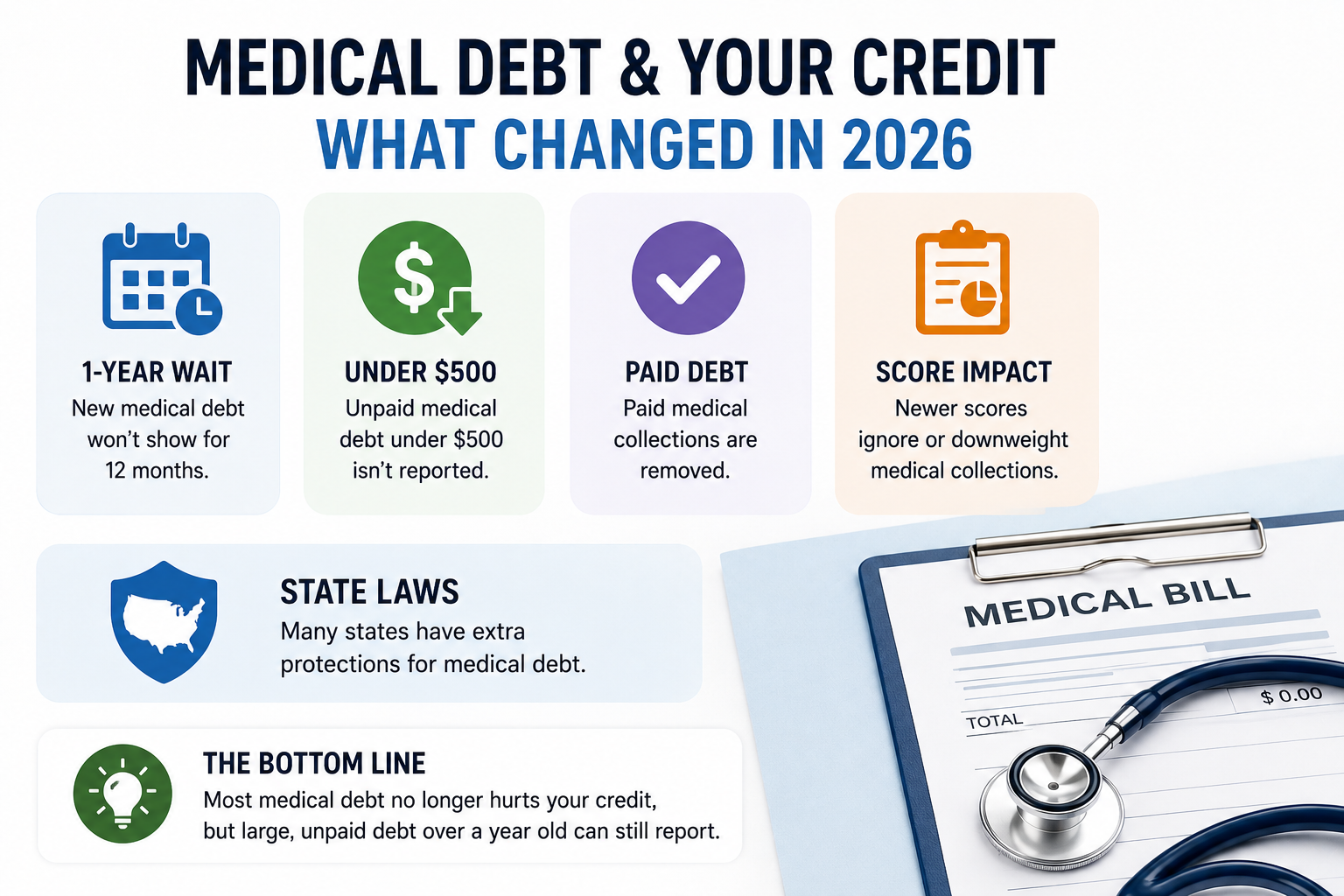
    It’s also worth knowing that medical debt now carries some additional consumer protections beyond standard debt collection rules: current credit bureau policy generally requires a waiting period (commonly one year) before an unpaid medical bill can even be reported to your credit file in the first place, and paid medical collections are now typically removed from credit reports entirely rather than simply marked as resolved — both more consumer-friendly standards than apply to most other types of debt.

    Why Is IC System Contacting You?

    A few scenarios commonly explain how IC System became involved in your situation:

    • An unpaid medical bill was sent to collections after the original healthcare provider’s own billing attempts didn’t resolve the balance, often due to insurance coverage gaps, denied claims, or a bill that was simply never paid.
    • A telecom or utility bill went unpaid, and the original service provider outsourced collection to IC System rather than pursuing it internally.
    • A business, government, or educational debt — such as an unpaid invoice to a small business, a fine or fee owed to a government entity, or a tuition-related balance — was placed with IC System for collection.
    • A billing error or insurance processing issue resulted in a balance being sent to collections that shouldn’t have gone there at all, or that’s for an incorrect amount.
    • A data mix-up or identity theft situation has occurred, resulting in a debt being incorrectly attributed to you.

    Step One: Determine Whether You Actually Owe the Debt

    Since IC System doesn’t own the debt themselves, one of your most useful options — one that doesn’t exist when dealing with a true debt buyer — is going directly back to the original creditor to clarify the situation. Contact the hospital, clinic, telecom provider, or business named as the original creditor and ask them to confirm the balance, the dates of service or billing, and why it was sent to collections. In many cases, especially with medical billing, this direct conversation can resolve confusion faster than working exclusively through IC System, and if the original creditor confirms an error, they may be able to recall the account from collections and correct their own records directly.

    Step Two: Request Formal Debt Validation From IC System

    Regardless of whether you contact the original creditor, you also have the right to request formal validation directly from IC System under the Fair Debt Collection Practices Act. This requires them to provide written proof of the amount owed, the name of the original creditor, and confirmation of their authority to collect on that creditor’s behalf. You generally have 30 days from your first contact with them to make this request, during which they must pause collection activity until validation is provided.

    How to request it: Send a written letter via certified mail with return receipt requested, explicitly invoking your rights under the FDCPA and requesting they cease collection activity until validation is provided. This creates a documented record that’s far more useful than a verbal exchange if any dispute arises later.

    Step Three: Compare What You Find

    Between the original creditor’s confirmation and IC System’s formal validation response, you should have a clear picture of whether the debt is accurate. If everything checks out and you recognize the debt as genuinely yours, you can move forward deciding how to resolve it. If something doesn’t match — an unfamiliar amount, a service or billing you don’t recognize, or a lack of adequate documentation — you have solid grounds to formally dispute the debt with the credit bureaus.

    How to Resolve an Accurate IC System Debt

    • Go back to the original creditor first, if possible. Since IC System doesn’t own the debt, resolving directly with the hospital, clinic, or business that originally billed you sometimes produces better outcomes — some original creditors, particularly medical providers, are more willing to offer a discount, payment plan, or hardship accommodation than a third-party collector working on commission might be authorized to offer.
    • Pay in full, if you have the means and want to close out the account completely. This resolves the debt but doesn’t automatically remove it from your credit report — it simply updates the status.
    • Negotiate a settlement, particularly for medical debt, where providers often accept a reduced amount — commonly cited ranges are 40 to 60% of the balance, sometimes lower for documented financial hardship. Get any agreement in writing before paying.
    • Set up a payment plan, structured over time in a way that fits your budget, again with terms documented in writing.
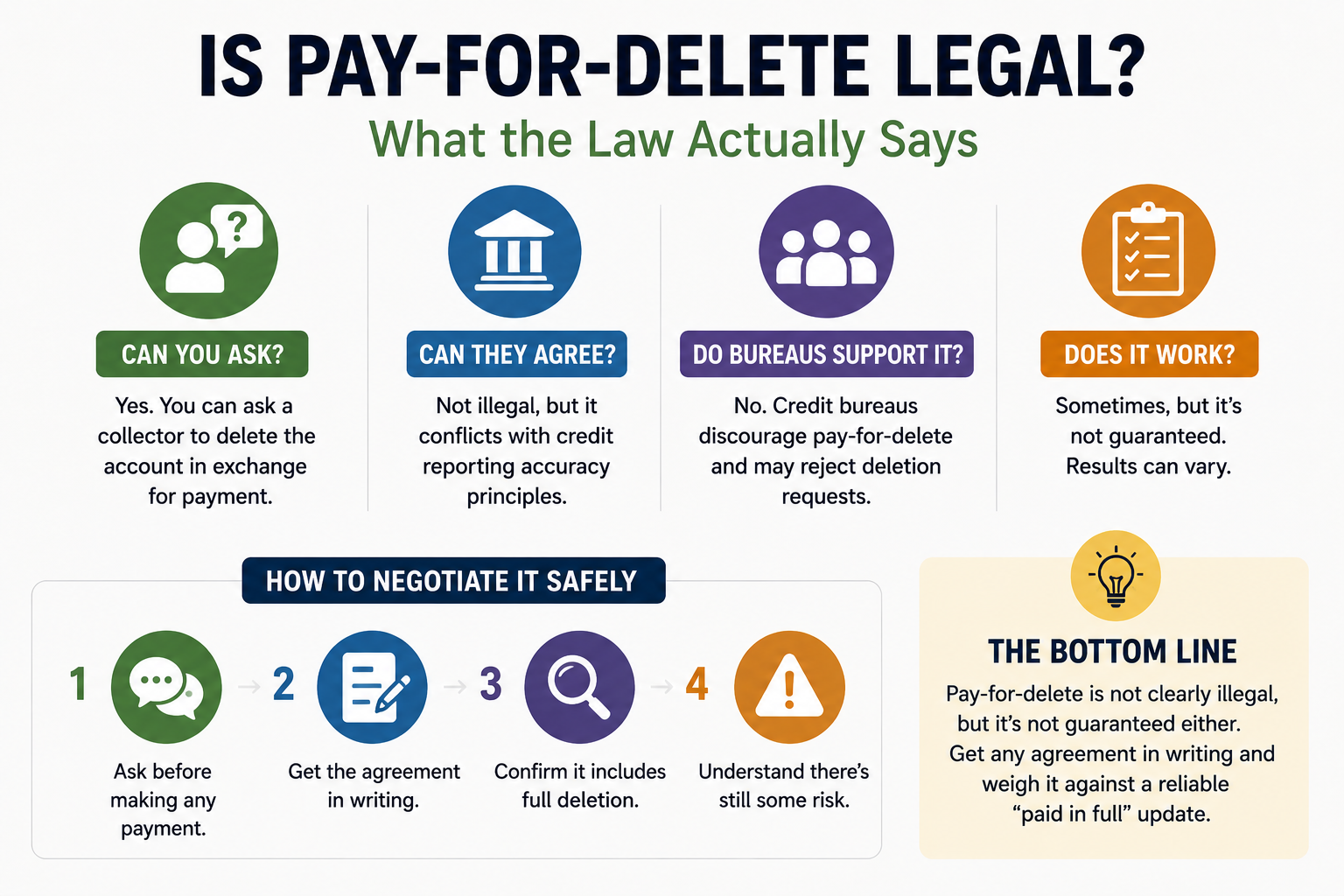
    • Request a pay-for-delete arrangement, understanding this isn’t standard or guaranteed practice, though IC System’s willingness to consider it can vary by account and circumstance — it doesn’t hurt to ask, provided you get any such agreement in writing before sending payment.

    Your Rights Under the FDCPA When Dealing With IC System

    • They cannot threaten arrest or jail. Unpaid consumer debt, including medical debt, is a civil matter, not a criminal one, and no legitimate collector can have you arrested for it.
    • They cannot call at odd hours — contact is only permitted between 8 a.m. and 9 p.m. in your time zone.
    • They must stop contacting you at work once you’ve told them, verbally or in writing, that you can’t take calls there.
    • They cannot use profane, abusive, or derogatory language.
    • They cannot disclose your debt to third parties, beyond limited circumstances permitted for locating you.
    • They must honor a written cease-and-desist request, though this doesn’t erase the underlying debt or prevent the original creditor from pursuing other remedies if the debt is still legally enforceable.

    If IC System violates any of these protections, you can file a complaint with the CFPB and, depending on severity, may have grounds for legal action under the FDCPA.

    Can IC System Sue You?

    Yes — debt collectors, including IC System, are legally permitted to sue over valid, non-expired debt, though there are required steps (like proper notice and, in many cases, an attempt at resolution) before litigation typically begins. If you’re served with a lawsuit, don’t ignore it — failing to respond by the court’s deadline can result in a default judgment against you, even if you had legitimate grounds to dispute the debt or challenge whether it was still within your state’s statute of limitations. Consider consulting a consumer law attorney if this happens, particularly given how often billing errors specifically affect the medical debt category IC System heavily focuses on.

    Understanding IC System’s Complaint History in Context

    Public complaint data shows IC System has received a meaningful volume of complaints filed with the CFPB over time, with the most common category being consumers disputing that they owe the debt at all, alongside complaints about certain fee or disclosure practices. It’s worth putting this in reasonable context: as one of the larger, most active collection agencies in the medical and telecom space, some volume of complaints is a near-mathematical certainty regardless of a company’s underlying practices, simply due to the sheer number of accounts they handle. That said, the specific pattern — disputes over whether debt is actually owed — reinforces why the validation and direct-verification steps in this guide are genuinely worthwhile precautions, rather than an assumption that anything is necessarily wrong.

    What to Do If You Discover the Debt Isn’t Yours

    If your review reveals the debt genuinely isn’t yours — due to a data-matching error, a billing mistake by the original creditor, or identity theft — formally dispute it in writing with both IC System and the credit bureaus reporting it, providing whatever documentation supports your position. If identity theft is suspected, file a report at IdentityTheft.gov and consider placing a fraud alert or credit freeze with the credit bureaus as an added precaution.

    Frequently Asked Questions

    Is IC System a legitimate company?

    Yes. IC System is a real, licensed, family-owned debt collection agency operating since 1938, headquartered near St. Paul, Minnesota. It is not a scam, though that doesn’t guarantee every individual account they pursue is accurate.

    Can I resolve my debt directly with the hospital or company instead of IC System?

    Often, yes — since IC System typically doesn’t own the debt, contacting the original creditor directly is a legitimate option, and in some cases produces a better outcome, particularly for medical debt where providers sometimes have more flexibility than a third-party collector.

    Does IC System buy debt, or do they only collect for others?

    Historically and predominantly, IC System operates as a third-party collector hired by original creditors, rather than a debt buyer that purchases and owns accounts outright, distinguishing them from companies like Midland Credit Management or Jefferson Capital Systems.

    Will a paid IC System medical collection stay on my credit report?

    Under current, more consumer-friendly credit bureau policy specifically for medical debt, a paid medical collection is generally removed from your credit report entirely, rather than simply updated to a “paid” status — a more favorable standard than applies to most other debt types.

    What if IC System’s letter references a company I don’t recognize?

    This is worth investigating directly — ask IC System for documentation connecting that entity to services or an account you can verify, since original creditor names sometimes differ from the everyday name you knew a business by (a hospital system’s official billing entity versus the hospital’s public name, for example), but if nothing checks out, this is legitimate grounds for a dispute.

    Is IC System likely to reduce a medical bill significantly if I negotiate?

    Often yes — because IC System is collecting on a contingency basis, and because medical providers themselves are frequently willing to accept less than the full billed amount rather than pursue extended collection efforts, reasonable settlement offers on medical debt are commonly accepted, particularly when a documented financial hardship is involved.

    A Sample Debt Validation Letter for IC System

    Having a ready-to-adapt template makes this process considerably less intimidating:

    [Your Name]
    [Your Address]
    [Date]

    IC System, Inc.
    [Address provided in their correspondence]

    Re: Account [Reference Number]

    To Whom It May Concern:

    I am writing in response to your recent contact regarding the above-referenced account. Pursuant to my rights under the Fair Debt Collection Practices Act, I am requesting validation of this debt, including:

    1. The name and address of the original creditor
    2. An itemized statement showing the amount claimed and how it was calculated
    3. Confirmation of your authority to collect this debt on behalf of the original creditor

    I am also requesting that you cease all collection activity, including phone calls and further correspondence, until this validation is provided, consistent with my rights under the FDCPA.

    Sincerely,
    [Your Name]
    [Account Reference Number]

    Send this via certified mail with return receipt requested, and keep copies of everything for your own records.

    who-is-ic-system-debt-collector-under-100kb

    How Insurance Disputes Specifically Complicate Medical Debt With IC System

    One of the more frustrating scenarios that leads to a legitimate medical bill ending up incorrectly in collections involves insurance processing timing. Here’s a common sequence: you receive care, your provider bills your insurance, the insurance company either delays processing, initially denies the claim pending additional information, or processes it incorrectly, and meanwhile, the provider’s billing system — often on a fixed automated timeline — sends the “patient responsibility” portion (or sometimes, due to an error, the full billed amount before insurance was ever properly applied) to collections before the insurance dispute is fully resolved.

    If this describes your situation, the strongest first step is contacting your insurance company directly to confirm how the claim was actually processed, get a corrected Explanation of Benefits if there was an error, and provide that documentation to both the original medical provider and IC System. This kind of documented insurance processing error is one of the more reliably successful categories of medical debt dispute, precisely because it’s often demonstrably not a case of the patient failing to pay, but a claim that was never properly processed in the first place.

    What a “Contingency Fee” Arrangement Means for Your Negotiation

    Since IC System typically works on a contingency basis — meaning they earn a percentage of whatever they successfully collect, rather than a flat fee — this actually gives you some useful negotiating context. IC System has an incentive to actually collect something rather than nothing, since a settlement, even at a reduced amount, still generates a commission for them, whereas an account that goes completely unresolved and is eventually returned to the original creditor unpaid generates nothing. This dynamic is part of why reasonable settlement offers are often taken seriously rather than dismissed outright, even though the final decision on accepting a reduced amount ultimately still requires sign-off from the original creditor, since they remain the legal owner of the debt throughout the process.

    When to Escalate Beyond Direct Negotiation

    If you’ve validated the debt, confirmed it’s accurate, and negotiations with either IC System or the original creditor aren’t progressing reasonably, or if you believe IC System has violated your rights under the FDCPA during the process, a few escalation options exist: filing a formal complaint with the CFPB (which creates a public record and often prompts a company response, since collectors are required to respond to CFPB complaints), filing a complaint with your state attorney general’s consumer protection division, or consulting a consumer law attorney, particularly if you believe you have grounds for an FDCPA violation claim, which can include statutory damages if successful.

    Frequently Asked Questions, Continued

    Does IC System ever remove accounts from credit reports even for non-medical debt, in exchange for payment?

    This varies by account and isn’t guaranteed or standard, similar to the general uncertainty around pay-for-delete arrangements industry-wide. For non-medical debt, where the more favorable “paid collections are removed” bureau policy doesn’t automatically apply, it’s worth explicitly asking about this as part of any settlement negotiation, while understanding it may be declined.

    If my dispute with the original creditor is ongoing, should I still respond to IC System?

    Yes — even while resolving a dispute directly with the original creditor, it’s worth also formally notifying IC System in writing that the debt is disputed and that you’re working to resolve the underlying issue with the original creditor, which helps ensure your dispute is properly documented on both fronts simultaneously.

    Can IC System keep contacting me after I’ve disputed the debt with the original creditor?

    If you’ve formally disputed the debt in writing with IC System specifically (not just with the original creditor), they’re required to cease collection activity until they provide validation, regardless of a separate, ongoing conversation you might be having directly with the original creditor about the underlying issue.

    Is IC System likely to sell my debt to another collector if we can’t resolve it?

    Since IC System typically doesn’t own the debt in the first place, they don’t have the ability to sell it themselves — however, the original creditor could choose to sell the debt to a different debt buyer at some point if IC System’s collection efforts on their behalf are ultimately unsuccessful, which would then start an entirely new collection relationship with a different company.

    A Broader Look at Why Family-Owned Collection Agencies Sometimes Operate Differently

    It’s worth noting a structural point that may partly explain IC System’s public emphasis on “ethical” collection practices and its comparatively strong BBB rating relative to some other large collectors: privately held, family-owned companies are not subject to the same quarterly earnings pressure that publicly traded debt buyers face, and a company now in its third generation of family ownership often has a longer-term view of its reputation within the specific industries it serves (healthcare and telecom relationships, in particular, often depend on long-term institutional trust rather than one-off transactions). This doesn’t mean every interaction with IC System will necessarily feel pleasant, and it certainly doesn’t exempt them from FDCPA requirements or from making mistakes on individual accounts, but it does offer some context for why their public complaint volume, while real, is sometimes cited as comparatively lower relative to their scale than some other major players in the collections industry.

    A Comparison: IC System’s Model vs. a Debt Buyer’s Model

    Comparison IC System (third-party collector) A typical debt buyer (e.g., MCM, Jefferson Capital)
    Who owns the debt Original creditor The debt buyer itself
    Can you resolve it directly with the original creditor? Often, yes No — the original creditor no longer owns it
    Payment structure Contingency fee to IC System IC System doesn’t apply; buyer keeps 100% of recovery
    Typical debt types Medical, telecom, government, education Credit cards, personal loans, retail accounts
    Negotiation flexibility Limited by what original creditor authorizes Often more flexible, since buyer purchased at deep discount

    This comparison highlights exactly why the “go back to the original creditor” strategy is uniquely available and often worth trying first with an IC System account specifically — it’s simply not an option once a debt buyer has purchased and now owns an account outright.

    Frequently Asked Questions, Continued Further

    Does IC System ever proactively reach out to correct an error once notified, without a formal dispute?

    Given their emphasis on being a lower-complaint, relationship-focused collector working closely with the same original creditors repeatedly over time, some consumers report that a direct, well-documented conversation pointing out a clear error (such as a duplicate billing or an already-paid balance) is resolved without needing to escalate to a formal FCRA dispute — though a formal written dispute remains your strongest and most enforceable option if an informal conversation doesn’t resolve things.

    Will contacting IC System reset any statute of limitations clock on an old debt?

    As with any collector, making a payment or, in many states, simply acknowledging the debt in writing can potentially restart your state’s statute of limitations clock — this is a general principle that applies to IC System exactly as it would to any other collector, so the same caution about verifying your state’s rules before making any payment on older debt applies here as well.

    Is it common for IC System accounts to involve amounts under $100?

    Yes, particularly given their focus on smaller-scale medical copays, telecom balances, and municipal or small business fees — some of the more consumer-friendly medical debt reporting rules specifically include minimum dollar thresholds below which small medical collections aren’t reported to credit bureaus at all, which is worth checking if your IC System account involves a relatively small medical balance.

    The Bottom Line

    IC System is a long-established, legitimate, family-owned collection agency operating primarily on behalf of healthcare providers, telecom companies, and a range of other businesses and institutions — they don’t typically own the debt they’re collecting, which gives you the added option of resolving matters directly with your original creditor in many cases. Before paying anything, verify the debt through both the original creditor and formal validation from IC System itself, since medical and telecom billing in particular carries a meaningful risk of genuine errors. Once you’ve confirmed the debt is accurate, you have real room to negotiate a reasonable settlement or payment plan, and if it isn’t accurate, you have clear grounds — and a documented process — for disputing it successfully.

    Need Help Reviewing Your Credit Report?

    If an IC System collection is appearing on your credit report and you’re unsure whether the information is accurate, you can request a credit audit or quote to review your situation and identify potential credit-report issues.
    Request a Credit Audit or Quote

  • What Is MCM Collections and Why Are They Contacting Me?

    What Is MCM Collections and Why Are They Contacting Me?

    Seeing “MCM” show up as a missed call, a letter in your mailbox, or a mysterious line item on your credit report is disorienting if you’ve never heard the name before. It doesn’t sound like a bank. It doesn’t sound like a store you shopped at. And yet here they are, asking you for money. This guide explains exactly who MCM is, why they likely have your information, and the specific, methodical steps to take to figure out what’s actually going on and resolve it on the best possible terms.

    Who Is MCM?

    MCM stands for Midland Credit Management, one of the largest debt buyers and collection companies operating in the United States. Midland Credit Management is a wholly owned subsidiary of Encore Capital Group, Inc., a publicly traded company listed on NASDAQ under the ticker symbol ECPG. Because Encore is publicly traded, it’s required to report its financial performance to the SEC and shareholders, which means MCM’s collection activity is, in a very literal sense, a disclosed revenue line in a public company’s earnings reports — this is a legitimate, large-scale, closely regulated financial operation, not an obscure or fly-by-night outfit.

    MCM is headquartered in San Diego, California, and according to industry reporting, millions of consumers have resolved debts with the company over the years. Understanding that you’re dealing with a major, established financial company (even though it’s one most people have never heard of before receiving a letter) is a useful starting point for approaching this rationally rather than fearfully.

    MCM vs. Midland Funding: Why You Might See Two Different Names

    One of the most common points of confusion is the relationship between “Midland Credit Management” and “Midland Funding, LLC” — two closely related but technically distinct entities that often show up together in this process. Here’s the practical distinction: Midland Funding LLC is the entity that actually purchases and owns many of the debt accounts, while Midland Credit Management is the entity that services those accounts and handles the actual collection communication — the calls, letters, and payment processing.

    This means you might see “Midland Funding” listed as the account owner on your credit report, while “Midland Credit Management” is the company actually calling or writing to you about it. Both names ultimately trace back to the same corporate family under Encore Capital Group, so functionally, you’re dealing with the same overall organization regardless of which specific name appears on a given piece of correspondence.

    MCM’s Core Business Model: They Buy Debt, They Don’t Just Collect It

    This is the single most important thing to understand about how MCM operates, because it fundamentally shapes your negotiating position. Unlike a traditional collection agency that’s hired by your original bank and works on a commission or contingency basis, MCM purchases debt outright, typically buying large bundled portfolios of charged-off accounts from banks and other original creditors for a fraction of the original balance — often reported to be somewhere in the range of 4 to 15 cents on the dollar, depending on the age of the debt and how likely it seems to be collectible.

    Once purchased, MCM becomes the legal owner of the debt and keeps whatever they successfully collect, rather than passing a portion back to your original bank. This matters directly to you because it means MCM has genuine financial flexibility to negotiate: recovering even 30-40% of the original claimed balance can still represent a solid return on what they paid to acquire the account in bulk, which is exactly why settlement negotiations with a debt buyer like MCM are often more productive than people initially assume.

    What Kinds of Debt Does MCM Collection Buy?

    MCM primarily purchases charged-off consumer credit accounts, most commonly:

    • Credit card debt, representing the largest single category, purchased from a wide range of major banks and card issuers, including companies like Capital One, Synchrony Bank (which issues many store-branded cards for retailers), Citibank, Comenity Bank, and Discover, among others
    • Personal loans
    • Retail store credit accounts
    • Auto loan deficiency balances (the remaining amount owed after a repossessed vehicle is sold and doesn’t cover the full loan balance)
    • Medical bills, utility accounts, and telecommunications debt, in some cases, alongside their more heavily credit-card-focused core business

    If you had a credit card, personal loan, or similar account with any of these types of lenders that went unpaid for an extended period, there’s a reasonable chance it eventually ended up in a portfolio sale to MCM (or one of its Midland Funding affiliates), even if you’ve since largely forgotten about the original account.

    Why Is MCM Contacting You?

    By the time MCM gets involved, an account has typically been unpaid with the original creditor for at least 180 days — the point at which most credit card issuers are required to formally “charge off” a seriously delinquent account, writing it off internally as a financial loss before selling it. After that charge-off, the original lender often bundles the account into a larger portfolio sale to a debt buyer like MCM, sometimes fairly quickly, sometimes after a period of continued internal collection efforts or a sale to a different intermediate collector first.

    If you’re hearing from MCM, it almost always means one of your old accounts — most likely a credit card — went unpaid long enough to be charged off and subsequently sold. It’s also possible, though less common, that the debt isn’t accurately attributed to you due to a data error somewhere in the resale chain, or in rarer cases, identity theft, which is exactly why the verification step described below matters regardless of how confident you feel about your own account history.

    Step One: Request Debt Validation Before Anything Else

    Whether you fully expect the debt is legitimate or you’re genuinely unsure, your first move should be requesting formal debt validation. Under the Fair Debt Collection Practices Act (FDCPA), you have the right to require MCM to provide written proof of the original creditor’s name, the amount owed, and confirmation that MCM (or its affiliate Midland Funding) actually owns and has the legal right to collect this specific debt. You generally have 30 days from your first contact with MCM to make this request, and once you do, they’re required to pause collection activity until they respond with adequate documentation.

    How to request it properly: Send a written letter — not just a verbal request over the phone, which is far harder to prove later — to whichever address MCM provided in their initial letter, explicitly invoking your rights under the FDCPA and requesting they cease collection activity until validation is provided. Sending it via certified mail with return receipt requested gives you documented proof of when it was sent and received.

    Step Two: Compare the Validation Response Against Your Own Records

    Once MCM responds, review the details carefully: does the original creditor’s name match an account you genuinely remember having? Is the claimed balance roughly consistent with what you’d expect, accounting for any interest that may have legitimately accrued before charge-off? Does the timeline make sense?

    If everything checks out, you’re in a position to make an informed decision about how to resolve it. If something doesn’t add up — an unfamiliar original creditor, a balance that seems inflated beyond what interest alone would explain, or documentation that simply doesn’t adequately prove MCM’s ownership of the account — you have legitimate grounds to formally dispute the debt with the credit bureaus rather than simply accepting it.

    Step Three: Check Your State’s Statute of Limitations Before Paying Anything

    This is one of the most important — and most commonly overlooked — steps in dealing with any debt buyer, including MCM. Every state has a statute of limitations, a legal time limit within which a creditor or debt buyer can sue you to collect through the court system. This period varies significantly by state, commonly ranging from three to ten years depending on both your state and the type of debt involved.

    Here’s the part that catches people off guard: courts and consumer protection cases nationwide have specifically scrutinized large debt buyers, including MCM and its affiliates, for pursuing legal action or sending settlement offers on debts that were already outside this legal window — and in many states, making even a partial payment, or sometimes simply acknowledging the debt in writing, can restart this statute of limitations clock, exposing you to a lawsuit on a debt that was previously too old to be legally enforced in court. Before making any payment, especially on an older account, it’s worth confirming your specific state’s rule, or consulting a consumer law attorney if you’re unsure, since this single piece of information can significantly change your best strategy.

    How to Negotiate a Settlement With MCM

    Because MCM purchased your debt for a steep discount, there’s usually genuine room to negotiate a settlement well below the full claimed balance. A few practical guidelines:

    • Start with a realistic opening offer. Given that debt buyers often paid somewhere between 4 and 15 cents on the dollar, an opening offer in the range of 20-30% of the claimed balance isn’t unreasonable, with room to negotiate upward if needed.
    • Get everything in writing before paying anything. Never send payment based on a verbal agreement alone — insist on a written settlement letter specifying the exact amount, that it constitutes payment in full and final settlement of the account, and how the account will subsequently be reported to the credit bureaus.
    • Consider asking about a “pay for delete” arrangement, understanding it’s not standard practice and isn’t guaranteed, though it doesn’t hurt to ask as part of the negotiation, provided you still get everything in writing regardless of the outcome.
    • Don’t feel pressured to agree during the first call. Debt buyers are accustomed to negotiation taking more than one conversation, and taking time to review any offer in writing before committing is a completely reasonable and common approach.

    Does MCM Show Up on Your Credit Report?

    Yes — if MCM or its affiliate Midland Funding owns your unresolved debt, it will typically appear as a collection account on your credit report, under either “Midland Credit Management” or “Midland Funding,” depending on which specific entity is reporting. This follows the standard federal rule limiting negative information to seven years from the date of your original delinquency with the original creditor — not from whenever MCM purchased the account or began reporting it themselves.

    If you pay or settle the debt, your report should be updated to reflect that resolved status, which under most current credit scoring models is treated more favorably than an ongoing unpaid balance, even though the entry itself typically remains visible for the remainder of that seven-year window.

    What If MCM Sues You?

    MCM and its affiliates have pursued litigation against consumers as part of their collection strategy, sometimes through their own legal teams and sometimes through affiliated law firms. If you’re served with a lawsuit, do not ignore it under any circumstances, even if you believe the debt is inaccurate, too old, or improperly documented. Failing to respond by the court’s specified deadline can result in a default judgment against you — an automatic loss without ever presenting your side, even if you had legitimate defenses available.

    If you’re facing a lawsuit, strongly consider consulting a consumer law attorney, particularly one experienced in debt buyer litigation defense. Many offer free or low-cost initial consultations, and there’s a well-documented body of case law where debt buyers, including MCM’s affiliates, have struggled to produce adequate documentation proving the full chain of ownership and accuracy of the amount claimed — meaning a well-prepared defense sometimes succeeds specifically on these grounds, separate from any question about whether you may have owed money to the original creditor at some point.

    Your Rights Under the FDCPA When Dealing With MCM Collection

    • They cannot call before 8 a.m. or after 9 p.m. in your time zone.
    • They cannot harass you through repeated calls intended to annoy, or through threatening or abusive language.
    • They cannot misrepresent the debt or falsely imply legal consequences that aren’t accurate, such as suggesting criminal arrest is possible for unpaid consumer debt, which it is not.
    • They must stop calling your workplace once you inform them, in writing or verbally, that you can’t take calls there.
    • They must honor a written cease-and-desist request, though this stops direct contact without erasing the underlying debt or preventing a lawsuit if the debt remains legally enforceable.
    • They cannot disclose your debt to third parties, other than in narrow circumstances permitted for locating you.

    If MCM violates any of these protections, you can file a complaint with the CFPB, and depending on the severity, may have grounds for legal action under the FDCPA, which can include statutory damages.

    A Realistic Step-by-Step Plan

    1. Pull your full credit reports from all three bureaus and identify the exact entry — noting whether it’s listed under Midland Credit Management or Midland Funding, the balance claimed, and the original creditor.
    2. Send a written debt validation request via certified mail, and wait for their documented response.
    3. Compare the response against your own memory and records to confirm accuracy.
    4. Check your state’s statute of limitations before doing anything involving payment.
    5. If accurate and still enforceable, decide your approach: pay in full, negotiate a settlement (often significantly reduced, given MCM’s acquisition cost), or set up a structured payment plan.
    6. If inaccurate, unvalidated, or outside your state’s statute of limitations and you’d rather not engage further, formally dispute the entry with the credit bureaus and/or respond appropriately if any legal action is threatened.
    7. Get every agreement in writing before sending payment, and keep thorough records of all correspondence.

    mcm-collections-why-are-they-contacting-me-under-100kb

    Frequently Asked Questions

    Is MCM the same as Midland Credit Management?

    Yes — MCM is simply the commonly used abbreviation for Midland Credit Management, a subsidiary of Encore Capital Group.

    Does MCM actually own my debt, or are they just collecting it for someone else?

    In most cases, MCM (through its affiliate Midland Funding) purchases and owns the debt outright, rather than collecting on behalf of your original creditor. This is confirmed through the debt validation process, which should specify current ownership.

    Can MCM add extra fees or interest to what I originally owed?

    This depends on what’s legally permitted under your original credit agreement and your state’s laws. Any validation response should clearly break down how the current claimed balance was calculated, and you’re entitled to dispute charges that don’t appear properly substantiated.

    Is it better to negotiate directly with MCM or hire a debt settlement company?

    Many consumers successfully negotiate directly with MCM without paying a third party for this service, particularly since debt buyers are generally open to reasonable settlement offers. A debt settlement company or attorney becomes more valuable if you’re facing an active lawsuit, have multiple debts to manage simultaneously, or simply want professional guidance through the process.

    What happens if I ignore MCM completely?

    If the debt is still within your state’s statute of limitations, MCM retains the option to pursue a lawsuit, and the account will likely continue reporting as unpaid until it eventually ages off your credit report after seven years from the original delinquency date. Ignoring the situation entirely forfeits your opportunity to negotiate more favorable terms than a court judgment might otherwise later impose.

    Does paying off an MCM debt improve my credit score right away?

    Under most current scoring models, resolving a debt (through payment or settlement) is viewed more favorably than leaving it unpaid, and some score improvement is common, though the entry itself typically remains visible on your report — just with an updated status — for the remainder of the standard seven-year reporting period.

    A Closer Look at How MCM’s Settlement Offers Are Usually Structured

    When MCM sends a written settlement offer, it typically includes a few standard components worth understanding before you respond. First, the offer usually presents a specific percentage of the total balance — commonly somewhere between 25% and 60%, though this varies by account age and MCM’s internal assessment of collectibility — often framed with an artificial urgency (“this offer expires in 30 days”) designed to prompt a quicker decision. Second, many offers present multiple payment structure options: a single lump-sum payment (usually the most heavily discounted option), or a short-term payment plan spread across a few months (sometimes at a slightly higher total percentage than the lump-sum option, reflecting the value to MCM of guaranteed, immediate cash versus a plan that carries some risk of non-completion).

    It’s worth understanding that the specific percentage offered in an initial letter is rarely MCM’s true floor — like most large-scale debt buyers, they have internal guidelines allowing further negotiation, and counter-offering below their initial written proposal is a completely normal and often successful part of the process, rather than something that would offend or alienate them. If your counter-offer is rejected, it’s common for MCM to come back with a revised figure somewhere between your offer and their original one, rather than an outright refusal to negotiate further.

    What Happens to Your Credit Report Information If MCM Collection Is Involved in Litigation

    If MCM’s collection escalates to a lawsuit and results in a court judgment against you, this judgment itself can become a separate, additional negative item, distinct from the original debt collection entry, depending on your state’s specific rules around judgment reporting (federal civil judgments were removed from standard credit reports several years ago as part of an industry-wide change, though state court judgments and their downstream effects, like wage garnishment or bank levies, can still create additional financial and credit complications). This is one of several reasons responding to any lawsuit rather than ignoring it matters so much — a negotiated settlement reached before a judgment is entered is almost always a better outcome than the same debt resolved after a judgment, both financially and in terms of the potential for additional collection actions like garnishment.

    A Word on MCM’s Documented Regulatory and Legal History

    Multiple sources note that MCM has accumulated a substantial volume of consumer complaints in the CFPB’s public complaint database over the years, and federal courts have, in specific cases, ruled against the company or its affiliates for practices including attempts to collect on debts that were already outside the applicable statute of limitations, and for using collection envelope language that courts found could be misleading to consumers. This regulatory and litigation history doesn’t mean every individual account MCM pursues is problematic — the overwhelming majority of their collection activity involves genuinely owed, accurately documented debt — but it does reinforce why the verification steps in this guide (validation, checking your statute of limitations, reviewing any offer carefully before agreeing) are worthwhile precautions rather than unnecessary caution, given the company’s own documented track record in these specific areas.

    Understanding “Zombie Debt” and Why It Matters With MCM Specifically

    “Zombie debt” is a term used in consumer advocacy circles to describe old debt — sometimes debt that’s already outside the statute of limitations, sometimes debt a consumer believed was long resolved or discharged — that gets revived through resale to a new debt buyer who attempts fresh collection efforts, sometimes years or even over a decade after the original delinquency. Because MCM is one of the largest and most active purchasers of aged debt portfolios in the country, it’s a company frequently associated with this pattern, not necessarily through any wrongdoing, but simply due to the sheer scale and breadth of its debt-buying operations across many different vintages of charged-off accounts.

    If the MCM debt you’re facing feels like it’s resurfacing from a period of your financial life you thought was long behind you, this is precisely the scenario where checking your state’s statute of limitations before doing anything else becomes especially important, since “zombie debt” by definition often sits right at or past that legal threshold.

    Building Your Own Documentation File

    Regardless of which path you ultimately choose — payment, settlement, or dispute — keeping an organized personal file throughout the process protects you if any disagreement arises later. This should include: copies of all correspondence sent and received (dated), notes from any phone conversations (date, time, representative’s name, and a summary of what was discussed), your original validation request and MCM’s response, any settlement agreement or payment confirmation, and updated copies of your credit report showing how the account is being reported at each stage of the process. This kind of documentation costs you nothing to maintain and can be invaluable if a dispute, a reporting error, or a disagreement about what was actually agreed to ever arises down the line.

    Frequently Asked Questions, Continued

    Can MCM resell my debt to yet another company if we don’t reach an agreement?

    Yes, this is possible, and debt can sometimes be resold multiple times as it moves through the debt-buying industry. If this happens, the new owner would need to go through the same validation process, and your state’s statute of limitations clock continues running from the original delinquency date regardless of how many times the account changes hands.

    Does MCM ever agree to accept payments over an extended period, like a year or more?

    This is less common than shorter-term payment plans (a few months) or lump-sum settlements, but it’s not impossible, particularly for larger balances where a longer structured plan might be the only realistic path to full or near-full recovery for MCM. It’s worth asking directly about longer-term options if a lump sum or short-term plan doesn’t fit your budget.

    If I successfully dispute an MCM account and it’s removed, can it reappear later?

    Generally, no — once a credit bureau removes an entry because the furnisher (MCM, in this case) couldn’t adequately verify it, they’re not permitted to simply re-report the same unverified information without new substantiation. If it does reappear without new documentation, this is itself grounds for a further dispute and potentially a complaint to the CFPB.

    Should I answer calls from MCM Collection, or only communicate in writing?

    Many consumer advocates recommend handling debt collection matters in writing wherever possible, since it creates a clear paper trail and prevents any ambiguity about what was said or agreed to. If you do speak by phone, taking detailed notes immediately afterward (date, time, representative’s name, summary) helps preserve some of that same protective documentation.

    How MCM Collection Compares to a Traditional Third-Party Collection Agency

    It’s worth explicitly contrasting MCM’s debt-buyer model against a traditional third-party agency, since understanding this distinction changes how you’d approach two different collectors. A traditional agency, hired on commission by your original bank, generally has less flexibility to reduce your balance significantly, since a large discount cuts directly into a fee they split with the original creditor, and the original creditor often retains some say over acceptable settlement terms. MCM, having purchased the debt outright and answering to no one but its own internal profitability targets for that specific portfolio, typically has considerably more room to negotiate a meaningful reduction, since any amount collected above their original purchase cost is effectively pure recovery for them. This is a big part of why settlement percentages with genuine debt buyers like MCM tend to run more favorably for consumers than negotiations with agencies still working on behalf of the original creditor.

    Frequently Asked Questions About MCM Collections, Continued Further

    Does MCM report differently depending on which state I live in?

    The underlying federal rules (FDCPA protections, the seven-year credit reporting window) apply nationwide regardless of state, but state-specific statute of limitations periods and certain state consumer protection laws (some states have additional debt collection protections beyond the federal baseline) can meaningfully affect your specific situation and strategy.

    If I move to a new state, does that change which statute of limitations applies to an MCM debt?

    This can be genuinely complicated — some courts apply the law of the state where the original credit agreement was entered into or where the contract specifies, while others may apply your current state of residence. Given this complexity, if you’ve moved since the original account was opened and are relying on a statute of limitations argument, confirming the specific applicable rule with a consumer law attorney is a reasonable step before assuming either state’s law automatically applies.

    Is there a way to verify MCM’s identity before providing any personal information over the phone?

    Yes — rather than confirming details based on a call you didn’t initiate, you can hang up and call MCM back using contact information you find independently (through their known corporate contact channels, not a number provided in the potentially unsolicited call itself) to confirm an account genuinely exists under your name before discussing any specifics.

    The Bottom Line

    MCM, or Midland Credit Management, is a large, legitimate, publicly traded-affiliated debt buyer, not a scam operation — but that doesn’t mean you should accept their claims at face value or pay reflexively out of pressure. Request written validation first, confirm the details are accurate, check your state’s statute of limitations before making any payment, and then approach resolution — whether through a negotiated settlement, a payment plan, or a formal dispute — from a position of verified information rather than fear. Given that MCM purchased your debt at a steep discount, there’s often genuine room to negotiate a settlement well below the full claimed amount, making an informed, unhurried approach considerably more valuable than reacting the moment the phone rings.

    Get a Credit Audit

    If you need help reviewing an MCM collection account or identifying inaccurate information on your credit report, you can request a credit audit or quote.

    Request a Credit Audit or Quote

    “`

  • What Credit Utilization Percentage Actually Maximizes Your Score?

    What Credit Utilization Percentage Actually Maximizes Your Score?

    Credit utilization is one of the most talked-about factors in credit scoring, and also one of the most commonly oversimplified — “keep it under 30%” is the advice everyone’s heard, but the actual relationship between utilization and your score is more precise than that single number suggests, and understanding the real curve can help you optimize more effectively than a rough rule of thumb.

    What Utilization Actually Measures

    Credit utilization is the percentage of your available revolving credit currently in use, calculated both **per card** and as an **overall aggregate** across all your revolving accounts. Both the per-card and overall numbers matter to most scoring models, which is why a single maxed-out card can hurt you even if your other cards are at zero, even though your combined average might look reasonable.

    Debunking “Under 30%” as the Optimal Target

    The “under 30%” figure that’s become common financial advice is really more of a **danger threshold** than an actual optimization target — it’s the point above which utilization starts meaningfully hurting your score, not the point that maximizes it. In reality, scoring models generally continue rewarding lower utilization all the way down, well below 30%.

    The Actual Sweet Spot: Low Single Digits, Not Zero

    This is the part that surprises people: **0% utilization is not actually the optimal target for most scoring models** — a small amount of reported utilization, generally in the range of **1-9%**, tends to score slightly better than a reported $0 balance across the board.

    Why does this happen? Scoring models are, in part, trying to assess how you actually manage revolving credit — and a small amount of reported, presumably-managed utilization slightly outperforms a complete absence of any utilization signal, in most model formulations. This doesn’t mean carrying a balance and paying interest — it means simply having a small amount show as your statement balance when it’s reported, even though you then pay it off in full and never carry interest.

    How to Actually Achieve Low Single-Digit Utilization (Without Carrying a Balance)

    This is a common point of confusion, so it’s worth being precise: you can have low utilization **reported** while still paying your balance in full every month and never paying interest, because of how billing cycles work:

    – Your utilization is calculated based on the balance reported to the bureaus, which is typically your **statement closing balance**, not your balance at any other point in time.
    – If you make a purchase, let a statement close with a small balance showing, and then pay that statement balance in full before the due date, you’ve achieved low reported utilization **and** paid zero interest — the two aren’t actually connected the way people often assume.

    Practical approach: if you want to land in that 1-9% sweet spot rather than at 0%, simply let one small, predictable charge appear on your statement each cycle (a subscription, a recurring small purchase) rather than paying everything off before the statement even closes.

    Does This Sweet-Spot Difference Actually Matter Much?

    Honestly, the difference between 0% and 1-9% utilization is generally modest — a few points at most for most people. This is worth keeping in perspective: the much larger, more consequential distinction is between **low utilization (under roughly 10%) and high utilization (above 30%, and especially above 50-70%)**. Optimizing the last few points between 0% and single digits is a minor refinement, not where the real scoring impact lives.

    The Bigger Picture: Where Utilization Really Hurts

    The meaningful score damage happens at higher utilization ranges:

    – **30-49%**: starts noticeably dragging on your score, though not dramatically for most profiles.
    – **50-74%**: a more significant negative factor, clearly signaling heavier reliance on available credit.
    – **75%+**: one of the more damaging utilization ranges, and **90%+ or maxed-out** cards are treated especially harshly, since this pattern strongly correlates with higher default risk in the data scoring models are built from.

    If you’re currently in a high-utilization range, the actual priority isn’t chasing the theoretical 1-9% optimum — it’s making meaningful progress out of the high-damage ranges (50%+, and especially 75%+) down toward moderate levels first, since that’s where the largest score gains are actually available.

    Per-Card vs. Overall: Which Matters More?

    Both matter, but in slightly different ways:

    – **Overall utilization** (total balances across all cards divided by total available credit) is generally the more heavily weighted factor in most models.
    – **Per-card utilization** also matters somewhat independently — a single card at 95% utilization can hurt you even if your overall utilization across all cards averages out to something more moderate, since some models specifically flag any individual account showing very high utilization as its own risk signal.

    Practical implication: if you’re managing multiple cards, it’s generally better to spread balances relatively evenly at moderate levels across cards than to max out one card while keeping others at zero, even if the aggregate percentage comes out similar either way.

    Does Utilization Optimization Matter If You’re Not Applying for Credit Soon?

    This is worth considering honestly: utilization is one of the more heavily weighted but also one of the more **volatile, fast-changing** scoring factors — unlike account age or payment history, which build slowly and steadily, utilization can swing significantly month to month based on your current balances. If you’re not planning to apply for credit in the near term, obsessive month-to-month utilization optimization matters less than the broader habit of generally keeping balances low relative to your limits. It becomes much more worth actively managing and timing precisely in the weeks before a planned major credit application (a mortgage, an auto loan), when you want your reported balances to reflect the most favorable possible snapshot.

    A Practical Utilization Strategy

    1. **If you’re currently above 30% on any card, prioritize paying that down first** — this is where the real score gains live.
    2. **Once you’re consistently under 10% overall and per-card, don’t stress further optimization** unless you’re specifically preparing for a major credit application in the near term.
    3. **If you are preparing for a major application**, consider timing a payment to land your statement balance in that 1-9% sweet spot (or even $0, if achieving the precise sweet-spot timing is impractical) rather than carrying a higher balance into the statement close.
    4. **Spread balances relatively evenly across cards** if you’re carrying any balances at all, rather than concentrating them on one card while others sit at zero.

    The Bottom Line

    The often-repeated “under 30%” utilization guidance is really a danger-zone threshold, not an actual optimization target — most scoring models reward utilization all the way down into the low single digits, with a slight, modest edge for reported balances in the 1-9% range over a flat $0. That said, this fine-tuning matters far less than simply getting out of high-utilization ranges (30%+, and especially 50-75%+) in the first place, which is where the large majority of the available score improvement actually comes from. If you’re already comfortably under 10%, further optimization is a minor refinement worth pursuing mainly if you’re specifically preparing for a major credit application in the near term.

  • How to Raise Your Credit Score 100 Points in 6 Months (Realistic Plan)

    How to Raise Your Credit Score 100 Points in 6 Months (Realistic Plan)

    A 100-point increase in 6 months is an ambitious but genuinely achievable target for a specific category of credit situations — it’s not realistic for everyone, and it’s worth being honest upfront about who this timeline actually applies to, before laying out the plan itself.

    Who Can Realistically Hit This Target

    A 100-point jump in 6 months is most achievable if your current score is being held down primarily by **fixable, fast-moving factors** rather than deep structural issues:

    – High credit utilization on accounts you can actually pay down.
    – A handful of disputable errors or outdated items still showing.
    – Recent-but-isolated negative marks that are more about a few specific mistakes than a longstanding pattern.

    It’s less realistic — though still worth pursuing at a different pace — if your score reflects a genuine, extended history of missed payments, a recent bankruptcy or foreclosure, or very limited credit history with no fast levers to pull. Those situations generally recover over a longer, multi-year timeline rather than 6 months, and setting a 100-point-in-6-months expectation there will likely just lead to disappointment. Be honest with yourself about which category you’re in before committing to this specific timeline.

    Month 1: Diagnose Precisely What’s Actually Dragging Your Score Down

    Before taking action, pull your full credit reports from all three bureaus and identify exactly what’s contributing to your current score:

    – **Utilization**: what percentage of your available credit are you currently using, per card and overall?
    – **Errors**: any inaccurate items — wrong balances, duplicate accounts, items past their 7-year window?
    – **Recent negative marks**: any late payments, collections, or charge-offs from the past 1-2 years specifically (these carry more current weight than older ones)?
    – **Credit mix and file thickness**: do you have a reasonable mix of account types, or is your file thin?

    This diagnostic step matters because your specific plan should prioritize whatever is actually dragging your score down most — a generic checklist applied without this diagnosis wastes effort on factors that may not even be relevant to your situation.

    Month 1-2: Attack Utilization Aggressively — Your Fastest Lever

    If utilization is a significant factor (and for most people chasing a fast, large score jump, it usually is), this is where to focus first:

    – **Pay down the highest-utilization cards first**, prioritizing crossing key thresholds (from 90%+ down to under 30%, ideally under 10%) rather than spreading paydowns evenly.
    – **Time payments before your statement closing date**, not just the due date, since the reported balance reflects the statement close.
    – **Consider a balance transfer or personal loan to consolidate high-interest card debt** if it helps you pay down utilization faster than minimum payments alone would allow — just be mindful this involves a new hard inquiry and, if it’s a new credit card, a new account that affects average age.
    – **Ask for a credit limit increase** on existing cards (a strategy that works even without paying down balances) — a higher limit with the same balance directly lowers your utilization ratio, though this sometimes involves a hard inquiry depending on the issuer, so weigh that tradeoff.

    This single category of action is capable of producing the largest, fastest portion of a 100-point goal, particularly if you’re starting from high utilization.

    Month 1-3: File Disputes on Anything Genuinely Inaccurate

    In parallel with utilization work, address any errors identified in your Month 1 diagnostic:

    – File specific, well-documented disputes (see our dispute letter templates guide) for anything genuinely inaccurate.
    – Prioritize items with the biggest apparent scoring impact — larger balances, more recent dates, or duplicate reporting of the same debt.
    – Expect resolution within the standard 30-45 day FCRA window.

    Month 2-4: Address Isolated Negative Marks With Goodwill Requests

    If you have one or two isolated late payments against an otherwise decent history, send goodwill letters (see our detailed guide) during this window. These have no guaranteed timeline or success rate, but cost nothing and can meaningfully help if they land.

    Month 1-6: Build New Positive History in Parallel

    If your file would benefit from additional positive, current activity:

    – **Open a secured card or credit-builder loan if you don’t have enough active, positive accounts**, and use it lightly with on-time payments throughout the 6-month window.
    – **Keep any existing accounts active and paid on time**, without exception — a single new late payment during this window actively works against your goal, disproportionately so given how heavily recency is weighted.

    Month 3-6: Avoid New Hard Inquiries Unless Necessary

    Resist the urge to apply for multiple new credit products during this window unless it’s a specific, necessary part of your plan (like a balance transfer card to accelerate utilization paydown). Each unnecessary inquiry works modestly against your goal, and a cluster of them can compound.

    What Realistically Adds Up to 100 Points

    For someone starting from a genuinely fixable situation:

    – **Utilization paydown from high (70-90%+) to low (under 10%)**: often 30-60+ points alone, sometimes more depending on starting point.
    – **Removal of 1-2 genuine errors or outdated items**: 10-30+ points, depending on severity and recency.
    – **Successful goodwill removal of an isolated late payment**: 10-25+ points, if successful.
    – **New positive account history accumulating over the 6 months**: a smaller, more gradual contribution, but real.

    These aren’t additive in a strictly linear way (scoring models are more complex than simple point addition), but directionally, this combination is genuinely capable of producing a 100-point movement for someone starting from a fixable situation with high utilization and a handful of specific issues to address.

    What Could Prevent You From Hitting the Target

    – Starting from a situation dominated by long-standing, deep negative history rather than fixable, recent issues.
    – New negative marks appearing during the 6-month window, which actively work against accumulated progress.
    – Overly aggressive new credit applications generating multiple inquiries and new, unseasoned accounts that haven’t yet had time to contribute positively.
    – Disputes that come back “verified as accurate” because the underlying information genuinely was correct, closing off that avenue for improvement.

    A Realistic Month-by-Month Checkpoint Structure

    – **End of Month 1**: diagnostic complete, disputes filed, aggressive utilization paydown underway.
    – **End of Month 2**: first dispute resolutions coming in; utilization meaningfully improved on at least your highest-balance cards.
    – **End of Month 4**: goodwill responses received (successful or not); most disputes resolved; utilization at target low levels maintained.
    – **End of Month 6**: new account history seasoned enough to contribute; full picture of what combination of tactics actually moved your score, with room to continue for further gains beyond the 6-month mark if needed.

    The Bottom Line

    A 100-point increase in 6 months is a realistic target specifically for people whose score is currently held down by fixable factors — high utilization, disputable errors, isolated recent late payments — tackled aggressively and in parallel rather than sequentially. It’s a less realistic target for deep, longstanding negative history, which typically requires a longer multi-year recovery timeline regardless of effort. Diagnose your specific situation honestly first, then prioritize utilization paydown as your fastest, largest lever, layering disputes and goodwill requests alongside it throughout the same window.

  • How to Negotiate a Pay-for-Delete With a Collection Agency

    How to Negotiate a Pay-for-Delete With a Collection Agency

    Negotiating a pay-for-delete arrangement is part financial negotiation, part understanding the collector’s own incentives, and part accepting real uncertainty about the outcome (as covered in our detailed guide on pay-for-delete’s legal status). But the negotiation itself — how you approach it, what you ask for, and how you protect yourself — genuinely affects your odds of success. Here’s a practical, step-by-step approach.

    Before You Negotiate: Verify the Debt First

    Don’t skip this step in your eagerness to resolve things. Send a debt validation request under the Fair Debt Collection Practices Act before negotiating anything, confirming:
    – The debt is actually yours.
    – The amount claimed is accurate.
    – The collector actually has the legal right to collect it (debts are sometimes sold multiple times, and not every collector holding themselves out as able to collect actually has clean legal standing to do so).

    Negotiating and paying a debt you haven’t verified risks paying the wrong amount, or paying an entity without proper legal standing, neither of which serves you well.

    Understand the Collector’s Incentive Structure

    Most third-party collection agencies purchase debt for a fraction of its face value — often somewhere in the range of a few cents to a modest fraction of a dollar per dollar of debt, depending on the debt’s age and type. This means a collector accepting even 40-50% of the stated balance is often still profiting substantially relative to what they paid to acquire it. Understanding this gives you real negotiating leverage: you’re not asking them to take a loss, typically, you’re asking them to accept a smaller profit margin than they might prefer.

    Step 1: Determine Your Opening Offer

    A reasonable starting point for negotiation is often 25-40% of the stated balance, understood as an opening position rather than your final offer — collectors expect negotiation, and starting too close to what you’re actually willing to pay leaves you no room to move.

    Step 2: Initiate Contact in Writing, Not by Phone First

    While phone negotiation is common and can work, starting in writing has advantages:
    – It creates a documented record of your offer and their response.
    – It avoids the pressure tactics some collectors use in live phone calls, which can lead to agreeing to worse terms than you’d accept with time to think.
    – It sets a professional tone for what needs to be, ultimately, a documented agreement anyway.

    A written negotiation opener should:
    – Reference the account specifically.
    – State your offer amount.
    – Explicitly propose the arrangement as contingent on deletion, not just payment.

    Step 3: Explicitly Propose the Pay-for-Delete Structure

    Be direct about what you’re asking for. A sample structure:

    *I am writing regarding account [number]. I am prepared to pay [$X, or X% of the stated balance] to resolve this account in full, contingent on the following: upon receipt of payment, [Collection Agency Name] agrees to request deletion of this account from all credit bureaus to which it has been reported, rather than reporting it as paid or settled.*

    *Please confirm in writing whether you agree to these terms before I submit payment. I am not able to proceed with payment without this written confirmation.*

    Step 4: Insist on Written Confirmation Before Paying

    This is the single most important protective step in the entire process. Do not send payment based on a verbal agreement, even from someone who sounds confident and professional on the phone. Verbal promises from collections representatives are not enforceable, and once you’ve paid, you have no leverage left if they don’t follow through.

    If they agree verbally on a call, follow up immediately with something like: “To confirm our conversation, you’ve agreed that upon receipt of $X, you will request deletion of this account from all three credit bureaus. Please confirm this in writing (email is fine) before I submit payment.”

    Step 5: If They Refuse Pay-for-Delete, Consider Alternative Asks

    Not all collectors will agree to pay-for-delete — some have internal policies against it, some collectors are more constrained by their agreements with the original creditor or with credit bureaus. If they decline, consider negotiating for:

    – **”Paid in full” reporting language** rather than “settled for less than full balance,” which, while not removal, does read more favorably to both scoring models and manual underwriters.
    – **A lower dollar settlement amount** even without deletion, if resolving the debt for less is valuable to you independent of the credit reporting outcome.

    Step 6: Get the Final Agreement in Writing, With Specific Terms

    Before sending any payment, make sure the written agreement specifies:
    – The exact dollar amount being paid.
    – The exact account being resolved (account number, original creditor).
    – The specific reporting outcome agreed to (deletion, or specific status language if deletion wasn’t obtainable).
    – A reasonable timeframe for them to submit the reporting update after payment (30-45 days is typical).

    Step 7: Pay Through a Traceable Method

    Use a payment method that creates a clear record — a cashier’s check, a documented electronic transfer, or a payment through the collector’s official portal with a saved confirmation. Avoid cash or any payment method that doesn’t leave a paper trail, since you may need to prove payment was made according to the agreed terms if a dispute arises later.

    Step 8: Follow Up and Verify

    After the agreed timeframe passes, check your credit report to confirm the account was actually deleted (or updated as agreed, if deletion wasn’t part of the arrangement). If it wasn’t:

    1. **Contact the collector directly**, referencing your written agreement, and request they follow through.
    2. **If they claim they submitted the request but the bureau didn’t honor it**, understand this is a separate issue — as covered in our pay-for-delete legality guide, bureaus aren’t obligated to honor these requests even when collectors submit them, and this is outside the collector’s control at that point.
    3. **If the collector simply didn’t follow through on their end**, this is a breach of your specific written agreement, and worth escalating through a CFPB complaint or, for significant amounts, consultation with a consumer attorney.

    A Realistic Expectation-Setting Note

    Given the uncertainty covered in our detailed pay-for-delete legality guide, it’s worth entering this negotiation with realistic expectations: even a well-negotiated, properly documented pay-for-delete agreement doesn’t guarantee the bureau will ultimately honor the deletion request. Some people successfully negotiate and see full removal; others get everything right on the negotiation side and still see the account remain listed (as paid) because the bureau’s own policies resisted the deletion. This isn’t a reflection of your negotiation — it’s a structural limitation of the arrangement itself.

    The Bottom Line

    Successfully negotiating pay-for-delete comes down to leading with a below-face-value offer (since collectors typically purchased the debt for far less than its stated balance), being explicit and direct about the deletion condition, and — critically — never sending payment without written confirmation of the agreed terms. Even done perfectly, the outcome isn’t fully within your or the collector’s control given how bureaus treat these requests, so it’s worth approaching as a genuinely worthwhile attempt rather than a guaranteed result.

  • Does Medical Debt Under $500 Still Show on Your Credit Report?

    Does Medical Debt Under $500 Still Show on Your Credit Report?

    If you’re dealing with a smaller medical bill and wondering whether it’s actually going to affect your credit, there’s genuinely good news here — but it’s worth understanding exactly why, and where the edges of this protection are, since the details matter more than the headline.

    The Short Answer: No, Under Current Bureau Policy

    As of 2026, all three major credit bureaus — Equifax, Experian, and TransUnion — have voluntary policies in place that exclude medical collection debt under $500 from consumer credit reports entirely, regardless of whether the debt is paid or remains unpaid. This has been in effect since these policies were adopted in 2022-2023, and it remains in effect today, independent of the separate federal medical debt rule that was finalized by the CFPB and later vacated by a federal court (see our detailed guide on the 2026 medical debt rule changes for that broader context).

    Why the $500 Threshold Specifically?

    The bureaus set this threshold based on data showing that smaller medical debts are disproportionately likely to reflect billing errors, insurance processing issues, or genuine confusion rather than a consumer’s actual unwillingness or inability to pay — smaller bills are also more likely to simply get lost in the shuffle of post-treatment paperwork, insurance explanation-of-benefits confusion, and address changes, rather than representing a meaningful signal about someone’s overall creditworthiness. The $500 threshold was chosen as a level that captures a meaningful share of these smaller, often disputed or erroneous balances.

    Does This Apply to All Medical Debt, or Just Collections?

    This specifically applies to medical debt that has gone to **collections** — meaning it’s been referred from the original healthcare provider to a third-party collection agency (or, in some cases, reported directly by the provider as a delinquent account). It’s worth understanding this doesn’t mean you don’t owe the money if it’s under $500 — the debt itself remains valid and collectible, it’s simply excluded from credit report reporting under current bureau policy.

    What If You See a Medical Collection Under $500 on Your Report Right Now?

    If you’re actively looking at your credit report and see a medical collection under $500, this shouldn’t be there under current policy, and it’s directly disputable on that basis:

    1. **Pull the specific account details**, confirming the exact reported balance.
    2. **File a dispute directly with the bureau(s) showing the item**, citing that medical collections under $500 are excluded from reporting under current bureau policy.
    3. **This tends to be one of the more straightforward, quickly-resolved disputes**, since it’s based on a clear, bureau-acknowledged policy rather than a contested factual question — the bureau’s own system should recognize and correct this once flagged.

    What Counts Toward the $500 — the Original Bill or the Collection Balance?

    This is worth checking carefully, since collection balances sometimes include added fees or interest beyond the original medical bill amount. If the reported balance on the collection account is under $500, it should be excluded under current policy — but if fees or interest have pushed a smaller original bill above the $500 threshold once it’s in collections, this is worth examining and potentially disputing separately, since fee and interest additions to medical debt are themselves sometimes subject to state-specific limitations or disputes on their own basis.

    Does This Protection Apply Retroactively?

    Generally, yes — if you have an old medical collection under $500 that was reported before these bureau policies took effect, it should have been removed once the bureaus implemented these changes, since the policy applies to what’s currently being reported, not just new debts going forward. If you have an old, small medical collection still showing, this is worth disputing on the same basis as a newly incurred one.

    What About Multiple Small Medical Debts That Add Up to More Than $500 Combined?

    The $500 threshold applies **per account/collection entry**, not as an aggregate across all your medical debts. This means if you have three separate medical collections of $300 each from different providers or dates of service, each one individually falls under the $500 threshold and should be excluded, even though they’d total $900 combined. This is worth understanding if you’re checking your report and doing your own math — don’t assume that having several small medical debts somehow pushes you over the threshold collectively; the exclusion is evaluated account by account.

    Is This Protection Guaranteed to Continue?

    It’s important to understand this is a **voluntary bureau policy**, not a federal or state law (in most states — some states have gone further and passed their own binding legal protections, which don’t depend on the bureaus’ continued voluntary cooperation). This means, in theory, the bureaus could modify or reverse this policy in the future, though there’s no current indication of that happening. If you live in a state with its own specific legal medical debt protections, those provide a more durable guarantee than the voluntary bureau policy alone, since state law protections don’t depend on the bureaus’ ongoing voluntary choice.

    What Should You Actually Do About a Medical Bill Under $500, Even If It Won’t Hurt Your Credit?

    Even though it likely won’t affect your credit report, this doesn’t mean it’s worth ignoring entirely:

    – **The debt is still legally valid and collectible** — a collector can still pursue payment through other means (repeated contact, and in some cases, small claims court for the amount owed), even without credit reporting as leverage.
    – **Interest or additional fees may continue accruing**, depending on the original agreement and your state’s rules on medical debt interest.
    – **Resolving it (even a payment plan) is generally still worthwhile financially**, separate from the credit reporting question — an unresolved bill doesn’t just disappear because it’s not hurting your credit score.

    The Bottom Line

    Yes — under current, voluntary bureau policy in effect throughout 2026, medical collections under $500 should not appear on your credit report, whether paid or unpaid, and this applies per individual account rather than as a combined total across multiple smaller medical debts. If you see one on your report despite this policy, it’s a straightforward, well-grounded dispute. That said, this protection is a bureau policy choice, not a guaranteed federal law in most states, and it doesn’t erase your actual underlying financial obligation to pay the bill — it simply keeps it off your credit report under current industry practice.

  • How Medical Debt Collections Rules Changed in 2026 (and What It Means for Your Credit)

    How Medical Debt Collections Rules Changed in 2026 (and What It Means for Your Credit)

    Medical debt credit reporting has been through a genuinely confusing few years of regulatory back-and-forth, and if you’ve seen conflicting headlines — “medical debt banned from credit reports” alongside “medical debt still affects your credit” — both have some truth to them, depending on exactly what’s being referenced. Here’s a clear, accurate picture of where things actually stand.

    The Short Version: A Federal Ban Was Finalized, Then Struck Down

    In January 2025, the Consumer Financial Protection Bureau finalized a sweeping rule that would have banned virtually all medical debt from consumer credit reports nationwide, and would have prohibited lenders from using medical debt information in underwriting decisions at all. The CFPB estimated this would have removed roughly $49 billion in medical debt from the credit files of approximately 15 million Americans.

    That rule never actually took effect. In July 2025, a federal court vacated the rule, ruling that the CFPB had exceeded its statutory authority and that the rule conflicted with the Fair Credit Reporting Act. As of 2026, there is **no nationwide legal ban** on medical debt appearing on credit reports.

    What’s Actually in Effect: The Bureaus’ Voluntary Changes

    Separate from the now-vacated federal rule, the three major credit bureaus (Equifax, Experian, TransUnion) made their own voluntary policy changes starting in 2022-2023, and these remain in effect as of 2026, independent of the federal rule’s fate:

    1. **Paid medical collections are removed from credit reports**, regardless of how large the original balance was or how long it took to pay.
    2. **Unpaid medical collections under $500 are not reported**, and this threshold applies regardless of payment status.
    3. **New medical debt has a 365-day waiting period** before it can be reported at all, giving patients a full year to resolve billing disputes, appeal insurance denials, or arrange payment plans before any credit reporting occurs.

    It’s worth understanding these are **voluntary industry policies**, not legal requirements — the bureaus adopted them on their own and could, in theory, reverse them, though there’s no indication of that happening as of 2026.

    What This Means Practically

    – **If your medical debt is under $500**: it should not appear on your credit report at all, paid or unpaid, under current bureau policy.
    – **If you’ve paid a medical collection of any size**: it should be removed from your report following payment, under current bureau policy.
    – **If your medical debt is over $500, unpaid, and more than a year old**: it can still appear on your credit report and affect your score under current policy — this is the category still meaningfully at risk.
    – **If your medical debt is brand new** (within the past year): it should not yet be reporting, regardless of amount or payment status, giving you time to resolve it before any credit impact.

    Scoring Model Treatment: A Separate, Additional Layer of Protection

    On top of what the bureaus report, some of the newer credit scoring models have gone further and specifically reduced or eliminated the weight given to medical collections even when they do appear on a report:

    – **VantageScore 4.0** and **FICO Score 9 and 10** exclude or significantly reduce the weight of medical collections in their calculations, separate from whether the item is actually visible on your credit report.
    – Older scoring models still in use by some lenders (particularly certain mortgage-specific FICO versions) don’t necessarily incorporate this same treatment, which means your practical exposure to medical debt’s scoring impact can depend on which specific score version a given lender uses.

    State-Level Protections: A Patchwork on Top of the Federal Situation

    With the federal rule vacated, state law has become a more significant factor in medical debt credit protections. A number of states have passed their own laws restricting or banning medical debt from appearing on credit reports for their residents, independent of what the bureaus voluntarily do nationally. If you live in one of these states, you may have stronger protections than the voluntary bureau policy alone provides — this is worth checking specifically for your state, since the list of states with such laws has been actively expanding and the details vary.

    What to Do If You Have Medical Debt on Your Report Right Now

    1. **Check the amount.** If it’s under $500, it shouldn’t be reporting under current bureau policy — if it is, that’s disputable on that basis alone.
    2. **Check whether it’s paid.** If you’ve paid it and it’s still showing, dispute it, citing current bureau policy on paid medical collections.
    3. **Check the age.** If it’s newer than 365 days from the date of service, it shouldn’t be reporting yet — also disputable.
    4. **Check your state’s specific laws**, since you may have additional protections beyond the voluntary bureau policies.
    5. **If none of the above apply and the debt is genuinely over $500, unpaid, and more than a year old**, treat it like any other collection account — verify it, consider negotiating, and understand it may currently be a legitimate, reportable item under current policy (see our detailed medical collections removal guide for a full walkthrough of that process).

    Is This Situation Likely to Change Again?

    Given the ongoing legal and regulatory activity around medical debt reporting — the vacated federal rule, active state legislation, and the bureaus’ own voluntary policies — this is an area that could continue to shift. If you’re dealing with medical debt on your credit report, it’s worth periodically checking for updates specific to your state and to the bureaus’ current policies, rather than assuming today’s rules are permanent.

    The Bottom Line

    The headline “medical debt banned from credit reports” refers to a federal rule that was finalized but then struck down in court and is not currently in effect. What actually protects most people with medical debt today is a combination of the three major bureaus’ voluntary policies (removing paid collections, removing debt under $500, and delaying reporting for a year) plus, in a growing number of states, additional legal protections specific to that state. The practical result is that a majority of medical debt that would have previously appeared on credit reports has been removed through these combined voluntary and state-level actions, even without the federal rule taking effect — but debt over $500, unpaid, and more than a year old remains a real, reportable risk under current policy.

  • What Does the Credit Repair Organizations Act (CROA) Actually Protect You From?

    What Does the Credit Repair Organizations Act (CROA) Actually Protect You From?

    CROA is the primary federal law governing the credit repair industry, and understanding exactly what it does — and doesn’t — cover is genuinely useful, both for evaluating any credit repair company you’re considering and for knowing your rights if something goes wrong.

    What CROA Is and Why It Exists

    The Credit Repair Organizations Act was passed in 1996, specifically in response to widespread abuse in the then-largely-unregulated credit repair industry — companies charging large upfront fees, making false guarantees, and delivering little to no actual value. CROA created specific, enforceable federal protections for anyone who engages a “credit repair organization,” defined broadly as any person or company that offers, for payment, to improve your credit record, history, or rating, or to provide advice or assistance in doing so.

    Protection 1: No Advance Payment

    This is CROA’s most significant, practically important protection: credit repair companies **cannot legally charge you any fee until they have fully performed the services they promised**. This directly targets the classic scam pattern of collecting large upfront fees and then providing minimal or no actual work.

    This means legitimate companies charge only after completing agreed-upon work, often structured as ongoing monthly fees tied to services actually rendered during that period, not a lump sum collected before anything happens.

    Protection 2: No False or Misleading Claims

    CROA prohibits credit repair companies from making any untrue or misleading statement about their services, including:
    – Claims about specific results they can guarantee.
    – Claims about how quickly they can produce results.
    – Misrepresenting the legal effect of any actions they’ll take on your behalf.

    This is why legitimate companies avoid guaranteeing specific score increases or specific item removals — not just as good practice, but because doing so is a direct CROA violation.

    Protection 3: No Advice to Make False Statements

    CROA specifically prohibits credit repair companies from advising you to make any statement that’s untrue or misleading to a credit bureau or creditor with intent to alter your creditworthiness. This directly covers the CPN/file segregation schemes and false identity theft claims covered in our credit repair scam guide — these aren’t just bad practice, they’re specifically the type of conduct CROA (along with separate fraud statutes) was designed to prohibit.

    Protection 4: Mandatory Written Contract Disclosures

    Before you sign anything or pay anything, CROA requires credit repair companies to provide a written contract disclosing:
    – The specific services to be performed.
    – The estimated timeline for those services.
    – The total cost.
    – Your specific cancellation rights.
    – A required, specific disclosure statement about your legal rights, including your right to dispute inaccurate information on your own for free.

    This last point is worth emphasizing: CROA actually requires companies to disclose, in writing, that you have the legal right to dispute credit report information yourself without paying anyone — a direct, mandated acknowledgment that their services aren’t providing access to something otherwise unavailable to you.

    Protection 5: A 3-Day Right to Cancel

    CROA gives you the right to cancel any contract with a credit repair organization within **3 business days** of signing, without any penalty or obligation, similar to cooling-off periods required for various other consumer contracts. This applies regardless of what the company’s own contract terms might otherwise suggest, and any contract provision attempting to waive this right is unenforceable.

    Protection 6: A Private Right of Action

    If a credit repair company violates CROA, you’re not limited to filing a regulatory complaint and hoping for enforcement — CROA specifically gives consumers the right to sue in federal court, and includes provisions for:
    – Actual damages you suffered.
    – In some cases, punitive damages if the violation involved willful or reckless disregard of the law.
    – Attorney’s fees and court costs if you prevail, which makes pursuing a claim more accessible even for relatively modest actual damages, since you’re not necessarily on the hook for your own legal costs if you win.

    This is a meaningful protection, since it means CROA violations aren’t purely a matter of hoping a regulator takes action — you have direct legal recourse.

    What CROA Does NOT Cover

    It’s worth understanding the limits, too:

    – **CROA doesn’t apply to you disputing your own credit report** — it specifically governs third-party credit repair organizations, not your own DIY efforts, which are instead governed by FCRA’s separate dispute provisions.
    – **CROA doesn’t guarantee any specific outcome from a legitimate company’s efforts** — it prohibits companies from promising guarantees, but it doesn’t create a right to a successful result; a company can follow every CROA requirement and still not succeed in getting a specific item removed, since removal depends on the underlying accuracy of the information, not the company’s compliance with CROA.
    – **CROA doesn’t cover banks, credit unions, or nonprofit organizations** in the same way it covers for-profit credit repair companies — there are some specific exemptions in the statute, so not every entity offering credit-related assistance is necessarily bound by CROA’s full requirements in the same way.

    How to Use CROA Knowledge Practically

    When evaluating a credit repair company, walk through CROA’s requirements as a checklist:

    1. **Are they asking for payment before doing any work?** — Violation.
    2. **Are they guaranteeing specific results?** — Violation.
    3. **Are they suggesting anything involving a new identity number or misleading statements to bureaus?** — Violation (and separately, fraud).
    4. **Have they provided a clear written contract with all required disclosures, including your right to dispute for free yourself?** — Should be yes, if compliant.
    5. **Is your 3-day cancellation right clearly explained?** — Should be yes, if compliant.

    Any failure on points 1-3 is a serious, actionable violation. A failure on points 4-5 is also a violation, though perhaps a somewhat less alarming one if everything else about the company otherwise seems legitimate — though it’s still worth pushing back on before proceeding.

    What to Do If a Company Violates CROA

    1. **Document everything** — the contract (or lack of one), payment records, any promises or guarantees made (in writing or, if verbal, noted with dates and details as best you can).
    2. **File a complaint with the CFPB and your state Attorney General.**
    3. **Consider consulting a consumer protection attorney**, particularly if you’ve suffered financial harm — given CROA’s fee-shifting provision, many consumer attorneys take these cases without requiring large upfront legal fees from you.

    The Bottom Line

    CROA exists specifically to prevent the credit repair industry’s most common historical abuses — upfront fees without services rendered, false guarantees, and deceptive practices — and it gives you real, enforceable rights, including a private right to sue with fee-shifting provisions that make legal recourse more accessible than you might expect. Understanding these specific protections turns “does this company seem trustworthy” from a vague gut-check into a concrete checklist you can actually verify before handing over any money.

  • Is Pay-for-Delete Legal? What the Law Actually Says

    Is Pay-for-Delete Legal? What the Law Actually Says

    Pay-for-delete occupies a genuinely gray area that’s worth understanding precisely, because the honest answer isn’t a simple yes or no — it involves distinguishing between what’s legal for you to request, what collection agencies are legally allowed to agree to, and what credit bureaus think about the practice, which are three related but distinct questions.

    What Pay-for-Delete Actually Is

    Pay-for-delete is an informal arrangement where you agree to pay some or all of a debt (often a collection account) in exchange for the collector’s agreement to request that the account be deleted from your credit report entirely, rather than simply updated to show as “paid.” It’s not a formal legal process — it’s a negotiated agreement between you and the collector.

    Is It Legal for You to Request?

    Yes. There’s nothing illegal about you, as a consumer, asking a collector whether they’d be willing to delete an account in exchange for payment. This is simply a negotiation request, and collectors are free to agree or decline as they see fit.

    Is It Legal for a Collector to Agree to It?

    This is where it gets more nuanced. There’s no specific federal law that makes it illegal for a debt collector to agree to a pay-for-delete arrangement. However:

    – **It arguably conflicts with the accuracy principles underlying credit reporting.** The Fair Credit Reporting Act is built around the idea that credit reports should reflect accurate information. A pay-for-delete arrangement, strictly speaking, involves removing accurate information (a debt you genuinely owed and are now paying) purely because of a private financial arrangement — not because the information was ever actually inaccurate.
    – **Furnisher agreements with the credit bureaus themselves sometimes explicitly prohibit this.** Some furnisher contracts with the credit bureaus include clauses requiring furnishers to report accurately and consistently, which some interpret as conflicting with agreeing to selectively delete accurate information for certain consumers who negotiate it, while not doing so for others.

    In practice, this means: **it’s not clearly illegal for a collector to agree to pay-for-delete, but it exists in tension with the broader accuracy framework of credit reporting**, which is part of why some collectors refuse to do it as a matter of policy, even though nothing explicitly criminalizes the practice.

    Do the Credit Bureaus Support Pay-for-Delete?

    No — and this matters practically, even though it doesn’t make the practice illegal. All three major credit bureaus have publicly stated they discourage or disapprove of pay-for-delete arrangements, viewing them as undermining the accuracy and consistency of credit reporting. Some bureau-furnisher agreements reportedly restrict furnishers from making these arrangements at all.

    This creates a real practical problem: **even if a collector agrees to a pay-for-delete arrangement and submits a deletion request, the bureau is not obligated to honor it**, and increasingly, some bureaus have policies that resist or reject these specific deletion requests when they can identify them as pay-for-delete-motivated rather than accuracy-motivated.

    So Does Pay-for-Delete Actually Work?

    Sometimes, but it’s genuinely unreliable, for a few compounding reasons:

    – Not all collectors are willing to agree to it in the first place.
    – Of those willing to agree, their deletion request to the bureau isn’t guaranteed to be honored.
    – Even if honored initially, there’s some risk (though less common) of the item being reinstated later if the bureau’s systems later flag the account.

    This is why pay-for-delete should be understood as a **best-effort negotiation tactic, not a guaranteed outcome** — worth attempting, since it costs nothing to ask, but not something to rely on as a certainty when deciding whether to pay a debt.

    How to Actually Negotiate It, Given These Realities

    1. **Ask the collector directly, before making any payment**, whether they’re willing to agree to a pay-for-delete arrangement.
    2. **Get their agreement in writing** — a verbal agreement from a collections representative is not enforceable, and without written confirmation, you have no recourse if they don’t follow through after you pay.
    3. **Confirm the specific language** — you want them to agree to request full deletion, not just an update to “paid” status, and the agreement should specify this clearly.
    4. **Understand you’re still taking some risk** — even with a written agreement, the bureau’s independent decision about whether to honor the deletion request is outside your and the collector’s control.

    What Happens If They Agree, You Pay, and It’s Not Deleted?

    If you have a written agreement and the collector fails to submit the deletion request as promised, that’s a breach of your specific agreement, and you have some recourse:

    – **Contact the collector directly**, referencing your written agreement, and request they follow through.
    – **If they refuse or ignore you, this may constitute a legitimate complaint** to the CFPB or your state Attorney General, since you have documented evidence of an agreement they didn’t honor.
    – **If the collector did submit the request but the bureau simply didn’t honor it**, this is a different situation — the collector held up their end, but the bureau’s independent policies prevented the outcome. In this case, there’s generally no further recourse, since the bureau’s decision not to delete accurate information is within their discretion.

    Is There a Better Alternative to Pursue Instead?

    Given the reliability issues, it’s worth weighing pay-for-delete against simply negotiating a lower settlement amount without conditioning it on deletion, then separately pursuing a “paid in full” or favorable status update instead. This is a more reliable outcome — status updates are far more consistently honored than deletion requests — even though it leaves the account visible with a settled or paid status rather than removed entirely.

    The Bottom Line

    Pay-for-delete isn’t clearly illegal, but it exists in real tension with the credit bureaus’ own accuracy policies, and none of the three major bureaus are obligated to honor a collector’s deletion request, even when the collector agrees to submit one. This makes it worth attempting — since asking costs nothing — but not something to count on with certainty. Get any agreement in writing before paying, and consider whether negotiating a more reliably-honored outcome (a favorable status update rather than outright deletion) might better serve your actual goals if certainty matters more to you than the chance at full removal.