
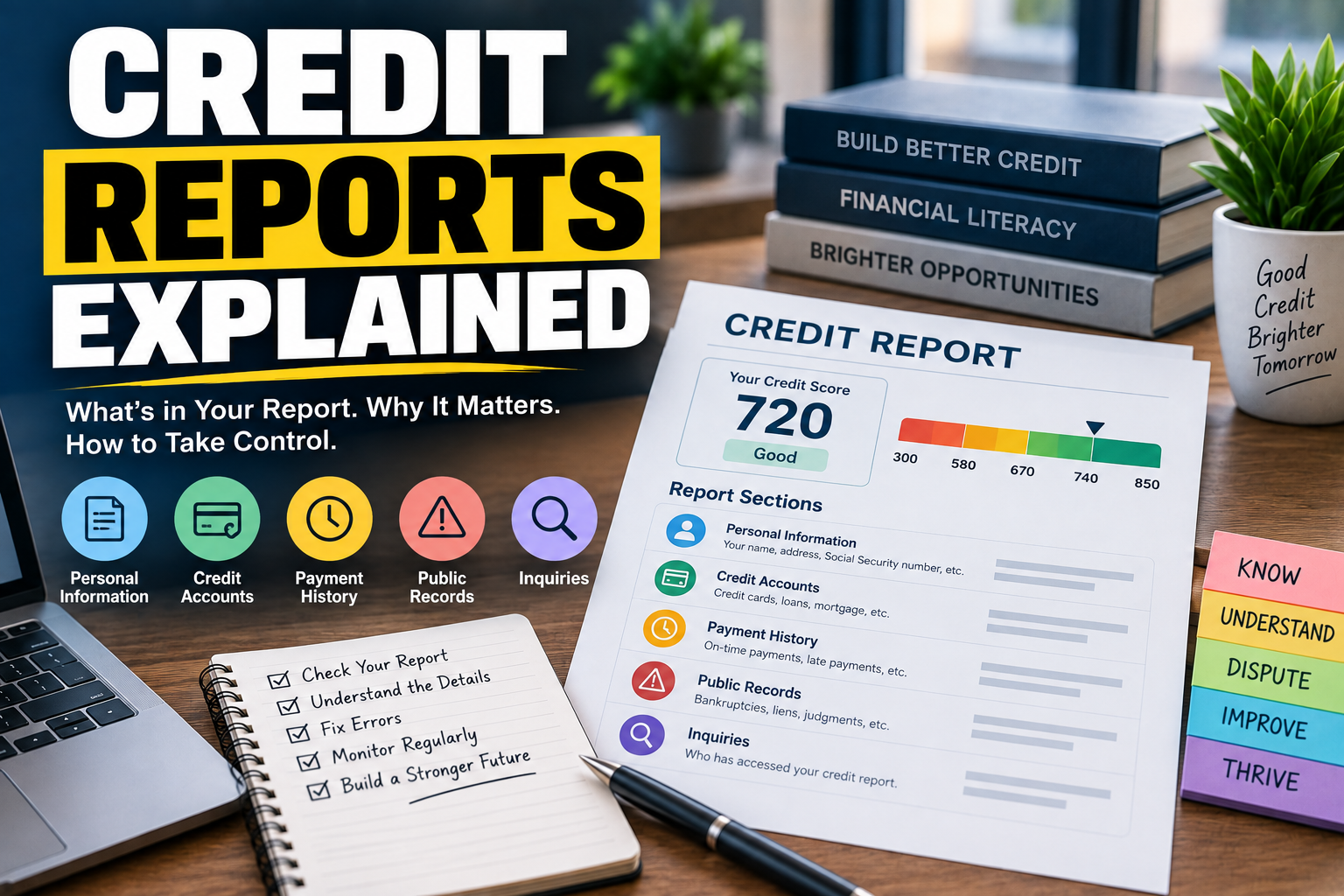
Your credit report quietly influences some of the biggest decisions in your life. It can determine whether you get approved for an apartment, land a fair rate on a car loan, or qualify for a mortgage without paying thousands extra in interest. Still, most people go months—sometimes years—without ever looking at it.
A credit report is a comprehensive record of an individual's credit history, compiled by credit bureaus, which profoundly influences major financial decisions such as loan approvals, interest rates, and housing applications. It details personal information, credit accounts, inquiries, and public records, with factors like payment history (about 35%) and amounts owed (about 30%) being primary determinants of one's credit score. Understanding and regularly reviewing your credit report is vital because inaccuracies can negatively impact your financial standing, and negative items like late payments can remain on the report for up to 7 years. Consumers are protected by the Fair Credit Reporting Act, granting them rights to access their information, dispute errors, and have outdated data removed.
That gap is where problems grow. A wrong entry, an old debt that should have dropped off, or a score you don’t understand can cost you real money. The fix starts with knowledge, and this guide gives you all of it in one place.
Below, you’ll learn what a credit report is, how to read it line by line, how credit scores are calculated, how to dispute credit report errors, and how to improve your credit score in as little as six months. We’ll also cover how long negative items stay on your credit report and the powerful protections you have under the Fair Credit Reporting Act.
What Key Topics Are Covered in This Credit Report Guide?
- What a credit report is and why it matters
- How to read your credit report section by section
- How credit scores are calculated
- How to dispute credit report errors step by step
- How to improve your credit score in 6 months
- How long negative items stay on your credit report
- Your rights under the Fair Credit Reporting Act
- Credit report FAQs
Use this as a table of contents. Jump to what you need, or read straight through for the full picture.
What Is a Credit Report? {#what-is-a-credit-report}
A credit report is a detailed record of how you’ve borrowed and repaid money over time. Think of it as a financial history file. Lenders, landlords, insurers, and sometimes employers use it to decide how much they can trust you with credit or responsibility.
Three major credit bureaus build and maintain these reports:
- Equifax
- Experian
- TransUnion
Each bureau keeps its own version, so the details can differ from one to the next. One lender might report to all three, while another reports to only one. That’s exactly why checking all three reports matters—an error can appear on one and stay hidden on the others.
One quick clarification that trips people up: your credit report and your credit score are not the same thing. The report holds the raw information. The score is the three-digit summary that scoring models calculate from that information. In short, the report is the story, and the score is the headline.
Why Your Credit Report Matters More Than You Think
A single file can shape choices far beyond just loans. Here’s where your credit report shows up in everyday life:
- Loan approvalsfor cars, homes, and personal financing
- Interest rates, since stronger credit usually means lower rates
- Credit card offersand the limits you’re given
- Rental applicationsfor apartments and homes
- Insurance premiumsin many states
- Employment screeningfor certain roles
Because so much rides on this one document, checking it regularly is one of the smartest and most affordable financial habits you can build. It costs nothing and takes minutes.
How to Read Your Credit Report
Opening your credit report for the first time can feel overwhelming. The pages are packed with dates, numbers, and account names. But once you understand what each section means, reading it becomes simple and even a little satisfying.
Here’s a section-by-section breakdown so you always know what you’re looking at.
1. Personal Information
This top section lists your identifying details:
- Full name and any variations or misspellings
- Current and past addresses
- Date of birth
- Social Security number, usually partly hidden
- Employment history
Read this part closely. An unfamiliar address or a name you don’t recognize can point to a mixed file—where someone else’s data lands on your report—or even early signs of identity theft. Catching this early protects both your credit and your privacy.
2. Credit Accounts (Tradelines)
This is the heart of your report. Often called “tradelines,” these entries show every credit account tied to you. For each one, you’ll typically see:
- The lender or creditor’s name
- Account type, such as credit card, mortgage, or auto loan
- Date the account opened
- Credit limit or original loan amount
- Current balance
- A month-by-month payment history
Lenders study this section the hardest. They want to know two things: Do you pay on time, and how much of your available credit are you using?
3. Credit Inquiries
Every time your credit gets checked, it lands here. There are two kinds:
- Hard inquirieshappen when you apply for new credit. They can slightly lower your score and stay on your report for about two years.
- Soft inquirieshappen when you check your own credit or a company pre-approves you. These never affect your score.
Spot a hard inquiry you don’t remember authorizing? That’s worth a closer look, since it can signal fraud.
4. Public Records and Collections
This section covers serious negative events, such as:
- Bankruptcies
- Accounts sent to collections
- Certain court judgments
These carry the heaviest weight and can pull your score down for years. If something here looks wrong, it’s a top priority to dispute.
How to Get Your Free Credit Report
You’re entitled to a free copy of your credit report from each bureau. The official, federally authorized source is AnnualCreditReport.com. Many services now offer free weekly access, so there’s no reason to go without.
Pull all three reports and compare them side by side. Reading them together is the most reliable way to catch errors and confirm your information is accurate everywhere it appears.
How Credit Scores Are Calculated
Your credit score is a three-digit number, usually ranging from 300 to 850. The higher it climbs, the better you look to lenders. Popular scoring models like FICO and VantageScore rely on similar factors, with slightly different weights.
Understanding these five factors gives you a clear, practical roadmap. Improve them, and your score follows.
Payment History (About 35%)
This is the single biggest factor. It tracks whether you pay your bills on time. Late payments, missed payments, and collections all damage this category.
Even one payment that’s 30 days late can noticeably ding your score. Paying on time, every single time, is the foundation of strong credit.
Amounts Owed (About 30%)
This measures how much debt you carry, with a heavy focus on your credit utilization ratio—the share of available credit you’re actually using.
Here’s a quick example. If you have a $10,000 limit and a $3,000 balance, your utilization is 30%. A reliable rule of thumb is to keep it under 30%, and lower is even better.
Length of Credit History (About 15%)
The longer your track record, the more confident lenders feel. This factor weighs:
- The age of your oldest account
- The average age of all your accounts
- How long specific accounts have stayed active
This is why closing an old credit card can backfire. It shortens your history and may nudge your score down.
Credit Mix (About 10%)
Lenders like to see you handle different types of credit well. A healthy mix might include a credit card, an auto loan, and a mortgage. You don’t need every type—variety just helps.
New Credit (About 10%)
Opening several accounts in a short window can signal risk. Each application triggers a hard inquiry, and a cluster of them can temporarily lower your score.
How to Dispute Credit Report Errors
Credit report errors are more common than most people expect, and they can quietly cost you through higher interest rates or denied applications. The good news: you have the legal right to dispute anything inaccurate, and it costs nothing.
Common Credit Report Errors to Watch For
Keep an eye out for these frequent mistakes:
- Accounts that don’t belong to you
- Incorrect payment statuses, like a paid bill marked late
- Duplicate accounts listed twice
- Wrong balances or credit limits
- Outdated negative items that should have aged off
- Someone else’s information mixed into your file
Step-by-Step: How to Dispute a Credit Report Error
Fixing a mistake follows a clear, repeatable process. Here’s how to do it right.
Step 1: Gather your evidence. Collect proof of the error, such as bank statements, payment confirmations, or letters from creditors.
Step 2: File your dispute. Submit it to the credit bureau reporting the error. Most bureaus accept disputes online, by mail, or by phone. Mailing with tracking gives you a paper trail, which many people prefer for important disputes.
Step 3: Explain the problem clearly. State exactly what’s wrong and what the correct information should be. Attach copies of your evidence—never send originals.
Step 4: Wait for the investigation. The bureau generally has 30 days to investigate. They’ll contact the company that reported the information to verify it.
Step 5: Review the results. When the investigation ends, the bureau sends you the outcome. If they agree, they’ll correct or remove the item. Then request an updated copy of your report to confirm the fix landed.
What If Your Credit Dispute Is Denied?
Sometimes a bureau sides with the creditor. If that happens, you still have solid options:
- Add a statement of dispute to your file explaining your side
- Contact the creditor directly to resolve the issue
- File a complaint with a federal consumer protection agency
Persistence pays off. If you know an item is wrong, keep pushing with clear documentation.
How to Improve Your Credit Score in 6 Months
Rebuilding credit doesn’t happen overnight, but real, visible progress in six months is absolutely realistic. The secret is consistency plus focusing on the factors that move the needle most.
Here’s a month-by-month plan you can follow with confidence.
Month 1: Check and Clean Up
Pull all three credit reports and hunt for errors. Dispute anything inaccurate right away, since removing a wrong negative mark can lift your score fast. Then list every account and its balance—you can’t fix what you can’t see.
Month 2: Lock In Your Payment Habits
Set up automatic payments or reminders so you never miss a due date. Payment history carries the most weight, so this one habit protects your score more than anything else. If any accounts are past due, bring them current as soon as possible.
Month 3: Lower Your Credit Utilization
Focus on paying down credit card balances to get utilization under 30%, then keep pushing lower. A few smart moves help:
- Pay more than the minimum
- Make a second payment mid-month to reduce your reported balance
- Ask for a credit limit increase without increasing your spending
Month 4: Be Strategic With New Credit
Avoid opening several new accounts at once. If you’re building credit from scratch, consider a secured credit card or becoming an authorized user on a trusted family member’s account. Use any new credit lightly and pay it off in full each month.
Month 5: Keep Old Accounts Open
Resist closing old credit cards, even ones you rarely touch. Keeping them open preserves your credit history length and total available credit—both help your score. If an old card has no annual fee, make a small purchase now and then to keep it active.
Month 6: Review and Adjust
Pull your reports again and measure your progress. Celebrate the wins and pinpoint what still needs work. By now, on-time payments and lower balances should be paying off.
Building credit is a marathon, not a sprint. These habits compound, so keep them going well past month six.
What Are Quick Wins to Improve Your Credit Score?
Beyond the monthly plan, a few extra moves can speed things along:
- Report rent and utility payments.Some services let you add these to your credit file.
- Keep balances low before statement dates.Your reported balance drives utilization.
- Avoid unnecessary hard inquiries.Only apply for credit you truly need.
How Long Do Negative Items Stay on Your Credit Report?
One of the most searched credit questions is how long a mistake will haunt you. The answer depends on the type of negative item—and the encouraging news is that most fade with time. Today’s setback won’t follow you forever.
Here’s a quick reference table, followed by the details.
| Negative Item | How Long It Stays | Notes |
| Late payments | Up to 7 years | Impact fades as it ages |
| Collections | Up to 7 years | Paid looks better than unpaid |
| Chapter 13 bankruptcy | About 7 years | From filing date |
| Chapter 7 bankruptcy | Up to 10 years | Longest-lasting mark |
| Hard inquiries | About 2 years | Usually stop affecting score after 1 year |
| Charge-offs | Up to 7 years | From first missed payment |
Late Payments: Up to 7 Years
A late payment can stay on your report for about seven years from when it happened. Its impact shrinks over time, so a late payment from five years ago hurts far less than one from last month.
Collections: Up to 7 Years
A collection account can remain for roughly seven years from the original delinquency date. Paying it off doesn’t always remove it, but a paid collection generally looks better to lenders than an unpaid one.
Bankruptcies: 7 to 10 Years
Bankruptcies linger longest. A Chapter 13 typically stays about seven years, while a Chapter 7 can remain for up to ten.
Hard Inquiries: 2 Years
Hard inquiries fall off after about two years and usually stop affecting your score after just one.
Charge-Offs: Up to 7 Years
When a creditor writes off a debt as a loss, that charge-off can stay around seven years from the date of the first missed payment.
How Does Time and Good Habits Improve Your Credit Score?
Time genuinely heals credit wounds. As negative items age, their weight shrinks. At the same time, every on-time payment and lower balance builds fresh positive history. So even while you wait for old marks to disappear, your good habits actively push your score upward.
Your Rights Under the Fair Credit Reporting Act {#your-rights-under-the-fair-credit-reporting-act}
The Fair Credit Reporting Act (FCRA) is a federal law built to keep your credit information fair, accurate, and private. It governs how credit bureaus and businesses handle your data—and knowing these rights puts real power in your hands.
Here are the key FCRA protections every consumer should understand.
The Right to Access Your Information
You can see what’s in your credit file. That includes free annual access from each of the three major bureaus, plus extra free copies in certain situations, such as after being denied credit.
The Right to Accurate Reporting
Credit bureaus must take reasonable steps to keep your information accurate. When you dispute an error, they’re required to investigate, usually within 30 days. If the information can’t be verified, it must be corrected or removed.
The Right to Know When Your Report Is Used Against You
If a company denies you credit, insurance, or a job based on your report, they must tell you and name the bureau that supplied the information. That lets you review the specific report for free.
The Right to Dispute Inaccurate Information
You can challenge anything you believe is wrong at no cost. Both the credit bureau and the company that reported the information share responsibility for investigating.
The Right to Limit Access to Your Information
Not just anyone can pull your credit report. Under the FCRA, only parties with a valid reason—like a lender reviewing a loan application—can access it. This helps protect your privacy.
The Right to Have Outdated Information Removed
Most negative items must drop off after the legal time limits covered above. Bureaus can’t report old negative information indefinitely.
The Right to Seek Damages
If a bureau or company violates your FCRA rights, you may be able to take legal action. That accountability keeps the whole system honest.
Knowing these rules turns you from a passive subject into an active participant. When you understand the law, you can protect yourself and hold the system accountable.
FAQs
How often should I check my credit report?
Aim for at least a few times a year. Since free weekly access is now widely available, many people check monthly to catch problems early and search their records with confidence.
Does checking my own credit hurt my score?
No. Checking your own report is a soft inquiry, which never affects your score. Review it as often as you like.
How long does it take to improve a credit score?
It varies. Some people see changes within a month or two after disputing errors or paying down balances. Meaningful progress often shows within three to six months of steady effort.
Will paying off a collection remove it from my credit report?
Not always. The account may stay, but its status usually updates to “paid.” A paid collection generally looks better to lenders than an unpaid one.
Can I improve my credit without a credit card?
Yes. Secured cards, credit-builder loans, and adding rent or utility payments to your file can all build credit responsibly.
What’s the difference between a credit report and a credit score?
Your report is the detailed record of your credit history. Your score is the three-digit number calculated from that data. The report is the story; the score is the summary.
How do I know if my personal information on my report is accurate?
Read the personal information section closely and compare it across all three bureaus. Unfamiliar names or addresses can signal a mixed file or identity theft, so flag anything that looks off.
How Can You Take Control of Your Credit Today?
Your credit report isn’t set in stone. It’s a living record that responds to the choices you make. By learning how to read it, disputing errors quickly, and building steady habits, you shape a stronger financial future.
Start small. Pull your free reports. Set up automatic payments. Pay down one balance. Each step builds momentum, and within six months you’ll likely see real, measurable results.
Most of all, remember that time is on your side. Negative marks fade, positive habits compound, and your rights under the law protect you at every turn. You hold more control than you might think—so use it with confidence.