
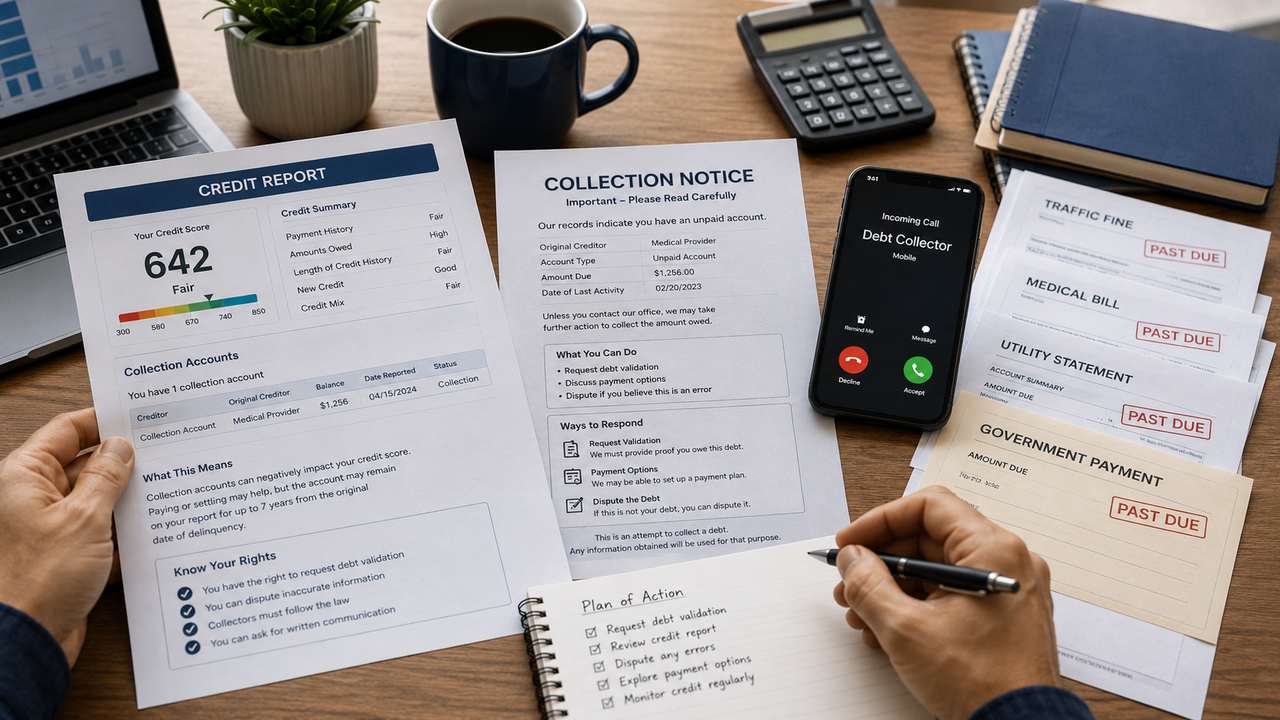
AllianceOne Receivables Management, Inc. is a large, third-party debt collection agency formed in 1999 through the merger of five companies, with some operations dating back to 1912. AllianceOne is particularly known for collecting a wide range of government debts, which distinguishes them from agencies focused solely on consumer credit. Their contact often pertains to obligations like traffic fines or court fees, explaining why individuals may not immediately recognize the debt.
Who Is AllianceOne?
AllianceOne Receivables Management, Inc. is a large, long-operating third-party debt collection agency formed in 1999 through the merger and acquisition of five separate collection companies — one of which had reportedly been operating since as far back as 1912, making parts of AllianceOne’s institutional history genuinely quite old, even though the combined company under its current name is a more recent creation. AllianceOne is a subsidiary of Teleperformance, a large global company specializing in call center and customer contact management services, and AllianceOne itself maintains offices not just across the United States but internationally as well, including operations in Canada, South America, India, and the Philippines.
AllianceOne is a legitimate, licensed collection agency, not a scam, though — as with any large collector — that doesn’t guarantee every account attributed to you is automatically accurate, which is exactly why verification matters regardless of the company’s overall legitimacy.
What Makes AllianceOne Distinctive: Government Debt Collection
While many collection agencies focus primarily on consumer credit accounts, AllianceOne has built a particularly notable specialization in government-related debt collection — a category that trips up a lot of people because it doesn’t fit the usual mental picture of “debt collection” most people have in mind. This includes:
- Traffic tickets and fines that went unpaid, sometimes referred to collections by municipal or county governments after a certain period.
- Court fees and court-related fines, including certain criminal justice-related financial obligations in some jurisdictions.
- State and local tax debt in some cases, depending on the specific government entity’s collection arrangements.
- Parking violations and municipal citations more broadly.
Beyond this government-focused niche, AllianceOne also collects for a wide range of more traditional clients, including financial services institutions, healthcare providers, retailers, utility companies, and telecommunications carriers.
Is AllianceOne a Debt Buyer or a Collection Agency?
AllianceOne operates as a third-party collection agency, not a debt buyer. This means they don’t purchase your debt outright — instead, they’re hired by the actual creditor (whether that’s a government entity, a bank, a healthcare provider, or another business) to attempt collection on that creditor’s behalf, typically for a fee or commission based on what they successfully recover. The original creditor retains ownership of the debt throughout this process, which — similar to dealing with IC System — means you may have the option of resolving certain matters directly with the original creditor rather than exclusively through AllianceOne.
This distinction is especially relevant for government debt specifically: if AllianceOne is collecting a traffic fine or court fee on behalf of a municipality, you may be able to resolve it directly with that municipal court or government office, sometimes with more flexibility (like a payment plan or fine reduction hearing) than a private collection agency working on commission is authorized to offer.
Why Is AllianceOne Contacting You?
A few common scenarios explain how AllianceOne became involved in your situation:
- An unpaid traffic ticket, court fee, or municipal fine was referred to AllianceOne after going unresolved for a period defined by the specific government entity’s own policies.
- A student loan or education-related balance went unpaid and was placed with AllianceOne for collection.
- A medical bill, utility account, or telecom balance went to collections through your original healthcare provider, utility company, or service provider outsourcing the effort to AllianceOne.
- A financial services account, such as a bank fee or overdraft balance, was placed with AllianceOne by your bank or credit union.
- A mistake or data error has occurred, resulting in a debt incorrectly attributed to you — a real possibility with any large-scale collector handling accounts across many different types of creditors and government entities.
Why Government Debt Collection Deserves Special Attention
If AllianceOne is contacting you specifically about a traffic ticket, court fee, or similar government-related debt, it’s worth understanding that some additional or different rules can apply compared to standard consumer debt. Depending on your state and the specific type of obligation, unpaid fines and court fees can sometimes carry consequences beyond a standard credit report entry — including, in some jurisdictions, driver’s license suspension or renewal holds, though many states have moved away from license suspension specifically for unpaid fines in recent years due to legal challenges and reform efforts. Because these specific consequences vary so significantly by state and by the type of underlying obligation, it’s worth confirming directly with the referring government entity (not just AllianceOne) exactly what’s at stake and what resolution options — including payment plans, fine reduction, or community service alternatives in some jurisdictions — might be available that a private collector wouldn’t necessarily volunteer.
Step One: Confirm Exactly What Debt They’re Referring To
Before anything else, get AllianceOne to specify precisely what account or obligation they’re contacting you about — the type of debt, the original creditor or government entity, the amount, and the general timeframe. Given the sheer breadth of client types AllianceOne works with, from traffic courts to hospitals to banks, this initial clarification is more important than it might be with a more narrowly focused collector, simply because the range of possibilities is so wide.
Step Two: Request Formal Debt Validation
Once you know generally what they’re referring to, request formal written validation under the Fair Debt Collection Practices Act, requiring AllianceOne to provide the name of the original creditor, the amount owed, and confirmation of their authority to collect on that creditor’s behalf. You generally have 30 days from your first contact to make this request, during which they must pause collection activity until validation is provided.
Important note on government debt: the FDCPA’s protections generally apply to consumer debt collection, and while much of what AllianceOne handles (traffic fines, court fees) does fall under FDCPA coverage when collected by a third party like AllianceOne, some purely governmental collection activities conducted directly by a government agency itself (rather than through a private collector) may be treated differently under the law. Since AllianceOne is acting as a private, third-party collector in this scenario, FDCPA protections should generally apply to their specific collection conduct, even for government-referred debt.
How to request validation: Send a written letter via certified mail with return receipt requested, explicitly invoking your FDCPA rights and requesting a cessation of collection activity until validation is provided.
Step Three: Verify Directly With the Original Creditor or Government Entity
Since AllianceOne doesn’t own the underlying debt, contacting the original creditor or referring government agency directly can be a valuable parallel step. For a traffic ticket or court fee, this might mean contacting the specific court clerk’s office; for a medical bill, the original healthcare provider’s billing department; for a student loan, the original lender or servicer. This direct verification can sometimes resolve confusion faster than working exclusively through AllianceOne, and for government debt specifically, it may reveal resolution options (payment plans, fine reductions, alternative arrangements) that AllianceOne itself isn’t necessarily positioned to offer or discuss.
How to Resolve an Accurate AllianceOne Debt
- Consider contacting the original creditor or government entity directly first, particularly for traffic fines, court fees, or medical debt, where more flexible resolution options sometimes exist outside the collection agency itself.
- Pay in full, if you have the means, which resolves the underlying obligation completely, though it doesn’t automatically remove a related entry from your credit report — it updates the status to reflect payment.
- Negotiate a settlement, where applicable — this is more commonly available for medical, financial services, and retail-type debt than for government fines and fees, which often have less room for negotiated reduction due to their statutory nature, though payment plans are frequently available even when the total amount isn’t negotiable.
- Set up a structured payment plan, especially useful for government debt where a lump-sum payment may not be feasible, and many courts and government agencies offer formal payment plan programs specifically designed for this purpose.
- Get any agreement in writing before making a payment, regardless of which type of debt is involved.
Your Rights Under the FDCPA When Dealing With AllianceOne
- They cannot call before 8 a.m. or after 9 p.m. in your time zone.
- They cannot harass you through repeated calls intended to annoy, or through abusive, threatening, or profane language.
- They cannot misrepresent the debt or falsely threaten consequences that aren’t legally accurate for your specific situation.
- They must stop calling your workplace once informed you can’t take calls there.
- They cannot disclose your debt to third parties, beyond narrow circumstances permitted for locating you.
- They must honor a written cease-and-desist request, though this doesn’t erase the underlying obligation or necessarily prevent the original creditor or government entity from pursuing other remedies.
Can AllianceOne Sue You?
Yes, for debt that’s still within your state’s statute of limitations and that they (or the entity they’re collecting for) can adequately document. If you’re served with a lawsuit, don’t ignore it — even a debt you believe is inaccurate or improperly pursued requires a response by the specified deadline, or the court can enter a default judgment against you automatically. For government debt specifically, the “lawsuit” scenario may instead take the form of continued fine escalation, referral to a different enforcement process, or, in some states, other administrative consequences rather than a standard civil lawsuit — the appropriate response varies enough by jurisdiction and debt type that consulting a local consumer law attorney or, for government fines specifically, a local public defender or legal aid organization if you can’t afford private counsel, is worth considering if the situation escalates.
What to Do If You Believe the Debt Isn’t Yours
Given how many different types of debt and government obligations AllianceOne handles, and the scale at which they operate across multiple countries and industries, data-matching errors are a genuine possibility. If you don’t recognize the debt at all, formally dispute it in writing with both AllianceOne and the credit bureaus (if it’s affecting your credit report), and if identity theft is suspected, file a report at IdentityTheft.gov and consider a fraud alert or credit freeze.
Frequently Asked Questions
Is AllianceOne a legitimate company?
Yes. AllianceOne Receivables Management is a real, licensed, long-operating collection agency and a subsidiary of Teleperformance, a large global customer service and contact center company. It is not a scam.
Does AllianceOne buy debt, or only collect on behalf of others?
AllianceOne operates as a third-party collection agency, meaning the original creditor or government entity retains ownership of the debt, and AllianceOne collects on their behalf for a fee, rather than purchasing accounts outright.
Can unpaid debt with AllianceOne affect my driver’s license?
This depends entirely on your state’s specific laws and the type of underlying obligation — some states have historically suspended licenses for unpaid traffic fines or court fees, though many have reformed or eliminated this practice in recent years. Checking directly with the referring court or government agency is the most reliable way to understand what’s actually at stake in your specific state and situation.
Why is AllianceOne contacting me about something that doesn’t feel like a typical “debt”?
Because AllianceOne specializes heavily in government-related collections (traffic tickets, court fees, municipal fines) in addition to more traditional consumer debt, it’s common for people to be surprised that an unpaid fine or fee has been referred to a private collection agency at all — this is a normal and increasingly common practice for many government entities that don’t have the internal resources to pursue these collections themselves.
Should I try to resolve a traffic fine directly with the court instead of AllianceOne?
Often, yes — many courts offer payment plans, fine reduction hearings, or other alternatives that a private collection agency working on commission isn’t necessarily positioned to offer or discuss, so it’s worth checking directly with the referring court about your options even after AllianceOne has become involved.
What happens if I ignore AllianceOne completely?
For consumer debt, this risks a potential lawsuit if the debt is within your state’s statute of limitations, and continued negative credit reporting. For government debt specifically, ignoring it can sometimes lead to escalating consequences defined by that specific government entity’s own enforcement policies, which vary significantly and are worth understanding directly from the source rather than assuming they mirror standard consumer debt collection consequences.
A Deeper Look at How Government Debt Collection Actually Works
Because this is one of the more unusual and less understood parts of AllianceOne’s business, it’s worth walking through the mechanics in more detail. When a government entity — a municipal court, a county tax office, a state agency — has a category of unpaid obligations that it doesn’t have the internal staffing or systems to pursue efficiently, it will often issue a contract to a private collection agency like AllianceOne to handle that work. These contracts are typically the result of a competitive government procurement process, meaning AllianceOne’s arrangement with a specific court or agency is a formal, publicly awarded contract rather than an informal referral arrangement.
Under most such contracts, the collection agency earns a percentage of what it successfully recovers, similar to how contingency-based collection works for private commercial debt. The government entity remains the actual owner of the underlying fine, fee, or tax obligation throughout the process, which is exactly why direct communication with that government entity remains a viable and often valuable option even after your account has been placed with AllianceOne for active collection.
Some jurisdictions have specific consumer-protection-style rules that apply even to government debt collection contracts — for example, requiring that any additional collection fees added to the original fine be capped at a certain percentage, or requiring the collector to offer a payment plan option before pursuing more aggressive collection measures. These rules vary enormously by state and even by individual municipality, so if you’re dealing with a government-related debt through AllianceOne, it’s worth researching your specific jurisdiction’s rules or consulting a local legal aid organization, which often has specific expertise in exactly this category of debt.
What “Collection Fees” Added to Government Debt Might Mean for Your Balance
One detail that surprises many people dealing with AllianceOne on a government-referred debt is that the amount they’re asked to pay is sometimes higher than the original fine or fee, due to additional collection costs added on top. Many jurisdictions explicitly authorize this — the underlying statute governing the fine or fee often includes a provision allowing collection costs to be added if the obligation goes to a collection agency, sometimes capped at a specific percentage (commonly cited figures in various state laws range from around 15% to 40%, though this varies enormously and you should verify your own state and municipality’s specific rule). If your total balance with AllianceOne seems significantly higher than you remember the original fine being, this added-collection-fee structure is a common and often legitimate explanation, though it’s still worth confirming the specific fee percentage applied is consistent with what your jurisdiction actually authorizes, since errors and improper fee calculations do occur.
A Realistic Example: Navigating an Old Traffic Fine
To make this more concrete, imagine you received a traffic ticket several years ago in a city you no longer live in, and you either forgot about it or didn’t realize it had gone unpaid, and it’s since been referred to AllianceOne for collection, now showing a balance that includes additional collection fees on top of the original fine amount.
A reasonable approach: first, contact the specific court that issued the original ticket (information usually available on the ticket itself or through AllianceOne’s validation response) to confirm the original fine amount, whether a payment plan is available, and whether any fine reduction process exists in that jurisdiction for old, unpaid tickets. Many courts have specific “fine amnesty” or reduction programs periodically, particularly for older tickets, precisely because they’d rather recover a partial payment than continue an extended collection effort. Simultaneously, request formal validation from AllianceOne to confirm the current total balance and how the collection fee portion was calculated. Armed with information from both sources, you’re in a strong position to either negotiate directly with the court, set up a payment plan through AllianceOne consistent with what the court has authorized, or identify a genuine mistake if the numbers don’t reconcile between what the court confirms and what AllianceOne is claiming.
Frequently Asked Questions, Continued
Does dealing with AllianceOne for a traffic fine affect my credit score the same way a credit card collection would?
It can, if the debt is reported to the credit bureaus, though not every government-referred collection is necessarily reported this way — reporting practices vary by the specific government entity’s arrangement with AllianceOne. Checking your actual credit report is the only reliable way to know whether a specific government debt is affecting your score.
Can I negotiate the collection fee portion separately from the original fine?
Sometimes — since the collection fee is often governed by a different statutory rule than the original fine itself, it’s worth asking specifically whether the collection fee portion has any flexibility, separate from the underlying fine amount, which the original government entity may have less ability to reduce.
What if AllianceOne is collecting a debt for a company that’s gone out of business?
This can happen, particularly with older accounts — the debt itself doesn’t disappear simply because the original creditor no longer operates, especially if the debt was properly assigned or sold to another entity before the original company closed. Requesting validation showing the current legitimate chain of ownership or authority becomes especially important in this scenario.
Is it worth getting a local attorney involved for a relatively small traffic fine collection matter?
For a small, straightforward fine, this is often not cost-effective given typical attorney fees relative to the amount at stake — direct communication with the court and AllianceOne, following the steps in this guide, is usually sufficient. Legal help becomes more valuable if the situation escalates significantly, involves a much larger sum, or if you believe your rights have been violated in a way that could support a legal claim.
How AllianceOne’s International Operations Might Factor In
Given that AllianceOne, through its parent company Teleperformance, operates contact centers not just across the United States but internationally as well, it’s entirely possible that a call you receive is being handled by a representative working from an overseas contact center rather than a domestic U.S. office. This is a common and legal practice across the customer service and collections industry broadly, and it doesn’t change your underlying legal rights under the FDCPA, which apply based on the debt being collected and where you, the consumer, are located, not based on where the calling representative happens to be physically situated. If you find this detail relevant to how you want to communicate (for instance, preferring written correspondence specifically to maintain a clearer record regardless of which office handles a given call), that preference remains entirely reasonable and doesn’t affect your legal standing in the process.
A Quick Reference Table: Matching Your Situation to Your Best First Move
| Type of AllianceOne debt | Best first move |
|---|---|
| Traffic fine or court fee | Contact the issuing court directly to confirm amount and ask about payment plans or reduction programs |
| Medical bill | Contact the original healthcare provider’s billing department; check for insurance processing errors |
| Student loan | Contact the original loan servicer to confirm status and explore federal hardship programs if applicable |
| Utility or telecom bill | Contact the original service provider to confirm the final balance and any applicable credits |
| Unfamiliar debt of any kind | Request formal validation from AllianceOne first, then investigate further before any payment |
Frequently Asked Questions, Continued Further
Does AllianceOne handle federal student loan debt, or only private loans?
This can vary — some government contracts, including certain federal student loan collection arrangements, have historically involved companies like AllianceOne, though federal student loan servicing and collection structures have changed over time. If your AllianceOne contact involves a student loan, confirming directly with the Department of Education or your loan servicer whether it’s a federal or private loan is an important first step, since federal loans carry specific hardship and rehabilitation programs that private loans don’t.
If I pay AllianceOne directly, does that guarantee the original creditor or court recognizes the payment right away?
There can sometimes be a processing delay between AllianceOne receiving payment and that payment being reflected in the original creditor’s or court’s own records. Requesting a receipt or confirmation immediately upon payment, and following up with the original entity after a reasonable processing period, helps ensure the resolution is fully and accurately reflected everywhere it needs to be.
Can AllianceOne’s collection activity on a government fine result in additional legal consequences beyond the fine itself?
This depends entirely on your specific state and the type of underlying obligation — some jurisdictions have specific escalation processes for certain categories of unpaid government debt that go beyond a standard civil collection matter. If you’re uncertain what’s genuinely at stake in your specific situation, contacting the referring court or agency directly, or consulting local legal aid, is the most reliable way to understand your actual exposure.
The Bottom Line
AllianceOne is a large, legitimate, long-operating third-party collection agency with a notably broad client base spanning traditional consumer debt, healthcare, utilities, and — distinctively — government-related collections like traffic fines and court fees. Because they don’t own the underlying debt, verifying directly with the original creditor or government entity, in addition to requesting formal validation from AllianceOne itself, often reveals more complete information and sometimes more flexible resolution options than working with the collection agency alone. Whether you’re dealing with an old medical bill or an unpaid traffic fine, the same core principles apply: verify before you pay, understand your specific rights and options for that particular type of debt, and get any resolution documented in writing.
Need Help Reviewing Your Credit Report?
If an AllianceOne collection is appearing on your credit report and you’re unsure whether the information is accurate, you can request a credit audit or quote to review your situation and identify potential credit-report issues.