
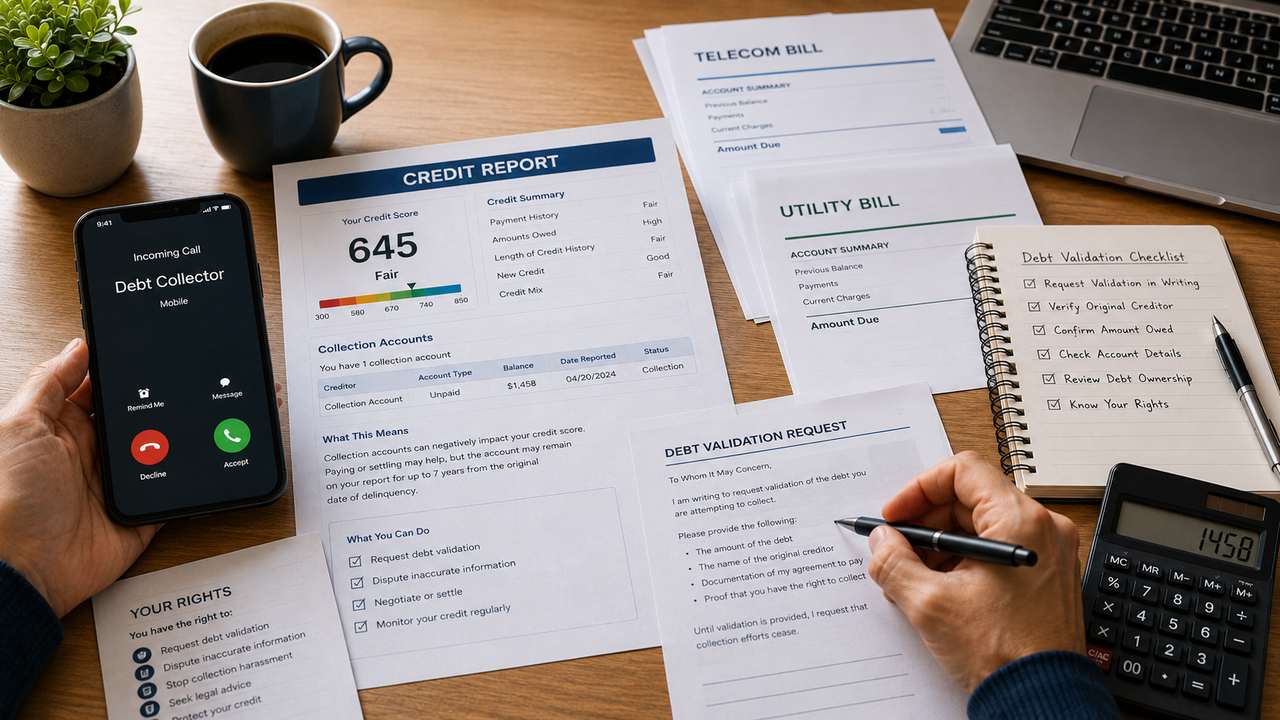
Afni, Inc., officially Anderson Financial Network, Inc., is a debt collection agency headquartered in Bloomington, Illinois, with origins tracing back to the 1930s. Afni primarily collects on behalf of original creditors for various types of debt, notably telecom and utility bills. The company holds an A+ rating with the Better Business Bureau, but has also been subject to regulatory scrutiny, including a 2020 CFPB Consent Order. Consumers contacted by Afni should carefully validate any debt claims.
Who Is Afni Inc?
Afni, Inc. — officially Anderson Financial Network, Inc. — is a debt collection agency headquartered in Bloomington, Illinois, that has been operating for decades, with some sources tracing its origins back to the 1930s. Afni holds an A+ rating with the Better Business Bureau and has been an accredited BBB business for years, and it maintains a professional public-facing website that addresses common consumer questions and outlines consumer rights — a level of transparency not every collection agency offers.
Afni is a legitimate, licensed collection agency, not a scam operation. That said, being legitimate and having a strong BBB rating doesn’t automatically mean every specific account attributed to you is accurate — which is exactly why the verification process outlined in this guide matters regardless of the company’s overall reputation.
What Kind of Debt Does Afni Collect?
Afni has built a particular specialization in telecommunications and utility debt, collecting unpaid balances on behalf of phone, internet, cable, and utility companies. This is Afni’s primary and most well-known area of focus, though the company’s activities have also extended into other categories over time, including certain credit card, student loan, and government-related accounts, depending on their specific client relationships at any given time.
Afni operates in some cases as a traditional third-party collector — hired by an original creditor to attempt collection on their behalf for a fee — and in other cases has been reported to purchase debt portfolios outright, meaning the specific arrangement can vary depending on which account you’re dealing with. This is worth clarifying directly through the debt validation process, since it affects who ultimately owns the debt and who you’d need to negotiate with.
An Important Piece of Regulatory History: The 2020 CFPB Consent Order
In November 2020, the Consumer Financial Protection Bureau issued a formal consent order against Afni, Inc., specifically related to the accuracy of the credit reporting information Afni furnished to the major consumer reporting agencies in connection with its debt collection activities. This enforcement action required Afni to take specific corrective steps to improve and ensure the accuracy of its credit report furnishing practices going forward.
This history is genuinely useful context, not just a cautionary footnote: it means that Afni has a documented, federally acknowledged history of issues specifically related to how it reports information to your credit file — which reinforces why carefully reviewing any Afni account on your credit report for accuracy, rather than assuming it’s automatically correct, is a reasonable and well-founded precaution, not excessive caution.
Why Is Afni Contacting You?
A few common scenarios explain how Afni became involved in your situation:
- An unpaid phone, internet, or cable bill was referred to Afni by your telecom or service provider after their own internal collection attempts didn’t resolve the balance.
- A utility bill from a former address went unpaid — this is a particularly common scenario, since final utility bills after moving are easy to overlook, especially if a forwarding address wasn’t properly updated with the utility company.
- A credit card or personal loan account, in some cases, was placed with or sold to Afni depending on the specific creditor relationship involved.
- A student loan or government-related balance, in some circumstances, depending on Afni’s specific client contracts at the time.
- A data error, billing mistake, or identity theft situation has resulted in a debt being incorrectly attributed to you — always worth ruling out before assuming any claimed debt is accurate.
Why Telecom and Utility Debt Deserves Careful Review
Telecom and utility billing is a common source of billing disputes and errors — early termination fees that were waived but not properly removed from a final bill, equipment return credits that weren’t applied, disputed charges from a service outage or billing error, or a final bill sent to an old address that was never received. Given Afni’s specific concentration in this exact category of debt, and their documented history of a federal enforcement action related to reporting accuracy specifically, taking the time to verify a telecom or utility-related Afni account carefully is a particularly well-justified use of the validation process described below.
Step One: Request Formal Debt Validation
Whether you believe the debt is legitimate or you’re unsure, your first move should be requesting formal, written debt validation from Afni. Under the Fair Debt Collection Practices Act, you have the right to require Afni to provide the name of the original creditor, the amount owed, and confirmation of their authority to collect (whether as a hired collector or as the actual current owner of the debt). You generally have 30 days from your first contact with Afni to make this request, during which they must pause collection activity until they respond.
How to request it properly: Send a written letter via certified mail with return receipt requested, explicitly invoking your FDCPA rights and requesting a cessation of collection activity until validation is provided. This creates a documented paper trail that’s considerably stronger than a verbal request made over the phone.
How do I cross-check debt with the original service provider?
Since telecom and utility debt is Afni’s primary specialty, and since these providers typically maintain detailed account records, contacting your former phone, internet, cable, or utility provider directly to confirm the final balance, the reason for the outstanding amount, and whether any credits or disputes were properly applied can be a valuable parallel step. This is especially useful if you believe a billing error, an improperly applied early termination fee, or an unreturned equipment credit might be involved.
What should I do after evaluating the debt information?
If both the original provider and Afni’s validation response confirm a consistent, accurate balance, you’re in a position to make an informed decision about resolving it. If something doesn’t match — an unfamiliar charge, an amount that doesn’t reconcile with what the original provider confirms, or a lack of adequate documentation from Afni — you have solid grounds to formally dispute the debt with the credit bureaus.
How to Resolve an Accurate Afni Debt
- Contact the original service provider first, if the debt is still with them (not sold outright to Afni). Many telecom and utility companies retain some flexibility to correct billing errors, apply overlooked credits, or even reduce a final balance directly, sometimes more easily than negotiating through a third-party collector.
- Pay in full, if you have the means, which resolves the debt though doesn’t automatically remove a related entry from your credit report — it updates the reported status to reflect payment.
- Negotiate a settlement, which is often available, particularly if Afni purchased the debt outright rather than merely collecting on commission, since a debt buyer typically has more room to accept a reduced amount than an agency constrained by what the original creditor authorizes.
- Set up a payment plan, with terms documented in writing before making your first payment.
- Ask about a pay-for-delete arrangement, understanding it’s discretionary and not guaranteed, though it doesn’t hurt to ask, provided you get any agreement in writing before sending payment.
Your Rights Under the FDCPA When Dealing With Afni
- They cannot call before 8 a.m. or after 9 p.m. in your time zone.
- They cannot request private information like your Social Security number without appropriate justification, and should not be pressuring you to provide sensitive personal details before validating the debt.
- They cannot threaten legal action they don’t genuinely intend to take, or falsely imply criminal consequences for unpaid consumer debt, which don’t exist for this type of civil matter.
- They cannot use profane or derogatory language.
- They must stop calling your workplace once informed you can’t take calls there.
- They must honor a written cease-and-desist request, though the underlying debt remains and other remedies (like a potential lawsuit, if the debt is still legally enforceable) aren’t necessarily prevented by this request alone.
If Afni violates any of these protections, you can file a complaint with the CFPB — a step made particularly relevant given their documented 2020 consent order specifically related to reporting practices — and depending on the severity, may have grounds for legal action under the FDCPA.
Can Afni Sue You?
Yes, for debt that remains within your state’s statute of limitations and that they can adequately document. If you’re served with a lawsuit related to an Afni-collected debt, don’t ignore it — even if you believe it’s inaccurate or improperly pursued, failing to respond by the court’s deadline can result in a default judgment against you. Consider consulting a consumer law attorney, particularly if the debt is old, disputed, or if you believe Afni’s own documented history of reporting accuracy issues might be relevant to your specific situation.
What to Do If the Debt Genuinely Isn’t Yours
Given the volume of telecom and utility accounts Afni handles, along with their documented history of credit reporting accuracy concerns, data-matching errors are a real possibility worth taking seriously. If you don’t recognize the debt, formally dispute it in writing with both Afni and the credit bureaus, and if identity theft is suspected — which can be common with telecom accounts specifically, since opening service in someone else’s name is a frequently used tactic in identity theft schemes — file a report at IdentityTheft.gov and consider a fraud alert or credit freeze.
Where can I find a sample debt validation letter for Afni?
Is Afni a legitimate company?
Yes. Afni, Inc. (Anderson Financial Network) is a real, long-operating, BBB-accredited debt collection agency headquartered in Bloomington, Illinois. It is not a scam, though — as with any collector — individual account accuracy should still be independently verified.
Does Afni own the debt, or are they collecting for someone else?
This varies by account — Afni operates both as a traditional third-party collector working on commission and, in some cases, as a purchaser of debt portfolios outright. Requesting formal validation clarifies which situation applies to your specific debt.
Why does Afni have a specific CFPB enforcement action against them?
In 2020, the CFPB issued a consent order against Afni specifically addressing the accuracy of credit reporting information they furnished to the credit bureaus, requiring corrective action to improve those practices going forward.
Can I resolve my debt directly with my old phone or utility company instead of Afni?
If Afni is acting as a hired collector rather than the outright owner of the debt, yes, this is often possible and can sometimes lead to a faster or more favorable resolution, particularly if a billing error or overlooked credit is involved.
Does Afni typically accept settlements for less than the full balance?
Often yes, particularly for debt they’ve purchased outright, where they have more flexibility than when collecting strictly on commission for an original creditor. It’s always worth asking and negotiating rather than assuming the full balance is the only option.
What if Afni is contacting me about a utility bill from an address I haven’t lived at in years?
This is a common and legitimate scenario — final utility bills are easy to overlook, especially after a move, but it’s still worth verifying the specific amount and dates through both Afni’s validation response and, if possible, the original utility company’s own records before assuming the balance is fully accurate.
What are common telecom and utility billing errors to check for?
Here’s a template you can adapt for your specific situation:
[Your Name]
[Your Address]
[Date]Afni, Inc.
[Address provided in their correspondence]Re: Account [Reference Number]
To Whom It May Concern:
I am writing regarding your recent contact about the above-referenced account. Pursuant to my rights under the Fair Debt Collection Practices Act, I am requesting validation of this debt, including:
- The name of the original creditor and the type of account (phone, internet, cable, utility, or other)
- An itemized breakdown of the amount claimed, including any fees or charges beyond the original service balance
- Confirmation of whether your company owns this debt outright or is collecting on behalf of the original creditor
Please also confirm that all collection activity, including phone calls and further correspondence, will cease until this validation is provided, as is my right under the FDCPA.
Sincerely,
[Your Name]
[Account Reference Number]
Send this via certified mail with return receipt requested, and retain copies of everything for your records.
Common Telecom and Utility Billing Errors Worth Checking For Specifically
Given Afni’s concentration in this exact debt category, it’s worth knowing the specific, recurring types of errors that show up most often in telecom and utility collections:
- Early termination fees that should have been waived. Many service contracts waive early termination fees under specific circumstances (a documented move outside the provider’s service area, active military deployment under the Servicemembers Civil Relief Act, or a promotional offer that included a waiver), but billing systems don’t always automatically apply these waivers correctly.
- Equipment return credits that weren’t processed. If you returned a modem, router, cable box, or other leased equipment after canceling service, a credit for that returned equipment should be applied to your final bill — but equipment return processing errors (a package that wasn’t properly logged as received, for instance) are a common source of inflated final balances.
- Charges continuing after a requested cancellation date. If your service cancellation wasn’t processed on the date you actually requested, you may be billed for a period of service you didn’t intend to continue past your cancellation request.
- A final bill sent to the wrong address, particularly after moving, resulting in a bill you never actually saw before it was sent to collections — worth specifically checking the billing address associated with the account in Afni’s validation response.
- Bundled service disputes, where a promotional rate expired or a bundled discount wasn’t properly applied, resulting in a higher final balance than expected.
If any of these scenarios sound familiar, requesting your complete billing history directly from the original telecom or utility provider (which they’re generally required to provide) gives you the specific documentation needed to challenge an inaccurate balance effectively, rather than relying solely on Afni’s own summary of the account.
How to Interpret Afni’s Response If They Claim to Have Purchased the Debt
If Afni’s validation response confirms they purchased the debt outright rather than merely collecting on the original creditor’s behalf, this shifts your negotiating position in a useful way, similar to dealing with any debt buyer: since they acquired the account at a discount, there’s typically more room to negotiate a reduced settlement than there would be if the original telecom or utility company still owned the debt and was constraining what a hired collector could accept. In this scenario, focus your negotiation directly with Afni rather than attempting to go back to the original service provider, since they no longer have any ongoing stake in or authority over the resolution.
Frequently Asked Questions, Continued
Does Afni’s 2020 CFPB consent order mean every account they currently report is being handled correctly now?
The consent order required Afni to implement specific corrective measures to improve reporting accuracy going forward, which suggests improved practices since that time, though it doesn’t guarantee every individual account is free of error — ongoing verification of your own specific account remains a reasonable practice regardless of a company’s broader compliance improvements.
If my telecom bill was disputed with the original provider before it went to collections, does that dispute still matter now?
Yes — if you have documentation showing you formally disputed a charge with the original provider before the account was sent to Afni, this is valuable evidence to include in your response to Afni and in any formal credit bureau dispute, since it demonstrates the balance was contested prior to collection, not simply left unpaid without explanation.
Can Afni report a debt to my credit file if I’m actively disputing it with the original telecom company?
If the debt has already been placed with Afni for collection, it can potentially still be reported while a dispute is ongoing with the original creditor, which is exactly why formally notifying Afni directly (not just the original company) that the debt is disputed is an important, separate step to protect your position on both fronts.
Is it common for Afni accounts to involve relatively small dollar amounts?
Yes, particularly given their telecom and utility focus — many Afni accounts involve final bills in the range of a few hundred dollars or less, which is worth keeping in perspective when deciding how much time and effort to invest in a thorough dispute versus a straightforward settlement or payment.
Why Identity Theft Involving Telecom Accounts Deserves Special Mention
Telecom accounts are a particularly common target in identity theft schemes because opening new phone service requires relatively less verification in some cases than opening a credit card or loan, and a fraudulent phone line can be used to facilitate further fraud before the true account holder even realizes it exists. If Afni is contacting you about a telecom account you never opened, this is worth treating with real urgency — not just as a billing dispute, but as a potential sign of broader identity theft that could extend beyond this single account. Pulling your full credit report to check for other unfamiliar accounts, placing a fraud alert or credit freeze, and filing a report at IdentityTheft.gov are all reasonable, proactive steps if this scenario applies to you.
What to Do If Afni Continues Contacting You After a Dispute Is Filed
If you’ve formally disputed a debt in writing and Afni continues attempting to collect without providing adequate validation, this is itself a potential FDCPA violation, since collectors are required to cease collection activity until proper validation is provided following a timely dispute. Document every instance of continued contact after your dispute (dates, methods of contact, content of any messages), and consider filing a complaint with the CFPB, which creates a formal record and typically prompts a company response, since collectors are required to respond to CFPB complaints within a specified timeframe.
Frequently Asked Questions, Continued Further
Does Afni ever handle debt for cell phone carriers specifically, separate from home internet and cable providers?
Yes — mobile phone carriers are among the types of telecommunications clients Afni has worked with, alongside home internet, cable, and traditional landline and utility providers, so an unfamiliar Afni contact could relate to any of these specific service categories.
If I switch providers and my old provider sends a final bill to Afni, does my credit with my new provider get affected?
Generally no — each provider relationship and any associated credit check or account standing is typically independent, though if the Afni collection account appears on your general credit report, it could indirectly affect your overall creditworthiness for future services or applications broadly, separate from your specific standing with your new provider.
Is there a faster way to resolve a small Afni utility balance without extensive back-and-forth?
For a small, verified, uncontested balance, simply paying it directly (after confirming accuracy through validation) is often the fastest resolution, reserving the more extensive dispute process described in this guide for situations where you have genuine reason to believe the amount or the underlying charge is inaccurate.
The Bottom Line
Afni, Inc. is a real, long-established, BBB-accredited debt collection agency with a particular specialization in telecommunications and utility debt — legitimate, but with a documented history of a federal enforcement action specifically related to credit reporting accuracy, which is worth keeping in mind when reviewing any Afni account on your credit report. Request formal validation, cross-check with your original service provider where possible, and only move toward payment or settlement once you’ve confirmed the debt is genuinely accurate. If it isn’t, you have clear grounds — and Afni’s own regulatory history reinforces the reasonableness of — pursuing a formal dispute rather than accepting the claim at face value.
Need Help Reviewing Your Credit Report?
If an Afni collection is appearing on your credit report and you’re unsure whether the information is accurate, you can request a credit audit or quote to review your situation and identify potential credit-report issues.